
Immunotherapy and Cancer New treatments and new challenges






- Slides: 22
Immunotherapy and Cancer New treatments and new challenges Laura Cove-Smith Medical Oncology Consultant The Christie NHS Foundation Trust Manchester University NHS Foundation Trust
Session plan • Introduction to immunotherapy • Key changes in palliative treatment for advanced cancers (particularly lung/melanoma) • Why recognising toxicity is important • Key toxicities • Case studies
Do I really need to know about it ? • Immunotherapy is the future of cancer treatment…. . or so we think! • Immunotherapy is becoming standard of care - superseding chemotherapy (lung, melanoma, renal, bladder) • Lung – 5 year survival has been 5% for > 20 years – Now 20 -25% 5 year survival being seen with immunotherapy • Melanoma – Previously 20% at 5 yrs but now 50% live for 5 yrs!
Do I really need to know about it ? Thought to be much more tolerable/safer than chemotherapy But as they are used more widely we realise that may not be Different toxicity – autoimmune problems Underestimated in trials as early trials only measured standard chemotherapy toxicity like neutropenia, nausea, vomiting • Oncologist are having to rapidly learn to deal with new toxicities • Not much experience of managing it, little consensus, unchartered waters… • •
How are they given? • 30 min IV infusion • Every 2 -3 weeks • Now looking at less often 4 -6 weekly • Continuous for 2 years (at the moment) due to NICE approval through Cancer Drugs Fund • PS 0 -1 (may patients don’t fit criteria) • Slower to work • Can get pseudoprogression/tumour flare
How do they work? • Anti-cancer immune defences in the body – T lymphocytes • Cells express proteins on their surface – T cells interact with the proteins and recognise if cells are damaged/infected/cancerous and initiate a cascade of immune events that leads to cell death • Cancer evade these mechanisms by exploiting the natural control mechanisms that protect the body from autoimmunity
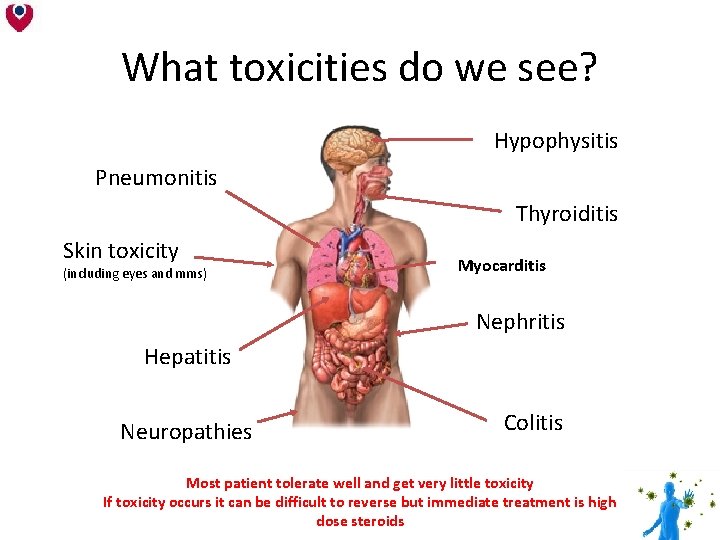
What toxicities do we see? Hypophysitis Pneumonitis Thyroiditis Skin toxicity (including eyes and mms) Myocarditis Nephritis Hepatitis Neuropathies Colitis Most patient tolerate well and get very little toxicity If toxicity occurs it can be difficult to reverse but immediate treatment is high dose steroids
When does toxicity occur? pneumonitis thyroidtitis Toxicity can occur at any time even months after the treatment is stopped
Grading system for immunotherapy side effects • Grade 1 (mild) – interrupt treatment/continue with close monitoring and may not need treat with steroids • Grade 2 (moderate) – PO steroids (1 mg/kg pred)/interrupt treatment • Grade 3/4 (hospitalised/life threatening) – IV methyl pred (2 mg/kg) + PPI +PJP prophylaxis • In no improvement in 3 days of IV methyl pred needs escalation – infliximab for colitis/pneumonitis/skin (not for liver tox – MMF) • We rarely retreat if G 3/4 toxicity
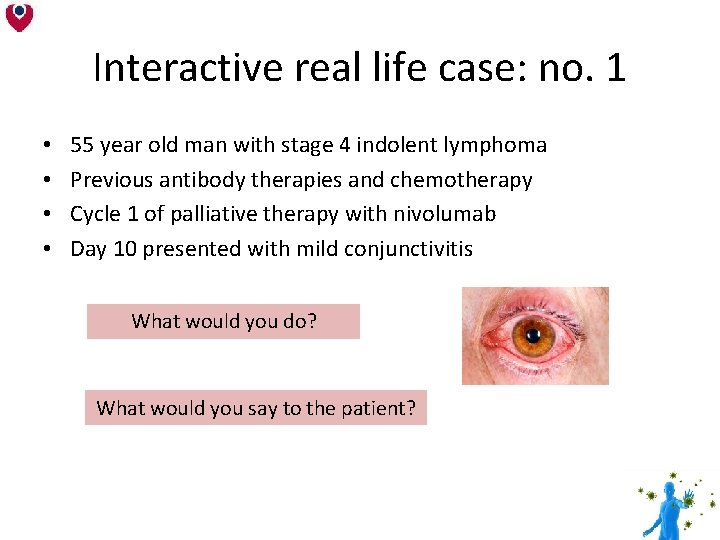
Interactive real life case: no. 1 • • 55 year old man with stage 4 indolent lymphoma Previous antibody therapies and chemotherapy Cycle 1 of palliative therapy with nivolumab Day 10 presented with mild conjunctivitis What would you do? What would you say to the patient?
What did we do? • Referred to opthalmology as OP given prednisolone eye drops • Specialist nurse asked to contact patient in 48 hrs
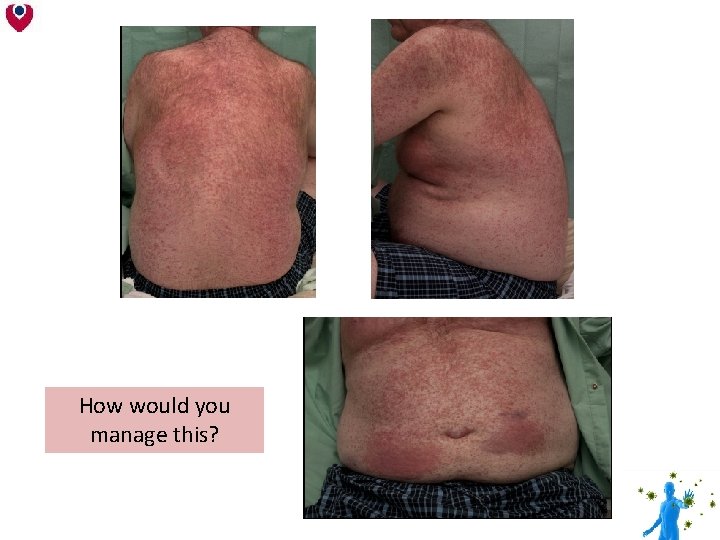
What did we do? • Referred to opthalmology as OP given prednisolone eye drops • Specialist nurse asked to contact patient in 48 hrs • Day 12 – admitted with mucositis, widespread macular rash and worsening eye toxicity (exudate, visual loss, photophobia)
How would you manage this?
Skin Toxicity Moderate (Grade 2) Mild (Grade 1) Localised macular/Papular eruption Asymptomatic Management Plan: Regular monitoring Consider anti-histamines Continue immunotherapy *ANTIBIOTIC PROPHYLAXIS: Patients on steroid doses >Prednisolone 50 mg/OD should be started on antiotic prophylaxis Septrin 960 mg/BD/ 3 times a week Fluconazole 50 mg/OD Aciclovir 200 mg/QDS Rash affecting ≤ 50% skin surface Itchy Affecting ADL’s/sleep Management Plan: Severe or Life-Threatening (Grade 3 + 4) Is defined as any of the following: >50% skin surface generalised exfoliative ulcerative bullous dermatitis Daily monitoring Anti-histamines Localised rash: Topical steroidal based cream (Dermovate cream bd) Extensive or symptomatic rash: prednisolone 0. 51 mg/kg od x 3 days-max. 60 mg/day*+ PPI Withold treatment until ≤ grade 1 Management Plan: Admit patient Discontinue immunotherapy permanently Contact local dermatology team for advice/biopsy Commence IV hydration High-dose IV corticosteroid therapy (eg, methylprednisolone 2 mg/kg od +PPI Regular ob’s and fluid balance Anti-histamines-hydroxyzine 25 mg qds max. 100 mg daily Topical emollient creamcetraben *Consider prophylactic antibiotics UKONS guidelines – available on internet https: //www. nwcscnsenate. nhs. uk/files/9815/2759/2181/UKONS_AO_management_guidelines_-_Rev. _March_2020. pdf
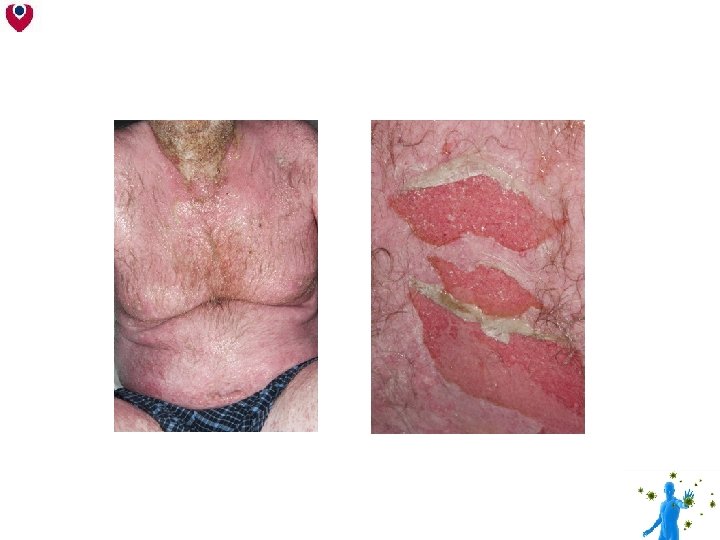
Development of TEN • Started on 1 g methylprednisolone IV • Started on acyclovir, co-trimoxazole and fluconazole & Tazocin • Eyes, mouth and rash continued to worsen • Had regular opthamology and dermatology input • Topical care advised and implemented by MAU nurses • Began to blister then desquamate
Skin biopsy at Salford • Transferred to Dermatology • Skin biopsy was typical of toxic epidermal necrolysis - TEN (full thickness epidermal/epithelial necrosis) • Prophylactic antimicrobials stopped due to concern they were contributing to TEN
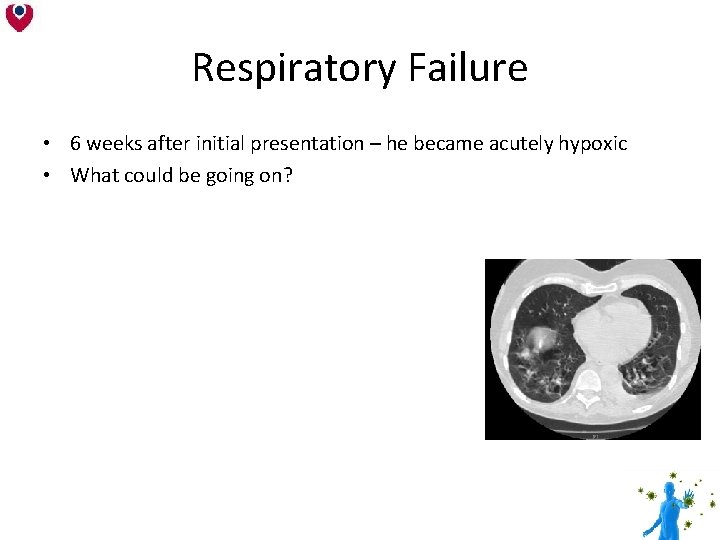
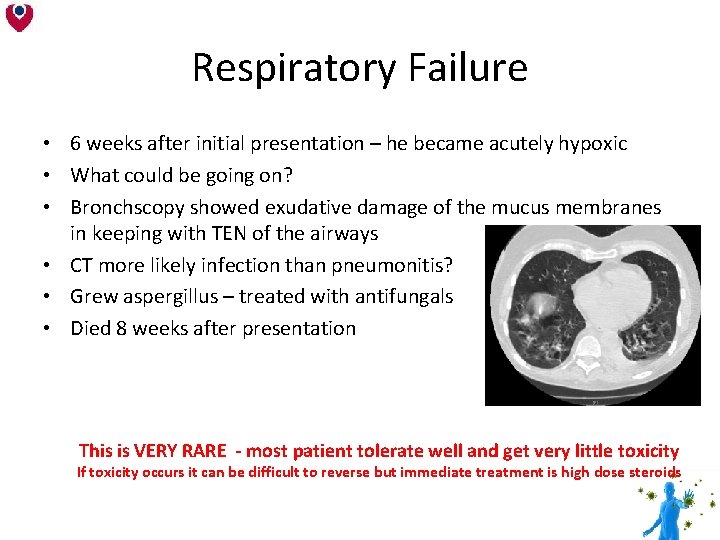
Respiratory Failure • 6 weeks after initial presentation – he became acutely hypoxic • What could be going on?
Respiratory Failure • 6 weeks after initial presentation – he became acutely hypoxic • What could be going on? • Bronchscopy showed exudative damage of the mucus membranes in keeping with TEN of the airways • CT more likely infection than pneumonitis? • Grew aspergillus – treated with antifungals • Died 8 weeks after presentation This is VERY RARE - most patient tolerate well and get very little toxicity If toxicity occurs it can be difficult to reverse but immediate treatment is high dose steroids
Late effects? • Long lasting life changing acute events • Late effects – unknown as yet
Where to get help? • UKONS guidelines available through google! • https: //www. ukons. org/resources/ • Christie hotline • Christie Portal
Summary • Immunotherapy is changing practice and outcomes in many cancers • Given continuously • May take time to work but in selected patient we are seeing long term response • Generally tolerated well but toxicity different and can be severe • Don’t dismiss subtle new symptoms