Chronic Pelvic Pain in Gynecological Practice Yasser Orief



- Slides: 80
Chronic Pelvic Pain in Gynecological Practice Yasser Orief, M. D
Agenda BACHGROUND n n n Definition of pain Nociception & innervation Innervation of urogenital system PAIN EVALUATION & MEASUREMENT n n Pain Evaluation Pain measurement CHRONIC PELVIC PAIN n n Definitions of CPC Classification of CPC syndromes PELVIC PAIN IN GYNAECOLOGICAL PRACTICE § Diagnosis § Dysmenorrhoea § Infection §Adhesions § Endometriosis § Gynaecological malignancy § Injuries related to childbirth
Background Pain is the most common symptom of any illness; the physician’s therapeutic task is twofold: n to discover and treat the cause of pain n and to treat the pain itself, whether or not the underlying cause is treatable.
PAIN “AN UNPLEASANT SENSORY AND EMOTIONAL EXPERIENCE ASSOCIATED WITH ACTUAL OR POTENTIAL TISSUE DAMAGE”* * INTERNATIONAL ASSOCIATION FOR THE STUDY OF PAIN
Pain Pathway
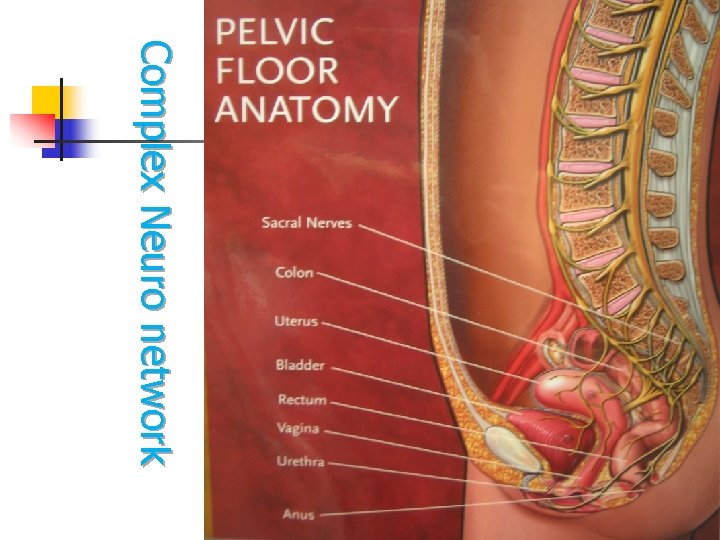
C o m p l e x N e u r o n e t wo r k
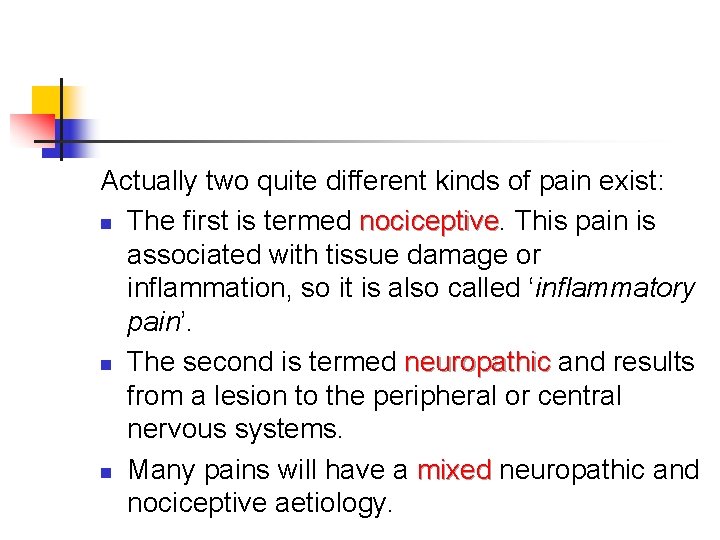
Actually two quite different kinds of pain exist: n The first is termed nociceptive This pain is associated with tissue damage or inflammation, so it is also called ‘inflammatory pain’. n The second is termed neuropathic and results from a lesion to the peripheral or central nervous systems. n Many pains will have a mixed neuropathic and nociceptive aetiology.
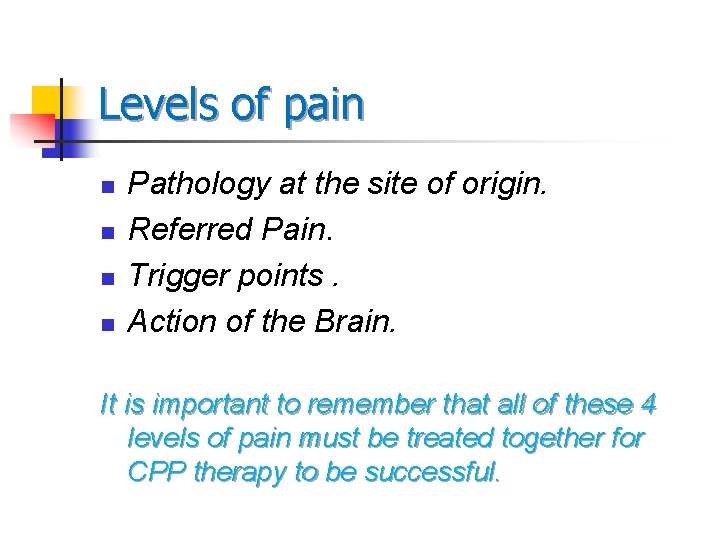
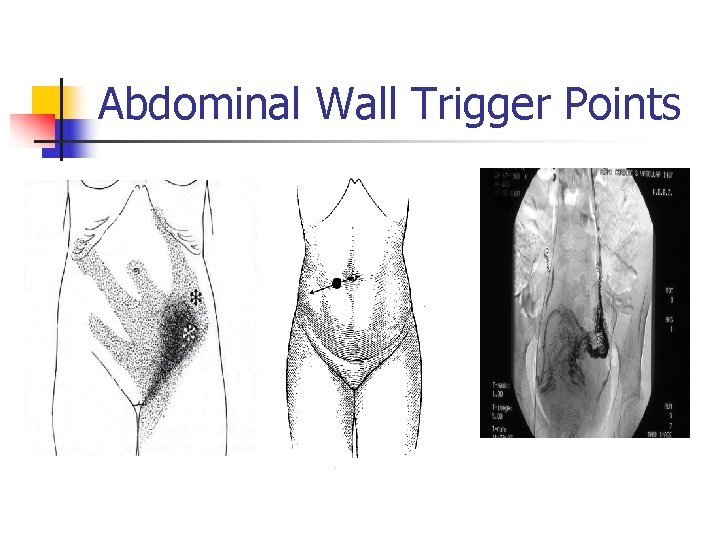
Levels of pain n n Pathology at the site of origin. Referred Pain. Trigger points. Action of the Brain. It is important to remember that all of these 4 levels of pain must be treated together for CPP therapy to be successful.
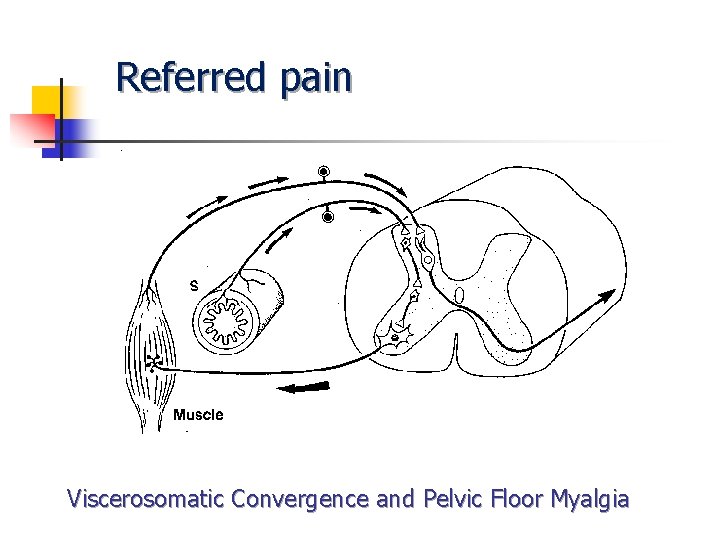
Referred pain Viscerosomatic Convergence and Pelvic Floor Myalgia
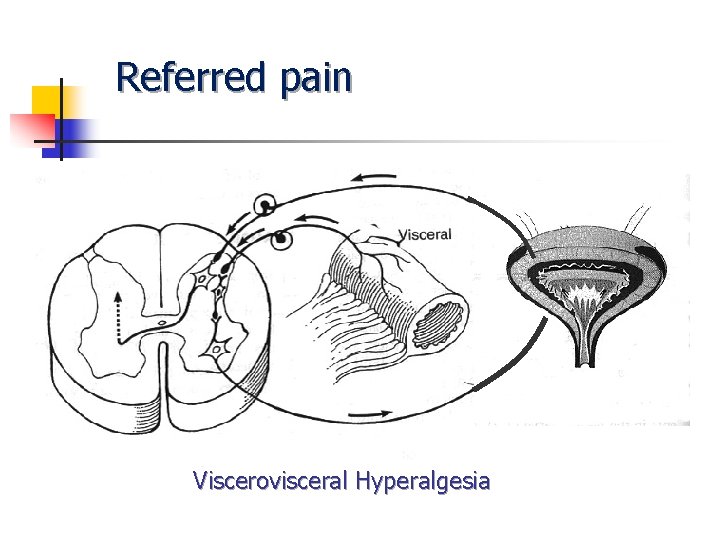
Referred pain Viscerovisceral Hyperalgesia
Abdominal Wall Trigger Points
Pain Evaluation & Measurement
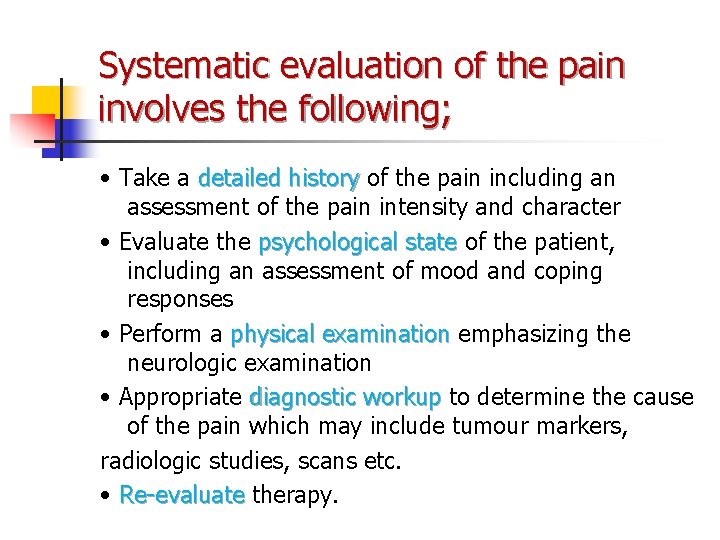
Systematic evaluation of the pain involves the following; • Take a detailed history of the pain including an assessment of the pain intensity and character • Evaluate the psychological state of the patient, including an assessment of mood and coping responses • Perform a physical examination emphasizing the neurologic examination • Appropriate diagnostic workup to determine the cause of the pain which may include tumour markers, radiologic studies, scans etc. • Re-evaluate therapy.
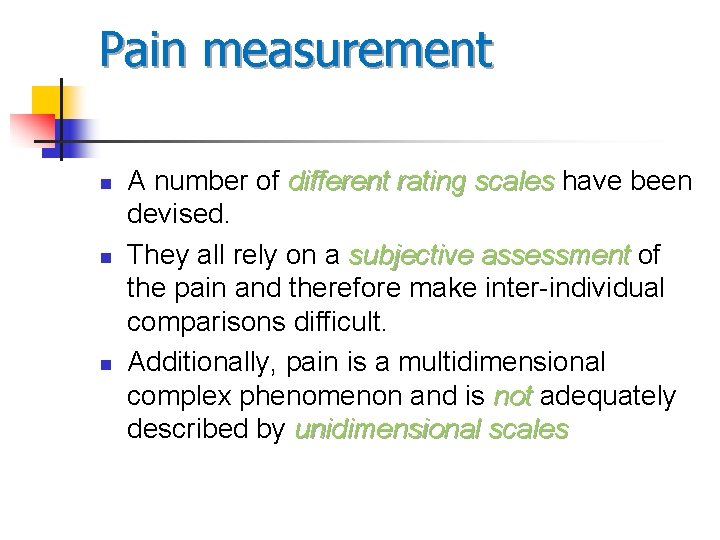
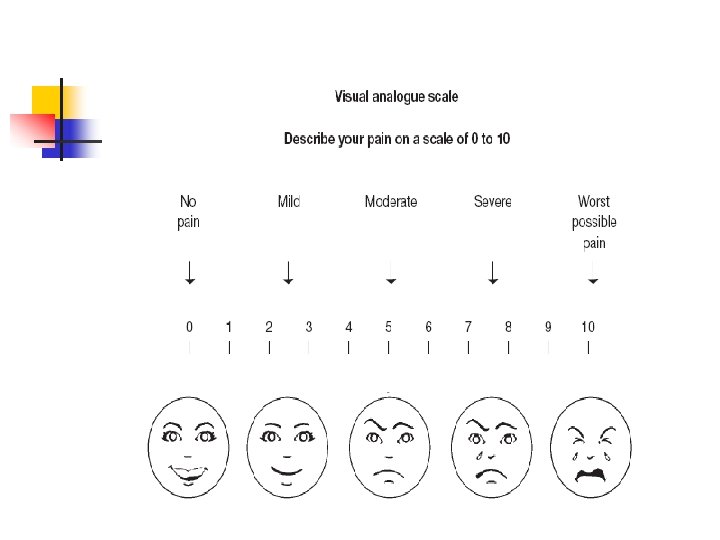
Pain measurement n n n A number of different rating scales have been devised. They all rely on a subjective assessment of the pain and therefore make inter-individual comparisons difficult. Additionally, pain is a multidimensional complex phenomenon and is not adequately described by unidimensional scales
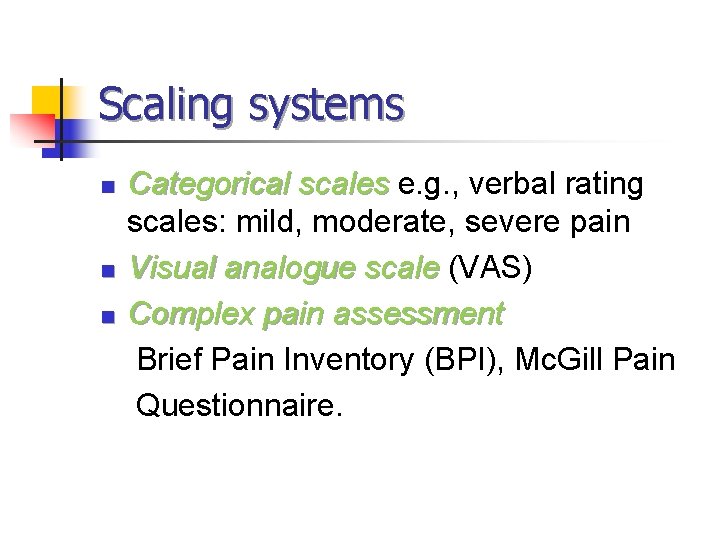
Scaling systems n n n Categorical scales e. g. , verbal rating scales: mild, moderate, severe pain Visual analogue scale (VAS) Complex pain assessment Brief Pain Inventory (BPI), Mc. Gill Pain Questionnaire.
Chronic Pelvic Pain (CPP) (CPP
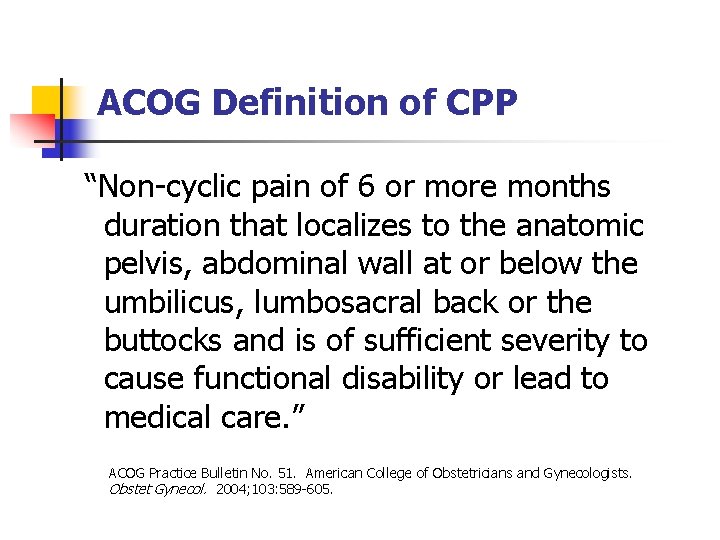
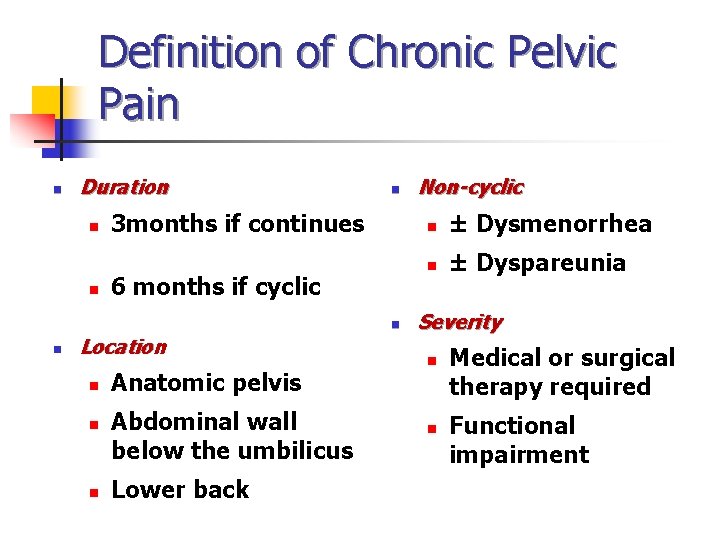
ACOG Definition of CPP “Non-cyclic pain of 6 or more months duration that localizes to the anatomic pelvis, abdominal wall at or below the umbilicus, lumbosacral back or the buttocks and is of sufficient severity to cause functional disability or lead to medical care. ” ACOG Practice Bulletin No. 51. American College of Obstetricians and Gynecologists. Obstet Gynecol. 2004; 103: 589 -605.
Definition of Chronic Pelvic Pain n Duration n 3 months if continues 6 months if cyclic n n Location n Anatomic pelvis Abdominal wall below the umbilicus Lower back Non-cyclic n ± Dysmenorrhea n ± Dyspareunia Severity n n Medical or surgical therapy required Functional impairment
Why is Chronic Pelvic Pain so Different?
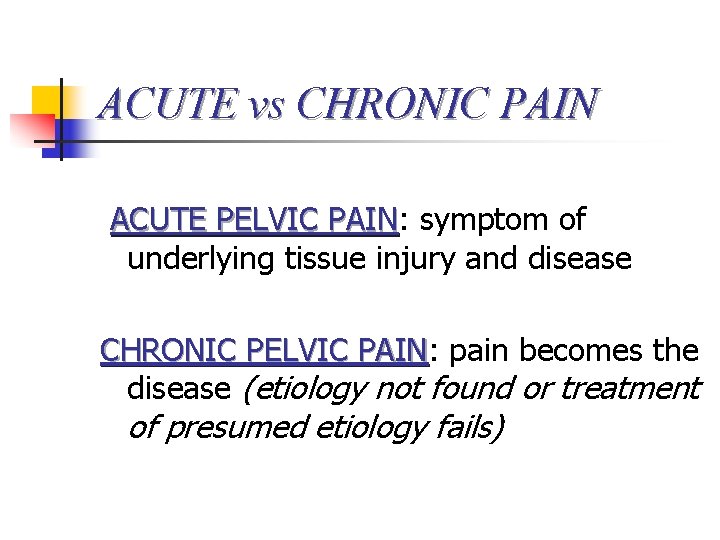
ACUTE vs CHRONIC PAIN ACUTE PELVIC PAIN: PAIN symptom of underlying tissue injury and disease CHRONIC PELVIC PAIN: PAIN pain becomes the disease (etiology not found or treatment of presumed etiology fails)
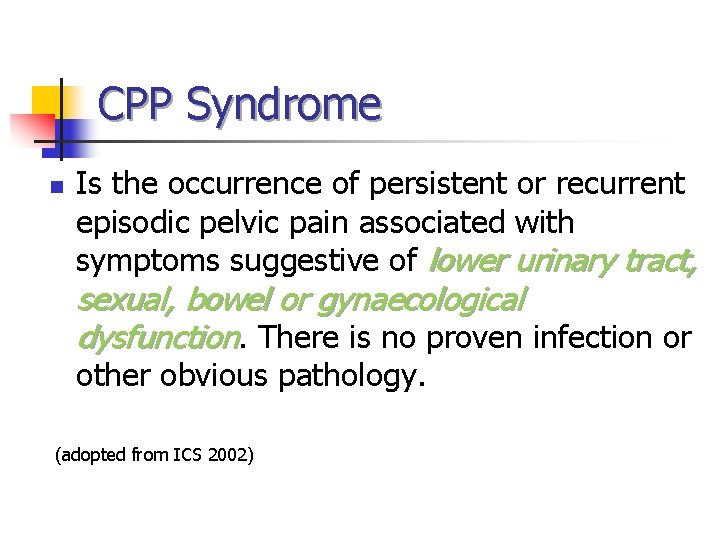
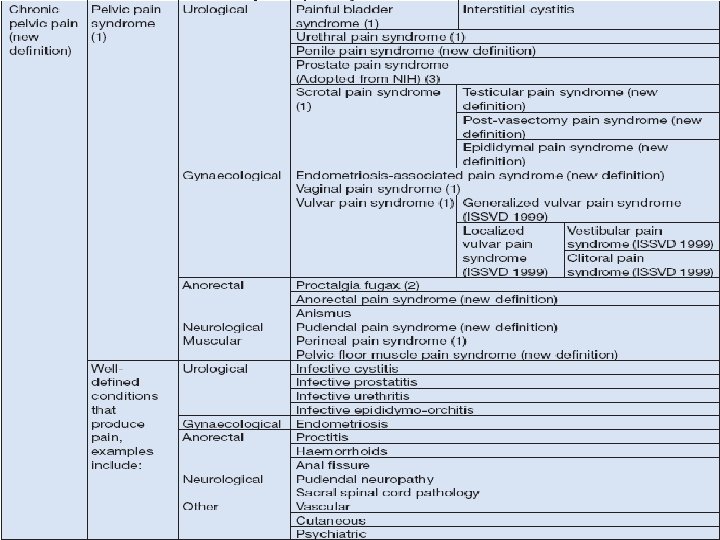
CPP Syndrome n Is the occurrence of persistent or recurrent episodic pelvic pain associated with symptoms suggestive of lower urinary tract, sexual, bowel or gynaecological dysfunction. There is no proven infection or other obvious pathology. (adopted from ICS 2002)
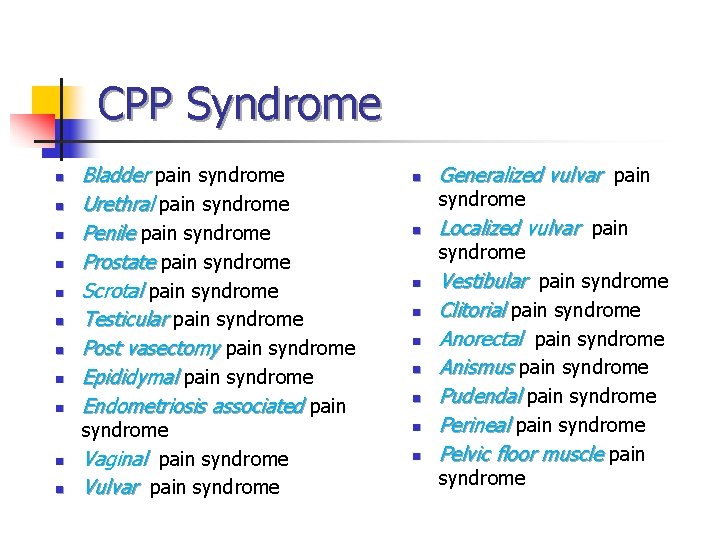
CPP Syndrome n n n Bladder pain syndrome Urethral pain syndrome Penile pain syndrome Prostate pain syndrome Scrotal pain syndrome Testicular pain syndrome Post vasectomy pain syndrome Epididymal pain syndrome Endometriosis associated pain syndrome Vaginal pain syndrome Vulvar pain syndrome n Generalized vulvar pain syndrome n Localized vulvar pain syndrome n n n n Vestibular pain syndrome Clitorial pain syndrome Anorectal pain syndrome Anismus pain syndrome Pudendal pain syndrome Perineal pain syndrome Pelvic floor muscle pain syndrome
Epidemiology
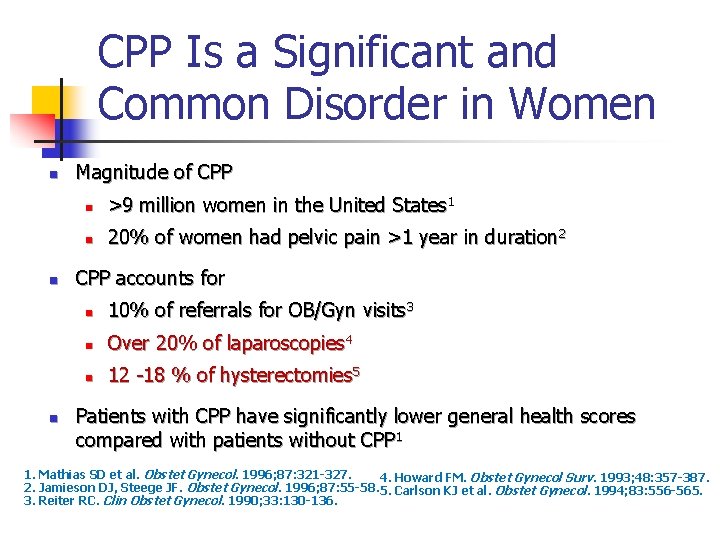
CPP Is a Significant and Common Disorder in Women n Magnitude of CPP n >9 million women in the United States 1 n 20% of women had pelvic pain >1 year in duration 2 CPP accounts for n 10% of referrals for OB/Gyn visits 3 n Over 20% of laparoscopies 4 n 12 -18 % of hysterectomies 5 Patients with CPP have significantly lower general health scores compared with patients without CPP 1 1. Mathias SD et al. Obstet Gynecol. 1996; 87: 321 -327. 4. Howard FM. Obstet Gynecol Surv. 1993; 48: 357 -387. 2. Jamieson DJ, Steege JF. Obstet Gynecol. 1996; 87: 55 -58. 5. Carlson KJ et al. Obstet Gynecol. 1994; 83: 556 -565. 3. Reiter RC. Clin Obstet Gynecol. 1990; 33: 130 -136.
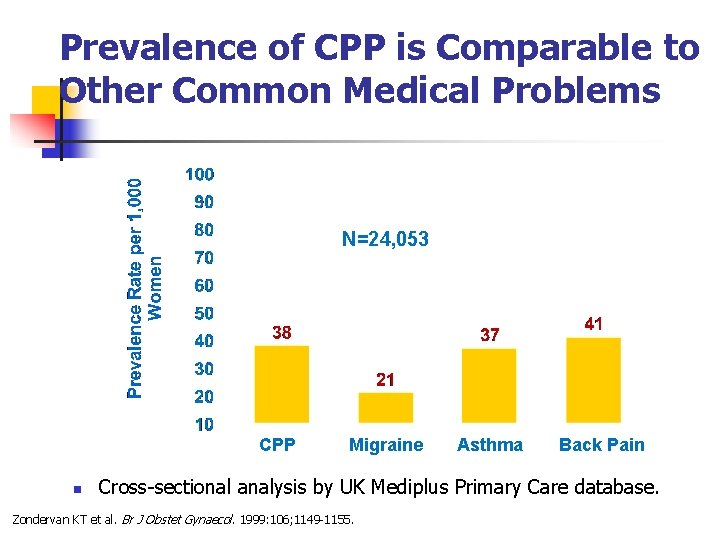
Prevalence of CPP is Comparable to Other Common Medical Problems N=24, 053 CPP n Migraine Asthma Back Pain Cross-sectional analysis by UK Mediplus Primary Care database. Zondervan KT et al. Br J Obstet Gynaecol. 1999: 106; 1149 -1155.
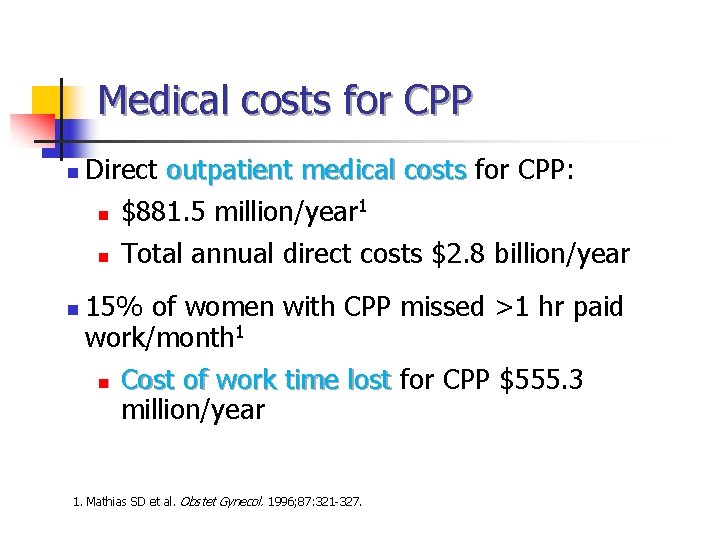
Medical costs for CPP n n Direct outpatient medical costs for CPP: 1 n $881. 5 million/year n Total annual direct costs $2. 8 billion/year 15% of women with CPP missed >1 hr paid work/month 1 n Cost of work time lost for CPP $555. 3 million/year 1. Mathias SD et al. Obstet Gynecol. 1996; 87: 321 -327.
Etiology
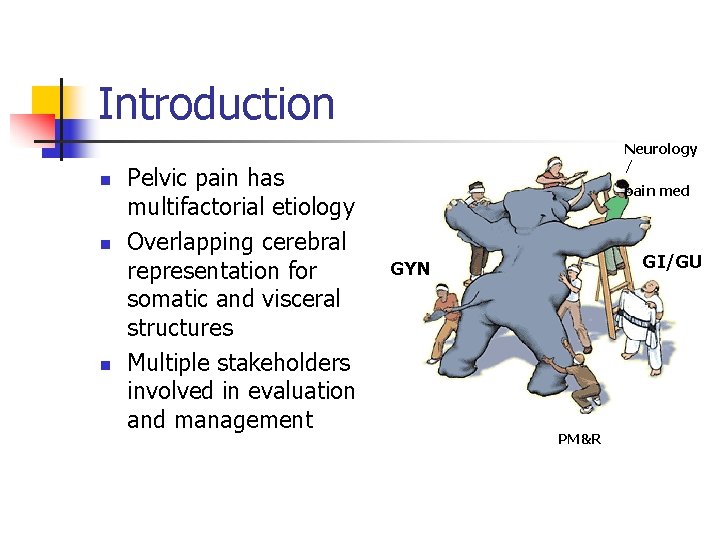
Introduction n Pelvic pain has multifactorial etiology Overlapping cerebral representation for somatic and visceral structures Multiple stakeholders involved in evaluation and management Neurology / pain med GI/GU GYN PM&R
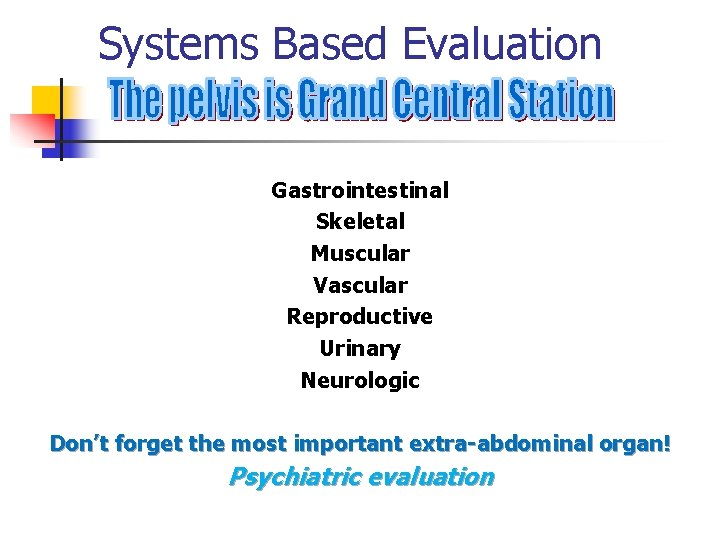
Systems Based Evaluation Gastrointestinal Skeletal Muscular Vascular Reproductive Urinary Neurologic Don’t forget the most important extra-abdominal organ! Psychiatric evaluation
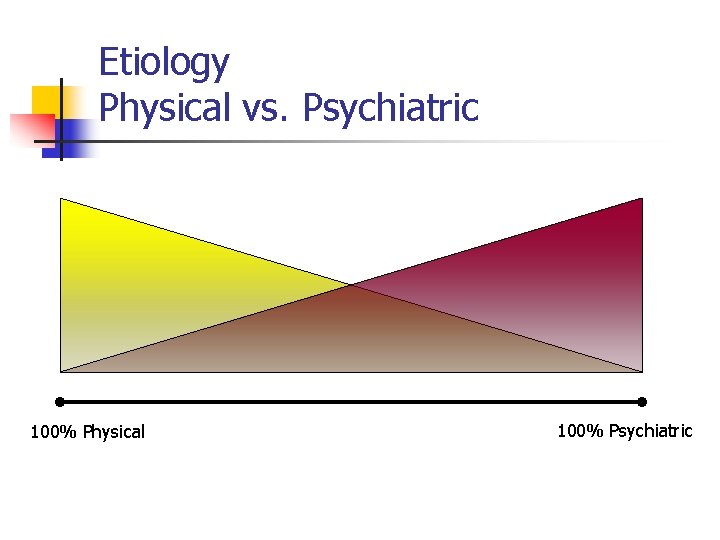
Etiology Physical vs. Psychiatric 100% Physical 100% Psychiatric
ACOG Practice Bulletin Number 51; March 2004 n n CPP is common in women and presents a diagnostic challenge Most common disorders that cause CPP are endometriosis, interstitial cystitis and irritable bowel syndrome n 38 -85% of women presenting to a gynecologist for CPP may have IC ACOG Practice Bulletin No. 51. American College of Obstetricians and Gynecologists. Obstet Gynecol. 2004; 103: 589 -605.
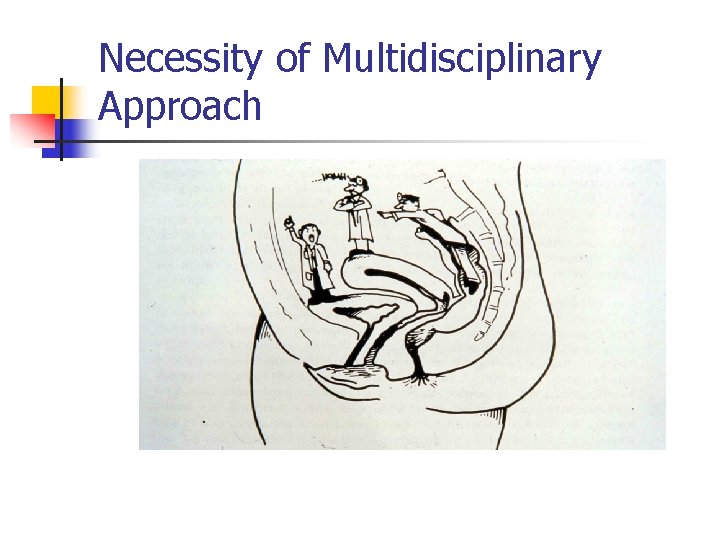
Necessity of Multidisciplinary Approach
Pelvic Pain Assessment Forms
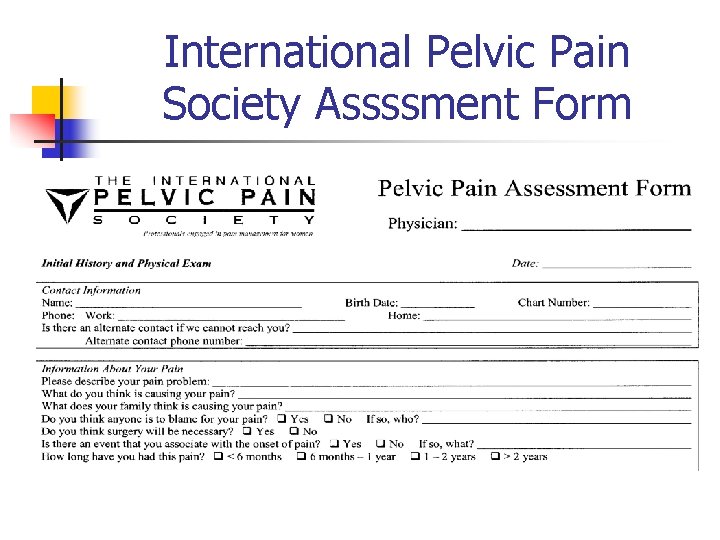
International Pelvic Pain Society Assssment Form
History Detailed n. Focused n. Pelvic Review of systems n. Biopsychosocial Model n
Chronic Pelvic Pain: History n n Pain duration > 6 months Incomplete relief by most previous treatments, including surgery and nonnarcotic analgesics Significantly impaired functioning at home or work Signs of depression such as early morning awakening, weight loss, and anorexia
n n Pain out of proportion to pathology History of childhood abuse, incest, rape or other sexual trauma Current sexual dysfunction Previous consultation with one or more health care providers and dissatisfaction with their management of her condition
Physical Examination n n General Examination Check for Fibromyalgia Check Abdominal Wall trigger points Systematic physical exam of abdominal, pelvic, and rectal areas, focusing on the location and intensity of the pain. Q-tip test for vestibulitis Check for Pelvic Floor Myalgia Single Digit Pelvic Exam Speculm exam Bimanual exam Rectovaginal exam Palpate the coccyx, coccyx both internally and externally
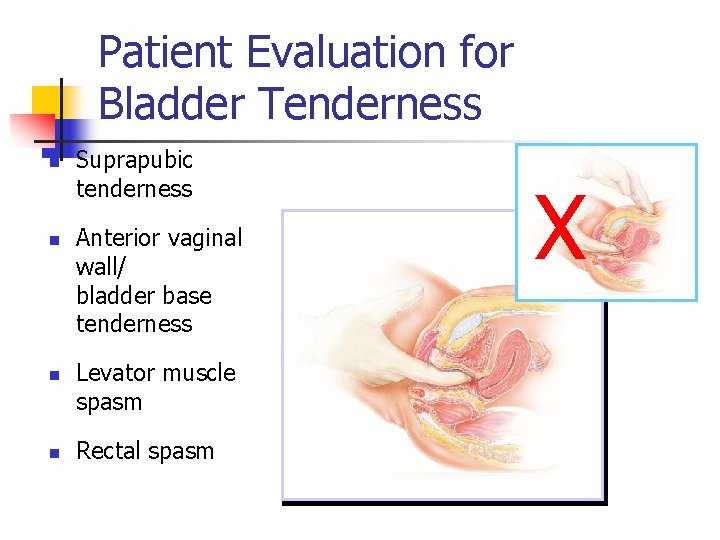
Patient Evaluation for Bladder Tenderness n n Suprapubic tenderness Anterior vaginal wall/ bladder base tenderness X Levator muscle spasm Rectal spasm Howard FM, Perry CP, Carter JE, El-Minawi AM. Pelvic Pain: Diagnosis and Management. Lippincott. 2000: 35 -39.
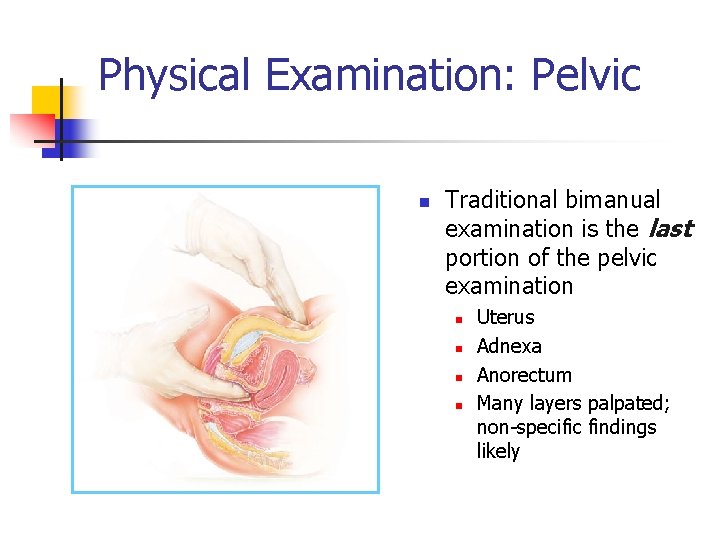
Physical Examination: Pelvic n Traditional bimanual examination is the last portion of the pelvic examination n n Uterus Adnexa Anorectum Many layers palpated; non-specific findings likely
Investigations n n n n Should be selected discriminately as indicated by the findings of the history and physical exam Avoid unnecessary and repetitive diagnostic testing Vaginal smearing Cervical cultures HSG Stool analysis Ultrasound Diagnostic laparascopy
Dysmenorrhoea
Dysmenorrhoea Pain in association with menstruation may be primary or secondary. n Primary dysmenorrhoea classically commences with the onset of ovulatory menstrual cycles and tends to decrease following childbirth n Explanation and reassurance may be helpful, n together with the use of simple analgesics progressing n to the use of non-steroidal anti-inflammatory drugs (NSAIDs), which are particularly helpful if they are started before the onset of menstruation.
Dysmenorrhoea n n n Suppression of ovulation using the oral contraceptive pill reduces dysmenorrhoea dramatically in most cases. Because of the chronic nature of the condition, potentially addictive analgesics should be avoided. Secondary dysmenorrhoea would suggest the development of a pathological process, and the exclusion of endometriosis and pelvic infection is essential
Infection
Infection n A history of possible exposure to infection should be sought and it is mandatory in all cases to obtain swabs to exclude chlamydia and gonorrhoea, as well as vaginal and genital tract pathogens. Patient’s sexual contacts will need to be traced in all cases with positive cultures. If there is doubt about the diagnosis then laparoscopy may be of great assistance. The treatment of infection depends on the causative organisms
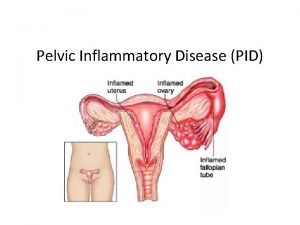
Infection n n Subclinical chlamydial infection may lead to tubal pathology. Screening for this organism in sexually active young women may reduce the incidence of subsequent subfertility. Chronic pelvic inflammatory disease is no longer common in developed countries, but still poses a significant problem with chronic pain in the Third World.
Gynaecological malignancy
Gynaecological malignancy n n The spread of gynaecological malignancy of the cervix, uterine body or ovary will lead to pelvic pain depending on the site of spread. Treatment is of the primary condition, but all physicians dealing with pelvic pain must be fully aware of the possibility of gynaecological malignancy.
Injuries related to childbirth
Injuries related to childbirth n n n Tissue trauma and soft tissue injuries occurring at the time of childbirth may lead to chronic pelvic pain related to the site of injury. Dyspareunia is a common problem leading to long-term difficulties with intercourse and female sexual dysfunction. Denervation of the pelvic floor with reinnervation may also lead to dysfunction and pain.
Pelvic Adhesion
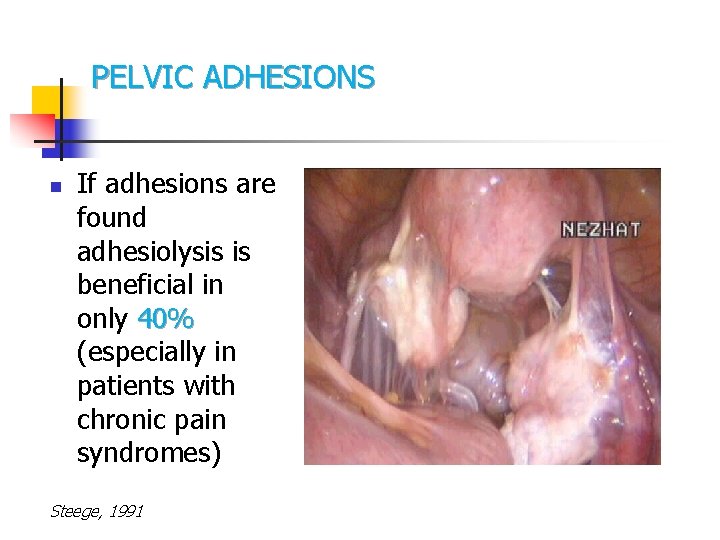
PELVIC ADHESIONS n If adhesions are found adhesiolysis is beneficial in only 40% (especially in patients with chronic pain syndromes) Steege, 1991
Endometriosis & CPP
Endometriosis? n n n characterized by the presence of endometrium-like tissue in ectopic sites outside the uterus, primarily on pelvic peritoneum and ovaries affects nearly 1 in 7 women of reproductive age third most common gynecologic disorder that requires hospitalization, and a leading cause of hysterectomy.
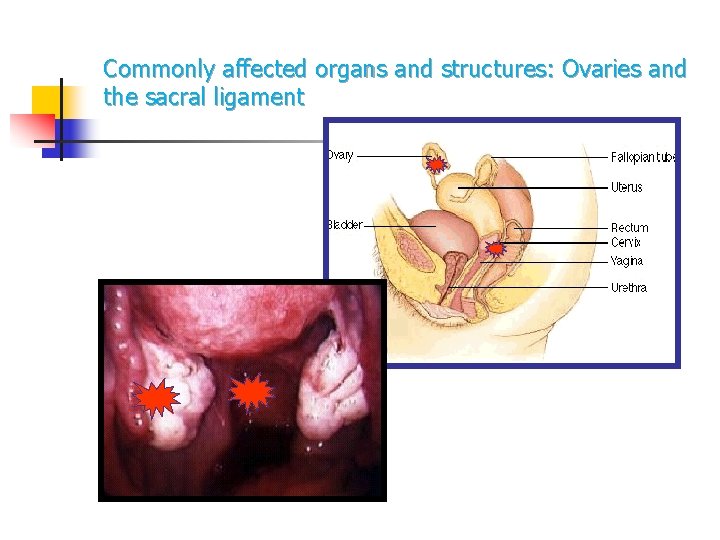
Commonly affected organs and structures: Ovaries and the sacral ligament
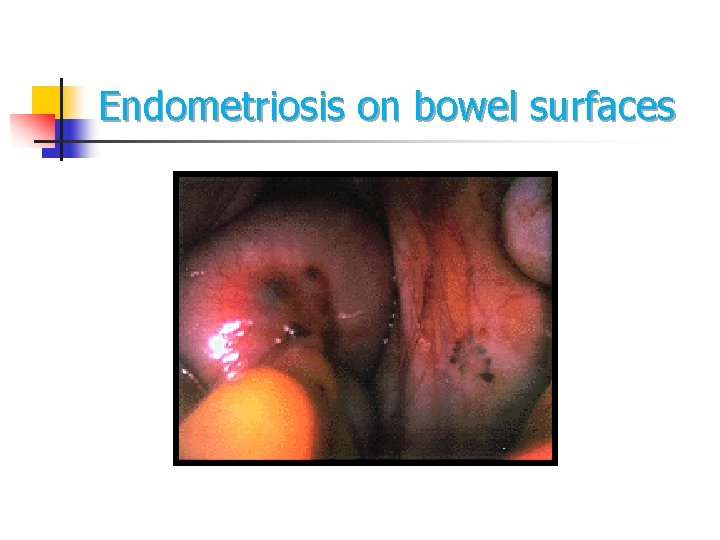
Endometriosis on bowel surfaces
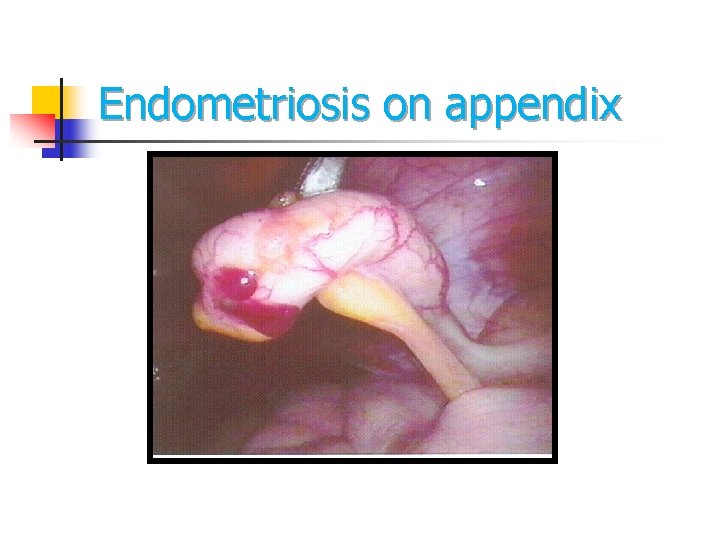
Endometriosis on appendix
Endometriosis Symptoms n n Chronic pelvic pain Dysmenorrha Dyspareunia Infertility
Endometriosis and Pain n Chronic pelvic pain is the most consistent symptom with a prevalence of 30 -70% in adults, and 45 -58% in adolescents. Dysmenorrhea is associated with endometriosis in more than 50% of adults, and up to 75% of adolescents Dyspareunia is variable ranging from 4%55%
Endometriosis Treatment n n Medical Treatment • Established Medical Treatments • Experimental Treatments Surgical Treatment • Conservative n Vaporization Coagulation/ablation • Radical n n Excision
Role of laparoscopy n n Best evidence suggests that symptomatic relief can be achieved with either medical or surgical therapy for mild to moderate disease. For severe or nodular disease or for patients with endometriomas, surgical alternatives are most effective. ACOG technical bulletin Endometriosis & the endometrium Diamond & Osteen
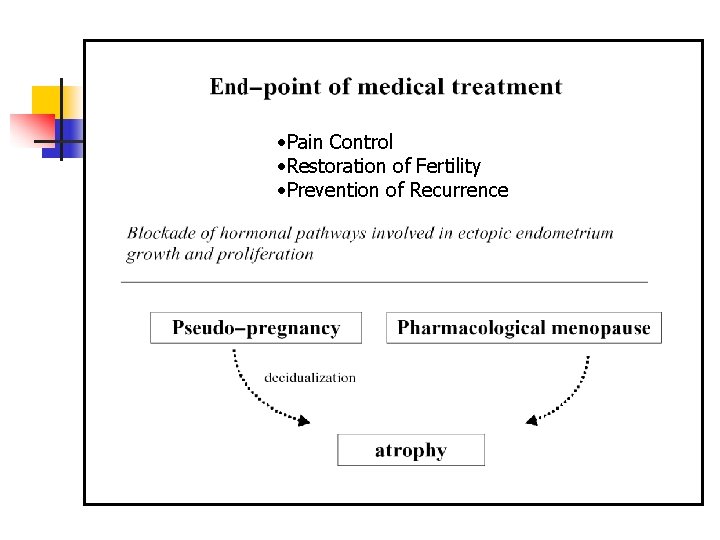
• Pain Control • Restoration of Fertility • Prevention of Recurrence
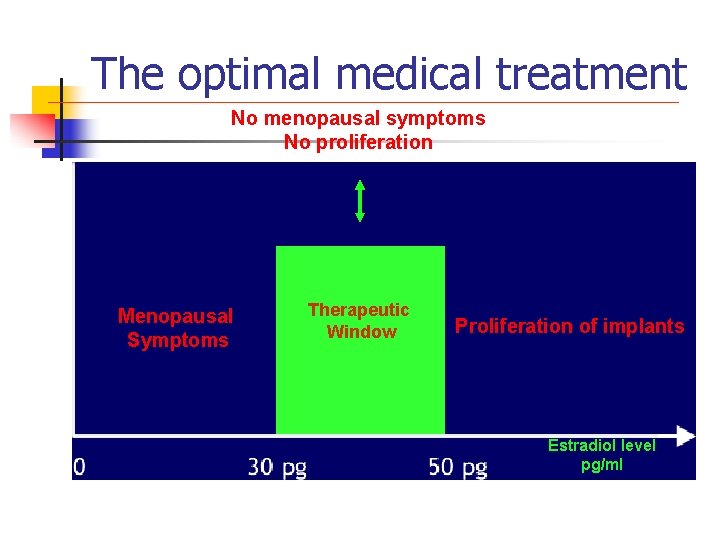
The optimal medical treatment No menopausal symptoms No proliferation Menopausal Symptoms Therapeutic Window Proliferation of implants Estradiol level pg/ml
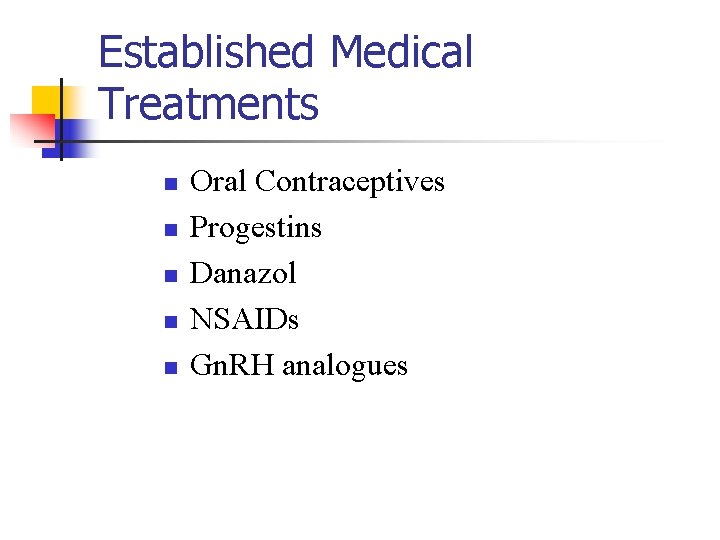
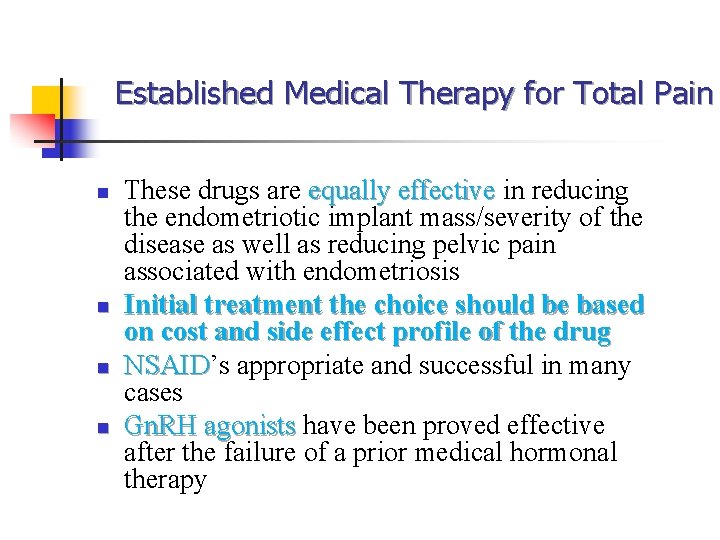
Established Medical Treatments n n n Oral Contraceptives Progestins Danazol NSAIDs Gn. RH analogues
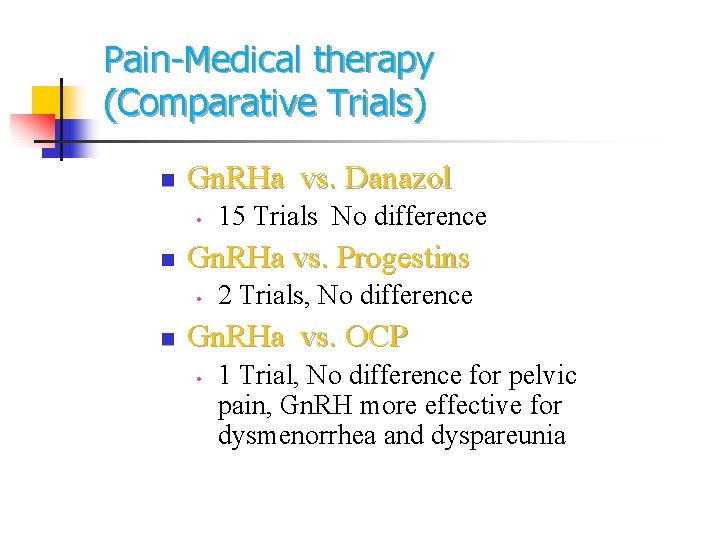
Pain-Medical therapy (Comparative Trials) n Gn. RHa vs. Danazol • n Gn. RHa vs. Progestins • n 15 Trials No difference 2 Trials, No difference Gn. RHa vs. OCP • 1 Trial, No difference for pelvic pain, Gn. RH more effective for dysmenorrhea and dyspareunia
Established Medical Therapy for Total Pain n n These drugs are equally effective in reducing the endometriotic implant mass/severity of the disease as well as reducing pelvic pain associated with endometriosis Initial treatment the choice should be based on cost and side effect profile of the drug NSAID’s appropriate and successful in many cases Gn. RH agonists have been proved effective after the failure of a prior medical hormonal therapy
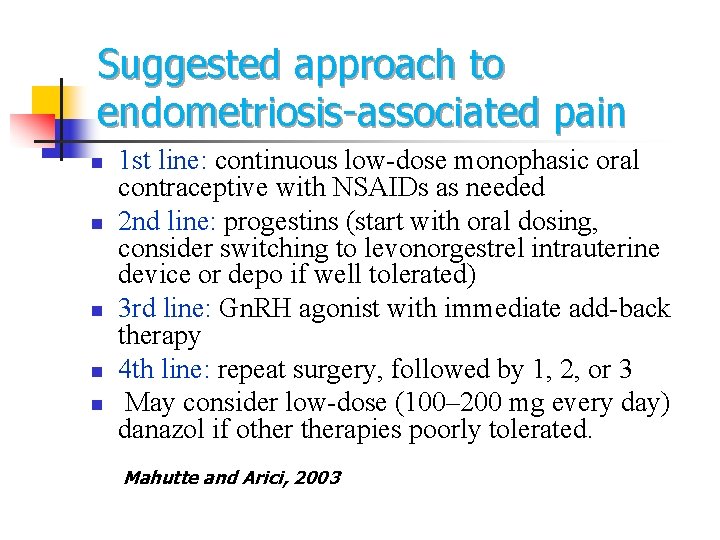
Suggested approach to endometriosis-associated pain n n 1 st line: continuous low-dose monophasic oral contraceptive with NSAIDs as needed 2 nd line: progestins (start with oral dosing, consider switching to levonorgestrel intrauterine device or depo if well tolerated) 3 rd line: Gn. RH agonist with immediate add-back therapy 4 th line: repeat surgery, followed by 1, 2, or 3 May consider low-dose (100– 200 mg every day) danazol if otherapies poorly tolerated. Mahutte and Arici, 2003
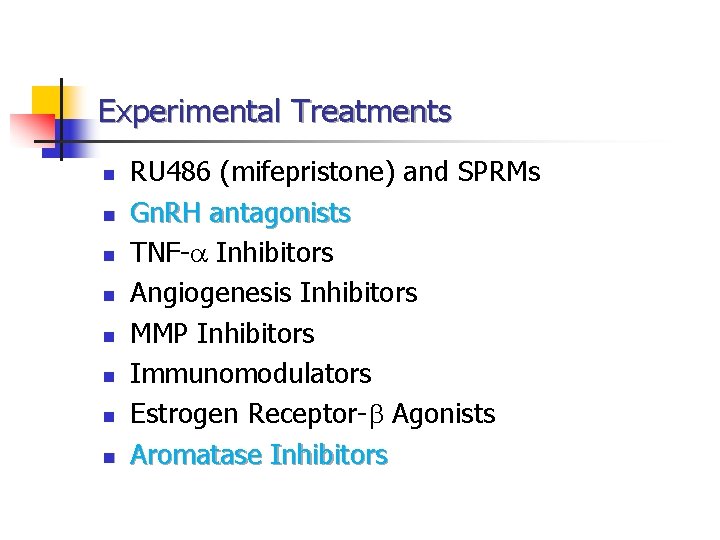
Experimental Treatments n n n n RU 486 (mifepristone) and SPRMs Gn. RH antagonists TNF-a Inhibitors Angiogenesis Inhibitors MMP Inhibitors Immunomodulators Estrogen Receptor-b Agonists Aromatase Inhibitors
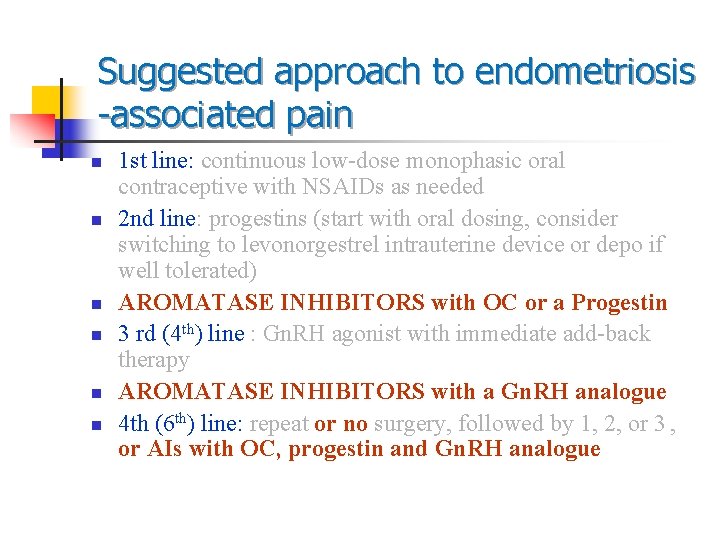
Suggested approach to endometriosis -associated pain n n n 1 st line: continuous low-dose monophasic oral contraceptive with NSAIDs as needed 2 nd line: progestins (start with oral dosing, consider switching to levonorgestrel intrauterine device or depo if well tolerated) AROMATASE INHIBITORS with OC or a Progestin 3 rd (4 th) line : Gn. RH agonist with immediate add-back therapy AROMATASE INHIBITORS with a Gn. RH analogue 4 th (6 th) line: repeat or no surgery, followed by 1, 2, or 3 , or AIs with OC, progestin and Gn. RH analogue
Surgical Excision n Aggressive n n Entire visible lesion should be removed. Any abnormal peritoneum is suspect (50% positive path) Appendix should go. (Lyons et al JAAGL 2002) Conservative n Uterus, tubes and ovaries most often can be conserved.
Surgical Pearls n n n n Identify ureters & bowel first. Use the avascular spaces. Work from known to unknown. Maintain hemostasis moment to moment. Save the bowel to last if possible. Avoid hydro-dissection when possible Be patient
What do you consider as Endometriosis Treatment failure?
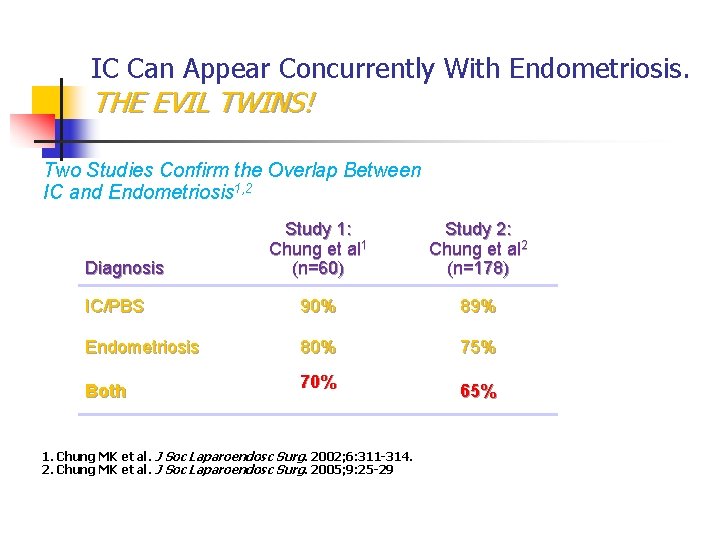
IC Can Appear Concurrently With Endometriosis. THE EVIL TWINS! Two Studies Confirm the Overlap Between IC and Endometriosis 1, 2 Study 1: Chung et al 1 (n=60) Study 2: Chung et al 2 (n=178) IC/PBS 90% 89% Endometriosis 80% 75% Diagnosis Both 70% 1. Chung MK et al. J Soc Laparoendosc Surg. 2002; 6: 311 -314. 2. Chung MK et al. J Soc Laparoendosc Surg. 2005; 9: 25 -29 65%
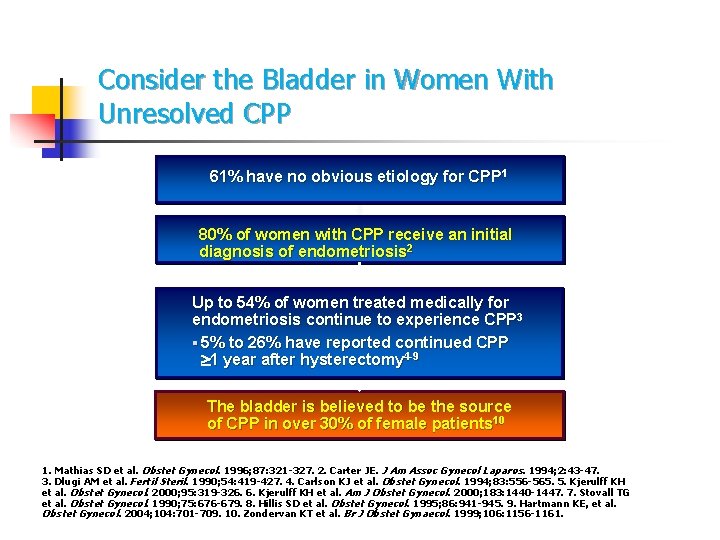
Consider the Bladder in Women With Unresolved CPP 61% have no obvious etiology for CPP 1 80% of women with CPP receive an initial diagnosis of endometriosis 2 Up to 54% of women treated medically for endometriosis continue to experience CPP 3 ▪ 5% to 26% have reported continued CPP 1 year after hysterectomy 4 -9 The bladder is believed to be the source of CPP in over 30% of female patients 10 1. Mathias SD et al. Obstet Gynecol. 1996; 87: 321 -327. 2. Carter JE. J Am Assoc Gynecol Laparos. 1994; 2: 43 -47. 3. Dlugi AM et al. Fertil Steril. 1990; 54: 419 -427. 4. Carlson KJ et al. Obstet Gynecol. 1994; 83: 556 -565. 5. Kjerulff KH et al. Obstet Gynecol. 2000; 95: 319 -326. 6. Kjerulff KH et al. Am J Obstet Gynecol. 2000; 183: 1440 -1447. 7. Stovall TG et al. Obstet Gynecol. 1990; 75: 676 -679. 8. Hillis SD et al. Obstet Gynecol. 1995; 86: 941 -945. 9. Hartmann KE, et al. Obstet Gynecol. 2004; 104: 701 -709. 10. Zondervan KT et al. Br J Obstet Gynaecol. 1999; 106: 1156 -1161.
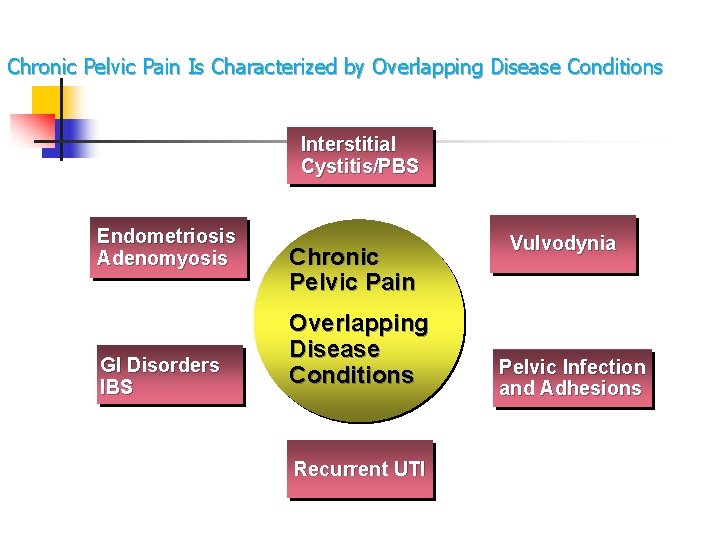
Chronic Pelvic Pain Is Characterized by Overlapping Disease Conditions Interstitial Cystitis/PBS Endometriosis Adenomyosis GI Disorders IBS Chronic Pelvic Pain Overlapping Disease Conditions Recurrent UTI Vulvodynia Pelvic Infection and Adhesions
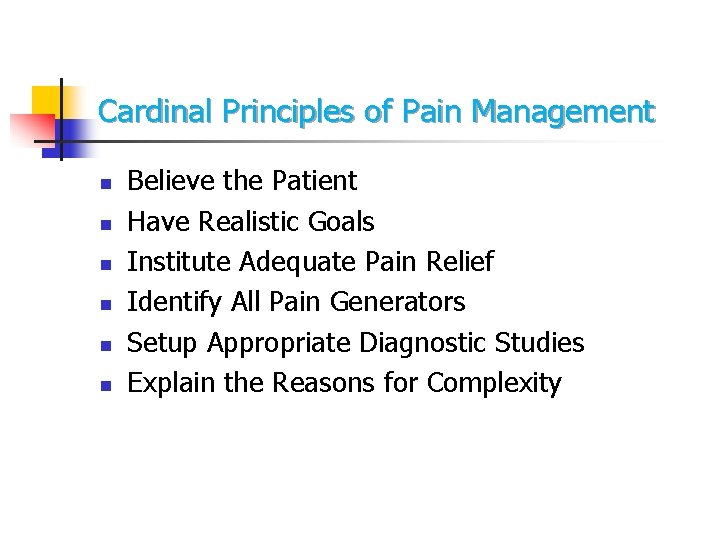
Cardinal Principles of Pain Management n n n Believe the Patient Have Realistic Goals Institute Adequate Pain Relief Identify All Pain Generators Setup Appropriate Diagnostic Studies Explain the Reasons for Complexity
THANK YOU FOR YOUR ATTENTION