
Redesigning Chronic Illness Care The Chronic Care Model




- Slides: 85
Redesigning Chronic Illness Care: The Chronic Care Model Ed Wagner, MD, MPH Mac. Coll Institute for Healthcare Innovation Center for Health Studies Group Health Cooperative Improving Chronic Illness Care A national program of the Robert Wood Johnson Foundation IHI National Forum December 10, 2007
Chronic Illness in America • More than 125 million Americans suffer from one or more chronic illnesses and 40 million limited by them. • Despite annual spending of well over $1 trillion and significant advances in care, one-half or more of patients still don’t receive appropriate care. • Gaps in quality care lead to thousands of avoidable deaths each year. . • Patients and families increasingly recognize the defects in their care.
Chronic Illness and Medical Care • Primary care dominated by chronic illness care • Clinical and behavioral management increasingly effective BUT increasingly complex • Inadequate reimbursement and greater demand forcing primary care to increase throughput—the hamster wheel • Unhappy primary care clinicians leaving practice; trainees choosing other specialties • Loss of confidence in primary care by policy-makers and funders • But, there are new models of primary care and growing interest in changing physician payment to encourage and reward quality
What Patients with Chronic Illnesses Need • A “continuous healing relationship” with a care team and practice system organized to meet their needs for: 4 Effective Treatment (clinical, behavioral, supportive), 4 Information and support for their self-management, 4 Systematic follow-up and assessment tailored to clinical severity, 4 More intensive management for those not meeting targets, and 4 Coordination of care across settings and professionals
Why are we doing so poorly? The IOM Quality Chasm report says: • “The current care systems cannot do the job. ” • “Trying harder will not work. ” • “Changing care systems will. ”
What’s Responsible for the Quality Chasm? • A system oriented to acute disease that isn’t working for patients or professionals
What kind of changes to practice systems improve care?
Randomized trials of system change interventions: Diabetes Cochrane Collaborative Review • 41 studies, majority randomized trials • Interventions classified as provider-oriented, organizational, information systems, or patientoriented • Patient outcomes (e. g. , Hb. A 1 c, BP, LDL) only improved if patient-oriented interventions included • All 5 studies with interventions in all four domains had positive impacts on patients Renders et al, Diabetes Care, 2001; 24: 1821
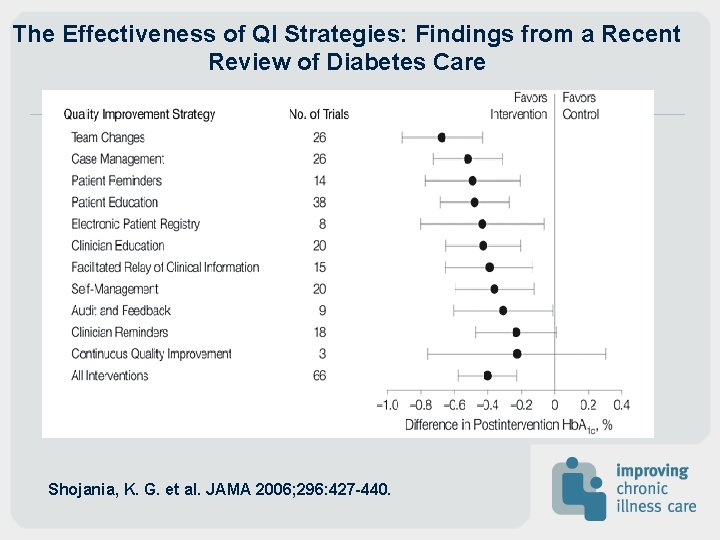
The Effectiveness of QI Strategies: Findings from a Recent Review of Diabetes Care Shojania, K. G. et al. JAMA 2006; 296: 427 -440.
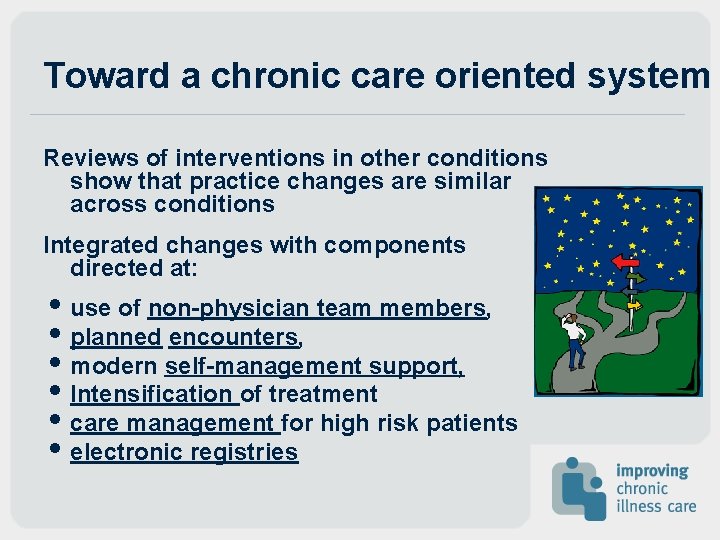
Toward a chronic care oriented system Reviews of interventions in other conditions show that practice changes are similar across conditions Integrated changes with components directed at: i use of non-physician team members, i planned encounters, i modern self-management support, i Intensification of treatment i care management for high risk patients i electronic registries
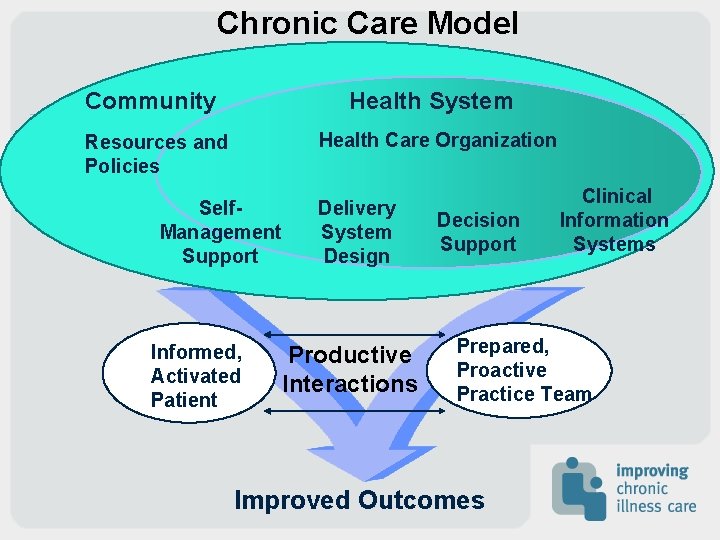
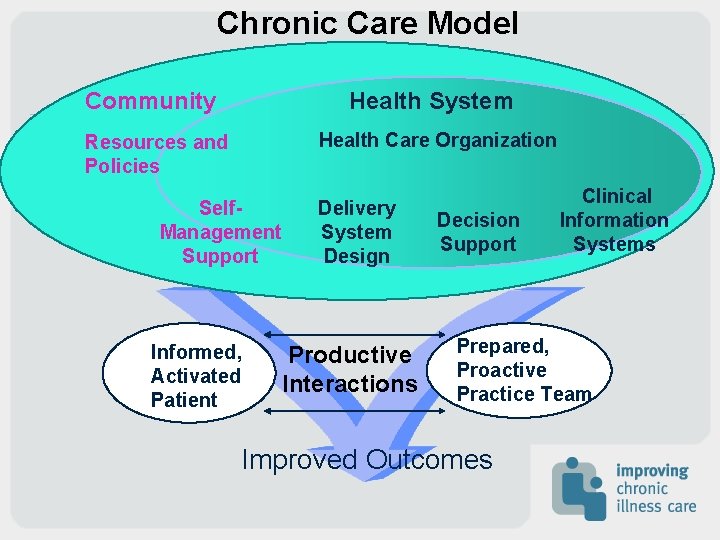
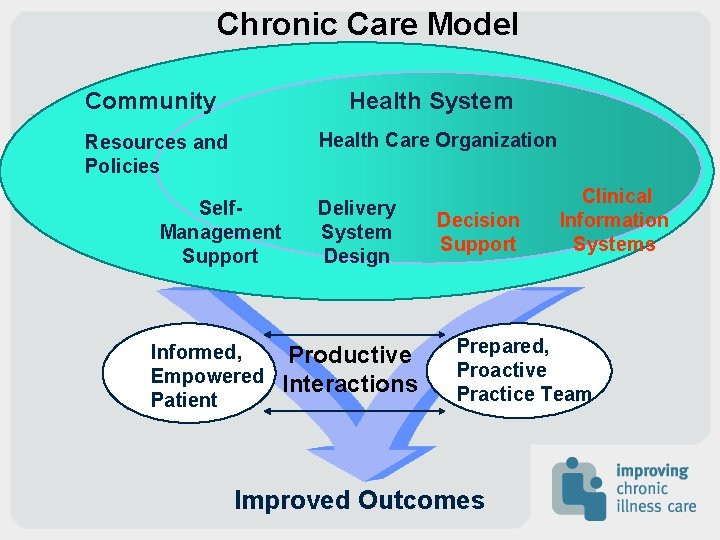
Chronic Care Model Community Health System Health Care Organization Resources and Policies Self. Management Support Informed, Activated Patient Delivery System Design Productive Interactions Decision Support Clinical Information Systems Prepared, Proactive Practice Team Improved Outcomes
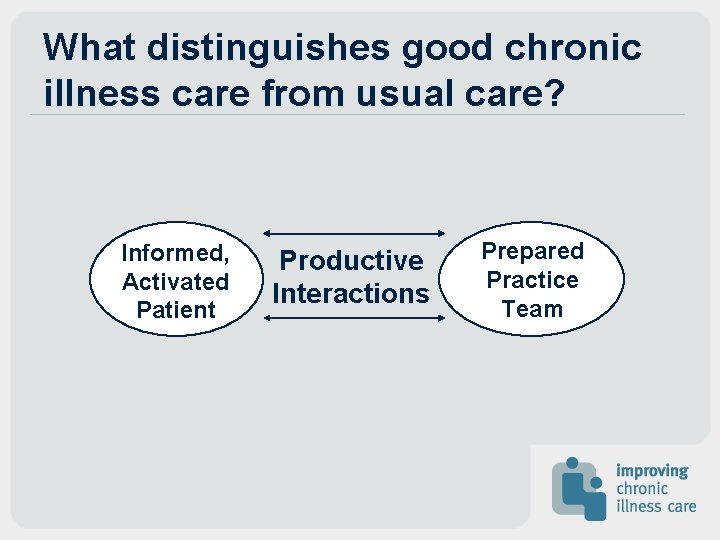
What distinguishes good chronic illness care from usual care? Informed, Activated Patient Productive Interactions Prepared Practice Team
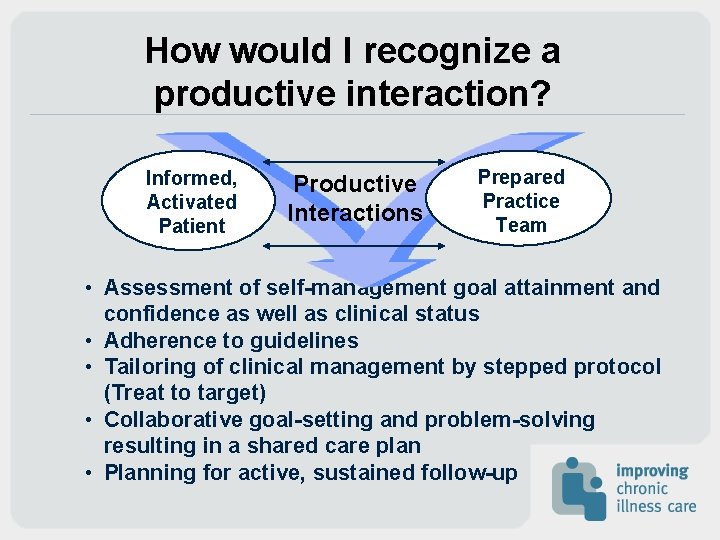
How would I recognize a productive interaction? Informed, Activated Patient Productive Interactions Prepared Practice Team • Assessment of self-management goal attainment and confidence as well as clinical status • Adherence to guidelines • Tailoring of clinical management by stepped protocol (Treat to target) • Collaborative goal-setting and problem-solving resulting in a shared care plan • Planning for active, sustained follow-up
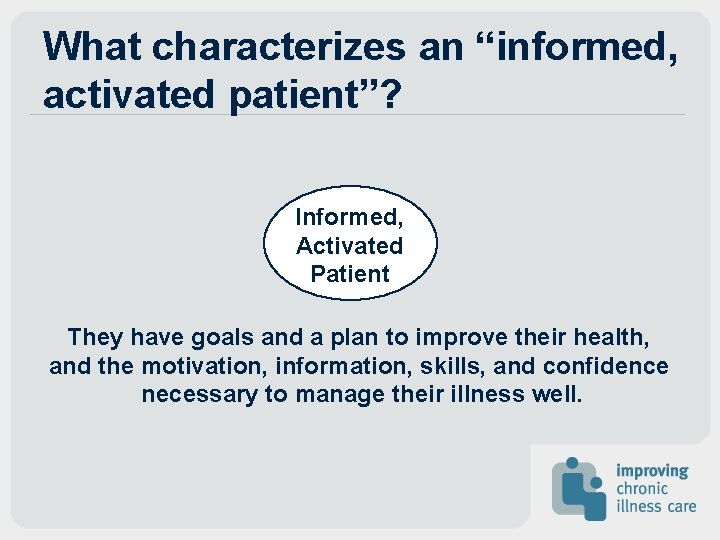
What characterizes an “informed, activated patient”? Informed, Activated Patient They have goals and a plan to improve their health, and the motivation, information, skills, and confidence necessary to manage their illness well.
Self-Management Support Goal To help patients take a more active role and be more competent managers of their health and healthcare.
Community Resources and Policies Goal To help patients access effective and useful services and resources in the surrounding community.
What characterizes a “prepared” practice team? Prepared Practice Team Practice team and interactions with patients organized to help patients reach clinical targets and self-management goals. .
Delivery System Design Goal To organize practice staff, schedules and other systems to assure that all patients receive planned, evidence-based care.
Decision Support Goal To assure that clinicians and other staff have the training, scientific information and system support to routinely provide evidence-based (adhere to guidelines) and patient-centered care.
Clinical Information System Goal To assure that clinicians and other staff have ready access to patient information on individuals and populations to help plan, deliver and monitor care.
Health Care Organization Goal To assure that practices within the organization have the motivation, support and resources needed to redesign their care systems.
Does the CCM Work? The Evidence Base
Organizing the Evidence 1. Randomized controlled trials (RCTs) of individual interventions to improve chronic care 2. Studies of the relationship between organizational characteristics and quality improvement 3. Evaluations of the use of the CCM in Quality Improvement 4. RCTs of CCM-based interventions 5. Cost-effectiveness studies
1: RCTs of interventions to improve chronic care results Studies in other conditions confirm that the elements found effective in diabetes care apply to other chronic conditions as well.
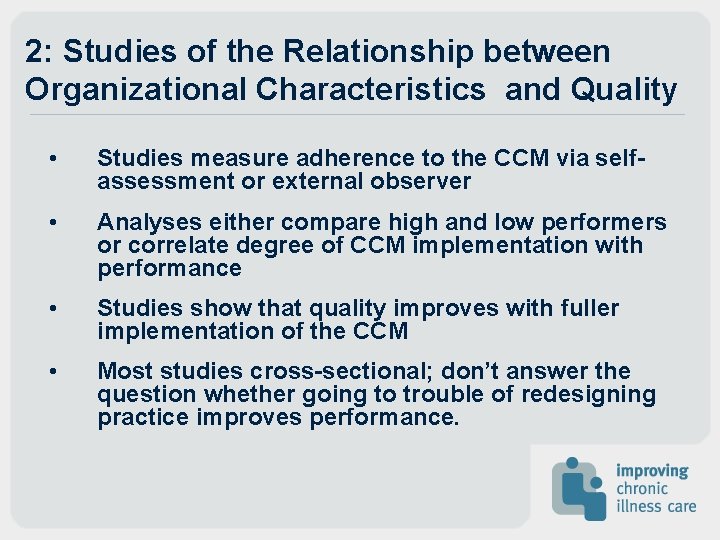
2: Studies of the Relationship between Organizational Characteristics and Quality • Studies measure adherence to the CCM via selfassessment or external observer • Analyses either compare high and low performers or correlate degree of CCM implementation with performance • Studies show that quality improves with fuller implementation of the CCM • Most studies cross-sectional; don’t answer the question whether going to trouble of redesigning practice improves performance.
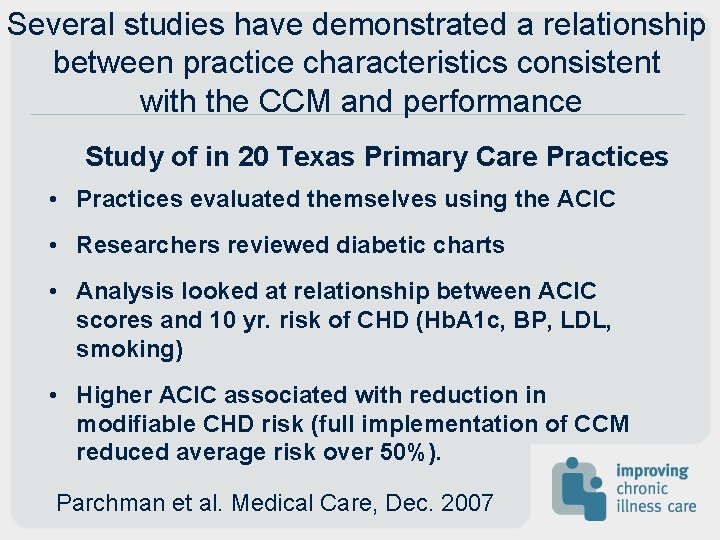
Several studies have demonstrated a relationship between practice characteristics consistent with the CCM and performance Study of in 20 Texas Primary Care Practices • Practices evaluated themselves using the ACIC • Researchers reviewed diabetic charts • Analysis looked at relationship between ACIC scores and 10 yr. risk of CHD (Hb. A 1 c, BP, LDL, smoking) • Higher ACIC associated with reduction in modifiable CHD risk (full implementation of CCM reduced average risk over 50%). Parchman et al. Medical Care, Dec. 2007
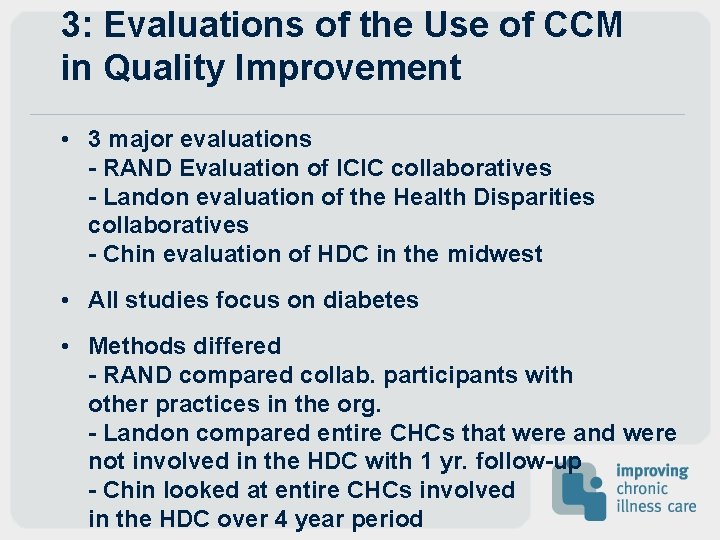
3: Evaluations of the Use of CCM in Quality Improvement • 3 major evaluations - RAND Evaluation of ICIC collaboratives - Landon evaluation of the Health Disparities collaboratives - Chin evaluation of HDC in the midwest • All studies focus on diabetes • Methods differed - RAND compared collab. participants with other practices in the org. - Landon compared entire CHCs that were and were not involved in the HDC with 1 yr. follow-up - Chin looked at entire CHCs involved in the HDC over 4 year period
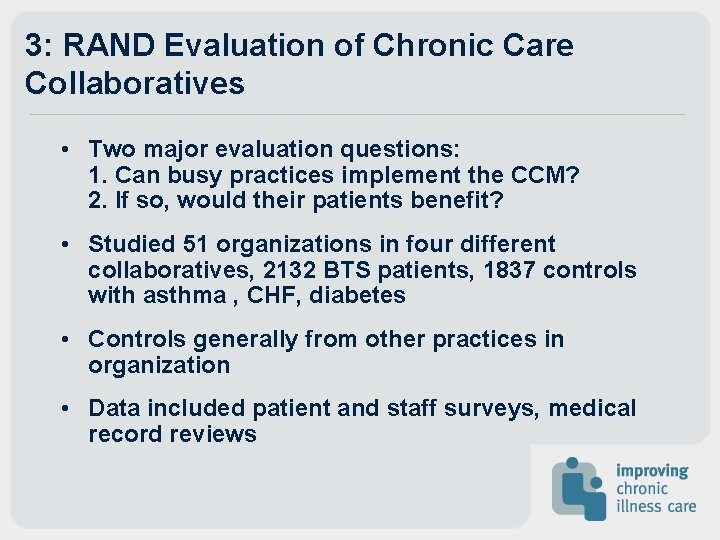
3: RAND Evaluation of Chronic Care Collaboratives • Two major evaluation questions: 1. Can busy practices implement the CCM? 2. If so, would their patients benefit? • Studied 51 organizations in four different collaboratives, 2132 BTS patients, 1837 controls with asthma , CHF, diabetes • Controls generally from other practices in organization • Data included patient and staff surveys, medical record reviews
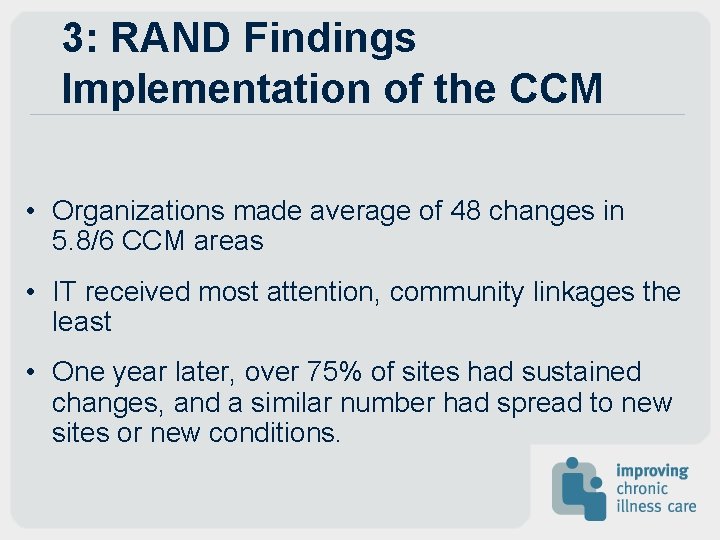
3: RAND Findings Implementation of the CCM • Organizations made average of 48 changes in 5. 8/6 CCM areas • IT received most attention, community linkages the least • One year later, over 75% of sites had sustained changes, and a similar number had spread to new sites or new conditions.
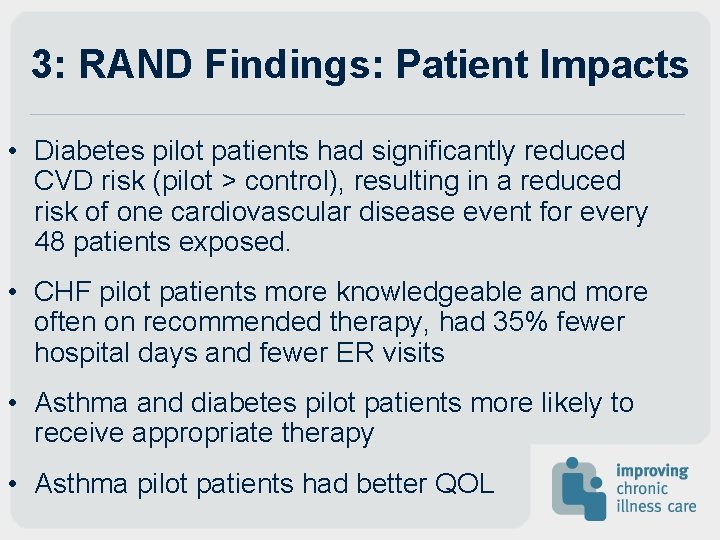
3: RAND Findings: Patient Impacts • Diabetes pilot patients had significantly reduced CVD risk (pilot > control), resulting in a reduced risk of one cardiovascular disease event for every 48 patients exposed. • CHF pilot patients more knowledgeable and more often on recommended therapy, had 35% fewer hospital days and fewer ER visits • Asthma and diabetes pilot patients more likely to receive appropriate therapy • Asthma pilot patients had better QOL
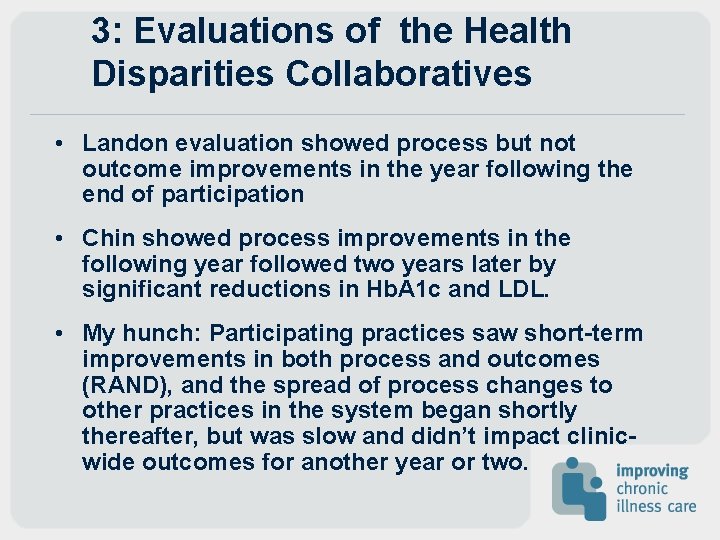
3: Evaluations of the Health Disparities Collaboratives • Landon evaluation showed process but not outcome improvements in the year following the end of participation • Chin showed process improvements in the following year followed two years later by significant reductions in Hb. A 1 c and LDL. • My hunch: Participating practices saw short-term improvements in both process and outcomes (RAND), and the spread of process changes to other practices in the system began shortly thereafter, but was slow and didn’t impact clinicwide outcomes for another year or two.
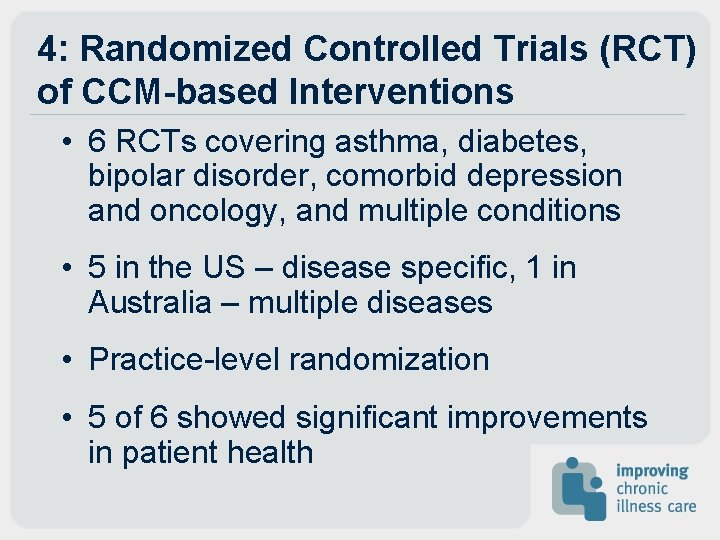
4: Randomized Controlled Trials (RCT) of CCM-based Interventions • 6 RCTs covering asthma, diabetes, bipolar disorder, comorbid depression and oncology, and multiple conditions • 5 in the US – disease specific, 1 in Australia – multiple diseases • Practice-level randomization • 5 of 6 showed significant improvements in patient health
5: Cost Study Results • Some evidence that improved disease control can reduce healthcare costs, especially for congestive heart failure, asthma (among populations with high ER and hospital use) and uncontrolled diabetes • Better depression control does not appear to reduce healthcare costs, but increases work productivity • Huang et al. showed that HDC participation had a favorable CE ratio
Challenges in Implementing the CCM • Practices spent considerable time searching for/developing tools • Some practices felt intimidated by taking on the whole model – asked for a sequence • Many changes were made in ways that were not sustainable logistically or financially (e. g. , double data entry) • CCM elements implemented as “special events” rather than part of routine care • Many achieve process improvements but outcomes don’t change
Why do practices who have changed their system not see improvements in key outcome measures (e. g. , measures of disease control)? The systems aren’t in place to get every patient to target! • Patients are getting regular planned interactions • Limited ability to intensify management of patients not meeting goals
What are the barriers? • QI efforts limited to “early adopters” • The hamster wheel • Belief in the quality of one’s practice – i. e. no meaningful measurement • Underdevelopment of practice team • Inability to access or use information technology or nonphysician staff to improve patient care • Practice isolation • Fee-for-service reimbursement that doesn’t reward high quality care, in fact discourages it
If you could fully implement the Chronic Care Model: How would the care of your average chronically ill patient be different? How would their experience change?
If you could fully implement the Chronic Care Model: How would the day to day experience of the clinical staff be different? Do you think work satisfaction would change?
Contact us: • www. improvingchroniccare. org thanks
Self-Management Support and Community Resources Judith Schaefer, MPH Mac. Coll Institute for Healthcare Innovation Center for Health Studies Group Health Cooperative Improving Chronic Illness Care A national program of the Robert Wood Johnson Foundation IHI National Forum December 10, 2007
Chronic Care Model Community Health System Health Care Organization Resources and Policies Self. Management Support Informed, Activated Patient Delivery System Design Productive Interactions Decision Support Clinical Information Systems Prepared, Proactive Practice Team Improved Outcomes
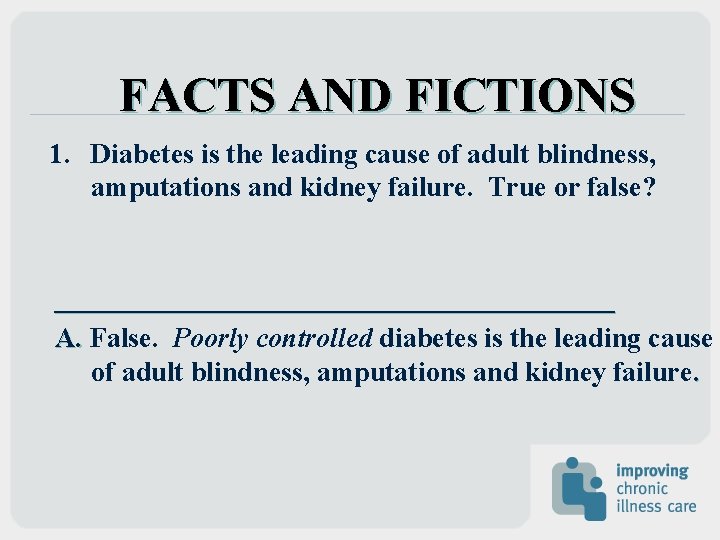
FACTS AND FICTIONS 1. Diabetes is the leading cause of adult blindness, amputations and kidney failure. True or false? ____________________ A. False. Poorly controlled diabetes is the leading cause of adult blindness, amputations and kidney failure.
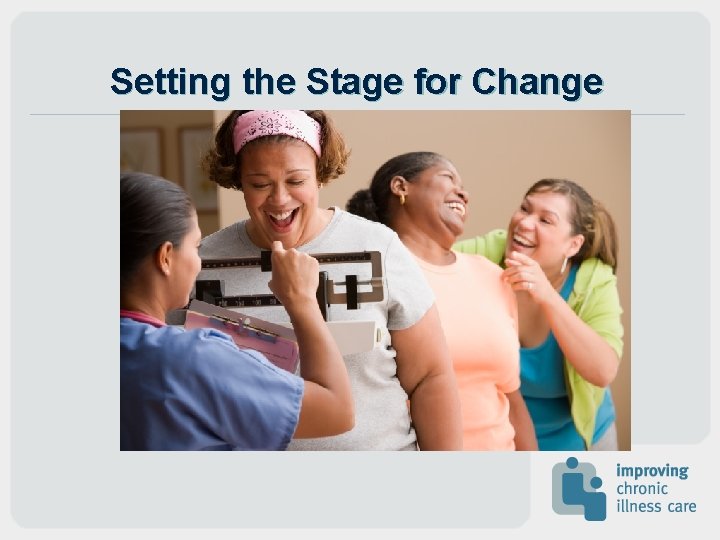
Setting the Stage for Change
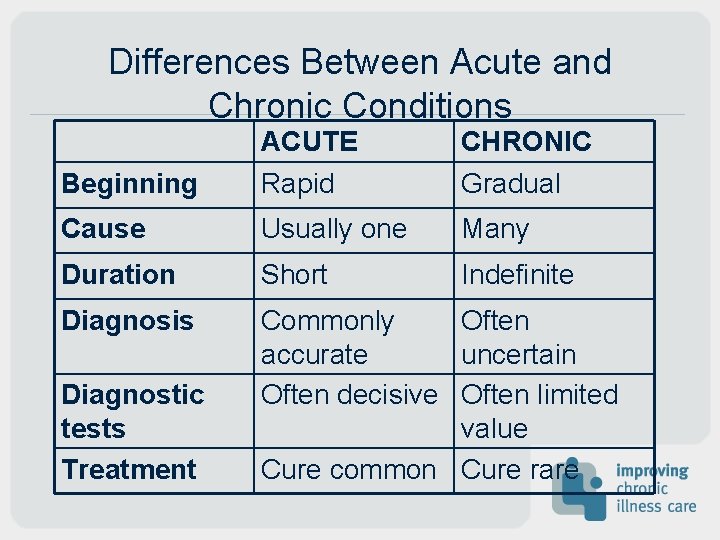
Differences Between Acute and Chronic Conditions Beginning ACUTE Rapid CHRONIC Gradual Cause Usually one Many Duration Short Indefinite Diagnosis Commonly Often accurate uncertain Often decisive Often limited value Cure common Cure rare Diagnostic tests Treatment
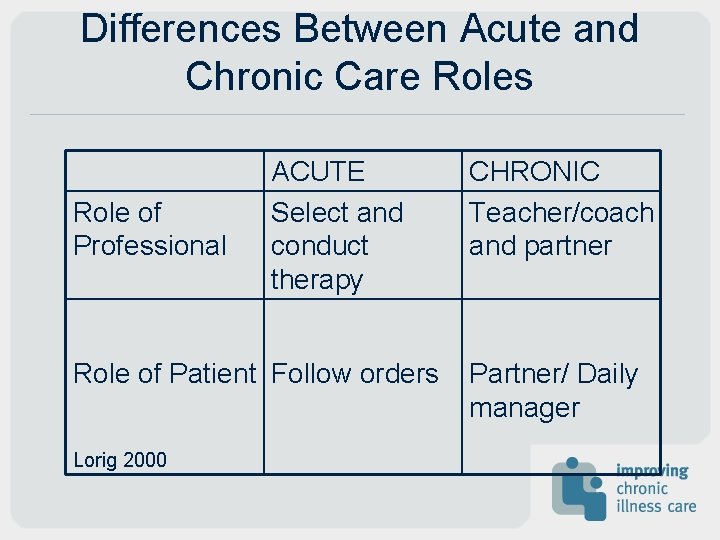
Differences Between Acute and Chronic Care Roles Role of Professional ACUTE Select and conduct therapy Role of Patient Follow orders Lorig 2000 CHRONIC Teacher/coach and partner Partner/ Daily manager
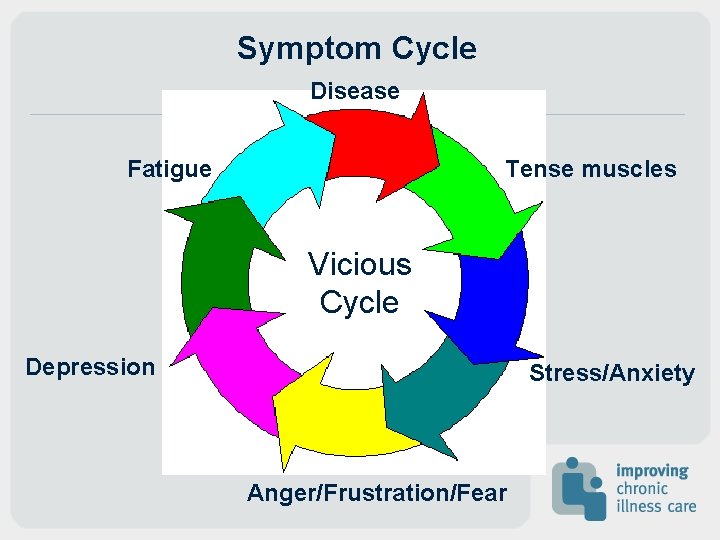
Symptom Cycle Disease Fatigue Tense muscles Vicious Cycle Depression Stress/Anxiety Anger/Frustration/Fear
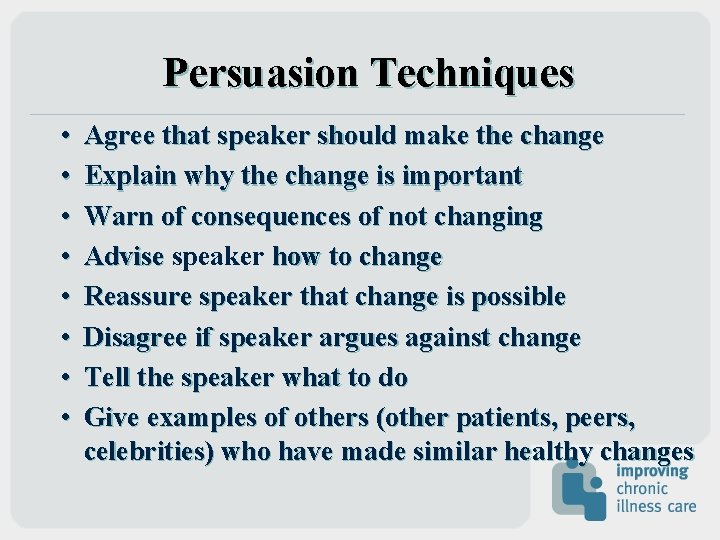
Persuasion Techniques • • Agree that speaker should make the change Explain why the change is important Warn of consequences of not changing Advise speaker how to change Reassure speaker that change is possible Disagree if speaker argues against change Tell the speaker what to do Give examples of others (other patients, peers, celebrities) who have made similar healthy changes
The Patient-Focused Approach • BELIEVE SELF-MANAGEMENT IS WORTHWHILE: The patient must feel there is hope and benefit in doing a good job. • KNOW WHAT TO DO. The patient must have a clear and achievable plan for selfmanagement
Behavior Change Strategies 1. Begin with your patient’s interests 2. Believe that your patient is motivated to live a long, healthy life 3. Help your patient determine exactly what they might want to change 4. Develop a reasonable, detailed action plan
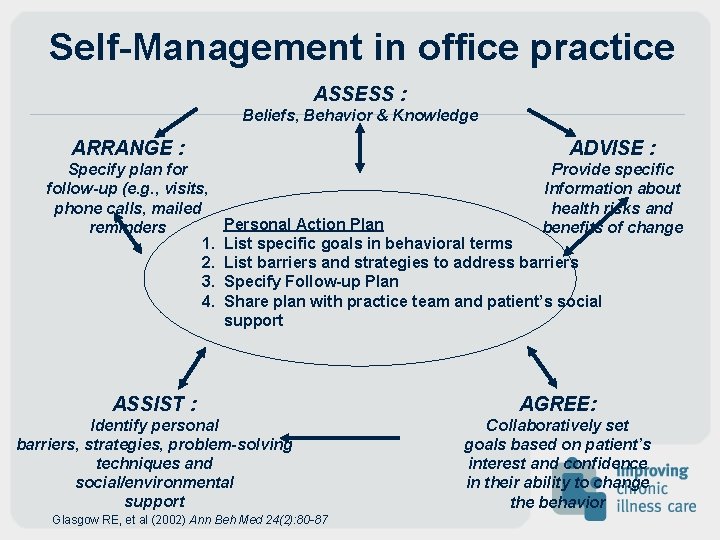
Self-Management in office practice ASSESS : Beliefs, Behavior & Knowledge ARRANGE : ADVISE : Specify plan for follow-up (e. g. , visits, phone calls, mailed reminders 1. 2. 3. 4. Provide specific Information about health risks and benefits of change Personal Action Plan List specific goals in behavioral terms List barriers and strategies to address barriers Specify Follow-up Plan Share plan with practice team and patient’s social support ASSIST : AGREE: Identify personal barriers, strategies, problem-solving techniques and social/environmental support Collaboratively set goals based on patient’s interest and confidence in their ability to change the behavior Glasgow RE, et al (2002) Ann Beh Med 24(2): 80 -87
Community Resources • Encourage patients to participate in effective community programs • Form partnerships with community organizations to support and develop interventions that fill gaps in needed services • Advocate for policies to improve care
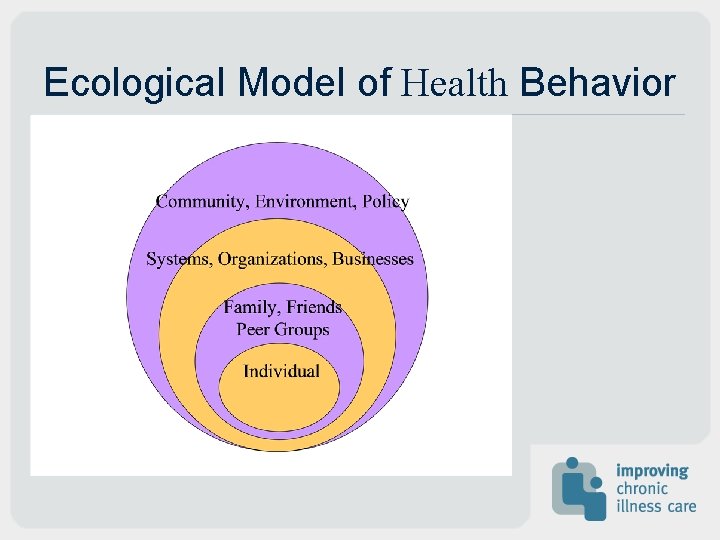
Ecological Model of Health Behavior
Promotoras/Community Health Workers
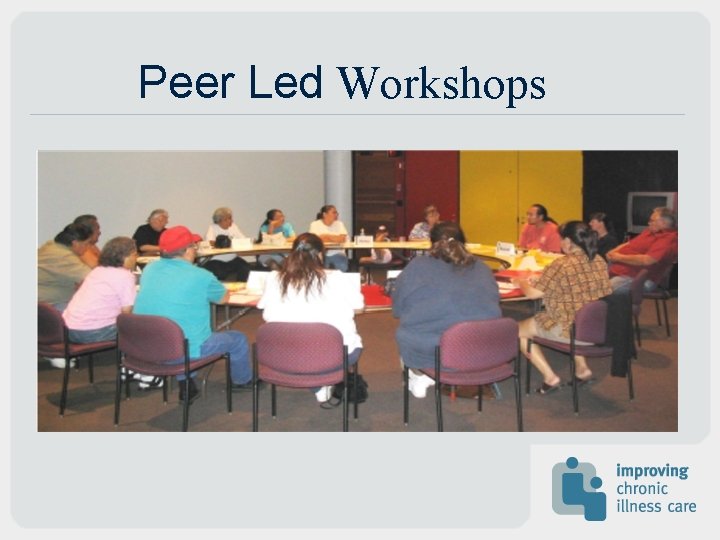
Peer Led Workshops
Outreach
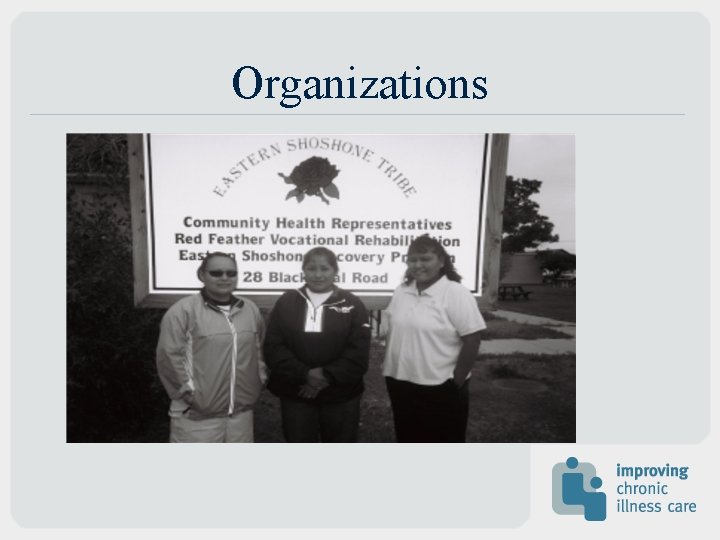
Organizations
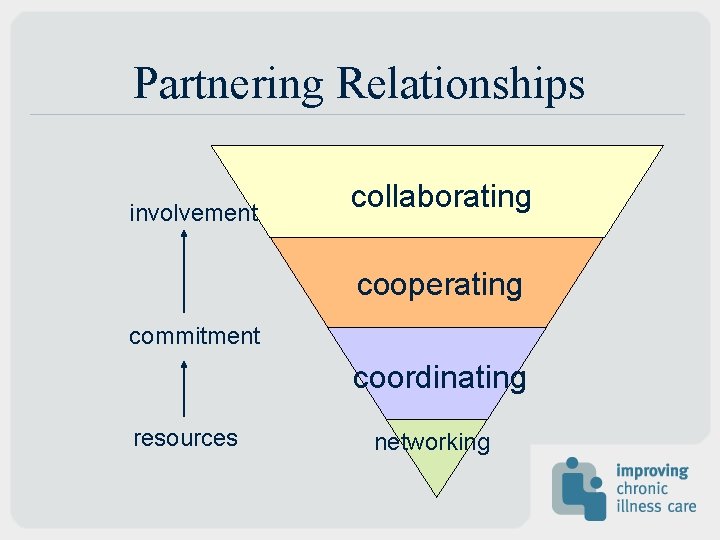
Partnering Relationships involvement collaborating cooperating commitment coordinating resources networking
Environment and Policy
Walkable Neighborhoods/ Cyclovia
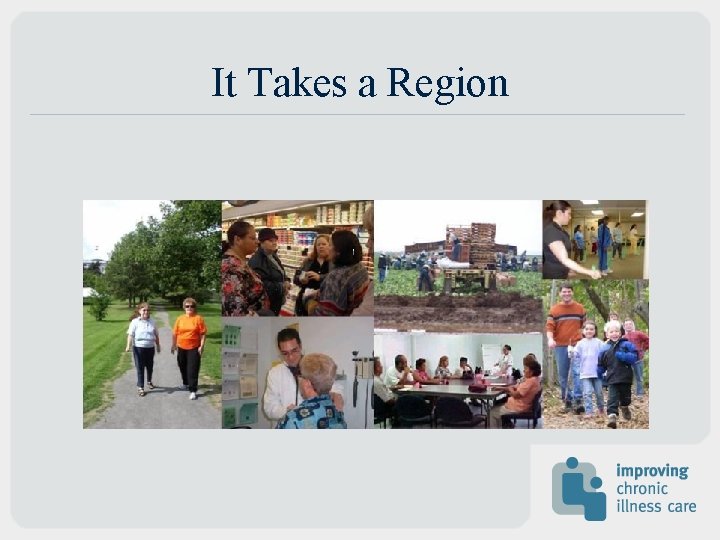
It Takes a Region
A Tour of the Model: Clinical Information Systems and Decision Support Brian Austin December 10 2007 Improving Chronic Illness Care is supported by The Robert Wood Johnson Foundation Grant # 48769 IHI National Forum December 10, 2007
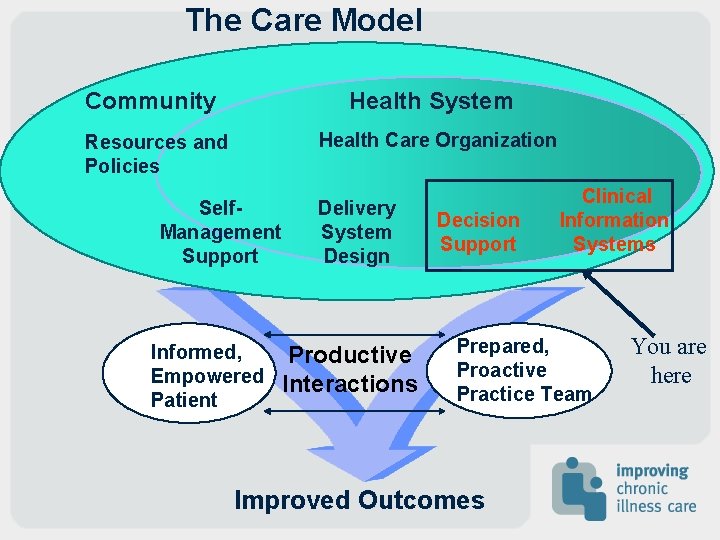
The Care Model Community Health System Health Care Organization Resources and Policies Self. Management Support Informed, Empowered Patient Delivery System Design Productive Interactions Decision Support Clinical Information Systems Prepared, Proactive Practice Team Improved Outcomes You are here
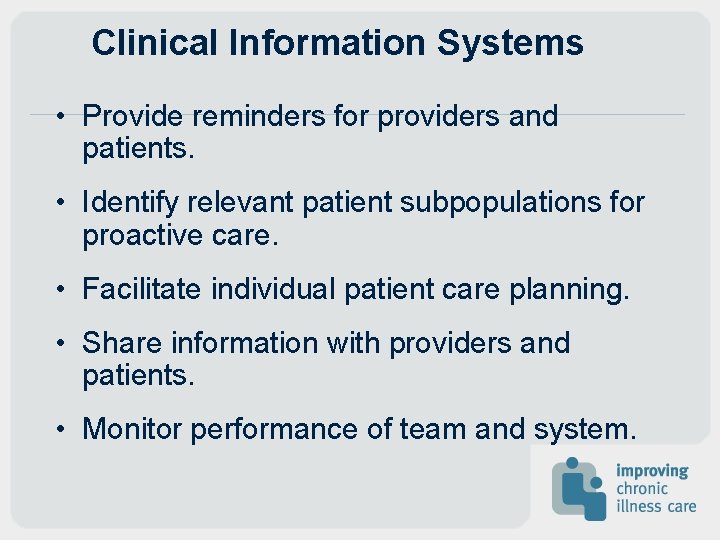
Clinical Information Systems • Provide reminders for providers and patients. • Identify relevant patient subpopulations for proactive care. • Facilitate individual patient care planning. • Share information with providers and patients. • Monitor performance of team and system.
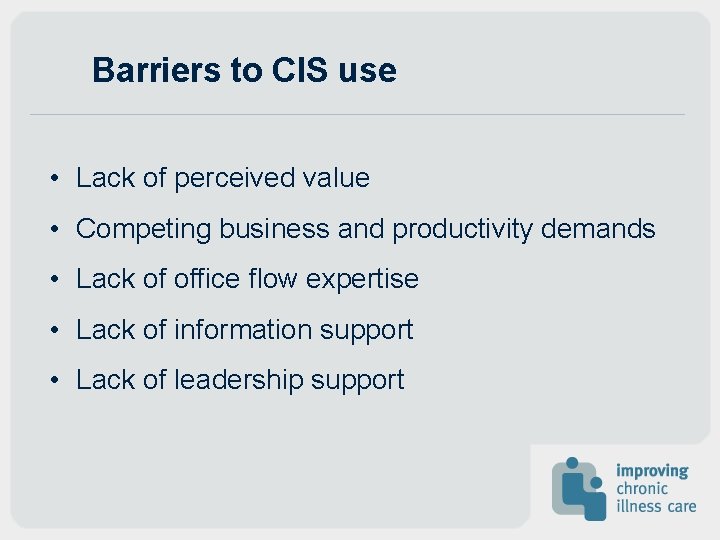
Barriers to CIS use • Lack of perceived value • Competing business and productivity demands • Lack of office flow expertise • Lack of information support • Lack of leadership support
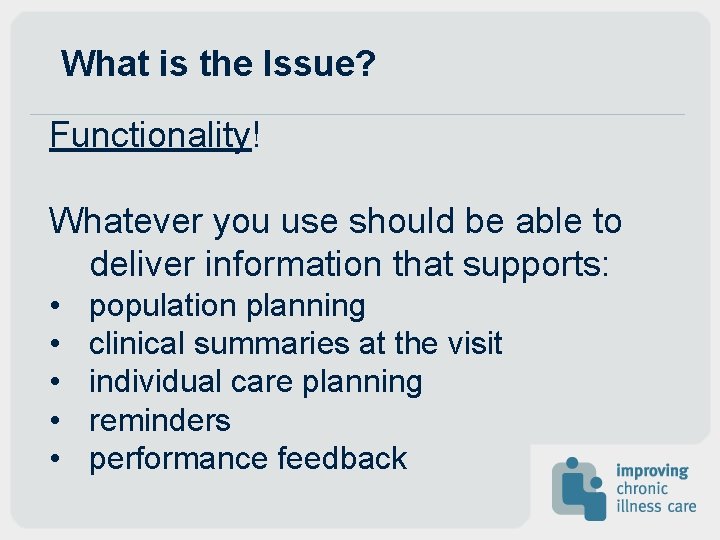
What is the Issue? Functionality! Whatever you use should be able to deliver information that supports: • • • population planning clinical summaries at the visit individual care planning reminders performance feedback
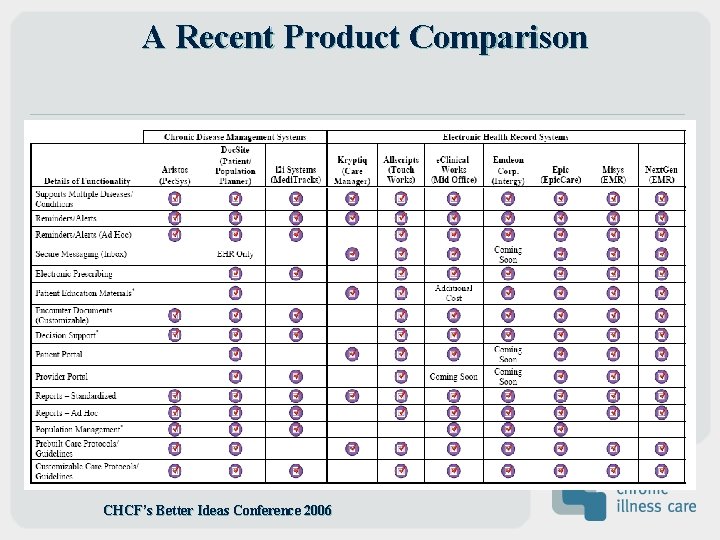
A Recent Product Comparison CHCF’s Better Ideas Conference 2006
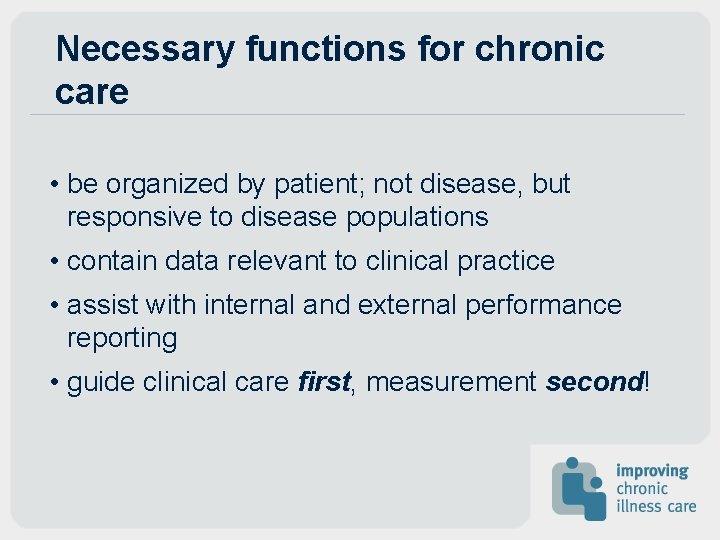
Necessary functions for chronic care • be organized by patient; not disease, but responsive to disease populations • contain data relevant to clinical practice • assist with internal and external performance reporting • guide clinical care first, measurement second!
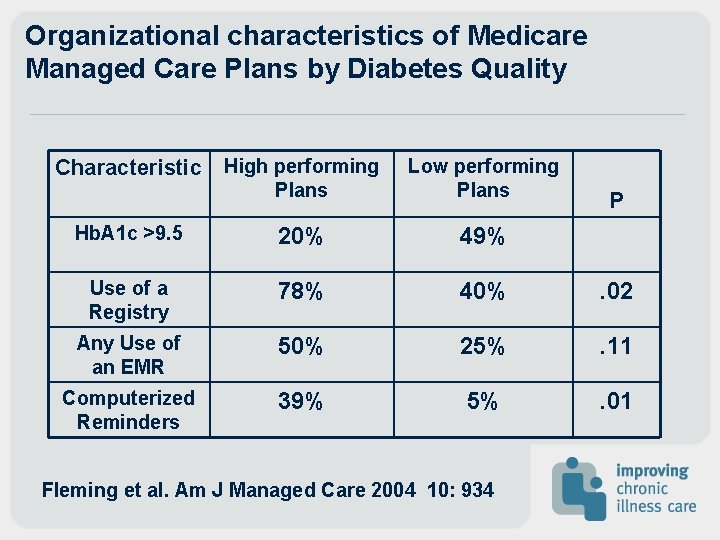
Organizational characteristics of Medicare Managed Care Plans by Diabetes Quality High performing Plans Low performing Plans Hb. A 1 c >9. 5 20% 49% Use of a Registry 78% 40% . 02 Any Use of an EMR 50% 25% . 11 Computerized Reminders 39% 5% . 01 Characteristic Fleming et al. Am J Managed Care 2004 10: 934 P
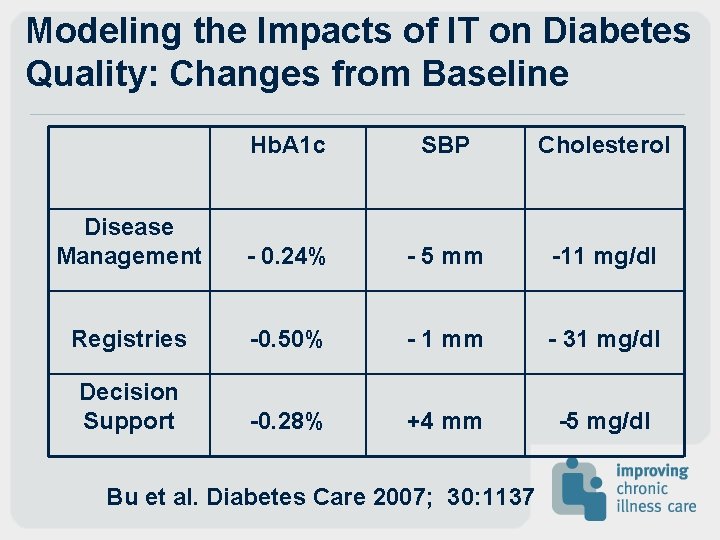
Modeling the Impacts of IT on Diabetes Quality: Changes from Baseline Hb. A 1 c SBP Cholesterol Disease Management - 0. 24% - 5 mm -11 mg/dl Registries -0. 50% - 1 mm - 31 mg/dl Decision Support -0. 28% +4 mm -5 mg/dl Bu et al. Diabetes Care 2007; 30: 1137
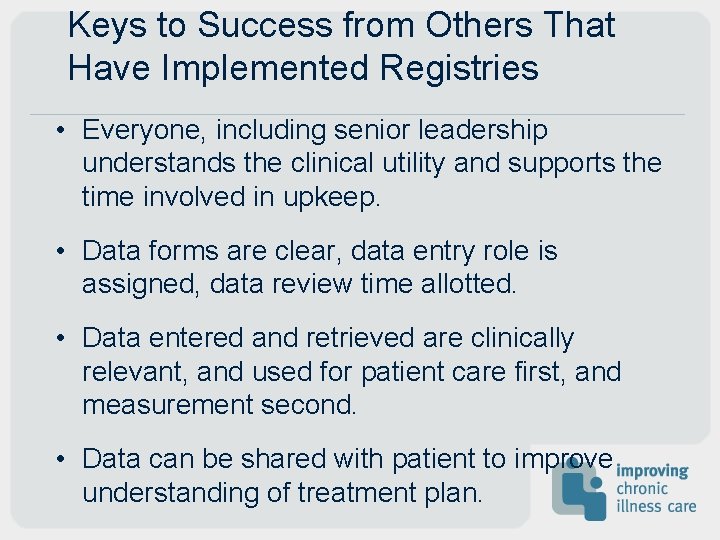
Keys to Success from Others That Have Implemented Registries • Everyone, including senior leadership understands the clinical utility and supports the time involved in upkeep. • Data forms are clear, data entry role is assigned, data review time allotted. • Data entered and retrieved are clinically relevant, and used for patient care first, and measurement second. • Data can be shared with patient to improve understanding of treatment plan.
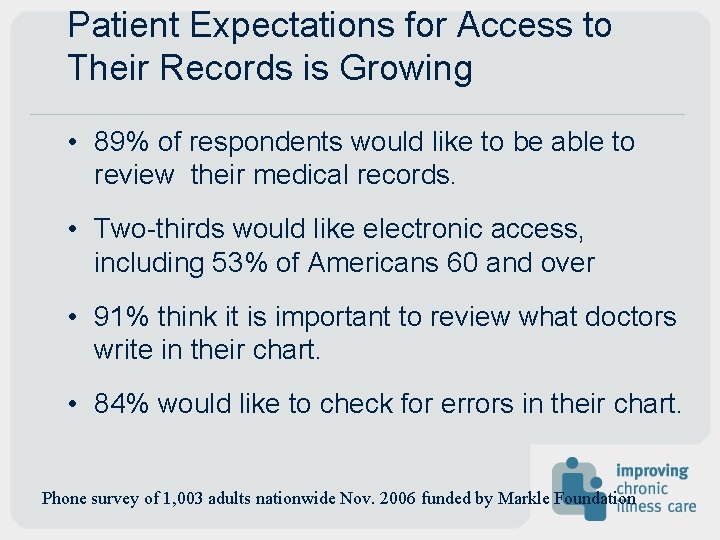
Patient Expectations for Access to Their Records is Growing • 89% of respondents would like to be able to review their medical records. • Two-thirds would like electronic access, including 53% of Americans 60 and over • 91% think it is important to review what doctors write in their chart. • 84% would like to check for errors in their chart. Phone survey of 1, 003 adults nationwide Nov. 2006 funded by Markle Foundation
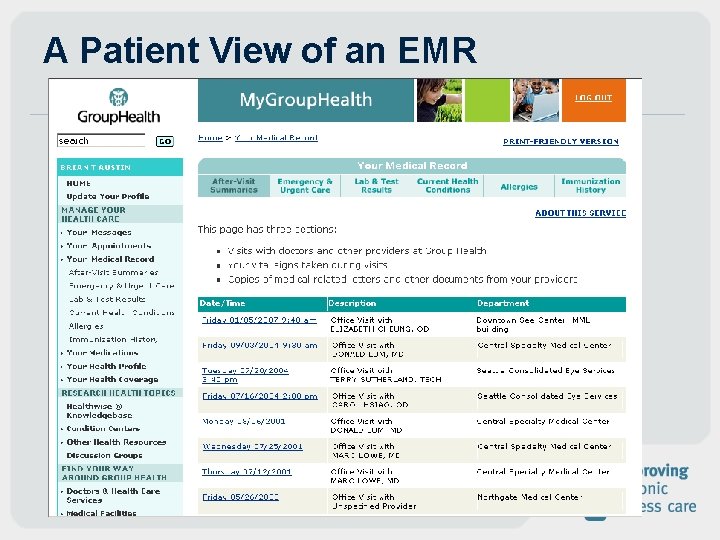
A Patient View of an EMR
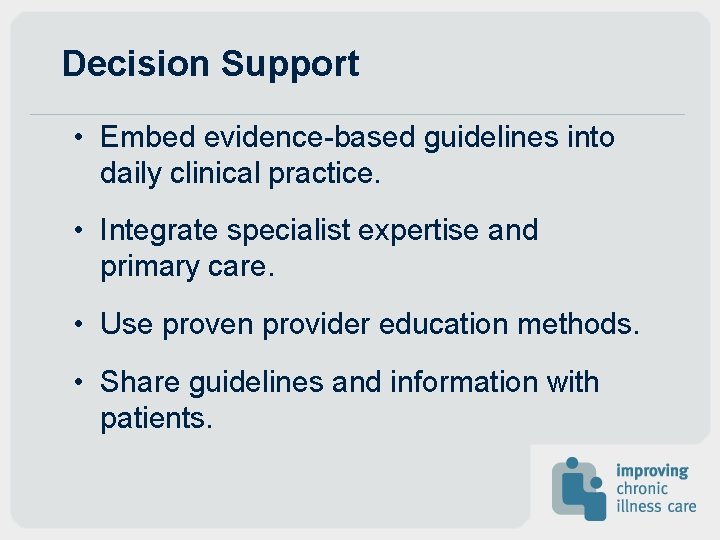
Decision Support • Embed evidence-based guidelines into daily clinical practice. • Integrate specialist expertise and primary care. • Use proven provider education methods. • Share guidelines and information with patients.
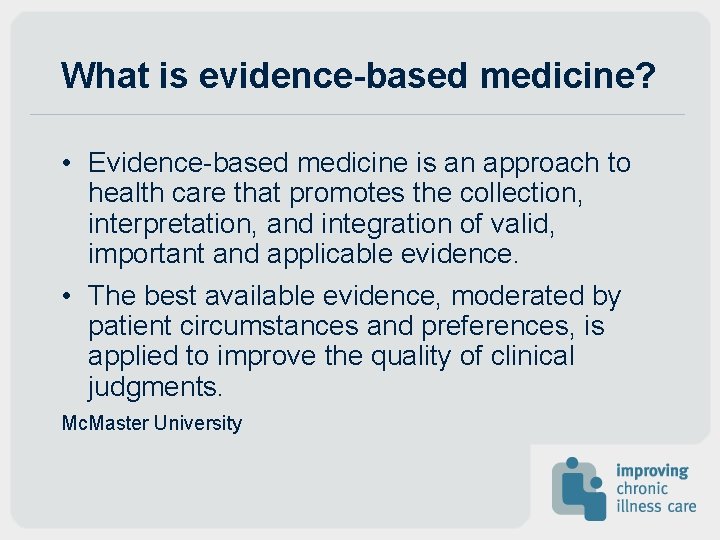
What is evidence-based medicine? • Evidence-based medicine is an approach to health care that promotes the collection, interpretation, and integration of valid, important and applicable evidence. • The best available evidence, moderated by patient circumstances and preferences, is applied to improve the quality of clinical judgments. Mc. Master University
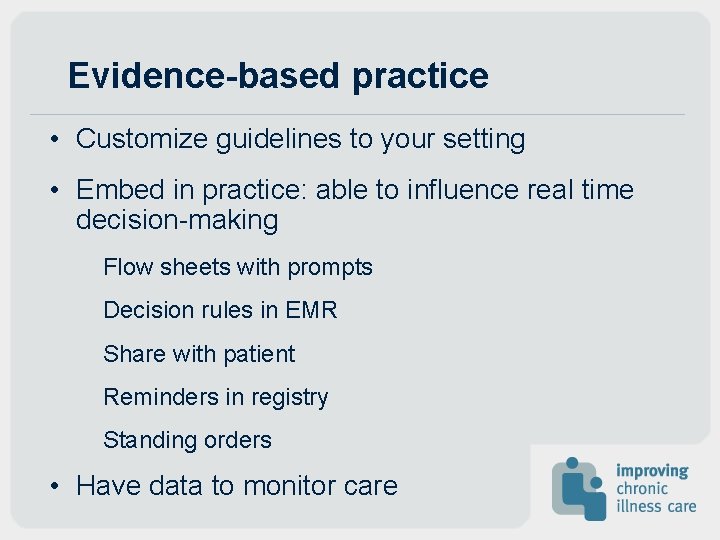
Evidence-based practice • Customize guidelines to your setting • Embed in practice: able to influence real time decision-making Flow sheets with prompts Decision rules in EMR Share with patient Reminders in registry Standing orders • Have data to monitor care
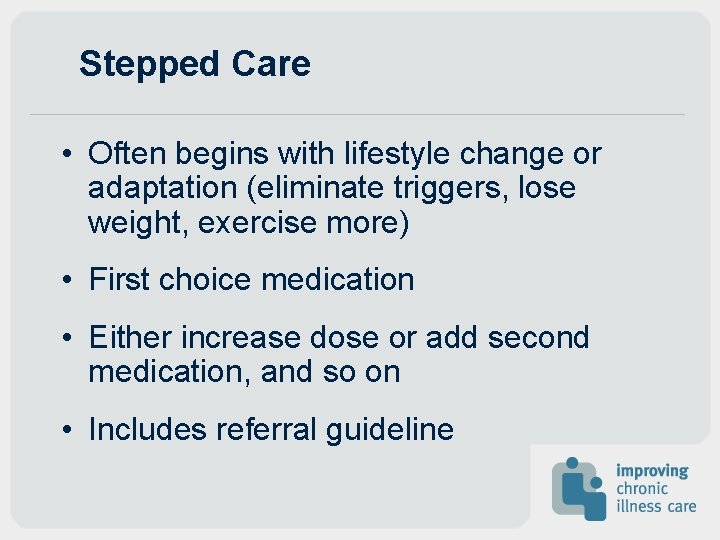
Stepped Care • Often begins with lifestyle change or adaptation (eliminate triggers, lose weight, exercise more) • First choice medication • Either increase dose or add second medication, and so on • Includes referral guideline
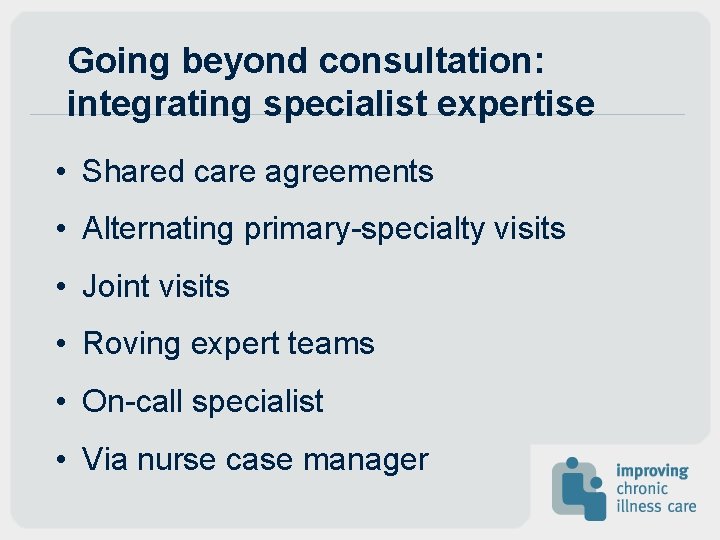
Going beyond consultation: integrating specialist expertise • Shared care agreements • Alternating primary-specialty visits • Joint visits • Roving expert teams • On-call specialist • Via nurse case manager
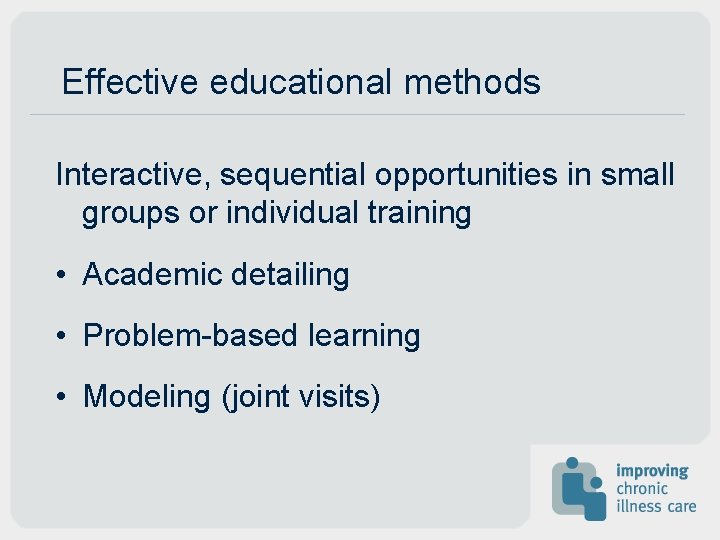
Effective educational methods Interactive, sequential opportunities in small groups or individual training • Academic detailing • Problem-based learning • Modeling (joint visits)
Effective educational methods • Build knowledge over time • Include all clinic staff • Involve changing practice, not just acquiring knowledge Evans et al, Pediatrics 1997; 99: 157
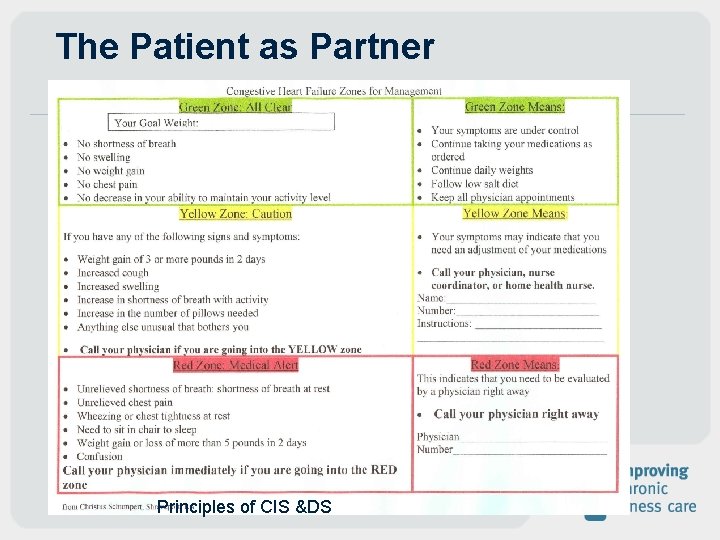
The Patient as Partner Principles of CIS &DS
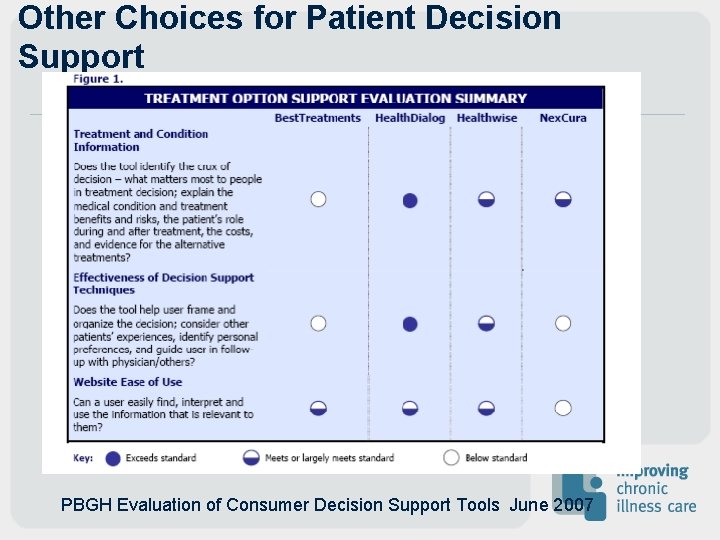
Other Choices for Patient Decision Support PBGH Evaluation of Consumer Decision Support Tools June 2007
Ways to share guidelines with patients • Stoplight tools • Expectations for care • Wallet cards • Web sites • Workbooks
Chronic Care Model Community Health System Health Care Organization Resources and Policies Self. Management Support Informed, Empowered Patient Delivery System Design Productive Interactions Decision Support Clinical Information Systems Prepared, Proactive Practice Team Improved Outcomes