Stanford Chronic Disease SelfManagement Program Kate Lorig RN
- Slides: 24
Stanford Chronic Disease Self-Management Program
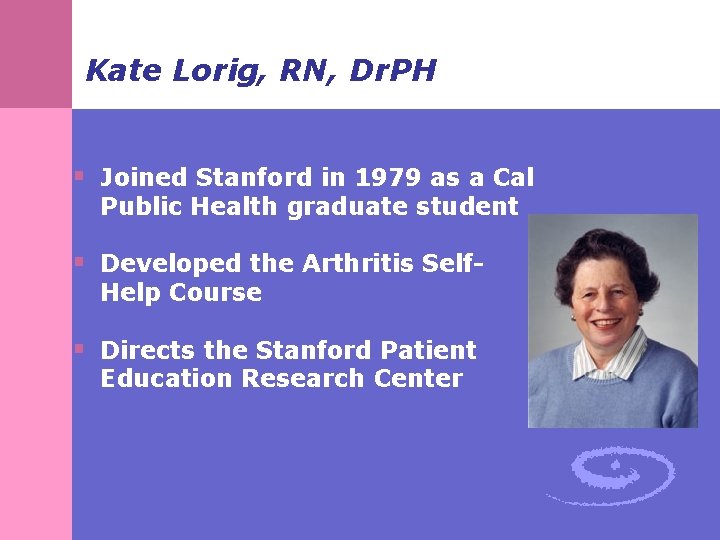
Kate Lorig, RN, Dr. PH § Joined Stanford in 1979 as a Cal Public Health graduate student § Developed the Arthritis Self. Help Course § Directs the Stanford Patient Education Research Center
Original Research 1991 -1996 § RCT funded by Agency for Health Care Research & Policy and CA Tobacco Money § Purpose: To develop and evaluate a community-based, self-management program that assists people with chronic illness
Tested Program Features § Based on self-efficacy: the confidence one has that he/she can master a new skill or affect one’s own health § Workshop content was derived from focus groups of people with CI
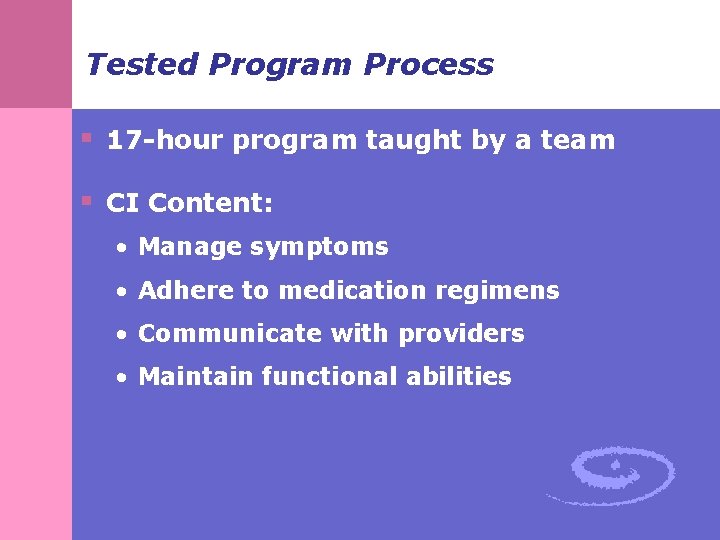
Tested Program Process § 17 -hour program taught by a team § CI Content: • Manage symptoms • Adhere to medication regimens • Communicate with providers • Maintain functional abilities
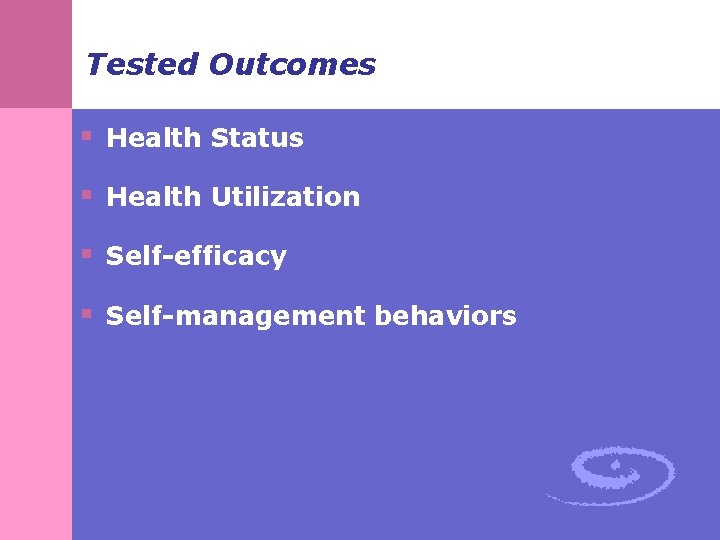
Tested Outcomes § Health Status § Health Utilization § Self-efficacy § Self-management behaviors
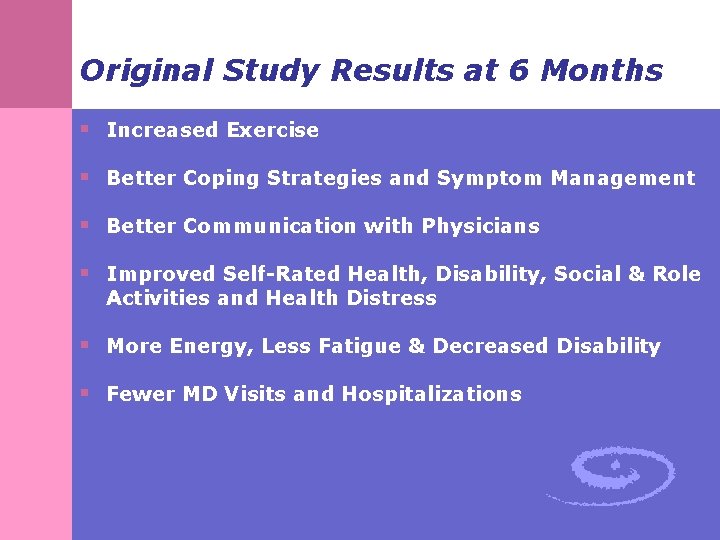
Original Study Results at 6 Months § Increased Exercise § Better Coping Strategies and Symptom Management § Better Communication with Physicians § Improved Self-Rated Health, Disability, Social & Role Activities and Health Distress § More Energy, Less Fatigue & Decreased Disability § Fewer MD Visits and Hospitalizations
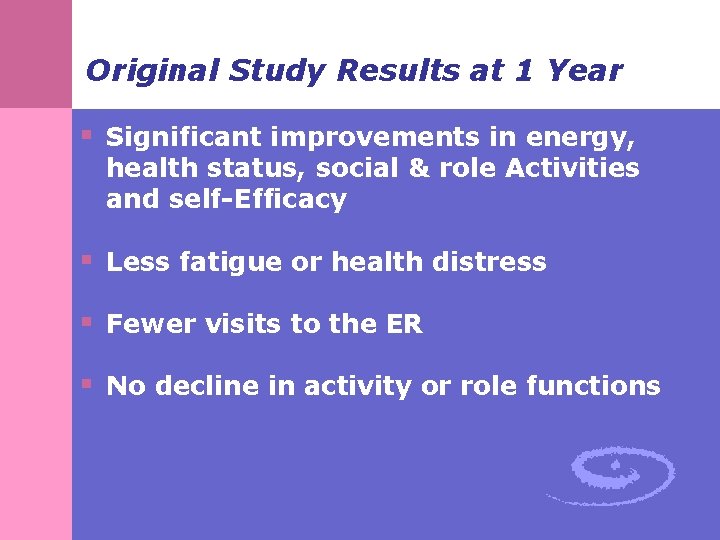
Original Study Results at 1 Year § Significant improvements in energy, health status, social & role Activities and self-Efficacy § Less fatigue or health distress § Fewer visits to the ER § No decline in activity or role functions
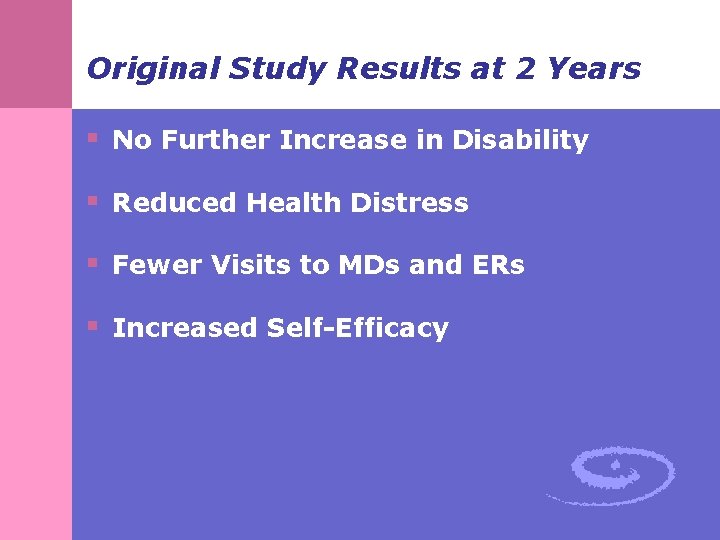
Original Study Results at 2 Years § No Further Increase in Disability § Reduced Health Distress § Fewer Visits to MDs and ERs § Increased Self-Efficacy
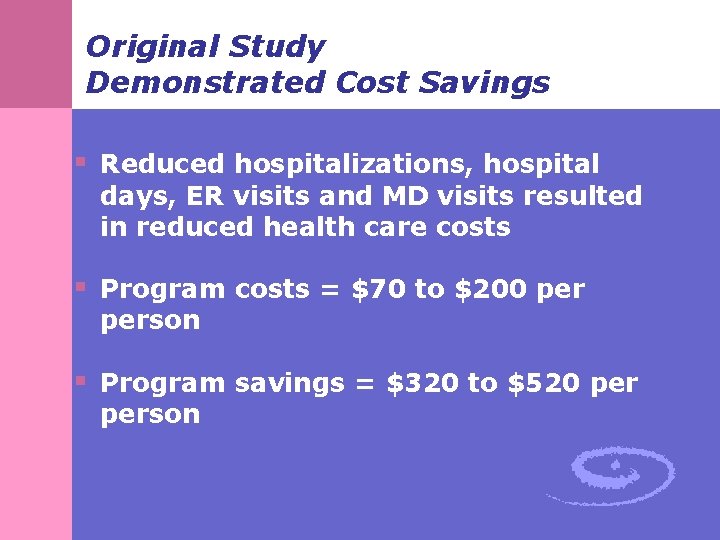
Original Study Demonstrated Cost Savings § Reduced hospitalizations, hospital days, ER visits and MD visits resulted in reduced health care costs § Program costs = $70 to $200 person § Program savings = $320 to $520 person
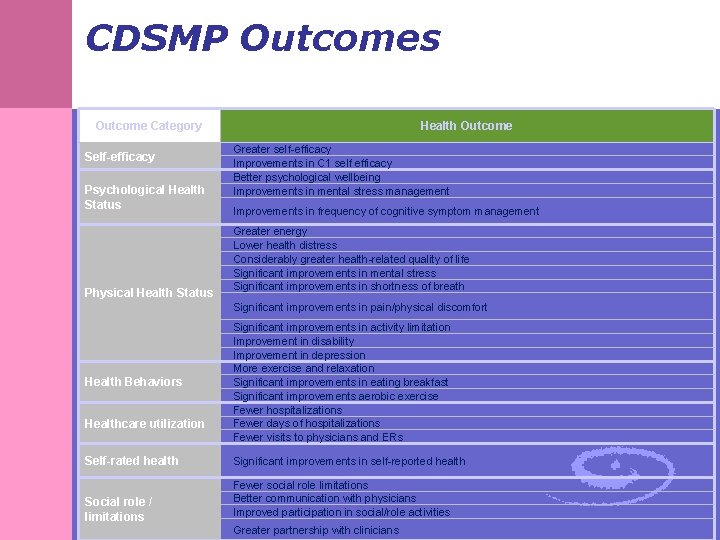
CDSMP Outcomes Outcome Category Self-efficacy Psychological Health Status Physical Health Status Health Outcome Greater self-efficacy Improvements in C 1 self efficacy Better psychological wellbeing Improvements in mental stress management Improvements in frequency of cognitive symptom management Greater energy Lower health distress Considerably greater health-related quality of life Significant improvements in mental stress Significant improvements in shortness of breath Significant improvements in pain/physical discomfort Health Behaviors Healthcare utilization Significant improvements in activity limitation Improvement in disability Improvement in depression More exercise and relaxation Significant improvements in eating breakfast Significant improvements aerobic exercise Fewer hospitalizations Fewer days of hospitalizations Fewer visits to physicians and ERs Self-rated health Significant improvements in self-reported health Social role / limitations Fewer social role limitations Better communication with physicians Improved participation in social/role activities Greater partnership with clinicians
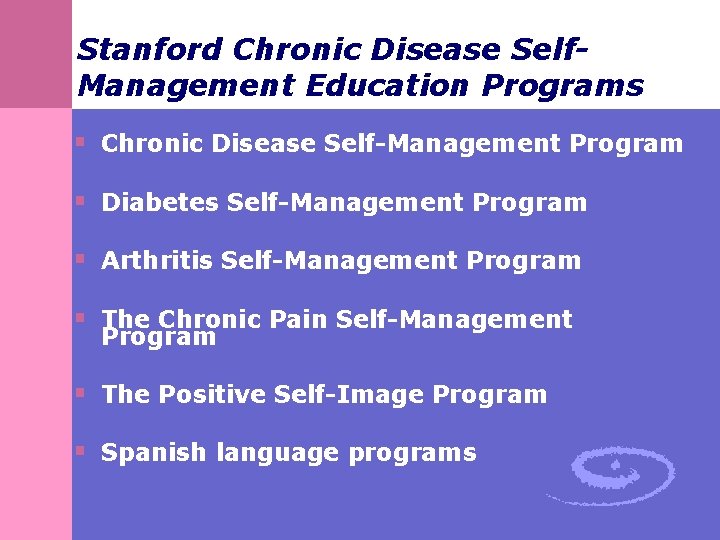
Stanford Chronic Disease Self. Management Education Programs § Chronic Disease Self-Management Program § Diabetes Self-Management Program § Arthritis Self-Management Program § The Chronic Pain Self-Management Program § The Positive Self-Image Program § Spanish language programs
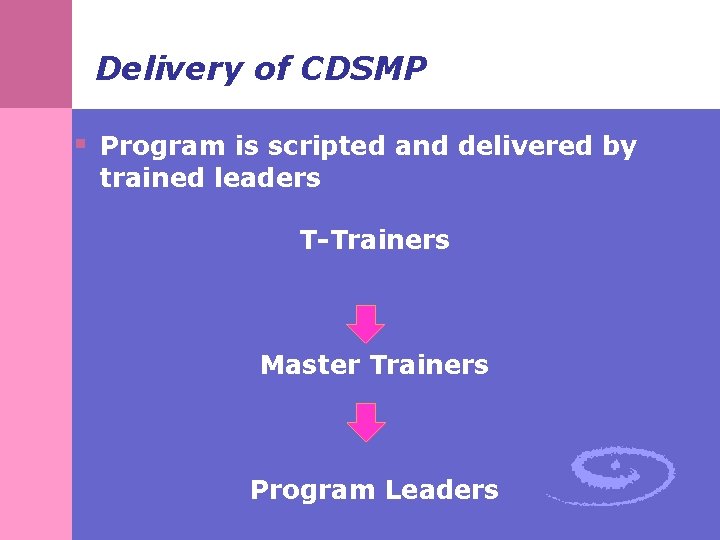
Delivery of CDSMP § Program is scripted and delivered by trained leaders T-Trainers Master Trainers Program Leaders
CDSMP “HEALTHIER LIVING”: About the Program § Designed to help people better manage chronic health conditions and live a happier, healthier life § Six-week workshop § Highly scripted and structured to protect fidelity § Group format–typically led by 2 peers
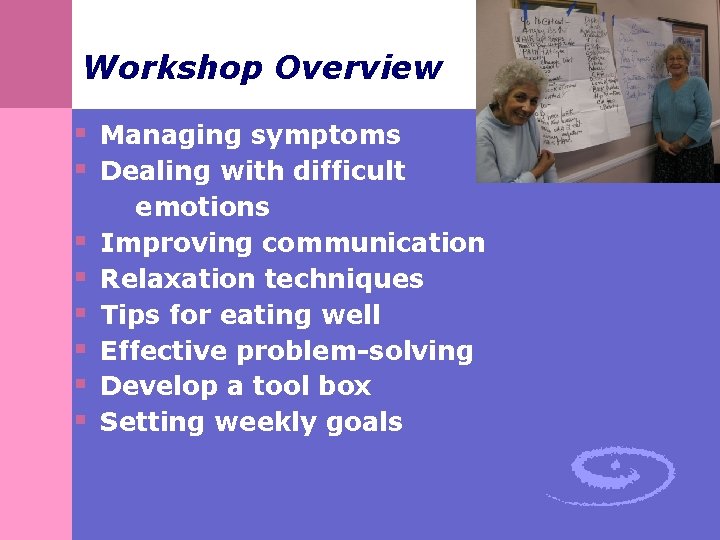
Workshop Overview § Managing symptoms § Dealing with difficult § § § emotions Improving communication Relaxation techniques Tips for eating well Effective problem-solving Develop a tool box Setting weekly goals
Supports “Healthy Behavior” Change § Make the new behavior as easy to do as possible and help participants develop individualized action plans or routines § Provide structured reinforcement to monitor (and celebrate!) progress § Provide support through group and facility-based programming § Use peers to help reinforce desired behavior Thanks to Dr. Rachel Seymour for permission to use slides
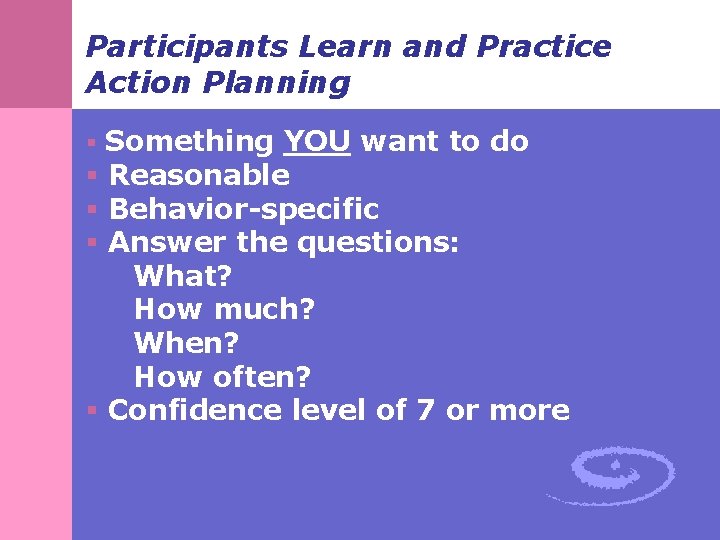
Participants Learn and Practice Action Planning § Something YOU want to do § Reasonable § Behavior-specific § Answer the questions: What? How much? When? How often? § Confidence level of 7 or more
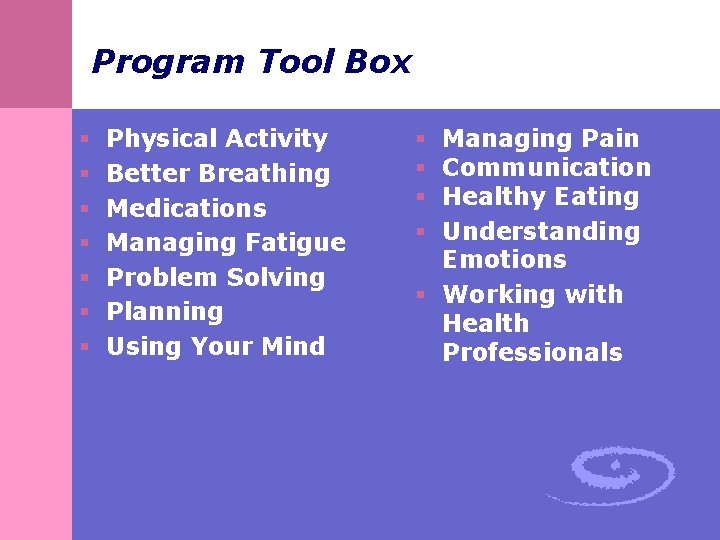
Program Tool Box § § § § Physical Activity Better Breathing Medications Managing Fatigue Problem Solving Planning Using Your Mind Managing Pain Communication Healthy Eating Understanding Emotions § Working with Health Professionals § §
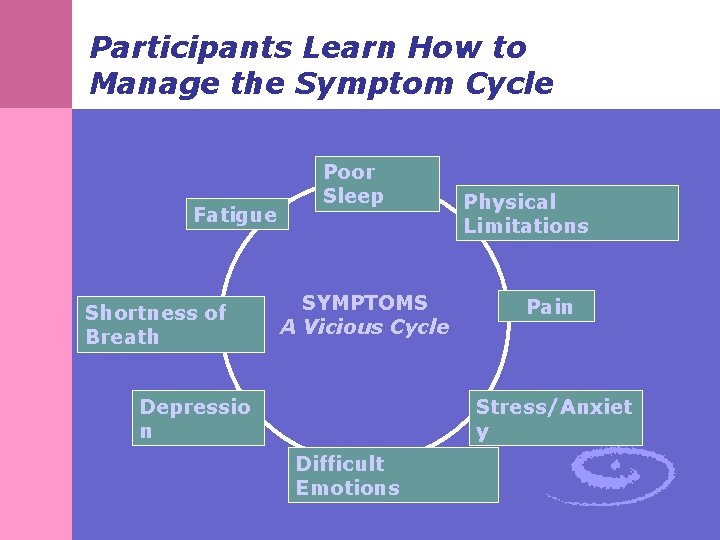
Participants Learn How to Manage the Symptom Cycle Fatigue Shortness of Breath Poor Sleep SYMPTOMS A Vicious Cycle Physical Limitations Pain Stress/Anxiet y Depressio n Difficult Emotions
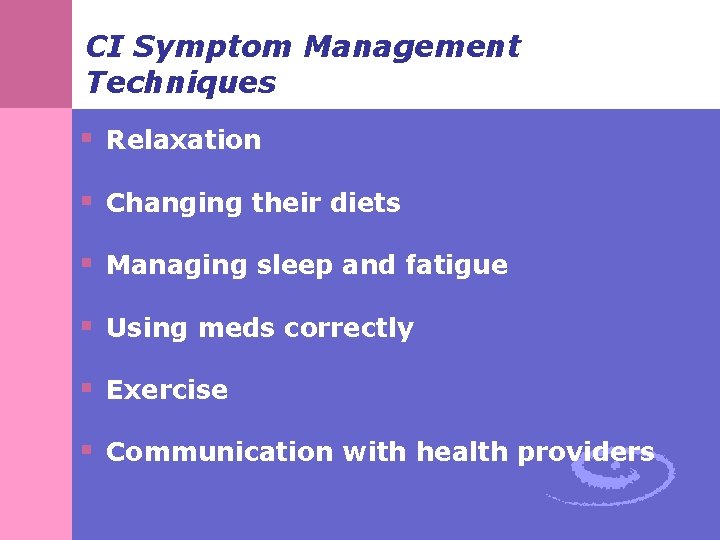
CI Symptom Management Techniques § Relaxation § Changing their diets § Managing sleep and fatigue § Using meds correctly § Exercise § Communication with health providers
Other CDSMP Content § Sexual Relations § Advance Directives § Nutrition § Pain Management § Text: Living a Healthy Life with Chronic Conditions
CDSMP Covers Multiple CI § Focuses on common problems § Coping Strategies: • Action planning & feedback • Behavior modeling • Problem-solving techniques • Decision-making
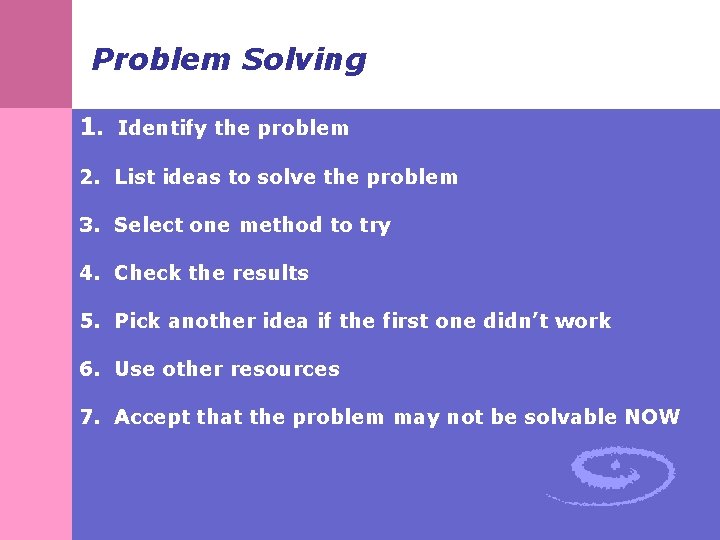
Problem Solving 1. Identify the problem 2. List ideas to solve the problem 3. Select one method to try 4. Check the results 5. Pick another idea if the first one didn’t work 6. Use other resources 7. Accept that the problem may not be solvable NOW
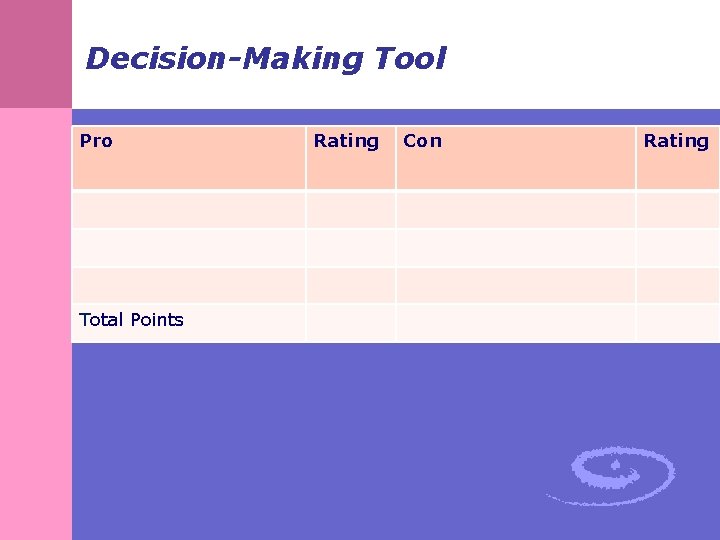
Decision-Making Tool Pro Total Points Rating Con Rating