China and the World 500 1300 WORLD HISTORY


- Slides: 61
China and the World 500 - 1300 WORLD HISTORY NOTES
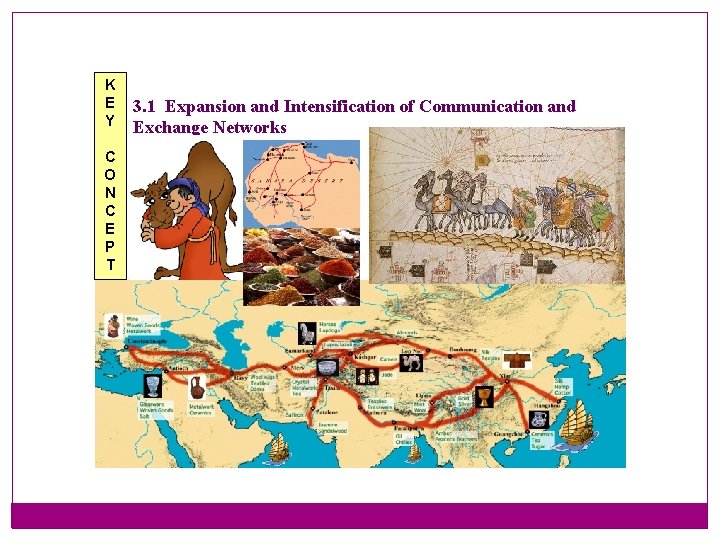
K E Y C O N C E P T 3. 1 Expansion and Intensification of Communication and Exchange Networks
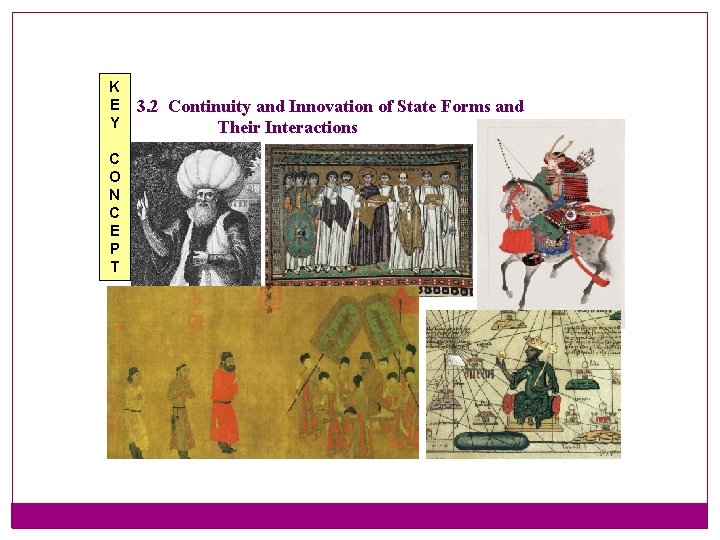
K E Y C O N C E P T 3. 2 Continuity and Innovation of State Forms and Their Interactions
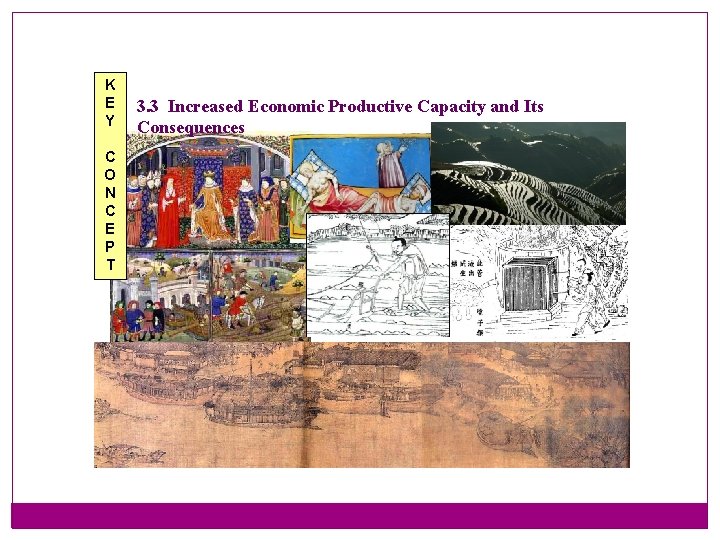
K E Y C O N C E P T 3. 3 Increased Economic Productive Capacity and Its Consequences
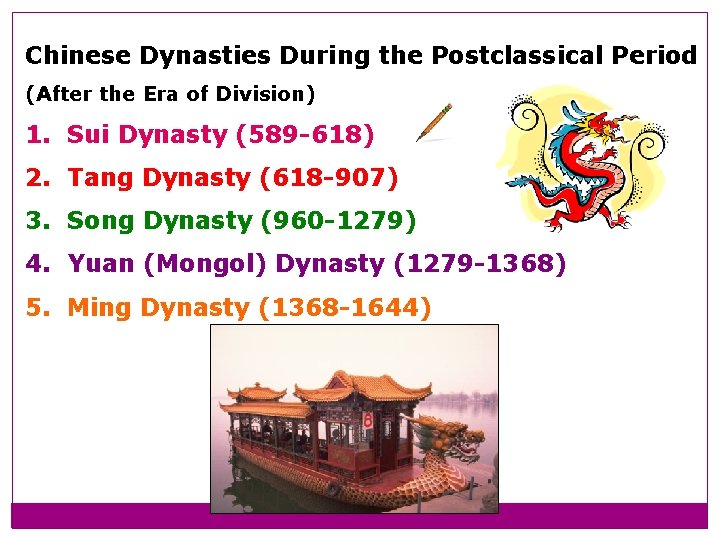
Chinese Dynasties During the Postclassical Period (After the Era of Division) 1. Sui Dynasty (589 -618) 2. Tang Dynasty (618 -907) 3. Song Dynasty (960 -1279) 4. Yuan (Mongol) Dynasty (1279 -1368) 5. Ming Dynasty (1368 -1644)
The Era of Division • In the three centuries following the collapse of the Han dynasty, nomadic incursions, political fragmentation, and the rise of powerful aristocratic families led to a decline in the power of Confucian scholars and a greater acceptance of Buddhism and Daoism among the elites. • During this period there was also a substantial Chinese migration southward, toward the Yangzi River Valley. By 1000 CE, 60% of the country’s population was in the southern China. • This led to vast environmental changes due to intensive agriculture – for example deforestation and the retreat of the Asian elephant in the region.
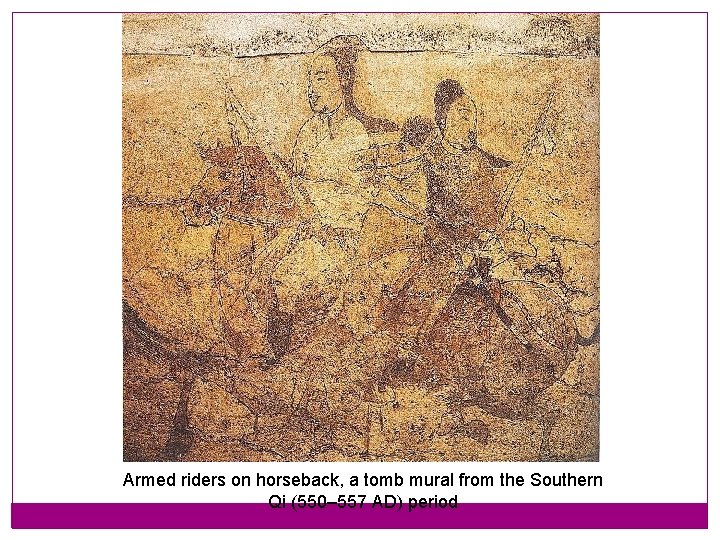
Armed riders on horseback, a tomb mural from the Southern Qi (550– 557 AD) period
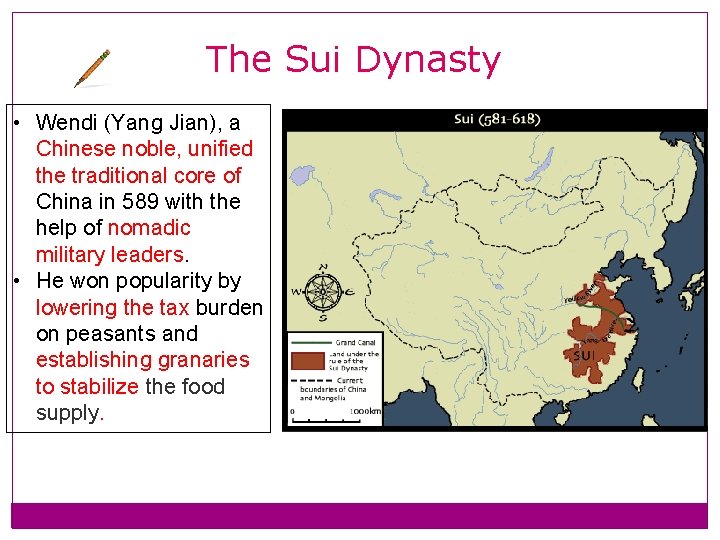
The Sui Dynasty • Wendi (Yang Jian), a Chinese noble, unified the traditional core of China in 589 with the help of nomadic military leaders. • He won popularity by lowering the tax burden on peasants and establishing granaries to stabilize the food supply.
The Reunification of China �Sui dynasty was followed by: the Tang dynasty (618 - 907) and the Song dynasty (960 -1279) �Both used the same state structure: Centralized government 6 major departments = personnel, finance, rites, army, justice, and public works Censorate = agency that watched over the rest of government to make sure everything ran smoothly Government officials chosen based on a revived Confucianbased examination system
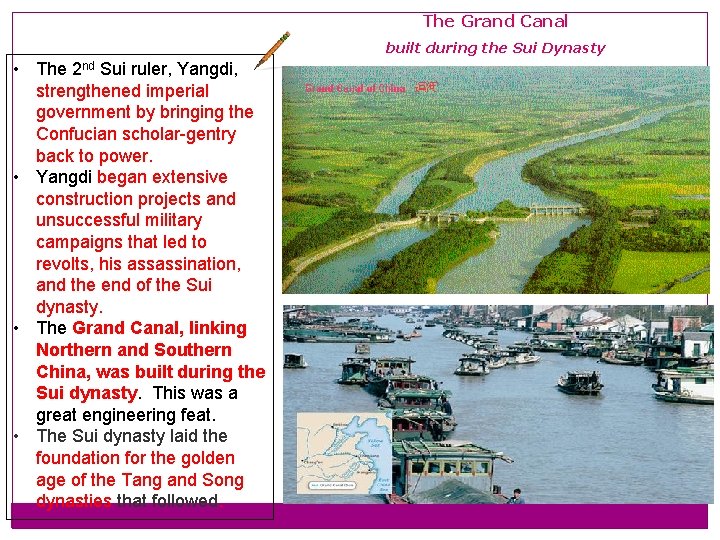
The Grand Canal built during the Sui Dynasty • The 2 nd Sui ruler, Yangdi, strengthened imperial government by bringing the Confucian scholar-gentry back to power. • Yangdi began extensive construction projects and unsuccessful military campaigns that led to revolts, his assassination, and the end of the Sui dynasty. • The Grand Canal, linking Northern and Southern China, was built during the Sui dynasty. This was a great engineering feat. • The Sui dynasty laid the foundation for the golden age of the Tang and Song dynasties that followed.
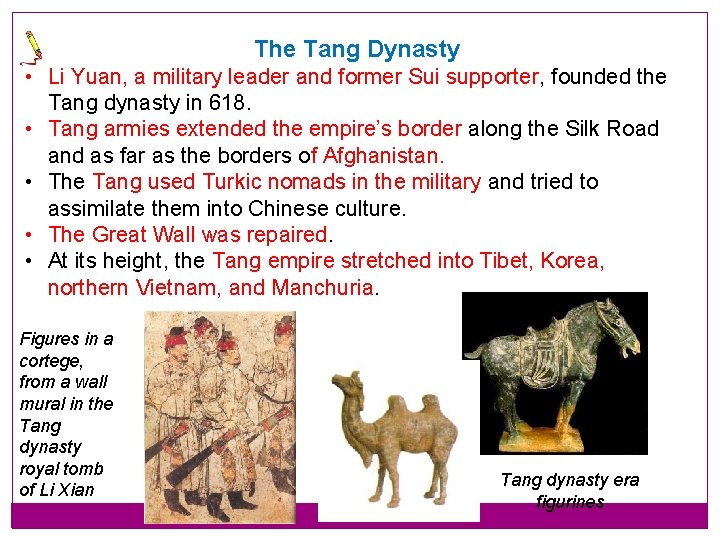
The Tang Dynasty • Li Yuan, a military leader and former Sui supporter, founded the Tang dynasty in 618. • Tang armies extended the empire’s border along the Silk Road and as far as the borders of Afghanistan. • The Tang used Turkic nomads in the military and tried to assimilate them into Chinese culture. • The Great Wall was repaired. • At its height, the Tang empire stretched into Tibet, Korea, northern Vietnam, and Manchuria. Figures in a cortege, from a wall mural in the Tang dynasty royal tomb of Li Xian Tang dynasty era figurines
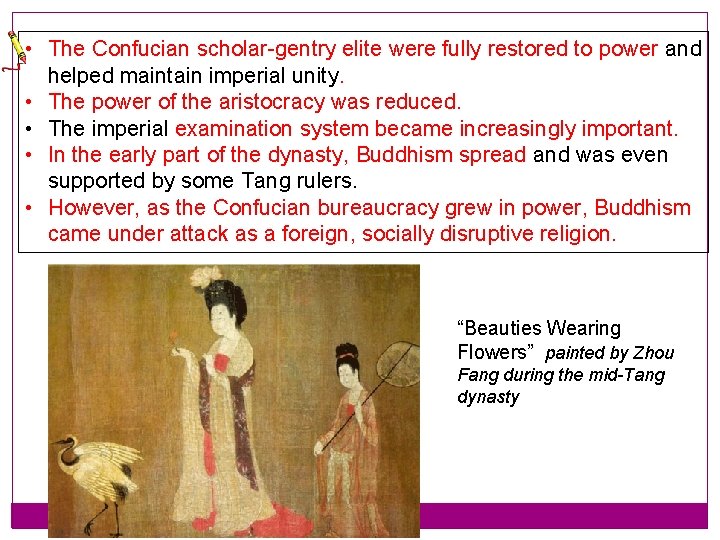
• The Confucian scholar-gentry elite were fully restored to power and helped maintain imperial unity. • The power of the aristocracy was reduced. • The imperial examination system became increasingly important. • In the early part of the dynasty, Buddhism spread and was even supported by some Tang rulers. • However, as the Confucian bureaucracy grew in power, Buddhism came under attack as a foreign, socially disruptive religion. “Beauties Wearing Flowers” painted by Zhou Fang during the mid-Tang dynasty
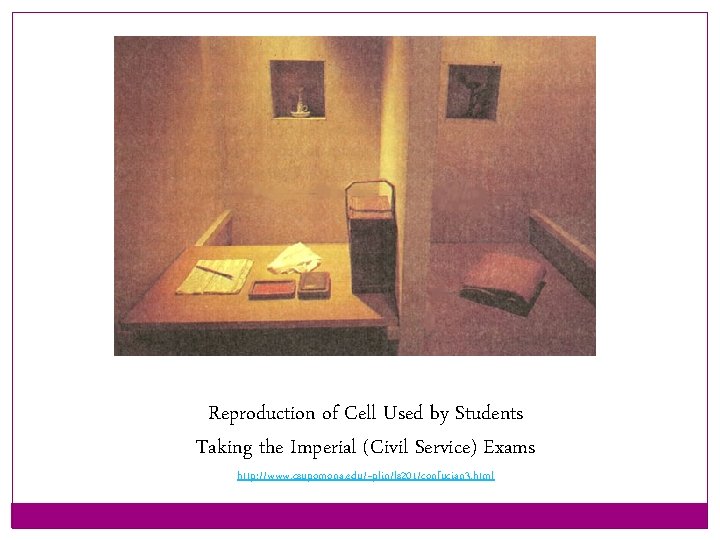
Reproduction of Cell Used by Students Taking the Imperial (Civil Service) Exams http: //www. csupomona. edu/~plin/ls 201/confucian 3. html
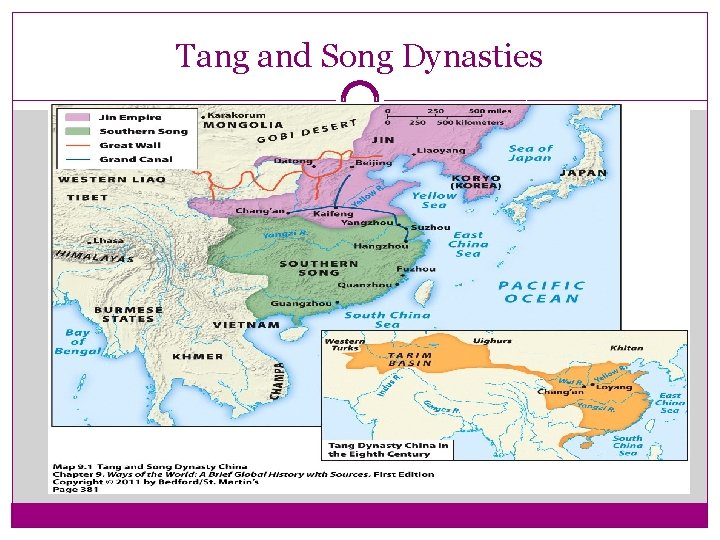
Tang Dynasty at its greatest size – 8 th Century
Warm up HOW DID THE TANG BENEFIT FROM THE SUI DYNASTY? WHAT STEPS DID THE TANG TAKE TO RESTORE THE BUREAUCRACY?
Tang and Song Dynasties
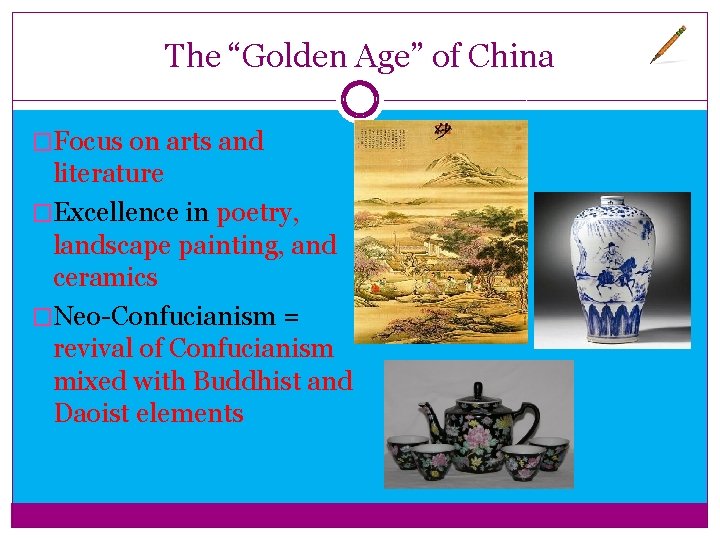
The “Golden Age” of China �Focus on arts and literature �Excellence in poetry, landscape painting, and ceramics �Neo-Confucianism = revival of Confucianism mixed with Buddhist and Daoist elements
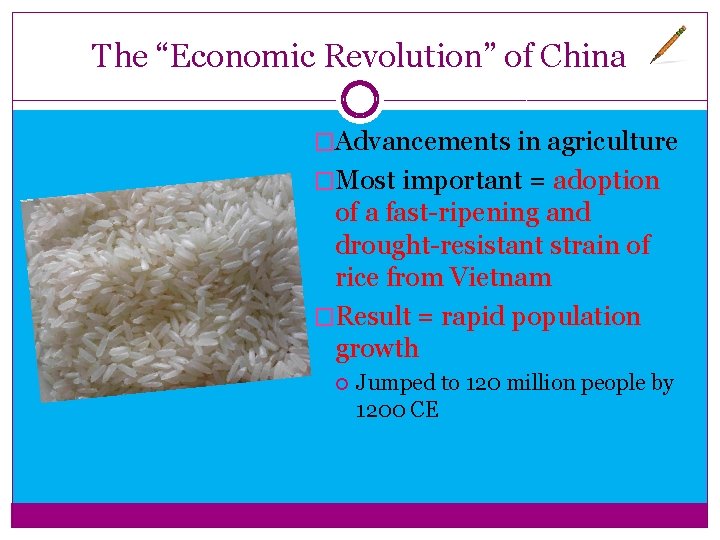
The “Economic Revolution” of China �Advancements in agriculture �Most important = adoption of a fast-ripening and drought-resistant strain of rice from Vietnam �Result = rapid population growth Jumped to 120 million people by 1200 CE
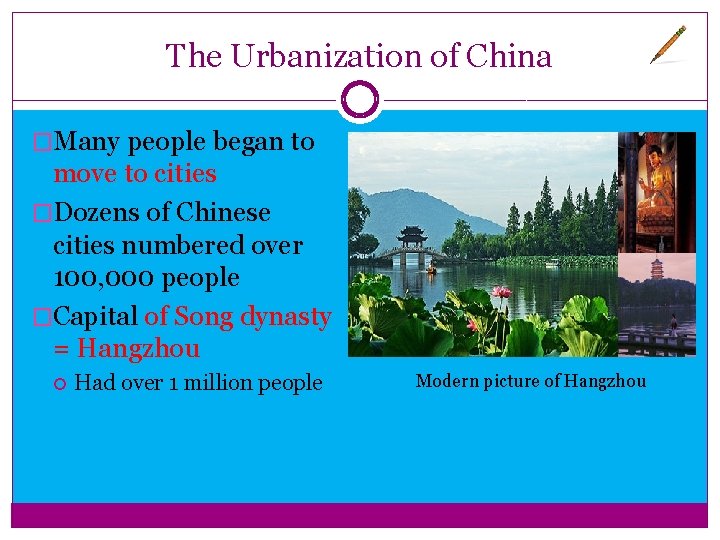
The Urbanization of China �Many people began to move to cities �Dozens of Chinese cities numbered over 100, 000 people �Capital of Song dynasty = Hangzhou Had over 1 million people Modern picture of Hangzhou
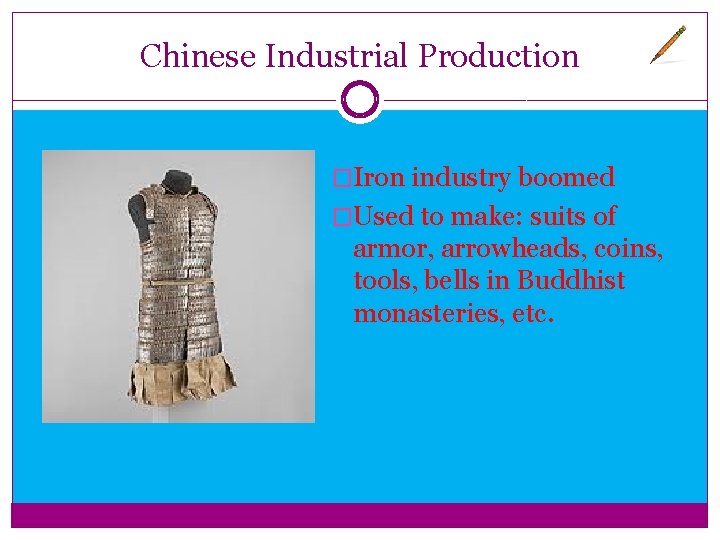
Chinese Industrial Production �Iron industry boomed �Used to make: suits of armor, arrowheads, coins, tools, bells in Buddhist monasteries, etc.
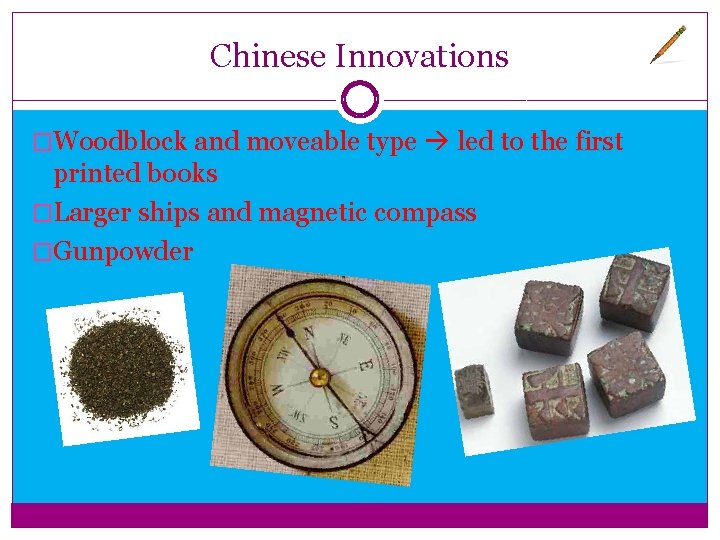
Chinese Innovations �Woodblock and moveable type led to the first printed books �Larger ships and magnetic compass �Gunpowder
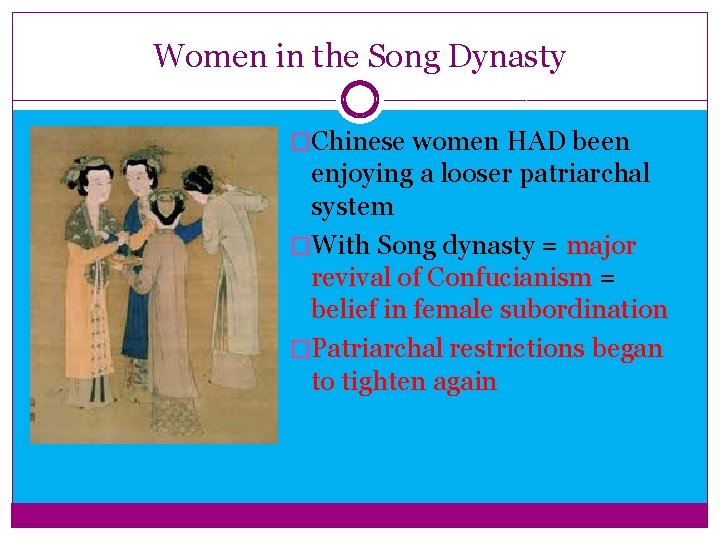
Women in the Song Dynasty �Chinese women HAD been enjoying a looser patriarchal system �With Song dynasty = major revival of Confucianism = belief in female subordination �Patriarchal restrictions began to tighten again
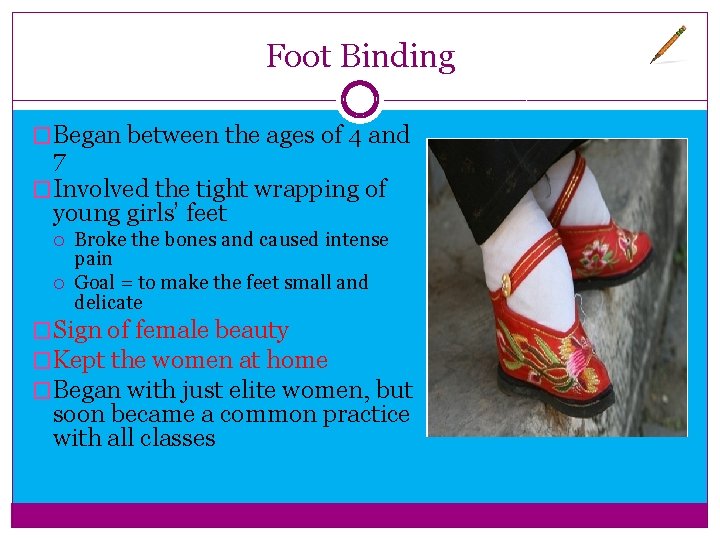
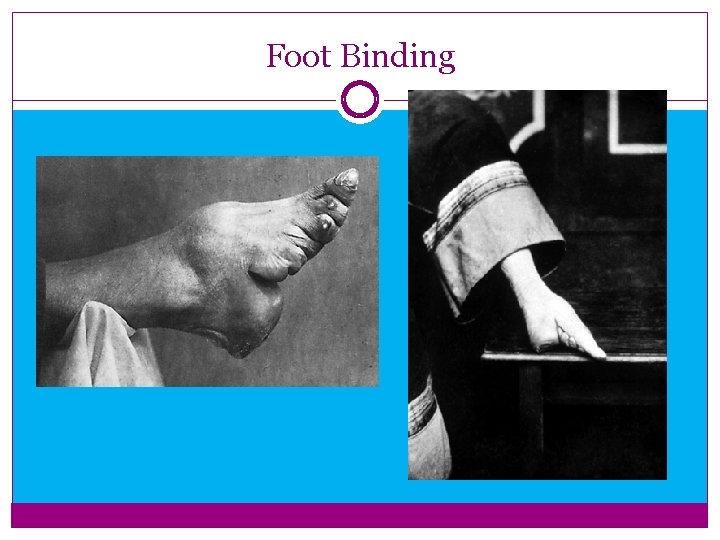
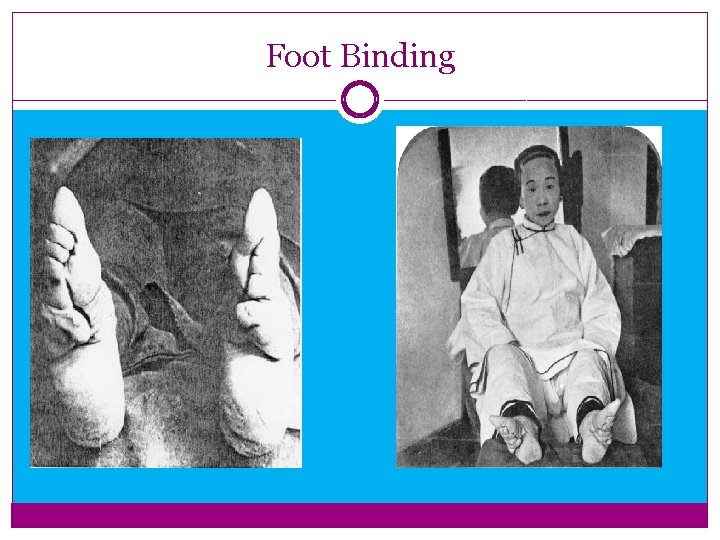
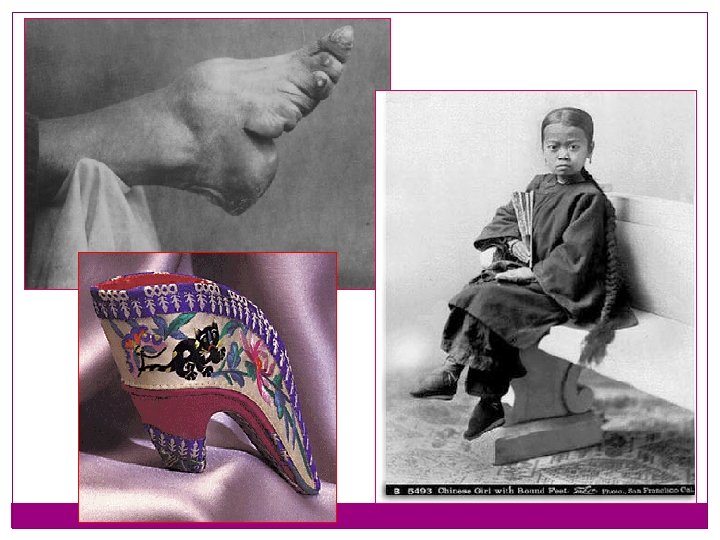
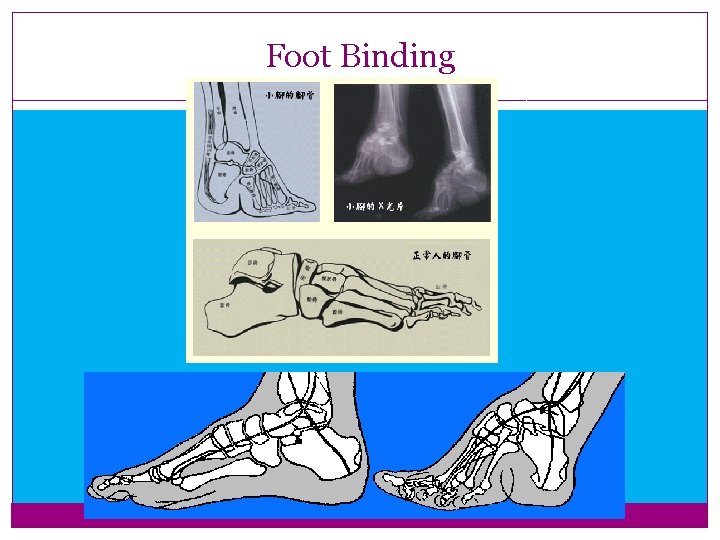
Foot Binding �Began between the ages of 4 and 7 �Involved the tight wrapping of young girls’ feet Broke the bones and caused intense pain Goal = to make the feet small and delicate �Sign of female beauty �Kept the women at home �Began with just elite women, but soon became a common practice with all classes
Foot Binding
Foot Binding
Foot Binding
Women and the Economy: Textiles �China’s economy became more commercial �More factories and workshops less home-made products Workshops and factories run by men Factories now used to produce silk and other textiles Takes this job away from women
Women and the Economy: Other Jobs �What did women do instead? Operated restaurants Sold fish and vegetables Maids, cooks, dressmakers Concubines Courtesans Entertainers Prostitutes
Positive Trends for Women �Property rights expanded Controlled own dowries Inherited family property �Promotion of further education for women To raise sons effectively To increase family’s fortune
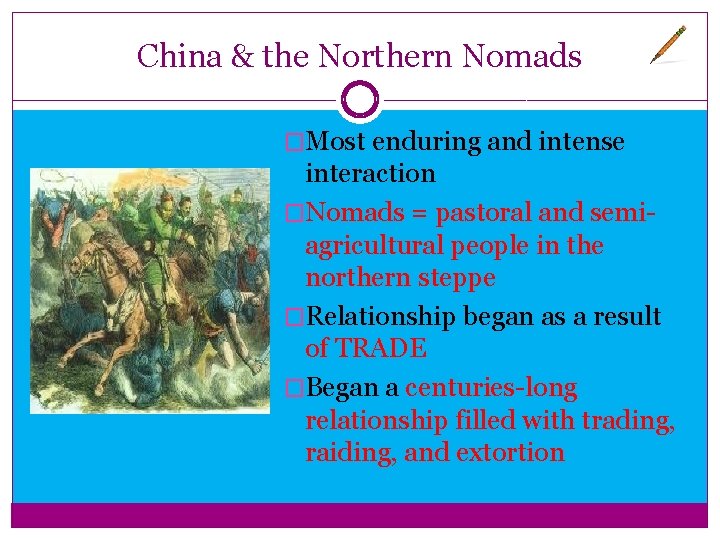
China & the Northern Nomads �Most enduring and intense interaction �Nomads = pastoral and semiagricultural people in the northern steppe �Relationship began as a result of TRADE �Began a centuries-long relationship filled with trading, raiding, and extortion
The Nomads’ Point of View �Nomads thought the Chinese were a threat Built the Great Wall to keep them out Directed their military towards them occasionally Made trading more difficult than it had to be �In reality: the Chinese needed the nomads Needed horses for their military Needed other goods like: furs, hides, amber Many important parts of the Silk Road network were in nomad territories
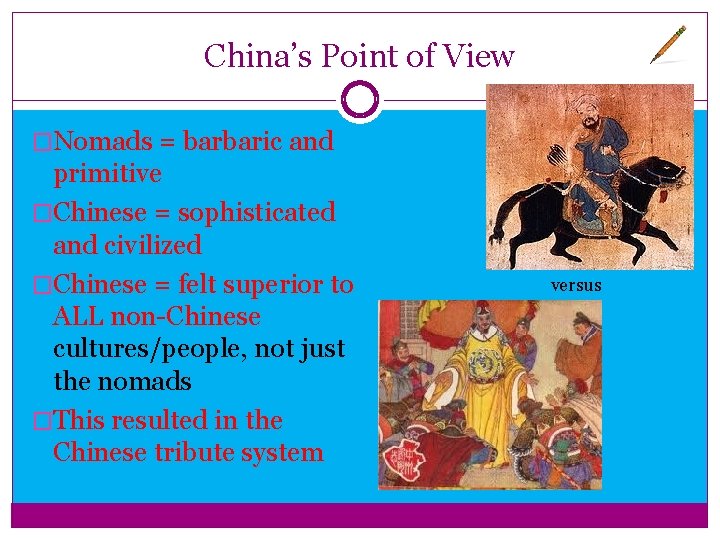
China’s Point of View �Nomads = barbaric and primitive �Chinese = sophisticated and civilized �Chinese = felt superior to ALL non-Chinese cultures/people, not just the nomads �This resulted in the Chinese tribute system versus
The Tribute System in Theory �Acknowledgement of Chinese superiority by foreigners and non -Chinese authorities �Foreigners would go to the Chinese court and: Perform a series of ritual bowings and gestures Present their tribute = valuable goods/products from their homeland � In return, the Chinese emperor would: Grant them permission to stay & trade in China Provide them with gifts or “bestowals”
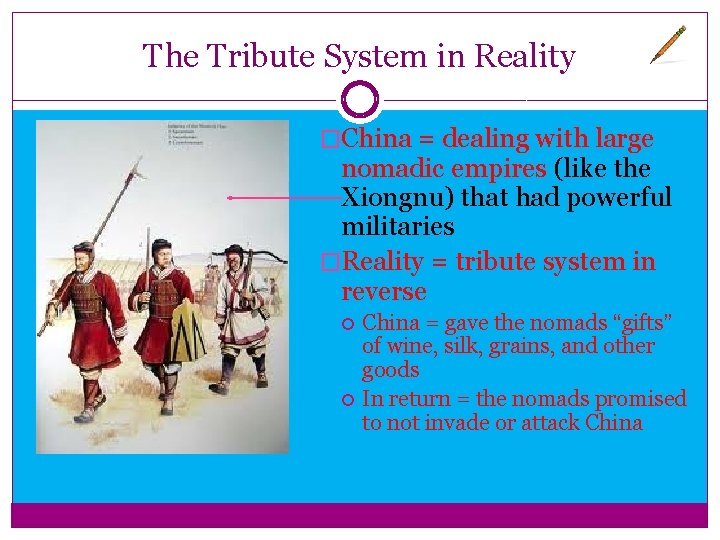
The Tribute System in Reality �China = dealing with large nomadic empires (like the Xiongnu) that had powerful militaries �Reality = tribute system in reverse China = gave the nomads “gifts” of wine, silk, grains, and other goods In return = the nomads promised to not invade or attack China
Warm up �What were the accomplishments of the Tang/Song “Golden Age”? �How did the status of Women change?
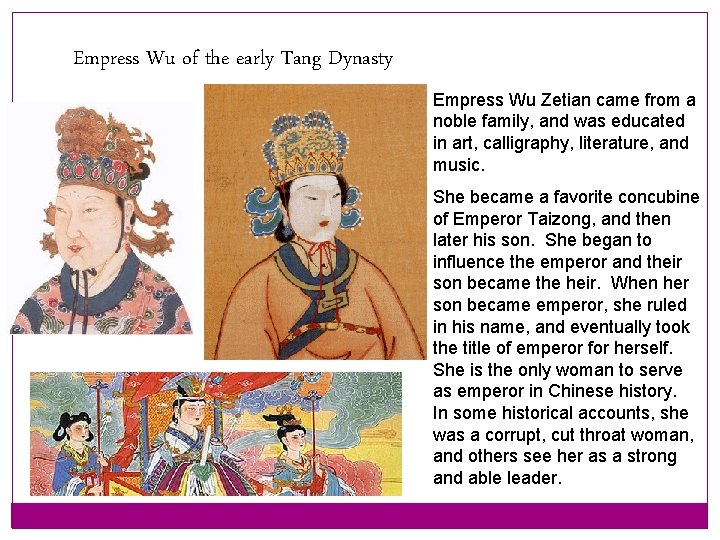
Empress Wu of the early Tang Dynasty Empress Wu Zetian came from a noble family, and was educated in art, calligraphy, literature, and music. She became a favorite concubine of Emperor Taizong, and then later his son. She began to influence the emperor and their son became the heir. When her son became emperor, she ruled in his name, and eventually took the title of emperor for herself. She is the only woman to serve as emperor in Chinese history. In some historical accounts, she was a corrupt, cut throat woman, and others see her as a strong and able leader.
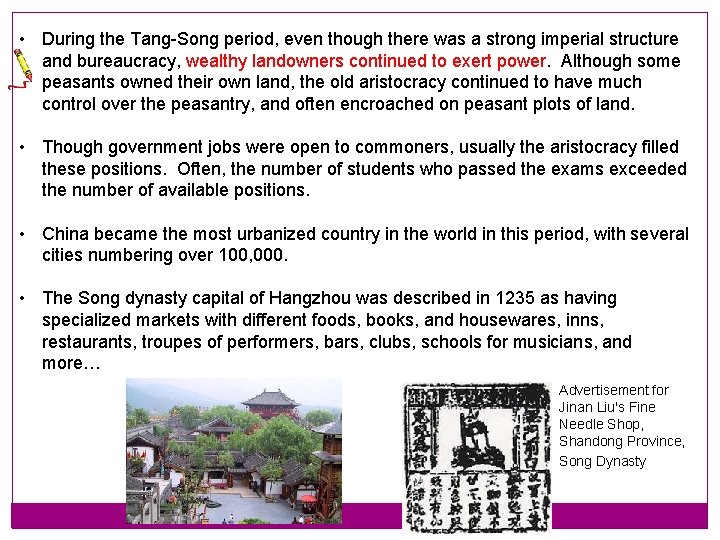
• During the Tang-Song period, even though there was a strong imperial structure and bureaucracy, wealthy landowners continued to exert power. Although some peasants owned their own land, the old aristocracy continued to have much control over the peasantry, and often encroached on peasant plots of land. • Though government jobs were open to commoners, usually the aristocracy filled these positions. Often, the number of students who passed the exams exceeded the number of available positions. • China became the most urbanized country in the world in this period, with several cities numbering over 100, 000. • The Song dynasty capital of Hangzhou was described in 1235 as having specialized markets with different foods, books, and housewares, inns, restaurants, troupes of performers, bars, clubs, schools for musicians, and more… Advertisement for Jinan Liu's Fine Needle Shop, Shandong Province, Song Dynasty
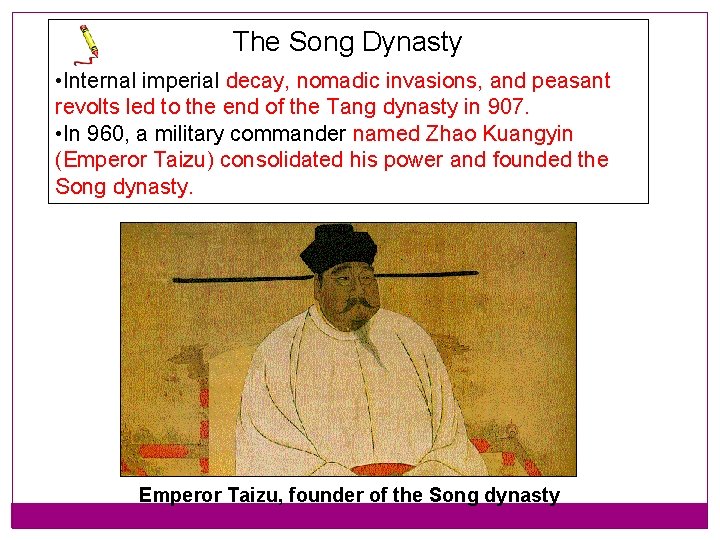
The Song Dynasty • Internal imperial decay, nomadic invasions, and peasant revolts led to the end of the Tang dynasty in 907. • In 960, a military commander named Zhao Kuangyin (Emperor Taizu) consolidated his power and founded the Song dynasty. Emperor Taizu, founder of the Song dynasty
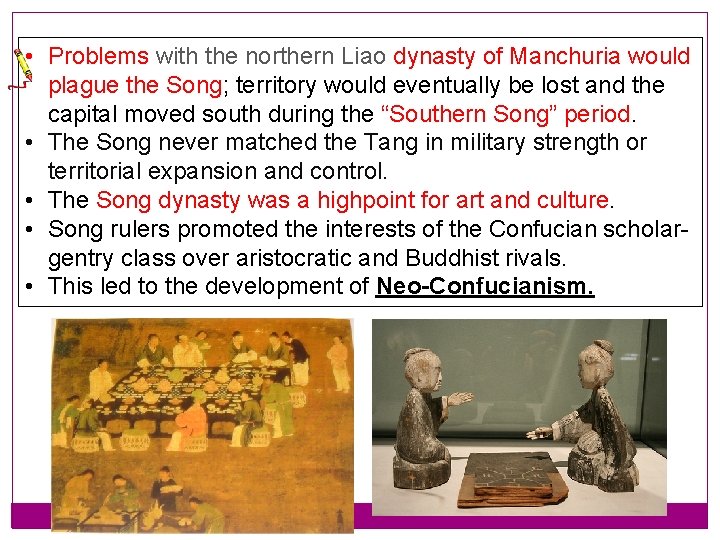
• Problems with the northern Liao dynasty of Manchuria would plague the Song; territory would eventually be lost and the capital moved south during the “Southern Song” period. • The Song never matched the Tang in military strength or territorial expansion and control. • The Song dynasty was a highpoint for art and culture. • Song rulers promoted the interests of the Confucian scholargentry class over aristocratic and Buddhist rivals. • This led to the development of Neo-Confucianism.
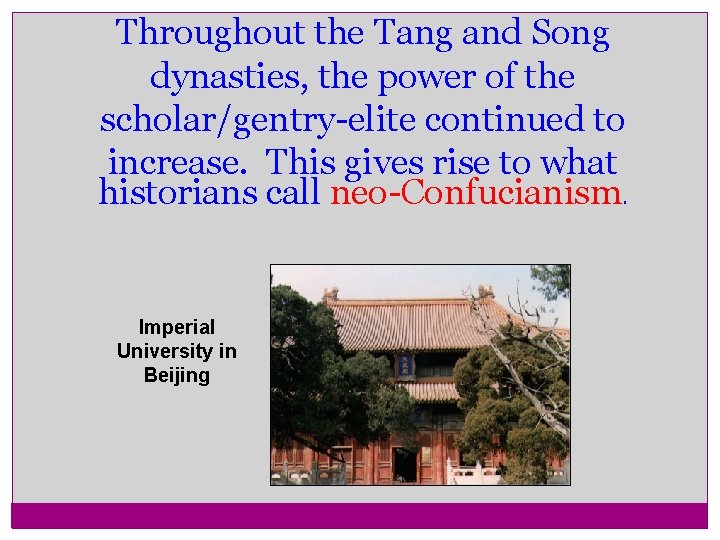
Throughout the Tang and Song dynasties, the power of the scholar/gentry-elite continued to increase. This gives rise to what historians call neo-Confucianism. Imperial University in Beijing
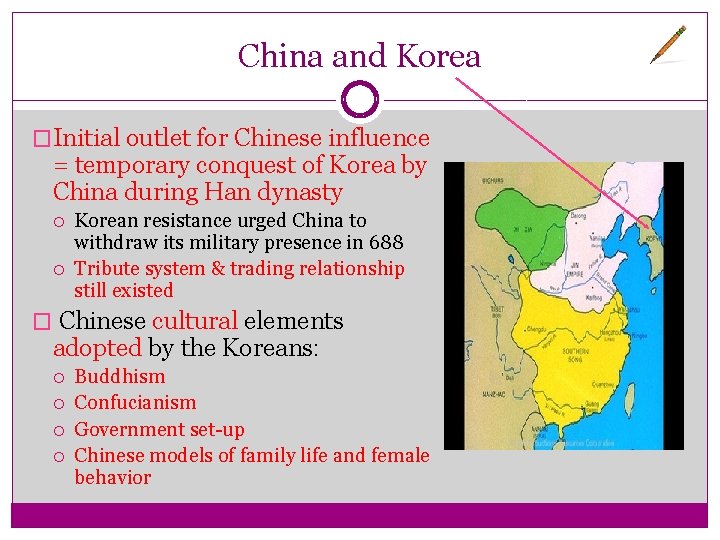
China and Korea �Initial outlet for Chinese influence = temporary conquest of Korea by China during Han dynasty Korean resistance urged China to withdraw its military presence in 688 Tribute system & trading relationship still existed � Chinese cultural elements adopted by the Koreans: Buddhism Confucianism Government set-up Chinese models of family life and female behavior
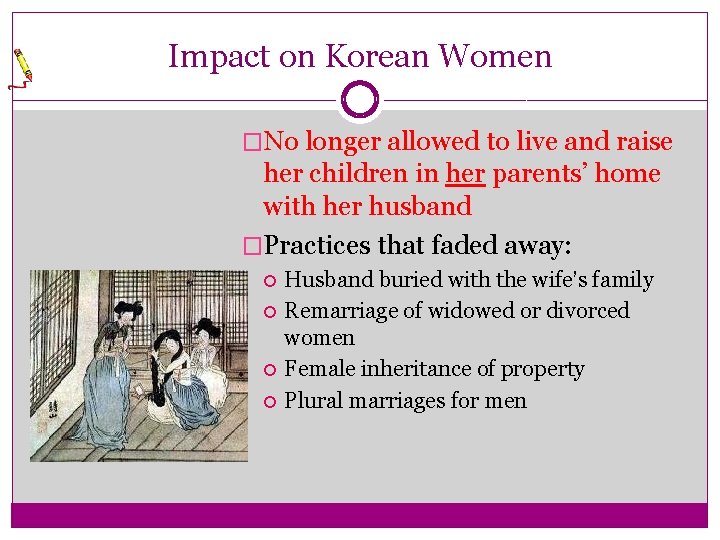
Impact on Korean Women �No longer allowed to live and raise her children in her parents’ home with her husband �Practices that faded away: Husband buried with the wife’s family Remarriage of widowed or divorced women Female inheritance of property Plural marriages for men
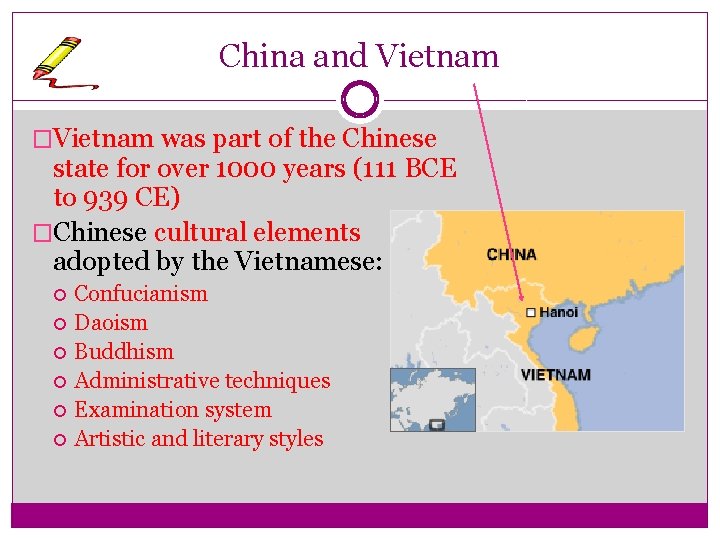
China and Vietnam �Vietnam was part of the Chinese state for over 1000 years (111 BCE to 939 CE) �Chinese cultural elements adopted by the Vietnamese: Confucianism Daoism Buddhism Administrative techniques Examination system Artistic and literary styles
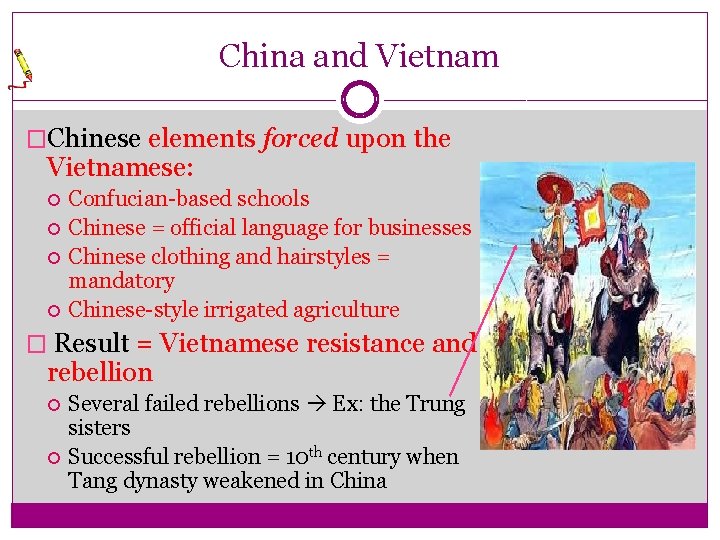
China and Vietnam �Chinese elements forced upon the Vietnamese: Confucian-based schools Chinese = official language for businesses Chinese clothing and hairstyles = mandatory Chinese-style irrigated agriculture � Result = Vietnamese resistance and rebellion Several failed rebellions Ex: the Trung sisters Successful rebellion = 10 th century when Tang dynasty weakened in China
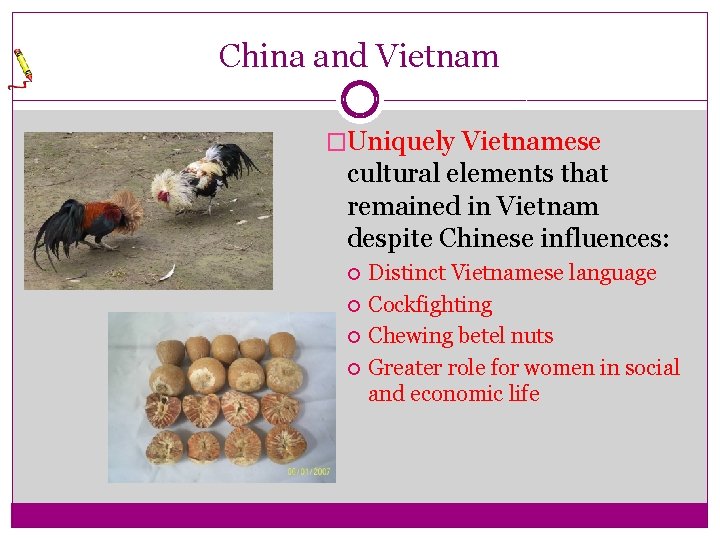
China and Vietnam �Uniquely Vietnamese cultural elements that remained in Vietnam despite Chinese influences: Distinct Vietnamese language Cockfighting Chewing betel nuts Greater role for women in social and economic life
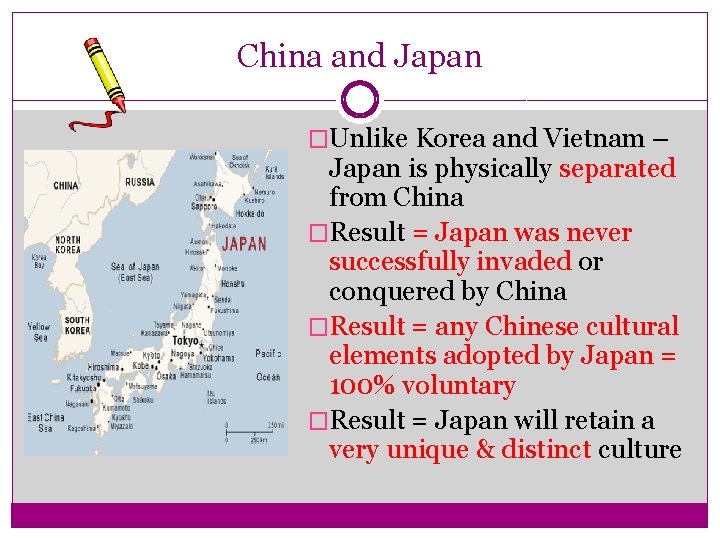
China and Japan �Unlike Korea and Vietnam – Japan is physically separated from China �Result = Japan was never successfully invaded or conquered by China �Result = any Chinese cultural elements adopted by Japan = 100% voluntary �Result = Japan will retain a very unique & distinct culture
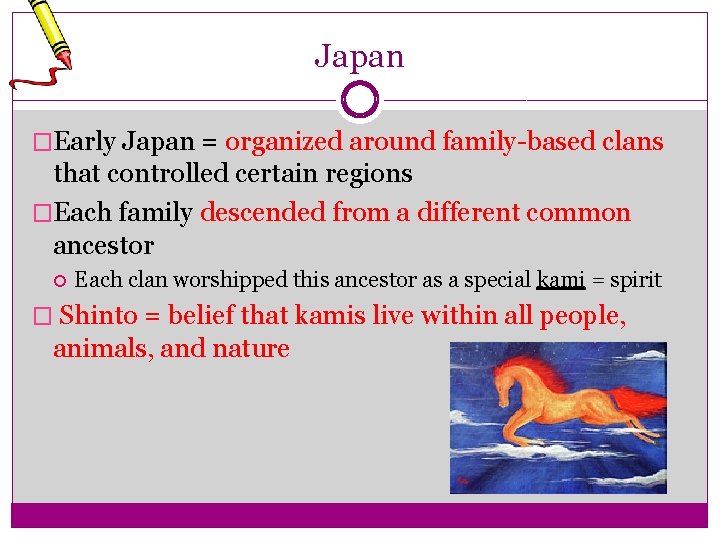
Japan �Early Japan = organized around family-based clans that controlled certain regions �Each family descended from a different common ancestor Each clan worshipped this ancestor as a special kami = spirit � Shinto = belief that kamis live within all people, animals, and nature
Japan �As these clans began to unify into a Japanese “state”, Japan began to model itself after China in some ways �Elements adopted from China: Buddhism and Confucianism Chinese-style court rituals and court rankings Chinese calendar Chinese-based taxation systems Chinese-style law codes and government departments Chinese-style writing system
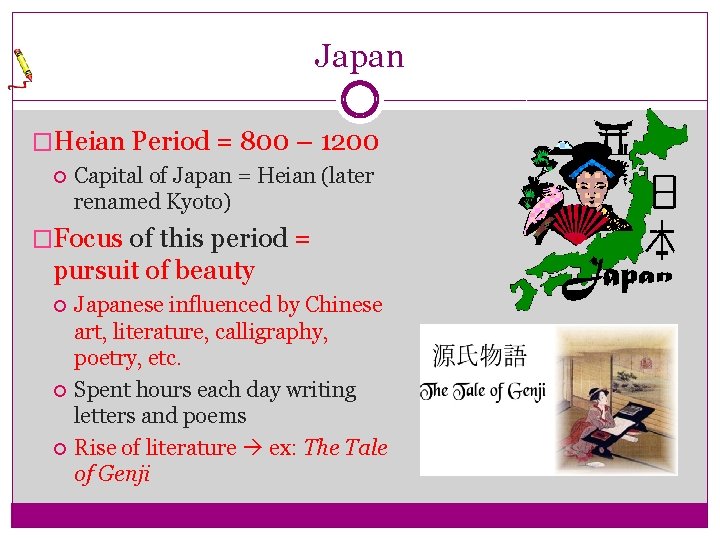
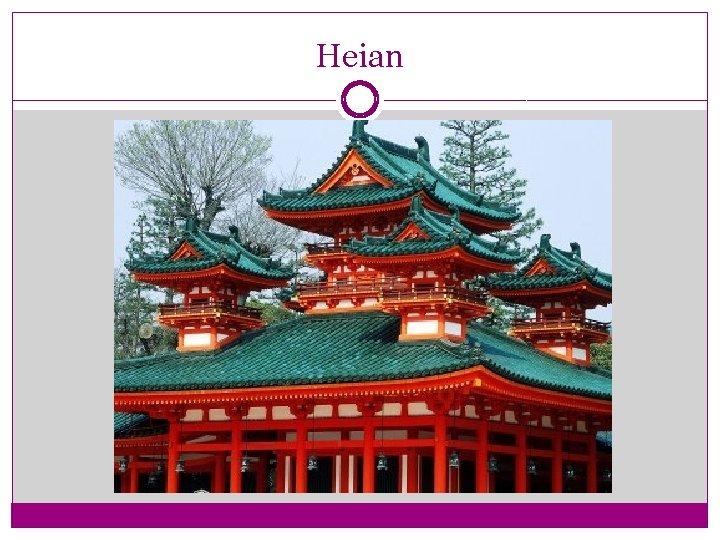
Japan �Heian Period = 800 – 1200 Capital of Japan = Heian (later renamed Kyoto) �Focus of this period = pursuit of beauty Japanese influenced by Chinese art, literature, calligraphy, poetry, etc. Spent hours each day writing letters and poems Rise of literature ex: The Tale of Genji
Heian
Japan �In their “search for beauty” during the Heian period, governmental responsibilities were neglected Centralized government broke down Emperor lost power Gave way to “feudal” Japan
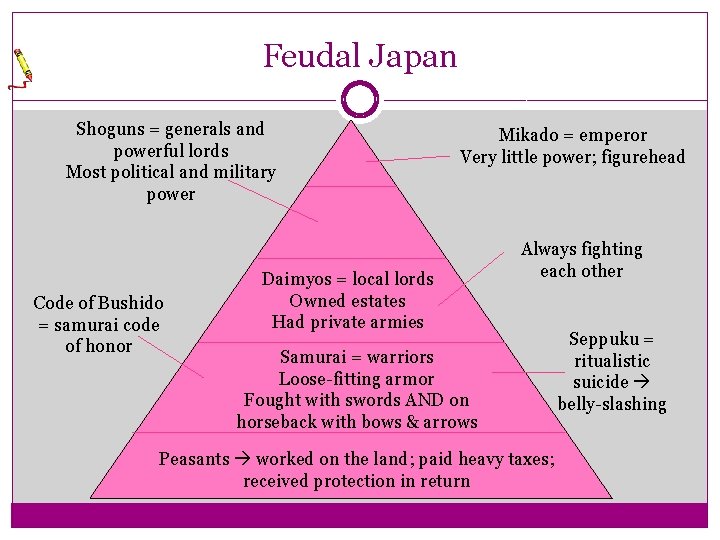
Feudal Japan Shoguns = generals and powerful lords Most political and military power Code of Bushido = samurai code of honor Mikado = emperor Very little power; figurehead Daimyos = local lords Owned estates Had private armies Always fighting each other Samurai = warriors Loose-fitting armor Fought with swords AND on horseback with bows & arrows Peasants worked on the land; paid heavy taxes; received protection in return Seppuku = ritualistic suicide belly-slashing
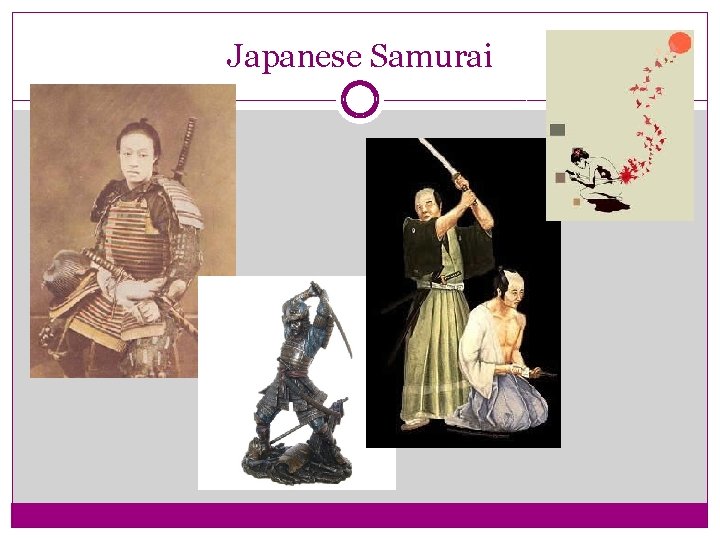
Japanese Samurai
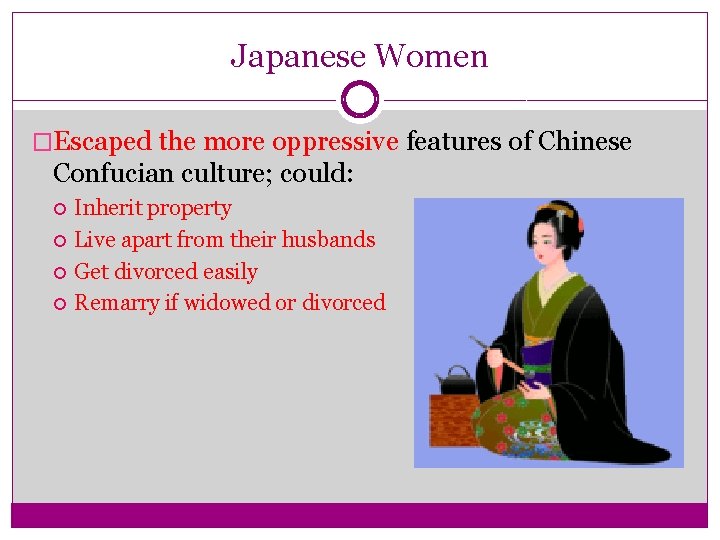
Japanese Women �Escaped the more oppressive features of Chinese Confucian culture; could: Inherit property Live apart from their husbands Get divorced easily Remarry if widowed or divorced
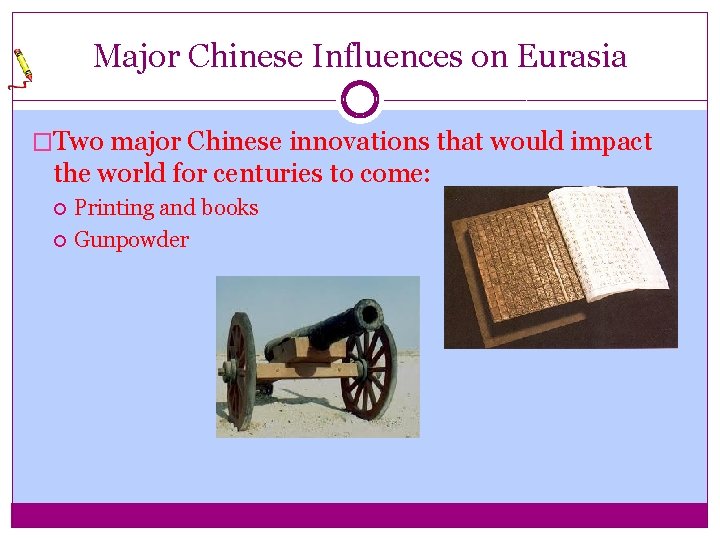
Major Chinese Influences on Eurasia �Two major Chinese innovations that would impact the world for centuries to come: Printing and books Gunpowder
Printing and Books �Effects of printing and books in the future: Mass literacy Increased education and scholarship Spread of religion Exchange of information
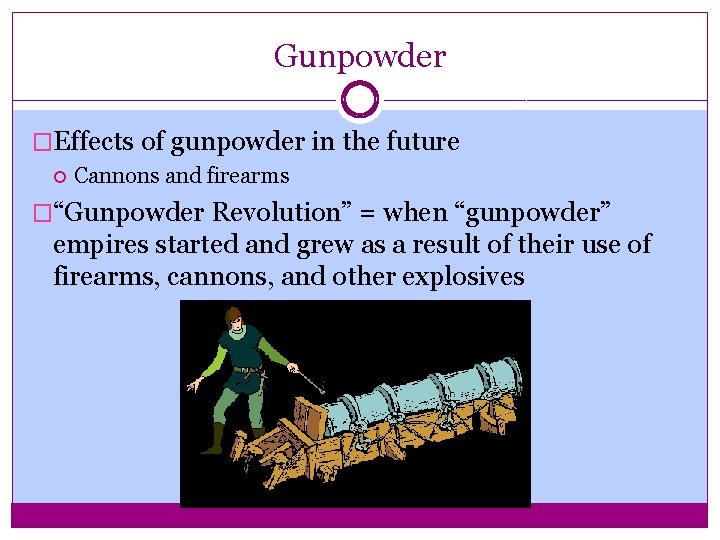
Gunpowder �Effects of gunpowder in the future Cannons and firearms �“Gunpowder Revolution” = when “gunpowder” empires started and grew as a result of their use of firearms, cannons, and other explosives
Unit thoughts �What factors contributed to the spread of religious traditions outside their regions of origin in this period? �In which specific ways have the legacies of the post classical era survived to present day? �Examples of syncretism that you see in the region or area you live?
China Objectives �Explain China’s role in Eurasian Commerce including the spread of ideas and technological advances. �Analyze how the Tang and song dynasties continued traditional Chinese political patterns �Summarize the impact of Chinese culture on surrounding areas �Analyze reasons for expansion of Chinese economy during the Tang/Song period.
Summary of Unit �Compare and contrast key features of the Sui, Tang, and Song dynasties. �Identify features of agricultural development in Tang and Song China. �Identify and discuss key technological and industrial developments during the Tang and Song dynasties. �Explain and discuss the emergence of the Chinese market economy. �Outline and discuss the establishment of Buddhism and neo-Confucianism in postclassical China. �Compare and contrast the scope of Chinese influence in Japan, Vietnam, and Korea during the postclassical period.