Chapter 6 Holt Chemistry SOL 3 c d

- Slides: 77
Chapter 6 Holt Chemistry SOL 3 c, d Mr. Bollinger FDHS Student Notes
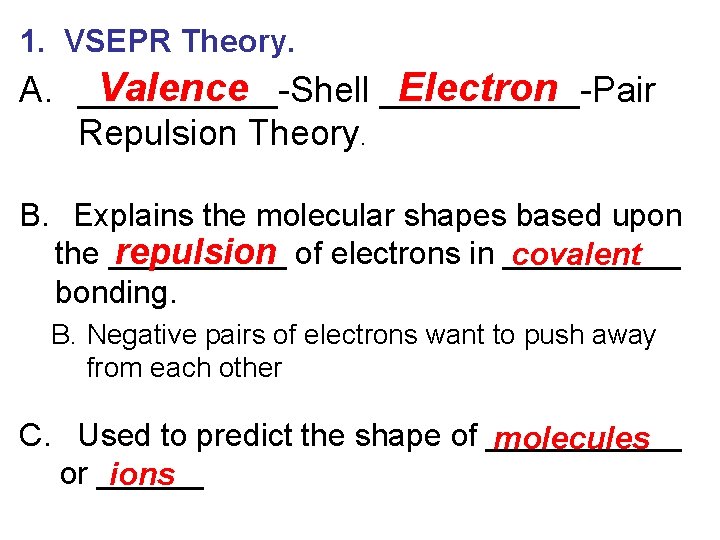
1. VSEPR Theory. Valence Electron A. _____-Shell _____-Pair Repulsion Theory. B. Explains the molecular shapes based upon repulsion of electrons in _____ the _____ covalent bonding. B. Negative pairs of electrons want to push away from each other C. Used to predict the shape of ______ molecules or ______ ions
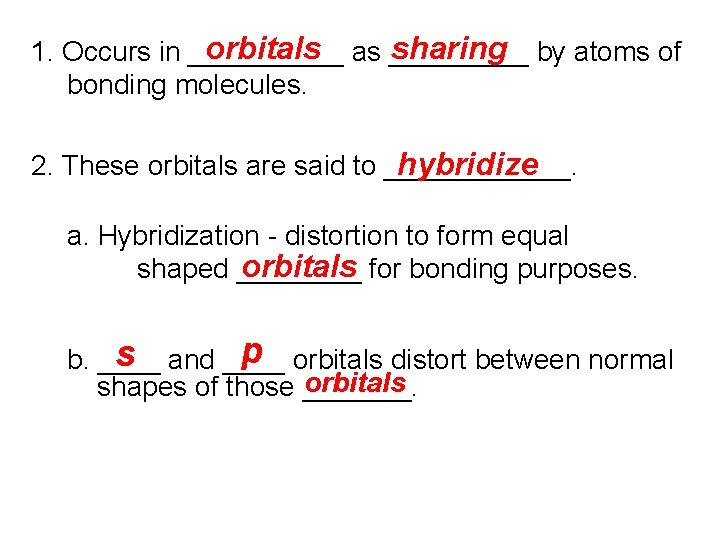
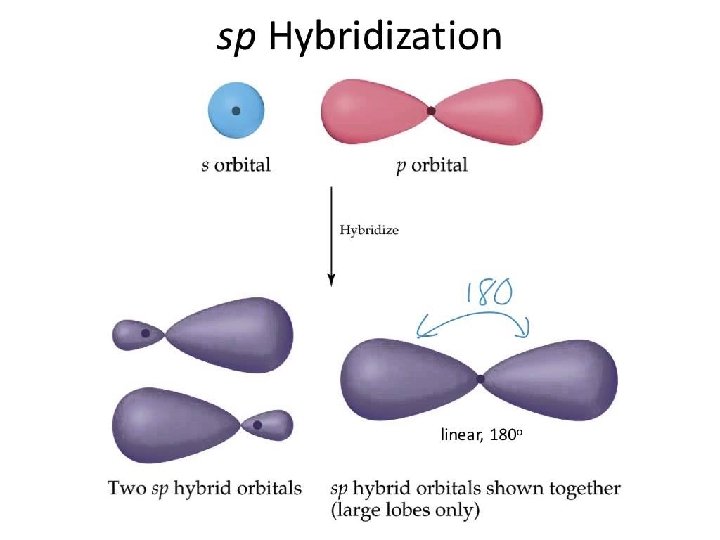
orbitals as _____ sharing by atoms of 1. Occurs in _____ bonding molecules. hybridize 2. These orbitals are said to ______. a. Hybridization - distortion to form equal orbitals for bonding purposes. shaped ____ p orbitals distort between normal s and ____ b. ____ orbitals shapes of those _______.
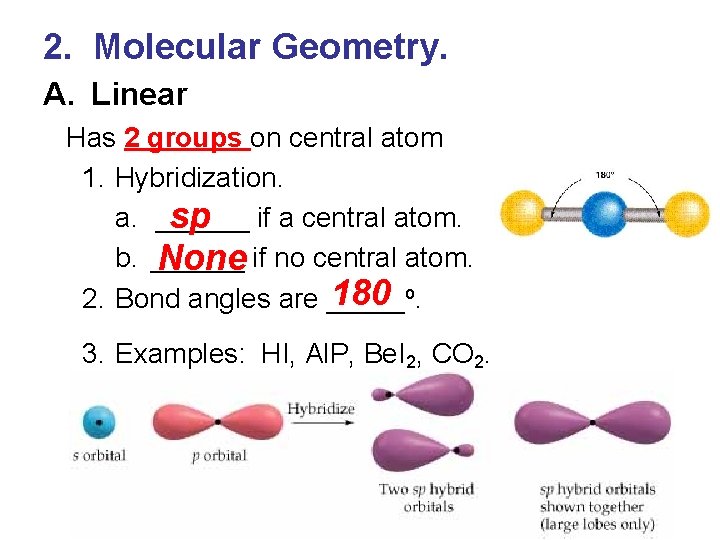
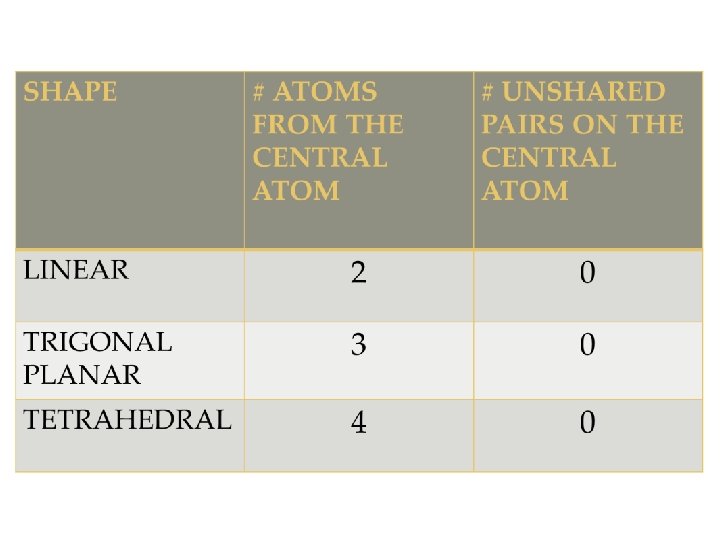
2. Molecular Geometry. A. Linear Has 2 groups on central atom 1. Hybridization. a. ______ sp if a central atom. b. ______ None if no central atom. 180 o. 2. Bond angles are _____ 3. Examples: HI, Al. P, Be. I 2, CO 2.
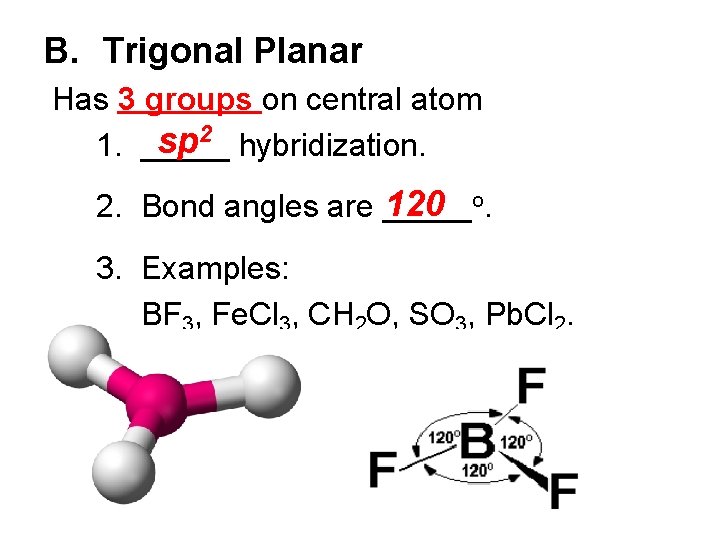
B. Trigonal Planar Has 3 groups on central atom sp 2 hybridization. 1. _____ 120 o. 2. Bond angles are _____ 3. Examples: BF 3, Fe. Cl 3, CH 2 O, SO 3, Pb. Cl 2.
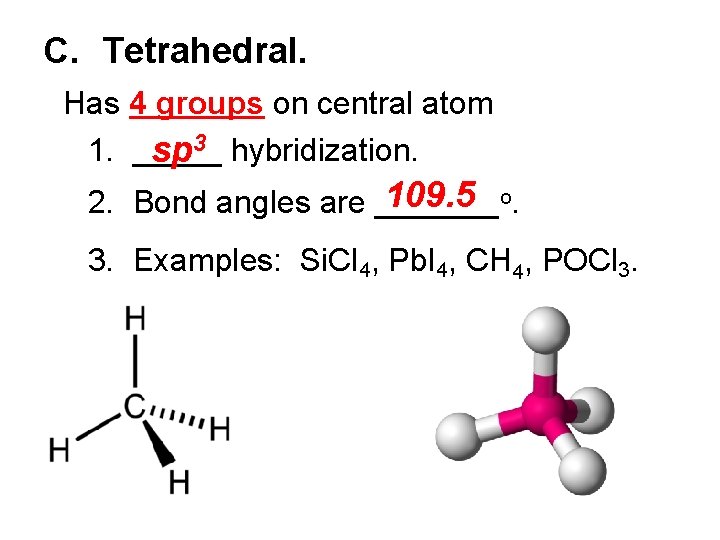
C. Tetrahedral. Has 4 groups on central atom 1. _____ sp 3 hybridization. 109. 5 o. 2. Bond angles are _______ 3. Examples: Si. Cl 4, Pb. I 4, CH 4, POCl 3.
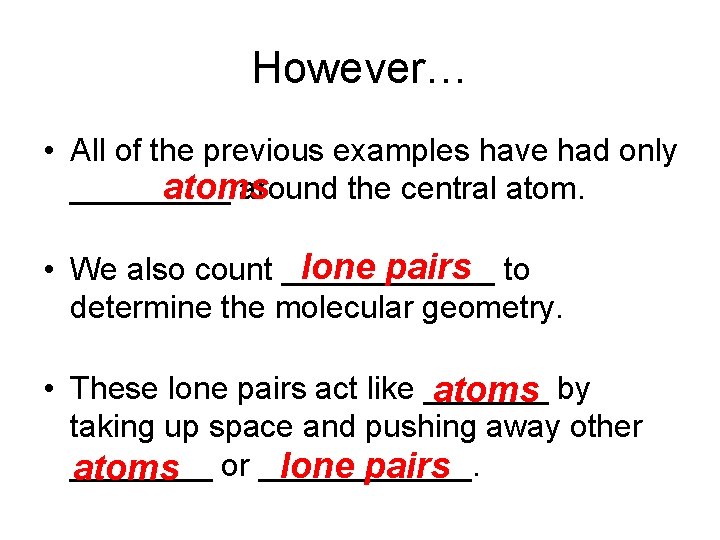
However… • All of the previous examples have had only atoms _____ around the central atom. lone pairs to • We also count ______ determine the molecular geometry. • These lone pairs act like _______ atoms by taking up space and pushing away other ____ lone pairs atoms or ______.
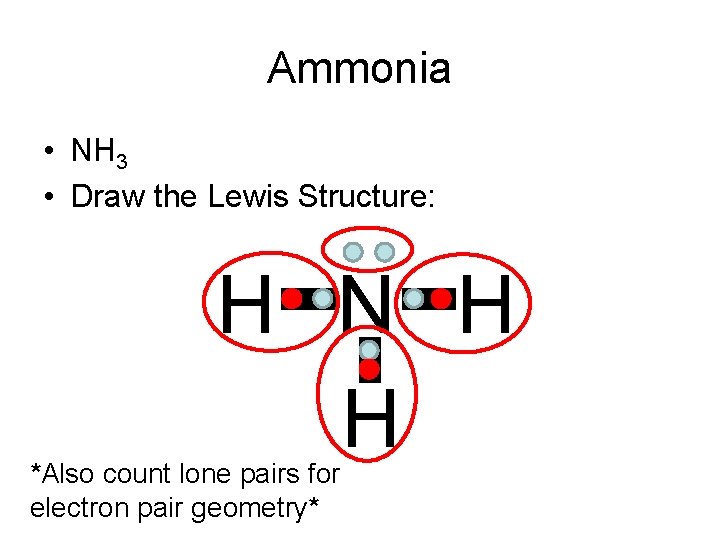
Ammonia • NH 3 • Draw the Lewis Structure: H N H H *Also count lone pairs for electron pair geometry*
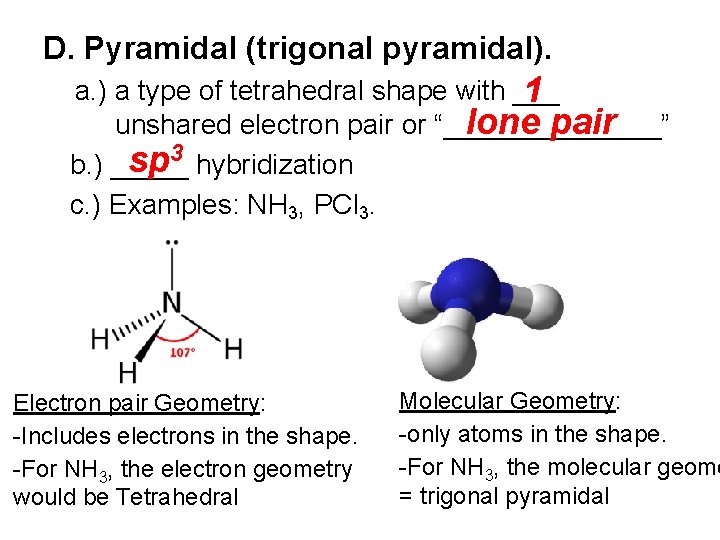
• It has 4 ‘things around it, so it is like Tetrahedral, however we don’t draw the electrons. • The lone pair push the Hydrogens downward and it ends up being….
D. Pyramidal (trigonal pyramidal). a. ) a type of tetrahedral shape with ___ 1 unshared electron pair or “_______” lone pair sp 3 hybridization b. ) _____ c. ) Examples: NH 3, PCl 3. Electron pair Geometry: -Includes electrons in the shape. -For NH 3, the electron geometry would be Tetrahedral Molecular Geometry: -only atoms in the shape. -For NH 3, the molecular geome = trigonal pyramidal
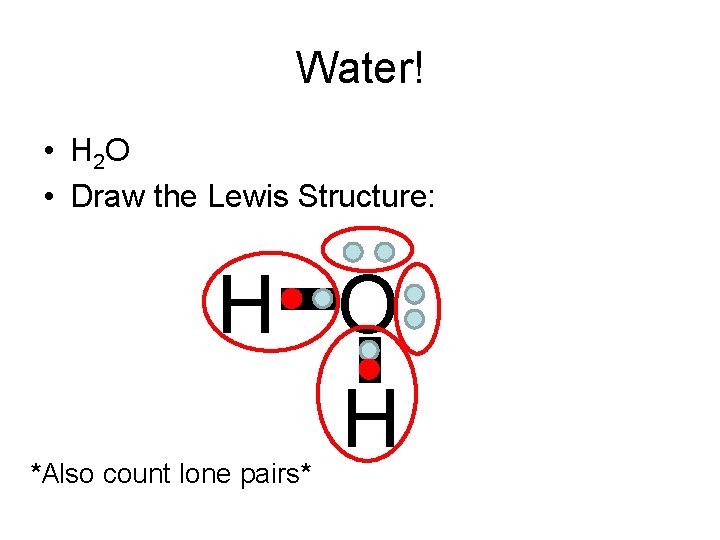
Water! • H 2 O • Draw the Lewis Structure: H O H *Also count lone pairs*
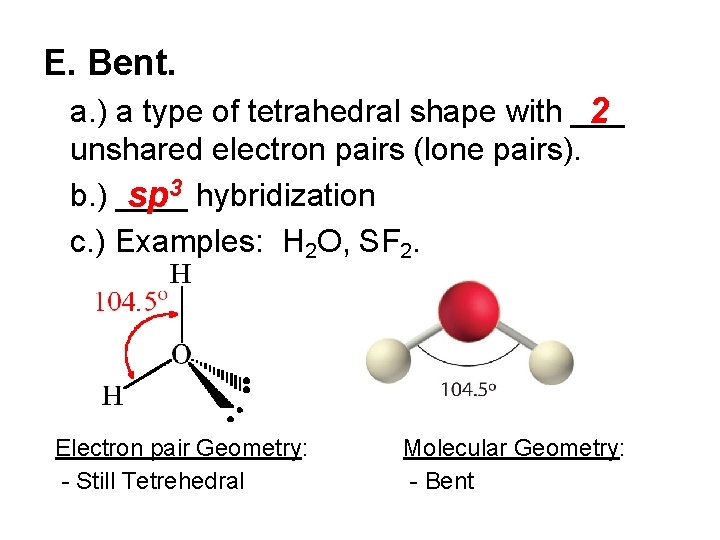
E. Bent. a. ) a type of tetrahedral shape with ___ 2 unshared electron pairs (lone pairs). b. ) ____ sp 3 hybridization c. ) Examples: H 2 O, SF 2. Electron pair Geometry: - Still Tetrehedral Molecular Geometry: - Bent
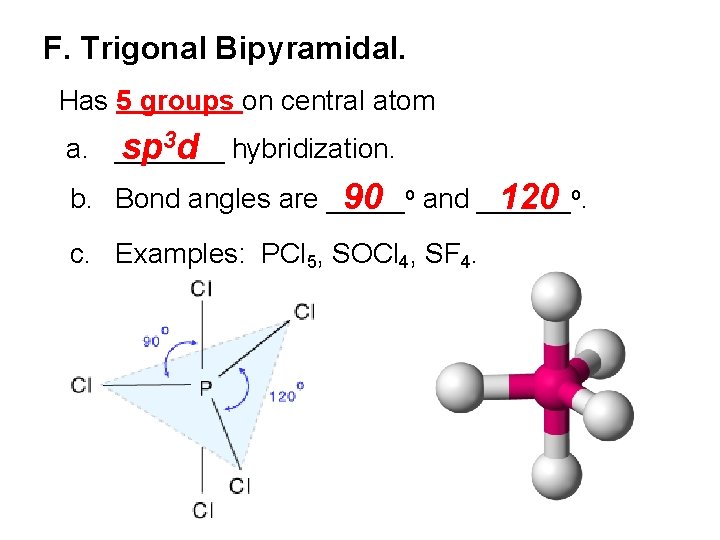
F. Trigonal Bipyramidal. Has 5 groups on central atom a. _______ sp 3 d hybridization. b. Bond angles are _____ 90 o and ______ 120 o. c. Examples: PCl 5, SOCl 4, SF 4.
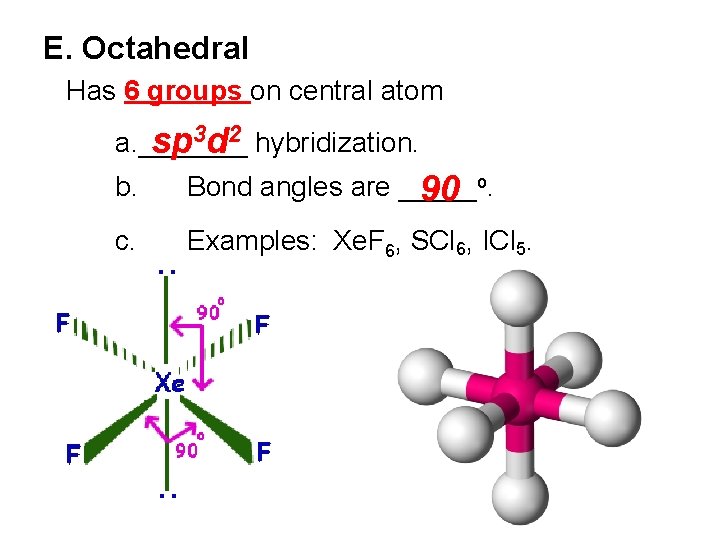
E. Octahedral Has 6 groups on central atom a. _______ sp 3 d 2 hybridization. b. Bond angles are _____ 90 o. c. Examples: Xe. F 6, SCl 6, ICl 5.
There are some other fun ones!
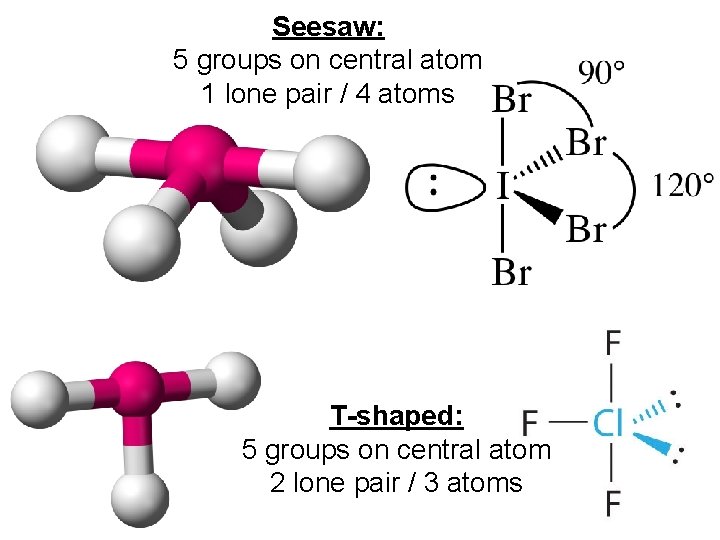
Seesaw: 5 groups on central atom 1 lone pair / 4 atoms T-shaped: 5 groups on central atom 2 lone pair / 3 atoms
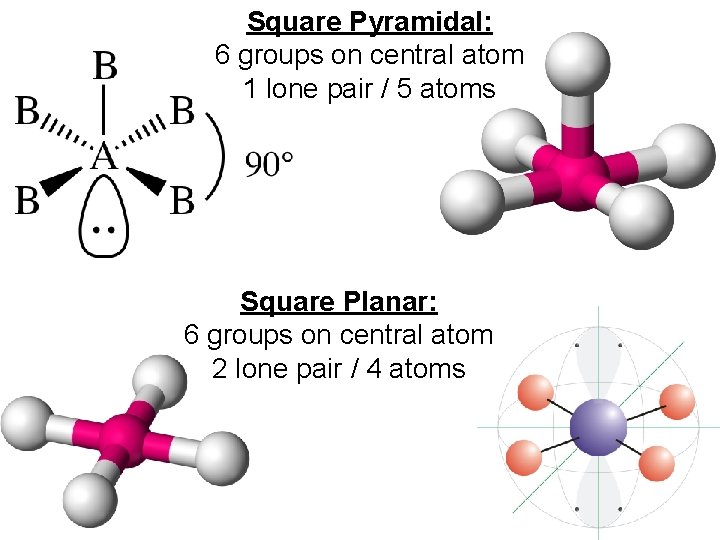
Square Pyramidal: 6 groups on central atom 1 lone pair / 5 atoms Square Planar: 6 groups on central atom 2 lone pair / 4 atoms
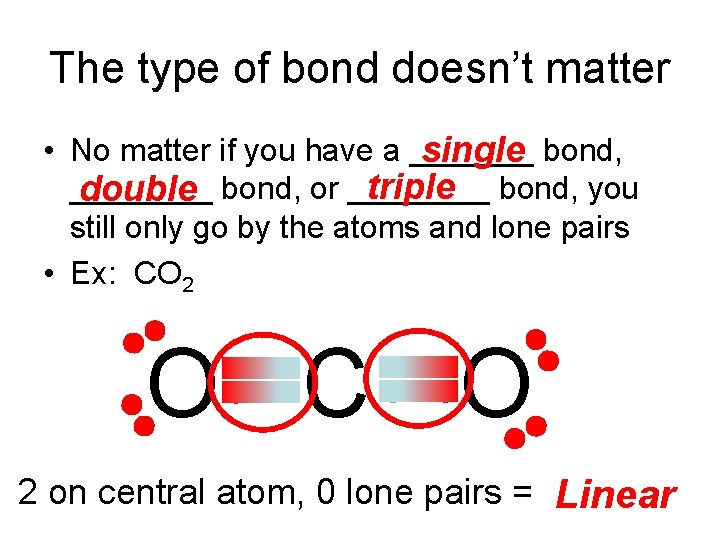
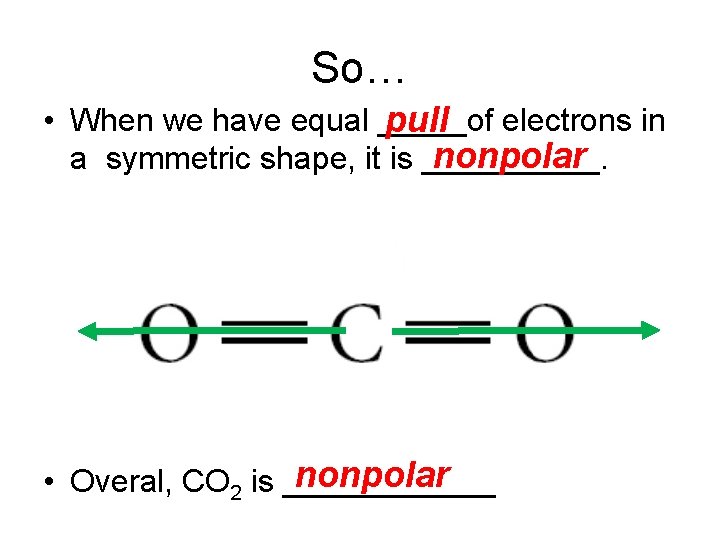
The type of bond doesn’t matter • No matter if you have a _______ single bond, triple bond, you ____ double bond, or ____ still only go by the atoms and lone pairs • Ex: CO 2 O C O 2 on central atom, 0 lone pairs = Linear
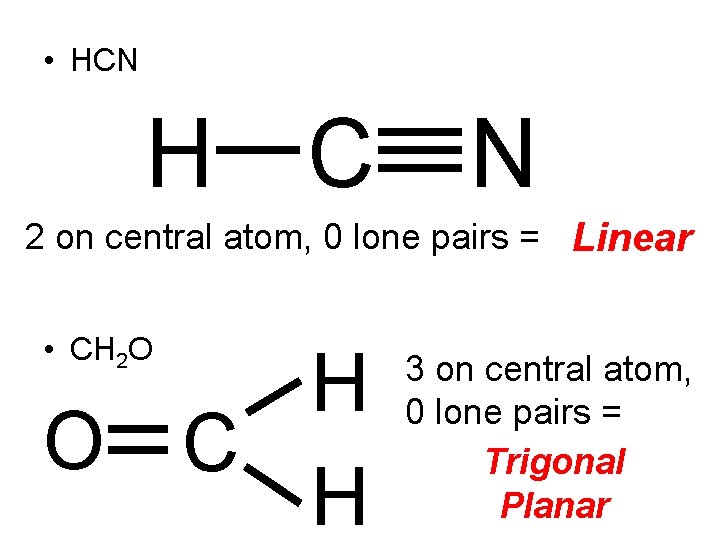
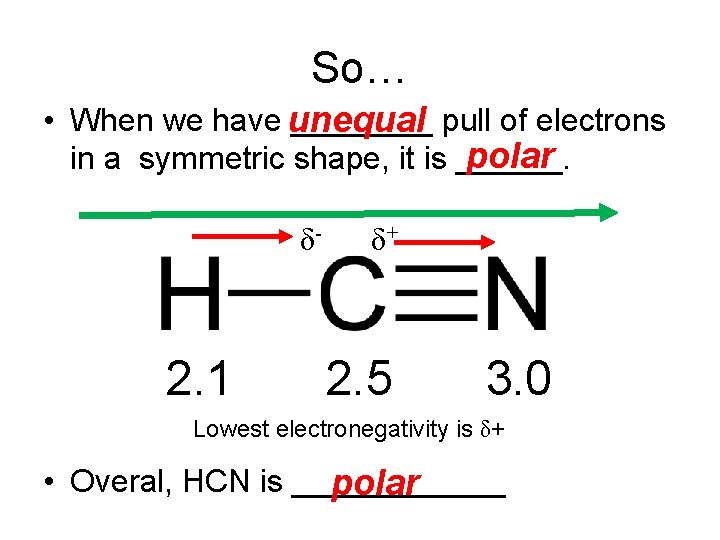
• HCN H C N 2 on central atom, 0 lone pairs = Linear • CH 2 O H O C H 3 on central atom, 0 lone pairs = Trigonal Planar
Molecular Geometry Chart • Use your notes to fill out the chart on the last page. • Use models or draw pictures if needed
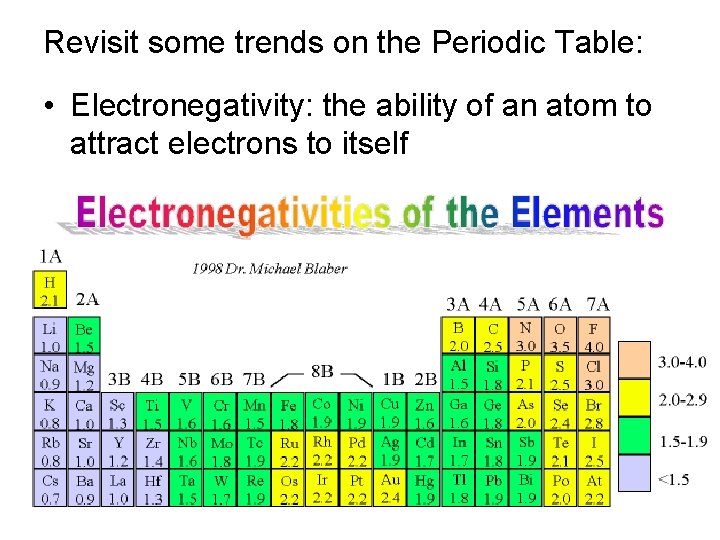
Revisit some trends on the Periodic Table: • Electronegativity: the ability of an atom to attract electrons to itself
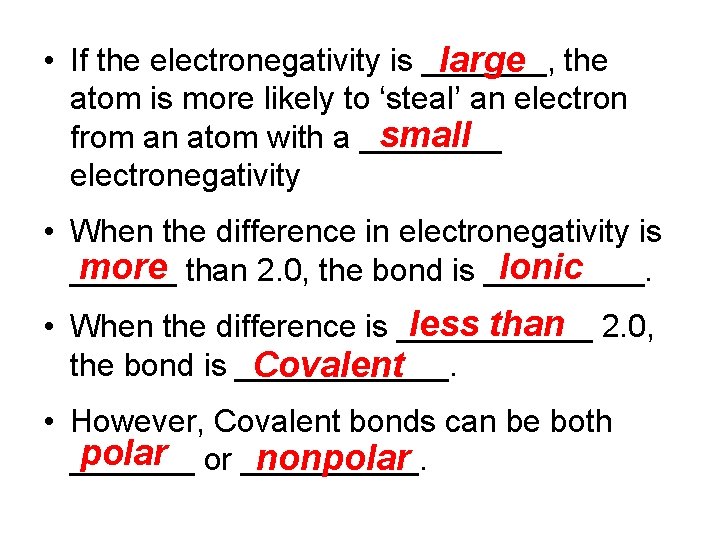
• If the electronegativity is _______, large the atom is more likely to ‘steal’ an electron small from an atom with a ____ electronegativity • When the difference in electronegativity is Ionic more than 2. 0, the bond is ______ less than 2. 0, • When the difference is ______ the bond is ______. Covalent • However, Covalent bonds can be both polar or _____. nonpolar _______
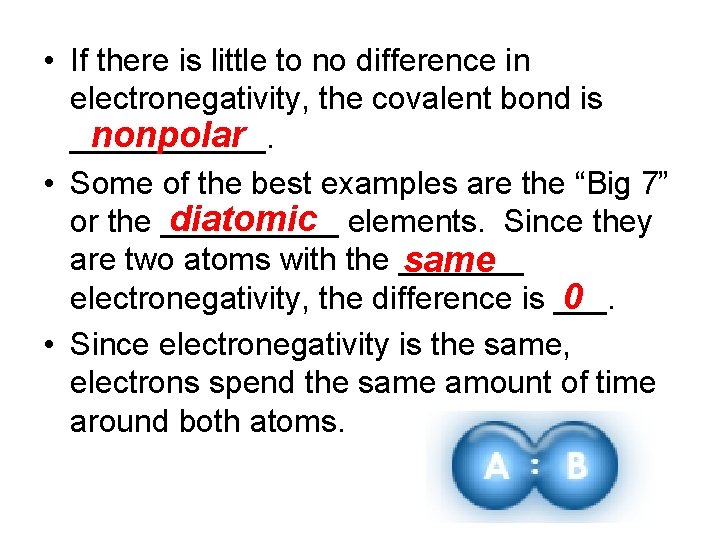
• If there is little to no difference in electronegativity, the covalent bond is nonpolar ______. • Some of the best examples are the “Big 7” diatomic elements. Since they or the _____ are two atoms with the _______ same 0 electronegativity, the difference is ___. • Since electronegativity is the same, electrons spend the same amount of time around both atoms.
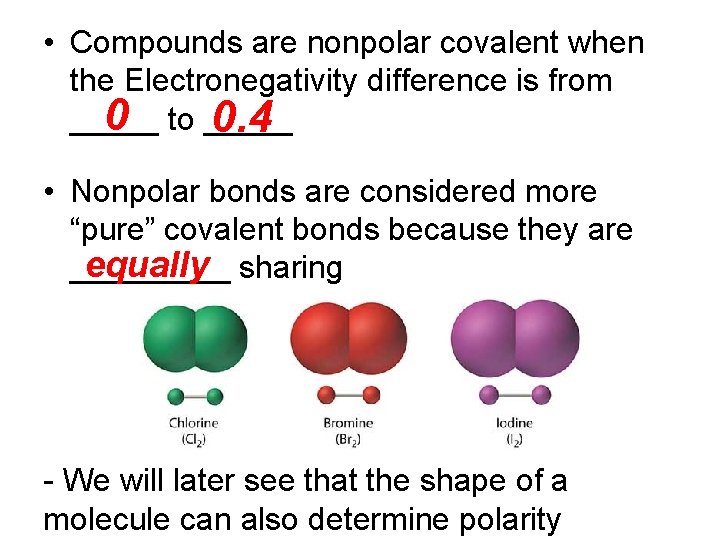
• Compounds are nonpolar covalent when the Electronegativity difference is from _____ 0 to _____ 0. 4 • Nonpolar bonds are considered more “pure” covalent bonds because they are equally sharing _____ - We will later see that the shape of a molecule can also determine polarity
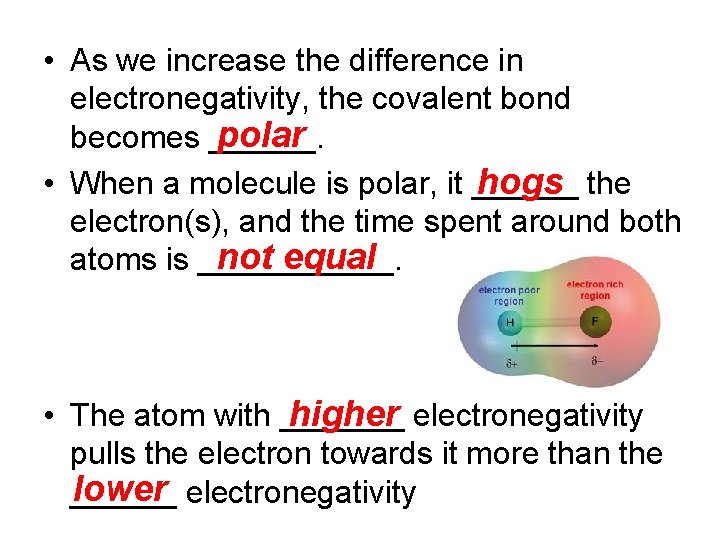
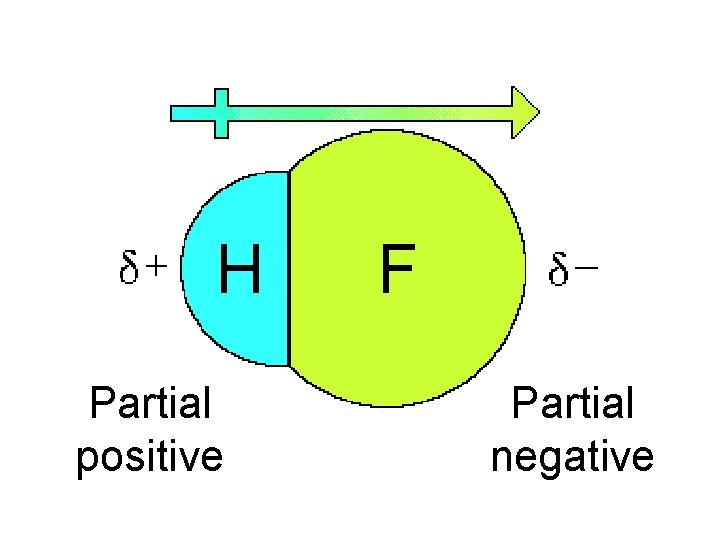
• As we increase the difference in electronegativity, the covalent bond polar becomes ______. • When a molecule is polar, it ______ hogs the electron(s), and the time spent around both not equal atoms is ______. • The atom with _______ higher electronegativity pulls the electron towards it more than the lower electronegativity ______
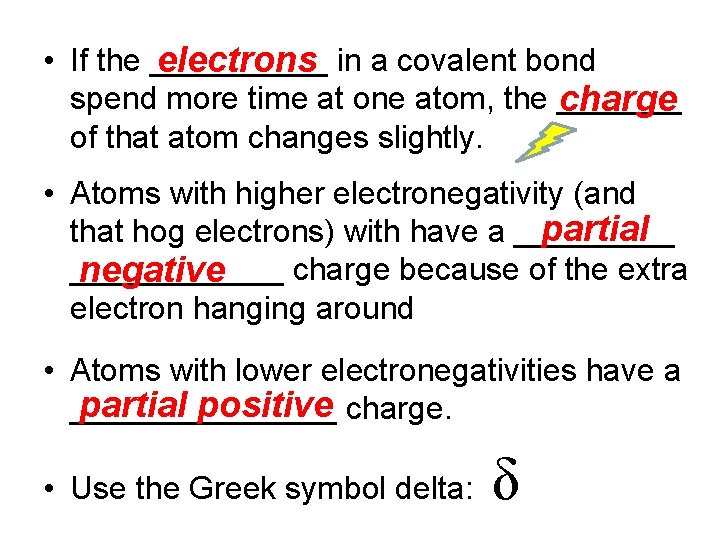
• If the _____ electrons in a covalent bond spend more time at one atom, the _______ charge of that atom changes slightly. • Atoms with higher electronegativity (and partial that hog electrons) with have a ____________ charge because of the extra negative electron hanging around • Atoms with lower electronegativities have a partial positive charge. ________ • Use the Greek symbol delta: δ
Partial positive Partial negative
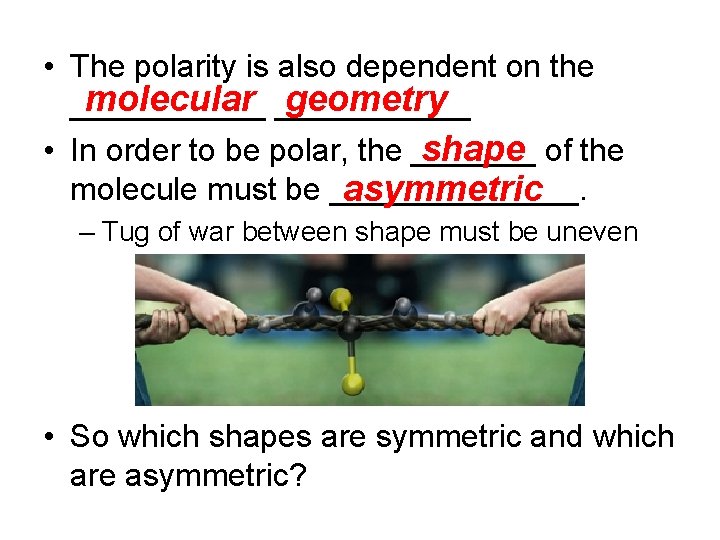
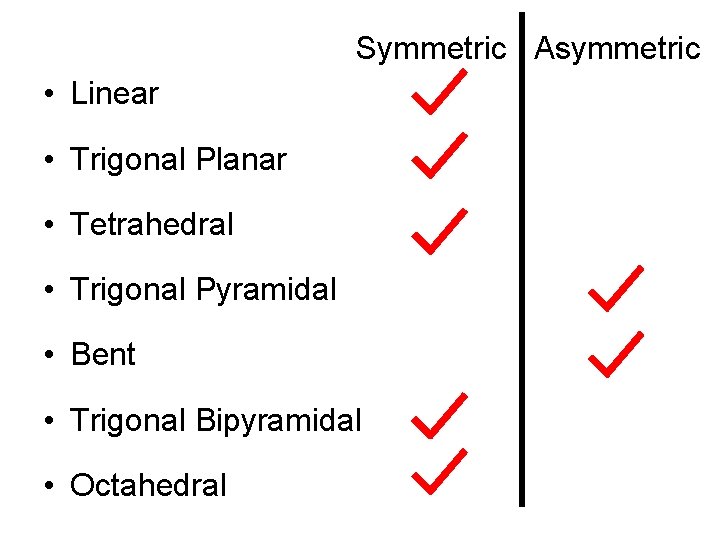
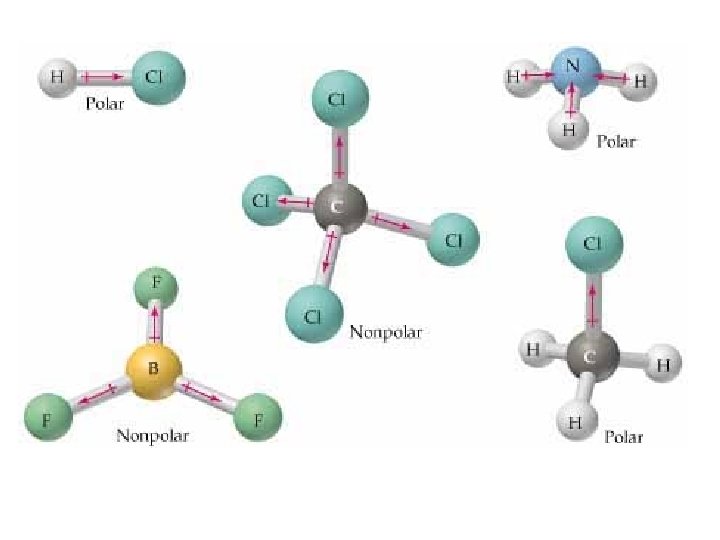
• The polarity is also dependent on the molecular ______ geometry ______ • In order to be polar, the _______ shape of the molecule must be _______. asymmetric – Tug of war between shape must be uneven • So which shapes are symmetric and which are asymmetric?
Symmetric Asymmetric • Linear • Trigonal Planar • Tetrahedral • Trigonal Pyramidal • Bent • Trigonal Bipyramidal • Octahedral
So… • When we have equal _____of pull electrons in nonpolar a symmetric shape, it is _____. nonpolar • Overal, CO 2 is ______
So… • When we have unequal ____ pull of electrons polar in a symmetric shape, it is ______. δ- 2. 1 δ+ 2. 5 3. 0 Lowest electronegativity is δ+ • Overal, HCN is ______ polar
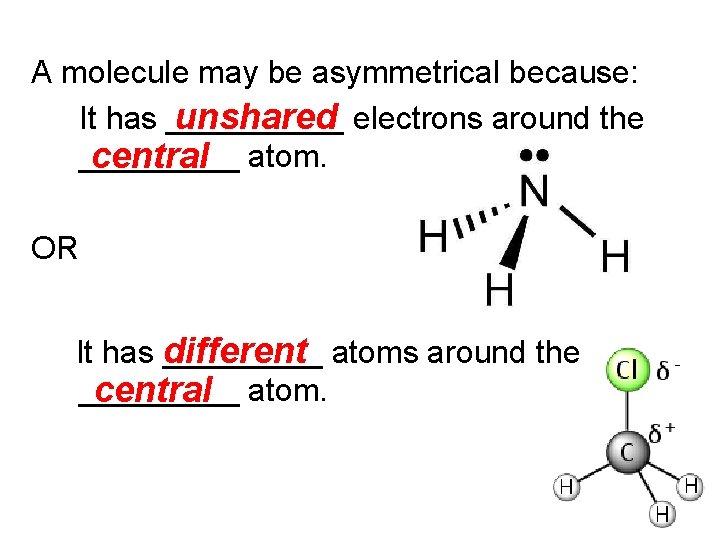
A molecule may be asymmetrical because: unshared electrons around the It has _____ central atom. OR different atoms around the It has _________ central atom.
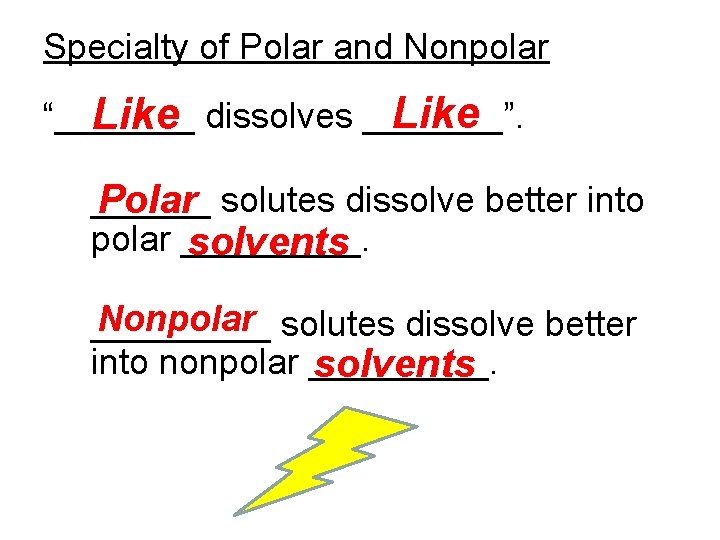
Specialty of Polar and Nonpolar Like “_______ Like dissolves _______”. ______ Polar solutes dissolve better into polar _____. solvents Nonpolar solutes dissolve better _____ into nonpolar _____. solvents
Chapter 7: The Mole and Chemical Composition • _______Mole The SI unit for amount. • Defined as the number of atoms in exactly 12 grams of ______. Carbon-12 Avogadro’s Number is the number of • __________ particles in one mole. counting unit • The mole is a ______
3 Ways of Measuring Matter 1. Number of pieces or particles (count) 2. Mass (g) : How much stuff there is 3. Volume (L) : The space the stuff occupies
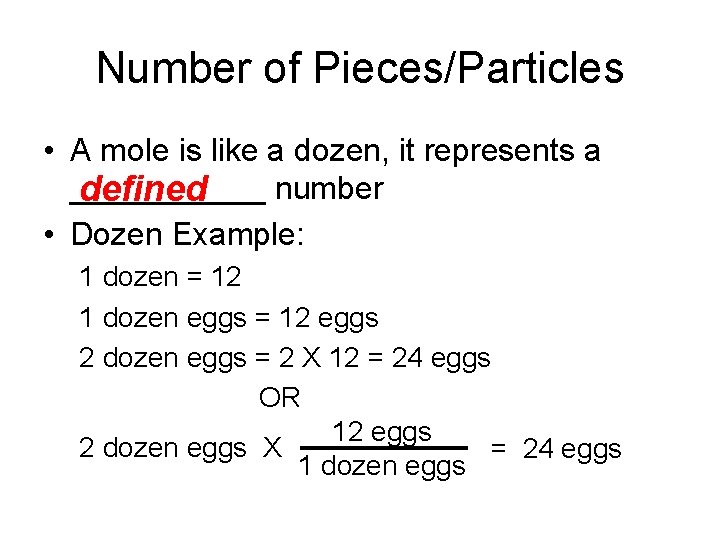
Number of Pieces/Particles • A mole is like a dozen, it represents a ______ number defined • Dozen Example: 1 dozen = 12 1 dozen eggs = 12 eggs 2 dozen eggs = 2 X 12 = 24 eggs OR 12 eggs 2 dozen eggs X = 24 eggs 1 dozen eggs
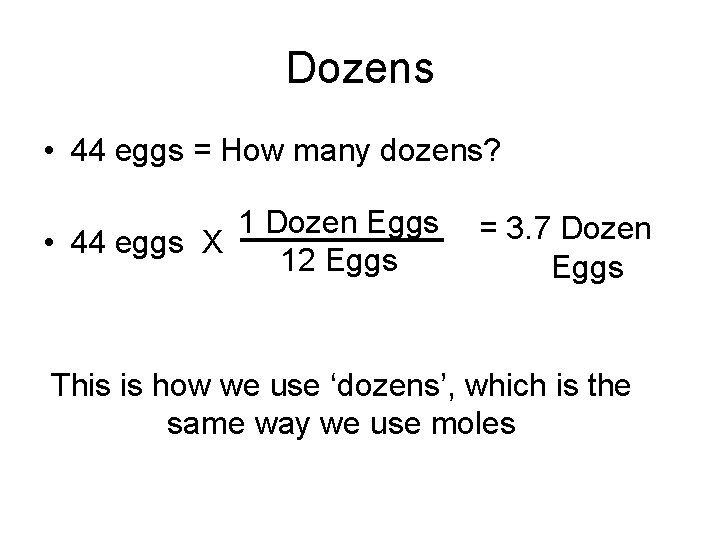
Dozens • 44 eggs = How many dozens? 1 Dozen Eggs • 44 eggs X 12 Eggs = 3. 7 Dozen Eggs This is how we use ‘dozens’, which is the same way we use moles
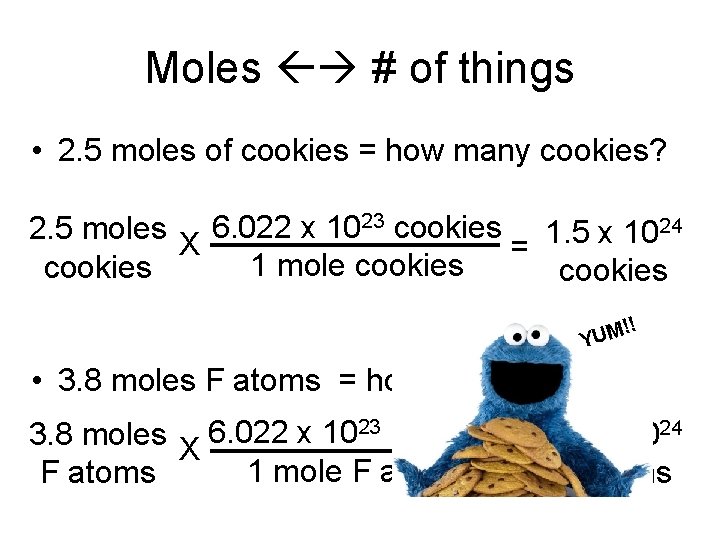
Moles # of things • 2. 5 moles of cookies = how many cookies? 2. 5 moles X 6. 022 x 1023 cookies 1. 5 x 1024 = 1 mole cookies ! ! M U Y • 3. 8 moles F atoms = how many atoms F? 3. 8 moles X 6. 022 x 1023 F atoms = 2. 3 x 1024 1 mole F atoms
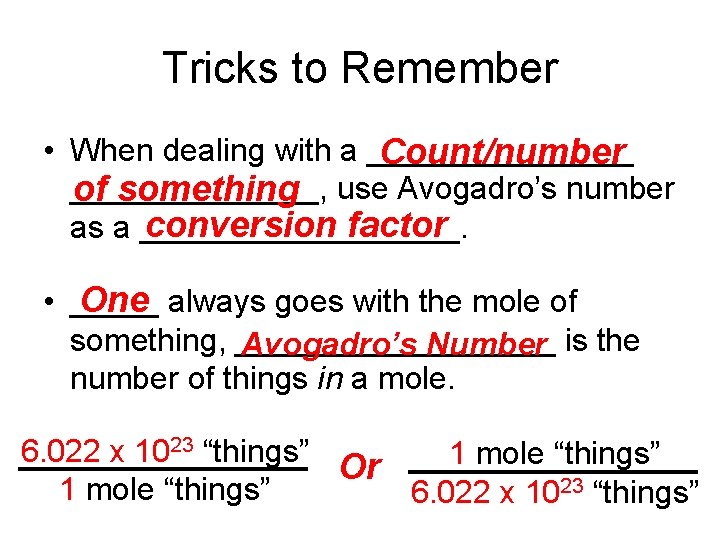
Tricks to Remember • When dealing with a ________ Count/number _______, of something use Avogadro’s number conversion factor as a _________. One always goes with the mole of • _____ something, _________ Avogadro’s Number is the number of things in a mole. 6. 022 x 1023 “things” 1 mole “things” Or 1 mole “things” 6. 022 x 1023 “things”
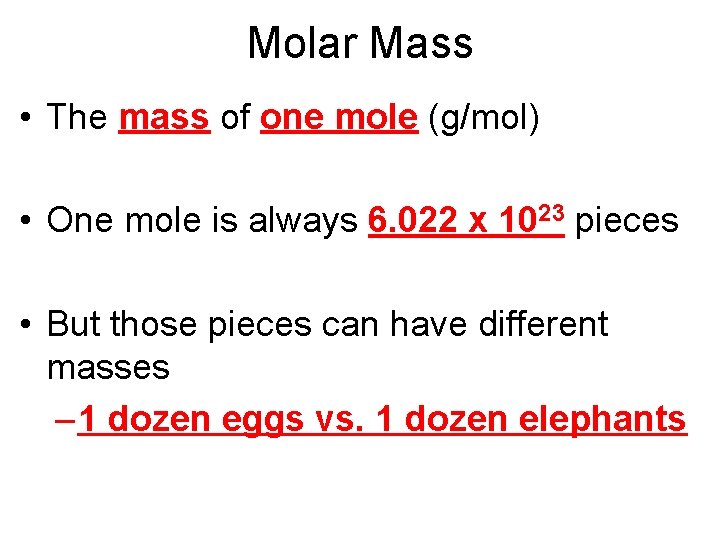
Molar Mass • The mass of one mole (g/mol) • One mole is always 6. 022 x 1023 pieces • But those pieces can have different masses – 1 dozen eggs vs. 1 dozen elephants
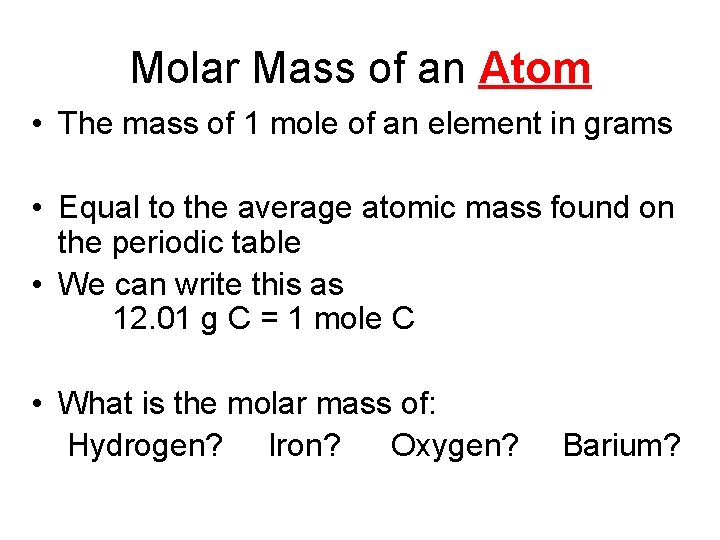
Molar Mass of an Atom • The mass of 1 mole of an element in grams • Equal to the average atomic mass found on the periodic table • We can write this as 12. 01 g C = 1 mole C • What is the molar mass of: Hydrogen? Iron? Oxygen? Barium?
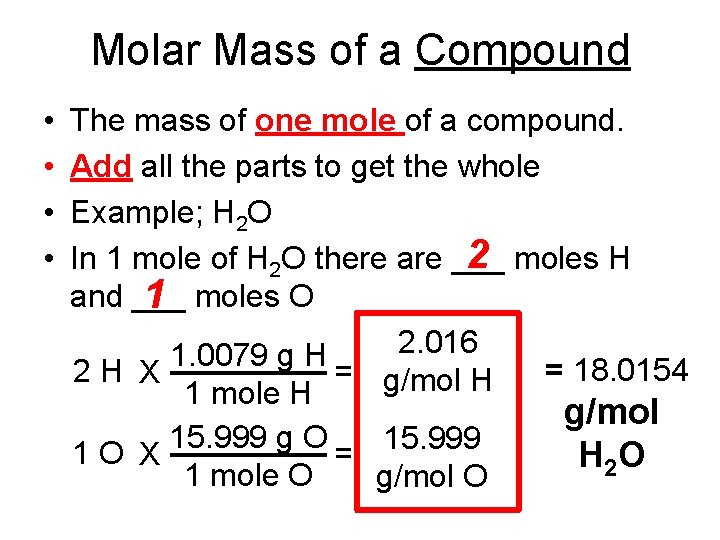
Molar Mass of a Compound • • The mass of one mole of a compound. Add all the parts to get the whole Example; H 2 O 2 moles H In 1 mole of H 2 O there are ___ and ___ 1 moles O 2. 016 1. 0079 g H = 18. 0154 2 H X = g/mol H 1 mole H 15. 999 g O 15. 999 1 O X = 1 mole O g/mol H 2 O
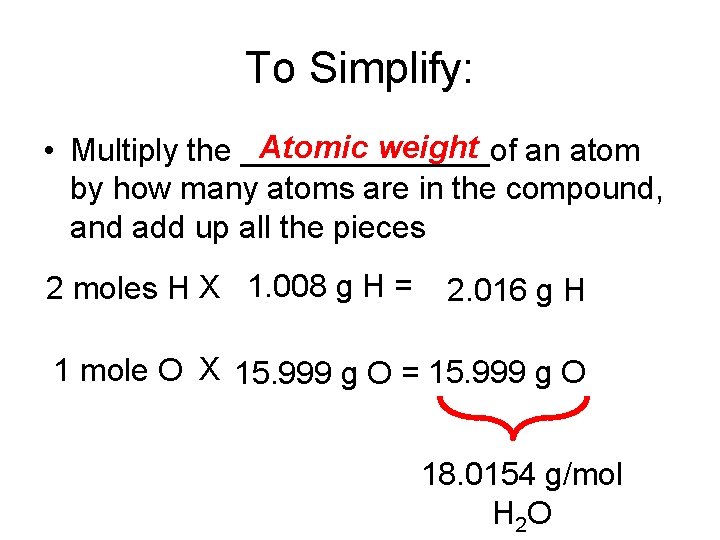
To Simplify: Atomic weight an atom • Multiply the _______of by how many atoms are in the compound, and add up all the pieces 2 moles H X 1. 008 g H = 2. 016 g H 1 mole O X 15. 999 g O = 15. 999 g O 18. 0154 g/mol H 2 O
Examples: • What is the molar mass of Fe 2 O 3? • What is the molar mass of CH 4?
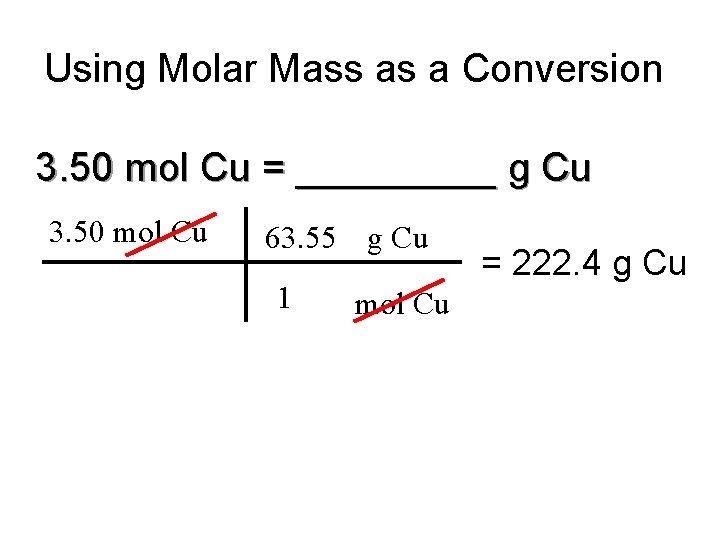
Using Molar Mass as a Conversion 3. 50 mol Cu = _____ g Cu 3. 50 mol Cu 63. 55 g Cu 1 mol Cu = 222. 4 g Cu
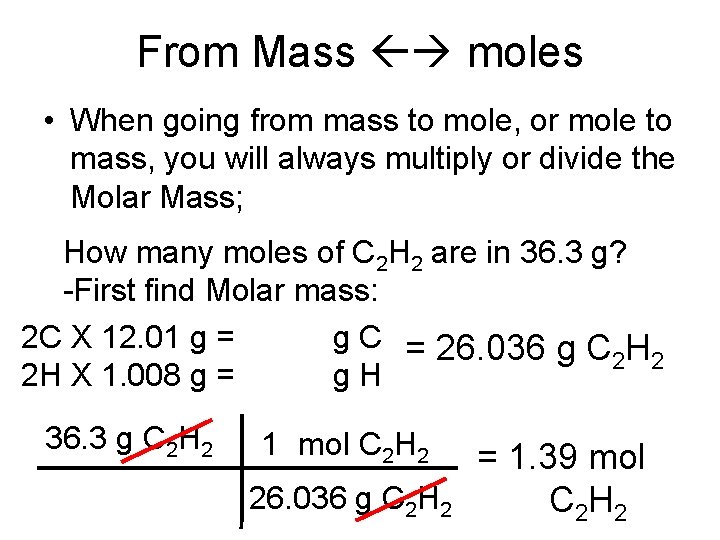
From Mass moles • When going from mass to mole, or mole to mass, you will always multiply or divide the Molar Mass; How many moles of C 2 H 2 are in 36. 3 g? -First find Molar mass: 2 C X 12. 01 g = 24. 02 g C = 26. 036 g C H 2 2 2 H X 1. 008 g = 2. 016 g H 36. 3 g C 2 H 2 1 mol C 2 H 2 26. 036 g C 2 H 2 = 1. 39 mol C 2 H 2
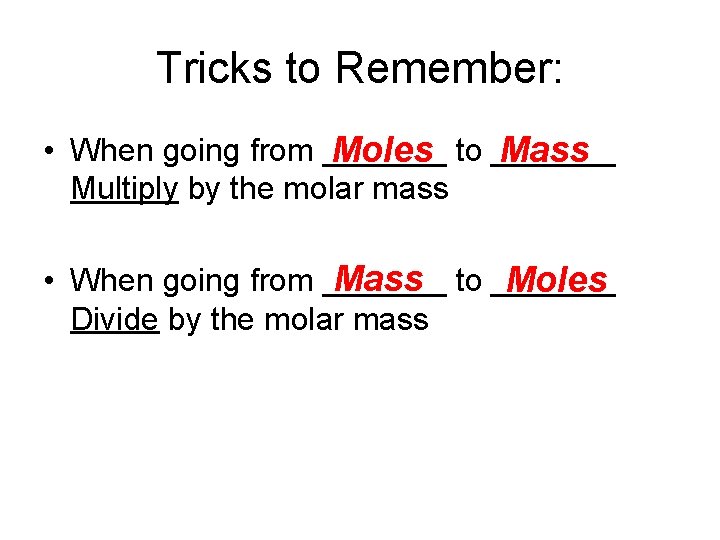
Tricks to Remember: • When going from _______ Mass Moles to _______ Multiply by the molar mass Mass to _______ • When going from _______ Moles Divide by the molar mass
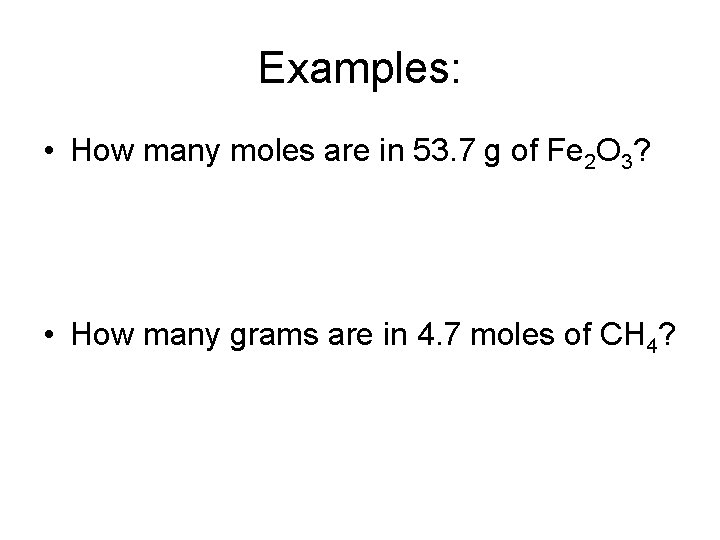
Examples: • How many moles are in 53. 7 g of Fe 2 O 3? • How many grams are in 4. 7 moles of CH 4?
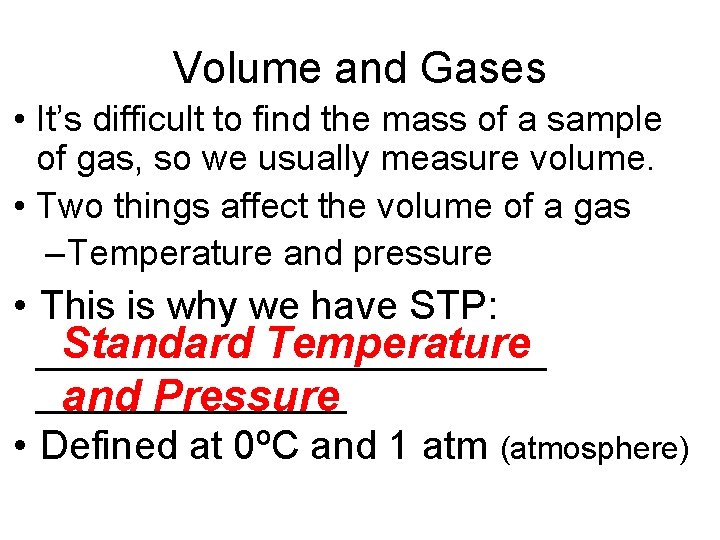
Volume and Gases • It’s difficult to find the mass of a sample of gas, so we usually measure volume. • Two things affect the volume of a gas – Temperature and pressure • This is why we have STP: Standard Temperature ____________ and Pressure • Defined at 0ºC and 1 atm (atmosphere)
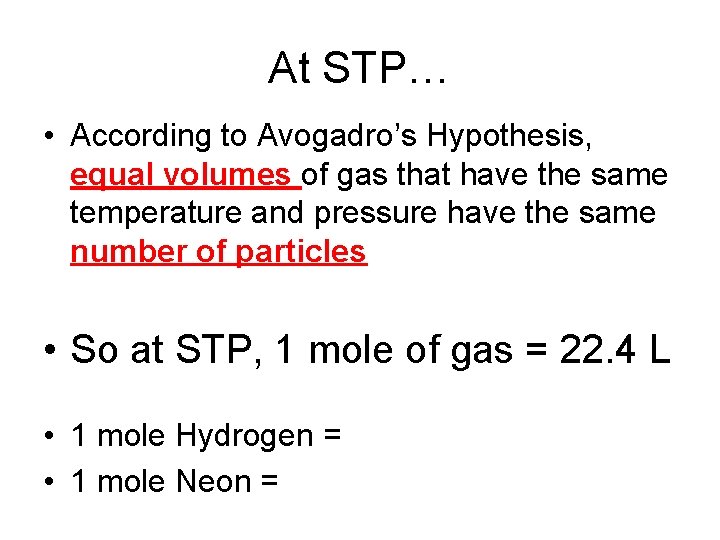
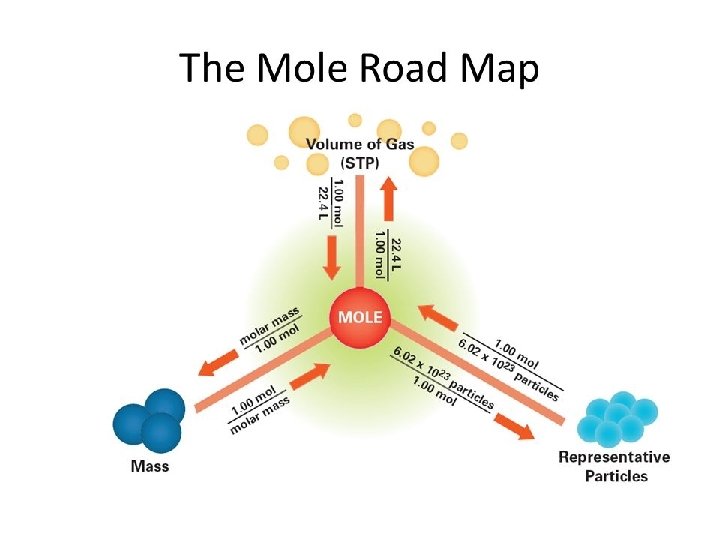
At STP… • According to Avogadro’s Hypothesis, equal volumes of gas that have the same temperature and pressure have the same number of particles • So at STP, 1 mole of gas = 22. 4 L • 1 mole Hydrogen = 22. 4 L • 1 mole Neon = 22. 4 L
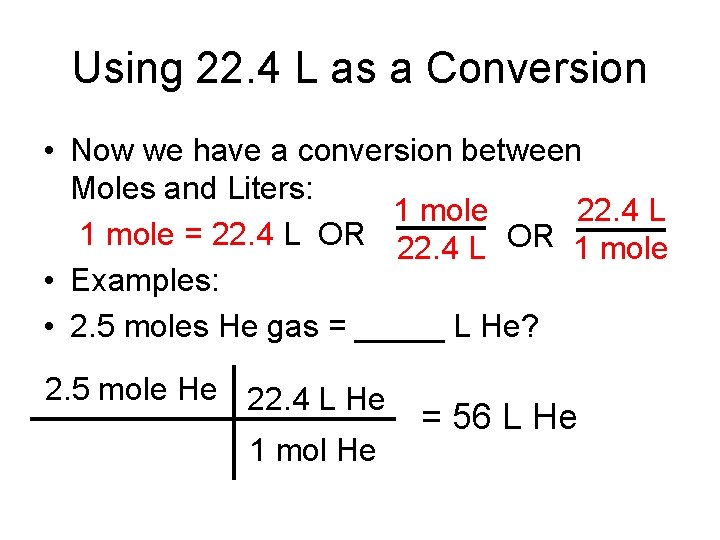
Using 22. 4 L as a Conversion • Now we have a conversion between Moles and Liters: 1 mole 22. 4 L 1 mole = 22. 4 L OR 1 mole • Examples: • 2. 5 moles He gas = _____ L He? 2. 5 mole He 22. 4 L He 1 mol He = 56 L He
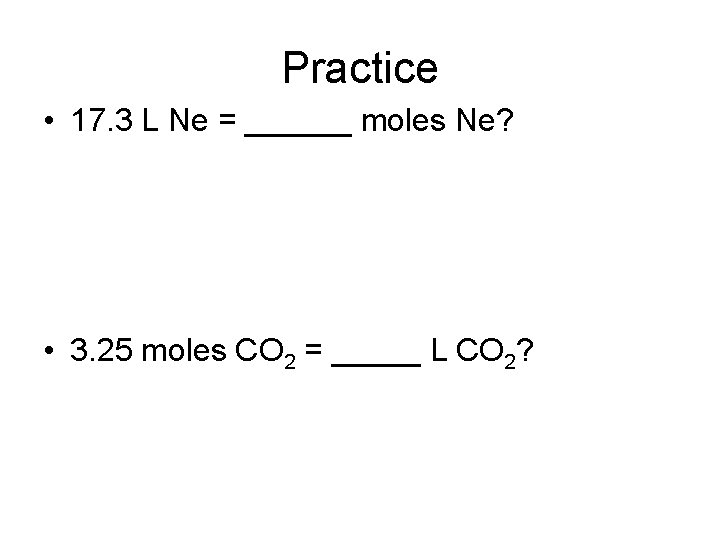
Practice • 17. 3 L Ne = ______ moles Ne? • 3. 25 moles CO 2 = _____ L CO 2?
Chapter 7 • Percent Composition • Empirical Formula • Molecular Formula
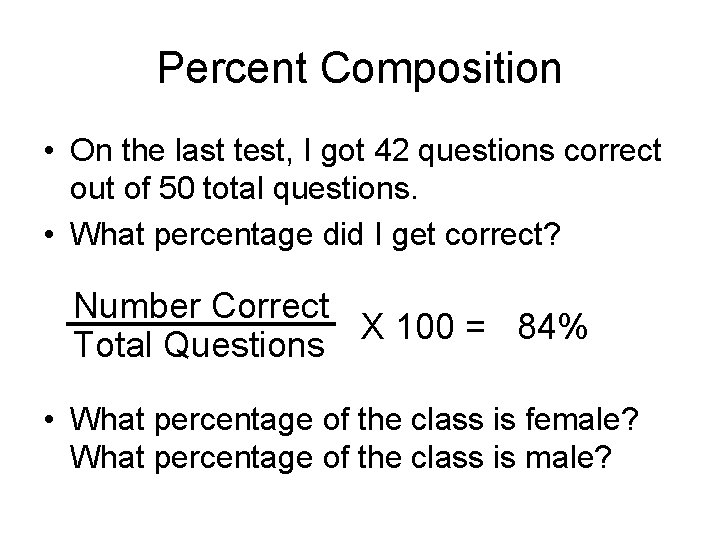
Percent Composition • On the last test, I got 42 questions correct out of 50 total questions. • What percentage did I get correct? Number Correct X 100 = 84% Total Questions • What percentage of the class is female? What percentage of the class is male?
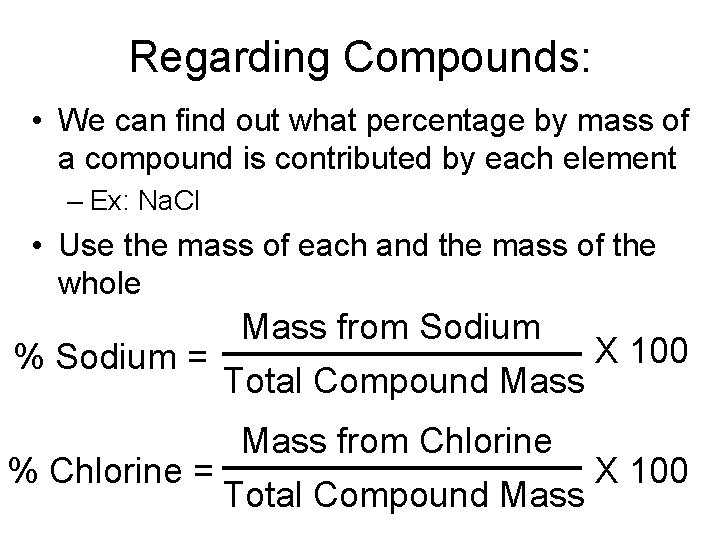
Regarding Compounds: • We can find out what percentage by mass of a compound is contributed by each element – Ex: Na. Cl • Use the mass of each and the mass of the whole Mass from Sodium X 100 % Sodium = Total Compound Mass from Chlorine % Chlorine = X 100 Total Compound Mass
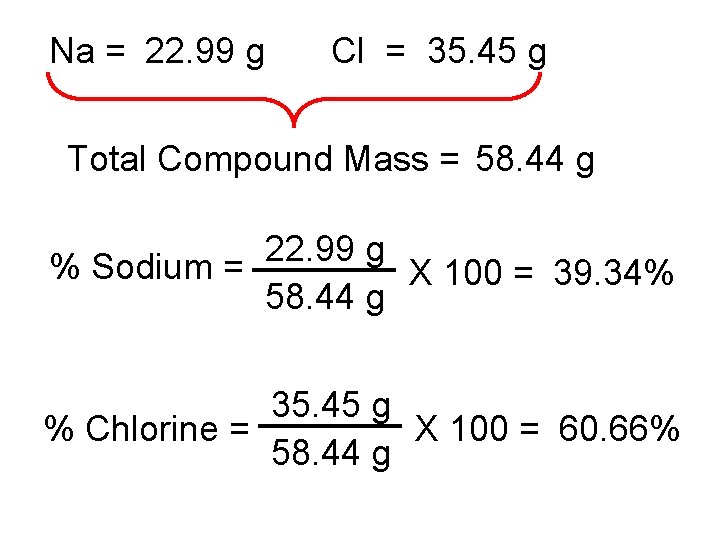
Na = 22. 99 g Cl = 35. 45 g Total Compound Mass = 58. 44 g 22. 99 g % Sodium = X 100 = 39. 34% 58. 44 g 35. 45 g % Chlorine = X 100 = 60. 66% 58. 44 g
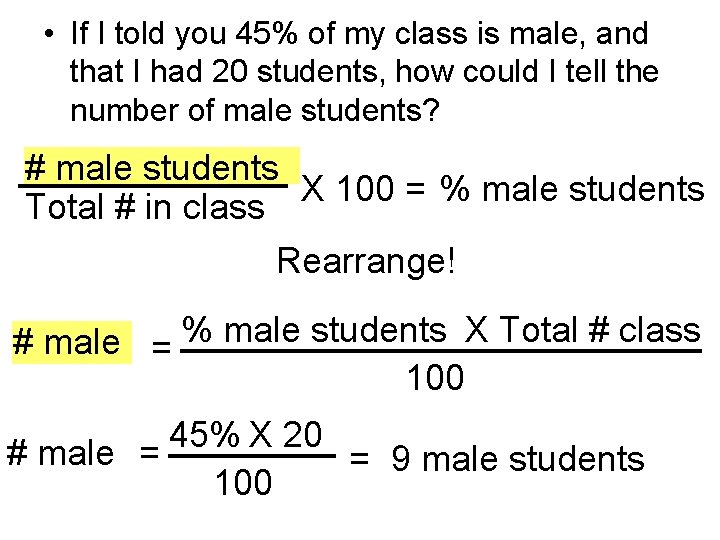
• If I told you 45% of my class is male, and that I had 20 students, how could I tell the number of male students? # male students X 100 = % male students Total # in class Rearrange! # male = % male students X Total # class 100 45% X 20 # male = = 9 male students 100
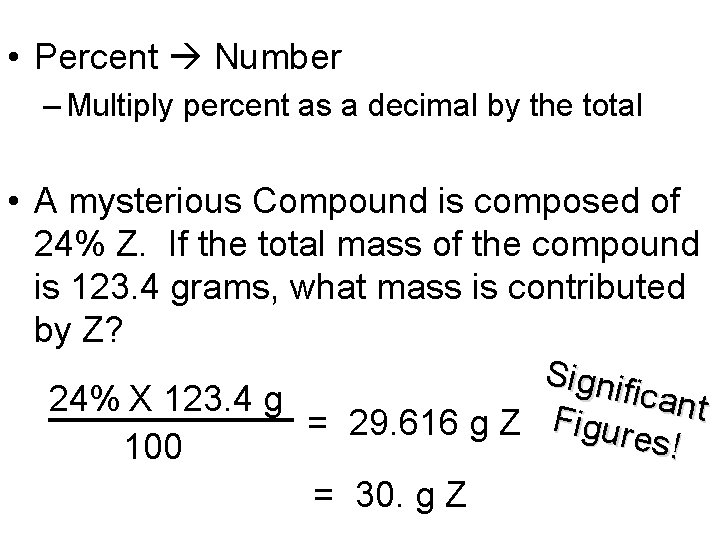
• Percent Number – Multiply percent as a decimal by the total • A mysterious Compound is composed of 24% Z. If the total mass of the compound is 123. 4 grams, what mass is contributed by Z? Signi ficant 24% X 123. 4 g = 29. 616 g Z Figure s! 100 = 30. g Z
Practice • Determine the percent composition for each element in the following compounds: § KNO 3 § H 2 SO 4 § C 2 H 5 OH
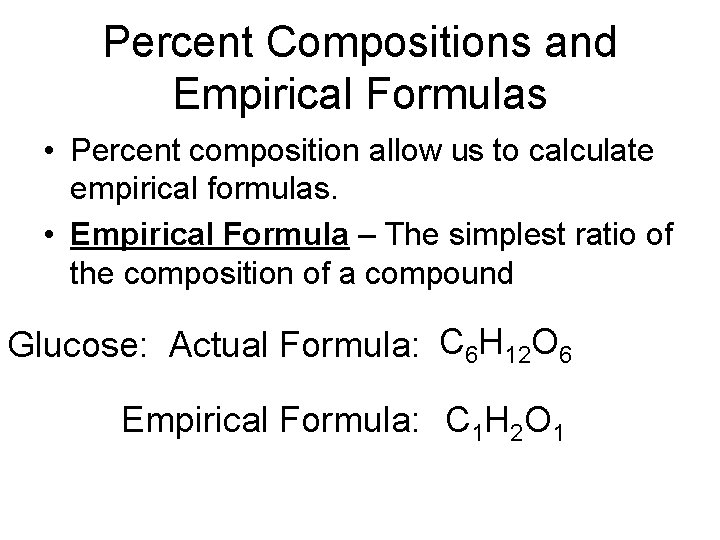
Percent Compositions and Empirical Formulas • Percent composition allow us to calculate empirical formulas. • Empirical Formula – The simplest ratio of the composition of a compound Glucose: Actual Formula: C 6 H 12 O 6 Empirical Formula: C 1 H 2 O 1
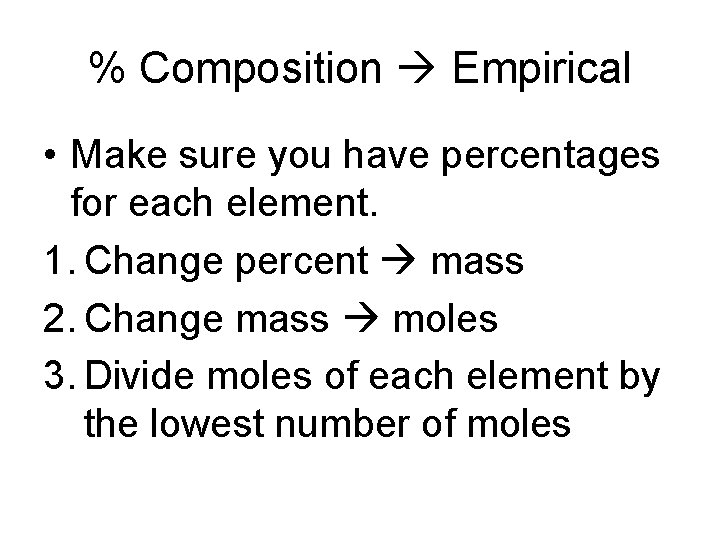
% Composition Empirical • Make sure you have percentages for each element. 1. Change percent mass 2. Change mass moles 3. Divide moles of each element by the lowest number of moles
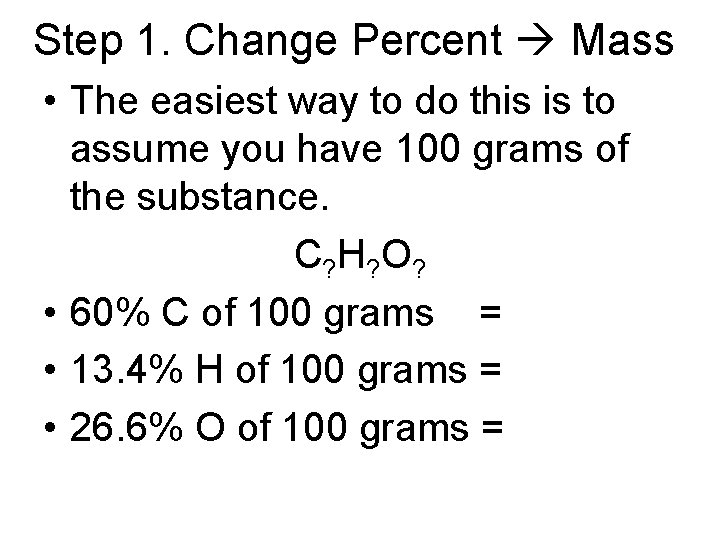
Step 1. Change Percent Mass • The easiest way to do this is to assume you have 100 grams of the substance. C ? H ? O ? • 60% C of 100 grams = 60 g C • 13. 4% H of 100 grams = 13. 4 g H • 26. 6% O of 100 grams = 26. 6 g O
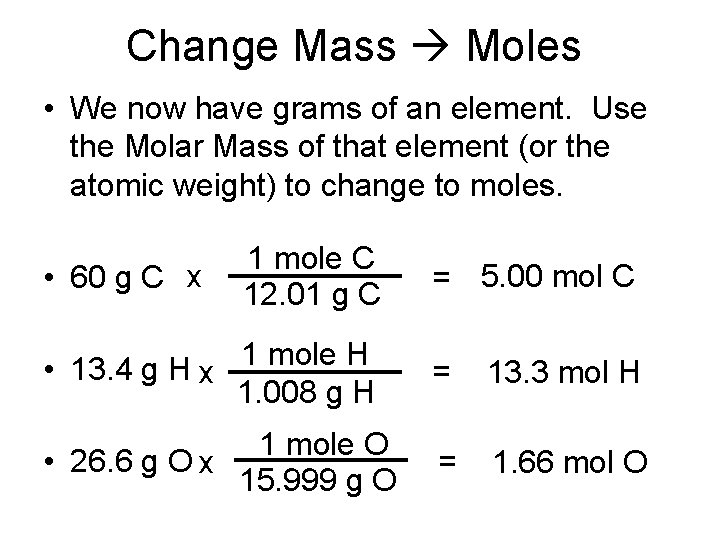
Change Mass Moles • We now have grams of an element. Use the Molar Mass of that element (or the atomic weight) to change to moles. • 60 g C x 1 mole C 12. 01 g C = 5. 00 mol C • 13. 4 g H x 1 mole H 1. 008 g H = 13. 3 mol H 1 mole O • 26. 6 g O x 15. 999 g O = 1. 66 mol O
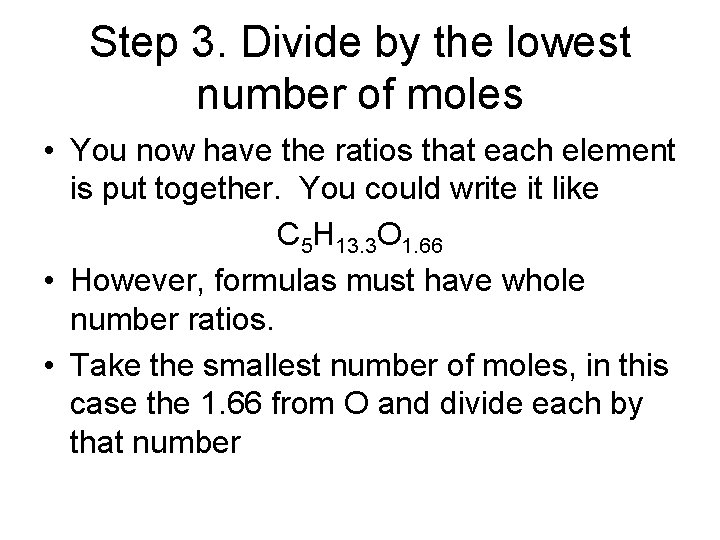
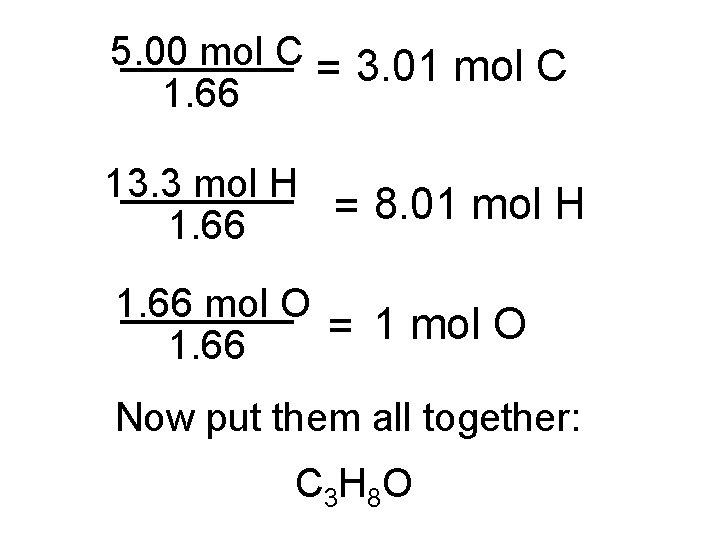
Step 3. Divide by the lowest number of moles • You now have the ratios that each element is put together. You could write it like C 5 H 13. 3 O 1. 66 • However, formulas must have whole number ratios. • Take the smallest number of moles, in this case the 1. 66 from O and divide each by that number
5. 00 mol C = 3. 01 mol C 1. 66 13. 3 mol H 8. 01 mol H = 1. 66 mol O 1 mol O = 1. 66 Now put them all together: C 3 H 8 O
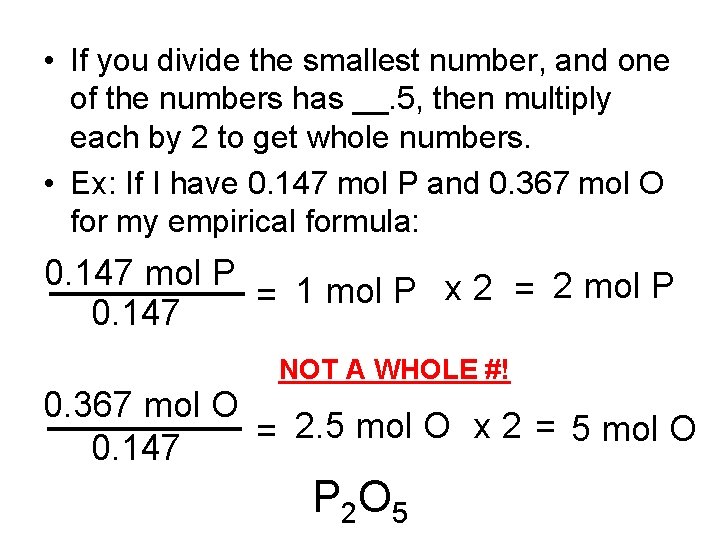
• If you divide the smallest number, and one of the numbers has __. 5, then multiply each by 2 to get whole numbers. • Ex: If I have 0. 147 mol P and 0. 367 mol O for my empirical formula: 0. 147 mol P = 1 mol P x 2 = 2 mol P 0. 147 NOT A WHOLE #! 0. 367 mol O 2. 5 mol O x 2 = 5 mol O = 0. 147 P 2 O 5
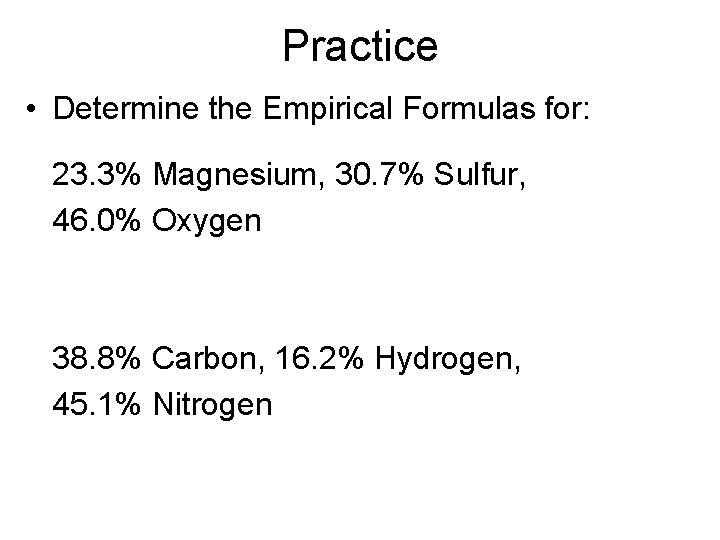
Practice • Determine the Empirical Formulas for: 23. 3% Magnesium, 30. 7% Sulfur, 46. 0% Oxygen 38. 8% Carbon, 16. 2% Hydrogen, 45. 1% Nitrogen
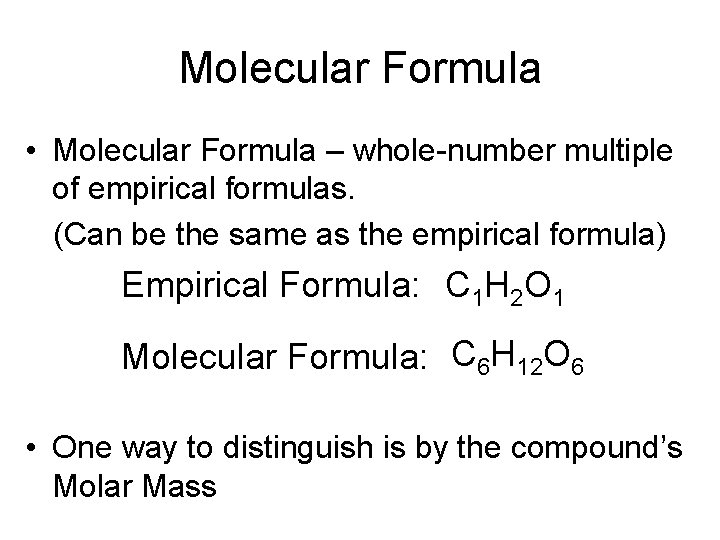
Molecular Formula • Molecular Formula – whole-number multiple of empirical formulas. (Can be the same as the empirical formula) Empirical Formula: C 1 H 2 O 1 Molecular Formula: C 6 H 12 O 6 • One way to distinguish is by the compound’s Molar Mass
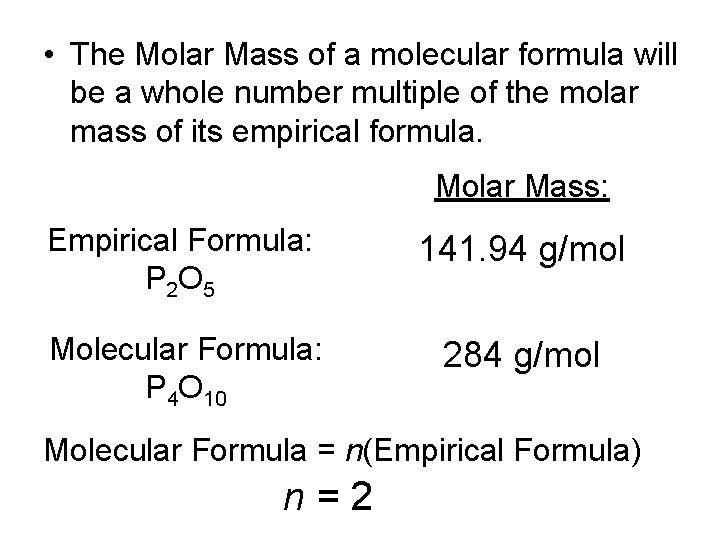
• The Molar Mass of a molecular formula will be a whole number multiple of the molar mass of its empirical formula. Molar Mass: Empirical Formula: P 2 O 5 141. 94 g/mol Molecular Formula: P 4 O 10 284 g/mol Molecular Formula = n(Empirical Formula) n=2
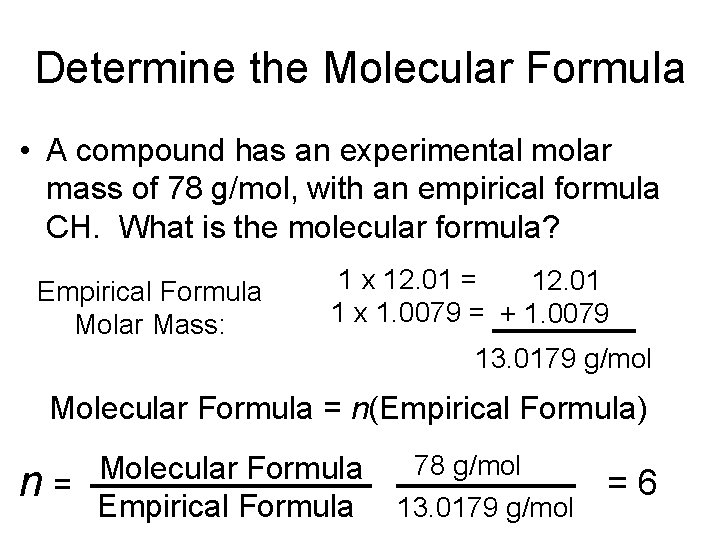
Determine the Molecular Formula • A compound has an experimental molar mass of 78 g/mol, with an empirical formula CH. What is the molecular formula? Empirical Formula Molar Mass: 1 x 12. 01 = 12. 01 1 x 1. 0079 = + 1. 0079 13. 0179 g/mol Molecular Formula = n(Empirical Formula) Molecular Formula n = Empirical Formula 78 g/mol 13. 0179 g/mol =6
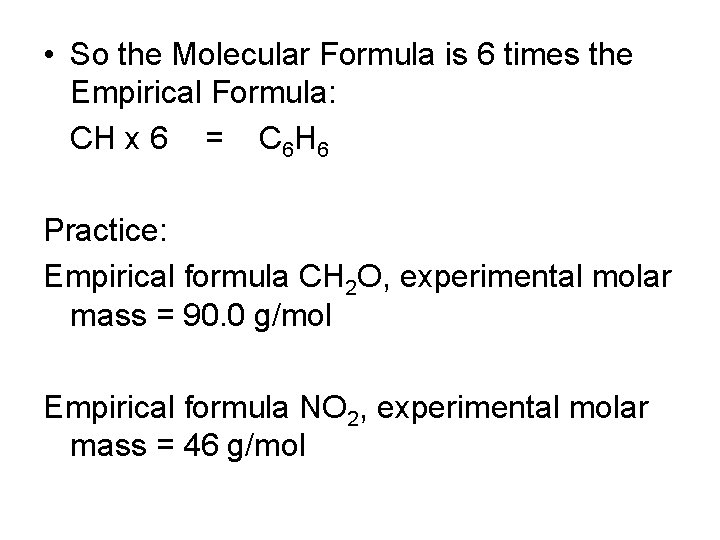
• So the Molecular Formula is 6 times the Empirical Formula: CH x 6 = C 6 H 6 Practice: Empirical formula CH 2 O, experimental molar mass = 90. 0 g/mol Empirical formula NO 2, experimental molar mass = 46 g/mol