Atmospheric Radiation Jack Mc Connell York University 1072020





- Slides: 120
Atmospheric Radiation Jack Mc. Connell York University 10/7/2020 Banff Summer School, 22 nd May, 2004
Atmospheric Radiation • • • Introduction: Sun and other stuff Radiative Transfer Equation Scattering Heating J Values Remote Sensing 10/7/2020 Banff Summer School, 22 nd May, 2004
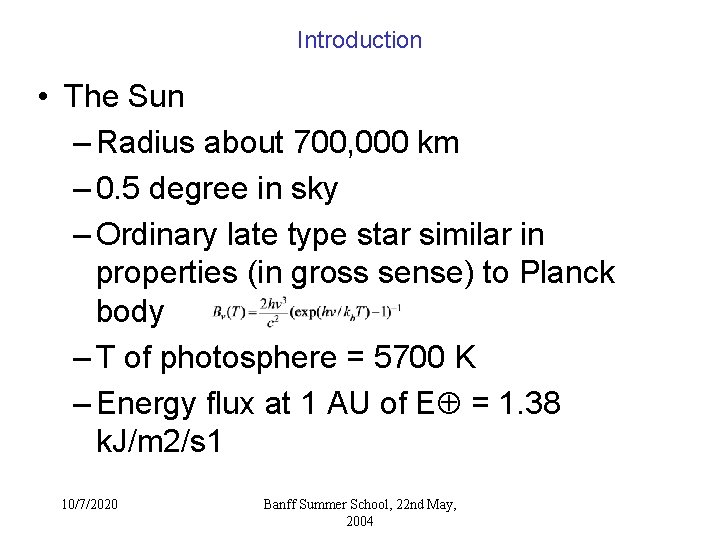
Introduction • The Sun – Radius about 700, 000 km – 0. 5 degree in sky – Ordinary late type star similar in properties (in gross sense) to Planck body – T of photosphere = 5700 K – Energy flux at 1 AU of E = 1. 38 k. J/m 2/s 1 10/7/2020 Banff Summer School, 22 nd May, 2004
Introduction ctd • Solar Stability – Sunspots with 11 year variability – Total output varies by < 0. 1% (over 20 years) – Early stellar energy is about 70% of current – X-rays changes x 100 s – EUV 3 -4 times solar min-max – 200 nm <3% 10/7/2020 Banff Summer School, 22 nd May, 2004
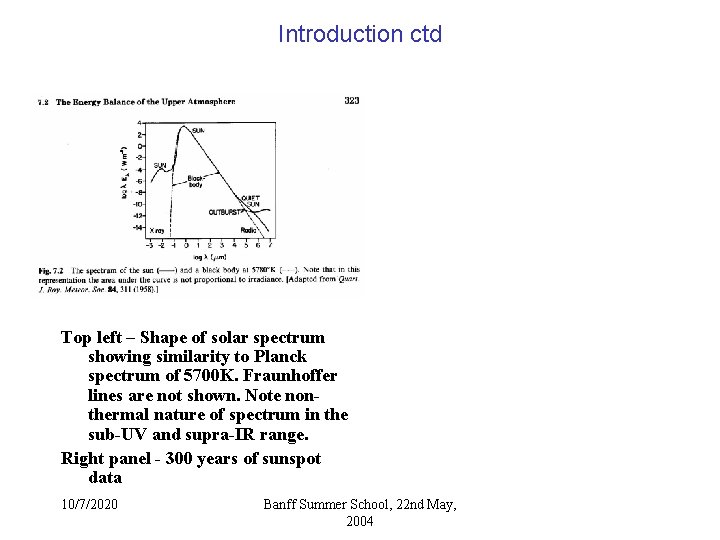
Introduction ctd Top left – Shape of solar spectrum showing similarity to Planck spectrum of 5700 K. Fraunhoffer lines are not shown. Note nonthermal nature of spectrum in the sub-UV and supra-IR range. Right panel - 300 years of sunspot data 10/7/2020 Banff Summer School, 22 nd May, 2004
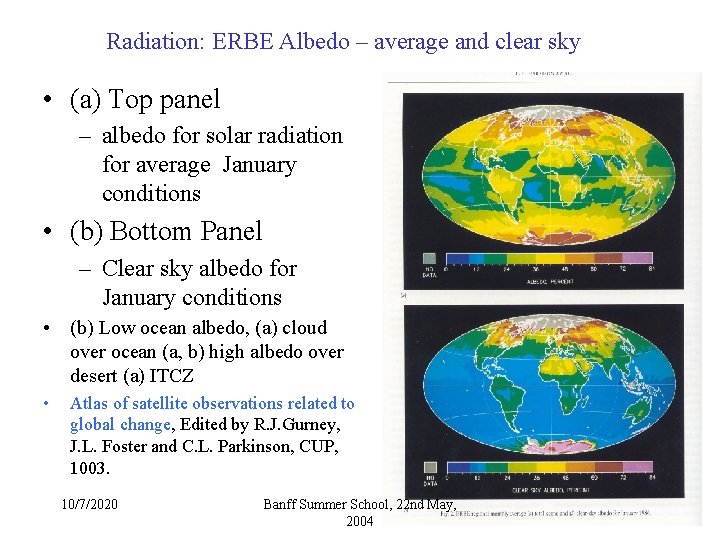
Radiation: ERBE Albedo – average and clear sky • (a) Top panel – albedo for solar radiation for average January conditions • (b) Bottom Panel – Clear sky albedo for January conditions • (b) Low ocean albedo, (a) cloud over ocean (a, b) high albedo over desert (a) ITCZ • Atlas of satellite observations related to global change, Edited by R. J. Gurney, J. L. Foster and C. L. Parkinson, CUP, 1003. 10/7/2020 Banff Summer School, 22 nd May, 2004
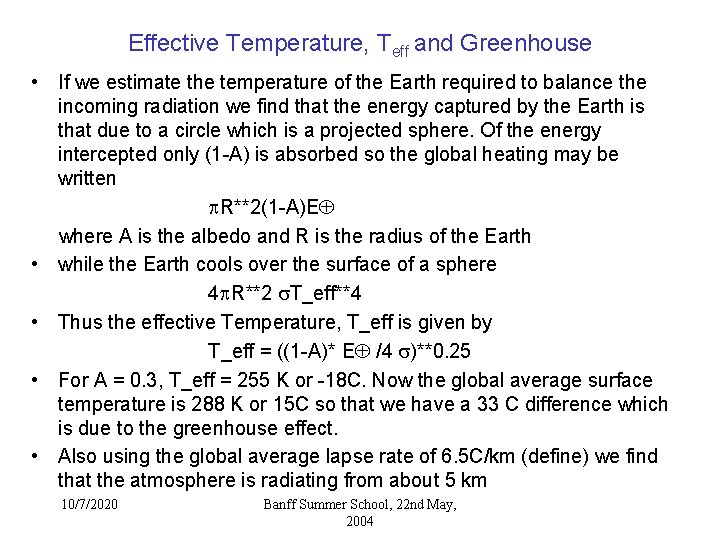
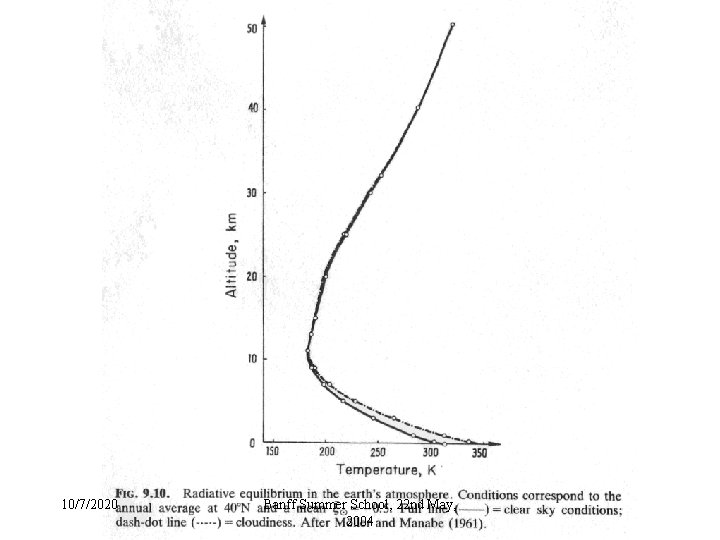
Effective Temperature, Teff and Greenhouse • If we estimate the temperature of the Earth required to balance the incoming radiation we find that the energy captured by the Earth is that due to a circle which is a projected sphere. Of the energy intercepted only (1 -A) is absorbed so the global heating may be written R**2(1 -A)E where A is the albedo and R is the radius of the Earth • while the Earth cools over the surface of a sphere 4 R**2 T_eff**4 • Thus the effective Temperature, T_eff is given by T_eff = ((1 -A)* E /4 )**0. 25 • For A = 0. 3, T_eff = 255 K or -18 C. Now the global average surface temperature is 288 K or 15 C so that we have a 33 C difference which is due to the greenhouse effect. • Also using the global average lapse rate of 6. 5 C/km (define) we find that the atmosphere is radiating from about 5 km 10/7/2020 Banff Summer School, 22 nd May, 2004
Atmospheric Radiation • Light = Electromagnetic Radiation – Waves, photons – IR, visible (0. 4 -0. 7 m) , UV, etc – c = wavelength*frequency = – E = h* where h = 6. 626 E-34 Js Planck’s constant – Can be polarized – Characterized by Stokes Parameters – Interacts with objects for which there is an associated cross section determined by quantum mechanics (geometrical optics) 10/7/2020 Banff Summer School, 22 nd May, 2004
Atmospheric Radiation – Sunlight is unpolarized – Interaction with gases and aerosols often results in polarization (Important for instruments as skylight is polarized) – Most work assumes that light is unpolarized – Deal with spherical body • Single phase function for scattering as opposed to matrix 10/7/2020 Banff Summer School, 22 nd May, 2004
Atmospheric Radiation • 6000 K Solar radiation enters the Earth’s atmosphere – Scatters – absorbed – Extinction = scattering + absorption – Molecules, droplets (cloud, rain, aerosols) • Transformed to 300 K IR 10/7/2020 Banff Summer School, 22 nd May, 2004
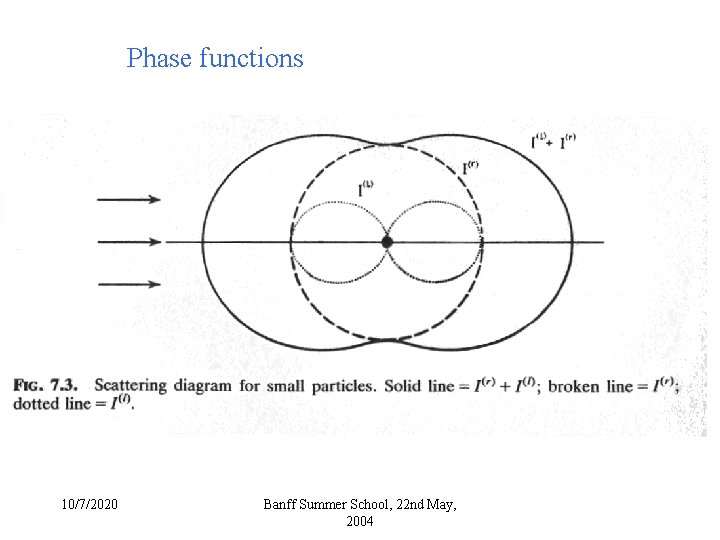
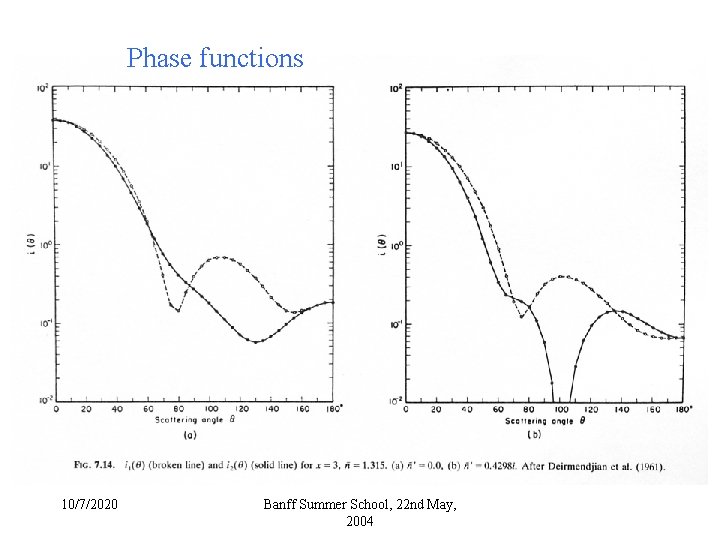
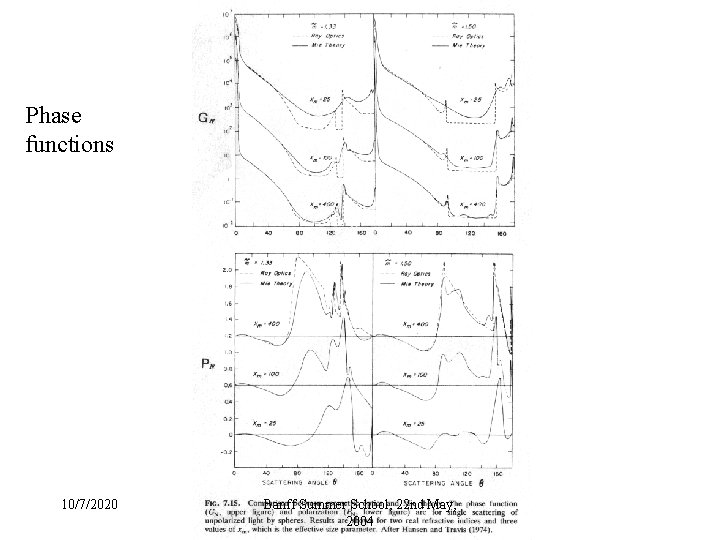
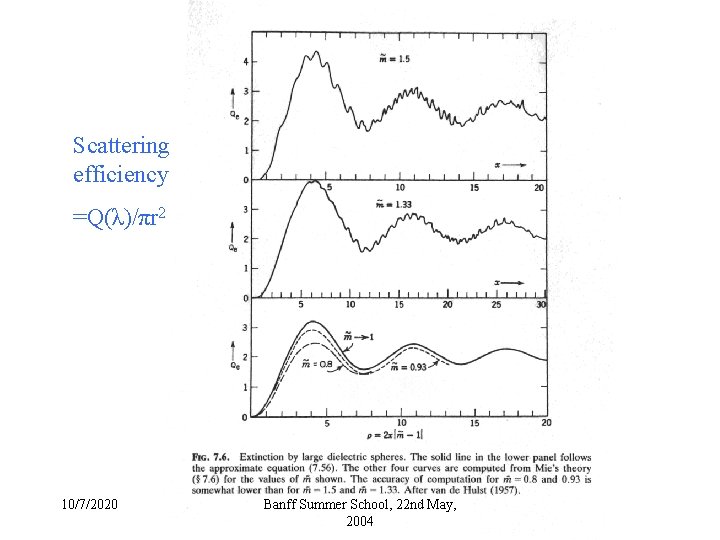
Cross sections • EM Cross section, Qλ, determined by wavelength of light, λ, and object dimension, r, and whether or not a resonance exists • For visible light (0. 5 μm) λ ~ r – 1 μm object has Qλ approx geometrical ie π*r**2 – Mie Scattering • Smaller objects – Light frequency: ν ~ c/λ ~ 3 e 10/0. 5 e-4~ 6 e 14 s-1 – Atomic frequency: • ν ~ v/r ~ 2 e 8/1 e-8 cm/s~ 2 e 16 s-1 • Atom sees a “stationary” polarization field and classical EM theory predicts a 1/λ**4 wavelength dependence 10/7/2020 Banff Summer School, 22 nd May, 2004
Cross sections ctd • Rayleigh scattering is ~1/λ**4 wavelength dependence – 0. 5 μm Qλ(air)~6 e-27 cm 2 – Efficiency : Qλ(air)/(π*r**2) ~1 e-11 • In air column /cm 2 – Number of molecules P/mg = 2. 5 e 25/cm 2 – EM (0. 5 μm) area of air molecules/cm 2 ~ 0. 15 10/7/2020 Banff Summer School, 22 nd May, 2004
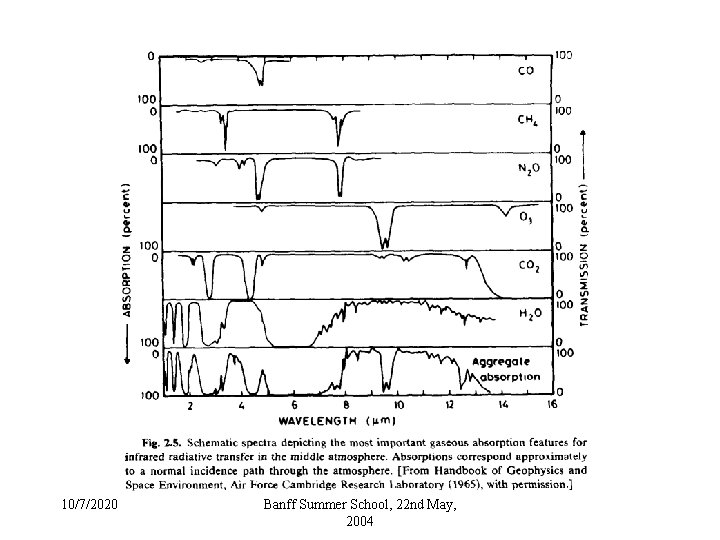
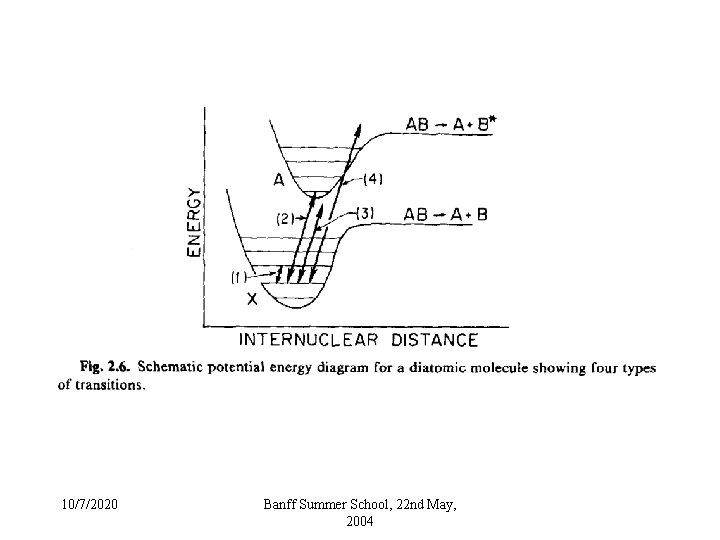
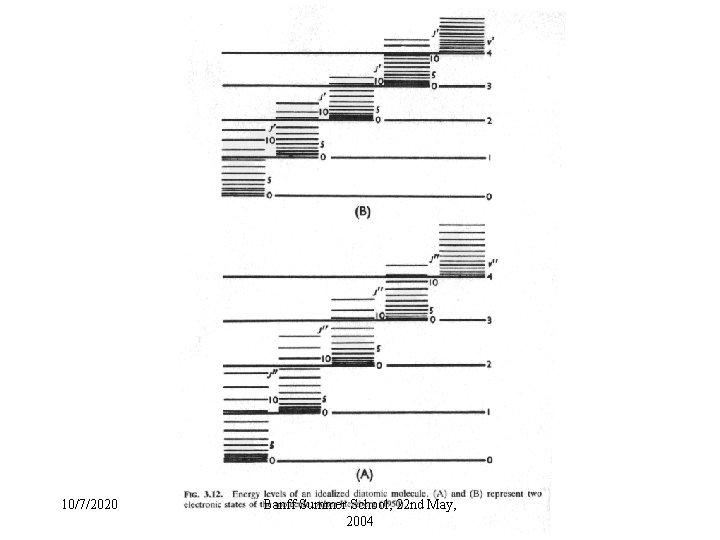
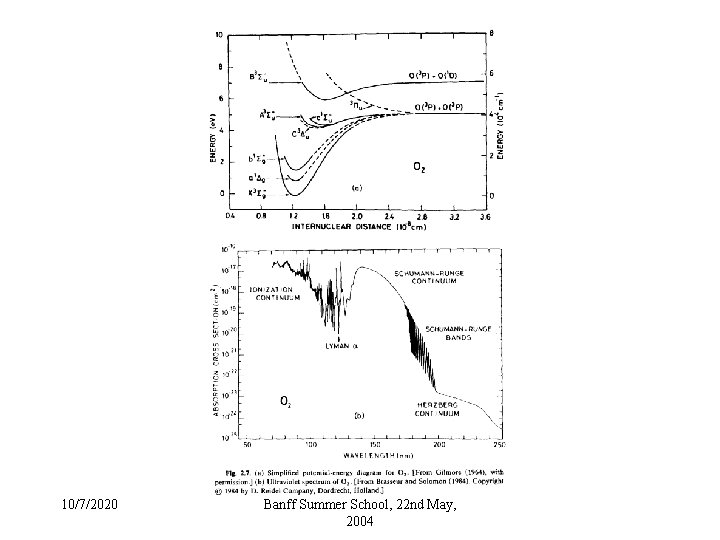
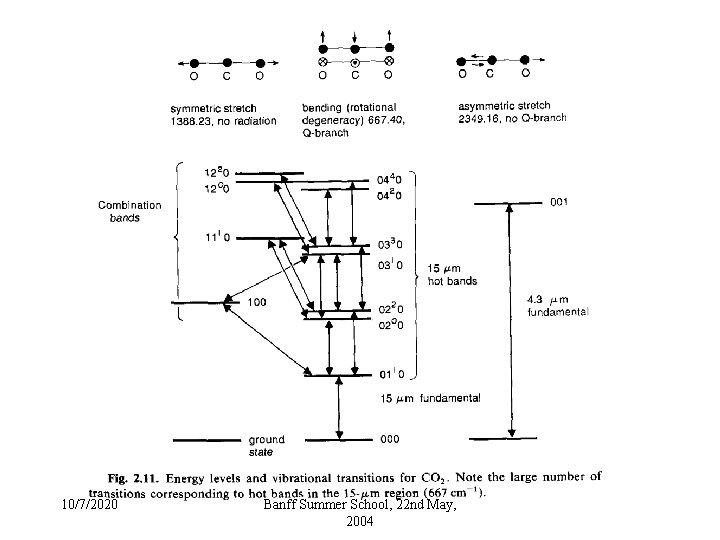
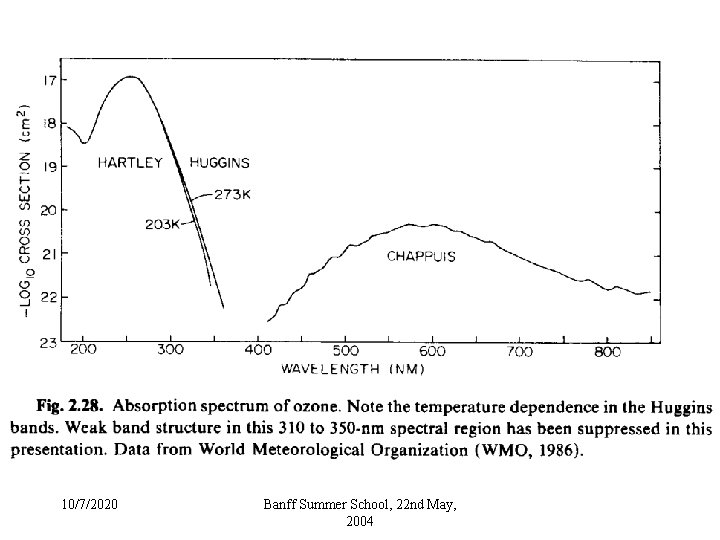
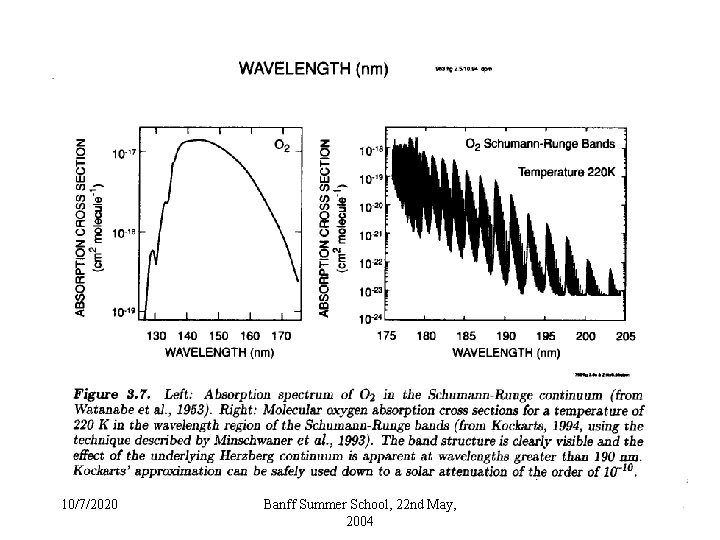
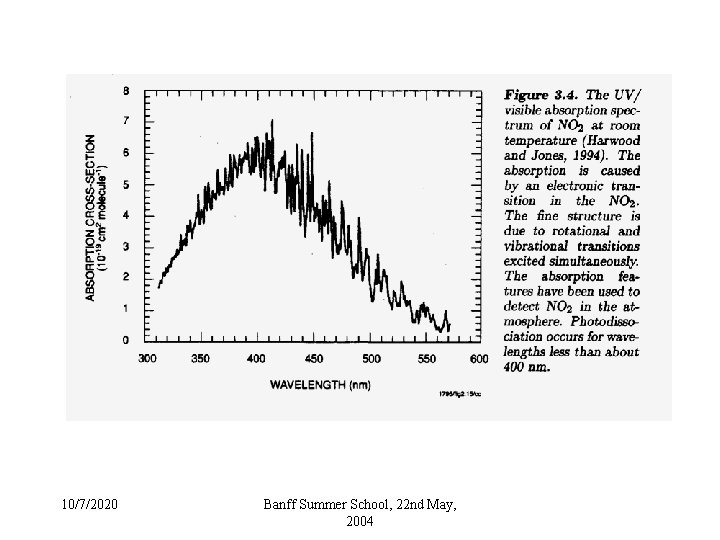
Cross sections • Absorption and Emission (gases and solids) – The absorption cross sections of gases and solids determined by their electronic structure which is, in turn, constrained by quantum mechanics. There are 3 major types of emission and absorption lines – electronic - energies of order a few e. V - UV – vibrational - energies of order 0. 1 e. V- mid-IR – rotational - energies of order 0. 01 e. V - far-IR – Continuum • We will return to this 10/7/2020 Banff Summer School, 22 nd May, 2004
10/7/2020 Banff Summer School, 22 nd May, 2004
10/7/2020 Banff Summer School, 22 nd May, 2004
10/7/2020 Banff Summer School, 22 nd May, 2004
10/7/2020 Banff Summer School, 22 nd May, 2004
10/7/2020 Banff Summer School, 22 nd May, 2004
10/7/2020 Banff Summer School, 22 nd May, 2004
10/7/2020 Banff Summer School, 22 nd May, 2004
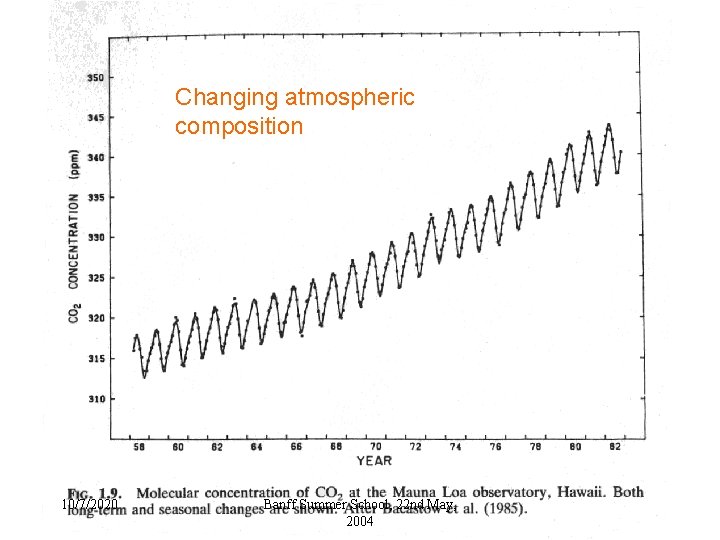
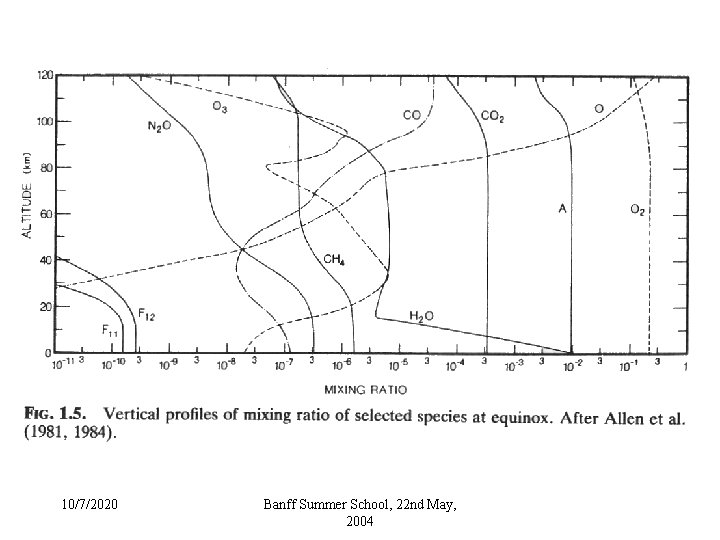
Changing atmospheric composition 10/7/2020 Banff Summer School, 22 nd May, 2004
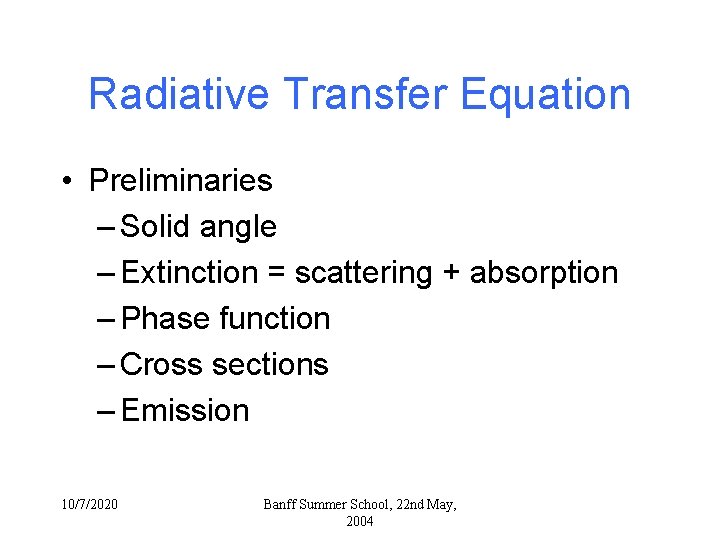
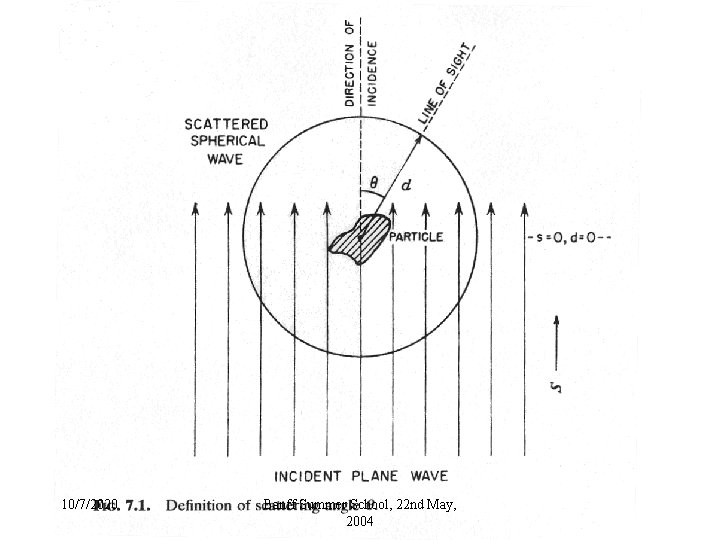
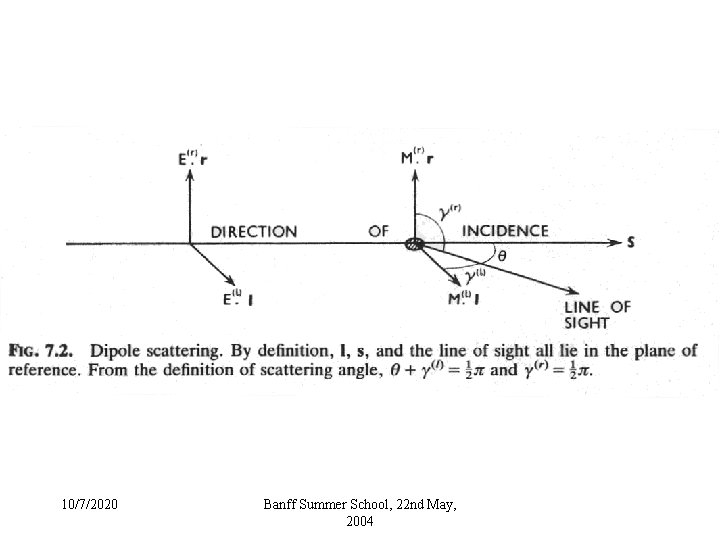
Radiative Transfer Equation • Preliminaries – Solid angle – Extinction = scattering + absorption – Phase function – Cross sections – Emission 10/7/2020 Banff Summer School, 22 nd May, 2004
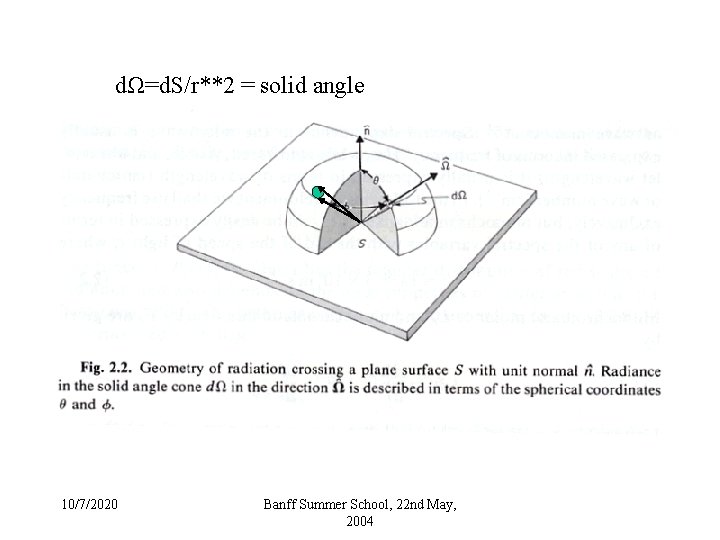
dΩ=d. S/r**2 = solid angle 10/7/2020 Banff Summer School, 22 nd May, 2004
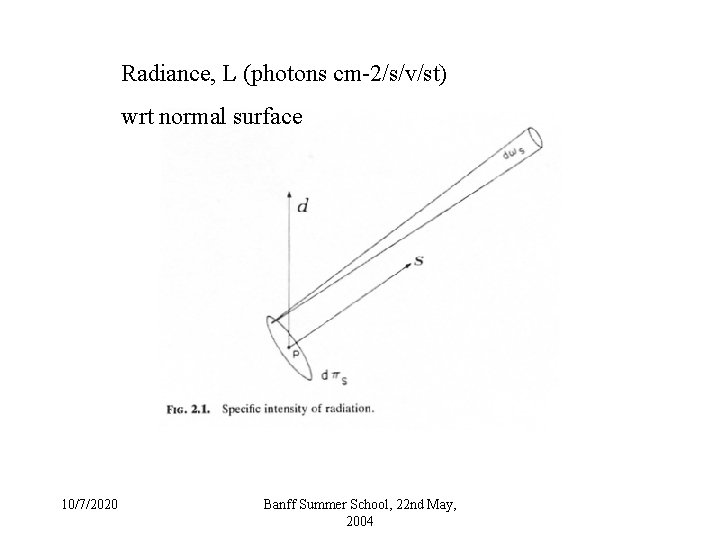
Radiance, L (photons cm-2/s/v/st) wrt normal surface 10/7/2020 Banff Summer School, 22 nd May, 2004
10/7/2020 Banff Summer School, 22 nd May, 2004
10/7/2020 Banff Summer School, 22 nd May, 2004
Phase functions 10/7/2020 Banff Summer School, 22 nd May, 2004
Phase functions 10/7/2020 Banff Summer School, 22 nd May, 2004
Phase functions 10/7/2020 Banff Summer School, 22 nd May, 2004
Scattering efficiency =Q(λ)/πr 2 10/7/2020 Banff Summer School, 22 nd May, 2004
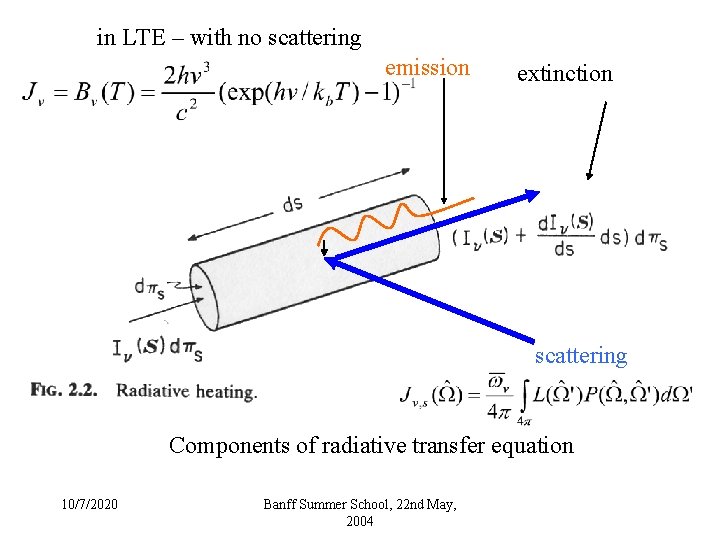
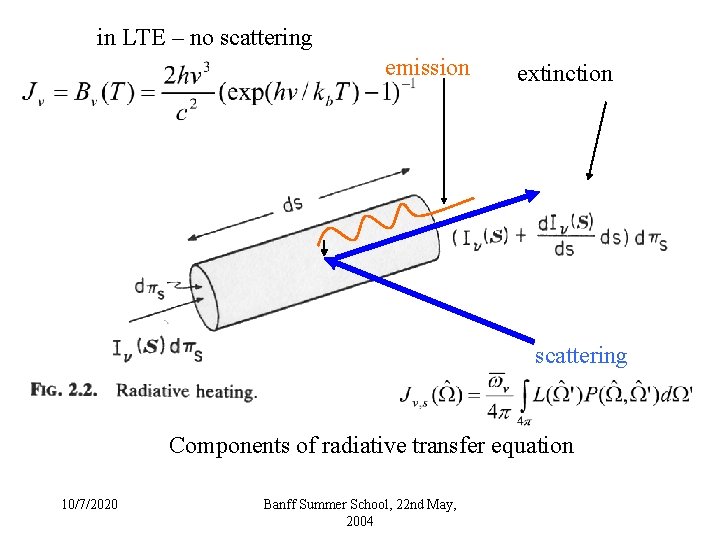
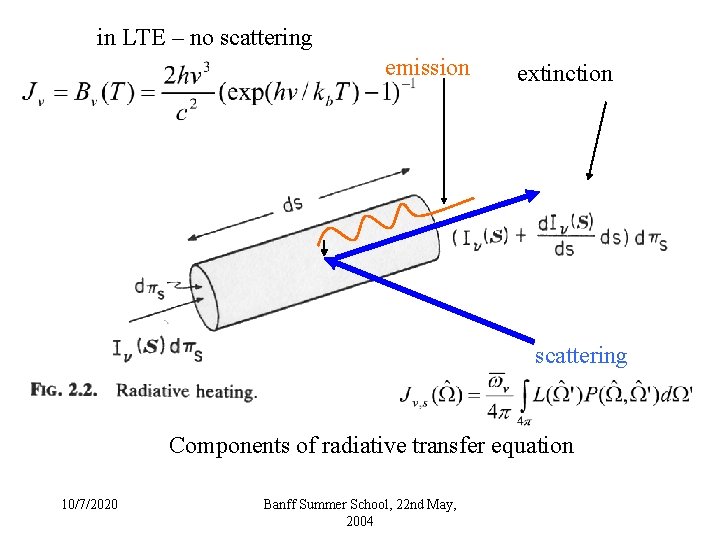
in LTE – with no scattering emission extinction scattering Components of radiative transfer equation 10/7/2020 Banff Summer School, 22 nd May, 2004
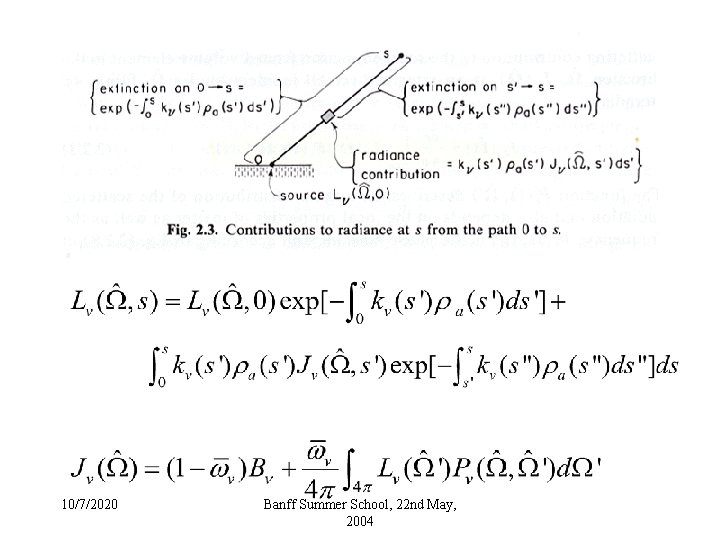
kv = av + sv= Qλ/m Single scattering albedo Fraction absorbed per scattering Radiative Transfer equation 10/7/2020 Banff Summer School, 22 nd May, 2004
10/7/2020 Banff Summer School, 22 nd May, 2004
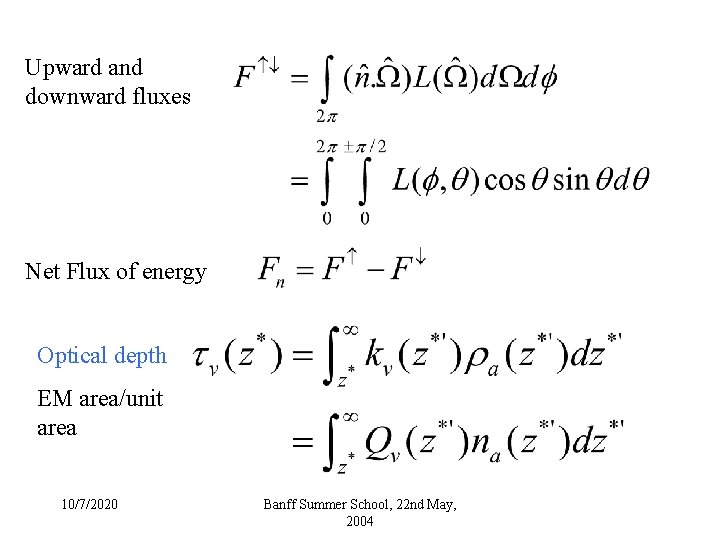
Upward and downward fluxes Net Flux of energy Optical depth EM area/unit area 10/7/2020 Banff Summer School, 22 nd May, 2004
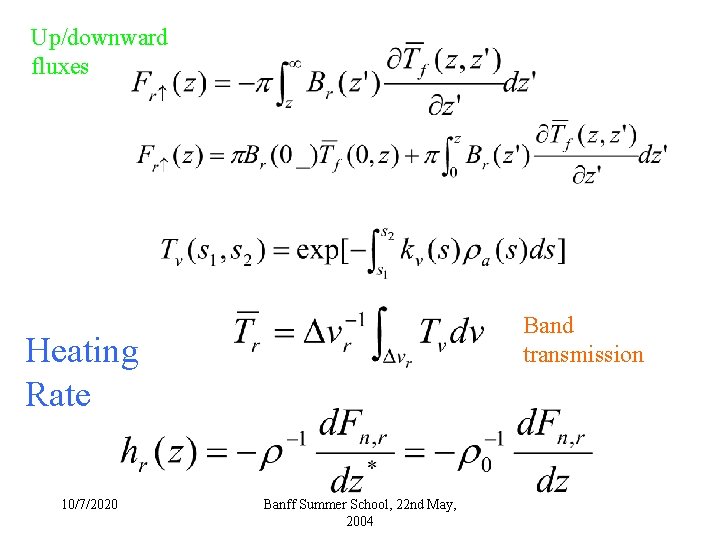
Up/downward fluxes Band transmission Heating Rate 10/7/2020 Banff Summer School, 22 nd May, 2004
Solution Methods 10/7/2020 Banff Summer School, 22 nd May, 2004
Methods for scattering • Solve for radiance or flux • Discrete ordinate method (several types) – Radiance field is approximated as stream – 2 stream, 4 stream etc – Delta-Eddington approximation for particles • Doubling and adding • Montecarlo • Treatments – Plane parallel, spherical, pseudo-spherical 10/7/2020 Banff Summer School, 22 nd May, 2004
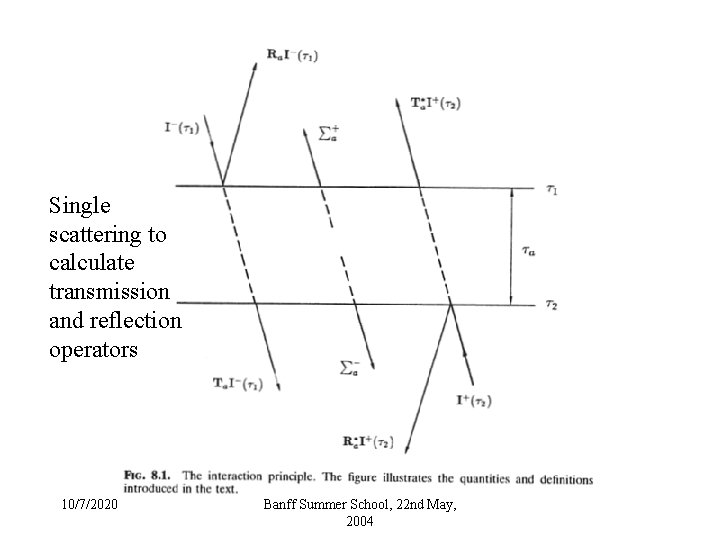
Single scattering to calculate transmission and reflection operators 10/7/2020 Banff Summer School, 22 nd May, 2004
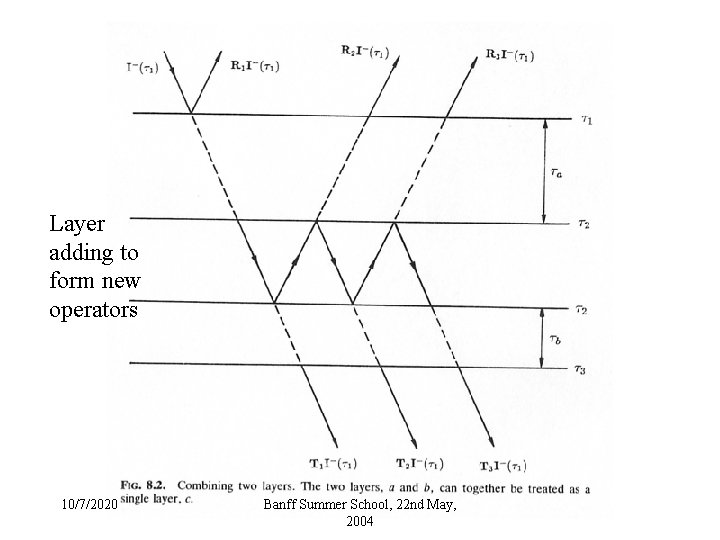
Layer adding to form new operators 10/7/2020 Banff Summer School, 22 nd May, 2004
10/7/2020 Banff Summer School, 22 nd May, 2004
10/7/2020 Banff Summer School, 22 nd May, 2004
Atmospheric Transmission solar and IR 10/7/2020 Banff Summer School, 22 nd May, 2004
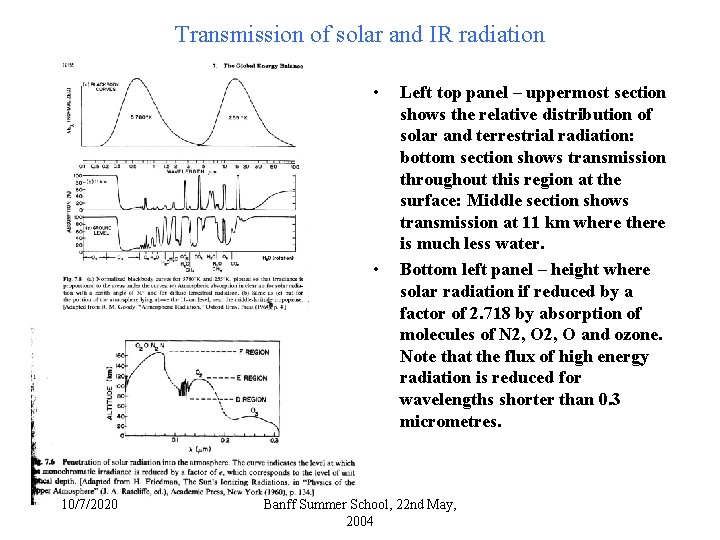
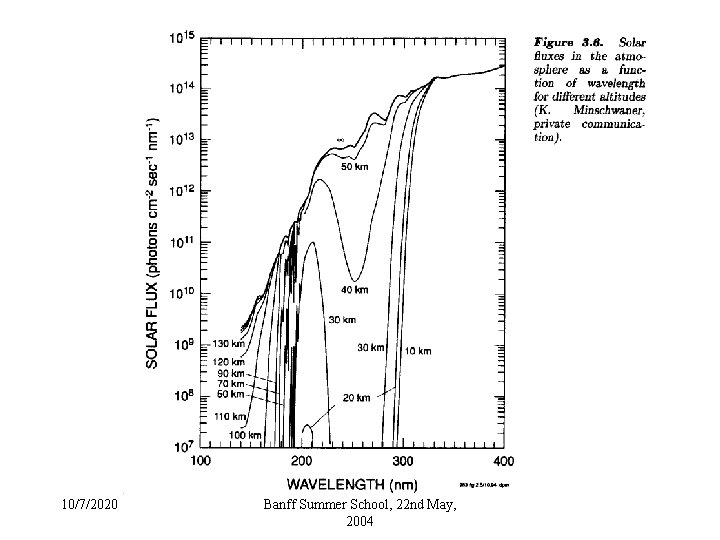
Transmission of solar and IR radiation • • 10/7/2020 Left top panel – uppermost section shows the relative distribution of solar and terrestrial radiation: bottom section shows transmission throughout this region at the surface: Middle section shows transmission at 11 km where there is much less water. Bottom left panel – height where solar radiation if reduced by a factor of 2. 718 by absorption of molecules of N 2, O and ozone. Note that the flux of high energy radiation is reduced for wavelengths shorter than 0. 3 micrometres. Banff Summer School, 22 nd May, 2004
10/7/2020 Banff Summer School, 22 nd May, 2004
10/7/2020 Banff Summer School, 22 nd May, 2004
Molecular Cross-sections and Transmission 10/7/2020 Banff Summer School, 22 nd May, 2004
10/7/2020 Banff Summer School, 22 nd May, 2004
10/7/2020 Banff Summer School, 22 nd May, 2004
10/7/2020 Banff Summer School, 22 nd May, 2004
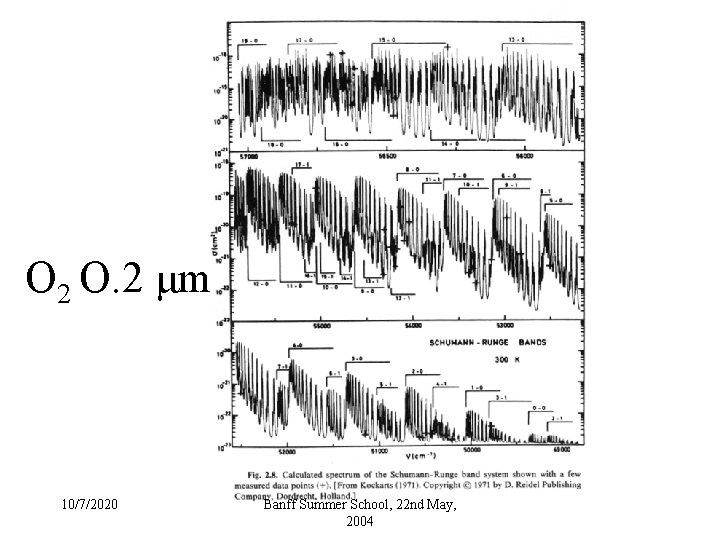
O 2 O. 2 μm 10/7/2020 Banff Summer School, 22 nd May, 2004
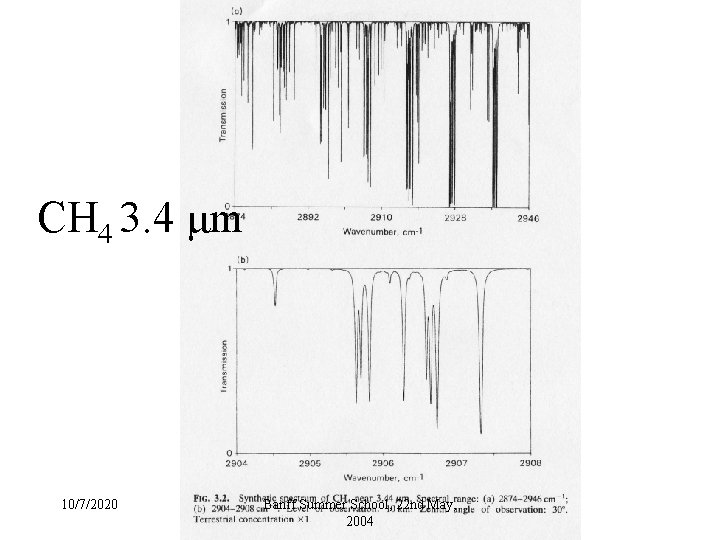
CH 4 3. 4 μm 10/7/2020 Banff Summer School, 22 nd May, 2004
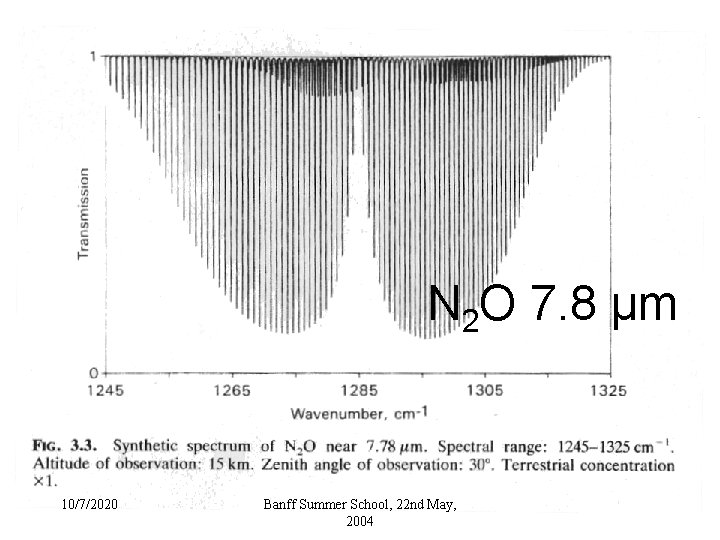
N 2 O 7. 8 μm 10/7/2020 Banff Summer School, 22 nd May, 2004
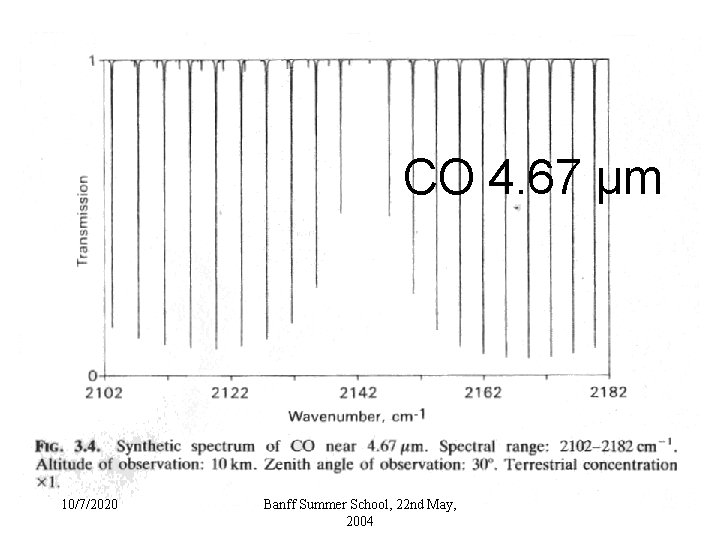
CO 4. 67 μm 10/7/2020 Banff Summer School, 22 nd May, 2004
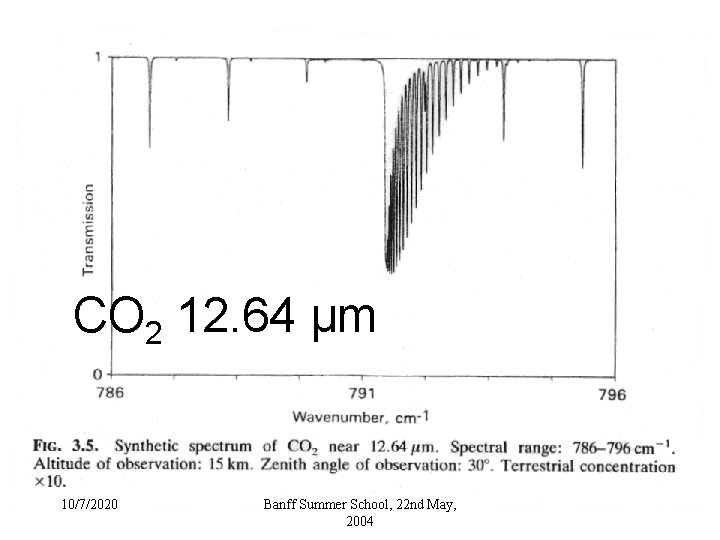
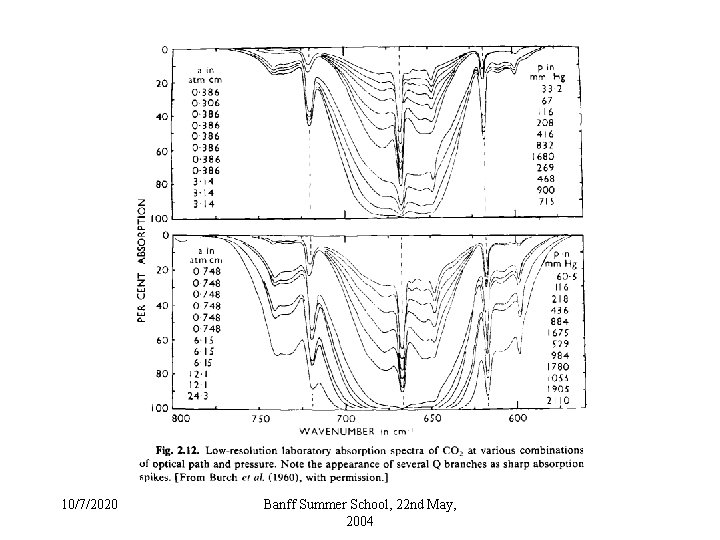
CO 2 12. 64 μm 10/7/2020 Banff Summer School, 22 nd May, 2004
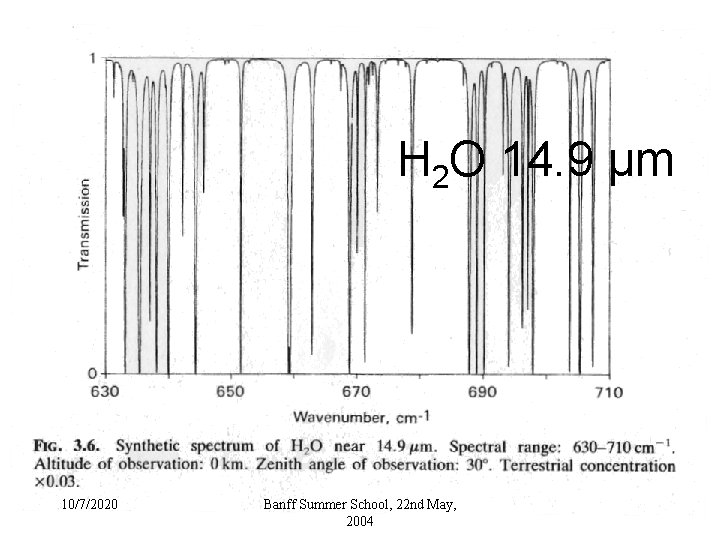
H 2 O 14. 9 μm 10/7/2020 Banff Summer School, 22 nd May, 2004
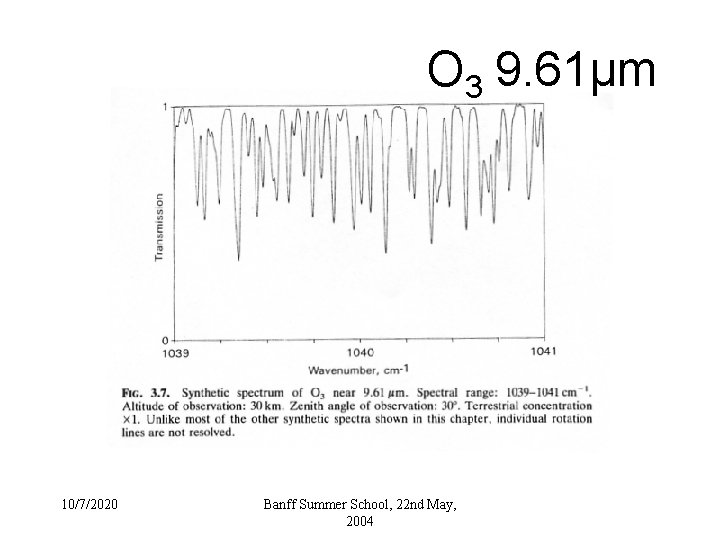
O 3 9. 61μm 10/7/2020 Banff Summer School, 22 nd May, 2004
10/7/2020 Banff Summer School, 22 nd May, 2004
10/7/2020 Banff Summer School, 22 nd May, 2004
10/7/2020 Banff Summer School, 22 nd May, 2004
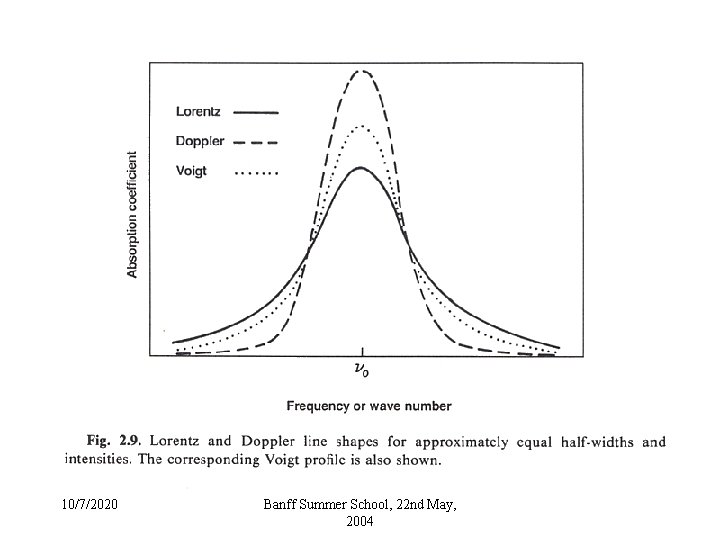
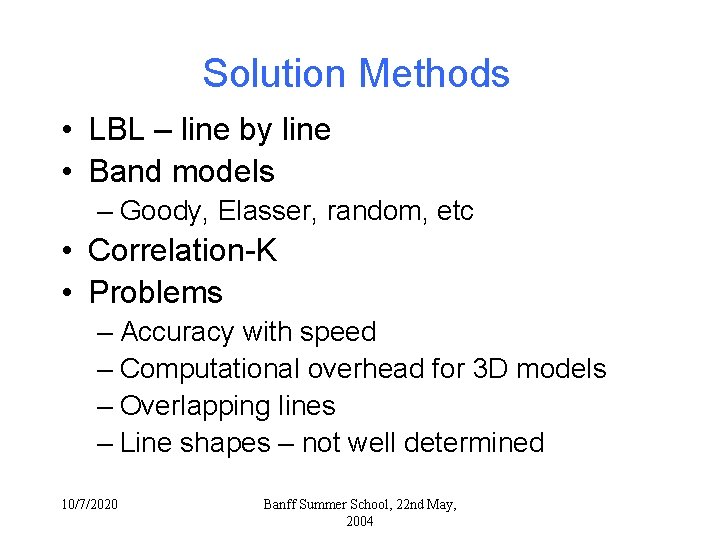
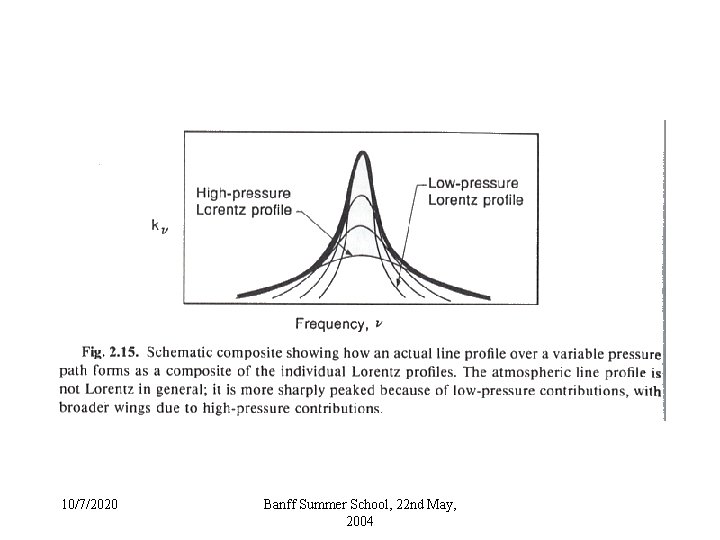
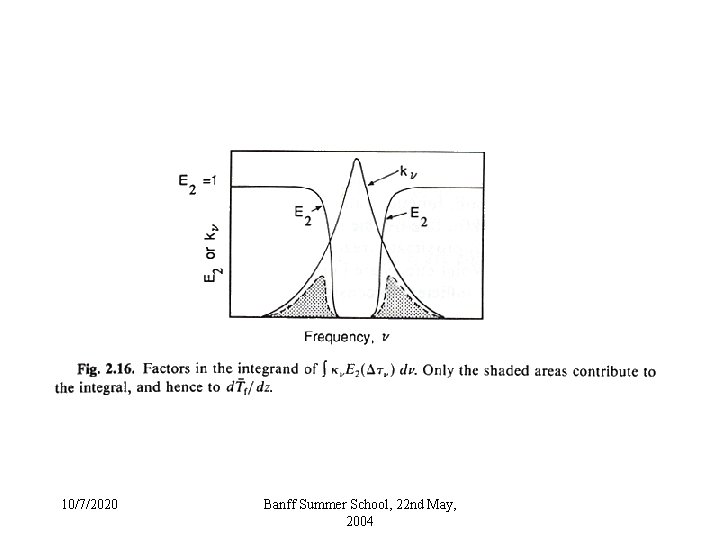
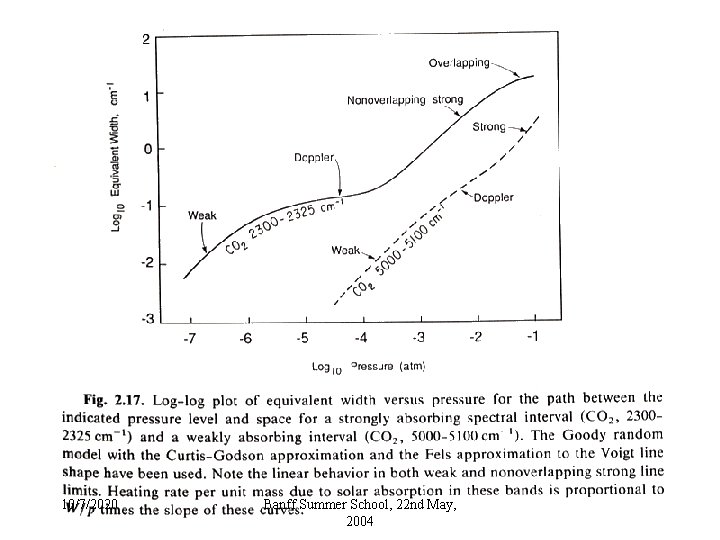
Solution Methods • LBL – line by line • Band models – Goody, Elasser, random, etc • Correlation-K • Problems – Accuracy with speed – Computational overhead for 3 D models – Overlapping lines – Line shapes – not well determined 10/7/2020 Banff Summer School, 22 nd May, 2004
10/7/2020 Banff Summer School, 22 nd May, 2004
10/7/2020 Banff Summer School, 22 nd May, 2004
10/7/2020 Banff Summer School, 22 nd May, 2004
10/7/2020 Banff Summer School, 22 nd May, 2004
10/7/2020 Banff Summer School, 22 nd May, 2004
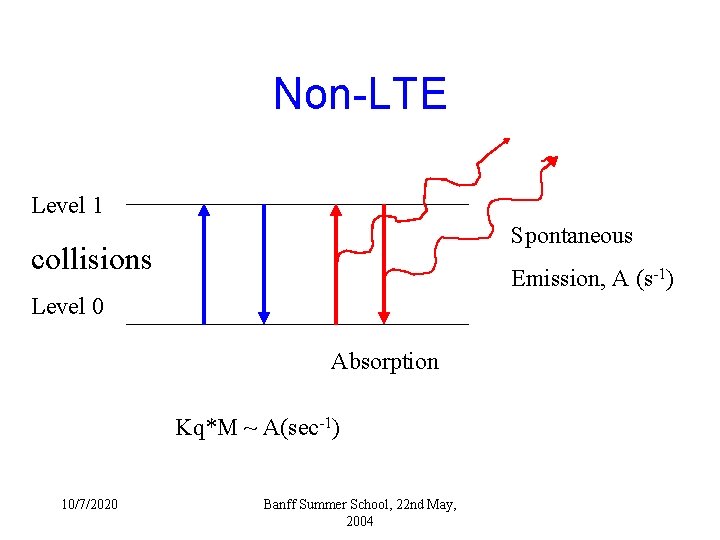
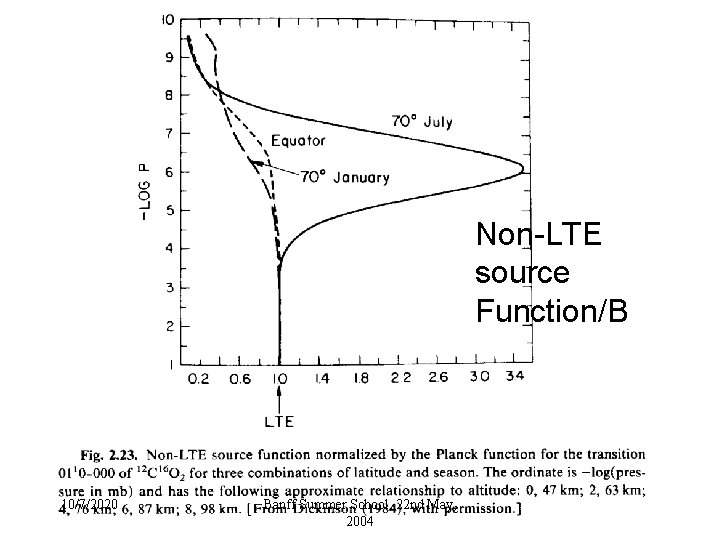
Non-LTE Level 1 Spontaneous collisions Emission, A (s-1) Level 0 Absorption Kq*M ~ A(sec-1) 10/7/2020 Banff Summer School, 22 nd May, 2004
10/7/2020 Banff Summer School, 22 nd May, 2004
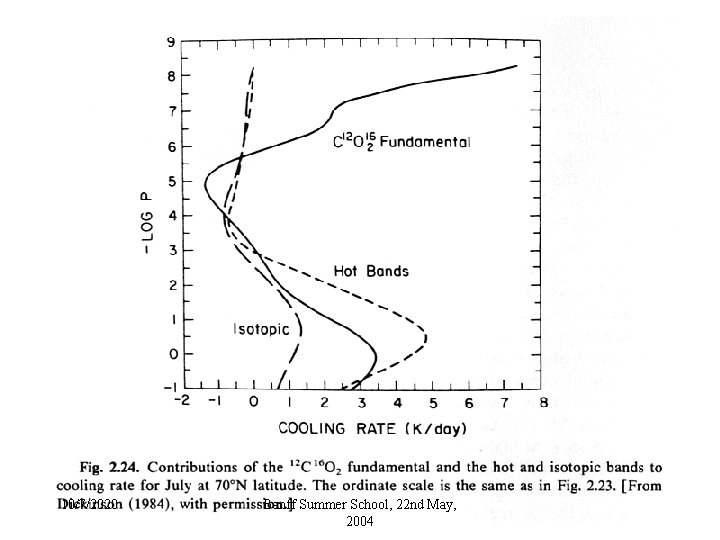
Non-LTE source Function/B 10/7/2020 Banff Summer School, 22 nd May, 2004
10/7/2020 Banff Summer School, 22 nd May, 2004
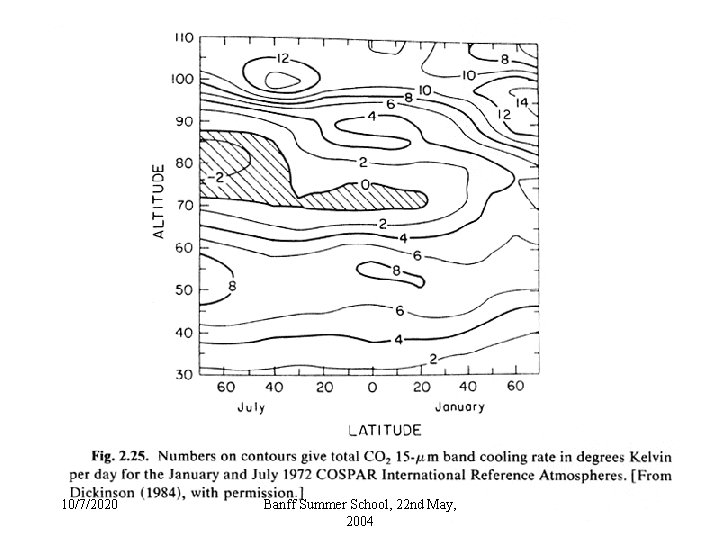
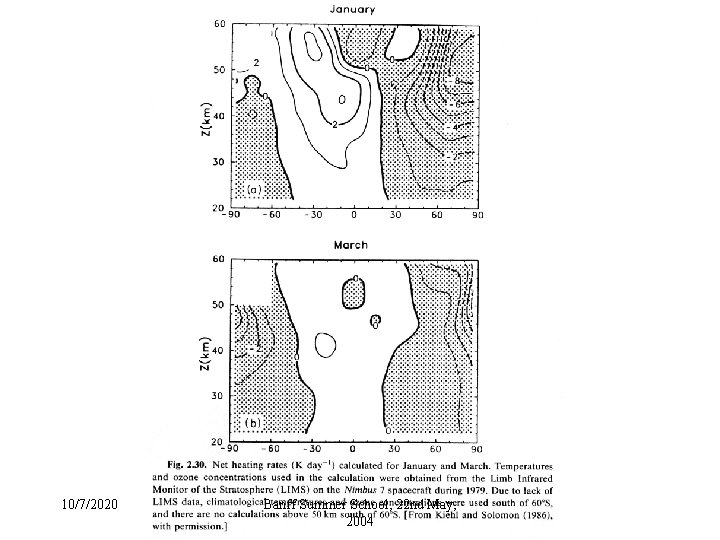
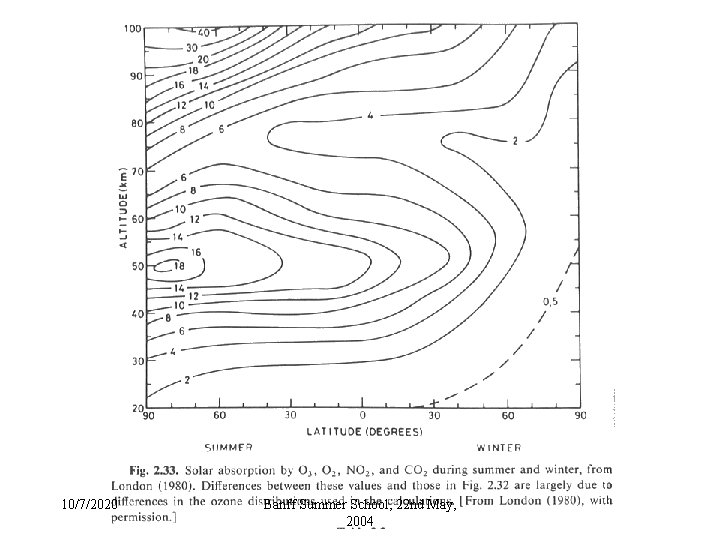
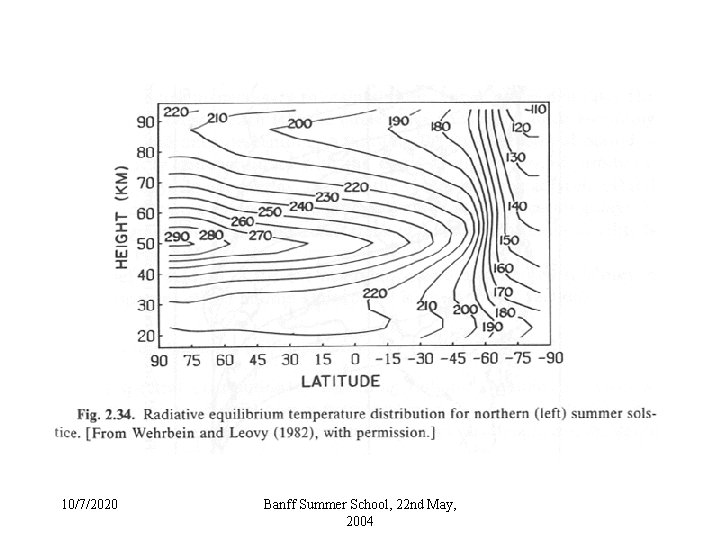
Global Heating Rates 10/7/2020 Banff Summer School, 22 nd May, 2004
10/7/2020 Banff Summer School, 22 nd May, 2004
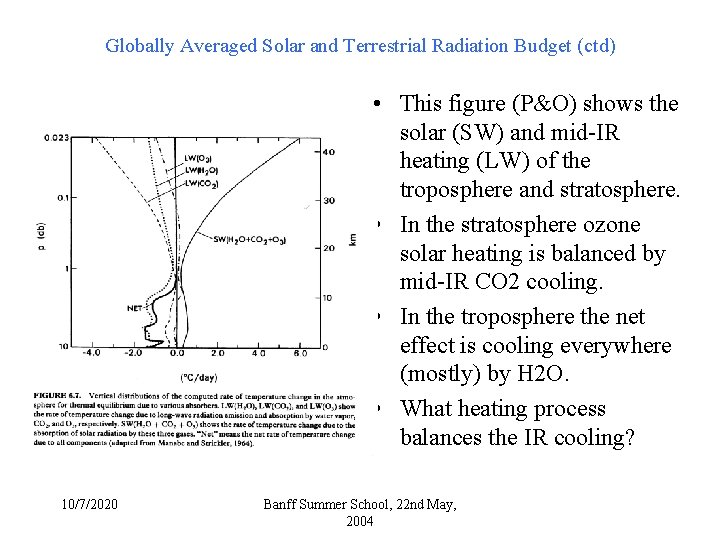
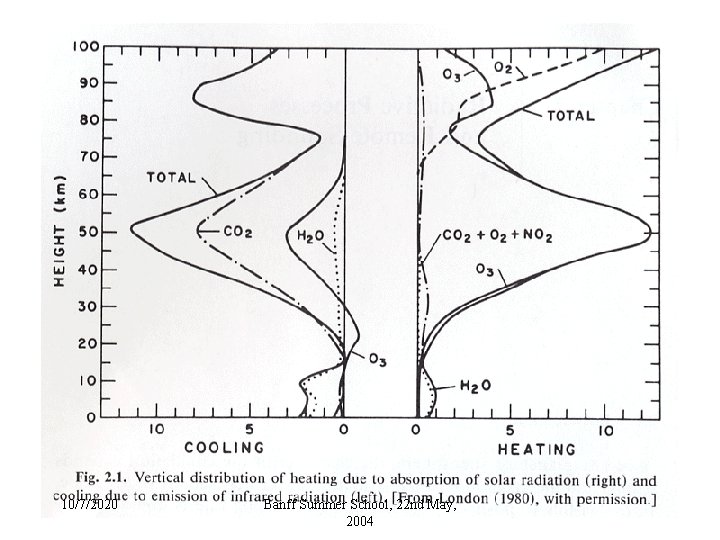
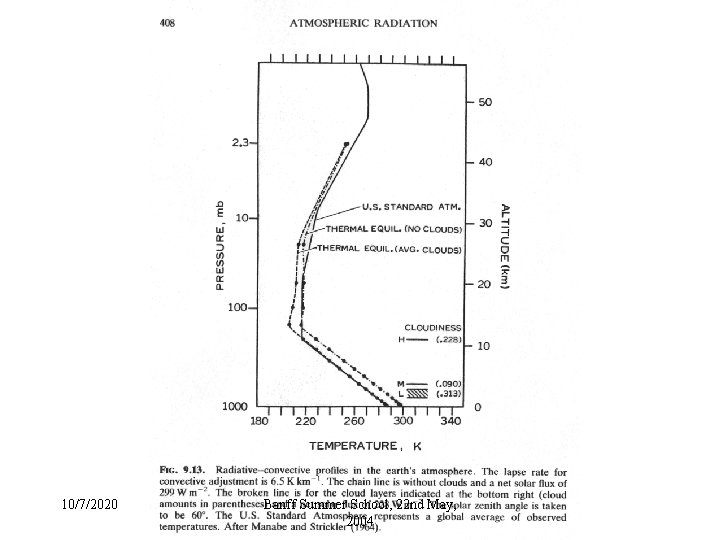
Globally Averaged Solar and Terrestrial Radiation Budget (ctd) • This figure (P&O) shows the solar (SW) and mid-IR heating (LW) of the troposphere and stratosphere. • In the stratosphere ozone solar heating is balanced by mid-IR CO 2 cooling. • In the troposphere the net effect is cooling everywhere (mostly) by H 2 O. • What heating process balances the IR cooling? 10/7/2020 Banff Summer School, 22 nd May, 2004
10/7/2020 Banff Summer School, 22 nd May, 2004
10/7/2020 Banff Summer School, 22 nd May, 2004
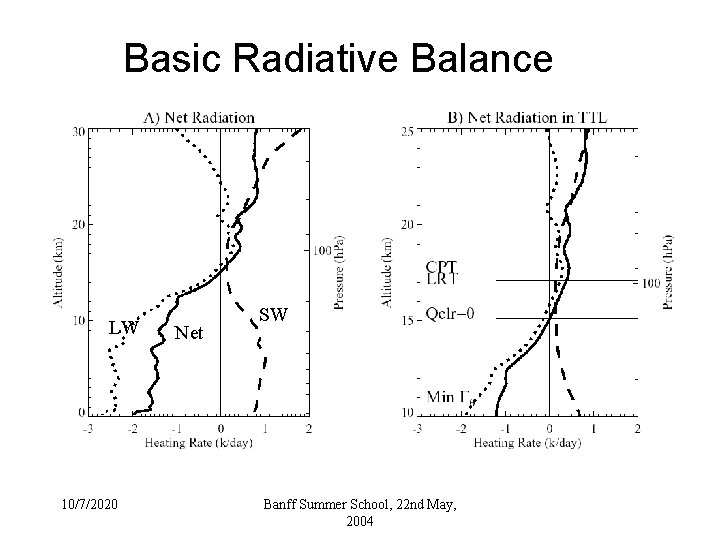
Basic Radiative Balance LW 10/7/2020 Net SW Banff Summer School, 22 nd May, 2004
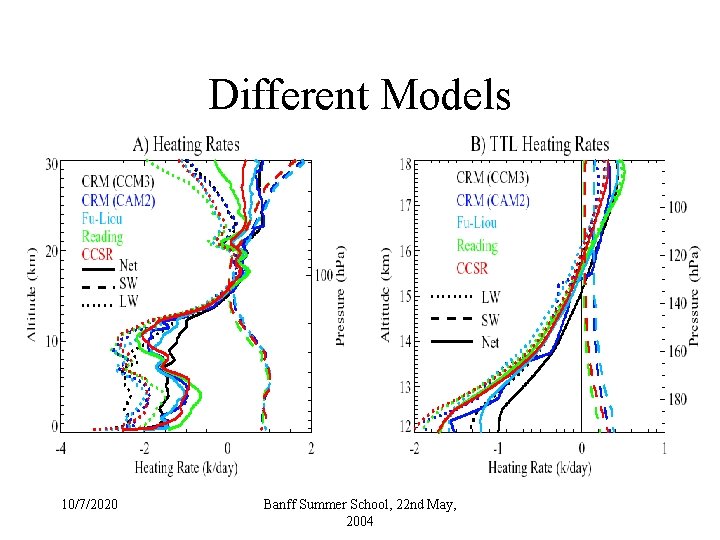
Different Models • Fig 4 10/7/2020 Banff Summer School, 22 nd May, 2004
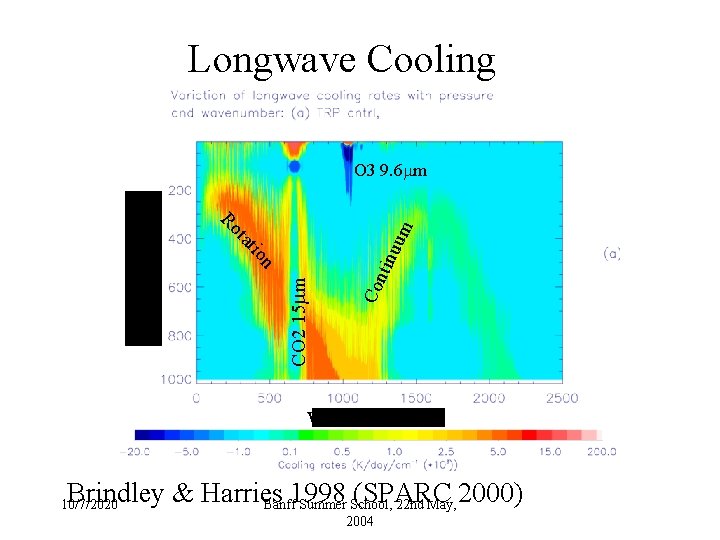
Longwave Cooling ntin Co CO 2 15 mm n io tat uum Ro Pressure (h. Pa) O 3 9. 6 mm Wavenumber Brindley & Harries 1998 (SPARC 2000) Banff Summer School, 22 nd May, 10/7/2020 2004
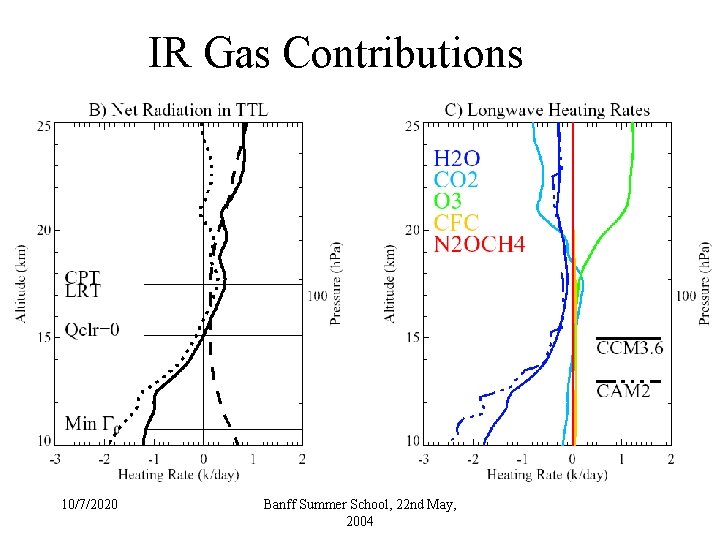
IR Gas Contributions • Fig 3 C 10/7/2020 Banff Summer School, 22 nd May, 2004
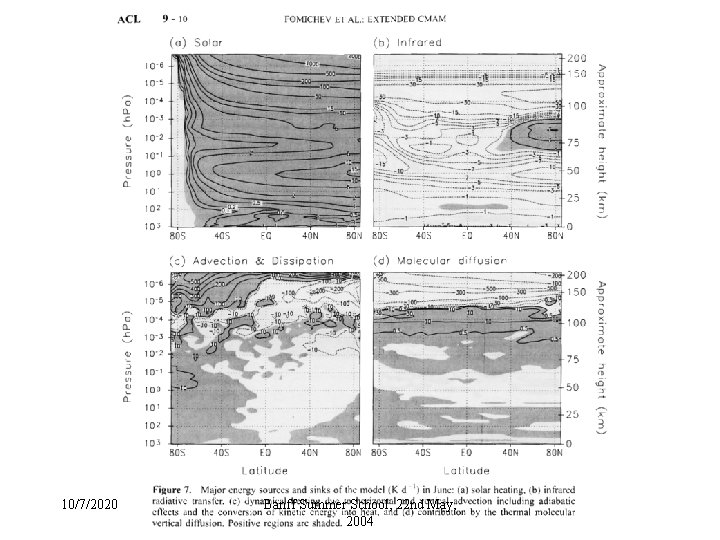
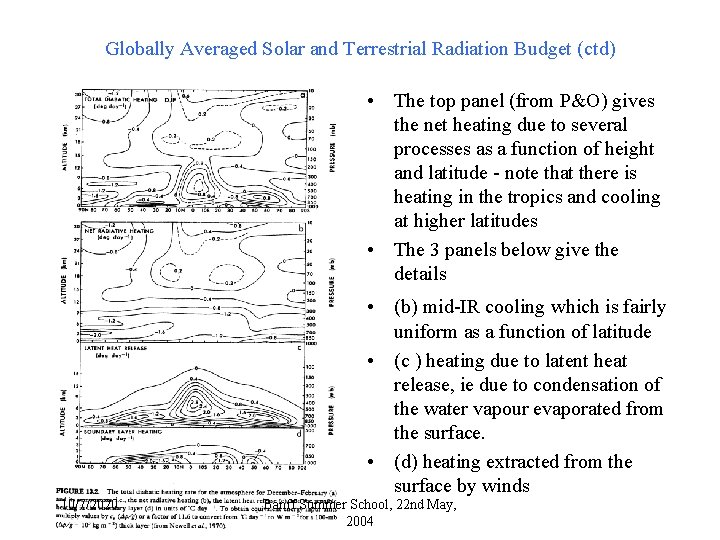
Globally Averaged Solar and Terrestrial Radiation Budget (ctd) • The top panel (from P&O) gives the net heating due to several processes as a function of height and latitude - note that there is heating in the tropics and cooling at higher latitudes • The 3 panels below give the details • (b) mid-IR cooling which is fairly uniform as a function of latitude • (c ) heating due to latent heat release, ie due to condensation of the water vapour evaporated from the surface. • (d) heating extracted from the surface by winds 10/7/2020 Banff Summer School, 22 nd May, 2004
10/7/2020 Banff Summer School, 22 nd May, 2004
10/7/2020 Banff Summer School, 22 nd May, 2004
10/7/2020 Banff Summer School, 22 nd May, 2004
10/7/2020 Banff Summer School, 22 nd May, 2004
10/7/2020 Banff Summer School, 22 nd May, 2004
Photolysis Rates J values 10/7/2020 Banff Summer School, 22 nd May, 2004
in LTE – no scattering emission extinction scattering Components of radiative transfer equation 10/7/2020 Banff Summer School, 22 nd May, 2004
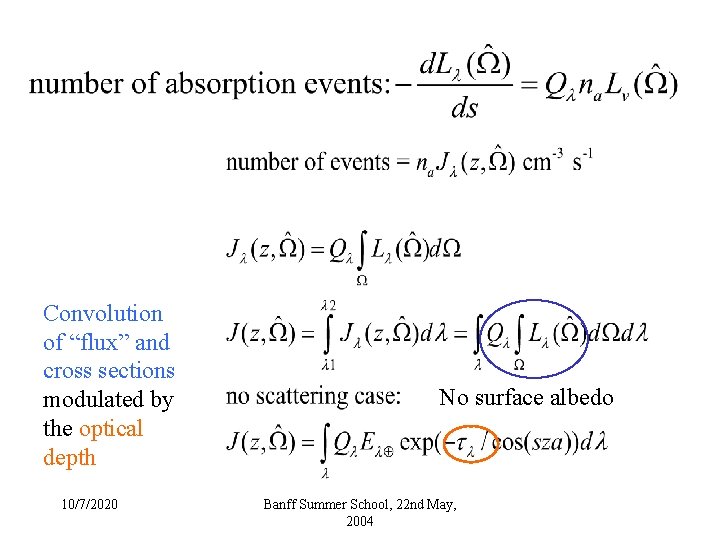
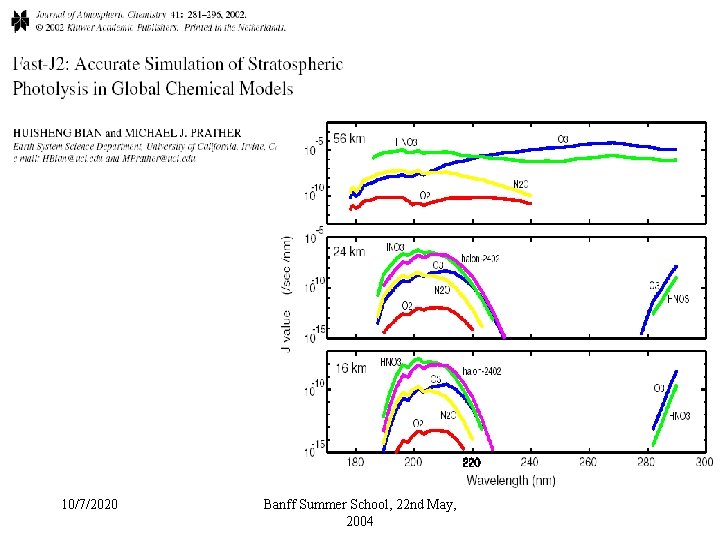
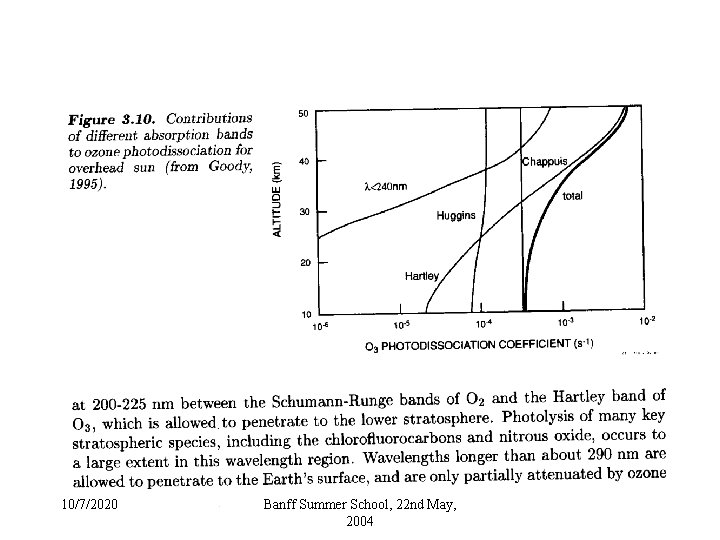
Convolution of “flux” and cross sections modulated by the optical depth 10/7/2020 No surface albedo Banff Summer School, 22 nd May, 2004
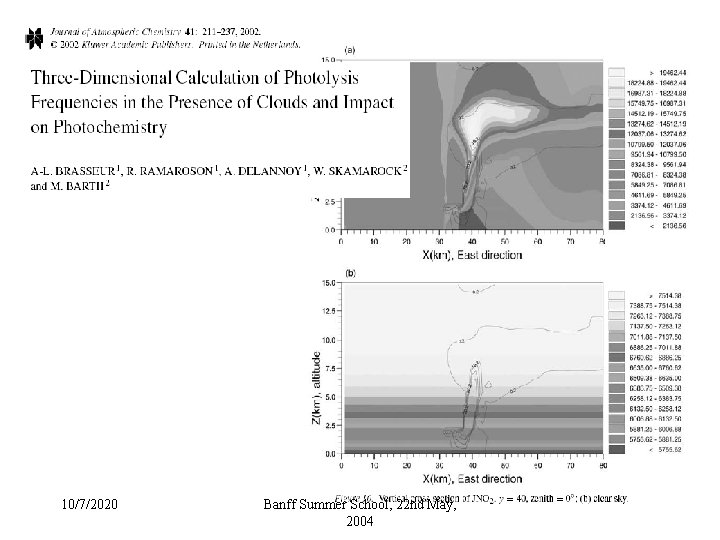
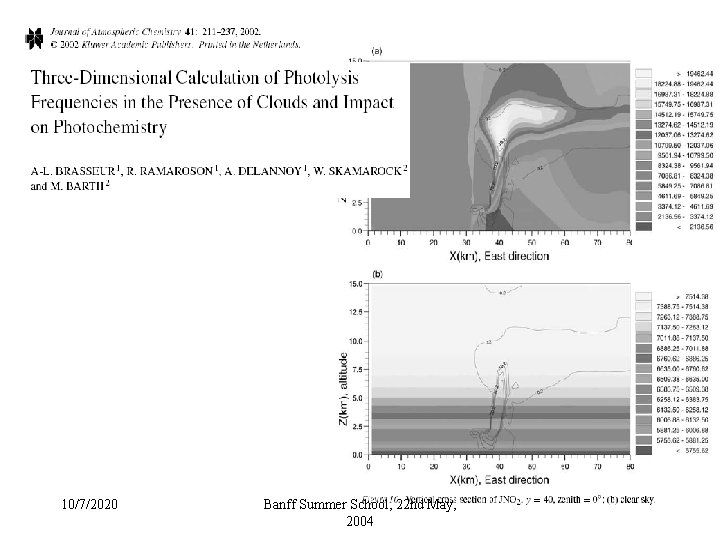
J values ctd • Scattering enhances the photon density • Main absorbers in “clear” sky are O 2 and O 3 • Cloudiness is very important – Enhances scattering and absorption – Potentially up to a factor of three enhancement due to clouds. – Multiple scattering off and in clouds can enhance J values by up to a factor of 5 • With surface visible : J = J(0)(1 + 2 Aμ) • Incoherent scatter of resonance lines with optical depths of 1 E 6 (OI(1304)) can have much larger enhancements 10/7/2020 Banff Summer School, 22 nd May, 2004
J values ctd • In Chemistry continuity equation, species, n satisfies dn/dt = - Jn (cm-3 s-1) and n(t) = n(o)exp(-t/τchem) • Thus τchem =1/J gives a characteristic time constant for destruction 10/7/2020 Banff Summer School, 22 nd May, 2004
Radiation: ERBE Albedo – average and clear sky • (a) Top panel – albedo for solar radiation for average January conditions • (b) Bottom Panel – Clear sky albedo for January conditions • (b) Low ocean albedo, (a) cloud over ocean (a, b) high albedo over desert (a) ITCZ • Atlas of satellite observations related to global change, Edited by R. J. Gurney, J. L. Foster and C. L. Parkinson, CUP, 1003. 10/7/2020 Banff Summer School, 22 nd May, 2004
10/7/2020 Banff Summer School, 22 nd May, 2004
10/7/2020 Banff Summer School, 22 nd May, 2004
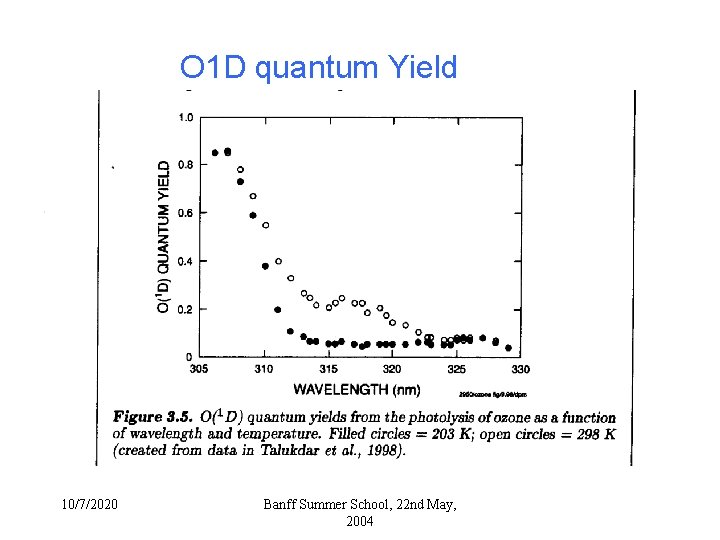
O 1 D quantum Yield 10/7/2020 Banff Summer School, 22 nd May, 2004
10/7/2020 Banff Summer School, 22 nd May, 2004
10/7/2020 Banff Summer School, 22 nd May, 2004
10/7/2020 Banff Summer School, 22 nd May, 2004
10/7/2020 Banff Summer School, 22 nd May, 2004
10/7/2020 Banff Summer School, 22 nd May, 2004
10/7/2020 Banff Summer School, 22 nd May, 2004
10/7/2020 Banff Summer School, 22 nd May, 2004
10/7/2020 Banff Summer School, 22 nd May, 2004
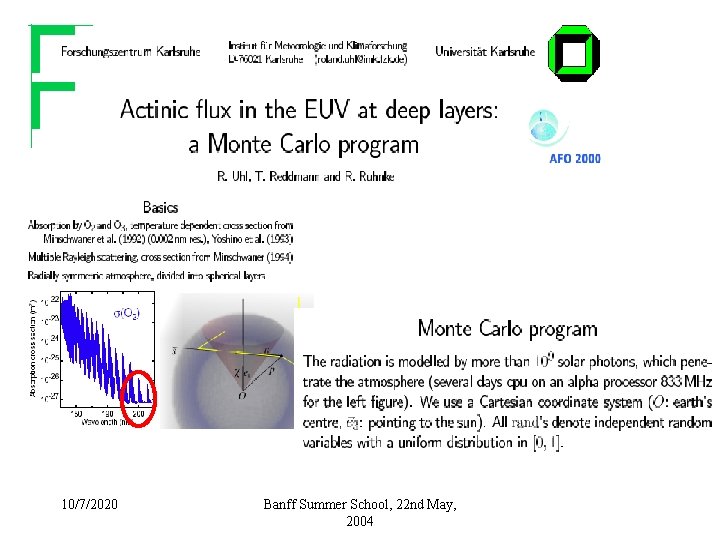
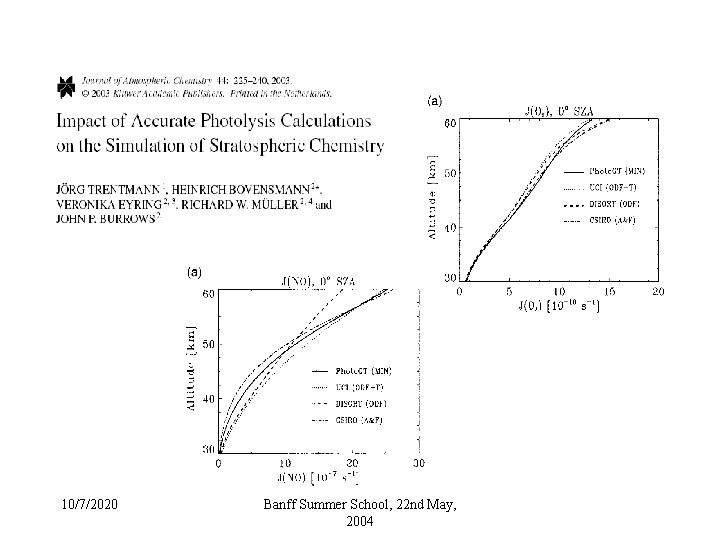
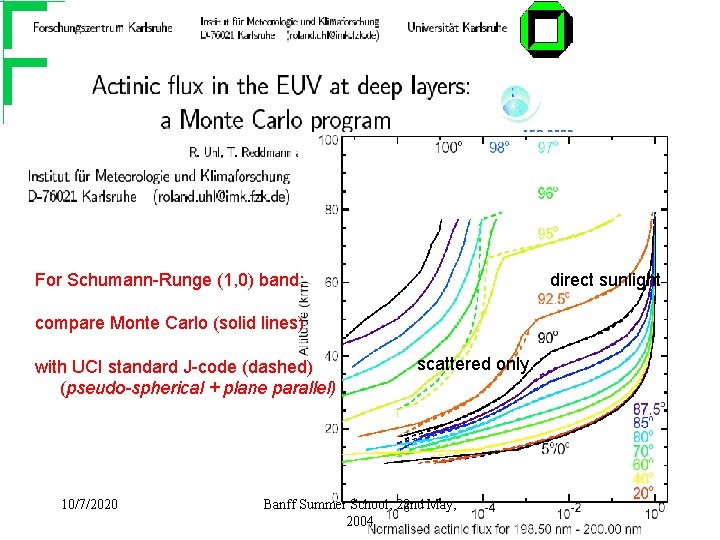
For Schumann-Runge (1, 0) band: direct sunlight compare Monte Carlo (solid lines) with UCI standard J-code (dashed) (pseudo-spherical + plane parallel) 10/7/2020 scattered only Banff Summer School, 22 nd May, 2004
Also inferred J-Cl 2 O 2: Avallone LM, Toohey DW, Tests of halogen photochemistry using in situ measurements of Cl. O and Br. O in the lower polar stratosphere, JGR 106 (D 10): 10411 -10421 MAY 27 2001 10/7/2020 Banff Summer School, 22 nd May, 2004
10/7/2020 Banff Summer School, 22 nd May, 2004
Applications to remote Sensing 10/7/2020 Banff Summer School, 22 nd May, 2004
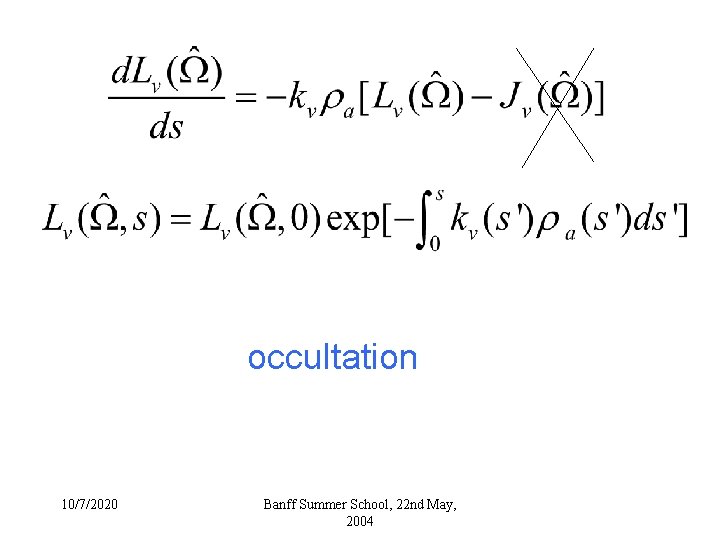
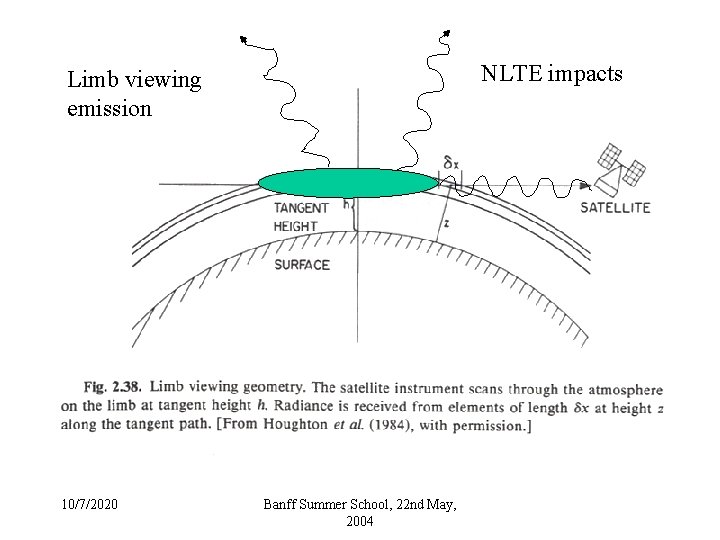
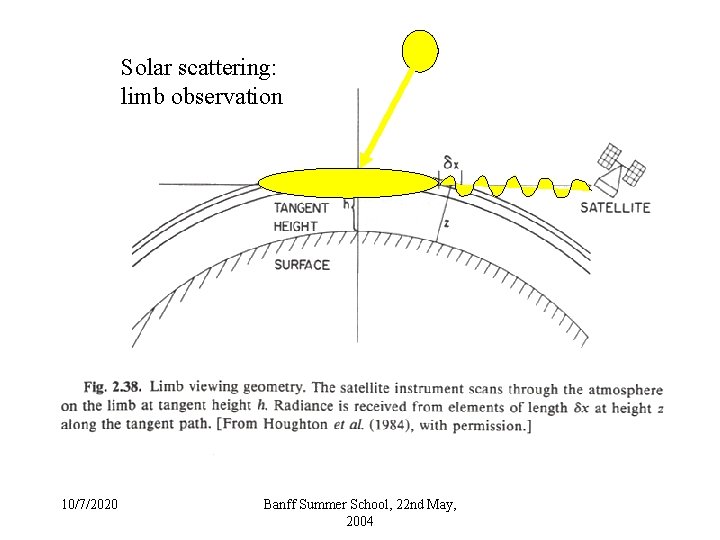
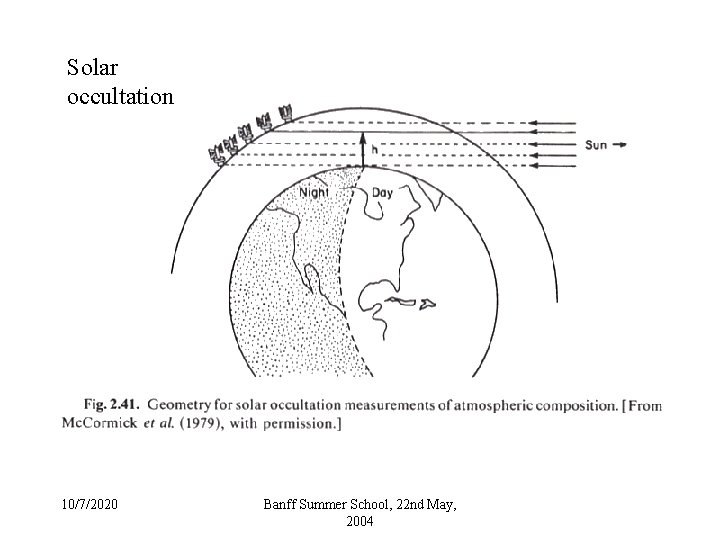
Remote sensing • Passive and active • Passive – Nadir viewing (MOPITT), GOME, etc – Limb viewing, HIRDLS, • Light source as probe – Occultation (sun or star or car headlight etc) HALOE, ATMOS, ACE – Emission of atmosphere, MOPITT – Scattering from atmosphere (OSIRIS) 10/7/2020 Banff Summer School, 22 nd May, 2004
10/7/2020 Banff Summer School, 22 nd May, 2004
in LTE – no scattering emission extinction scattering Components of radiative transfer equation 10/7/2020 Banff Summer School, 22 nd May, 2004
occultation 10/7/2020 Banff Summer School, 22 nd May, 2004
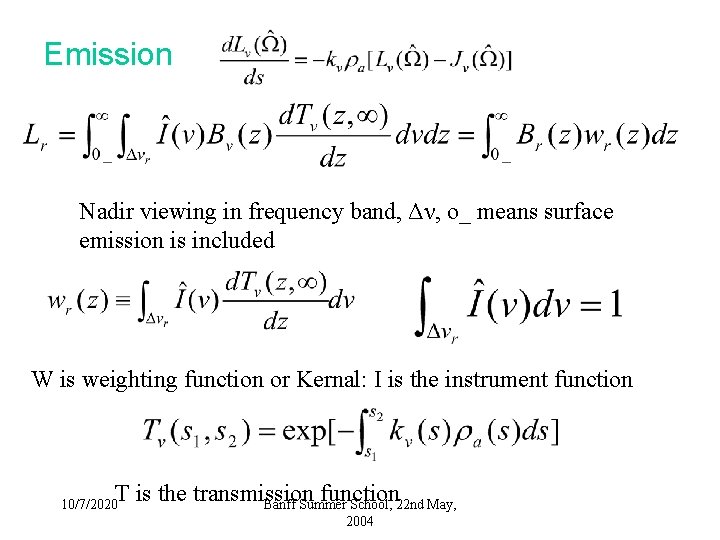
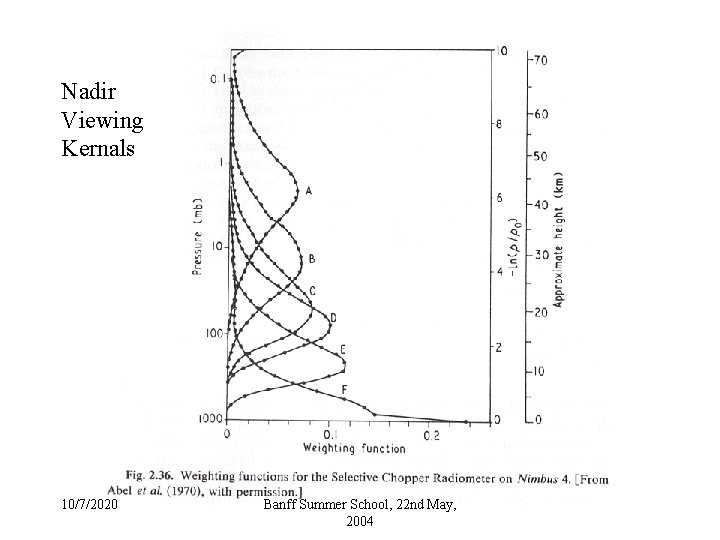
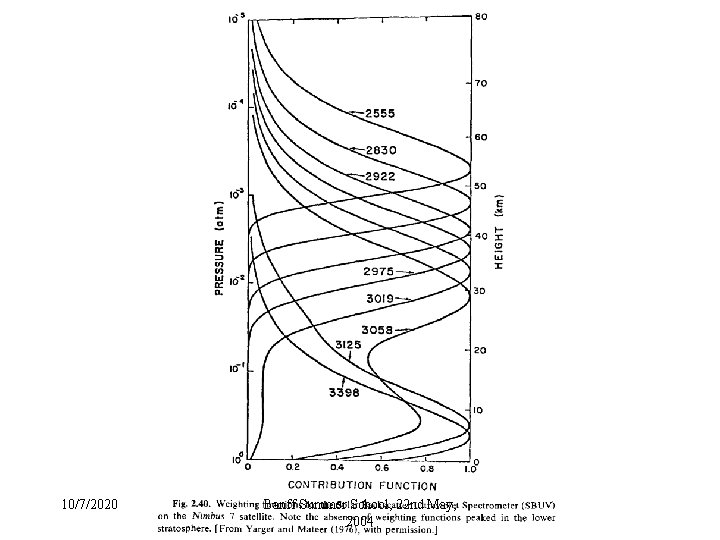
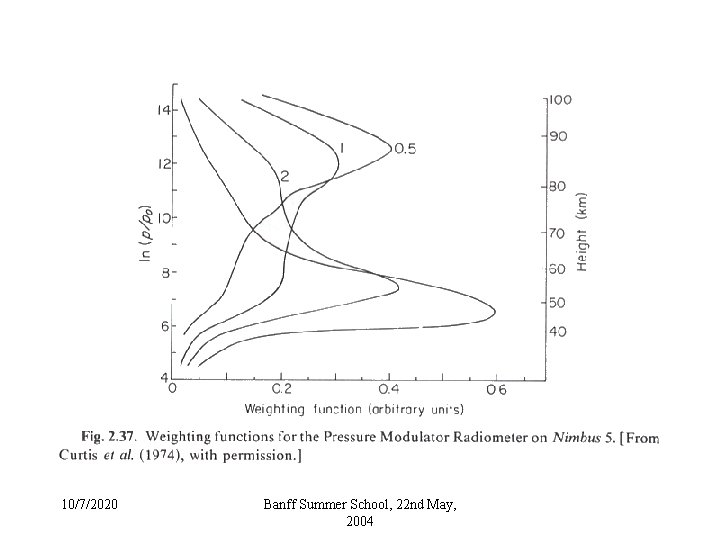
Emission Nadir viewing in frequency band, Δν, o_ means surface emission is included W is weighting function or Kernal: I is the instrument function T is the transmission function Banff Summer School, 22 nd May, 10/7/2020 2004
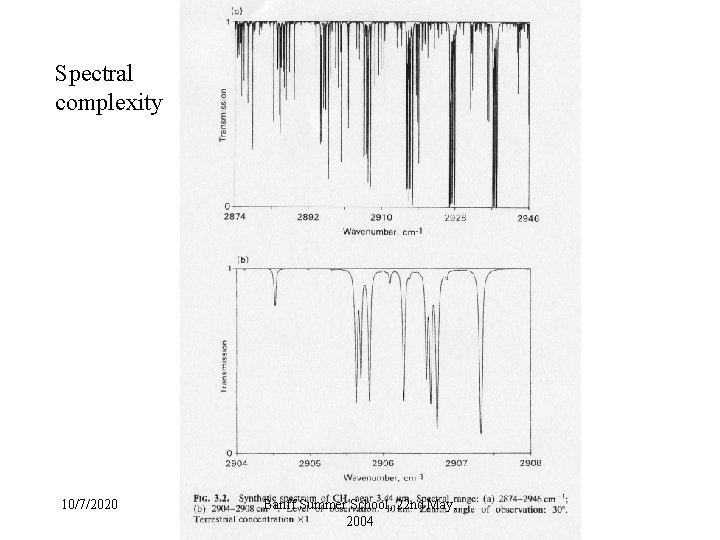
Spectral complexity 10/7/2020 Banff Summer School, 22 nd May, 2004
Nadir Viewing Kernals 10/7/2020 Banff Summer School, 22 nd May, 2004
10/7/2020 Banff Summer School, 22 nd May, 2004
10/7/2020 Banff Summer School, 22 nd May, 2004
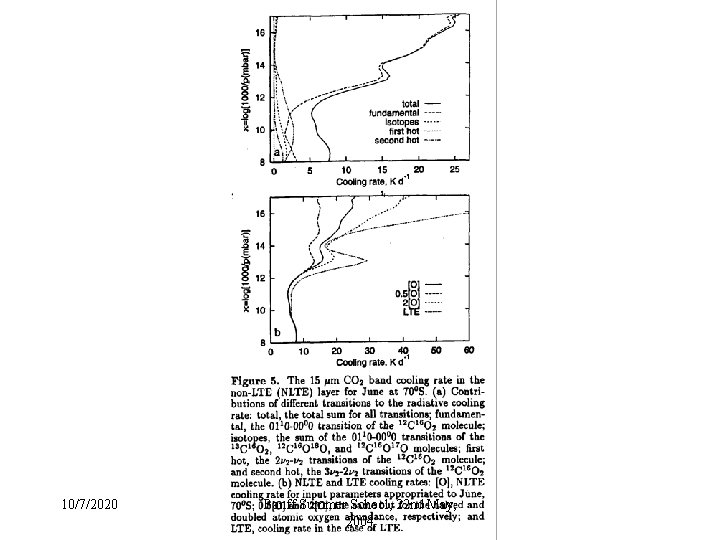
NLTE impacts Limb viewing emission 10/7/2020 Banff Summer School, 22 nd May, 2004
Solar scattering: limb observation 10/7/2020 Banff Summer School, 22 nd May, 2004
Solar occultation 10/7/2020 Banff Summer School, 22 nd May, 2004
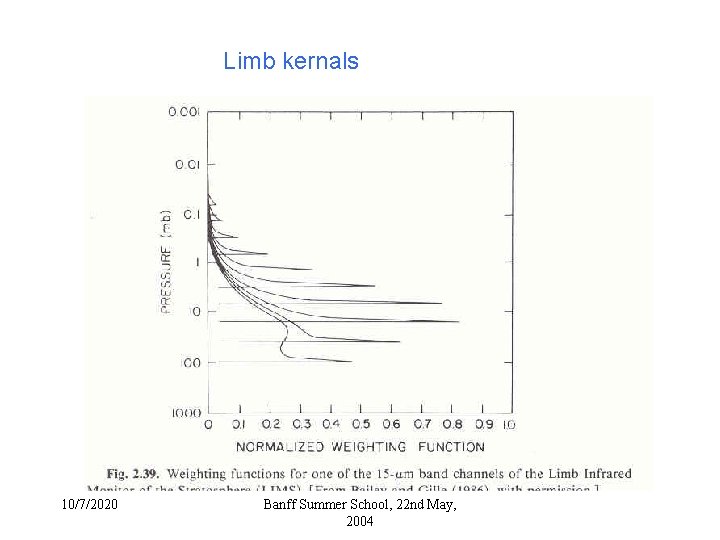
Limb kernals 10/7/2020 Banff Summer School, 22 nd May, 2004
Thank You 10/7/2020 Banff Summer School, 22 nd May, 2004
Acknowledgements • • Michael Prather Andrew Gettleman Nilesh Goupal Piers Forster 10/7/2020 Banff Summer School, 22 nd May, 2004