
GLOBAL CLIMATES AND BIOMES APES Unit 2 Friedland
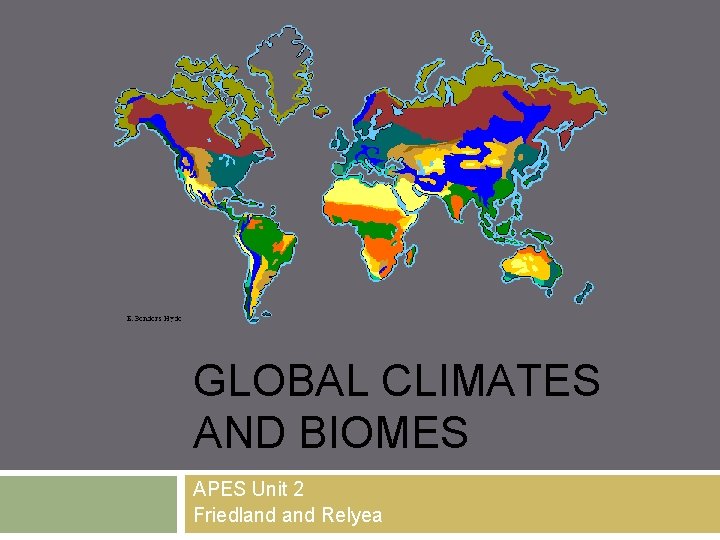
GLOBAL CLIMATES AND BIOMES APES Unit 2 Friedland Relyea
Global weather and climate Weather vs. Climate � Weather: Short term � Climate: Long term Biomes are primarily characterized according to climate � Precipitation � Temperature What determines weather and climate?
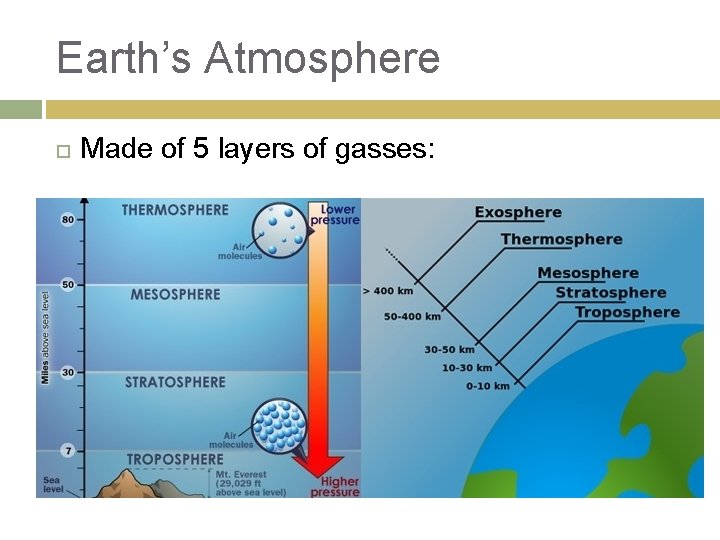
Earth’s Atmosphere Made of 5 layers of gasses:
Earth’s Atmosphere Troposphere: where we live; weather Stratosphere: ozone layer, UV protection Mesosphere Thermosphere: aurora borealis; satellites Exosphere
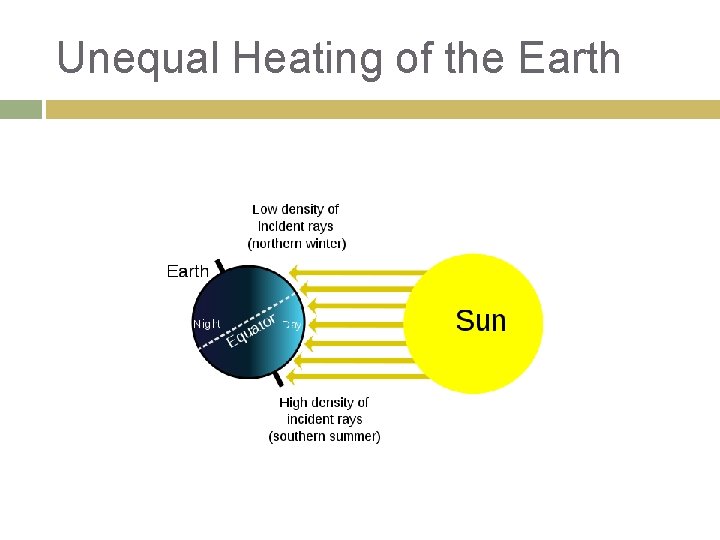
Unequal Heating of the Earth
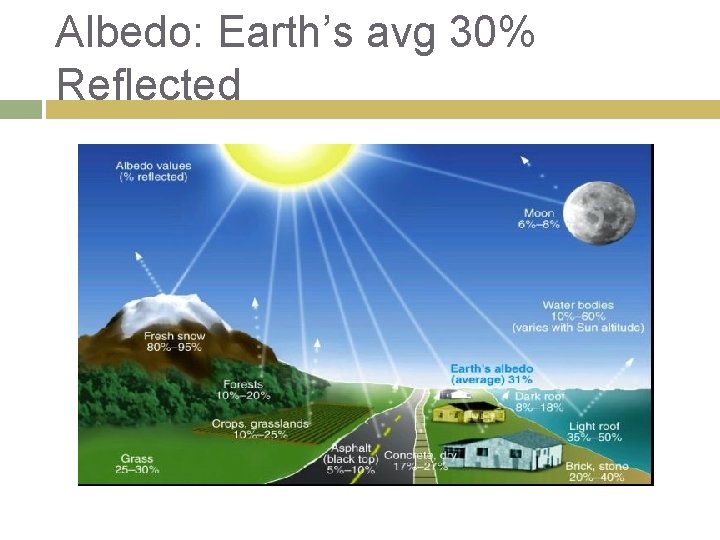
Albedo: Earth’s avg 30% Reflected
How would tropical regions with dense green foliage differ in albedo values to snow-covered polar regions?
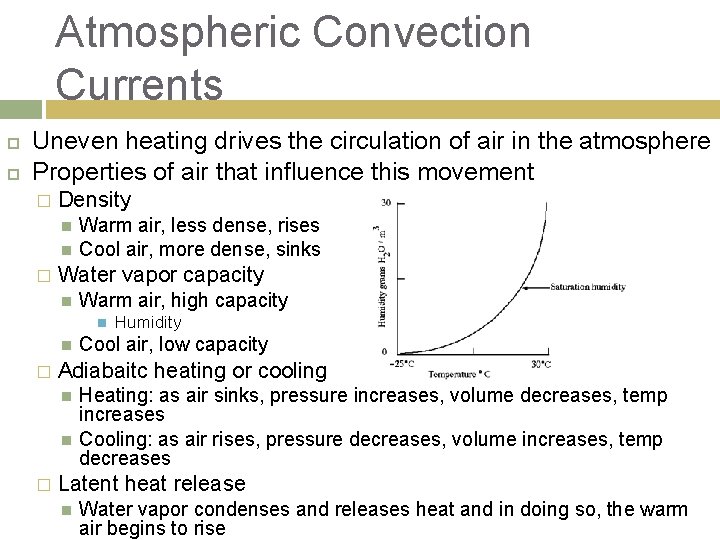
Atmospheric Convection Currents Uneven heating drives the circulation of air in the atmosphere Properties of air that influence this movement � Density � Warm air, less dense, rises Cool air, more dense, sinks Water vapor capacity Warm air, high capacity � Cool air, low capacity Adiabaitc heating or cooling � Humidity Heating: as air sinks, pressure increases, volume decreases, temp increases Cooling: as air rises, pressure decreases, volume increases, temp decreases Latent heat release Water vapor condenses and releases heat and in doing so, the warm air begins to rise
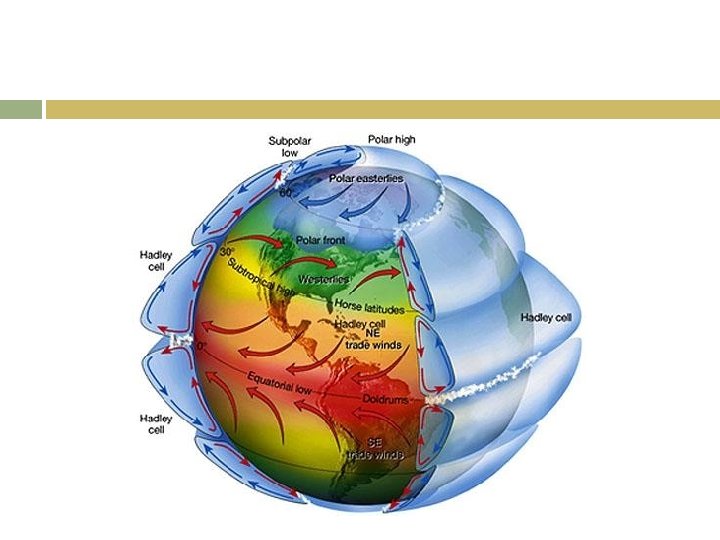
Convection Currents Global patterns of air movement that are initiated by the unequal heating of the earth Hadley Cells form At the Tropics: � Density? � Adiabatic (cooling or heating) occurs � Result: Condensation and clouds are formed Result: A continuous stream of warm air rises into the troposphere, is cooled at the top of the troposphere, contains very little water vapor and is displaced north and south as warmer air rises from below. � The displaced, cooler, dryer air then sinks back to earth around 30*N&S, experiences high pressures and heating dry climates �
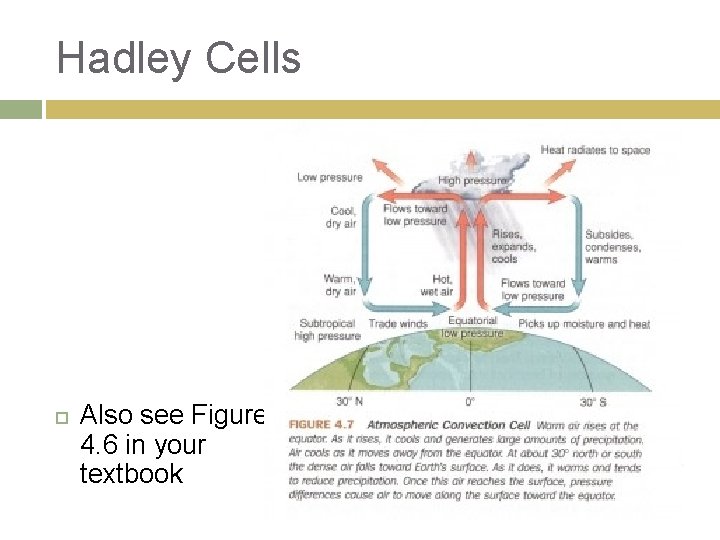
Hadley Cells Also see Figure 4. 6 in your textbook
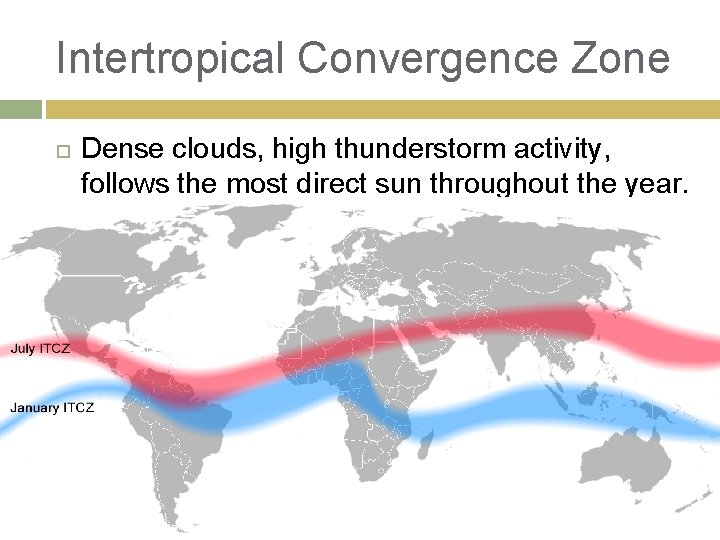
Intertropical Convergence Zone Dense clouds, high thunderstorm activity, follows the most direct sun throughout the year.
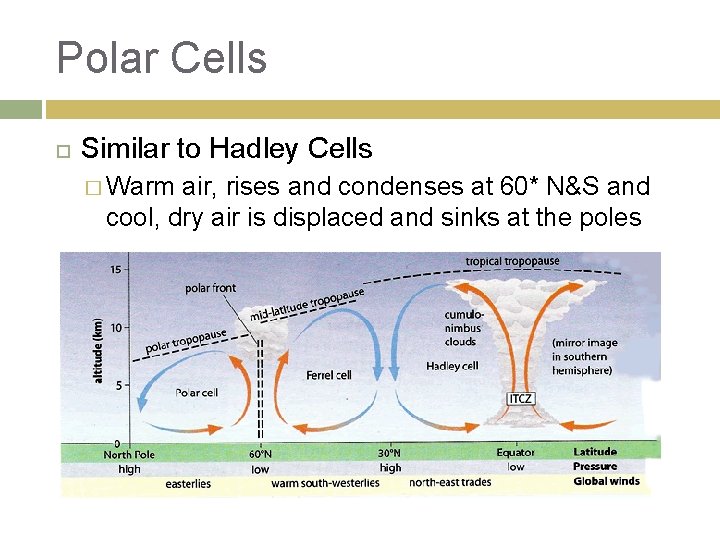
Polar Cells Similar to Hadley Cells � Warm air, rises and condenses at 60* N&S and cool, dry air is displaced and sinks at the poles
Earth’s Rotation… The rotation of the earth on it’s axis also plays a huge role in climate Rotation is faster at the equator than the poles � Why? Because of this rotation, a deflection occurs from north to south (think about drawing a line from the top to bottom of a beach ball while the beach ball spins…) This deflection is called the Coriolis effect
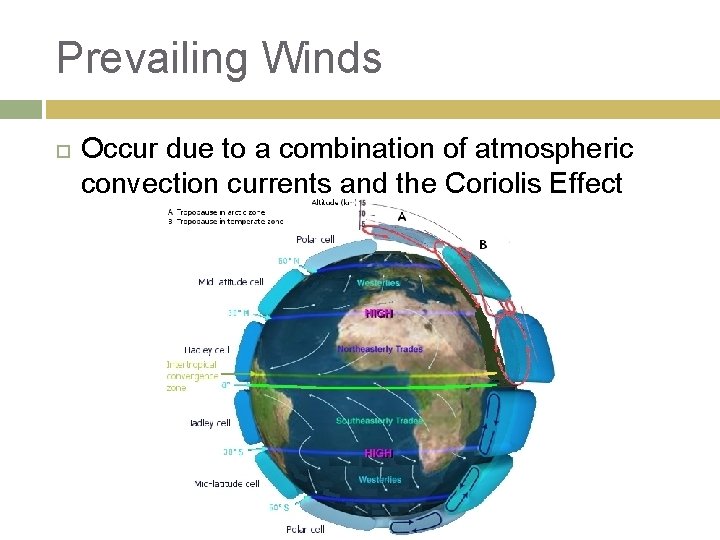
Prevailing Winds Occur due to a combination of atmospheric convection currents and the Coriolis Effect
What causes seasonal changes? https: //www. youtube. com/watch? v=82 p. DYg. GFj. I � 9 min description of earth’s tilt and seasonal changes Summer Solstice Fall Equinox Winter Solstice Spring Equinox
Mind Engagement With your neighbor, discuss and explain how the earth’s climate is determined by global circulation patterns.
Ocean currents influence weather Driven by � Temperature � Gravity � Prevailing winds � Coriolis effect � Locations of contienets
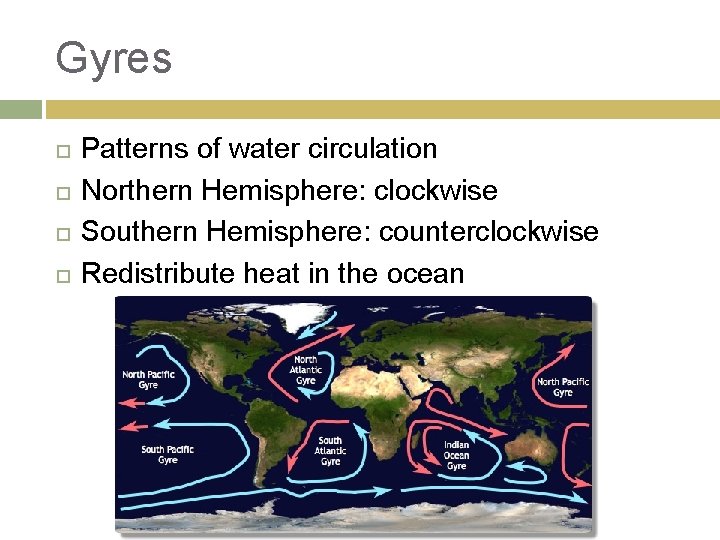
Gyres Patterns of water circulation Northern Hemisphere: clockwise Southern Hemisphere: counterclockwise Redistribute heat in the ocean
Upwelling Upward movement of water toward the surface Deep waters bring nutrients towards the surface that are necessary for large populations of producers These producers support large populations of consumers Upwelling is important for supporting highly productive ecosystems
Thermohaline Circulation Drives the mixing of surface water and deep water and is crucial for moving heat and nutrients around the globe Driven by salinity of the water Graphic Representation of the TC: https: //www. youtube. com/watch? v=3 ni. R_Kv 4 SM
Is thermohaline in trouble? What would happen if air temperatures increase? Al Gore Explains: https: //www. youtube. com/watch? v=02 NRKze m. XYE How is thermohaline linked to the next possible ice age?
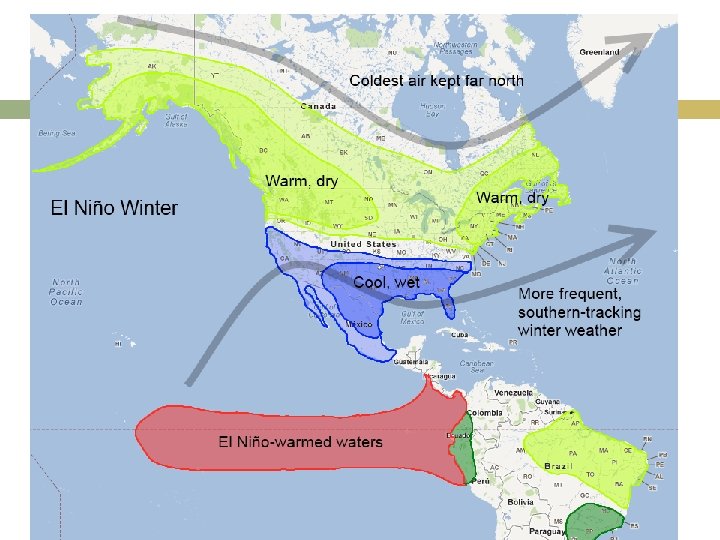
El Nino-Southern Oscillation Approx every 3 -7 years, surface currents in the tropical pacific reverse direction � Weaker trade winds near S. America � Warm water moves eastward � Upwelling stops decrease in productivity Global Impact of El Nino � Cooler wetter conditions in SE US � Dry weather in SE Asia and S Africa
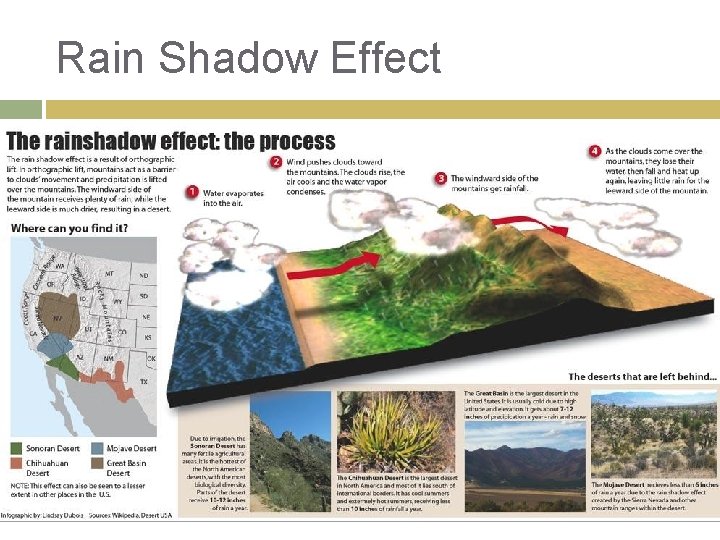
Rain Shadow Effect
Climate determines terrestrial biomes Tundra Boreal Forest Temperate Rainforest Temperate Seasonal Forest Woodland/Shrubland Temperate Grassland/Cold Desert Tropical Rainforest Tropical Seasonal Forest/Savanna Subtropical Desert
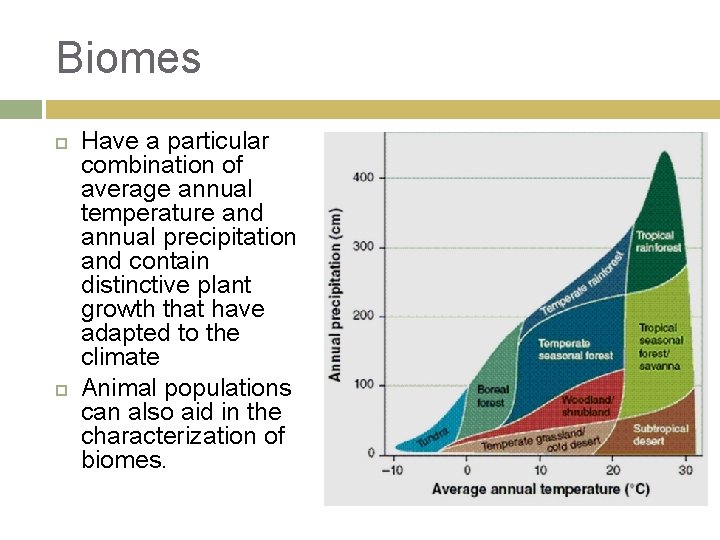
Biomes Have a particular combination of average annual temperature and annual precipitation and contain distinctive plant growth that have adapted to the climate Animal populations can also aid in the characterization of biomes.
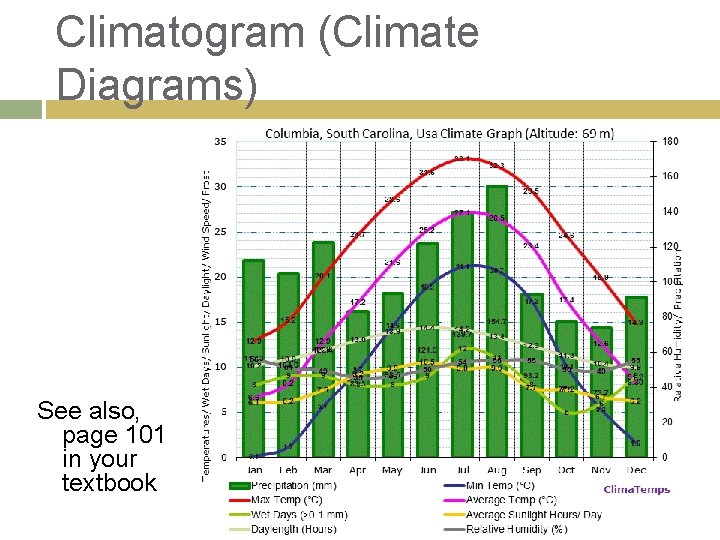
Climatogram (Climate Diagrams) See also, page 101 in your textbook

Biomes Webquest Activity
Climatogram Activity Using the provided data, create a climatogram for each biome, analyze the graphs and answer the discussion questions provided.
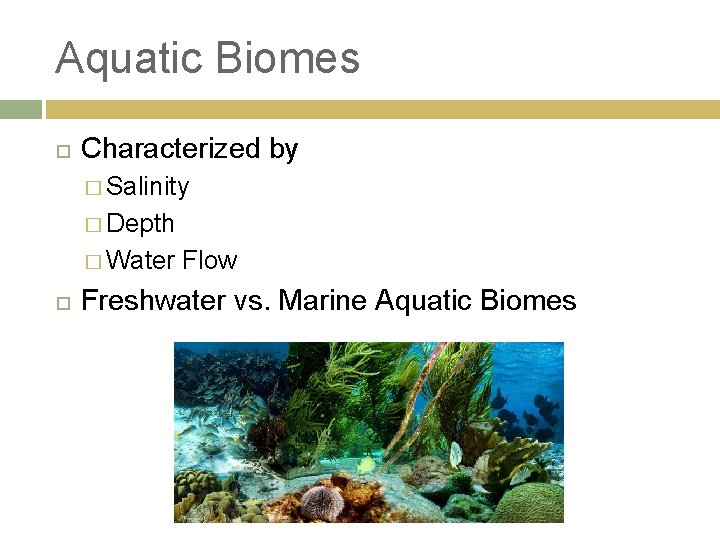
Aquatic Biomes Characterized by � Salinity � Depth � Water Flow Freshwater vs. Marine Aquatic Biomes
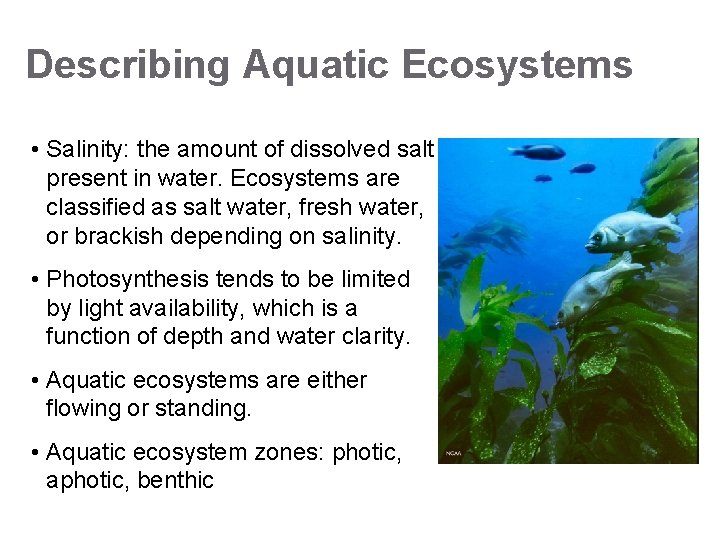
Describing Aquatic Ecosystems • Salinity: the amount of dissolved salt present in water. Ecosystems are classified as salt water, fresh water, or brackish depending on salinity. • Photosynthesis tends to be limited by light availability, which is a function of depth and water clarity. • Aquatic ecosystems are either flowing or standing. • Aquatic ecosystem zones: photic, aphotic, benthic
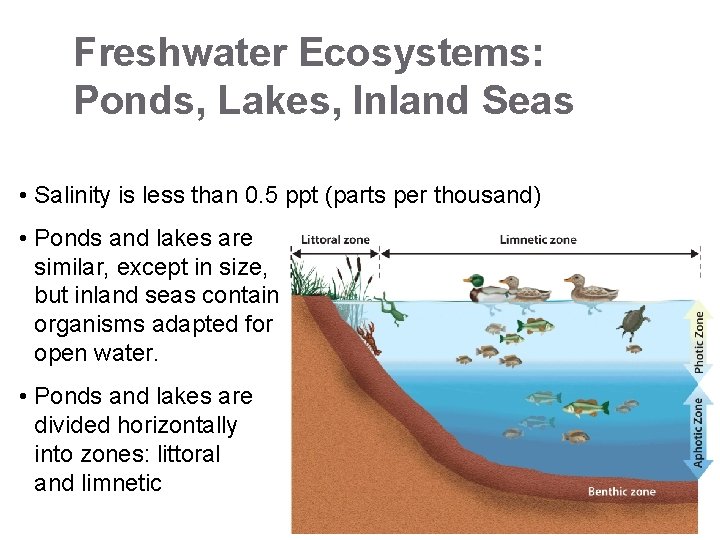
Freshwater Ecosystems: Ponds, Lakes, Inland Seas • Salinity is less than 0. 5 ppt (parts per thousand) • Ponds and lakes are similar, except in size, but inland seas contain organisms adapted for open water. • Ponds and lakes are divided horizontally into zones: littoral and limnetic
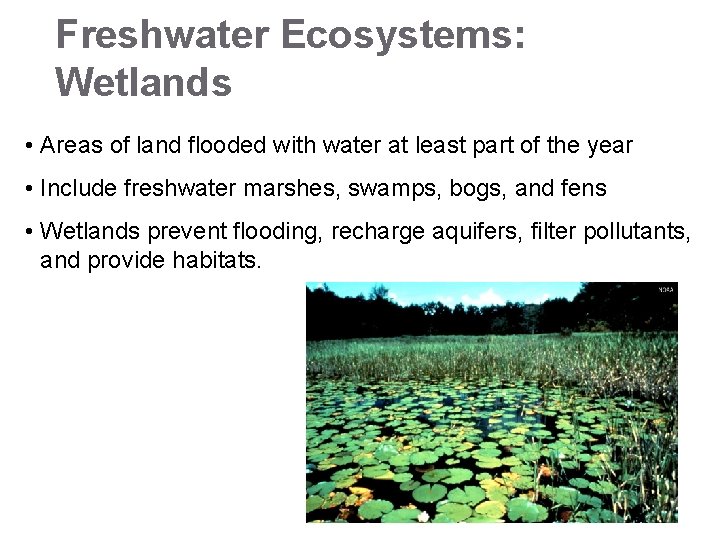
Freshwater Ecosystems: Wetlands • Areas of land flooded with water at least part of the year • Include freshwater marshes, swamps, bogs, and fens • Wetlands prevent flooding, recharge aquifers, filter pollutants, and provide habitats.
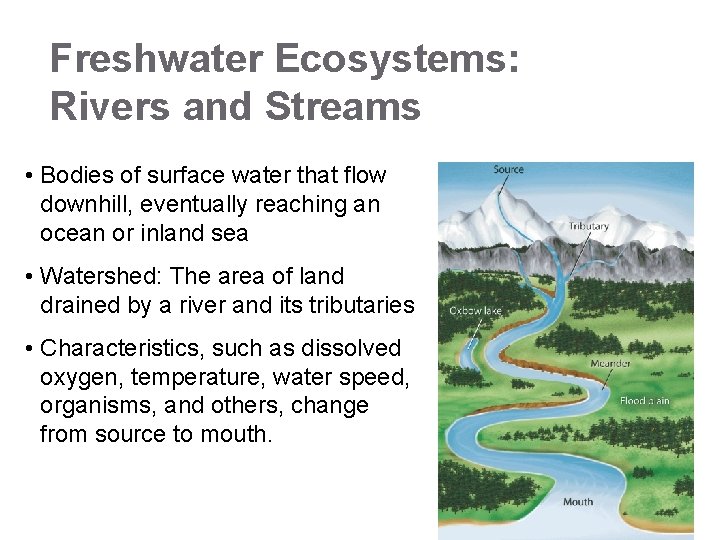
Freshwater Ecosystems: Rivers and Streams • Bodies of surface water that flow downhill, eventually reaching an ocean or inland sea • Watershed: The area of land drained by a river and its tributaries • Characteristics, such as dissolved oxygen, temperature, water speed, organisms, and others, change from source to mouth.
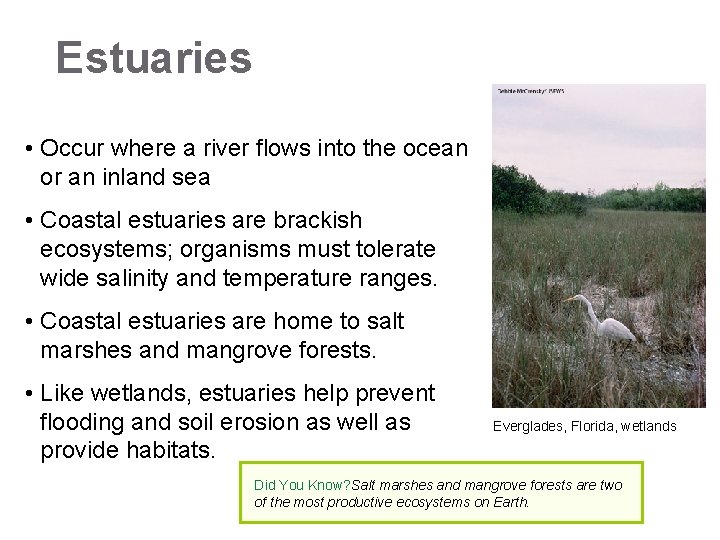
Estuaries • Occur where a river flows into the ocean or an inland sea • Coastal estuaries are brackish ecosystems; organisms must tolerate wide salinity and temperature ranges. • Coastal estuaries are home to salt marshes and mangrove forests. • Like wetlands, estuaries help prevent flooding and soil erosion as well as provide habitats. Everglades, Florida, wetlands Did You Know? Salt marshes and mangrove forests are two of the most productive ecosystems on Earth.
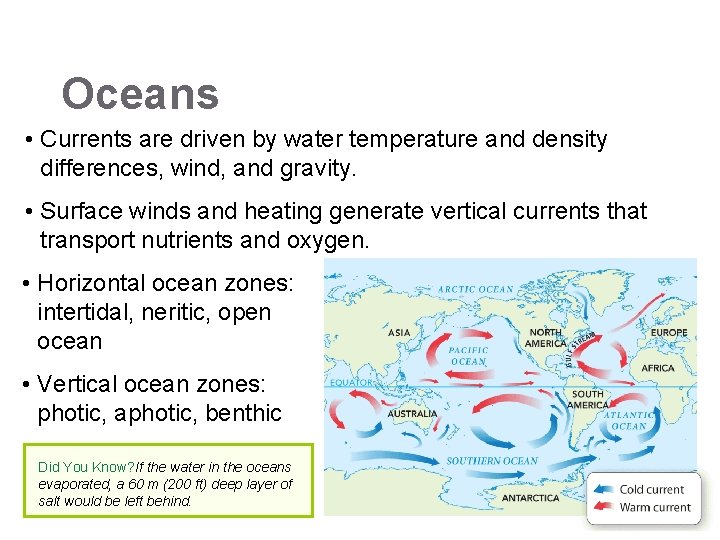
Oceans • Currents are driven by water temperature and density differences, wind, and gravity. • Surface winds and heating generate vertical currents that transport nutrients and oxygen. • Horizontal ocean zones: intertidal, neritic, open ocean • Vertical ocean zones: photic, aphotic, benthic Did You Know? If the water in the oceans evaporated, a 60 m (200 ft) deep layer of salt would be left behind.
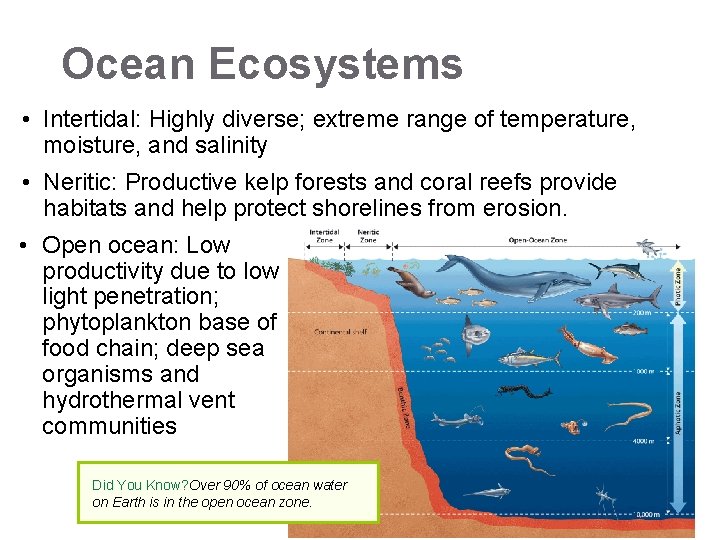
Ocean Ecosystems • Intertidal: Highly diverse; extreme range of temperature, moisture, and salinity • Neritic: Productive kelp forests and coral reefs provide habitats and help protect shorelines from erosion. • Open ocean: Low productivity due to low light penetration; phytoplankton base of food chain; deep sea organisms and hydrothermal vent communities Did You Know? Over 90% of ocean water on Earth is in the open ocean zone.
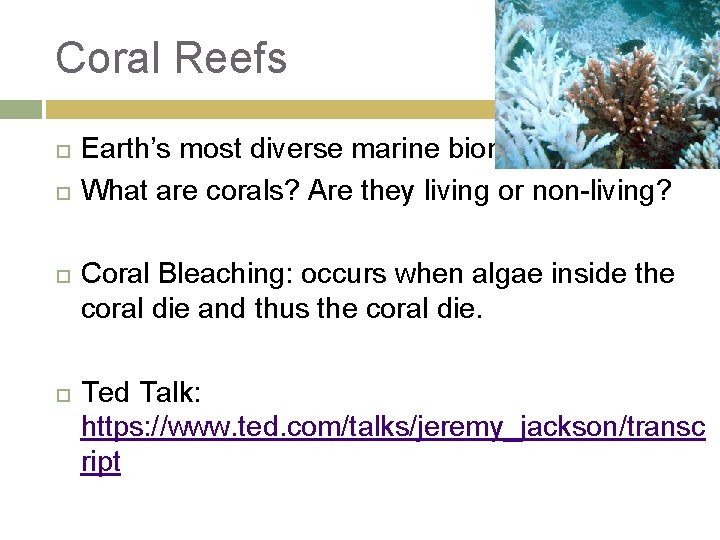
Coral Reefs Earth’s most diverse marine biome What are corals? Are they living or non-living? Coral Bleaching: occurs when algae inside the coral die and thus the coral die. Ted Talk: https: //www. ted. com/talks/jeremy_jackson/transc ript
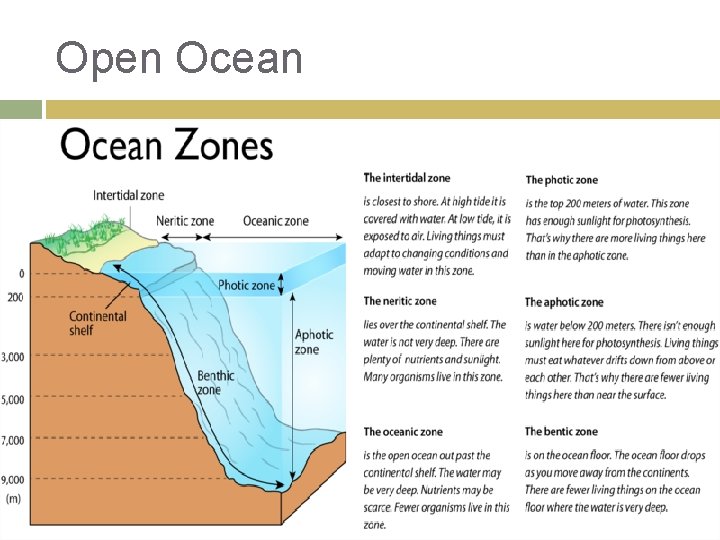
Open Ocean
- Slides: 40