PHYS575CSI655 Introduction to Atmospheric Physics and Chemistry Lecture
- Slides: 18
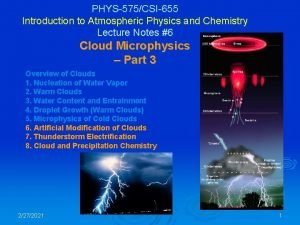
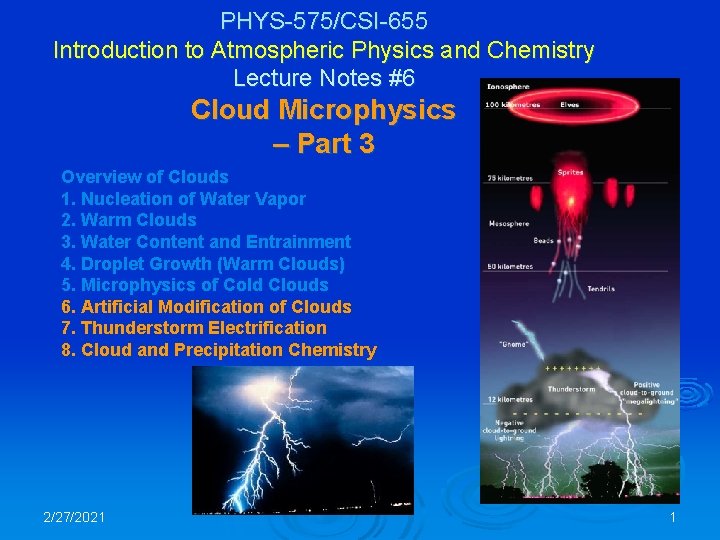
PHYS-575/CSI-655 Introduction to Atmospheric Physics and Chemistry Lecture Notes #6 Cloud Microphysics – Part 3 Overview of Clouds 1. Nucleation of Water Vapor 2. Warm Clouds 3. Water Content and Entrainment 4. Droplet Growth (Warm Clouds) 5. Microphysics of Cold Clouds 6. Artificial Modification of Clouds 7. Thunderstorm Electrification 8. Cloud and Precipitation Chemistry 2/27/2021 1
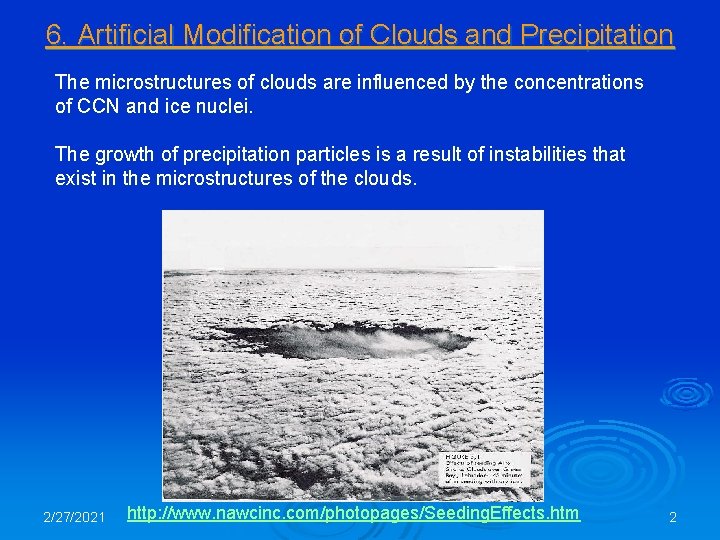
6. Artificial Modification of Clouds and Precipitation The microstructures of clouds are influenced by the concentrations of CCN and ice nuclei. The growth of precipitation particles is a result of instabilities that exist in the microstructures of the clouds. 2/27/2021 http: //www. nawcinc. com/photopages/Seeding. Effects. htm 2
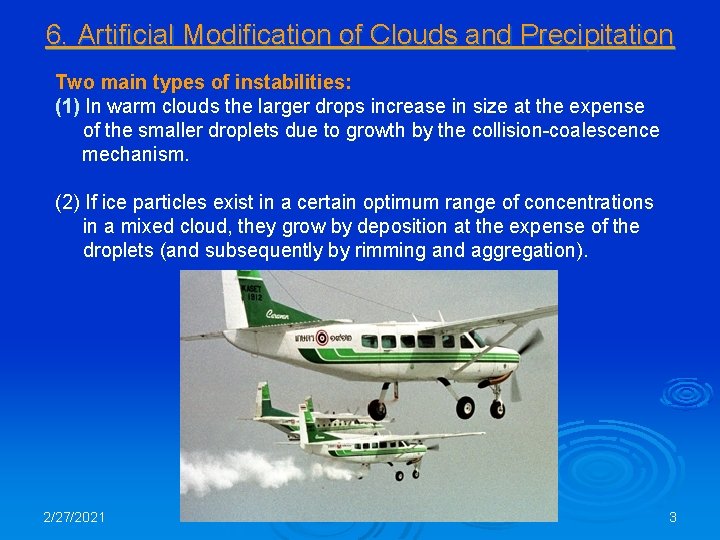
6. Artificial Modification of Clouds and Precipitation Two main types of instabilities: (1) In warm clouds the larger drops increase in size at the expense of the smaller droplets due to growth by the collision-coalescence mechanism. (2) If ice particles exist in a certain optimum range of concentrations in a mixed cloud, they grow by deposition at the expense of the droplets (and subsequently by rimming and aggregation). 2/27/2021 3
Cloud & Precipitation Modification by Cloud Seeding (1) Introducing large hygroscopic particles or water drops into warm clouds to stimulate the growth of raindrops by the collision-coalescence mechanism. (2) Introducing artificial ice nuclei into cold clouds (which may be deficient in ice particles) to stimulate the production of precipitation by the ice crystal mechanism. (3) Introducing comparatively high concentrations of artificial ice nuclei into cold clouds to reduce drastically the concentrations of super-cooled droplets and thereby inhibit the growth of ice particles by deposition and rimming, thereby dissipating the clouds and suppressing the growth of precipitable particles 2/27/2021 4
Artificial Modification of Warm Clouds Introduce: - small water droplets (radius ~ 30 μm) - hygroscopic particles (e. g. Na. Cl) into the base of a cloud; these then grow by condensation and later by collision-coalescence as they are carried up and subsequently fall through a cloud. In the late 1940’s, 50’s and 60’s attempts were made to seed warm clouds but the results were inconclusive. Seeding with hygroscopic particles has also been used in attempts to Improve fog visibility, but at present the most effective methods for dissipating fogs are “brute force” approaches such as evaporating fog droplets by ground-based heating. 2/27/2021 5
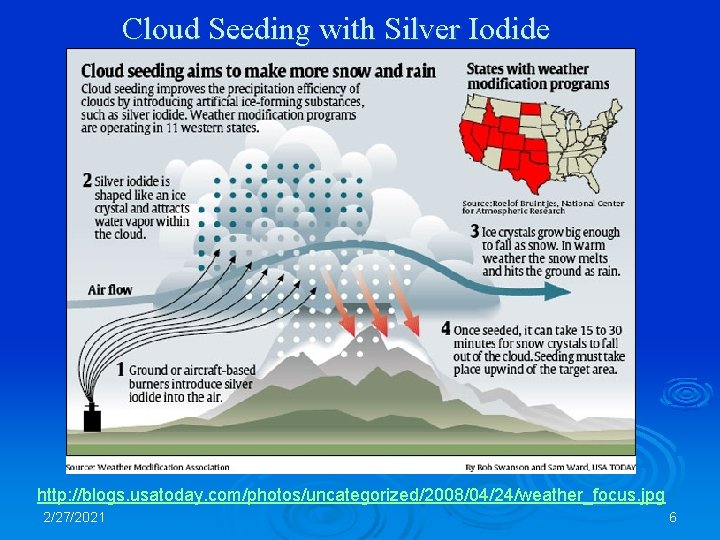
Cloud Seeding with Silver Iodide http: //blogs. usatoday. com/photos/uncategorized/2008/04/24/weather_focus. jpg 2/27/2021 6
Artificial Modification of Cold Clouds Project Cirrus, July 1946 Cloud ice particle “seeding” with frozen carbon dioxide; dry ice Because large numbers of ice crystals that a small amount of dry ice can produce, it is most suitable for overseeding cold clouds. When a Cloud is overseeded it is almost completely converted to ice particles which then evaporate (after being transported away from the seeding site). This has been used to clearing fog at international airports. Seeding with silver iodide, cupric sulfide, organic materials can be more effective than dry ice, but are more expensive. Artificial seeding may lead to latent heat deposition and increased buoyancy. This may produce convective plumes that raise the air to a level for free convection. Seeding has also been attempted to reduce hail damage, but inconclusive. 2/27/2021 7
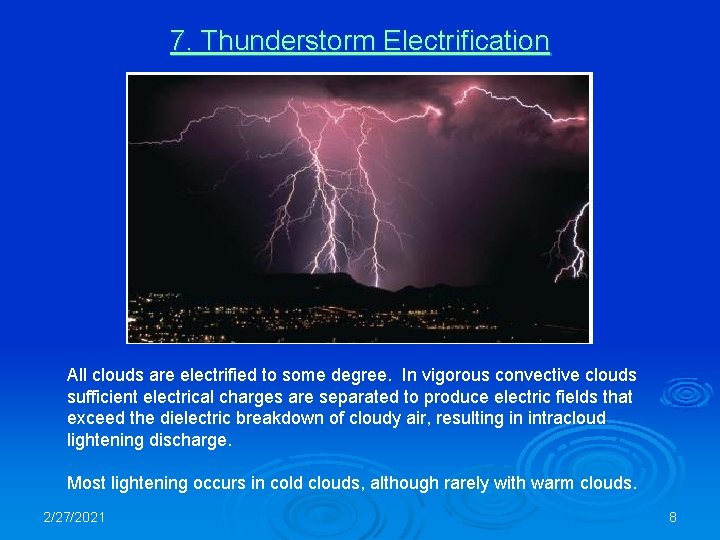
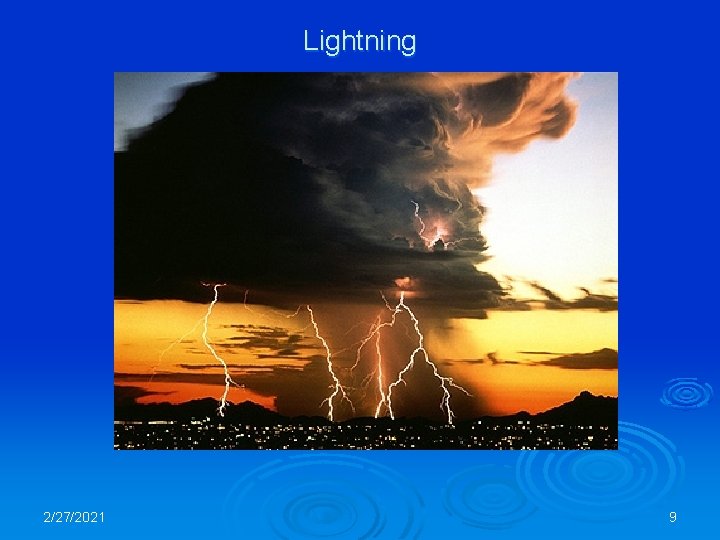
7. Thunderstorm Electrification All clouds are electrified to some degree. In vigorous convective clouds sufficient electrical charges are separated to produce electric fields that exceed the dielectric breakdown of cloudy air, resulting in intracloud lightening discharge. Most lightening occurs in cold clouds, although rarely with warm clouds. 2/27/2021 8
Lightning 2/27/2021 9
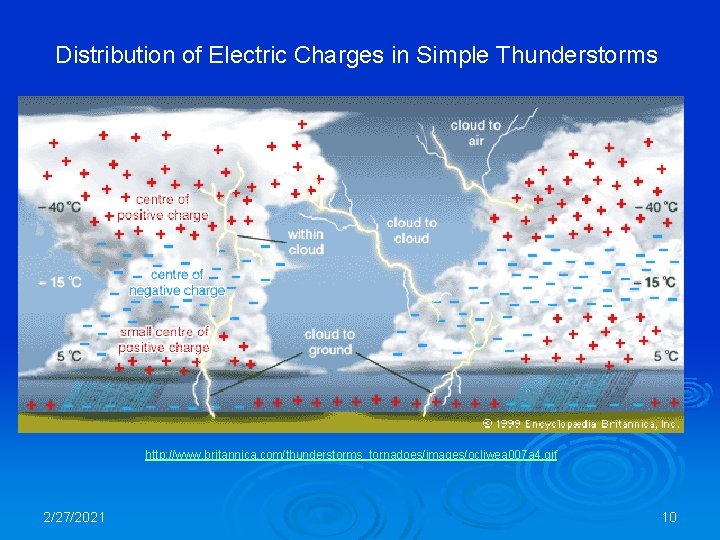
Distribution of Electric Charges in Simple Thunderstorms http: //www. britannica. com/thunderstorms_tornadoes/images/ocliwea 007 a 4. gif 2/27/2021 10
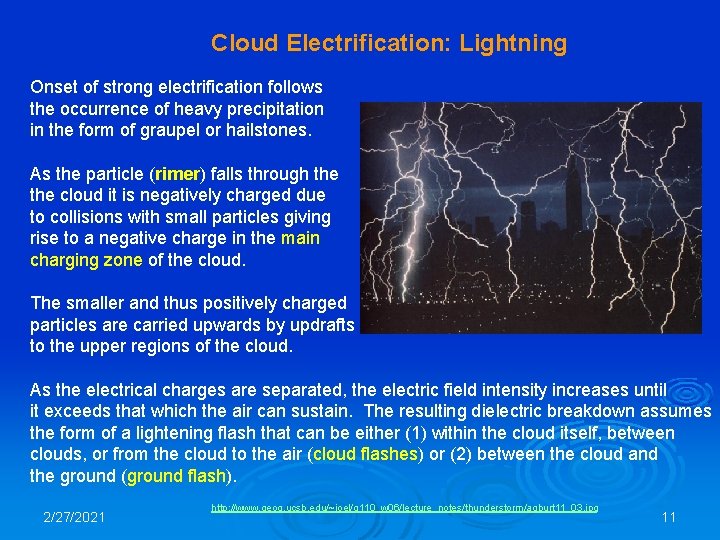
Cloud Electrification: Lightning Onset of strong electrification follows the occurrence of heavy precipitation in the form of graupel or hailstones. As the particle (rimer) falls through the cloud it is negatively charged due to collisions with small particles giving rise to a negative charge in the main charging zone of the cloud. The smaller and thus positively charged particles are carried upwards by updrafts to the upper regions of the cloud. As the electrical charges are separated, the electric field intensity increases until it exceeds that which the air can sustain. The resulting dielectric breakdown assumes the form of a lightening flash that can be either (1) within the cloud itself, between clouds, or from the cloud to the air (cloud flashes) or (2) between the cloud and the ground (ground flash). 2/27/2021 http: //www. geog. ucsb. edu/~joel/g 110_w 06/lecture_notes/thunderstorm/agburt 11_03. jpg 11
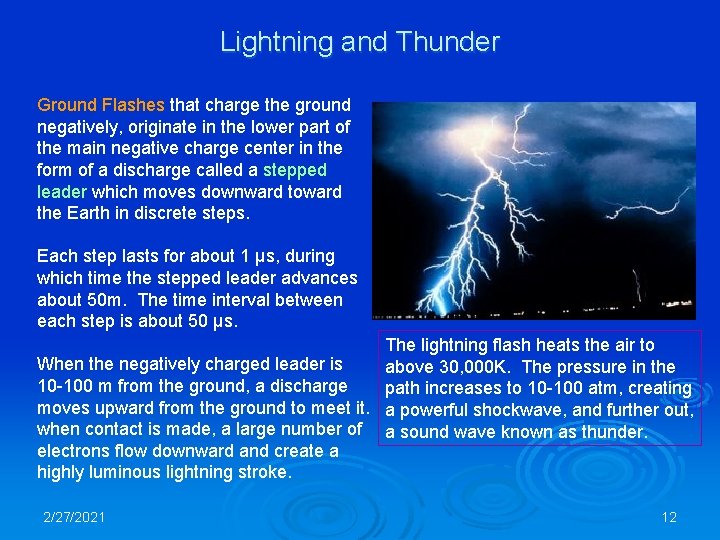
Lightning and Thunder Ground Flashes that charge the ground negatively, originate in the lower part of the main negative charge center in the form of a discharge called a stepped leader which moves downward toward the Earth in discrete steps. Each step lasts for about 1 μs, during which time the stepped leader advances about 50 m. The time interval between each step is about 50 μs. The lightning flash heats the air to When the negatively charged leader is above 30, 000 K. The pressure in the 10 -100 m from the ground, a discharge path increases to 10 -100 atm, creating moves upward from the ground to meet it. a powerful shockwave, and further out, when contact is made, a large number of a sound wave known as thunder. electrons flow downward and create a highly luminous lightning stroke. 2/27/2021 12
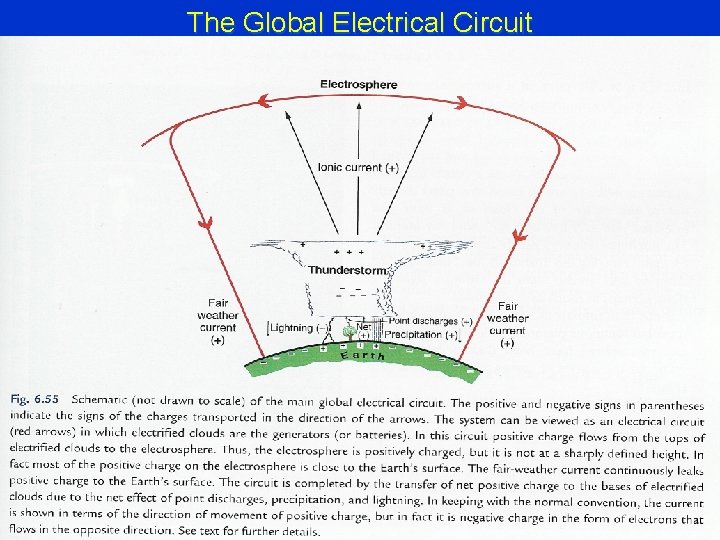
The Global Electrical Circuit 2/27/2021 13
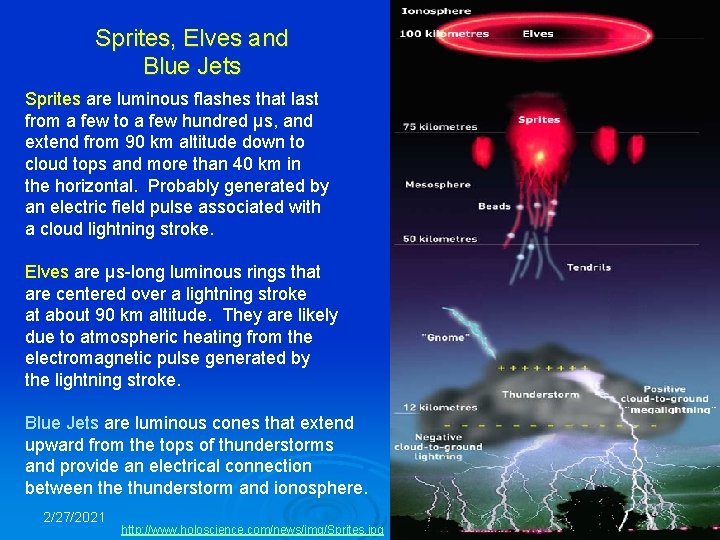
Sprites, Elves and Blue Jets Sprites are luminous flashes that last from a few to a few hundred μs, and extend from 90 km altitude down to cloud tops and more than 40 km in the horizontal. Probably generated by an electric field pulse associated with a cloud lightning stroke. Elves are μs-long luminous rings that are centered over a lightning stroke at about 90 km altitude. They are likely due to atmospheric heating from the electromagnetic pulse generated by the lightning stroke. Blue Jets are luminous cones that extend upward from the tops of thunderstorms and provide an electrical connection between the thunderstorm and ionosphere. 2/27/2021 http: //www. holoscience. com/news/img/Sprites. jpg 14
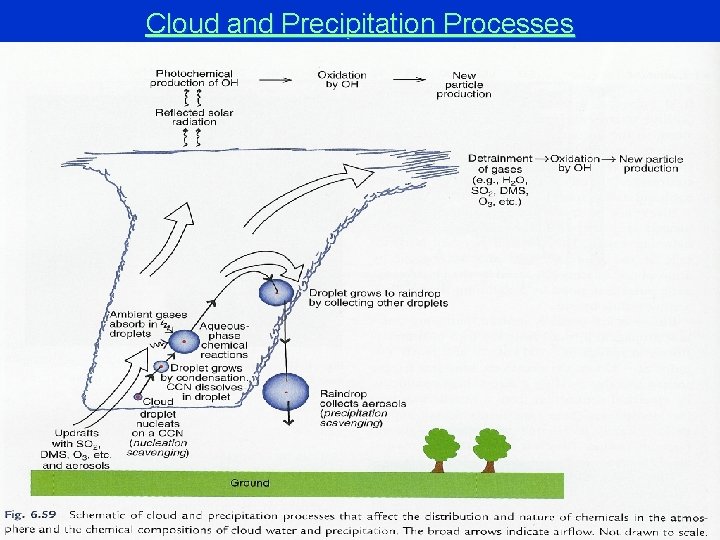
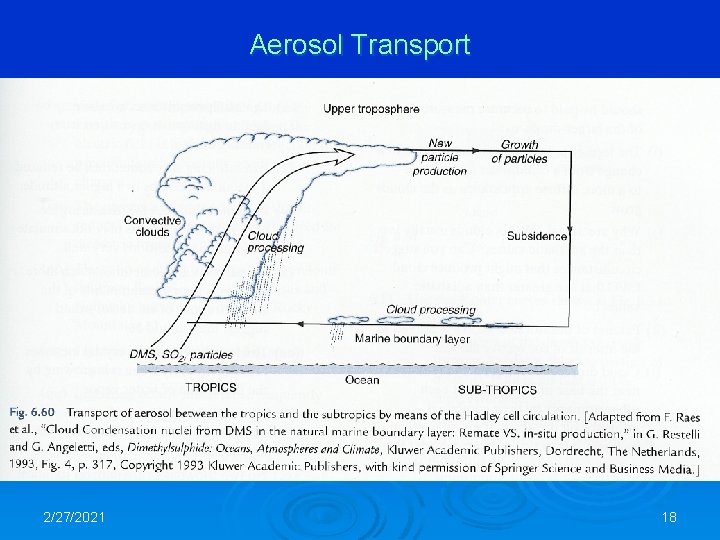
8. Clouds and Precipitation Chemistry Clouds serve as both sources and sinks of gases and particles, and they redistribute chemical species in the atmosphere. Precipitation scavenges particles and gases from the atmosphere and deposits them on the surface of the Earth (acid precipitation - acid rain). Transport of Particles and Gases: ØGases and particles are carried upward by the updrafts that feed clouds. Pollutants are thus transported to the upper portions of the atmosphere where solar radiation can chemically destroy and/or modify them. ØEvaporation of clouds enhances water vapor which is the source molecule for OH. ØOxidization of DMS and SO 2 by OH and the production of aerosol is enhanced near clouds. 2/27/2021 15
Cloud and Precipitation Chemistry Ø Nucleation Scavenging Ø Dissolution of Gases in Cloud Droplets Ø Aqueous-Phase Chemical Reactions Ø Precipitation Scavenging Ø Sources of Sulfate in Precipitation Ø Chemical Composition of Rain Ø Production of Aerosol by Clouds 2/27/2021 16
Cloud and Precipitation Processes 2/27/2021 17
Aerosol Transport 2/27/2021 18