Historical and philosophical perspectives of ionizing radiation protection



- Slides: 39
Historical and philosophical perspectives of ionizing radiation protection Sunil C Accelerator Radiation Safety Section Health Physics Division
Life and Radiation Life on earth has developed with an ever present background of radiation. It is not something new, invented by the wit of man: radiation has always been there. Eric J Hall, Professor of Radiology, College of Physicians and Surgeons, Columbia University, New York, in his book "Radiation and Life
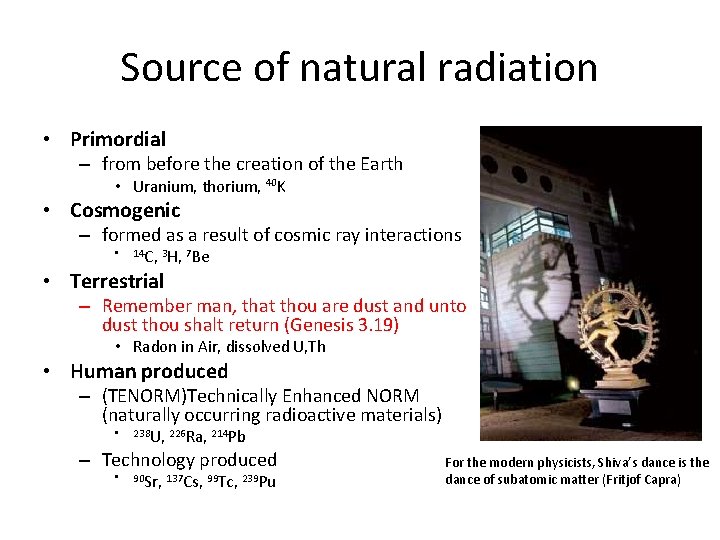
Source of natural radiation • Primordial – from before the creation of the Earth • Uranium, thorium, 40 K • Cosmogenic – formed as a result of cosmic ray interactions • 14 C, 3 H, 7 Be • Terrestrial – Remember man, that thou are dust and unto dust thou shalt return (Genesis 3. 19) • Radon in Air, dissolved U, Th • Human produced – (TENORM)Technically Enhanced NORM (naturally occurring radioactive materials) • 238 U, 226 Ra, 214 Pb – Technology produced • 90 Sr, 137 Cs, 99 Tc, 239 Pu For the modern physicists, Shiva’s dance is the dance of subatomic matter (Fritjof Capra)
TNORM • • • Geothermal Energy Production Wastes Oil and Gas Production Wastes Drinking Water Treatment Wastes Coal Fly Ash and Bottom Ash Fertilizer and Fertilizer Production Wastes – Phosphate rocks contain more than average U, Th. . • Rare Earths (Monazite, Xenotime) Extraction Waste • Mining Wastes
Radiation due to technology • Medical – Diagnostics • X-rays • Artificial sources • PET Isotopes – Therapy • X-rays, electrons, neutrons, protons, Heavy ions • Nuclear Activities • Air and space travel • Air crew ~ 2 -3 m. Sv y-1. • Industrial products • Food irradiation
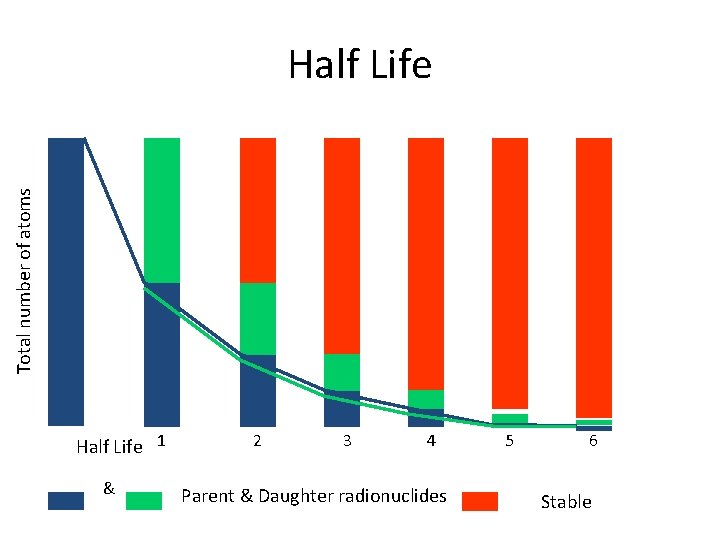
Radioactivity • Radioactivity – is a nuclear phenomenon occurring due to the instability of the nucleus. – is a spontaneous, continuous and irreversible process. – is independent of external factors such as pressure, temperature, state of substance, electrical field, magnetic field, catalyst etc. – reduces with a certain characteristic half life. • The physical and chemical properties of daughter element are different than that of the parent element.
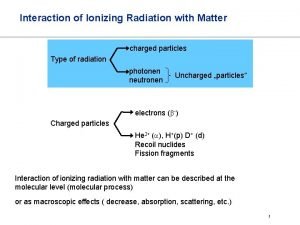
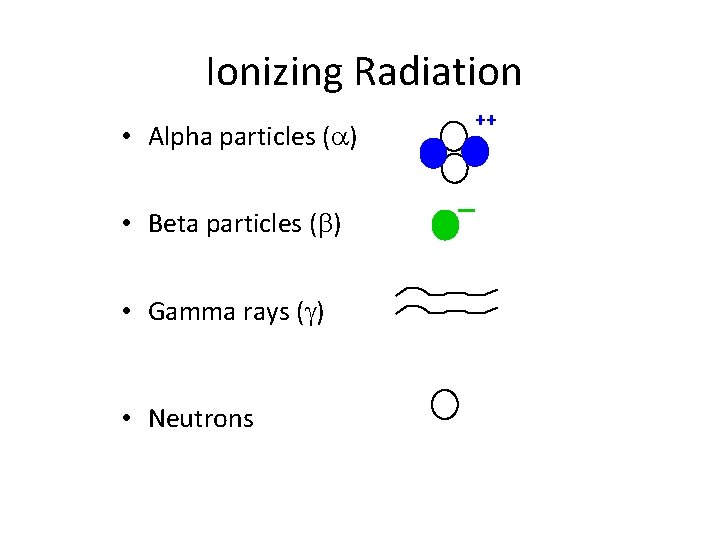
Ionizing Radiation • Alpha particles ( ) • Beta particles ( ) • Gamma rays ( ) • Neutrons ++
Total number of atoms Half Life 1 & 2 3 4 Parent & Daughter radionuclides 5 6 Stable
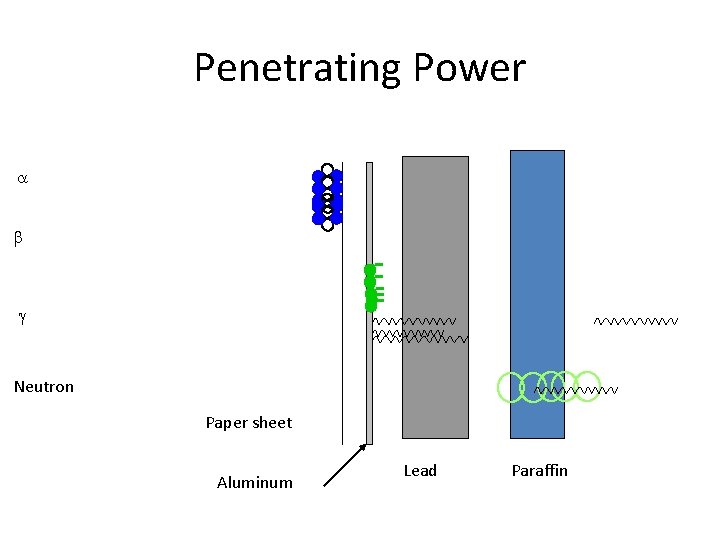
Penetrating Power Neutron Paper sheet Aluminum Lead Paraffin
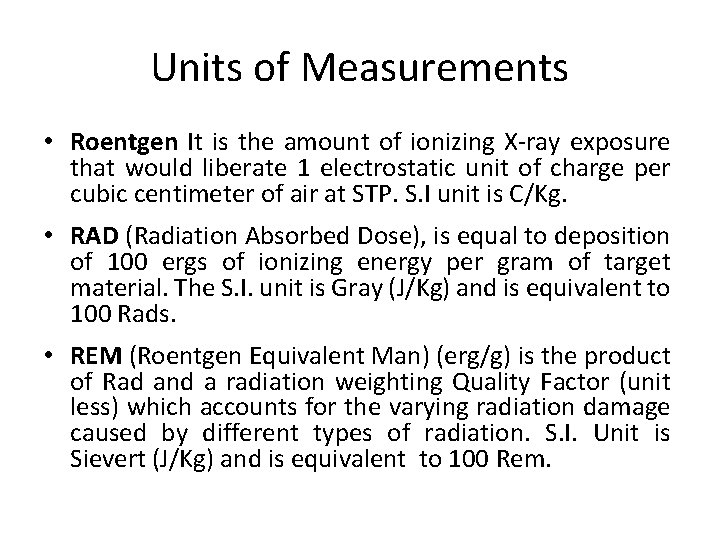
Units of Measurements • Roentgen It is the amount of ionizing X-ray exposure that would liberate 1 electrostatic unit of charge per cubic centimeter of air at STP. S. I unit is C/Kg. • RAD (Radiation Absorbed Dose), is equal to deposition of 100 ergs of ionizing energy per gram of target material. The S. I. unit is Gray (J/Kg) and is equivalent to 100 Rads. • REM (Roentgen Equivalent Man) (erg/g) is the product of Rad and a radiation weighting Quality Factor (unit less) which accounts for the varying radiation damage caused by different types of radiation. S. I. Unit is Sievert (J/Kg) and is equivalent to 100 Rem.
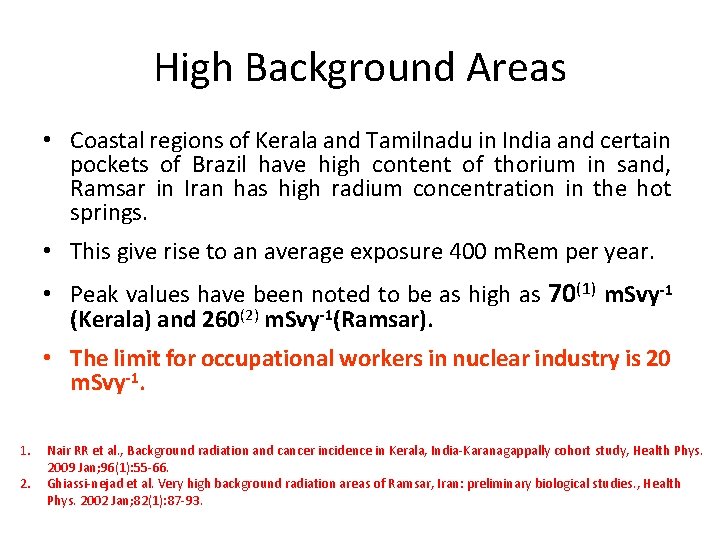
High Background Areas • Coastal regions of Kerala and Tamilnadu in India and certain pockets of Brazil have high content of thorium in sand, Ramsar in Iran has high radium concentration in the hot springs. • This give rise to an average exposure 400 m. Rem per year. • Peak values have been noted to be as high as 70(1) m. Svy-1 (Kerala) and 260(2) m. Svy-1(Ramsar). • The limit for occupational workers in nuclear industry is 20 m. Svy-1. 1. 2. Nair RR et al. , Background radiation and cancer incidence in Kerala, India-Karanagappally cohort study, Health Phys. 2009 Jan; 96(1): 55 -66. Ghiassi-nejad et al. Very high background radiation areas of Ramsar, Iran: preliminary biological studies. , Health Phys. 2002 Jan; 82(1): 87 -93.
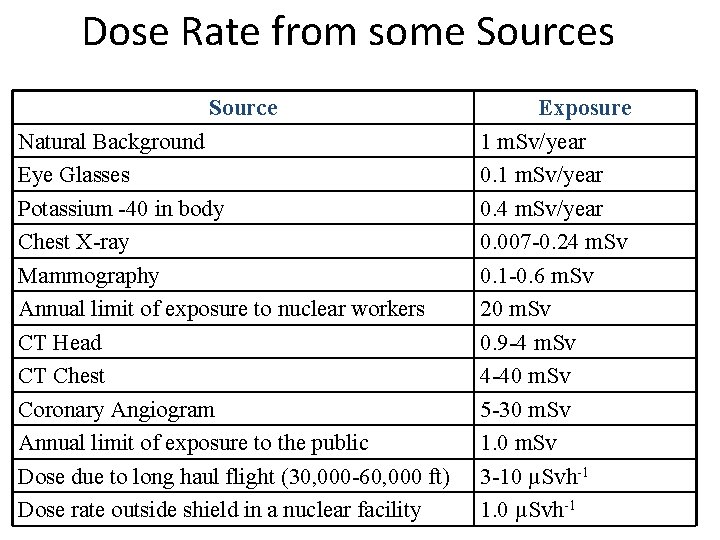
Dose Rate from some Sources Source Natural Background Eye Glasses Potassium -40 in body Chest X-ray Mammography Annual limit of exposure to nuclear workers CT Head CT Chest Coronary Angiogram Annual limit of exposure to the public Dose due to long haul flight (30, 000 -60, 000 ft) Dose rate outside shield in a nuclear facility Exposure 1 m. Sv/year 0. 4 m. Sv/year 0. 007 -0. 24 m. Sv 0. 1 -0. 6 m. Sv 20 m. Sv 0. 9 -4 m. Sv 4 -40 m. Sv 5 -30 m. Sv 1. 0 m. Sv 3 -10 µSvh-1 1. 0 µSvh-1
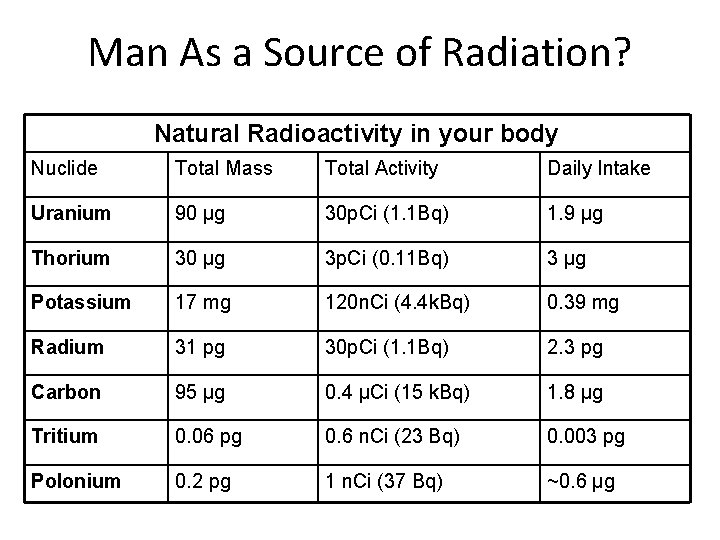
Man As a Source of Radiation? Natural Radioactivity in your body Nuclide Total Mass Total Activity Daily Intake Uranium 90 µg 30 p. Ci (1. 1 Bq) 1. 9 µg Thorium 30 µg 3 p. Ci (0. 11 Bq) 3 µg Potassium 17 mg 120 n. Ci (4. 4 k. Bq) 0. 39 mg Radium 31 pg 30 p. Ci (1. 1 Bq) 2. 3 pg Carbon 95 µg 0. 4 µCi (15 k. Bq) 1. 8 µg Tritium 0. 06 pg 0. 6 n. Ci (23 Bq) 0. 003 pg Polonium 0. 2 pg 1 n. Ci (37 Bq) ~0. 6 µg
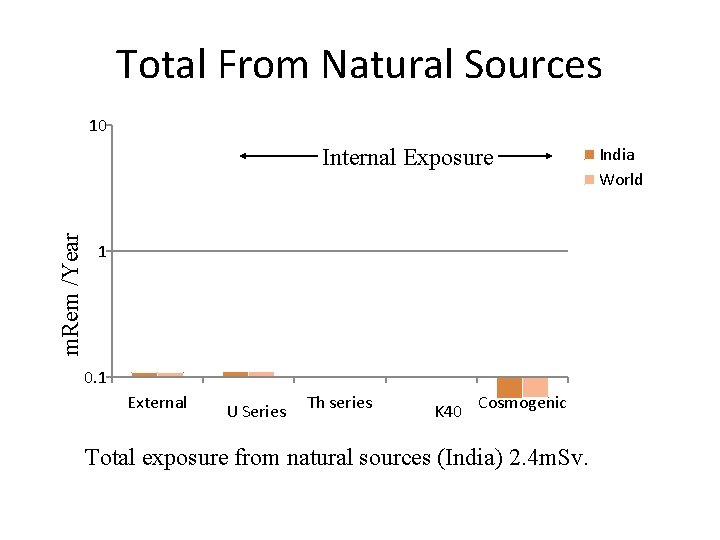
Total From Natural Sources 10 m. Rem /Year Internal Exposure 1 0. 1 External U Series Th series K 40 Cosmogenic Total exposure from natural sources (India) 2. 4 m. Sv. India World
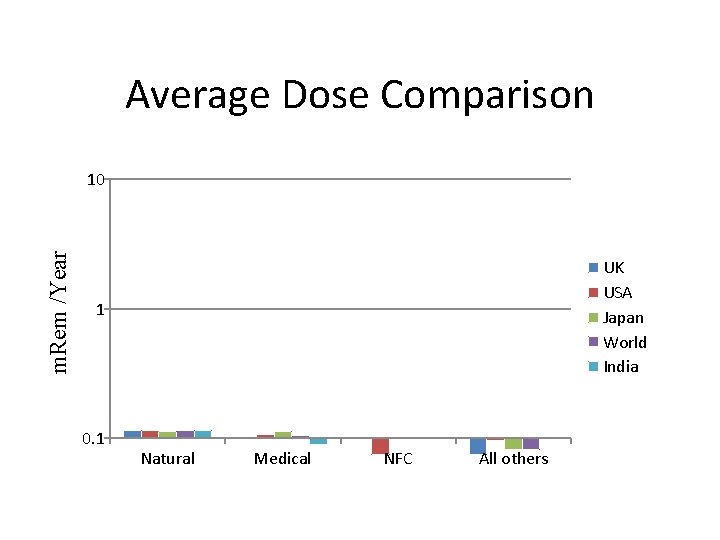
Average Dose Comparison m. Rem /Year 10 UK USA Japan World India 1 0. 1 Natural Medical NFC All others
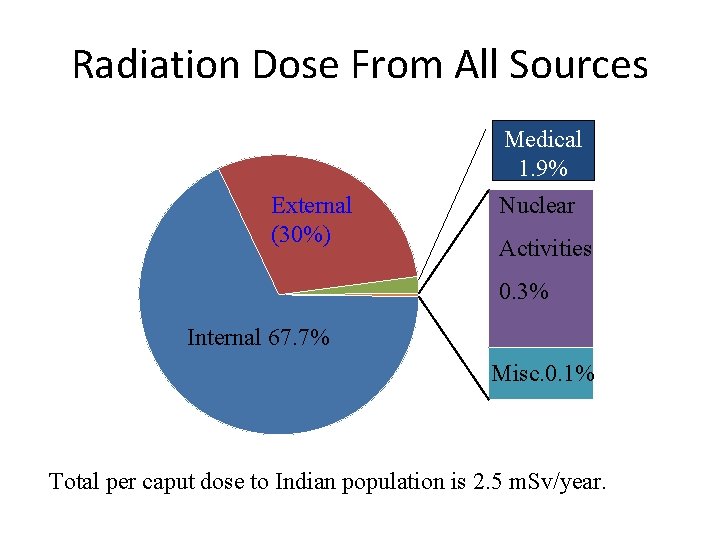
Radiation Dose From All Sources Medical 1. 9% External (30%) Nuclear Activities 0. 3% Internal 67. 7% Misc. 0. 1% Total per caput dose to Indian population is 2. 5 m. Sv/year.
Biological Effects (Direct Action) • Dissociation of the molecule by excitation or ionization of atoms in DNA. • Results in single strand or double strand breaks. • Could lead to cell death or mutation that may be passed on.
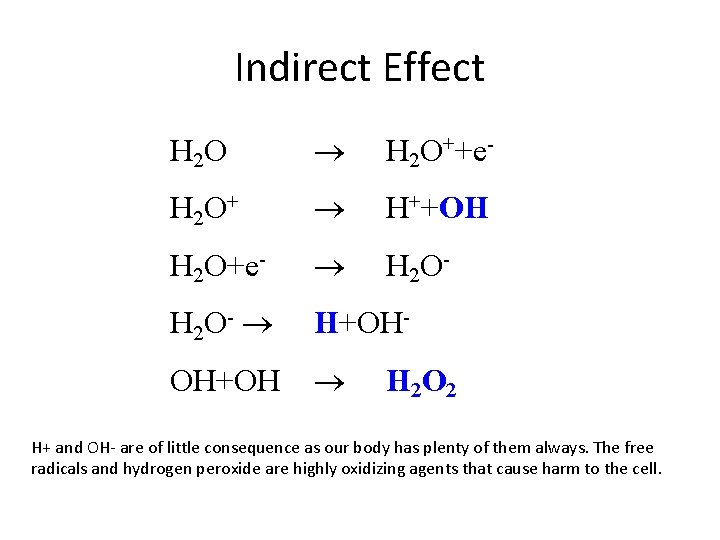
Indirect Effect H 2 O++e- H 2 O+ H++OH H 2 O+e- H 2 O- H+OH- OH+OH H 2 O 2 H+ and OH- are of little consequence as our body has plenty of them always. The free radicals and hydrogen peroxide are highly oxidizing agents that cause harm to the cell.
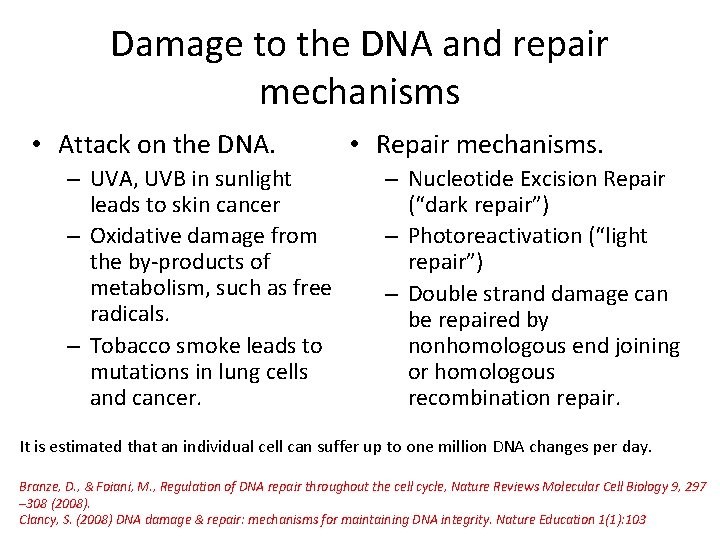
Damage to the DNA and repair mechanisms • Attack on the DNA. – UVA, UVB in sunlight leads to skin cancer – Oxidative damage from the by-products of metabolism, such as free radicals. – Tobacco smoke leads to mutations in lung cells and cancer. • Repair mechanisms. – Nucleotide Excision Repair (“dark repair”) – Photoreactivation (“light repair”) – Double strand damage can be repaired by nonhomologous end joining or homologous recombination repair. It is estimated that an individual cell can suffer up to one million DNA changes per day. Branze, D. , & Foiani, M. , Regulation of DNA repair throughout the cell cycle, Nature Reviews Molecular Cell Biology 9, 297 – 308 (2008). Clancy, S. (2008) DNA damage & repair: mechanisms for maintaining DNA integrity. Nature Education 1(1): 103
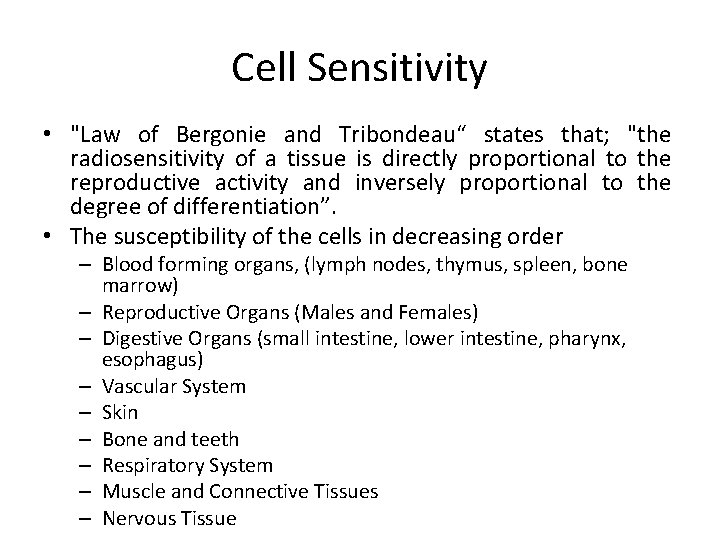
Cell Sensitivity • "Law of Bergonie and Tribondeau“ states that; "the radiosensitivity of a tissue is directly proportional to the reproductive activity and inversely proportional to the degree of differentiation”. • The susceptibility of the cells in decreasing order – Blood forming organs, (lymph nodes, thymus, spleen, bone marrow) – Reproductive Organs (Males and Females) – Digestive Organs (small intestine, lower intestine, pharynx, esophagus) – Vascular System – Skin – Bone and teeth – Respiratory System – Muscle and Connective Tissues – Nervous Tissue
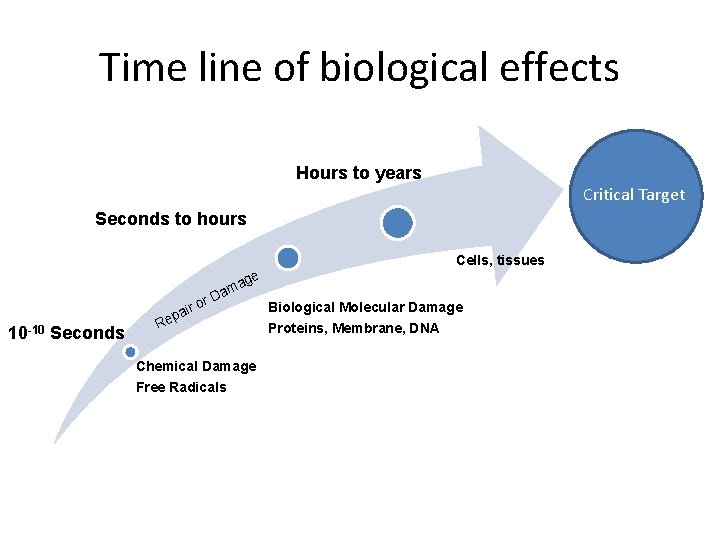
Time line of biological effects Hours to years Critical Target Seconds to hours Cells, tissues age m a 10 -10 Seconds R D or r i epa Chemical Damage Free Radicals Biological Molecular Damage Proteins, Membrane, DNA
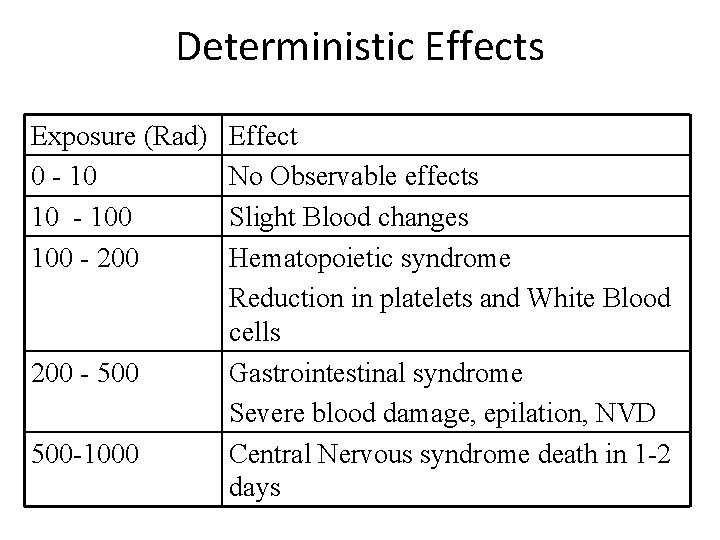
Deterministic Effects Exposure (Rad) 0 - 10 10 - 100 - 200 - 500 -1000 Effect No Observable effects Slight Blood changes Hematopoietic syndrome Reduction in platelets and White Blood cells Gastrointestinal syndrome Severe blood damage, epilation, NVD Central Nervous syndrome death in 1 -2 days
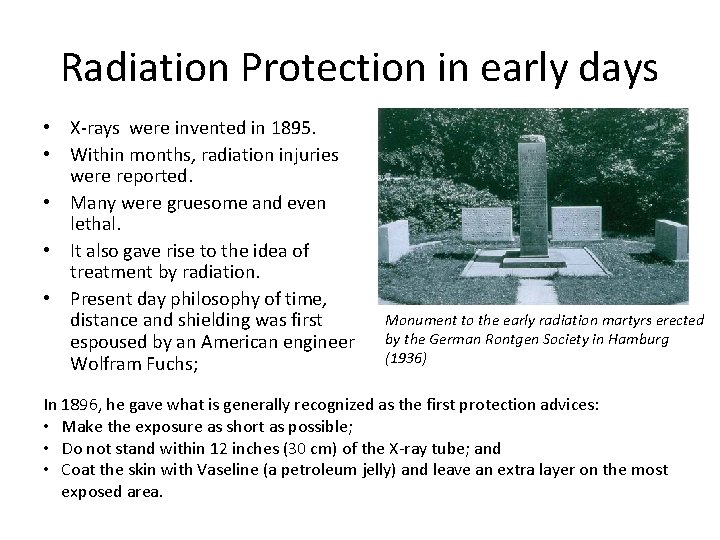
Radiation Protection in early days • X-rays were invented in 1895. • Within months, radiation injuries were reported. • Many were gruesome and even lethal. • It also gave rise to the idea of treatment by radiation. • Present day philosophy of time, distance and shielding was first espoused by an American engineer Wolfram Fuchs; Monument to the early radiation martyrs erected by the German Rontgen Society in Hamburg (1936) In 1896, he gave what is generally recognized as the first protection advices: • Make the exposure as short as possible; • Do not stand within 12 inches (30 cm) of the X-ray tube; and • Coat the skin with Vaseline (a petroleum jelly) and leave an extra layer on the most exposed area.
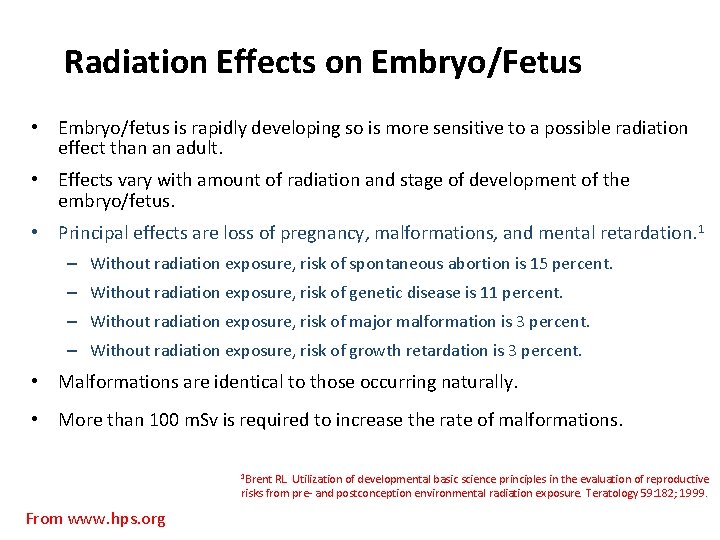
Radiation Effects on Embryo/Fetus • Embryo/fetus is rapidly developing so is more sensitive to a possible radiation effect than an adult. • Effects vary with amount of radiation and stage of development of the embryo/fetus. • Principal effects are loss of pregnancy, malformations, and mental retardation. 1 – Without radiation exposure, risk of spontaneous abortion is 15 percent. – Without radiation exposure, risk of genetic disease is 11 percent. – Without radiation exposure, risk of major malformation is 3 percent. – Without radiation exposure, risk of growth retardation is 3 percent. • Malformations are identical to those occurring naturally. • More than 100 m. Sv is required to increase the rate of malformations. 1 Brent RL. Utilization of developmental basic science principles in the evaluation of reproductive risks from pre- and postconception environmental radiation exposure. Teratology 59: 182; 1999. From www. hps. org
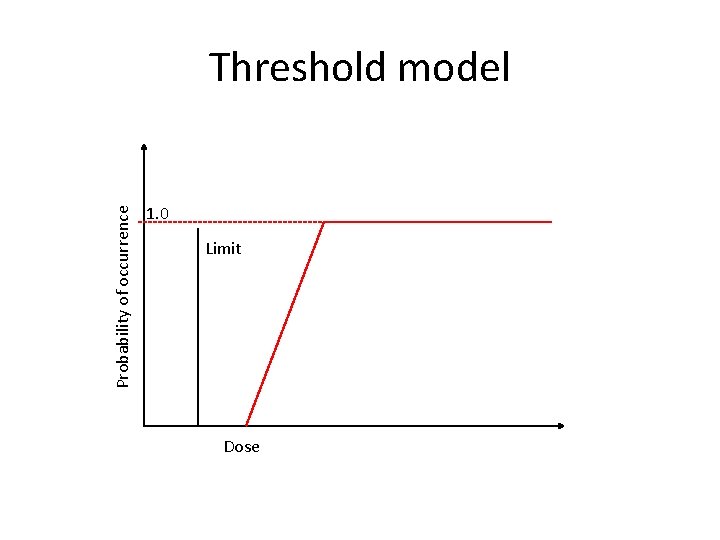
Probability of occurrence Threshold model 1. 0 Limit Dose
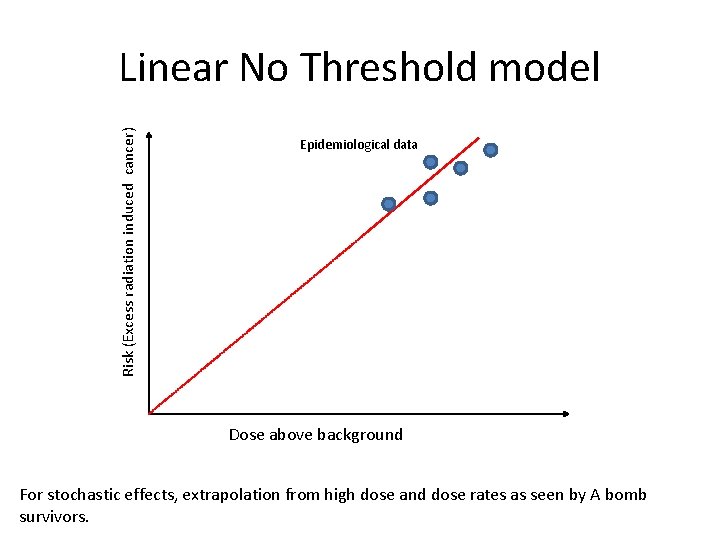
Risk (Excess radiation induced cancer) Linear No Threshold model Epidemiological data Dose above background For stochastic effects, extrapolation from high dose and dose rates as seen by A bomb survivors.
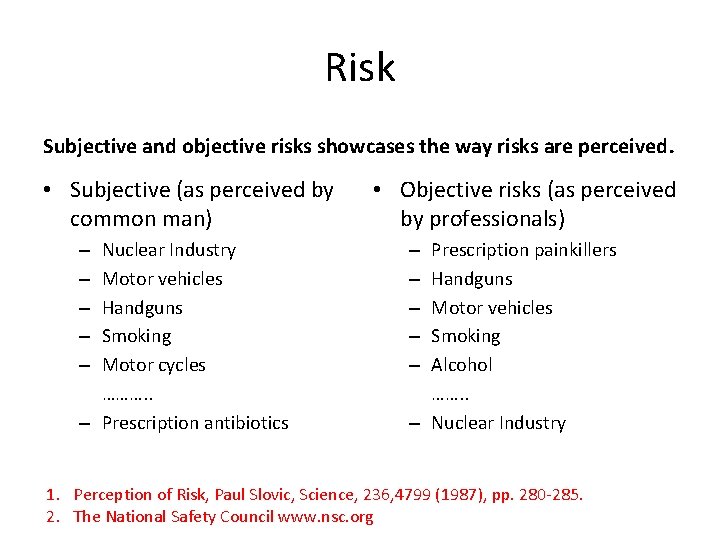
Risk Subjective and objective risks showcases the way risks are perceived. • Subjective (as perceived by common man) Nuclear Industry Motor vehicles Handguns Smoking Motor cycles ………. . – Prescription antibiotics – – – • Objective risks (as perceived by professionals) Prescription painkillers Handguns Motor vehicles Smoking Alcohol ……. . – Nuclear Industry – – – 1. Perception of Risk, Paul Slovic, Science, 236, 4799 (1987), pp. 280 -285. 2. The National Safety Council www. nsc. org
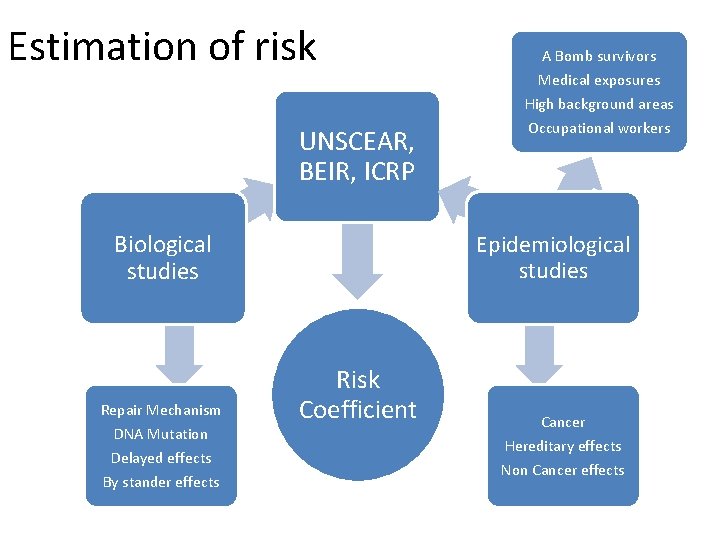
Estimation of risk A Bomb survivors Medical exposures High background areas UNSCEAR, BEIR, ICRP Biological studies Repair Mechanism DNA Mutation Delayed effects By stander effects Occupational workers Epidemiological studies Risk Coefficient Cancer Hereditary effects Non Cancer effects
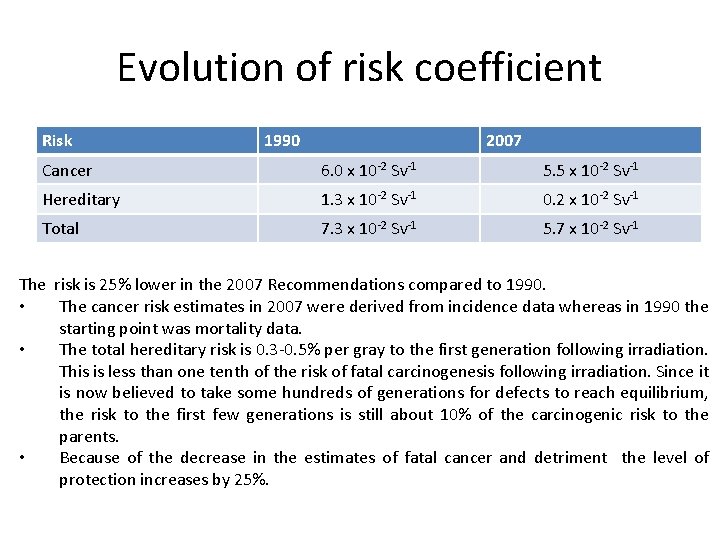
Evolution of risk coefficient Risk 1990 2007 Cancer 6. 0 x 10 -2 Sv-1 5. 5 x 10 -2 Sv-1 Hereditary 1. 3 x 10 -2 Sv-1 0. 2 x 10 -2 Sv-1 Total 7. 3 x 10 -2 Sv-1 5. 7 x 10 -2 Sv-1 The risk is 25% lower in the 2007 Recommendations compared to 1990. • The cancer risk estimates in 2007 were derived from incidence data whereas in 1990 the starting point was mortality data. • The total hereditary risk is 0. 3 -0. 5% per gray to the first generation following irradiation. This is less than one tenth of the risk of fatal carcinogenesis following irradiation. Since it is now believed to take some hundreds of generations for defects to reach equilibrium, the risk to the first few generations is still about 10% of the carcinogenic risk to the parents. • Because of the decrease in the estimates of fatal cancer and detriment the level of protection increases by 25%.
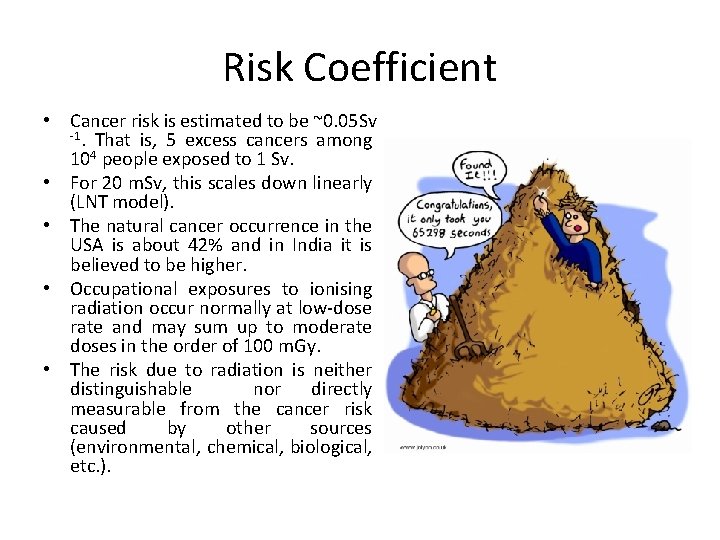
Risk Coefficient • Cancer risk is estimated to be ~0. 05 Sv -1. That is, 5 excess cancers among 104 people exposed to 1 Sv. • For 20 m. Sv, this scales down linearly (LNT model). • The natural cancer occurrence in the USA is about 42% and in India it is believed to be higher. • Occupational exposures to ionising radiation occur normally at low-dose rate and may sum up to moderate doses in the order of 100 m. Gy. • The risk due to radiation is neither distinguishable nor directly measurable from the cancer risk caused by other sources (environmental, chemical, biological, etc. ).
Evolution of Protection principles • Physical protection (1928) – Guarded against injuries to superficial tissues, derangements of internal organs and changes in the blood’. – Remedy suggested was a prolonged holiday and limitation of working hours. – No dose limit was proposed, but is estimated to be about 1000 m. Sv/year. • First quantitative recommendation of tolerance dose (1931) – Same recommendation but tolerance limit of 0. 2 R per day (~ 500 m. Sv/year). – X-ray, and particularly radium workers, should be systematically submitted, both on entry and subsequently at least twice a year, to expert medical, general and blood examinations. These examinations will determine the acceptance, refusal, limitation or termination of such occupation’. R. H. Clarke and J. Valentin, The History of ICRP and the Evolution of its Policies, ICRP 109
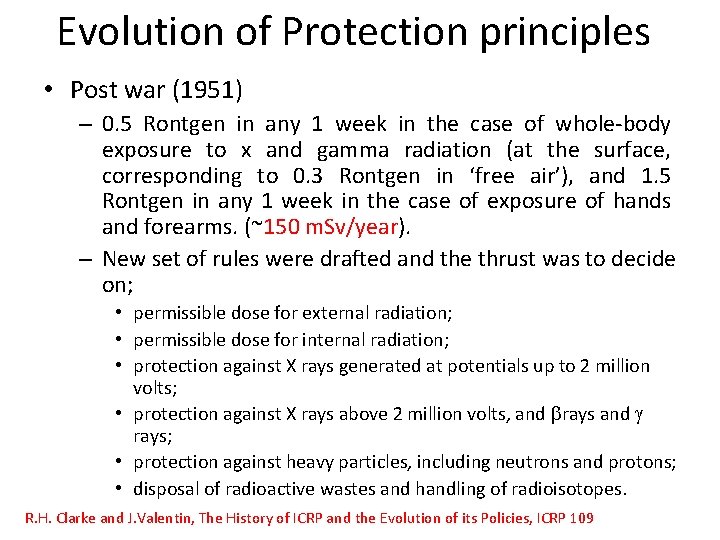
Evolution of Protection principles • Post war (1951) – 0. 5 Rontgen in any 1 week in the case of whole-body exposure to x and gamma radiation (at the surface, corresponding to 0. 3 Rontgen in ‘free air’), and 1. 5 Rontgen in any 1 week in the case of exposure of hands and forearms. (~150 m. Sv/year). – New set of rules were drafted and the thrust was to decide on; • permissible dose for external radiation; • permissible dose for internal radiation; • protection against X rays generated at potentials up to 2 million volts; • protection against X rays above 2 million volts, and rays and rays; • protection against heavy particles, including neutrons and protons; • disposal of radioactive wastes and handling of radioisotopes. R. H. Clarke and J. Valentin, The History of ICRP and the Evolution of its Policies, ICRP 109
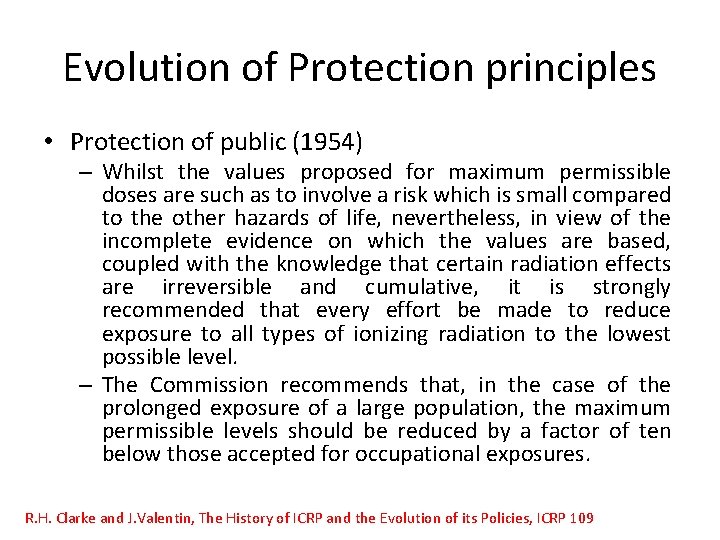
Evolution of Protection principles • Protection of public (1954) – Whilst the values proposed for maximum permissible doses are such as to involve a risk which is small compared to the other hazards of life, nevertheless, in view of the incomplete evidence on which the values are based, coupled with the knowledge that certain radiation effects are irreversible and cumulative, it is strongly recommended that every effort be made to reduce exposure to all types of ionizing radiation to the lowest possible level. – The Commission recommends that, in the case of the prolonged exposure of a large population, the maximum permissible levels should be reduced by a factor of ten below those accepted for occupational exposures. R. H. Clarke and J. Valentin, The History of ICRP and the Evolution of its Policies, ICRP 109
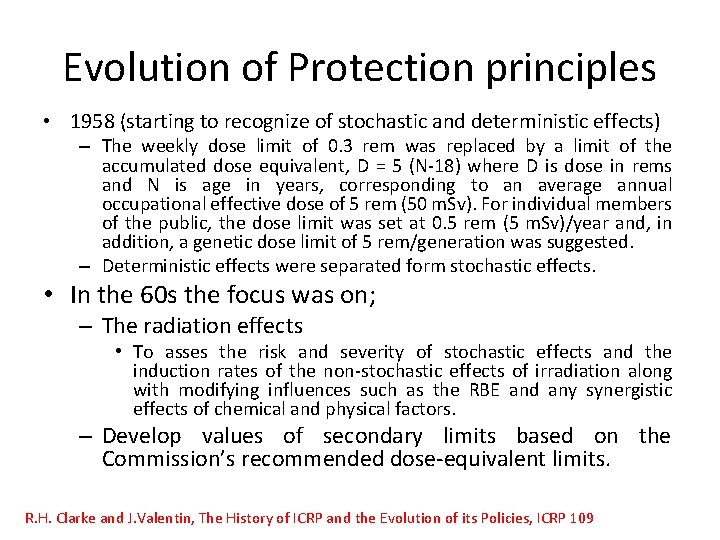
Evolution of Protection principles • 1958 (starting to recognize of stochastic and deterministic effects) – The weekly dose limit of 0. 3 rem was replaced by a limit of the accumulated dose equivalent, D = 5 (N-18) where D is dose in rems and N is age in years, corresponding to an average annual occupational effective dose of 5 rem (50 m. Sv). For individual members of the public, the dose limit was set at 0. 5 rem (5 m. Sv)/year and, in addition, a genetic dose limit of 5 rem/generation was suggested. – Deterministic effects were separated form stochastic effects. • In the 60 s the focus was on; – The radiation effects • To asses the risk and severity of stochastic effects and the induction rates of the non-stochastic effects of irradiation along with modifying influences such as the RBE and any synergistic effects of chemical and physical factors. – Develop values of secondary limits based on the Commission’s recommended dose-equivalent limits. R. H. Clarke and J. Valentin, The History of ICRP and the Evolution of its Policies, ICRP 109
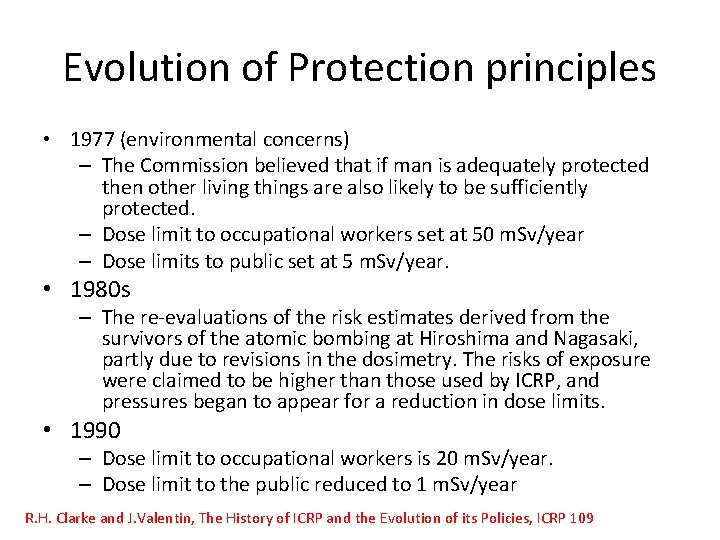
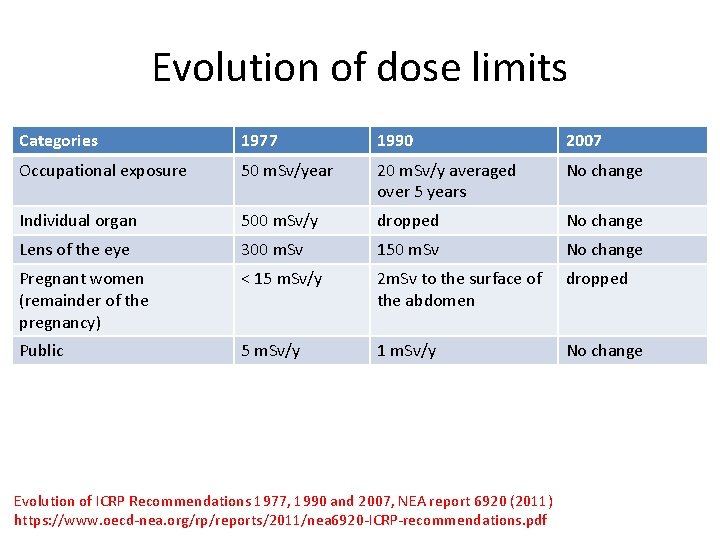
Evolution of Protection principles • 1977 (environmental concerns) – The Commission believed that if man is adequately protected then other living things are also likely to be sufficiently protected. – Dose limit to occupational workers set at 50 m. Sv/year – Dose limits to public set at 5 m. Sv/year. • 1980 s – The re-evaluations of the risk estimates derived from the survivors of the atomic bombing at Hiroshima and Nagasaki, partly due to revisions in the dosimetry. The risks of exposure were claimed to be higher than those used by ICRP, and pressures began to appear for a reduction in dose limits. • 1990 – Dose limit to occupational workers is 20 m. Sv/year. – Dose limit to the public reduced to 1 m. Sv/year R. H. Clarke and J. Valentin, The History of ICRP and the Evolution of its Policies, ICRP 109
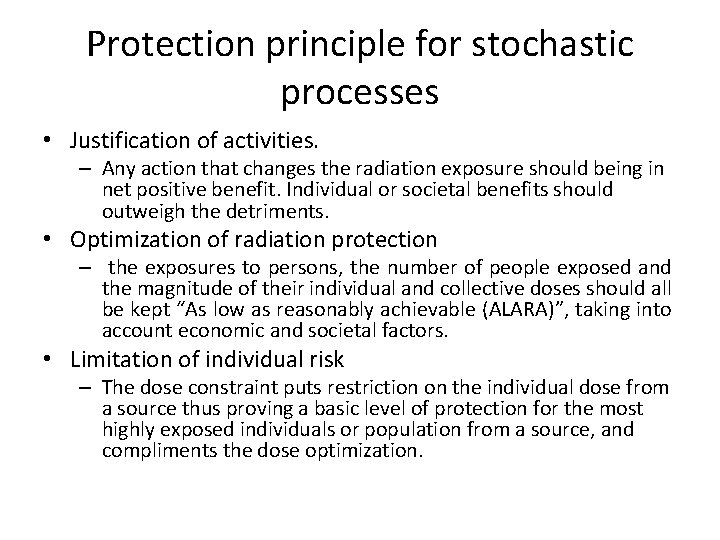
Protection principle for stochastic processes • Justification of activities. – Any action that changes the radiation exposure should being in net positive benefit. Individual or societal benefits should outweigh the detriments. • Optimization of radiation protection – the exposures to persons, the number of people exposed and the magnitude of their individual and collective doses should all be kept “As low as reasonably achievable (ALARA)”, taking into account economic and societal factors. • Limitation of individual risk – The dose constraint puts restriction on the individual dose from a source thus proving a basic level of protection for the most highly exposed individuals or population from a source, and compliments the dose optimization.
Evolution of dose limits Categories 1977 1990 2007 Occupational exposure 50 m. Sv/year 20 m. Sv/y averaged over 5 years No change Individual organ 500 m. Sv/y dropped No change Lens of the eye 300 m. Sv 150 m. Sv No change Pregnant women (remainder of the pregnancy) < 15 m. Sv/y 2 m. Sv to the surface of the abdomen dropped Public 5 m. Sv/y 1 m. Sv/y No change Evolution of ICRP Recommendations 1977, 1990 and 2007, NEA report 6920 (2011) https: //www. oecd-nea. org/rp/reports/2011/nea 6920 -ICRP-recommendations. pdf
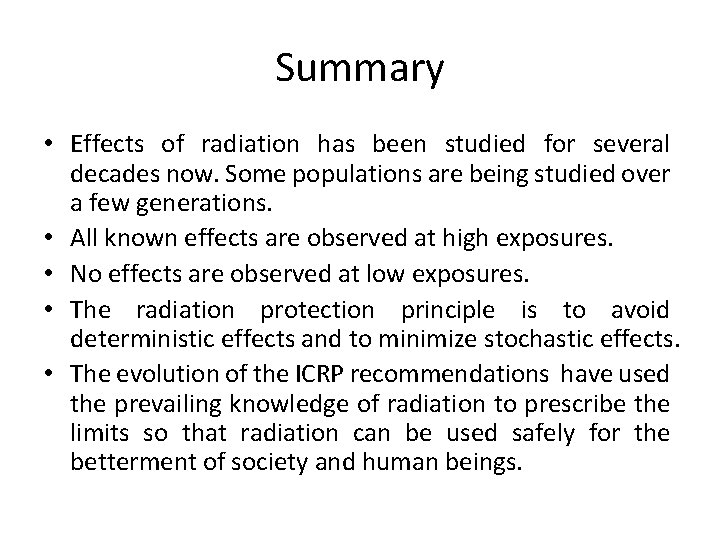
Summary • Effects of radiation has been studied for several decades now. Some populations are being studied over a few generations. • All known effects are observed at high exposures. • No effects are observed at low exposures. • The radiation protection principle is to avoid deterministic effects and to minimize stochastic effects. • The evolution of the ICRP recommendations have used the prevailing knowledge of radiation to prescribe the limits so that radiation can be used safely for the betterment of society and human beings.
Thanks for your patience !