ACIDS Ionic Compounds Taste sour Itchy on skin
- Slides: 50
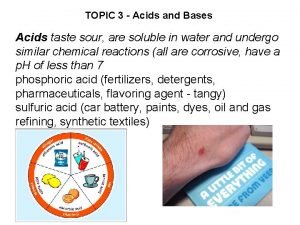
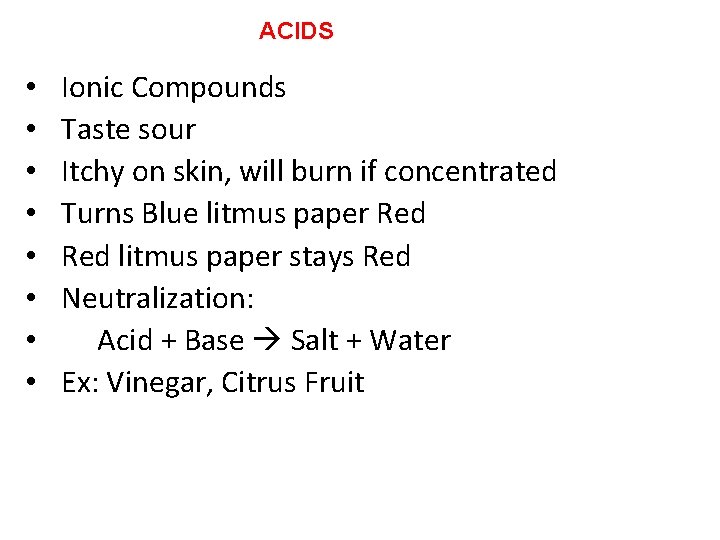
ACIDS • • Ionic Compounds Taste sour Itchy on skin, will burn if concentrated Turns Blue litmus paper Red litmus paper stays Red Neutralization: Acid + Base Salt + Water Ex: Vinegar, Citrus Fruit
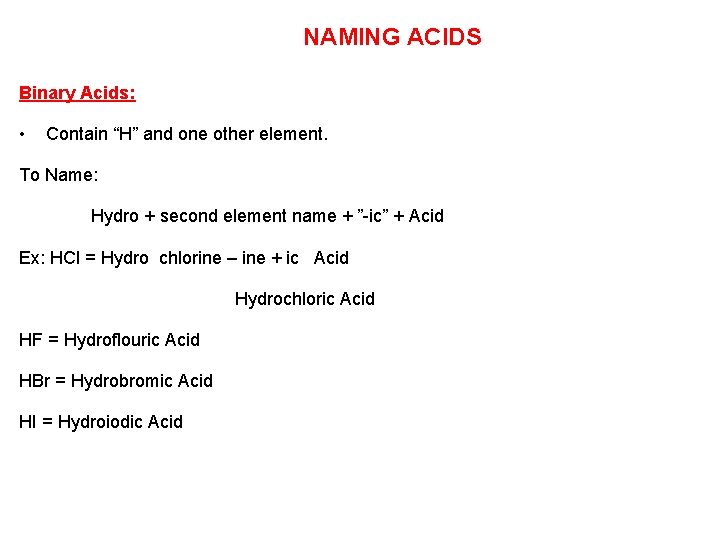
NAMING ACIDS Binary Acids: • Contain “H” and one other element. To Name: Hydro + second element name + ”-ic” + Acid Ex: HCl = Hydro chlorine – ine + ic Acid Hydrochloric Acid HF = Hydroflouric Acid HBr = Hydrobromic Acid HI = Hydroiodic Acid
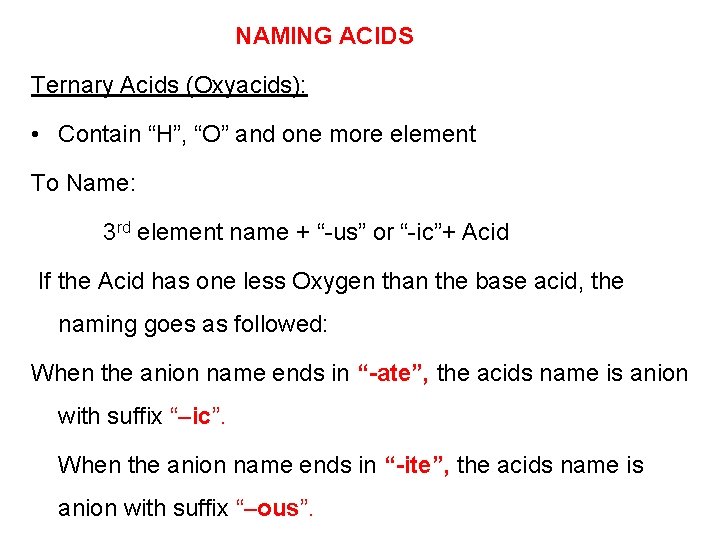
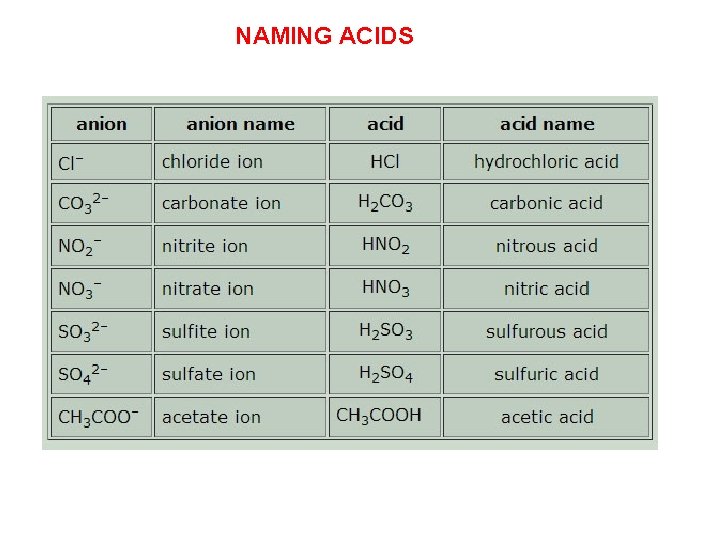
NAMING ACIDS Ternary Acids (Oxyacids): • Contain “H”, “O” and one more element To Name: 3 rd element name + “-us” or “-ic”+ Acid If the Acid has one less Oxygen than the base acid, the naming goes as followed: When the anion name ends in “-ate”, the acids name is anion with suffix “–ic”. When the anion name ends in “-ite”, the acids name is anion with suffix “–ous”.
NAMING ACIDS
CHAPTER 5 CHEMICAL BONDING: THE COVALENT BOND MODEL
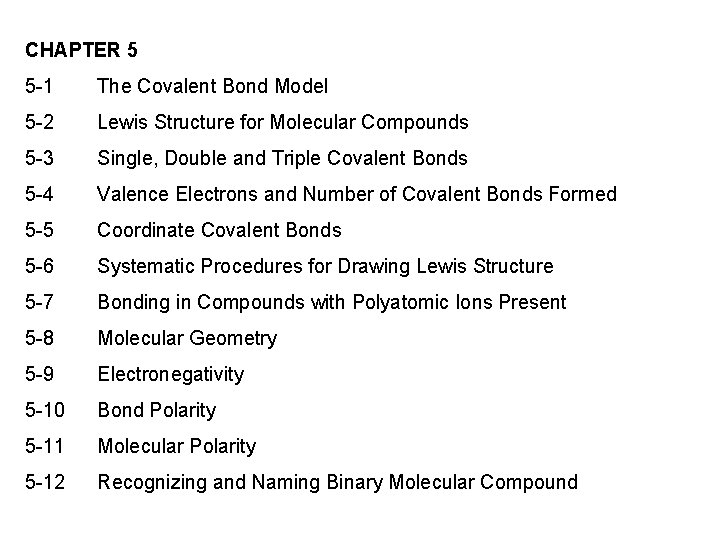
CHAPTER 5 5 -1 The Covalent Bond Model 5 -2 Lewis Structure for Molecular Compounds 5 -3 Single, Double and Triple Covalent Bonds 5 -4 Valence Electrons and Number of Covalent Bonds Formed 5 -5 Coordinate Covalent Bonds 5 -6 Systematic Procedures for Drawing Lewis Structure 5 -7 Bonding in Compounds with Polyatomic Ions Present 5 -8 Molecular Geometry 5 -9 Electronegativity 5 -10 Bond Polarity 5 -11 Molecular Polarity 5 -12 Recognizing and Naming Binary Molecular Compound
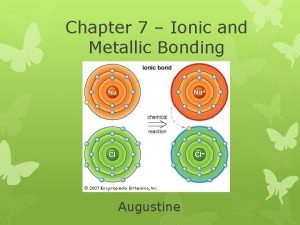
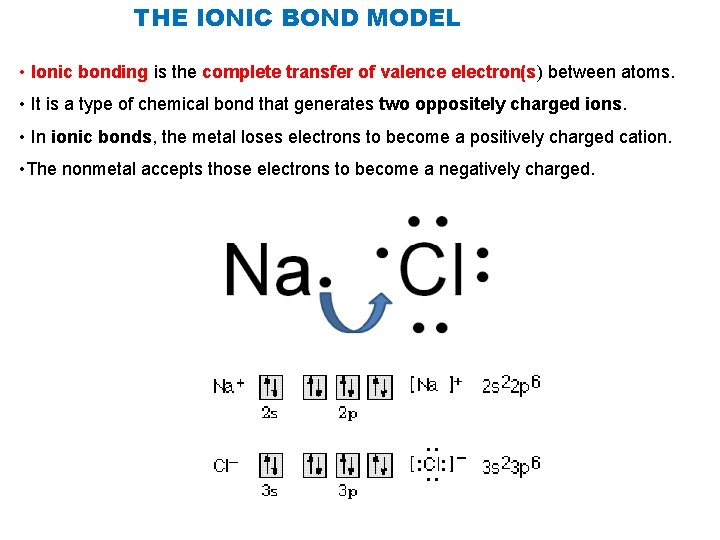
THE IONIC BOND MODEL • Ionic bonding is the complete transfer of valence electron(s) between atoms. • It is a type of chemical bond that generates two oppositely charged ions. • In ionic bonds, the metal loses electrons to become a positively charged cation. • The nonmetal accepts those electrons to become a negatively charged.
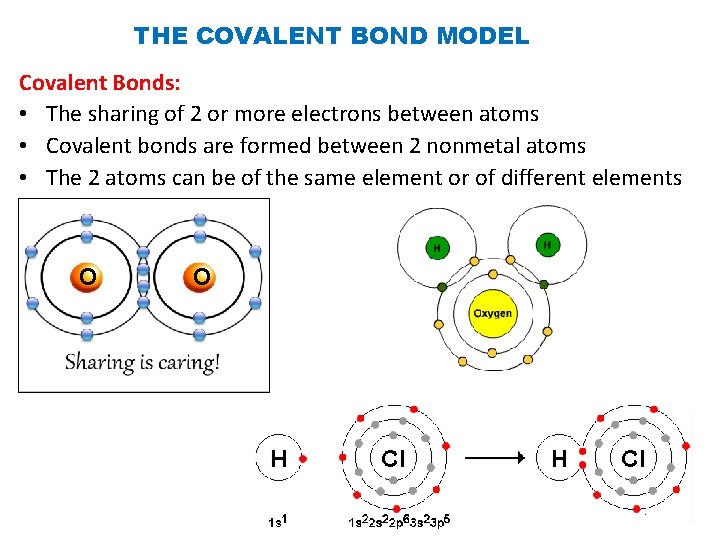
THE COVALENT BOND MODEL Covalent Bonds: • The sharing of 2 or more electrons between atoms • Covalent bonds are formed between 2 nonmetal atoms • The 2 atoms can be of the same element or of different elements O O
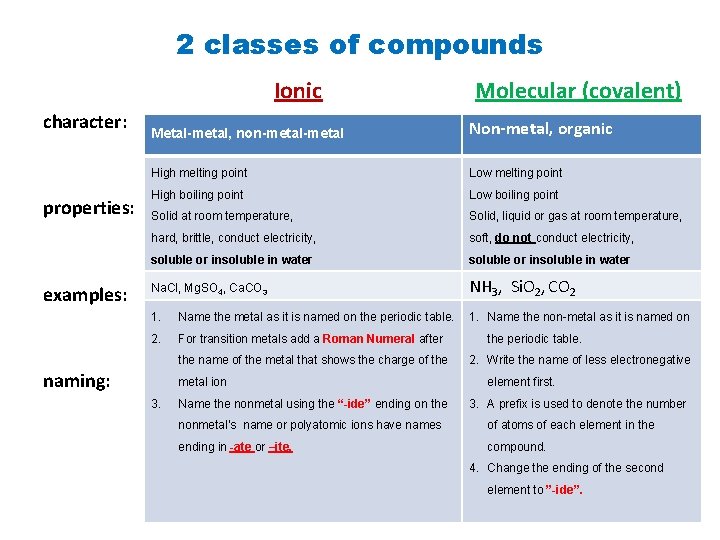
2 classes of compounds Ionic character: properties: examples: Molecular (covalent) Metal-metal, non-metal Non-metal, organic High melting point Low melting point High boiling point Low boiling point Solid at room temperature, Solid, liquid or gas at room temperature, hard, brittle, conduct electricity, soft, do not conduct electricity, soluble or insoluble in water Na. Cl, Mg. SO 4, Ca. CO 3 NH 3, Si. O 2, CO 2 1. Name the metal as it is named on the periodic table. 1. Name the non-metal as it is named on 2. For transition metals add a Roman Numeral after the name of the metal that shows the charge of the naming: metal ion 3. Name the nonmetal using the “-ide” ending on the periodic table. 2. Write the name of less electronegative element first. 3. A prefix is used to denote the number nonmetal’s name or polyatomic ions have names of atoms of each element in the ending in -ate or –ite. compound. 4. Change the ending of the second element to ”-ide”.
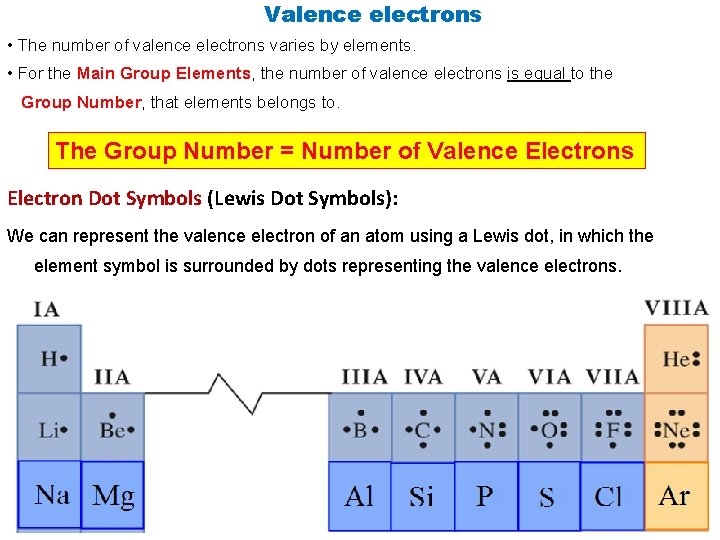
Valence electrons • The number of valence electrons varies by elements. • For the Main Group Elements, the number of valence electrons is equal to the Group Number, that elements belongs to. The Group Number = Number of Valence Electrons Electron Dot Symbols (Lewis Dot Symbols): We can represent the valence electron of an atom using a Lewis dot, in which the element symbol is surrounded by dots representing the valence electrons.
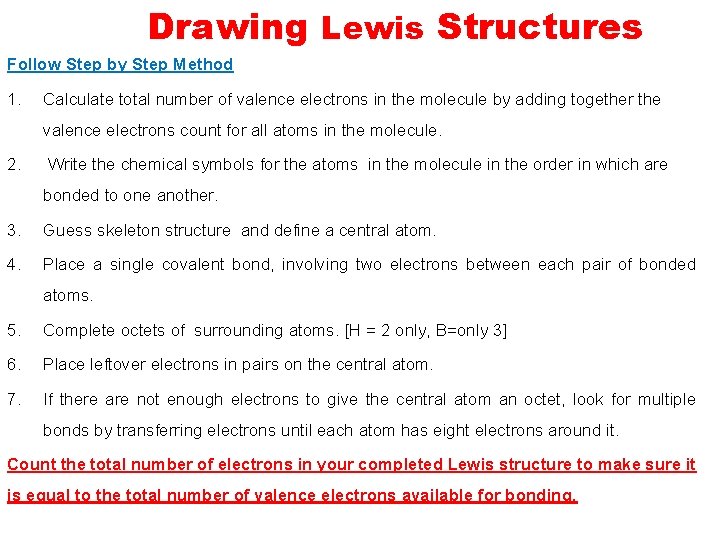
Drawing Lewis Structures Follow Step by Step Method 1. Calculate total number of valence electrons in the molecule by adding together the valence electrons count for all atoms in the molecule. 2. Write the chemical symbols for the atoms in the molecule in the order in which are bonded to one another. 3. Guess skeleton structure and define a central atom. 4. Place a single covalent bond, involving two electrons between each pair of bonded atoms. 5. Complete octets of surrounding atoms. [H = 2 only, B=only 3] 6. Place leftover electrons in pairs on the central atom. 7. If there are not enough electrons to give the central atom an octet, look for multiple bonds by transferring electrons until each atom has eight electrons around it. Count the total number of electrons in your completed Lewis structure to make sure it is equal to the total number of valence electrons available for bonding.
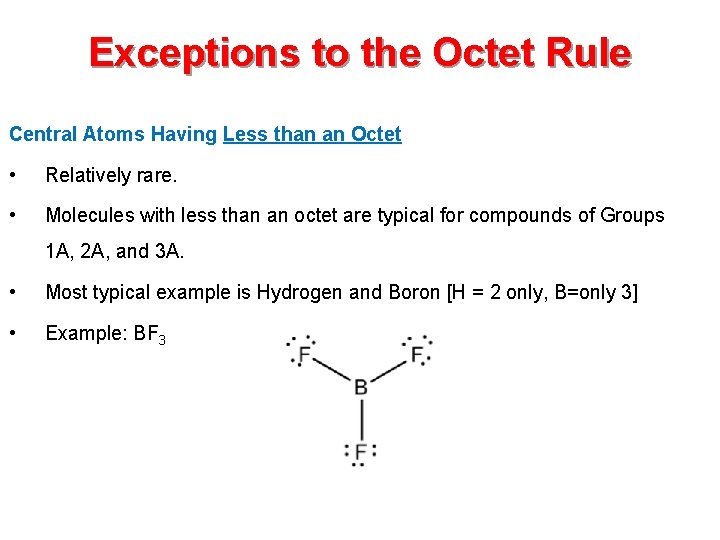
Exceptions to the Octet Rule Central Atoms Having Less than an Octet • Relatively rare. • Molecules with less than an octet are typical for compounds of Groups 1 A, 2 A, and 3 A. • Most typical example is Hydrogen and Boron [H = 2 only, B=only 3] • Example: BF 3
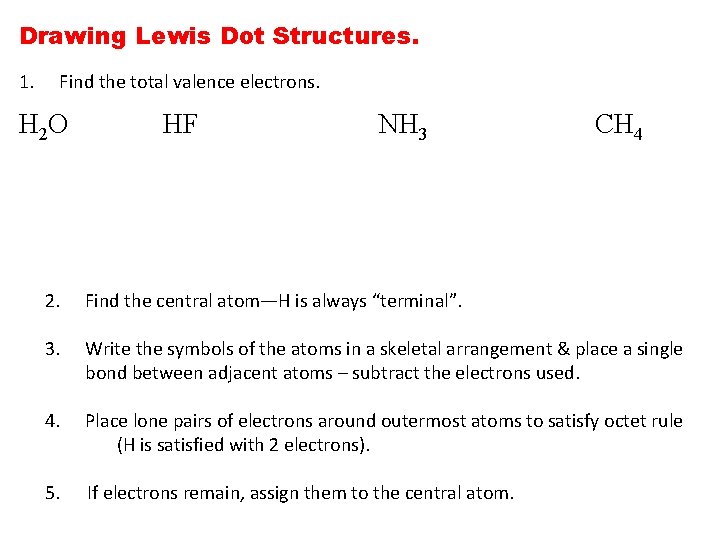
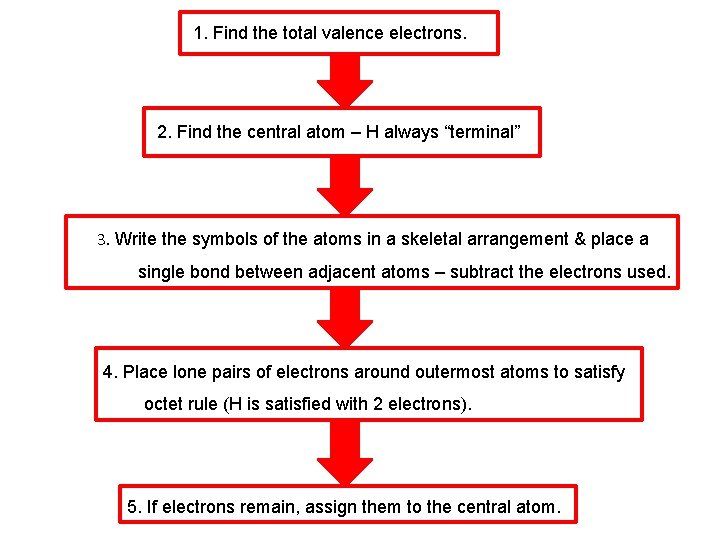
Drawing Lewis Dot Structures. 1. Find the total valence electrons. H 2 O HF NH 3 CH 4 2. Find the central atom—H is always “terminal”. 3. Write the symbols of the atoms in a skeletal arrangement & place a single bond between adjacent atoms – subtract the electrons used. 4. Place lone pairs of electrons around outermost atoms to satisfy octet rule (H is satisfied with 2 electrons). 5. If electrons remain, assign them to the central atom.
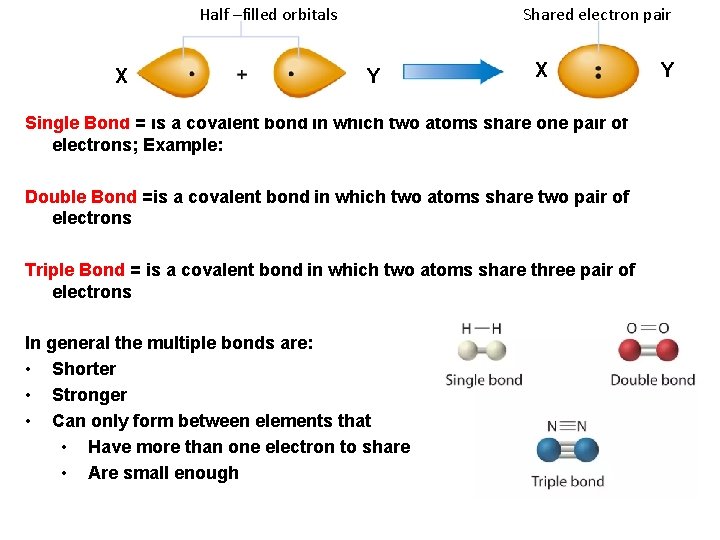
Half –filled orbitals X Shared electron pair Y X Single Bond = is a covalent bond in which two atoms share one pair of electrons; Example: Double Bond =is a covalent bond in which two atoms share two pair of electrons Triple Bond = is a covalent bond in which two atoms share three pair of electrons In general the multiple bonds are: • Shorter • Stronger • Can only form between elements that • Have more than one electron to share • Are small enough Y
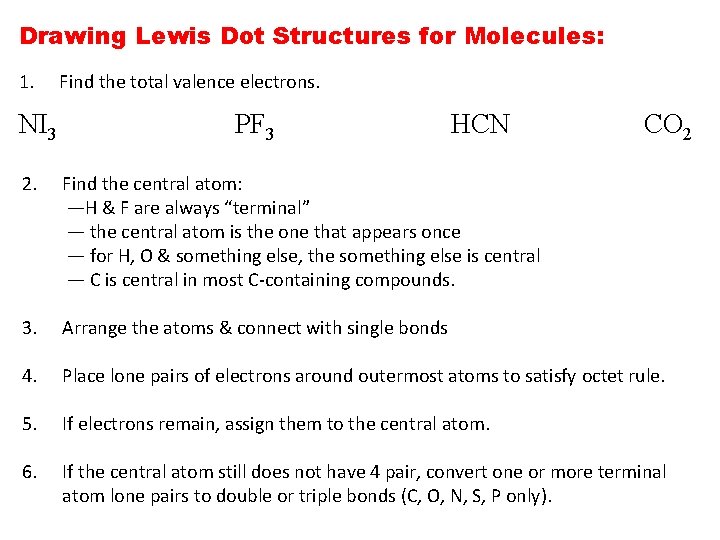
Drawing Lewis Dot Structures for Molecules: 1. NI 3 Find the total valence electrons. PF 3 HCN CO 2 2. Find the central atom: —H & F are always “terminal” — the central atom is the one that appears once — for H, O & something else, the something else is central — C is central in most C-containing compounds. 3. Arrange the atoms & connect with single bonds 4. Place lone pairs of electrons around outermost atoms to satisfy octet rule. 5. If electrons remain, assign them to the central atom. 6. If the central atom still does not have 4 pair, convert one or more terminal atom lone pairs to double or triple bonds (C, O, N, S, P only).
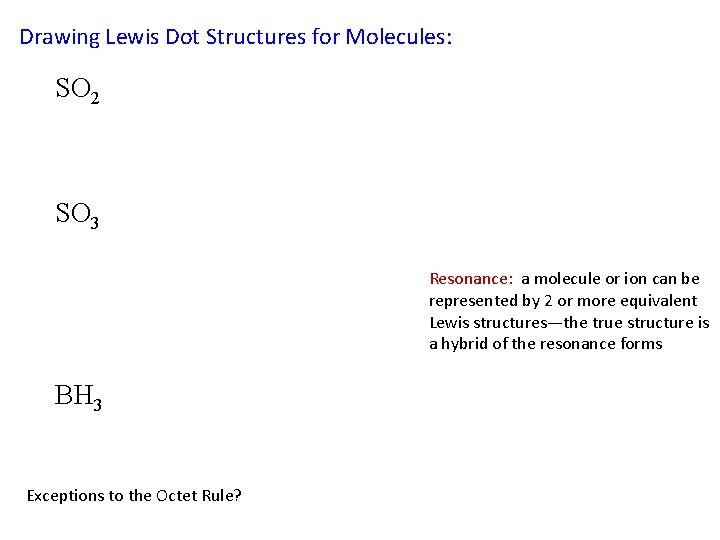
Drawing Lewis Dot Structures for Molecules: SO 2 SO 3 Resonance: a molecule or ion can be represented by 2 or more equivalent Lewis structures—the true structure is a hybrid of the resonance forms BH 3 Exceptions to the Octet Rule?
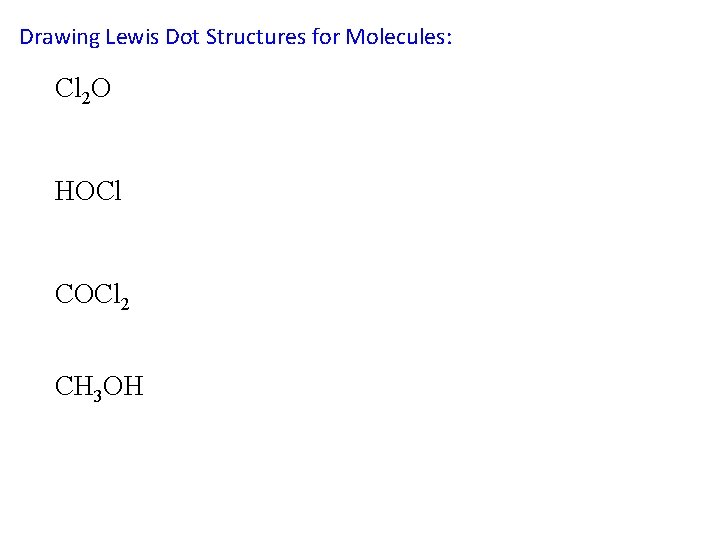
Drawing Lewis Dot Structures for Molecules: Cl 2 O HOCl COCl 2 CH 3 OH
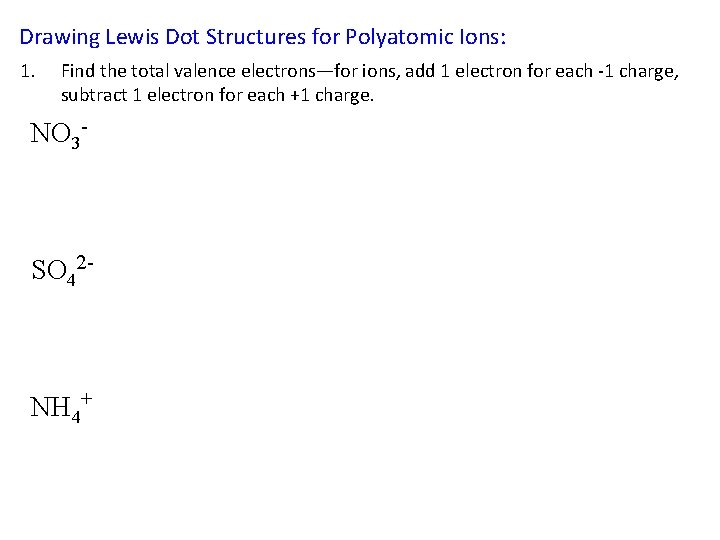
Drawing Lewis Dot Structures for Polyatomic Ions: 1. Find the total valence electrons—for ions, add 1 electron for each -1 charge, subtract 1 electron for each +1 charge. NO 3 - SO 42 - NH 4+
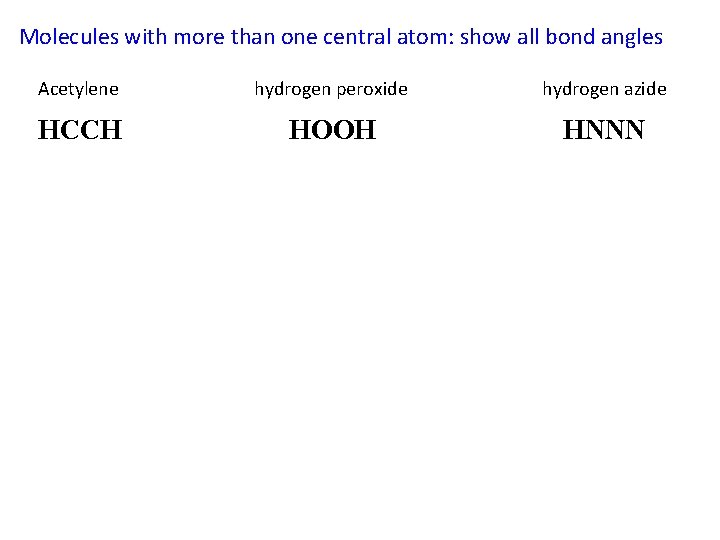
Molecules with more than one central atom: show all bond angles Acetylene hydrogen peroxide hydrogen azide HCCH HOOH HNNN
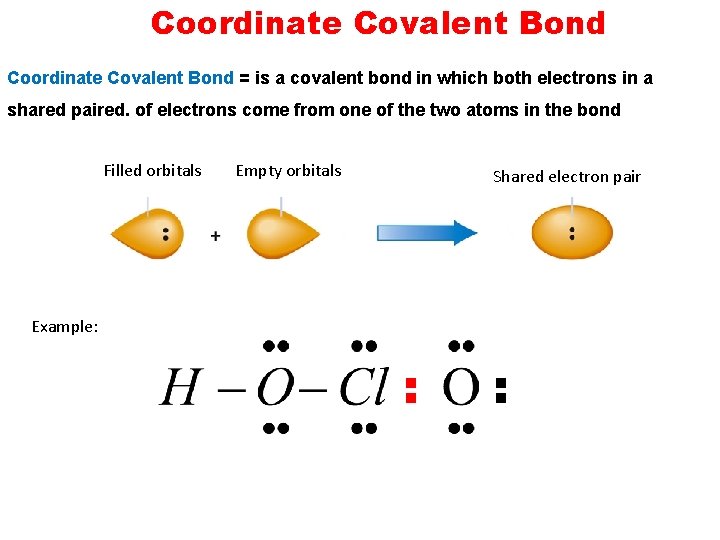
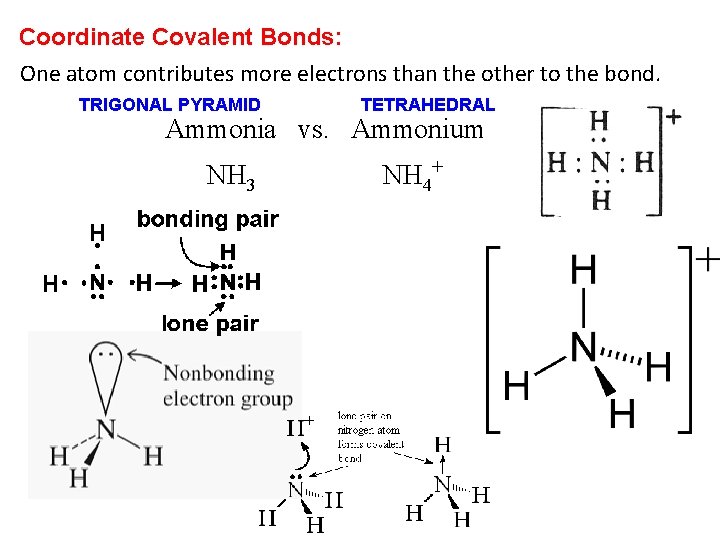
Coordinate Covalent Bond = is a covalent bond in which both electrons in a shared paired. of electrons come from one of the two atoms in the bond Filled orbitals Empty orbitals Shared electron pair Example: : :
Drawing Lewis Dot Structures for Molecules: Cl 2 O HOCl COCl 2 CH 3 OH
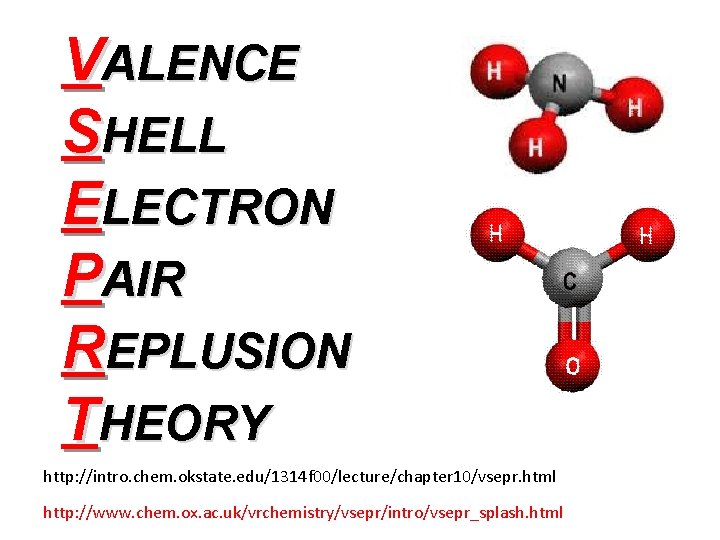
VALENCE SHELL ELECTRON PAIR REPLUSION THEORY http: //intro. chem. okstate. edu/1314 f 00/lecture/chapter 10/vsepr. html http: //www. chem. ox. ac. uk/vrchemistry/vsepr/intro/vsepr_splash. html
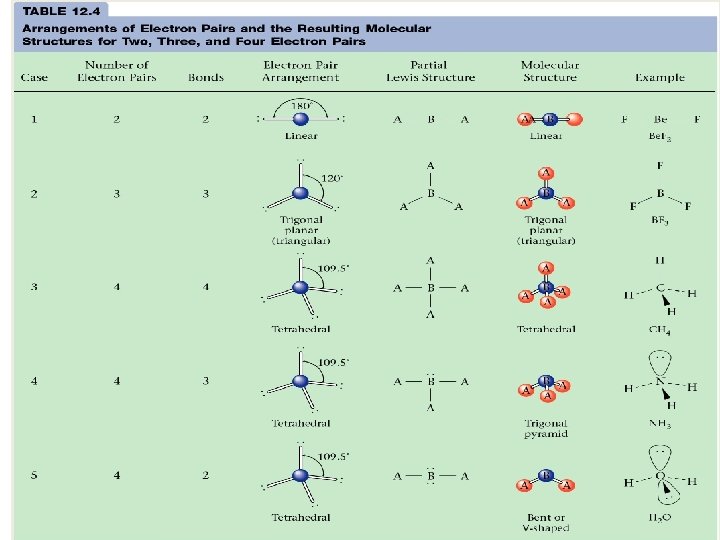
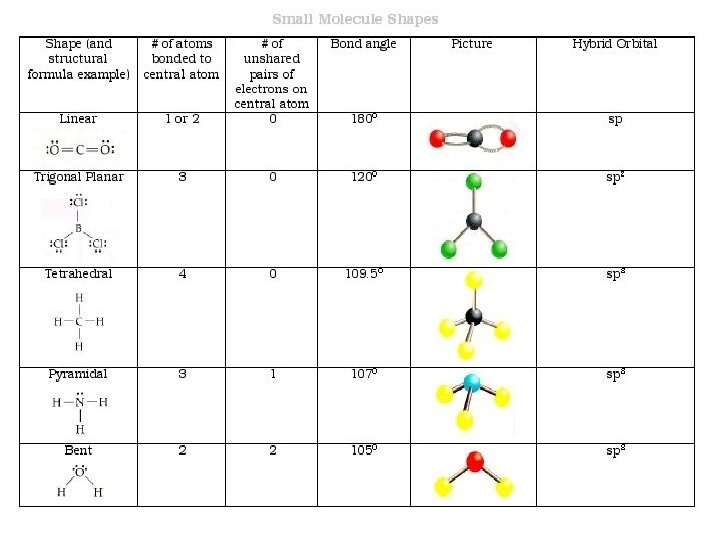
Valence Shell Electron Pair Repulsion • Valence shell electron pair repulsion (VSEPR) theory is a model in chemistry used to predict the shape of molecules based on the repulsive forces between valence electrons. • Valence electrons occurs in pairs. • The shape of a molecules is determined by the number of shared and unshared electron pairs. • The number of electron pairs around the central atom can be determined by writing the Lewis structure for the molecule. • The geometry of the molecule depends on the number of bonding groups (pairs of electrons) and the number of nonbonding electrons on the central atom. • Unshared pairs (lone pairs) have more repulsive force than shared pairs (bonding pairs).
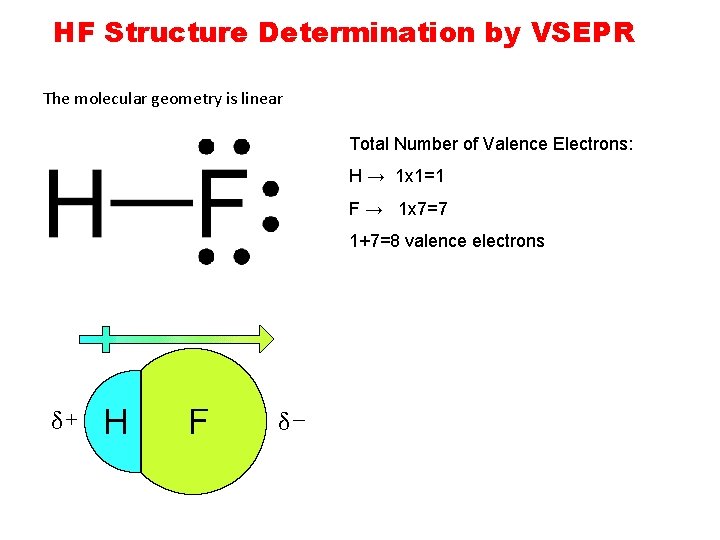
HF Structure Determination by VSEPR The molecular geometry is linear Total Number of Valence Electrons: H → 1 x 1=1 F → 1 x 7=7 1+7=8 valence electrons
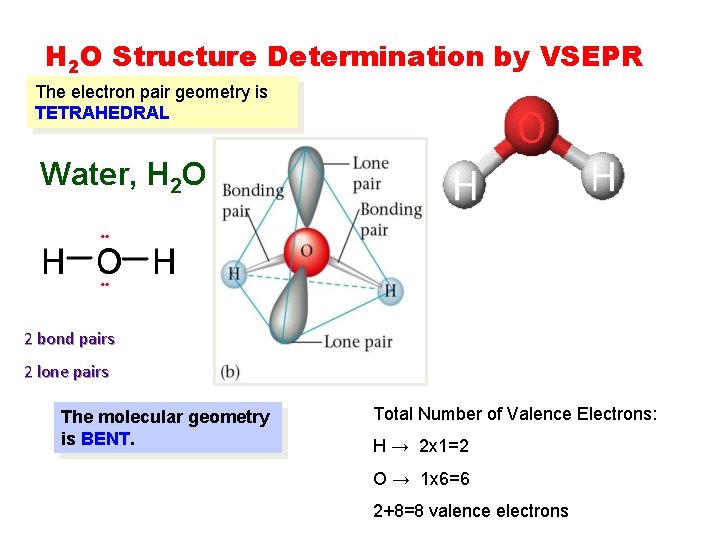
H 2 O Structure Determination by VSEPR The electron pair geometry is TETRAHEDRAL Water, H 2 O 2 bond pairs 2 lone pairs The molecular geometry is BENT. Total Number of Valence Electrons: H → 2 x 1=2 O → 1 x 6=6 2+8=8 valence electrons
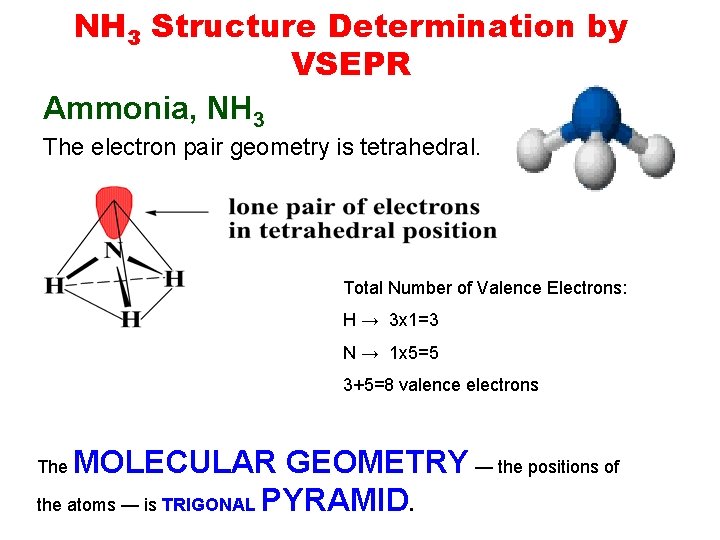
NH 3 Structure Determination by VSEPR Ammonia, NH 3 The electron pair geometry is tetrahedral. Total Number of Valence Electrons: H → 3 x 1=3 N → 1 x 5=5 3+5=8 valence electrons MOLECULAR GEOMETRY — the positions of the atoms — is TRIGONAL PYRAMID. The
Coordinate Covalent Bonds: One atom contributes more electrons than the other to the bond. TRIGONAL PYRAMID TETRAHEDRAL Ammonia vs. Ammonium NH 3 NH 4+
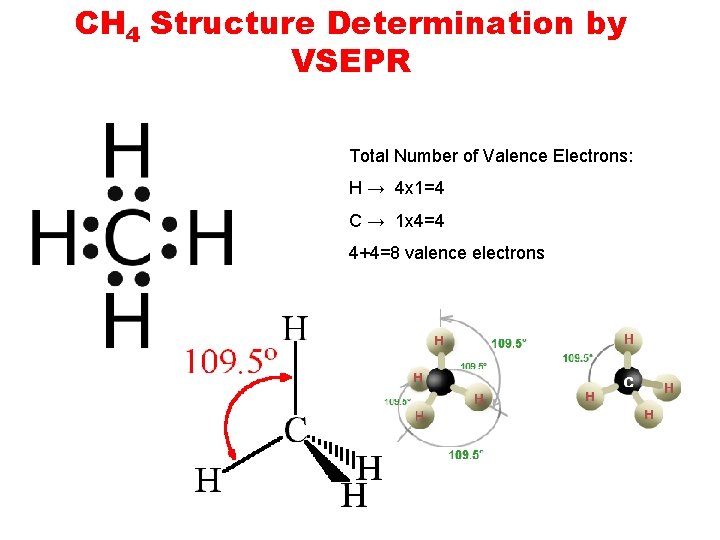
CH 4 Structure Determination by VSEPR Total Number of Valence Electrons: H → 4 x 1=4 C → 1 x 4=4 4+4=8 valence electrons
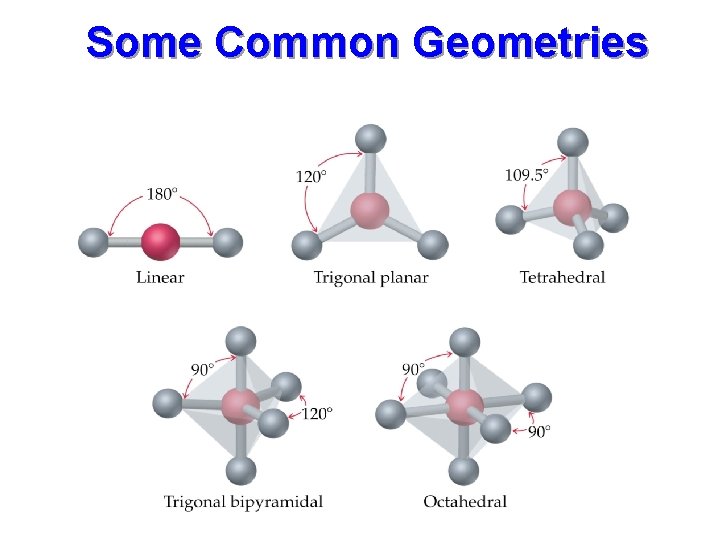
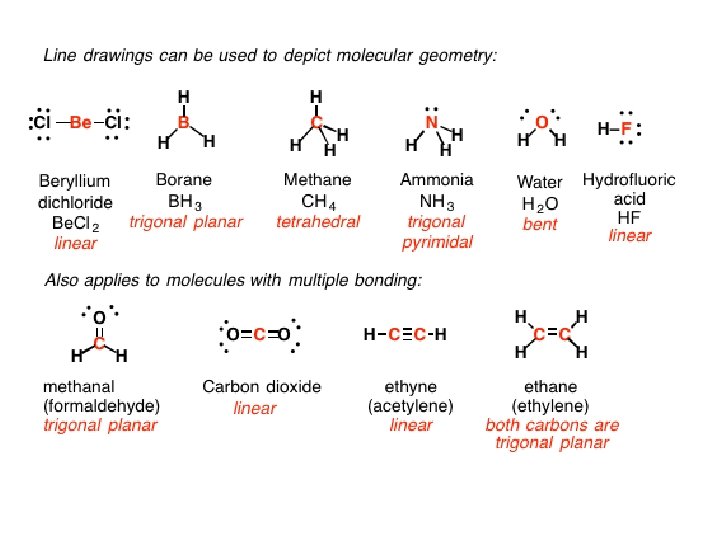
Some Common Geometries
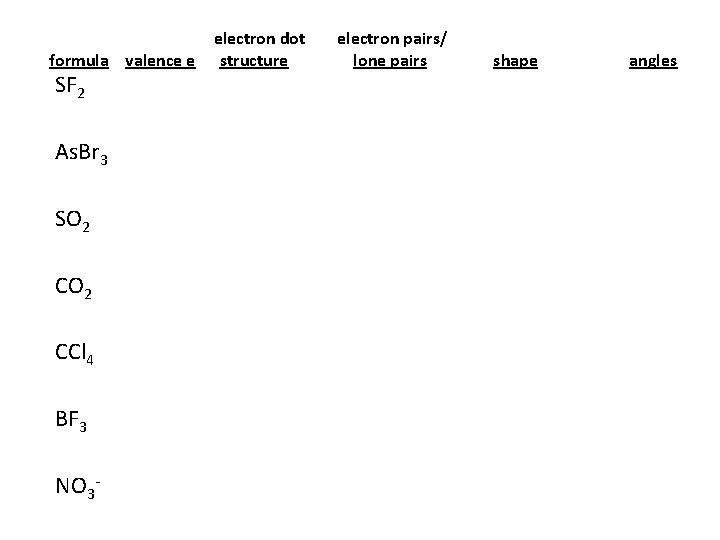
formula valence e SF 2 As. Br 3 SO 2 CCl 4 BF 3 NO 3 - electron dot structure electron pairs/ lone pairs shape angles
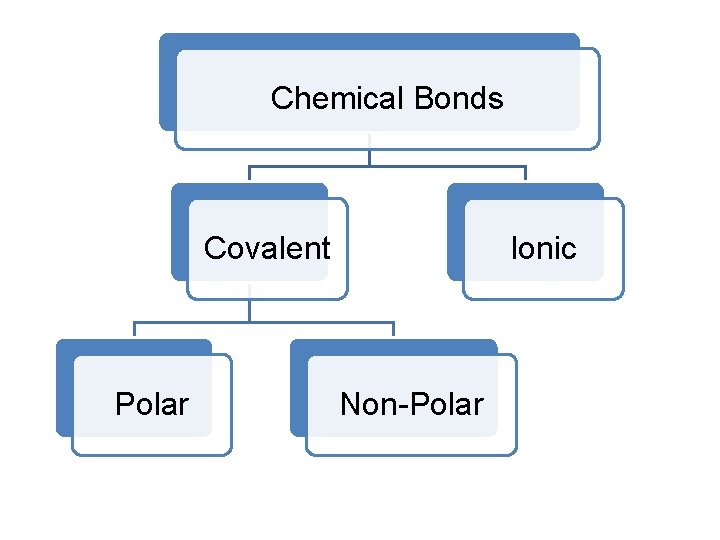
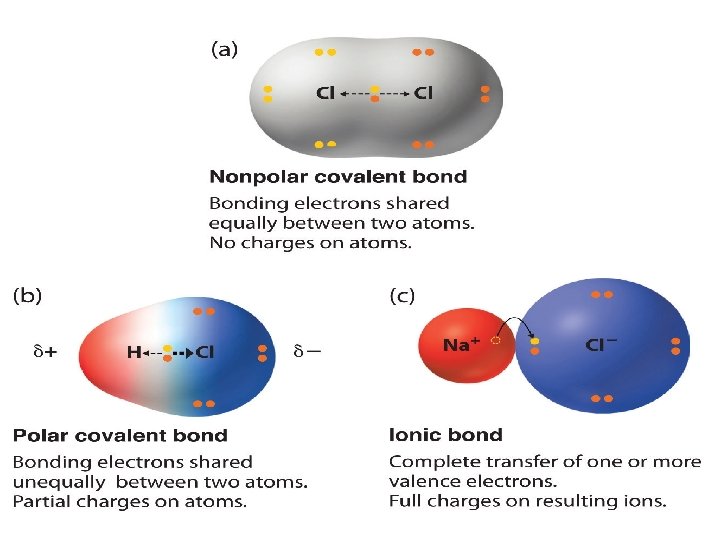
Chemical Bonds Covalent Polar Ionic Non-Polar
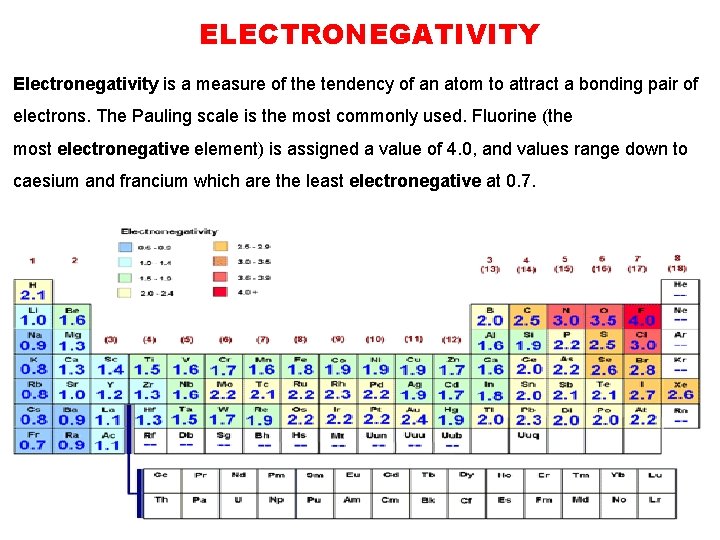
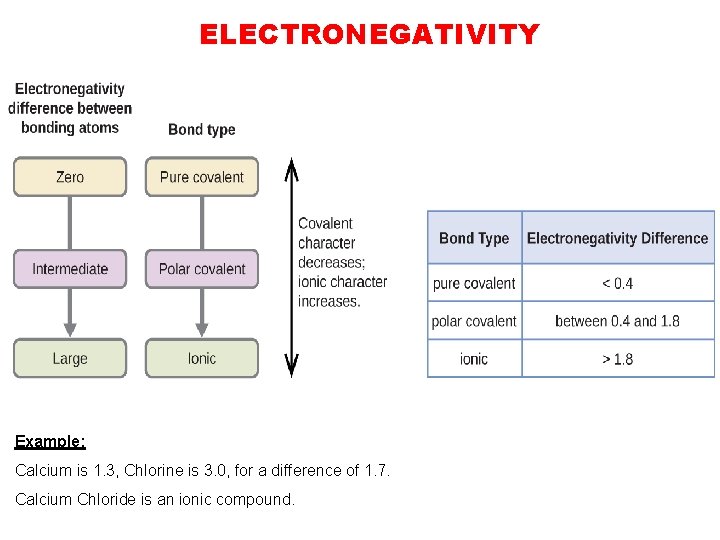
ELECTRONEGATIVITY Electronegativity is a measure of the tendency of an atom to attract a bonding pair of electrons. The Pauling scale is the most commonly used. Fluorine (the most electronegative element) is assigned a value of 4. 0, and values range down to caesium and francium which are the least electronegative at 0. 7.
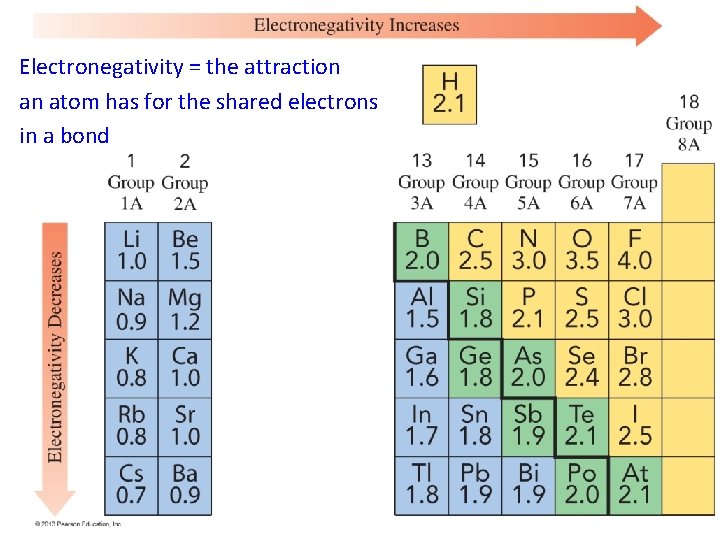
Electronegativity = the attraction an atom has for the shared electrons in a bond
ELECTRONEGATIVITY Example: Calcium is 1. 3, Chlorine is 3. 0, for a difference of 1. 7. Calcium Chloride is an ionic compound.
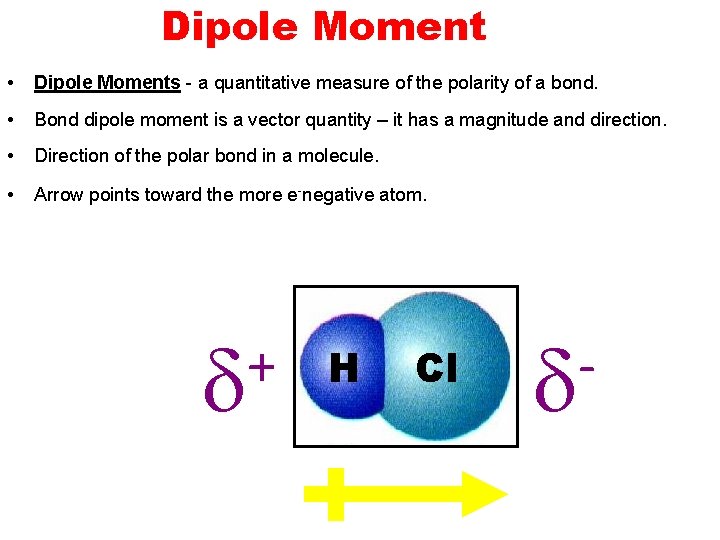
Dipole Moment • Dipole Moments - a quantitative measure of the polarity of a bond. • Bond dipole moment is a vector quantity – it has a magnitude and direction. • Direction of the polar bond in a molecule. • Arrow points toward the more e-negative atom. + H Cl
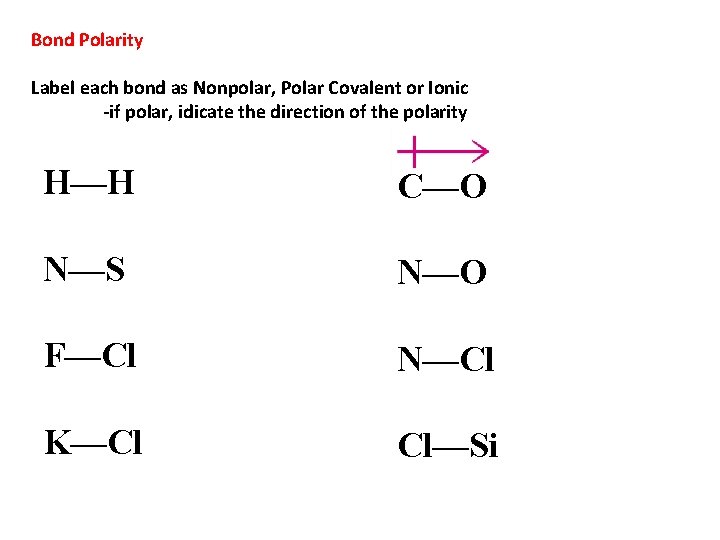
Bond Polarity Label each bond as Nonpolar, Polar Covalent or Ionic -if polar, idicate the direction of the polarity H—H C—O N—S N—O F—Cl N—Cl K—Cl Cl—Si
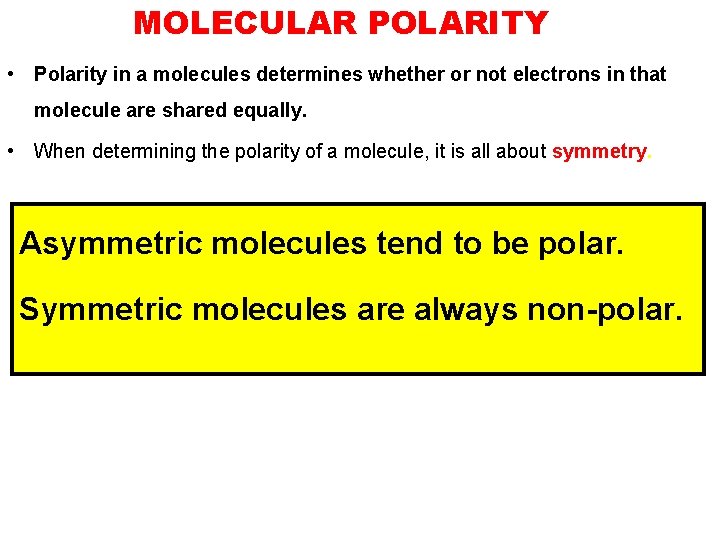
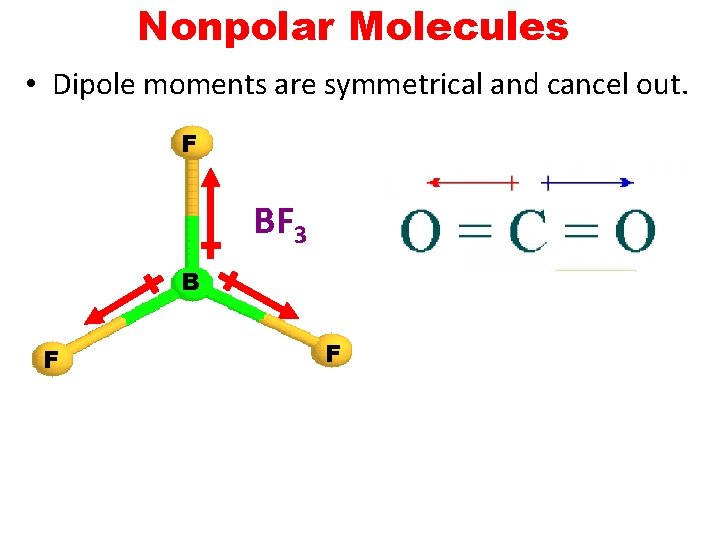
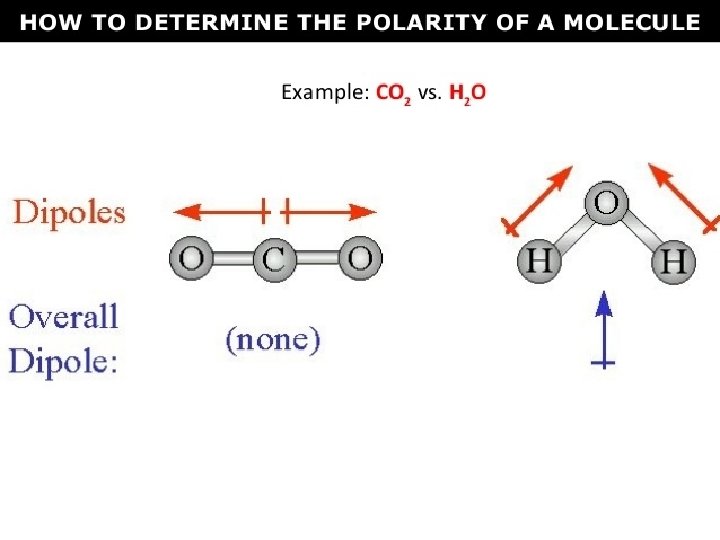
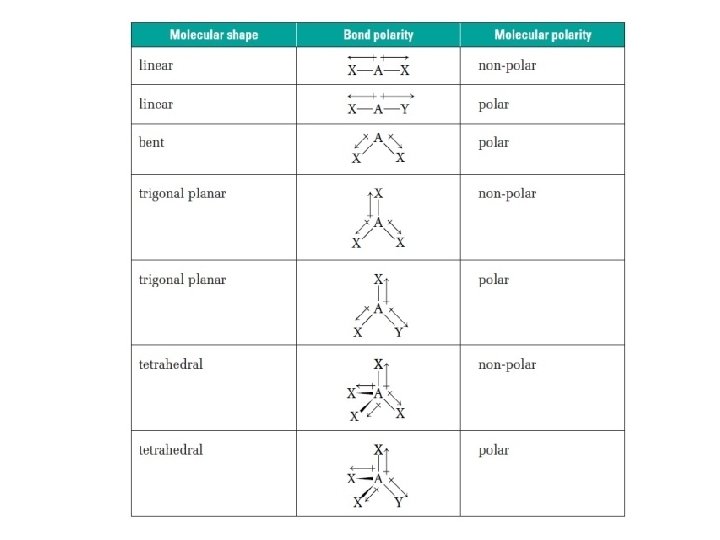
MOLECULAR POLARITY • Polarity in a molecules determines whether or not electrons in that molecule are shared equally. • When determining the polarity of a molecule, it is all about symmetry. Asymmetric molecules tend to be polar. Symmetric molecules are always non-polar.
1. Find the total valence electrons. 2. Find the central atom – H always “terminal” 3. Write the symbols of the atoms in a skeletal arrangement & place a single bond between adjacent atoms – subtract the electrons used. 4. Place lone pairs of electrons around outermost atoms to satisfy octet rule (H is satisfied with 2 electrons). 5. If electrons remain, assign them to the central atom.
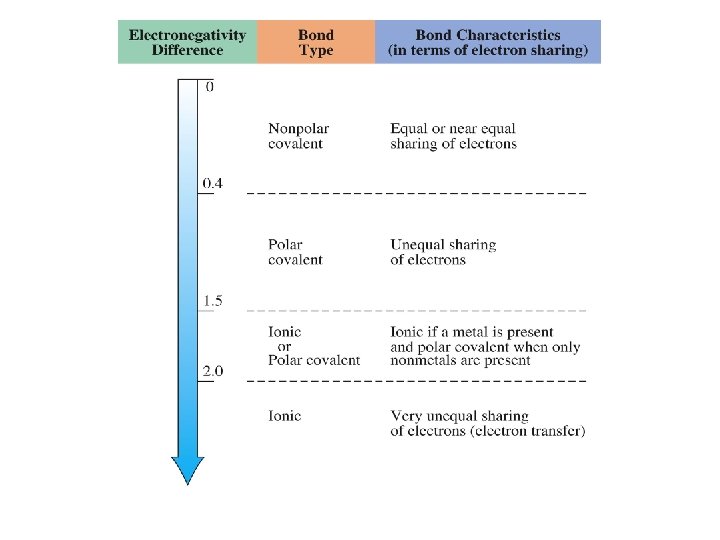
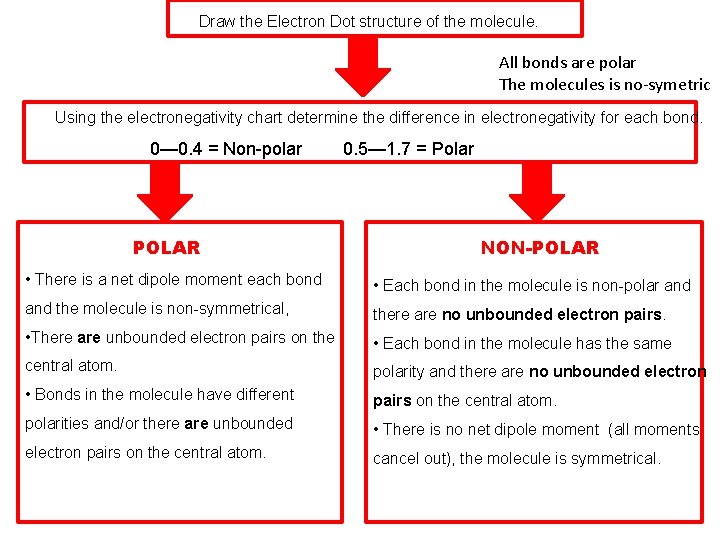
Draw the Electron Dot structure of the molecule. All bonds are polar The molecules is no-symetric Using the electronegativity chart determine the difference in electronegativity for each bond. 0— 0. 4 = Non-polar POLAR 0. 5— 1. 7 = Polar NON-POLAR • There is a net dipole moment each bond • Each bond in the molecule is non-polar and the molecule is non-symmetrical, there are no unbounded electron pairs. • There are unbounded electron pairs on the • Each bond in the molecule has the same central atom. polarity and there are no unbounded electron • Bonds in the molecule have different pairs on the central atom. polarities and/or there are unbounded • There is no net dipole moment (all moments electron pairs on the central atom. cancel out), the molecule is symmetrical.
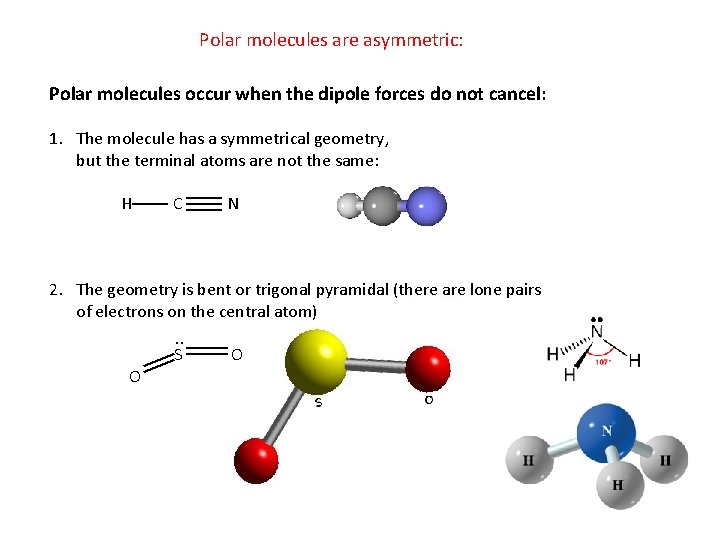
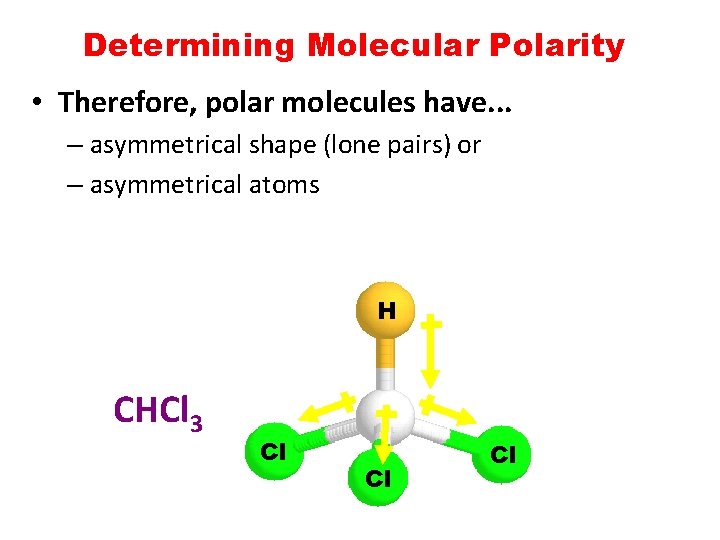
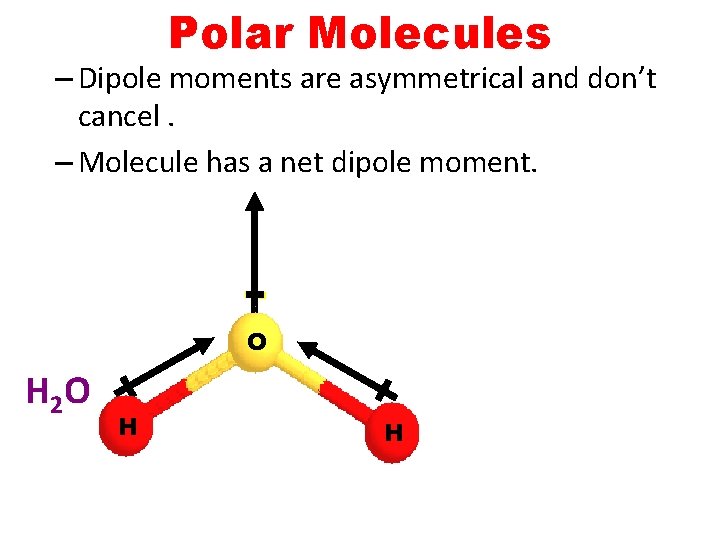
Polar molecules are asymmetric: Polar molecules occur when the dipole forces do not cancel: 1. The molecule has a symmetrical geometry, but the terminal atoms are not the same: H C N 2. The geometry is bent or trigonal pyramidal (there are lone pairs of electrons on the central atom). . S O O
Nonpolar Molecules • Dipole moments are symmetrical and cancel out. F BF 3 B F F
Determining Molecular Polarity • Therefore, polar molecules have. . . – asymmetrical shape (lone pairs) or – asymmetrical atoms H CHCl 3 Cl Cl Cl
Polar Molecules – Dipole moments are asymmetrical and don’t cancel. – Molecule has a net dipole moment O H 2 O H H