Whats New in the FDAs Pharmaceutical Inspectorate and


- Slides: 41
What’s New in the FDA’s Pharmaceutical Inspectorate and Risk Based Systems Inspection Rick Perlman Chair Food, Drug, and Cosmetic Division ASQ
“Everything that can be invented has been invented” Charles H Duell Commissioner, US Office of Patents urging President Mc. Kinley to abolish his office in 1899
What is the Pharmaceutical Inspectorate Ø FDA developed certification program Ø High level Pharmaceutical Investigators Ø Primarily used for complex processes or high risk drug products
History of the PI Ø Certification started in 1994 Ø Resulted from Industry asking for a more consistent inspection activity Ø Will continue as long as needed/funded
Purpose Ø Training and development to maintain qualified staff Ø Structured approach to obtain, maintain and apply competencies
Objective Ø Assurance that investigators have the skills and knowledge to perform their jobs
Certification Areas Ø Drugs Ø Blood Ø Seafood Ø Medical Devices
Types of Drug Certification Ø Level III
Certification - Level I Ø Mandatory Ø New hire Investigators Ø Training completed in first 12 months Ø Demonstrate competency via audit of results
Level I Training Ø Web Based Ø Classroom – Basic Food and Drug Law – Evidence Development – Investigative Interviewing – Quality Auditing
Level I Audit Criteria Ø Supervisor looks for – General Investigative practices – Evidence • Ability to recognize, identify, and collect evidence to support findings – Communication • Verbal • Written – Professionalism
Certification - Level II Ø Not mandatory Ø Requirements – Minimum of 25% in Drugs – Submit documentation to Level II Drug Certification Board – Pass performance audit – Recertify every 3 years (18 CEUs)
Prerequisites - Level II Ø Level I Certified Ø Training – Drug manufacturing and quality control – Pre-Approval Inspections – Industrial Sterilization (Drugs and Devices) – Computer Systems Validation – API manufacturing
Certification Board - Level II Ø National Expert Ø Experienced Field Investigator Ø Experts – CDER – CVM Ø Field Manager Ø DHRD Specialist
Level II Audit Criteria Ø Compliance Assessment Ø Evidence Ø Verbal Communication Ø Professionalism
Certification - Level III Ø The Pharmaceutical Inspectorate Ø Not Mandatory Ø Planning for ~ 50 members by FY 07
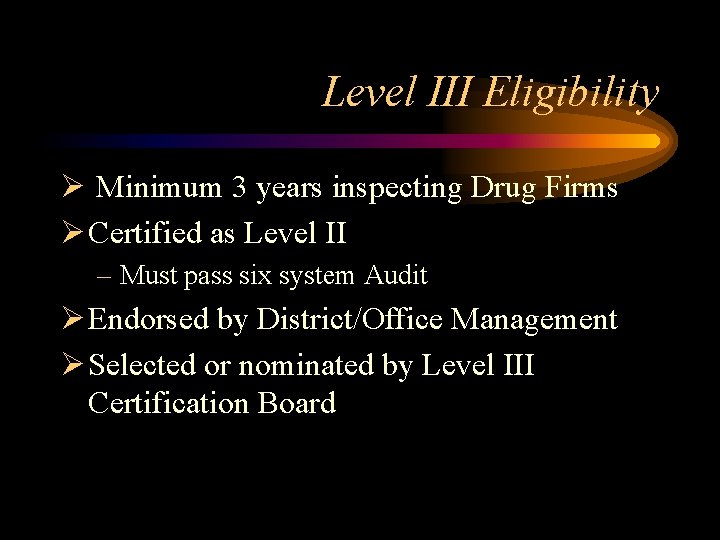
Level III Eligibility Ø Minimum 3 years inspecting Drug Firms Ø Certified as Level II – Must pass six system Audit Ø Endorsed by District/Office Management Ø Selected or nominated by Level III Certification Board
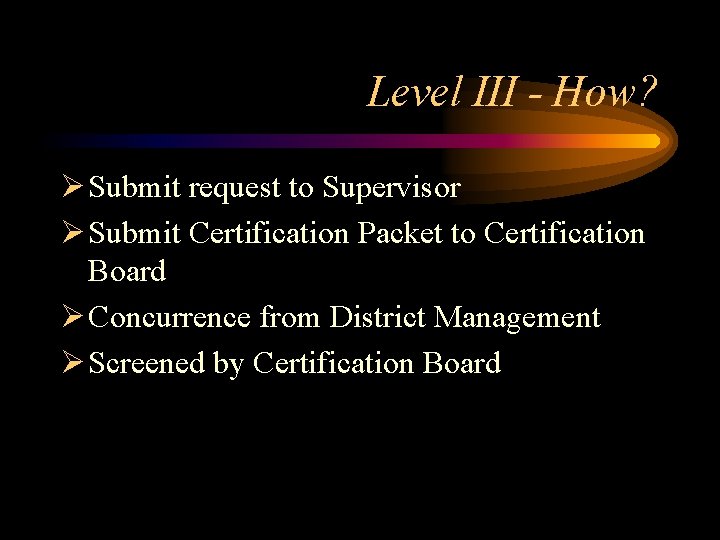
Level III - How? Ø Submit request to Supervisor Ø Submit Certification Packet to Certification Board Ø Concurrence from District Management Ø Screened by Certification Board
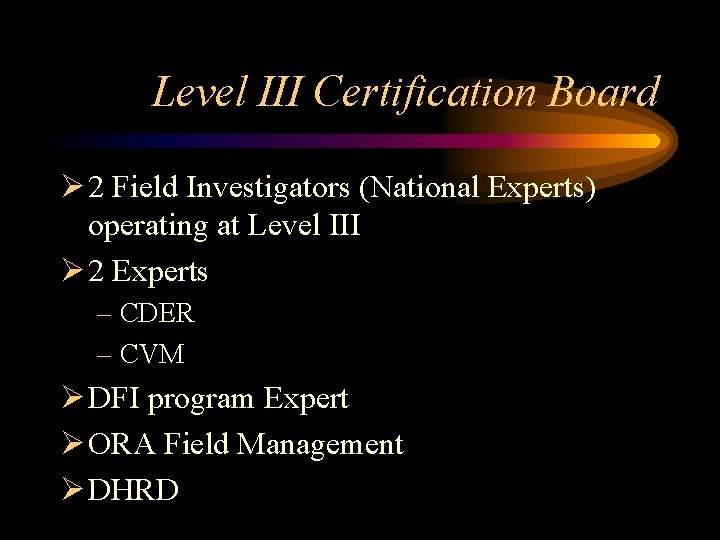
Level III Certification Board Ø 2 Field Investigators (National Experts) operating at Level III Ø 2 Experts – CDER – CVM Ø DFI program Expert Ø ORA Field Management Ø DHRD
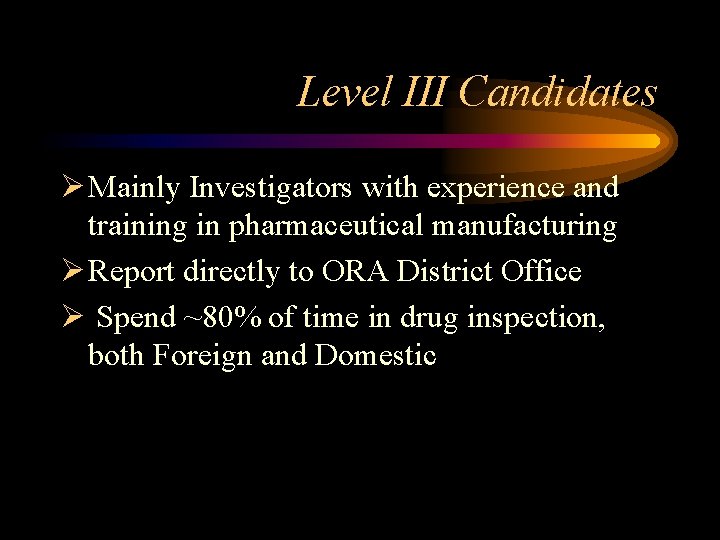
Level III Candidates Ø Mainly Investigators with experience and training in pharmaceutical manufacturing Ø Report directly to ORA District Office Ø Spend ~80% of time in drug inspection, both Foreign and Domestic
Level III - Expected Competencies Ø Regulating Pharmaceutical Quality in relation to the FDA’s mission Ø Risk Management Ø Advanced Quality Systems Ø Pharmaceutical Science
Level III - Expected Competencies Ø Current Regulatory Programs/Procedures Ø Technology Ø Investigations
Level III - Admission Ø Packet successfully reviewed Ø Pass: – Screening – Training Ø Participate in Center details Ø Pass final evaluation
Level III - When Ø First course completed in 2005 Ø Second course 2006
Level III - Courses Ø Quality Systems Ø Risk Assessment and Management Ø Critical Thinking Ø Quality by Design Ø PAT Ø Design of Experiments Ø ICH Guidances Ø Process Capability Ø Technology Transfer Ø CAPA
Level III Expectations Ø Continual learning to enhance their expertise Ø Develop and implement formal training for – FDA – Industry – State/Local Officials
Level III Expectations Ø Develop/Evaluate in their area of expertise – Programs – Policies – Procedures in their area of expertise Ø Auditors for Level III Drug Certification
Risk Management Ø ICH Q 9 – Quality Risk Management – Adopted November 9, 2005
Risk Ø Evaluated on – Product, Process, Facility – Controls – Robustness of Quality System
Risk Ø Regulatory Oversight based on – Applications – Post Approval Changes – GMP Inspections
Risk - Desired State Ø Barriers to continuous improvement are removed – manufacturing – product quality Ø Meaningful Specifications Ø Common understanding of risk Ø Industry and Regulators on same page – focused on highest risks – understanding of residual risks
Risk - ICH Q 9 Ø Provides a guidance document for understanding Ø Defines common terms Ø Facilitates – movement toward ‘desired state’ – communication – movement from ‘fire fighting’ to risk management
Why ICH Q 9 Ø To ensure a common understanding of Quality Risk Management by both industry and regulators
What ICH Q 9 Provides Ø A common language and process Ø Potential methodologies for Quality Risk Management Ø Where Quality Risk Management can add value
What ICH Q 9 Provides Ø Broad risk concepts and principles Ø Principles for implementation Ø Elements of the process Ø Not a single tool but the right tool for the job Ø Tools
What ICH Q 9 Is Not Ø A ‘cookbook’ for risk management Ø Specifics for your situation Ø Exhaustive treatment of theory Ø A list of all potential methods
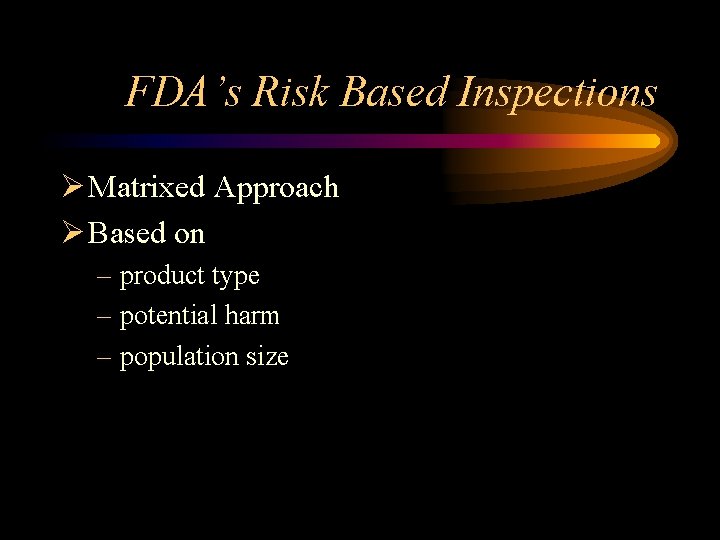
FDA’s Risk Based Inspections Ø Matrixed Approach Ø Based on – product type – potential harm – population size
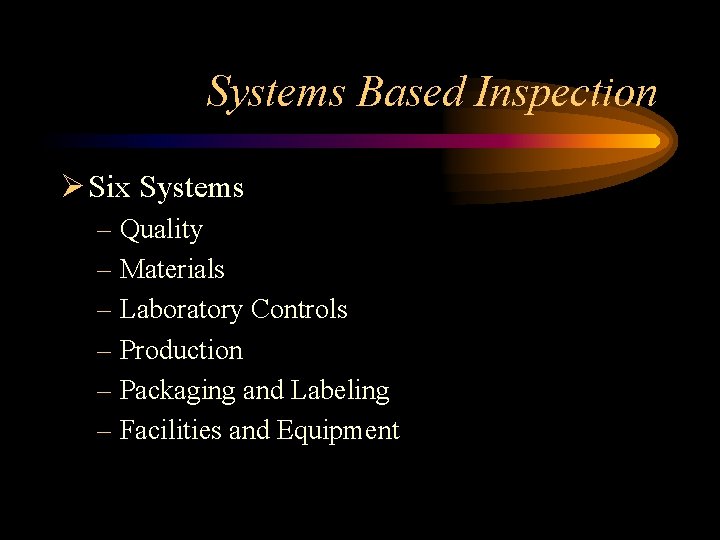
Systems Based Inspection Ø Six Systems – Quality – Materials – Laboratory Controls – Production – Packaging and Labeling – Facilities and Equipment
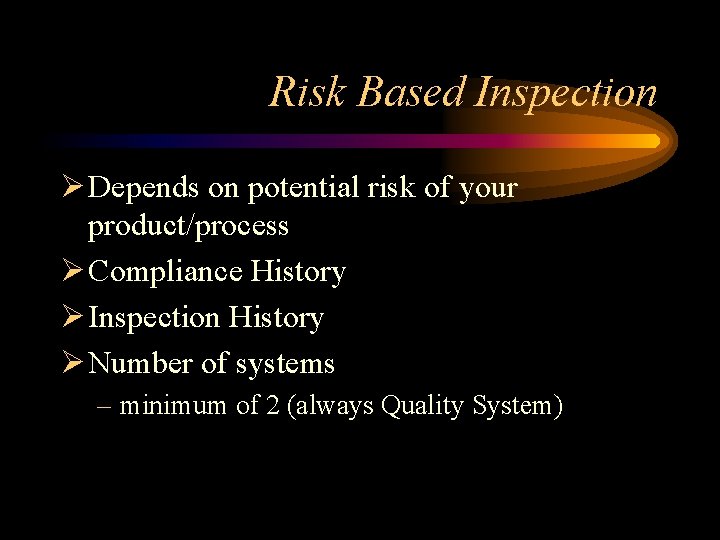
Risk Based Inspection Ø Depends on potential risk of your product/process Ø Compliance History Ø Inspection History Ø Number of systems – minimum of 2 (always Quality System)
Thank You!
Questions?