The hidden half of agriculture How many of


- Slides: 46
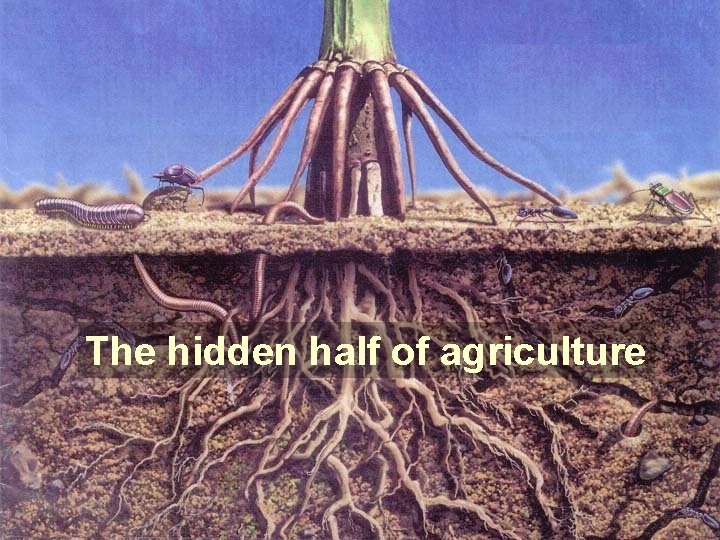
The hidden half of agriculture
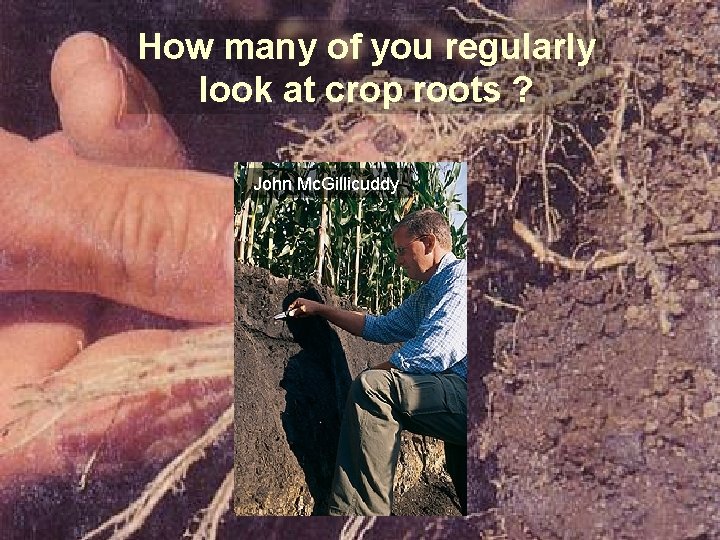
How many of you regularly look at crop roots ? John Mc. Gillicuddy
Bill Darrington (Persia, IA)
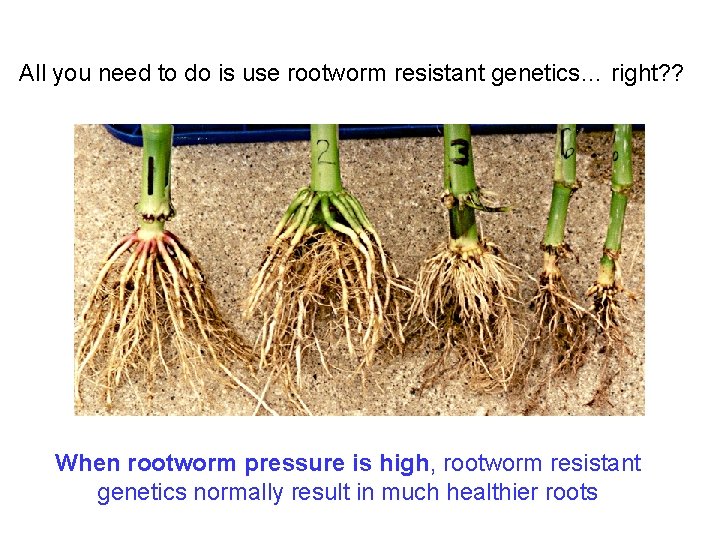
All you need to do is use rootworm resistant genetics… right? ? When rootworm pressure is high, rootworm resistant genetics normally result in much healthier roots
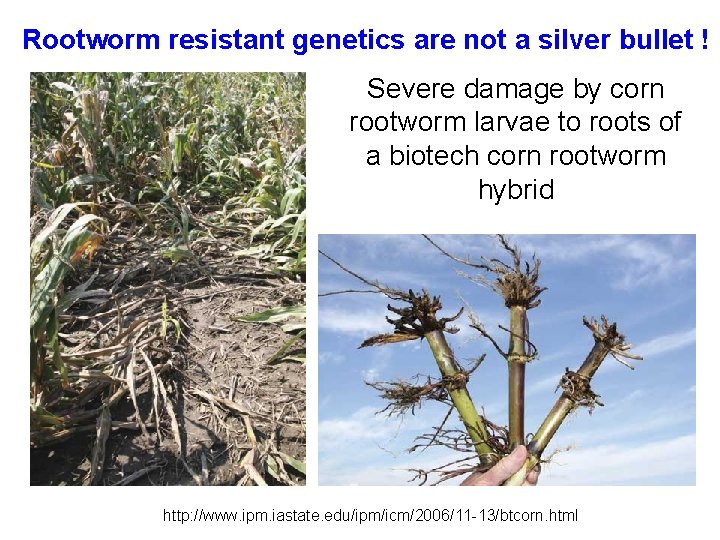
Rootworm resistant genetics are not a silver bullet ! Severe damage by corn rootworm larvae to roots of a biotech corn rootworm hybrid http: //www. ipm. iastate. edu/ipm/icm/2006/11 -13/btcorn. html
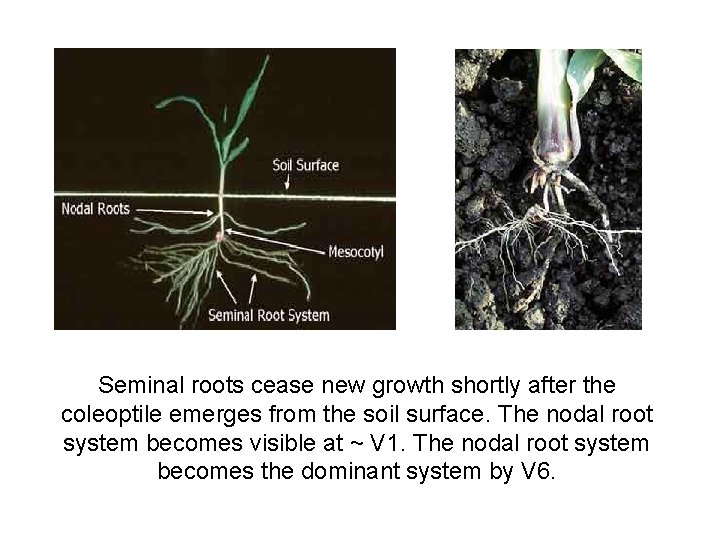
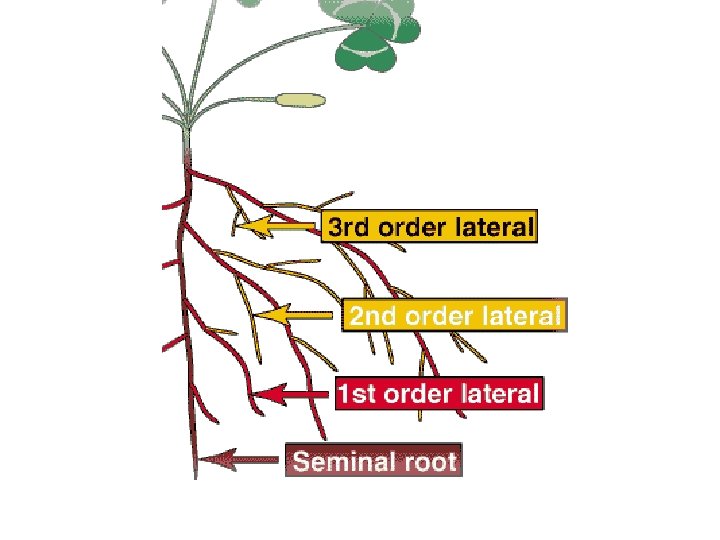
Seminal roots cease new growth shortly after the coleoptile emerges from the soil surface. The nodal root system becomes visible at ~ V 1. The nodal root system becomes the dominant system by V 6.
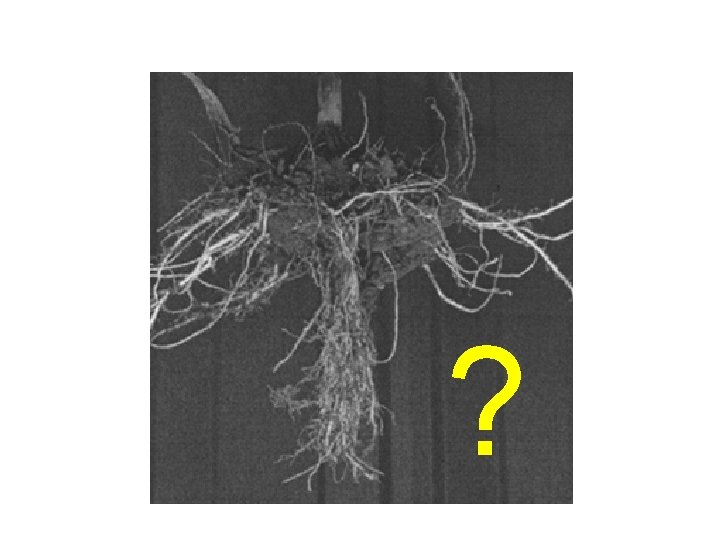
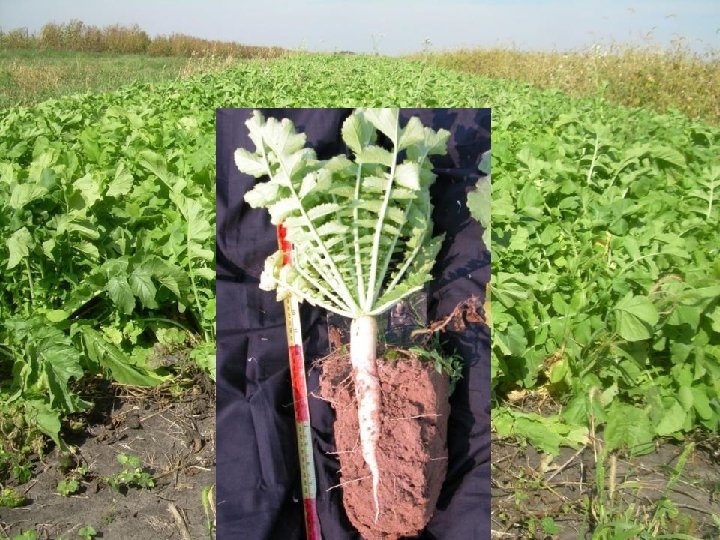
16 4 weeks 8 7 feet deep !!
1926
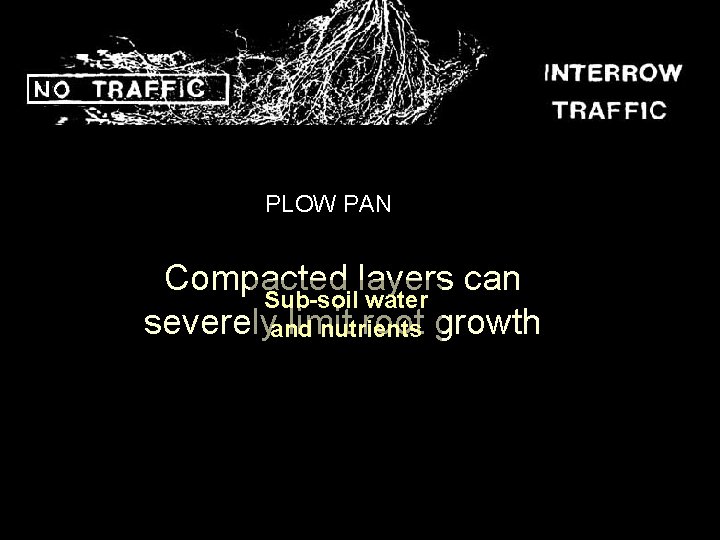
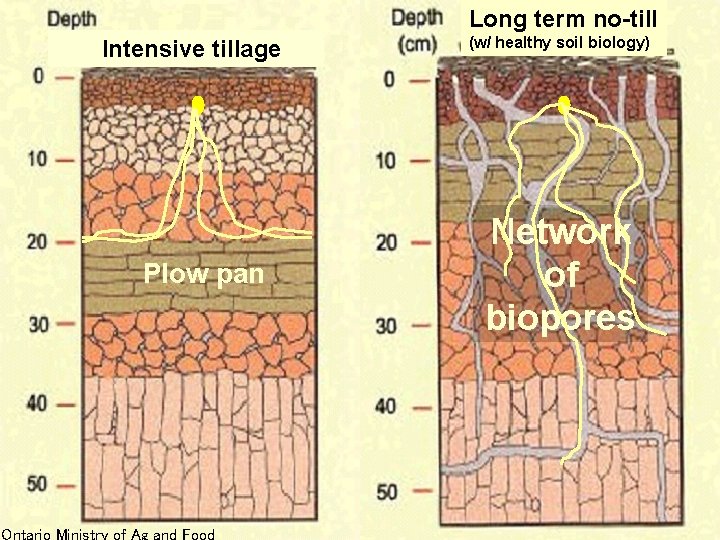
PLOW PAN Compacted layers can Sub-soil water severelyand limit root growth nutrients Brady and Weil (2002)
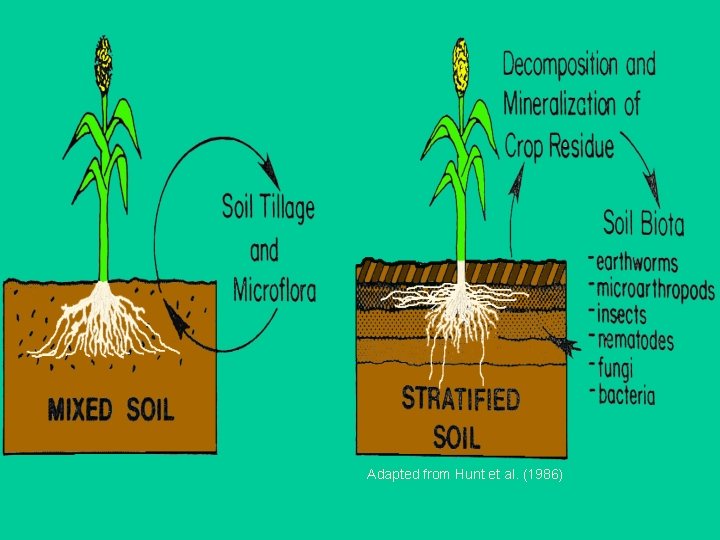
Adapted from Hunt et al. (1986)
Long term no-till Intensive tillage Plow pan Ontario Ministry of Ag and Food (w/ healthy soil biology) Network of biopores
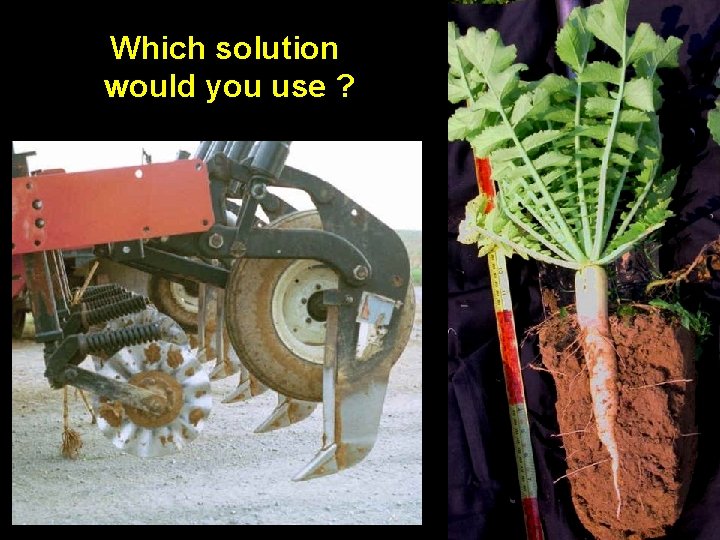
Which solution would you use ?
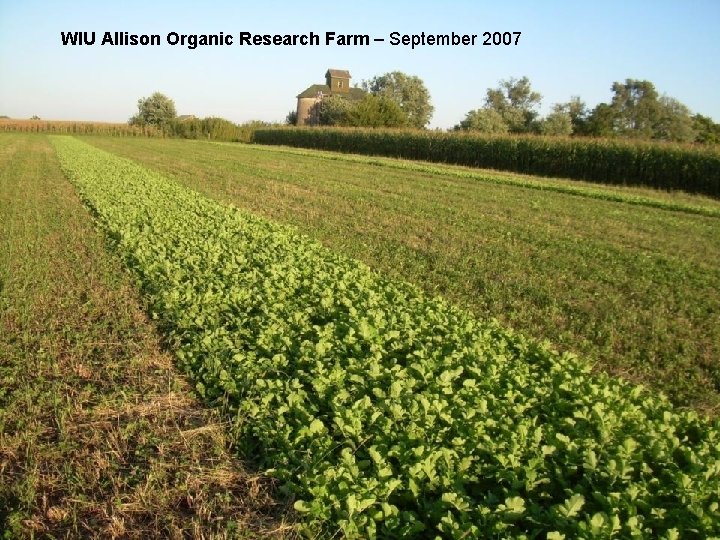
WIU Allison Organic Research Farm – September 2007
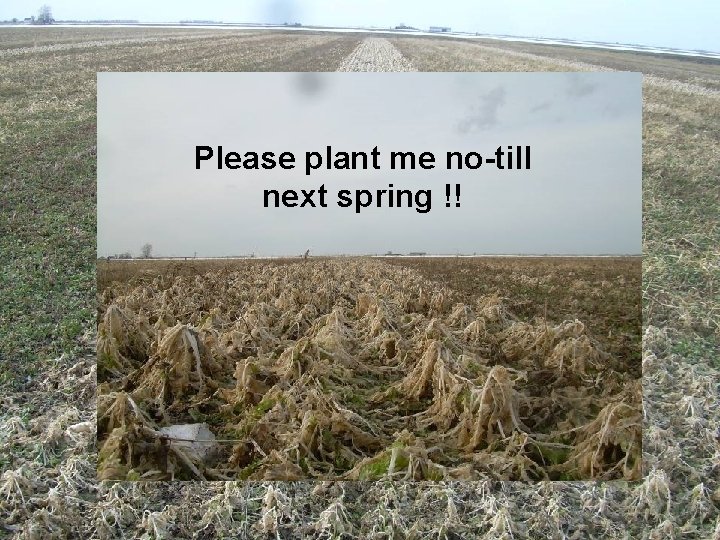
Please plant me no-till next spring !! January
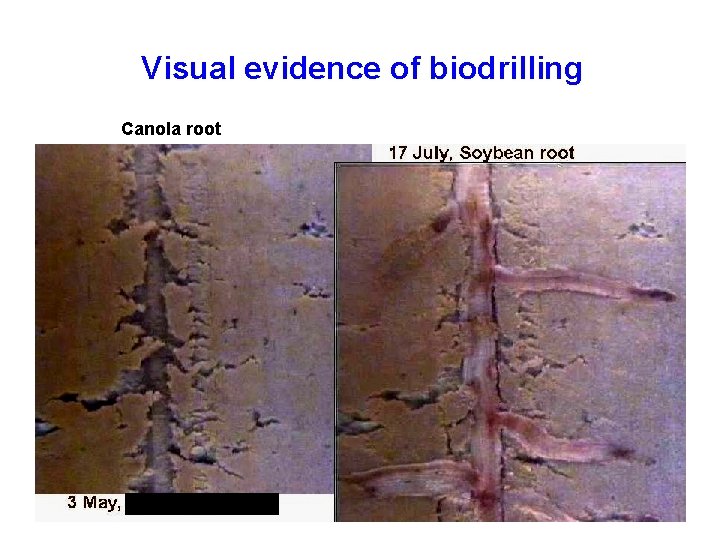
Visual evidence of biodrilling Canola root Rapeseed root
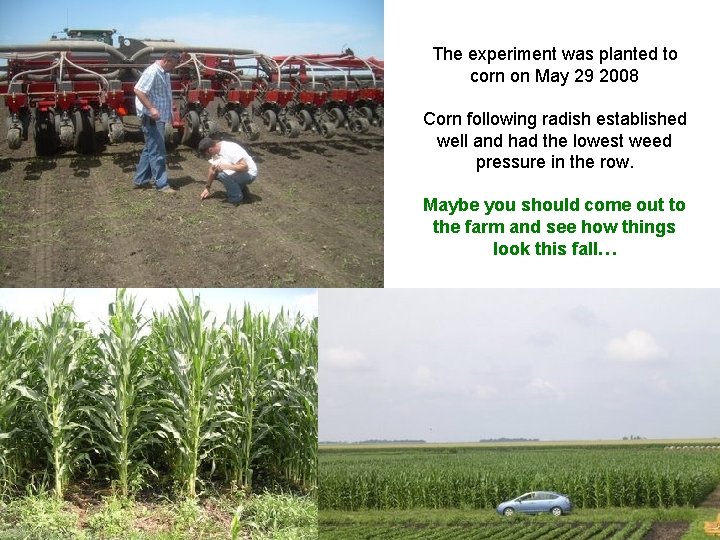
The experiment was planted to corn on May 29 2008 Corn following radish established well and had the lowest weed pressure in the row. Maybe you should come out to the farm and see how things look this fall…
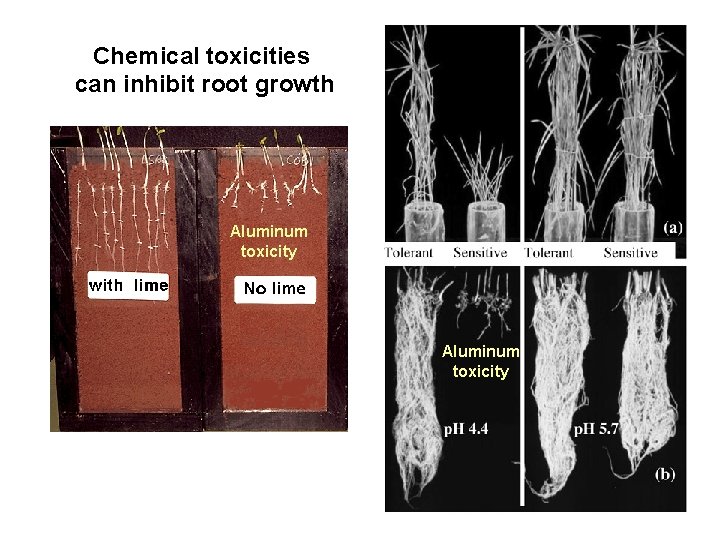
Chemical toxicities can inhibit root growth Aluminum toxicity
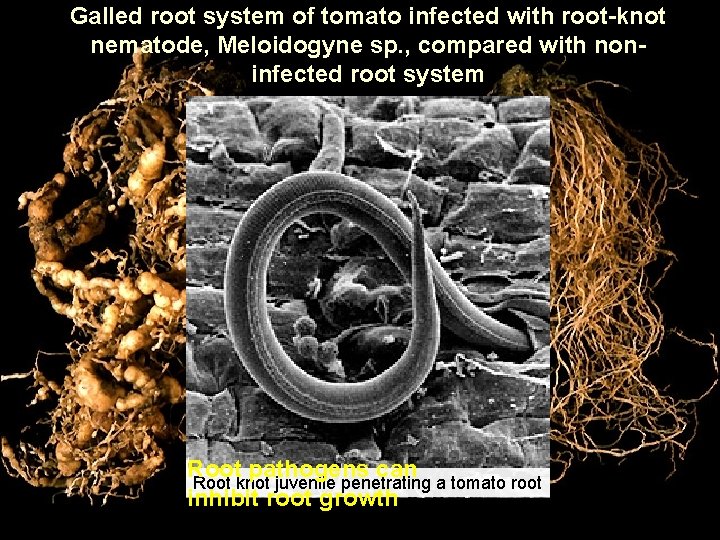
Galled root system of tomato infected with root-knot nematode, Meloidogyne sp. , compared with noninfected root system Root pathogens can Root knot juvenile penetrating a tomato root inhibit root growth http: //www. agnr. umd. edu/users/nrsl/entm/nematology/images/eis 143. jpg
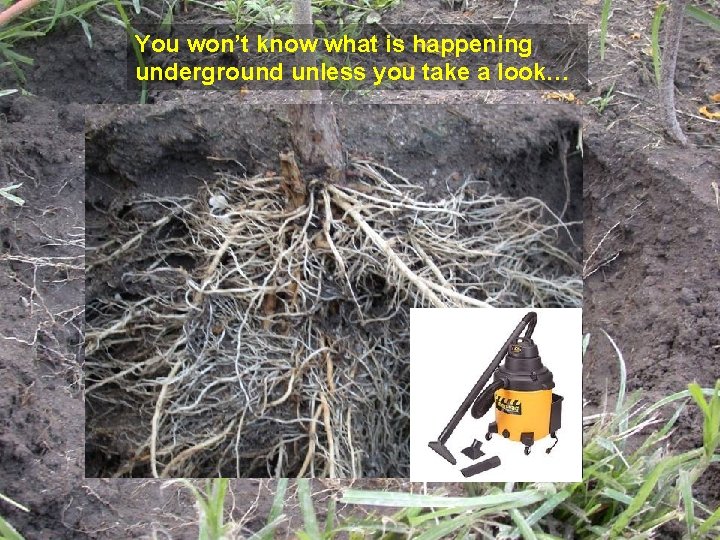
You won’t know what is happening underground unless you take a look…
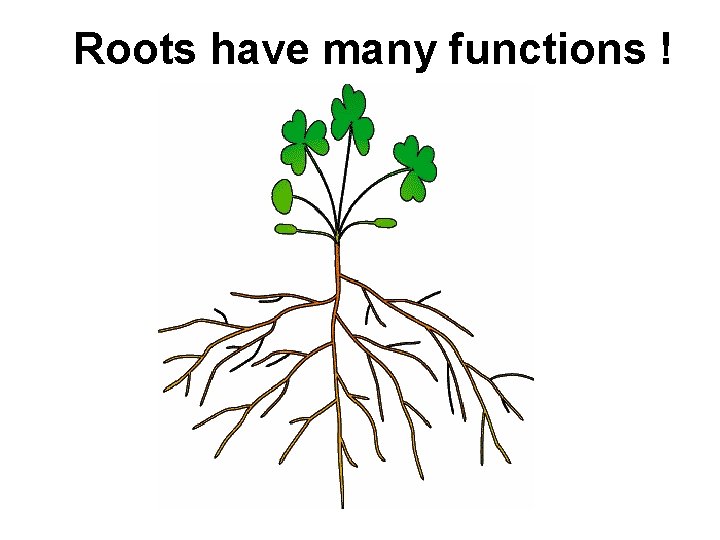
Roots have many functions !
§Absorptive network for limiting soil resources of water and nutrients §Mechanical structures that support plants, strengthen soil, construct channels, break rocks, etc. §Hydraulic conduits that redistribute soil water and nutrients §Habitats for mycorrhizal fungi, rhizosphere and rhizoplane organisms
§Carbon pumps that feed soil organisms and contribute to soil organic matter §Storage organs §Chemical factories that may change soil p. H, poison competitors, filter out toxins, concentrate rare elements, etc. §A sensor network that helps regulate plant growth
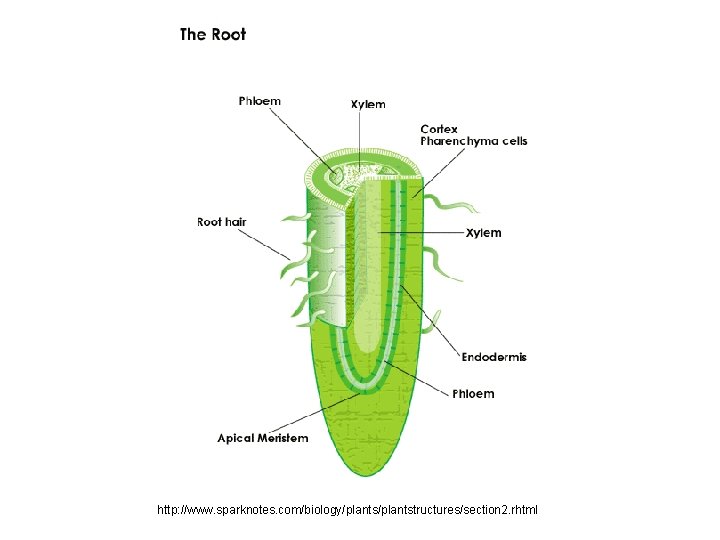
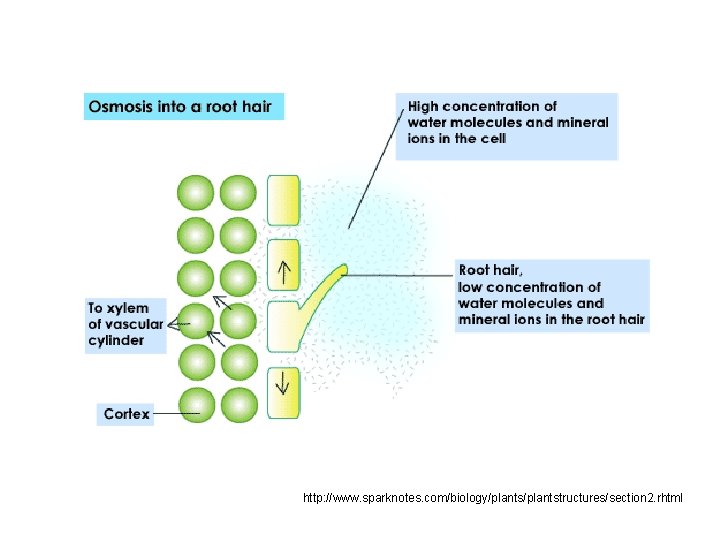
http: //www. sparknotes. com/biology/plantstructures/section 2. rhtml
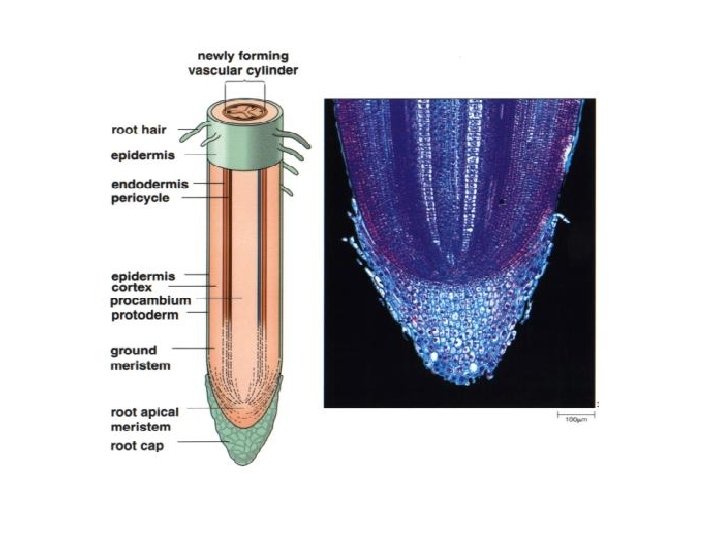
http: //www. sparknotes. com/biology/plantstructures/section 2. rhtml
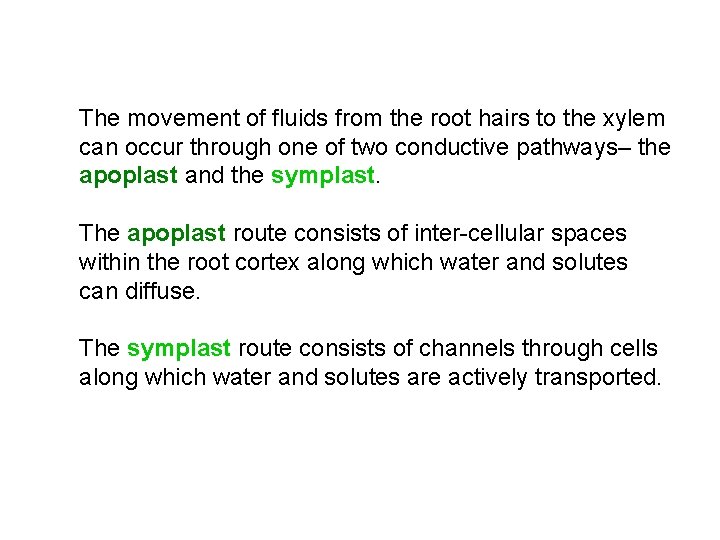
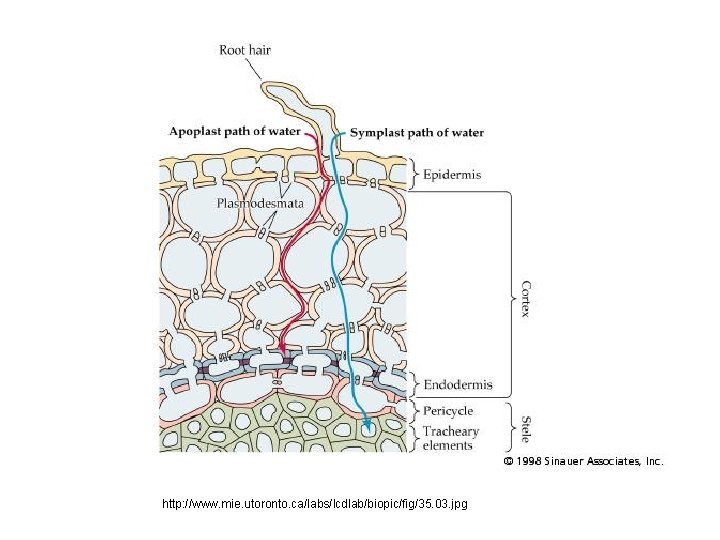
The movement of fluids from the root hairs to the xylem can occur through one of two conductive pathways– the apoplast and the symplast. The apoplast route consists of inter-cellular spaces within the root cortex along which water and solutes can diffuse. The symplast route consists of channels through cells along which water and solutes are actively transported.
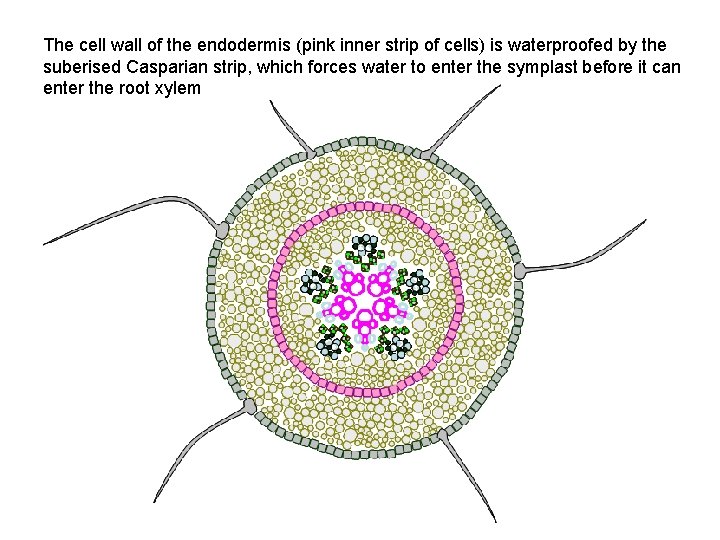
The cell wall of the endodermis (pink inner strip of cells) is waterproofed by the suberised Casparian strip, which forces water to enter the symplast before it can enter the root xylem
http: //www. mie. utoronto. ca/labs/lcdlab/biopic/fig/35. 03. jpg
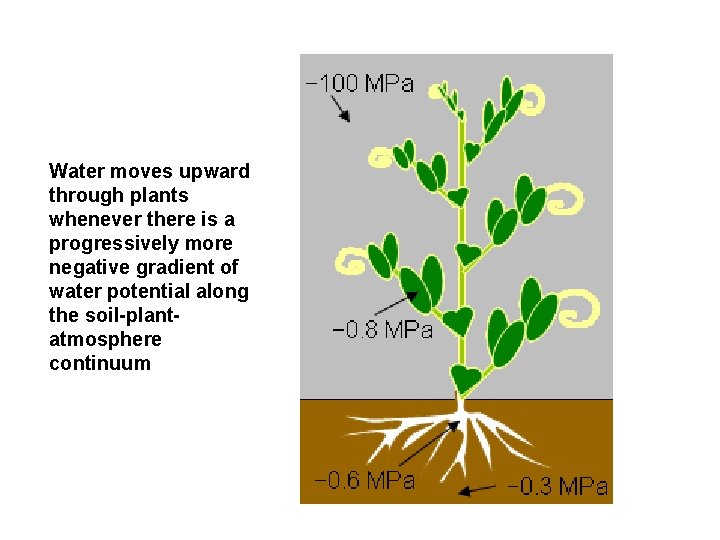
Water moves upward through plants whenever there is a progressively more negative gradient of water potential along the soil-plantatmosphere continuum
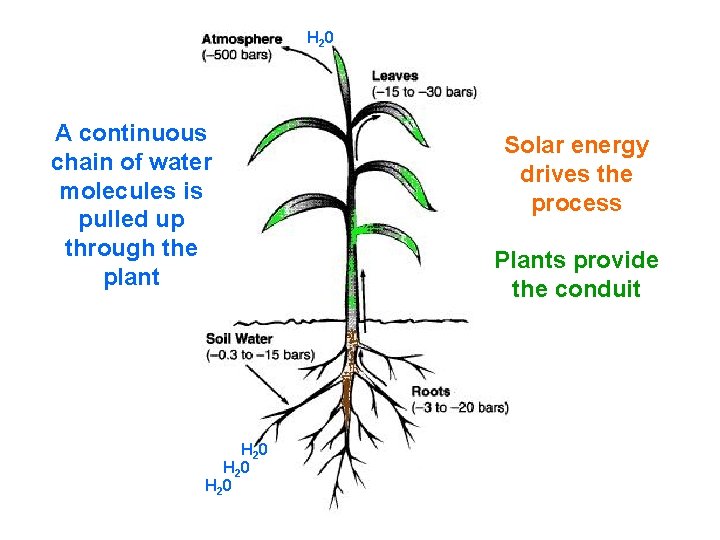
H 2 0 A continuous chain of water molecules is pulled up through the plant H 2 0 Solar energy drives the process Plants provide the conduit
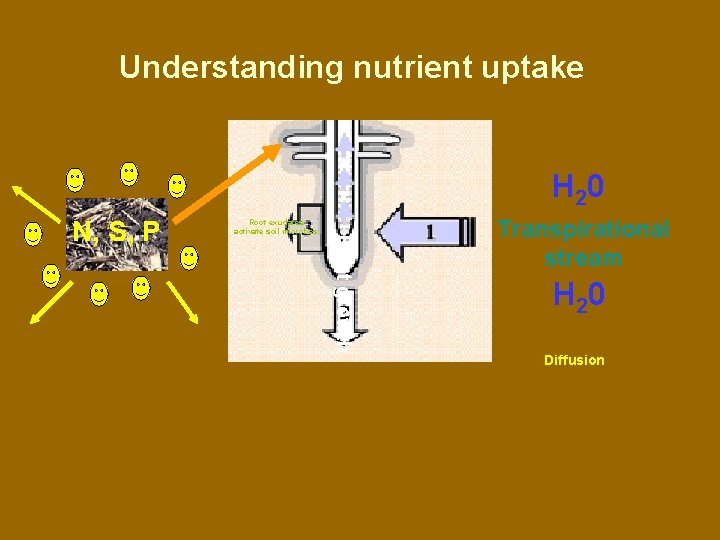
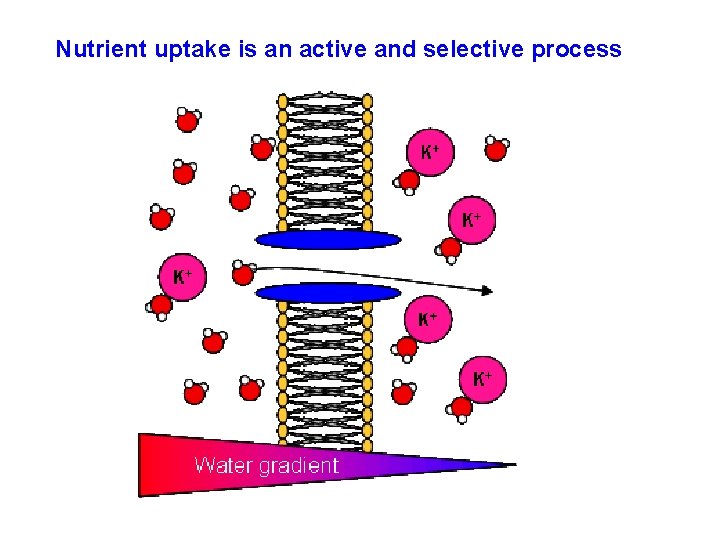
Understanding nutrient uptake H 20 Root growth N, S, P Root exudates activate soil microbes Transpirational stream H 20 Diffusion
Nutrient uptake is an active and selective process
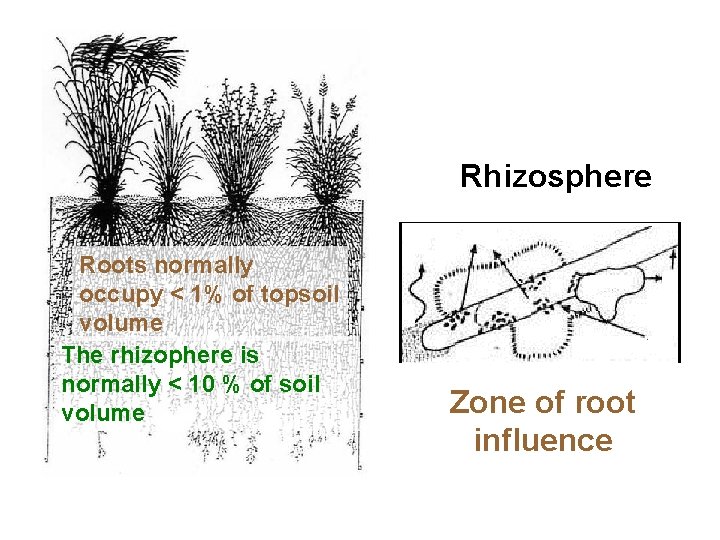
Rhizosphere Roots normally occupy < 1% of topsoil volume The rhizophere is normally < 10 % of soil volume Zone of root influence
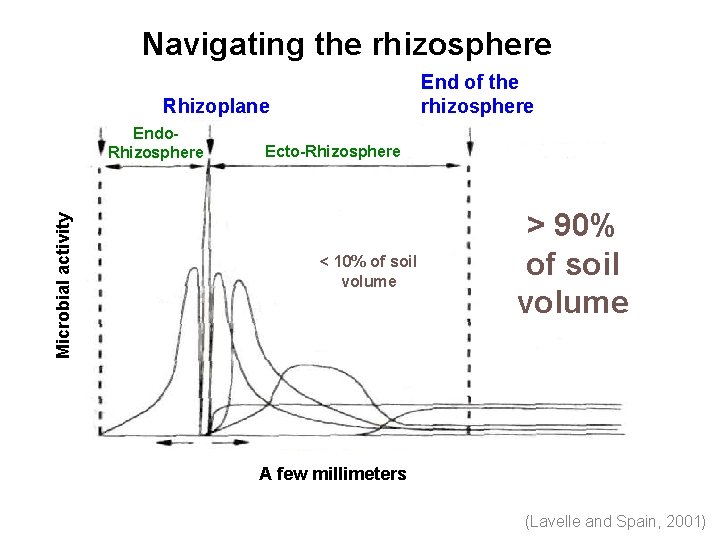
Navigating the rhizosphere End of the rhizosphere Rhizoplane Microbial activity Endo. Rhizosphere Ecto-Rhizosphere < 10% of soil volume > 90% of soil volume A few millimeters (Lavelle and Spain, 2001)
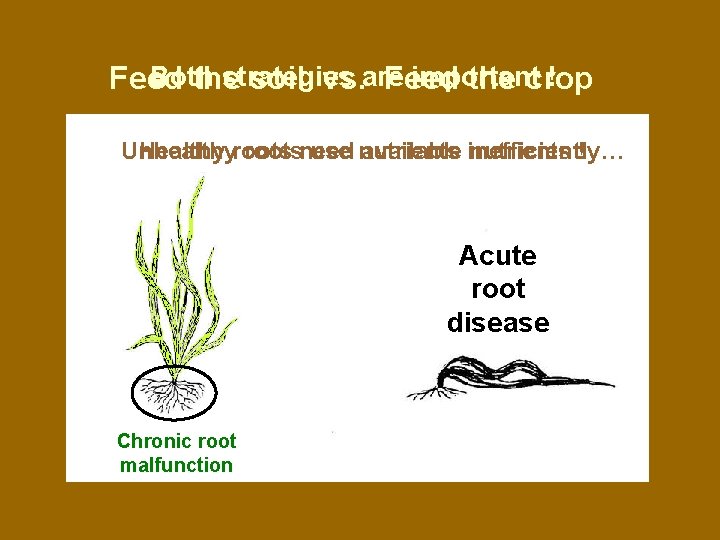
Both strategies important ! Feed the soil vs. are Feed the crop Healthy roots available inefficiently… nutrients ! Unhealthy rootsneed use nutrients Acute root disease Chronic root malfunction
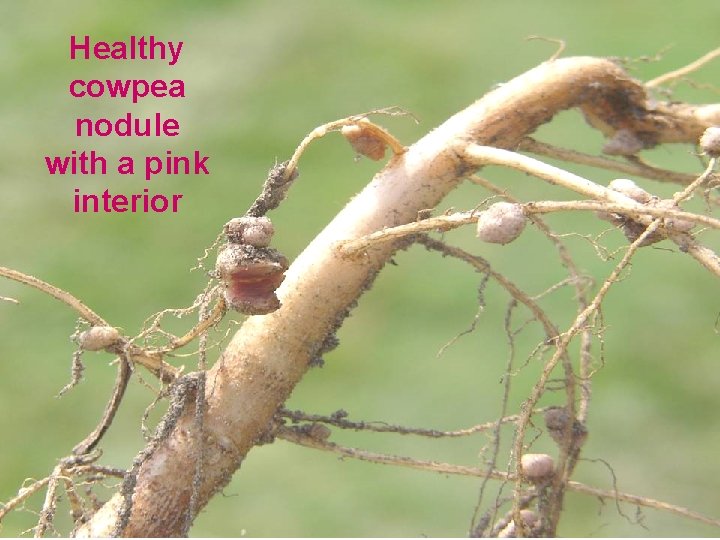
Healthy cowpea nodule with a pink interior
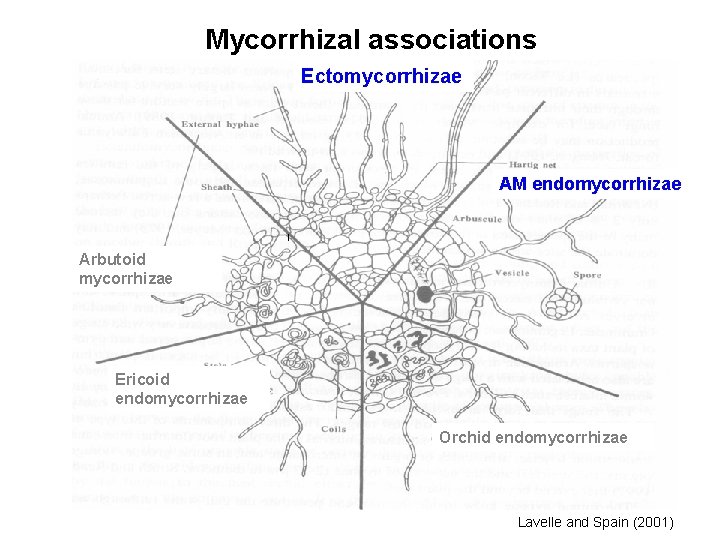
Mycorrhizal associations Ectomycorrhizae AM endomycorrhizae Arbutoid mycorrhizae Ericoid endomycorrhizae Orchid endomycorrhizae Lavelle and Spain (2001)
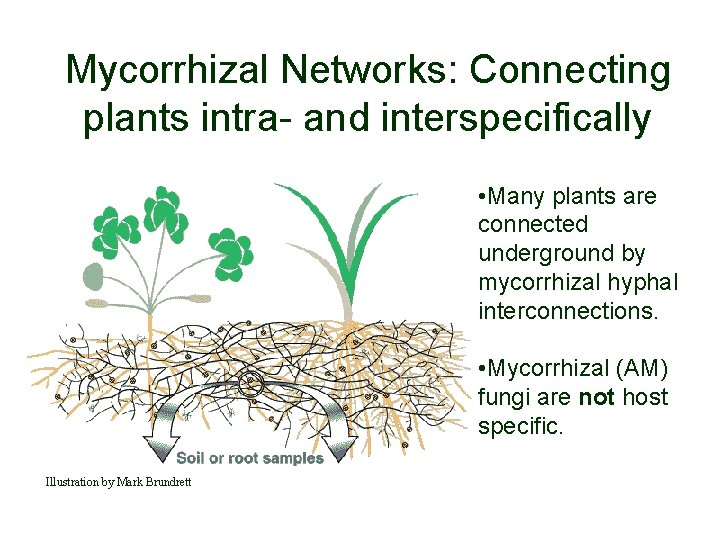
Mycorrhizal Networks: Connecting plants intra- and interspecifically • Many plants are connected underground by mycorrhizal hyphal interconnections. • Mycorrhizal (AM) fungi are not host specific. Illustration by Mark Brundrett
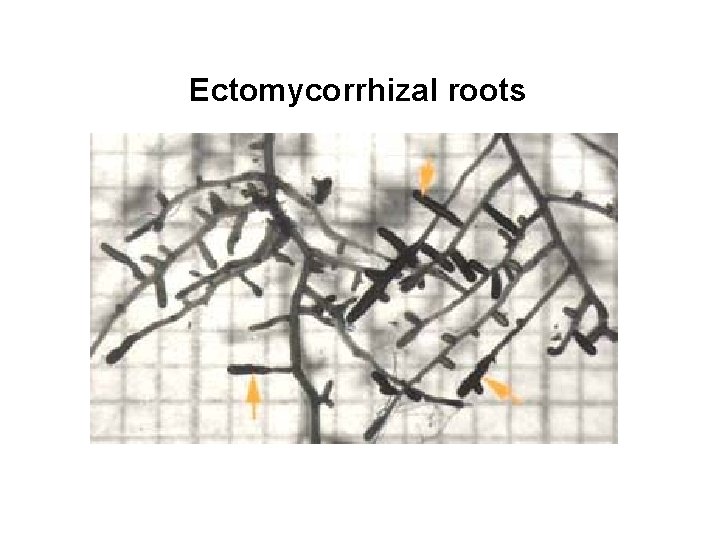
Ectomycorrhizal roots
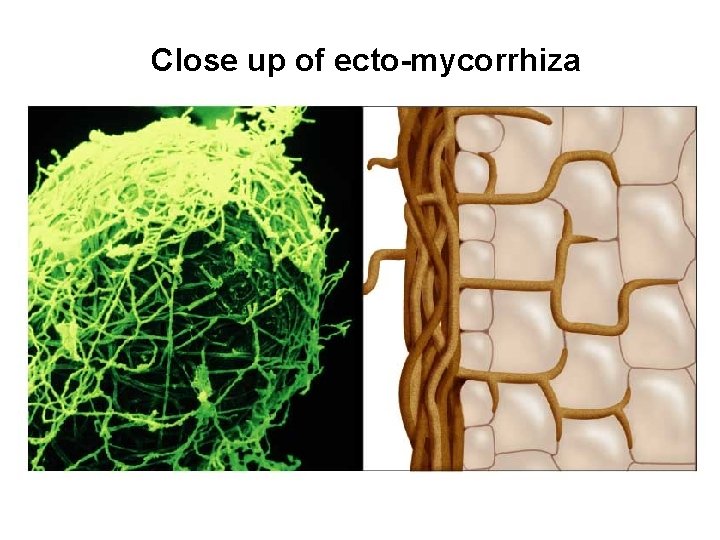
Close up of ecto-mycorrhiza
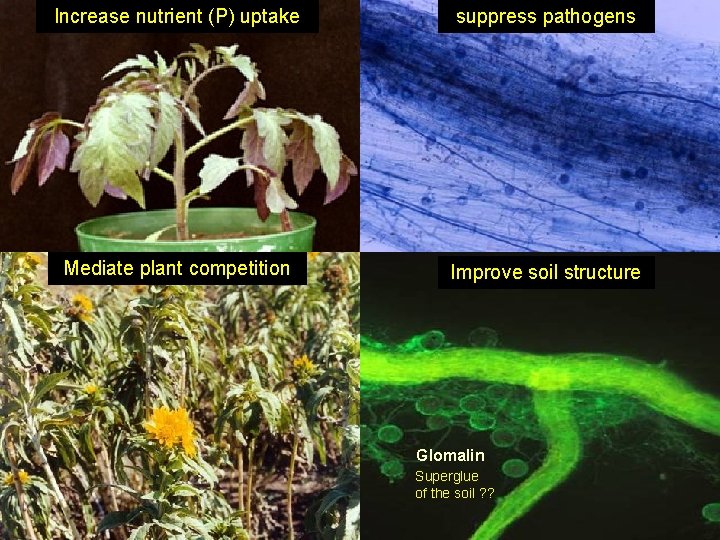
Increase nutrient (P) uptake suppress pathogens Mediate plant competition Improve soil structure Glomalin Superglue of the soil ? ?
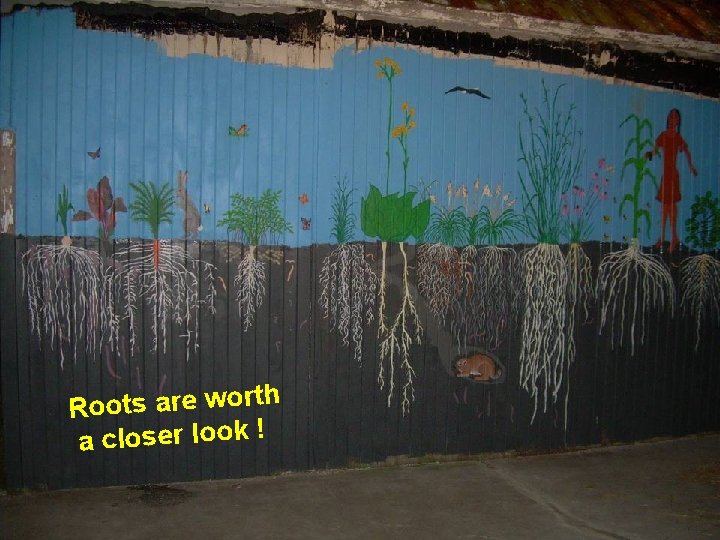
Roots are worth a closer look !