Orthology Analysis Erik Sonnhammer Center for Genomics and



- Slides: 53
Orthology Analysis Erik Sonnhammer Center for Genomics and Bioinformatics Karolinska Institutet, Stockholm
Outline • Basic concepts • BLAST-based approaches to orthology • Tree-based approaches to orthology • Domain-level orthology
Homologs = genes with a common origin • May be genes in the same or in different organisms • Does not say that function is identical • Can only be true or false, and not a percentage! • Homologs have the same 3 D-structure layout
Homologs Orthologs Paralogs
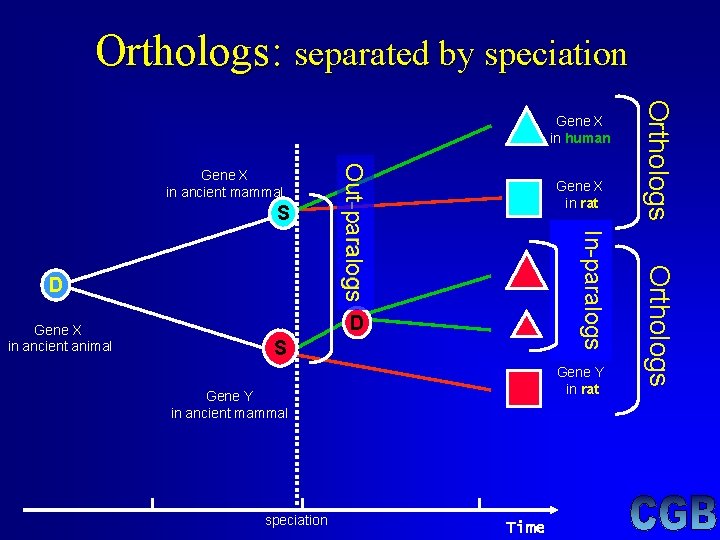
Orthologs: separated by speciation S Gene Y 1 in human D Gene Y 2 in human S Gene Y in rat Gene Y in ancient mammal speciation Time Orthologs Gene X in ancient animal Gene X in rat In-paralogs D Out-paralogs Gene X in ancient mammal Orthologs Gene X in human
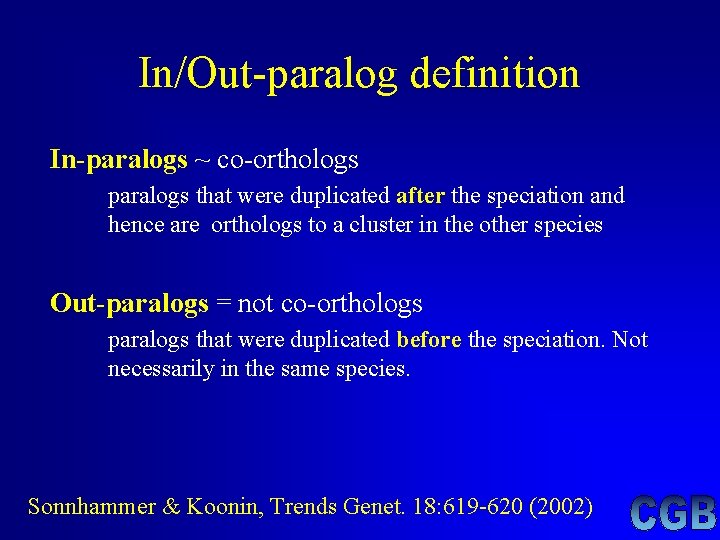
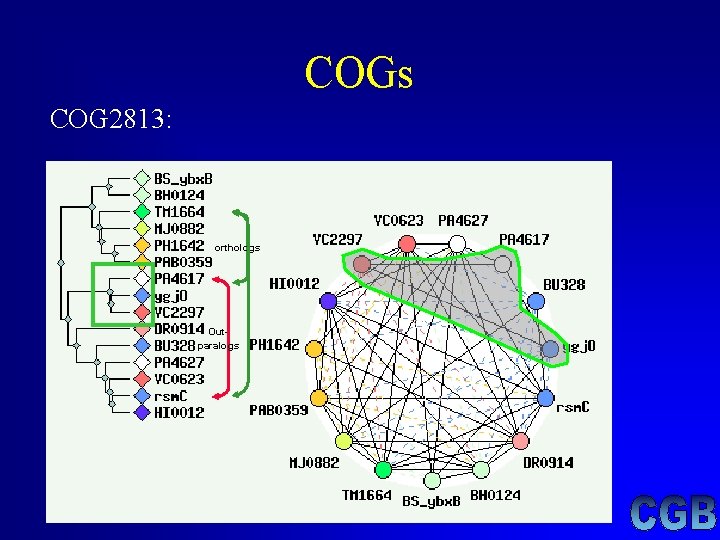
In/Out-paralog definition In-paralogs ~ co-orthologs paralogs that were duplicated after the speciation and hence are orthologs to a cluster in the other species Out-paralogs = not co-orthologs paralogs that were duplicated before the speciation. Not necessarily in the same species. Sonnhammer & Koonin, Trends Genet. 18: 619 -620 (2002)
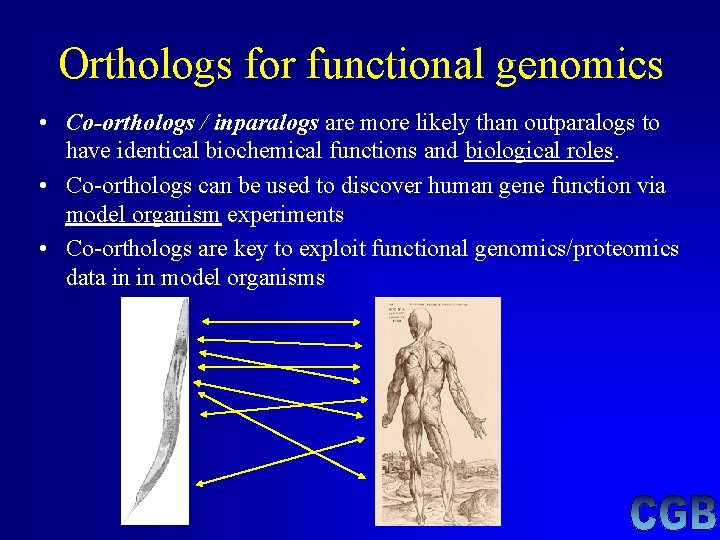
Orthologs for functional genomics • Co-orthologs / inparalogs are more likely than outparalogs to have identical biochemical functions and biological roles. • Co-orthologs can be used to discover human gene function via model organism experiments • Co-orthologs are key to exploit functional genomics/proteomics data in in model organisms
Orthology and function conservation • Orthology does not say anything about evolutionary distance. • Close orthologs, e. g. human-mouse are very likely to have the same biological role in the organism. • Distant orthologs, e. g. human-worm are less likely to have the same phenotypical role, but may have the same role in the corresponding pathway.
Ortholog Databases Sequence database Orthology detection method Sw. Trembl proteomes Inparanoid (blast) Ortholog database Inparanoid proteomes COGs (blast) COGs / KOGs TIGR gene index COGs (blast) TOGA/EGO proteomes Ortho. MCL (blast) Ortho. MCL Pfam Orthostrapper (tree) HOPS Pfam RIO (tree)
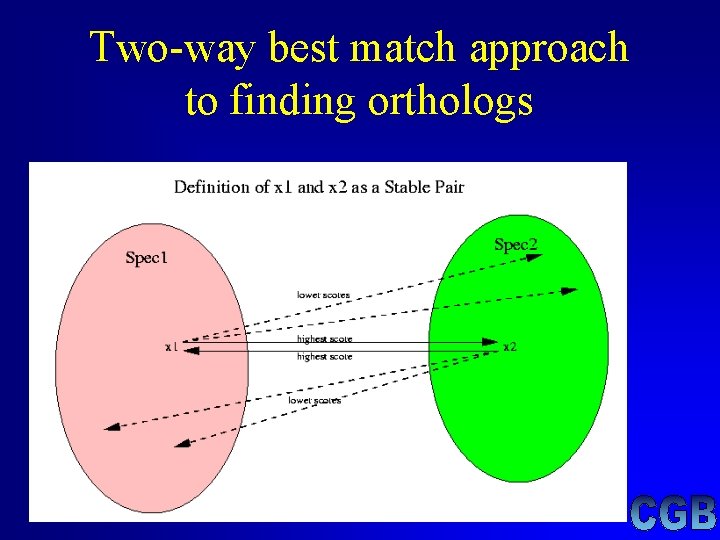
How to find orthologs? 1. Calculate phylogenetic tree, look for orthologs in the tree (Orthostrapper, Rio): 2. Two-way best matches between two species can be used to find orthologs without trees. [However, in-paralogs are harder to find this way]
Two-way best match approach to finding orthologs
COGs COG 2813: orthologs Outparalogs
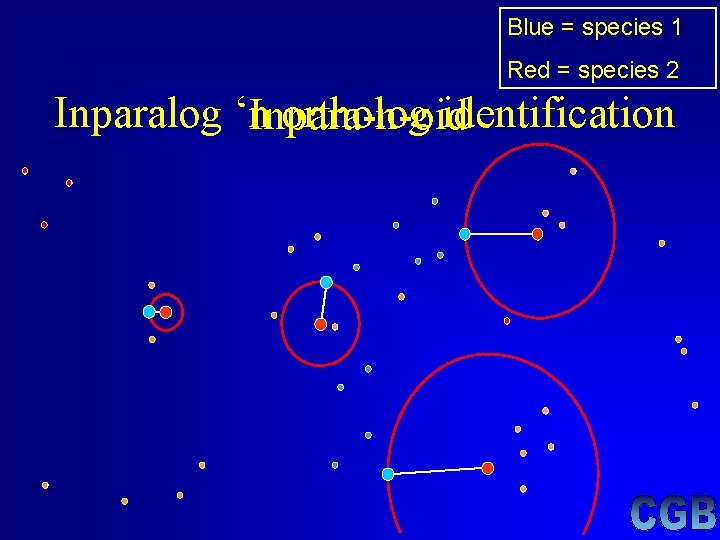
Blue = species 1 Red = species 2 Inparalog ‘n. Inpara-n-oid ortholog identification
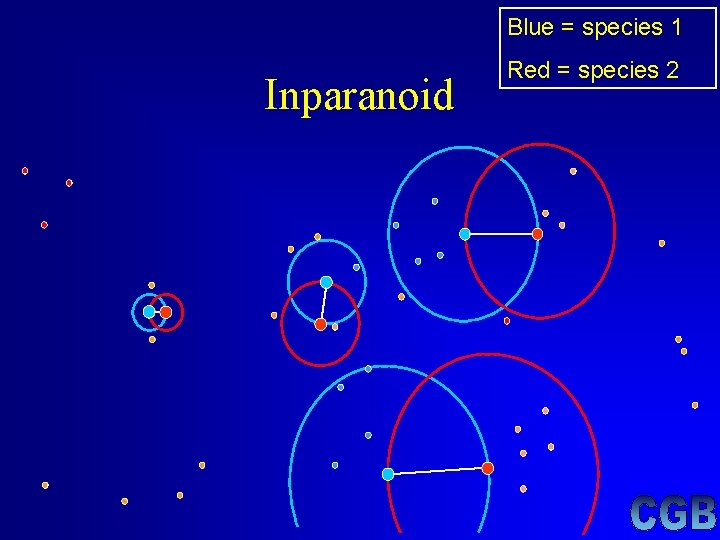
Blue = species 1 Inparanoid Red = species 2
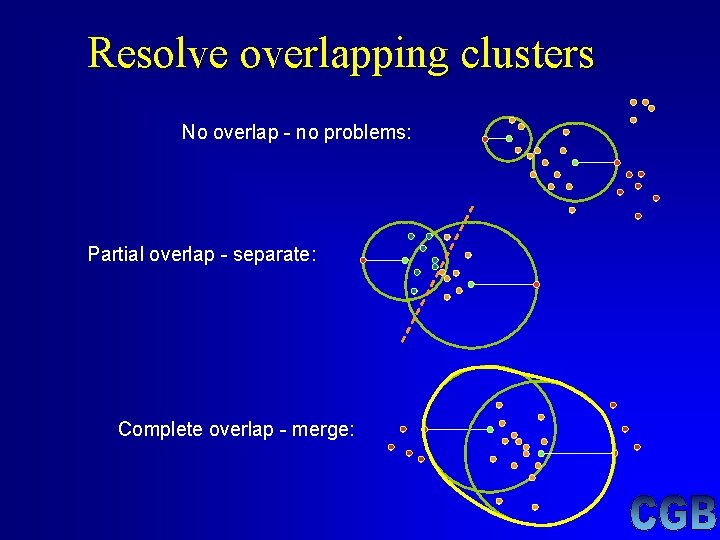
Resolve overlapping clusters No overlap - no problems: Partial overlap - separate: Complete overlap - merge:
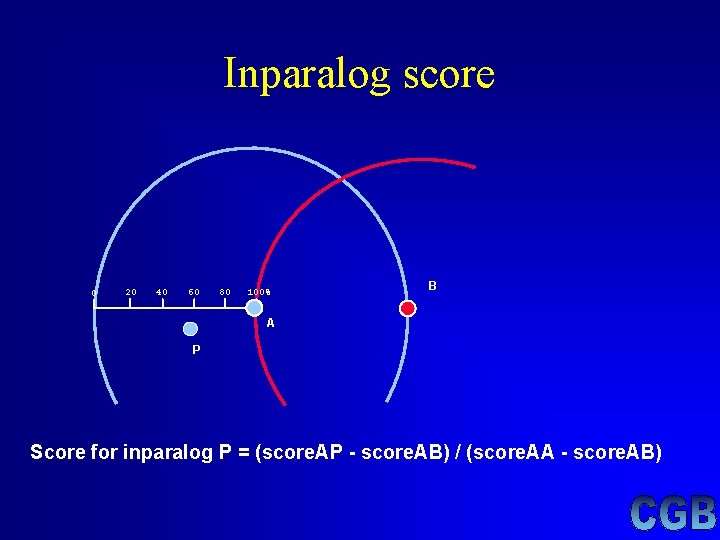
Inparalog score 0 20 40 60 80 100% B A P Score for inparalog P = (score. AP - score. AB) / (score. AA - score. AB)
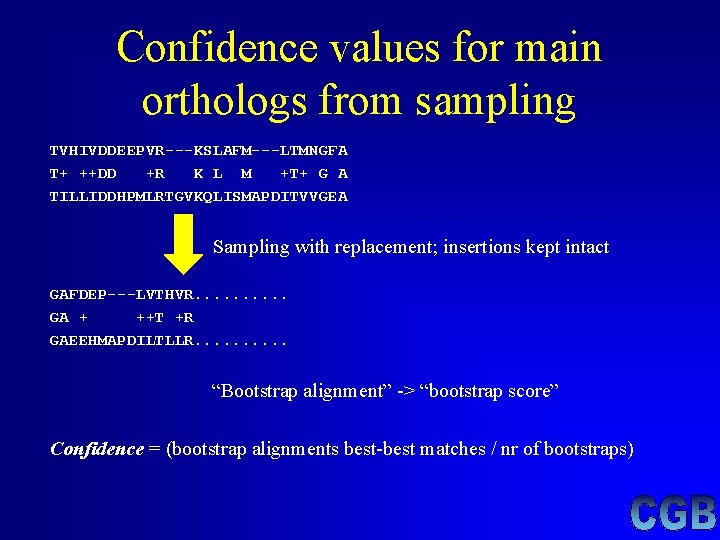
Confidence values for main orthologs from sampling TVHIVDDEEPVR---KSLAFM---LTMNGFA T+ ++DD +R K L M +T+ G A TILLIDDHPMLRTGVKQLISMAPDITVVGEA Sampling with replacement; insertions kept intact GAFDEP---LVTHVR. . GA + ++T +R GAEEHMAPDILTLLR. . “Bootstrap alignment” -> “bootstrap score” Confidence = (bootstrap alignments best-best matches / nr of bootstraps)
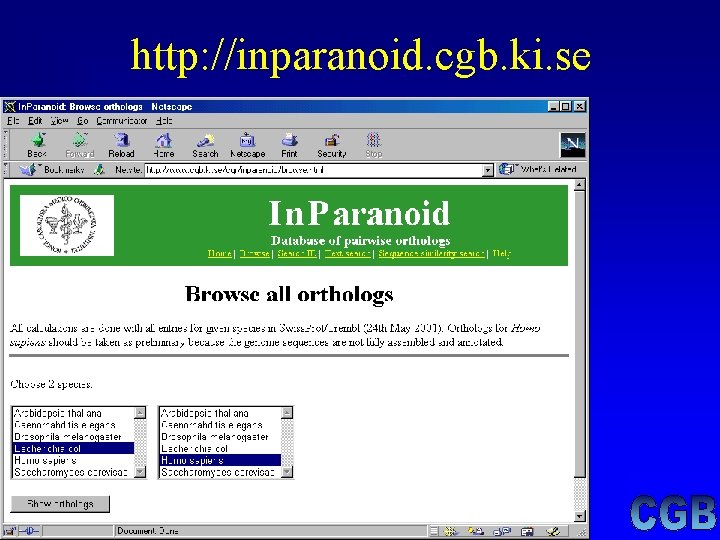
http: //inparanoid. cgb. ki. se
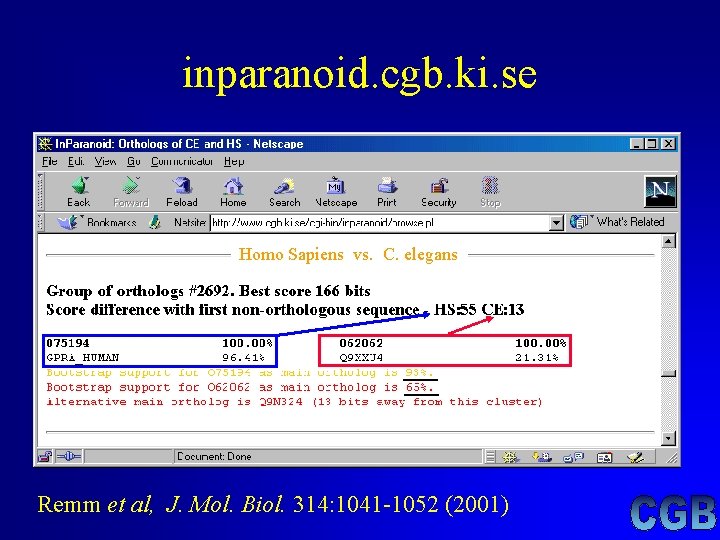
inparanoid. cgb. ki. se Homo Sapiens vs. C. elegans Remm et al, J. Mol. Biol. 314: 1041 -1052 (2001)
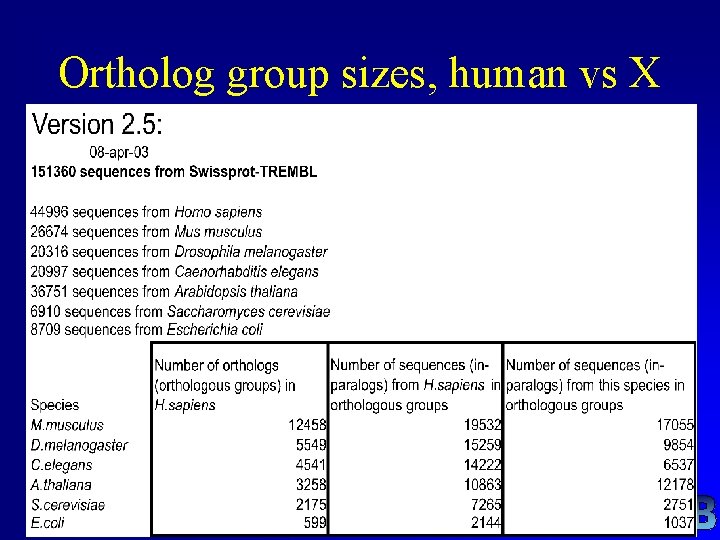
Ortholog group sizes, human vs X
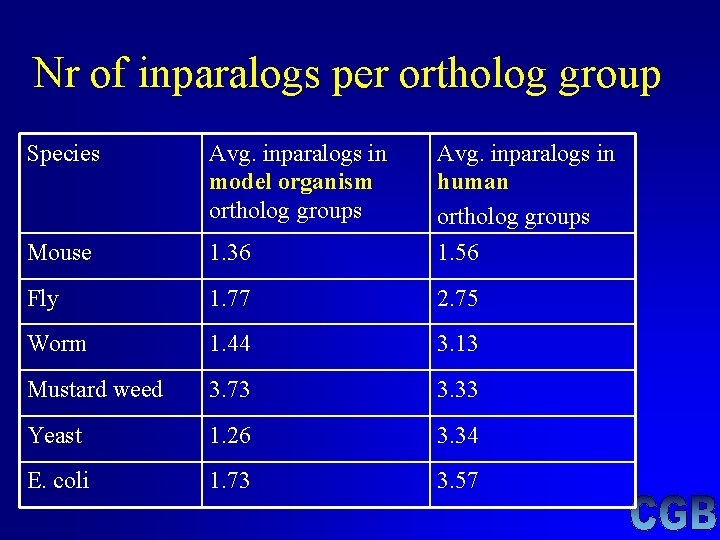
Nr of inparalogs per ortholog group Species Avg. inparalogs in model organism ortholog groups Mouse 1. 36 Avg. inparalogs in human ortholog groups 1. 56 Fly 1. 77 2. 75 Worm 1. 44 3. 13 Mustard weed 3. 73 3. 33 Yeast 1. 26 3. 34 E. coli 1. 73 3. 57
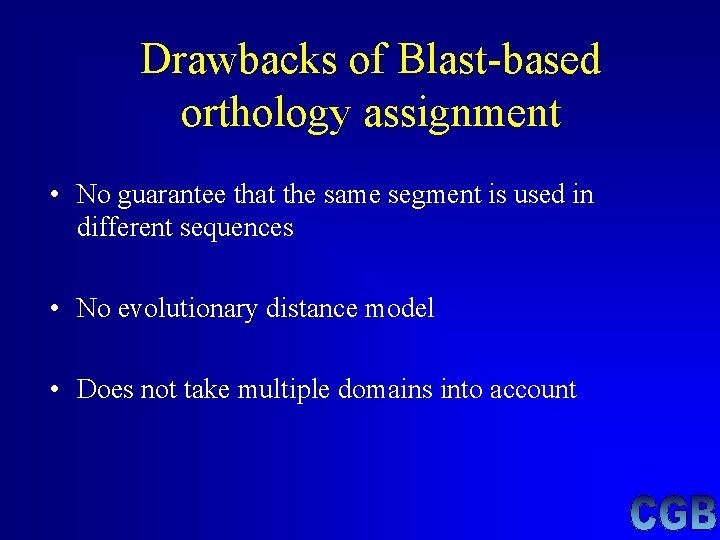
Drawbacks of Blast-based orthology assignment • No guarantee that the same segment is used in different sequences • No evolutionary distance model • Does not take multiple domains into account
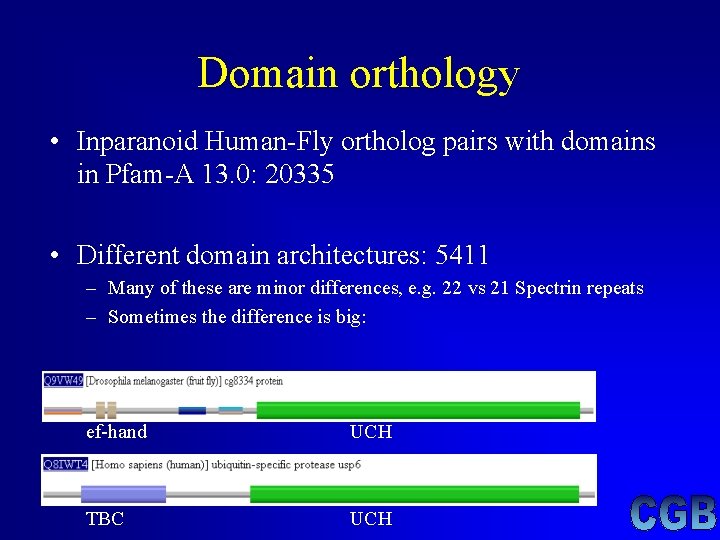
Domain orthology • Inparanoid Human-Fly ortholog pairs with domains in Pfam-A 13. 0: 20335 • Different domain architectures: 5411 – Many of these are minor differences, e. g. 22 vs 21 Spectrin repeats – Sometimes the difference is big: ef-hand UCH TBC UCH
Tree-based approaches
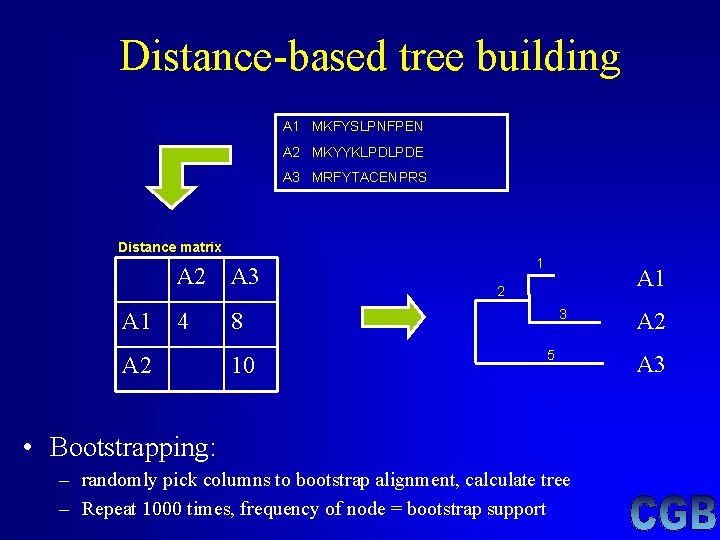
Distance-based tree building A 1 MKFYSLPNFPEN A 2 MKYYKLPDLPDE A 3 MRFYTACENPRS Distance matrix A 1 A 2 A 3 4 8 A 2 10 1 A 1 2 3 5 • Bootstrapping: – randomly pick columns to bootstrap alignment, calculate tree – Repeat 1000 times, frequency of node = bootstrap support A 2 A 3
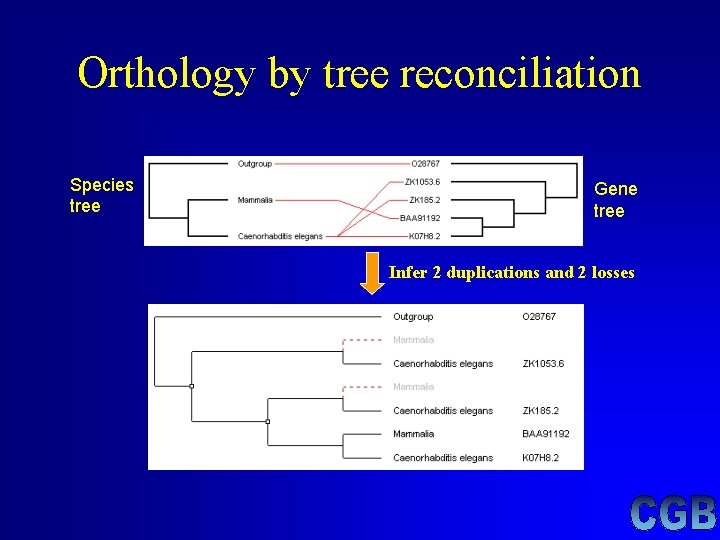
Orthology by tree reconciliation Species tree Gene tree Infer 2 duplications and 2 losses
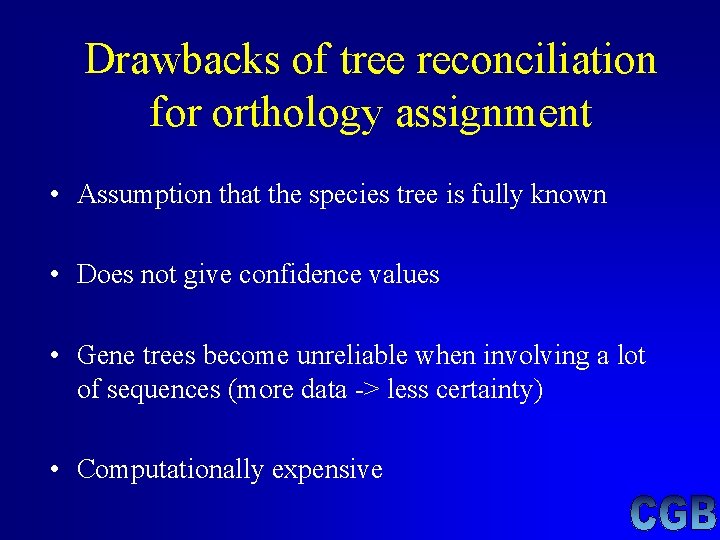
Drawbacks of tree reconciliation for orthology assignment • Assumption that the species tree is fully known • Does not give confidence values • Gene trees become unreliable when involving a lot of sequences (more data -> less certainty) • Computationally expensive
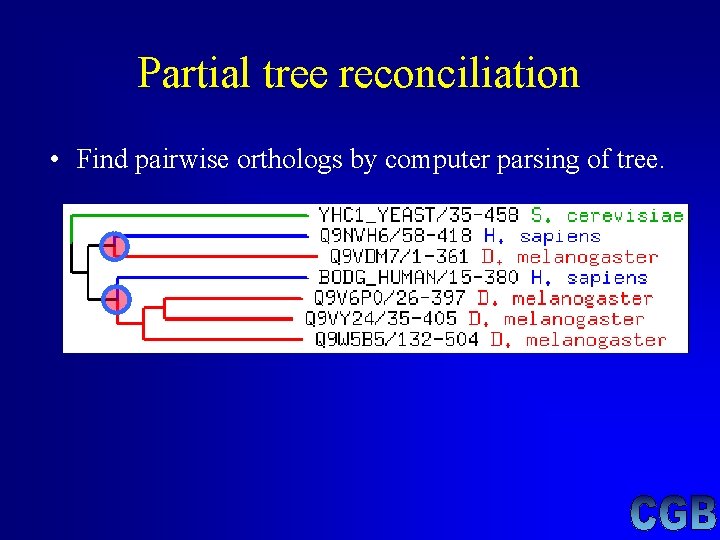
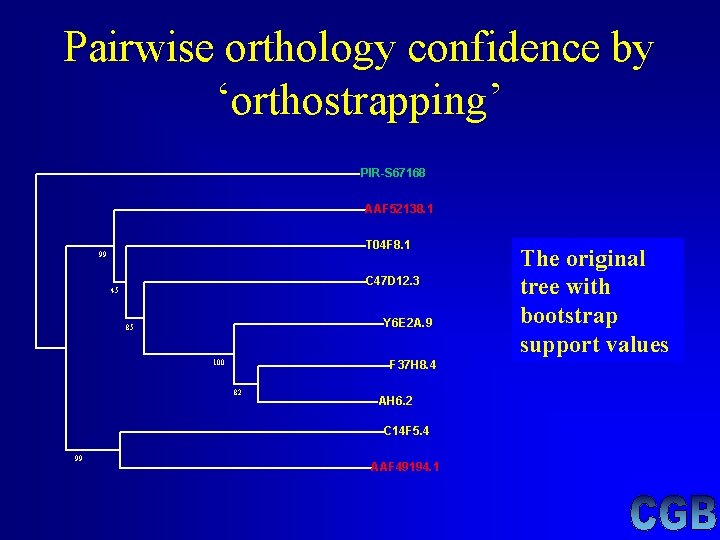
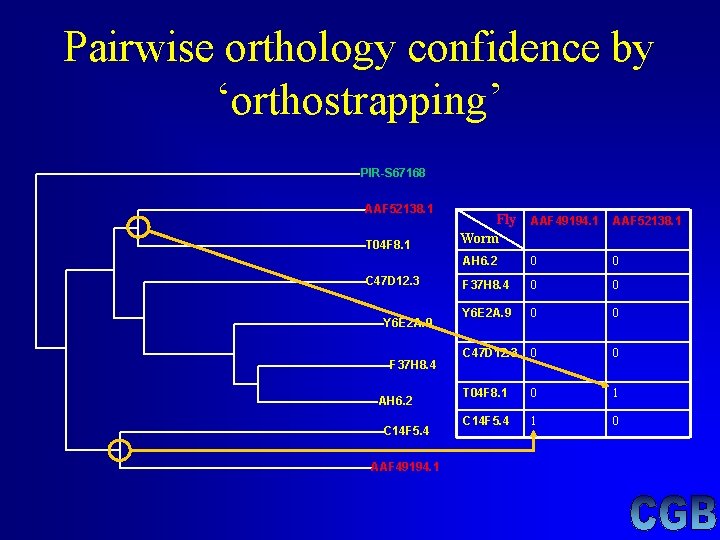
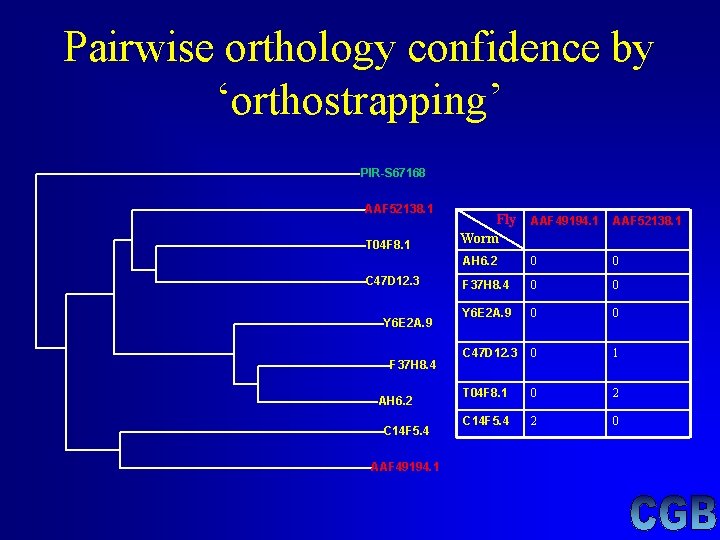
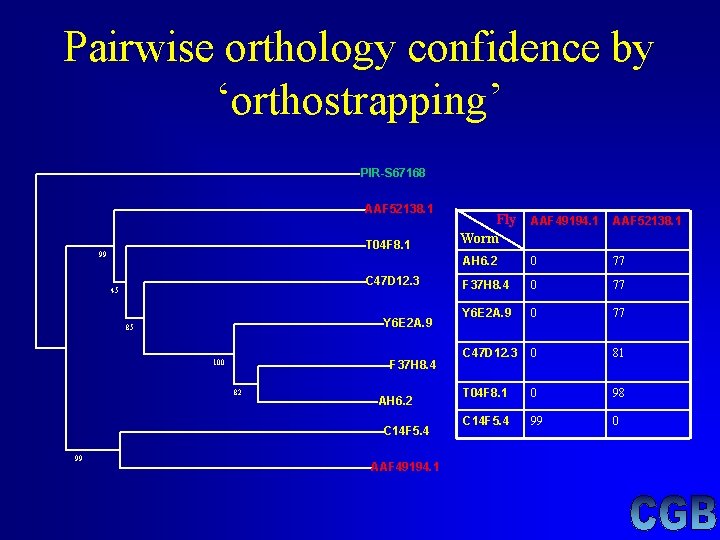
Partial tree reconciliation • Find pairwise orthologs by computer parsing of tree.
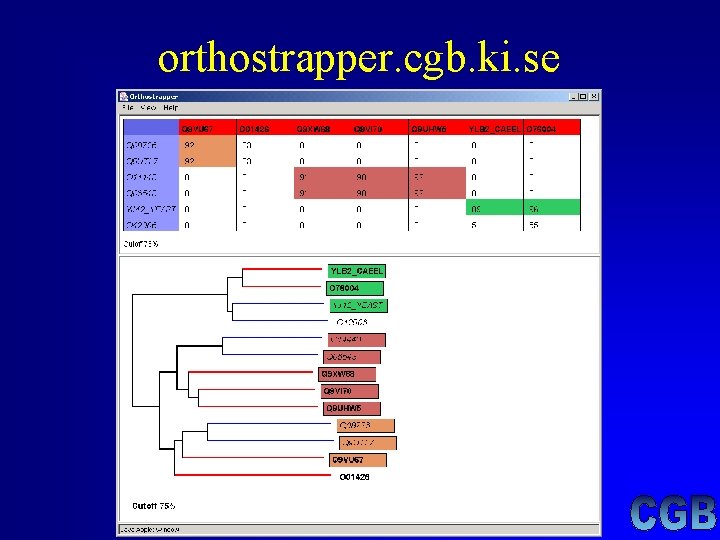
Pairwise orthology confidence by ‘orthostrapping’ PIR-S 67168 AAF 52138. 1 T 04 F 8. 1 99 C 47 D 12. 3 45 Y 6 E 2 A. 9 85 100 F 37 H 8. 4 82 AH 6. 2 C 14 F 5. 4 99 AAF 49194. 1 The original tree with bootstrap support values
Pairwise orthology confidence by ‘orthostrapping’ PIR-S 67168 AAF 52138. 1 T 04 F 8. 1 C 47 D 12. 3 Y 6 E 2 A. 9 F 37 H 8. 4 AH 6. 2 C 14 F 5. 4 AAF 49194. 1 Fly Worm AAF 49194. 1 AAF 52138. 1 AH 6. 2 0 0 F 37 H 8. 4 0 0 Y 6 E 2 A. 9 0 0 C 47 D 12. 3 0 0 T 04 F 8. 1 0 1 C 14 F 5. 4 1 0
Pairwise orthology confidence by ‘orthostrapping’ PIR-S 67168 AAF 52138. 1 T 04 F 8. 1 C 47 D 12. 3 Y 6 E 2 A. 9 F 37 H 8. 4 AH 6. 2 C 14 F 5. 4 AAF 49194. 1 Fly Worm AAF 49194. 1 AAF 52138. 1 AH 6. 2 0 0 F 37 H 8. 4 0 0 Y 6 E 2 A. 9 0 0 C 47 D 12. 3 0 1 T 04 F 8. 1 0 2 C 14 F 5. 4 2 0
Pairwise orthology confidence by ‘orthostrapping’ PIR-S 67168 AAF 52138. 1 T 04 F 8. 1 99 C 47 D 12. 3 45 Y 6 E 2 A. 9 85 100 F 37 H 8. 4 82 AH 6. 2 C 14 F 5. 4 99 AAF 49194. 1 Fly Worm AAF 49194. 1 AAF 52138. 1 AH 6. 2 0 77 F 37 H 8. 4 0 77 Y 6 E 2 A. 9 0 77 C 47 D 12. 3 0 81 T 04 F 8. 1 0 98 C 14 F 5. 4 99 0
orthostrapper. cgb. ki. se
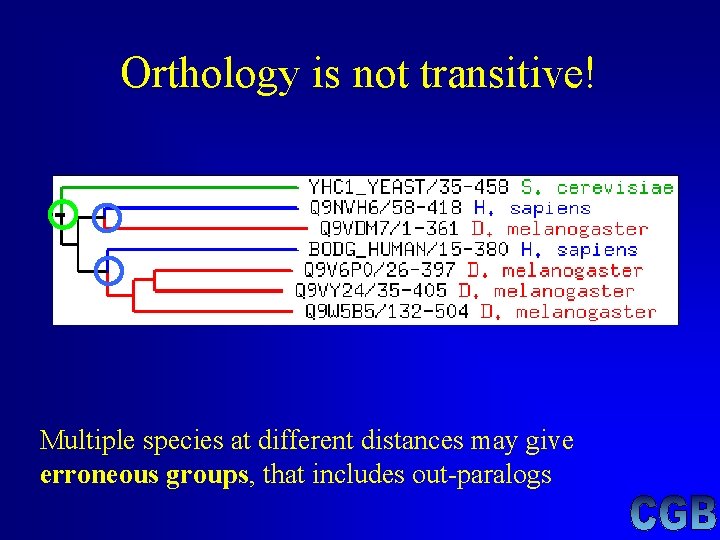
Orthology is not transitive! Multiple species at different distances may give erroneous groups, that includes out-paralogs
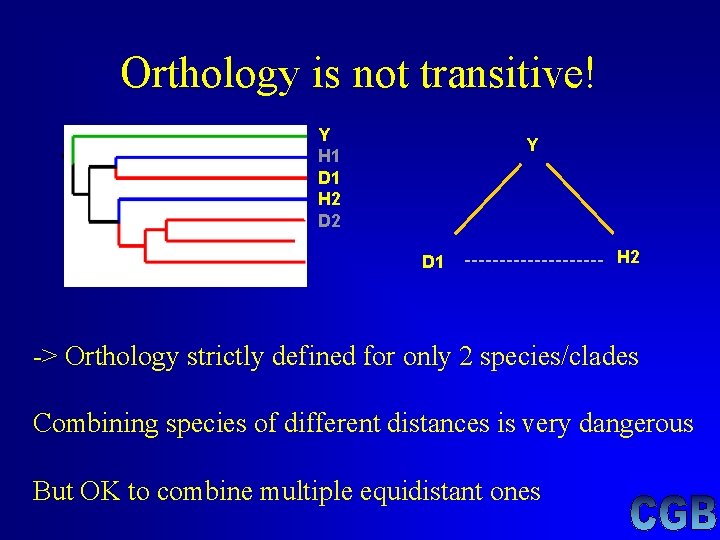
Orthology is not transitive! Y H 1 D 1 H 2 D 2 Y D 1 H 2 -> Orthology strictly defined for only 2 species/clades Combining species of different distances is very dangerous But OK to combine multiple equidistant ones
Domain-level orthology
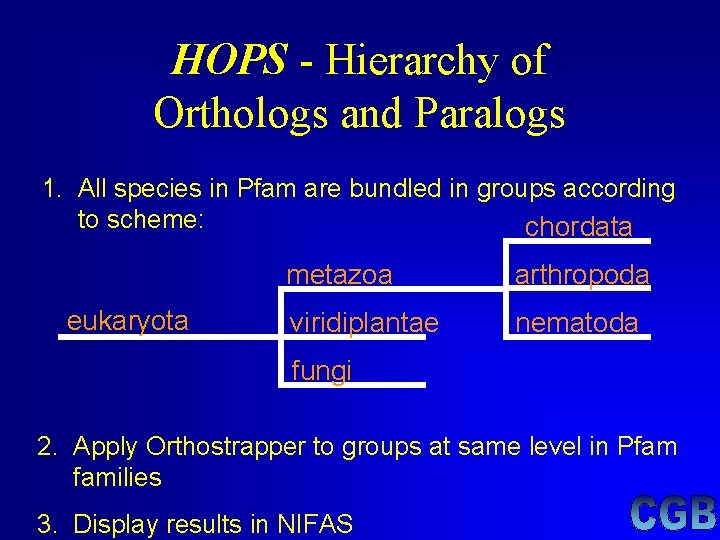
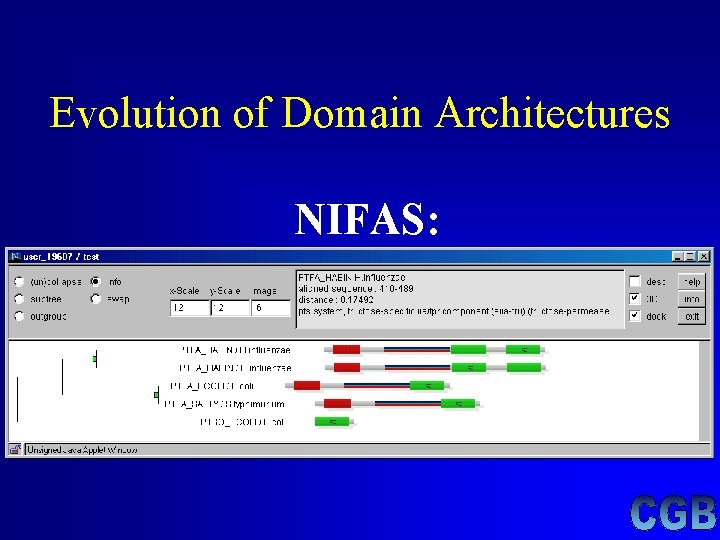
HOPS - Hierarchy of Orthologs and Paralogs 1. All species in Pfam are bundled in groups according to scheme: chordata eukaryota metazoa arthropoda viridiplantae nematoda fungi 2. Apply Orthostrapper to groups at same level in Pfam families 3. Display results in NIFAS
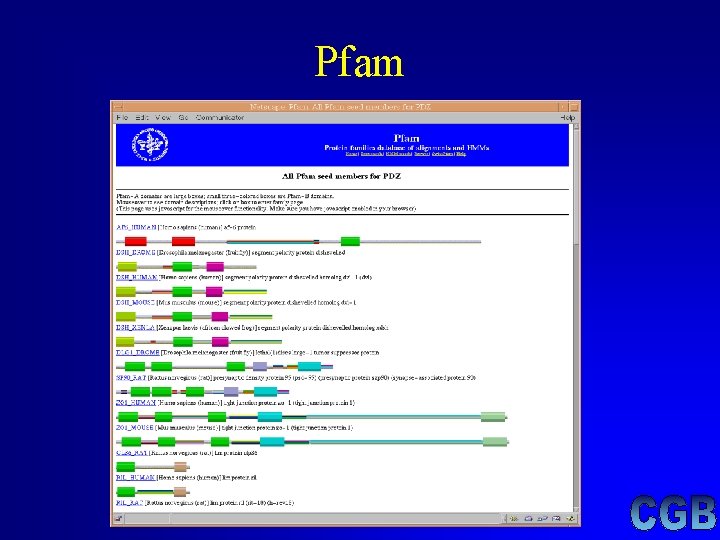
Pfam
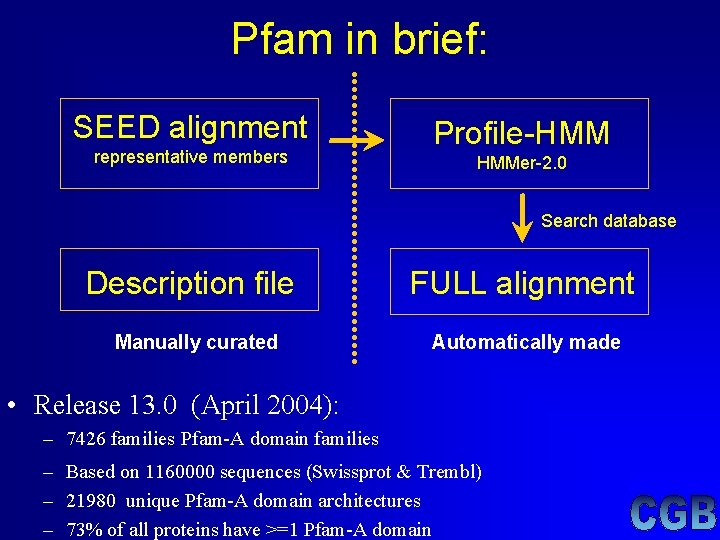
Pfam in brief: SEED alignment representative members Profile-HMM HMMer-2. 0 Search database Description file Manually curated FULL alignment Automatically made • Release 13. 0 (April 2004): – 7426 families Pfam-A domain families – Based on 1160000 sequences (Swissprot & Trembl) – 21980 unique Pfam-A domain architectures – 73% of all proteins have >=1 Pfam-A domain
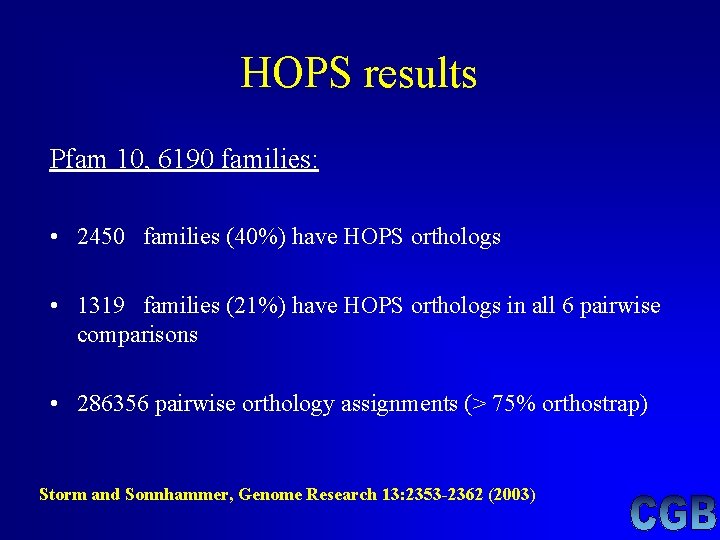
HOPS results Pfam 10, 6190 families: • 2450 families (40%) have HOPS orthologs • 1319 families (21%) have HOPS orthologs in all 6 pairwise comparisons • 286356 pairwise orthology assignments (> 75% orthostrap) Storm and Sonnhammer, Genome Research 13: 2353 -2362 (2003)
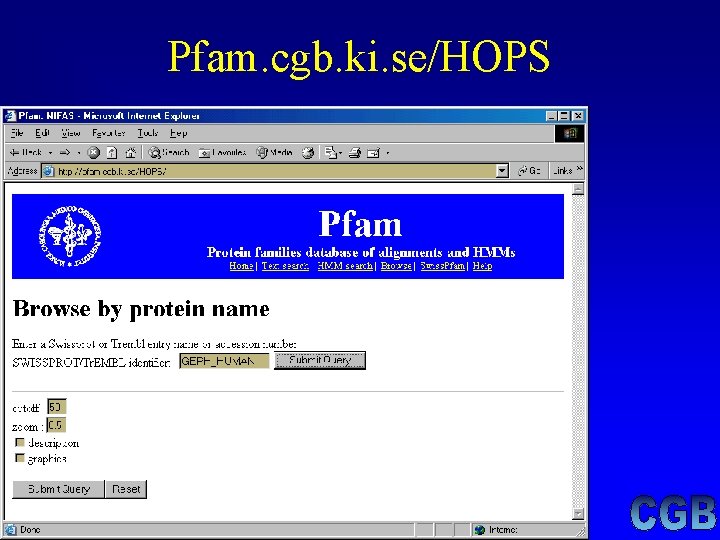
Ways to access HOPS • NIFAS graphical browser • By sequence ID at Pfam. cgb. ki. se/HOPS • Flatfiles (Orthostrap tables of 2 clades)
Pfam. cgb. ki. se/HOPS
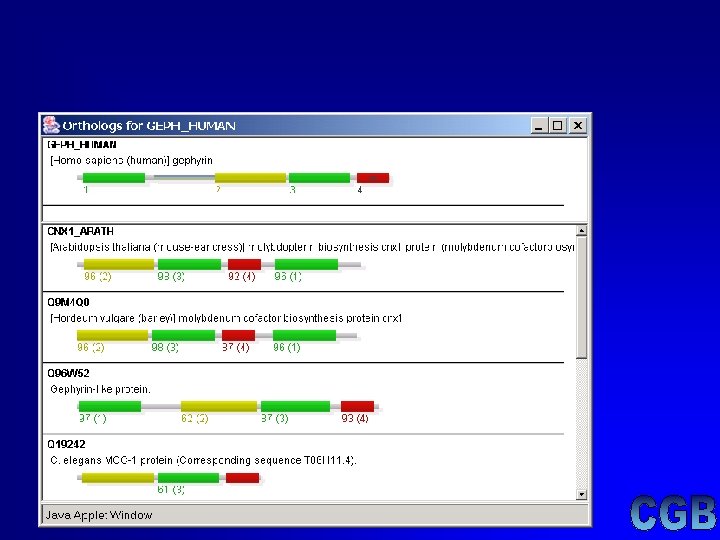
Evolution of Domain Architectures NIFAS:
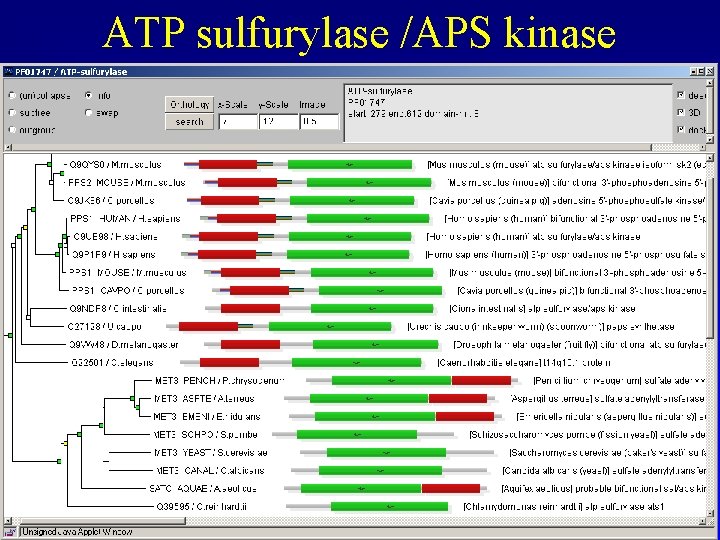
ATP sulfurylase /APS kinase
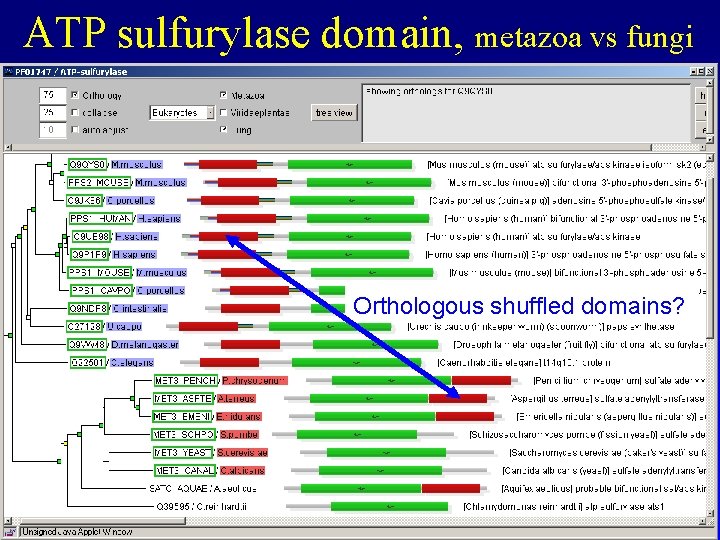
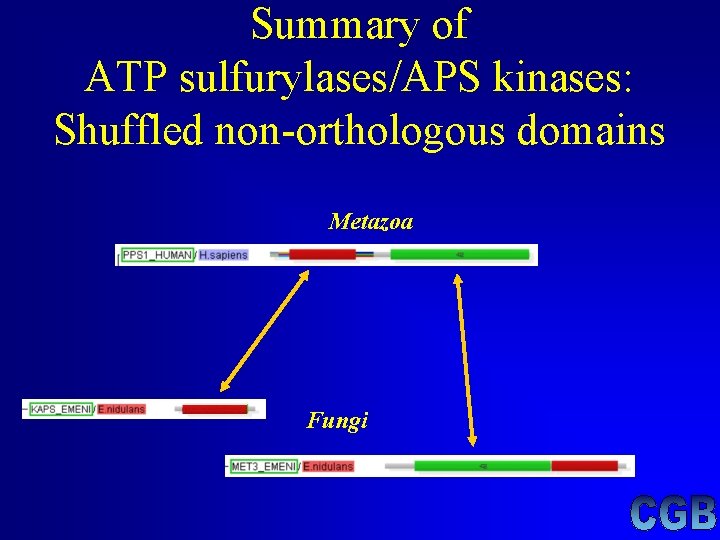
ATP sulfurylase domain, metazoa vs fungi Orthologous shuffled domains?
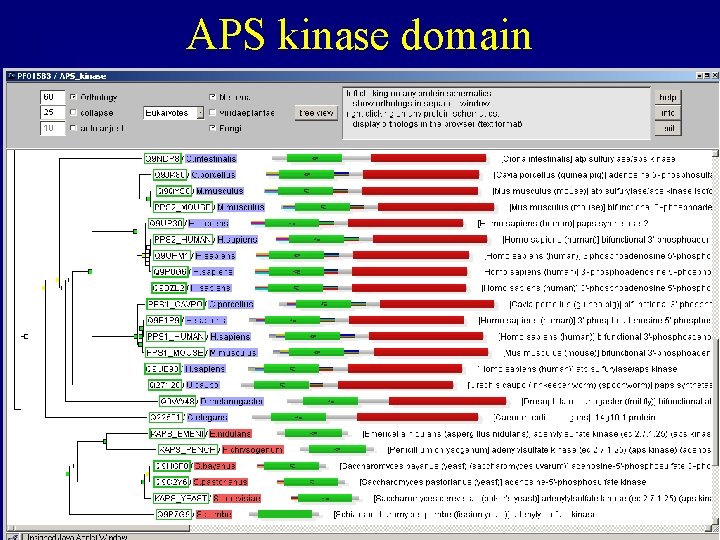
APS kinase domain
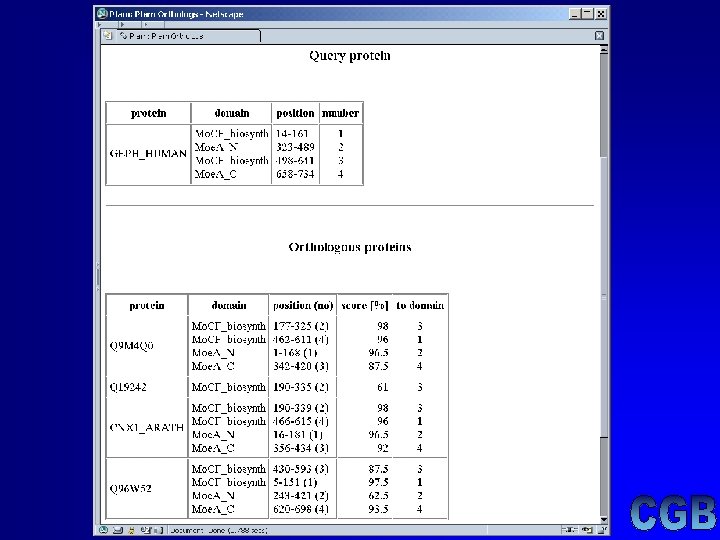
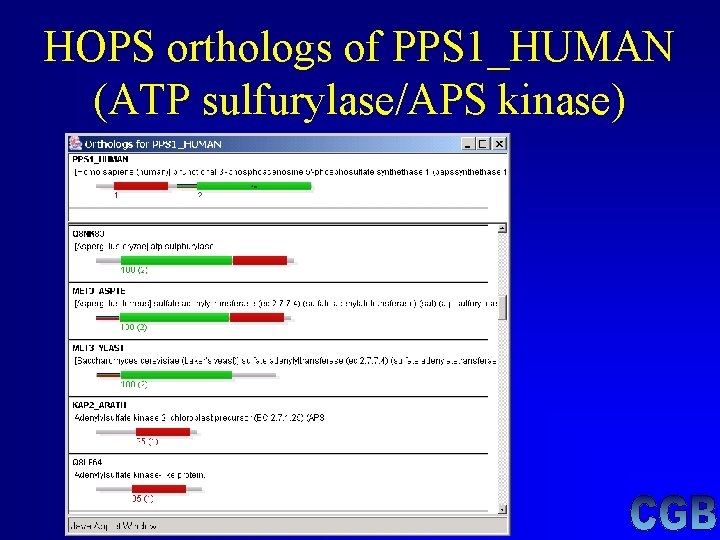
HOPS orthologs of PPS 1_HUMAN (ATP sulfurylase/APS kinase)
Summary of ATP sulfurylases/APS kinases: Shuffled non-orthologous domains Metazoa Fungi
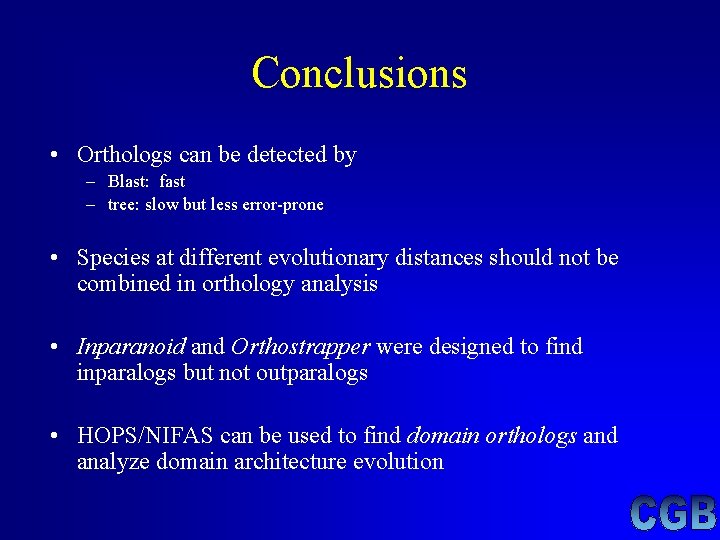
Conclusions • Orthologs can be detected by – Blast: fast – tree: slow but less error-prone • Species at different evolutionary distances should not be combined in orthology analysis • Inparanoid and Orthostrapper were designed to find inparalogs but not outparalogs • HOPS/NIFAS can be used to find domain orthologs and analyze domain architecture evolution
Future perspectives • Multiparanoid – multiple species merging of pairwise Inparalogs. • Functional divergence among inparalogs
Acknowledgments – – – Christian Storm Maido Remm Andrey Alexeyenko Volker Hollich Mats Jonsson http: //sonnhammer. cgb. ki. se