A Vision for the Future of Genomics Research

- Slides: 17
A Vision for the Future of Genomics Research Francis S. Collins, M. D. , Ph. D. NIH-DOE Scientific Symposium April 14, 2003
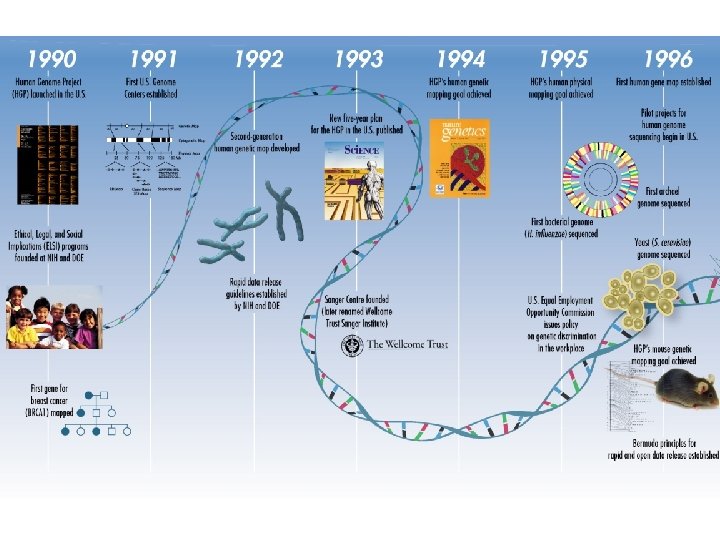
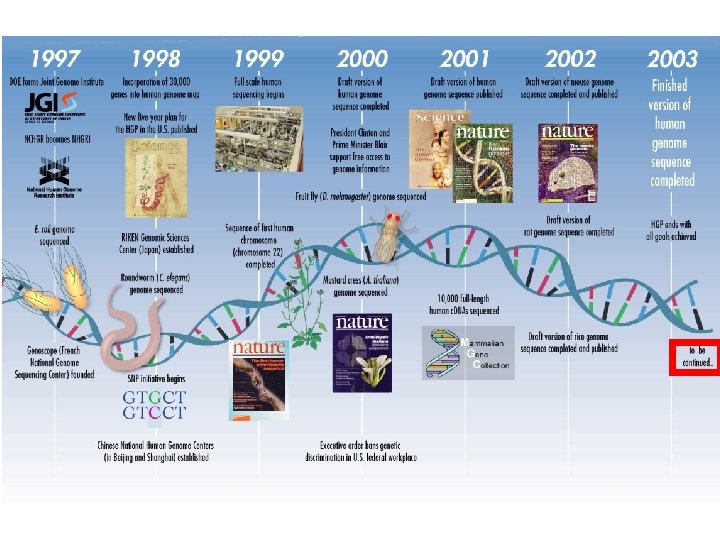
All of the original goals of the Human Genome Project have been accomplished as of TODAY What’s next?
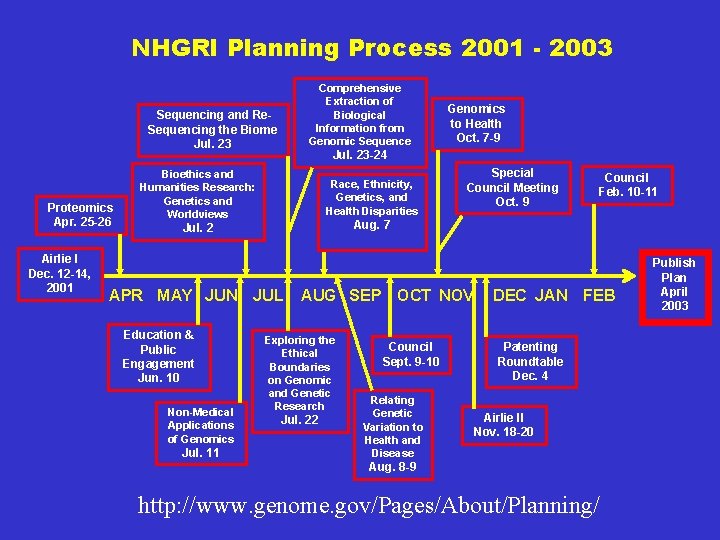
NHGRI Planning Process 2001 - 2003 Comprehensive Extraction of Biological Information from Genomic Sequence Sequencing and Re. Sequencing the Biome Jul. 23 Proteomics Apr. 25 -26 Airlie I Dec. 12 -14, 2001 Jul. 23 -24 Bioethics and Humanities Research: Genetics and Worldviews Race, Ethnicity, Genetics, and Health Disparities Education & Public Engagement Jun. 10 Non-Medical Applications of Genomics Jul. 11 Special Council Meeting Oct. 9 Council Feb. 10 -11 Aug. 7 Jul. 2 APR MAY JUN Genomics to Health Oct. 7 -9 JUL AUG SEP Exploring the Ethical Boundaries on Genomic and Genetic Research Jul. 22 OCT NOV Council Sept. 9 -10 Relating Genetic Variation to Health and Disease DEC JAN FEB Patenting Roundtable Dec. 4 Airlie II Nov. 18 -20 Aug. 8 -9 http: //www. genome. gov/Pages/About/Planning/ Publish Plan April 2003
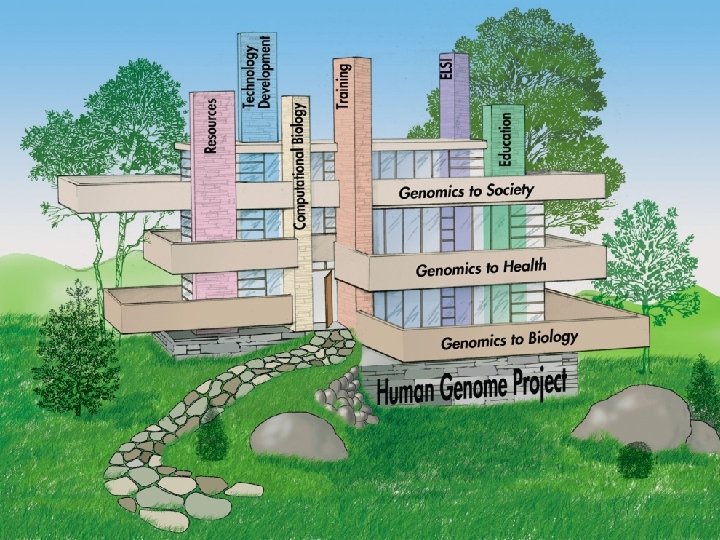
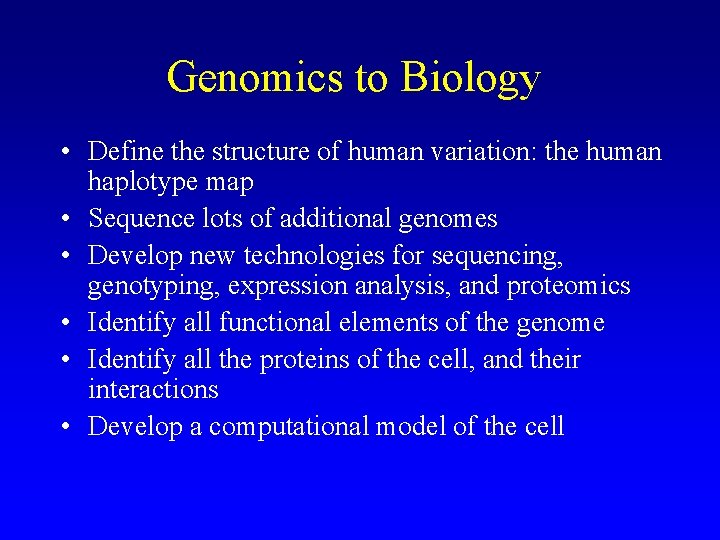
Genomics to Biology • Define the structure of human variation: the human haplotype map • Sequence lots of additional genomes • Develop new technologies for sequencing, genotyping, expression analysis, and proteomics • Identify all functional elements of the genome • Identify all the proteins of the cell, and their interactions • Develop a computational model of the cell
Quantum Leaps in Technology • Genotyping at very low cost, allowing whole genome association studies on thousands of DNA samples for $10, 000 or less • Genome sequencing at $1000 or less for a mammalian genome • Synthesis of any DNA molecule at high accuracy for $0. 01 or less per base • Determination of methylation status of all the DNA in a single cell • Determination of the abundance and modification state of all proteins in a single cell in a single experiment
Genomics to Health • Identify the genetic and environmental risk factors for all common disease • Develop “sentinel systems” for early detection of disease and molecular taxonomy of illness • Develop and deploy high-throughput robotic screening of small molecules for academic researchers • Catalyze development of large human cohorts for genotype-phenotype correlations • Elucidate the role that genomics can play in reducing health disparities • Utilize genomics to improve health in the developing world
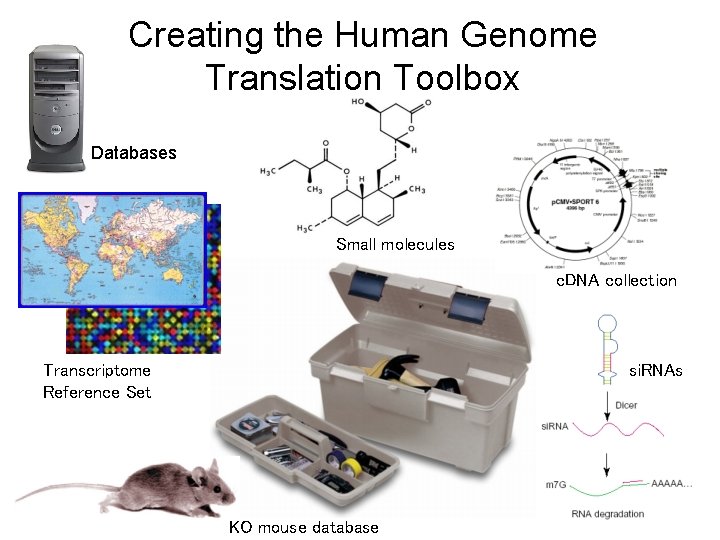
Creating the Human Genome Translation Toolbox Databases Small molecules c. DNA collection Transcriptome Reference Set si. RNAs KO mouse database
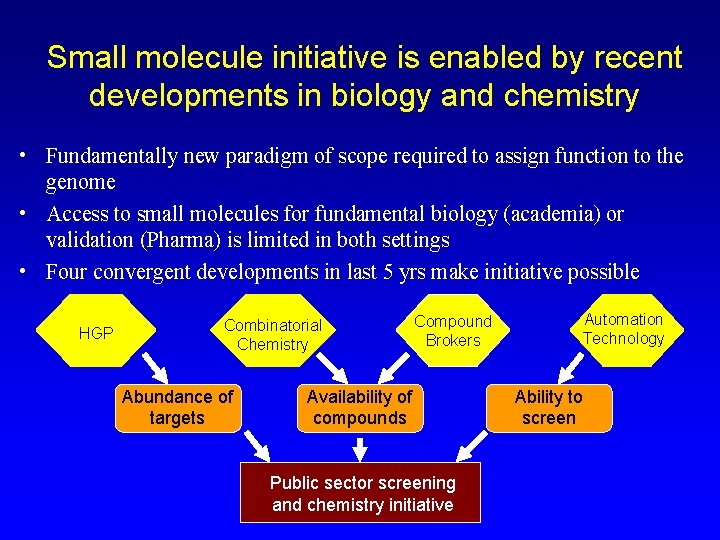
Small molecule initiative is enabled by recent developments in biology and chemistry • Fundamentally new paradigm of scope required to assign function to the genome • Access to small molecules for fundamental biology (academia) or validation (Pharma) is limited in both settings • Four convergent developments in last 5 yrs make initiative possible HGP Combinatorial Chemistry Abundance of targets Compound Brokers Availability of compounds Public sector screening and chemistry initiative Automation Technology Ability to screen
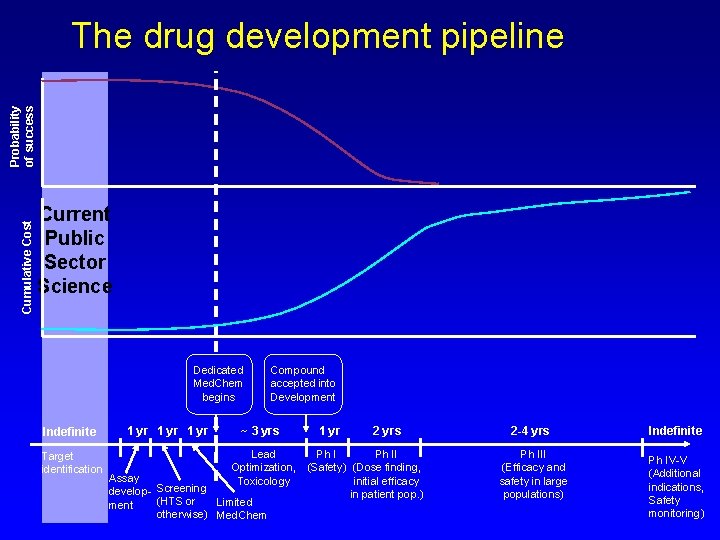
Cumulative Cost Probability of success The drug development pipeline Current Public Sector Science Dedicated Med. Chem begins Indefinite Target identification 1 yr Compound accepted into Development ~ 3 yrs Lead Optimization, Toxicology Assay develop- Screening (HTS or Limited ment otherwise) Med. Chem 1 yr 2 yrs Ph II (Safety) (Dose finding, initial efficacy in patient pop. ) 2 -4 yrs Ph III (Efficacy and safety in large populations) Indefinite Ph IV-V (Additional indications, Safety monitoring)
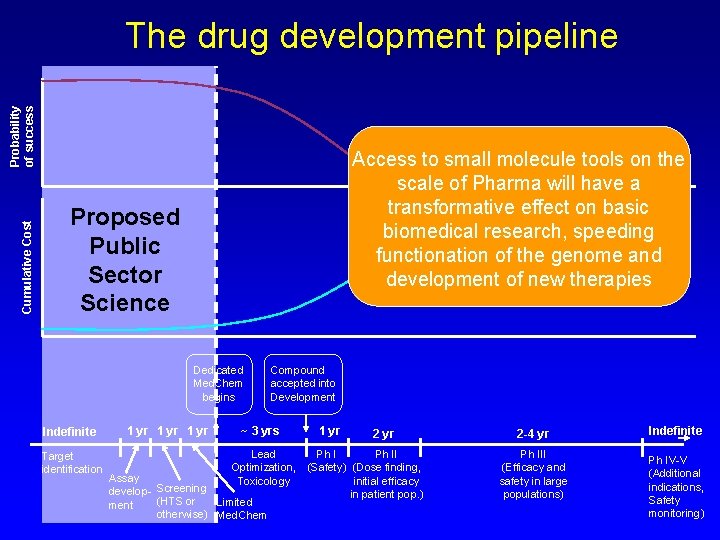
Cumulative Cost Probability of success The drug development pipeline Access to small molecule tools on the scale of Pharma will have a transformative effect on basic biomedical research, speeding functionation of the genome and development of new therapies Proposed Public Sector Science Dedicated Med. Chem begins Indefinite Target identification 1 yr Compound accepted into Development ~ 3 yrs Lead Optimization, Toxicology Assay develop- Screening (HTS or Limited ment otherwise) Med. Chem 1 yr 2 yr Ph II (Safety) (Dose finding, initial efficacy in patient pop. ) 2 -4 yr Ph III (Efficacy and safety in large populations) Indefinite Ph IV-V (Additional indications, Safety monitoring)
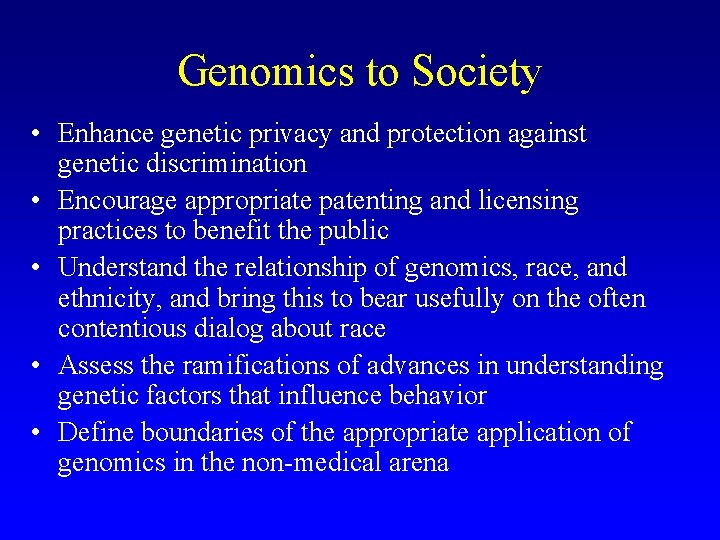
Genomics to Society • Enhance genetic privacy and protection against genetic discrimination • Encourage appropriate patenting and licensing practices to benefit the public • Understand the relationship of genomics, race, and ethnicity, and bring this to bear usefully on the often contentious dialog about race • Assess the ramifications of advances in understanding genetic factors that influence behavior • Define boundaries of the appropriate application of genomics in the non-medical arena