Introductory Training on the PLDs Grades 2 12

- Slides: 43
Introductory Training on the PLDs Grades 2– 12 2013– 2014 Texas Education Agency Student Assessment Division
Disclaimer § These slides have been prepared by the Student Assessment Division of the Texas Education Agency. § If any slide is amended or revised for local use, please remove the TEA footer at the bottom of the slide. TEA 2
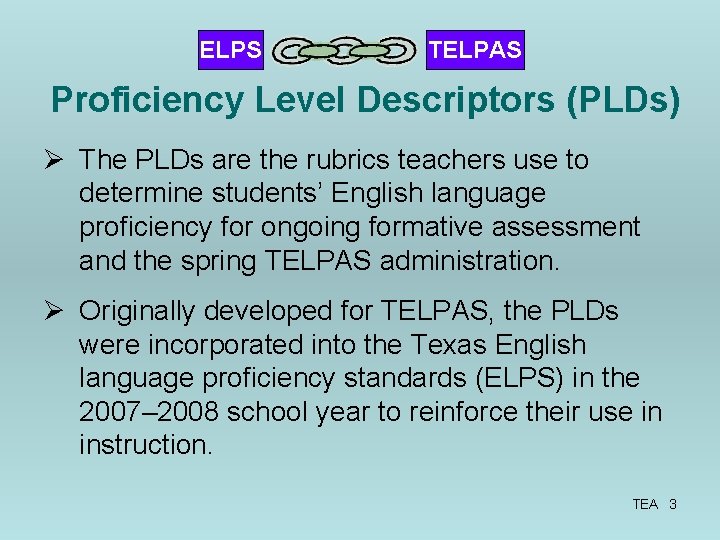
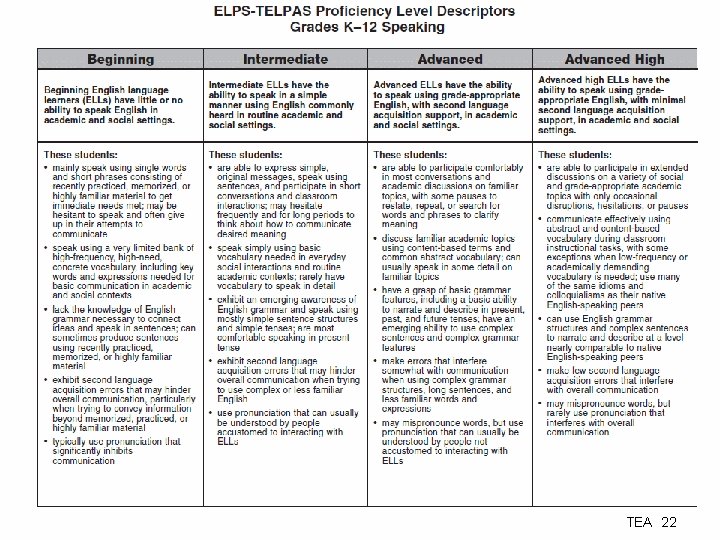
ELPS TELPAS Proficiency Level Descriptors (PLDs) Ø The PLDs are the rubrics teachers use to determine students’ English language proficiency for ongoing formative assessment and the spring TELPAS administration. Ø Originally developed for TELPAS, the PLDs were incorporated into the Texas English language proficiency standards (ELPS) in the 2007– 2008 school year to reinforce their use in instruction. TEA 3
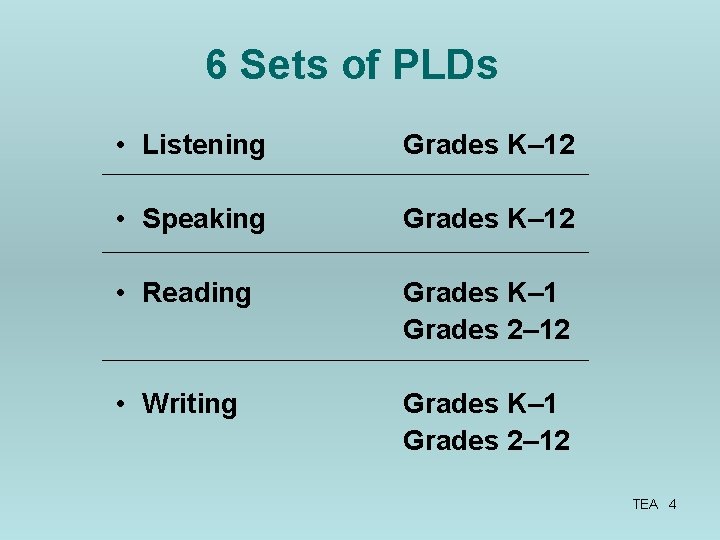
6 Sets of PLDs • Listening Grades K– 12 • Speaking Grades K– 12 • Reading Grades K– 1 Grades 2– 12 • Writing Grades K– 1 Grades 2– 12 TEA 4
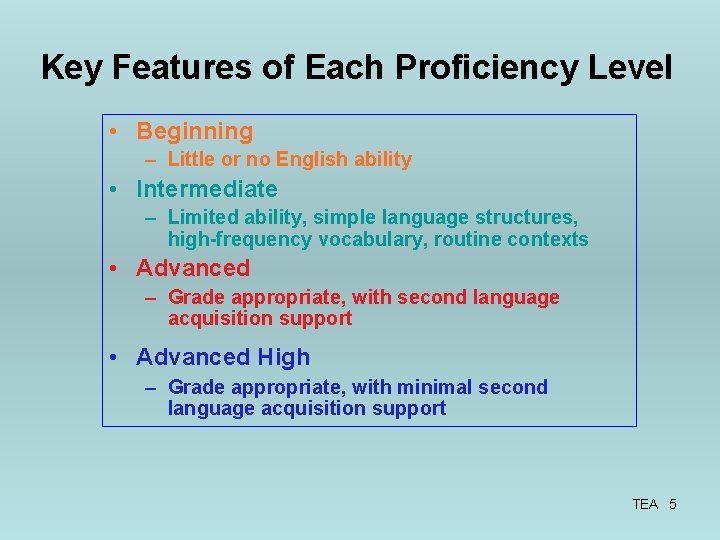
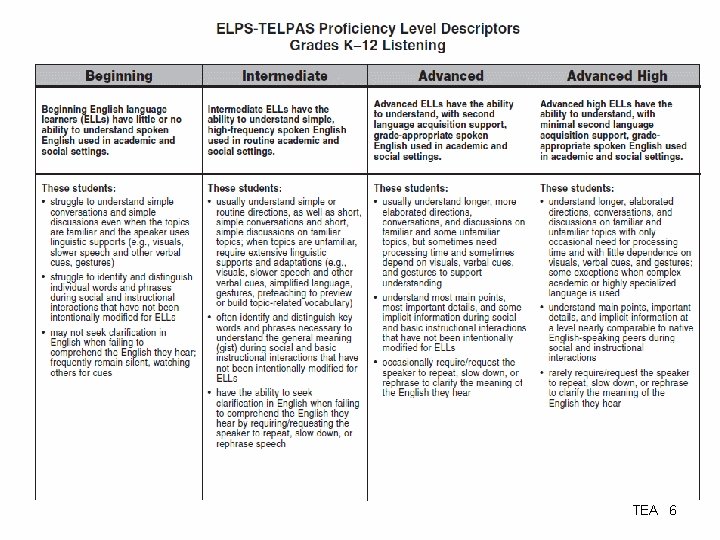
Key Features of Each Proficiency Level • Beginning – Little or no English ability • Intermediate – Limited ability, simple language structures, high-frequency vocabulary, routine contexts • Advanced – Grade appropriate, with second language acquisition support • Advanced High – Grade appropriate, with minimal second language acquisition support TEA 5
ELPS-TELPAS Proficiency Level Descriptors Grades K– 12 Listening TEA 6
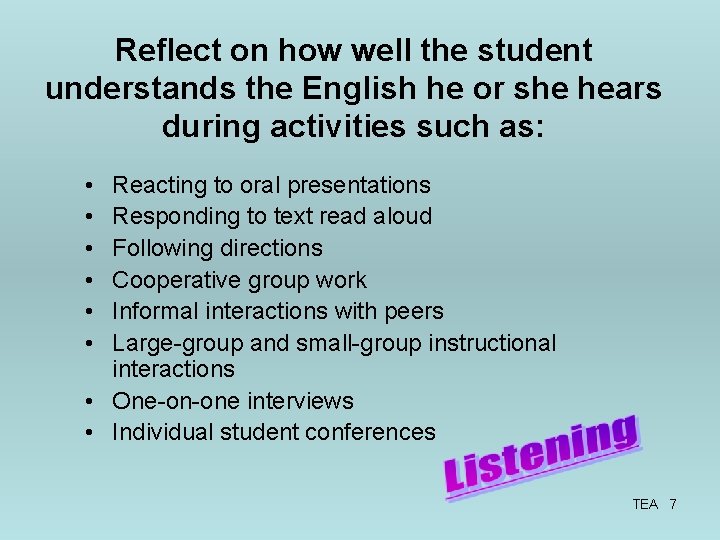
Reflect on how well the student understands the English he or she hears during activities such as: • • • Reacting to oral presentations Responding to text read aloud Following directions Cooperative group work Informal interactions with peers Large-group and small-group instructional interactions • One-on-one interviews • Individual student conferences TEA 7
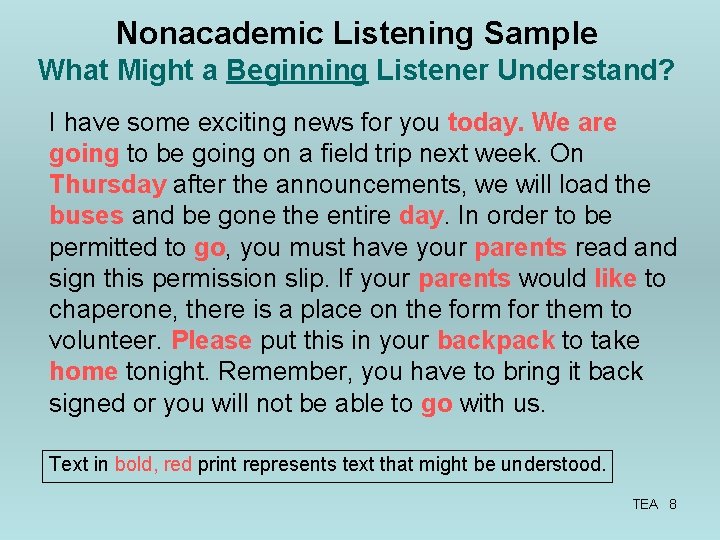
Nonacademic Listening Sample What Might a Beginning Listener Understand? I have some exciting news for you today. We are going to be going on a field trip next week. On Thursday after the announcements, we will load the buses and be gone the entire day. In order to be permitted to go, you must have your parents read and sign this permission slip. If your parents would like to chaperone, there is a place on the form for them to volunteer. Please put this in your backpack to take home tonight. Remember, you have to bring it back signed or you will not be able to go with us. Text in bold, red print represents text that might be understood. TEA 8
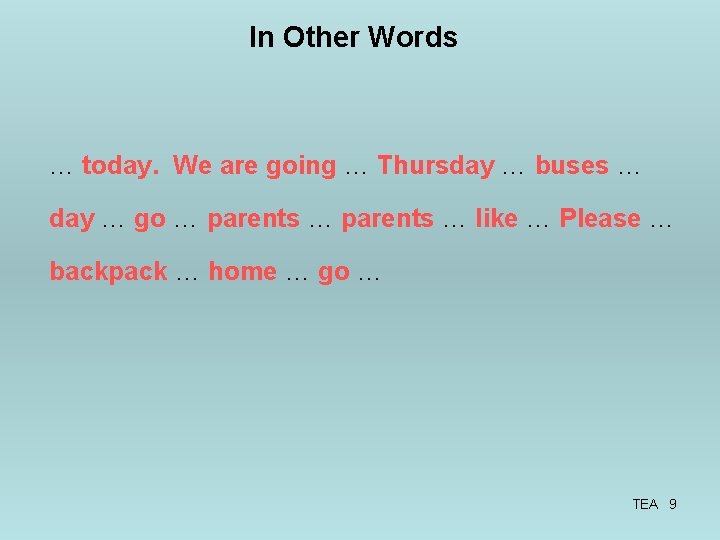
In Other Words … today. We are going … Thursday … buses … day … go … parents … like … Please … backpack … home … go … TEA 9
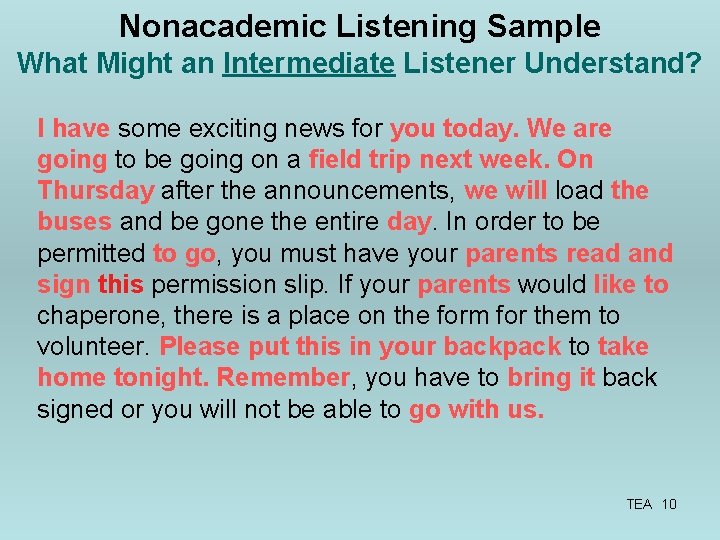
Nonacademic Listening Sample What Might an Intermediate Listener Understand? I have some exciting news for you today. We are going to be going on a field trip next week. On Thursday after the announcements, we will load the buses and be gone the entire day. In order to be permitted to go, you must have your parents read and sign this permission slip. If your parents would like to chaperone, there is a place on the form for them to volunteer. Please put this in your backpack to take home tonight. Remember, you have to bring it back signed or you will not be able to go with us. TEA 10
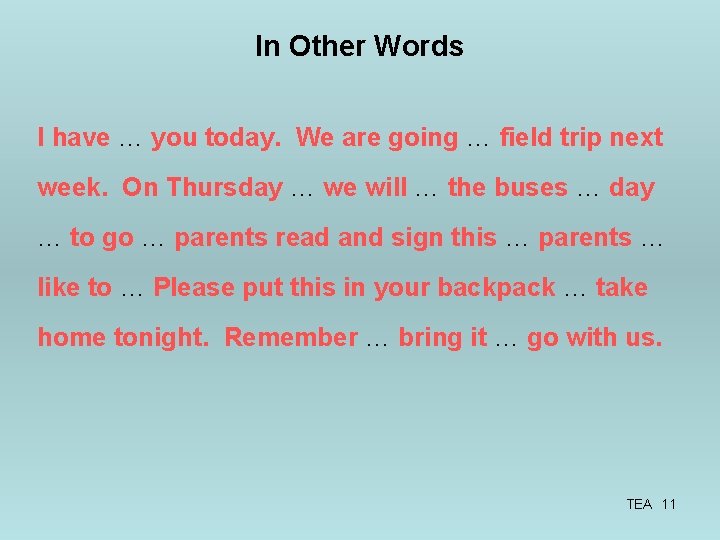
In Other Words I have … you today. We are going … field trip next week. On Thursday … we will … the buses … day … to go … parents read and sign this … parents … like to … Please put this in your backpack … take home tonight. Remember … bring it … go with us. TEA 11
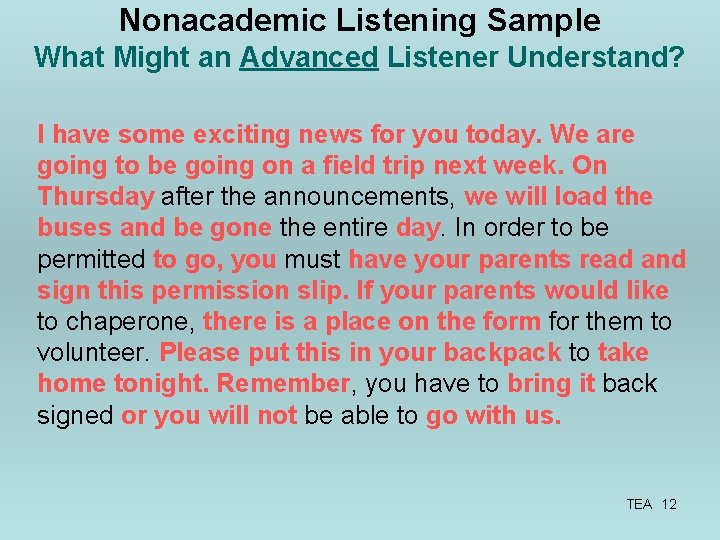
Nonacademic Listening Sample What Might an Advanced Listener Understand? I have some exciting news for you today. We are going to be going on a field trip next week. On Thursday after the announcements, we will load the buses and be gone the entire day. In order to be permitted to go, you must have your parents read and sign this permission slip. If your parents would like to chaperone, there is a place on the form for them to volunteer. Please put this in your backpack to take home tonight. Remember, you have to bring it back signed or you will not be able to go with us. TEA 12
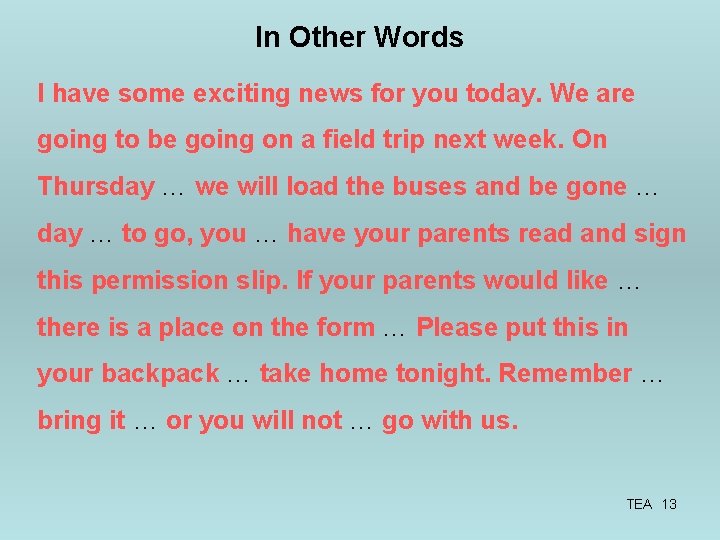
In Other Words I have some exciting news for you today. We are going to be going on a field trip next week. On Thursday … we will load the buses and be gone … day … to go, you … have your parents read and sign this permission slip. If your parents would like … there is a place on the form … Please put this in your backpack … take home tonight. Remember … bring it … or you will not … go with us. TEA 13
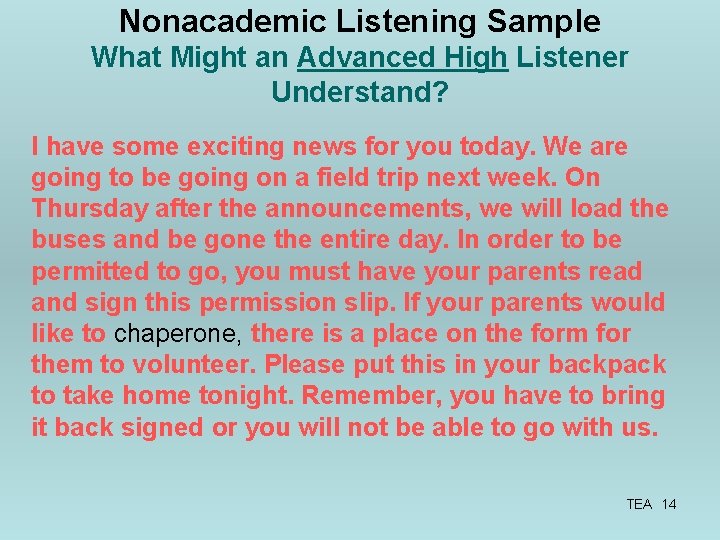
Nonacademic Listening Sample What Might an Advanced High Listener Understand? I have some exciting news for you today. We are going to be going on a field trip next week. On Thursday after the announcements, we will load the buses and be gone the entire day. In order to be permitted to go, you must have your parents read and sign this permission slip. If your parents would like to chaperone, there is a place on the form for them to volunteer. Please put this in your backpack to take home tonight. Remember, you have to bring it back signed or you will not be able to go with us. TEA 14
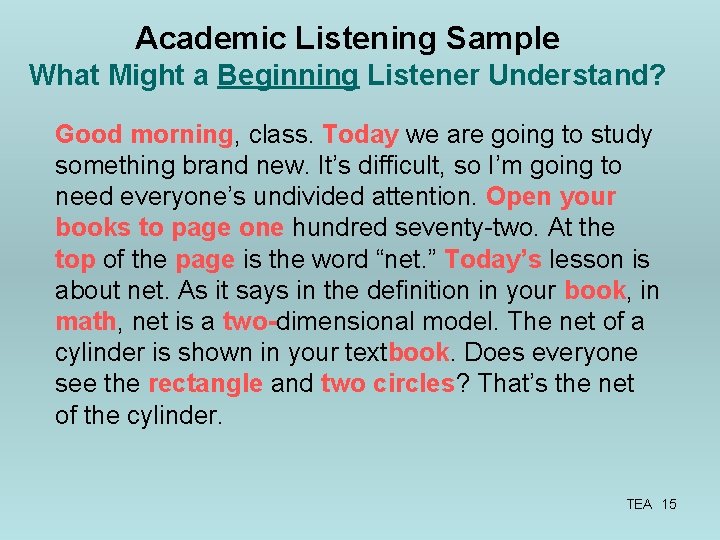
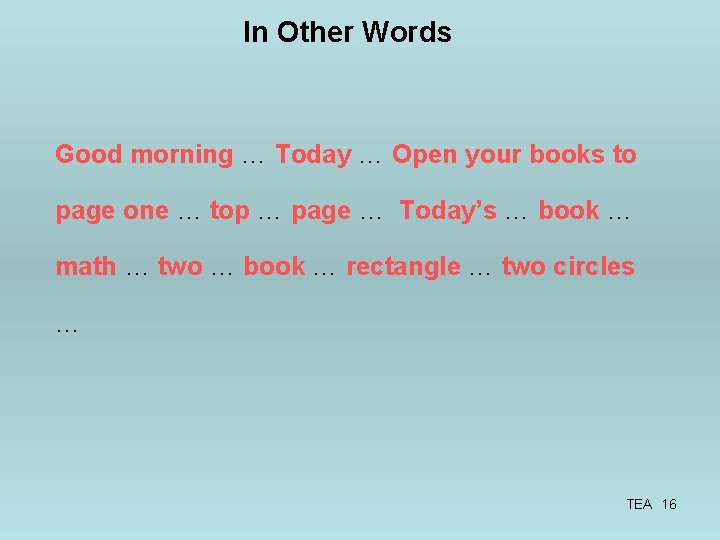
Academic Listening Sample What Might a Beginning Listener Understand? Good morning, class. Today we are going to study something brand new. It’s difficult, so I’m going to need everyone’s undivided attention. Open your books to page one hundred seventy-two. At the top of the page is the word “net. ” Today’s lesson is about net. As it says in the definition in your book, in math, net is a two-dimensional model. The net of a cylinder is shown in your textbook. Does everyone see the rectangle and two circles? That’s the net of the cylinder. TEA 15
In Other Words Good morning … Today … Open your books to page one … top … page … Today’s … book … math … two … book … rectangle … two circles … TEA 16
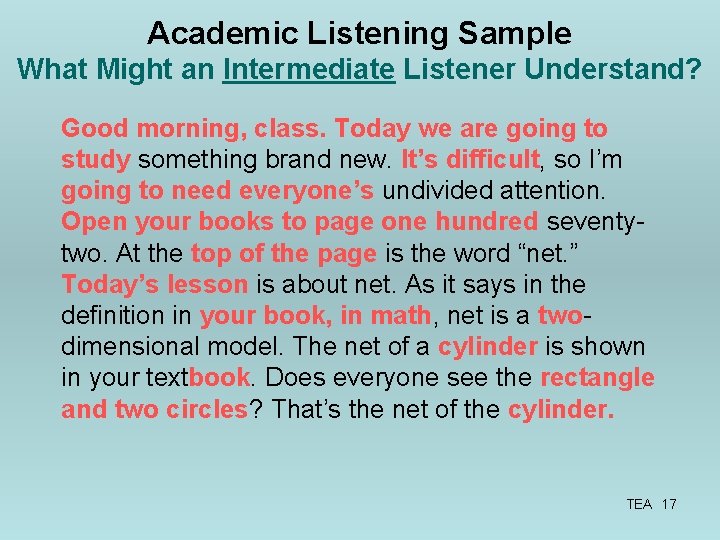
Academic Listening Sample What Might an Intermediate Listener Understand? Good morning, class. Today we are going to study something brand new. It’s difficult, so I’m going to need everyone’s undivided attention. Open your books to page one hundred seventytwo. At the top of the page is the word “net. ” Today’s lesson is about net. As it says in the definition in your book, in math, net is a twodimensional model. The net of a cylinder is shown in your textbook. Does everyone see the rectangle and two circles? That’s the net of the cylinder. TEA 17
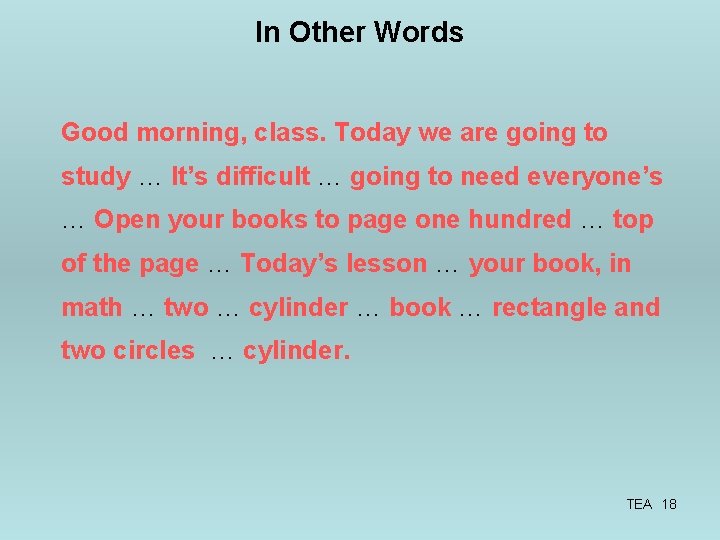
In Other Words Good morning, class. Today we are going to study … It’s difficult … going to need everyone’s … Open your books to page one hundred … top of the page … Today’s lesson … your book, in math … two … cylinder … book … rectangle and two circles … cylinder. TEA 18
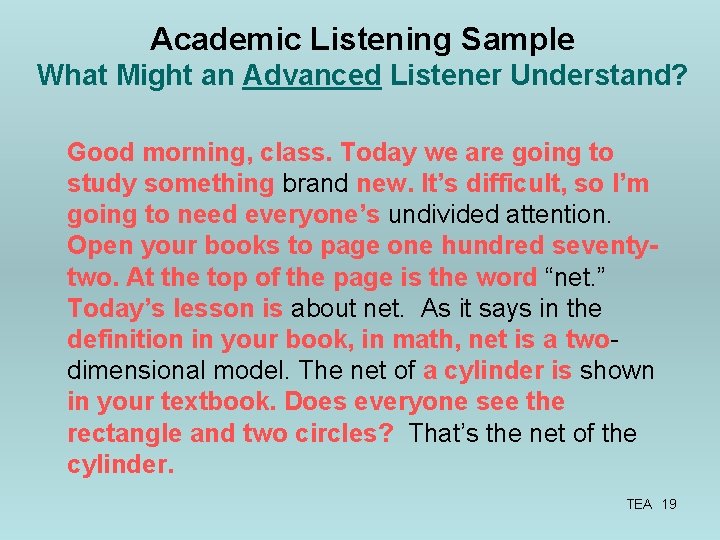
Academic Listening Sample What Might an Advanced Listener Understand? Good morning, class. Today we are going to study something brand new. It’s difficult, so I’m going to need everyone’s undivided attention. Open your books to page one hundred seventytwo. At the top of the page is the word “net. ” Today’s lesson is about net. As it says in the definition in your book, in math, net is a twodimensional model. The net of a cylinder is shown in your textbook. Does everyone see the rectangle and two circles? That’s the net of the cylinder. TEA 19
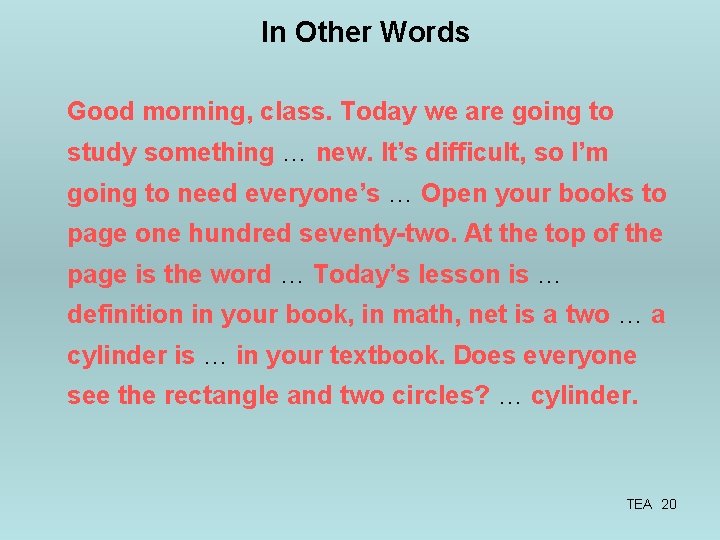
In Other Words Good morning, class. Today we are going to study something … new. It’s difficult, so I’m going to need everyone’s … Open your books to page one hundred seventy-two. At the top of the page is the word … Today’s lesson is … definition in your book, in math, net is a two … a cylinder is … in your textbook. Does everyone see the rectangle and two circles? … cylinder. TEA 20
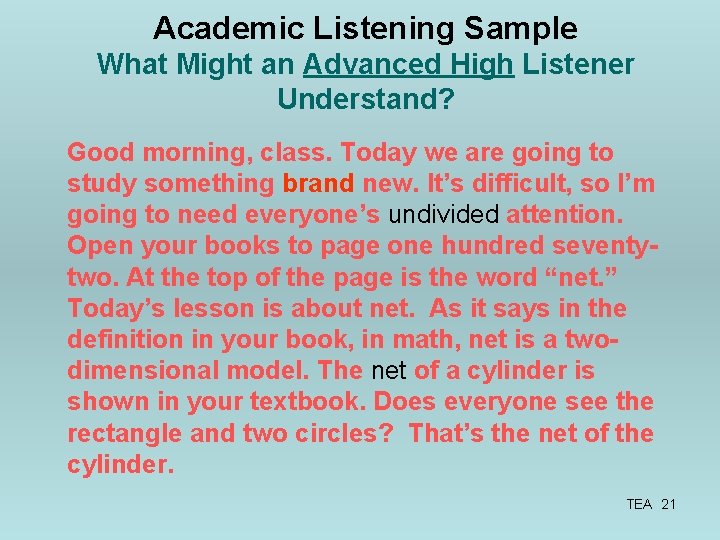
Academic Listening Sample What Might an Advanced High Listener Understand? Good morning, class. Today we are going to study something brand new. It’s difficult, so I’m going to need everyone’s undivided attention. Open your books to page one hundred seventytwo. At the top of the page is the word “net. ” Today’s lesson is about net. As it says in the definition in your book, in math, net is a twodimensional model. The net of a cylinder is shown in your textbook. Does everyone see the rectangle and two circles? That’s the net of the cylinder. TEA 21
ELPS Proficiency Level Descriptors Grades K– 12 Speaking TEA 22
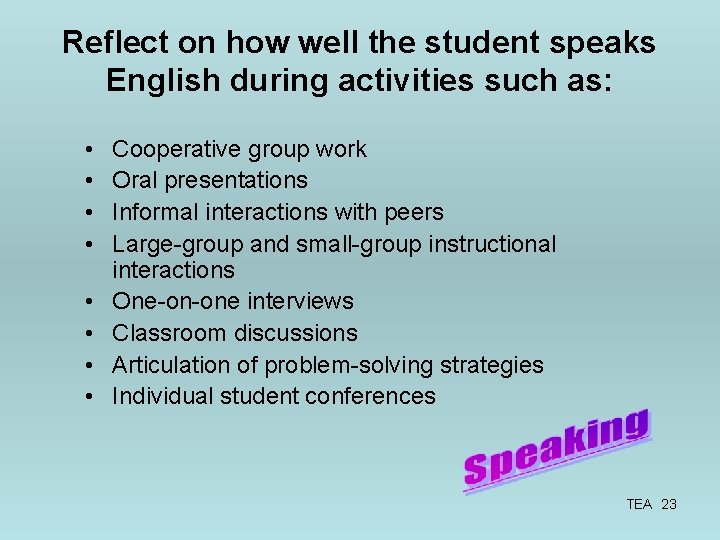
Reflect on how well the student speaks English during activities such as: • • Cooperative group work Oral presentations Informal interactions with peers Large-group and small-group instructional interactions One-on-one interviews Classroom discussions Articulation of problem-solving strategies Individual student conferences TEA 23
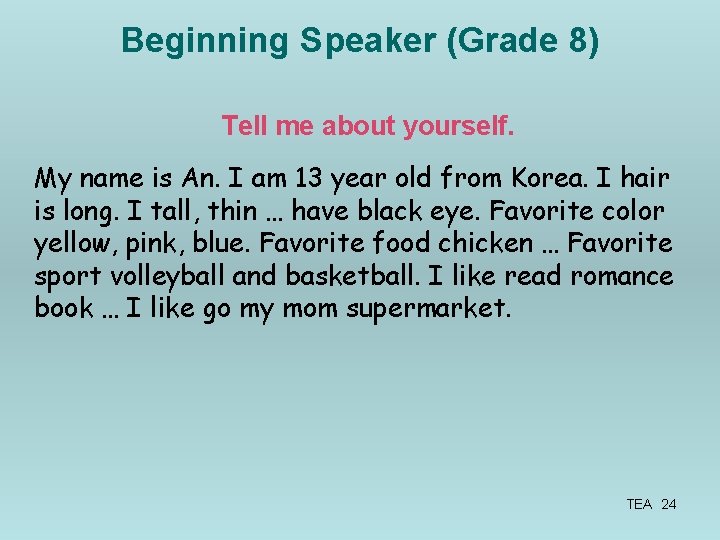
Beginning Speaker (Grade 8) Tell me about yourself. My name is An. I am 13 year old from Korea. I hair is long. I tall, thin … have black eye. Favorite color yellow, pink, blue. Favorite food chicken … Favorite sport volleyball and basketball. I like read romance book … I like go my mom supermarket. TEA 24
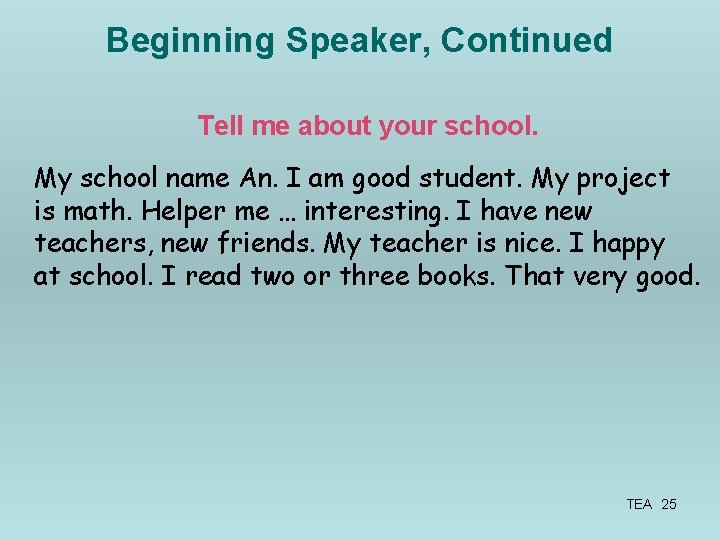
Beginning Speaker, Continued Tell me about your school. My school name An. I am good student. My project is math. Helper me … interesting. I have new teachers, new friends. My teacher is nice. I happy at school. I read two or three books. That very good. TEA 25
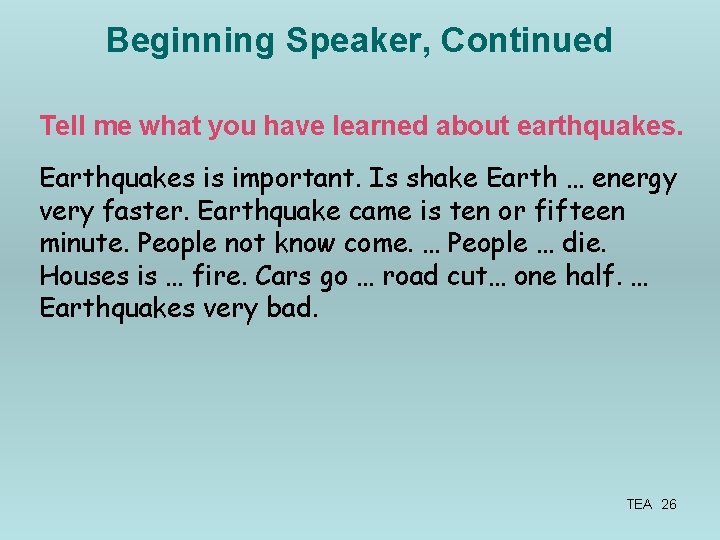
Beginning Speaker, Continued Tell me what you have learned about earthquakes. Earthquakes is important. Is shake Earth … energy very faster. Earthquake came is ten or fifteen minute. People not know come. … People … die. Houses is … fire. Cars go … road cut… one half. … Earthquakes very bad. TEA 26
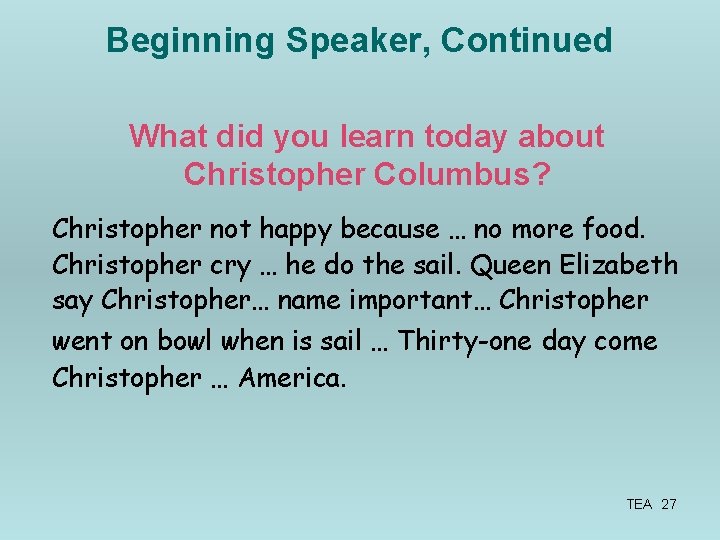
Beginning Speaker, Continued What did you learn today about Christopher Columbus? Christopher not happy because … no more food. Christopher cry … he do the sail. Queen Elizabeth say Christopher… name important… Christopher went on bowl when is sail … Thirty-one day come Christopher … America. TEA 27
Intermediate Speaker (Grade 5) Tell me about yourself and your family. My name is Lorenzo. I have two sisters. The name of my sister are Marisa and Ariana. I have my mother and father. I am the baby of family. Now later my mom her … other baby 7 months. I want boy because for play video games. I have a cat. The name is Michi and play of running in the house. My colored favorite is black because my friend he weared all black. I like everybody but one girl. When I grow, I want capitán of army. The army is good for me because I want fly over the state. TEA 28
Intermediate Speaker, Continued Tell me about a place where you used to live. I born in Puerto Rico. Close my house is a river. The name is a arroyo. I go swimming to river with my cousin and friends for 3 hours. After, everybody go to house. In the morning I go to school at 7: 30. This is what I make every day. TEA 29
Intermediate Speaker, Continued Tell me what you see in this picture. The man hunting ducks with rifle. He has hat up on the hair and has jacket of square black and white. The man looks the duck what is swimming in a lake. The others duck is flying. The ducks looking the man with gun. The ducks on the lake said, “No, no kill my family. Please no, no. ” TEA 30
Intermediate Speaker, Continued Tell me about the rock cycle you have drawn. The magma has 1000º. Is very hot. When the volcano … erosion, the magma is go outside … and the name is lava with rocks. The lava and the rocks called igneous rock. After … the earth is erosion. Also after … phase … then also the period sedimentary rock. When continue, pressure and heat is when the earth … water and ice pressure the rocks… TEA 31
Advanced Speaker (Grade 2) How are you and your friend alike and different? My friend is tall and I am short. I have long hair and she has short hair. I have curly hair and she has thin hair. My tooth fell but hers didn’t … I have one bracelets but she has much more. I bring a sweater to school but she does not bring one. I don’t collect stickers but she does. We have alike because we are girls and have brown eyes. We both like to play a lot. Both have the same friends. We always come to school and always bring our homework. That’s how we are different and alike. TEA 32
Advanced Speaker, Continued Tell me something you did that was fun. This weekend it was raining and my cousins came at my house. We couldn’t do nothing. My cousin told me, “Ask your mom if we can play in the rain and in the mud. ” I went and ask my mom and she said yes but not with that clothes, so I changed my clothes and my mom looked for old clothes for my cousins. Outside was wet and slippery. First we got on my trampoline. We were slipping a lot. Then we got down and were playing with the mud. My cousin drop me on the mud and I said, “Help me up. ” He helped me, then I drop him. He said that felt so good and we were laughing… TEA 33
Advanced Speaker, Continued What have you learned about tepees? The tepee is a little house that is made of bricks, and it has like brown paper around … but it is the buffalo skin. The Indians live in the tepee. They kill the buffalo and use the skin to make clothes … and more things. The Indians have pictures around the buffalo skin. The Indians have to live just with two beds. Their beds are made of buffalo skin and are not the same like our beds. TEA 34
Advanced High Speaker (Grade 6) Tell what you have learned about dinosaurs. Most male dinosaurs mostly ate other dinosaurs to feed the female dinosaurs. I learned that their babies didn’t have to learn how to walk. This is a difference of other baby animals. Most flying dinosaurs got food in the water and ate only fish. They dive down in the water and then went back up. Most female dinosaurs picked some leaves to keep them warm over the night. The same as most animals, they got on top of their eggs so the eggs can stay warm and hatch faster. They had to hatch fast because other animals will eat them. That is why most female dinosaurs stayed most of their time on top of their eggs. Dinosaurs lived. TEA good 35 until the humans came and started killing them. Now
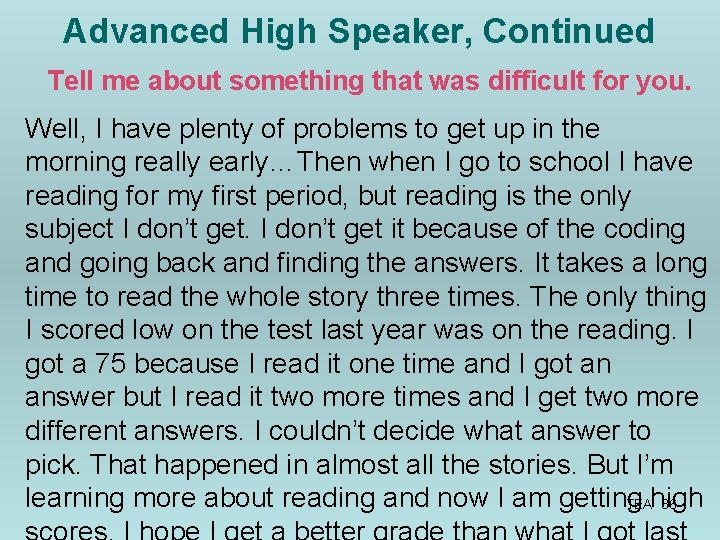
Advanced High Speaker, Continued Tell me about something that was difficult for you. Well, I have plenty of problems to get up in the morning really early…Then when I go to school I have reading for my first period, but reading is the only subject I don’t get it because of the coding and going back and finding the answers. It takes a long time to read the whole story three times. The only thing I scored low on the test last year was on the reading. I got a 75 because I read it one time and I got an answer but I read it two more times and I get two more different answers. I couldn’t decide what answer to pick. That happened in almost all the stories. But I’m learning more about reading and now I am getting TEAhigh 36
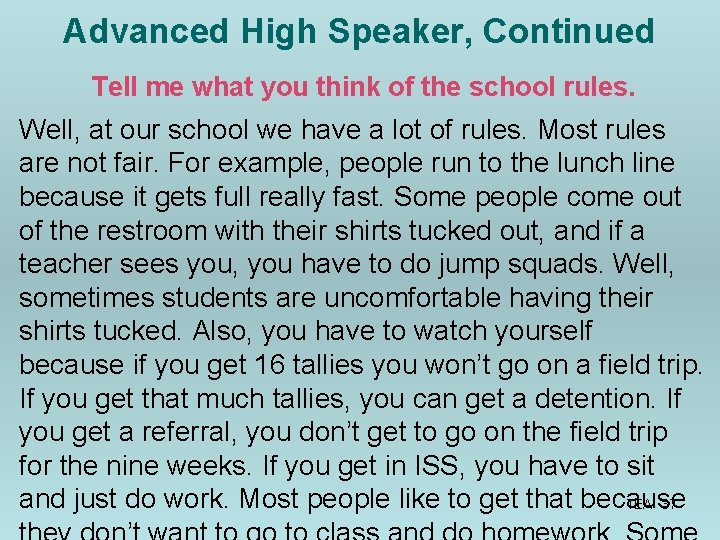
Advanced High Speaker, Continued Tell me what you think of the school rules. Well, at our school we have a lot of rules. Most rules are not fair. For example, people run to the lunch line because it gets full really fast. Some people come out of the restroom with their shirts tucked out, and if a teacher sees you, you have to do jump squads. Well, sometimes students are uncomfortable having their shirts tucked. Also, you have to watch yourself because if you get 16 tallies you won’t go on a field trip. If you get that much tallies, you can get a detention. If you get a referral, you don’t get to go on the field trip for the nine weeks. If you get in ISS, you have to sit and just do work. Most people like to get that because TEA 37
ELPS-TELPAS Proficiency Level Descriptors Grades 2 -12 Writing TEA 38
Writing in Grades 2– 12 Remember that the writing ratings of students in grades 2– 12 are based on collections of their writing from a variety of content areas. TEA 39
Writing and Speaking Remember that incorporating appropriate writing and speaking activities in subject matter instruction helps ELLs internalize new English vocabulary and language structures. This helps them – Ø improve their command of academic English and Ø learn the content taught in their classes. TEA 40
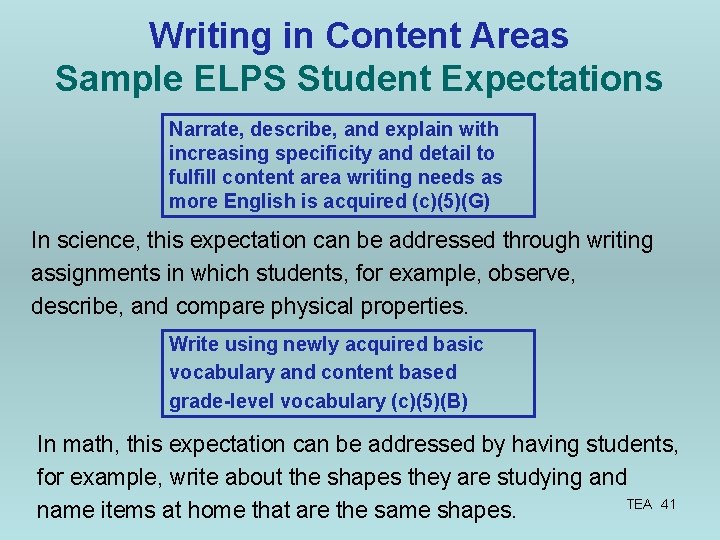
Writing in Content Areas Sample ELPS Student Expectations Narrate, describe, and explain with increasing specificity and detail to fulfill content area writing needs as more English is acquired (c)(5)(G) In science, this expectation can be addressed through writing assignments in which students, for example, observe, describe, and compare physical properties. Write using newly acquired basic vocabulary and content based grade-level vocabulary (c)(5)(B) In math, this expectation can be addressed by having students, for example, write about the shapes they are studying and TEA 41 name items at home that are the same shapes.
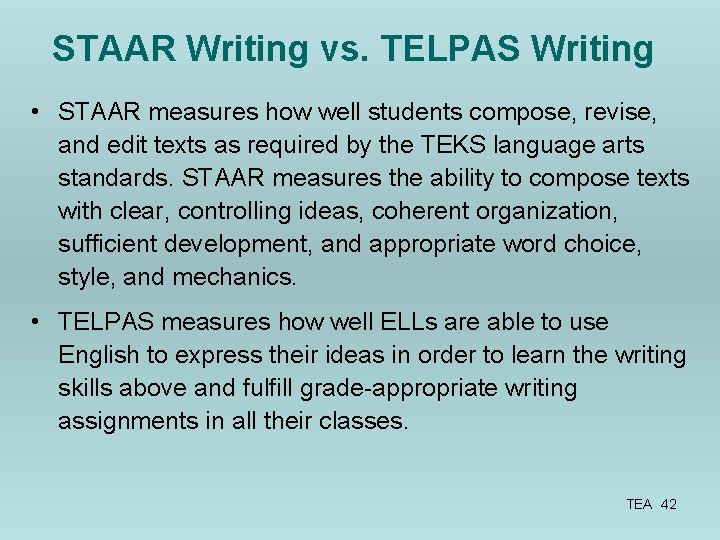
STAAR Writing vs. TELPAS Writing • STAAR measures how well students compose, revise, and edit texts as required by the TEKS language arts standards. STAAR measures the ability to compose texts with clear, controlling ideas, coherent organization, sufficient development, and appropriate word choice, style, and mechanics. • TELPAS measures how well ELLs are able to use English to express their ideas in order to learn the writing skills above and fulfill grade-appropriate writing assignments in all their classes. TEA 42
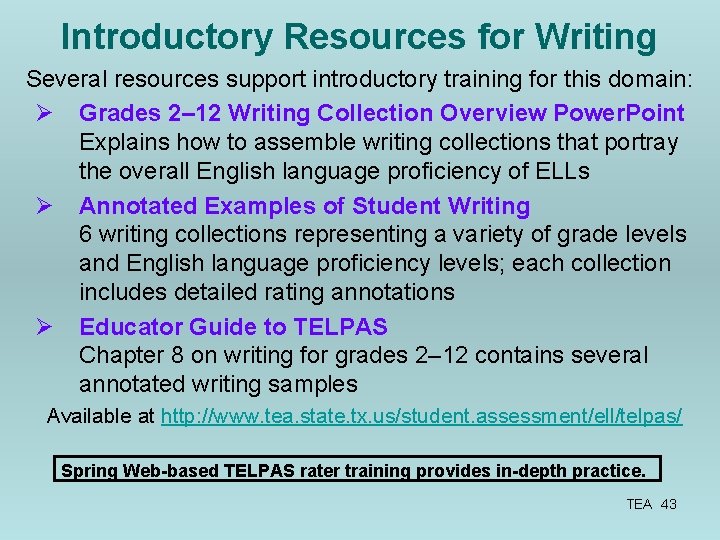
Introductory Resources for Writing Several resources support introductory training for this domain: Ø Grades 2– 12 Writing Collection Overview Power. Point Explains how to assemble writing collections that portray the overall English language proficiency of ELLs Ø Annotated Examples of Student Writing 6 writing collections representing a variety of grade levels and English language proficiency levels; each collection includes detailed rating annotations Ø Educator Guide to TELPAS Chapter 8 on writing for grades 2– 12 contains several annotated writing samples Available at http: //www. tea. state. tx. us/student. assessment/ell/telpas/ Spring Web-based TELPAS rater training provides in-depth practice. TEA 43