IN THE NAME OF ALLAH Thyroid Function and
- Slides: 60
IN THE NAME OF ALLAH Thyroid Function and Conception ROYA ALAEI
CLINICAL DESISIONS The NEW ENGLAND JOURNAL of MEDICINE
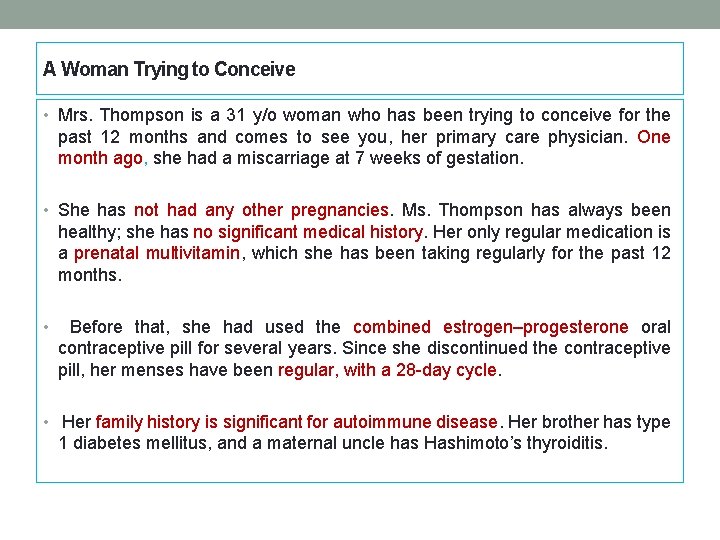
A Woman Trying to Conceive • Mrs. Thompson is a 31 y/o woman who has been trying to conceive for the past 12 months and comes to see you, her primary care physician. One month ago, she had a miscarriage at 7 weeks of gestation. • She has not had any other pregnancies. Ms. Thompson has always been healthy; she has no significant medical history. Her only regular medication is a prenatal multivitamin, which she has been taking regularly for the past 12 months. • Before that, she had used the combined estrogen–progesterone oral contraceptive pill for several years. Since she discontinued the contraceptive pill, her menses have been regular, with a 28 day cycle. • Her family history is significant for autoimmune disease. Her brother has type 1 diabetes mellitus, and a maternal uncle has Hashimoto’s thyroiditis.
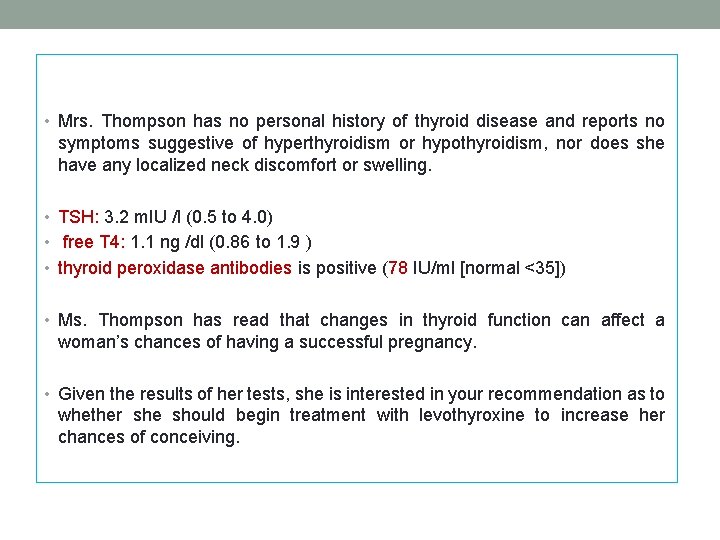
• Mrs. Thompson has no personal history of thyroid disease and reports no symptoms suggestive of hyperthyroidism or hypothyroidism, nor does she have any localized neck discomfort or swelling. • TSH: 3. 2 m. IU /l (0. 5 to 4. 0) • free T 4: 1. 1 ng /dl (0. 86 to 1. 9 ) • thyroid peroxidase antibodies is positive (78 IU/ml [normal <35]) • Ms. Thompson has read that changes in thyroid function can affect a woman’s chances of having a successful pregnancy. • Given the results of her tests, she is interested in your recommendation as to whether she should begin treatment with levothyroxine to increase her chances of conceiving.
Treatment Options Which one of the following approaches would you take for this patient? Base your choice on the published literature, your own experience, published guidelines, and other information sources. § Recommend treatment with low dose levothyroxine. § Do not recommend treatment with levothyroxine. To aid in your decision making, each of these approaches is defended in a short essay by an expert in the field. Given your knowledge of the patient and the points made by the experts, which approach would you choose?
Recommend Treatment with Low Dose Levothyroxine • This clinical scenario of a young, healthy woman who is found to have a serum thyrotropin concentration in the mid to upper reference range for non pregnant women, a normal free T 4 concentration, and a positive thyroid antibody titer is a common clinical entity. • Whether a clinician initiates low dose levothyroxine in this patient is based on current understanding of spontaneous loss of pregnancy and its associations with thyroid dysfunction, thyroid antibody positivity, and these two factors in combination.
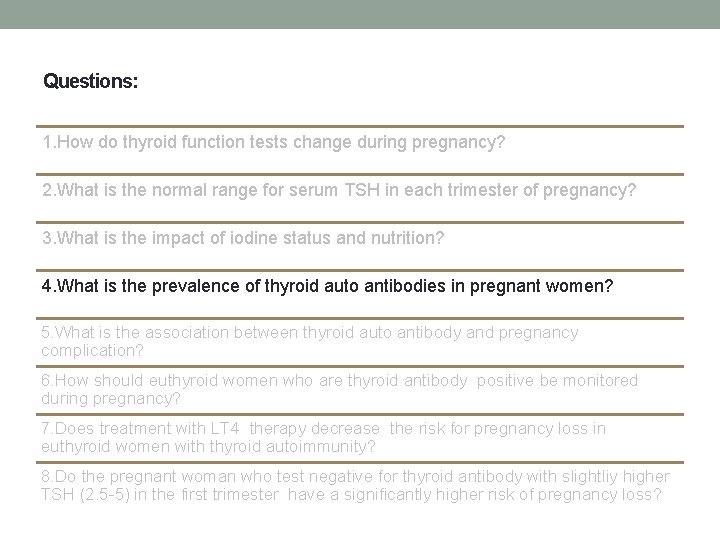
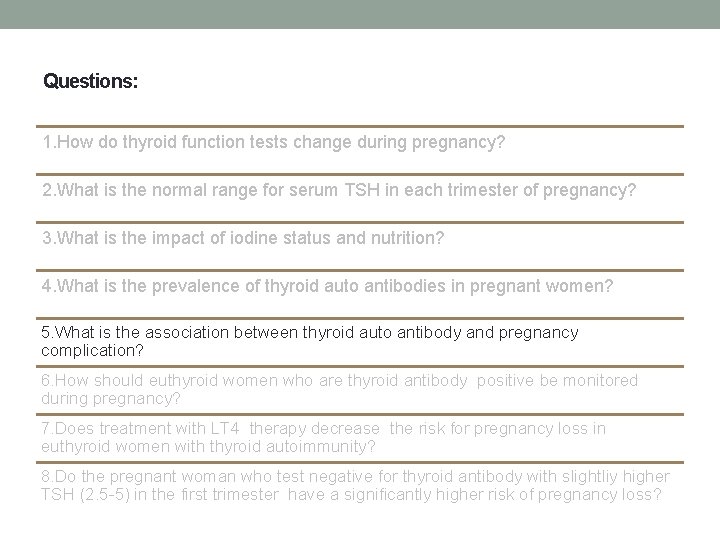
Questions: 1. How do thyroid function tests change during pregnancy? 2. What is the normal range for serum TSH in each trimester of pregnancy? 3. What is the impact of iodine status and nutrition? 4. What is the prevalence of thyroid auto antibodies in pregnant women? 5. What is the association between thyroid auto antibody and pregnancy complication? 6. How should euthyroid women who are thyroid antibody positive be monitored during pregnancy? 7. Does treatment with LT 4 therapy decrease the risk for pregnancy loss in euthyroid women with thyroid autoimmunity? 8. Do the pregnant woman who test negative for thyroid antibody with slightliy higher TSH (2. 5 5) in the first trimester have a significantly higher risk of pregnancy loss?
Questions: 1. How do thyroid function tests change during pregnancy? 2. What is the normal range for serum TSH in each trimester of pregnancy? 3. What is the impact of iodine status and nutrition? 4. What is the prevalence of thyroid auto antibodies in pregnant women? 5. What is the association between thyroid auto antibody and pregnancy complication? 6. How should euthyroid women who are thyroid antibody positive be monitored during pregnancy? 7. Does treatment with LT 4 therapy decrease the risk for pregnancy loss in euthyroid women with thyroid autoimmunity? 8. Do the pregnant woman who test negative for thyroid antibody with slightliy higher TSH (2. 5 5) in the first trimester have a significantly higher risk of pregnancy loss?
1. how do thyroid function tests change during pregnancy? Normal pregnancy is associated with: § an increase in renal iodine excretion § an increase in thyroxin binding proteins § an increase in thyroid hormone production § thyroid stimulatory effects of h. CG The healthy thyroid adapts to these alterations through changes in: thyroid hormone metabolism, iodine uptake, and the regulation of the hypothalamic pituitary thyroid axis. The thyroid function tests of healthy pregnant women, therefore, differ from those of healthy non pregnant women.
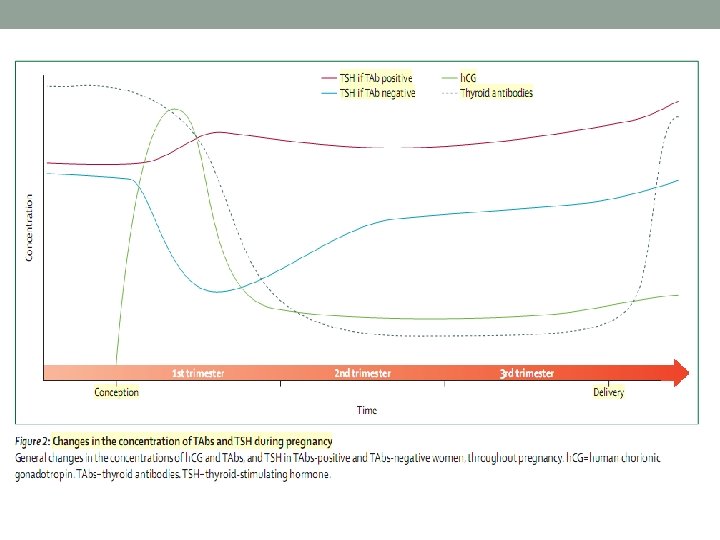
TBG and total T 4: § increase by week 7 of gestation and reach a peak by approximately week 16 of gestation(5). These concentrations then remain high until delivery. In the first trimester, maternal h. CG: § directly stimulates the TSH receptor, increasing thyroid hormone production and resulting in a subsequent reduction in serum TSH concentration(4, 6). During pregnancy, women have lower serum TSH than before pregnancy, and a TSH below then non pregnant lower limit of 0. 4 m. U/L is observed in as many as 15% of healthy women during the first trimester of pregnancy. The fraction of women with a suppressed TSH falls to about 10% in the second trimester, and 5% in the third trimester.
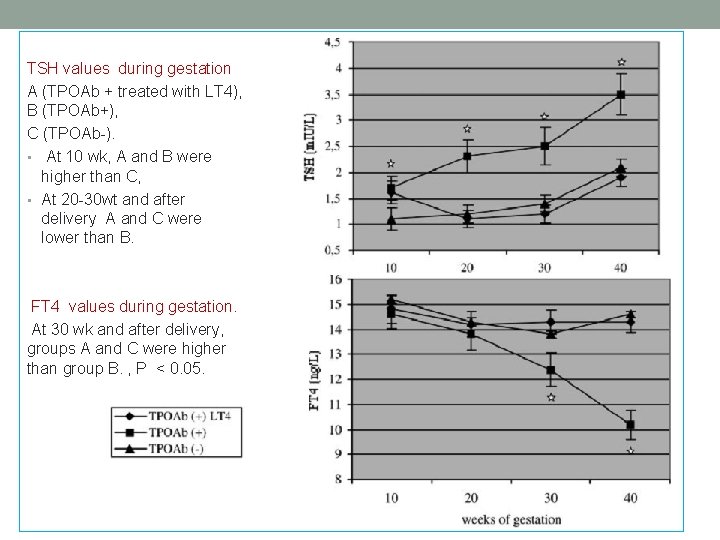
Autoimmune thyroid disease during pregnancy Lancet Diabetes Endocrinol 2017 Simone De Leo, Elizabeth N Pearce http: //dx. doi. org/10. 1016/ § A decrease in both the prevalence and titers of thyroid antibodies during the course of pregnancy has been observed in several studies. § These studies reported higher baseline TSH in women with autoimmunity than women who were negative for antibodies. thyroid § TSH remained high for women with thyroid auto immunity throughout pregnancy, with a further increase at parturition, despite a decrease in autoantibody concentrations.
Questions: 1. How do thyroid function tests change during pregnancy? 2. What is the normal range for serum TSH in each trimester of pregnancy? 3. What is the impact of iodine status and nutrition? 4. What is the prevalence of thyroid auto antibodies in pregnant women? 5. What is the association between thyroid auto antibody and pregnancy complication? 6. How should euthyroid women who are thyroid antibody positive be monitored during pregnancy? 7. Does treatment with LT 4 therapy decrease the risk for pregnancy loss in euthyroid women with thyroid autoimmunity? 8. Do the pregnant woman who test negative for thyroid antibody with slightliy higher TSH (2. 5 5) in the first trimester have a significantly higher risk of pregnancy loss?
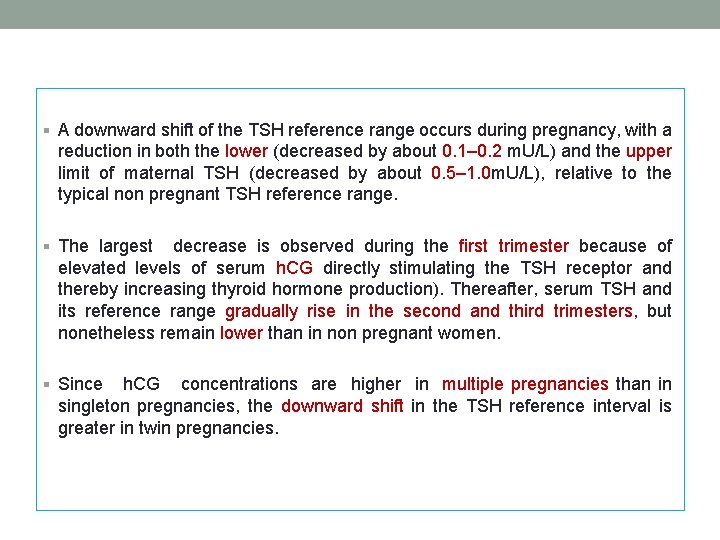
§ A downward shift of the TSH reference range occurs during pregnancy, with a reduction in both the lower (decreased by about 0. 1– 0. 2 m. U/L) and the upper limit of maternal TSH (decreased by about 0. 5– 1. 0 m. U/L), relative to the typical non pregnant TSH reference range. § The largest decrease is observed during the first trimester because of elevated levels of serum h. CG directly stimulating the TSH receptor and thereby increasing thyroid hormone production). Thereafter, serum TSH and its reference range gradually rise in the second and third trimesters, but nonetheless remain lower than in non pregnant women. § Since h. CG concentrations are higher in multiple pregnancies than in singleton pregnancies, the downward shift in the TSH reference interval is greater in twin pregnancies.
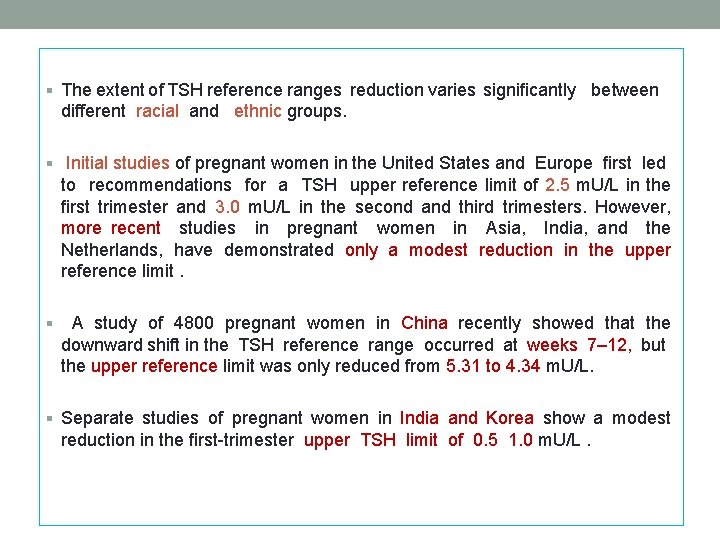
§ The extent of TSH reference ranges reduction varies significantly between different racial and ethnic groups. § Initial studies of pregnant women in the United States and Europe first led to recommendations for a TSH upper reference limit of 2. 5 m. U/L in the first trimester and 3. 0 m. U/L in the second and third trimesters. However, more recent studies in pregnant women in Asia, India, and the Netherlands, have demonstrated only a modest reduction in the upper reference limit. § A study of 4800 pregnant women in China recently showed that the downward shift in the TSH reference range occurred at weeks 7– 12, but the upper reference limit was only reduced from 5. 31 to 4. 34 m. U/L. § Separate studies of pregnant women in India and Korea show a modest reduction in the first trimester upper TSH limit of 0. 5 1. 0 m. U/L.
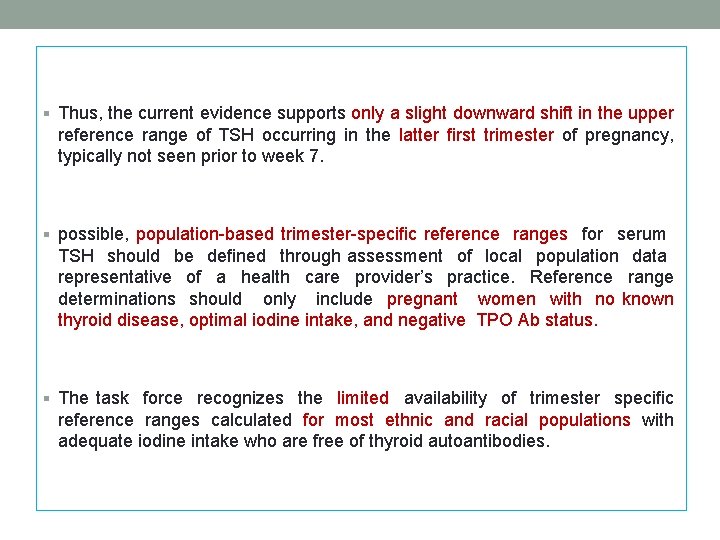
§ Thus, the current evidence supports only a slight downward shift in the upper reference range of TSH occurring in the latter first trimester of pregnancy, typically not seen prior to week 7. § possible, population based trimester specific reference ranges for serum TSH should be defined through assessment of local population data representative of a health care provider’s practice. Reference range determinations should only include pregnant women with no known thyroid disease, optimal iodine intake, and negative TPO Ab status. § The task force recognizes the limited availability of trimester specific reference ranges calculated for most ethnic and racial populations with adequate iodine intake who are free of thyroid autoantibodies.
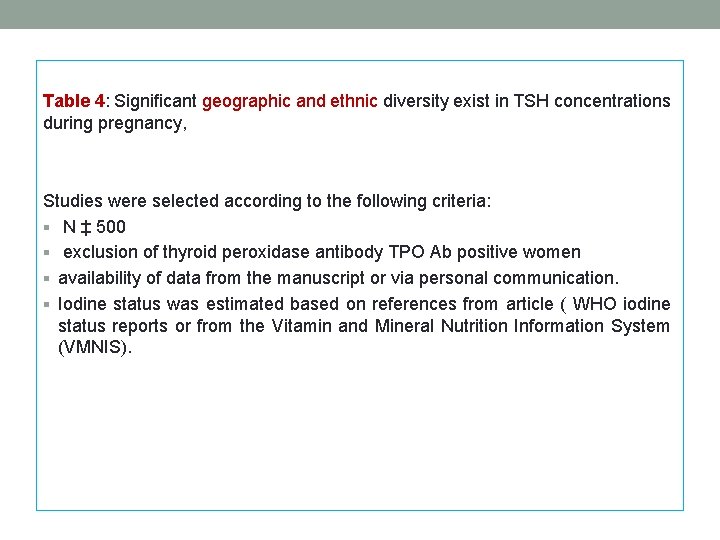
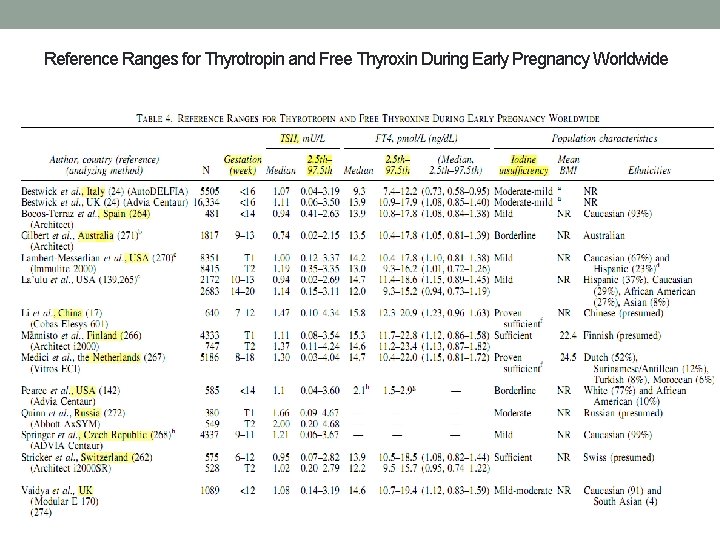
Table 4: Significant geographic and ethnic diversity exist in TSH concentrations during pregnancy, Studies were selected according to the following criteria: § N ‡ 500 § exclusion of thyroid peroxidase antibody TPO Ab positive women § availability of data from the manuscript or via personal communication. § Iodine status was estimated based on references from article ( WHO iodine status reports or from the Vitamin and Mineral Nutrition Information System (VMNIS).
Reference Ranges for Thyrotropin and Free Thyroxin During Early Pregnancy Worldwide
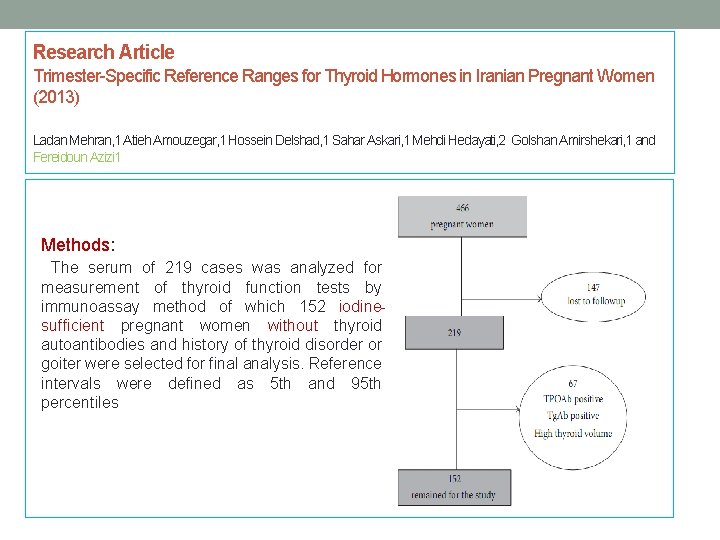
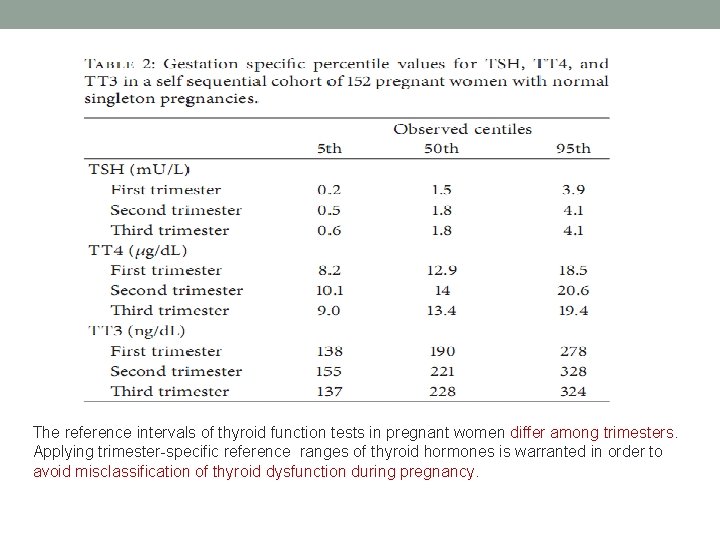
Research Article Trimester Specific Reference Ranges for Thyroid Hormones in Iranian Pregnant Women (2013) Ladan Mehran, 1 Atieh Amouzegar, 1 Hossein Delshad, 1 Sahar Askari, 1 Mehdi Hedayati, 2 Golshan Amirshekari, 1 and Fereidoun Azizi 1 Methods: The serum of 219 cases was analyzed for measurement of thyroid function tests by immunoassay method of which 152 iodine sufficient pregnant women without thyroid autoantibodies and history of thyroid disorder or goiter were selected for final analysis. Reference intervals were defined as 5 th and 95 th percentiles
The reference intervals of thyroid function tests in pregnant women differ among trimesters. Applying trimester specific reference ranges of thyroid hormones is warranted in order to avoid misclassification of thyroid dysfunction during pregnancy.
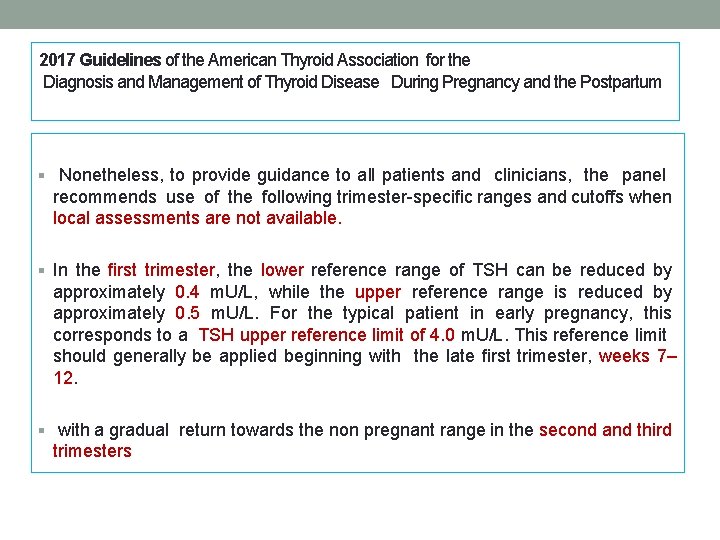
2017 Guidelines of the American Thyroid Association for the Diagnosis and Management of Thyroid Disease During Pregnancy and the Postpartum § Nonetheless, to provide guidance to all patients and clinicians, the panel recommends use of the following trimester specific ranges and cutoffs when local assessments are not available. § In the first trimester, the lower reference range of TSH can be reduced by approximately 0. 4 m. U/L, while the upper reference range is reduced by approximately 0. 5 m. U/L. For the typical patient in early pregnancy, this corresponds to a TSH upper reference limit of 4. 0 m. U/L. This reference limit should generally be applied beginning with the late first trimester, weeks 7– 12. § with a gradual return towards the non pregnant range in the second and third trimesters
Questions: 1. How do thyroid function tests change during pregnancy? 2. What is the normal range for serum TSH in each trimester of pregnancy? 3. What is the impact of iodine status and nutrition? 4. What is the prevalence of thyroid auto antibodies in pregnant women? 5. What is the association between thyroid auto antibody and pregnancy complication? 6. How should euthyroid women who are thyroid antibody positive be monitored during pregnancy? 7. Does treatment with LT 4 therapy decrease the risk for pregnancy loss in euthyroid women with thyroid autoimmunity? 8. Do the pregnant woman who test negative for thyroid antibody with slightliy higher TSH (2. 5 5) in the first trimester have a significantly higher risk of pregnancy loss?
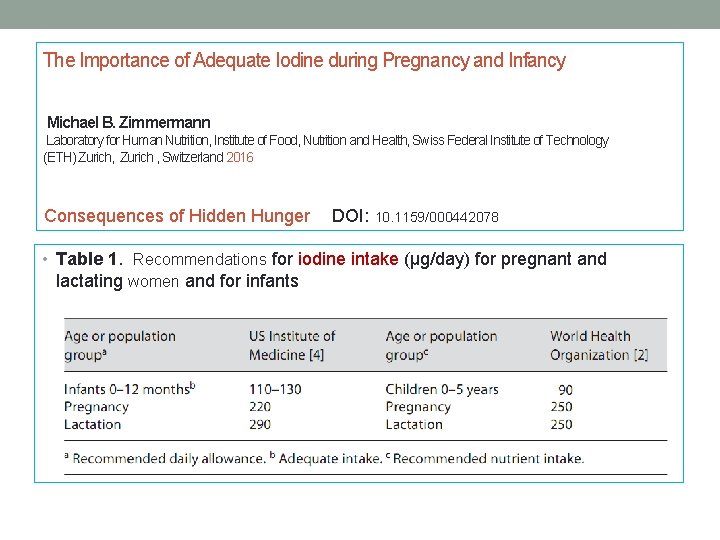
The Importance of Adequate Iodine during Pregnancy and Infancy Michael B. Zimmermann Laboratory for Human Nutrition, Institute of Food, Nutrition and Health, Swiss Federal Institute of Technology (ETH) Zurich, Zurich , Switzerland 2016 Consequences of Hidden Hunger DOI: 10. 1159/000442078 • Table 1. Recommendations for iodine intake (μg/day) for pregnant and lactating women and for infants
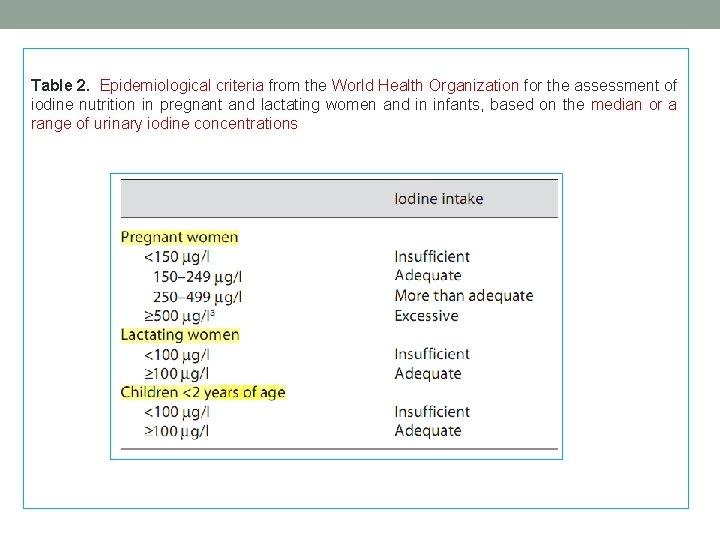
Table 2. Epidemiological criteria from the World Health Organization for the assessment of iodine nutrition in pregnant and lactating women and in infants, based on the median or a range of urinary iodine concentrations
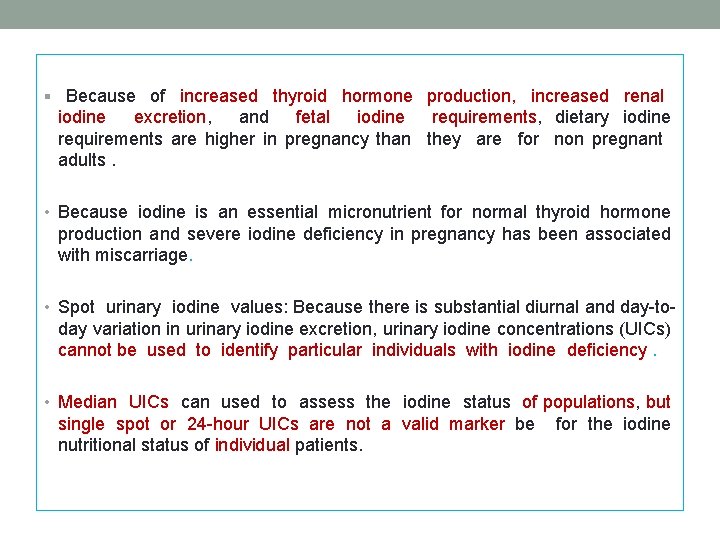
§ Because of increased thyroid hormone production, increased renal iodine excretion, and fetal iodine requirements, dietary iodine requirements are higher in pregnancy than they are for non pregnant adults. • Because iodine is an essential micronutrient for normal thyroid hormone production and severe iodine deficiency in pregnancy has been associated with miscarriage. • Spot urinary iodine values: Because there is substantial diurnal and day to day variation in urinary iodine excretion, urinary iodine concentrations (UICs) cannot be used to identify particular individuals with iodine deficiency. • Median UICs can used to assess the iodine status of populations, but single spot or 24 hour UICs are not a valid marker be nutritional status of individual patients. for the iodine
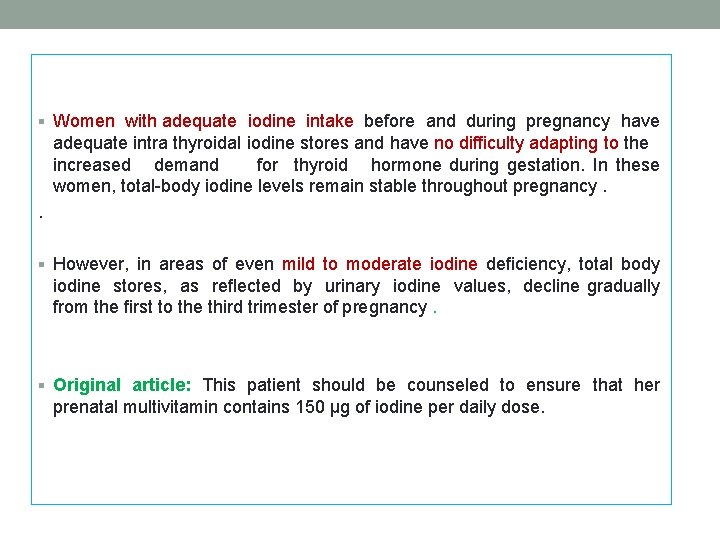
§ Women with adequate iodine intake before and during pregnancy have adequate intra thyroidal iodine stores and have no difficulty adapting to the increased demand for thyroid hormone during gestation. In these women, total body iodine levels remain stable throughout pregnancy. . § However, in areas of even mild to moderate iodine deficiency, total body iodine stores, as reflected by urinary iodine values, decline gradually from the first to the third trimester of pregnancy. § Original article: This patient should be counseled to ensure that her prenatal multivitamin contains 150 μg of iodine per daily dose.
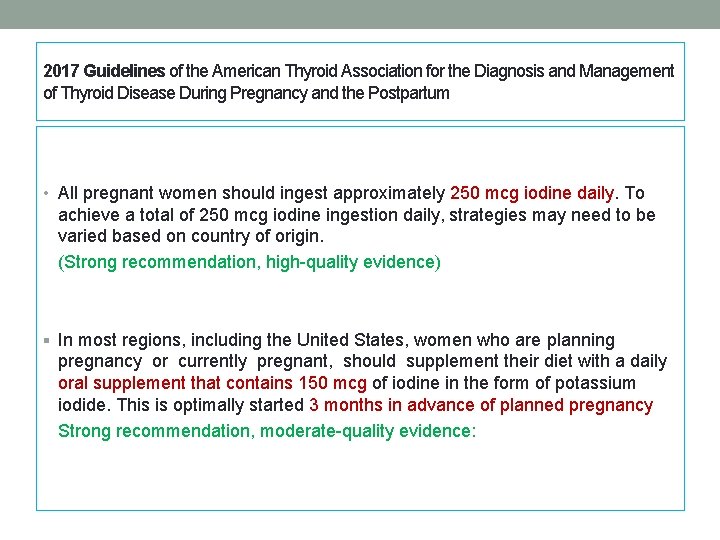
2017 Guidelines of the American Thyroid Association for the Diagnosis and Management of Thyroid Disease During Pregnancy and the Postpartum • All pregnant women should ingest approximately 250 mcg iodine daily. To achieve a total of 250 mcg iodine ingestion daily, strategies may need to be varied based on country of origin. (Strong recommendation, high quality evidence) § In most regions, including the United States, women who are planning pregnancy or currently pregnant, should supplement their diet with a daily oral supplement that contains 150 mcg of iodine in the form of potassium iodide. This is optimally started 3 months in advance of planned pregnancy Strong recommendation, moderate quality evidence:
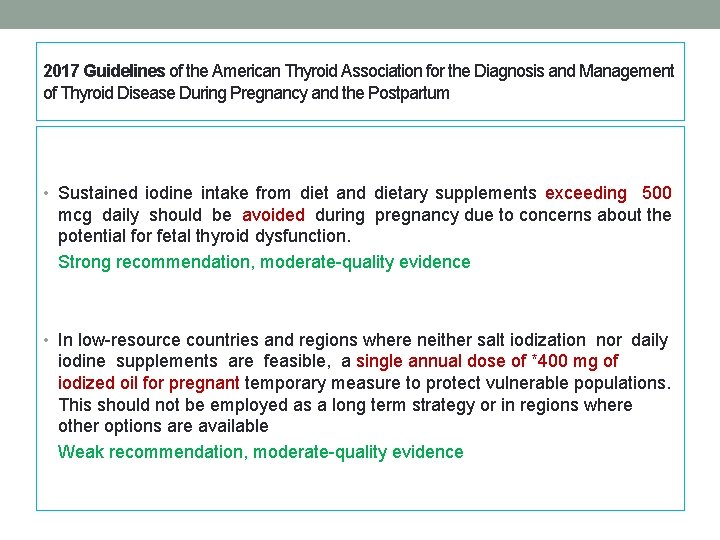
2017 Guidelines of the American Thyroid Association for the Diagnosis and Management of Thyroid Disease During Pregnancy and the Postpartum • Sustained iodine intake from diet and dietary supplements exceeding 500 mcg daily should be avoided during pregnancy due to concerns about the potential for fetal thyroid dysfunction. Strong recommendation, moderate quality evidence • In low resource countries and regions where neither salt iodization nor daily iodine supplements are feasible, a single annual dose of *400 mg of iodized oil for pregnant temporary measure to protect vulnerable populations. This should not be employed as a long term strategy or in regions where other options are available Weak recommendation, moderate quality evidence
Questions: 1. How do thyroid function tests change during pregnancy? 2. What is the normal range for serum TSH in each trimester of pregnancy? 3. What is the impact of iodine status and nutrition? 4. What is the prevalence of thyroid auto antibodies in pregnant women? 5. What is the association between thyroid auto antibody and pregnancy complication? 6. How should euthyroid women who are thyroid antibody positive be monitored during pregnancy? 7. Does treatment with LT 4 therapy decrease the risk for pregnancy loss in euthyroid women with thyroid autoimmunity? 8. Do the pregnant woman who test negative for thyroid antibody with slightliy higher TSH (2. 5 5) in the first trimester have a significantly higher risk of pregnancy loss?
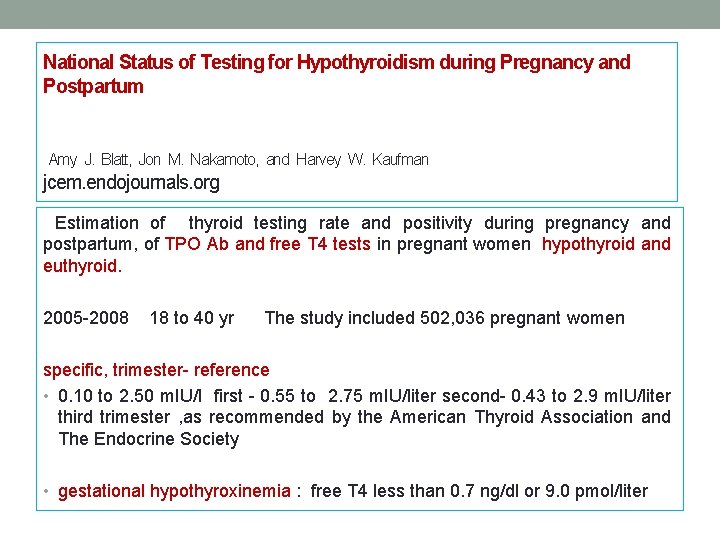
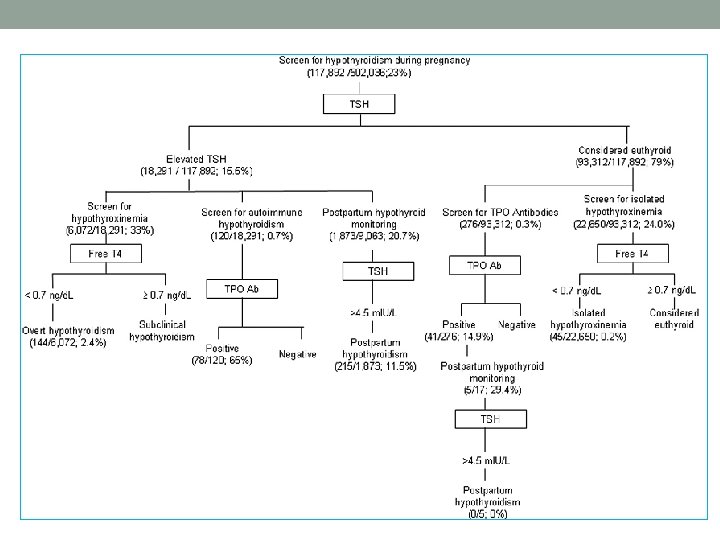
National Status of Testing for Hypothyroidism during Pregnancy and Postpartum Amy J. Blatt, Jon M. Nakamoto, and Harvey W. Kaufman jcem. endojournals. org Estimation of thyroid testing rate and positivity during pregnancy and postpartum, of TPO Ab and free T 4 tests in pregnant women hypothyroid and euthyroid. 2005 2008 18 to 40 yr The study included 502, 036 pregnant women specific, trimester reference • 0. 10 to 2. 50 m. IU/l first 0. 55 to 2. 75 m. IU/liter second 0. 43 to 2. 9 m. IU/liter third trimester , as recommended by the American Thyroid Association and The Endocrine Society • gestational hypothyroxinemia : free T 4 less than 0. 7 ng/dl or 9. 0 pmol/liter
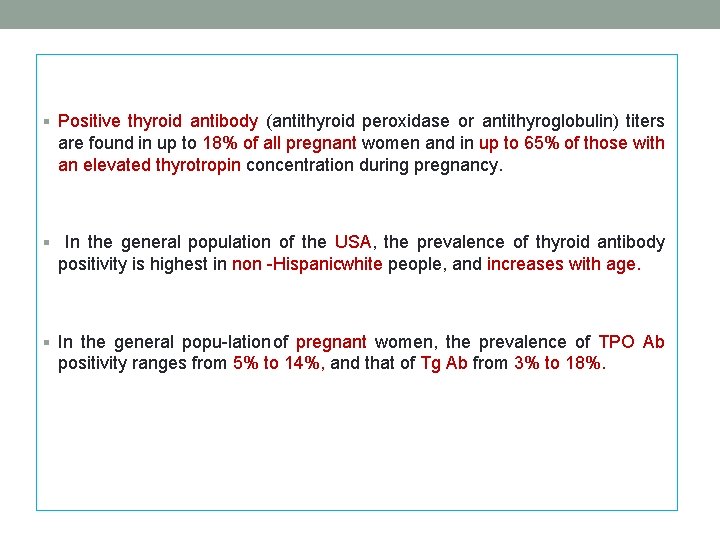
§ Positive thyroid antibody (antithyroid peroxidase or antithyroglobulin) titers are found in up to 18% of all pregnant women and in up to 65% of those with an elevated thyrotropin concentration during pregnancy. § In the general population of the USA, the prevalence of thyroid antibody positivity is highest in non Hispanicwhite people, and increases with age. § In the general popu lation of pregnant women, the prevalence of TPO Ab positivity ranges from 5% to 14%, and that of Tg Ab from 3% to 18%.
Questions: 1. How do thyroid function tests change during pregnancy? 2. What is the normal range for serum TSH in each trimester of pregnancy? 3. What is the impact of iodine status and nutrition? 4. What is the prevalence of thyroid auto antibodies in pregnant women? 5. What is the association between thyroid auto antibody and pregnancy complication? 6. How should euthyroid women who are thyroid antibody positive be monitored during pregnancy? 7. Does treatment with LT 4 therapy decrease the risk for pregnancy loss in euthyroid women with thyroid autoimmunity? 8. Do the pregnant woman who test negative for thyroid antibody with slightliy higher TSH (2. 5 5) in the first trimester have a significantly higher risk of pregnancy loss?
Autoimmune thyroid disease during pregnancy Lancet Diabetes Endocrinol 2017 Simone De Leo, Elizabeth N Pearce http: //dx. doi. org/10. 1016/ • This Review explores the association between thyroid autoimmunity and complications during and after pregnancy. Search strategy and selection criteria: • Pub. Med for publications written in English between 1980 and Aug 11, 2017, using the terms “thyroid autoimmunity” or “thyroid antibody” combined with the terms “miscarriage”, “pregnancy loss”, “preterm delivery”, premature delivery”, “infertility”, “assisted reproductive technology”, “child neurodevelopment”, “intrauterine growth ”, “perinatal mortality”, “depression during pregnancy”, “postpartum depression”, “gestational diabetes”, “placental abruption”, “premature rupture of membranes” , “preeclampsia”, “postpartum thyroiditis”, “fetal hyperthyroidism”, and “neonatal hyperthyroidism”.
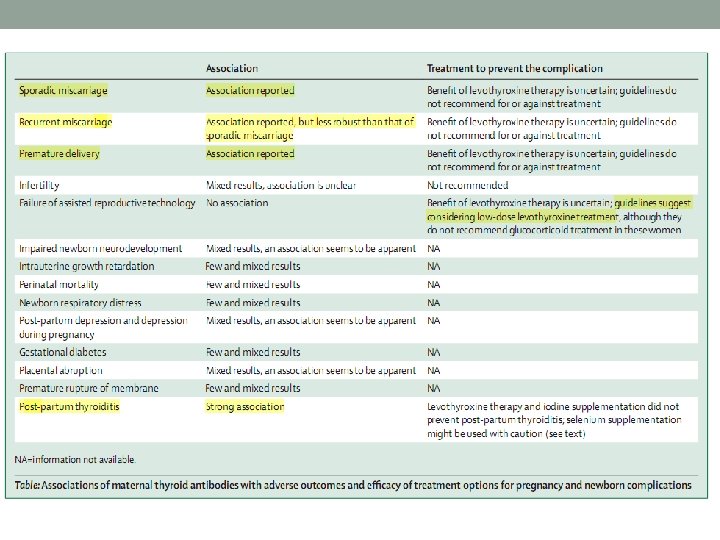
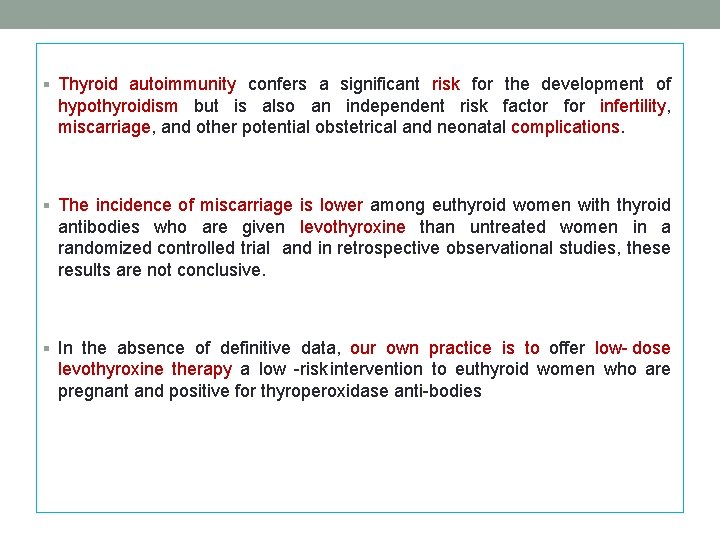
§ Thyroid autoimmunity confers a significant risk for the development of hypothyroidism but is also an independent risk factor for infertility, miscarriage, and other potential obstetrical and neonatal complications. § The incidence of miscarriage is lower among euthyroid women with thyroid antibodies who are given levothyroxine than untreated women in a randomized controlled trial and in retrospective observational studies, these results are not conclusive. § In the absence of definitive data, our own practice is to offer low dose levothyroxine therapy a low risk intervention to euthyroid women who are pregnant and positive for thyroperoxidase anti bodies.
Questions: 1. How do thyroid function tests change during pregnancy? 2. What is the normal range for serum TSH in each trimester of pregnancy? 3. What is the impact of iodine status and nutrition? 4. What is the prevalence of thyroid auto antibodies in pregnant women? 5. What is the association between thyroid auto antibody and pregnancy complication? 6. How should euthyroid women who are thyroid antibody positive be monitored during pregnancy? 7. Does treatment with LT 4 therapy decrease the risk for pregnancy loss in euthyroid women with thyroid autoimmunity? 8. Do the pregnant woman who test negative for thyroid antibody with slightliy higher TSH (2. 5 5) in the first trimester have a significantly higher risk of pregnancy loss?
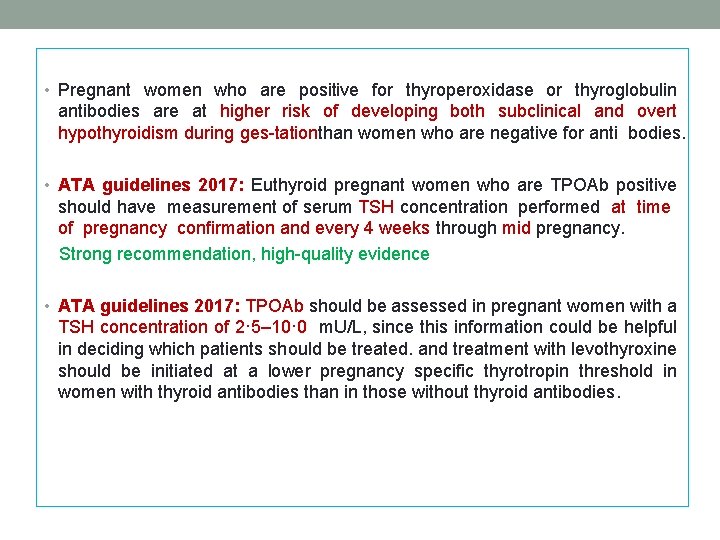
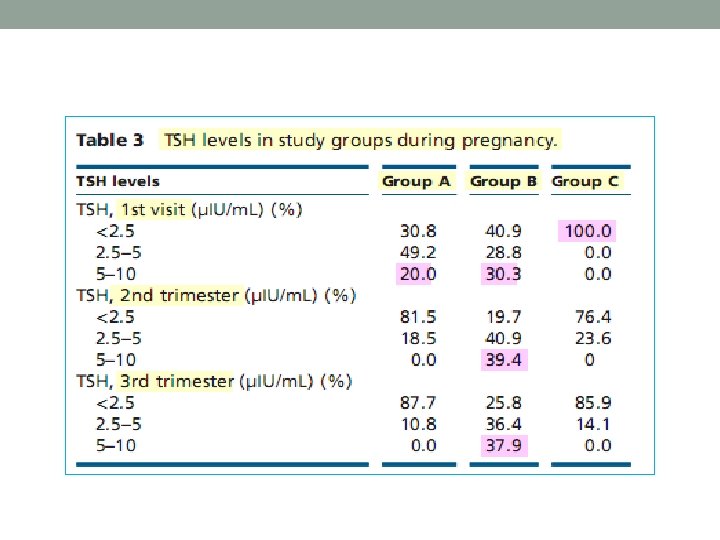
• Pregnant women who are positive for thyroperoxidase or thyroglobulin antibodies are at higher risk of developing both subclinical and overt hypothyroidism during ges tationthan women who are negative for anti bodies. • ATA guidelines 2017: Euthyroid pregnant women who are TPOAb positive should have measurement of serum TSH concentration performed at time of pregnancy confirmation and every 4 weeks through mid pregnancy. Strong recommendation, high quality evidence • ATA guidelines 2017: TPOAb should be assessed in pregnant women with a TSH concentration of 2· 5– 10· 0 m. U/L, since this information could be helpful in deciding which patients should be treated. and treatment with levothyroxine should be initiated at a lower pregnancy specific thyrotropin threshold in women with thyroid antibodies than in those without thyroid antibodies.
Questions: 1. How do thyroid function tests change during pregnancy? 2. What is the normal range for serum TSH in each trimester of pregnancy? 3. What is the impact of iodine status and nutrition? 4. What is the prevalence of thyroid auto antibodies in pregnant women? 5. What is the association between thyroid auto antibody and pregnancy complication? 6. How should euthyroid women who are thyroid antibody positive be monitored during pregnancy? 7. Does treatment with LT 4 therapy decrease the risk for pregnancy loss in euthyroid women with thyroid autoimmunity? 8. Do the pregnant woman who test negative for thyroid antibody with slightliy higher TSH (2. 5 5) in the first trimester have a significantly higher risk of pregnancy loss?
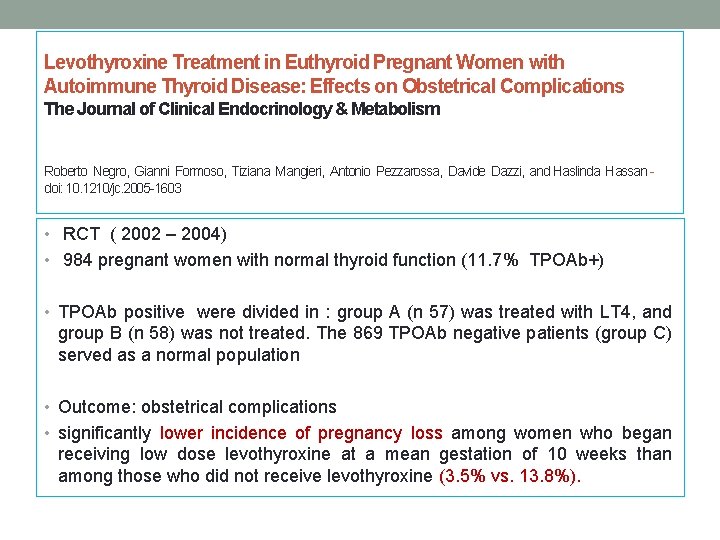
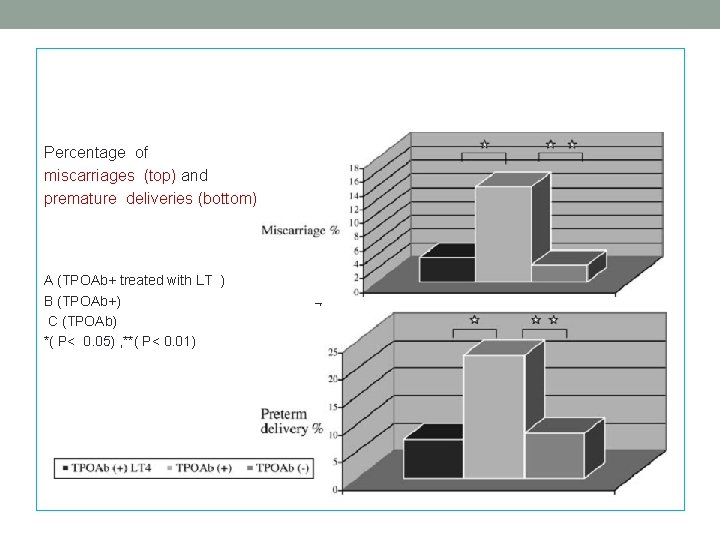
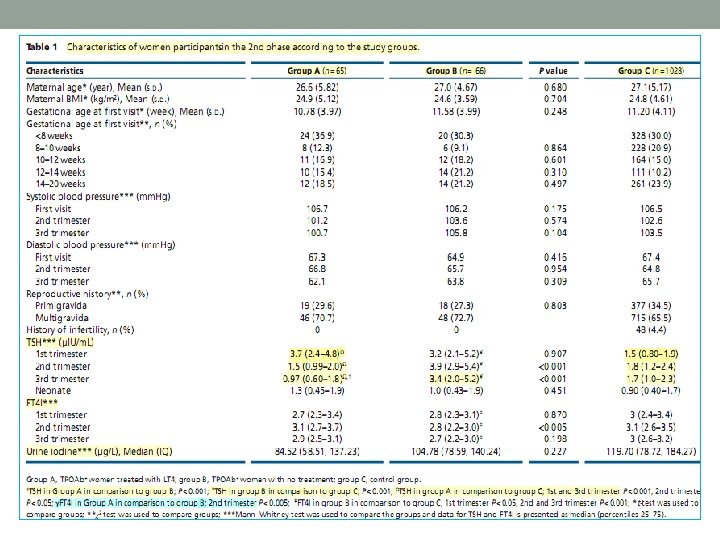
Levothyroxine Treatment in Euthyroid Pregnant Women with Autoimmune Thyroid Disease: Effects on Obstetrical Complications The Journal of Clinical Endocrinology & Metabolism Roberto Negro, Gianni Formoso, Tiziana Mangieri, Antonio Pezzarossa, Davide Dazzi, and Haslinda Hassan doi: 10. 1210/jc. 2005 1603 • RCT ( 2002 – 2004) • 984 pregnant women with normal thyroid function (11. 7% TPOAb+) • TPOAb positive were divided in : group A (n 57) was treated with LT 4, and group B (n 58) was not treated. The 869 TPOAb negative patients (group C) served as a normal population • Outcome: obstetrical complications • significantly lower incidence of pregnancy loss among women who began receiving low dose levothyroxine at a mean gestation of 10 weeks than among those who did not receive levothyroxine (3. 5% vs. 13. 8%).
TSH values during gestation A (TPOAb + treated with LT 4), B (TPOAb+), C (TPOAb ). • At 10 wk, A and B were higher than C, • At 20 30 wt and after delivery A and C were lower than B. FT 4 values during gestation. At 30 wk and after delivery, groups A and C were higher than group B. , P < 0. 05.
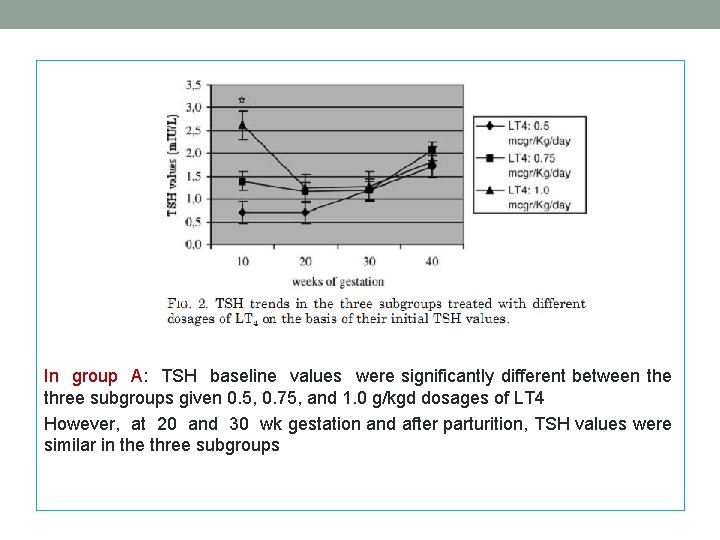
In group A: TSH baseline values were significantly different between the three subgroups given 0. 5, 0. 75, and 1. 0 g/kgd dosages of LT 4 However, at 20 and 30 wk gestation and after parturition, TSH values were similar in the three subgroups
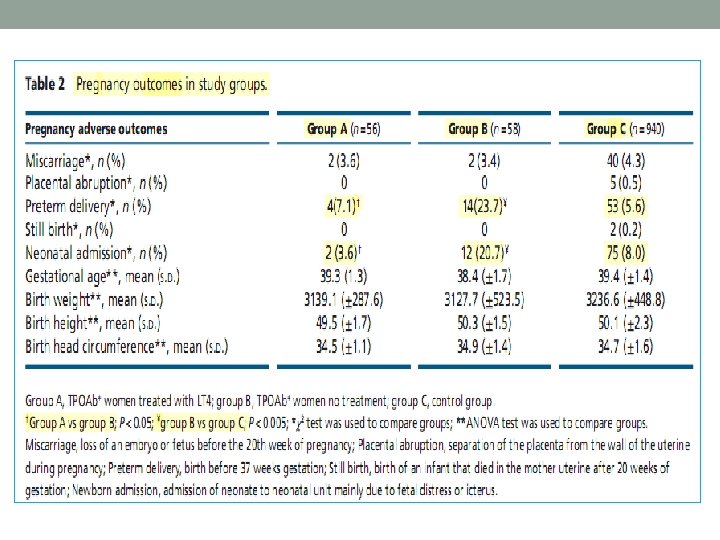
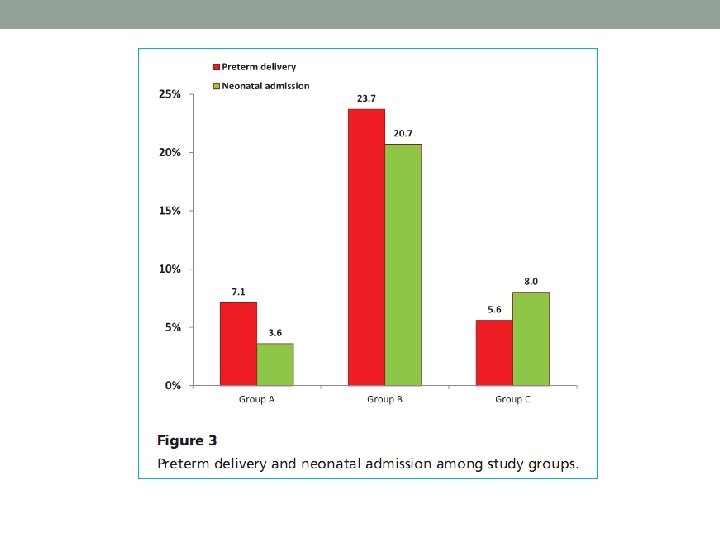
Percentage of miscarriages (top) and premature deliveries (bottom) in A (TPOAb+ treated with LT ) B (TPOAb+) C (TPOAb) *( P< 0. 05) , **( P< 0. 01) 4
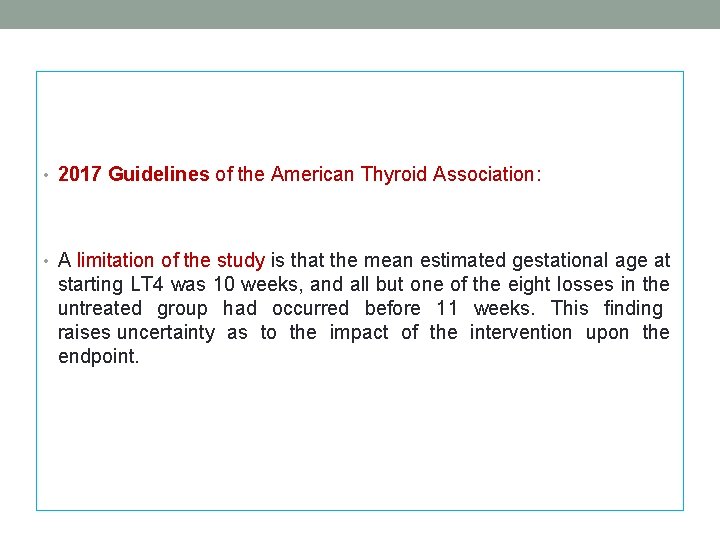
• 2017 Guidelines of the American Thyroid Association: • A limitation of the study is that the mean estimated gestational age at starting LT 4 was 10 weeks, and all but one of the eight losses in the untreated group had occurred before 11 weeks. This finding raises uncertainty as to the impact of the intervention upon the endpoint.
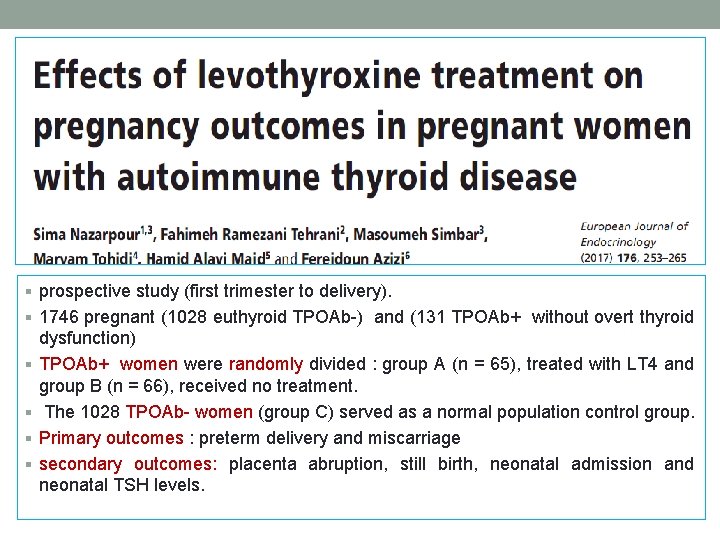
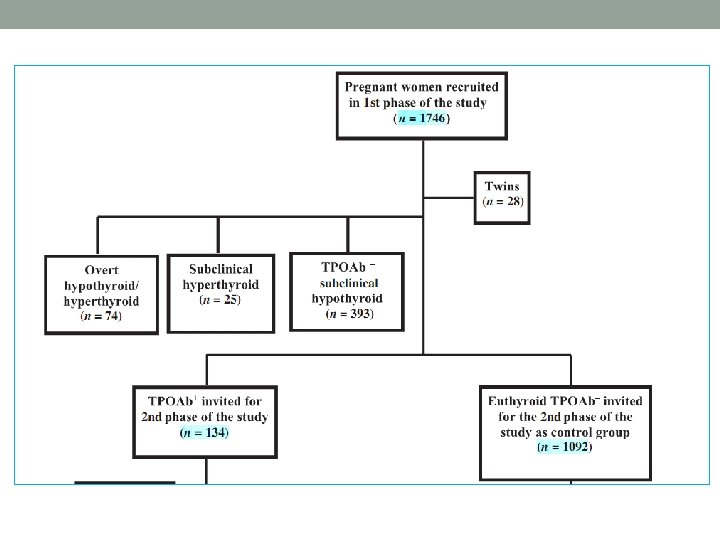
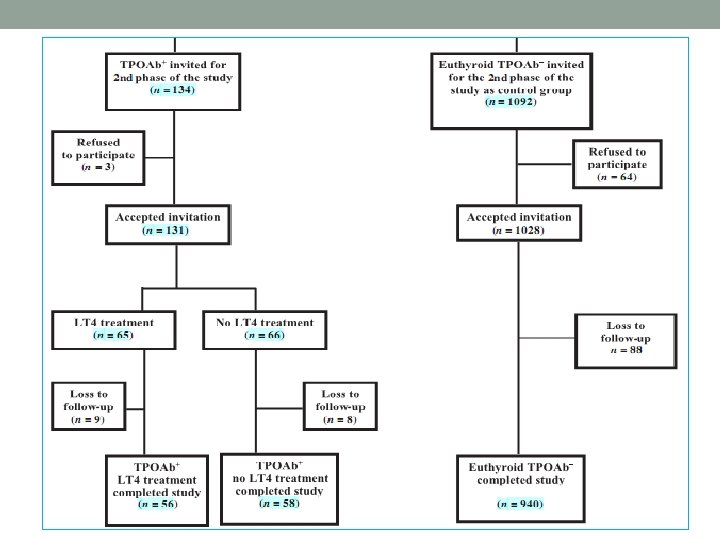
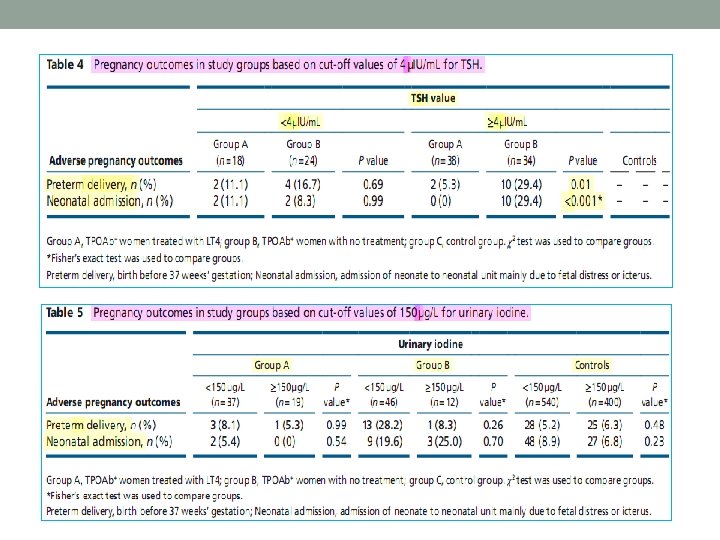
§ prospective study (first trimester to delivery). § 1746 pregnant (1028 euthyroid TPOAb ) and (131 TPOAb+ without overt thyroid § § dysfunction) TPOAb+ women were randomly divided : group A (n = 65), treated with LT 4 and group B (n = 66), received no treatment. The 1028 TPOAb women (group C) served as a normal population control group. Primary outcomes : preterm delivery and miscarriage secondary outcomes: placenta abruption, still birth, neonatal admission and neonatal TSH levels.
Questions: 1. How do thyroid function tests change during pregnancy? 2. What is the normal range for serum TSH in each trimester of pregnancy? 3. What is the impact of iodine status and nutrition? 4. What is the prevalence of thyroid auto antibodies in pregnant women? 5. What is the association between thyroid auto antibody and pregnancy complication? 6. How should euthyroid women who are thyroid antibody positive be monitored during pregnancy? 7. Does treatment with LT 4 therapy decrease the risk for pregnancy loss in euthyroid women with thyroid autoimmunity? 8. Do the pregnant woman who test negative for thyroid antibody with slightly higher TSH (2. 5 5) in the first trimester have a significantly higher risk of pregnancy loss?
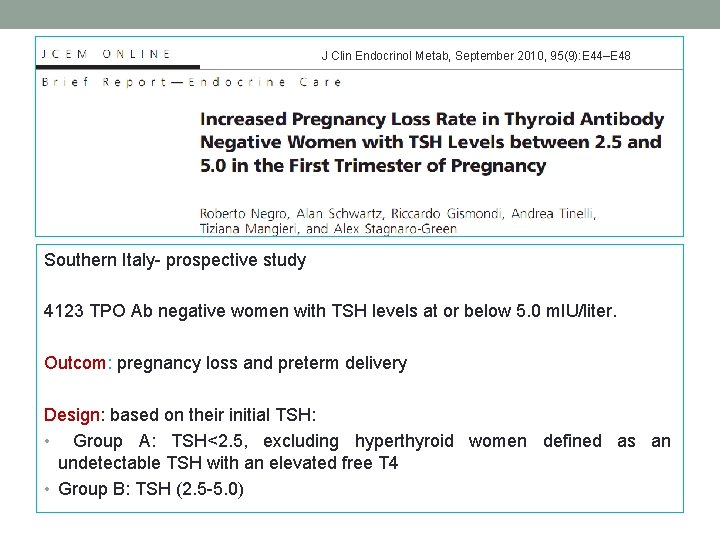
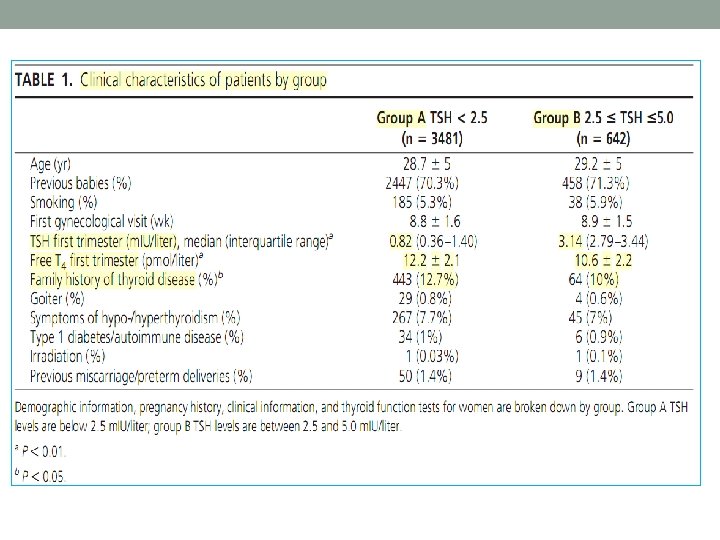
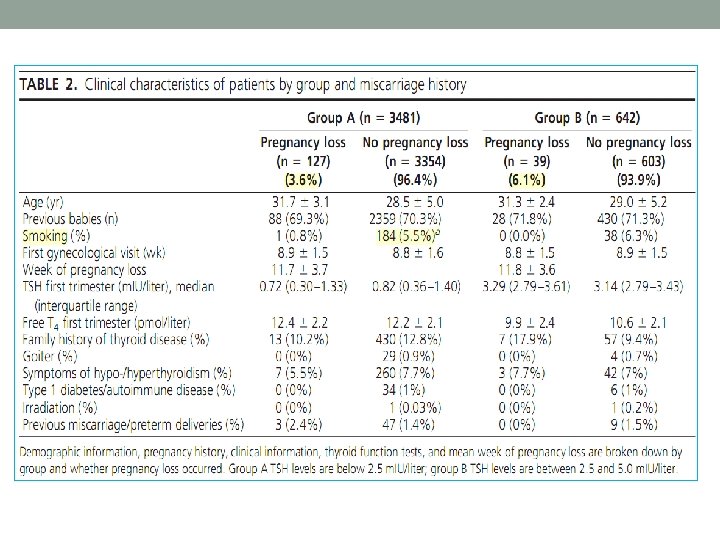
J Clin Endocrinol Metab, September 2010, 95(9): E 44–E 48 Southern Italy prospective study 4123 TPO Ab negative women with TSH levels at or below 5. 0 m. IU/liter. Outcom: pregnancy loss and preterm delivery Design: based on their initial TSH: • Group A: TSH<2. 5, excluding hyperthyroid women defined as an undetectable TSH with an elevated free T 4 • Group B: TSH (2. 5 5. 0)
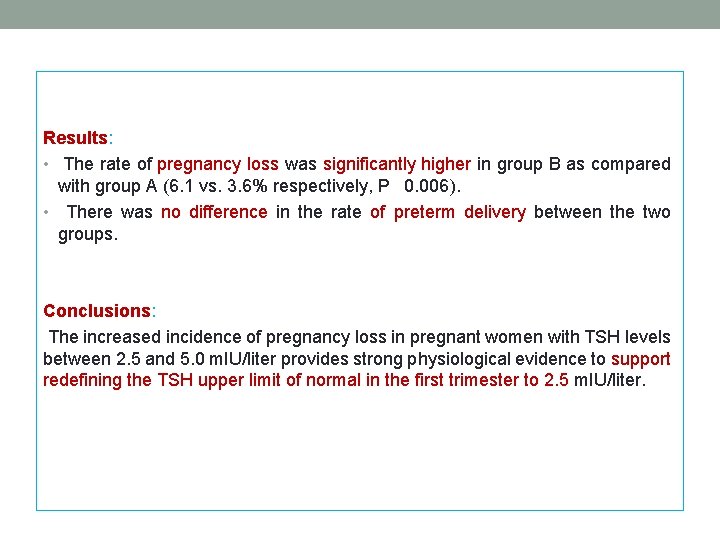
Results: • The rate of pregnancy loss was significantly higher in group B as compared with group A (6. 1 vs. 3. 6% respectively, P 0. 006). • There was no difference in the rate of preterm delivery between the two groups. Conclusions: The increased incidence of pregnancy loss in pregnant women with TSH levels between 2. 5 and 5. 0 m. IU/liter provides strong physiological evidence to support redefining the TSH upper limit of normal in the first trimester to 2. 5 m. IU/liter.
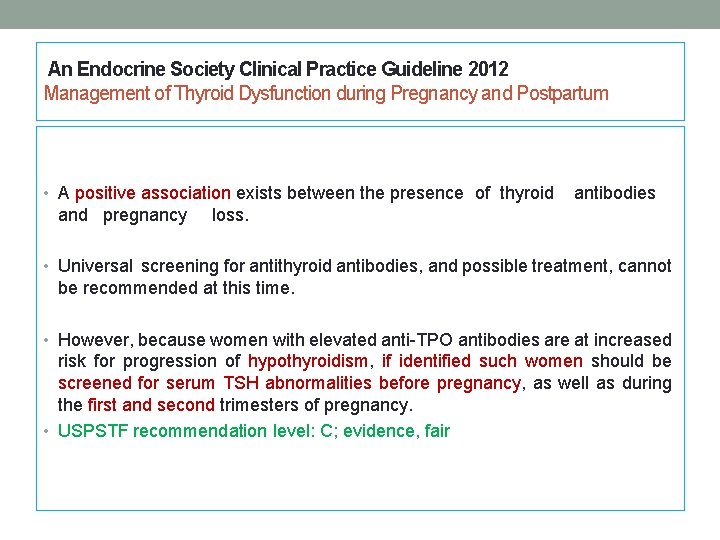
An Endocrine Society Clinical Practice Guideline 2012 Management of Thyroid Dysfunction during Pregnancy and Postpartum • A positive association exists between the presence of thyroid and pregnancy antibodies loss. • Universal screening for antithyroid antibodies, and possible treatment, cannot be recommended at this time. • However, because women with elevated anti TPO antibodies are at increased risk for progression of hypothyroidism, if identified such women should be screened for serum TSH abnormalities before pregnancy, as well as during the first and second trimesters of pregnancy. • USPSTF recommendation level: C; evidence, fair
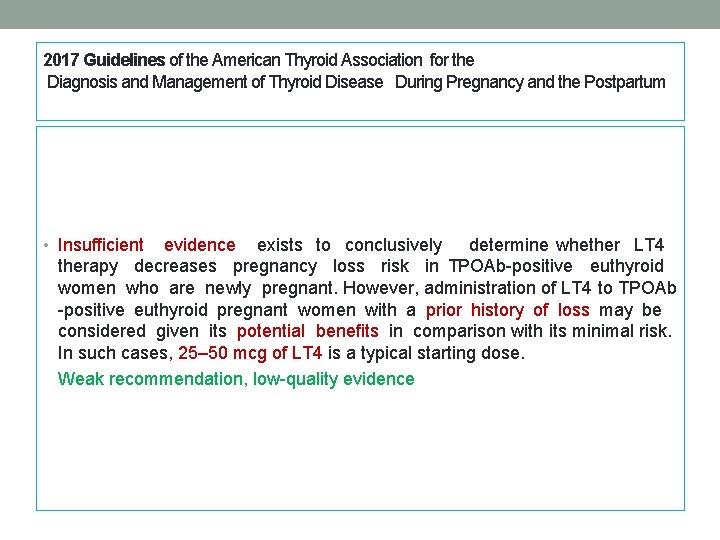
2017 Guidelines of the American Thyroid Association for the Diagnosis and Management of Thyroid Disease During Pregnancy and the Postpartum • Insufficient evidence exists to conclusively determine whether LT 4 therapy decreases pregnancy loss risk in TPOAb positive euthyroid women who are newly pregnant. However, administration of LT 4 to TPOAb positive euthyroid pregnant women with a prior history of loss may be considered given its potential benefits in comparison with its minimal risk. In such cases, 25– 50 mcg of LT 4 is a typical starting dose. Weak recommendation, low quality evidence
In light of the overall safety of levothyroxine use its relatively low cost, the patient’s prolonged attempt to conceive, her history of miscarriage, and discrepant findings from the available trials on this topic, initiation of low dose levothyroxine in anticipation of another pregnancy is reasonable.