CPCSEA Committee for the Purpose of Control and







- Slides: 48
CPCSEA – Committee for the Purpose of Control and Supervision of Experiments on Animals
HEIRARCHY OF CPCSEA Ministry of environment and forests (animal welfare) CPCSEA Institutional Animal Ethical Committee (IAEC) Institutional Biosafety committee (IBSC/IBC)
Need for CPCSEA • To ensure that lab animals are well maintained and experiments are conducted according to ethical norms. • To promote humane care of animals used in biomedical and behavioral research. • To enhance animal well being and quality. • To improve laboratory animal facility • To enhance biological knowledge that is relevant to humans and animals.
BASIC PRINCIPLES OF CPCSEA • Advancement by new discovery in experimental animals to improve the well being of the society. • Minimize the animal use by proper design to give the result under 95% confidence interval. • Minimize the pain, stress and discomfort in experimental animals.
BASIC PRINCIPLES OF CPCSEA • Investigators are responsible for well being of the animals and euthanasia is permitted during the study in some special circumstance – ØAnimal is paralysed or incapable of locomotion ØExtreme or recurring pain and distress ØSituation at which lack of euthanasia may become life threatening to human or other animals. • Animal house should follow GLP guidelines for their housing, feeding, care and disposal.
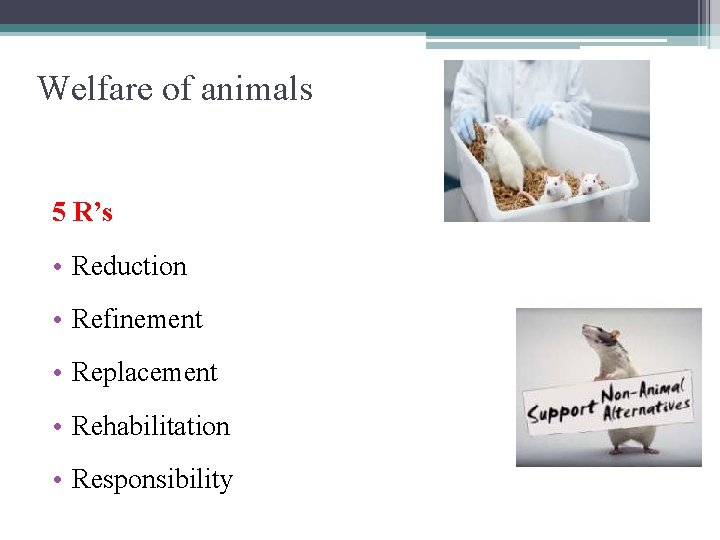
Welfare of animals 5 R’s • Reduction • Refinement • Replacement • Rehabilitation • Responsibility
FUNCTIONS OF CPCSEA v. Registration of the institution/ establishment conducting animal experimentation and breeding. v. Selection and appointment of nominees in the IAEC of registered establishment. v. Approval of animal house facilities. v. Permission for conducting animal experiment – small and big animals. v. To permit import of animals for experimental purpose.
CPCSEA guidelines for lab animal facility
What is an animal facility ? : Ø An animal facility is a specialized laboratory exclusively for the purpose of holding &/or breeding specific animals for scientific purpose Ø Laboratory animals are very sensitive to their living conditions -housed in an isolated building. ØProvide natural behavior and social structure of the study species.
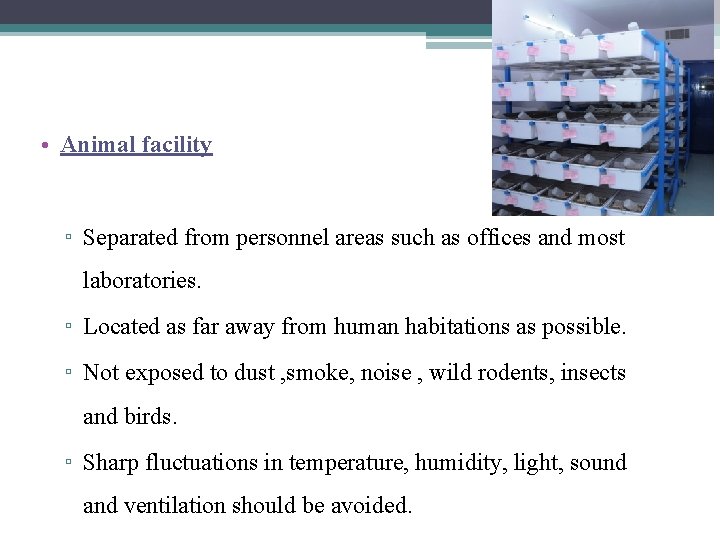
• Animal facility ▫ Separated from personnel areas such as offices and most laboratories. ▫ Located as far away from human habitations as possible. ▫ Not exposed to dust , smoke, noise , wild rodents, insects and birds. ▫ Sharp fluctuations in temperature, humidity, light, sound and ventilation should be avoided.
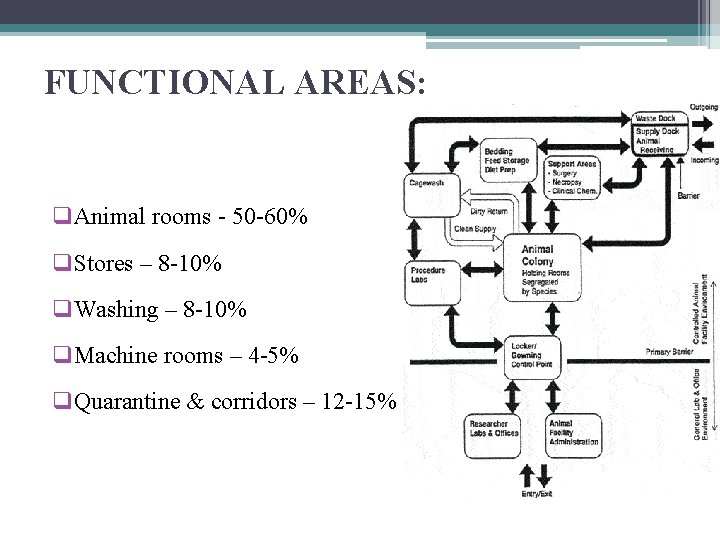
FUNCTIONAL AREAS: q. Animal rooms - 50 -60% q. Stores – 8 -10% q. Washing – 8 -10% q. Machine rooms – 4 -5% q. Quarantine & corridors – 12 -15%
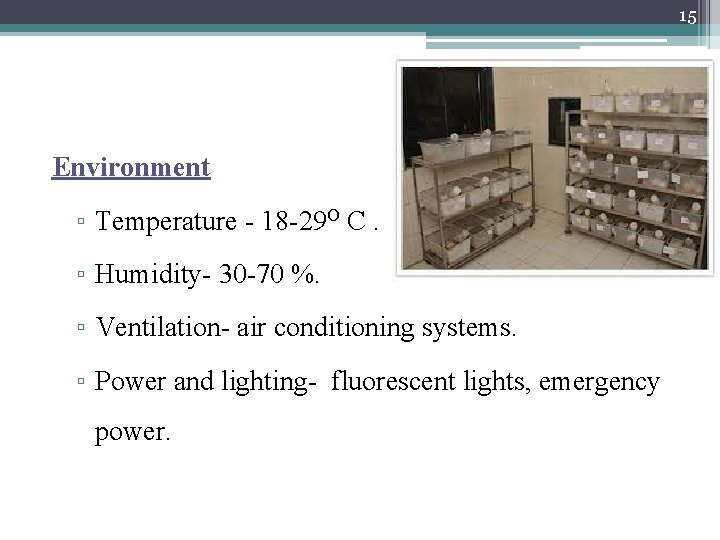
15 Environment ▫ Temperature - 18 -29 O C. ▫ Humidity- 30 -70 %. ▫ Ventilation- air conditioning systems. ▫ Power and lighting- fluorescent lights, emergency power.
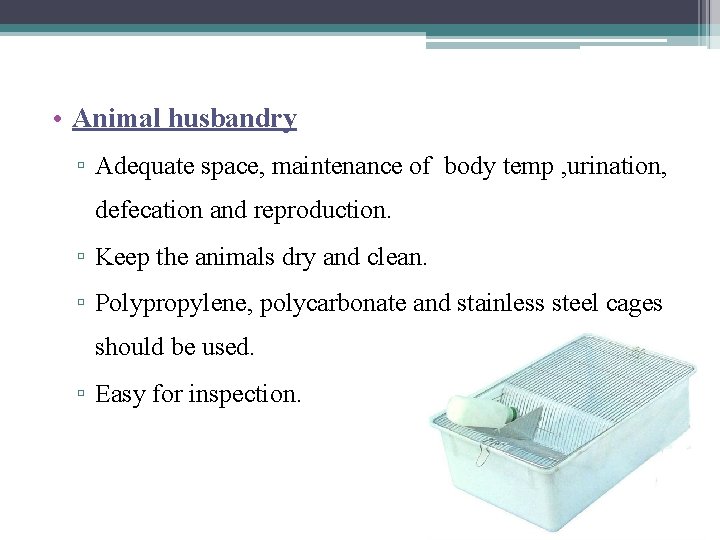
• Animal husbandry ▫ Adequate space, maintenance of body temp , urination, defecation and reproduction. ▫ Keep the animals dry and clean. ▫ Polypropylene, polycarbonate and stainless steel cages should be used. ▫ Easy for inspection.
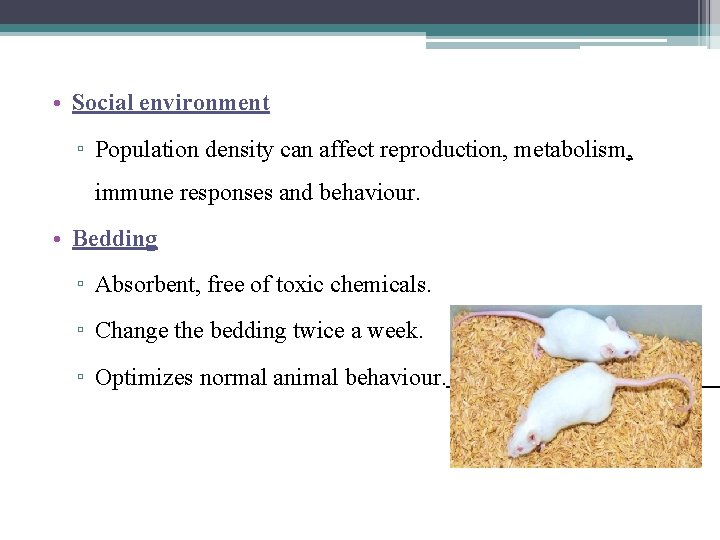
• Social environment ▫ Population density can affect reproduction, metabolism, immune responses and behaviour. • Bedding ▫ Absorbent, free of toxic chemicals. ▫ Change the bedding twice a week. ▫ Optimizes normal animal behaviour.
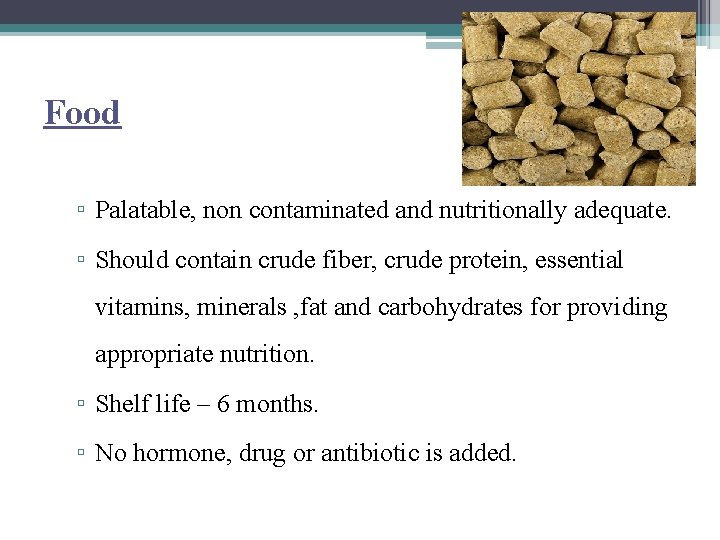
Food ▫ Palatable, non contaminated and nutritionally adequate. ▫ Should contain crude fiber, crude protein, essential vitamins, minerals , fat and carbohydrates for providing appropriate nutrition. ▫ Shelf life – 6 months. ▫ No hormone, drug or antibiotic is added.
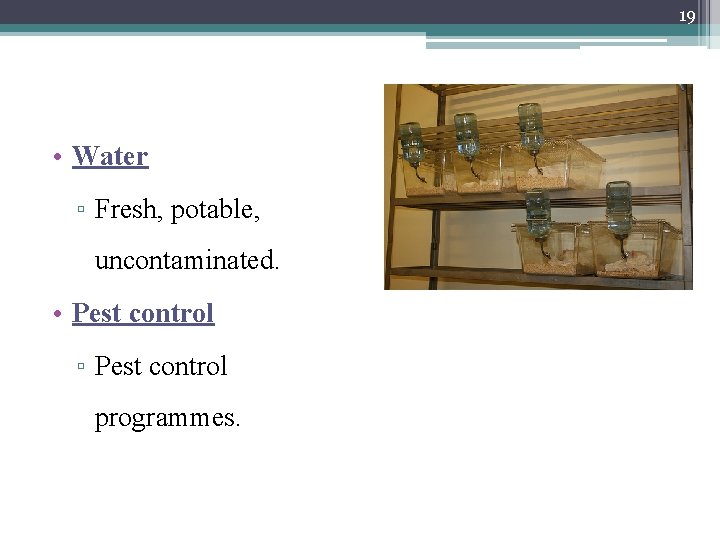
19 • Water ▫ Fresh, potable, uncontaminated. • Pest control ▫ Pest control programmes.
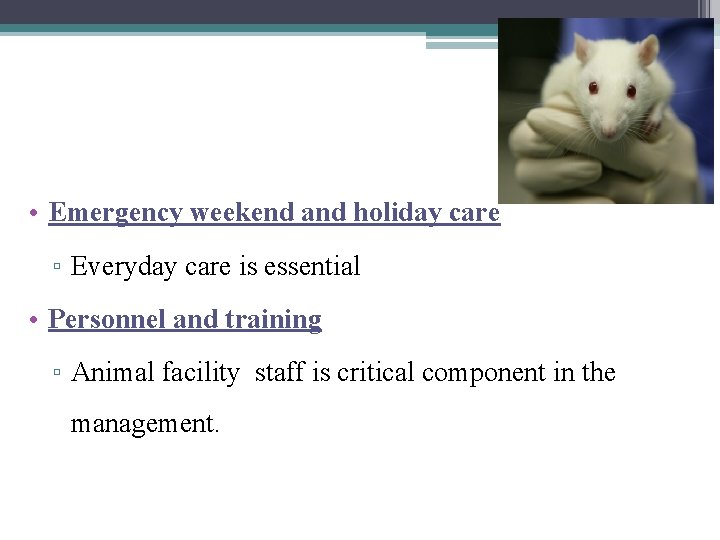
• Emergency weekend and holiday care ▫ Everyday care is essential • Personnel and training ▫ Animal facility staff is critical component in the management.
Veterinary care ▫ Daily observation of animals. ▫ Reviewing protocols and proposals ▫ Establishment of appropriate policies and procedures for animal husbandry. ▫ To maintain zoonosis control programmes.
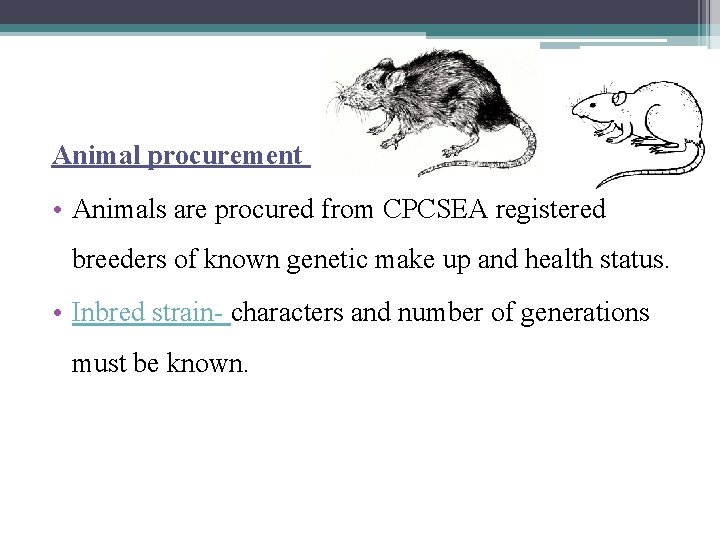
Animal procurement • Animals are procured from CPCSEA registered breeders of known genetic make up and health status. • Inbred strain- characters and number of generations must be known.
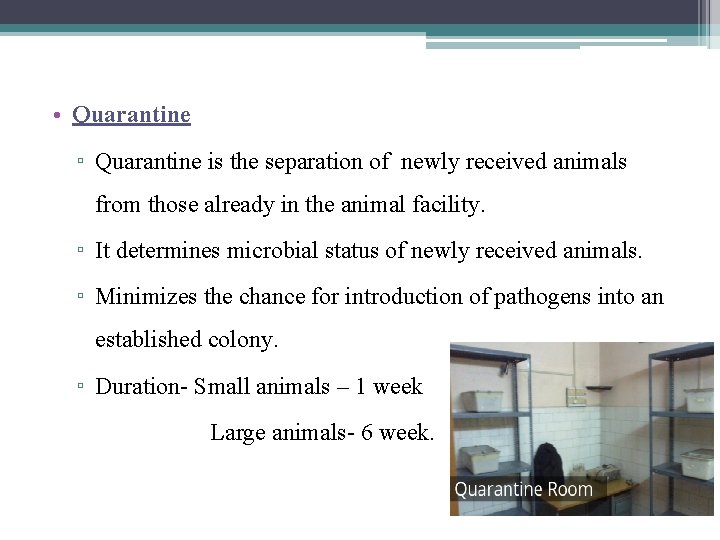
• Quarantine ▫ Quarantine is the separation of newly received animals from those already in the animal facility. ▫ It determines microbial status of newly received animals. ▫ Minimizes the chance for introduction of pathogens into an established colony. ▫ Duration- Small animals – 1 week Large animals- 6 week.
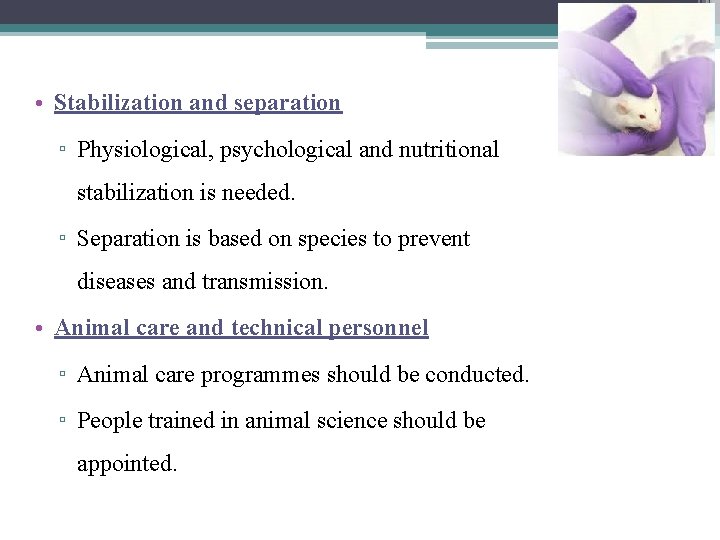
• Stabilization and separation ▫ Physiological, psychological and nutritional stabilization is needed. ▫ Separation is based on species to prevent diseases and transmission. • Animal care and technical personnel ▫ Animal care programmes should be conducted. ▫ People trained in animal science should be appointed.
• Personal hygiene ▫ Showers, changing rooms, footwares. ▫ Clothing. ▫ Use disposable wear such as gloves , masks, head covers, coats, shoe covers. ▫ Avoid eat, drink and smoke in animal facility. • Animal experimentation involving hazardous agents ▫ Procedures and facilities involving hazardous agents should be reviewed by, �Institutional Bio-safety Committee. �Institutional Animal Ethics Committee(IAEC).
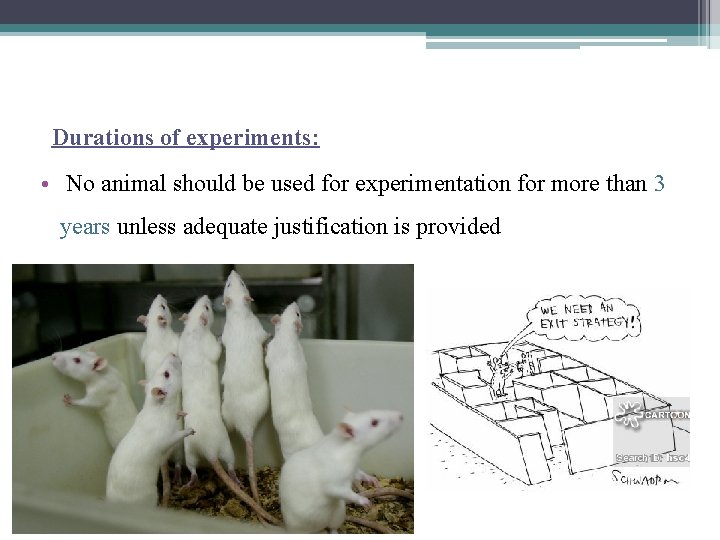
Durations of experiments: • No animal should be used for experimentation for more than 3 years unless adequate justification is provided
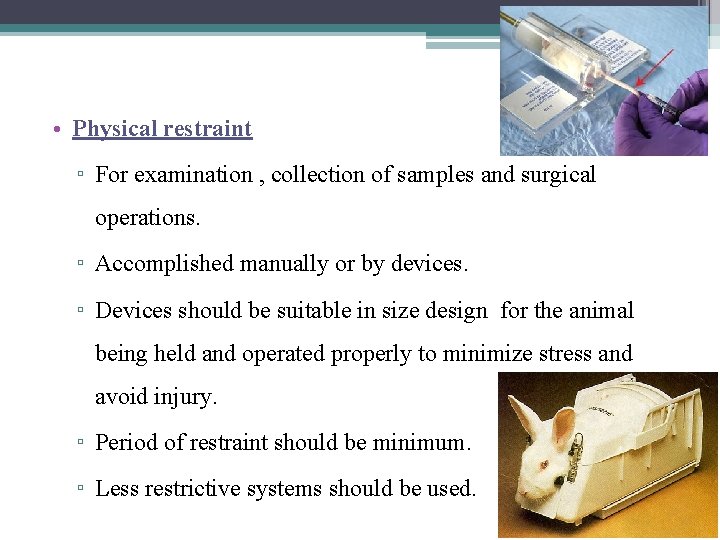
• Physical restraint ▫ For examination , collection of samples and surgical operations. ▫ Accomplished manually or by devices. ▫ Devices should be suitable in size design for the animal being held and operated properly to minimize stress and avoid injury. ▫ Period of restraint should be minimum. ▫ Less restrictive systems should be used.
• Sanitation and cleanliness ▫ Cages should be sanitized before the animal is placed. ▫ Cages and water bottles can be disinfected by rinsing at a temperature of 82. 20 C or by chemical agents such as hypochlorite to destroy pathogenic microbes. ▫ Autoclave or gas sterilizers can be used.
Waste disposal: • Waste should be removed frequently • Waste disposal – incineration • Storage of waste – separated area • Cold storage – prevent decomposition of biological waste
Record keeping ▫ Animal house plans. ▫ Staff record. ▫ Standard operating procedures(SOP) ▫ Health records. ▫ Breeding, stock, purchase and sales records. ▫ Death record ▫ Records of experiments on animals. ▫ Clinical record of sick animals.
Guidelines for Use of Anaesthesia ▫ Useful for painful procedures. ▫ At no stage of experiment the animal is conscious to perceive the pain. ▫ If any irrepairable injury occurs , the animal should be sacrificed. ▫ Overnight fasting. ▫ Use pre-anaesthetics whereever applicable. ▫ Local or general anaesthetics may be used. ▫ Side effects such as excessive salivation, convulsions, excitation and disorientation.
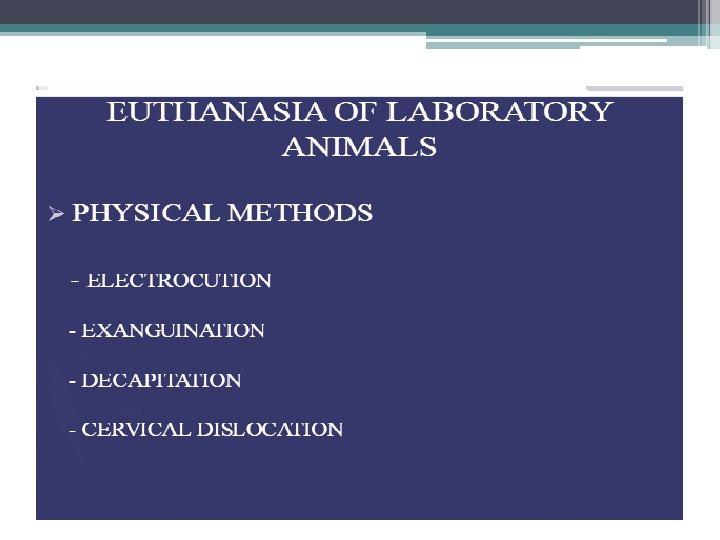
Euthanasia= Painless killing. • Purpose of euthanasia. • Causes of death- hypoxia, heart or respiratory failure, brain death. • Death without causing anxiety, pain and distress. • Minimum physiological and psychological disturbance. • Location should be separated from animal rooms. • Tranquillizers should be given for larger animals such as monkeys, dogs, cats before an euthanasia procedure.
Institutional Animal Ethics Committee (IAEC) OBJECTIVES: • Supervision by qualified person. • Due care and humanity to avoid pain. • Experiments on larger animals avoided. • Experiments not performed merely for the purpose of acquiring manual skill.
Objectives of IAEC • Animals properly looked after before and after experiments. • Suitable records are maintained with respect to experiments performed on animals. • If recovery of animals involve serious suffering, should be destroyed while still insensible.
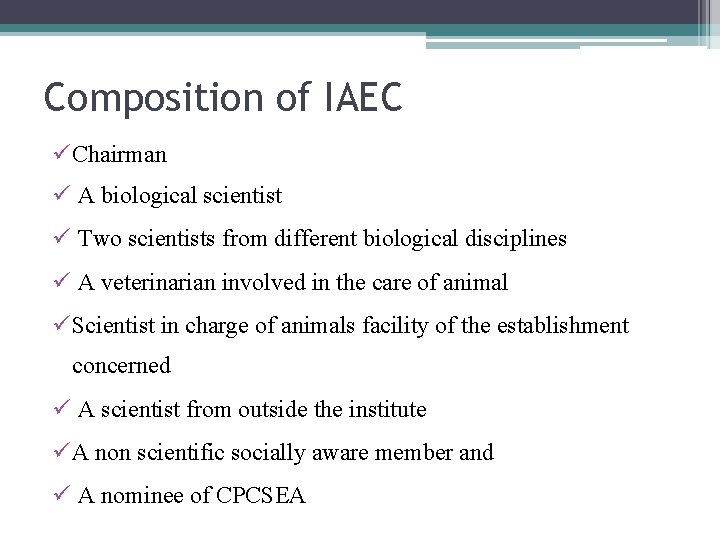
Composition of IAEC ü Chairman ü A biological scientist ü Two scientists from different biological disciplines ü A veterinarian involved in the care of animal ü Scientist in charge of animals facility of the establishment concerned ü A scientist from outside the institute ü A non scientific socially aware member and ü A nominee of CPCSEA
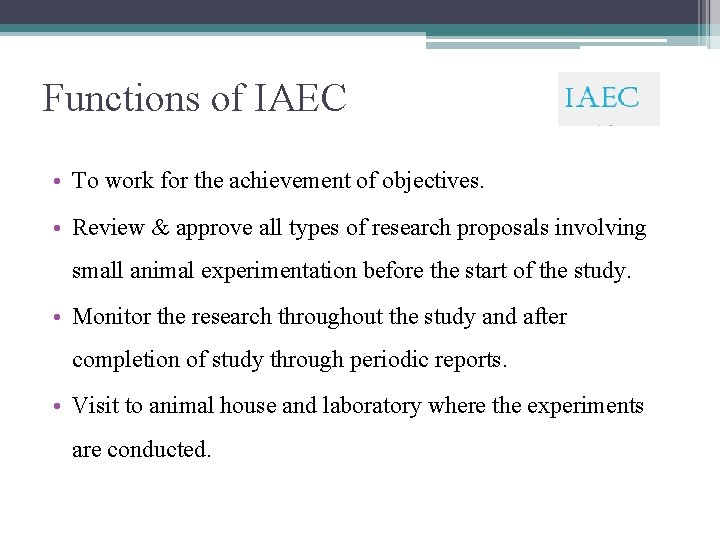
Functions of IAEC • To work for the achievement of objectives. • Review & approve all types of research proposals involving small animal experimentation before the start of the study. • Monitor the research throughout the study and after completion of study through periodic reports. • Visit to animal house and laboratory where the experiments are conducted.
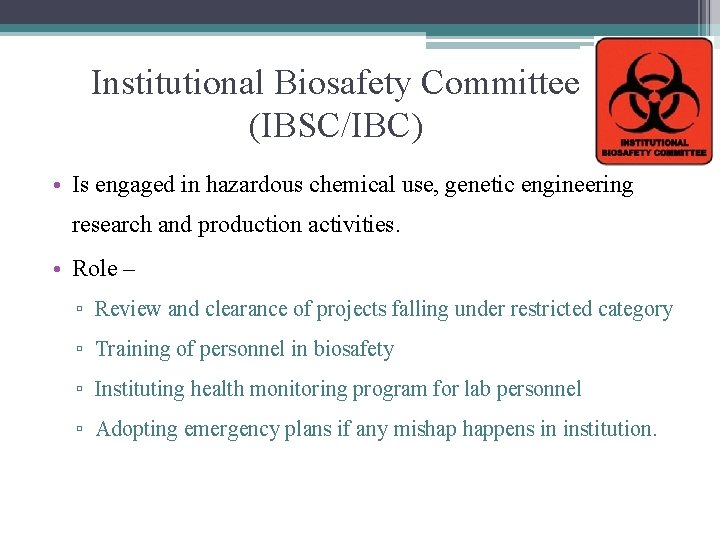
Institutional Biosafety Committee (IBSC/IBC) • Is engaged in hazardous chemical use, genetic engineering research and production activities. • Role – ▫ Review and clearance of projects falling under restricted category ▫ Training of personnel in biosafety ▫ Instituting health monitoring program for lab personnel ▫ Adopting emergency plans if any mishap happens in institution.
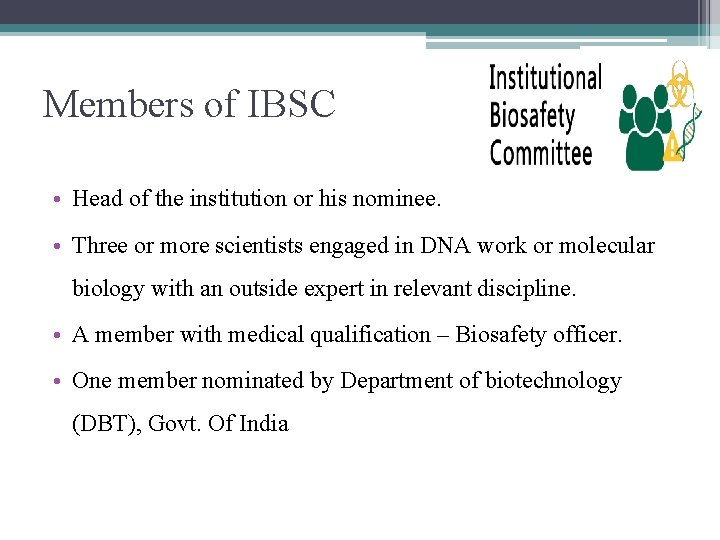
Members of IBSC • Head of the institution or his nominee. • Three or more scientists engaged in DNA work or molecular biology with an outside expert in relevant discipline. • A member with medical qualification – Biosafety officer. • One member nominated by Department of biotechnology (DBT), Govt. Of India
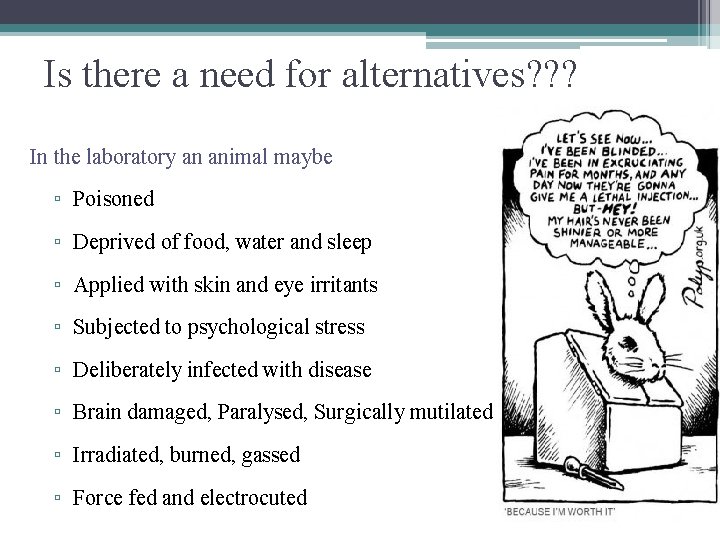
Is there a need for alternatives? ? ? In the laboratory an animal maybe ▫ Poisoned ▫ Deprived of food, water and sleep ▫ Applied with skin and eye irritants ▫ Subjected to psychological stress ▫ Deliberately infected with disease ▫ Brain damaged, Paralysed, Surgically mutilated ▫ Irradiated, burned, gassed ▫ Force fed and electrocuted
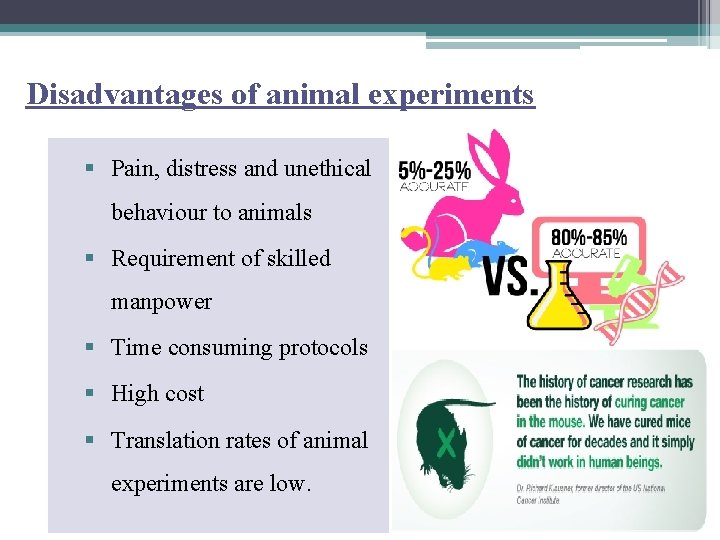
Disadvantages of animal experiments Need for alternatives § Pain, distress and unethical behaviour to animals § Requirement of skilled manpower § Time consuming protocols § High cost § Translation rates of animal experiments are low.
Alternatives to animal experiments In-vitro techniques. Microbiological tests. Microorganisms. In-chemico testing. Computer simulation. Epidemiological, clinical and genetic studies. Invertebrate and vertebrate animals. Micro dosing.
Conclusion • Animal ethics is an important issue as the human welfare. • Animals are not entirely dispensable, especially in research. • So the CPCSEA came into existence. • We need to practice the principles of 4 Rs in animal experimentation. • And also intensify our efforts in developing and validating suitable alternatives to their use.