Chapter 7 Transmission Media Mc GrawHill The Mc
- Slides: 55
Chapter 7 Transmission Media Mc. Graw-Hill ©The Mc. Graw-Hill Companies, Inc. , 2004
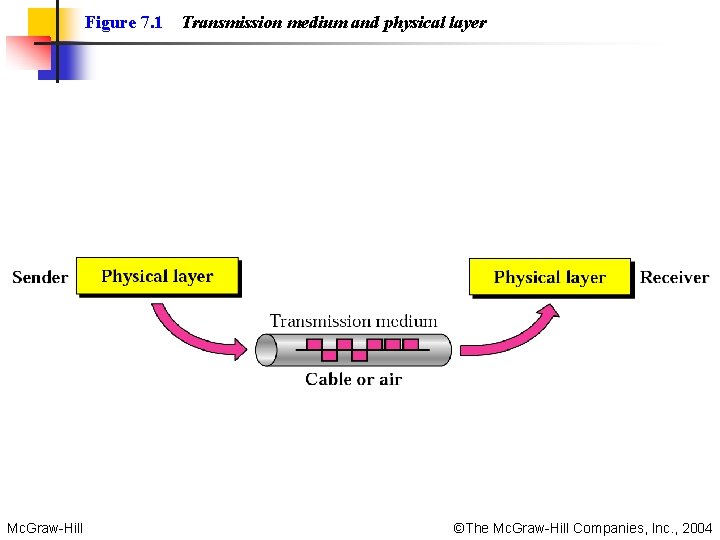
Figure 7. 1 Mc. Graw-Hill Transmission medium and physical layer ©The Mc. Graw-Hill Companies, Inc. , 2004
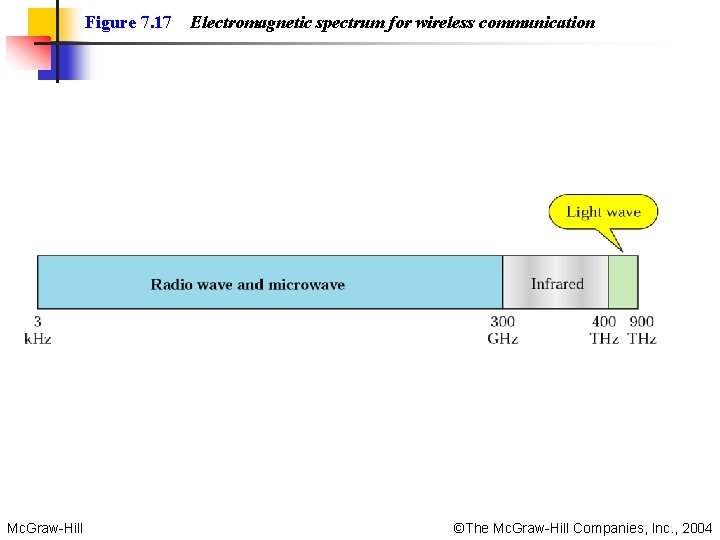
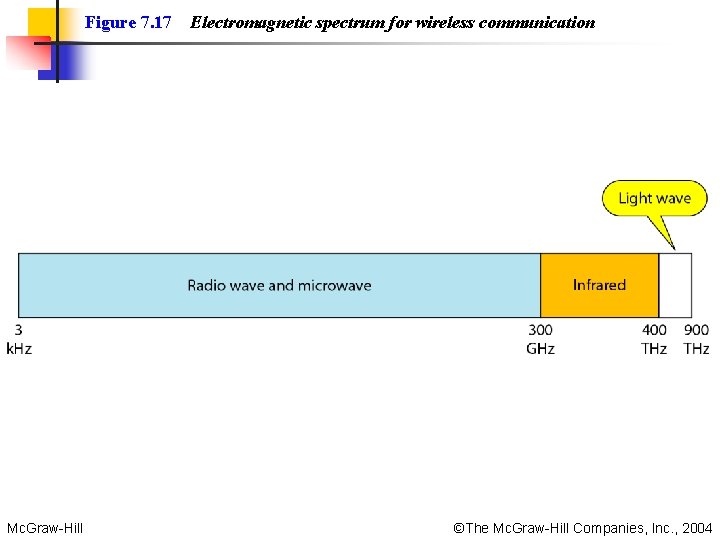
Figure 7. 17 Mc. Graw-Hill Electromagnetic spectrum for wireless communication ©The Mc. Graw-Hill Companies, Inc. , 2004
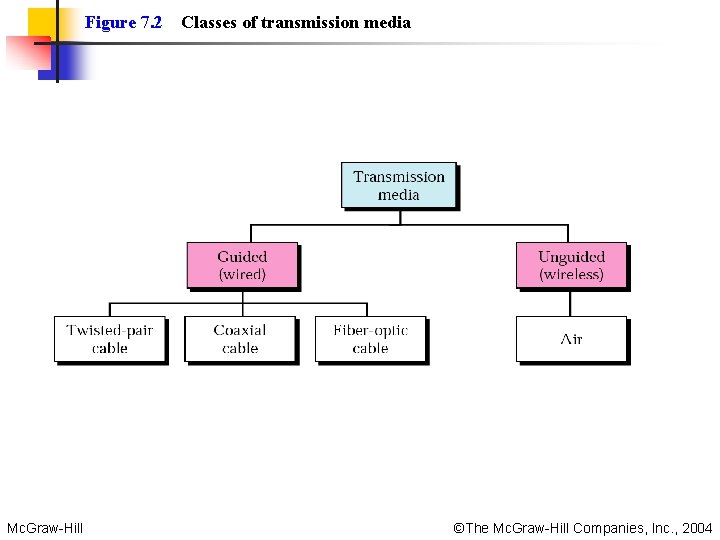
Figure 7. 2 Mc. Graw-Hill Classes of transmission media ©The Mc. Graw-Hill Companies, Inc. , 2004
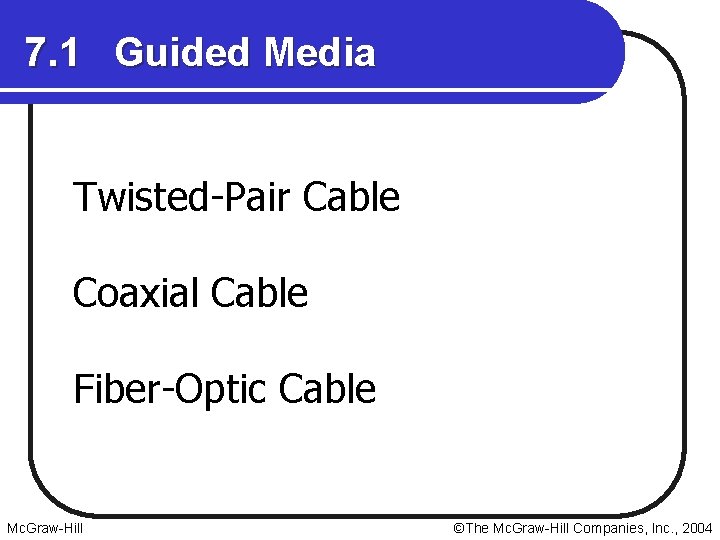
7. 1 Guided Media Twisted-Pair Cable Coaxial Cable Fiber-Optic Cable Mc. Graw-Hill ©The Mc. Graw-Hill Companies, Inc. , 2004
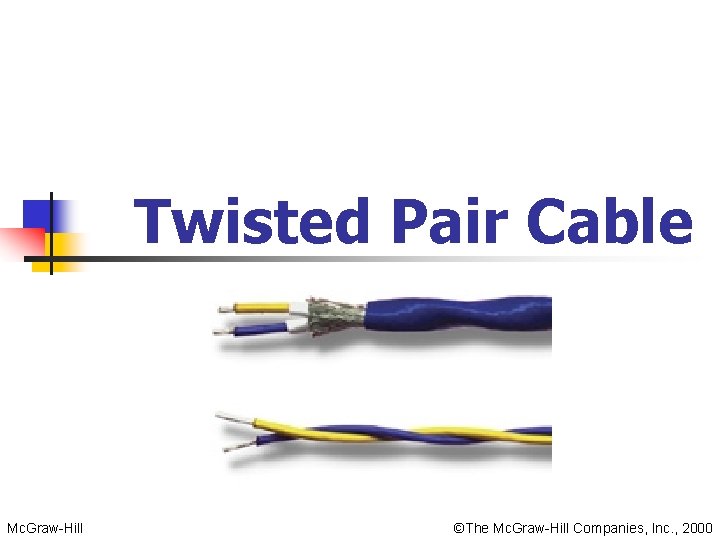
Twisted Pair Cable Mc. Graw-Hill ©The Mc. Graw-Hill Companies, Inc. , 2000
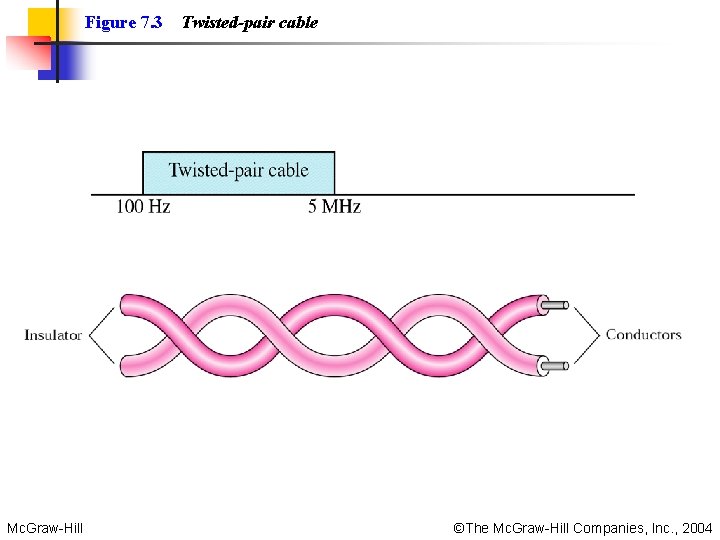
Figure 7. 3 Mc. Graw-Hill Twisted-pair cable ©The Mc. Graw-Hill Companies, Inc. , 2004
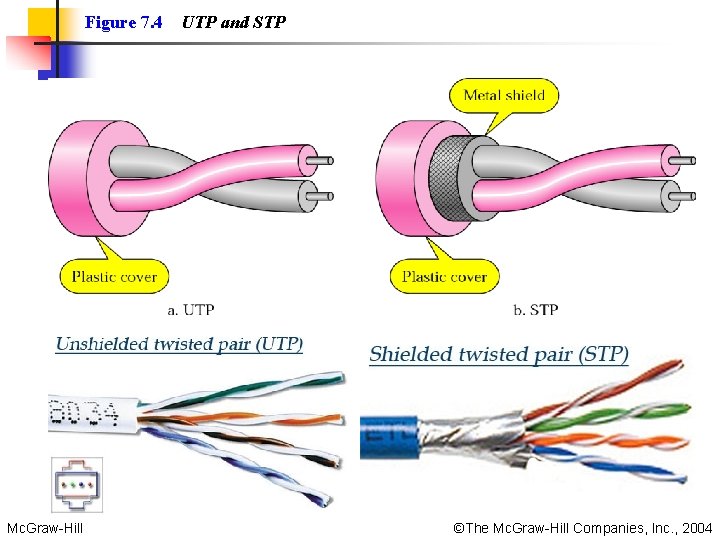
Figure 7. 4 Mc. Graw-Hill UTP and STP ©The Mc. Graw-Hill Companies, Inc. , 2004
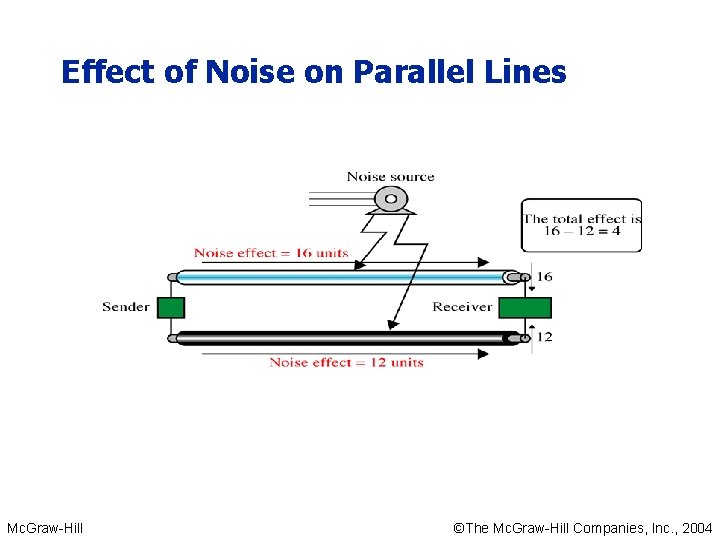
Effect of Noise on Parallel Lines Mc. Graw-Hill ©The Mc. Graw-Hill Companies, Inc. , 2004
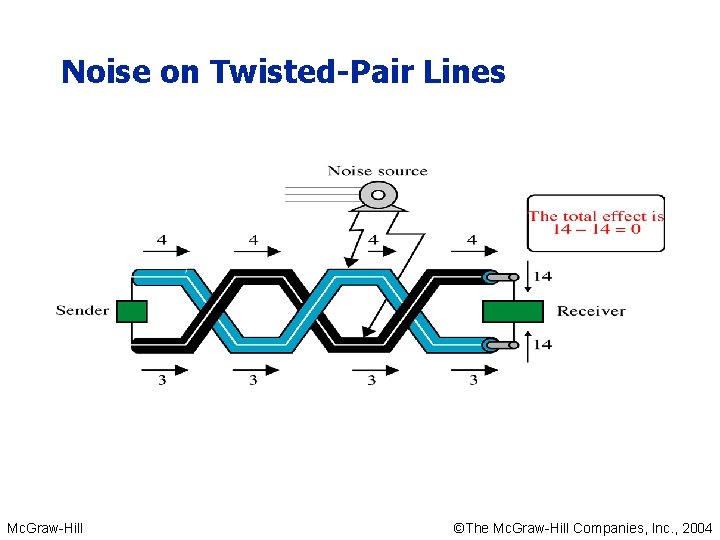
Noise on Twisted-Pair Lines Mc. Graw-Hill ©The Mc. Graw-Hill Companies, Inc. , 2004
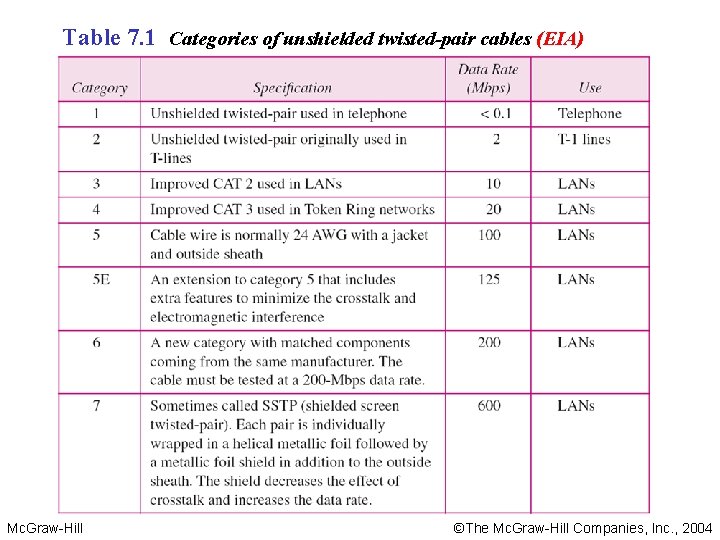
Table 7. 1 Categories of unshielded twisted-pair cables (EIA) Mc. Graw-Hill ©The Mc. Graw-Hill Companies, Inc. , 2004
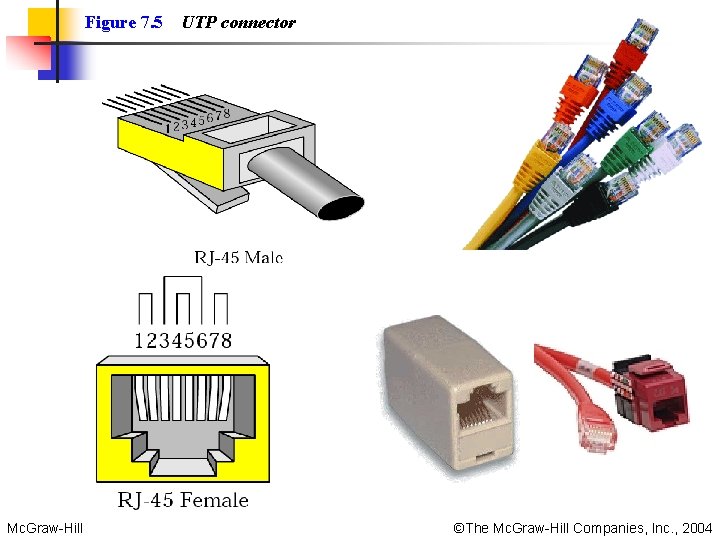
Figure 7. 5 Mc. Graw-Hill UTP connector ©The Mc. Graw-Hill Companies, Inc. , 2004
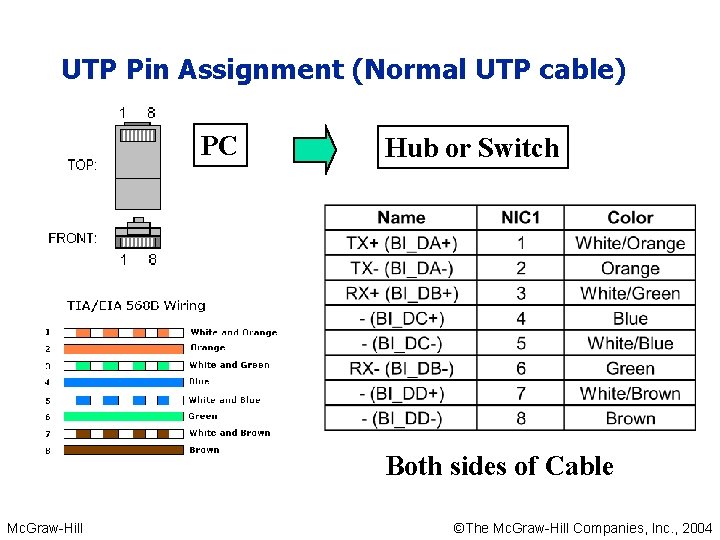
UTP Pin Assignment (Normal UTP cable) PC Hub or Switch Both sides of Cable Mc. Graw-Hill ©The Mc. Graw-Hill Companies, Inc. , 2004
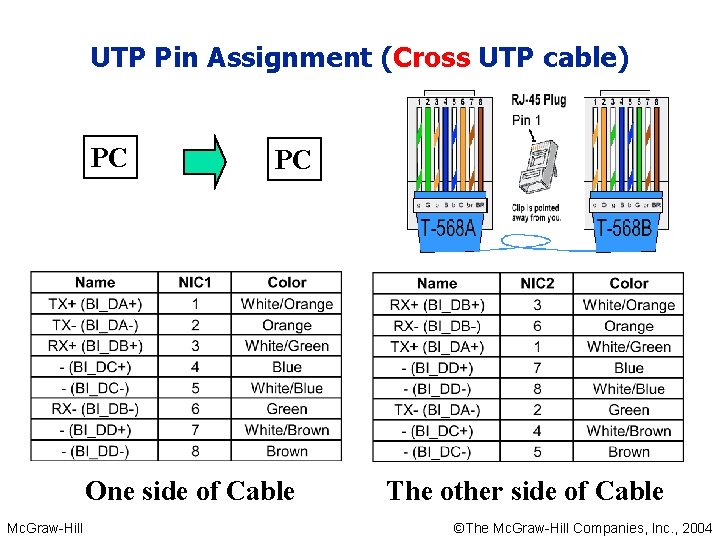
UTP Pin Assignment (Cross UTP cable) PC PC One side of Cable Mc. Graw-Hill The other side of Cable ©The Mc. Graw-Hill Companies, Inc. , 2004
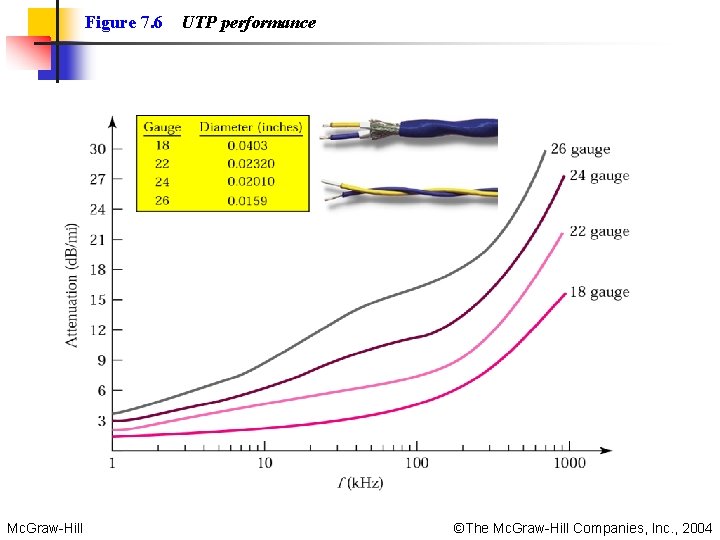
Figure 7. 6 Mc. Graw-Hill UTP performance ©The Mc. Graw-Hill Companies, Inc. , 2004
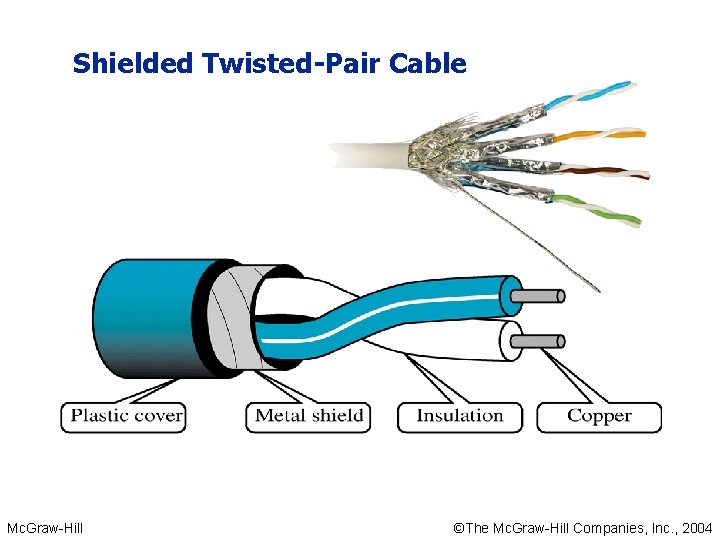
Shielded Twisted-Pair Cable Mc. Graw-Hill ©The Mc. Graw-Hill Companies, Inc. , 2004
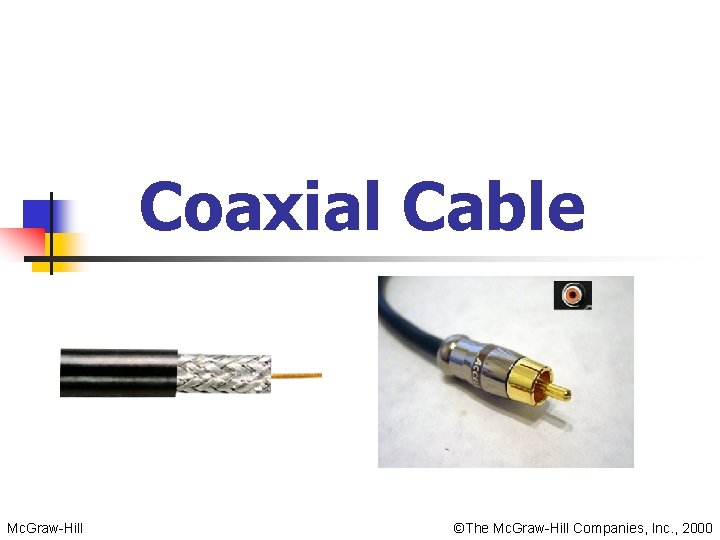
Coaxial Cable Mc. Graw-Hill ©The Mc. Graw-Hill Companies, Inc. , 2000
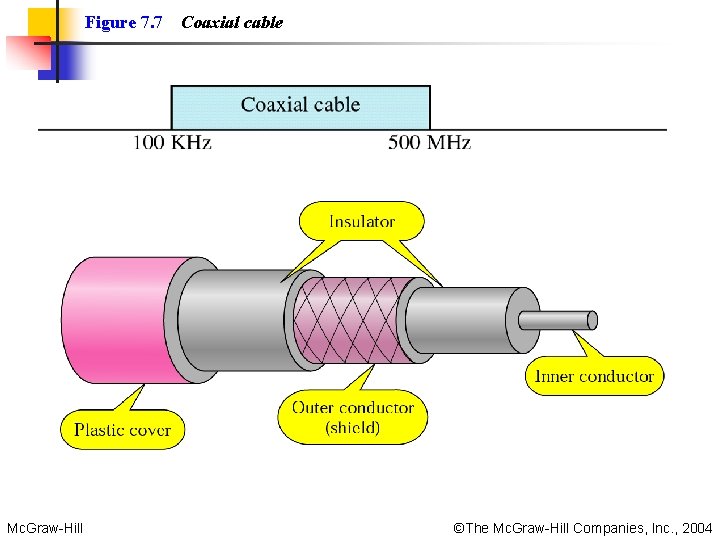
Figure 7. 7 Mc. Graw-Hill Coaxial cable ©The Mc. Graw-Hill Companies, Inc. , 2004
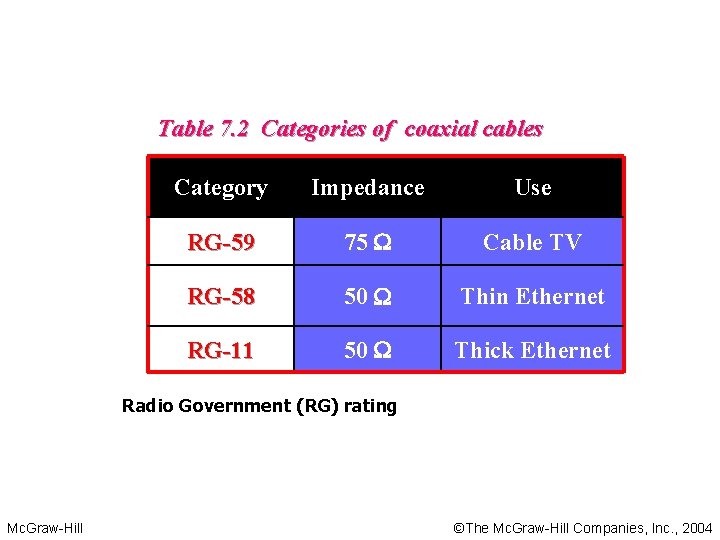
Table 7. 2 Categories of coaxial cables Category Impedance Use RG-59 75 W Cable TV RG-58 50 W Thin Ethernet RG-11 50 W Thick Ethernet Radio Government (RG) rating Mc. Graw-Hill ©The Mc. Graw-Hill Companies, Inc. , 2004
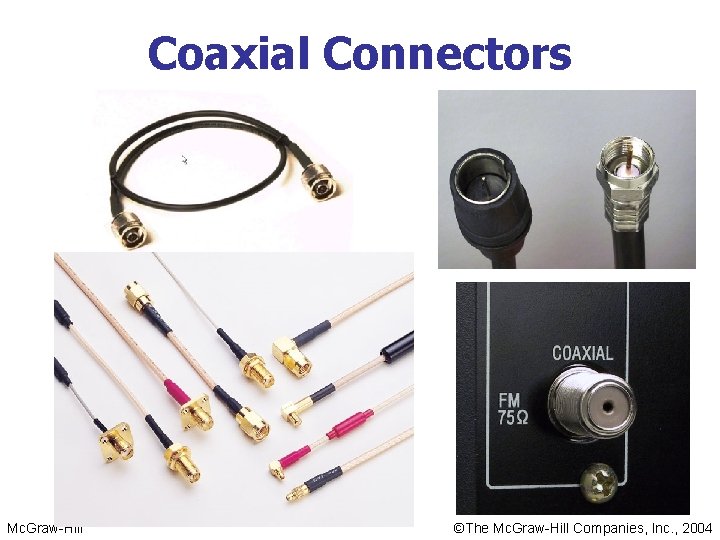
Coaxial Connectors Mc. Graw-Hill ©The Mc. Graw-Hill Companies, Inc. , 2004
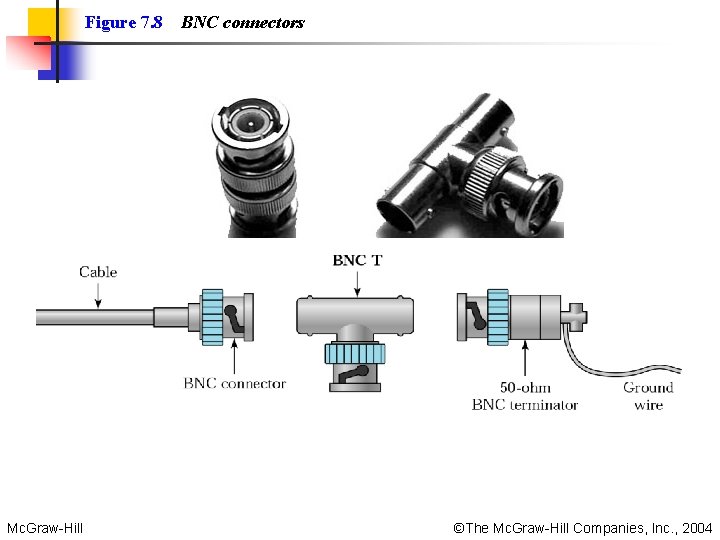
Figure 7. 8 Mc. Graw-Hill BNC connectors ©The Mc. Graw-Hill Companies, Inc. , 2004
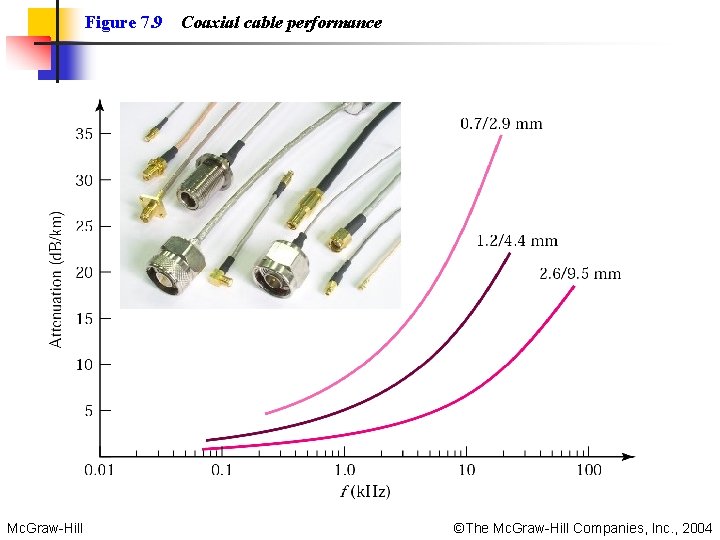
Figure 7. 9 Mc. Graw-Hill Coaxial cable performance ©The Mc. Graw-Hill Companies, Inc. , 2004
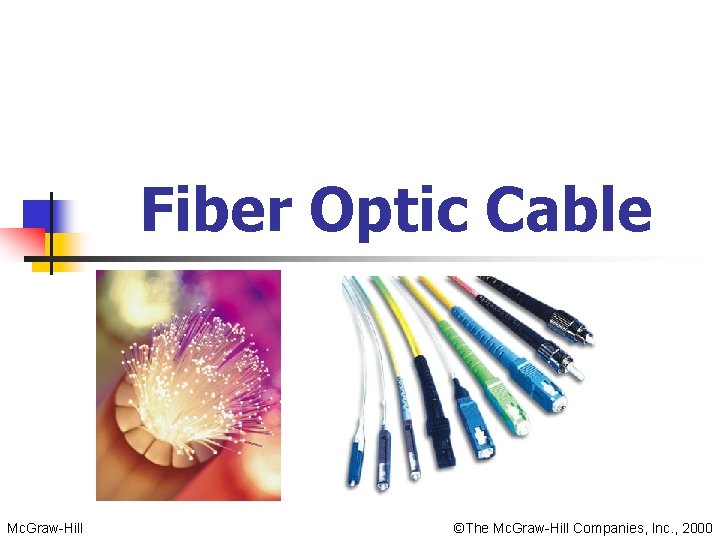
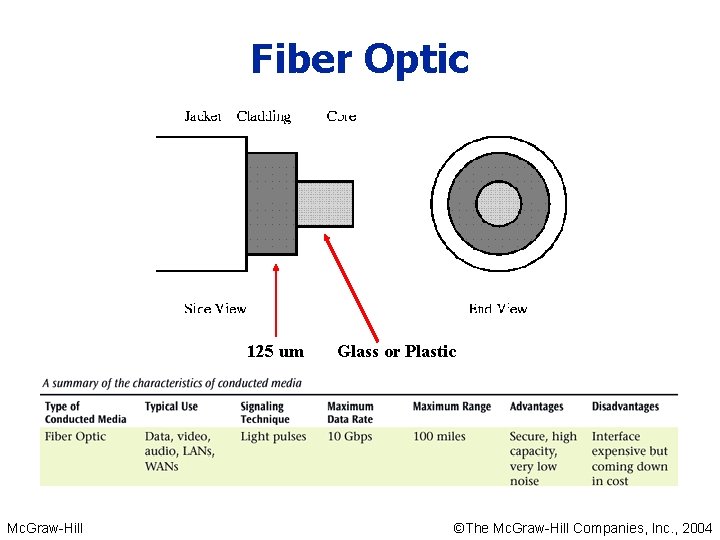
Fiber Optic Cable Mc. Graw-Hill ©The Mc. Graw-Hill Companies, Inc. , 2000
Fiber Optic 125 um Mc. Graw-Hill Glass or Plastic ©The Mc. Graw-Hill Companies, Inc. , 2004
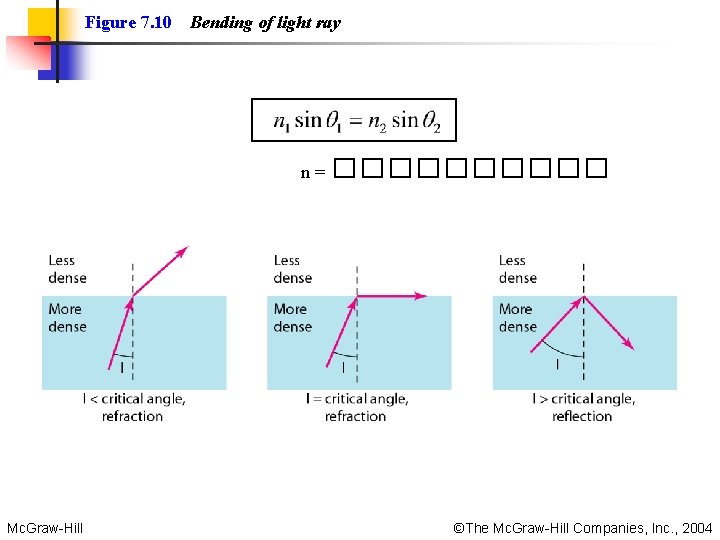
Figure 7. 10 Bending of light ray n = ����� Mc. Graw-Hill ©The Mc. Graw-Hill Companies, Inc. , 2004
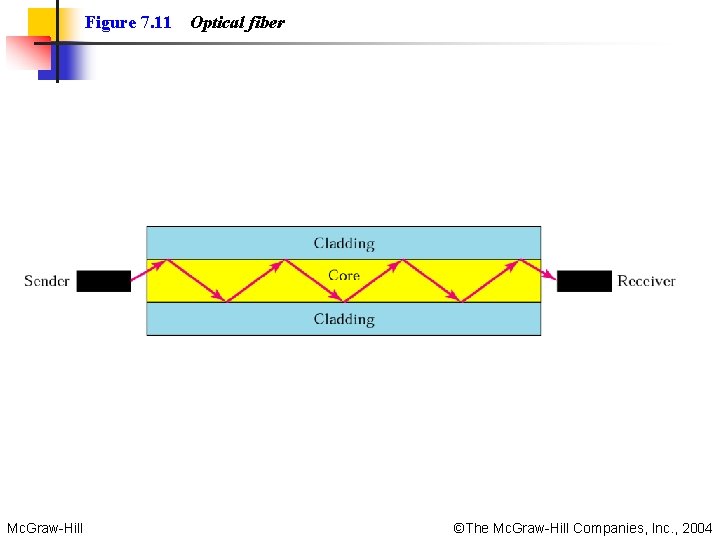
Figure 7. 11 Mc. Graw-Hill Optical fiber ©The Mc. Graw-Hill Companies, Inc. , 2004
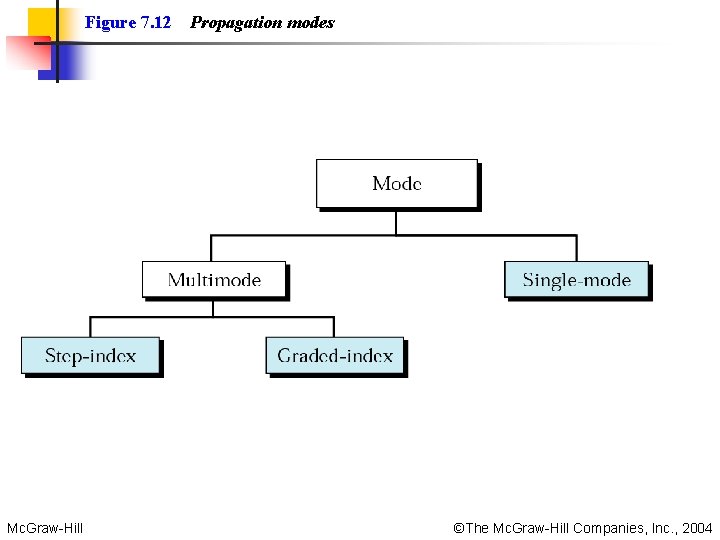
Figure 7. 12 Mc. Graw-Hill Propagation modes ©The Mc. Graw-Hill Companies, Inc. , 2004
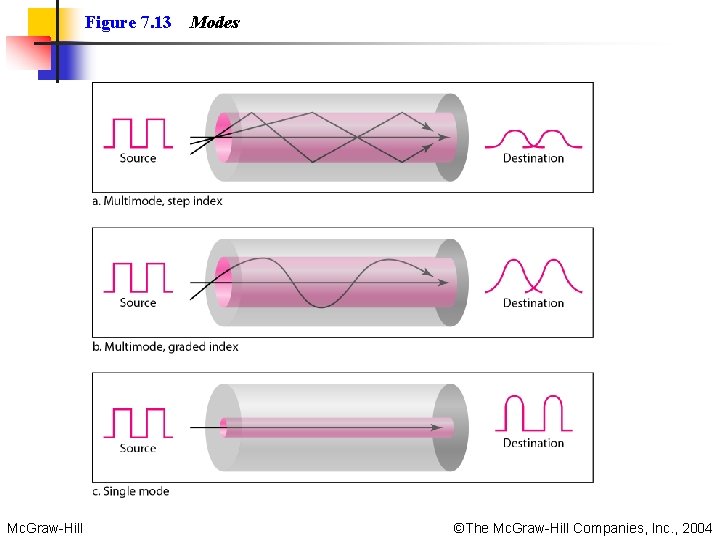
Figure 7. 13 Mc. Graw-Hill Modes ©The Mc. Graw-Hill Companies, Inc. , 2004
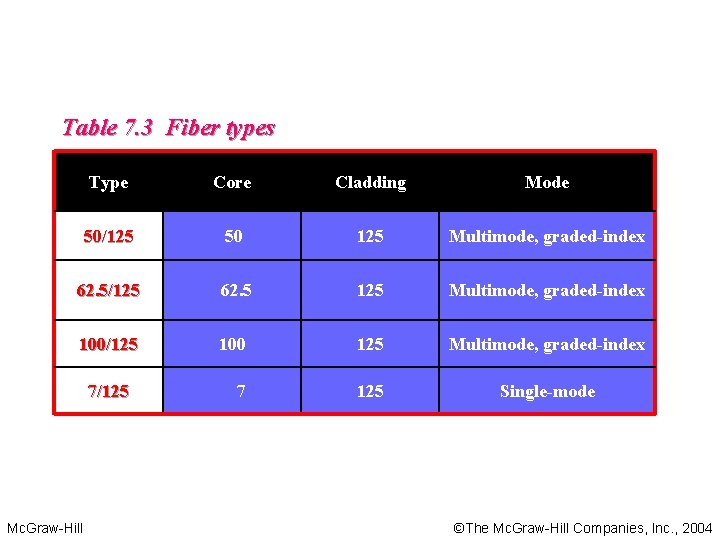
Table 7. 3 Fiber types Type Core Cladding Mode 50/125 50 125 Multimode, graded-index 62. 5/125 62. 5 125 Multimode, graded-index 100/125 100 125 Multimode, graded-index 7 125 Single-mode 7/125 Mc. Graw-Hill ©The Mc. Graw-Hill Companies, Inc. , 2004
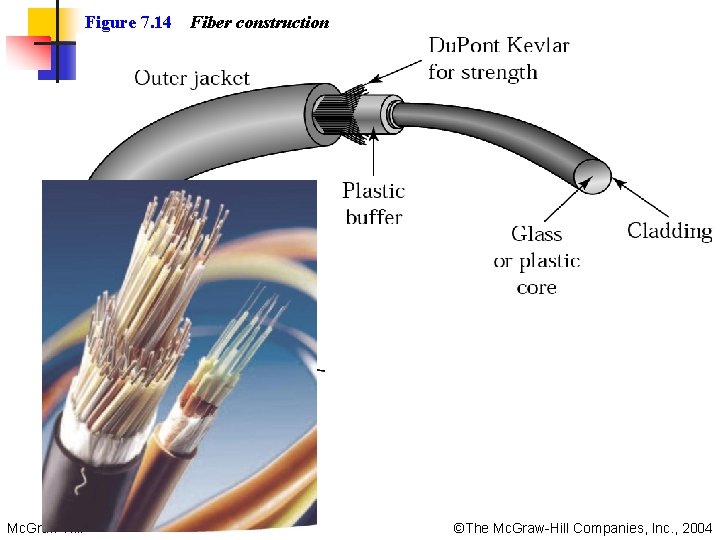
Figure 7. 14 Mc. Graw-Hill Fiber construction ©The Mc. Graw-Hill Companies, Inc. , 2004
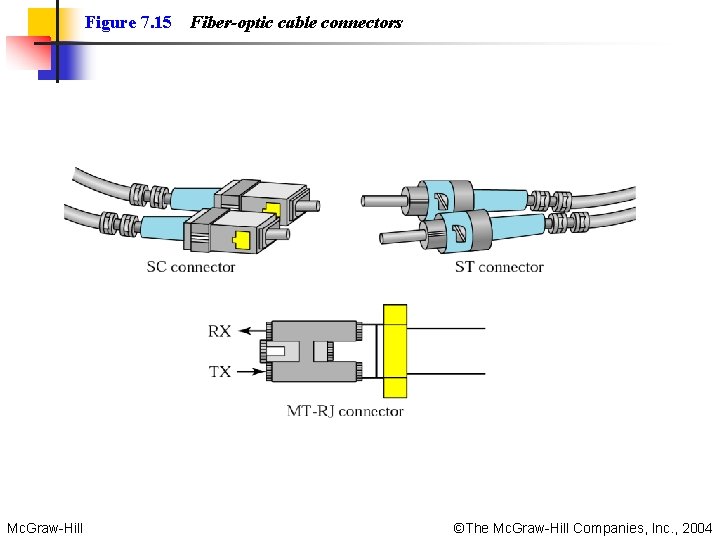
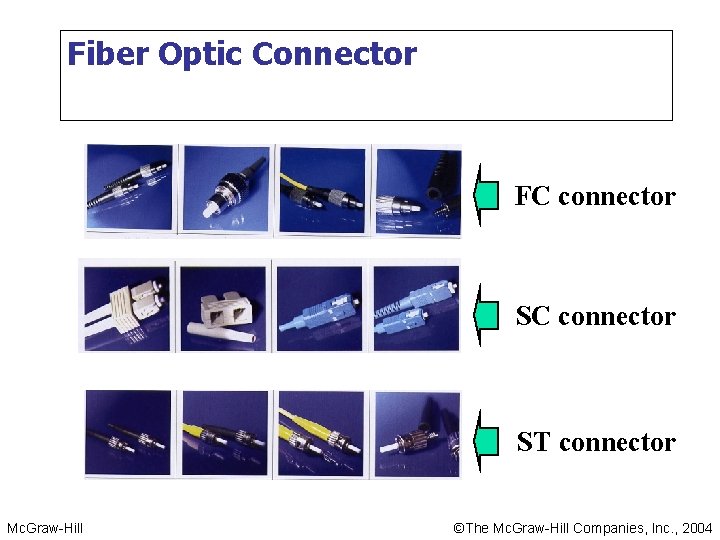
Figure 7. 15 Mc. Graw-Hill Fiber-optic cable connectors ©The Mc. Graw-Hill Companies, Inc. , 2004
Fiber Optic Connector FC connector ST connector Mc. Graw-Hill ©The Mc. Graw-Hill Companies, Inc. , 2004
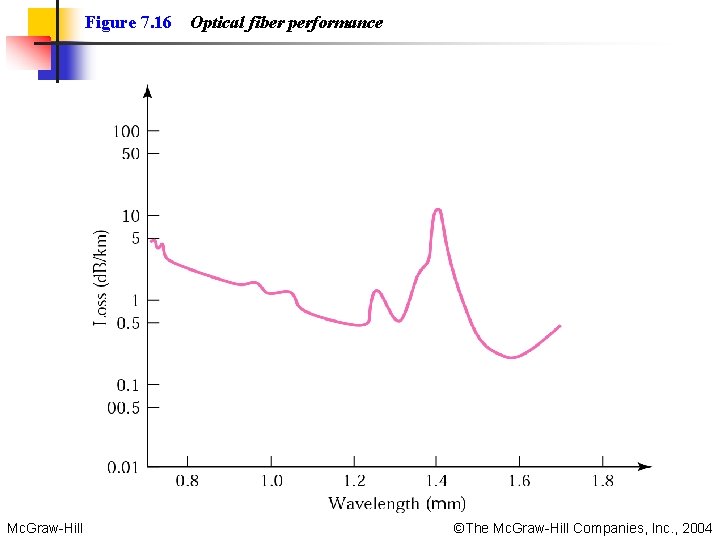
Figure 7. 16 Mc. Graw-Hill Optical fiber performance ©The Mc. Graw-Hill Companies, Inc. , 2004
7. 2 Unguided Media: Wireless Radio Waves Microwaves Infrared Mc. Graw-Hill ©The Mc. Graw-Hill Companies, Inc. , 2004
Figure 7. 17 Mc. Graw-Hill Electromagnetic spectrum for wireless communication ©The Mc. Graw-Hill Companies, Inc. , 2004
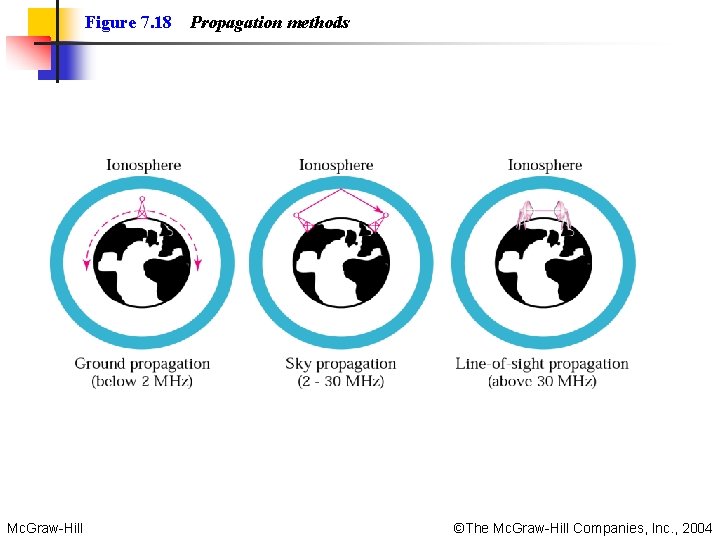
Figure 7. 18 Mc. Graw-Hill Propagation methods ©The Mc. Graw-Hill Companies, Inc. , 2004
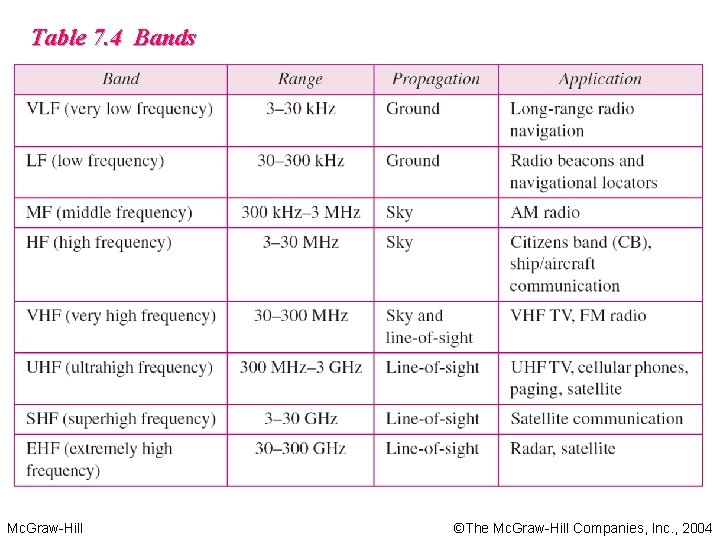
Table 7. 4 Bands Mc. Graw-Hill ©The Mc. Graw-Hill Companies, Inc. , 2004
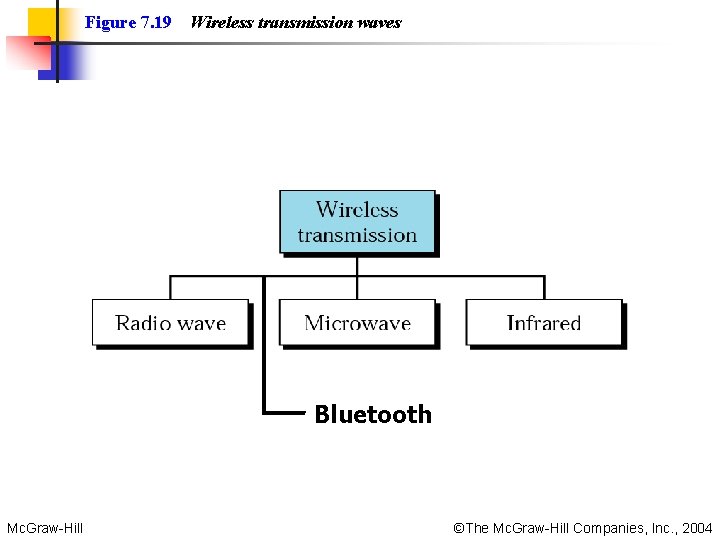
Figure 7. 19 Wireless transmission waves Bluetooth Mc. Graw-Hill ©The Mc. Graw-Hill Companies, Inc. , 2004
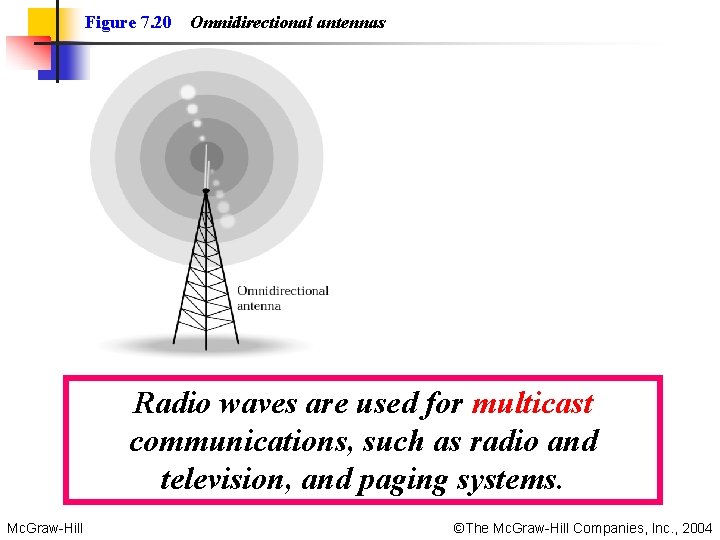
Figure 7. 20 Omnidirectional antennas Radio waves are used for multicast communications, such as radio and television, and paging systems. Mc. Graw-Hill ©The Mc. Graw-Hill Companies, Inc. , 2004
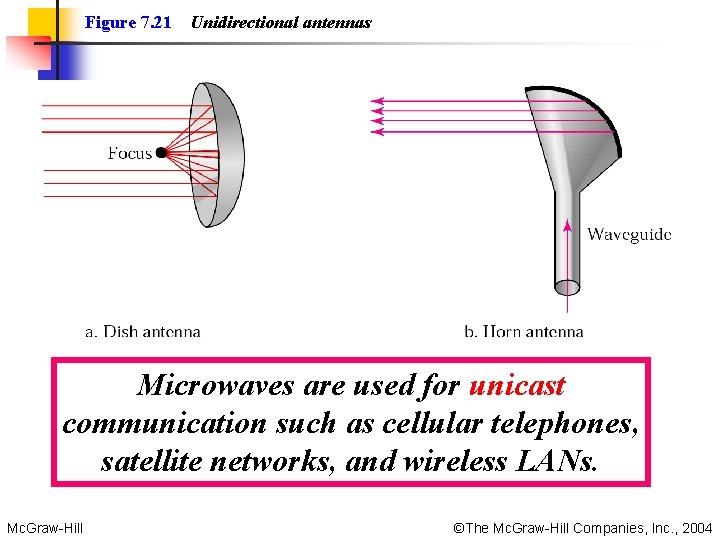
Figure 7. 21 Unidirectional antennas Microwaves are used for unicast communication such as cellular telephones, satellite networks, and wireless LANs. Mc. Graw-Hill ©The Mc. Graw-Hill Companies, Inc. , 2004
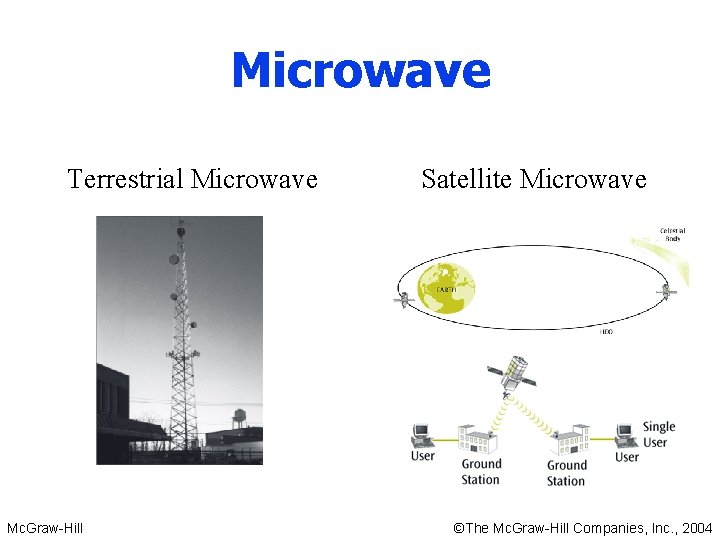
Microwave Terrestrial Microwave Mc. Graw-Hill Satellite Microwave ©The Mc. Graw-Hill Companies, Inc. , 2004
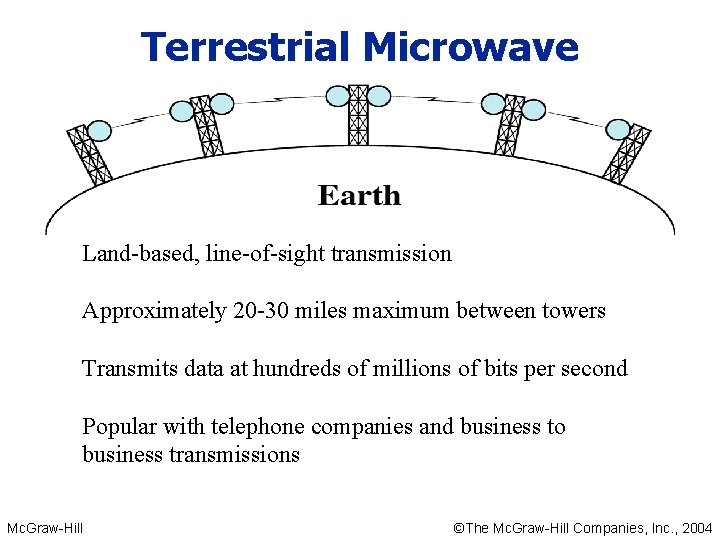
Terrestrial Microwave Land-based, line-of-sight transmission Approximately 20 -30 miles maximum between towers Transmits data at hundreds of millions of bits per second Popular with telephone companies and business to business transmissions Mc. Graw-Hill ©The Mc. Graw-Hill Companies, Inc. , 2004
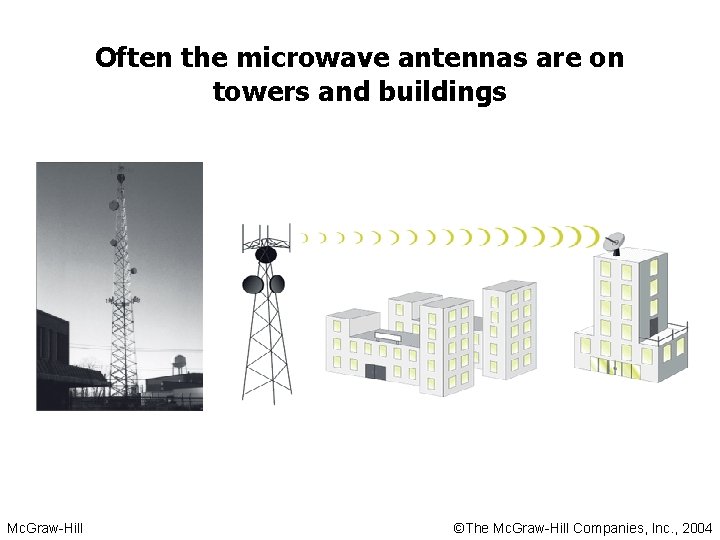
Often the microwave antennas are on towers and buildings Mc. Graw-Hill ©The Mc. Graw-Hill Companies, Inc. , 2004
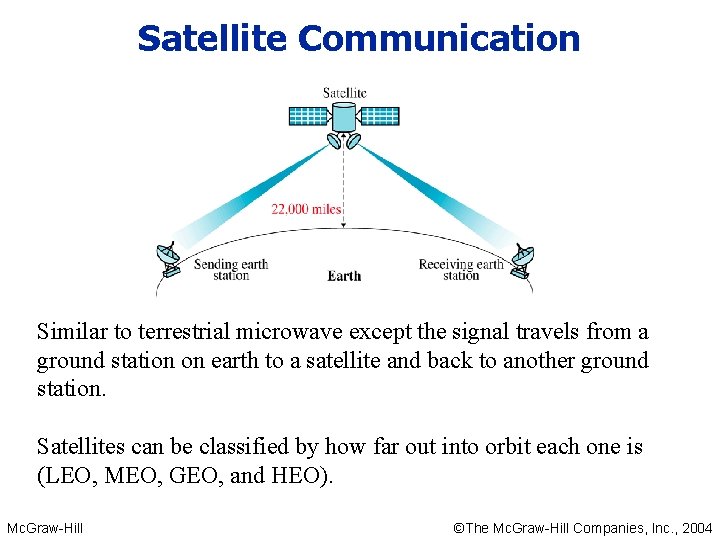
Satellite Communication Similar to terrestrial microwave except the signal travels from a ground station on earth to a satellite and back to another ground station. Satellites can be classified by how far out into orbit each one is (LEO, MEO, GEO, and HEO). Mc. Graw-Hill ©The Mc. Graw-Hill Companies, Inc. , 2004
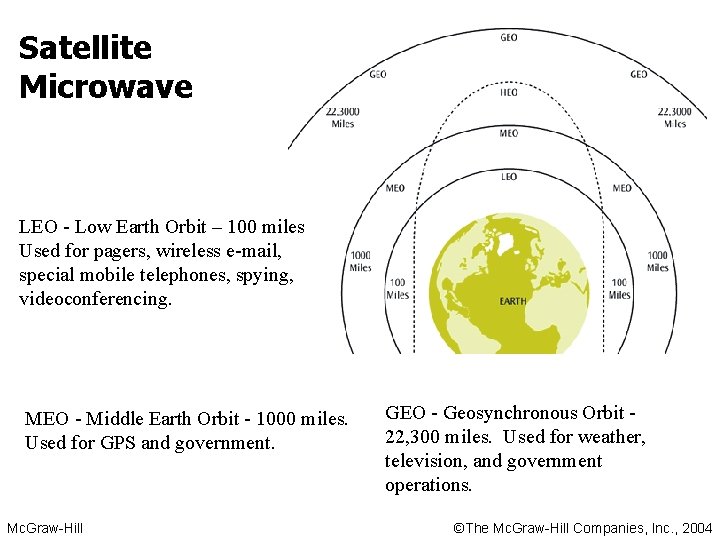
Satellite Microwave LEO - Low Earth Orbit – 100 miles Used for pagers, wireless e-mail, special mobile telephones, spying, videoconferencing. MEO - Middle Earth Orbit - 1000 miles. Used for GPS and government. Mc. Graw-Hill GEO - Geosynchronous Orbit 22, 300 miles. Used for weather, television, and government operations. ©The Mc. Graw-Hill Companies, Inc. , 2004
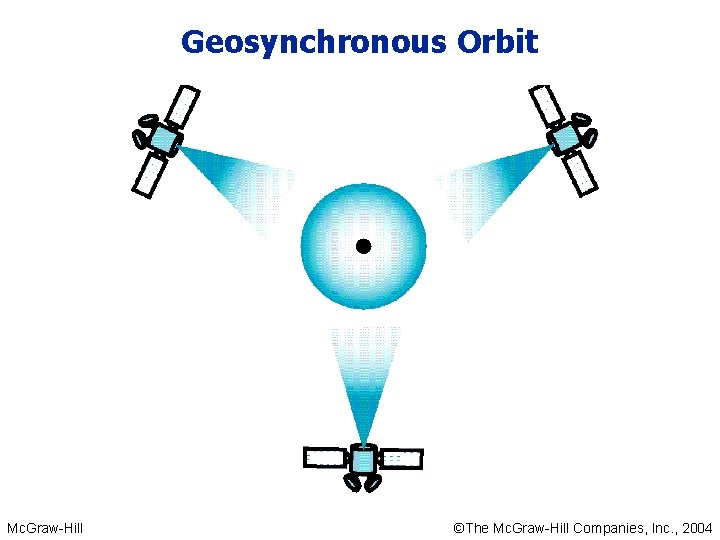
Geosynchronous Orbit Mc. Graw-Hill ©The Mc. Graw-Hill Companies, Inc. , 2004
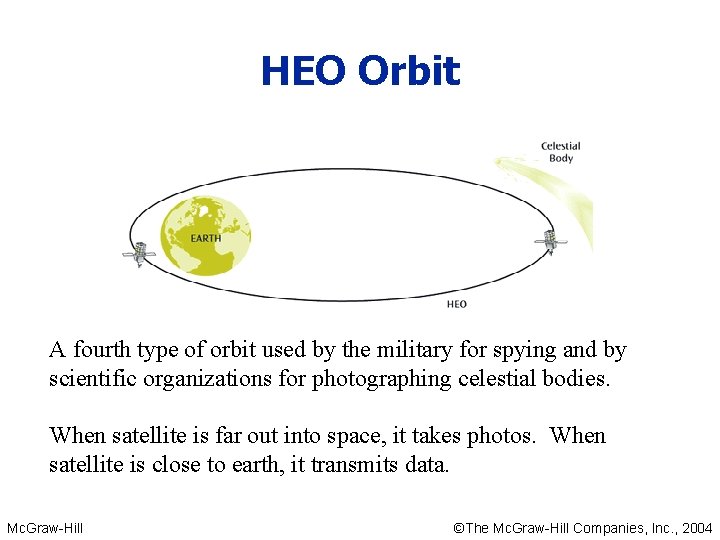
HEO Orbit A fourth type of orbit used by the military for spying and by scientific organizations for photographing celestial bodies. When satellite is far out into space, it takes photos. When satellite is close to earth, it transmits data. Mc. Graw-Hill ©The Mc. Graw-Hill Companies, Inc. , 2004
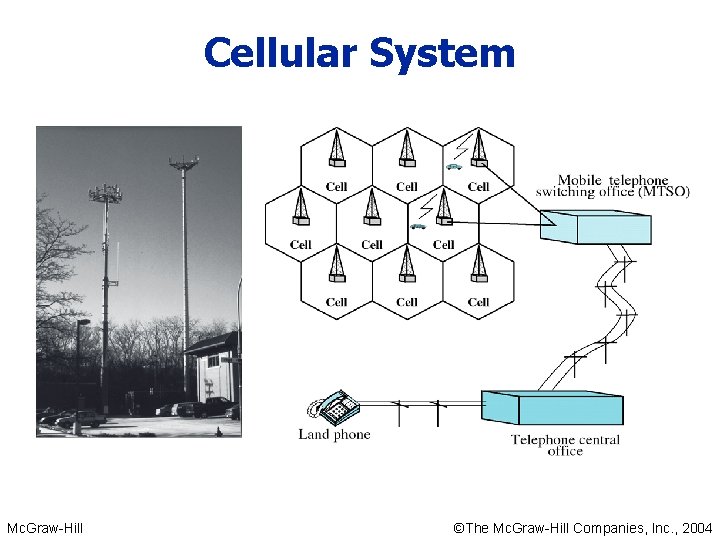
Cellular System Mc. Graw-Hill ©The Mc. Graw-Hill Companies, Inc. , 2004
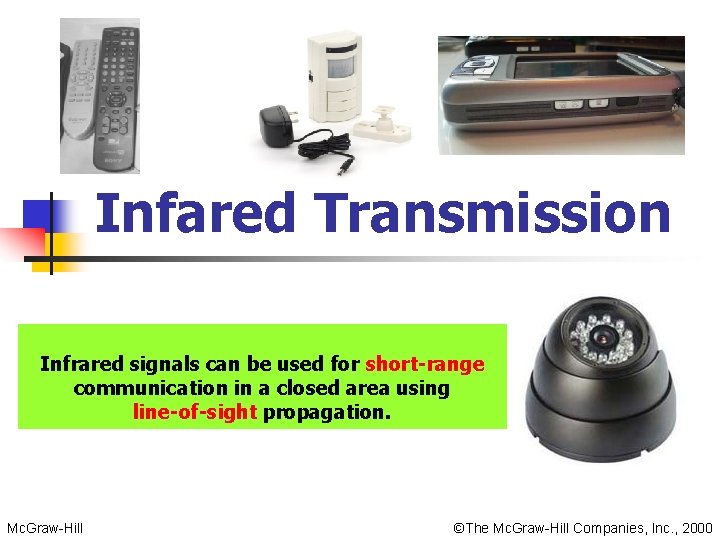
Infared Transmission Infrared signals can be used for short-range communication in a closed area using line-of-sight propagation. Mc. Graw-Hill ©The Mc. Graw-Hill Companies, Inc. , 2000
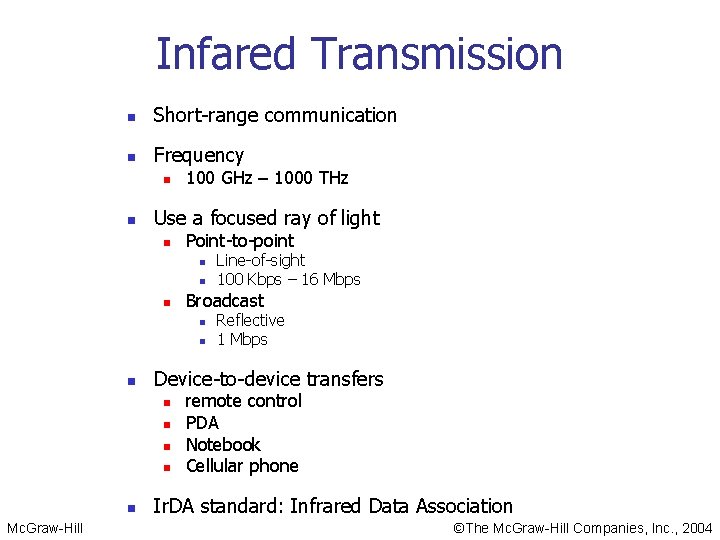
Infared Transmission n Short-range communication n Frequency n n 100 GHz – 1000 THz Use a focused ray of light n Point-to-point n n n Broadcast n n n Mc. Graw-Hill Reflective 1 Mbps Device-to-device transfers n n Line-of-sight 100 Kbps – 16 Mbps remote control PDA Notebook Cellular phone Ir. DA standard: Infrared Data Association ©The Mc. Graw-Hill Companies, Inc. , 2004
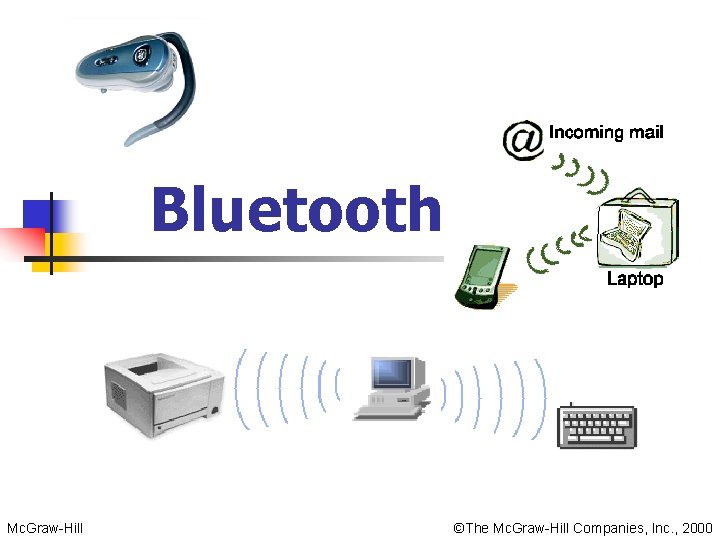
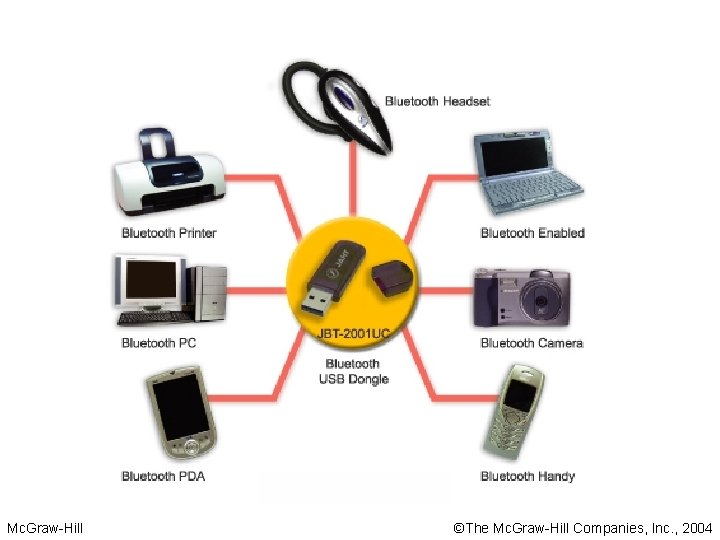
Bluetooth Mc. Graw-Hill ©The Mc. Graw-Hill Companies, Inc. , 2000
Mc. Graw-Hill ©The Mc. Graw-Hill Companies, Inc. , 2004
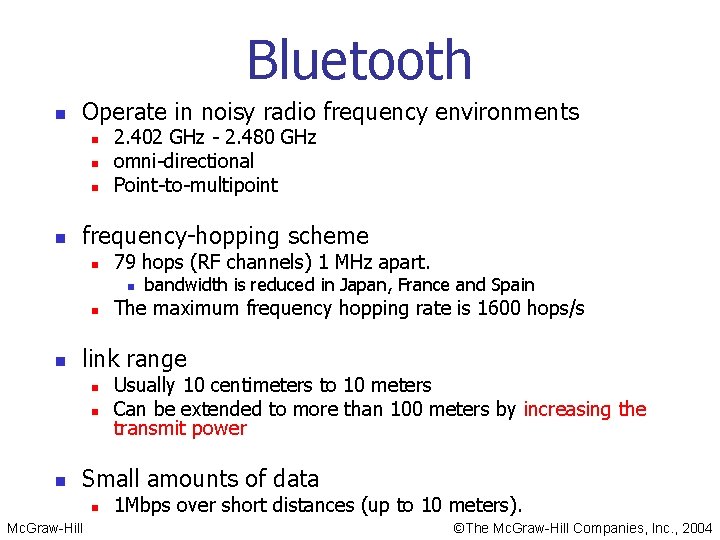
Bluetooth n Operate in noisy radio frequency environments n n 2. 402 GHz - 2. 480 GHz omni-directional Point-to-multipoint frequency-hopping scheme n 79 hops (RF channels) 1 MHz apart. n n n The maximum frequency hopping rate is 1600 hops/s link range n n n bandwidth is reduced in Japan, France and Spain Usually 10 centimeters to 10 meters Can be extended to more than 100 meters by increasing the transmit power Small amounts of data n Mc. Graw-Hill 1 Mbps over short distances (up to 10 meters). ©The Mc. Graw-Hill Companies, Inc. , 2004
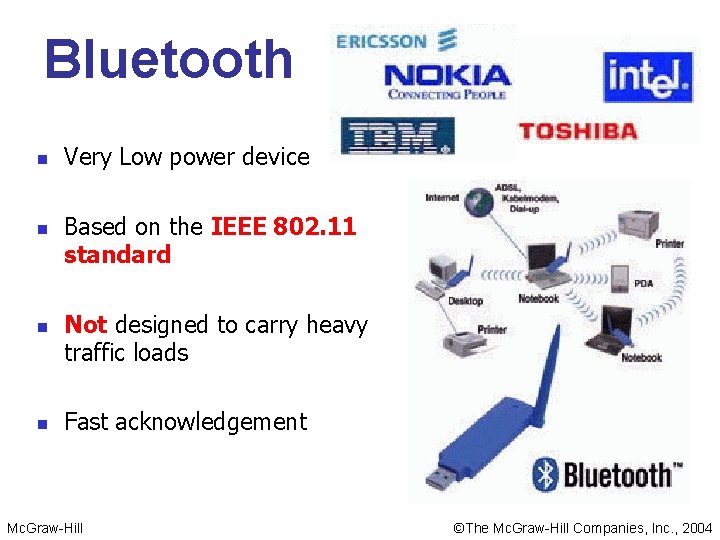
Bluetooth n n Very Low power device Based on the IEEE 802. 11 standard Not designed to carry heavy traffic loads Fast acknowledgement Mc. Graw-Hill ©The Mc. Graw-Hill Companies, Inc. , 2004
Media Selection Criteria n n n n Mc. Graw-Hill Cost Speed Distance Delay Expandability Environment Security ©The Mc. Graw-Hill Companies, Inc. , 2004