
Chapter 7 Review Transmission Media The Mc GrawHill

- Slides: 25
Chapter 7 Review Transmission Media © The Mc. Graw-Hill Companies, Inc. Permission required for reproduction or display. 7. Copyright 1
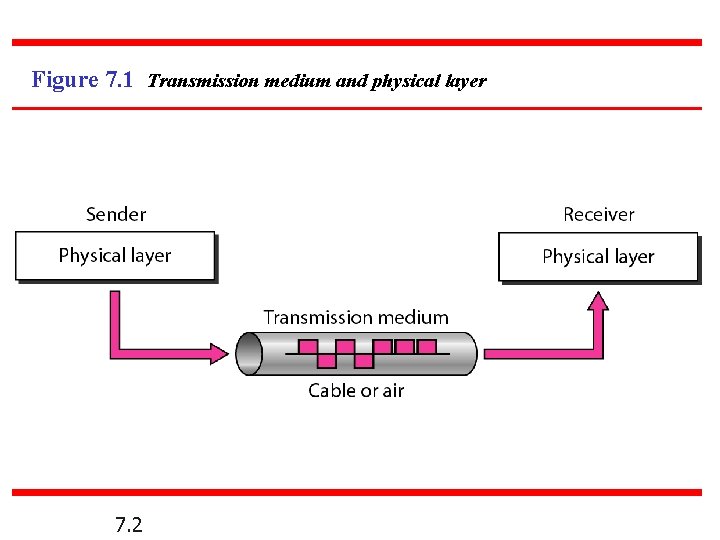
Figure 7. 1 Transmission medium and physical layer 7. 2
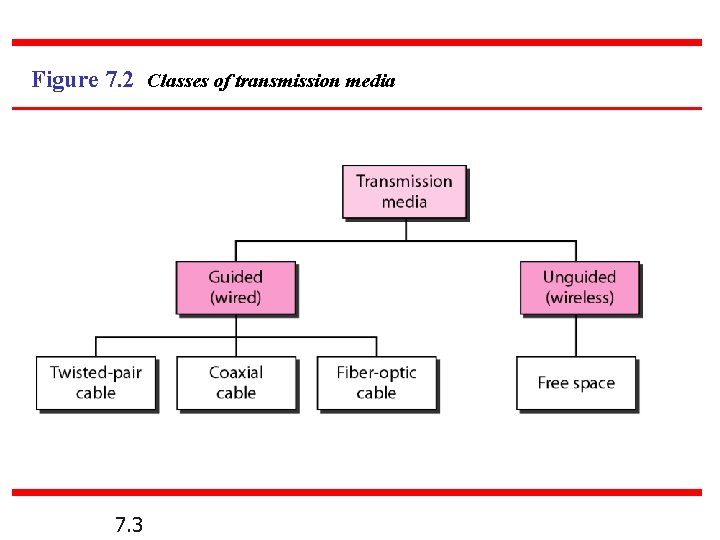
Figure 7. 2 Classes of transmission media 7. 3
7 -1 GUIDED MEDIA Guided media, which are those that provide a conduit from one device to another, include twisted-pair cable, coaxial cable, and fiber-optic cable. Topics discussed in this section: Twisted-Pair Cable Coaxial Cable Fiber-Optic Cable 7. 4
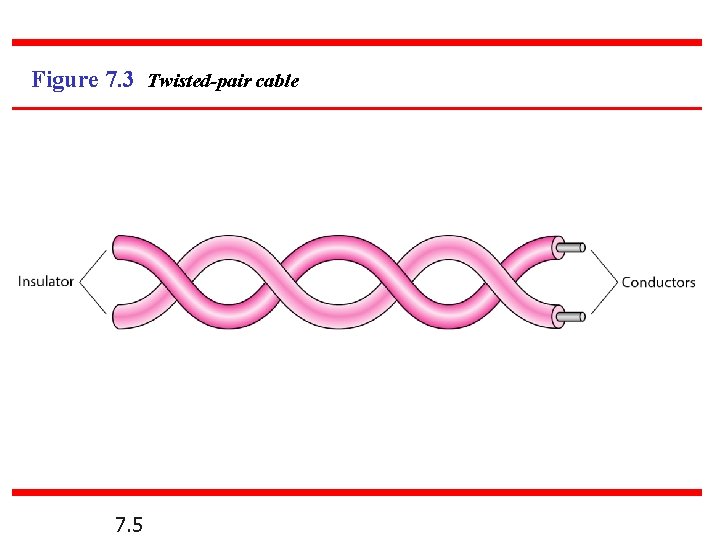
Figure 7. 3 Twisted-pair cable 7. 5
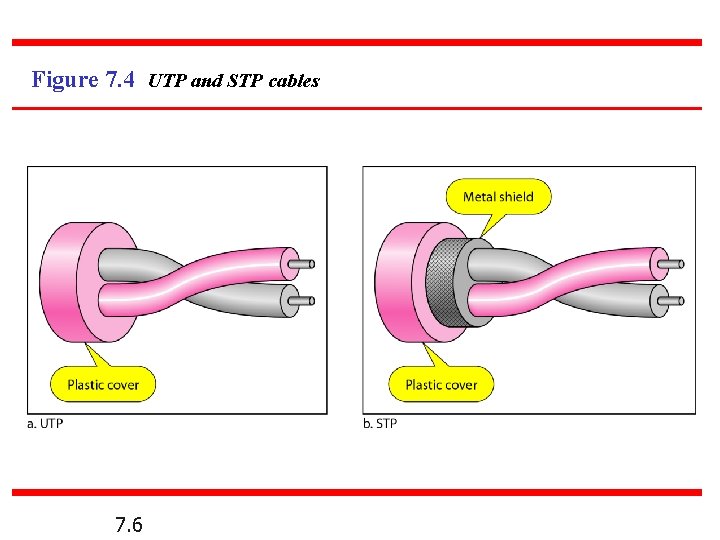
Figure 7. 4 UTP and STP cables 7. 6
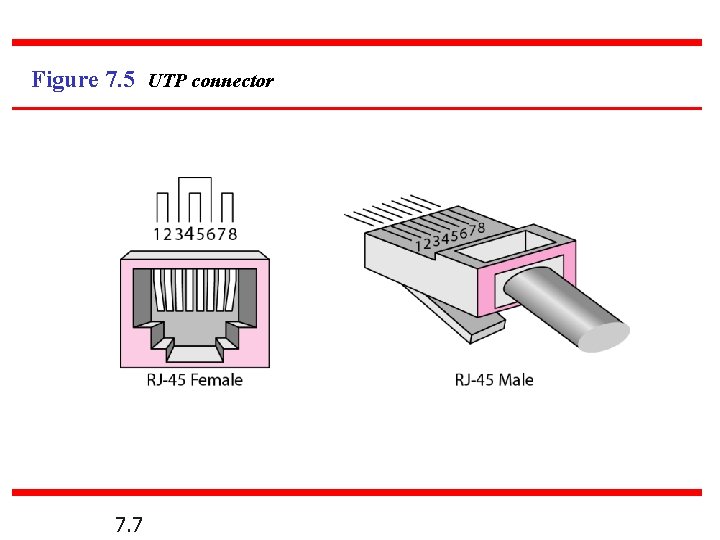
Figure 7. 5 UTP connector 7. 7
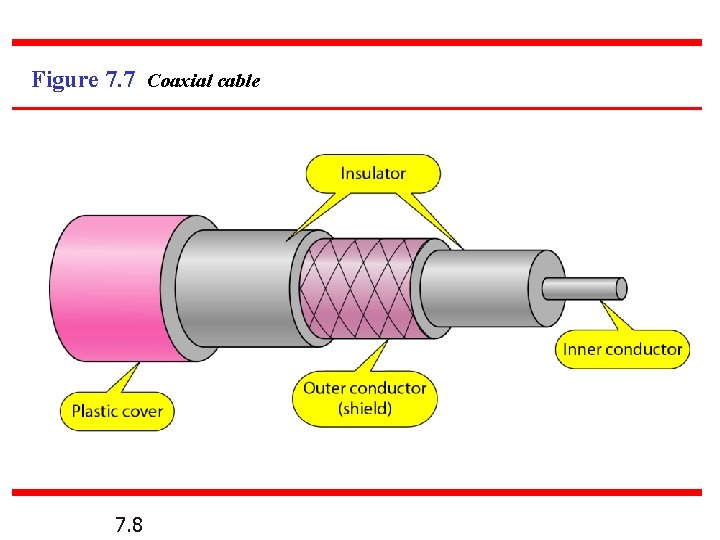
Figure 7. 7 Coaxial cable 7. 8
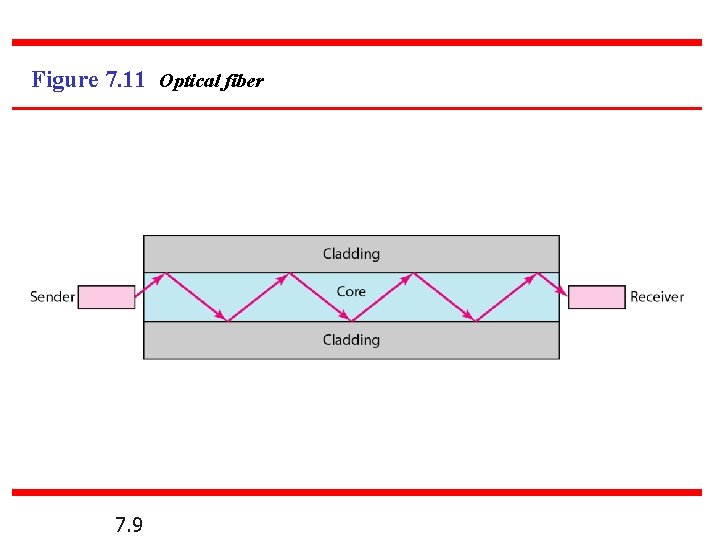
Figure 7. 11 Optical fiber 7. 9
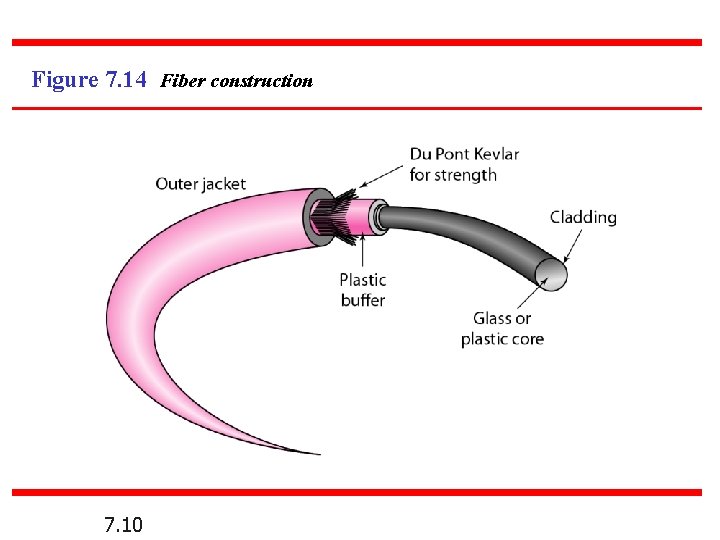
Figure 7. 14 Fiber construction 7. 10
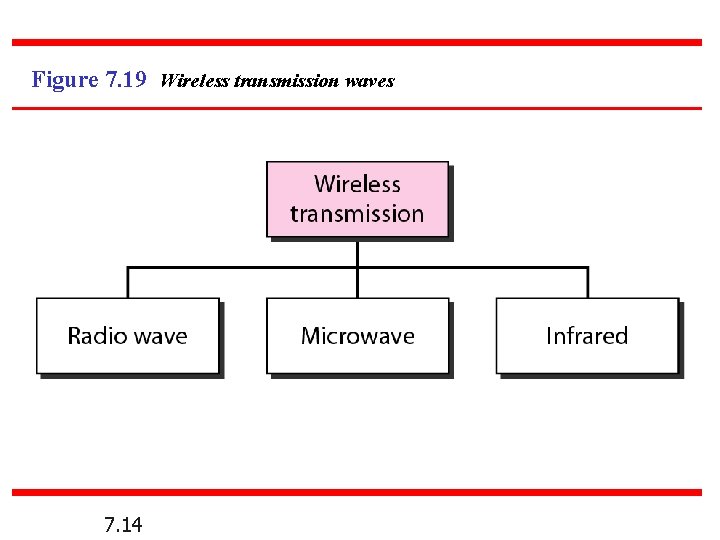
7 -2 UNGUIDED MEDIA: WIRELESS Unguided media transport electromagnetic waves without using a physical conductor. This type of communication is often referred to as wireless communication. Topics discussed in this section: Radio Waves Microwaves Infrared 7. 11
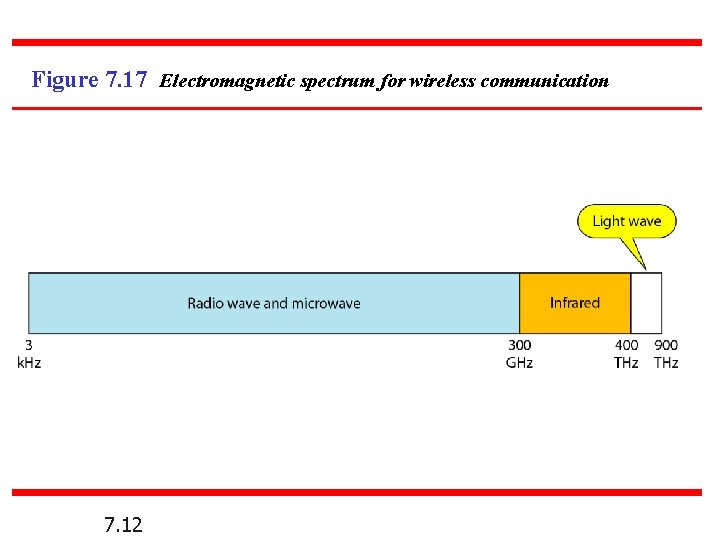
Figure 7. 17 Electromagnetic spectrum for wireless communication 7. 12
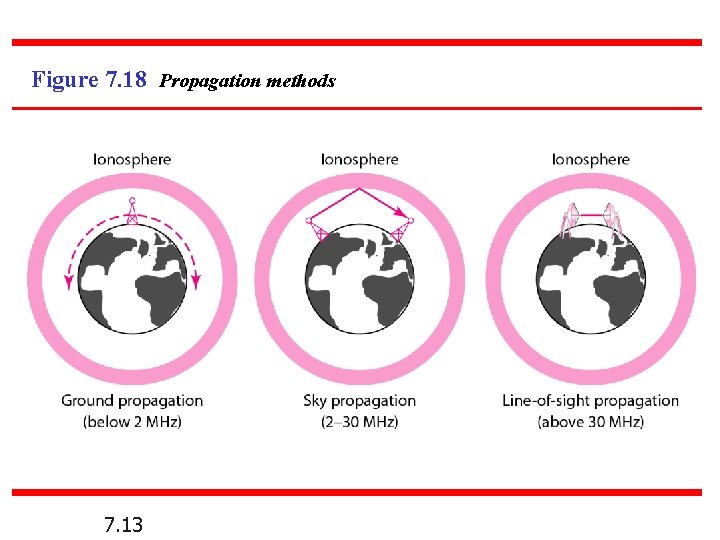
Figure 7. 18 Propagation methods 7. 13
Figure 7. 19 Wireless transmission waves 7. 14
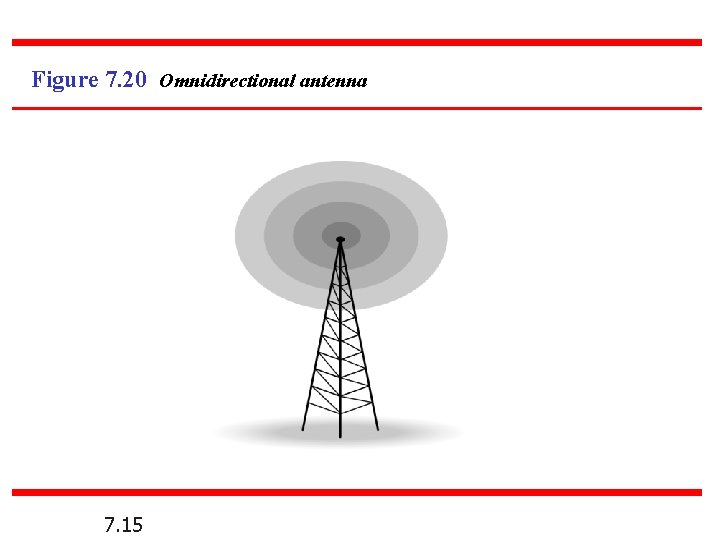
Figure 7. 20 Omnidirectional antenna 7. 15
Note Radio waves are used for multicast communications, such as radio and television, and paging systems. 7. 16
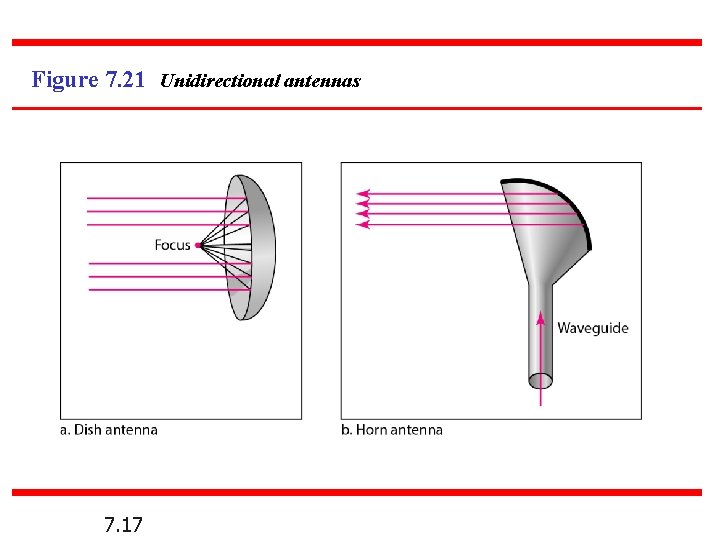
Figure 7. 21 Unidirectional antennas 7. 17
Note Microwaves are used for unicast communication such as cellular telephones, satellite networks, and wireless LANs. 7. 18
Note Infrared signals can be used for shortrange communication in a closed area using line-of-sight propagation. 7. 19
Exercise Chapter 7 Mc. Graw-Hill 7. 20 ©The Mc. Graw-Hill Companies, Inc. , 2000
1 -what is the position of the transmission media in the OSI model? n The transmission media is located beneath the physical layer and controlled by the physical layer. 7. 21
2 -Name the two major categories of transmission media? n Guided (wired) media, and unguided (wireless) media. 7. 22
3 -How do guided media differ from unguided media? n Guided media have physical boundaries, while unguided media are unbounded 7. 23
4 -what is the significance of the twisting in twisted pair cable? n Twisting ensures that both wires are equally, but inversely, affected by external influences such as noise. 7. 24
5 -what is the purpose of cladding In an optical fiber? n The inner core of an optical fiber is surrounded by cladding. The core is denser than the cladding, so a light beam traveling through the core is reflected at the boundary between the core and the cladding if the incident angle is more than the critical angle. 7. 25