
Transmission Media Media Transmisi Pertemuan 4 Dosen S
- Slides: 44
Transmission Media (Media Transmisi) Pertemuan 4 Dosen: S. Indriani L, M. T
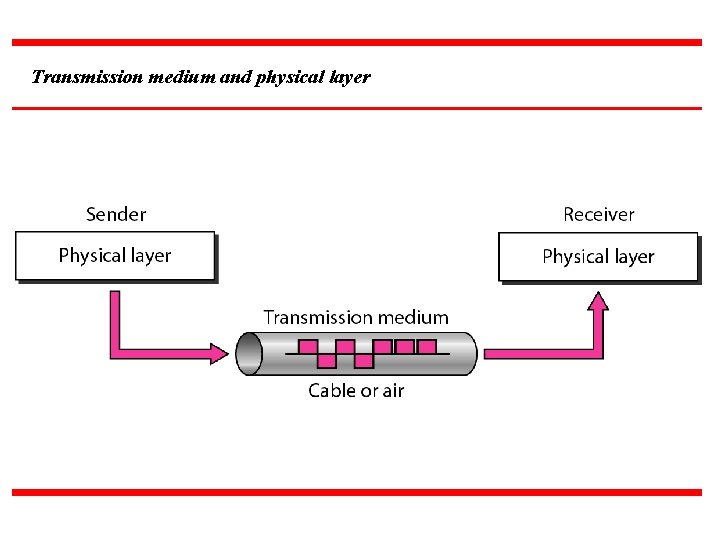
Transmission medium and physical layer
Transmission Media • • The use of long distance communication using electric signal started with the invention of the telegraph by morse in the 19 th century. Communication by telegraph was slow and dependent on ametallic medium Extending the range of human voice became possible when the telephone was invented in 1869 Telephone communication at that time also needed a metallic medium to carry the electric signals that were the result of a convertion from human voice. The communication was, however, unreliable due to the poor quality of the wires. The lines were often noisy and the technology was unsophisticated Wireless communication started in 1895 when Hertz was able to send high frequency signal Later, Marconi devised a method to send telegraph type message to over the Atlantic Ocean. In telecommunication, transmission media can divided into two broad categories: Guided and Unguided
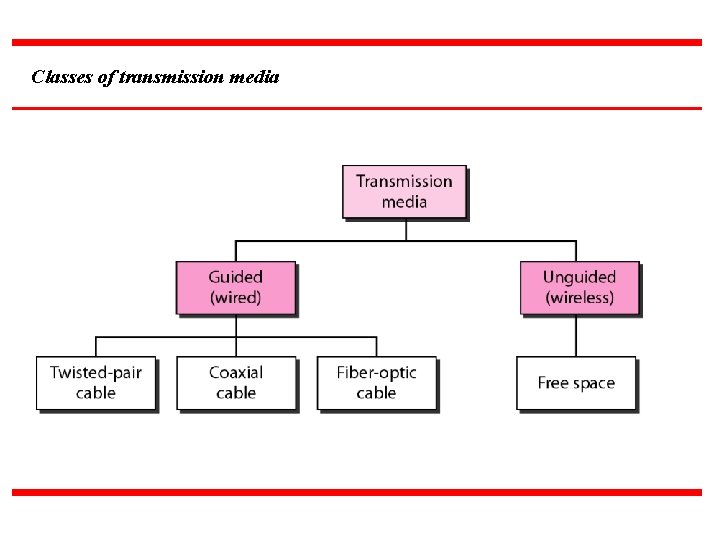
Classes of transmission media
GUIDED MEDIA Guided media, which are those that provide a conduit from one device to another, include twisted-pair cable, coaxial cable, and fiber-optic cable. Media Guided adalah Media transmisi yang terpandu maksudnya adalah media yang mampu mentransmisikan besaran-besaran fisik lewat materialnya. Contoh: kabel twisted-pair, kabel coaxial dan serat optik. Topics discussed in this section: Twisted-Pair Cable Coaxial Cable Fiber-Optic Cable
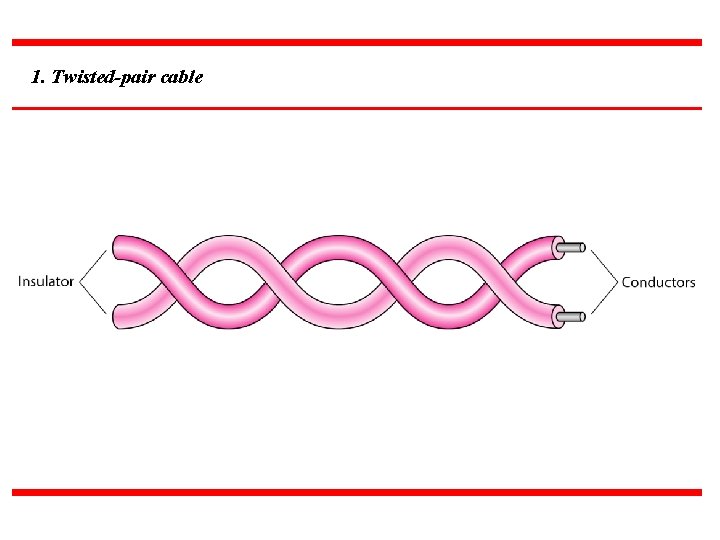
1. Twisted-pair cable
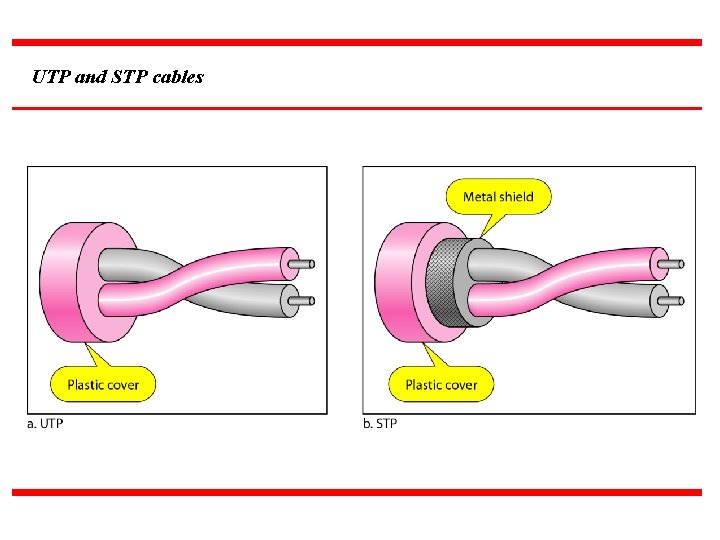
UTP and STP cables
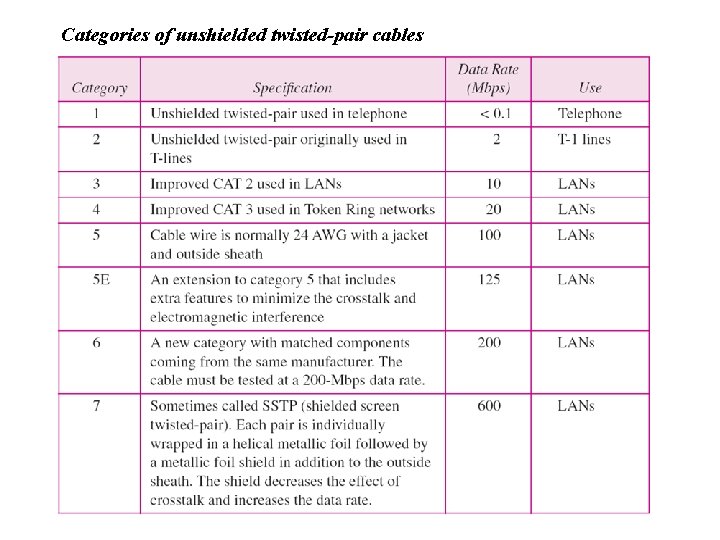
Categories of unshielded twisted-pair cables
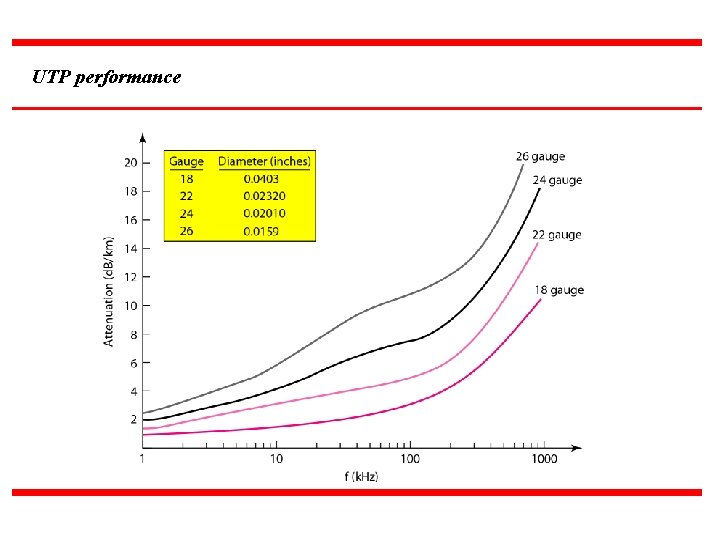
UTP performance
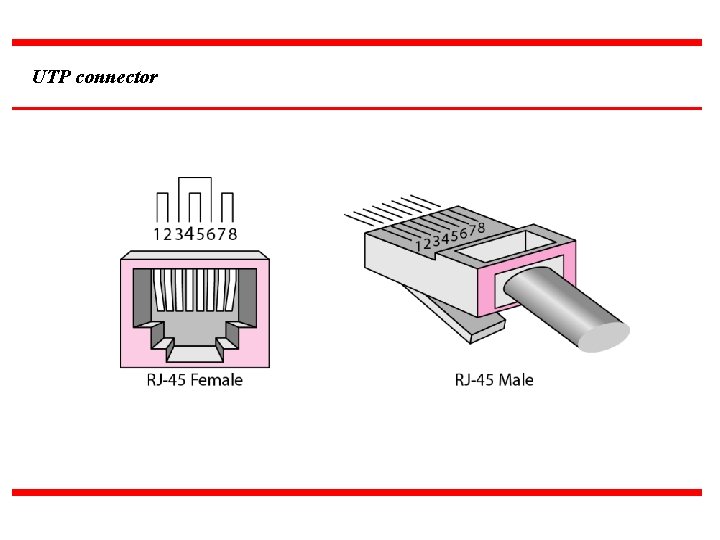
UTP connector
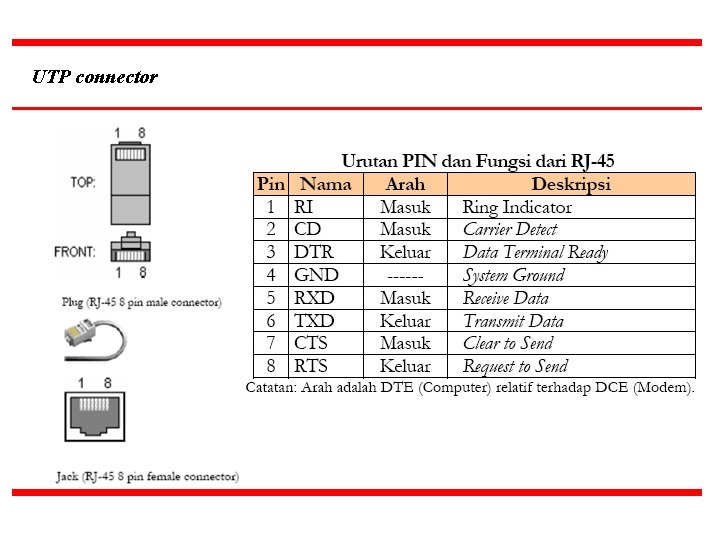
UTP connector
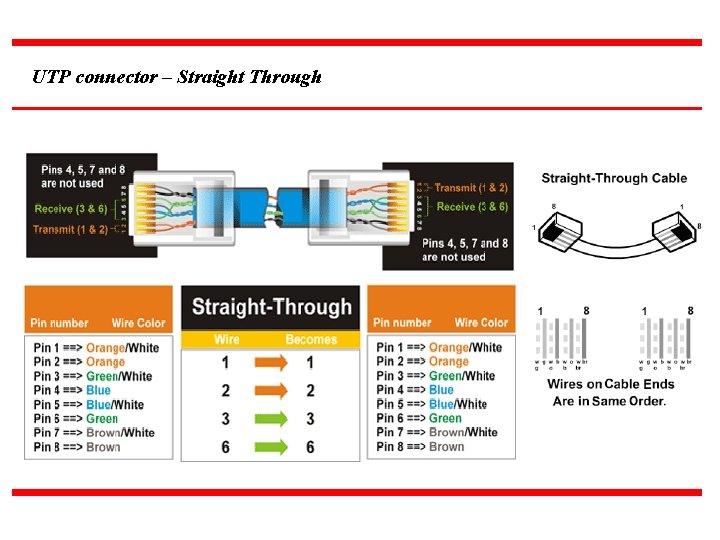
UTP connector – Straight Through
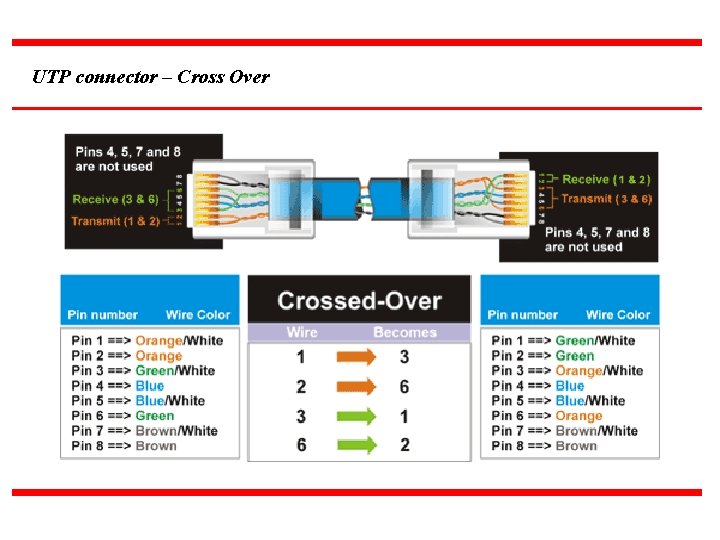
UTP connector – Cross Over
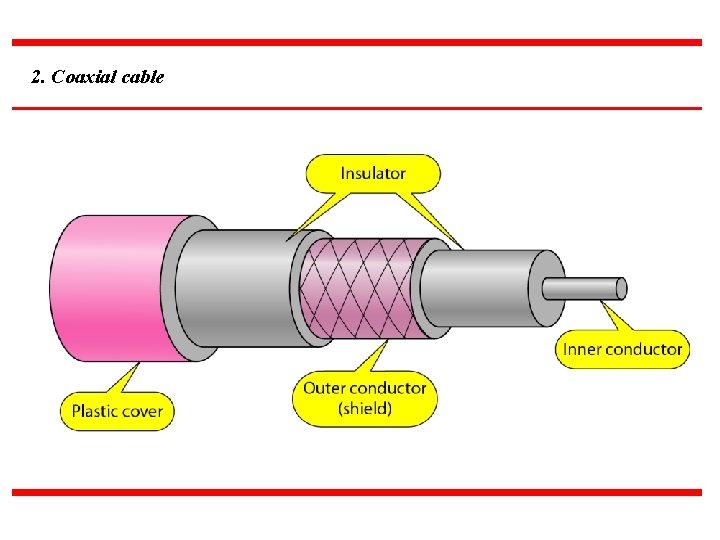
2. Coaxial cable
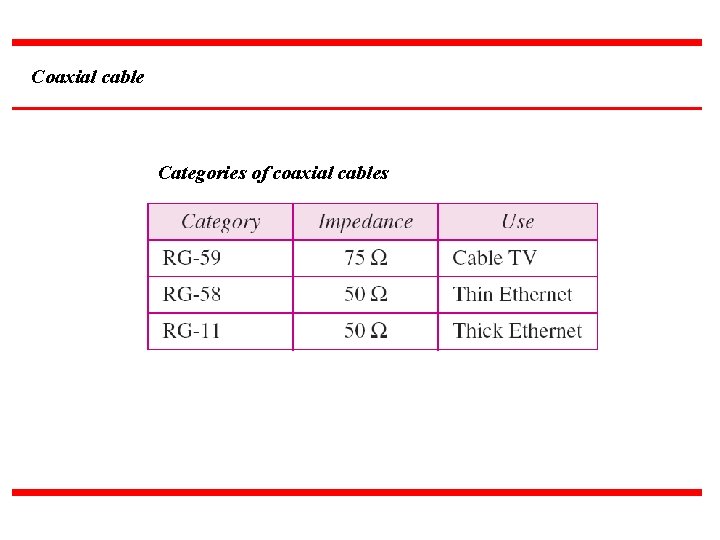
Coaxial cable Categories of coaxial cables
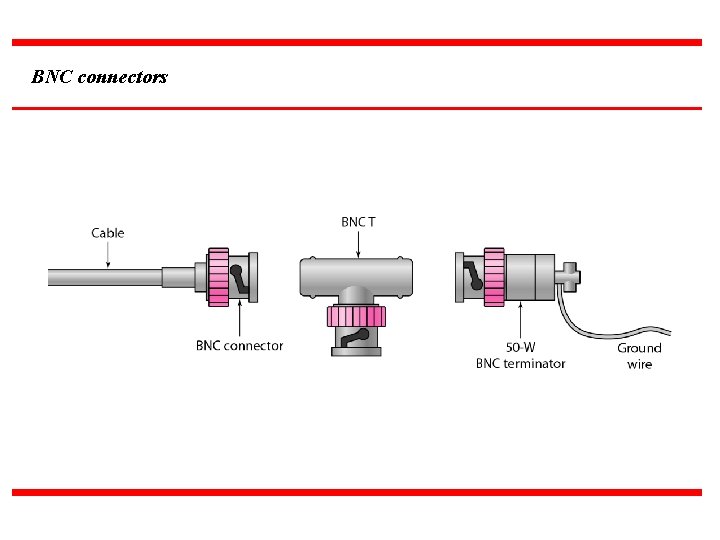
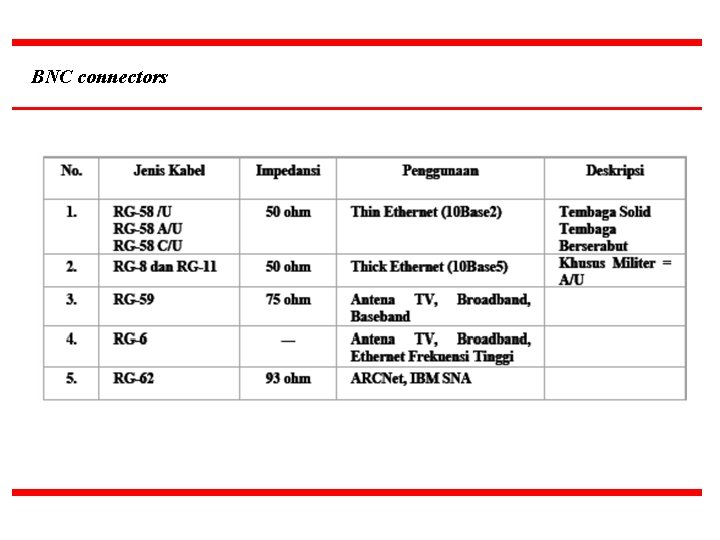
BNC connectors
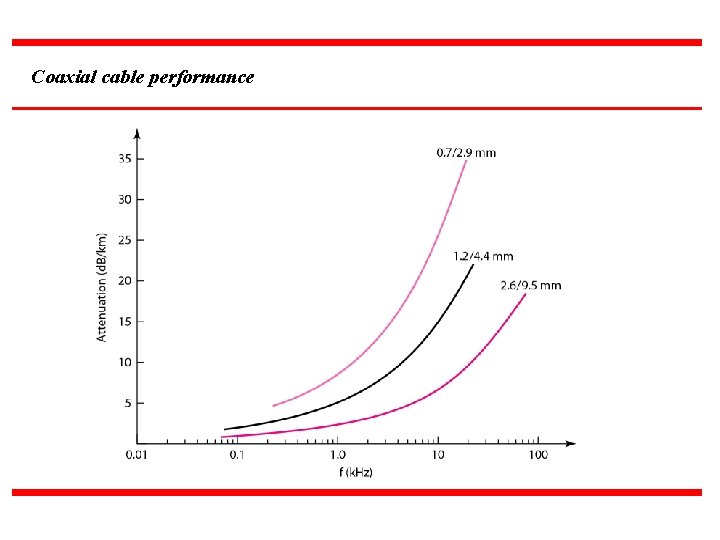
Coaxial cable performance
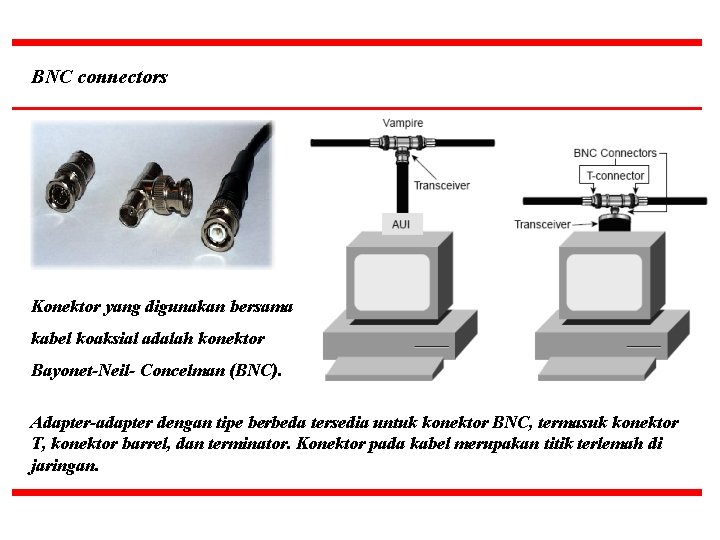
BNC connectors
BNC connectors Konektor yang digunakan bersama kabel koaksial adalah konektor Bayonet-Neil- Concelman (BNC). Adapter-adapter dengan tipe berbeda tersedia untuk konektor BNC, termasuk konektor T, konektor barrel, dan terminator. Konektor pada kabel merupakan titik terlemah di jaringan.
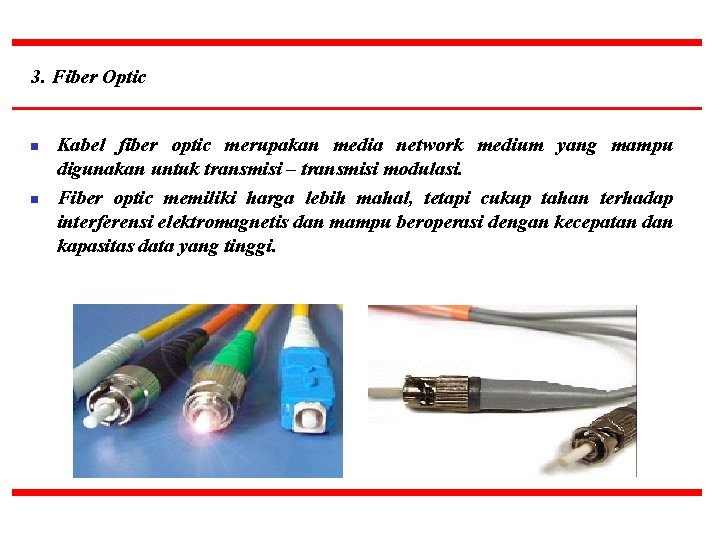
3. Fiber Optic n n Kabel fiber optic merupakan media network medium yang mampu digunakan untuk transmisi – transmisi modulasi. Fiber optic memiliki harga lebih mahal, tetapi cukup tahan terhadap interferensi elektromagnetis dan mampu beroperasi dengan kecepatan dan kapasitas data yang tinggi.
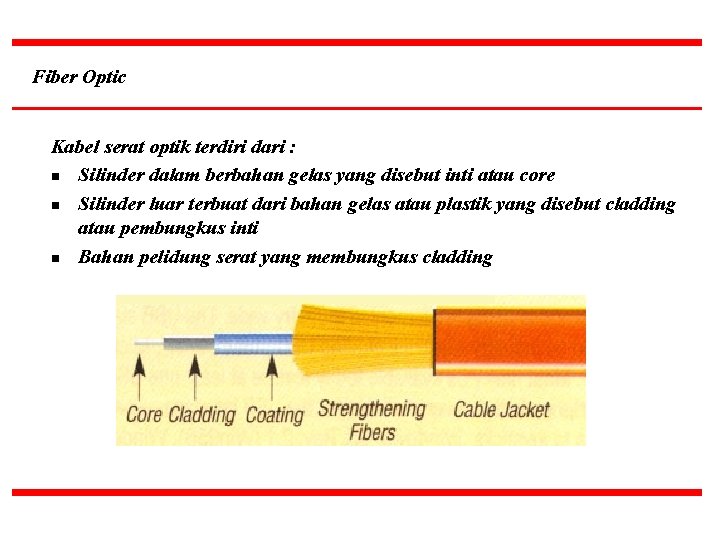
Fiber Optic Kabel serat optik terdiri dari : n Silinder dalam berbahan gelas yang disebut inti atau core n Silinder luar terbuat dari bahan gelas atau plastik yang disebut cladding atau pembungkus inti n Bahan pelidung serat yang membungkus cladding
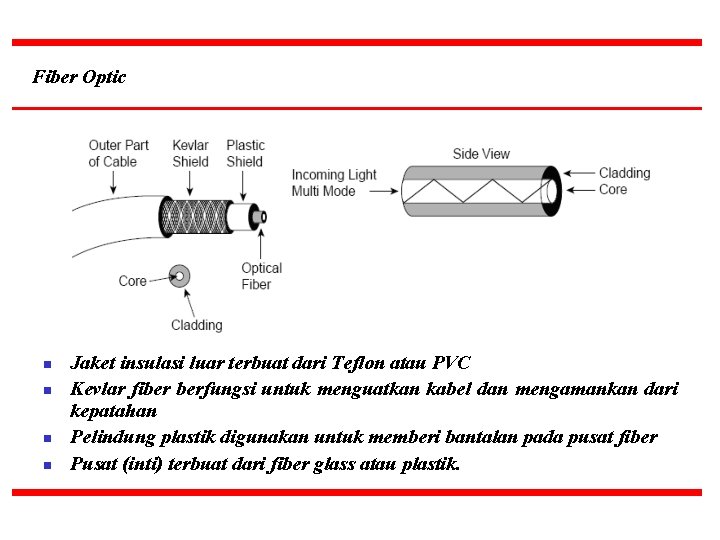
Fiber Optic n n Jaket insulasi luar terbuat dari Teflon atau PVC Kevlar fiber berfungsi untuk menguatkan kabel dan mengamankan dari kepatahan Pelindung plastik digunakan untuk memberi bantalan pada pusat fiber Pusat (inti) terbuat dari fiber glass atau plastik.
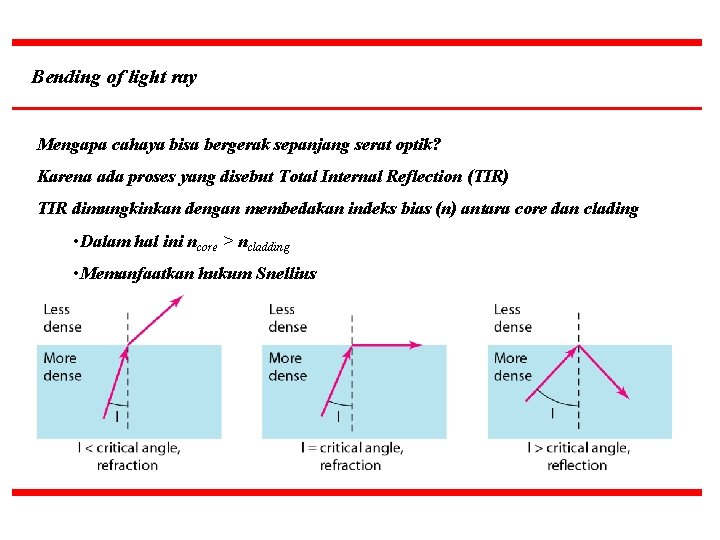
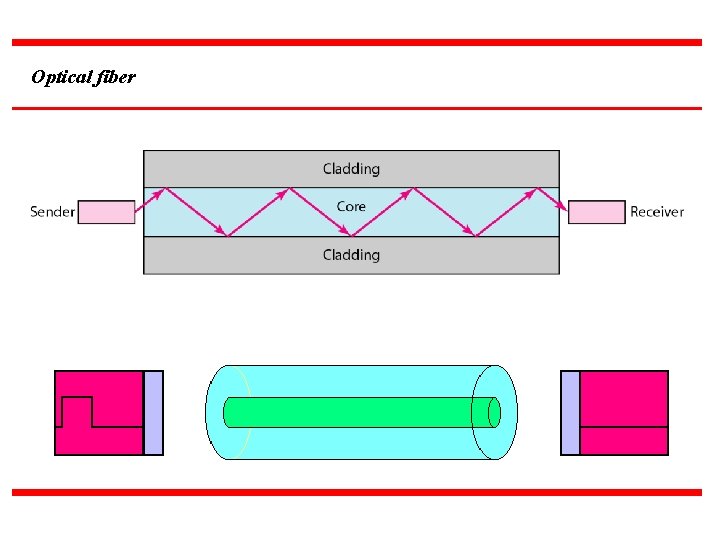
Bending of light ray Mengapa cahaya bisa bergerak sepanjang serat optik? Karena ada proses yang disebut Total Internal Reflection (TIR) TIR dimungkinkan dengan membedakan indeks bias (n) antara core dan clading • Dalam hal ini ncore > ncladding • Memanfaatkan hukum Snellius
Optical fiber
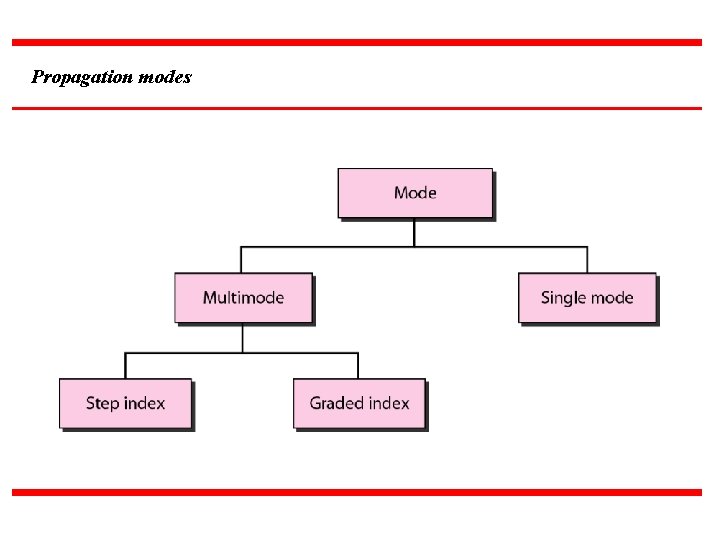
Propagation modes
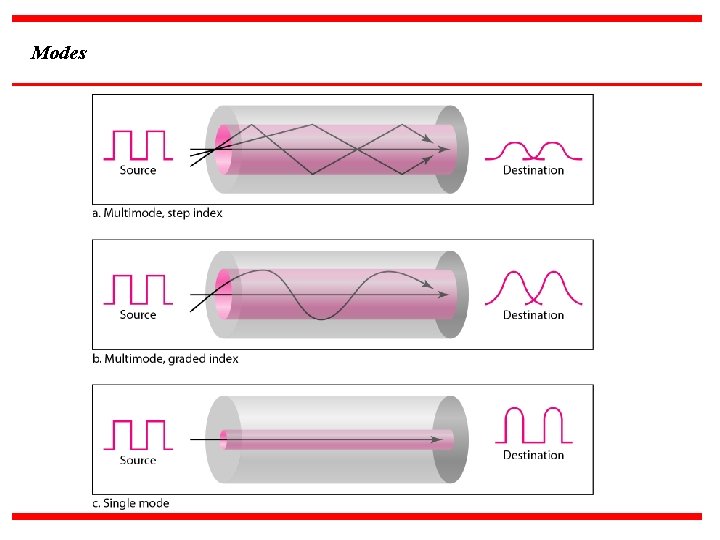
Modes
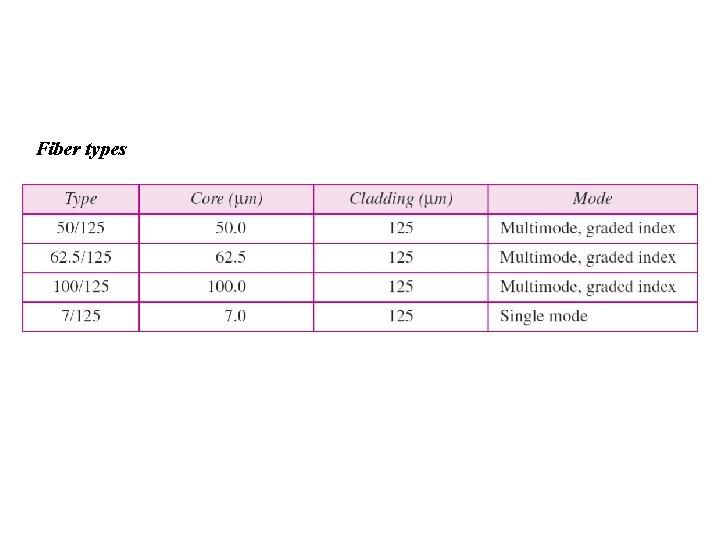
Fiber types
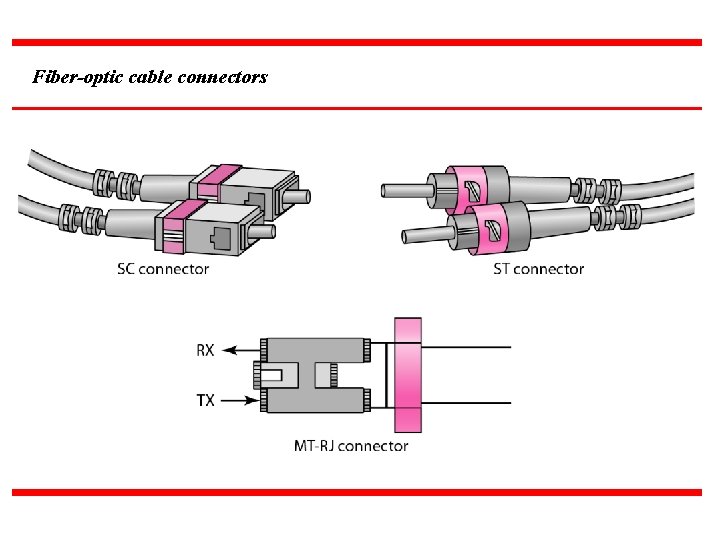
Fiber-optic cable connectors
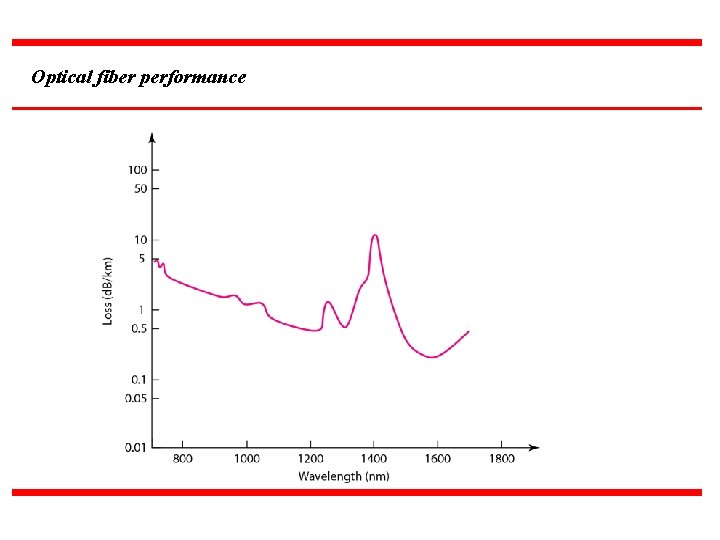
Optical fiber performance
Advantages of Optical Fiber Optic cable has several advantages over metallic cable (twisted pair or coaxial) • Higher Bandwidth • Less Signal Attenuation • Immunity to electronic interference • Resistance to corrosive materials • Light Weight • Greater immunity to tapping
Disadvantages of Optical Fiber There are some disadvantages in the use of optical fiber • Installation and maintanance • Unidirectional light propagation • Cost
UNGUIDED MEDIA: WIRELESS Unguided media transport electromagnetic waves without using a physical conductor. This type of communication is often referred to as wireless communication. Topics discussed in this section: Radio Waves Microwaves Infrared
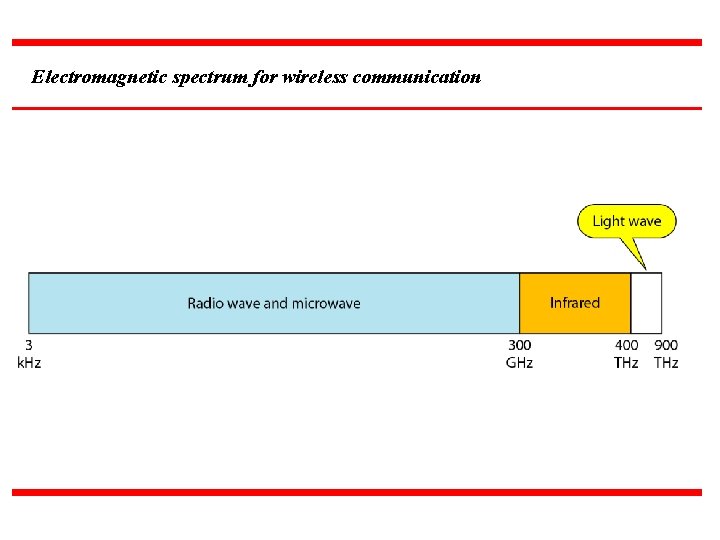
Electromagnetic spectrum for wireless communication
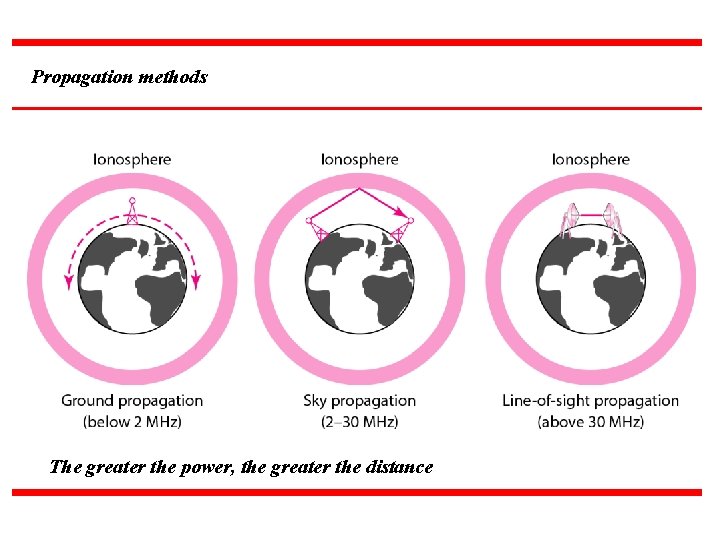
Propagation methods The greater the power, the greater the distance
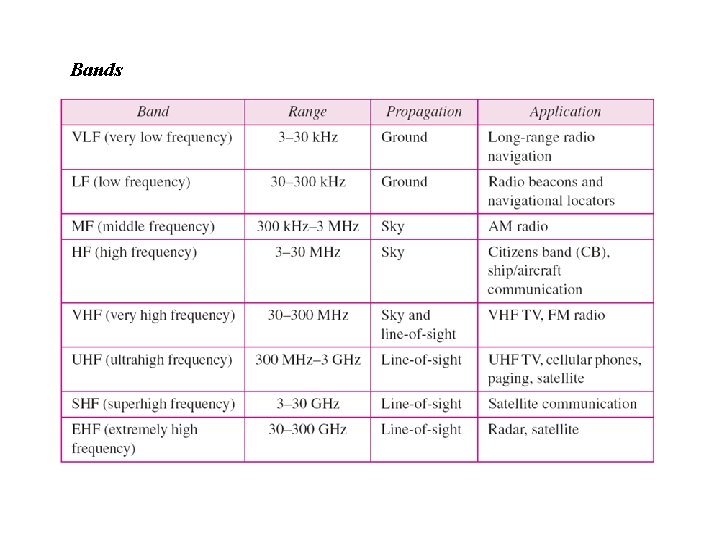
Bands
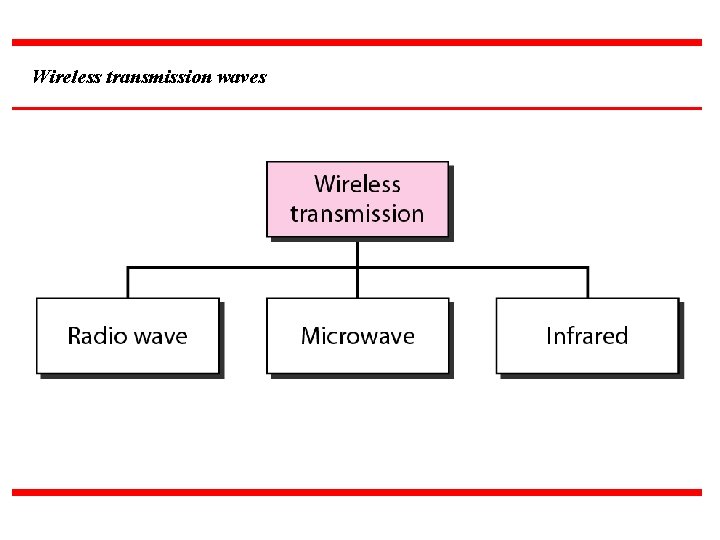
Wireless transmission waves
1. Radio Waves • • • Electromagnetic waves ranging in frequencies between 3 KHz and 1 GHz are normally called radio waves Radio waves, particullary those waves that propagate in tje sky mode, can travel long distances. This makes radio waves a good candidate for long-distance broadcasting such as AM Radio waves, paticullary those of low and medium frequencies, can penetrate walls. ü Advantage: an AM radio can receive signals inside a building ü Disadvantage: we cannot isolate a commuication to just inside or outside a building. Almost the entire band is regulated bu authorities. Using any part of the band requires permission from the authorities
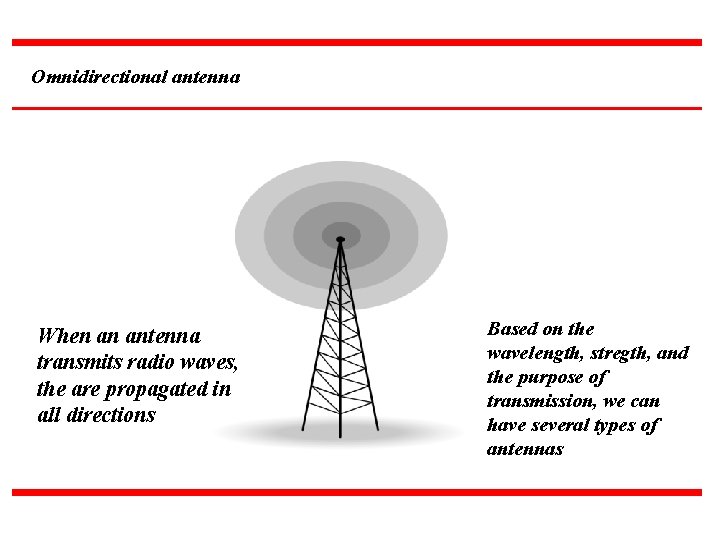
Omnidirectional antenna When an antenna transmits radio waves, the are propagated in all directions Based on the wavelength, stregth, and the purpose of transmission, we can have several types of antennas
Note Radio waves are used for multicast communications, such as radio and television, and paging systems.
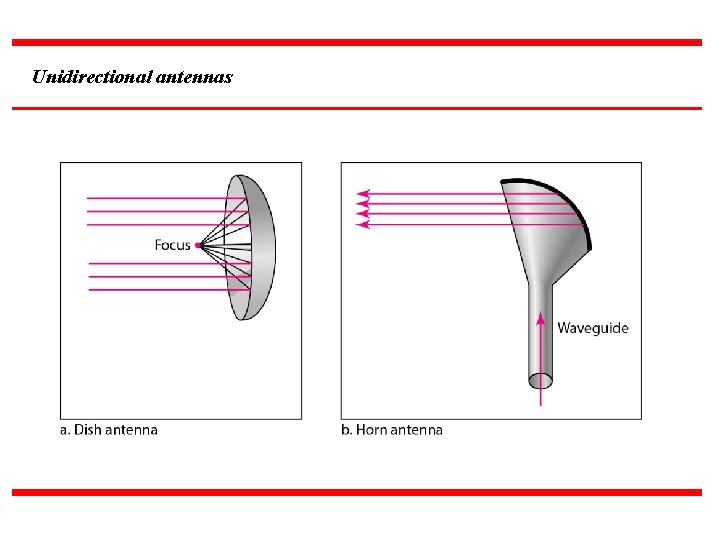
2. Microwaves • • • Electromagnetic waves having frequencies between 1 and 3000 GHz are called microwaves Microwaves are unidirectional When an antenna transmits microwaves, they can be narrowly focused. This means that the sending and receiving antennas need to be aligned. Characteristics of microwaves propagation: • Microwave propagation is line of sight • Very high-frequency microwaves cannot penetrate the walls • The microwave band is relatively wide • Use of certain portions of the bands requires permission from authorities
Unidirectional antennas
Note Microwaves are used for unicast communication such as cellular telephones, satellite networks, and wireless LANs.
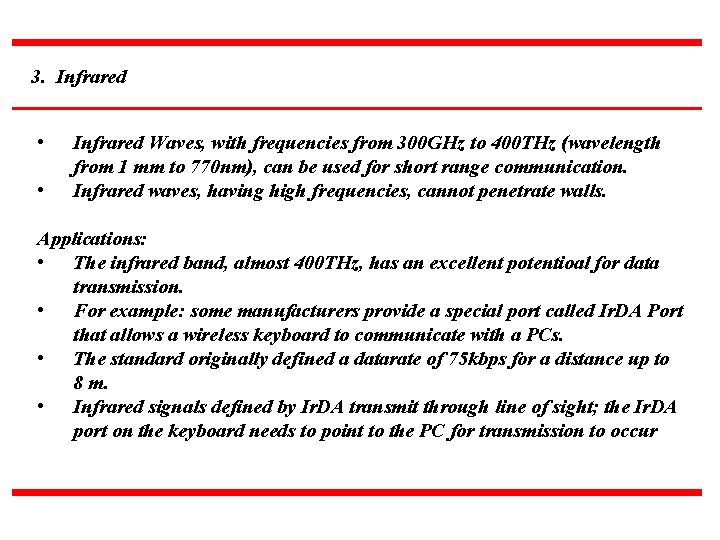
3. Infrared • • Infrared Waves, with frequencies from 300 GHz to 400 THz (wavelength from 1 mm to 770 nm), can be used for short range communication. Infrared waves, having high frequencies, cannot penetrate walls. Applications: • The infrared band, almost 400 THz, has an excellent potentioal for data transmission. • For example: some manufacturers provide a special port called Ir. DA Port that allows a wireless keyboard to communicate with a PCs. • The standard originally defined a datarate of 75 kbps for a distance up to 8 m. • Infrared signals defined by Ir. DA transmit through line of sight; the Ir. DA port on the keyboard needs to point to the PC for transmission to occur
Note Infrared signals can be used for shortrange communication in a closed area using line-of-sight propagation.