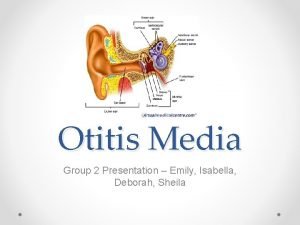
Acute Suppurative Otitis Media Dr Vishal Sharma Definition






- Slides: 87
Acute Suppurative Otitis Media Dr. Vishal Sharma
Definition Pyogenic infection of middle ear cleft lasting for < 3 weeks. Routes for infection: 1. Via Eustachian tube 2. Via Tympanic membrane perforation 3. Haematogenous (rare)
Predisposing Factors 1. Breast feeding in supine position 2. Recurrent upper respiratory tract infection 3. Nasal allergy 4. Chronic rhinitis & sinusitis 5. Tumours of nose & nasopharynx 6. Exposure to cigarette smoke 7. Cleft palate
Bacteriology 1. Haemophilus influenzae 2. Streptococcus pneumoniae 3. Staphylococcus aureus 4. Moraxella catarrhalis 5. - Hemolytic streptococci (causes acute necrotizing otitis media)
Stages of A. S. O. M.
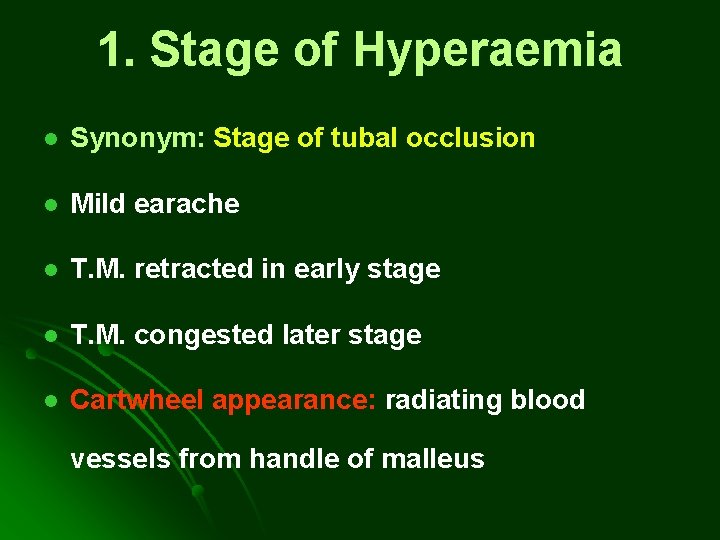
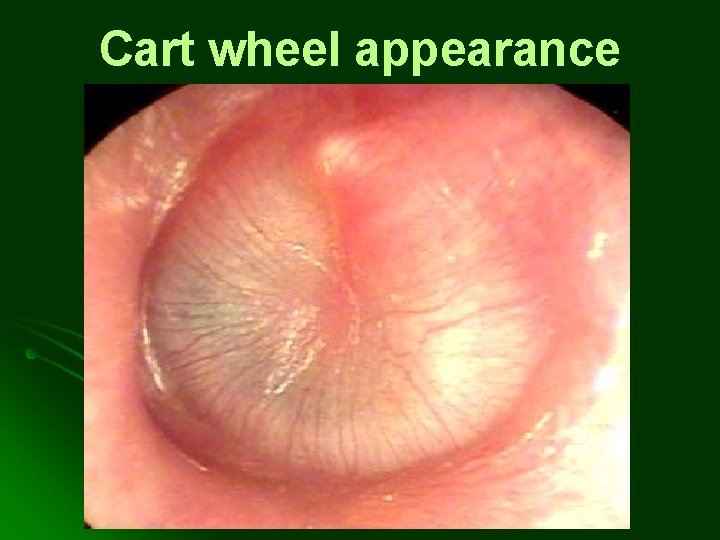
1. Stage of Hyperaemia l Synonym: Stage of tubal occlusion l Mild earache l T. M. retracted in early stage l T. M. congested later stage l Cartwheel appearance: radiating blood vessels from handle of malleus
Cart wheel appearance
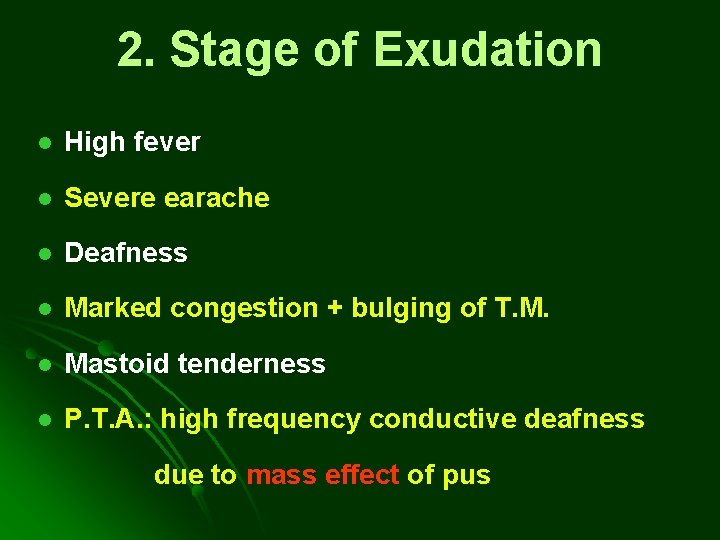
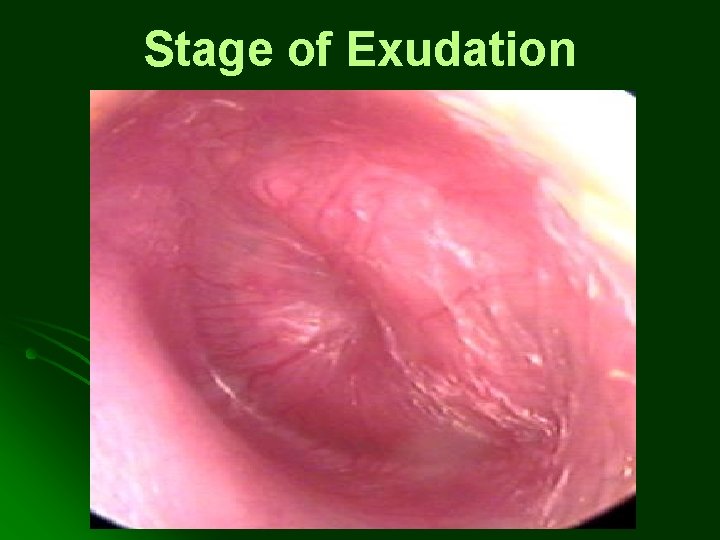
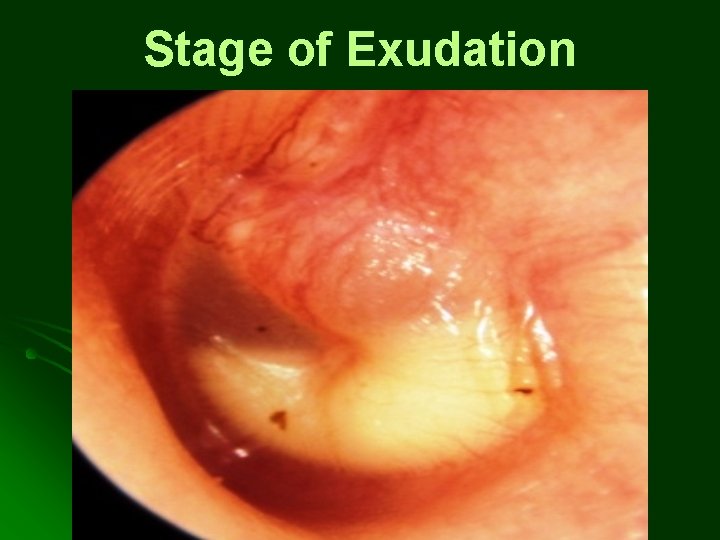
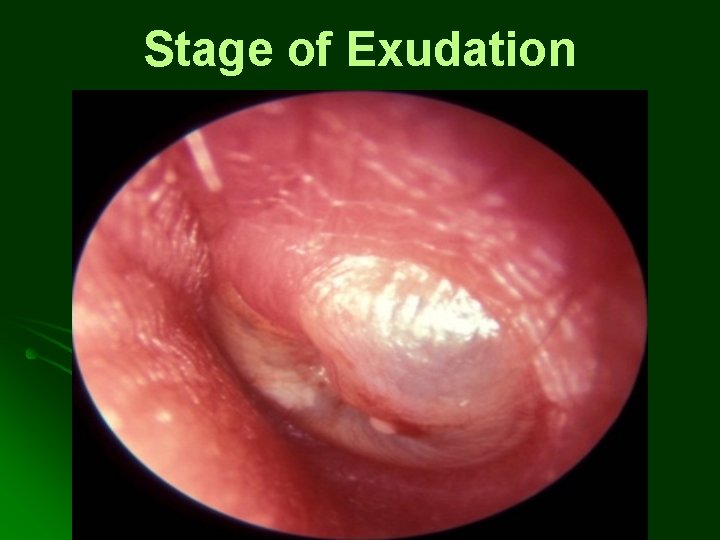
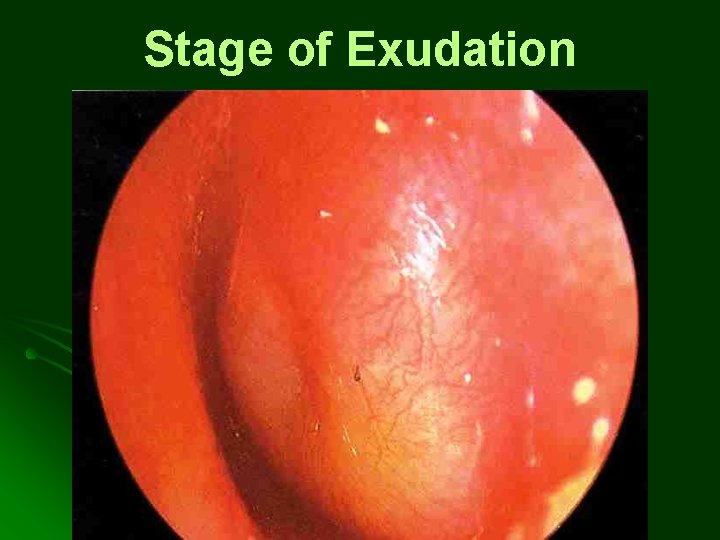
2. Stage of Exudation l High fever l Severe earache l Deafness l Marked congestion + bulging of T. M. l Mastoid tenderness l P. T. A. : high frequency conductive deafness due to mass effect of pus
Stage of Exudation
Stage of Exudation
Stage of Exudation
Stage of Exudation
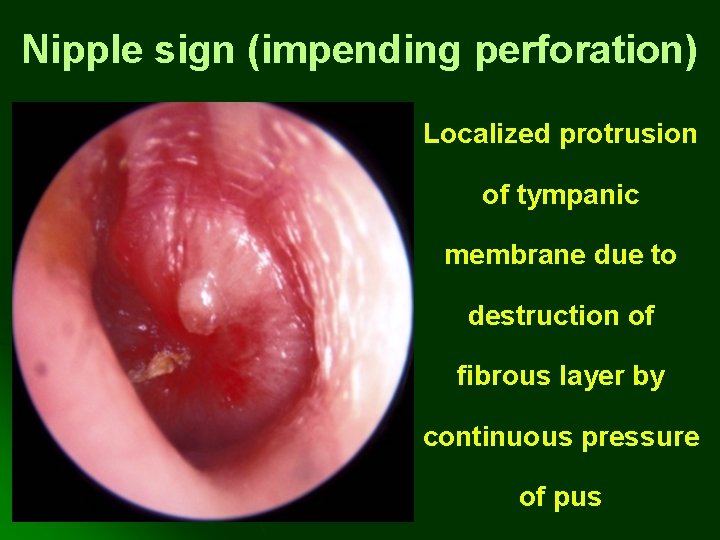
Nipple sign (impending perforation) Localized protrusion of tympanic membrane due to destruction of fibrous layer by continuous pressure of pus
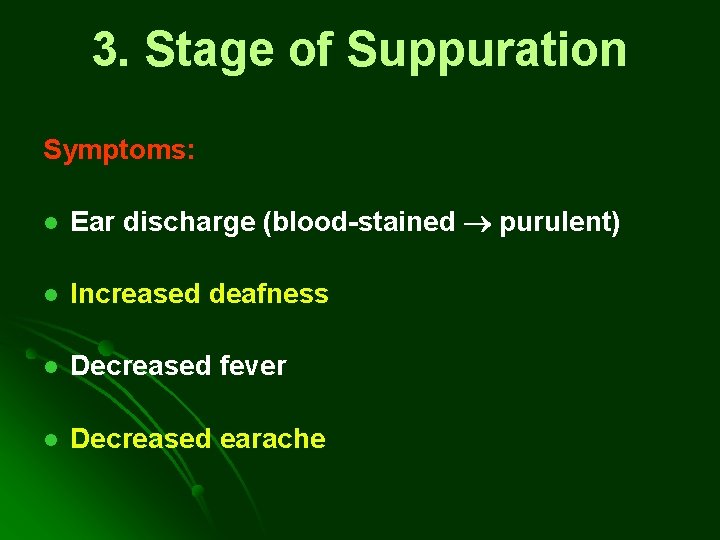
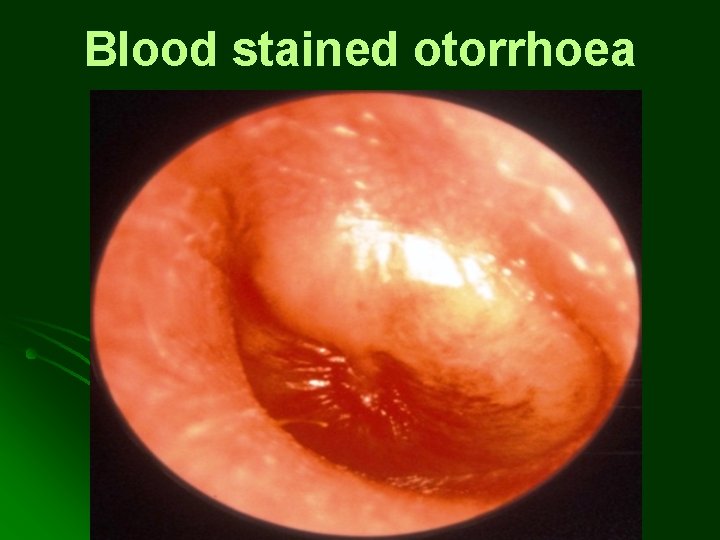
3. Stage of Suppuration Symptoms: l Ear discharge (blood-stained purulent) l Increased deafness l Decreased fever l Decreased earache
Blood stained otorrhoea
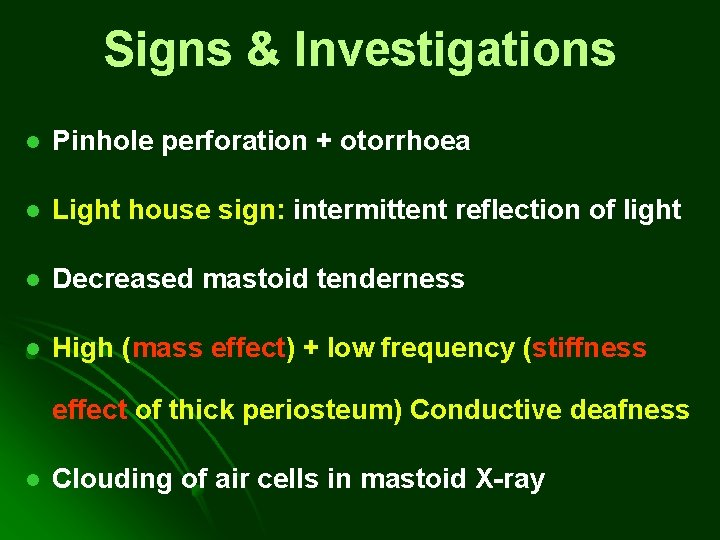
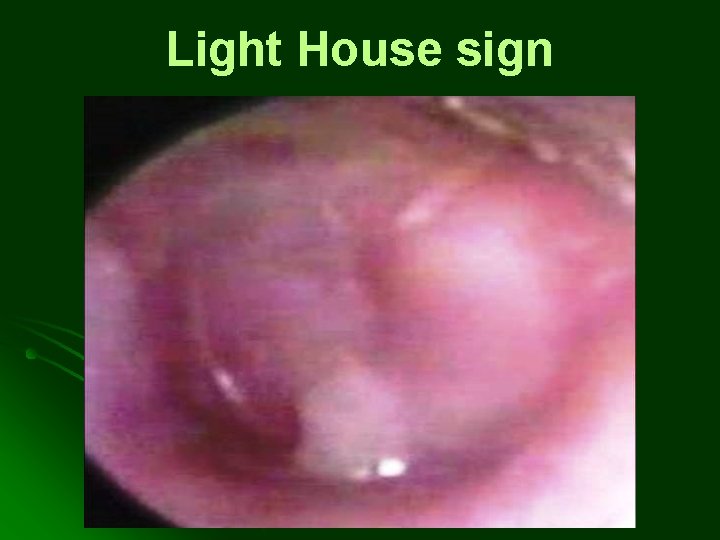
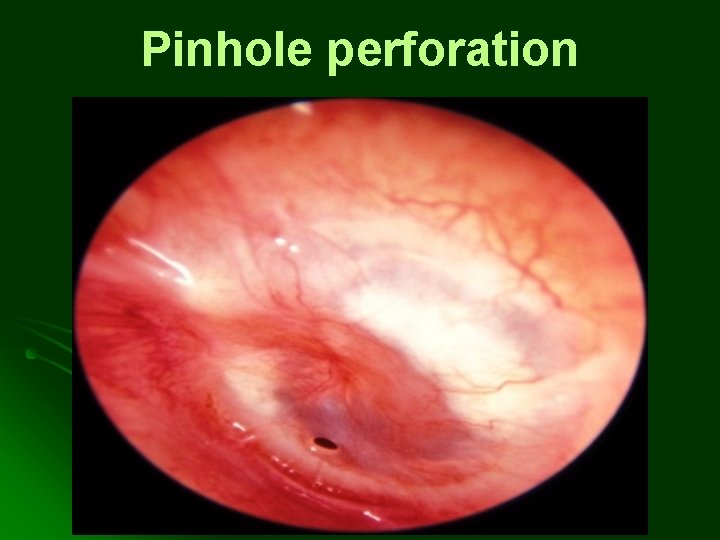
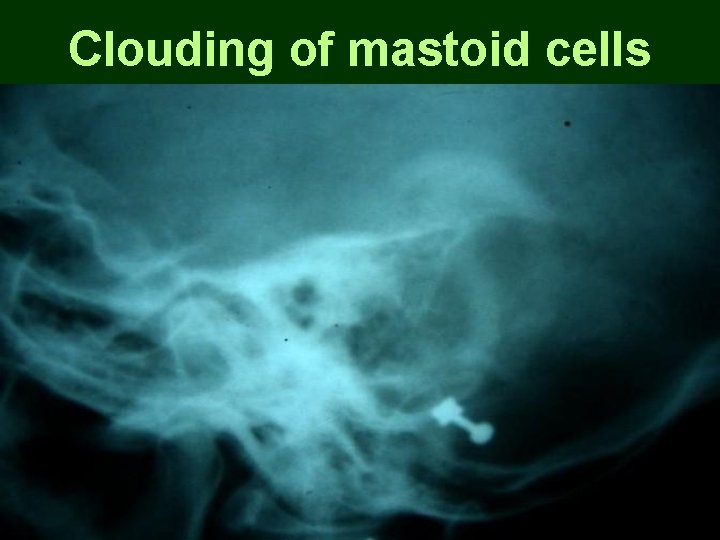
Signs & Investigations l Pinhole perforation + otorrhoea l Light house sign: intermittent reflection of light l Decreased mastoid tenderness l High (mass effect) + low frequency (stiffness effect of thick periosteum) Conductive deafness l Clouding of air cells in mastoid X-ray
Light House sign
Pinhole perforation
Clouding of mastoid cells
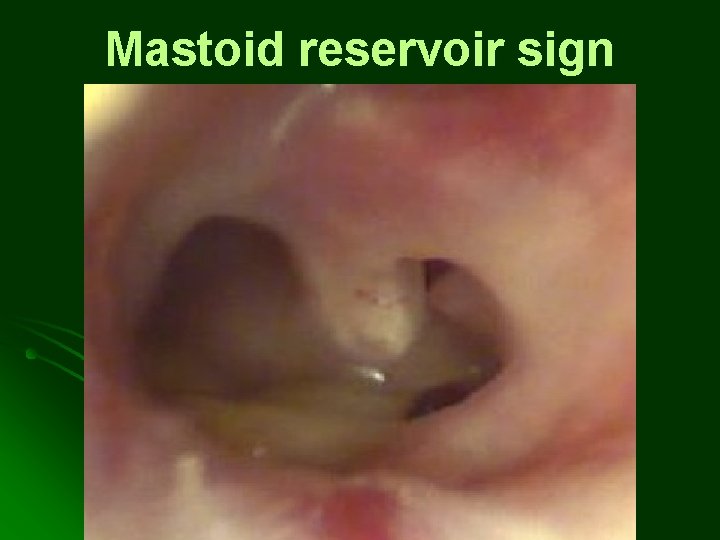
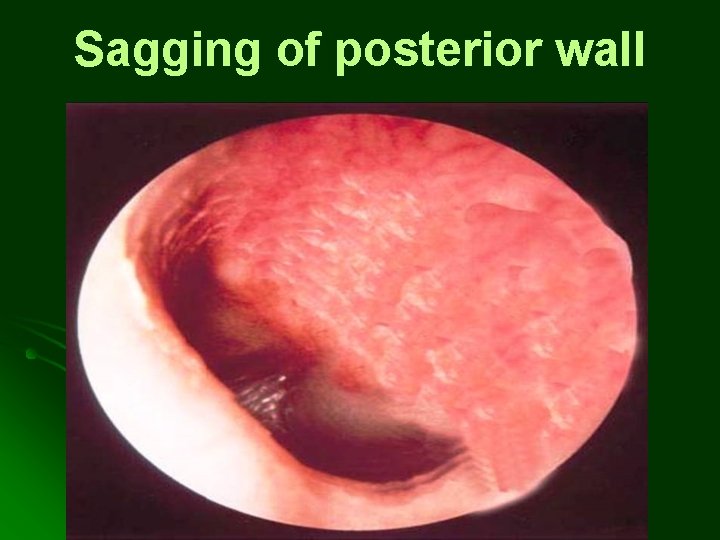
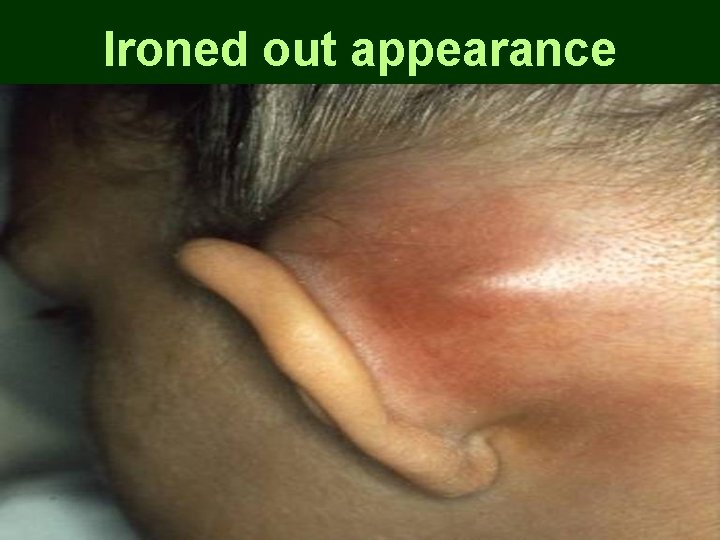
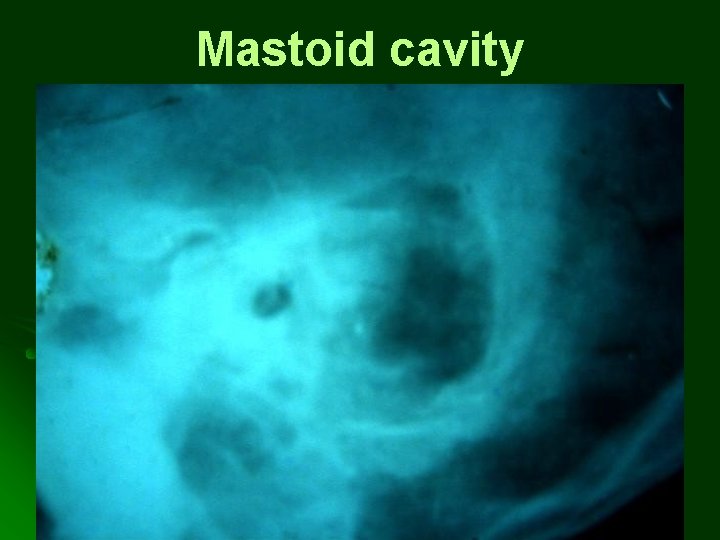
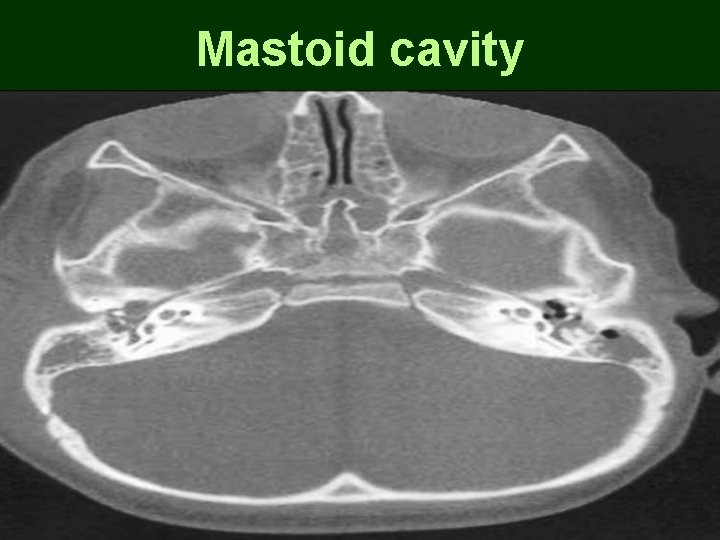
4. Stage of Coalescent Mastoiditis l Otorrhoea > 2 weeks, otalgia & deafness l Mastoid reservoir sign: pus fills up on mopping l Sagging of postero-superior canal wall caused by peri-osteitis due to pus in adjacent mastoid antrum l Ironed out appearance of skin over mastoid due to thickened periosteum l Mastoid cavity in X-ray & CT scan
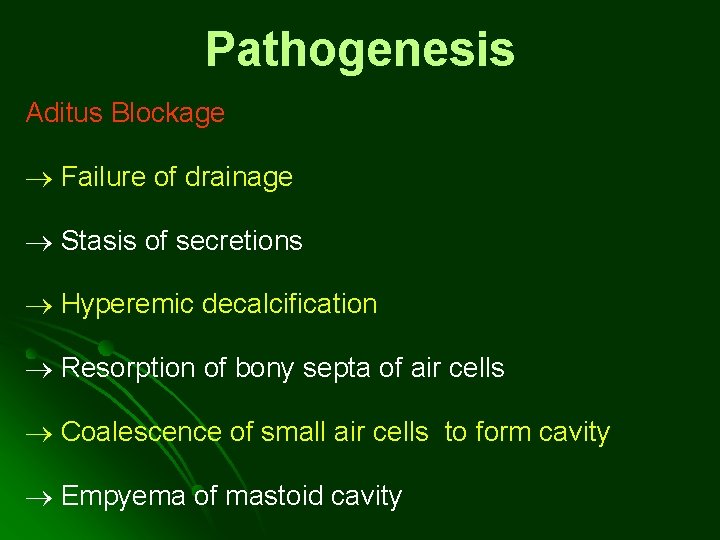
Pathogenesis Aditus Blockage Failure of drainage Stasis of secretions Hyperemic decalcification Resorption of bony septa of air cells Coalescence of small air cells to form cavity Empyema of mastoid cavity
Pathogenesis
Mastoid reservoir sign
Sagging of posterior wall
Ironed out appearance
Mastoid cavity
Mastoid cavity
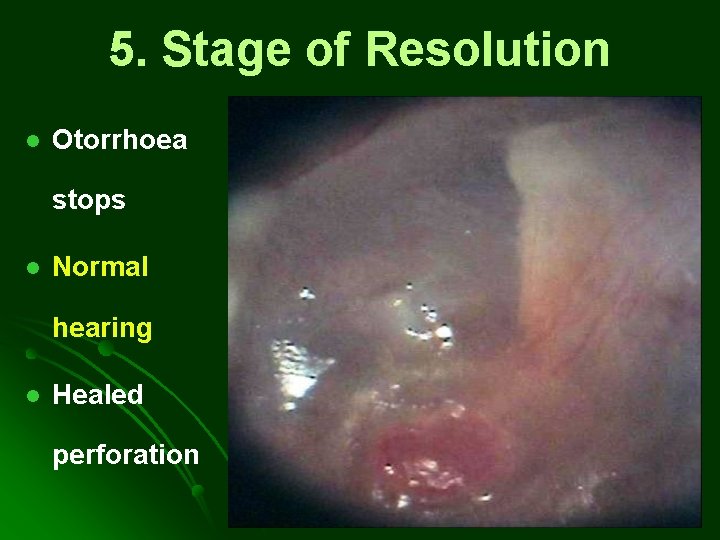
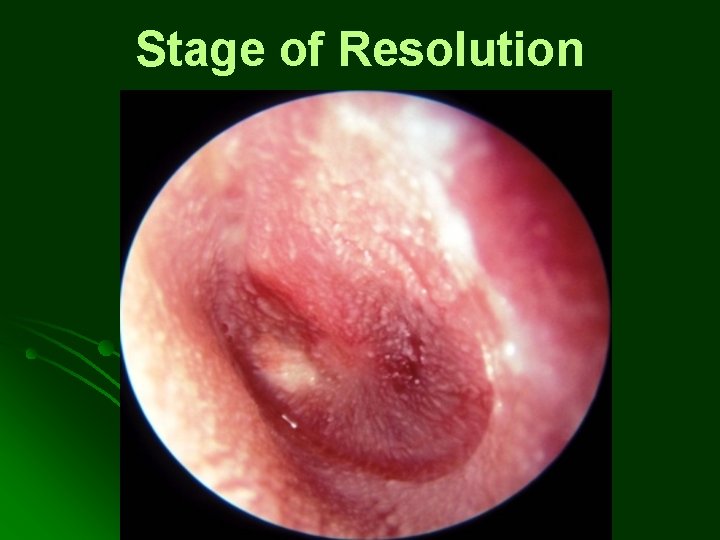
5. Stage of Resolution l Otorrhoea stops l Normal hearing l Healed perforation
Stage of Resolution
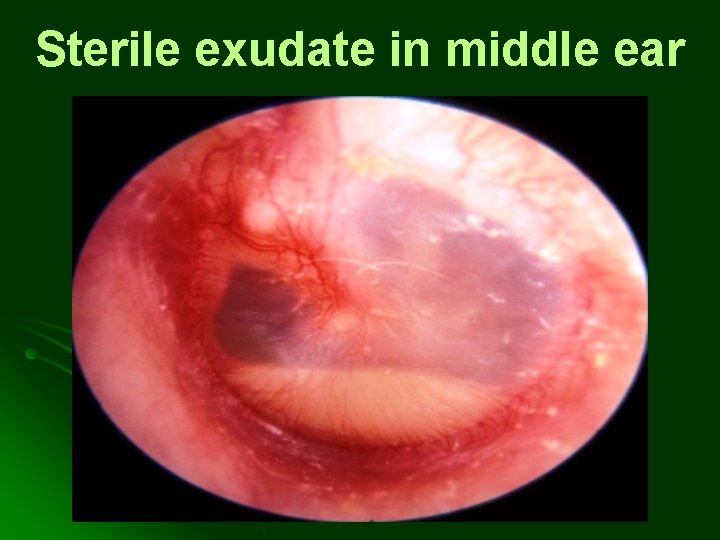
Sterile exudate in middle ear
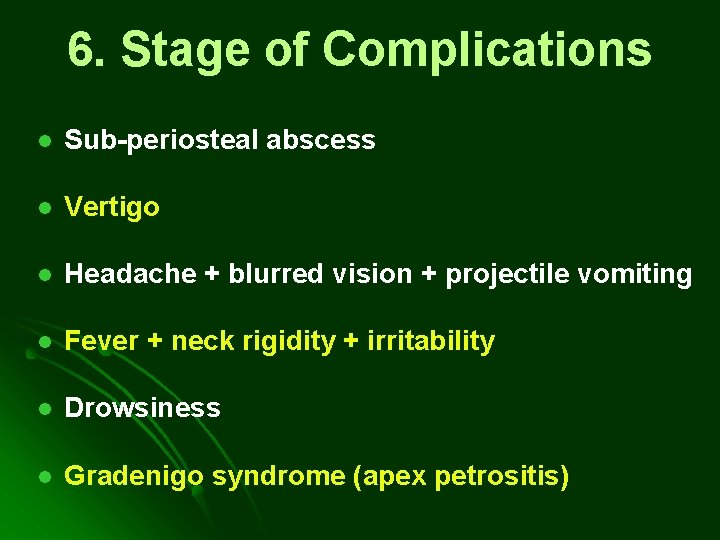
6. Stage of Complications l Sub-periosteal abscess l Vertigo l Headache + blurred vision + projectile vomiting l Fever + neck rigidity + irritability l Drowsiness l Gradenigo syndrome (apex petrositis)
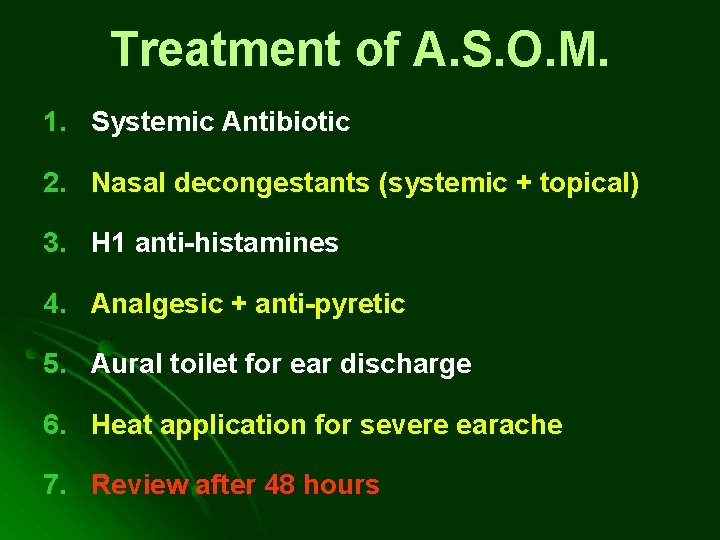
Treatment of A. S. O. M. 1. Systemic Antibiotic 2. Nasal decongestants (systemic + topical) 3. H 1 anti-histamines 4. Analgesic + anti-pyretic 5. Aural toilet for ear discharge 6. Heat application for severe earache 7. Review after 48 hours
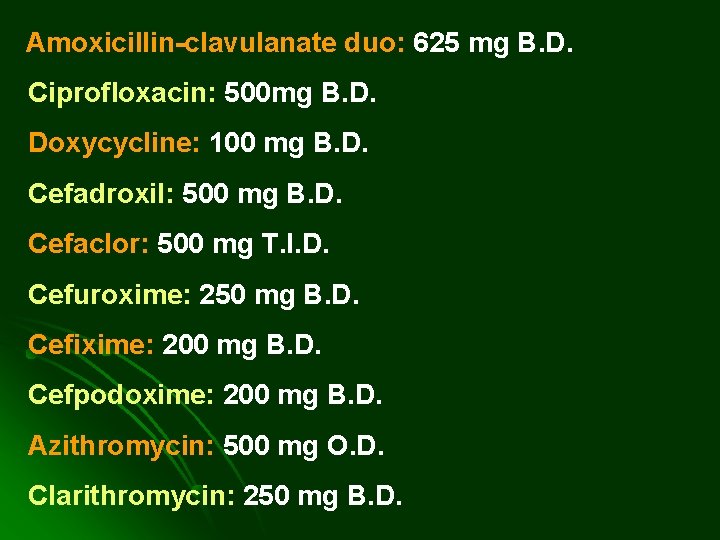
Amoxicillin-clavulanate duo: 625 mg B. D. Ciprofloxacin: 500 mg B. D. Doxycycline: 100 mg B. D. Cefadroxil: 500 mg B. D. Cefaclor: 500 mg T. I. D. Cefuroxime: 250 mg B. D. Cefixime: 200 mg B. D. Cefpodoxime: 200 mg B. D. Azithromycin: 500 mg O. D. Clarithromycin: 250 mg B. D.
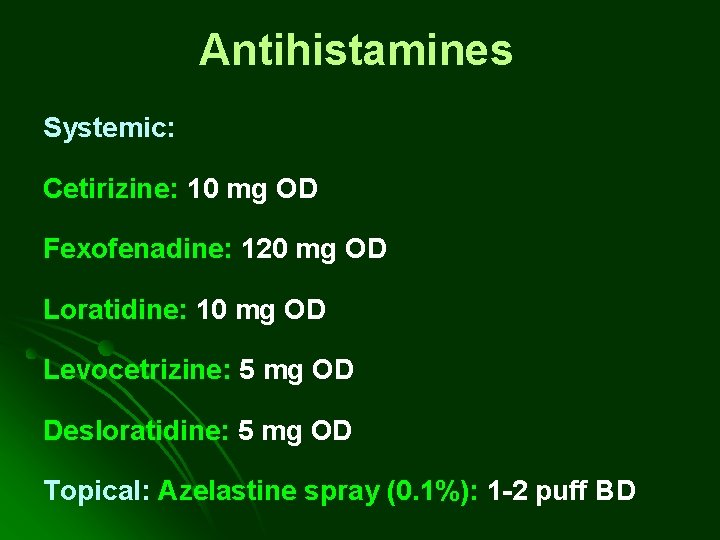
Antihistamines Systemic: Cetirizine: 10 mg OD Fexofenadine: 120 mg OD Loratidine: 10 mg OD Levocetrizine: 5 mg OD Desloratidine: 5 mg OD Topical: Azelastine spray (0. 1%): 1 -2 puff BD
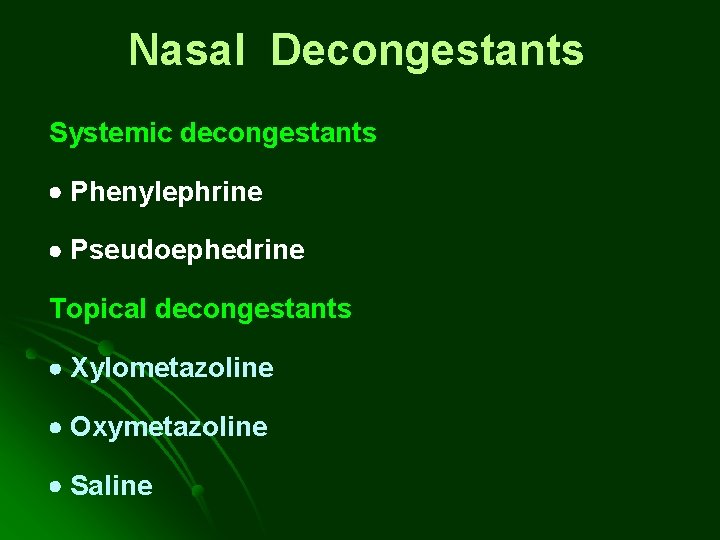
Nasal Decongestants Systemic decongestants Phenylephrine Pseudoephedrine Topical decongestants Xylometazoline Oxymetazoline Saline
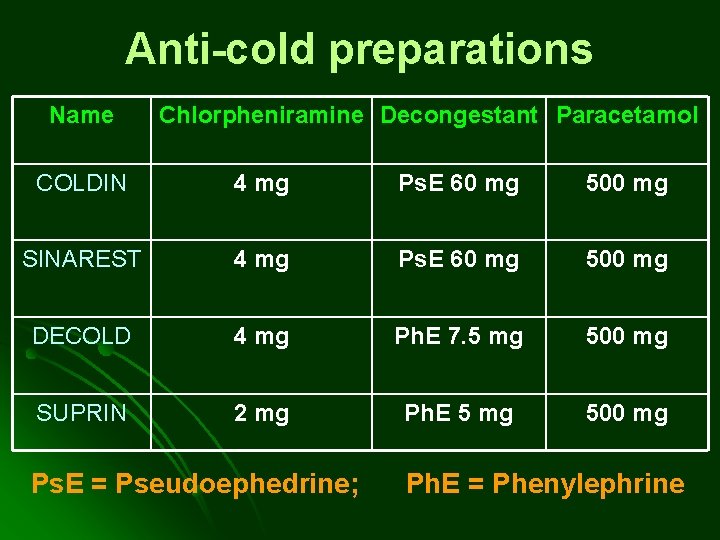
Anti-cold preparations Name Chlorpheniramine Decongestant Paracetamol COLDIN 4 mg Ps. E 60 mg 500 mg SINAREST 4 mg Ps. E 60 mg 500 mg DECOLD 4 mg Ph. E 7. 5 mg 500 mg SUPRIN 2 mg Ph. E 5 mg 500 mg Ps. E = Pseudoephedrine; Ph. E = Phenylephrine
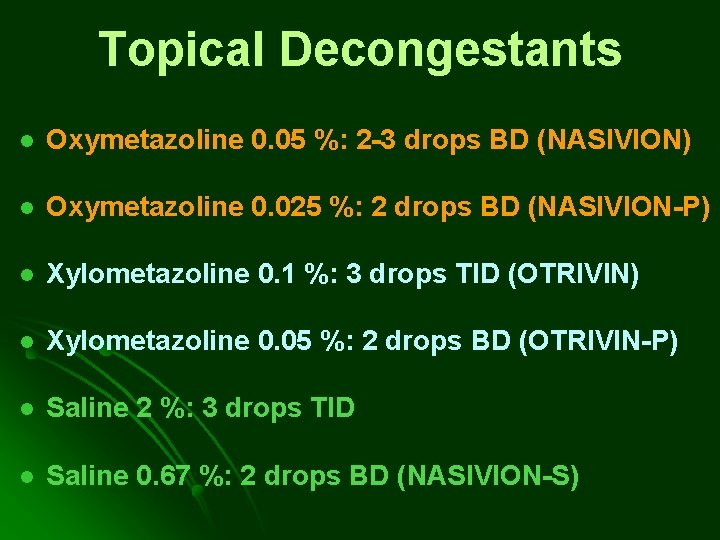
Topical Decongestants l Oxymetazoline 0. 05 %: 2 -3 drops BD (NASIVION) l Oxymetazoline 0. 025 %: 2 drops BD (NASIVION-P) l Xylometazoline 0. 1 %: 3 drops TID (OTRIVIN) l Xylometazoline 0. 05 %: 2 drops BD (OTRIVIN-P) l Saline 2 %: 3 drops TID l Saline 0. 67 %: 2 drops BD (NASIVION-S)
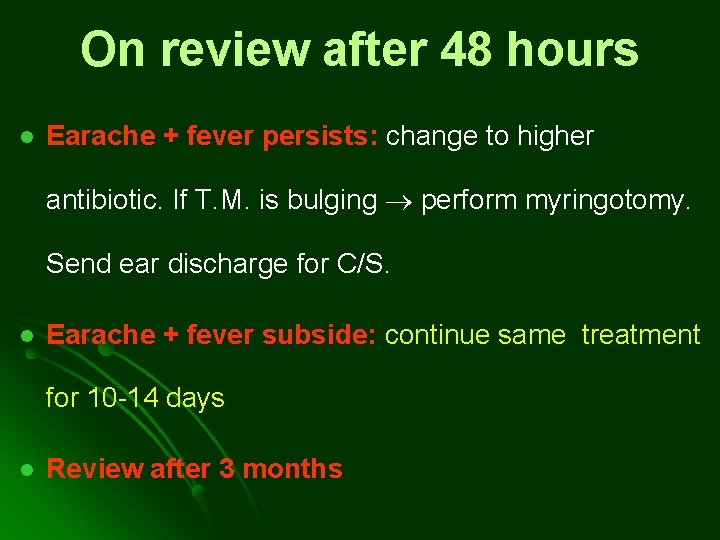
On review after 48 hours l Earache + fever persists: change to higher antibiotic. If T. M. is bulging perform myringotomy. Send ear discharge for C/S. l Earache + fever subside: continue same treatment for 10 -14 days l Review after 3 months
On review after 3 months l No effusion: no further treatment l Effusion persists: treat as Otitis Media with Effusion l Presence of abscess or coalescent mastoiditis: do cortical mastoidectomy
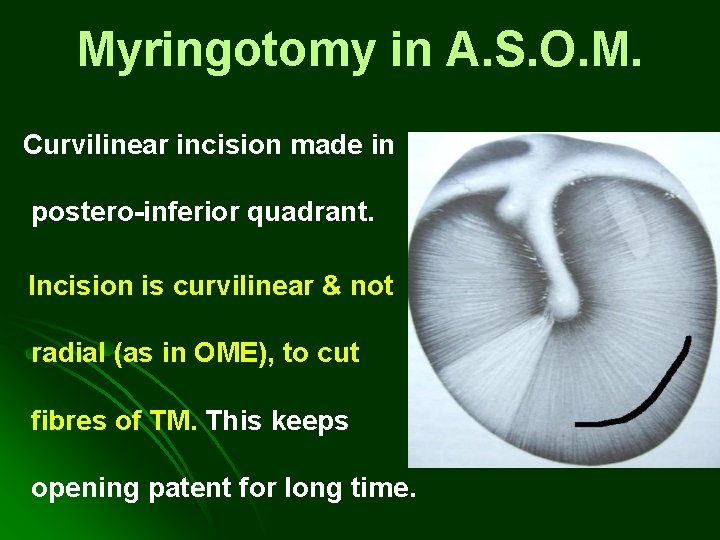
Myringotomy in A. S. O. M. Curvilinear incision made in postero-inferior quadrant. Incision is curvilinear & not radial (as in OME), to cut fibres of TM. This keeps opening patent for long time.
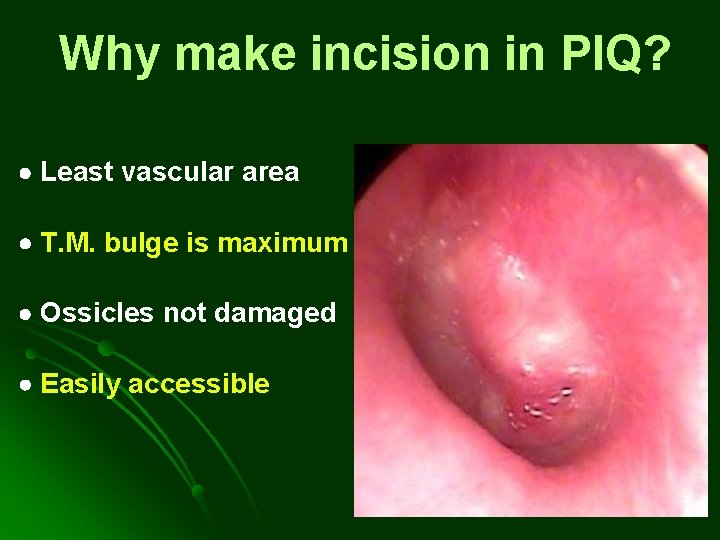
Why make incision in PIQ? Least vascular area T. M. bulge is maximum Ossicles not damaged Easily accessible
Sub-periosteal abscess & fistula
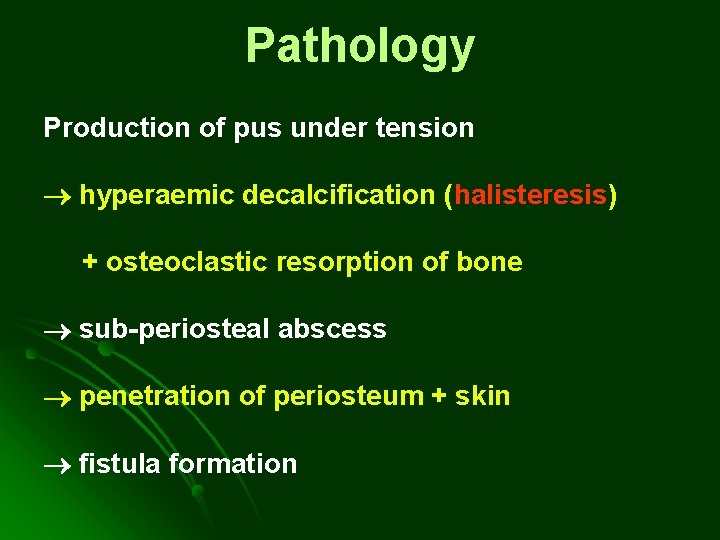
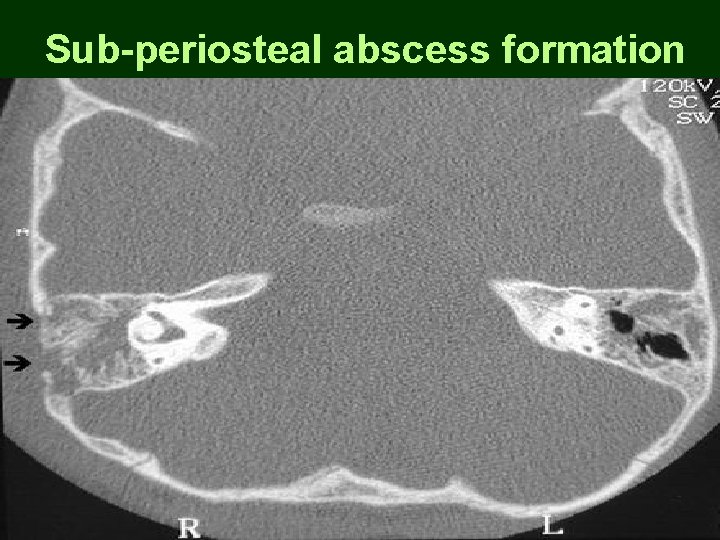
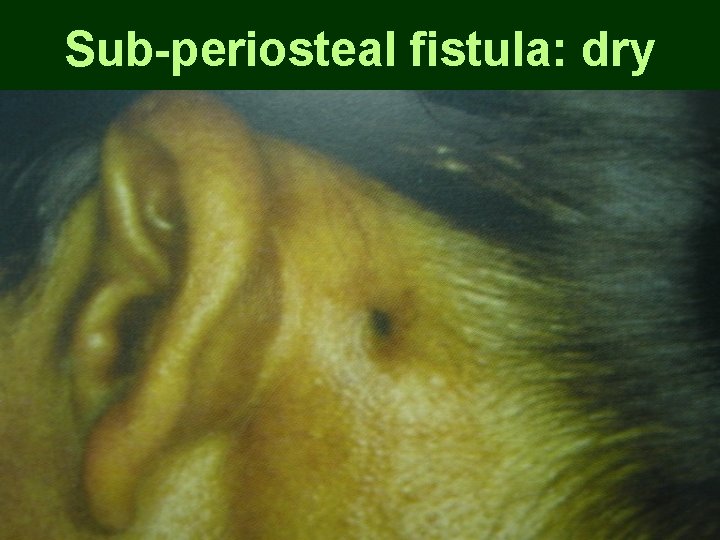
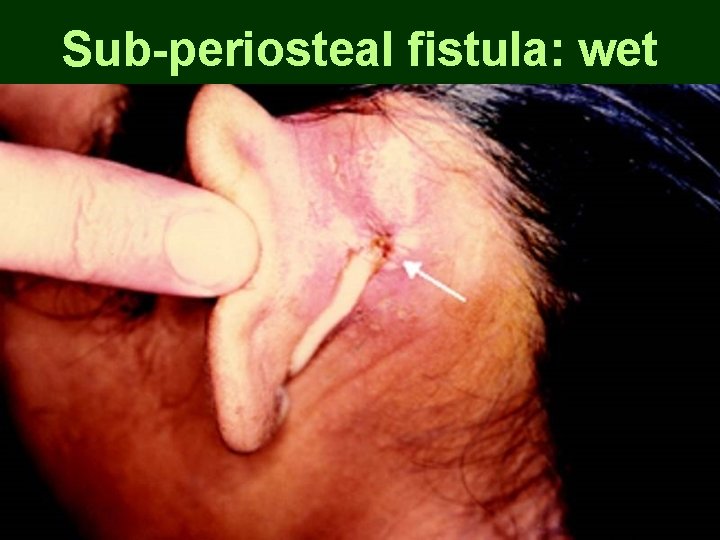
Pathology Production of pus under tension hyperaemic decalcification (halisteresis) + osteoclastic resorption of bone sub-periosteal abscess penetration of periosteum + skin fistula formation
Sub-periosteal abscess formation
Sub-periosteal fistula: dry
Sub-periosteal fistula: wet
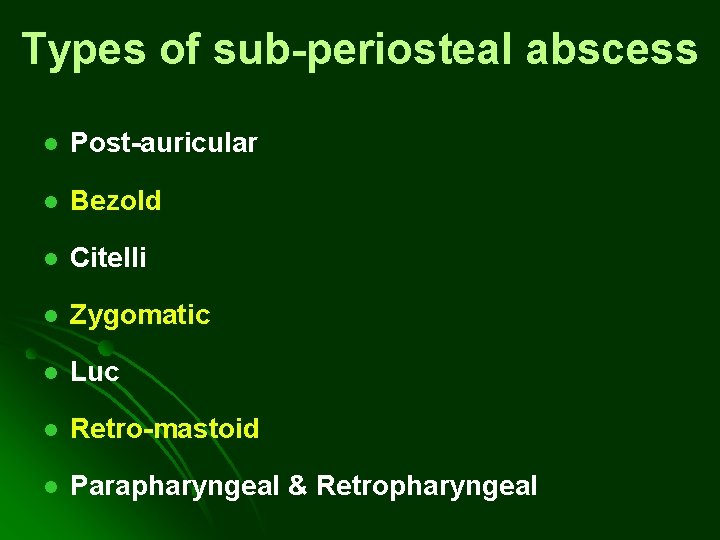
Types of sub-periosteal abscess l Post-auricular l Bezold l Citelli l Zygomatic l Luc l Retro-mastoid l Parapharyngeal & Retropharyngeal
Types of sub-periosteal abscess
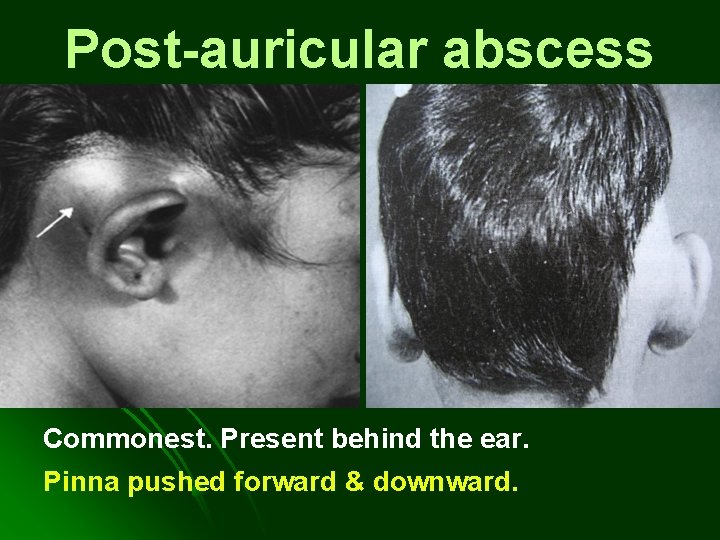
Post-auricular abscess Commonest. Present behind the ear. Pinna pushed forward & downward.
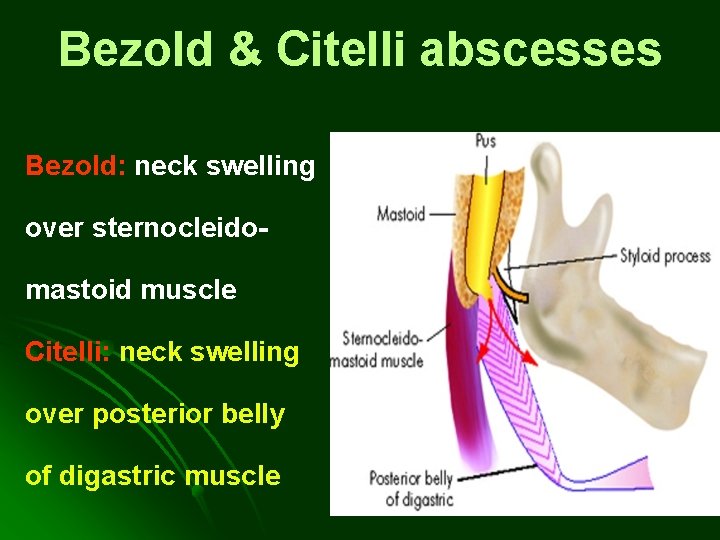
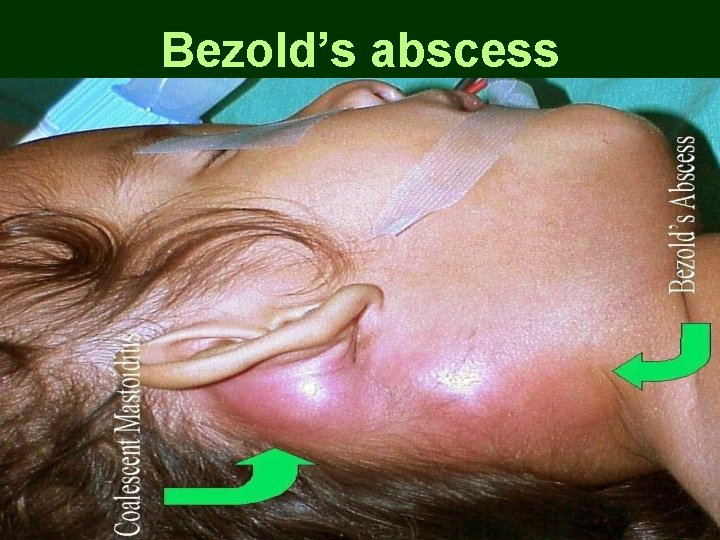
Bezold & Citelli abscesses Bezold: neck swelling over sternocleidomastoid muscle Citelli: neck swelling over posterior belly of digastric muscle
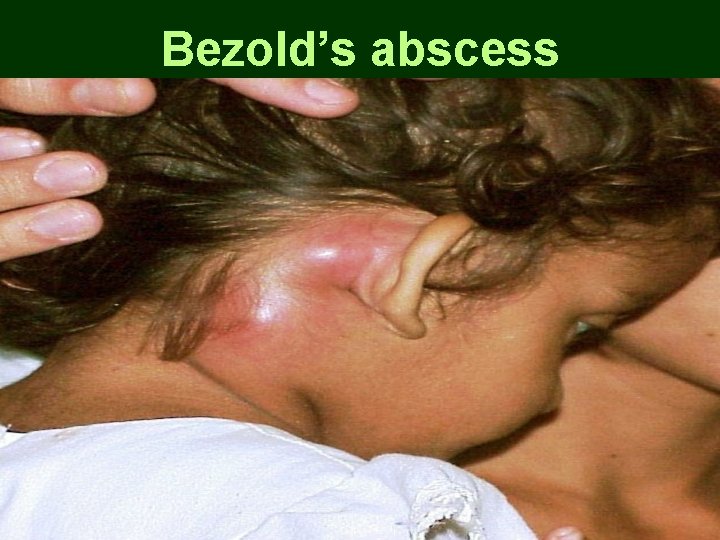
Bezold’s abscess
Bezold’s abscess
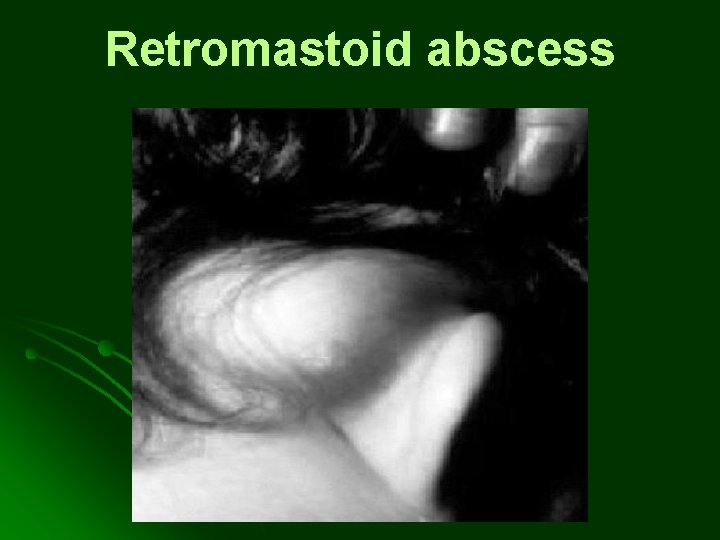
Luc: swelling in external auditory canal Zygomatic: swelling antero-superior to pinna + upper eyelid oedema Retro-mastoid: swelling over occipital bone (? Citelli’s abscess) Parapharyngeal & Retropharyngeal: due to spread of pus along Eustachian tube
Retromastoid abscess
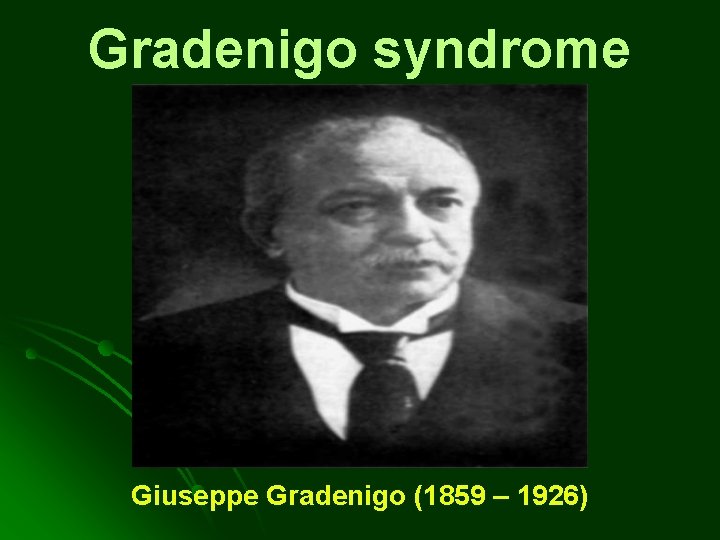
Gradenigo syndrome Giuseppe Gradenigo (1859 – 1926)
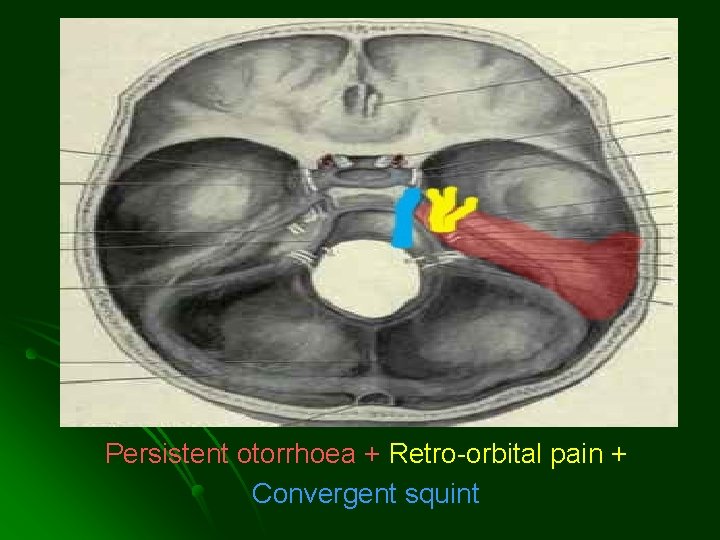
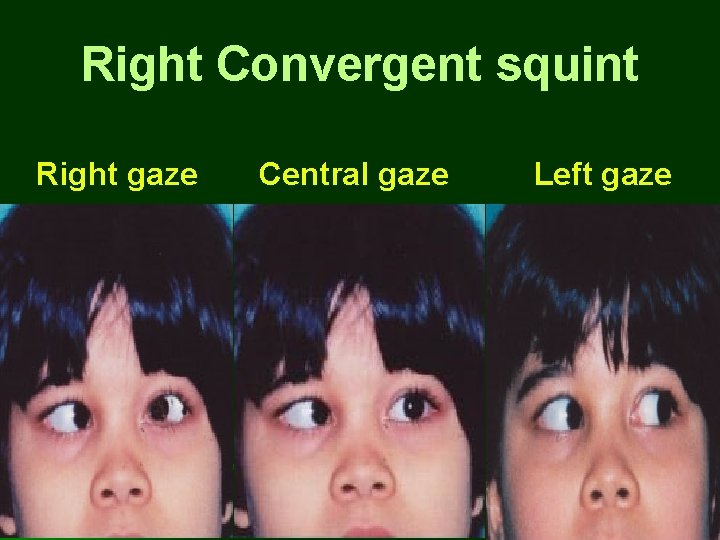
Defining triad Persistent otorrhoea: despite adequate cortical mastoidectomy Retro-orbital pain: Trigeminal nerve involvement Diplopia: convergent squint due to lateral rectus palsy by injury to abducent nv in Dorello’s canal under Gruber’s petro-sphenoid ligament, at petrous apex
Persistent otorrhoea + Retro-orbital pain + Convergent squint
Right Convergent squint Right gaze Central gaze Left gaze
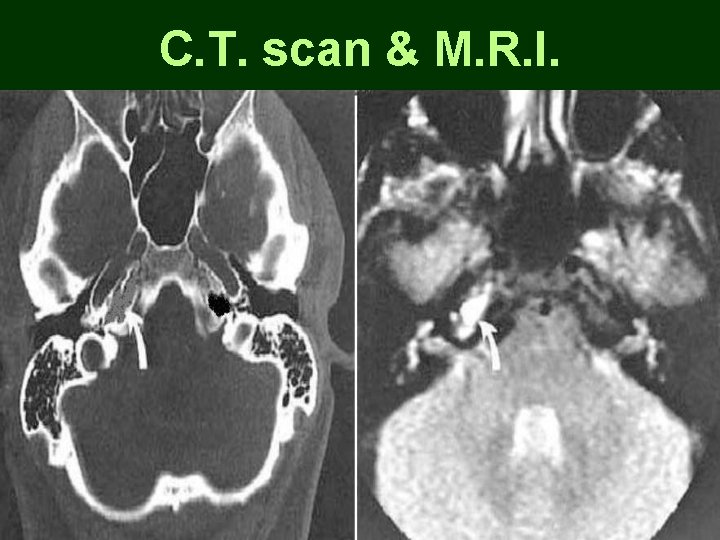
Etiology: Coalescent mastoiditis involving petrous apex along postero-superior & anteroinferior tracts in relation to bony labyrinth Diagnosis: 1. C. T. scan temporal bone for bony details. 2. M. R. I. to differ b/w bone marrow & pus Treatment: Modified radical mastoidectomy & clearance of petrous apex cells
C. T. scan & M. R. I.
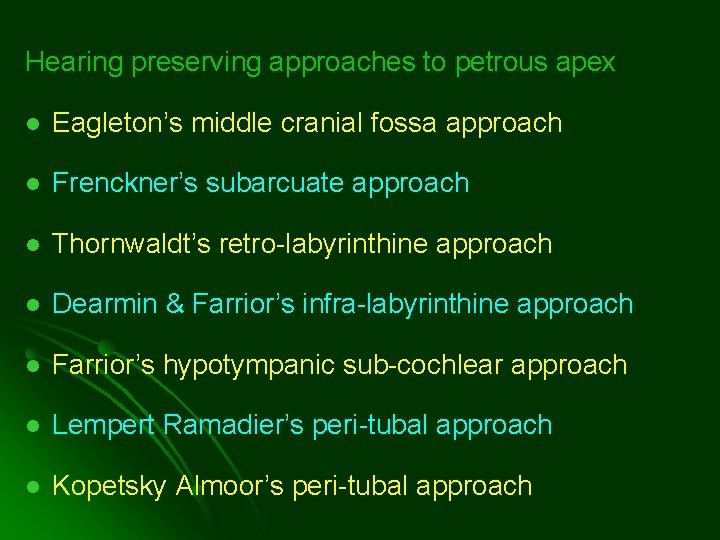
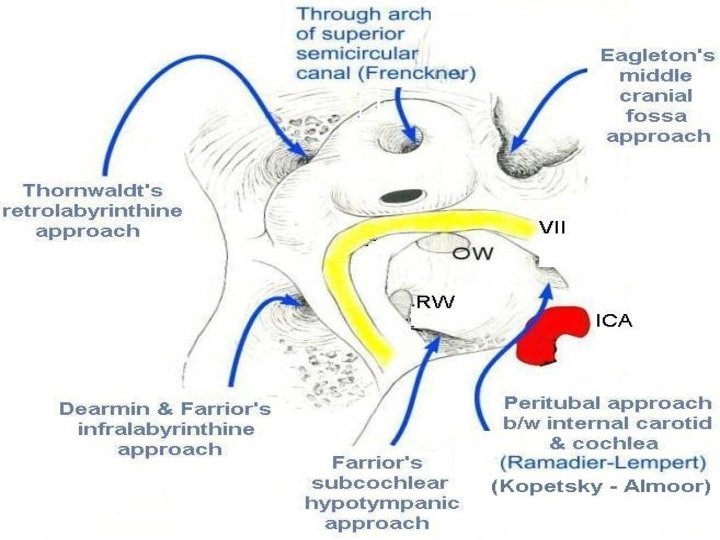
Hearing preserving approaches to petrous apex l Eagleton’s middle cranial fossa approach l Frenckner’s subarcuate approach l Thornwaldt’s retro-labyrinthine approach l Dearmin & Farrior’s infra-labyrinthine approach l Farrior’s hypotympanic sub-cochlear approach l Lempert Ramadier’s peri-tubal approach l Kopetsky Almoor’s peri-tubal approach
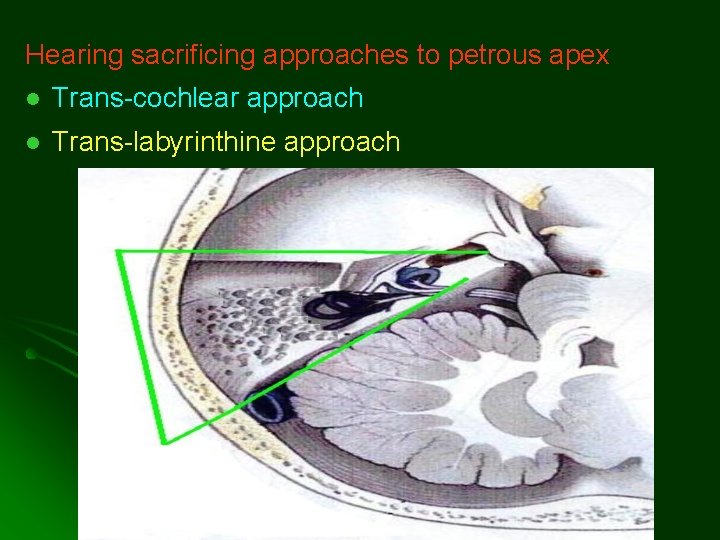
Hearing sacrificing approaches to petrous apex l Trans-cochlear approach l Trans-labyrinthine approach
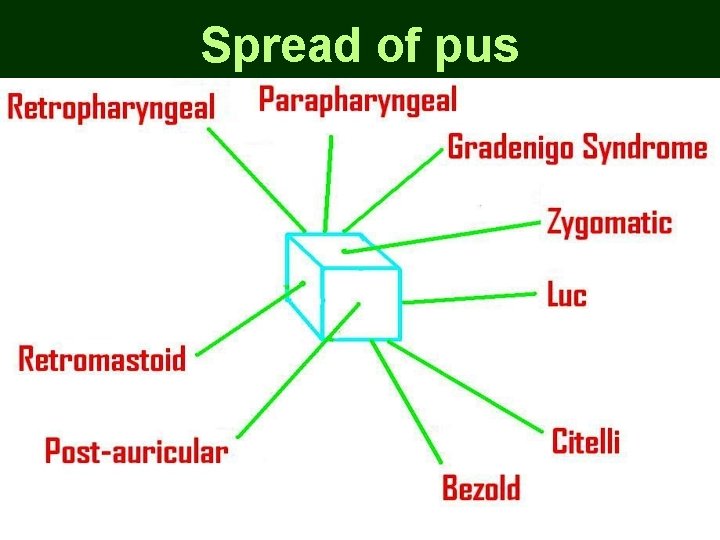
Spread of pus
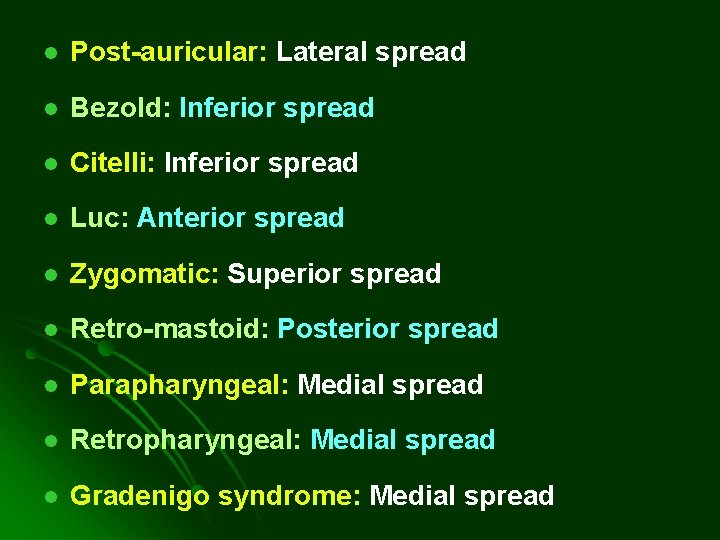
l Post-auricular: Lateral spread l Bezold: Inferior spread l Citelli: Inferior spread l Luc: Anterior spread l Zygomatic: Superior spread l Retro-mastoid: Posterior spread l Parapharyngeal: Medial spread l Retropharyngeal: Medial spread l Gradenigo syndrome: Medial spread
Cortical Mastoidectomy
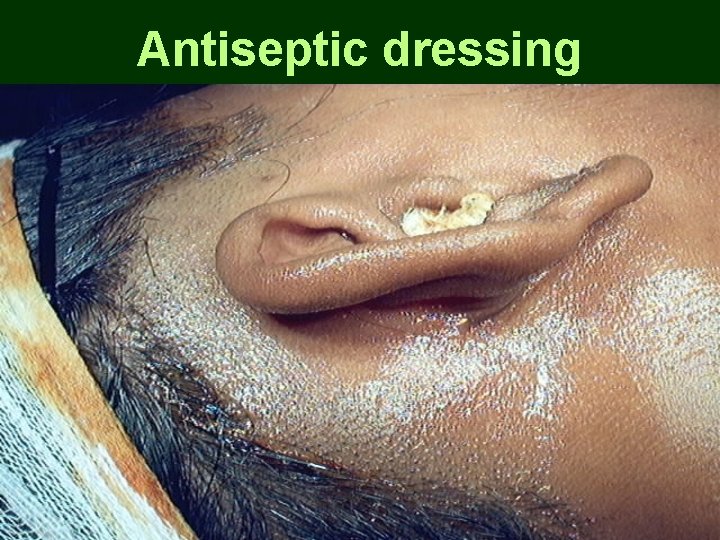
Antiseptic dressing
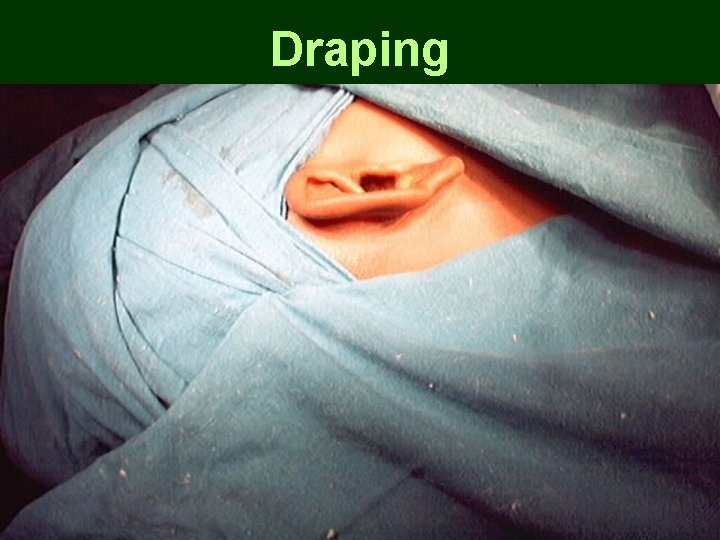
Draping
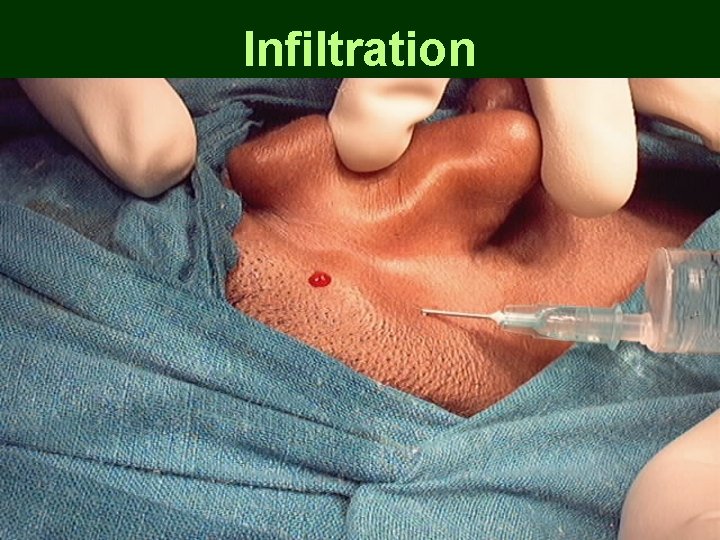
Infiltration
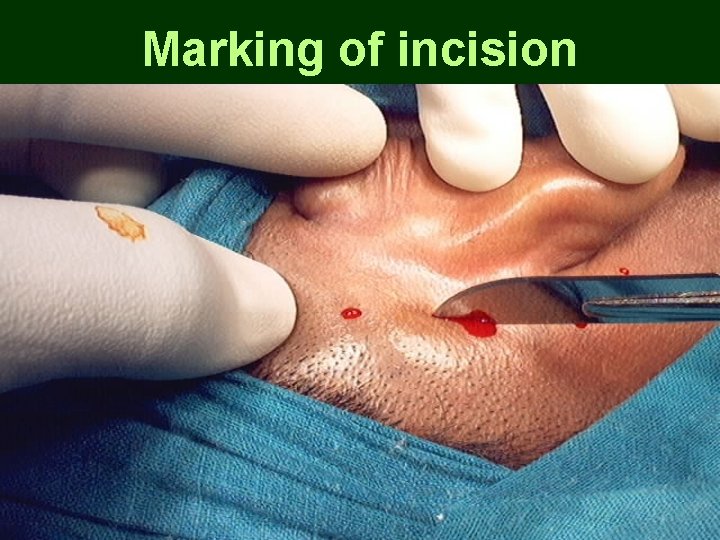
Marking of incision
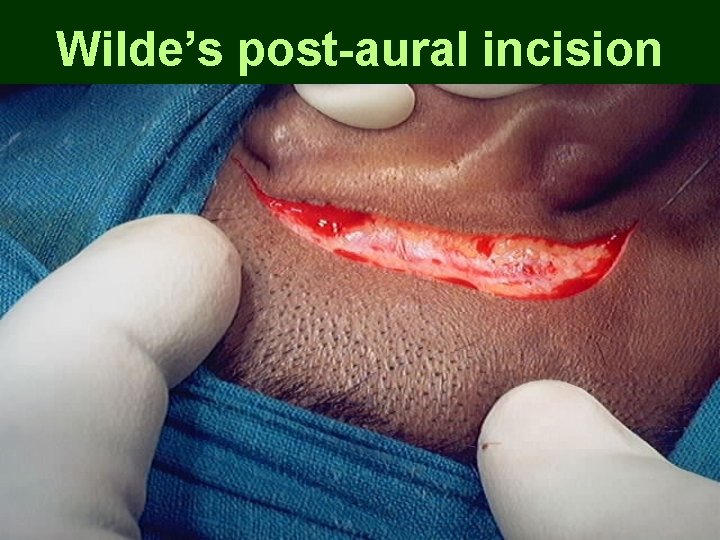
Wilde’s post-aural incision
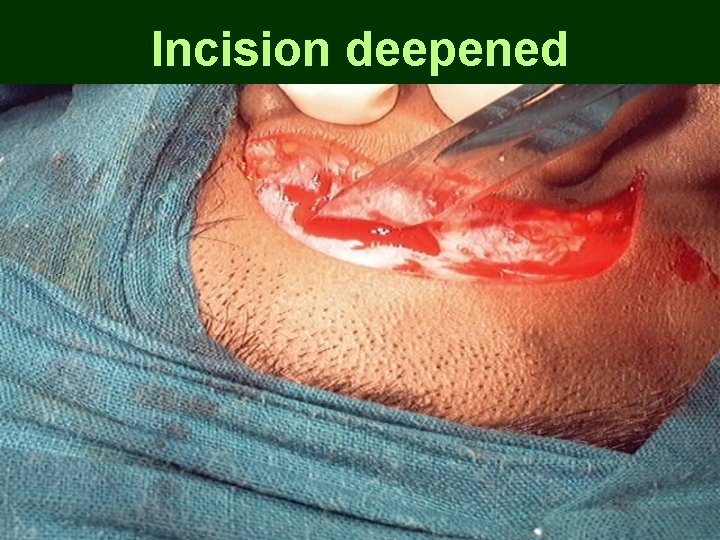
Incision deepened
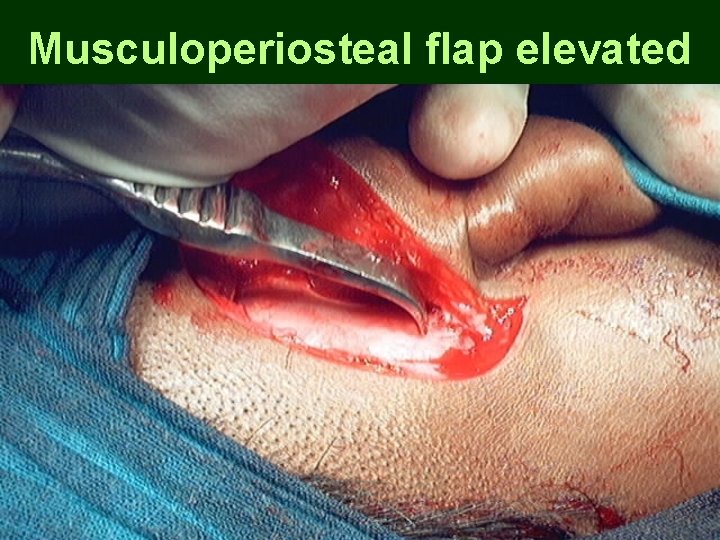
Musculoperiosteal flap elevated
Bezold’s abscess
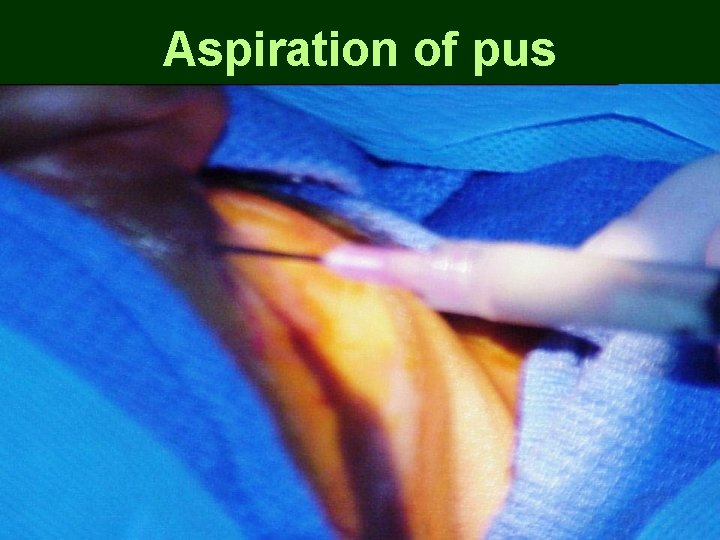
Aspiration of pus
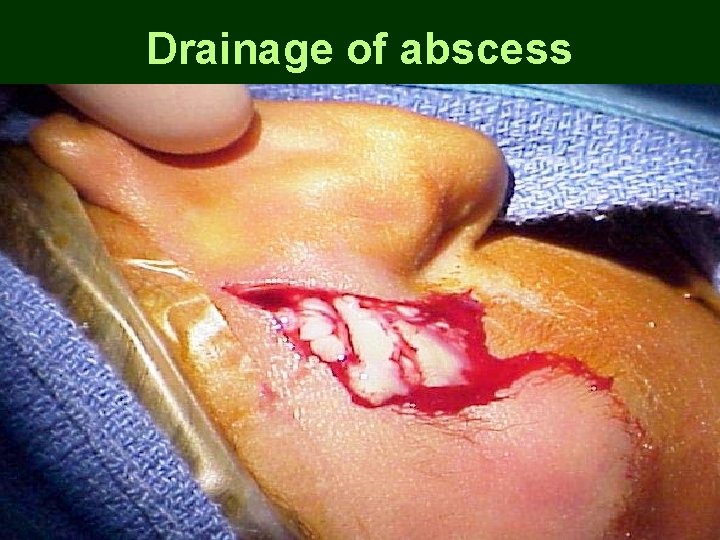
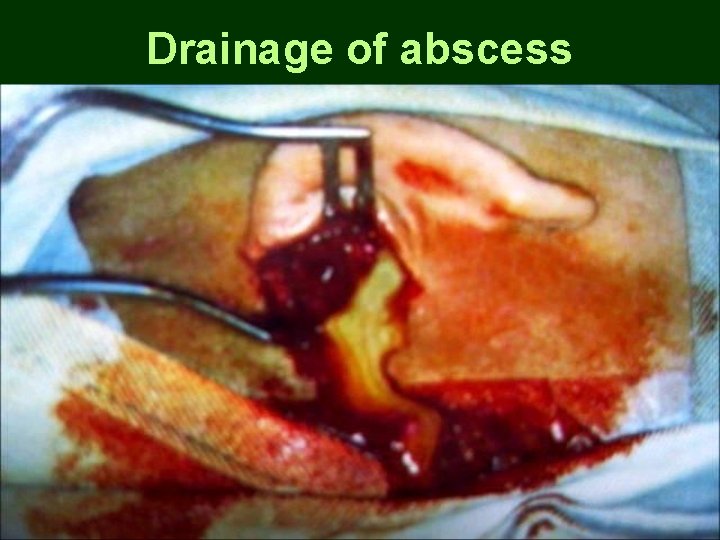
Drainage of abscess
Drainage of abscess
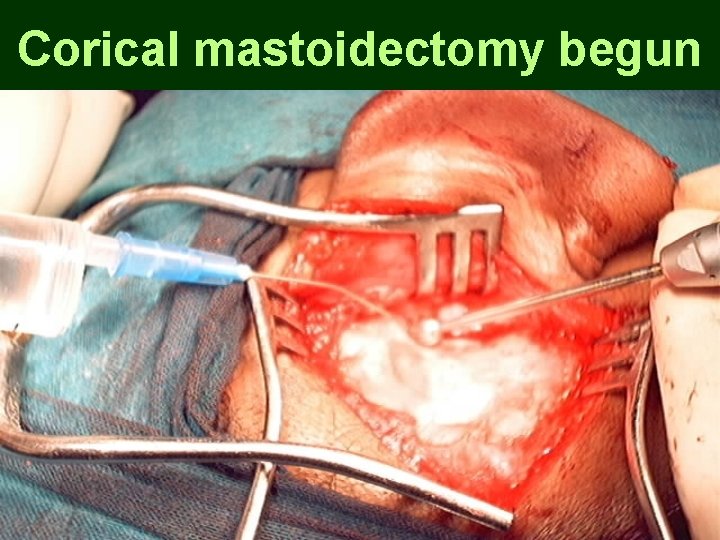
Corical mastoidectomy begun
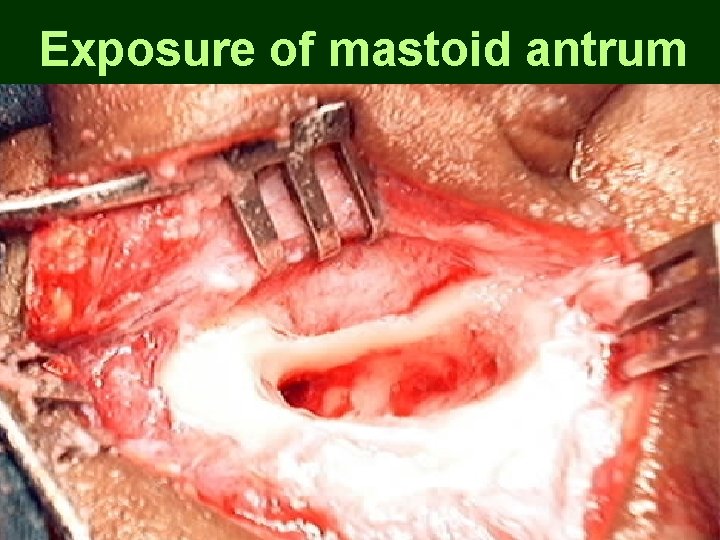
Exposure of mastoid antrum
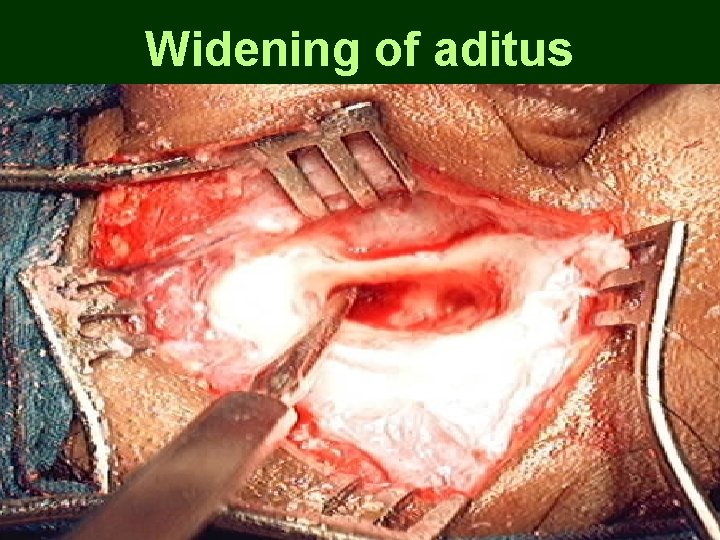
Widening of aditus
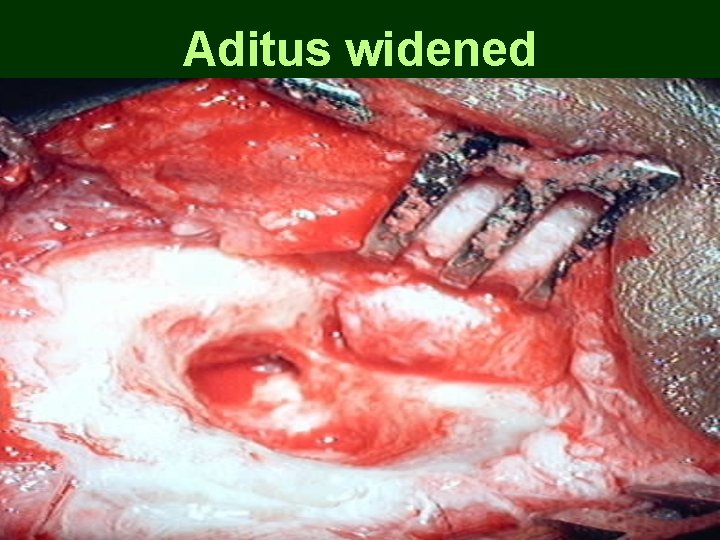
Aditus widened
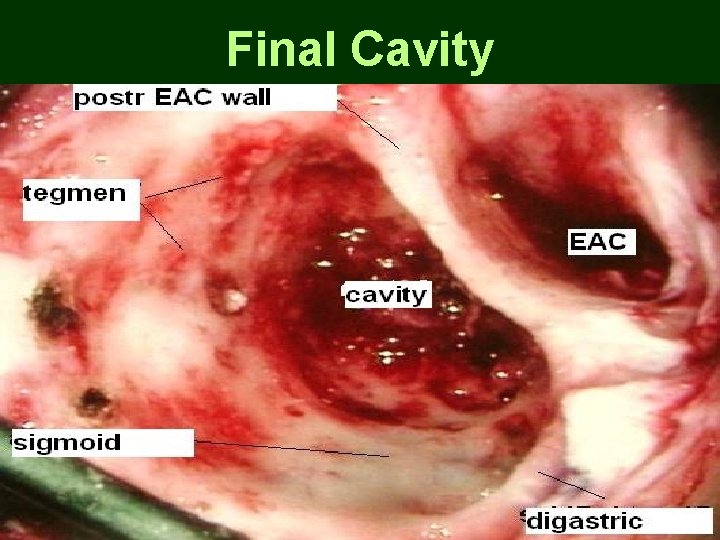
Final Cavity
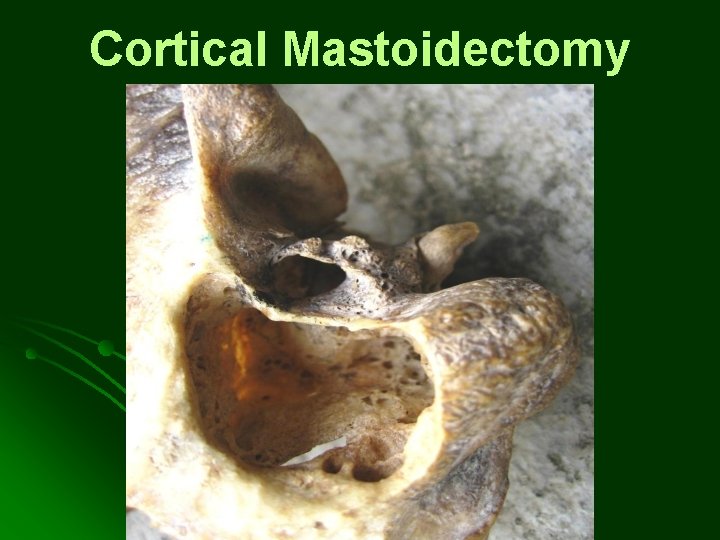
Cortical Mastoidectomy
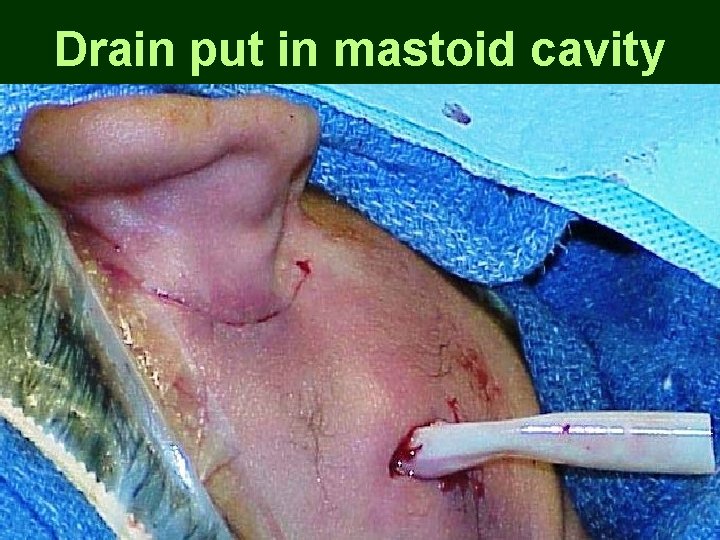
Drain put in mastoid cavity
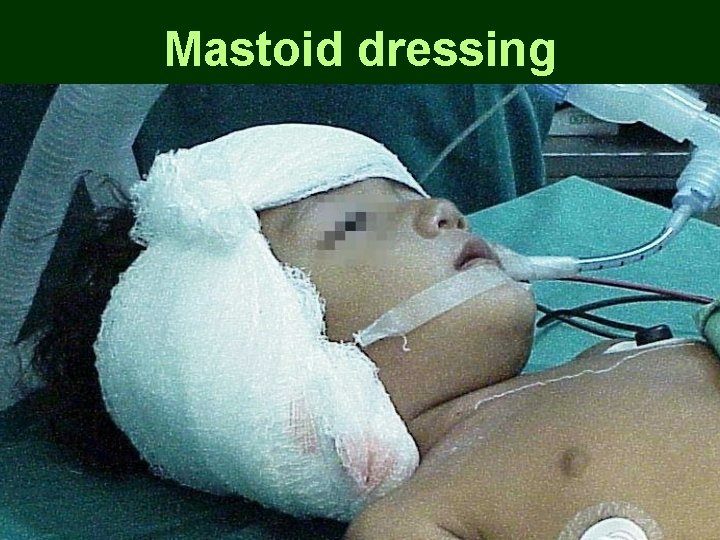
Mastoid dressing
Healed post-aural scar
Thank you