
OHMS LAW PREPARED BY Dr P K SHARMA

OHM’S LAW PREPARED BY: Dr. P. K. SHARMA PGT(Phy), JNV-Kokrajhar
OHM’S § § LAW Objectives & Previous knowledge Random motion of electron When potential difference applied is varied. Ohm’s law, V-I graph, circuit for Ohm’s law and simple electric circuit. § Resistance, its cause and the factors affecting the resistance of a conductors. § Evaluation, Assignment and Acknowledgement.
1. To give the concept of flow of charge. . 2. To know the effect of potential difference on electric current flowing through a conductor. 3. To give the concept of resistance of a conductor Contd…
PREVIOUS KNOWLEDGE 1. Knowledge of charge. 2. 2. Knowledge of current & potential difference. 3. 3. Knowledge of sources of E. M. F. ( Battery/Cell ) back

. Ohm’s Law : - “Current flowing through a conductor is directly proportional to the potential difference applied across its two ends, provided the physical conditions (i. e. temperature , mechanical strain etc. ) remain unchanged” i. e. V ∞ I i. e. V=RI where R is known as the resistance of the conductor. CONTD…
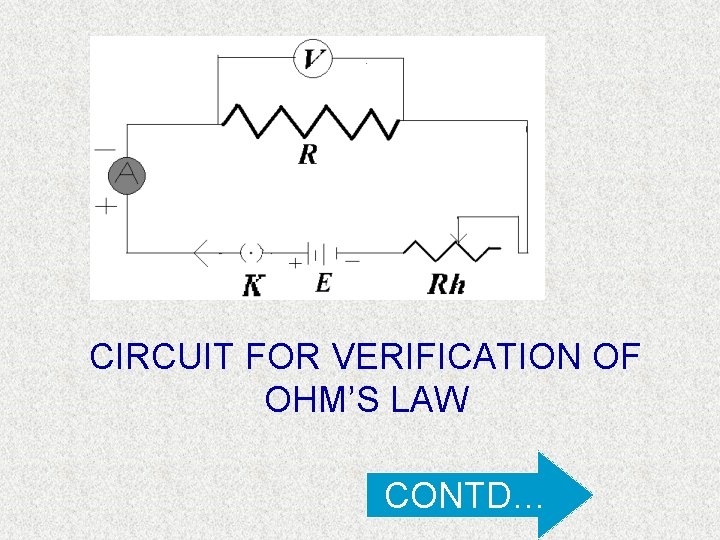
CIRCUIT FOR VERIFICATION OF OHM’S LAW CONTD…
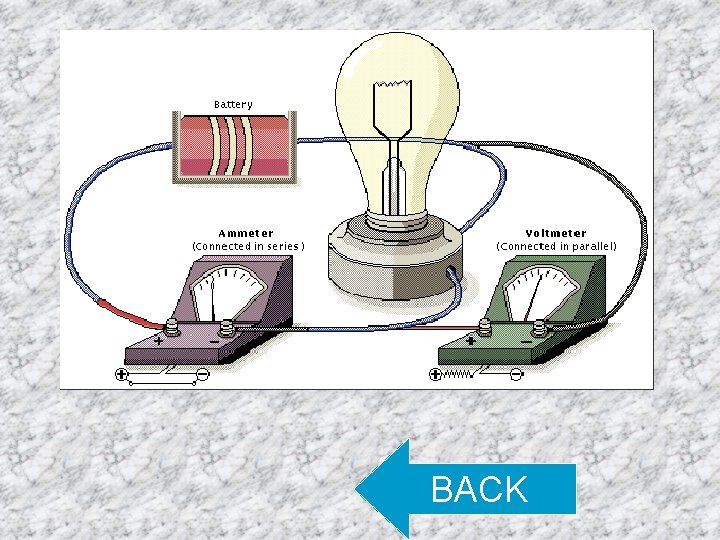
BACK
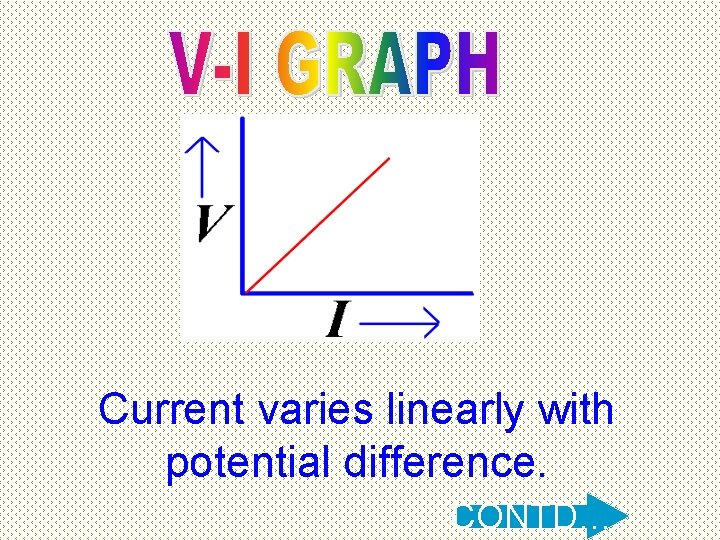
Current varies linearly with potential difference. CONTD…
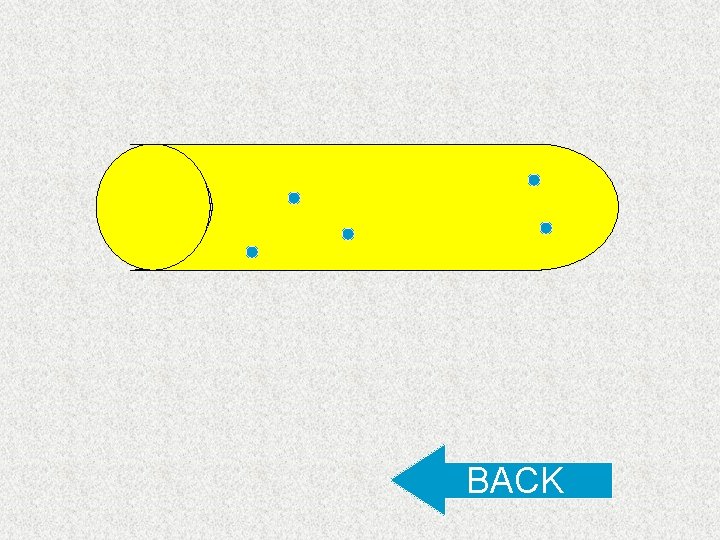
When no potential difference is applied across two ends of a conductor, electrons move randomly in all directions. The net velocity is zero and no electric current flows through the conductor. Contd. .
BACK
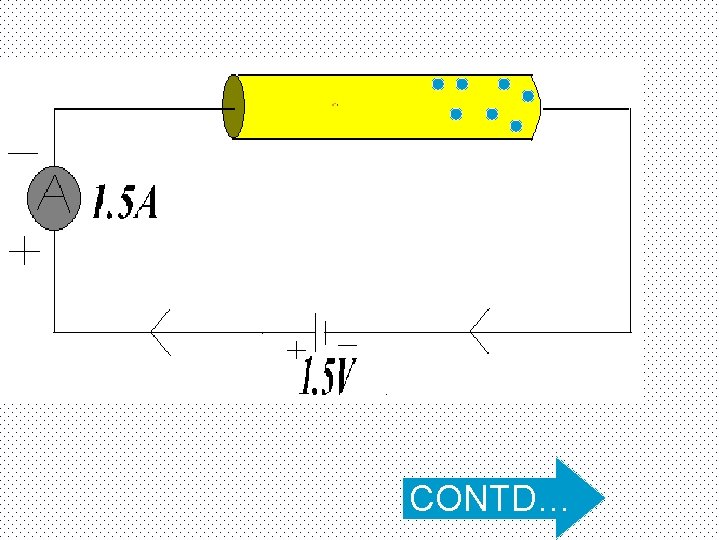
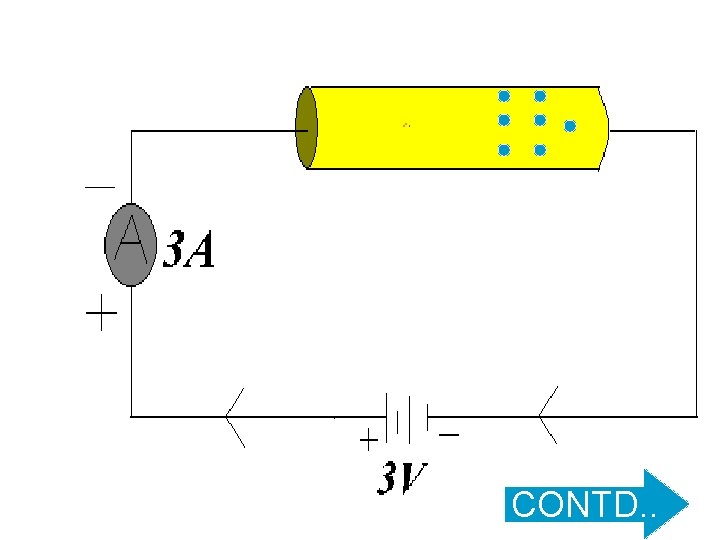
When a potential difference is applied across two ends of a conductor, electrons get drifted in a particular direction. Their net velocity is not zero and hence an electric current flows through the conductor. It is because the electron experiences the force (F=e. E) in the presence of an external electric field. CONTD. .
CONTD…
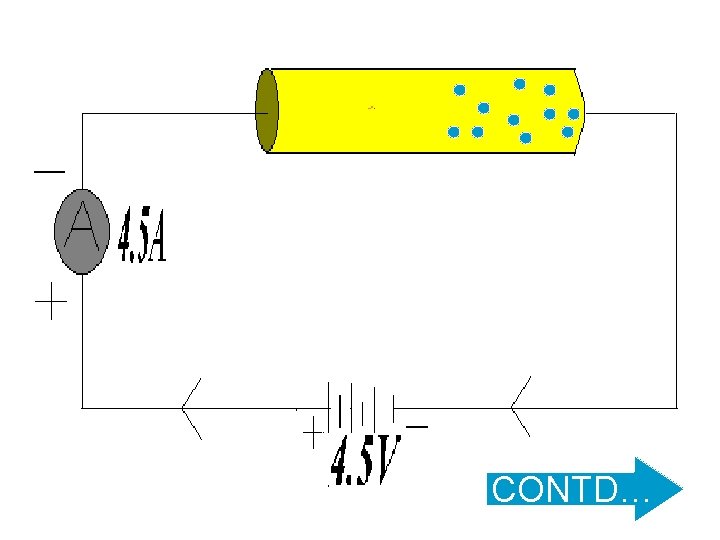
When potential difference is increased, the electric field intensity is also increased. The electrons will experience more force. According to Newton's 2 nd law of motion, the acceleration produced in the electrons will be more. The number of electrons flowing per second through any cross-section of the conductor will increase. CONTD…
CONTD. .
When the potential difference is again increased, due to the same reason, the number of electrons flowing per second(i. e. electric current) through the conductor will increase. Thus, as the potential difference applied across two ends of a conductor increases, the current flowing through the conductor increases. CONTD…
CONTD…
. Thus, we observed that current flowing through the conductor is directly proportional to the potential difference applied across it, which is called Ohms law BACK
RESISTANCE: -It is the opposition or obstruction offered by a conductor to the flow of charge/current. R= V/I ( OHMS LAW) Thus, resistance of a conductor is also defined as the ratio of p. d. to the current flowing through it due to the p. d. applied. It is a scalar quantity. Its S. I. unit is Ω. CONTD…
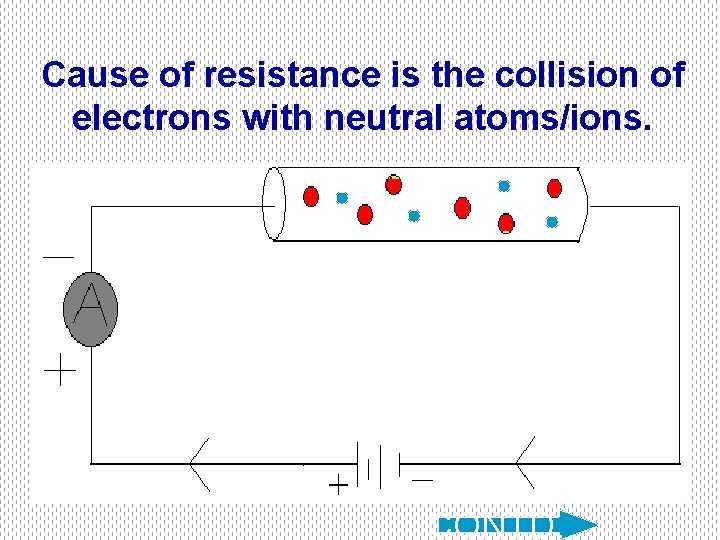
Cause of resistance is the collision of electrons with neutral atoms/ions. CONTD…
Effect of temperature on resistance of a conductor As the temperature of a conductor increases, its resistance increases i. e. the ratio V/I will not remain constant and Ohms law will not be obeyed. CONTD…
Effect of mechanical strain on resistance of a conductor If the conductor is strained, its resistance is increased i. e. the ratio V/I will not remain constant and Ohms law will not be obeyed. Thus Ohms law will be obeyed if the physical conditions like temperature, strain etc remain unchanged. BACK
EVALUATION Q 1. Give an example of source of emf. Q 2. State Ohms law. Q 3. The temperature of a conductor is increased. Will Ohms law be obeyed? Q 4. What is the cause of resistance of a conductor? CONTD…
ASSIGNMENT Q 1. Draw the circuit diagram for the verification of Ohms law in the laboratory. Q 2. Draw V-I graph for Ohms law. Q 3. State the factors on which the resistance of a conductor depends? Q 4. A bulb of resistance 5Ω is connected to a 12 volt battery. Calculate the current flowing through the filament of the bulb. CONTD…

- Slides: 25