SEIZURE DISORDERS IN CHILDREN Dr Pushpa Raj Sharma

- Slides: 22
SEIZURE DISORDERS IN CHILDREN Dr. Pushpa Raj Sharma FCPS Professor of Child Health Institute of Medicine
Definitions Seizure: A sudden, involuntary, time-limited alteration in behavior, motor activity, autonomic function, consciousness, or sensation, accompanied by an abnormal electrical discharge in the brain
Definitions Epilepsy: A condition in which an individual is predisposed to recurrent seizures because of a central nervous system disorder Status Epilepticus: More than thirty minutes of continuous seizure activity, or recurrent seizures without intercurrent recovery of consciousness
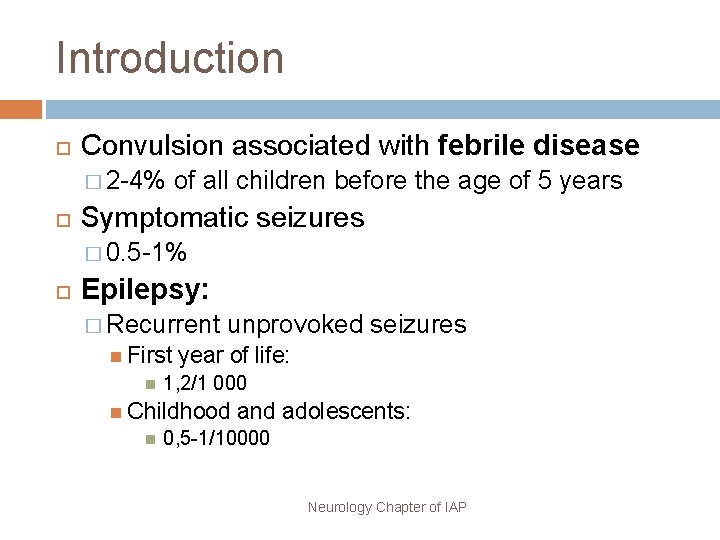
Introduction Convulsion associated with febrile disease � 2 -4% of all children before the age of 5 years Symptomatic seizures � 0. 5 -1% Epilepsy: � Recurrent unprovoked seizures First year of life: 1, 2/1 000 Childhood and adolescents: 0, 5 -1/10000 Neurology Chapter of IAP
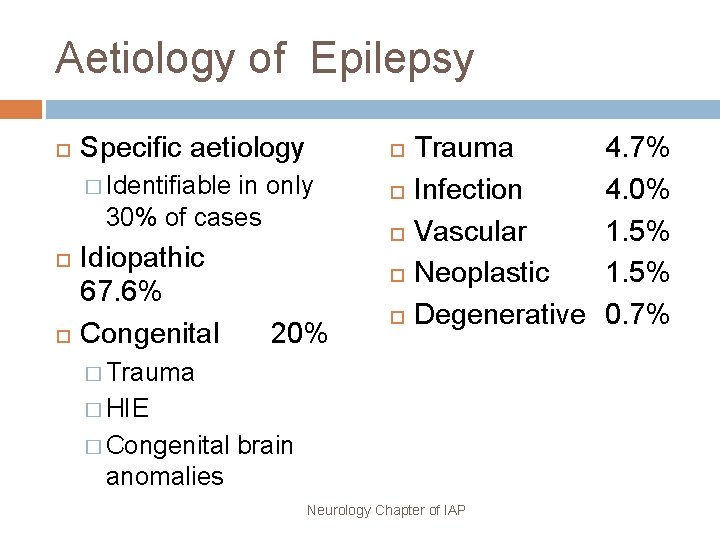
Aetiology of Epilepsy Specific aetiology � Identifiable in only 30% of cases Idiopathic 67. 6% Congenital 20% Trauma Infection Vascular Neoplastic Degenerative � Trauma � HIE � Congenital brain anomalies Neurology Chapter of IAP 4. 7% 4. 0% 1. 5% 0. 7%
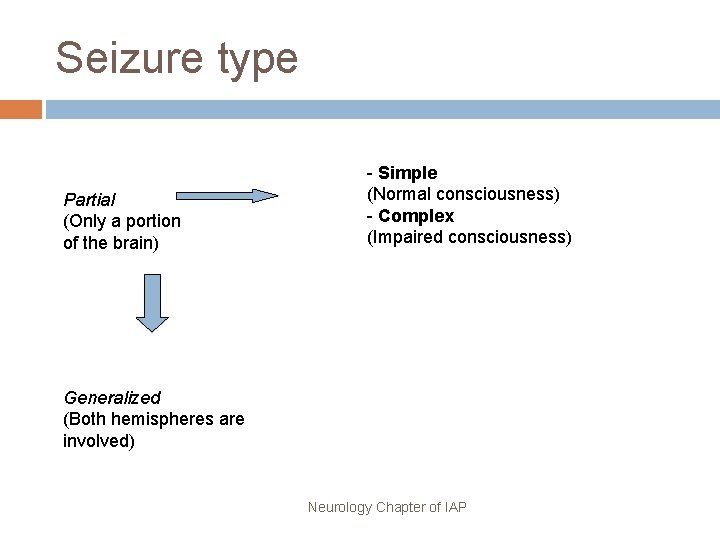
Seizure type Partial (Only a portion of the brain) - Simple (Normal consciousness) - Complex (Impaired consciousness) Generalized (Both hemispheres are involved) Neurology Chapter of IAP
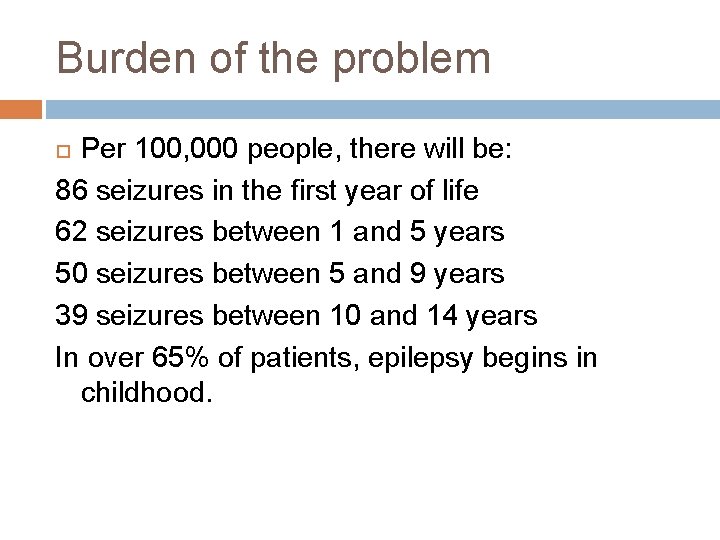
Burden of the problem Per 100, 000 people, there will be: 86 seizures in the first year of life 62 seizures between 1 and 5 years 50 seizures between 5 and 9 years 39 seizures between 10 and 14 years In over 65% of patients, epilepsy begins in childhood.
DETAILED HISTORY OF THE CHILD WITH CONVULSION • Mode of onset of convulsion, character, duration, any similar previous history (chronic/recurring). • Triggering factors- fever, toxic substance or drug, metabolic dis- turbance. • Family history of convulsion, inborn error of metabolism. • Peri-natal/Natal history-birth asphyxia, jaundice, birth trauma, central nervous system (CNS) infection e. g. meningitis, encephalitis etc. • CNS status-cerebral palsy, mental retardation (learning difficulty), any post-convulsive state.
CONVULSION IN INFANTS AND OLDER CHILDREN A) Acute/Non-recurring (i) with fever: febrile convulsion, infections e. g. meningitis (ii) without fever: poisoning including medicinal overdose, metabolic disturbance e. g. hypoglycaemia, hypocalcaemia and electrolyte imbalance, head injury, brain tumour, epilepsy. B) Chronic/Recurring : (i) with fever: recurrent febrile convulsion, recurrent meningitis. (ii) without fever: epilepsy.
Febrile seizures Febrile convulsions, the most common seizure disorder during childhood Age dependent and are rare before 9 mo and after 5 yr of age. A strong family history of febrile convulsions. Usually generalized, is tonic-clonic and lasts a few seconds to 10 -min Mapped the febrile seizure gene to chromosomes 19 p and 8 q 13 -21.
Atypical febrile seizures The duration is longer than 15 min. Repeated convulsions occur within the same day. Focal seizure activity or focal findings are present during the postictal period.
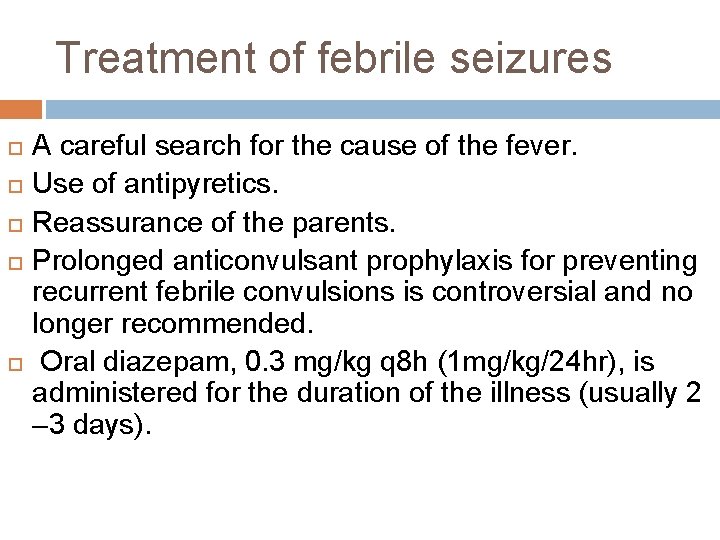
Treatment of febrile seizures A careful search for the cause of the fever. Use of antipyretics. Reassurance of the parents. Prolonged anticonvulsant prophylaxis for preventing recurrent febrile convulsions is controversial and no longer recommended. Oral diazepam, 0. 3 mg/kg q 8 h (1 mg/kg/24 hr), is administered for the duration of the illness (usually 2 – 3 days).
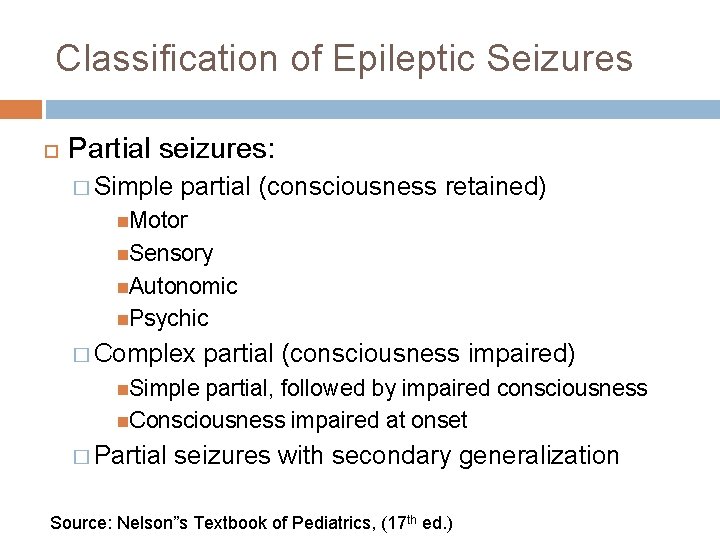
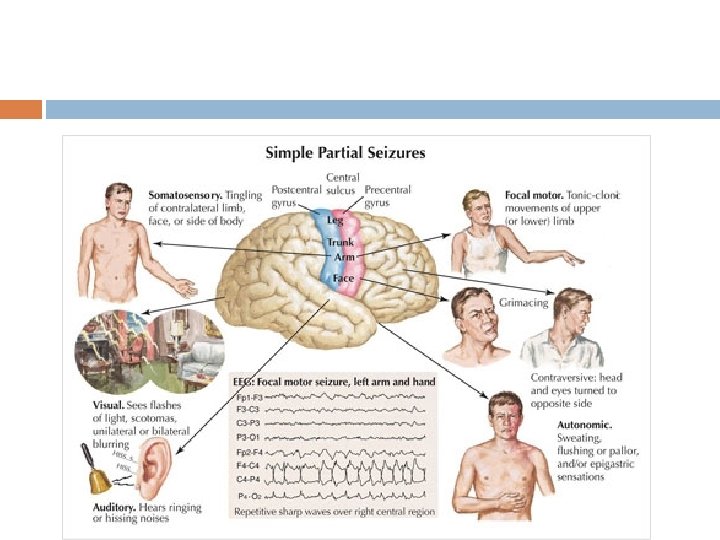
Classification of Epileptic Seizures Partial seizures: � Simple partial (consciousness retained) Motor Sensory Autonomic Psychic � Complex partial (consciousness impaired) Simple partial, followed by impaired consciousness Consciousness impaired at onset � Partial seizures with secondary generalization Source: Nelson”s Textbook of Pediatrics, (17 th ed. )
Simple partial - motor
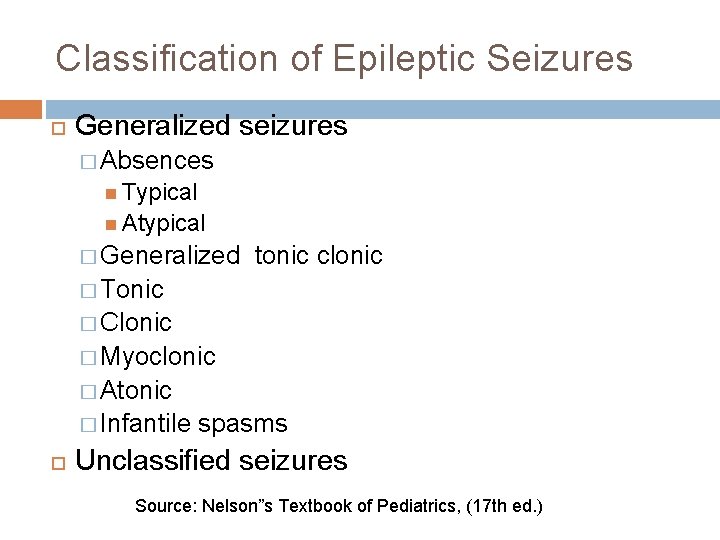
Classification of Epileptic Seizures Generalized seizures � Absences Typical Atypical � Generalized tonic clonic � Tonic � Clonic � Myoclonic � Atonic � Infantile spasms Unclassified seizures Source: Nelson”s Textbook of Pediatrics, (17 th ed. )
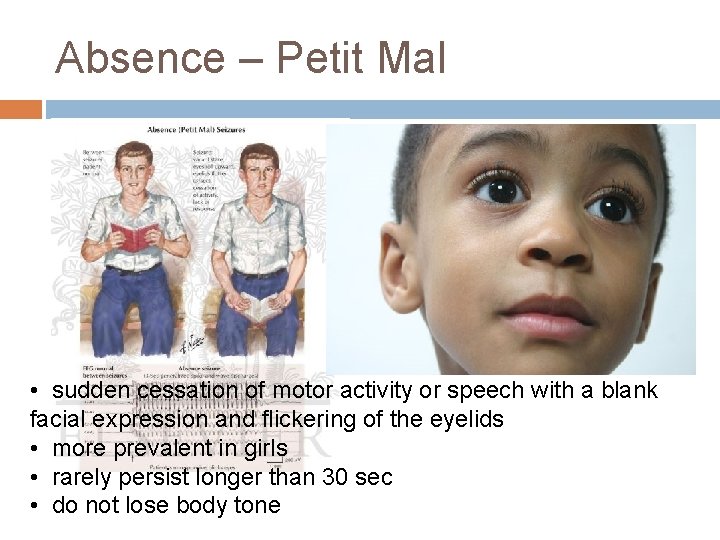
Absence – Petit Mal • sudden cessation of motor activity or speech with a blank facial expression and flickering of the eyelids • more prevalent in girls • rarely persist longer than 30 sec • do not lose body tone
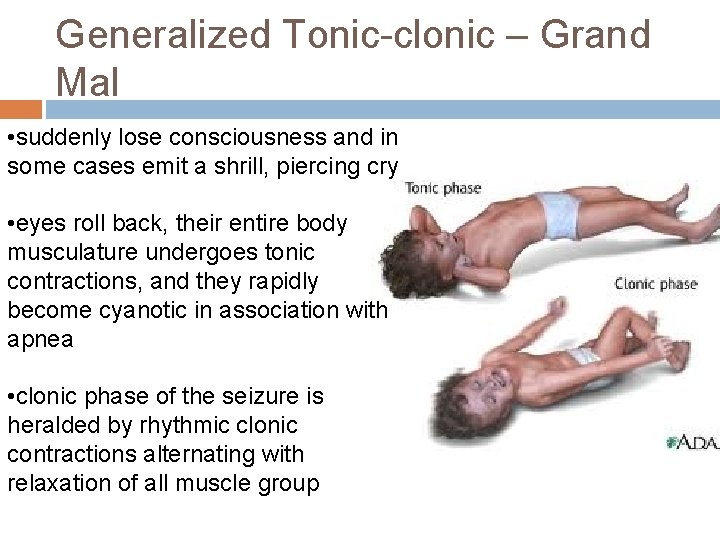
Generalized Tonic-clonic – Grand Mal • suddenly lose consciousness and in some cases emit a shrill, piercing cry • eyes roll back, their entire body musculature undergoes tonic contractions, and they rapidly become cyanotic in association with apnea • clonic phase of the seizure is heralded by rhythmic clonic contractions alternating with relaxation of all muscle group
Mimicking seizures Benign paroxysmal vertigo Night terrors Breath-holding spells Syncope Paroxysmal kinesigenic Choreoathetosis Shuddering attacks Benign paroxysmal torticollis of infancy Hereditary chin trembling Narcolepsy Rage attacks Pseudo seizures Masturbation
Status Epilepticus Three major subtypes: prolonged febrile seizures � idiopathic status epilepticus � symptomatic status epilepticus � Higher mortality rate. Severe anoxic encephalopathy in first few days of life. History. The relationship between the neurologic outcome and the duration of status epilepticus is unknown in children.
Treatment of status epilepticus Initial treatment: � assessment of the respiratory and cardiovascular systems; � A nasogastric tube insertion; � IV catheter; � a rapid infusion of 5 m. L/kg of 10% dextrose; � blood is obtained for a CBC and for determination of electrolytes. � a physical and neurologic examination. Source: Nelson”s Textbook of Pediatrics, (17 th ed. )
Treatment of status epilepticus Drugs: should always be administered IV; � phenytoin forms a precipitate in glucose solutions; � have resuscitation equipment at the bedside; � A benzodiazepine (diazepam) may be used initially; � if the seizures persist, phenytoin is given immediately � The choices for further drug management include paraldehyde, a diazepam infusion, barbiturate coma, or general anesthesia. �