
Dizziness 2007 8 27 R 2 INTRODUCTION Dizziness

- Slides: 130
Dizziness(어지럼증) 2007. 8. 27 R 2 이치훈
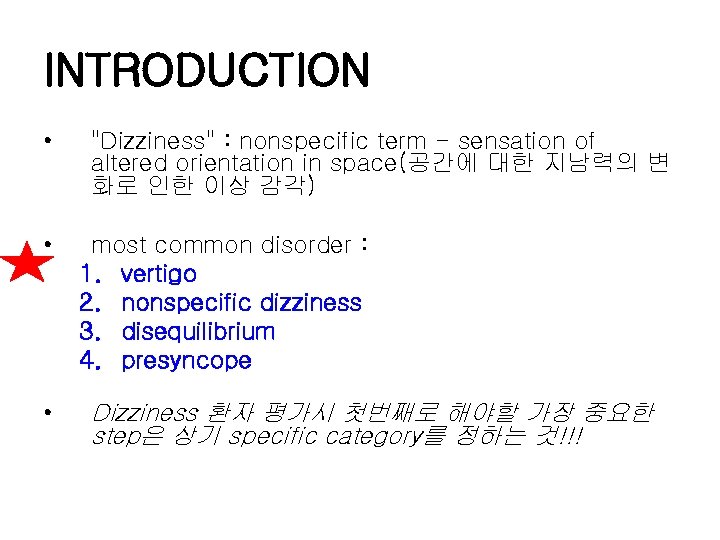
INTRODUCTION • • • "Dizziness" : nonspecific term - sensation of altered orientation in space(공간에 대한 지남력의 변 화로 인한 이상 감각) most common disorder : 1. vertigo 2. nonspecific dizziness 3. disequilibrium 4. presyncope Dizziness 환자 평가시 첫번째로 해야할 가장 중요한 step은 상기 specific category를 정하는 것!!!
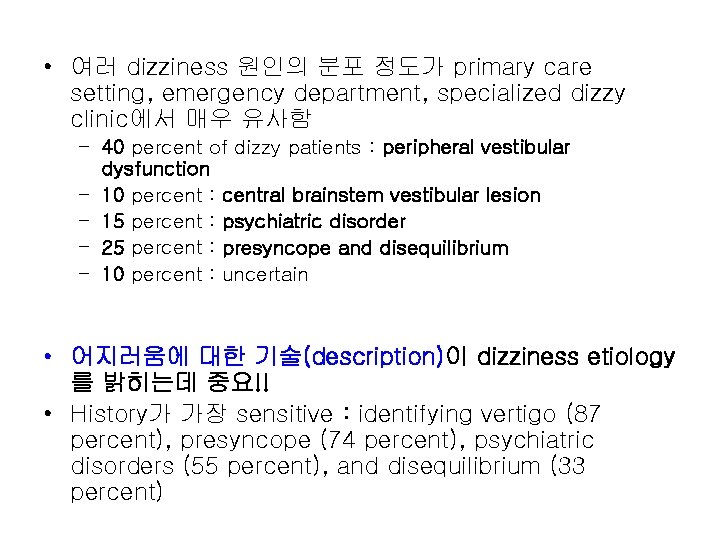
• 여러 dizziness 원인의 분포 정도가 primary care setting, emergency department, specialized dizzy clinic에서 매우 유사함 – 40 percent of dizzy patients : peripheral vestibular dysfunction – 10 percent : central brainstem vestibular lesion – 15 percent : psychiatric disorder – 25 percent : presyncope and disequilibrium – 10 percent : uncertain • 어지러움에 대한 기술(description)이 dizziness etiology 를 밝히는데 중요!! • History가 가장 sensitive : identifying vertigo (87 percent), presyncope (74 percent), psychiatric disorders (55 percent), and disequilibrium (33 percent)
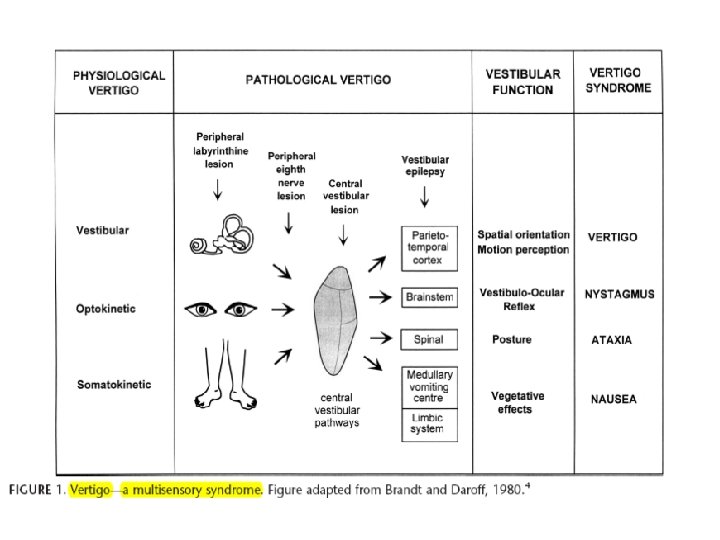
VERTIGO • illusion of motion ; self-motion or motion of the environment • most common perception - "spinning (whirling, rotation)" sensation • 간혹 linear displacement, tilt sense로 인해 "moving", "tilting" 과 같이 표현하기도 • vestibular system의 imbalance(asymmetry)에 의해 발 생 • vestibular system – vestibular apparatus in the inner ear – vestibular nerve and nucleus within the medulla – connections to and from the vestibular portions of the cerebellum
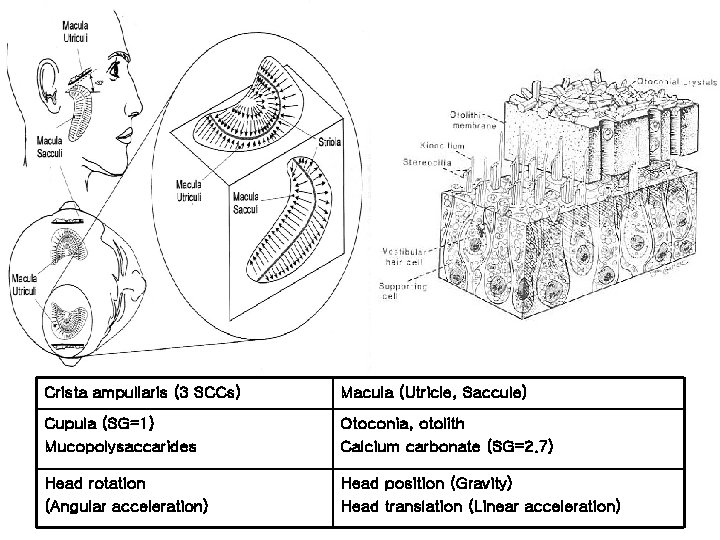
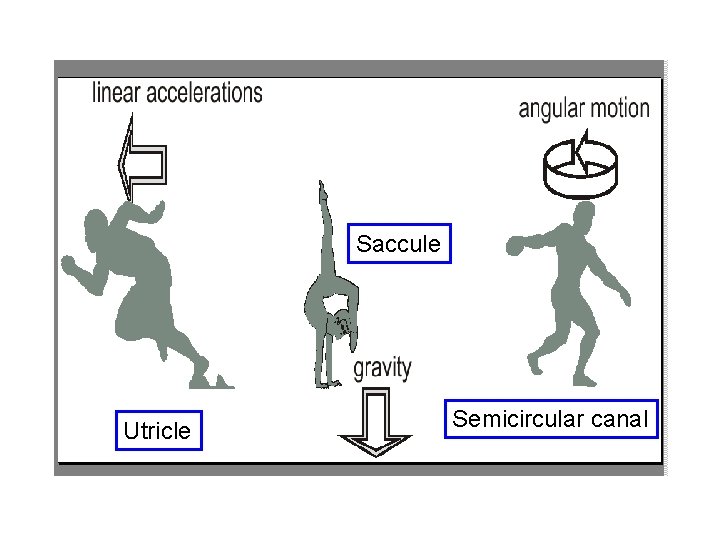
Crista ampullaris (3 SCCs) Macula (Utricle, Saccule) Cupula (SG=1) Mucopolysaccarides Otoconia, otolith Calcium carbonate (SG=2. 7) Head rotation (Angular acceleration) Head position (Gravity) Head translation (Linear acceleration)
Saccule Utricle Semicircular canal
Distinguishing vertigo from other types of dizziness • The spinning quality of vertiginous sensations is notoriously unreliable!!! – Spinning sense가 아니라고 해서 vestibular disease 를 배제하지 못함 – Presyncope인데 woozy, faint feeling을 spinning sensation으로 이해하고 표현하는 경우 • Dizziness의 time course, provoking factor, aggravating factor가 dizziness의 원인을 밝히 는데 더 유용함!!!
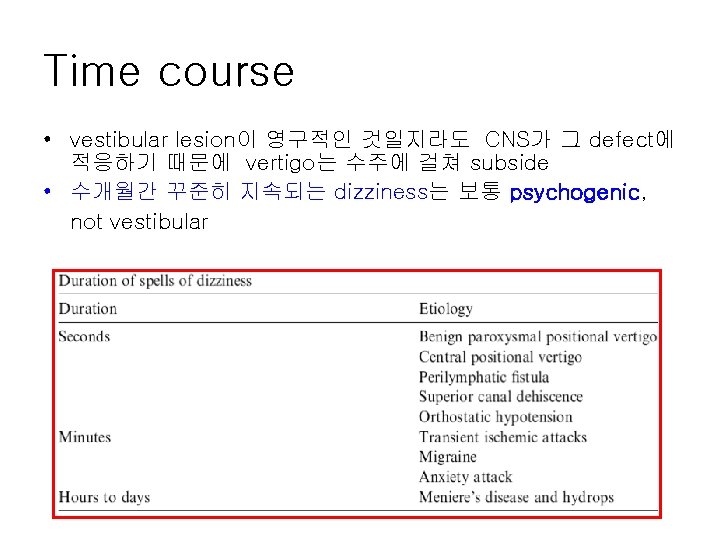
Time course • vestibular lesion이 영구적인 것일지라도 CNS가 그 defect에 적응하기 때문에 vertigo는 수주에 걸쳐 subside • 수개월간 꾸준히 지속되는 dizziness는 보통 psychogenic, not vestibular
Provoking factors • 어떤 종류의 vertigo는 저절로 발생하는 반면, head position 이나 middle ear pressure (eg, coughing, sneezing, or Valsalva maneuvers)를 바꾸는 maneuver 에 의해서 유발되는 것도 있음 • Positional vertigo와 postural presyncope – 종종 혼동되는 두 가지 흔한 condition – 둘다 잠자리에서 일어날 때와 같이 standing시의 dizziness와 관 련 • 둘을 구분하는 key : BP를 떨어뜨리거나 뇌혈류의 감소 없이 head position을 바꾸는 maneuver를 통해서 dizziness 발생 여부를 확인 – lying down, rolling over in bed, bending the neck back to look up – 위와 같은 상황에서 dizziness 발생하면 positional vertigo, not postural presyncope.
Associated signs and symptoms • Vertigo(central or peripheral origin)는 일반적으 로 nystagmus와 postural instability를 동반 • Ear symptom(hearing loss, tinnitus, ear fullness) 이나 brainstem sign(dysphagia, dysarthria, diplopia, ataxia, motor weakness, sensory change, incoordination) 등도 peripheral과 central cause of vertigo 구분에 도움
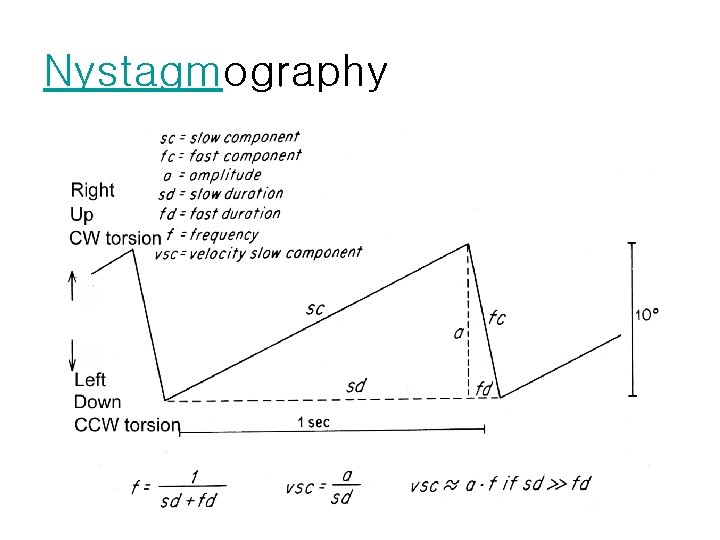
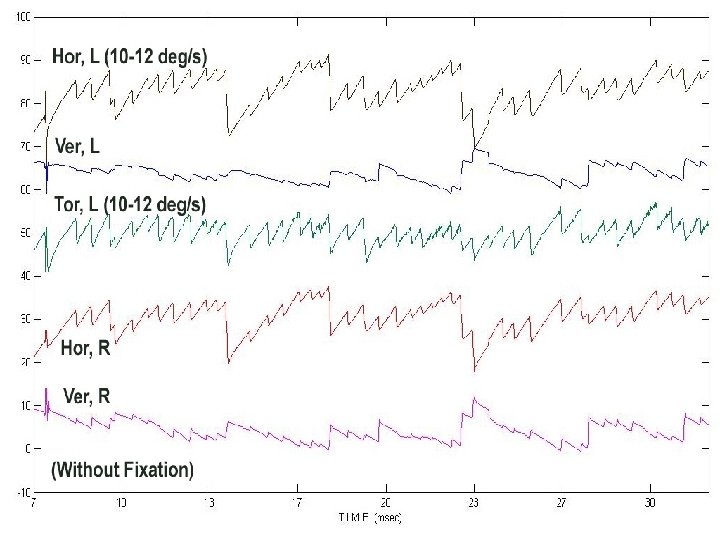
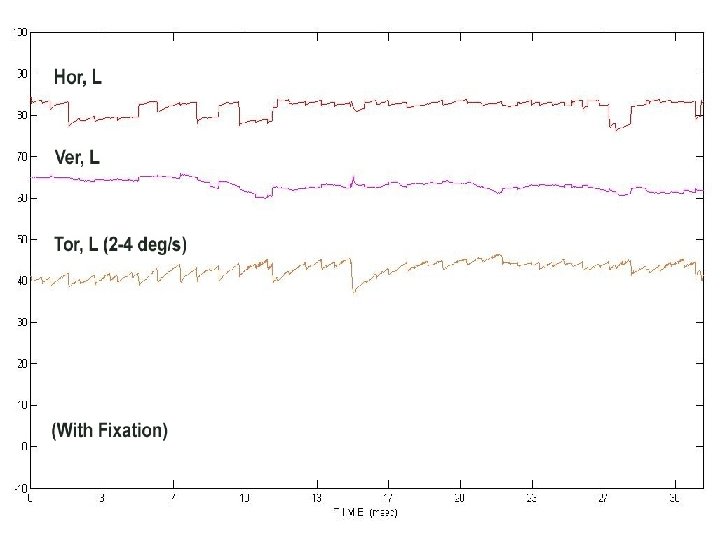
Nystagmography
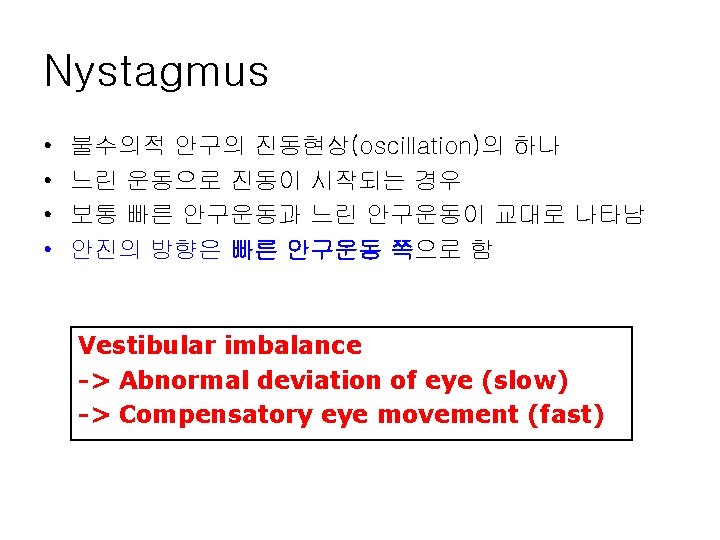
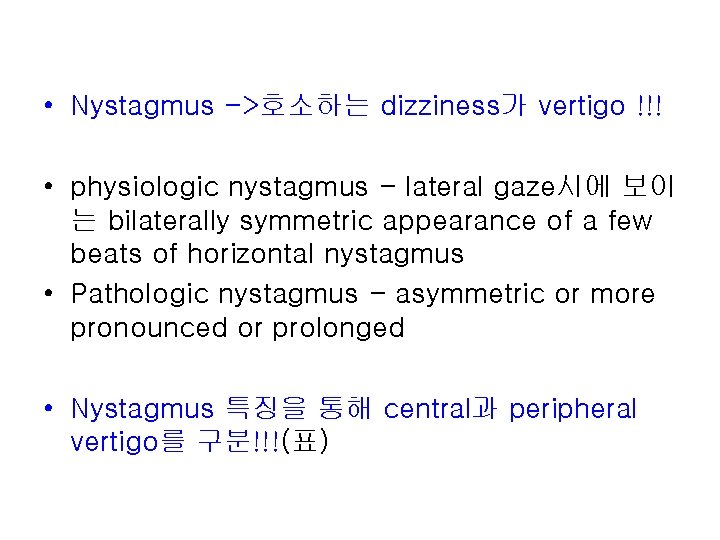
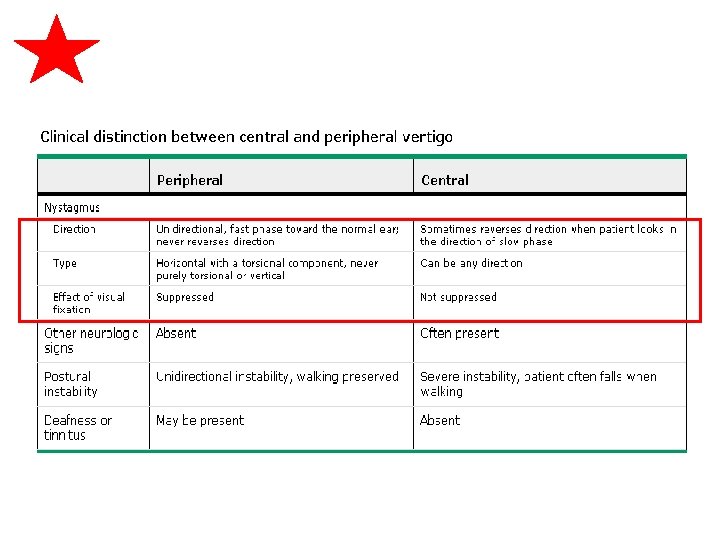
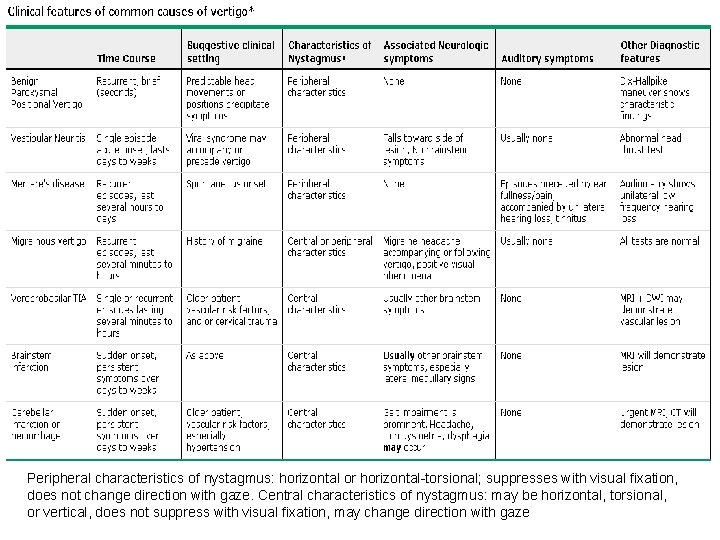
• Nystagmus ->호소하는 dizziness가 vertigo !!! • physiologic nystagmus - lateral gaze시에 보이 는 bilaterally symmetric appearance of a few beats of horizontal nystagmus • Pathologic nystagmus - asymmetric or more pronounced or prolonged • Nystagmus 특징을 통해 central과 peripheral vertigo를 구분!!!(표)
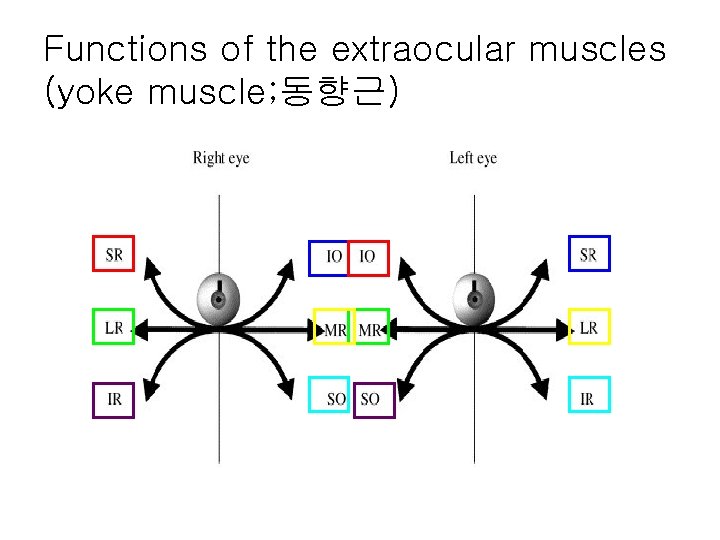
Functions of the extraocular muscles (yoke muscle; 동향근)
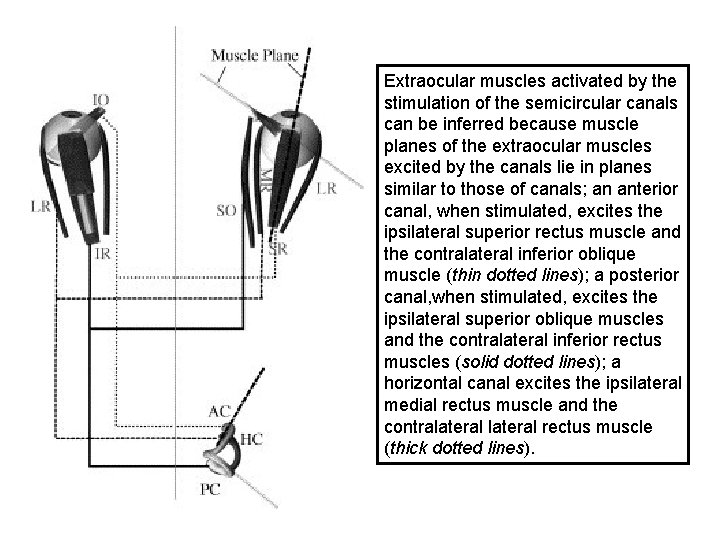
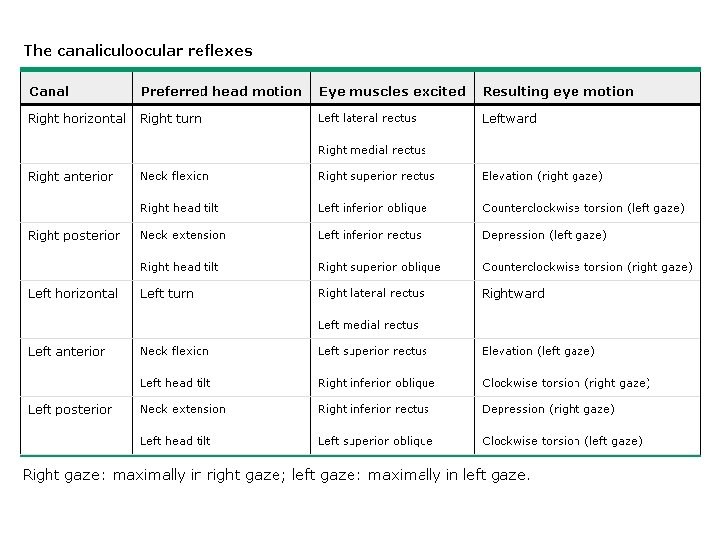
Extraocular muscles activated by the stimulation of the semicircular canals can be inferred because muscle planes of the extraocular muscles excited by the canals lie in planes similar to those of canals; an anterior canal, when stimulated, excites the ipsilateral superior rectus muscle and the contralateral inferior oblique muscle (thin dotted lines); a posterior canal, when stimulated, excites the ipsilateral superior oblique muscles and the contralateral inferior rectus muscles (solid dotted lines); a horizontal canal excites the ipsilateral medial rectus muscle and the contralateral rectus muscle (thick dotted lines).
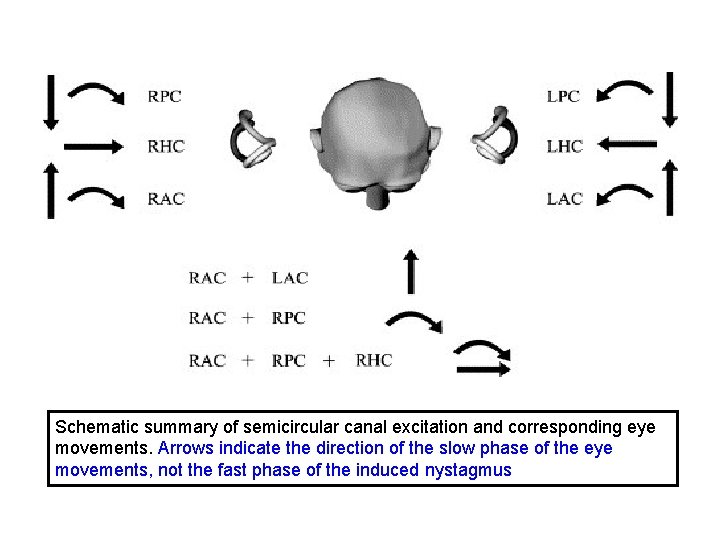
Schematic summary of semicircular canal excitation and corresponding eye movements. Arrows indicate the direction of the slow phase of the eye movements, not the fast phase of the induced nystagmus
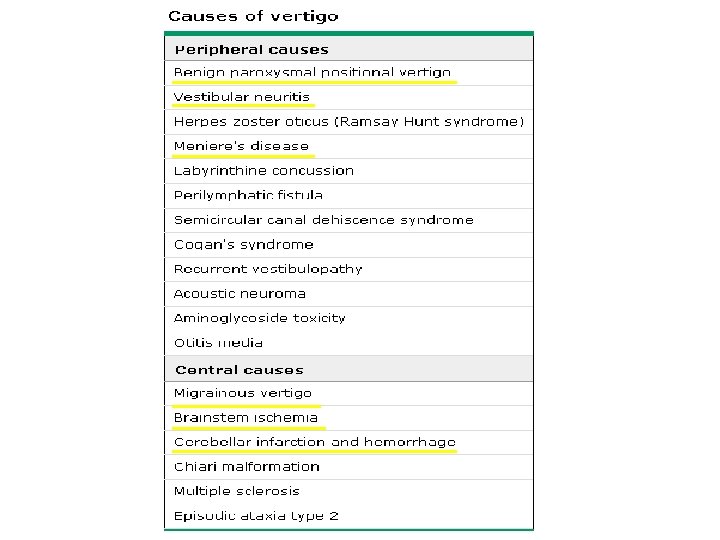
CAUSES OF VERTIGO • Vertigo의 원인 – peripheral disorder – central disorder • 서로 구분되는 clinical feature를 갖지만 어느 정 도는 overlap • Peripheral cause가 80% : – benign paroxysmal positional vertigo – vestibular neuritis – Meniere's disease
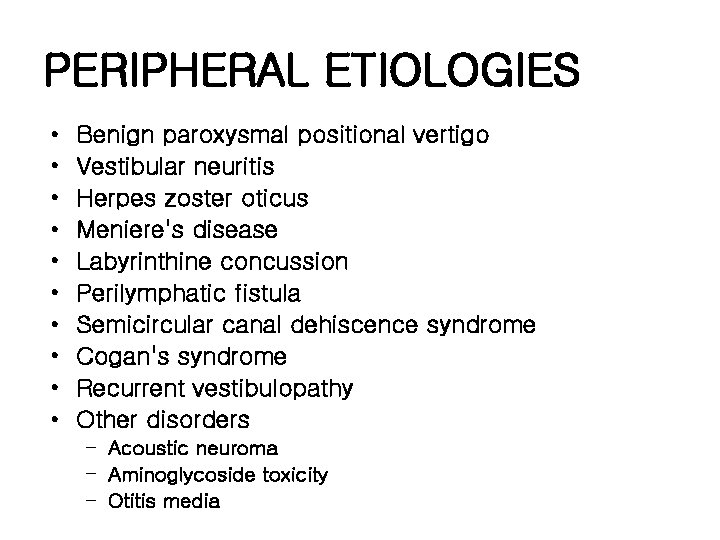
PERIPHERAL ETIOLOGIES • • • Benign paroxysmal positional vertigo Vestibular neuritis Herpes zoster oticus Meniere's disease Labyrinthine concussion Perilymphatic fistula Semicircular canal dehiscence syndrome Cogan's syndrome Recurrent vestibulopathy Other disorders – Acoustic neuroma – Aminoglycoside toxicity – Otitis media
Benign paroxysmal positional vertigo • 어떤 형태의 vertigo와 nystagmus는 중력에 대해 머리 위치를 바꾸었을 때만 분명하게 나타남 -> positional vertigo • central (eg, brainstem or cerebellum)과 peripheral (eg, canalithiasis) vestibular lesion 모두 positional nystagmus 와 vertigo를 발생 • Central positional nystagmus는 보통 static(머리가 provoking position을 유지하는 한 nystagmus는 지속) • peripheral vestibular pathology로 인한 positional vertigo는 항상 transient • Nystagmus direction, latency, fatiguability를 관찰하는 것이 감별에 도움 • atypical feature nystagmus나 undetermined origin nystagmus를 보이면 neurologic investigation 필요
• BPPV - most common positional vertigo (peripheral vestibular dysfunction 환자의 ½) • dizziness clinic에 방문하는 환자의 18%, vestibular testing 위해 보내진 환자의 25% • no race, age, sex predilection • recurrent episode의 vertigo 증상이 1분 혹은 그 이하로 지속됨 • 비록 각각의 episode는 짧지만, 대개 치료가 없 으면 수주에서 수개월마다 재발 • 특정한 head movement에 의해 유발 - looking up while standing or sitting, lying down or getting up from bed, and rolling over in bed • nausea와 vomiting을 동반 • no other neurologic complaints
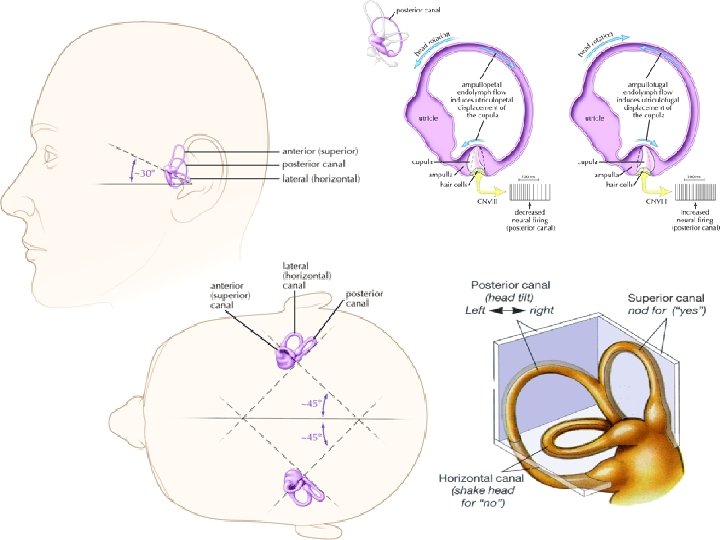
BPPV - Etiology and pathogenesis • 가장 흔한 원인 : posterior semicircular canal 안의 calcium debris (소위 canalithiasis) ; debris는 utricular sac 안에 있던 otoconia (calcium carbonate crystals)가 떨어져 나간 것 • semicircular canal은 angular head acceleration을 감지 • Heavy debris in the canal -> endolymph의 inappropriate movement 발생 -> head shifts 시 erroneous sensation of spinning 발생
• Classic posterior canal BPPV – Idiopathic (35%) – Prior minor head trauma (15%) – 나머지는 다양한 vestibular pathology의 residual effect : Meniere's disease (30%), vestibular neuronitis, ear surgery, inner ear ischemia • horizontal canal BPPV – 대부분 idiopathic 또는 minor head trauma – 간혹 posterior canal BPPV 치료 위한 maneuver의complication으로 발생
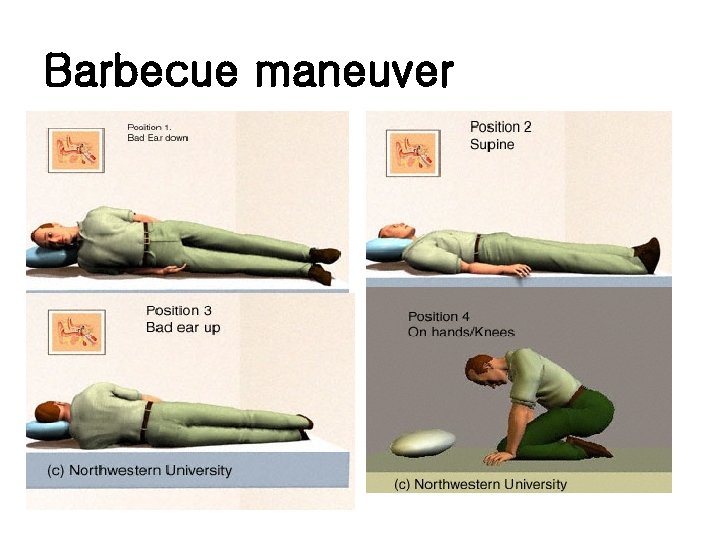
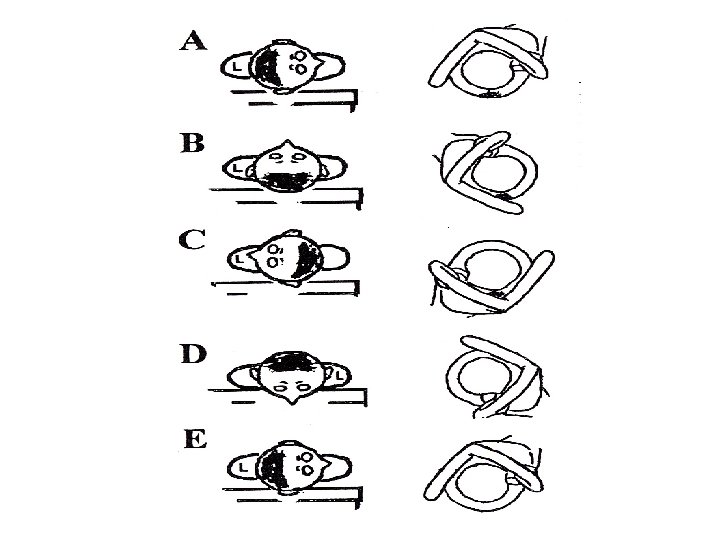
BPPV - Variants • three variants : anterior canal, horizontal canal, pure torsional • Anterior canal BPPV – classic posterior canal BPPV와 유사한 provoking factors – nystagmus : downbeat and torsional – latency, duration, fatiguability는 유사함 • Horizontal canal BPPV – 누운 상태에서 머리를 좌우로 돌릴 때 유발, 간혹 서있는 상태에 서 머리를 돌릴 때 발생, 하지만 침대에 눕거나 일어날 때 혹은 고개를 쳐들 때 발생하지 않음 – supine position에서 lateral head turn을 할 때 nystagmus 유발
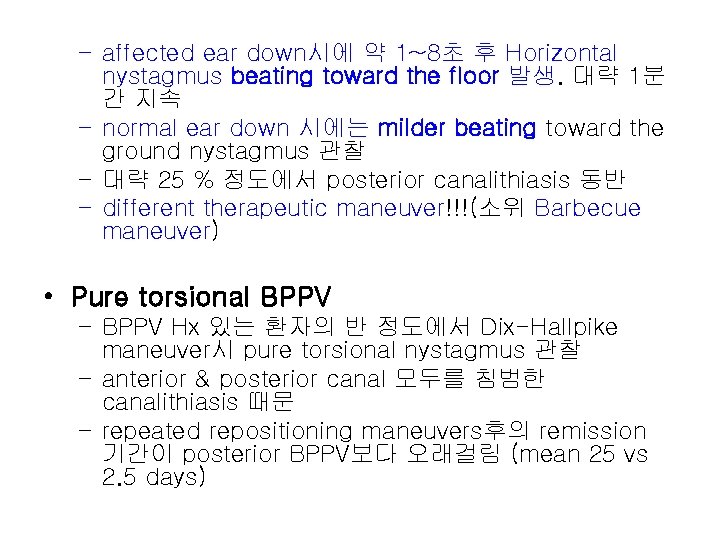
– affected ear down시에 약 1~8초 후 Horizontal nystagmus beating toward the floor 발생. 대략 1분 간 지속 – normal ear down 시에는 milder beating toward the ground nystagmus 관찰 – 대략 25 % 정도에서 posterior canalithiasis 동반 – different therapeutic maneuver!!!(소위 Barbecue maneuver) • Pure torsional BPPV – BPPV Hx 있는 환자의 반 정도에서 Dix-Hallpike maneuver시 pure torsional nystagmus 관찰 – anterior & posterior canal 모두를 침범한 canalithiasis 때문 – repeated repositioning maneuvers후의 remission 기간이 posterior BPPV보다 오래걸림 (mean 25 vs 2. 5 days)
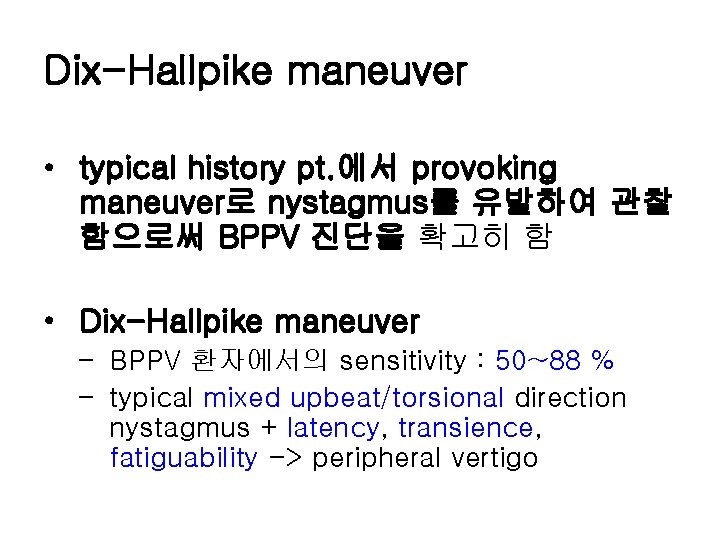
Dix-Hallpike maneuver • typical history pt. 에서 provoking maneuver로 nystagmus를 유발하여 관찰 함으로써 BPPV 진단을 확고히 함 • Dix-Hallpike maneuver – BPPV 환자에서의 sensitivity : 50~88 % – typical mixed upbeat/torsional direction nystagmus + latency, transience, fatiguability -> peripheral vertigo
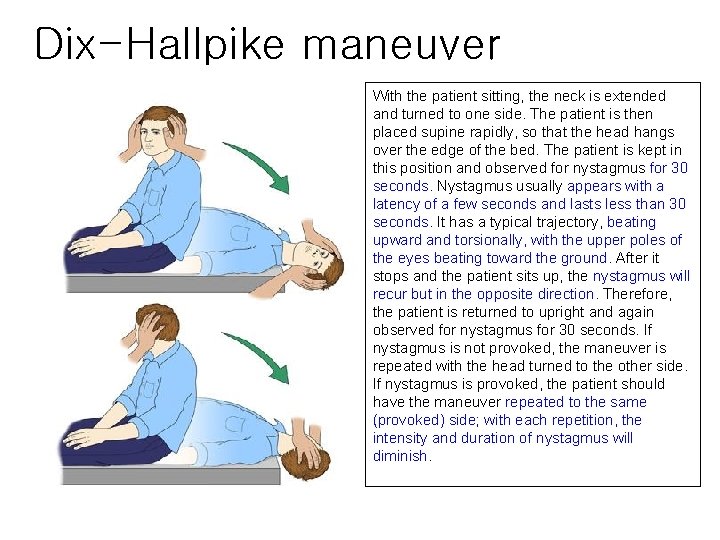
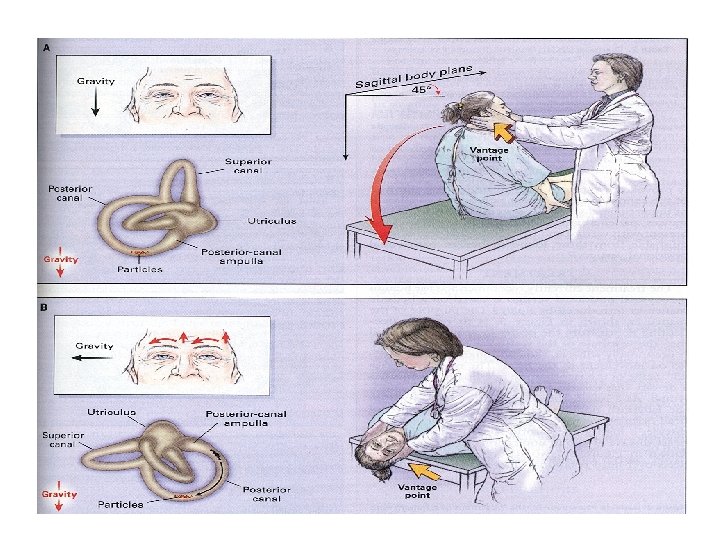
Dix-Hallpike maneuver With the patient sitting, the neck is extended and turned to one side. The patient is then placed supine rapidly, so that the head hangs over the edge of the bed. The patient is kept in this position and observed for nystagmus for 30 seconds. Nystagmus usually appears with a latency of a few seconds and lasts less than 30 seconds. It has a typical trajectory, beating upward and torsionally, with the upper poles of the eyes beating toward the ground. After it stops and the patient sits up, the nystagmus will recur but in the opposite direction. Therefore, the patient is returned to upright and again observed for nystagmus for 30 seconds. If nystagmus is not provoked, the maneuver is repeated with the head turned to the other side. If nystagmus is provoked, the patient should have the maneuver repeated to the same (provoked) side; with each repetition, the intensity and duration of nystagmus will diminish.
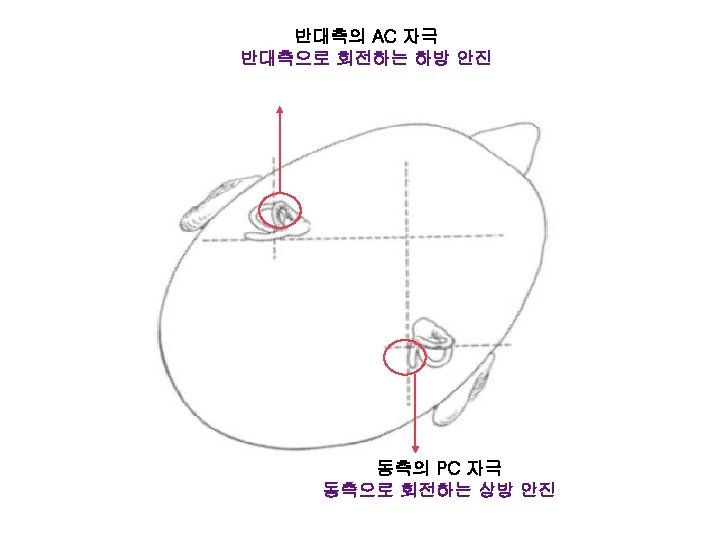
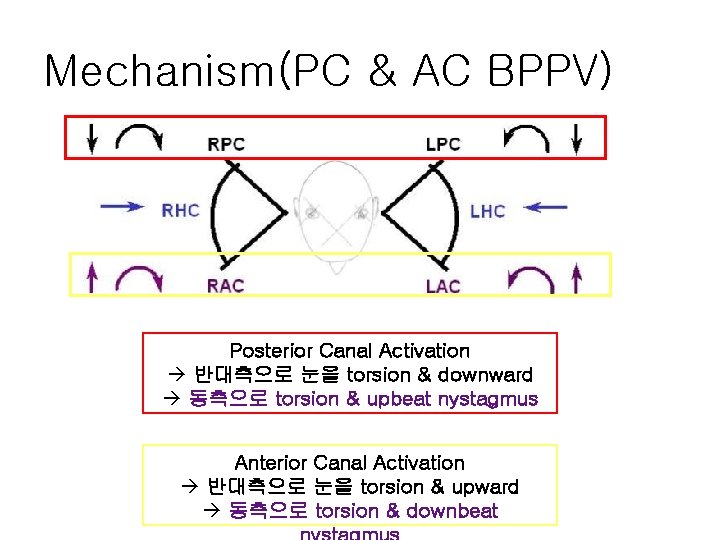
Mechanism(PC & AC BPPV) Posterior Canal Activation à 반대측으로 눈을 torsion & downward à 동측으로 torsion & upbeat nystagmus Anterior Canal Activation à 반대측으로 눈을 torsion & upward à 동측으로 torsion & downbeat
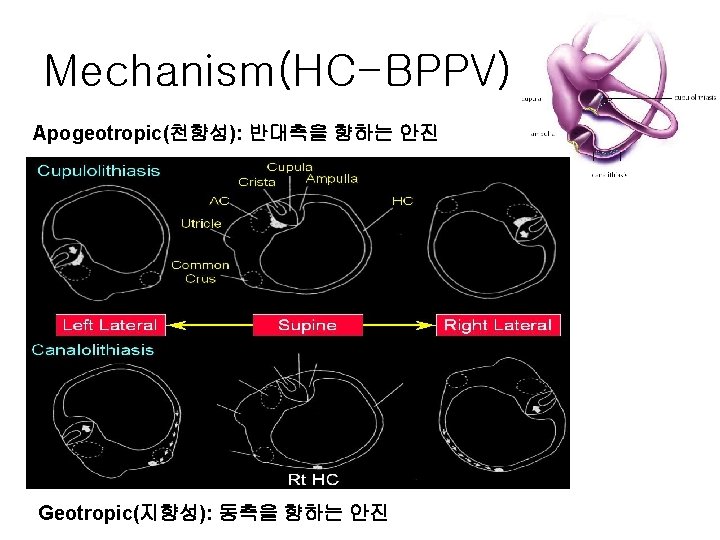
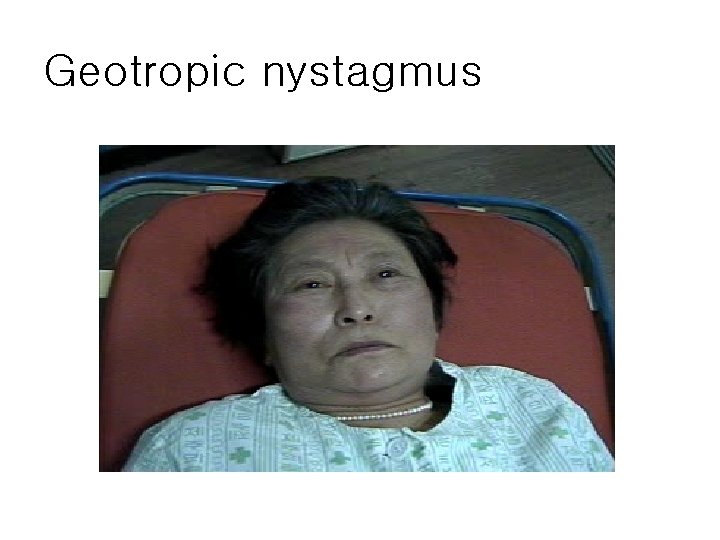
Geotropic nystagmus
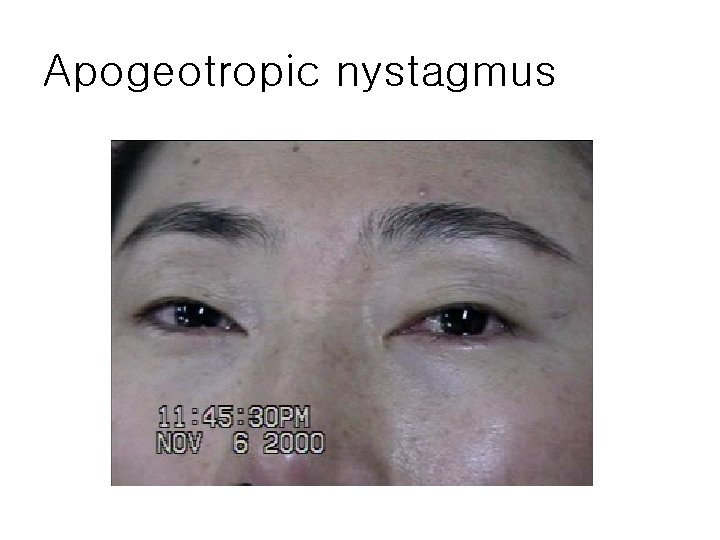
Apogeotropic nystagmus
BPPV - Investigations • Typical posterior canal BPPV에서는 추가적인 검사 필요 없음! • Electronystagmography (ENG) : normal or reflects preexisting vestibular pathology • preexisting vestibular disease가 의심되는 history나 examination 소견이 있으면 ENG 시행 • Nystagmus가 classic posterior canal BPPV profile에 맞지 않을 때만 Neuroimaging 고려 • Examination시에 nystagmus가 관찰되지 않아 BPPV 진단이 확실치 않을 때라도 history가 BPPV를 크게 시사한다면 liberatory maneuver 를 통한 empiric treatment가 종종 유용함
BPPV - Differential diagnosis • BPPV와 감별해야 할 4 major disorder : ① ② ③ ④ postural hypotension chronic unilateral vestibular hypofunction migrainous vertigo central positional vertigo with downbeat nystagmus
Postural hypotension • 둘 다 dizziness가 positional change에 의 해 유발되기 때문에 Postural (orthostatic) hypotension과 BPPV가 혼동될 수 있음 • orthostatic presyncope은 rolling over in bed 또는 lying down시에 dizziness 유발 되지 않음. 반면 BPPV 환자 90%정도가 이 런 maneuver에 의해 dizziness 유발됨
Chronic unilateral vestibular hypofunction • rapid head turn 후의 transient dizziness (1~2초) • BPPV에 의한 vertigo는 rapid head turn이 요구되지 않고 지속시간도 30~60초 정도 • posterior canal BPPV의 vertigo는 looking up or down에 의해 유발되지만, chronic unilateral hypofunction 환자에서는 문제 가 되지 않음
Migrainous vertigo • • frequent cause of episodic vertigo BPPV를 mimicking하는 isolated positional vertigo를 보일 수 있음(pseudo BPPV) • 362명의 positional vertigo 환자를 retrospective review시 10명의migrainous positional vertigo환자가 발견됨 BPPV와 다른 점 : • ① More frequent recurrences than BPPV (eg, recurrence over hours to days rather than weeks to months) ; ② Onset at a young age in some patients ③ Migrainous symptoms, often subtle, during episodes with positional vertigo ④ Positional nystagmus atypical for BPPV
Central positional vertigo and nystagmus • Vestibulocerebellum의 lesion • classic ocular motor sign : downbeat nystagmus • 누웠을 때만(prone>supine) downbeat nystagmus가 존재하거나 더 심해짐 • Nystagmus는 누워 있는 한 지속되는static positional nystagmus
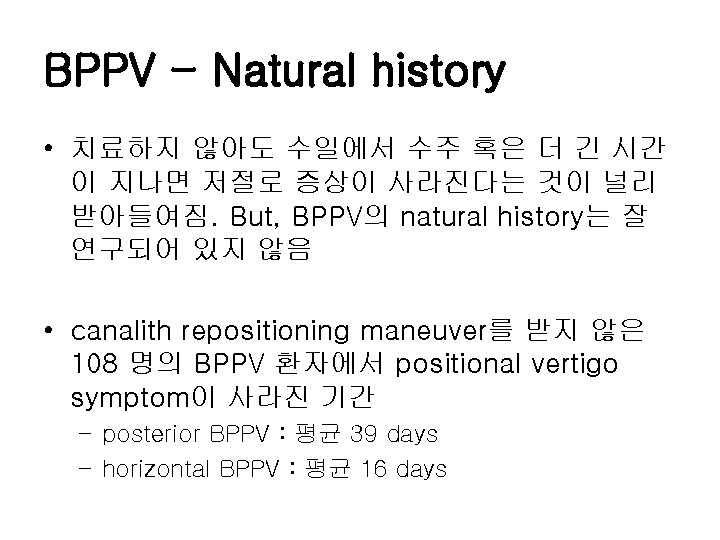
BPPV - Natural history • 치료하지 않아도 수일에서 수주 혹은 더 긴 시간 이 지나면 저절로 증상이 사라진다는 것이 널리 받아들여짐. But, BPPV의 natural history는 잘 연구되어 있지 않음 • canalith repositioning maneuver를 받지 않은 108 명의 BPPV 환자에서 positional vertigo symptom이 사라진 기간 – posterior BPPV : 평균 39 days – horizontal BPPV : 평균 16 days
BPPV - Treatment with canalith repositioning maneuvers • 여러가지 "liberatory" or "particle repositioning" maneuver가 개발됨 – The Brandt-Daroff exercises – The Epley maneuver and modified Epley maneuver – The Semont maneuver and modified Semont maneuver
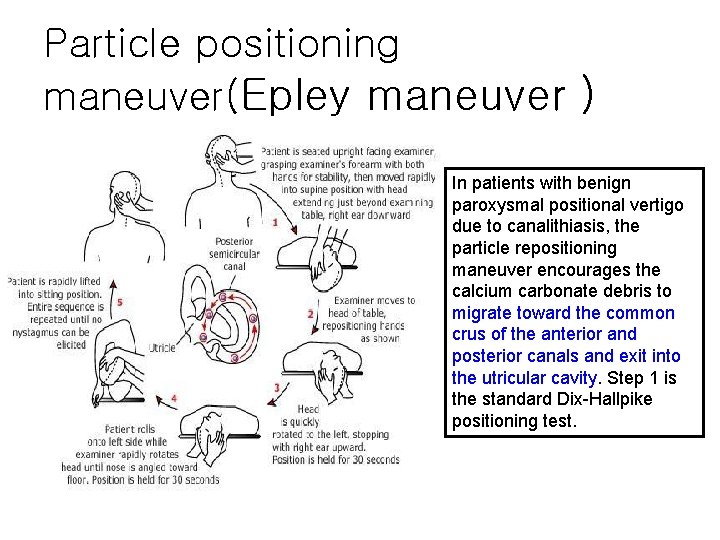
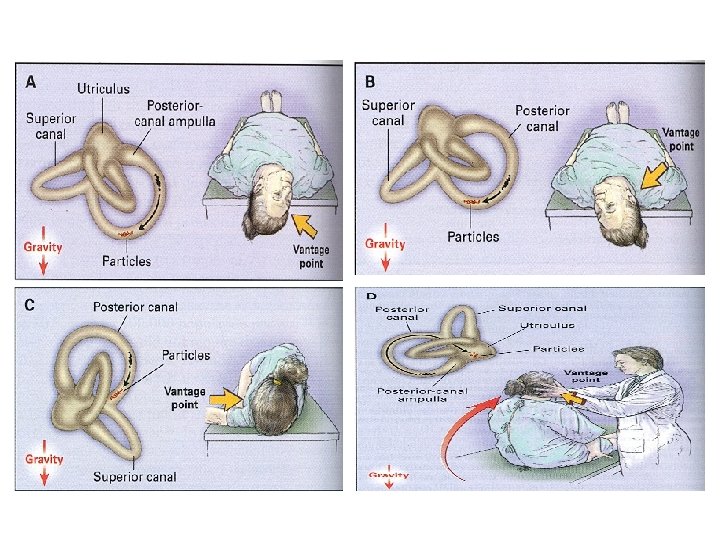
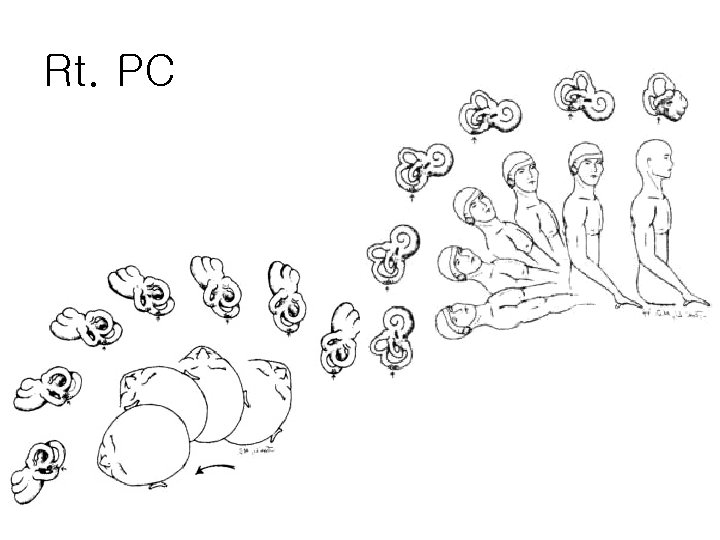
Particle positioning maneuver(Epley maneuver ) In patients with benign paroxysmal positional vertigo due to canalithiasis, the particle repositioning maneuver encourages the calcium carbonate debris to migrate toward the common crus of the anterior and posterior canals and exit into the utricular cavity. Step 1 is the standard Dix-Hallpike positioning test.
Rt. PC
Barbecue maneuver
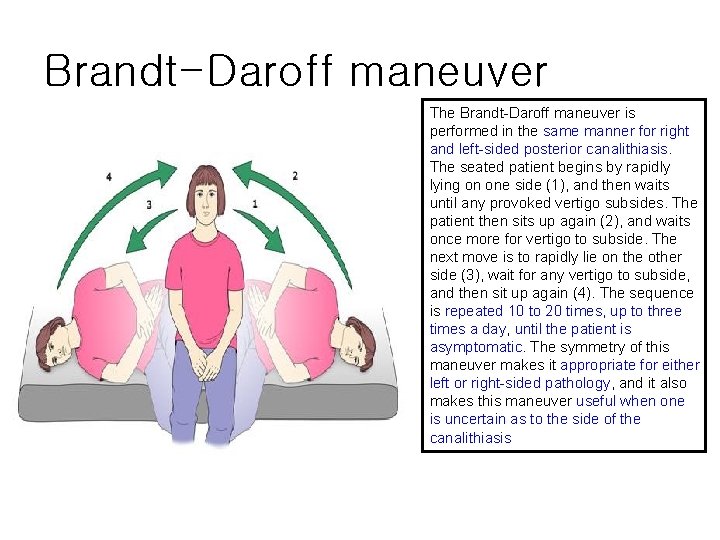
Brandt-Daroff maneuver The Brandt-Daroff maneuver is performed in the same manner for right and left-sided posterior canalithiasis. The seated patient begins by rapidly lying on one side (1), and then waits until any provoked vertigo subsides. The patient then sits up again (2), and waits once more for vertigo to subside. The next move is to rapidly lie on the other side (3), wait for any vertigo to subside, and then sit up again (4). The sequence is repeated 10 to 20 times, up to three times a day, until the patient is asymptomatic. The symmetry of this maneuver makes it appropriate for either left or right-sided pathology, and it also makes this maneuver useful when one is uncertain as to the side of the canalithiasis
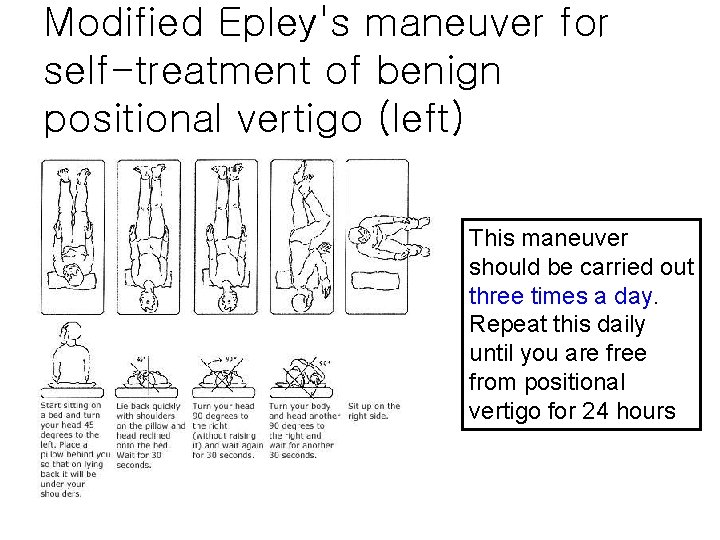
Modified Epley's maneuver for self-treatment of benign positional vertigo (left) This maneuver should be carried out three times a day. Repeat this daily until you are free from positional vertigo for 24 hours
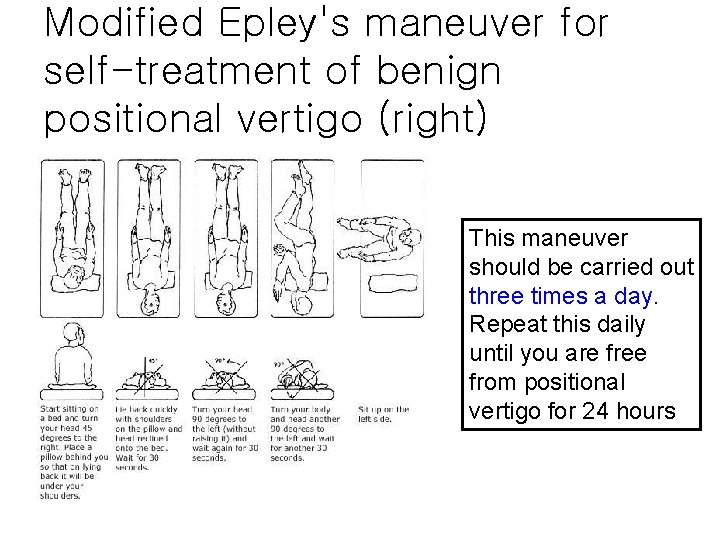
Modified Epley's maneuver for self-treatment of benign positional vertigo (right) This maneuver should be carried out three times a day. Repeat this daily until you are free from positional vertigo for 24 hours
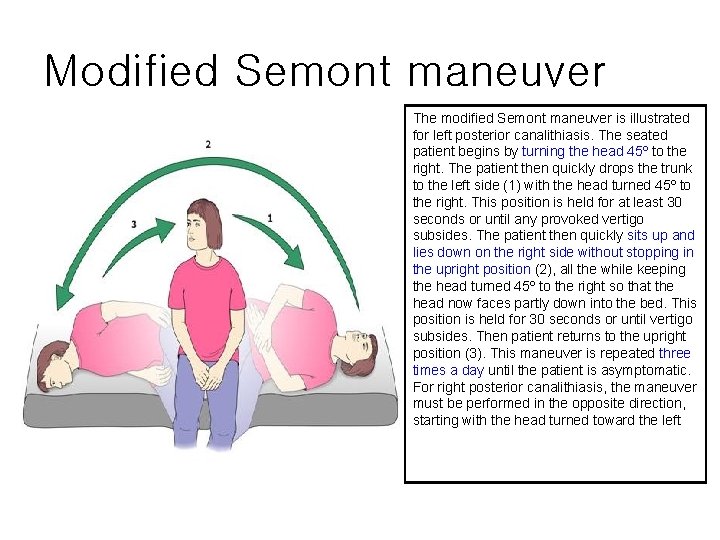
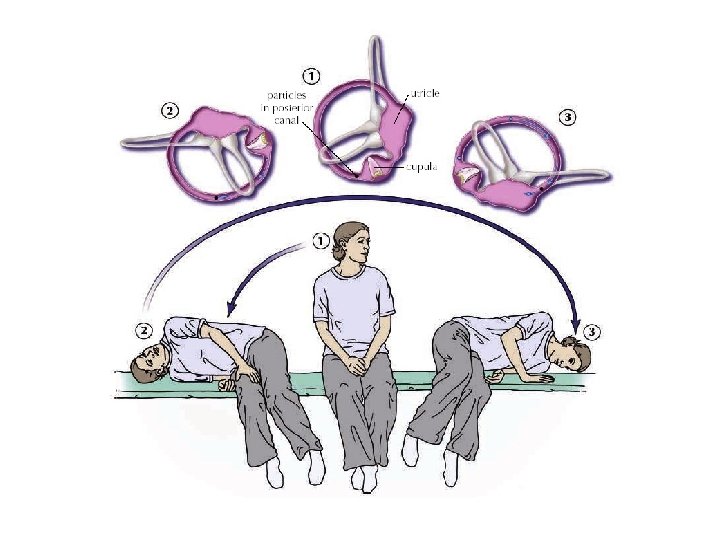
Modified Semont maneuver The modified Semont maneuver is illustrated for left posterior canalithiasis. The seated patient begins by turning the head 45º to the right. The patient then quickly drops the trunk to the left side (1) with the head turned 45º to the right. This position is held for at least 30 seconds or until any provoked vertigo subsides. The patient then quickly sits up and lies down on the right side without stopping in the upright position (2), all the while keeping the head turned 45º to the right so that the head now faces partly down into the bed. This position is held for 30 seconds or until vertigo subsides. Then patient returns to the upright position (3). This maneuver is repeated three times a day until the patient is asymptomatic. For right posterior canalithiasis, the maneuver must be performed in the opposite direction, starting with the head turned toward the left
• Epley maneuver가 sham maneuver와 비교하여 훨씬 효 과적임이 증명됨 • particle repositioning maneuver시행 한달 후의 증상을 placebo group과 비교했을 때 Dix-Hallpike maneuver 시행한 군에서 훨씬 더 많이 Sx free 상태로 됨 (89% versus 27%) • particle repositioning 10일 후의 증상을 봤을 때도 sham maneuver 보다 훨씬 더 증상 호전을 보임(50% versus 19%) • 더 짧게는, Epley maneuver시행 후 24시간 내에 vertigo and nystagmus free상태인 경우가 sham group 보다 훨 씬 많음 (80% versus 10%) • Procedure의 성공 여부는 Epley's procedure의 2 nd position 동안의 nystagmus를 관찰함으로써 예측 가능 함 : reversed nystagmus direction 또는 no nystagmus 이면 procedure가 효과적이지 못할 것임을 시사 efficacious
• 동일한 원칙에 기반해, 집에서 시행할 수 있는, 자가치료 방법이 개발됨 : Brandt-Daroff exercises, modified Epley's maneuver, modified Semont maneuver • 54명 환자 연구 : modified Epley maneuver 사용시 28 명중 18명(64%)이 vertigo 사라짐, Brandt-Daroff exercises 사용시 26명중 6명(23%)에서 vertigo 사라짐 • 70명 환자 연구 : modified Epley maneuver로 selftreatment를 했을 때 modified Semont maneuver로 self -treatment를 했을 때보다 vertigo를 없애는데 더 효과적 (response rate 95% versus 58%), 후자가 시행하기 더 어렵기 때문? • 80명 환자의 randomized trial : Epley procedure alone vs Epley procedure + modified Epley maneuver selftreatment 비교시 combined therapy를 한 경우 증상 호 전 더 큼(88 versus 77 percent)
BPPV - Recurrence and intractability • BPPV 재발은 흔함 • 50명의 BPPV 환자를 52개월간 F/U했을 때 1년내 재발이 18%, 3년 내 재발이 30% • horizontal canal BPPV가 posterior canal BPPV보다 재 발률 더 큼 • Trauma에 뒤따른 BPPV는 idiopathic BPPV보다 더 refractory • 발작 빈도가 매우 잦은 경우를 제외하고는 BPPV의 짧은 vertigo episode에 drug은 유용하지 않음 • Maneuver에 따른 discomfort나 nausea를 심하게 호소 하는 환자의 경우 liberatory maneuvers 시행 전 premedication으로 vestibular suppressants를 사용할 수 있음
• intractable BPPV는 매우 적음 • posterior canal을 bony plug을 사용해 surgical occlusion하는 방법은 option : 성공률은 약 90% – 수술 이후 posterior canal은 영구적으로 nonfunctional ; transient postoperative hearing loss 및 dizziness 흔함 – Persistent hearing loss가 5% 미만에서 발생; 반대쪽 에 청력장애가 있으면 contraindication • argon laser로 posterior canal을 ossification하 는 방법
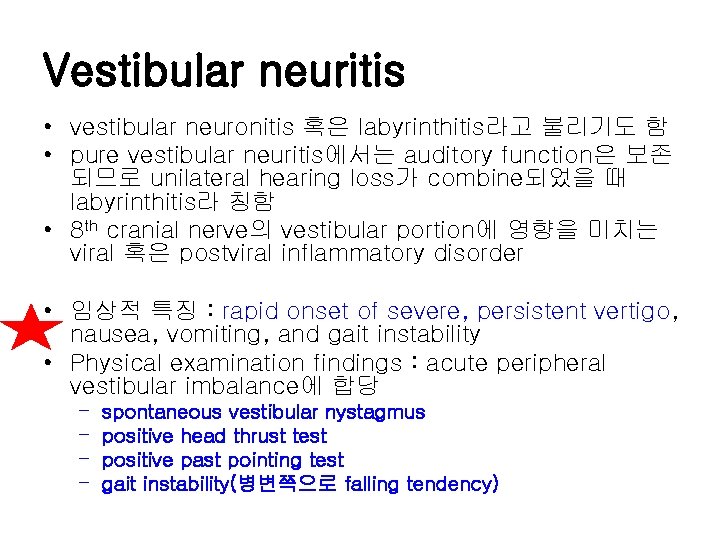
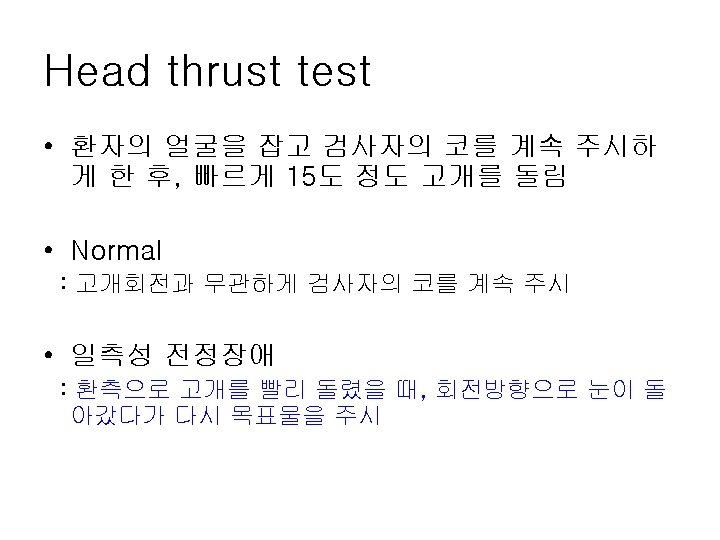
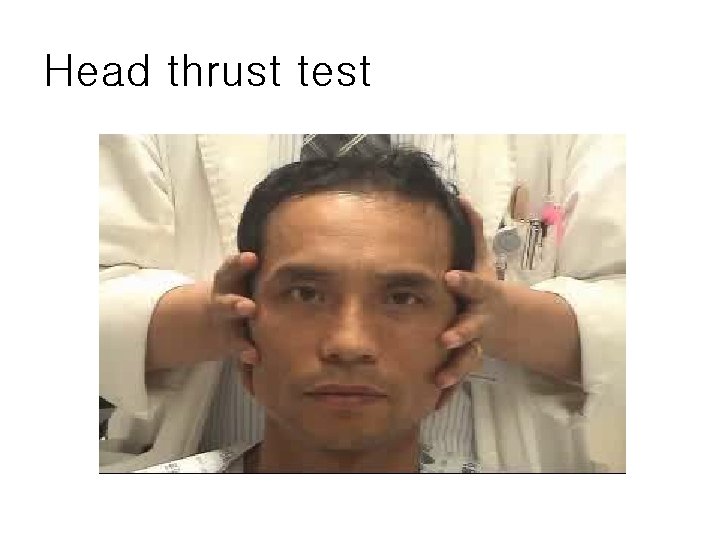
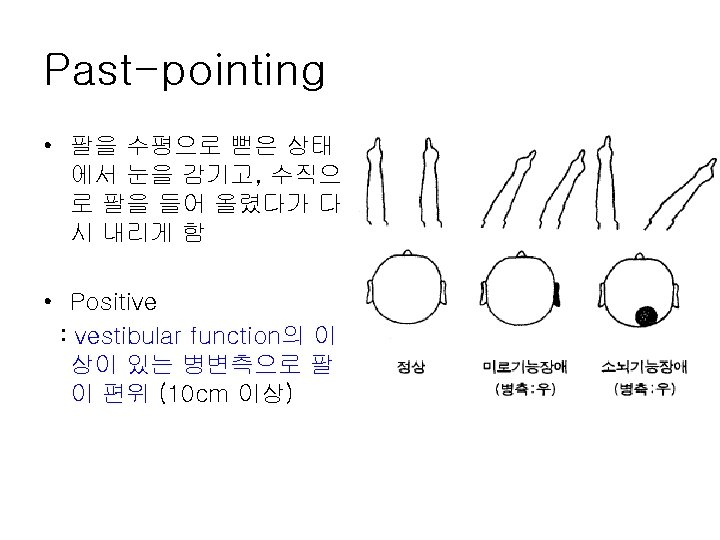
Vestibular neuritis • vestibular neuronitis 혹은 labyrinthitis라고 불리기도 함 • pure vestibular neuritis에서는 auditory function은 보존 되므로 unilateral hearing loss가 combine되었을 때 labyrinthitis라 칭함 • 8 th cranial nerve의 vestibular portion에 영향을 미치는 viral 혹은 postviral inflammatory disorder • 임상적 특징 : rapid onset of severe, persistent vertigo, nausea, vomiting, and gait instability • Physical examination findings : acute peripheral vestibular imbalance에 합당 – – spontaneous vestibular nystagmus positive head thrust test positive past pointing test gait instability(병변쪽으로 falling tendency)
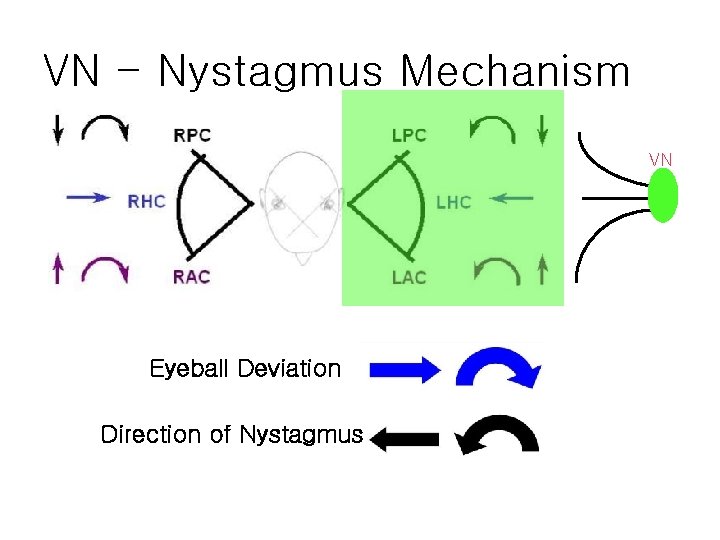
VN - Nystagmus Mechanism VN Eyeball Deviation Direction of Nystagmus
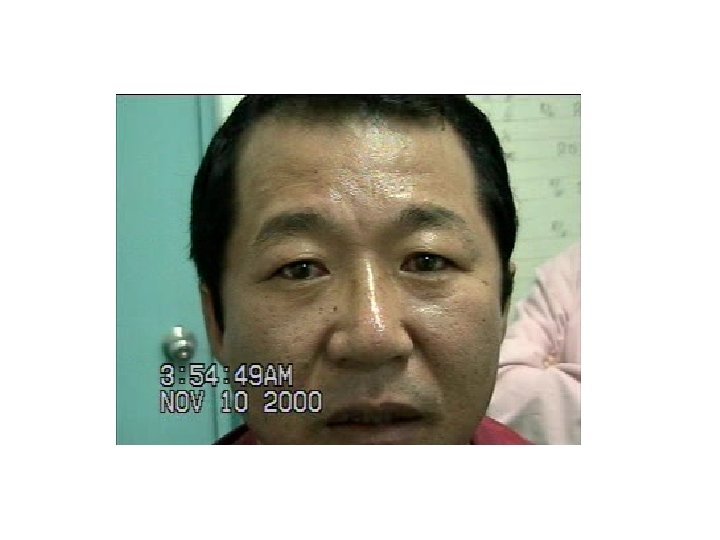
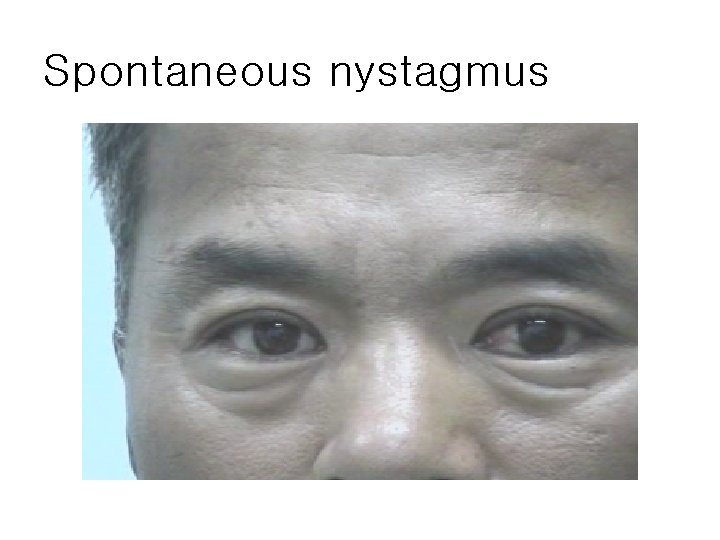
Spontaneous nystagmus
Head thrust test
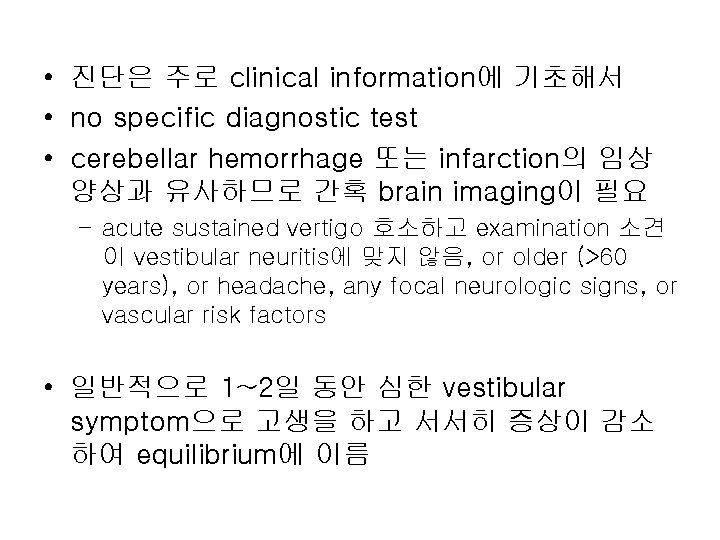
• 진단은 주로 clinical information에 기초해서 • no specific diagnostic test • cerebellar hemorrhage 또는 infarction의 임상 양상과 유사하므로 간혹 brain imaging이 필요 – acute sustained vertigo 호소하고 examination 소견 이 vestibular neuritis에 맞지 않음, or older (>60 years), or headache, any focal neurologic signs, or vascular risk factors • 일반적으로 1~2일 동안 심한 vestibular symptom으로 고생을 하고 서서히 증상이 감소 하여 equilibrium에 이름
Vestibular neuritis - Treatment • vestibular neuritis의 임상적 특징에 합당한 경우 steroid contraindication이 아니면 corticosteroid를 tapering하 면서 사용할 것을 권함(Grade 2 B). • vestibular suppressants 와 antiemetics는 증상 완화 목 적으로 첫 24~48시간 사용할 것을 권함(Grade 2 C). • 환자 증상이 tolerable하다면 48시간 이내에 acute symptomatic treatment는 중지할 것을 권함(Grade 2 C). ; 여러 연구에서 상기 약들이 central compensation과 long-term recovery를 방해한다고 보고 • acute symptom이 사라지면 vestibular rehabilitation program을 빨리 적용할 것을 권함. long-term recovery, 특히 balance 회복을 촉진함. (Grade 2 C).
Meniere's disease • endolymphatic hydrops • excess endolymphatic fluid pressure로 인해 episodic inner ear dysfunction을 일으키는 peripheral vestibular disorder • 수분에서 수시간 지속되는 spontaneous episodic vertigo 호소. 보통 unilateral tinnitus, hearing loss, ear fullness 동반 • 종종 심한 vertigo는 nausea와 vomiting 및 disabling imbalance 동반 • Disequilibrium이 수일간 지속될 수 있음 • 수분에서 수시간 지속되는 Vertigo – membranous labyrinth의 rupture -> perilymph 와 endolymph 의 mixing -> vestibular hair cell dysfunction – perilymph의 potassium level이 정상화 되면 vertigo 소실
Meniere’s disease - Treatment • 치료는 endolymphatic pressure를 낮추는 것 • Low-salt diet(1~2 g salt per/day 이하)와 diuretics(hydrochlorothiazide+triamterene)가 종종 vertigo감소에 효과적이지만 hearing loss 나 tinnitus에는 효과가 적음 • 매우 드물게 severe, refractory pt. 에서 – surgical intervention(endolymphatic sac surgery, labyrinthectomy, vestibular nerve section) – intratympanic injection of gentamicin
CENTRAL ETIOLOGIES • Migrainous vertigo • Brainstem ischemia – TIA – Wallenberg's syndrome – Other stroke syndromes • • Cerebellar infarction and hemorrhage Chiari malformation Multiple sclerosis Episodic ataxia type 2
Migrainous vertigo • recurrent vertigo 원인으로 점점 더 부각 • Mechanism은 아직 잘 모르고 진단도 controversial • central and peripheral vestibular manifestation 모두 보일 수 있음 • Vertigo의 severity도 다양 • Duration도 매우 다양해서 BPPV처럼 수초간 잠 깐 지속되는 증상을 호소하기도 함 • 전형적으로는 episode가 수분에서 수시간 지속
• no confirmatory test • 진단은 Hx에 기반(배제 진단) • 종종 vertigo attack이 migraine headache 또는 기타 migrainous phenomenon (visual aura, photophobia, phonophobia)과 동반 • 보통은 저절로 발생하지만, migraine headache과 유사하게 certain food, certain sensory stimuli, certain situation 에 의해서 유발될 수 있음
• Retrospective review : migraine Tx. 가 migraineassociated vertigo 환자의 90%에서 효과가 있음 – dietary changes (i. e. , reduction or elimination of aspartame, chocolate, caffeine, or alcohol) – lifestyle changes (i. e. , exercise, stress reduction, improvements in sleep patterns) – vestibular rehabilitation exercises – medications (e. g. , benzodiazepines, tricyclic antidepressants, beta blockers, selective serotonin reuptake inhibitors [SSRIs], calcium channel blockers, antiemetics) • retrospective chart review : migraine-associated dizziness (vertigo or dysequilibrium)의 stepwise treatment로 81명중 58명(72%)에서 증상호전 a. b. c. d. initiating dietary changes then adding nortriptyline if needed, then adding atenolol or a calcium channel blocker if needed finally, consultation with a neurologist if needed
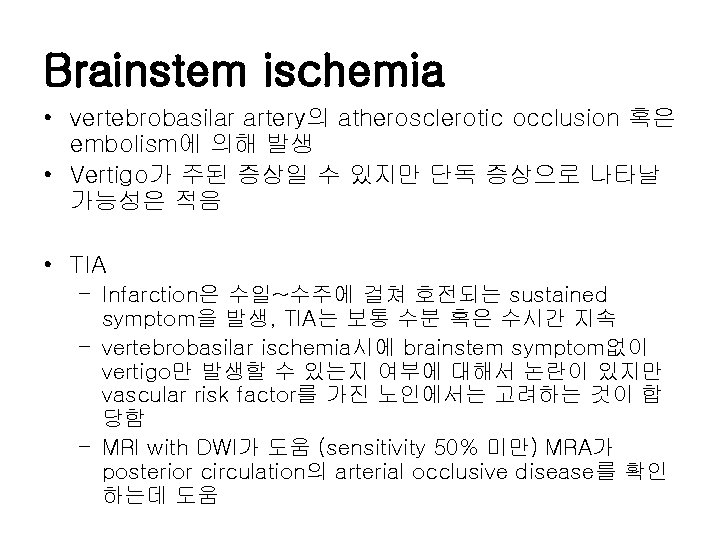
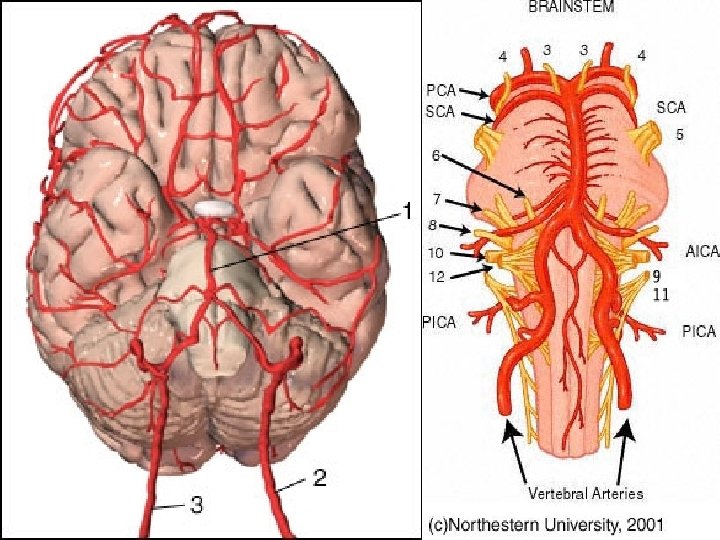
Brainstem ischemia • vertebrobasilar artery의 atherosclerotic occlusion 혹은 embolism에 의해 발생 • Vertigo가 주된 증상일 수 있지만 단독 증상으로 나타날 가능성은 적음 • TIA – Infarction은 수일~수주에 걸쳐 호전되는 sustained symptom을 발생, TIA는 보통 수분 혹은 수시간 지속 – vertebrobasilar ischemia시에 brainstem symptom없이 vertigo만 발생할 수 있는지 여부에 대해서 논란이 있지만 vascular risk factor를 가진 노인에서는 고려하는 것이 합 당함 – MRI with DWI가 도움 (sensitivity 50% 미만) MRA가 posterior circulation의 arterial occlusive disease를 확인 하는데 도움
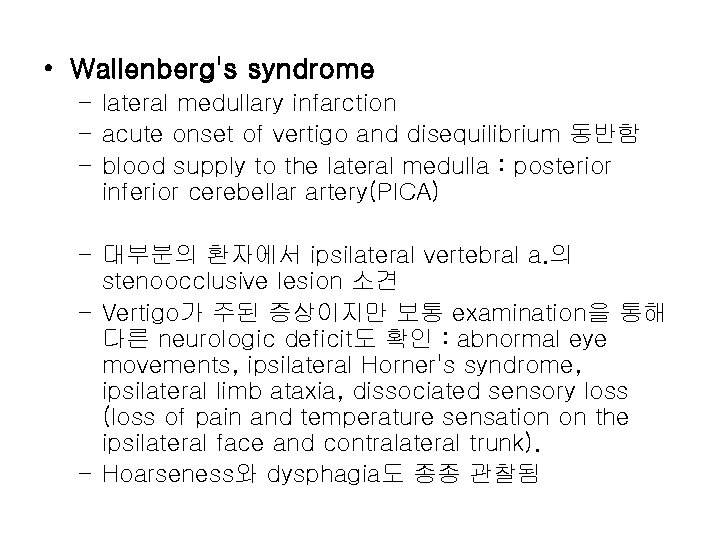
• Wallenberg's syndrome – lateral medullary infarction – acute onset of vertigo and disequilibrium 동반함 – blood supply to the lateral medulla : posterior inferior cerebellar artery(PICA) – 대부분의 환자에서 ipsilateral vertebral a. 의 stenoocclusive lesion 소견 – Vertigo가 주된 증상이지만 보통 examination을 통해 다른 neurologic deficit도 확인 : abnormal eye movements, ipsilateral Horner's syndrome, ipsilateral limb ataxia, dissociated sensory loss (loss of pain and temperature sensation on the ipsilateral face and contralateral trunk). – Hoarseness와 dysphagia도 종종 관찰됨
• Other stroke syndromes – Labyrinthine infarction : • internal auditory artery (branch of the anterior inferior cerebellar artery : AICA)의 occlusion에 의해 발생 • abrupt vertigo, hearing loss, 간혹 tinnitus – AICA의 more proximal portion occlusion : • lateral pons와 cerebellar peduncle의 infarction • Gait & limb ataxia, facial paralysis, vertigo, hearing loss – isolated vestibular structures에만 영향을 미치는 more restrictive brainstem infarction은 vestibular neuritis와 유사한 임상 양상을 보일 수 있음
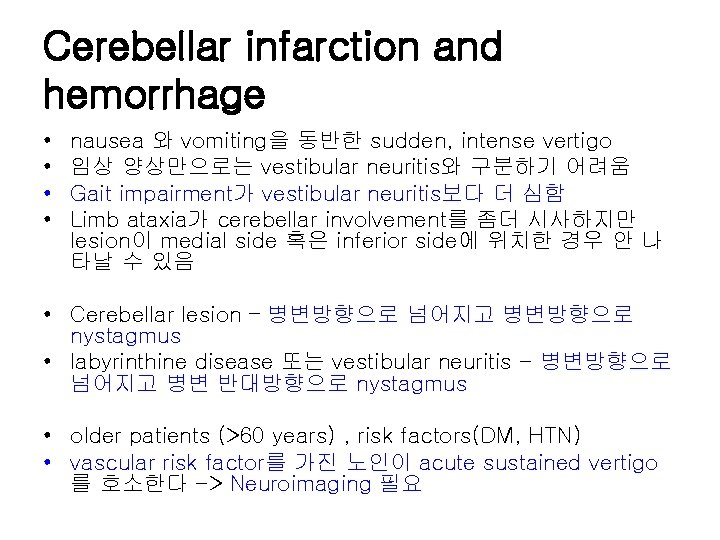
Cerebellar infarction and hemorrhage • • nausea 와 vomiting을 동반한 sudden, intense vertigo 임상 양상만으로는 vestibular neuritis와 구분하기 어려움 Gait impairment가 vestibular neuritis보다 더 심함 Limb ataxia가 cerebellar involvement를 좀더 시사하지만 lesion이 medial side 혹은 inferior side에 위치한 경우 안 나 타날 수 있음 • Cerebellar lesion – 병변방향으로 넘어지고 병변방향으로 nystagmus • labyrinthine disease 또는 vestibular neuritis - 병변방향으로 넘어지고 병변 반대방향으로 nystagmus • older patients (>60 years) , risk factors(DM, HTN) • vascular risk factor를 가진 노인이 acute sustained vertigo 를 호소한다 -> Neuroimaging 필요
Peripheral characteristics of nystagmus: horizontal or horizontal-torsional; suppresses with visual fixation, does not change direction with gaze. Central characteristics of nystagmus: may be horizontal, torsional, or vertical, does not suppress with visual fixation, may change direction with gaze
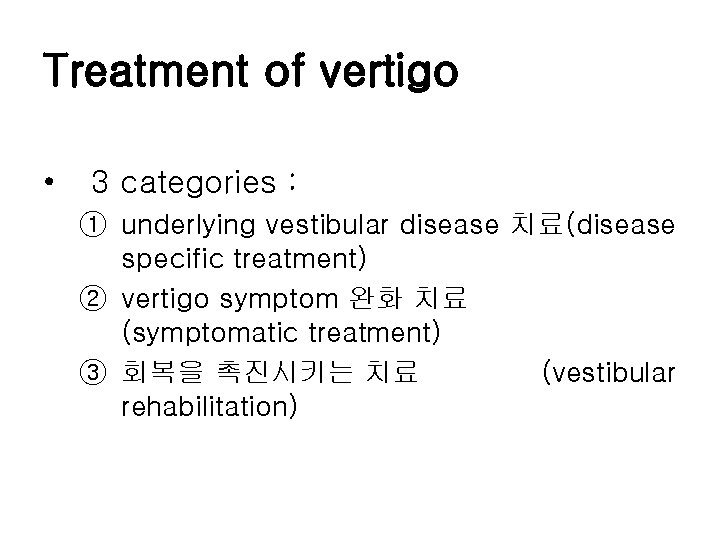
Treatment of vertigo • 3 categories : ① underlying vestibular disease 치료(disease specific treatment) ② vertigo symptom 완화 치료 (symptomatic treatment) ③ 회복을 촉진시키는 치료 (vestibular rehabilitation)
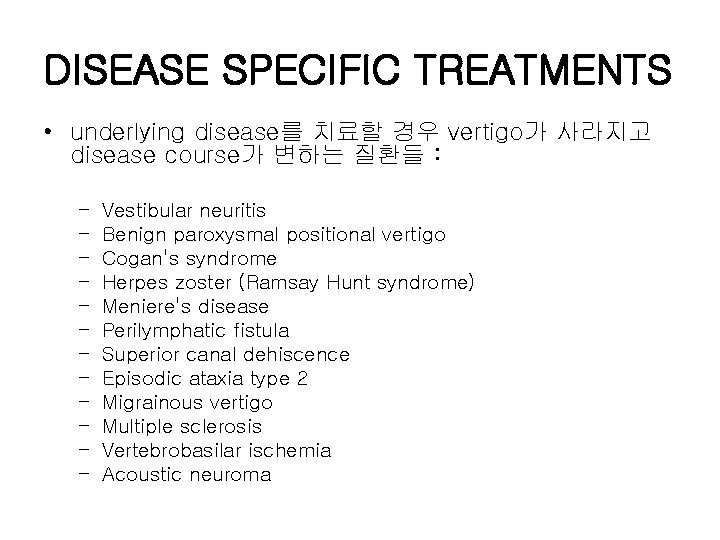
DISEASE SPECIFIC TREATMENTS • underlying disease를 치료할 경우 vertigo가 사라지고 disease course가 변하는 질환들 : – – – Vestibular neuritis Benign paroxysmal positional vertigo Cogan's syndrome Herpes zoster (Ramsay Hunt syndrome) Meniere's disease Perilymphatic fistula Superior canal dehiscence Episodic ataxia type 2 Migrainous vertigo Multiple sclerosis Vertebrobasilar ischemia Acoustic neuroma
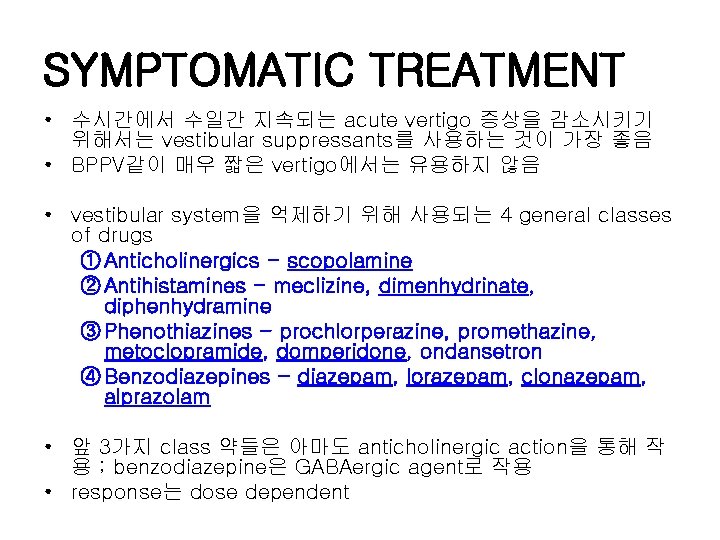
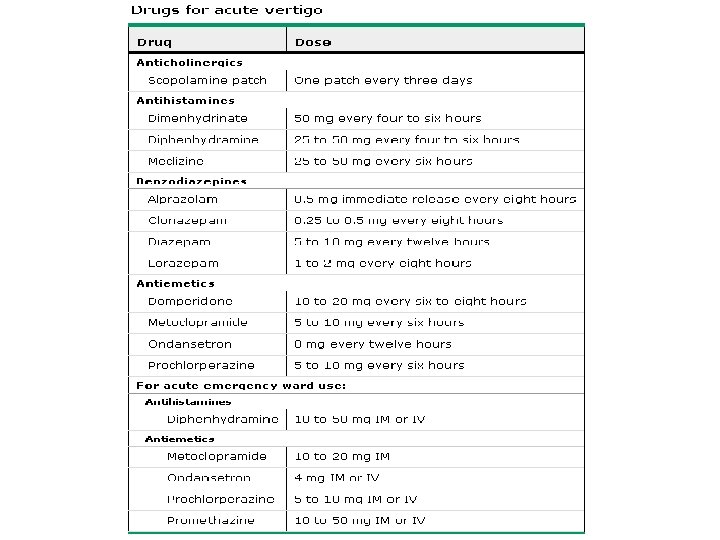
SYMPTOMATIC TREATMENT • 수시간에서 수일간 지속되는 acute vertigo 증상을 감소시키기 위해서는 vestibular suppressants를 사용하는 것이 가장 좋음 • BPPV같이 매우 짧은 vertigo에서는 유용하지 않음 • vestibular system을 억제하기 위해 사용되는 4 general classes of drugs ① Anticholinergics - scopolamine ② Antihistamines - meclizine, dimenhydrinate, diphenhydramine ③ Phenothiazines - prochlorperazine, promethazine, metoclopramide, domperidone, ondansetron ④ Benzodiazepines - diazepam, lorazepam, clonazepam, alprazolam • 앞 3가지 class 약들은 아마도 anticholinergic action을 통해 작 용 ; benzodiazepine은 GABAergic agent로 작용 • response는 dose dependent
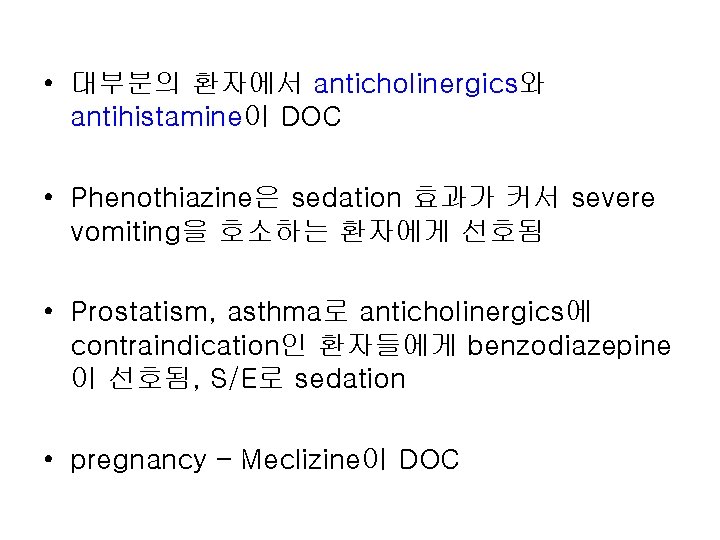
• 대부분의 환자에서 anticholinergics와 antihistamine이 DOC • Phenothiazine은 sedation 효과가 커서 severe vomiting을 호소하는 환자에게 선호됨 • Prostatism, asthma로 anticholinergics에 contraindication인 환자들에게 benzodiazepine 이 선호됨, S/E로 sedation • pregnancy – Meclizine이 DOC
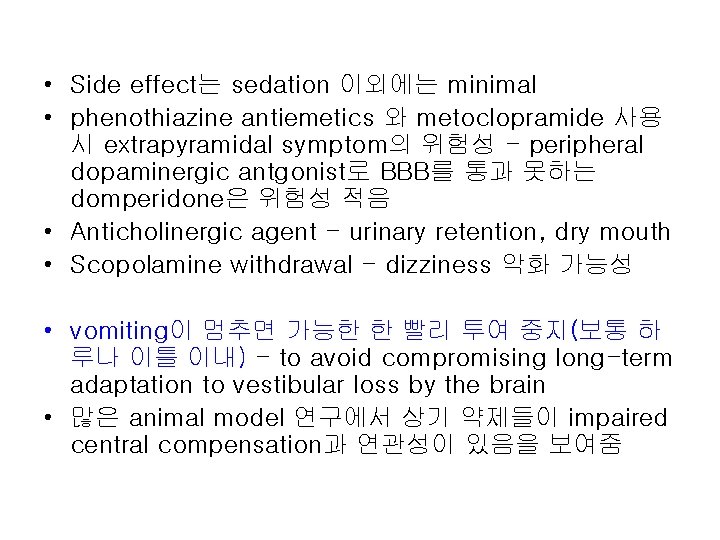
• Side effect는 sedation 이외에는 minimal • phenothiazine antiemetics 와 metoclopramide 사용 시 extrapyramidal symptom의 위험성 - peripheral dopaminergic antgonist로 BBB를 통과 못하는 domperidone은 위험성 적음 • Anticholinergic agent - urinary retention, dry mouth • Scopolamine withdrawal - dizziness 악화 가능성 • vomiting이 멈추면 가능한 한 빨리 투여 중지(보통 하 루나 이틀 이내) - to avoid compromising long-term adaptation to vestibular loss by the brain • 많은 animal model 연구에서 상기 약제들이 impaired central compensation과 연관성이 있음을 보여줌
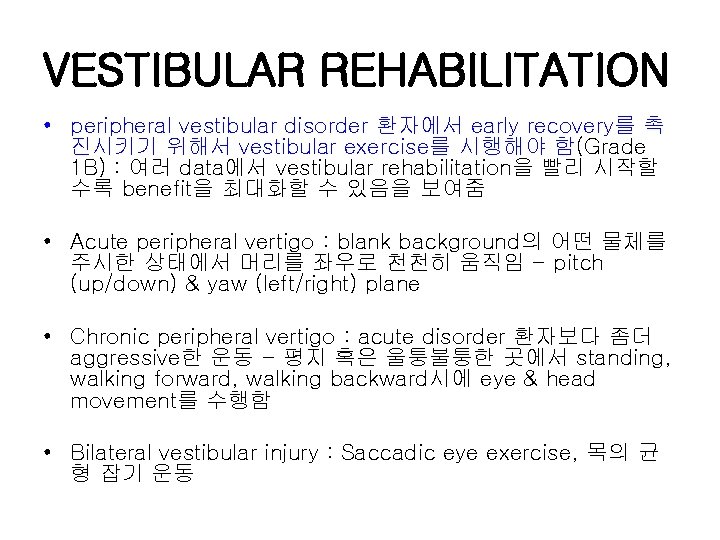
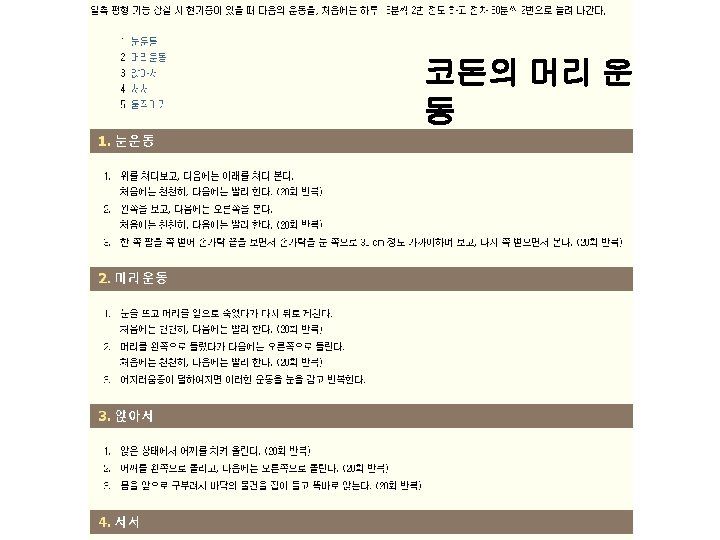
VESTIBULAR REHABILITATION • peripheral vestibular disorder 환자에서 early recovery를 촉 진시키기 위해서 vestibular exercise를 시행해야 함(Grade 1 B) : 여러 data에서 vestibular rehabilitation을 빨리 시작할 수록 benefit을 최대화할 수 있음을 보여줌 • Acute peripheral vertigo : blank background의 어떤 물체를 주시한 상태에서 머리를 좌우로 천천히 움직임 - pitch (up/down) & yaw (left/right) plane • Chronic peripheral vertigo : acute disorder 환자보다 좀더 aggressive한 운동 - 평지 혹은 울퉁불퉁한 곳에서 standing, walking forward, walking backward시에 eye & head movement를 수행함 • Bilateral vestibular injury : Saccadic eye exercise, 목의 균 형 잡기 운동
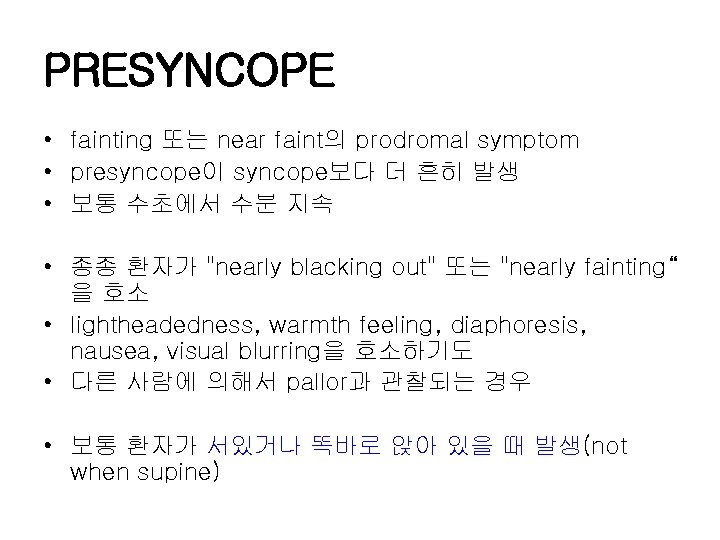
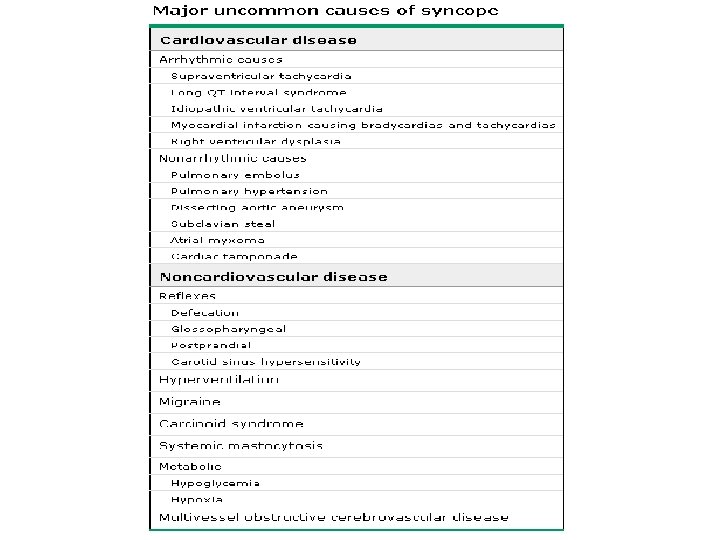
PRESYNCOPE • fainting 또는 near faint의 prodromal symptom • presyncope이 syncope보다 더 흔히 발생 • 보통 수초에서 수분 지속 • 종종 환자가 "nearly blacking out" 또는 "nearly fainting“ 을 호소 • lightheadedness, warmth feeling, diaphoresis, nausea, visual blurring을 호소하기도 • 다른 사람에 의해서 pallor과 관찰되는 경우 • 보통 환자가 서있거나 똑바로 앉아 있을 때 발생(not when supine)
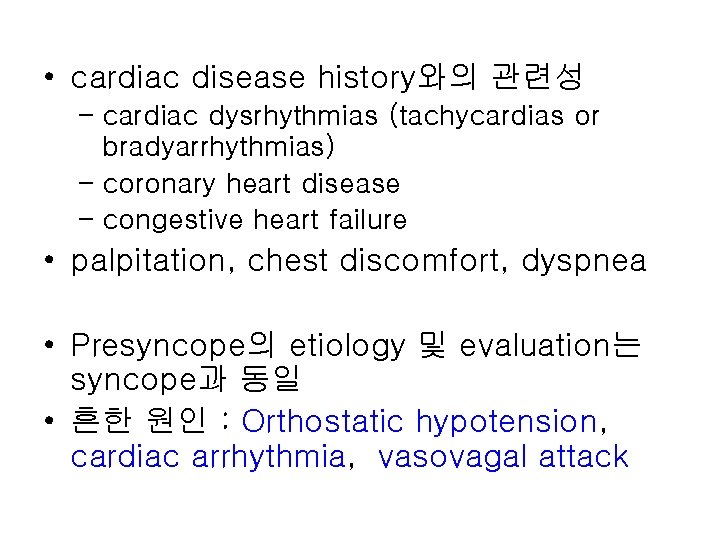
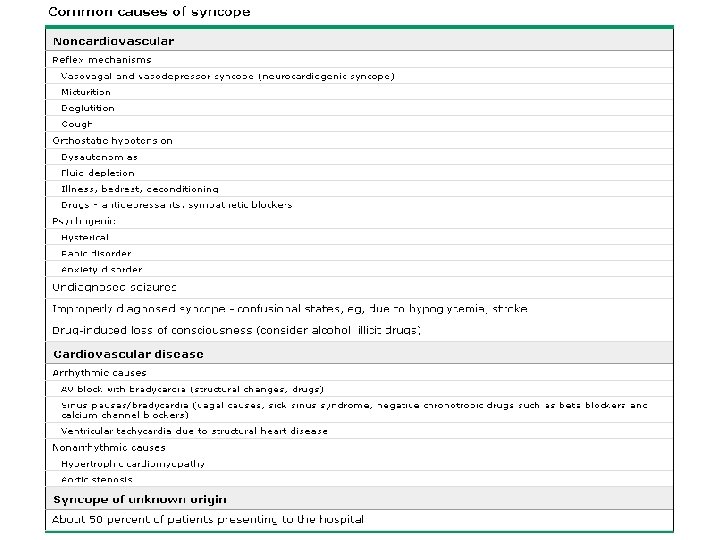
• cardiac disease history와의 관련성 – cardiac dysrhythmias (tachycardias or bradyarrhythmias) – coronary heart disease – congestive heart failure • palpitation, chest discomfort, dyspnea • Presyncope의 etiology 및 evaluation는 syncope과 동일 • 흔한 원인 : Orthostatic hypotension, cardiac arrhythmia, vasovagal attack
DISEQUILIBRIUM • imbalance sense (주로 걸을 때) • 특히 노인에서 Chronic dizziness나 disequilibrium은 physical and social function 의 장애를 일으킬 수 있음 • 원인 : peripheral neuropathy, musculoskeletal disorder interfering with gait, vestibular disorder, cervical spondylosis • Gait 관찰 및 neurologic examination
NONSPECIFIC DIZZINESS • 환자가 증상을 기술(describe)하는데 어려움이 있음 – simply insist, "I am dizzy. " – "giddy" 또는 "lightheaded" 등의 표현을 제시 • Psychiatric disorder - primary cause • ¼이 major depression, ¼이 generalized anxiety or panic disorder, 나머지가 somatization disorder, alcohol dependence, +/- personality disorder • hyperventilation과 관련 • 서서히 발생 -> waxes and wanes over a period of 20 minutes or longer -> 서서히 호전
• 경미한 presyncope이나 vertigo도 nonspecific dizziness로 경험될 수 있음 • 간혹 head trauma나 whiplash injury 이후 발생 • 간혹 Hypoglycemic episode에서 chief symptom으로 발생 • Medication Hx : 특히 antidepressants, anticholinergics – 다양한 약제들의 S/E 또는 withdrawal symptom
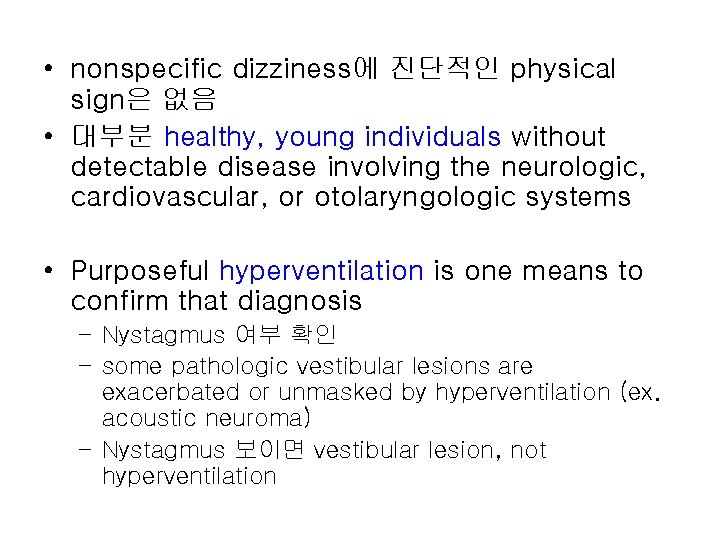
• nonspecific dizziness에 진단적인 physical sign은 없음 • 대부분 healthy, young individuals without detectable disease involving the neurologic, cardiovascular, or otolaryngologic systems • Purposeful hyperventilation is one means to confirm that diagnosis – Nystagmus 여부 확인 – some pathologic vestibular lesions are exacerbated or unmasked by hyperventilation (ex. acoustic neuroma) – Nystagmus 보이면 vestibular lesion, not hyperventilation
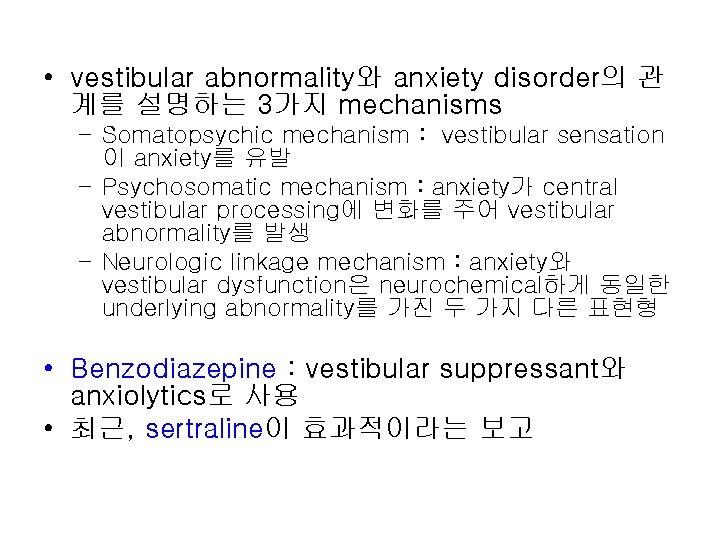
• vestibular abnormality와 anxiety disorder의 관 계를 설명하는 3가지 mechanisms – Somatopsychic mechanism : vestibular sensation 이 anxiety를 유발 – Psychosomatic mechanism : anxiety가 central vestibular processing에 변화를 주어 vestibular abnormality를 발생 – Neurologic linkage mechanism : anxiety와 vestibular dysfunction은 neurochemical하게 동일한 underlying abnormality를 가진 두 가지 다른 표현형 • Benzodiazepine : vestibular suppressant와 anxiolytics로 사용 • 최근, sertraline이 효과적이라는 보고
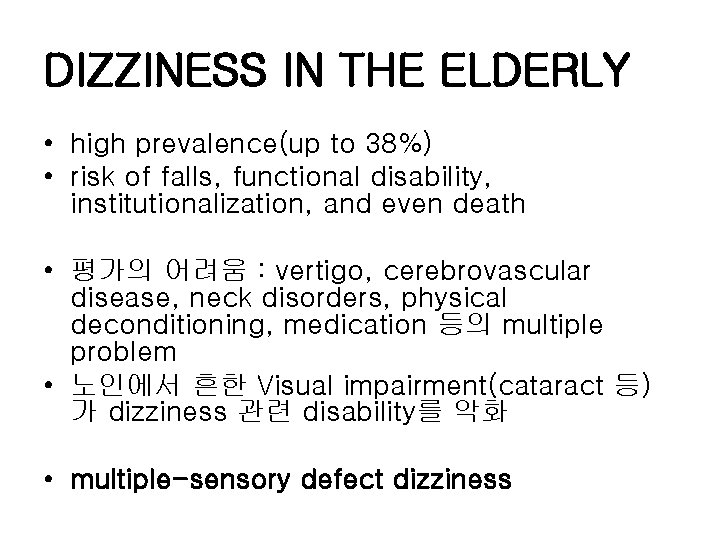
DIZZINESS IN THE ELDERLY • high prevalence(up to 38%) • risk of falls, functional disability, institutionalization, and even death • 평가의 어려움 : vertigo, cerebrovascular disease, neck disorders, physical deconditioning, medication 등의 multiple problem • 노인에서 흔한 Visual impairment(cataract 등) 가 dizziness 관련 disability를 악화 • multiple-sensory defect dizziness
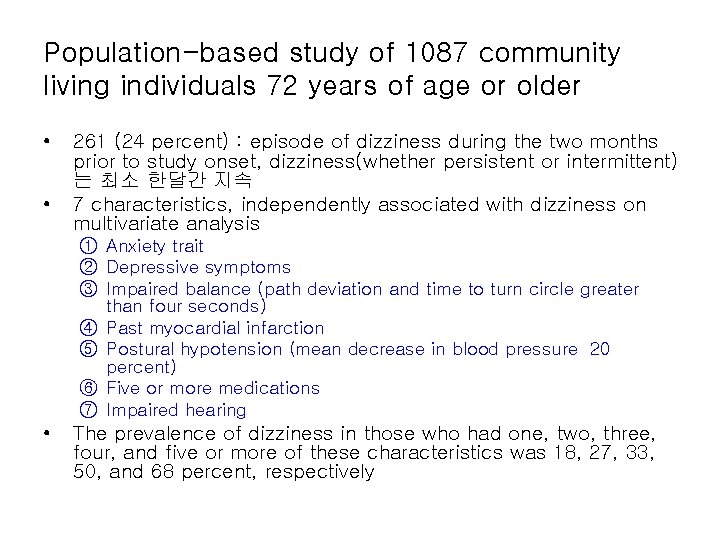
Population-based study of 1087 community living individuals 72 years of age or older • • 261 (24 percent) : episode of dizziness during the two months prior to study onset, dizziness(whether persistent or intermittent) 는 최소 한달간 지속 7 characteristics, independently associated with dizziness on multivariate analysis ① Anxiety trait ② Depressive symptoms ③ Impaired balance (path deviation and time to turn circle greater than four seconds) ④ Past myocardial infarction ⑤ Postural hypotension (mean decrease in blood pressure 20 percent) ⑥ Five or more medications ⑦ Impaired hearing • The prevalence of dizziness in those who had one, two, three, four, and five or more of these characteristics was 18, 27, 33, 50, and 68 percent, respectively
CASE
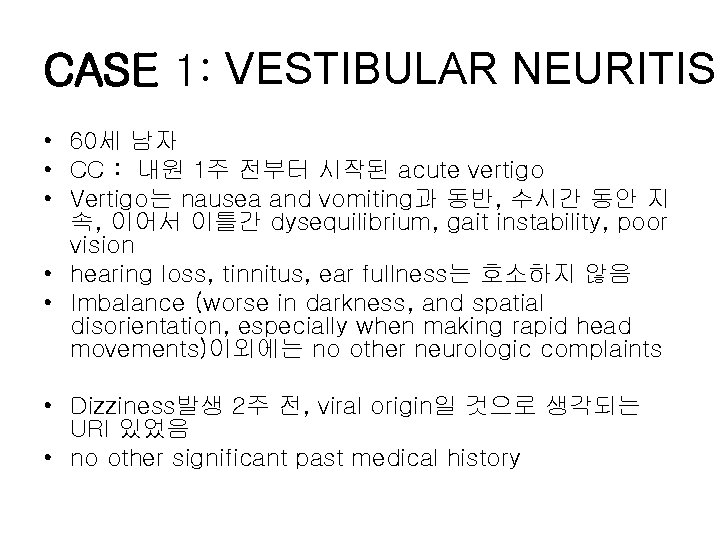
CASE 1: VESTIBULAR NEURITIS • 60세 남자 • CC : 내원 1주 전부터 시작된 acute vertigo • Vertigo는 nausea and vomiting과 동반, 수시간 동안 지 속, 이어서 이틀간 dysequilibrium, gait instability, poor vision • hearing loss, tinnitus, ear fullness는 호소하지 않음 • Imbalance (worse in darkness, and spatial disorientation, especially when making rapid head movements)이외에는 no other neurologic complaints • Dizziness발생 2주 전, viral origin일 것으로 생각되는 URI 있었음 • no other significant past medical history
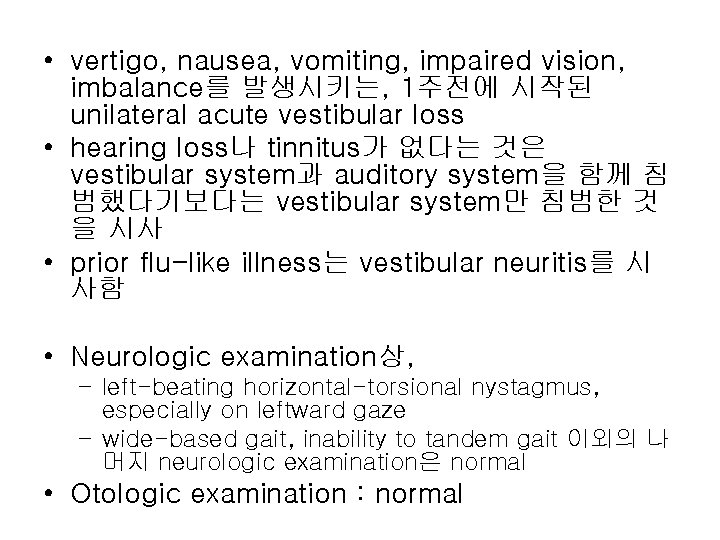
• vertigo, nausea, vomiting, impaired vision, imbalance를 발생시키는, 1주전에 시작된 unilateral acute vestibular loss • hearing loss나 tinnitus가 없다는 것은 vestibular system과 auditory system을 함께 침 범했다기보다는 vestibular system만 침범한 것 을 시사 • prior flu-like illness는 vestibular neuritis를 시 사함 • Neurologic examination상, – left-beating horizontal-torsional nystagmus, especially on leftward gaze – wide-based gait, inability to tandem gait 이외의 나 머지 neurologic examination은 normal • Otologic examination : normal
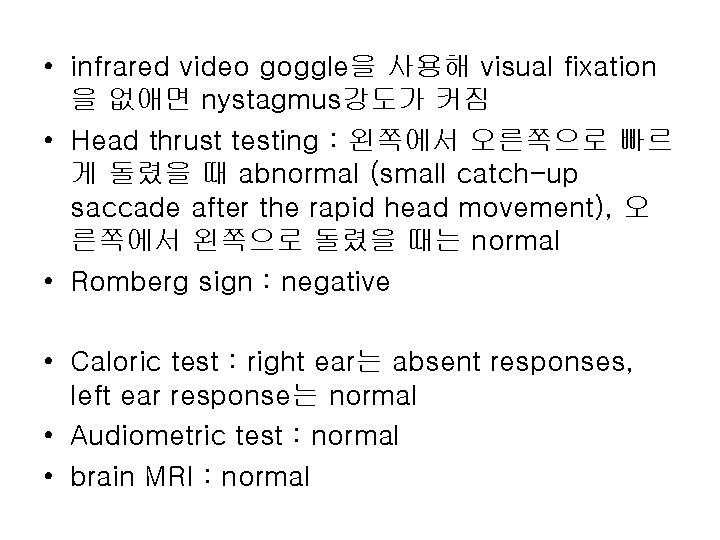
• infrared video goggle을 사용해 visual fixation 을 없애면 nystagmus강도가 커짐 • Head thrust testing : 왼쪽에서 오른쪽으로 빠르 게 돌렸을 때 abnormal (small catch-up saccade after the rapid head movement), 오 른쪽에서 왼쪽으로 돌렸을 때는 normal • Romberg sign : negative • Caloric test : right ear는 absent responses, left ear response는 normal • Audiometric test : normal • brain MRI : normal
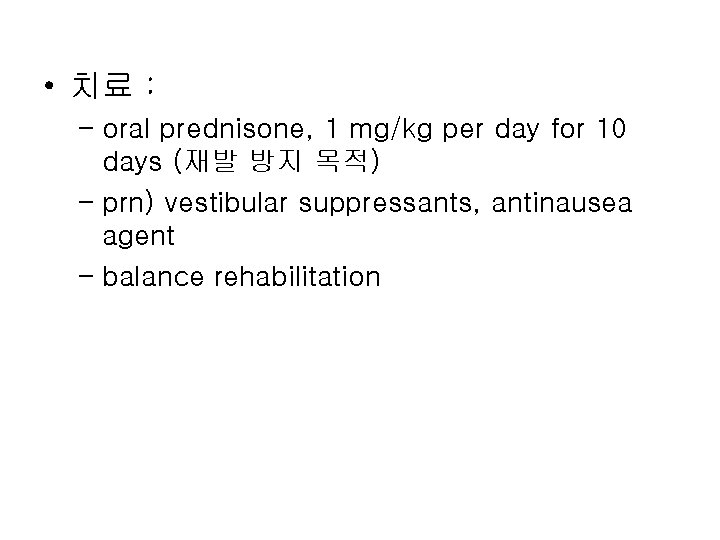
• 치료 : – oral prednisone, 1 mg/kg per day for 10 days (재발 방지 목적) – prn) vestibular suppressants, antinausea agent – balance rehabilitation
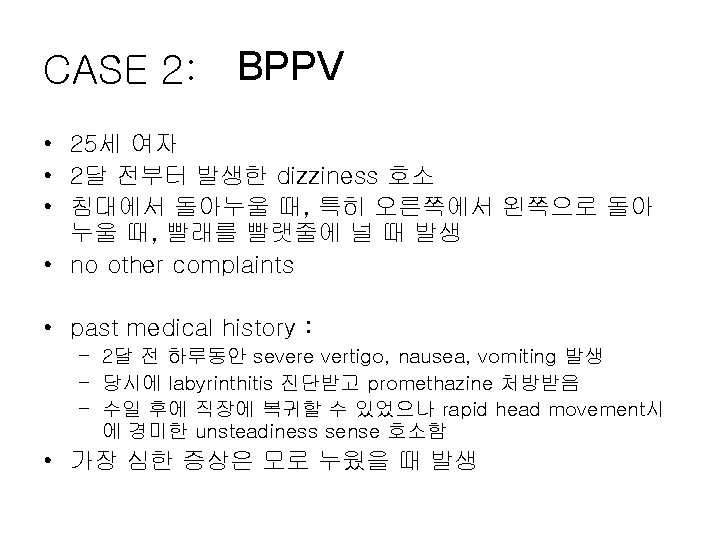
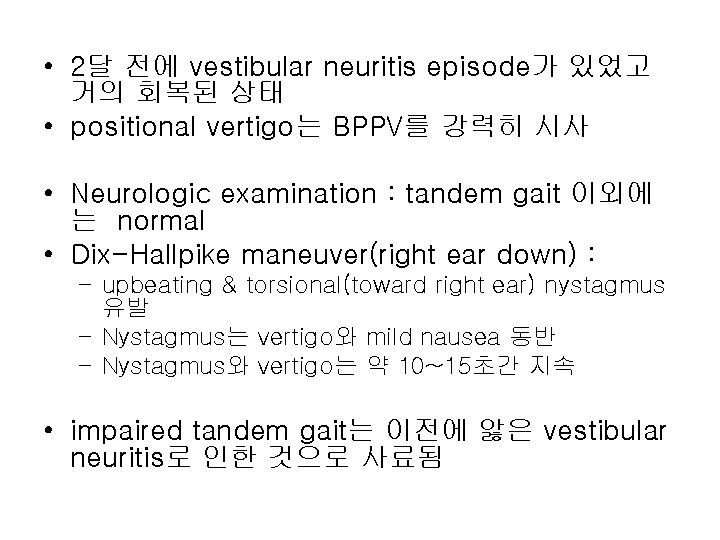
• 2달 전에 vestibular neuritis episode가 있었고 거의 회복된 상태 • positional vertigo는 BPPV를 강력히 시사 • Neurologic examination : tandem gait 이외에 는 normal • Dix-Hallpike maneuver(right ear down) : – upbeating & torsional(toward right ear) nystagmus 유발 – Nystagmus는 vertigo와 mild nausea 동반 – Nystagmus와 vertigo는 약 10~15초간 지속 • impaired tandem gait는 이전에 앓은 vestibular neuritis로 인한 것으로 사료됨
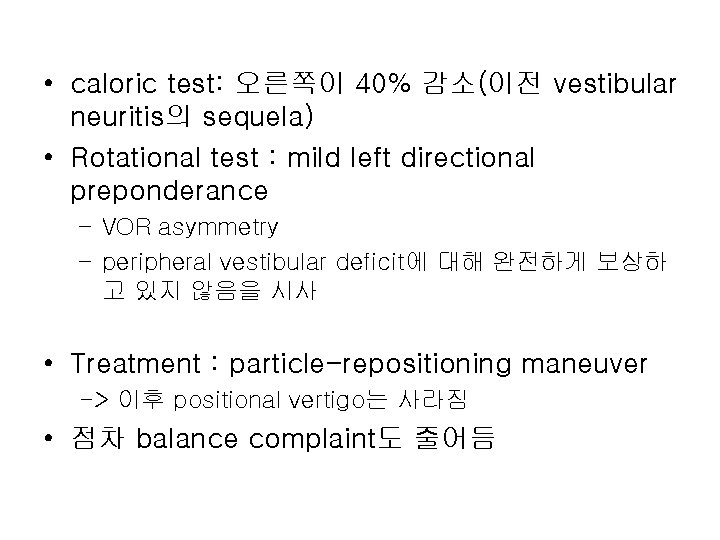
• caloric test: 오른쪽이 40% 감소(이전 vestibular neuritis의 sequela) • Rotational test : mild left directional preponderance – VOR asymmetry – peripheral vestibular deficit에 대해 완전하게 보상하 고 있지 않음을 시사 • Treatment : particle-repositioning maneuver -> 이후 positional vertigo는 사라짐 • 점차 balance complaint도 줄어듬
• combination of hearing loss, tinnitus, vertigo -> unilateral right-sided endolymphatic hydrops (Meniere's disease) • 수분에서 수시간 지속되는 Vertigo – membranous labyrinth의 rupture -> perilymph 와 endolymph의 mixing -> vestibular hair cell dysfunction – perilymph의 potassium level이 정상화 되면 vertigo 소실
• neurologic examination : Weber's test, which lateralized to the left 이외에 normal • Caloric test : right ear의 40% reduction • Audiometric test : right ear의 low-frequency sensorineural hearing loss. left ear는 normal • brain MRI : normal. • low salt diet와 diuretic를 combintaition하는 것 이 endolymphatic hydrops 환자에게 benefitial – first-line treatment로 triameterene + hydrochlorothiazide
MIGRAINE-RELATED CASE 4: DIZZINESS • 36세 여자 • 3달 동안 지속되는 dizziness • constant sense of lightheadedness and imbalance – rapid head movement, certain visual stimuli (checkerboard pattern, movement on computer screen)에 의해 악화. • hearing loss, tinnitus, ear fullness, 기타 다른 neurologic complaints 없음
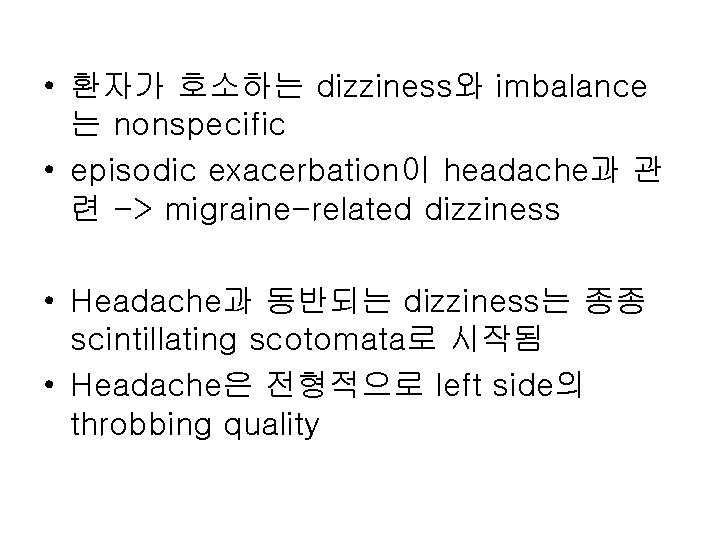
• 환자가 호소하는 dizziness와 imbalance 는 nonspecific • episodic exacerbation이 headache과 관 련 -> migraine-related dizziness • Headache과 동반되는 dizziness는 종종 scintillating scotomata로 시작됨 • Headache은 전형적으로 left side의 throbbing quality
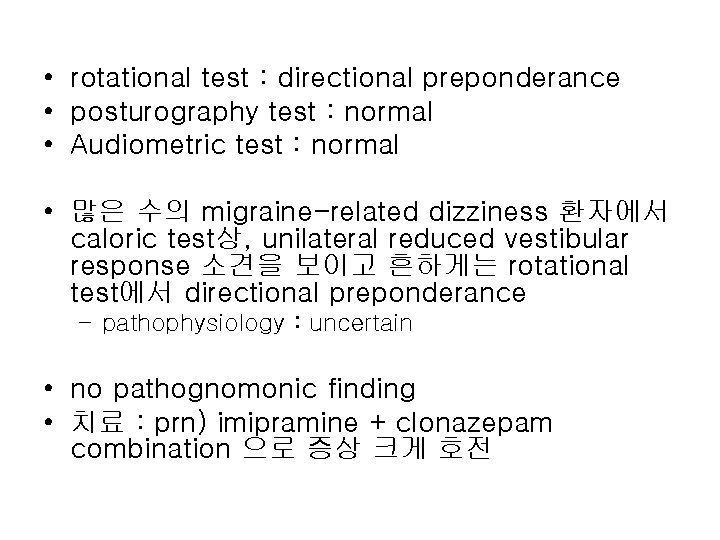
• rotational test : directional preponderance • posturography test : normal • Audiometric test : normal • 많은 수의 migraine-related dizziness 환자에서 caloric test상, unilateral reduced vestibular response 소견을 보이고 흔하게는 rotational test에서 directional preponderance – pathophysiology : uncertain • no pathognomonic finding • 치료 : prn) imipramine + clonazepam combination 으로 증상 크게 호전
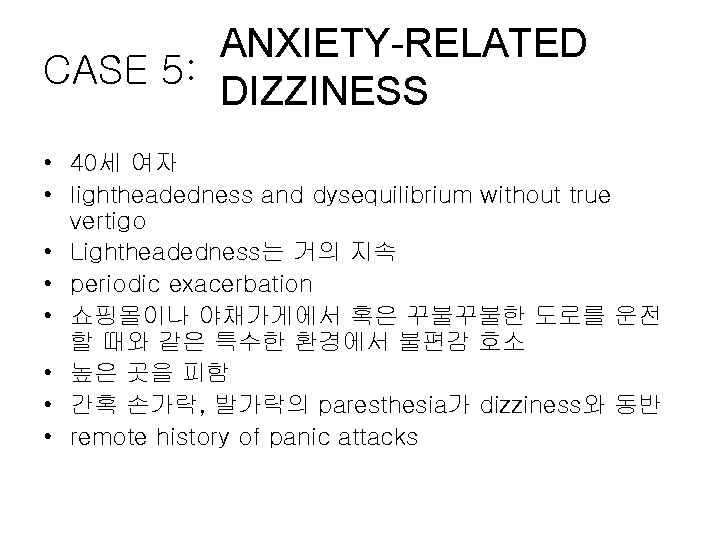
ANXIETY-RELATED CASE 5: DIZZINESS • 40세 여자 • lightheadedness and dysequilibrium without true vertigo • Lightheadedness는 거의 지속 • periodic exacerbation • 쇼핑몰이나 야채가게에서 혹은 꾸불꾸불한 도로를 운전 할 때와 같은 특수한 환경에서 불편감 호소 • 높은 곳을 피함 • 간혹 손가락, 발가락의 paresthesia가 dizziness와 동반 • remote history of panic attacks
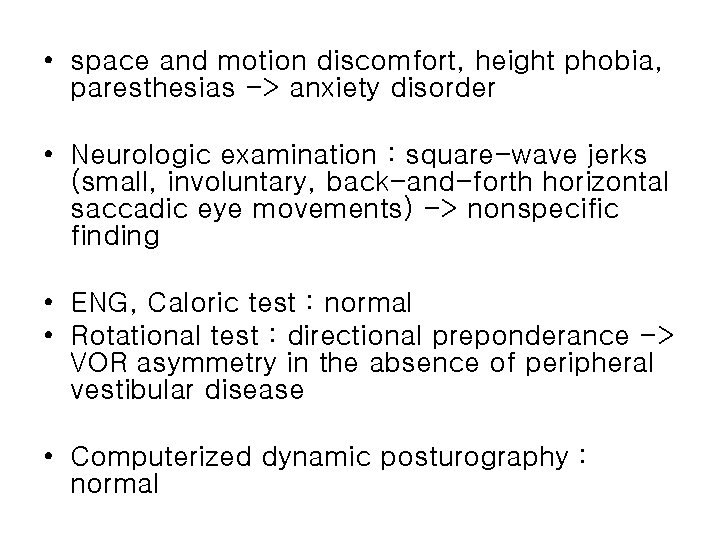
• space and motion discomfort, height phobia, paresthesias -> anxiety disorder • Neurologic examination : square-wave jerks (small, involuntary, back-and-forth horizontal saccadic eye movements) -> nonspecific finding • ENG, Caloric test : normal • Rotational test : directional preponderance -> VOR asymmetry in the absence of peripheral vestibular disease • Computerized dynamic posturography : normal
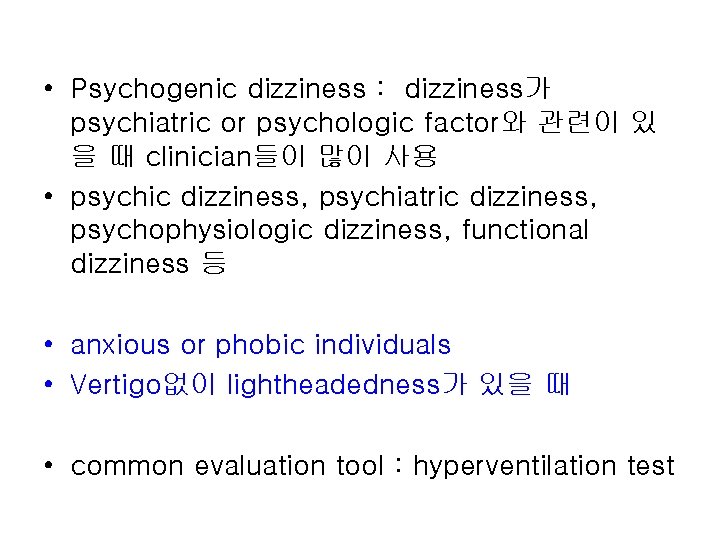
• Psychogenic dizziness : dizziness가 psychiatric or psychologic factor와 관련이 있 을 때 clinician들이 많이 사용 • psychic dizziness, psychiatric dizziness, psychophysiologic dizziness, functional dizziness 등 • anxious or phobic individuals • Vertigo없이 lightheadedness가 있을 때 • common evaluation tool : hyperventilation test
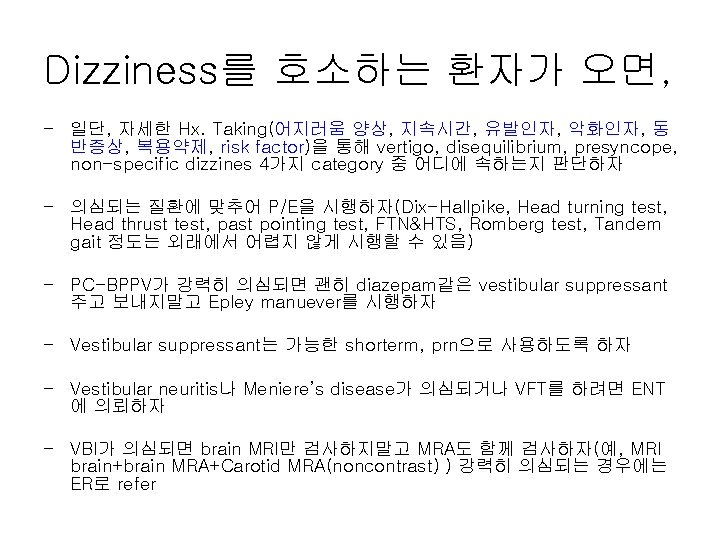
Dizziness를 호소하는 환자가 오면, - 일단, 자세한 Hx. Taking(어지러움 양상, 지속시간, 유발인자, 악화인자, 동 반증상, 복용약제, risk factor)을 통해 vertigo, disequilibrium, presyncope, non-specific dizzines 4가지 category 중 어디에 속하는지 판단하자 - 의심되는 질환에 맞추어 P/E을 시행하자(Dix-Hallpike, Head turning test, Head thrust test, past pointing test, FTN&HTS, Romberg test, Tandem gait 정도는 외래에서 어렵지 않게 시행할 수 있음) - PC-BPPV가 강력히 의심되면 괜히 diazepam같은 vestibular suppressant 주고 보내지말고 Epley manuever를 시행하자 - Vestibular suppressant는 가능한 shorterm, prn으로 사용하도록 하자 - Vestibular neuritis나 Meniere’s disease가 의심되거나 VFT를 하려면 ENT 에 의뢰하자 - VBI가 의심되면 brain MRI만 검사하지말고 MRA도 함께 검사하자(예, MRI brain+brain MRA+Carotid MRA(noncontrast) ) 강력히 의심되는 경우에는 ER로 refer
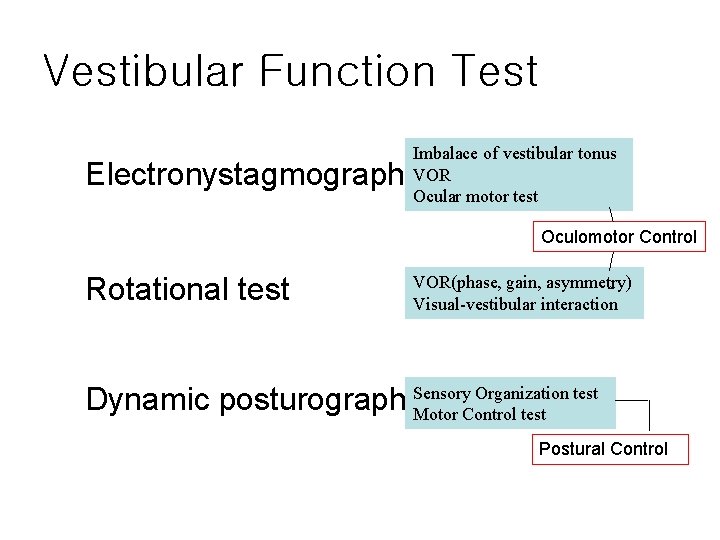
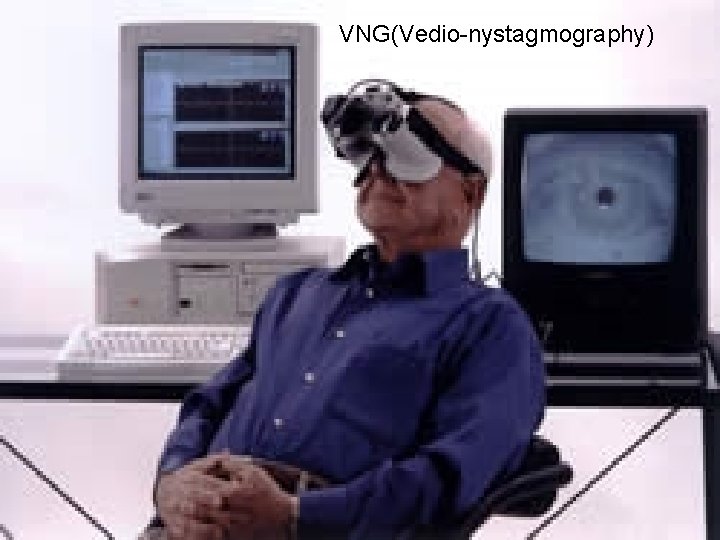
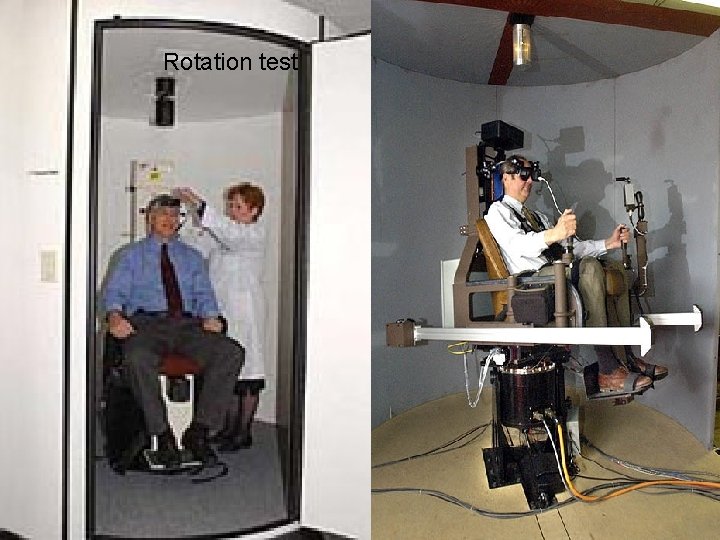
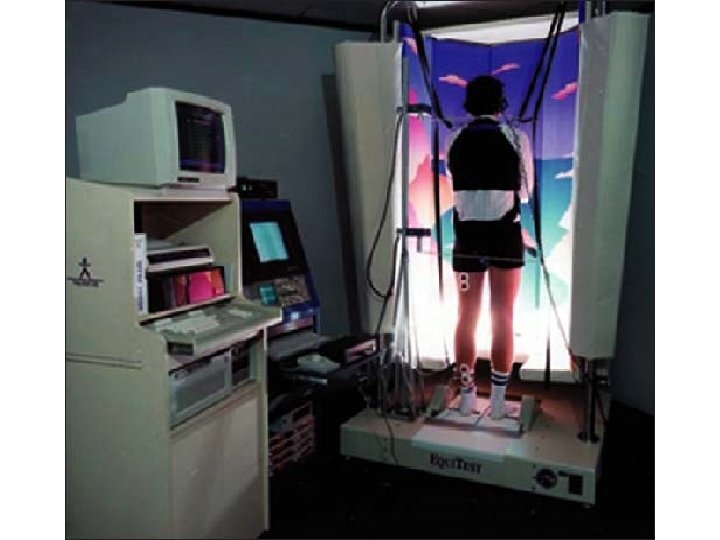
Vestibular Function Test Imbalace of vestibular tonus VOR Ocular motor test Electronystagmography Oculomotor Control Rotational test VOR(phase, gain, asymmetry) Visual-vestibular interaction Organization test Dynamic posturography. Sensory Motor Control test Postural Control
VNG(Vedio-nystagmography)
Rotation test
Reference • Uptodateonline, Approach to the patient with dizziness • Uptodateonline, Pathophysiology, etiology, and differential diagnosis of vertigo • Uptodateonline, Treatment of vertigo • Uptodateonline, Overview of nystagmus • Uptodateonline, Benign paroxysmal positional vertigo and nystagmus • Uptodateonline, Vestibular neuritis • Uptodateonline, Meniere's disease • Marianne Dieterich. Dizziness. The Neurologist 2004; 10; 154 -164 • R. Swartz, et al. Treatment of Vertigo. American Family Physician 2005; 71; 1115 -22, 1129 -30 • Ronald H. Labuguen, Initial Evaluation of Vertigo. American Family Physician 2006; 73: 244 -51, 254
• Timothy C. Hain, et al. Pharmacologic Treatment of Persons with Dizziness. Neurol Clin 2005; 23; 831 -853 • Nancy Chawla, et al. Diagnosis and Management of Dizziness and Vertigo. Med Clin N Am 2006; 297 -304 • Ki Bum Sung, et al. Abnormal Eye Movements in Dizzy Patients. Neurol Clin 2005; 23; 675 -703 • Ronald J. Tusa, Bedside Assessment of the Dizzy Patient. Neurol Clin 2005; 23; 655 -673 • Joseph M. Fruman, et al. Illustrative Cases. Neurol Clin 2005; 23; 919 -933 • 분당서울대병원 이비인후과 구자원 선생님, 학생강의자료 • 분당서울대병원 신경과 김지수 선생님, 학생강의자료(동영상) • 2006년 김석중 선생님 CR자료(dizziness의 진단과 치료) • Google image 검색