This is chapter 73 Care of Patients with


- Slides: 110
This is chapter 73 Care of Patients with Breast Disorders
Benign Breast Disorders • Fibroadenoma, most common cause of breast masses during adolescence; may occur in patients in their 30 s • Solid, slowly enlarging, benign mass; round, firm, easily movable, nontender, and clearly delineated from the surrounding tissue • Usually located in the upper outer quadrant of the breast
Fibrocystic Breast Condition • Fibrocystic changes of the breast that include a range of changes involving the lobules, ducts, and stromal tissues of the breast • Most often occurs in premenopausal women between 20 and 50 years of age • Thought to be caused by an imbalance in normal estrogen-to-progesterone ratio
Collaborative Management • Symptomatic management • Hormonal manipulation • Drug therapy—vitamins C, E, and B complex • Diuretics • Avoidance of caffeine • Reduction of dietary fat • Mild analgesics
Collaborative Management (Cont’d) • Limited salt intake before menses • Well-padded supportive bra • Local application of heat or ice for pain relief
Ductal Ectasia • Benign breast problem of women approaching menopause; caused by dilation and thickening of the collecting ducts in the subareolar area • Mass that is hard with irregular borders, tender • Greenish brown nipple discharge, enlarged axillary nodes, and edema over the site of the mass
Intraductal Papilloma • Occurs most often in women 40 to 55 years of age • Benign process in the epithelial lining of the duct, forming an outgrowth of tissue
Intraductal Papilloma (Cont’d) • Trauma and erosion within the duct, resulting in bloody or serous nipple discharge • Diagnosis aimed first at ruling out breast cancer
Gynecomastia • Benign condition of breast enlargement in men • Can be a result of primary cancer such as lung cancer • Causes include: – Drugs – Aging – Obesity
Gynecomastia (Cont’d) – Underlying disease causing estrogen excess – Androgen deficiency – Breast cancer
Breast Cancer • Types of breast cancer • Complications include: – Invasion of lymph channels causing skin edema – Metastasis to lymph nodes – Bone, lungs, brain, and liver—sites of metastatic disease from breast cancer – Ulceration of overlying skin
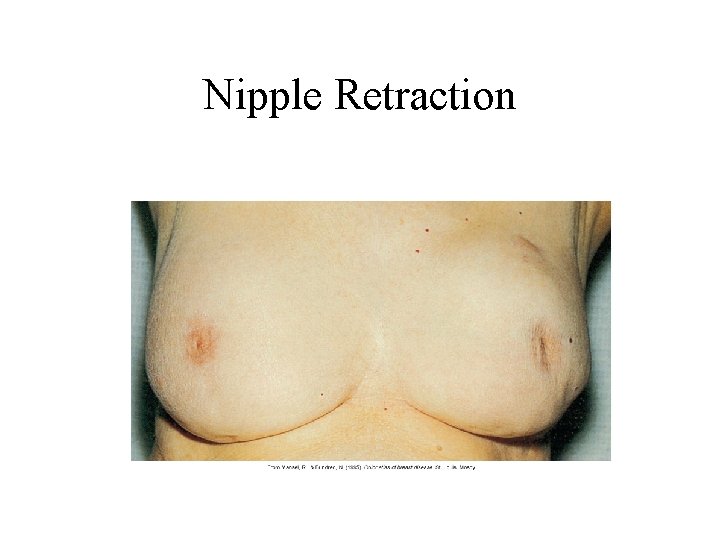
Nipple Retraction
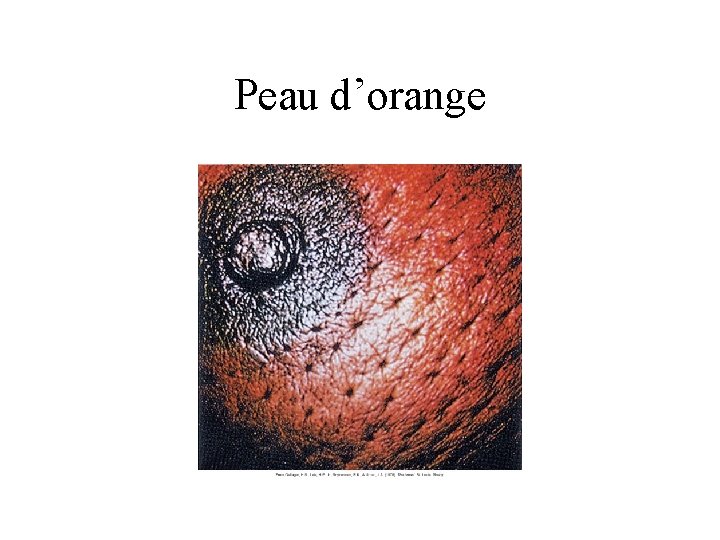
Peau d’orange
Breast Cancer in Men • Of all breast cancers, only 1% occur in men. • Breast cancer in men usually presents as a hard, painless, subareolar mass. • Breast cancer in men is often a widely spread disease because it is usually detected at a later stage than in women.
Mammography • Baseline screening mammography yearly beginning at age 40 years is recommended. • Barriers to mammography.
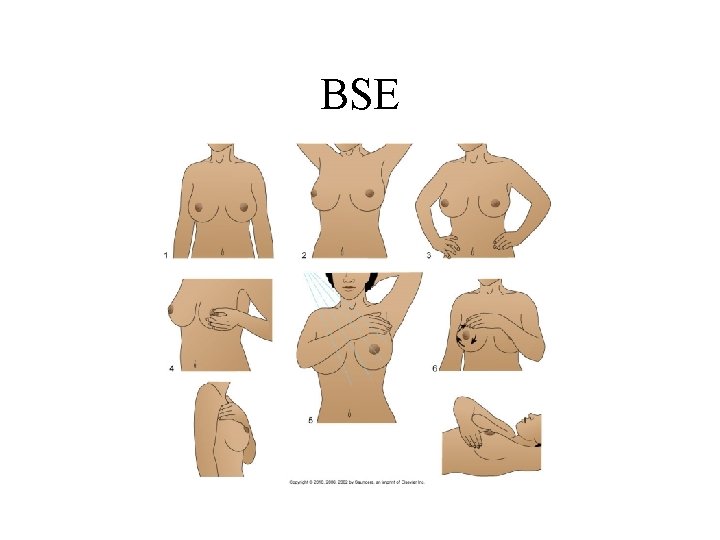
Breast Self-Examination • The goal of screening for breast cancer is early detection because breast selfexamination cannot prevent breast cancer. • Early detection reduces mortality rate. • Teach breast self-examination.
BSE
Breast Care • • Clinical breast examination Cancer surveillance Prophylactic mastectomy Chemoprevention
Anxiety • Interventions: – Anxiety for the woman with breast cancer begins the moment the lump is discovered. – Level of anxiety may be related to past experiences and personal associations with the disease. – Allow the patient to ventilate feelings. – Flexibility is the key to nursing care.
Potential for Metastasis • For patients with late-stage breast cancer, nonsurgical treatment may be the only alternative; tumor may be removed with local anesthetic, follow-up treatment with hormonal therapy, chemotherapy, and sometimes radiation.
Potential for Metastasis (Cont’d) • For breast cancer at a stage for which surgery is the main treatment, follow-up with adjuvant radiation, chemotherapy, hormone therapy, or targeted therapy is commonly prescribed.
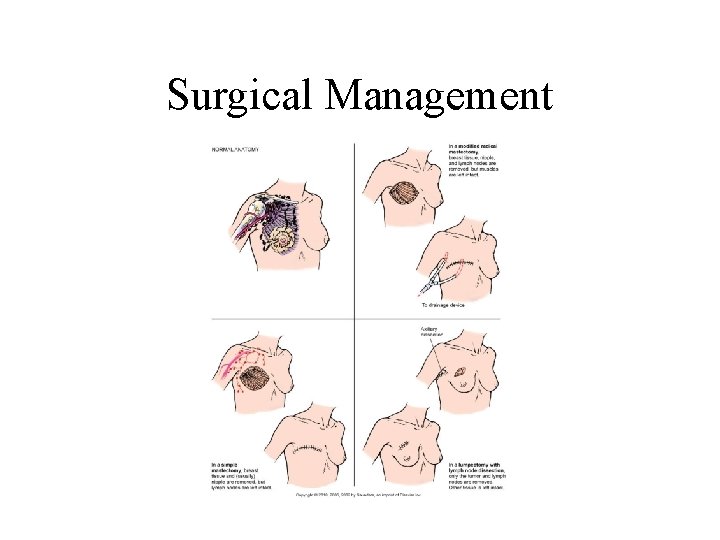
Surgical Management
Surgical Management (Cont’d) • • • Removal of the mass Neoadjuvant therapy Axillary node dissection Sentinel lymph node biopsy Breast-conserving surgery Modified radical mastectomy
Postoperative Care • Avoidance of using the affected arm for blood pressure measurement, giving injections, or drawing blood • Monitoring of vital signs • Care of drainage tubes • Comfort measures • Mobility and diet • Breast reconstruction
Adjuvant Therapy • To decrease the risk of recurrence, adjuvant therapy consists of: – Radiation therapy – Chemotherapy – Hormonal therapy – Stem cell transplantation – Targeted therapy
This is chapter 74 Care of Patients with Gynecologic Problems
Primary Dysmenorrhea • One of the most common gynecologic problems, occurring most often in women in their teens and early 20 s. • Treatment: – NSAIDs, acetaminophen, anti-prostaglandins, oral contraceptives – Complementary and alternative therapies
Premenstrual Syndrome • A collection of symptoms that are cyclic in nature • Nutrition therapy • Drug therapy—hormonal therapy. Oral contraceptives, gonadotropin-releasing hormone, serotonin-reuptake inhibitors • Complementary and alternative therapies
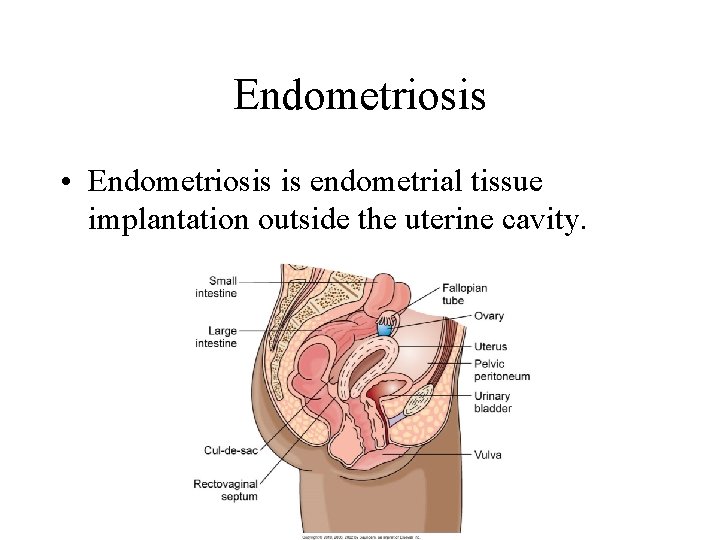
Endometriosis • Endometriosis is endometrial tissue implantation outside the uterine cavity.
Interventions • Drug therapy • Complementary and alternative therapy • Surgical management
Dysfunctional Uterine Bleeding • Bleeding that is excessive or abnormal in amount or frequency
Dysfunctional Uterine Bleeding (Cont’d) • Associated with: – Endocrine disturbances – Polycystic ovary disease – Stress – Obesity or underweight – Long-term drug use – Anatomic abnormalities
Collaborative Management • Nonsurgical management includes hormone manipulation. • Surgical management includes: – Dilation and curettage procedure – Laser or balloon endometrial ablation – Myomectomy – Hysterectomy
Menopause • Normal biologic event marked for most women by the end of menstrual periods (12 months of amenorrhea) • Role of hormone replacement therapy in the management of symptoms • Perimenopause indicated by changes in ovarian function • Management
Vulvovaginitis • Vaginal discharge and itching • Inflammation of the lower genital tract resulting from a disturbance of the balance of hormones and flora in the vagina and vulva • Characterized by itching, change in vaginal discharge, odor, or lesions
Toxic Shock Syndrome (TSS) • First recognized in 1980 when it was found to be related to menstruation and tampon use • Staphylococcus aureus • Abrupt onset of high temperature, headache, sore throat, vomiting, diarrhea, generalized rash, hypotension • Management
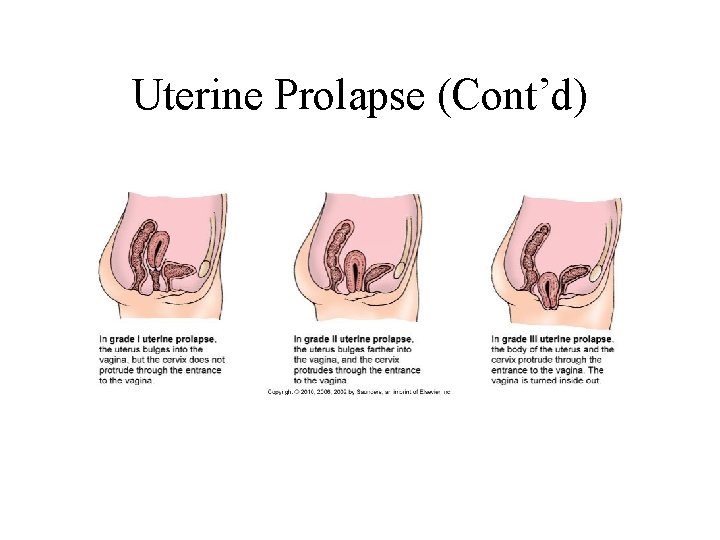
Uterine Prolapse • Stages of uterine prolapse are described by the degree of descent of the uterus • Dyspareunia, backache, pressure in the pelvis, bowel or bladder problems • Pessaries • Surgery
Uterine Prolapse (Cont’d)
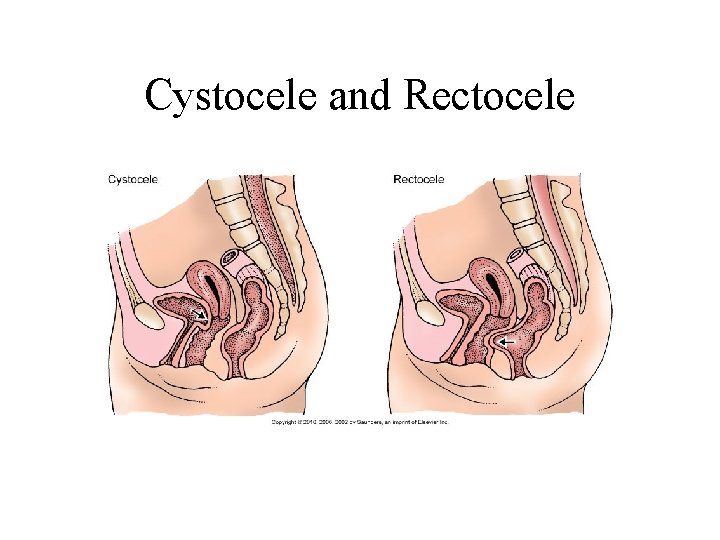
Cystocele and Rectocele
Fistulas • Abnormal opening between two adjacent organs or structures • Urethrovaginal fistula • Vesicovaginal fistula • Rectovaginal fistula • Management
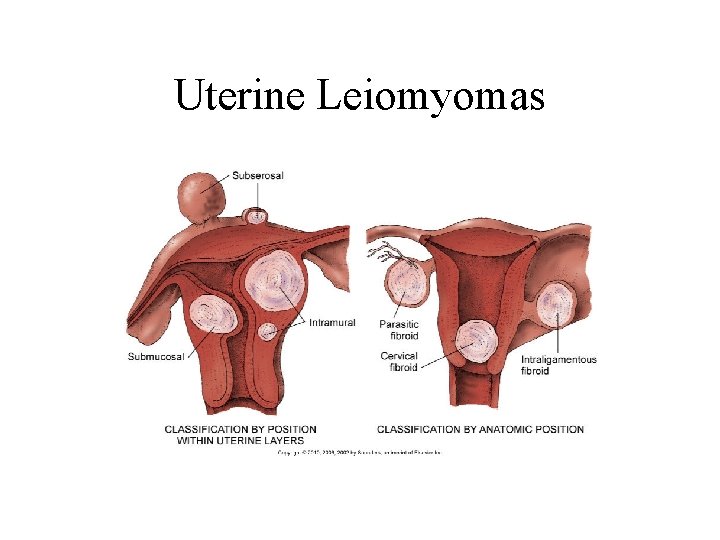
Benign Neoplasms • Ovarian cyst • Uterine leiomyoma: – Nonsurgical management – Surgical management
Uterine Leiomyomas
Cervical Polyps • Pedunculated tumors (on stalks) arising from the mucosa and extending to the opening of the cervical os • Polyp removal—a simple office procedure
Endometrial (Uterine) Cancer • Endometrial cancer is a reproductive cancer, of which adenocarcinoma is the most common type. • The main symptom is postmenopausal bleeding. • Diagnostic assessment includes these tests: – CA-125 tumor marker – Chest x-ray
Endometrial (Uterine) Cancer (Cont’d) – Possible testing for gene causing HNPCC – IV pyelography – Barium enema – CT of the pelvis – Liver and bone scans – Hysteroscopic examination of the uterus – Proctosigmoidoscopy
Surgical Management • Total hysterectomy and bilateral salpingectomy/oophorectomy
Surgical Management (Cont’d) • Total abdominal hysterectomy and bilateral salpingo-oophorectomy • Radical hysterectomy with bilateral pelvic lymph node dissection for stage II cancer
Nonsurgical Management • Radiation therapy: – Intracavitary radiation (brachytherapy) – External radiation • • Drug therapy Chemotherapy Hormone therapy Complementary and alternative therapies
Cervical Cancer • Disorder is a progression—from totally normal cervical cells, to premalignant changes in appearance of cervical cells (dysplasia), to changes in function, and ultimately to transformation to cancer • Carcinoma in situ • Preinvasive or invasive
Health Promotion and Maintenance • HPV vaccine (Gardasil)
Clinical Manifestations • Patient often asymptomatic • Classic symptom—painless vaginal bleeding • Watery, blood-tinged vaginal discharge that may become dark and foul-smelling as the disease progresses
Clinical Manifestations (Cont’d) • Leg pain • Flank pain • Unexplained weight loss, pelvic pain, dysuria, hematuria, rectal bleeding, chest pain, and cough
Diagnostic Assessment • Pap smear • Squamous atypia, inflammatory atypia, or minor atypia abnormalities • Bethesda system • Colposcopic examination • Endocervical curettage
Early Surgical Procedures • Loop electrosurgical excision procedure • Laser therapy • Cryotherapy
Surgical Procedures • Hysterectomy • Pelvic exenteration
Ovarian Cancer • Most common type—serous adenocarcinoma • Vague abdominal discomfort, dyspepsia, indigestion, gas, and distention • Ovarian antibody CA-125, ultrasound, IV pyelography, barium enema, upper GI radiographic series to rule out tumors
Nonsurgical Management • Chemotherapy with agents such as cisplatin, carboplatin, and paclitaxel • Radiation therapy
Surgical Management • Total abdominal hysterectomy and bilateral salpingo-oophorectomy • Staging
Vulvar Cancer • Most are squamous cell carcinomas. • Women often report irritation or itching in their perineal area or a sore that will not heal. • Toluidine blue test identifies abnormal cells. • Keyes dermal punch is used for tissue biopsy.
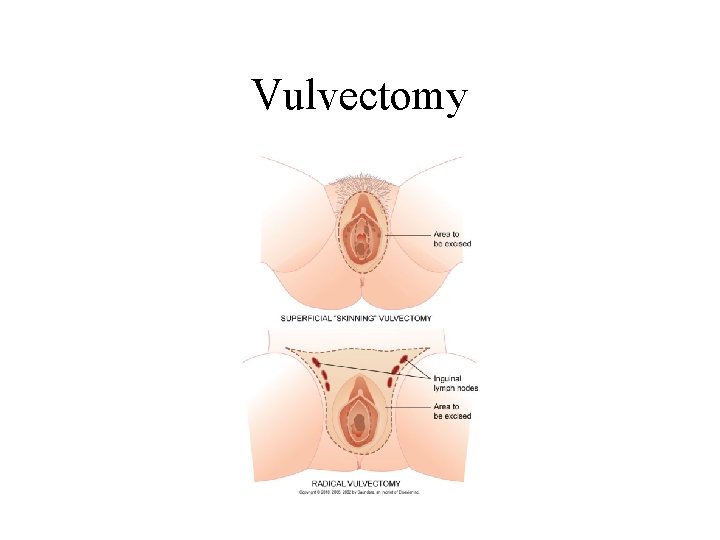
Management • Laser therapy • Radiation therapy • Surgical management—vulvectomy or skinning vulvectomy or radical vulvectomy
Vulvectomy
Postoperative Care • • Providing wound care Promoting urinary and bowel elimination Managing pain Addressing sexuality
Vaginal Cancer • Rare • Treatment with any of these: – Laser therapy – Wide excision – Partial or total vaginectomy – Topical chemotherapy – Radiation therapy
Fallopian Tube Cancer • Rarest of all gynecologic cancers • Most common symptoms—postmenopausal bleeding, increased abdominal pain, watery vaginal discharge, leukorrhea • Treatment—total abdominal hysterectomy and bilateral salpingo-oophorectomy with omentectomy
This is chapter 75 Care of Male Patients with Reproductive Problems
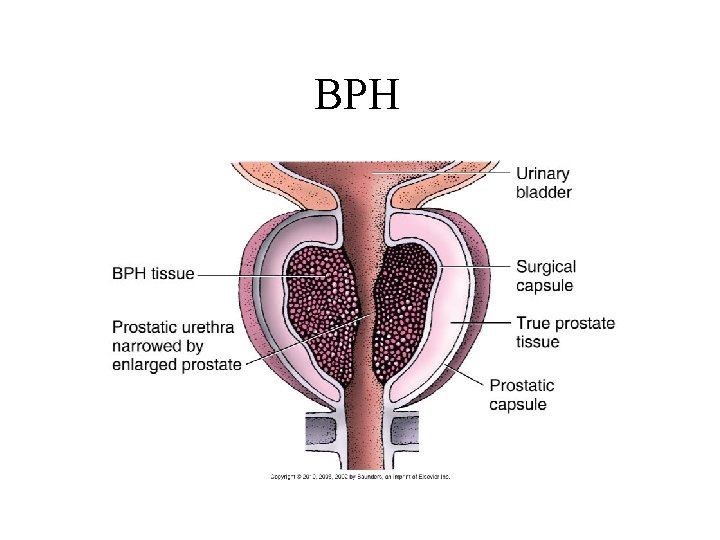
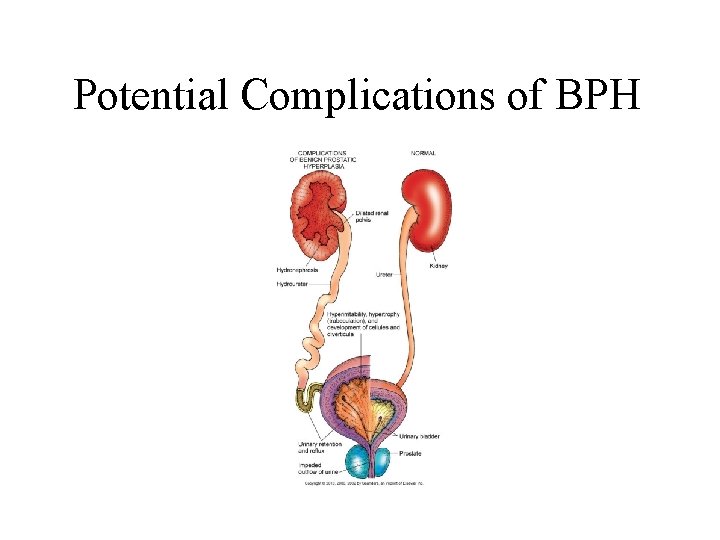
Benign Prostatic Hyperplasia • Glandular units in the prostate that undergo an increase in the number of cells, resulting in enlargement of the prostate gland • Hyperirritable bladder, urgency and frequency, hypertrophied bladder wall muscles, cellules and diverticula, hydroureter, hydronephrosis, and overflow urinary incontinence
BPH
Potential Complications of BPH
Assessment • Urinary pattern, frequency, nocturia, and other symptoms of bladder neck obstruction • Lower urinary tract symptoms • Hesitancy, intermittency, reduced force and size of urinary stream, a sensation of incomplete bladder emptying, and post-void dribbling • Hematuria
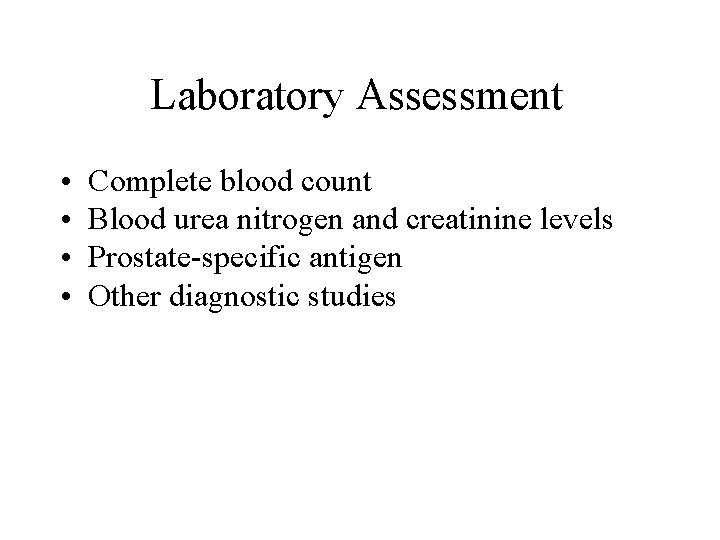
Laboratory Assessment • • Complete blood count Blood urea nitrogen and creatinine levels Prostate-specific antigen Other diagnostic studies
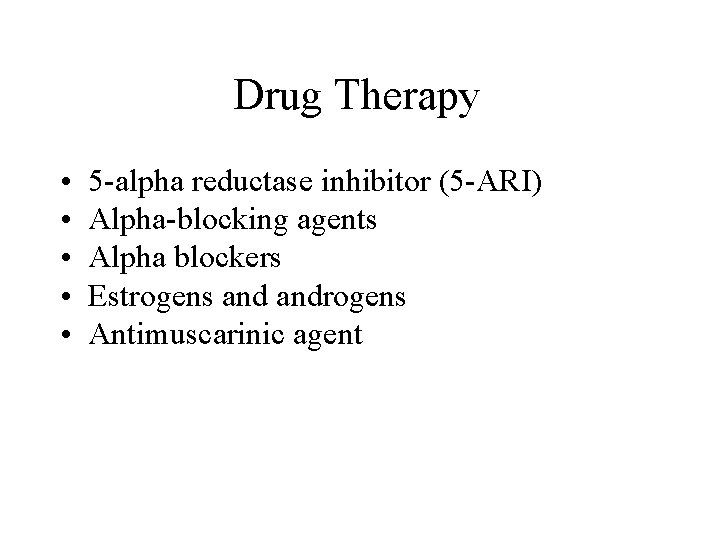
Drug Therapy • • • 5 -alpha reductase inhibitor (5 -ARI) Alpha-blocking agents Alpha blockers Estrogens androgens Antimuscarinic agent
Other Nonsurgical Measures • Thermotherapy
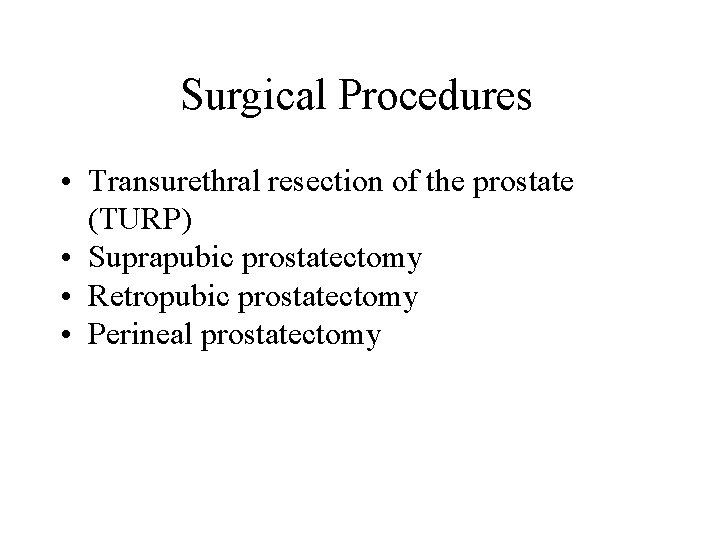
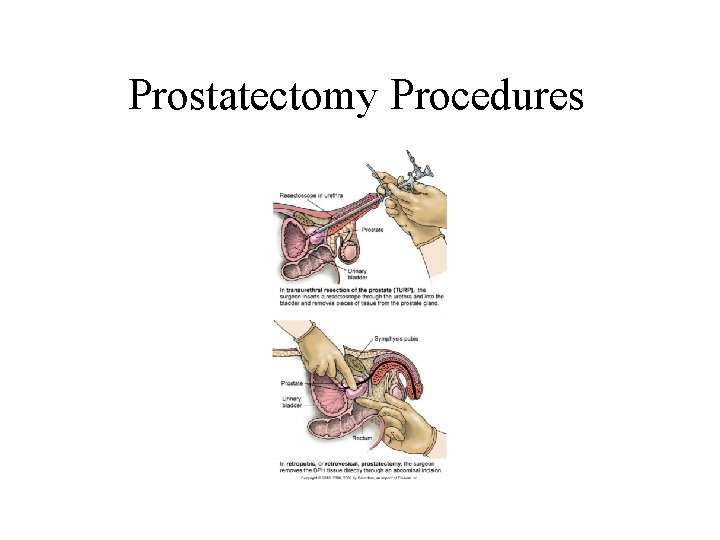
Surgical Procedures • Transurethral resection of the prostate (TURP) • Suprapubic prostatectomy • Retropubic prostatectomy • Perineal prostatectomy
Prostatectomy Procedures
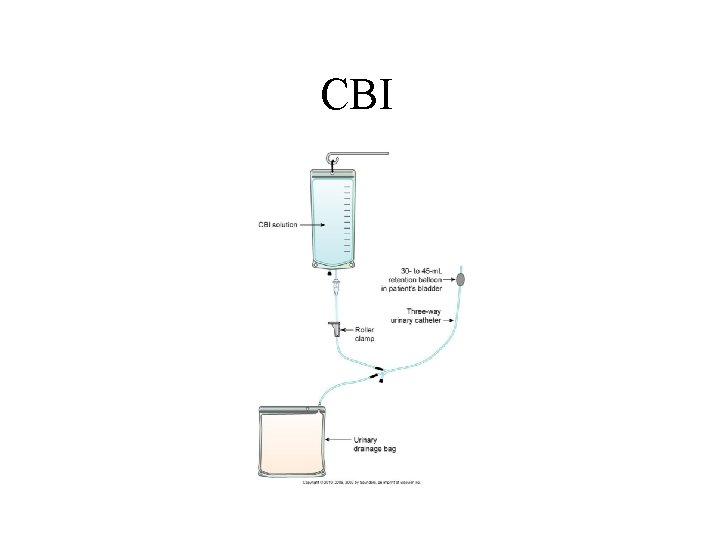
Continuous Bladder Irrigation • Three-way urinary catheter with a 30 - to 45 -m. L retention balloon through the urethra into the bladder • Traction via taping to patient’s abdomen or thigh • Uncomfortable urge to void continuously • Antispasmodic medications
CBI
Postcatheterization Care • Patient feels burning on urination as well as some urinary frequency, dribbling, and leakage. • Symptoms are normal and will subside. • Monitor fluid intake.
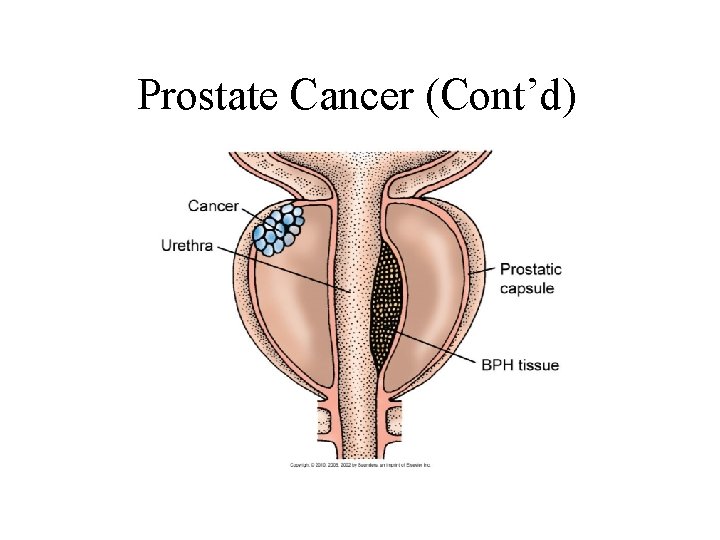
Prostate Cancer • Most common invasive cancer among men in the United States • One of the slowest growing malignancies; metastasizes in a predictable pattern • First symptoms related to bladder neck obstruction
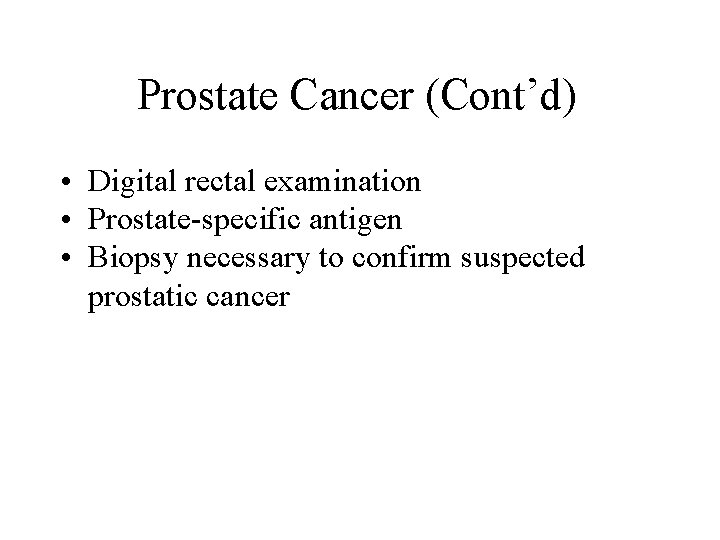
Prostate Cancer (Cont’d) • Digital rectal examination • Prostate-specific antigen • Biopsy necessary to confirm suspected prostatic cancer
Prostate Cancer (Cont’d)
Surgical Management • • • Minimally invasive surgery Open surgical technique Prostatectomy TURP Bilateral orchiectomy Preoperative care
Postoperative Care of Radical Prostatectomy • • • Hydration with IV therapy Caring for wound drains Preventing emboli Preventing pulmonary complications Antibiotics Analgesics
Postoperative Care of Radical Prostatectomy (Cont’d) • Laxative and stool softener • Indwelling urinary catheter • Antispasmodic
Complications • Urinary incontinence • Erectile dysfunction
Nonsurgical Management • • • Radiation therapy Hormonal therapy Chemotherapy Cryotherapy Complementary and alternative therapies Targeted therapy
Erectile Dysfunction • Inability to achieve or maintain an erection for sexual intercourse • Organic erectile dysfunction • Functional erectile dysfunction • Assessment: – Medical, social, sexual history – Complete physical examination – Duplex Doppler ultrasonography test
Interventions • Drug therapy includes sildenafil (Viagra), vardenafil (Levitra), and tadalafil (Cialis). • Avoid alcohol before sexual intercourse. • Common side effects include headaches, facial flushing, and stuffy nose. • Men who take nitrates should not take these drugs; profound hypotension and reduced blood flow to vital organs can result.
Vacuum Devices • Cylinder fits over the penis and sits firmly against the body. • Vacuum is created to draw blood into the penis to maintain an erection. • Rubber ring (tension band) is placed around the base of the penis to maintain the erection; cylinder is removed.
Injecting the Penis • Vasodilating drugs can make the penis erect by engorging it with blood • Caverject • Paverine • Regitine • Combination of any or all of these drugs
Intraurethral Applications • Alprostadil is a self-administered suppository that is placed in the urethra with an applicator. • Erection occurs in about 10 minutes and lasts 30 to 60 minutes. • Burning of the urethra can occur after application, as well as syncope.
Prosthesis • Penile implants are used when other modalities fail. • Implants are semirigid, malleable, or hydraulic inflatable and multicomponent or one-piece instruments. • Reservoir is placed in the scrotum. • Major disadvantages are device failure and infection.
Testicular Cancer • Although uncommon, this cancer is the most common malignancy in men 15 to 34 years of age. • With early detection by testicular selfexamination and treatment with combination chemotherapy, testicular cancer can be cured. • Germ cell tumors arise from sperm-producing cells. • Non–germ cell tumors
Laboratory Assessment • • • Alpha-fetoprotein (AFP) Beta human chorionic gonadotropin (h. CG) Lactate dehydrogenase (LDH) Ultrasound Computed tomography Magnetic resonance imaging
Interventions • Surgery is the main treatment for testicular cancer • Preoperative care • Operative procedure • Postoperative care
Nonsurgical Management • Chemotherapy • Radiation therapy
Risk for Sexual Dysfunction • Interventions include: – Oligospermia, azoospermia – Health teaching about reproduction, fertility, and sexuality – Sperm storage – Other reproductive options
Potential for Metastasis • Interventions include: – Surgical management – Preoperative care – Operative procedures—radical retroperitoneal lymph node dissection, orchiectomy
Potential for Metastasis (Cont’d) • Postoperative care; expected problems include: – Pain from surgical incisions – Immobility – Injuries related to invasive catheters or tubes
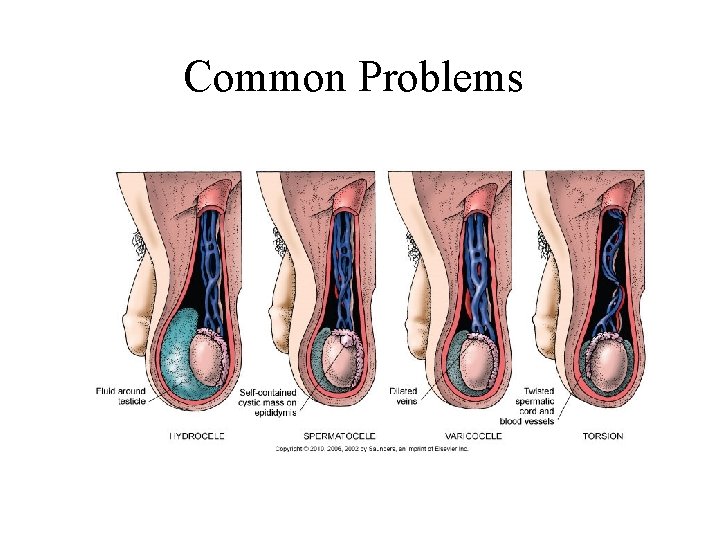
Hydrocele • Cystic mass is usually filled with strawcolored fluid that forms around the testis resulting from impaired lymphatic drainage of the scrotum, causing a swelling of the tissue surrounding the testes. • Hydrocele may be drained via needle and syringe, or it may be removed surgically.
Spermatocele • A sperm-containing cyst develops on the epididymis alongside the testicle. • Normally, spermatoceles are small and asymptomatic and require no interventions. • If they become large enough to cause discomfort, a spermatocelectomy is performed.
Varicocele • A cluster of dilated veins occur behind above the testis. • Varicoceles can also cause infertility. • Varicocelectomy is performed through an inguinal incision in which the spermatic veins are ligated in the cord.
Common Problems
Cancer of the Penis • Epidermoid (squamous) carcinomas developing from squamous cells • Circumcision in infancy—almost always eliminates the possibility of penile cancer • Painless, wartlike growth or ulcer • Excisional biopsy • Radiation therapy • Penectomy
Phimosis and Paraphimosis • Constricted prepuce that cannot be retracted over the glans; prepuce remains down around the tip of the penis • Emergency requiring immediate treatment • Circumcision • Warm bath to allow dressing to loosen • Barbiturate sleeping medications
Priapism • Uncontrolled and long-maintained erection without sexual desire; causes the penis to become large and painful • Can occur from: – Thrombosis of veins of corpora cavernosa – Leukemia – Sickle cell disease
Priapism (Cont’d) • • • Diabetes mellitus Malignancies Abnormal reflex Some drug effects Recreational drugs Prolonged sexual activity
Collaborative Management • Urologic emergency • Goal of intervention—to improve the venous drainage of the corpora cavernosa • Meperidine • Warm enemas • Urethral or suprapubic catheterization • Large-bore needle or surgical intervention
Prostatitis • • • Inflammation of the prostate gland Acute bacterial prostatitis Chronic bacterial prostatitis Nonbacterial/chronic pelvic pain syndrome Asymptomatic inflammatory prostatitis
Epididymitis • Inflammation of the epididymis resulting from an infection or noninfectious source such as trauma • Treatment—bedrest with scrotum elevated on a towel, scrotal support when ambulating • Comfort measures • Epididymectomy
Orchitis • Acute testicular inflammation resulting from trauma or infection • Treatment—bedrest with scrotal elevation, application of ice, and administration of analgesics and antibiotics • Mumps orchitis