PERIODONTAL THERAPY IN FEMALE PATIENTS INTRODUCTION Throughout a






- Slides: 53
PERIODONTAL THERAPY IN FEMALE PATIENTS
INTRODUCTION • Throughout a woman's life cycle, hormonal influences affect therapeutic decision making in periodontics. • It is imperative that the clinician recognize, customize, and appropriately alter periodontal therapy according to the individual woman's needs based on the stage of her life cycle.
• Puberty • Menses • Pregnancy • Menopause
PUBERTY
• 11 to 14 in most women. • The production of sex hormones increases • The prevalence of gingivitis increases, without an increase in the amount of plaque. • Gram negative anaerobes, have been implicated in association with puberty gingivitis.
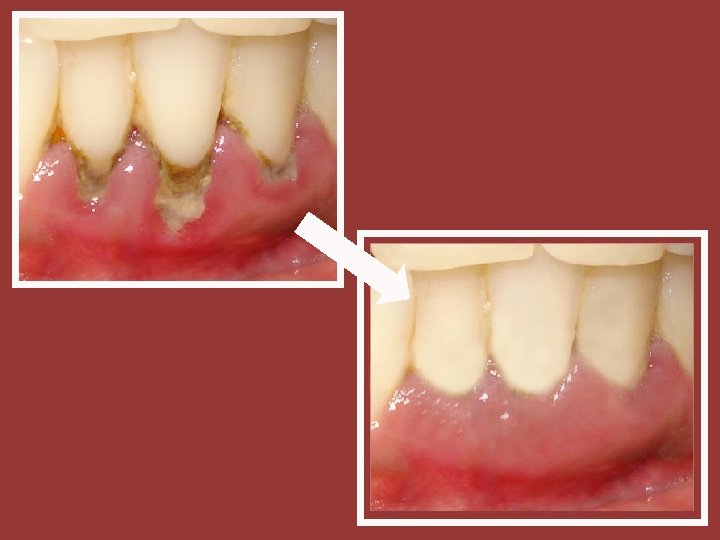
• Periodontal tissues have an exaggerated response to local factors. • A hyperplastic reaction of the gingiva occurs in areas where food debris, materia alba, plaque, and calculus are deposited. The inflamed tissues become erythematous, lobulated, and retractable. Bleeding may occur easily with mechanical debridement of the gingival tissues.
Management • education of the parent or caregiver is a part of successful periodontal therapy. • Preventive care, including a vigorous program of oral hygiene, is vital.
• Milder gingivitis cases respond well to scaling and root planing, with frequent oral hygiene reinforcement. • Severe cases of gingivitis may require microbial culturing, antimicrobial mouthwashes and local site delivery, or antibiotic therapy. • Periodontal maintenance appointments may need to be more frequent when periodontal instability is noted.
MENSES
Periodontal Manifestations • Gingival tissues are more edematous during menses and erythematous before the onset of menses. • An increase of gingival exudate • sometimes associated with a minor increase in tooth mobility.
• (When the progesterone level Is highest) during luteal phase of cycle, intraoral recurrent aphthous ulcers, herpes labialis lesions, and candidal Infections occur as a cyclic pattern.
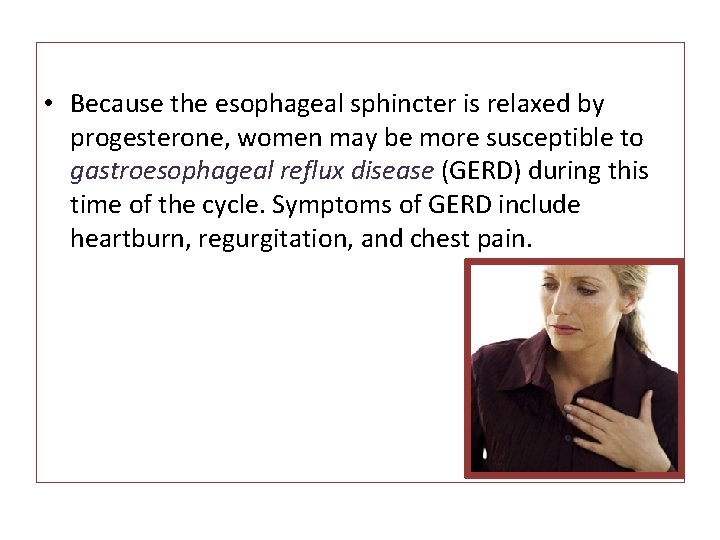
• Because the esophageal sphincter is relaxed by progesterone, women may be more susceptible to gastroesophageal reflux disease (GERD) during this time of the cycle. Symptoms of GERD include heartburn, regurgitation, and chest pain.
• and when reflux is severe, some patients develop unexplained coughing, hoarseness, sore throat, gingivitis, and asthma.
• During the peak level of progesterone (about 7 10 days before menstruation), premenstrual syndrome (PMS) may also occur.
• Symptoms: Depression, irritability, mood swings, and difficulty with memory and concentration • Patients are more sensitive and less tolerant of procedures, have a heightened gag reflex, and may have an exaggerated response to pain.
Management • Increased gingival bleeding and tenderness associated with the menstrual cycle require closer periodontal monitoring. • Periodontal maintenance should be titrated to the individual patient's need and, if problematic, (3 to 4 month intervals) • An anti microbial oral rinse may be indicated. • Emphasis should be placed on oral hygiene.
• The PMS patient may be difficult to treat because of emotional and physiologic sensitivity. • The dentist should treat the gingival and oral mucosal tissues gently. Gauze pads or cotton rolls should be moistened with a lubricant, chlorhexidine rinse, or water before placing them in the aphtha prone patient.
• Careful retraction of the oral mucosa, cheeks, and lips is necessary in patients prone to aphthous or herpetic lesions. • Because the hypoglycemic threshold is elevated, the clinician should advise the patient to have a light snack before her appointment.
Periodontal diseases • Pregnancy gingivitis • Pyogenic granuloma ?
PREGNANCY
Periodontal diseases • Pregnancy gingivitis • Pyogenic granuloma of pregnancy
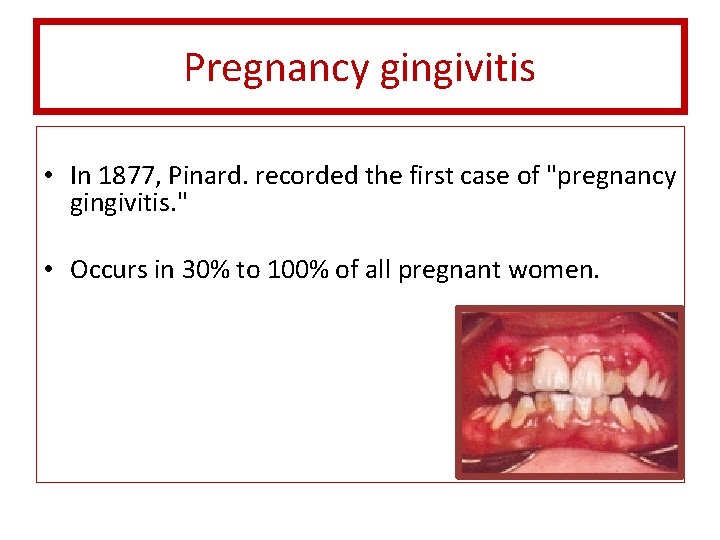
Pregnancy gingivitis • In 1877, Pinard. recorded the first case of "pregnancy gingivitis. " • Occurs in 30% to 100% of all pregnant women.
• It is characterized by erythema, edema, hyperplasia, and increased bleeding. • mild to severe inflammation which can progress to severe hyperplasia, pain, and bleeding. • The anterior region of the mouth is affected more often, and Interproximal sites tend to be most involved.
• Increased tissue edema may lead to increased pocket depths and may be associated with transient tooth mobility. • Anterior site inflammation may be exacerbated by increased mouth breathing, primarily in the third trimester, from pregnancy rhinitis. • The gingiva is the most common site involved (approximately 70% of all cases), followed by the tongue and lips, buccal mucosa, and palate.
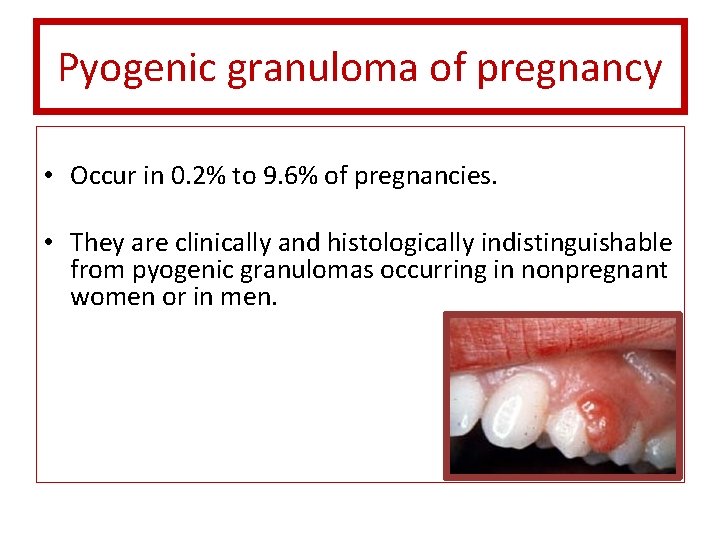
Pyogenic granuloma of pregnancy • Occur in 0. 2% to 9. 6% of pregnancies. • They are clinically and histologically indistinguishable from pyogenic granulomas occurring in nonpregnant women or in men.
• Pyogenic granulomas appear most often during the second or third month of pregnancy. • Clinically, they bleed easily and become hyperplastic and nodular.
• They may be sessile or pedunculated and ulcerated, ranging in color from purplish red to deep blue, depending on the vascularity of the lesion and degree of venous stasis. • The lesion classically occurs in an area of gingivitis and is associated with poor oral hygiene and calculus. • Alveolar bone loss is usually not associated with pyogenic granulomas of pregnancy.
Management • "Pregnancy tumors" that are painful, interfere with mastication, or continue to bleed or suppurate after mechanical debridement may require excision and biopsy before delivery
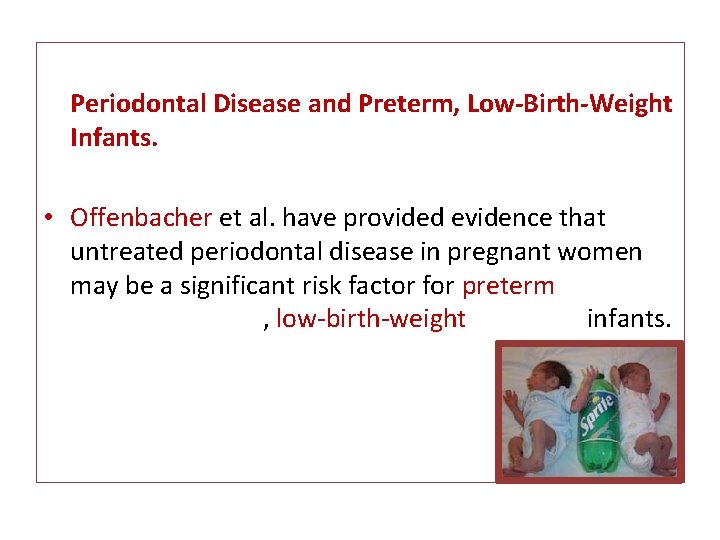
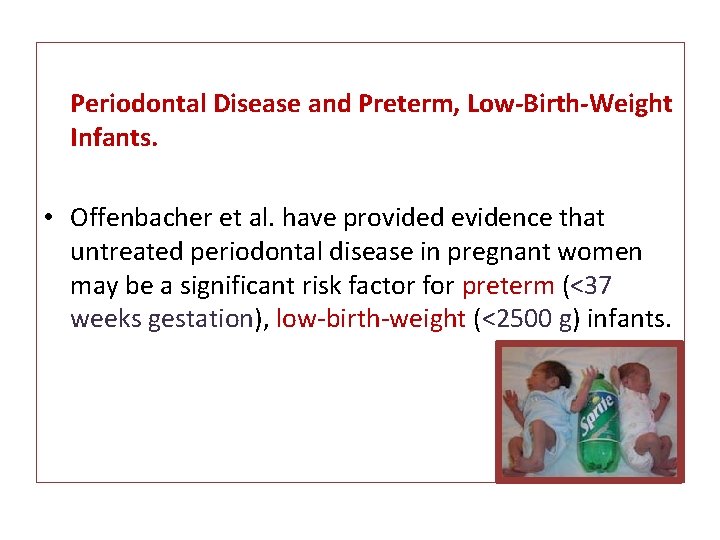
Periodontal Disease and Preterm, Low-Birth-Weight Infants. • Offenbacher et al. have provided evidence that untreated periodontal disease in pregnant women may be a significant risk factor for preterm (<37 weeks gestation), low birth weight (<2500 g) infants.
Periodontal Disease and Preterm, Low-Birth-Weight Infants. • Offenbacher et al. have provided evidence that untreated periodontal disease in pregnant women may be a significant risk factor for preterm (<37 weeks gestation), low birth weight (<2500 g) infants.
Other Oral Manifestations of Pregnancy • Perimylolysis (acid erosion of teeth) may occur if "morning sickness" or esophageal reflux is severe and involves repeated vomiting of the gastric contents. • Severe reflux may cause scarring of the esophageal sphincter, and the patient may become a more likely candidate for GERD later In life.
• Xerostomia is a frequent complaint among pregnant women. • A rare finding in pregnancy Is ptyalism, or sialorrhea. This excessive secretion of saliva usually begins at 2 to 3 weeks of gestation and may abate at the end of the first trimester. • Because pregnancy places the woman in an immuno compromised state, Gestational diabetes, leukemia, and other medical conditions may appear during pregnancy.
Clinical Management • A thorough medical history • It should include pregnancy complications, previous mis carriages, and recent history of cramping, spotting, or pernicious vomiting. • The patient's obstetrician should be contacted to discuss her medical status, periodontal or dental needs, and the proposed treatment plan.
• Establishing a healthy oral environment and maintaining optimal oral hygiene levels are primary objectives in the pregnant patient. • A preventive periodontal program consisting of nutritional counselling and rigorous plaque control measures in the dental office and at home should be reinforced.
Plaque Control: • The increased tendency for gingival inflammation during pregnancy should be clearly explained to the patient so that acceptable oral hygiene techniques may be taught, reinforced, and monitored throughout pregnancy. • Scaling, polishing, and root planing may be performed whenever necessary during pregnancy.
Treatment • Elective Dental Treatment. Other than good plaque control, it is better to avoid elective dental care If possible during the first trimester and the last half of the third trimester.
• Prolonged chair time may need to be avoided because the woman is most uncomfortable at this time. >>> supine hypertensive syndrome may occur. • Supine hypotensive syndrome can usually be reversed by turning the patient on her left side, thereby removing pressure on the vena cava and allowing blood to return from the lower extremities and pelvic area.
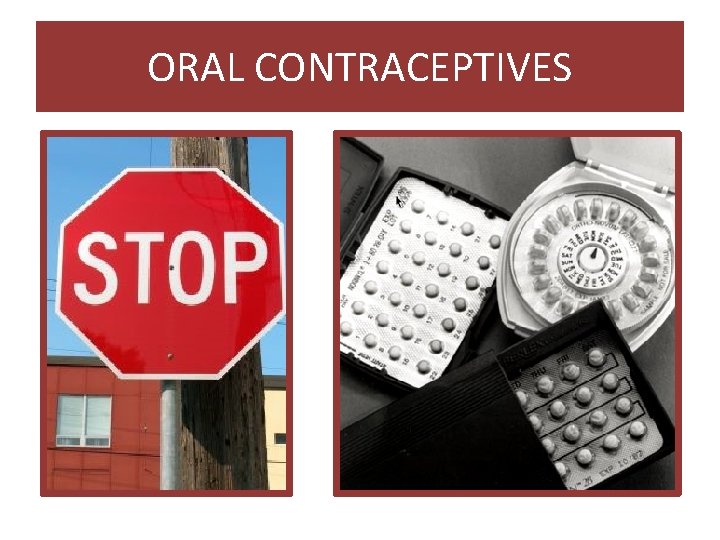
ORAL CONTRACEPTIVES
• Women may have responses to oral contraceptives (OCs) similar to those seen in pregnant patients. • An exaggerated response to local Irritants occurs In gingival tissues. • Inflammation ranges from mild edema and erythema to severe inflammation with hemorrhagic or hyperplasic gingival tissues.
Management • The patient should be informed of the oral and periodontal side effects of OCs and the need for meticulous home care and compliance with periodontal maintenance. • Periodontal surgery may be Indicated if resolution after initial therapy (scaling and root planing) is inadequate.
• Dental Radiographs. • The safety of dental radiography during pregnancy has been well established, provided features such as high-speed film, filtration, collimation, and lead aprons are used. • Even with the obvious safety of dental radiography, x ray films should be taken selectively during pregnancy and only when necessary and appropriate to aid in diagnosis MENOPAUSE and treatment.
• Female life expectancy is 80+ years, so many women will live 40% of their lives In menopause. • Therefore, dental clinicians must be aware of the effects of reduced hormones on the periodontal tissues as well as the systemic changes that may manifest.
Oral changes • It includes thinning of the oral mucosa, oral discomfort ("burning mouth"), gingival recession, xerostomia, altered taste sensation, alveolar bone loss, and alveolar ridge resorption. • Osteopenia and osteoporosis have been associated with the menopausal patient.
• Osteopenia is a reduction in bone mass caused by an imbalance between bone resorption and formation, favoring resorption and resulting in demineralization and osteoporosis. • Osteoporosis is a disease characterized by low bone mass and fragility and a consequent increase in fracture risk.
Clinical Management • If gingival and mucosal tissue thinning occurs, soft tissue augmentation may be performed. • Brushing with an extrasoft toothbrush using the "toe" or "heel" of the brush may prevent "scrubbing" the thin gingiva. • Dentifrices with minimal abrasive particles should be used. • During periodontal maintenance, root surfaces should be debrided gently with minimal soft tissue trauma.
In Brief…
• Puberty • Menses • Pregnancy • Menopause
• Puberty • Menses • Pregnancy • Menopause
• Puberty • Menses • Pregnancy • Menopause
• Puberty • Menses • Pregnancy • Menopause
Thank You