
Epidemiology and Indices of Periodontal Disease Number of
Epidemiology and Indices of Periodontal Disease
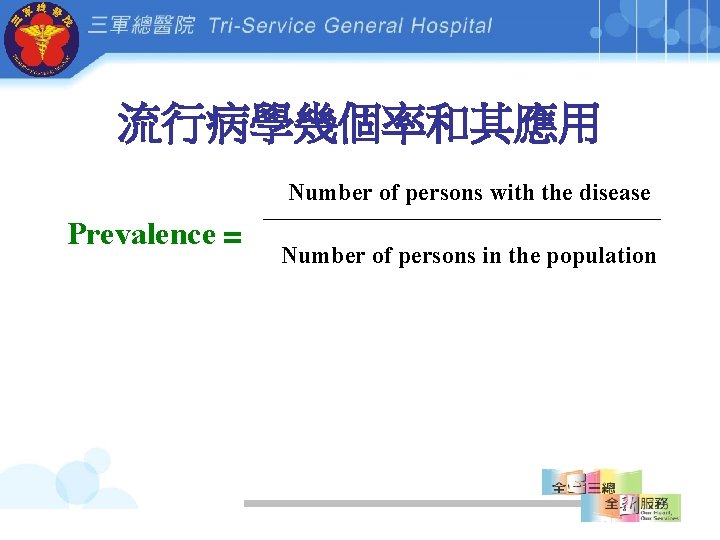
流行病學幾個率和其應用 Number of persons with the disease Prevalence = Number of persons in the population
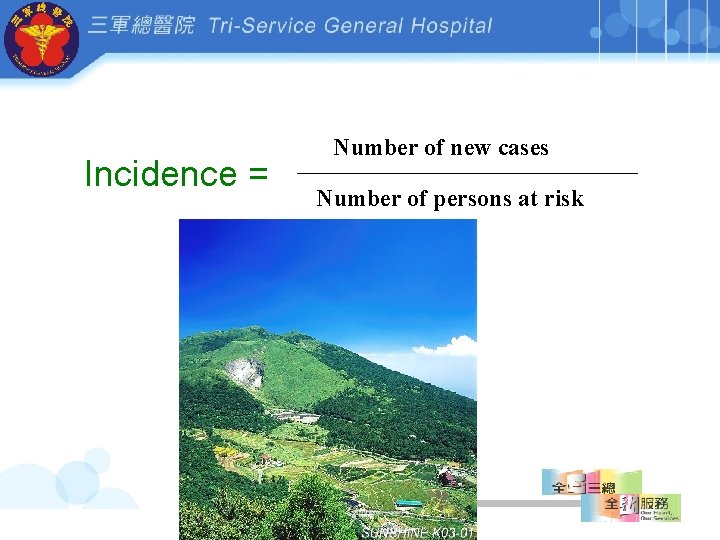
Incidence = Number of new cases Number of persons at risk
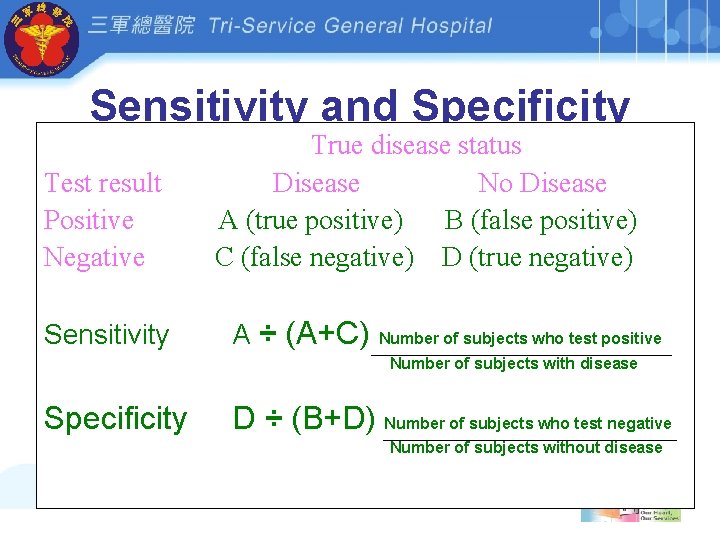
Sensitivity and Specificity Test result Positive Negative Sensitivity True disease status Disease No Disease A (true positive) B (false positive) C (false negative) D (true negative) A ÷ (A+C) Number of subjects who test positive Number of subjects with disease Specificity D ÷ (B+D) Number of subjects who test negative Number of subjects without disease
Bleeding on probing. A predictor for the progression of periodontal disease? J Clin Periodontol 1986, Lang NP. • Bleeding on probing (BOP) is a widely used criterion to diagnose gingival inflammation. • The purpose of the present retrospective study was to evaluate its prognostic value in identifying sites at risk for periodontal breakdown during the maintenance phase of periodontal therapy. • 55 patients who had been treated for advanced periodontitis participated in a recall system for at least 4 years, at regular intervals of 3 -5 months. At the start of every appointment, BOP to the bottom of the pocket was registered at 4 sites of every tooth. A random selection of 1054 pockets was made and subdivided into 5 categories according to the incidence of BOP during the last 4 recall appointments.
• All pockets with a BOP incidence of 4/4 and 3/4 were selected, while only interproximal sites with a BOP incidence of 2/4, 1/4 and 0/4 were chosen. Subsequently, these categories were grouped according to whether or not the attachment level had been maintained from the time prior to the last 4 recall visits. Greater than or equal to 2 mm was defined as loss of clinical attachment. • The results indicated that pockets with a probing depth ≧ 5 mm had a significantly higher incidence of BOP.
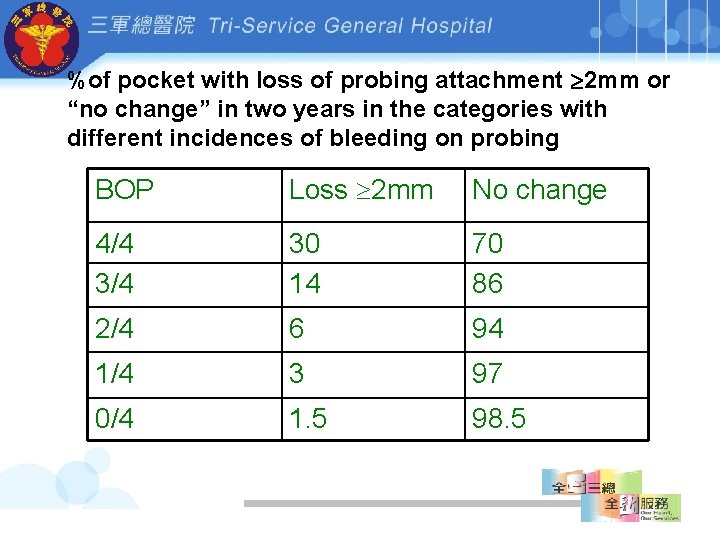
%of pocket with loss of probing attachment 2 mm or “no change” in two years in the categories with different incidences of bleeding on probing BOP Loss 2 mm No change 4/4 30 14 70 86 2/4 6 94 1/4 3 97 0/4 1. 5 98. 5
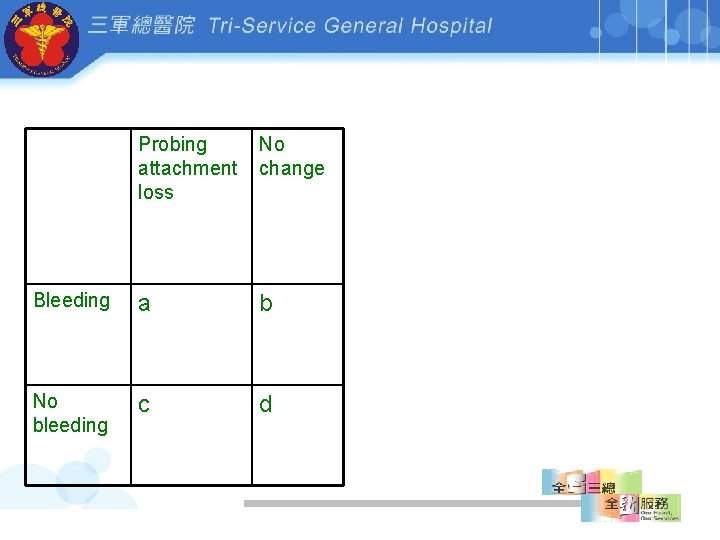
Probing attachment loss No change Bleeding a b No bleeding c d
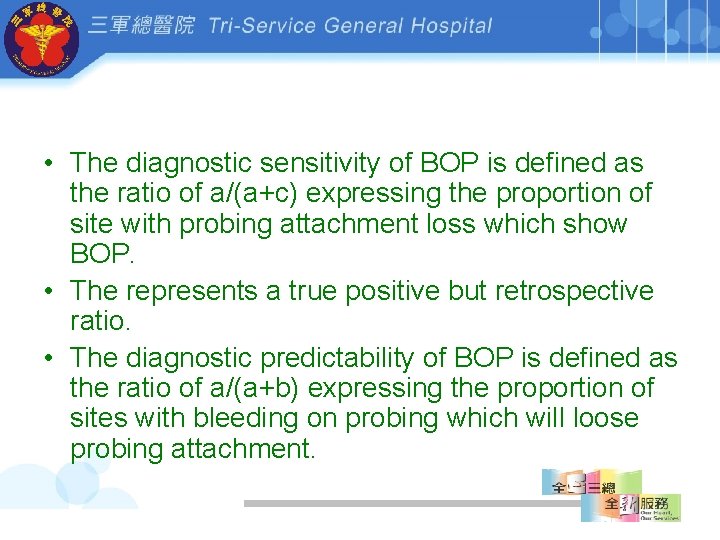
• The diagnostic sensitivity of BOP is defined as the ratio of a/(a+c) expressing the proportion of site with probing attachment loss which show BOP. • The represents a true positive but retrospective ratio. • The diagnostic predictability of BOP is defined as the ratio of a/(a+b) expressing the proportion of sites with bleeding on probing which will loose probing attachment.
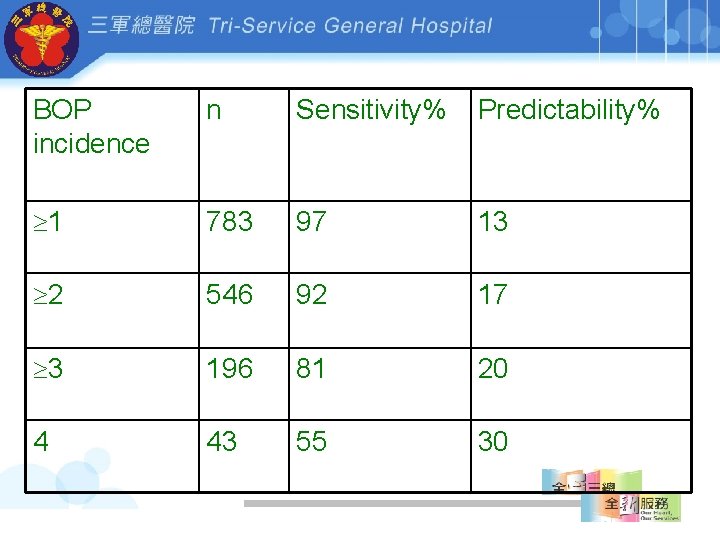
BOP incidence n Sensitivity% Predictability% 1 783 97 13 2 546 92 17 3 196 81 20 4 43 55 30
Epidemiologic study designs • Cross-sectional studies • Cohort studies • Case-control studies
Cross-sectional studies • The presence or absence of disease and the characteristics of the members of a population are measured at a point in time. • These studies are useful for providing prevalence data on a disease, comparing the characteristics of persons with and without disease, and generating hypotheses regarding the etiology of a disease.
Cross-sectional studies • Two major limitations 1. It can only identify prevalent cases of disease. Because these studies do not follow a population at risk of disease over time, incidence cannot be determined. 2. Although it may show that a certain characteristic is associated with having the disease, determining whether the characteristic preceded the disease is not always possible. (smoking –periodontal disease which occurred first? )
Cohort studies • It follows subjects over time. The purpose of a cohort study is to determine whether an exposure or characteristic is associated with the development of a disease or condition. • At the beginning of the study, all subjects must be free of the disease of interest. • Subjects are classified into exposed and unexposed groups and then followed over time and monitored for the development of the disease. • The disadvantage of cohort study is that they can require long periods of follow-up and can be expensive to conduct.
Case-control studies • It provide and efficient way to investigate the association between an exposure and a disease, especially a rare disease. • Because case-control studies do not follow subjects over time, they require fewer resources and can be conducted more quickly than cohort studies. • The prevalence or incidence of a disease cannot be determined from a case-control study because the subjects are recruited into study based on their disease status. • The major disadvantage is that the temporal relationship between the exposure and the onset of disease cannot be determined because the exposure is usually assessed when the disease status is established.
Methodological issues • Index systems: for examination of patients in a dental practice set-up, while others were to be utilized in epidemiological research.
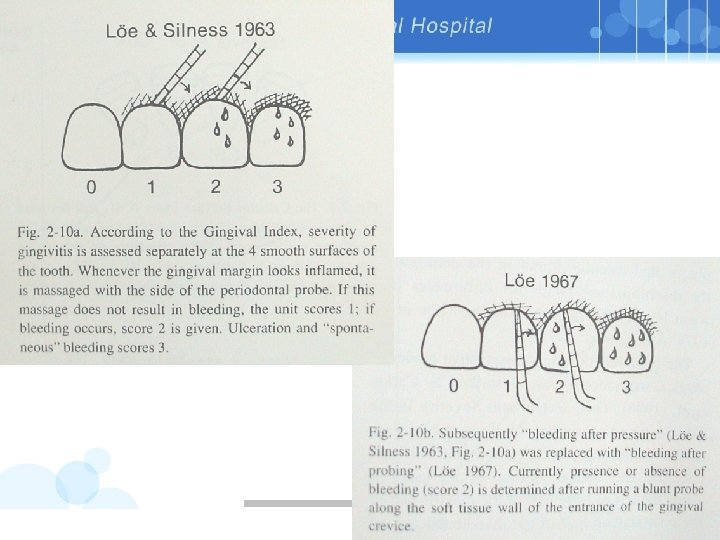
Assessment of inflammation of the periodontal tissue. • Gingival index: Löe(1967) • Plaque index: Silness & Löe(1964)
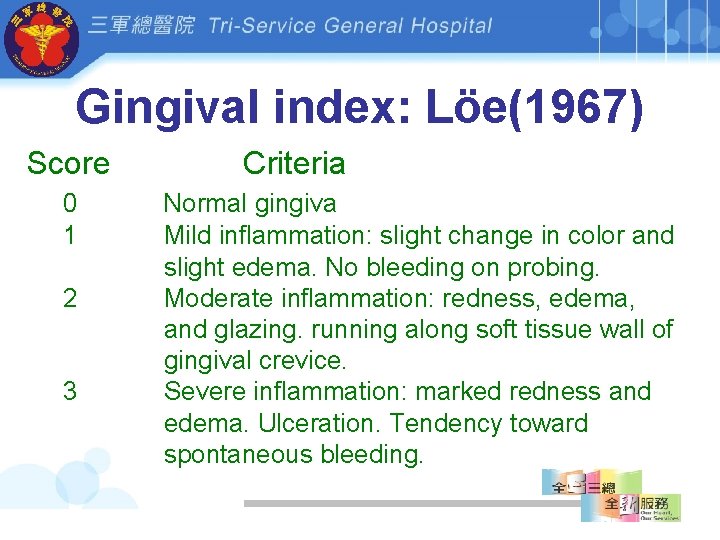
Gingival index: Löe(1967) Score 0 1 2 3 Criteria Normal gingiva Mild inflammation: slight change in color and slight edema. No bleeding on probing. Moderate inflammation: redness, edema, and glazing. running along soft tissue wall of gingival crevice. Severe inflammation: marked redness and edema. Ulceration. Tendency toward spontaneous bleeding.
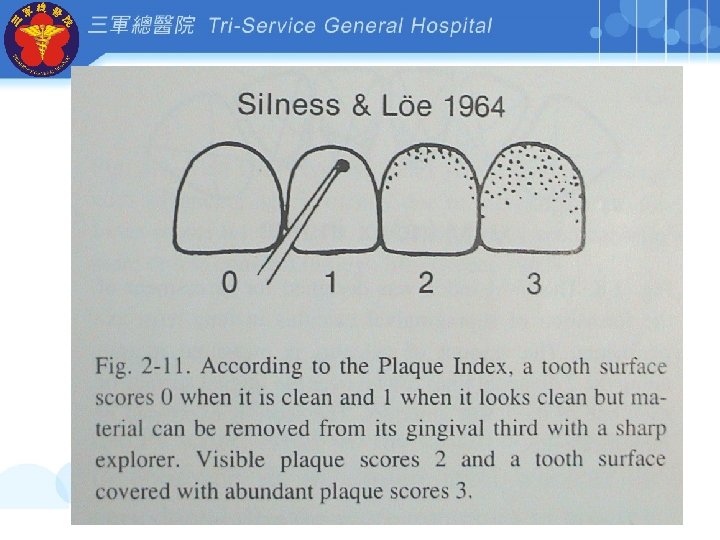
Plaque index: Silness &Löe(1964) Score 0 1 2 3 Criteria Absence of plaque deposits Plaque disclosed after running the periodontal probe along the gingival margin Visible plaque Abundant plaque
Gingivitis • The extent of gingival bleeding among persons with gingival bleeding was higher in the younger and older groups than in the middle age groups. • On average person, 10% of all sites had gingival bleeding, however, among persons with gingival bleeding, an average of 18% of sites had gingival bleeding. • USA age 14 to 17 years, the prevalence if gingival bleeding was 61. 5%. On average per child, 6% of sites measured had gingival bleeding with probing.
• Adolescents have a higher prevalence of gingivitis than prepubertal children or adults. ( sex hormones affects composition of the subgingival microflora) • Hormonal effects also may be responsible for the increased prevalence during pregnancy and among women. • Males in all age groups are more likely to have gingivitis than females. (poor plaque control) • The prevalence of gingivitis is especially high for males age 13 to 17 years. Also, males with gingivitis have more involved sites than females.
Gingivitis as a risk factor in periodontal disease Niklaus P. Lang JCP 2009 • Sites with consistent bleeding (GI=2) had 70% more attachment loss than sites that were consistently noninflamed (GI=0). Teeth with sites that were consistently non-inflamed had a 50 -year survival rate of 99. 5%, while teeth with consistently inflamed gingivae yielded a 50 year survival rate of 63. 4%. • Based on this longitudinal study on the natural history of periodontitis in a dentally well-maintained male population it can be concluded that persistent gingivitis represents a risk factor for periodontal attachment loss and for tooth loss.
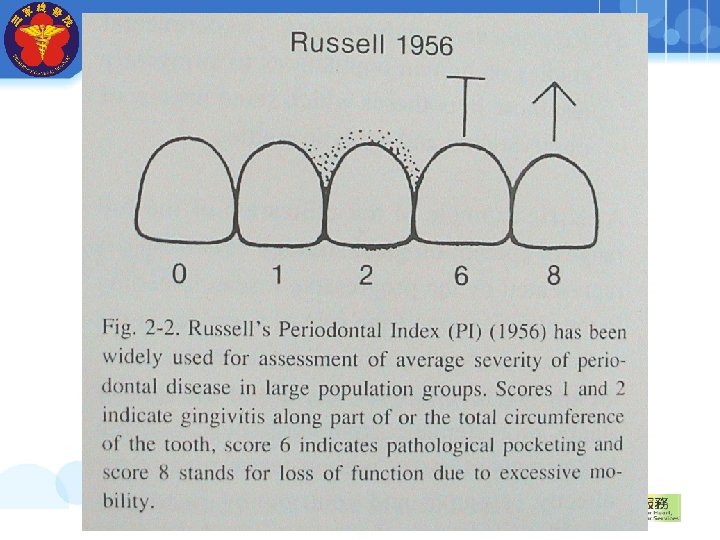
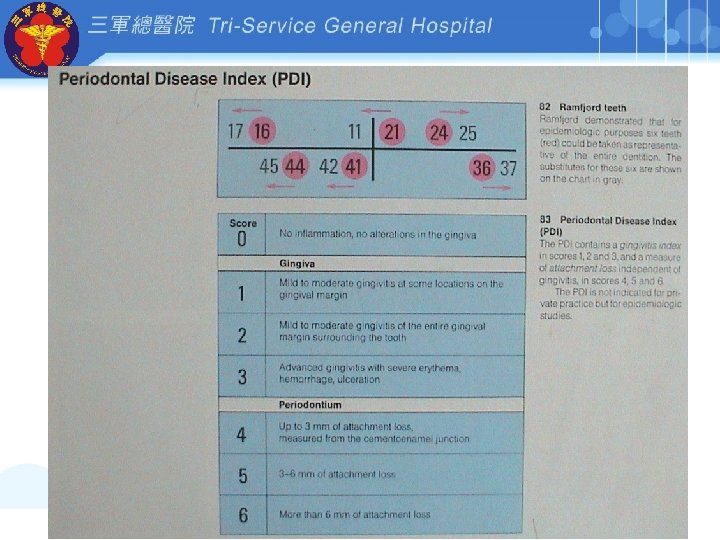
Assessment of loss of periodontal tissue support: • Periodontal index: Russell(1956) • Periodontal Disease lndex: Ramfjord(1959)
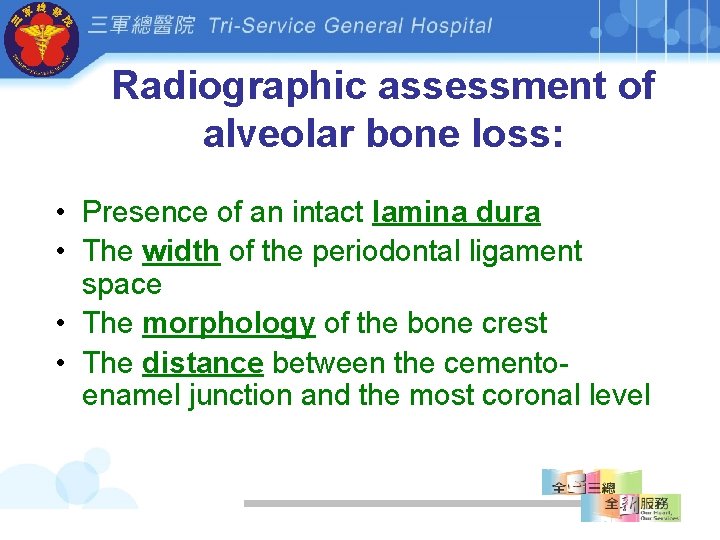
Radiographic assessment of alveolar bone loss: • Presence of an intact lamina dura • The width of the periodontal ligament space • The morphology of the bone crest • The distance between the cementoenamel junction and the most coronal level

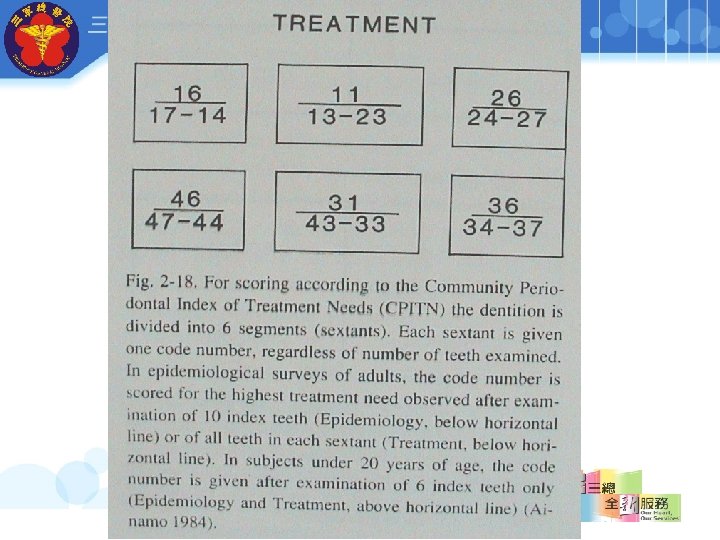
Assessment of periodontal treatment needs: • Community Periodontal Index for Treatment Needs (CPITN) Ø Six sextants Ø Probing assessments are performed either around all teeth in a sextant or around certain index teeth. Ø The most severe measure in the sextant is chosen to present the sextant.

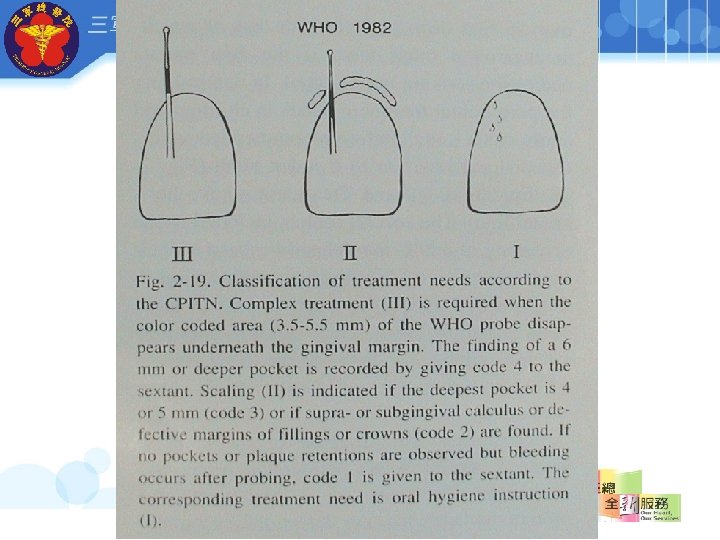
Community Periodontal Index for Treatment Needs (CPITN) Code 1: No pockets, calculus or overhangs of fillings but in which bleeding occurs after gentle probing in one or several units Code 2: No pockets > 3 mm, but in which dental calculus and plaque retaining factors are seen or recognized Code 3: 4 -5 mm deep pockets Code 4: 6 mm deep or deeper pockets
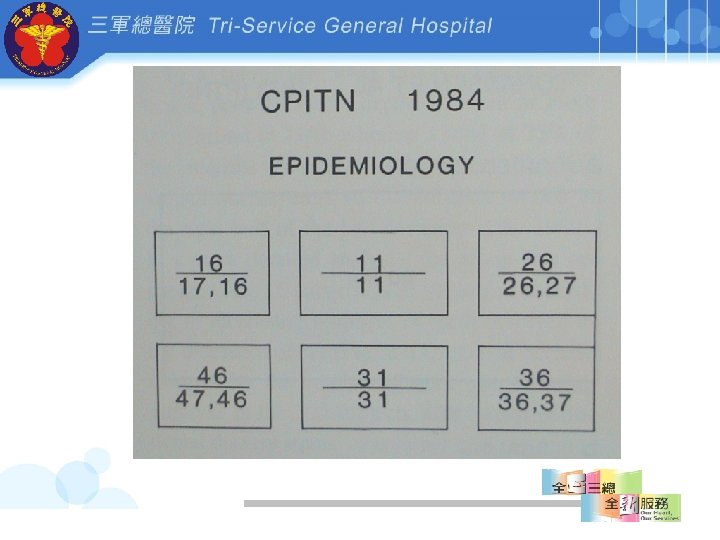
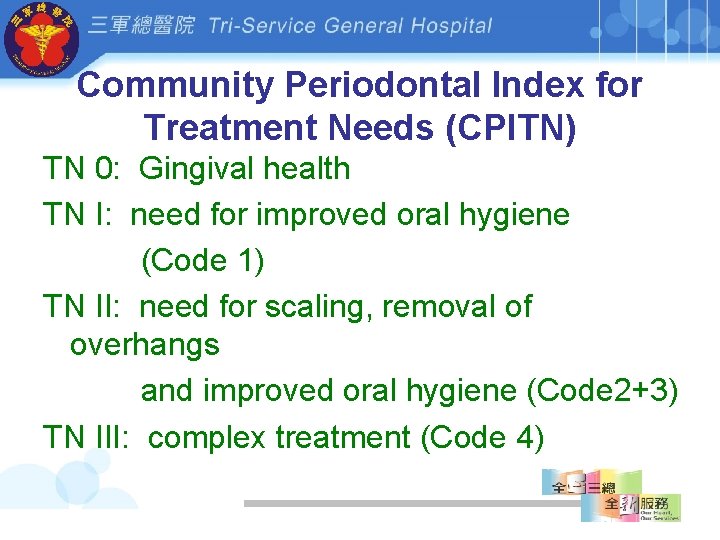
Community Periodontal Index for Treatment Needs (CPITN) TN 0: Gingival health TN I: need for improved oral hygiene (Code 1) TN II: need for scaling, removal of overhangs and improved oral hygiene (Code 2+3) TN III: complex treatment (Code 4)
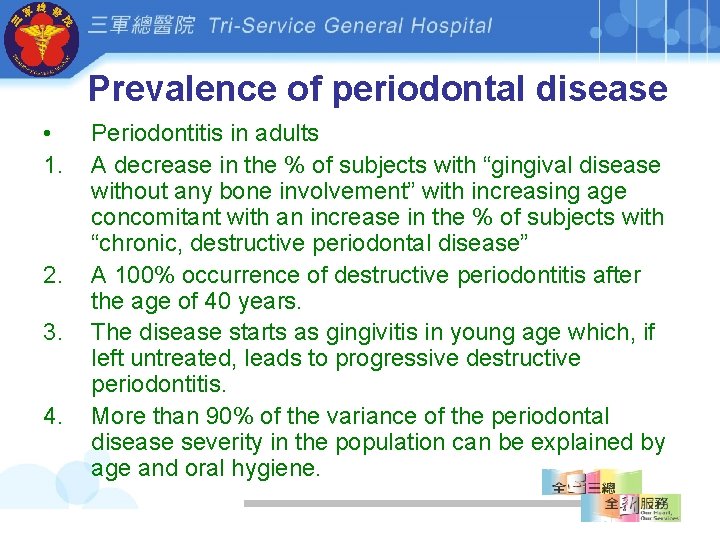
Prevalence of periodontal disease • 1. 2. 3. 4. Periodontitis in adults A decrease in the % of subjects with “gingival disease without any bone involvement” with increasing age concomitant with an increase in the % of subjects with “chronic, destructive periodontal disease” A 100% occurrence of destructive periodontitis after the age of 40 years. The disease starts as gingivitis in young age which, if left untreated, leads to progressive destructive periodontitis. More than 90% of the variance of the periodontal disease severity in the population can be explained by age and oral hygiene.
• Study found that 40% of the people had no change in their baseline attachment level, 27. 5% experienced only new lesions, 11. 1% only had attachment loss in sites that had attachment loss at baseline, and 20. 1% had both types of attachment loss. Beck 1995 • Study showed that attachment loss or alveolar bone loss progressed in only a small % of periodontal sites and subjects. • Adult periodontitis appears to progress fairly slowly and in only a minority of the adult population.

Why do patients have chronic periodontitis and what puts them at risk • • New paradigm for etiology of adult periodontitis : microorganisms are the cause of periodontitis, but clinical expression of the disease (extent and severity) depends on how the host responds to the extent and virulence of the microbial burden. Environmental factors and host factors involved in the initiation and progression of periodontal disease.
Corss-sectional studies in adults • It appears that severe forms of periodontitis affect a minority of the subjects in the industrialized countries, at proportions probably not exceeding 10% of the population. • The percentage of such subjects increases considerably with age and appears to reach its peak at the age of 50 to 60 years. • The increased tooth loss occurring after this age appears to account for the subsequent decline in prevalence. • The prevalence and severity of periodontitis in not markedly increased in African and Asian populations. • Data clearly showed that the prevalence of deep pocket and advanced attachment loss was more pronounced in non. Hispanic blacks and Hispanics than in non-Hispanic white subjects. • Current evidence suggests that prevalence of severe periodontitis is non uniformly distributed among various races, ethnicities種族淵源 , or socio-economic groups.
Periodontitis in children and adolescents • The prevalence of LAP varies in geographically and/or racially different populations. • In Caucasians, the disease appears to affect females more frequently than males (2. 5 times) and the prevalence is low (~0. 1%). In black subjects, the disease is more prevalence (over 1%) and the sex ratio appears to be reversed, since males are affected more frequently than females (male 2. 9 times than females). • In USA the prevalence of LAr. P and GAr. P was estimated at 0. 53% and 0. 13%, respectively
• Of the individuals diagnosed with LAP at baseline, 62% continued to display localized periodontitis lesion 6 years later, but 35% developed a generalized disease pattern. • It was found that 52% of the subjects in the latter group 20% of the subjects in the former group and only 5% of the controls exhibited at least one site with bone loss in their primary dentition. • At least in some young subjects with Ar. P the onset of the disease may be manifested in the primary dentition. Sjodin et al 1993
• From a study in the USA, among systemically healthy young black people with Ar. P, 71% showed alveolar bone loss adjacent to one or several primary teeth. Cogen et al 1992 • Subjects with signs of periodontal disease at a young age are likely to have further periodontal deterioration. Progression is more extensive at initially infected sites and among subjects of low socioeconomic status. Papapanou PN 1996 • Findings from larger studies suggested the distribution of the disease is fairly equal between the gender.
Why do patients have aggressive periodontitis and what puts them at risk • Highly toxic strains produce 10 to 20 times the levels of leukotoxin as dominimally toxic strains (A. a). Patient with LAr. G are more likely to harbor the highly leukotoxic strains than periodontally healthy persons or persons with chronic periodontitis. • Depressed neutrophil chemotaxis is a consistent finding among patients with localized or generalized forms of the disease. Studies have showed that 70% to 75% of patients with localized disease have depressed neutrophil chemotaxis.
Periodontitis and tooth loss • The results indicate that the reason underlying the vast majority of extraction in ages up to 40 to 45 years is dental caries. However, in older age cohorts, periodontal disease becomes about equally responsible for tooth loss. • Overall, periodontitis is thought to account for 30 -35% of all tooth extractions while caries and its sequelae account for up to 50%. In addition, caries appears to be the principle reason for extraction in cases of total tooth clearance. • Finally, identified risk factors for tooth loss include smoking, perceived poor dental health, socio-behavioral trait, and periodontitis scores.
Studies of putative risk factors for periodontitis: Multiple factors: …………. . • Tobacco smoking: (affect the vasculature the humoral immune system, the cellular immune and inflammatory systems, and exercise effects through the cytokine and adhesion molecule network. )
• Diabetes mellitus: may contribute to impaired periodontal conditions. • HIV: dependent upon the immunologic competency of the host as well as the local inflammatory response to both typical and atypical subgingival microbiota. HIV infection appears to elevate risk for severe periodontits
• Nutrition: as a risk factor is lacking • Low socioeconomic and educational status: does not appear to affect the pathogenesis directly • Osteoporosis: longitudinal data are scare, and multivariate analysis produce inconsistent results • Infrequent dental visit: multivariate analysis are inconsistent and risk assessments and intervention studies have not been completed
• Bacteria: subjects prediction usually is more accurate than site prediction. The absence of any of the group of 5 to 7 putative periodontal pathogens is a reliable indicator for the absence of future clinical attachment loss for most patients. • Bleeding on probing: BOP alone is not a predictor of elevated risk for future loss of clinical attachment, but a lack of BOP, especially on 2 or more occasions, is a an excellent indicator of periodontal health (predictive value 0. 972)
• Previous periodontal disease: the risk for future periodontal deterioration in a given individual is strongly associated with presence and severity of existing periodontitis. • Past disease is only a good clinical predictor but it is unclear whether past disease is predictive of both incidental attachment loss and progression of current disease.
• Genetic factors are strongly associated with the aggressive forms and, to a lesser extent, with chronic periodontitis. • Stress: case (NUG) control and a few short-term longitudinal studies indicate associations. multivariate and intervention analysis are needed.
• Risks for moderate to severe periodontitis that have been identified include cigarette smoking, advancing age, diabetes mellitus and certain other systemic conditions. • These include, osteoporosis and HIV infection and conditions such as irradiation and immunosuppressive drugs, that interfere with normal host defenses, specific pathogenic bacteria in the subgingival flora, microbial deposits and poor oral hygiene status, bleeding on probing, previous disease experience and severity, and inheritance.
• Pathogenic bacteria in the subgingival flora are strongly linked to causation of the disease, while bleeding on probing may indicate enhanced risk for future disease but are not known to be involved in causation and advancing age may be background factors that enhance susceptibility. • Cigarette smoking can be modified to lower the level of risk, but ageing are immutable and cannot be modified but need to be considered in overall risk assessment. • A goal of periodontal diagnosis, treatment planning and therapy is to lower risk for future periodontal deterioration to the maximal extent. Page RC. Beck JD. International Dental Journal. 47(2): 61 -87, 1997 Apr.
- Slides: 55