Natural Infrastructure Take me to the River Shea
- Slides: 42
Natural Infrastructure: Take me to the River Shea Thorvaldsen Director of Infrastructure Mc. Laren Engineering Group
About Mc. Laren Engineering Group • A full service engineering firm with 220 employees and 9 locations • Has been at the forefront of ferry transportation since 1986 • Designed over 65 ferry landings in the New York Metro area • The value of these installations range from $250, 000 to $90, 000
Safety Objective • To get people safely, quickly and comfortably from vessel to shore. • Accommodate this passage in foul weather – to a reasonable and rational limit. • Considerations: – Tides – daily range in NYC 4. 5 ft to 9 ft, extreme ranges of up to 20 feet. - Maine 20 ft, Baltimore 2 ft. – Moving parts
Site Selection • Find or Create a Harbor • The challenges to safety and operations are – Waves – Wind – Current – Shipping Channels – wake and surge – Fishing Piers & Certain shore side activities – Marinas, floating docks – Kayaks, Sailboats, recreational vessels
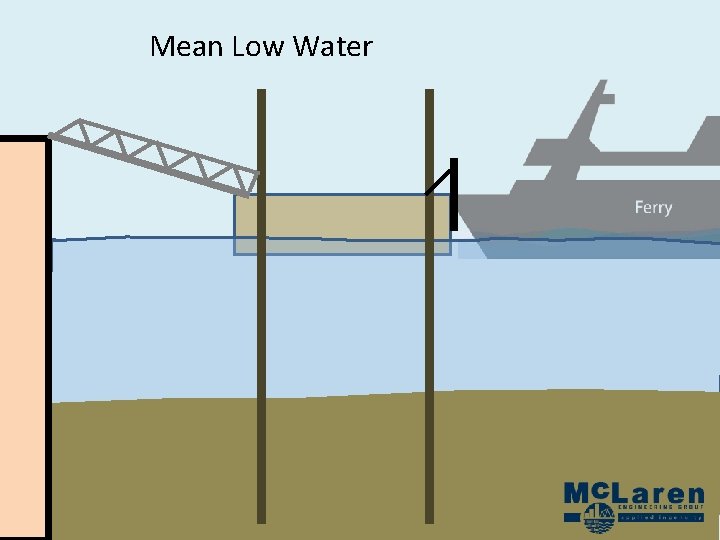
Systems • Fender Racks – Staten Island Ferry • Gantry Bridges – one ramp from vessel to upland- long and heavy bridge required for large tidal ranges • Floating Landings – Flexible, accommodates tidal changes
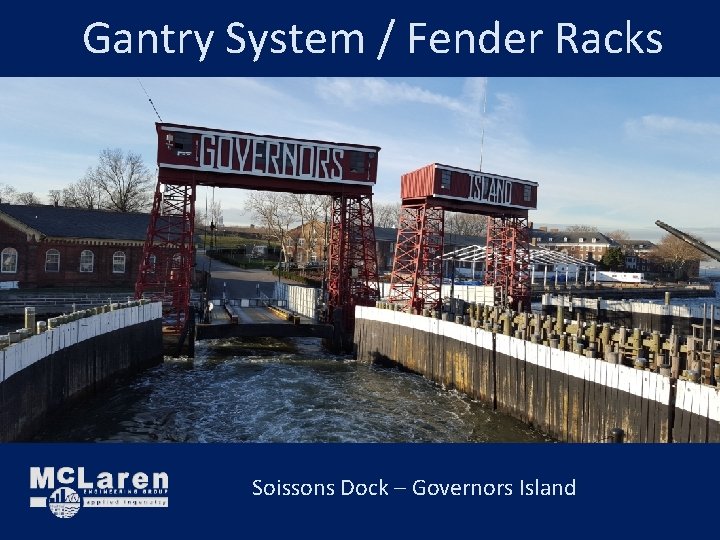
Gantry System / Fender Racks Soissons Dock – Governors Island
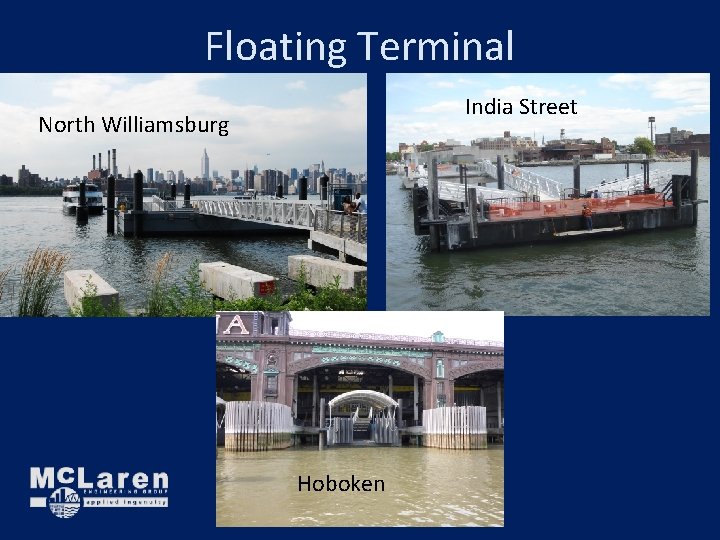
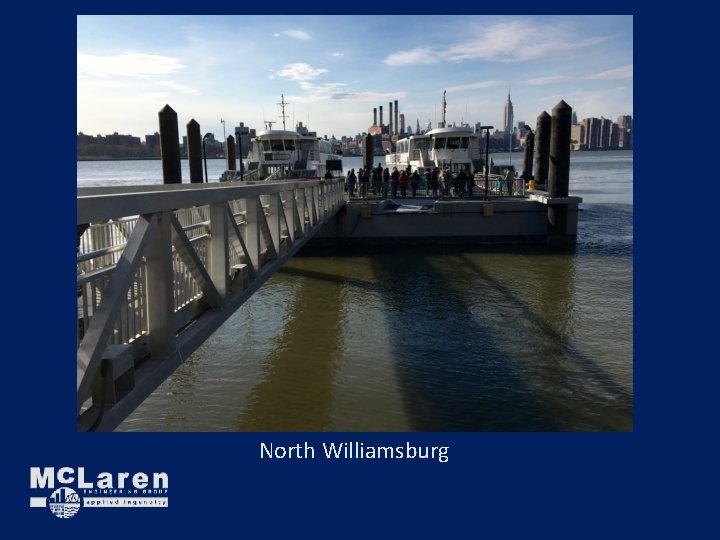
Floating Terminal India Street North Williamsburg Hoboken
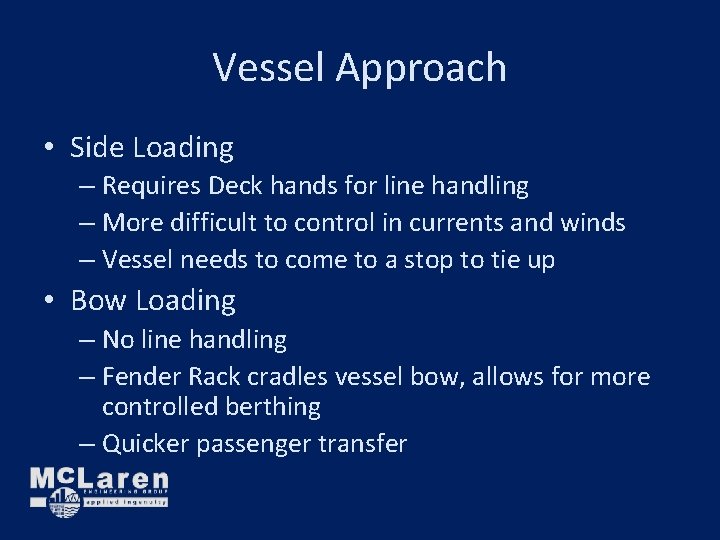
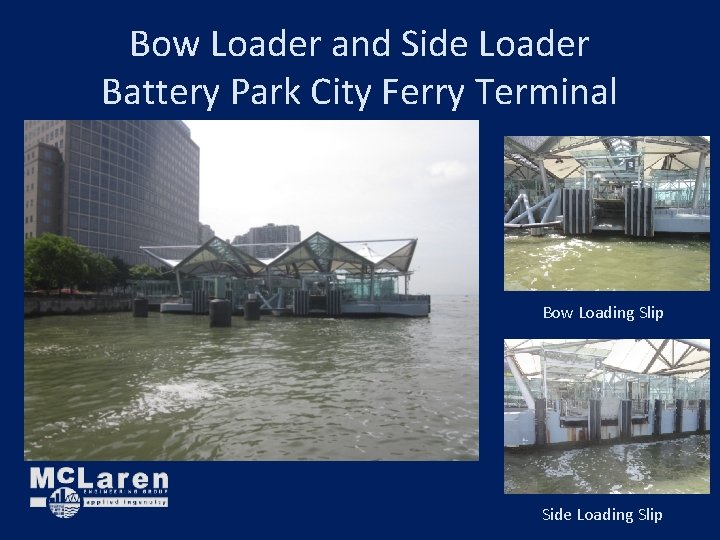
Vessel Approach • Side Loading – Requires Deck hands for line handling – More difficult to control in currents and winds – Vessel needs to come to a stop to tie up • Bow Loading – No line handling – Fender Rack cradles vessel bow, allows for more controlled berthing – Quicker passenger transfer
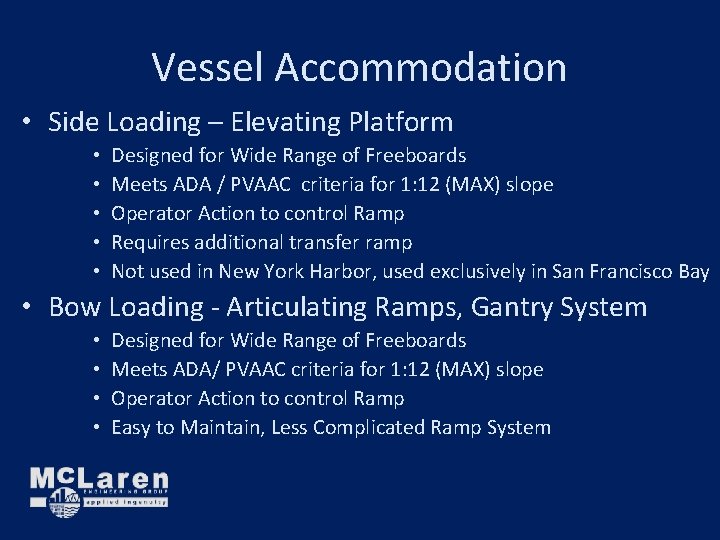
Vessel Accommodation • Side Loading – Elevating Platform • • • Designed for Wide Range of Freeboards Meets ADA / PVAAC criteria for 1: 12 (MAX) slope Operator Action to control Ramp Requires additional transfer ramp Not used in New York Harbor, used exclusively in San Francisco Bay • Bow Loading - Articulating Ramps, Gantry System • • Designed for Wide Range of Freeboards Meets ADA/ PVAAC criteria for 1: 12 (MAX) slope Operator Action to control Ramp Easy to Maintain, Less Complicated Ramp System
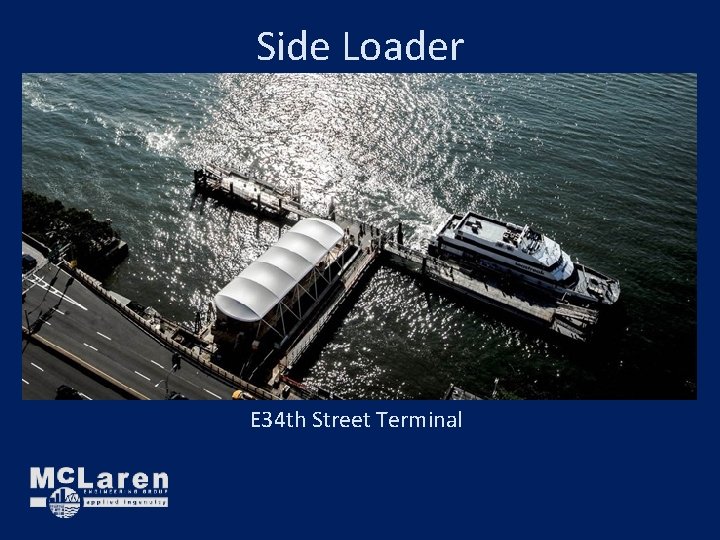
Side Loader E 34 th Street Terminal
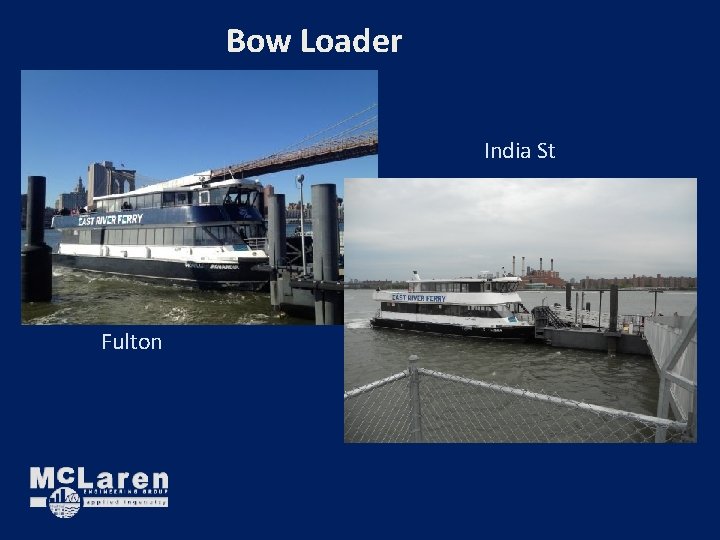
Bow Loader India St Fulton
Bow Loader and Side Loader Battery Park City Ferry Terminal Bow Loading Slip Side Loading Slip
North Williamsburg
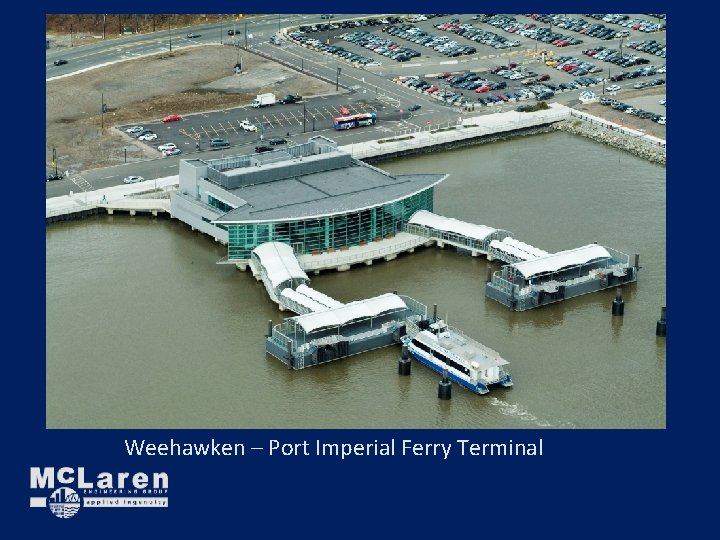
Weehawken – Port Imperial Ferry Terminal
Mean Low Water
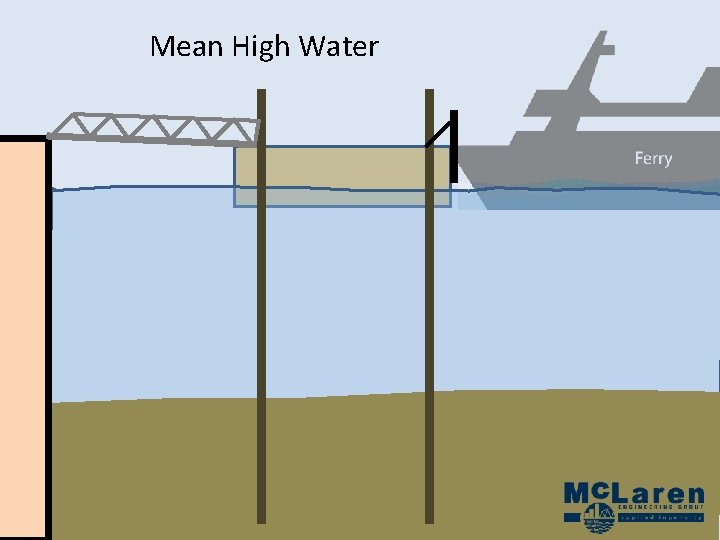
Mean High Water
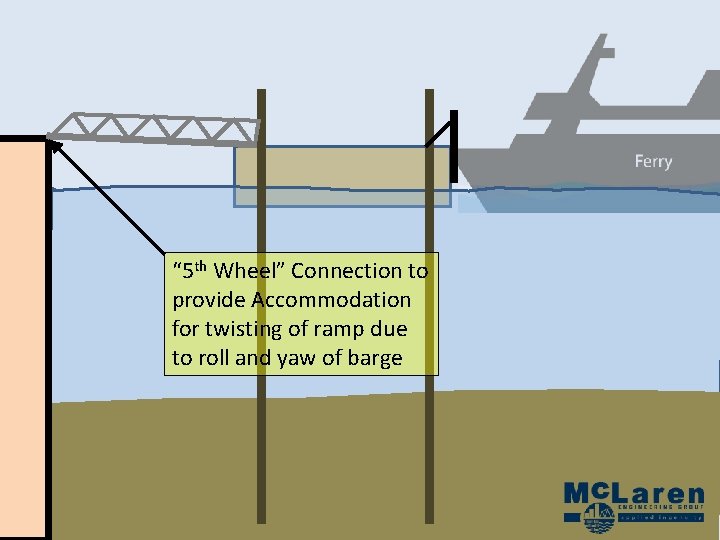
“ 5 th Wheel” Connection to provide Accommodation for twisting of ramp due to roll and yaw of barge
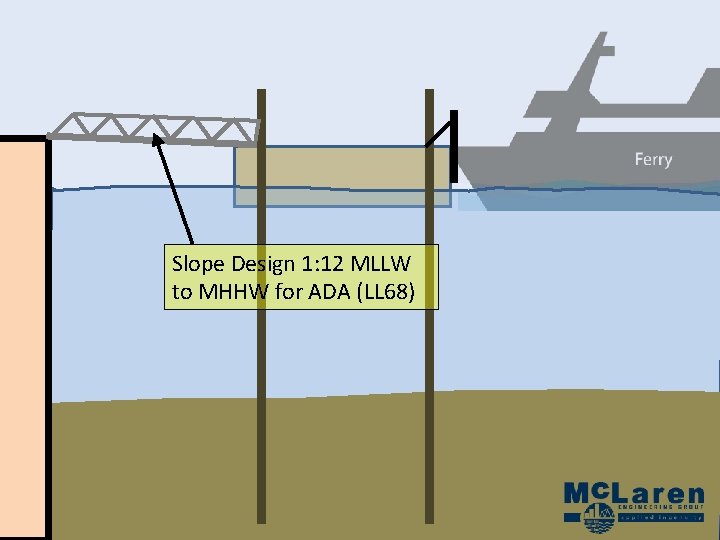
Slope Design 1: 12 MLLW to MHHW for ADA (LL 68)
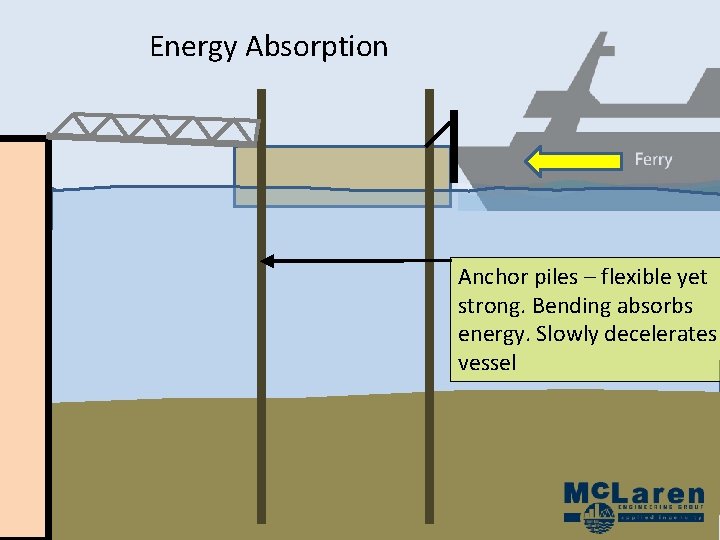
Energy Absorption Anchor piles – flexible yet strong. Bending absorbs energy. Slowly decelerates vessel
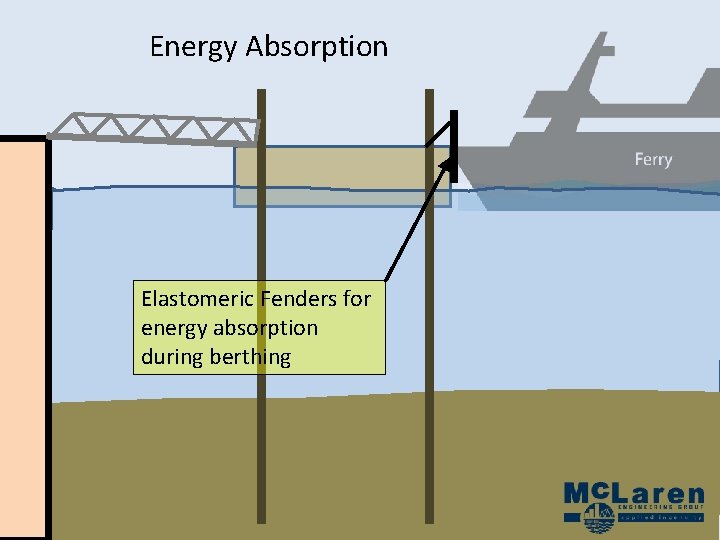
Energy Absorption Elastomeric Fenders for energy absorption during berthing
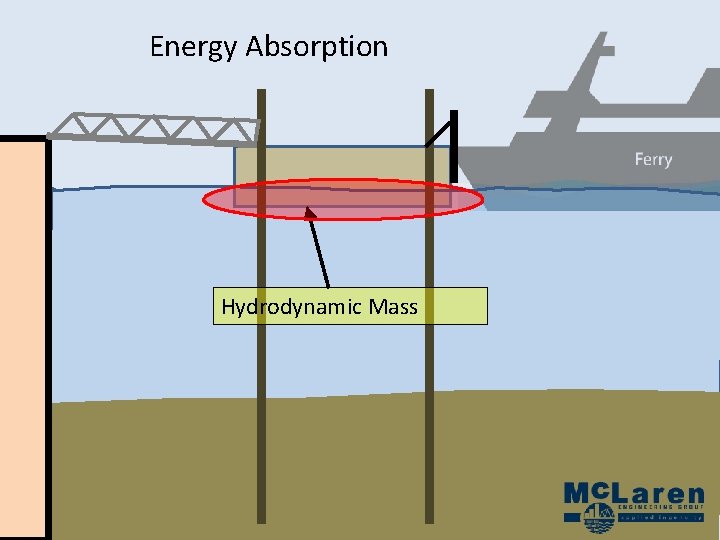
Energy Absorption Hydrodynamic Mass
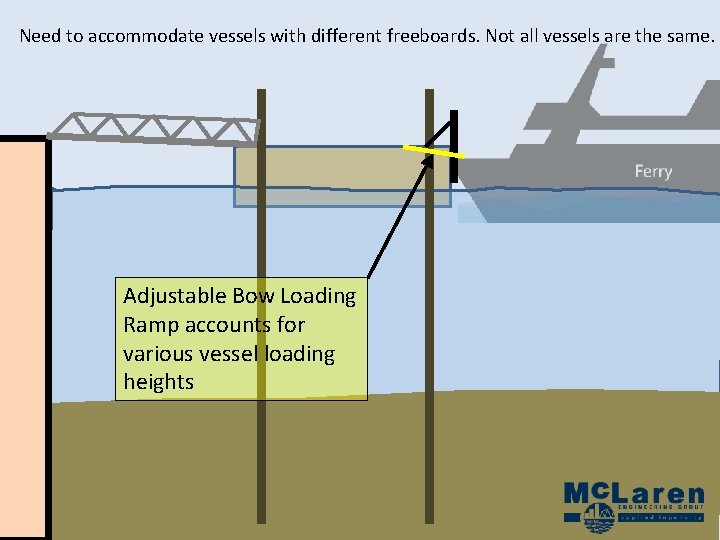
Need to accommodate vessels with different freeboards. Not all vessels are the same. Adjustable Bow Loading Ramp accounts for various vessel loading heights
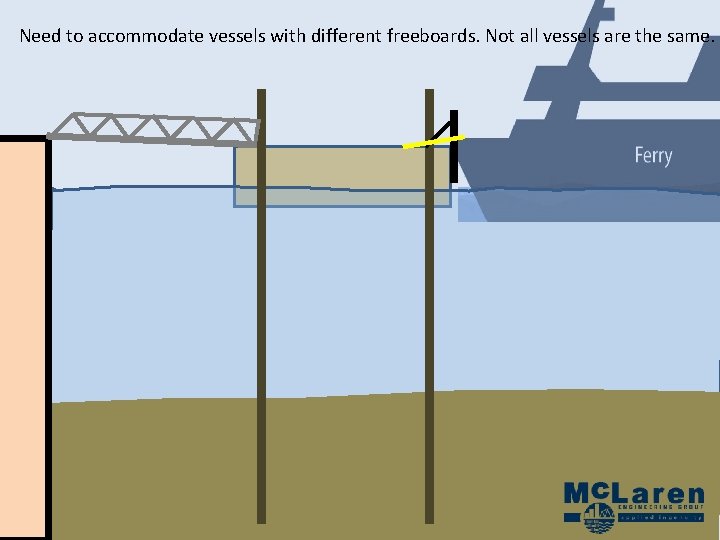
Need to accommodate vessels with different freeboards. Not all vessels are the same.
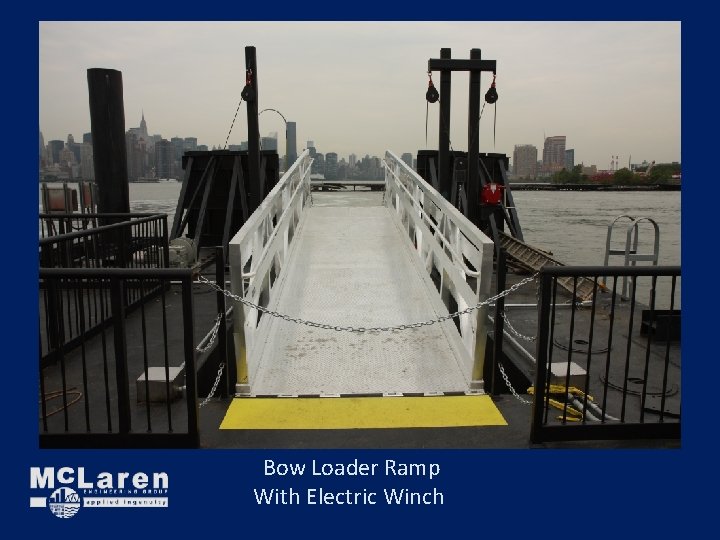
Bow Loader Ramp With Electric Winch
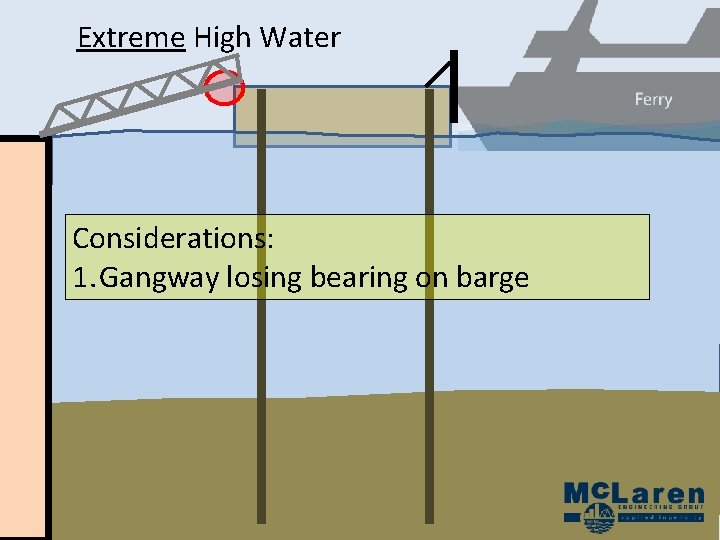
Extreme High Water Considerations: 1. Gangway losing bearing on barge
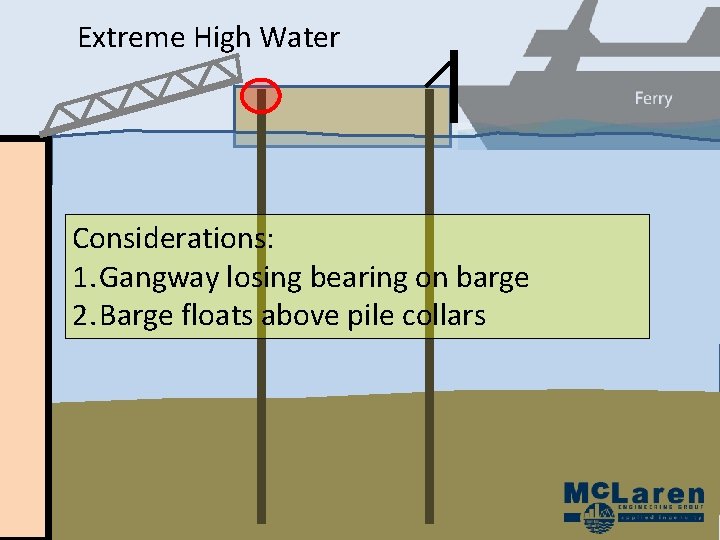
Extreme High Water Considerations: 1. Gangway losing bearing on barge 2. Barge floats above pile collars
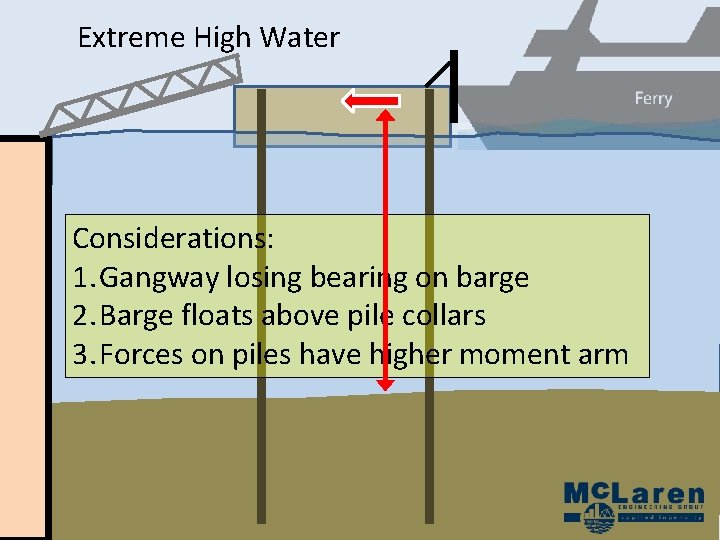
Extreme High Water Considerations: 1. Gangway losing bearing on barge 2. Barge floats above pile collars 3. Forces on piles have higher moment arm
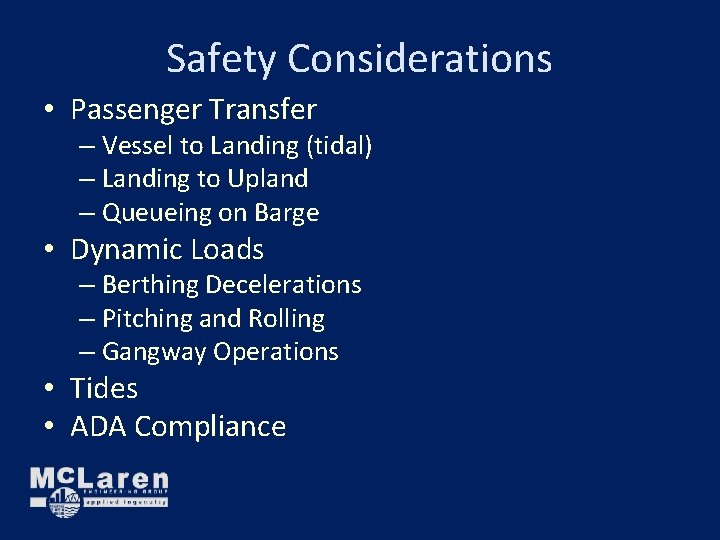
Safety Considerations • Passenger Transfer – Vessel to Landing (tidal) – Landing to Upland – Queueing on Barge • Dynamic Loads – Berthing Decelerations – Pitching and Rolling – Gangway Operations • Tides • ADA Compliance
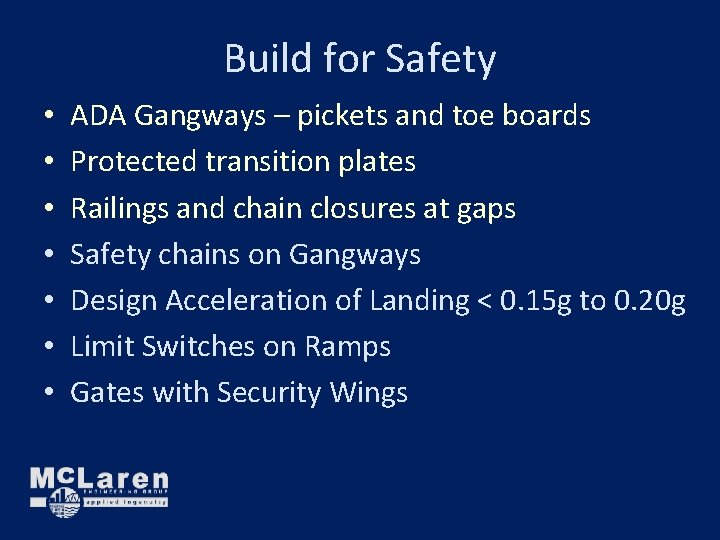
Build for Safety • • ADA Gangways – pickets and toe boards Protected transition plates Railings and chain closures at gaps Safety chains on Gangways Design Acceleration of Landing < 0. 15 g to 0. 20 g Limit Switches on Ramps Gates with Security Wings
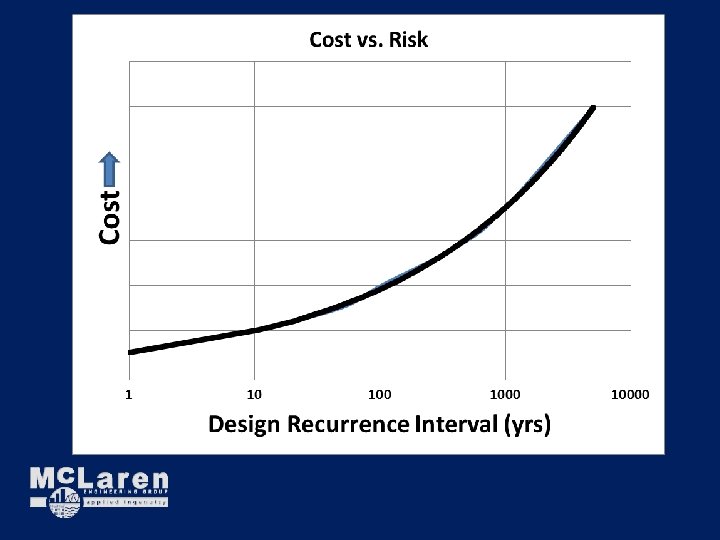
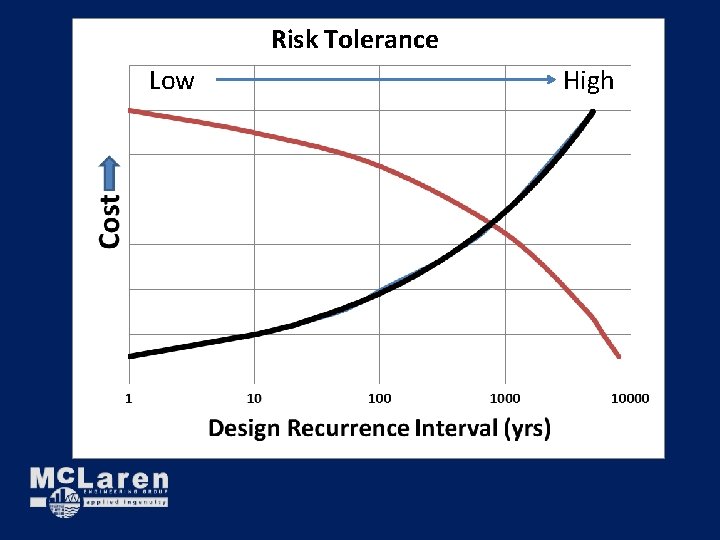
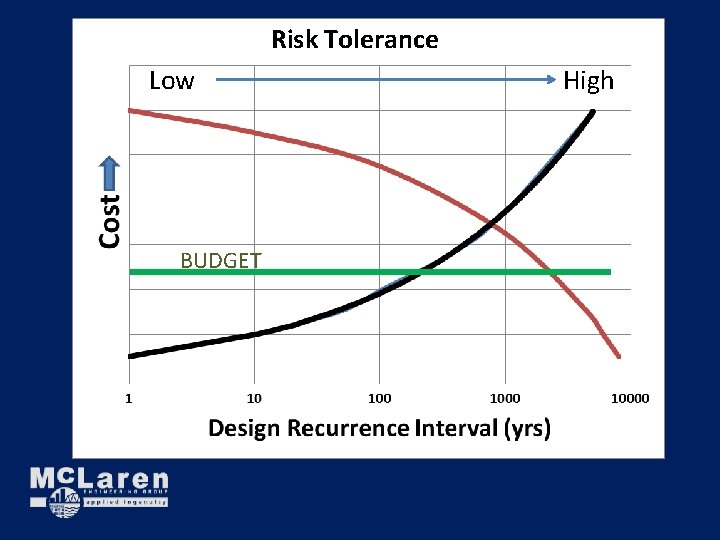
Risk Tolerance Low High
Risk Tolerance Low BUDGET High
Design Loads • Wind • Waves • Berthing – Service – Abnormal – Extreme • Vessel Impact • Ice (Flows and Crushing) • Current • Passengers
Operating Conditions Factor of Safety per Codes (1. 67 to 2. 0) • • • Berthing Velocities Wind to 45 mph Waves, as generated by these winds Passenger accelerations limited Fatigue Considerations – Anchor Piles – Gangways (Aluminum)
Extreme Conditions (Survivability F. S. =1. 15) • Extreme Storm wind and waves (100 year, 500 year, etc. ) • Vessel loss of control – 4 to 5 knot collision • Ice • Extreme high (or low) water levels
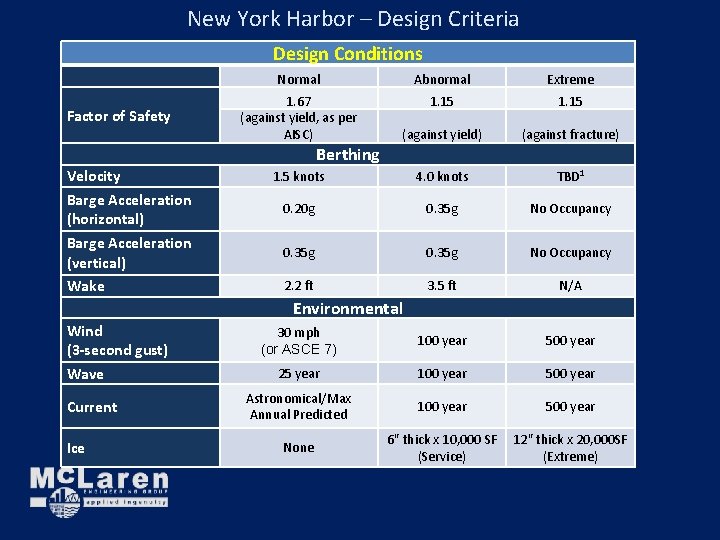
New York Harbor – Design Criteria Design Conditions Factor of Safety Normal Abnormal Extreme 1. 67 (against yield, as per AISC) 1. 15 (against yield) (against fracture) 1. 5 knots 4. 0 knots TBD 1 0. 20 g 0. 35 g No Occupancy 2. 2 ft 3. 5 ft N/A 30 mph (or ASCE 7) 100 year 500 year 25 year 100 year 500 year Astronomical/Max Annual Predicted 100 year 500 year None 6" thick x 10, 000 SF (Service) 12" thick x 20, 000 SF (Extreme) Berthing Velocity Barge Acceleration (horizontal) Barge Acceleration (vertical) Wake Environmental Wind (3 -second gust) Wave Current Ice
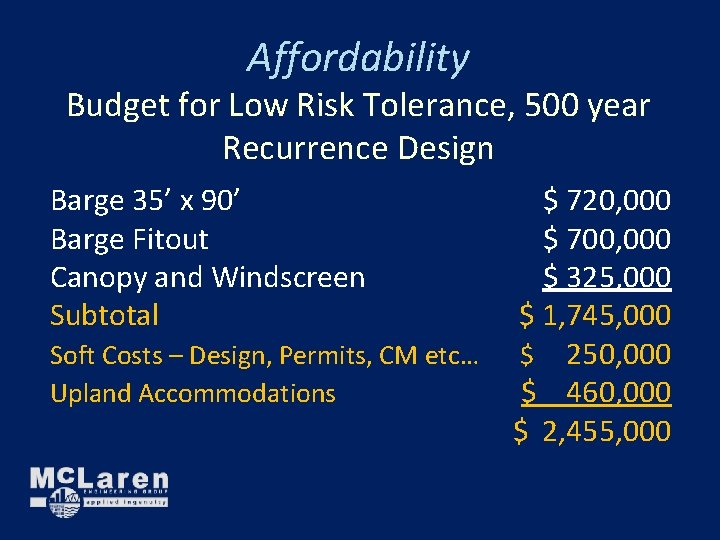
Affordability Budget for Low Risk Tolerance, 500 year Recurrence Design Barge 35’ x 90’ Barge Fitout Canopy and Windscreen Subtotal Soft Costs – Design, Permits, CM etc… Upland Accommodations $ 720, 000 $ 700, 000 $ 325, 000 $ 1, 745, 000 $ 250, 000 $ 460, 000 $ 2, 455, 000
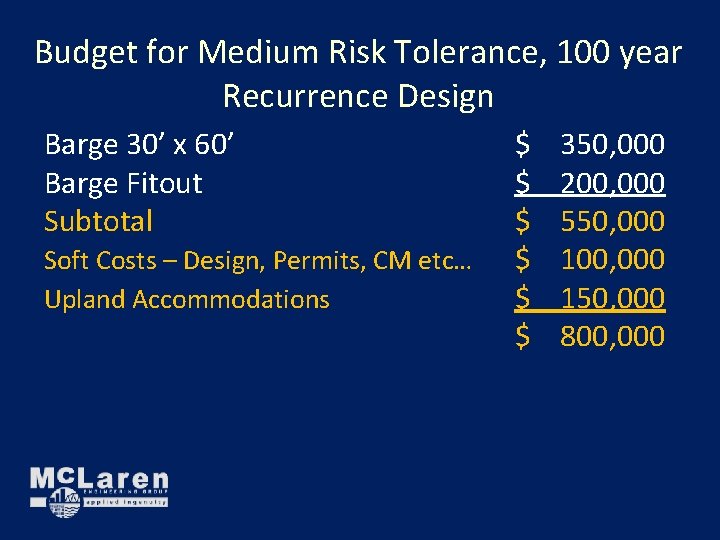
Budget for Medium Risk Tolerance, 100 year Recurrence Design Barge 30’ x 60’ Barge Fitout Subtotal Soft Costs – Design, Permits, CM etc… Upland Accommodations $ $ $ 350, 000 200, 000 550, 000 100, 000 150, 000 800, 000
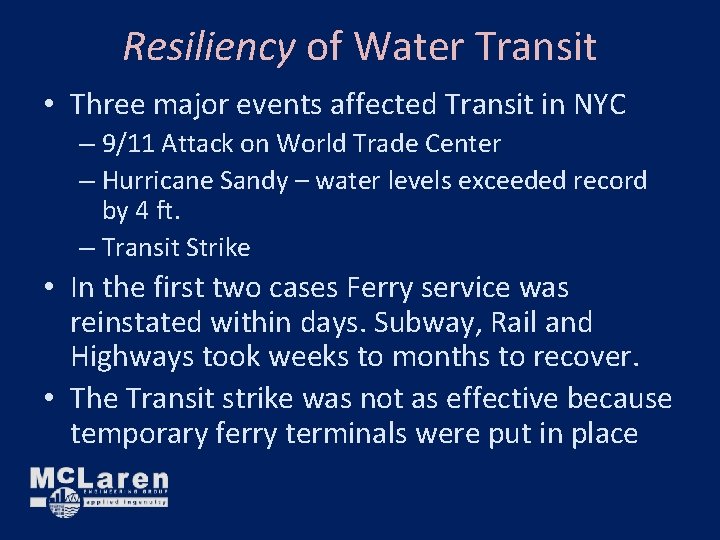
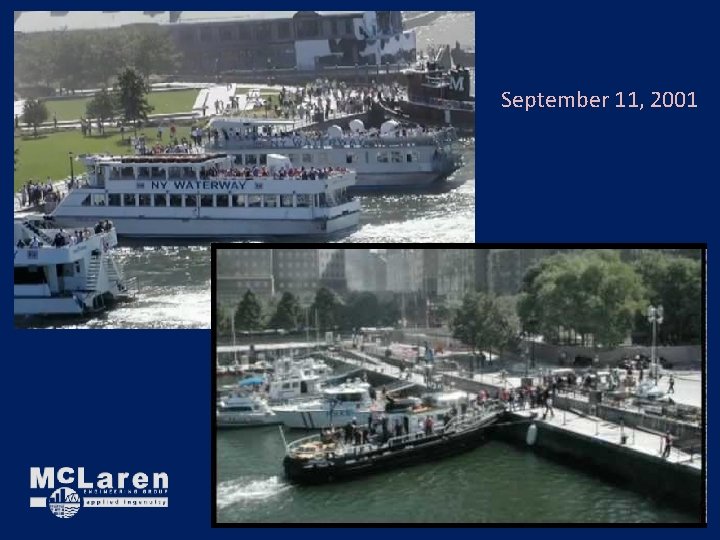
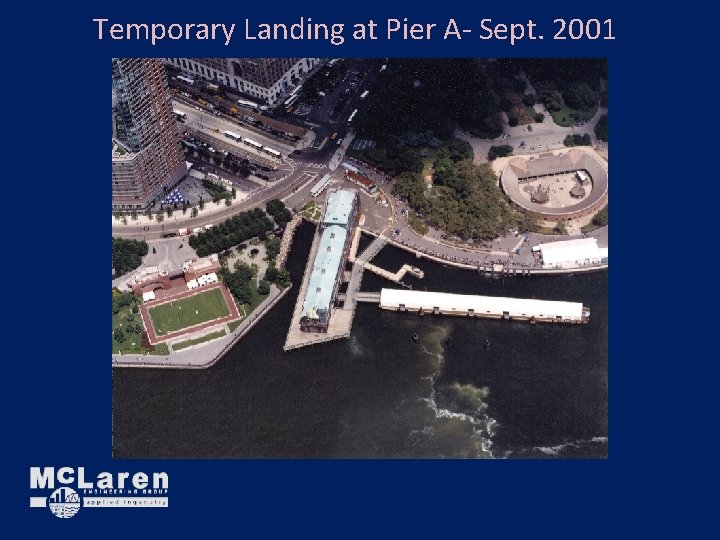
Resiliency of Water Transit • Three major events affected Transit in NYC – 9/11 Attack on World Trade Center – Hurricane Sandy – water levels exceeded record by 4 ft. – Transit Strike • In the first two cases Ferry service was reinstated within days. Subway, Rail and Highways took weeks to months to recover. • The Transit strike was not as effective because temporary ferry terminals were put in place
September 11, 2001
Temporary Landing at Pier A- Sept. 2001
Thank You