
Situational Leadership Donna Shea M Ed Objectives By
Situational Leadership Donna Shea, M. Ed.
Objectives By the end of this presentation you should be able to: • Discuss the four leadership styles • Discuss how Situational Leadership applies to staff management • Asses your teachers for their developmental level • Apply the appropriate leadership style for individual teachers and task groups
Conventional Leadership What’s wrong with this picture? • Hands-on: The Micromanager • Hands-off: The Democrat
Leadership Style How you influence performance: • Directive Behavior – Clearly stating who, what, when, where, how, and why • Supportive Behavior – Listening, supporting, encouraging, facilitate problem -solving, and decision-making
Situational Leadership Four Leadership Styles derived from combinations of Directive and Supportive Behavior: • • S 1 S 2 S 3 S 4 Directing Coaching Supporting Delegating
S 1 Directing • Provide specific, clear instructions • Provide very close supervision
S 2 Coaching • Continue to provide direction and close supervision • Offer rationale and explain decisions • Solicit Suggestions • Give support for progress
S 3 Supporting • Facilitate and support task accomplishments • Share decision-making responsibility
S 4 Delegating • Relinquish decision-making and problemsolving
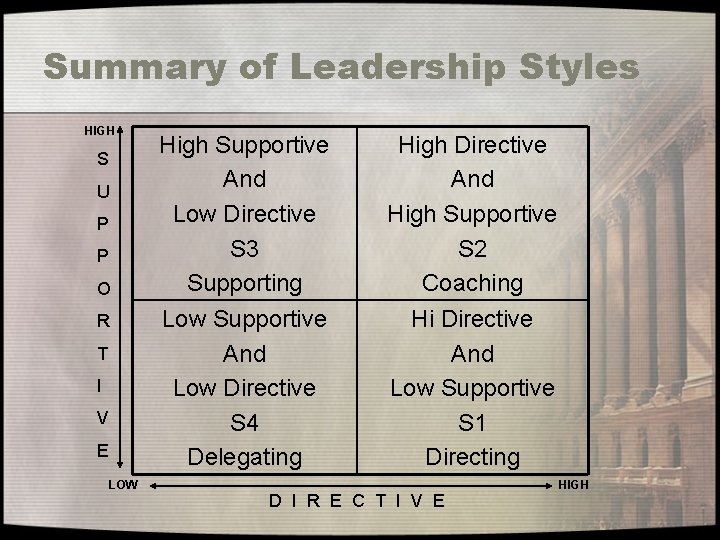
Summary of Leadership Styles HIGH S U P P O R T I V E LOW High Supportive And Low Directive S 3 Supporting High Directive And High Supportive S 2 Coaching Low Supportive And Low Directive S 4 Delegating Hi Directive And Low Supportive S 1 Directing D I R E C T I V E HIGH
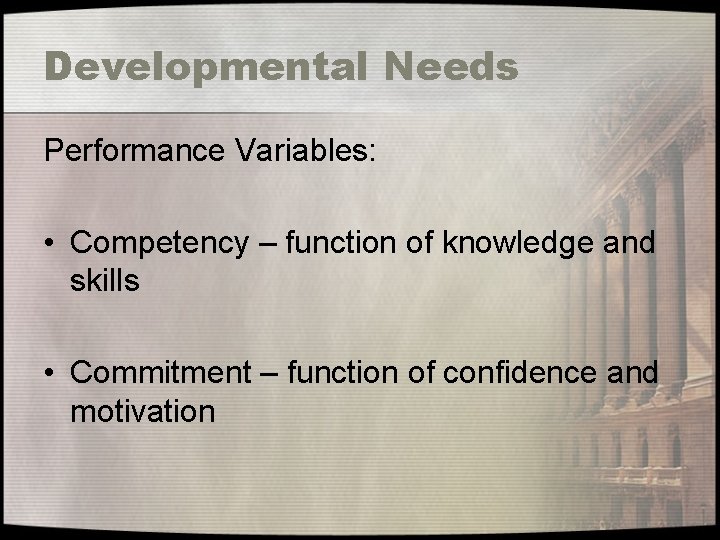
Developmental Needs Performance Variables: • Competency – function of knowledge and skills • Commitment – function of confidence and motivation
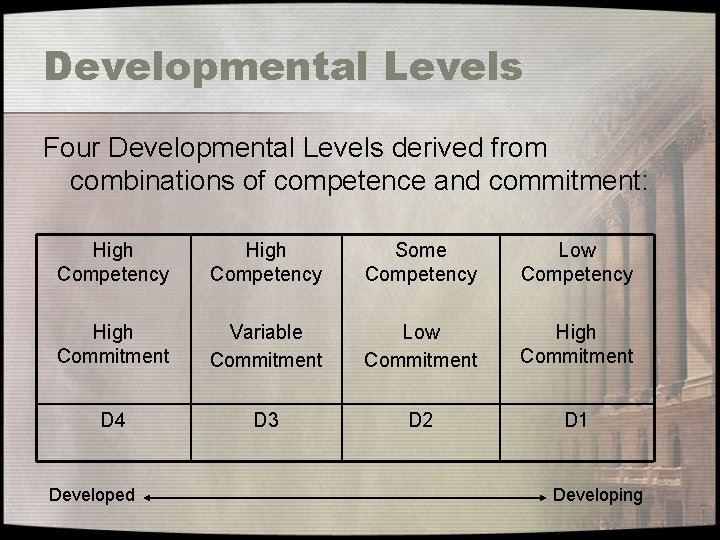
Developmental Levels Four Developmental Levels derived from combinations of competence and commitment: High Competency Some Competency Low Competency High Commitment Variable Commitment Low Commitment High Commitment D 4 D 3 D 2 D 1 Developed Developing
Role of Instructor: To do for the teacher what the teacher can’t do for him or herself!
D 1 Beginner • Very Enthusiastic • Little or no skills S 1 Directive Behavior • Structure, control and supervise Role of the Supervisor • Utilize demonstration, step-by-step hand outs, and guided practice
D 2 Quitter – D 2 Wall • Little or no skills • Discourage, disillusioned, lost enthusiasm, harder than expected S 2 Coaching • Direct and Support Role of Supervisor: • Close supervision with assistance • Moral support and encouragement
D 3 Reluctant Participant • Good skills • No confidence S 3 Supporting • Praise, listen, and facilitate Role of Supervisor: • Reinforcement • Help only when requested • Provide moral support and encouragement
D 4 Delegating • Good to excellent skills with good to high confidence and self-esteem D 4 Delegating • Turn over responsibility for day-to-day decision making and practice Role of Supervisor: • Independent practice • Performance evaluation
Leadership Style Game Plan • Competency and/or commitment in one area does not ensure equal competency or commitment in all areas • Achieving competency and/or commitment does not ensure maintaining competency or commitment
Situational Leadership and Group Interaction Characteristics of a well oiled workgroup: • • Purpose and Values Empowerment Relationships and Communication Flexibility Optimal Performance Recognition and Appreciation Morale
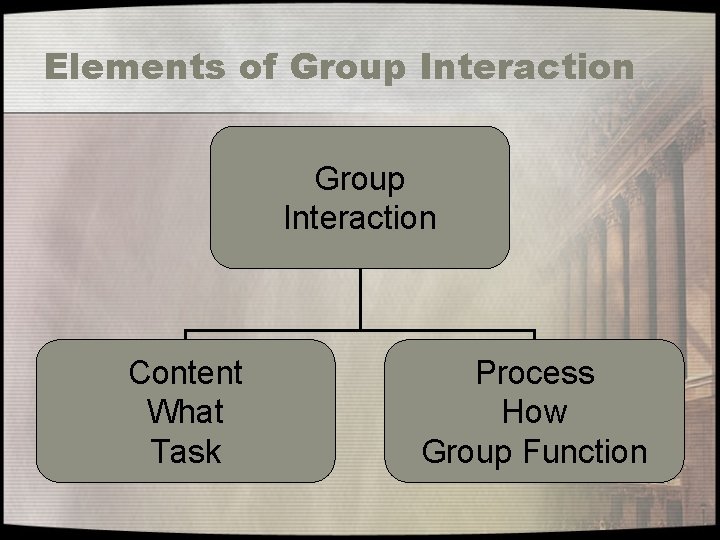
Elements of Group Interaction Content What Task Process How Group Function
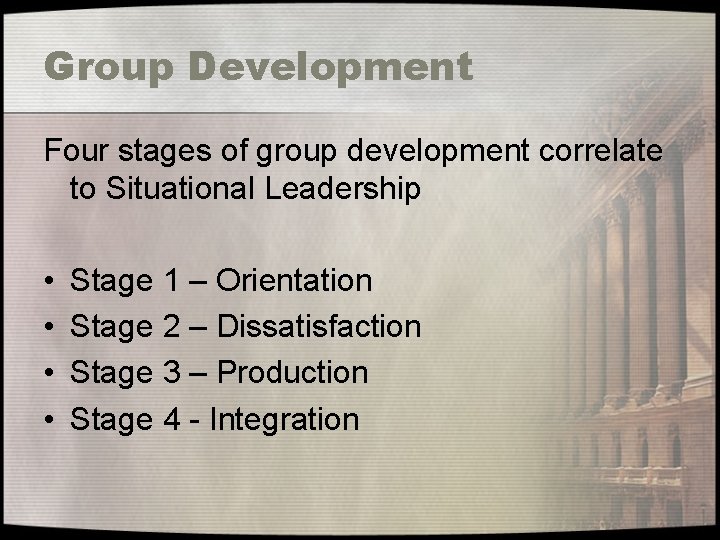
Group Development Four stages of group development correlate to Situational Leadership • • Stage 1 – Orientation Stage 2 – Dissatisfaction Stage 3 – Production Stage 4 - Integration
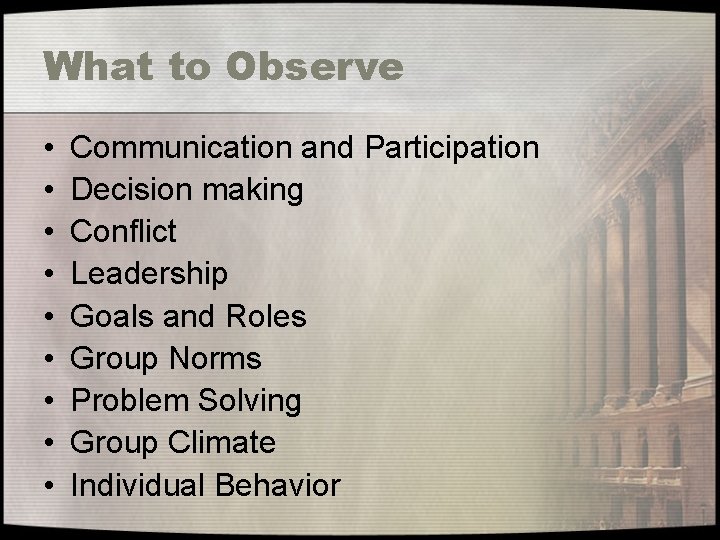
What to Observe • • • Communication and Participation Decision making Conflict Leadership Goals and Roles Group Norms Problem Solving Group Climate Individual Behavior
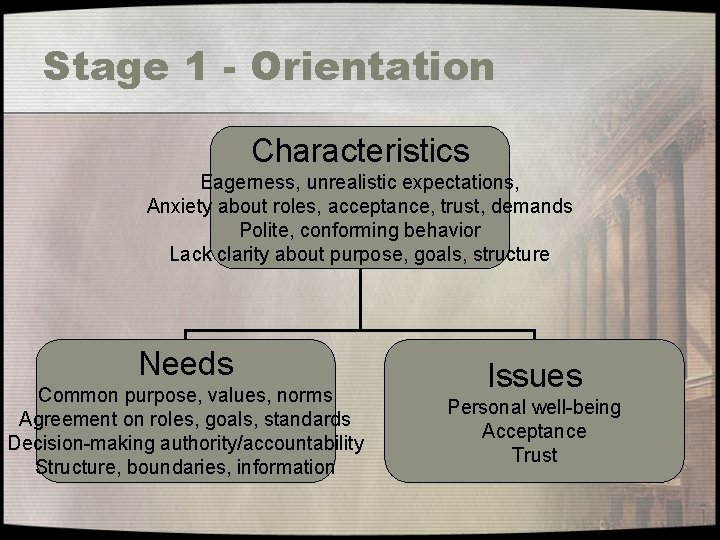
Stage 1 - Orientation Characteristics Eagerness, unrealistic expectations, Anxiety about roles, acceptance, trust, demands Polite, conforming behavior Lack clarity about purpose, goals, structure Needs Common purpose, values, norms Agreement on roles, goals, standards Decision-making authority/accountability Structure, boundaries, information Issues Personal well-being Acceptance Trust
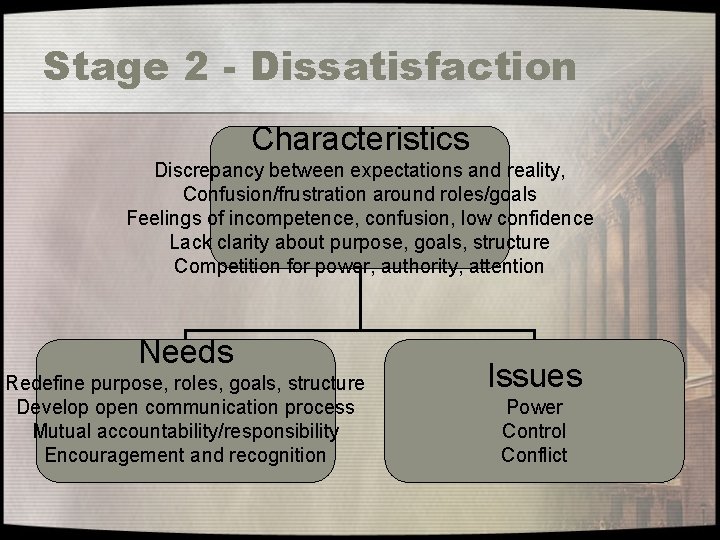
Stage 2 - Dissatisfaction Characteristics Discrepancy between expectations and reality, Confusion/frustration around roles/goals Feelings of incompetence, confusion, low confidence Lack clarity about purpose, goals, structure Competition for power, authority, attention Needs Redefine purpose, roles, goals, structure Develop open communication process Mutual accountability/responsibility Encouragement and recognition Issues Power Control Conflict
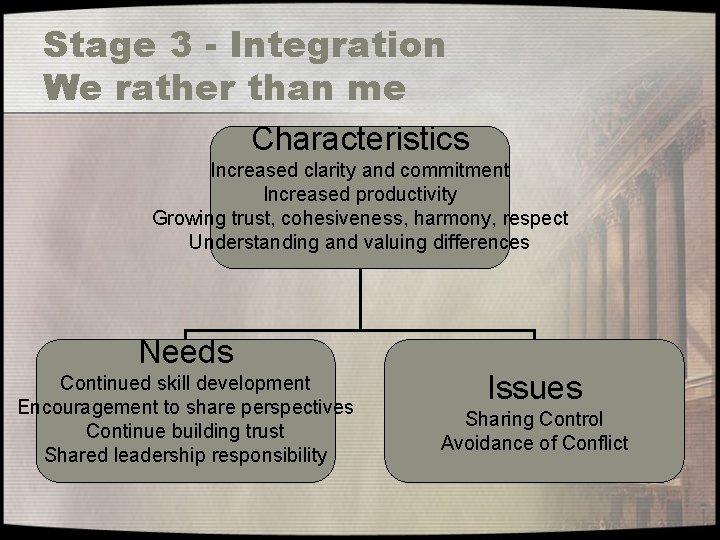
Stage 3 - Integration We rather than me Characteristics Increased clarity and commitment Increased productivity Growing trust, cohesiveness, harmony, respect Understanding and valuing differences Needs Continued skill development Encouragement to share perspectives Continue building trust Shared leadership responsibility Issues Sharing Control Avoidance of Conflict
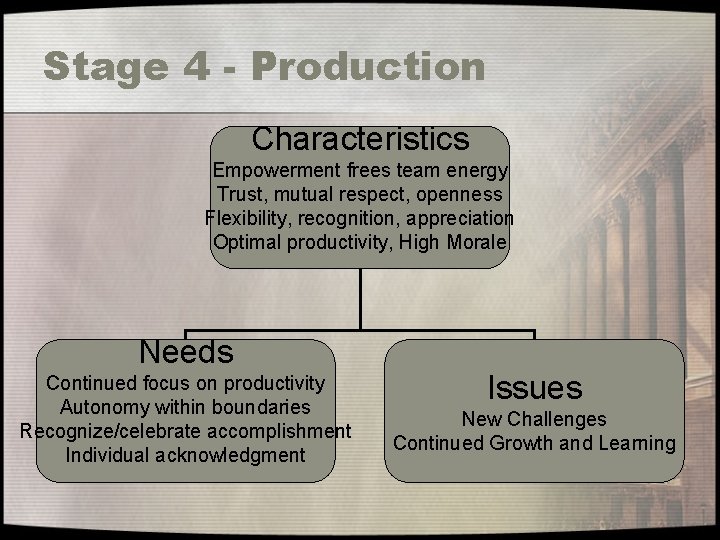
Stage 4 - Production Characteristics Empowerment frees team energy Trust, mutual respect, openness Flexibility, recognition, appreciation Optimal productivity, High Morale Needs Continued focus on productivity Autonomy within boundaries Recognize/celebrate accomplishment Individual acknowledgment Issues New Challenges Continued Growth and Learning
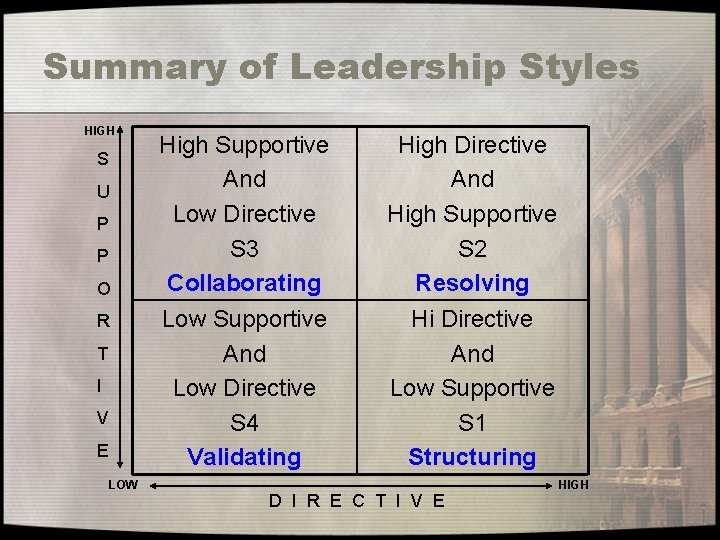
Summary of Leadership Styles HIGH S U P P O R T I V E LOW High Supportive And Low Directive S 3 Collaborating High Directive And High Supportive S 2 Resolving Low Supportive And Low Directive S 4 Validating Hi Directive And Low Supportive S 1 Structuring D I R E C T I V E HIGH
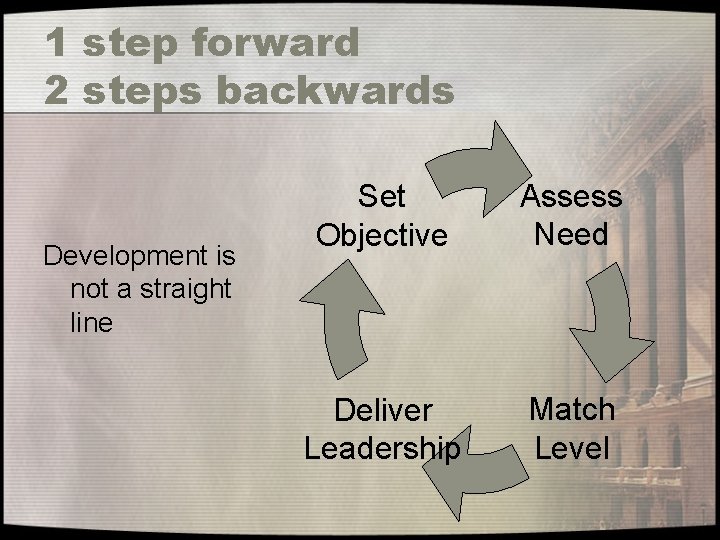
1 step forward 2 steps backwards Development is not a straight line Set Objective Assess Need Deliver Leadership Match Level
Thank you for your attention. Good luck!
- Slides: 29