
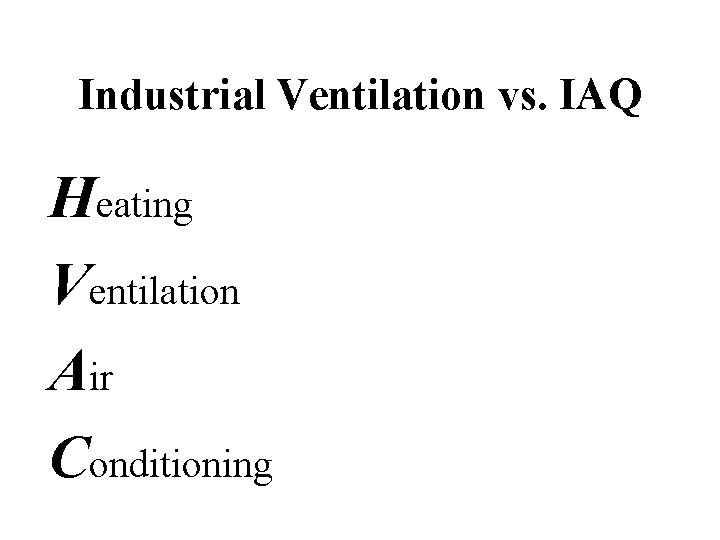
Industrial Ventilation vs IAQ Heating Ventilation Air Conditioning


- Slides: 130
Industrial Ventilation vs. IAQ Heating Ventilation Air Conditioning
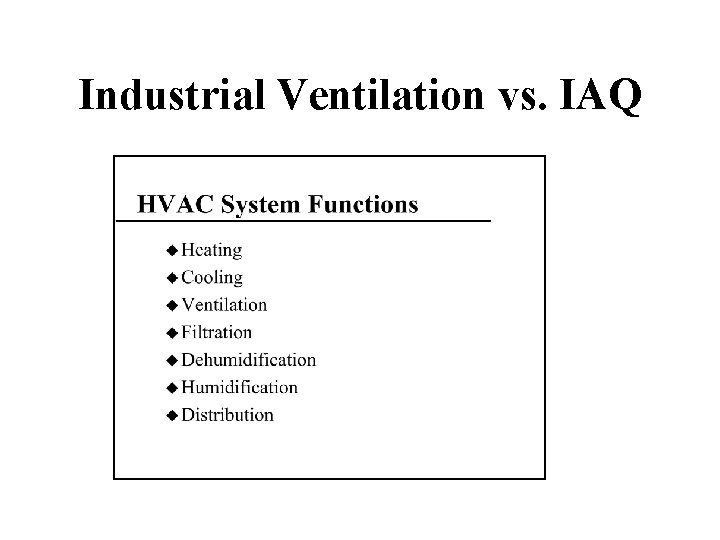
Industrial Ventilation vs. IAQ
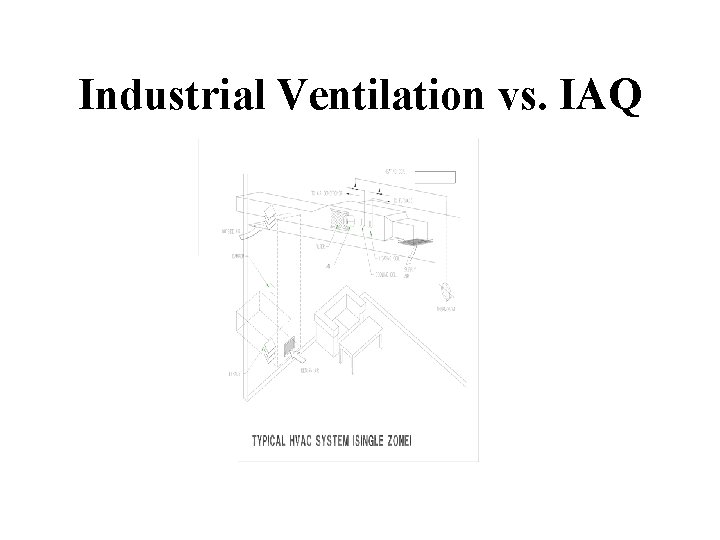
Industrial Ventilation vs. IAQ
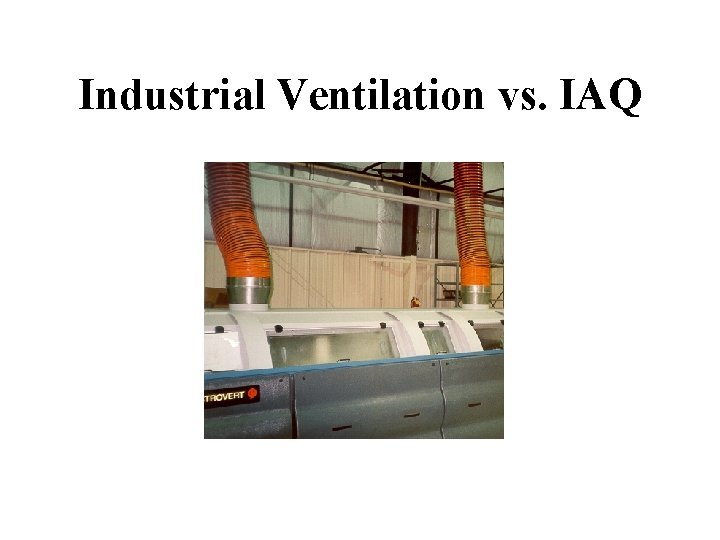
Industrial Ventilation vs. IAQ
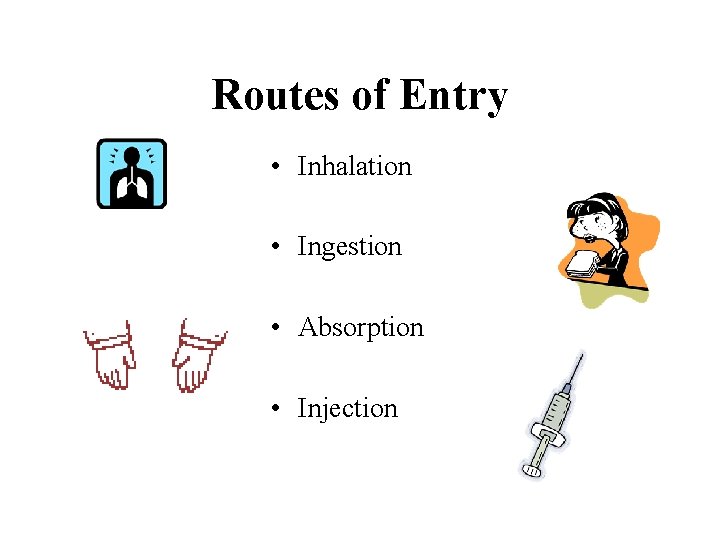
Routes of Entry • Inhalation • Ingestion • Absorption • Injection
Control Options • • • Process change Substitution Isolation Ventilation Administrative control Personal protective equipment
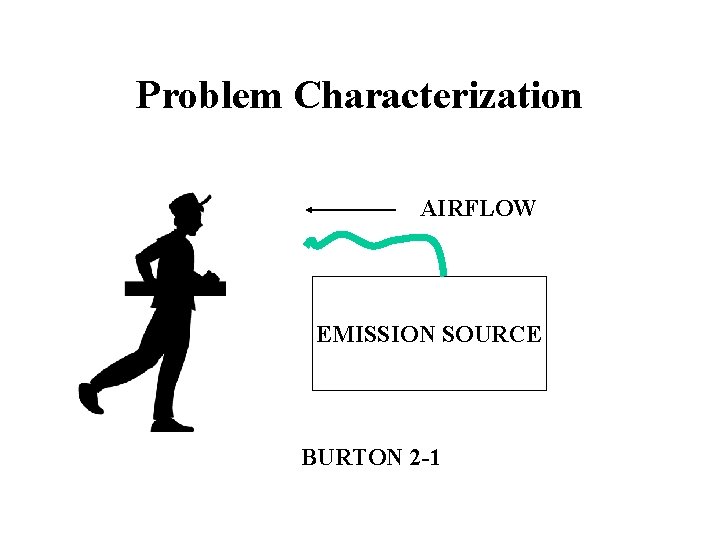
Problem Characterization AIRFLOW EMISSION SOURCE BURTON 2 -1
Burton Ex. 2 -1 GROUP EXERCISE Study the figure on page 2 -4 and discuss potential control measures that you might use to correct the problem. BURTON 2 -4
THE BEHAVIOR OF AIR
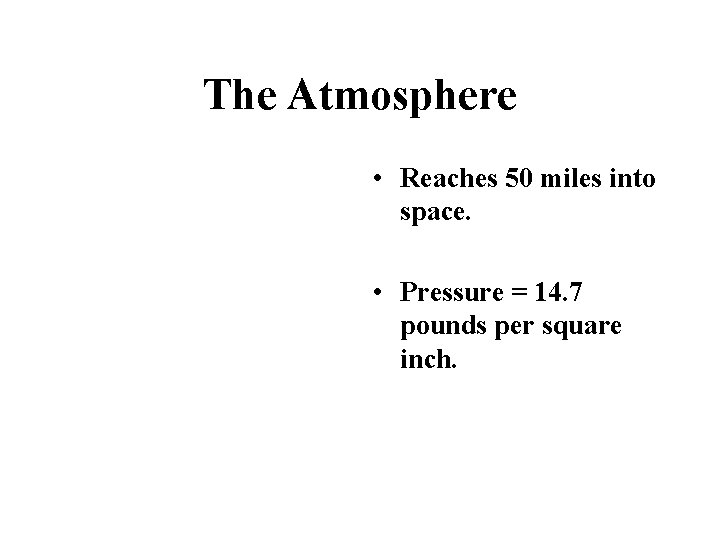
The Atmosphere • Reaches 50 miles into space. • Pressure = 14. 7 pounds per square inch.
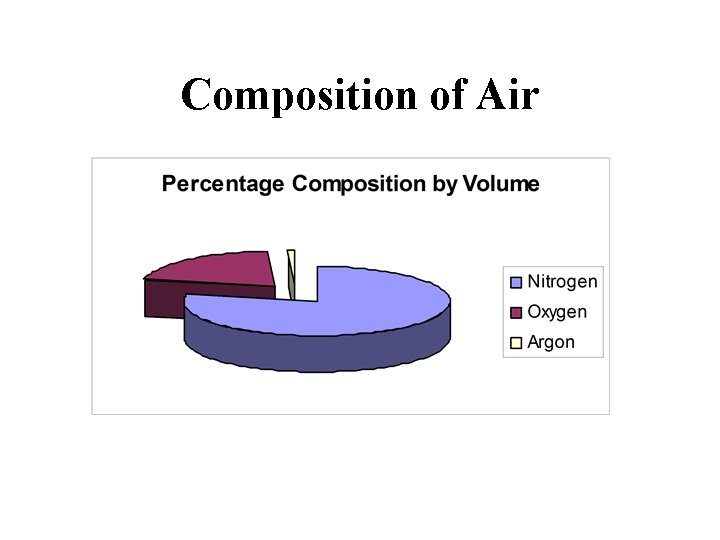
Composition of Air
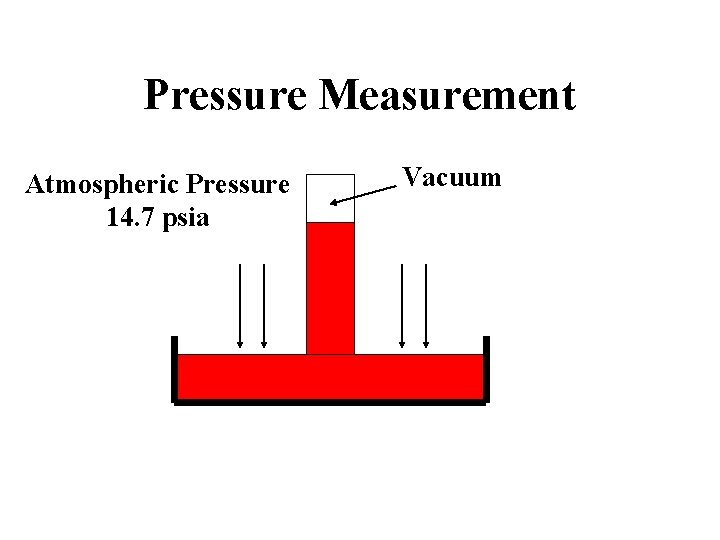
Pressure Measurement Atmospheric Pressure 14. 7 psia Vacuum
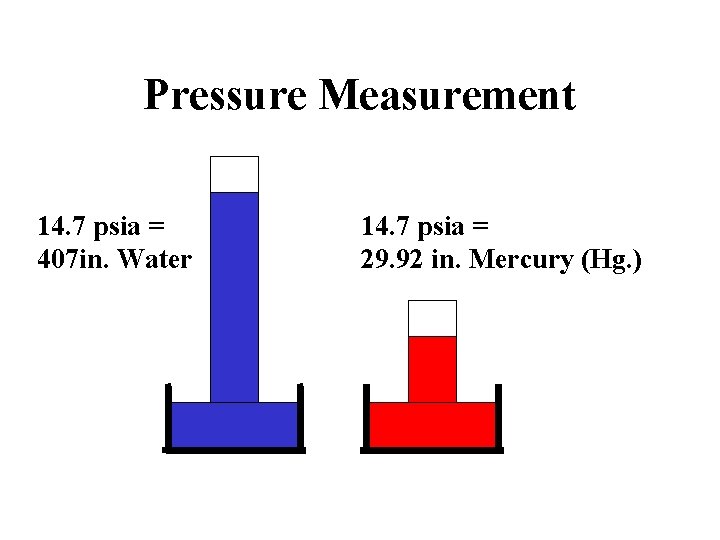
Pressure Measurement 14. 7 psia = 407 in. Water 14. 7 psia = 29. 92 in. Mercury (Hg. )
How Do We Make Air Move ?
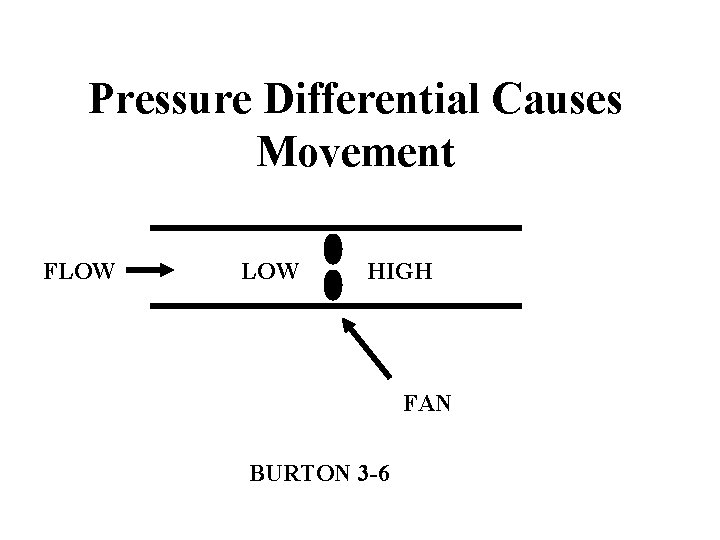
Pressure • Differences in air pressure cause movement.
Pressure Differential Causes Movement FLOW HIGH FAN BURTON 3 -6
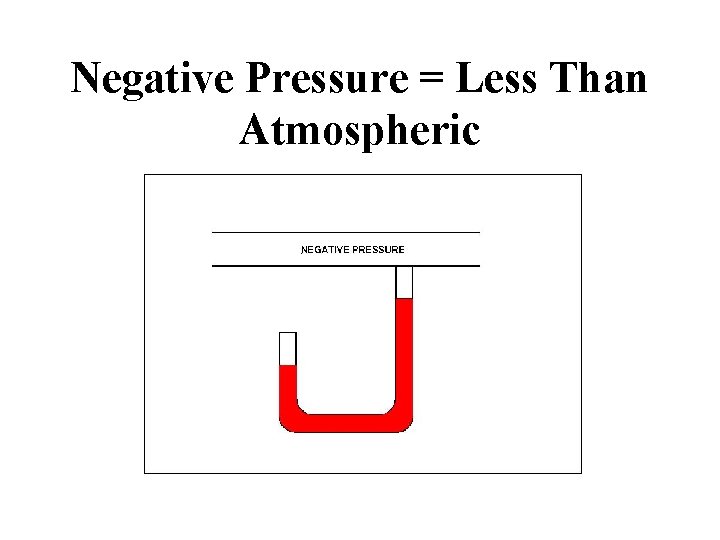
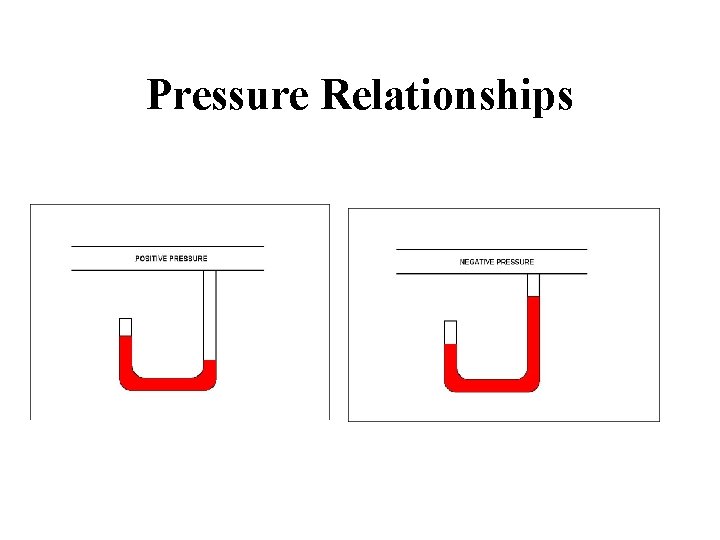
Negative Pressure = Less Than Atmospheric
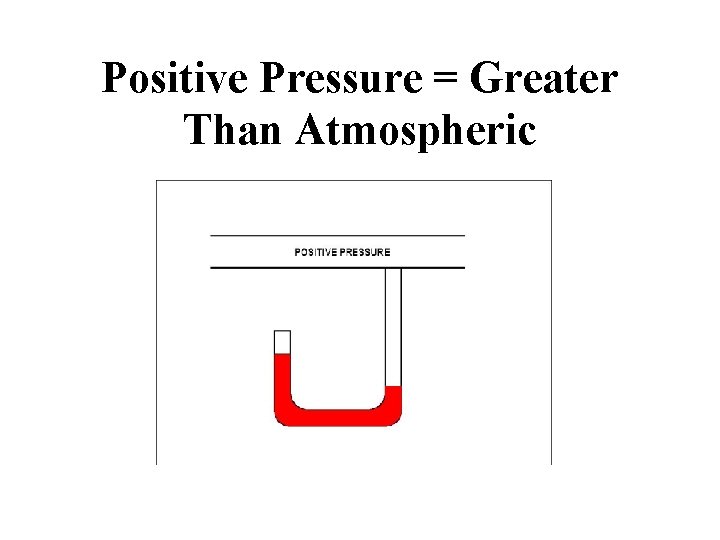
Positive Pressure = Greater Than Atmospheric
Pressure Relationships
Pressure Terms • Static Pressure • Velocity Pressure • Total Pressure
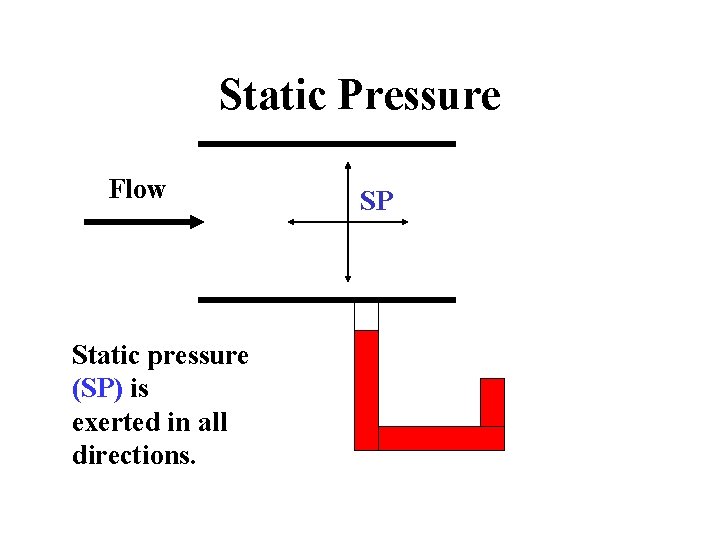
Static Pressure Flow Static pressure (SP) is exerted in all directions. SP
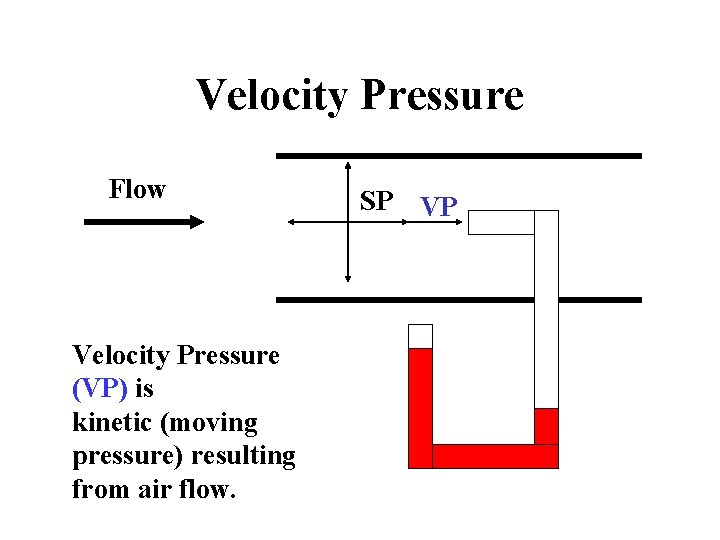
Velocity Pressure Flow Velocity Pressure (VP) is kinetic (moving pressure) resulting from air flow. SP VP
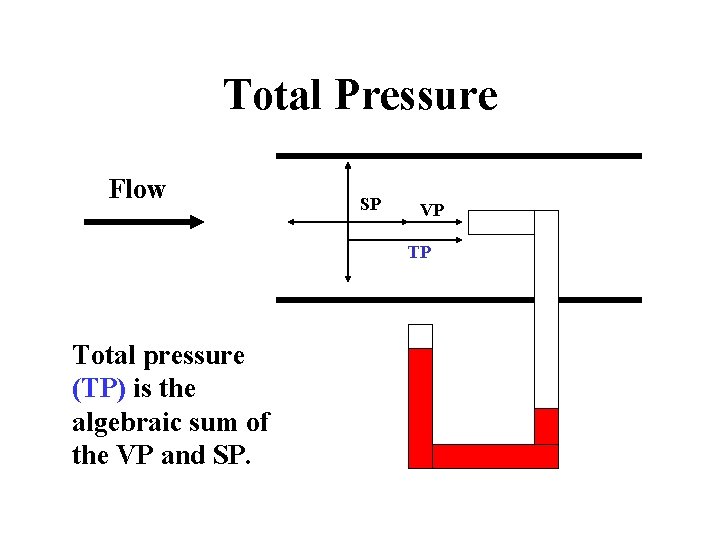
Total Pressure Flow SP VP TP Total pressure (TP) is the algebraic sum of the VP and SP.
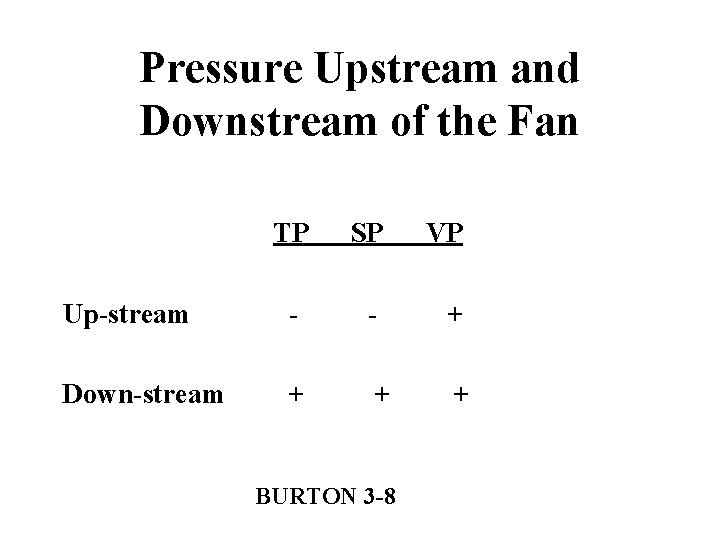
Pressure Upstream and Downstream of the Fan TP SP VP Up-stream - - + Down-stream + + + BURTON 3 -8
What is use of the term “Velocity Pressure” ? • Determine the air flow. • To design the system. • V = 4005(VP)1/2
What is use of the term “Static Pressure” ? • Accelerate the air. • Overcome resistance to friction.
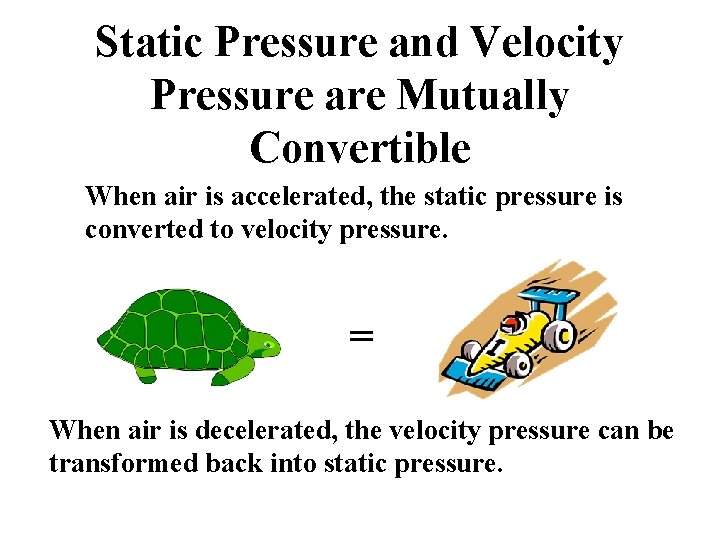
Static Pressure and Velocity Pressure are Mutually Convertible When air is accelerated, the static pressure is converted to velocity pressure. = When air is decelerated, the velocity pressure can be transformed back into static pressure.
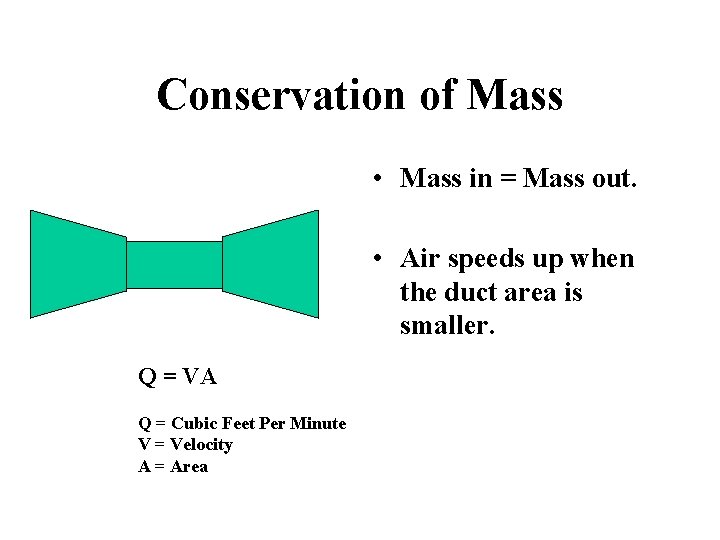
Conservation of Mass • Mass in = Mass out. • Air speeds up when the duct area is smaller. Q = VA Q = Cubic Feet Per Minute V = Velocity A = Area
Dilution Ventilation YES • non-hazardous • gas, vapor, respirable particle • uniform time emission • emissions not close to people • moderate climate BURTON 4 -1 NO • toxic material • large particulate • emission varies widely over time • large, point source emissions • people in vicinity • severe climate • irritation or complaints
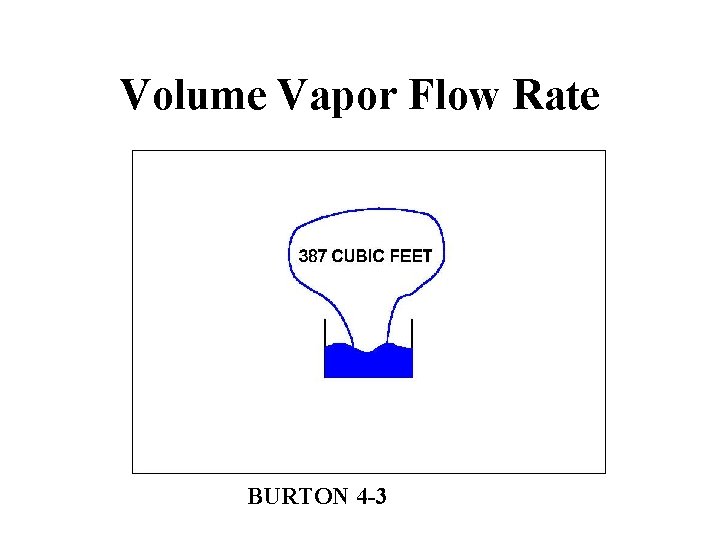
Volume Vapor Flow Rate BURTON 4 -3
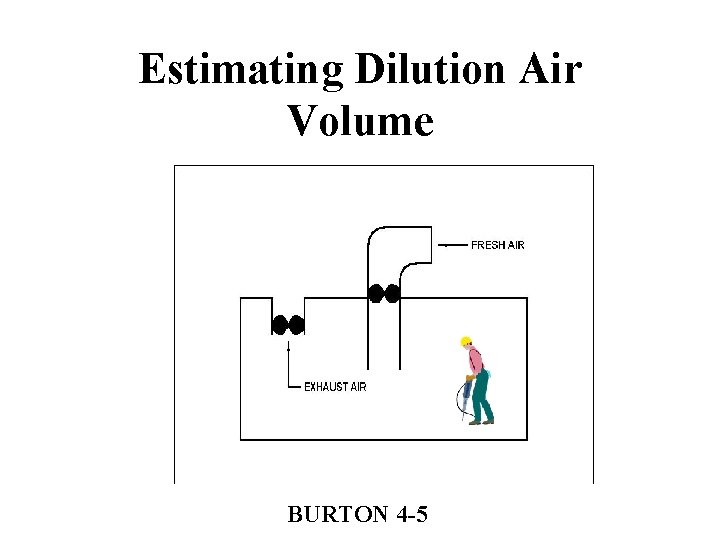
Estimating Dilution Air Volume BURTON 4 -5
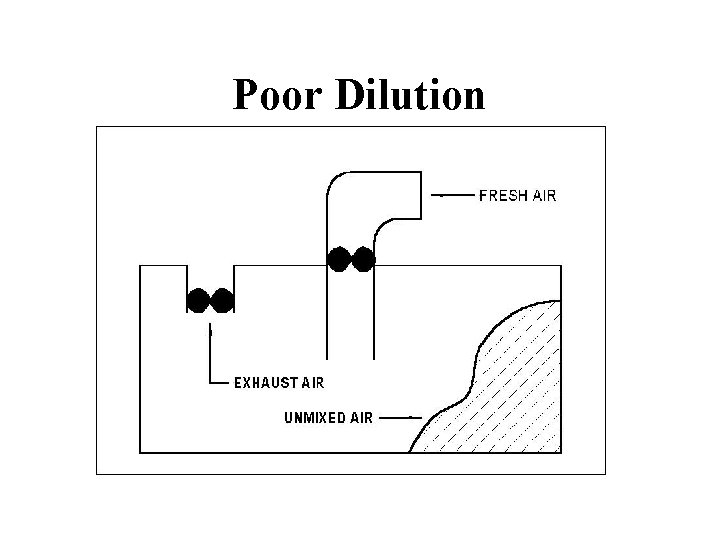
Poor Dilution
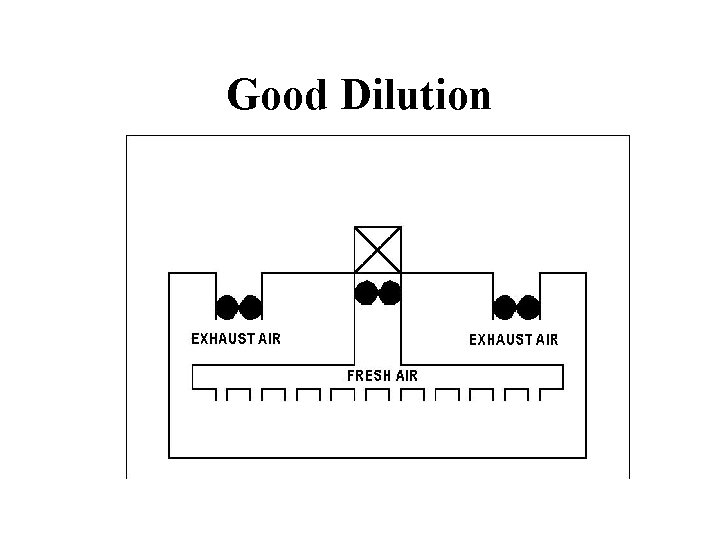
Good Dilution
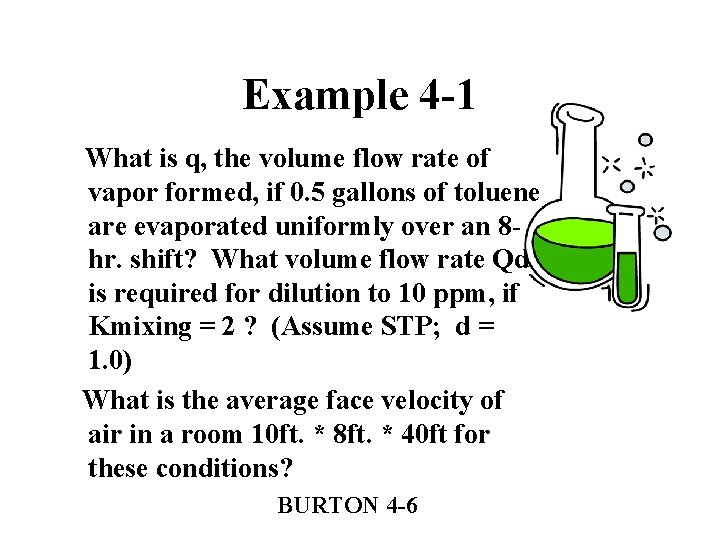
Example 4 -1 What is q, the volume flow rate of vapor formed, if 0. 5 gallons of toluene are evaporated uniformly over an 8 hr. shift? What volume flow rate Qd is required for dilution to 10 ppm, if Kmixing = 2 ? (Assume STP; d = 1. 0) What is the average face velocity of air in a room 10 ft. * 8 ft. * 40 ft for these conditions? BURTON 4 -6
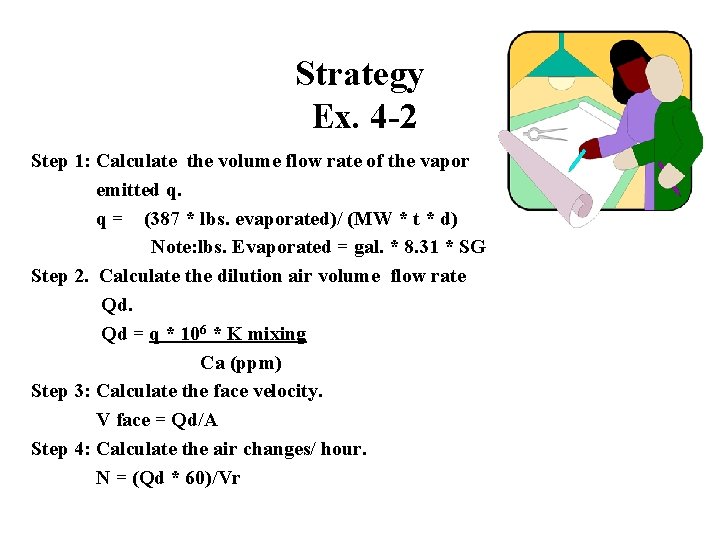
Strategy Ex. 4 -2 Step 1: Calculate the volume flow rate of the vapor emitted q. q = (387 * lbs. evaporated)/ (MW * t * d) Note: lbs. Evaporated = gal. * 8. 31 * SG Step 2. Calculate the dilution air volume flow rate Qd. Qd = q * 106 * K mixing Ca (ppm) Step 3: Calculate the face velocity. V face = Qd/A Step 4: Calculate the air changes/ hour. N = (Qd * 60)/Vr
Purge and Buildup • Purge and buildup predict contaminant buildup or purge rate. • Steady state equilibrium maintained. BURTON 4 -9
Example 4 -5 An automobile garage was severely contaminated with carbon monoxide. How long will it take to purge the garage? BURTON 4 -11
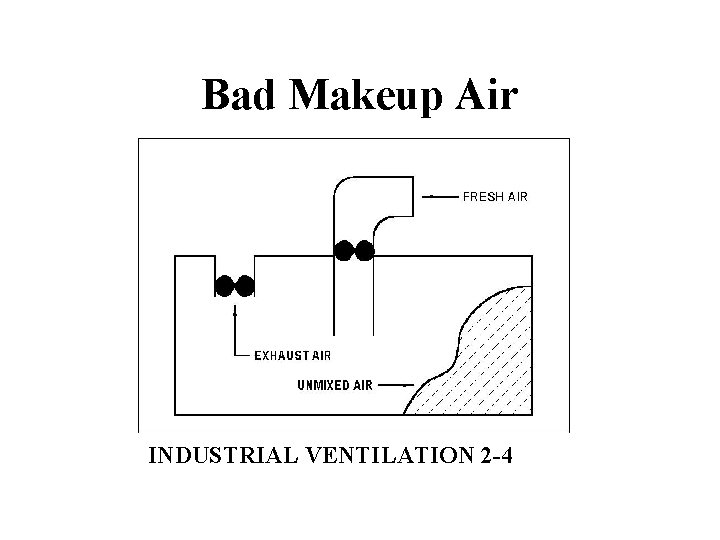
Chapter 11 - Makeup Air Balance • Exhausted air must be replaced. • Negative pressure without makeup air. BURTON 11 -1
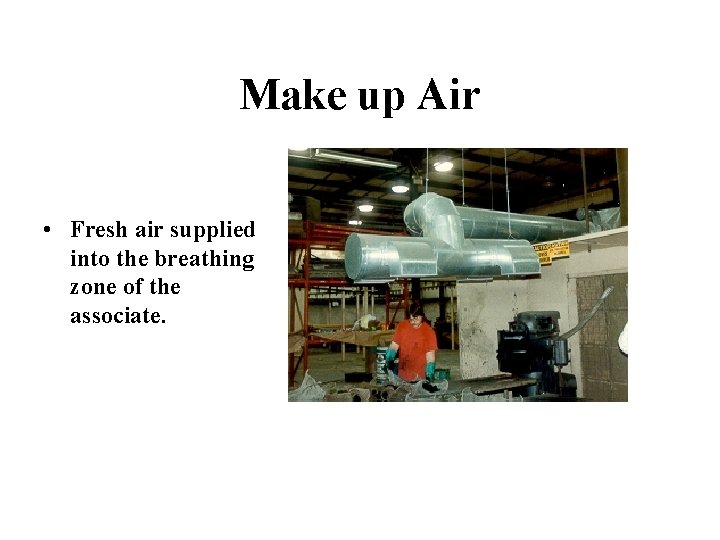
Make up Air • Fresh air supplied into the breathing zone of the associate.
Overcoming Negative Static Pressure • Changes in static pressure involving radial (squirrel cage) fans cause a small change in the volumetric flow rate. • Changes in static pressure involving axial (propeller) fans cause a large change in the volumetric flow rate. BURTON 11 -2
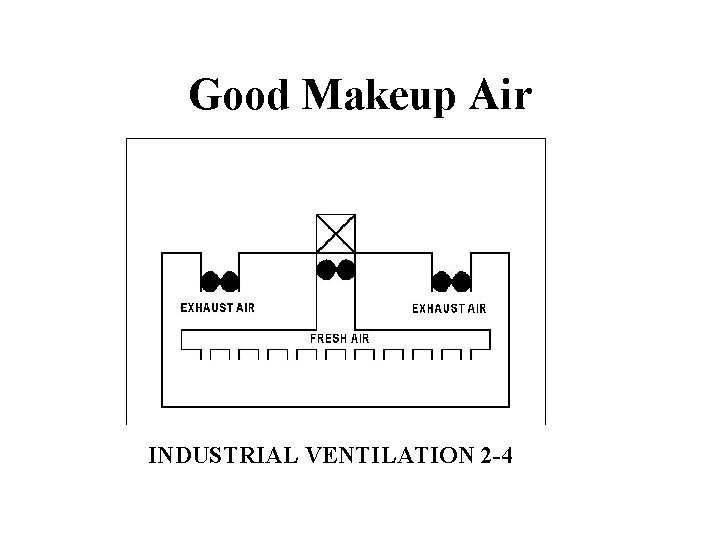
Good Makeup Air INDUSTRIAL VENTILATION 2 -4
Bad Makeup Air INDUSTRIAL VENTILATION 2 -4
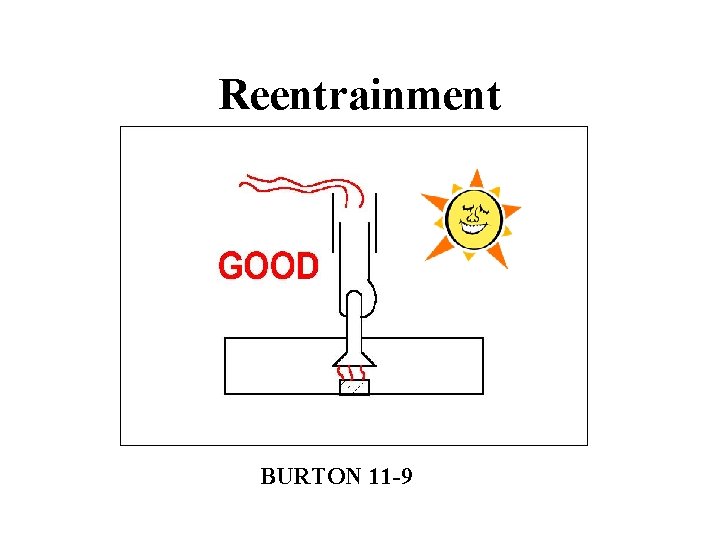
Reentrainment BURTON 11 -9
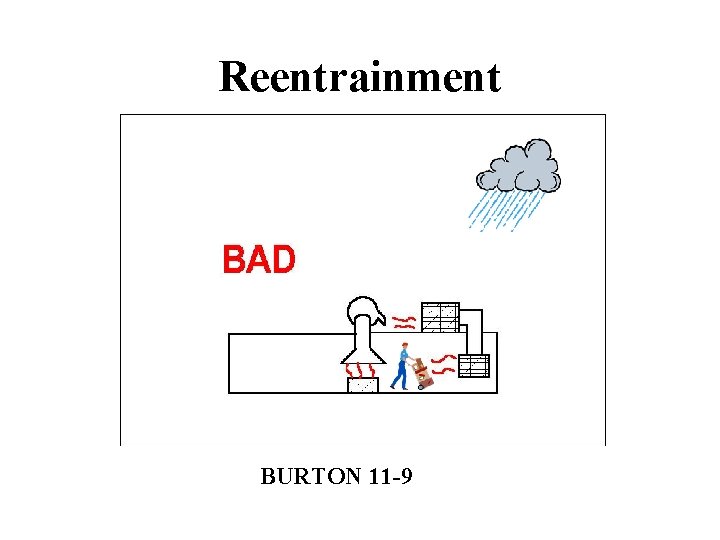
Reentrainment BURTON 11 -9
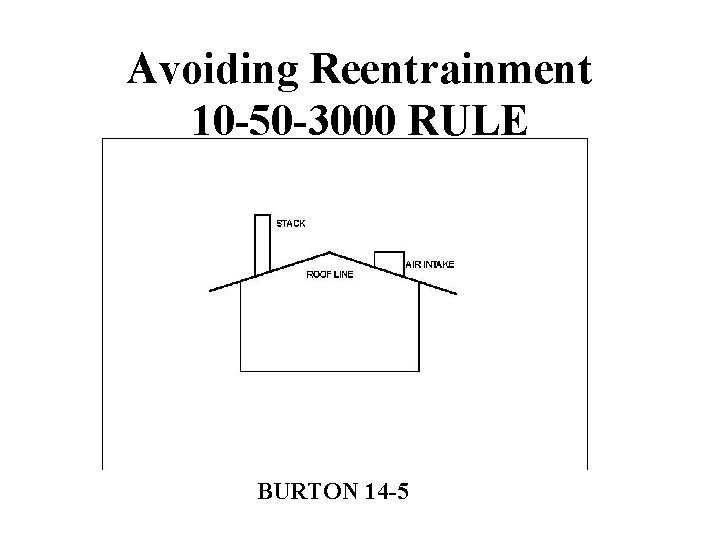
Avoiding Reentrainment 10 -50 -3000 RULE BURTON 14 -5
Recirculation of Exhaust Air • Good for non-toxic particulate control. • Can recover 40 -60% of heat energy. BURTON 12 -1
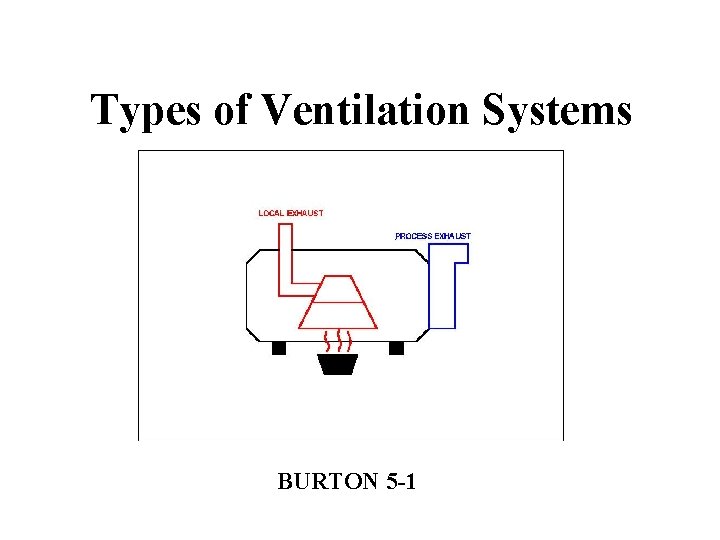
Types of Ventilation Systems BURTON 5 -1
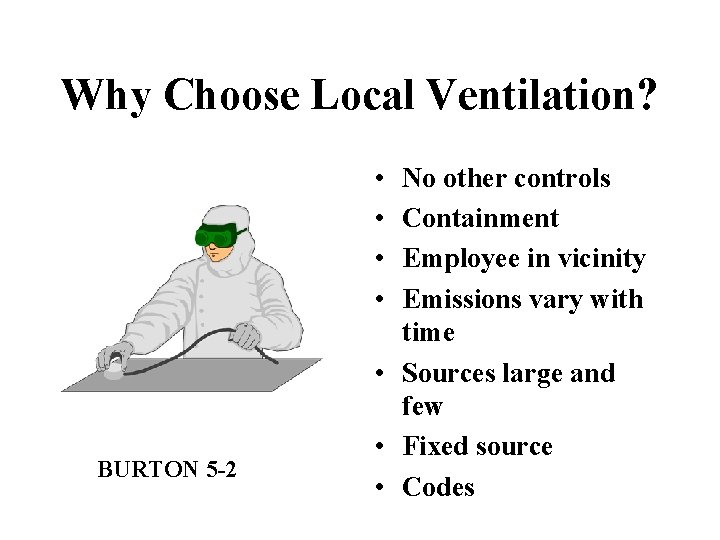
Why Choose Local Ventilation? • • BURTON 5 -2 No other controls Containment Employee in vicinity Emissions vary with time • Sources large and few • Fixed source • Codes
Exercise 5 -3 Form your group and try exercise 5 -3. Compare the operation to the parameters listed below: • • No other controls available Hazardous contaminant Employee in immediate vicinity Emissions vary with time Emission sources large and few Fixed emission source Codes & standards BURTON 5 -3
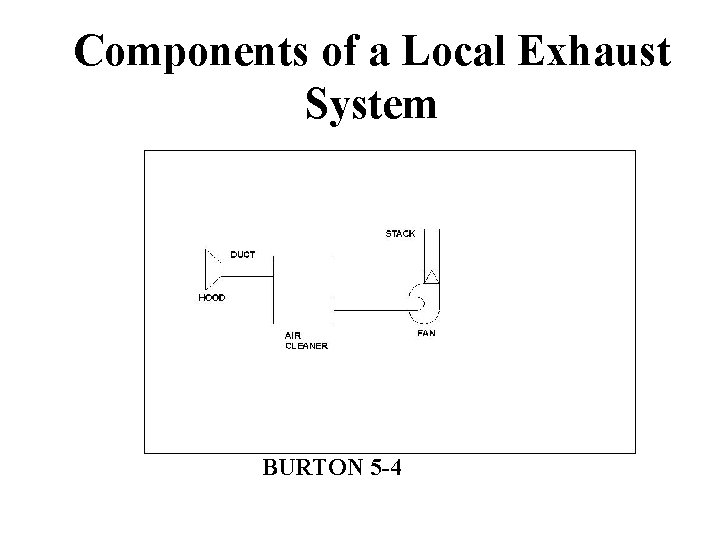
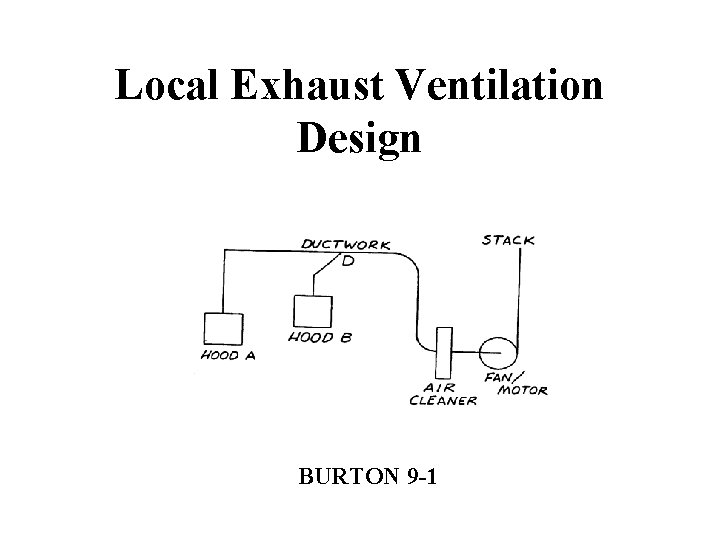
Components of a Local Exhaust System BURTON 5 -4
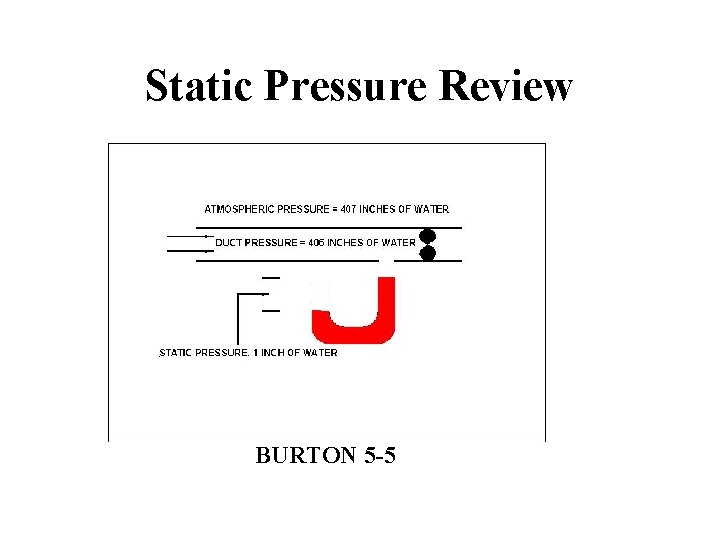
Static Pressure Review BURTON 5 -5
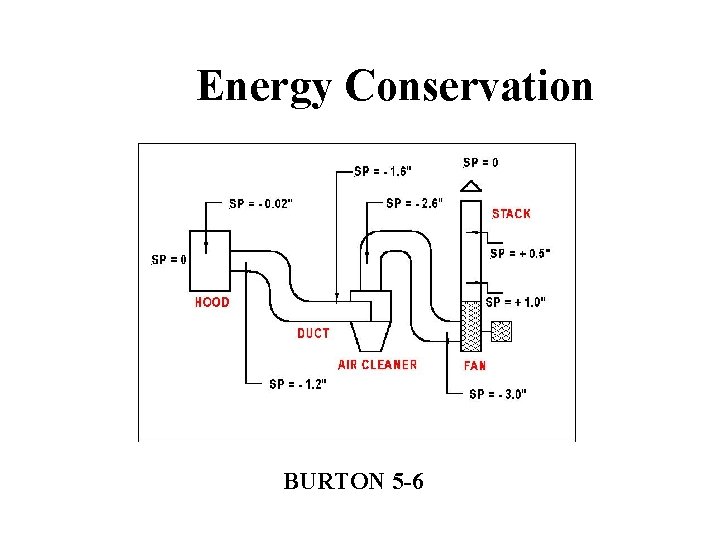
Energy Conservation BURTON 5 -6
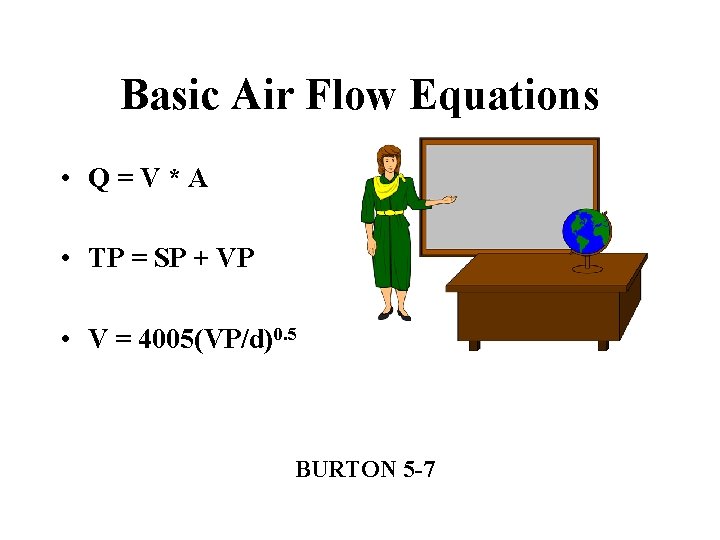
Basic Air Flow Equations • Q=V*A • TP = SP + VP • V = 4005(VP/d)0. 5 BURTON 5 -7
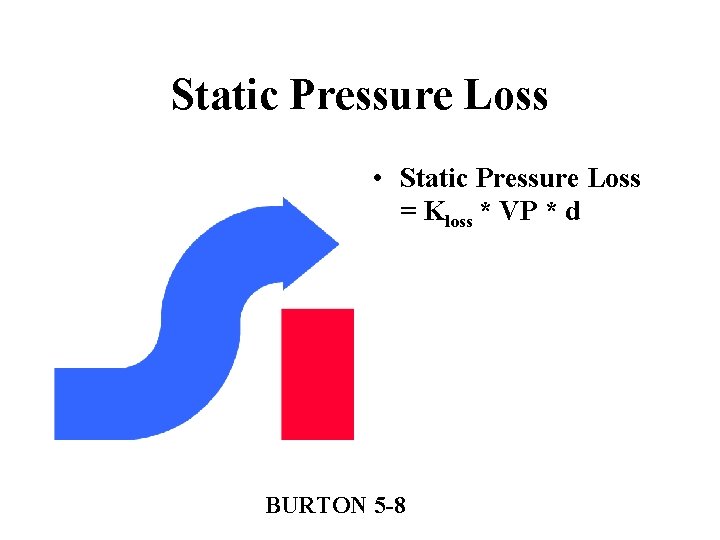
Static Pressure Loss • Static Pressure Loss = Kloss * VP * d BURTON 5 -8
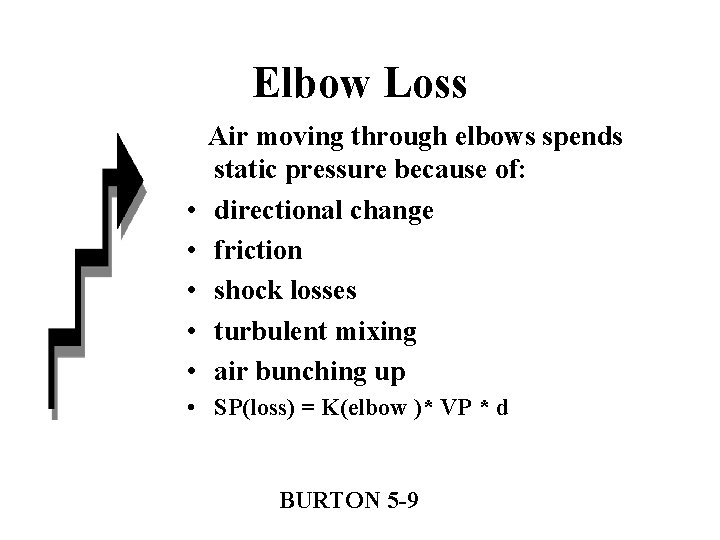
Elbow Loss • • • Air moving through elbows spends static pressure because of: directional change friction shock losses turbulent mixing air bunching up • SP(loss) = K(elbow )* VP * d BURTON 5 -9
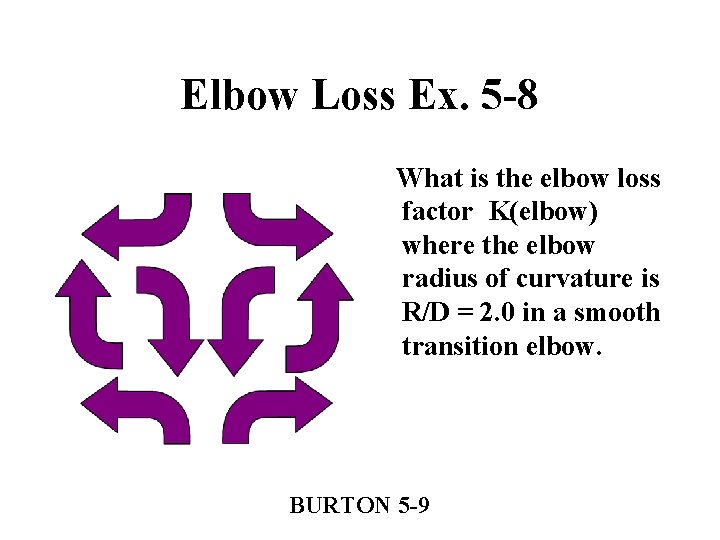
Elbow Loss Ex. 5 -8 What is the elbow loss factor K(elbow) where the elbow radius of curvature is R/D = 2. 0 in a smooth transition elbow. BURTON 5 -9
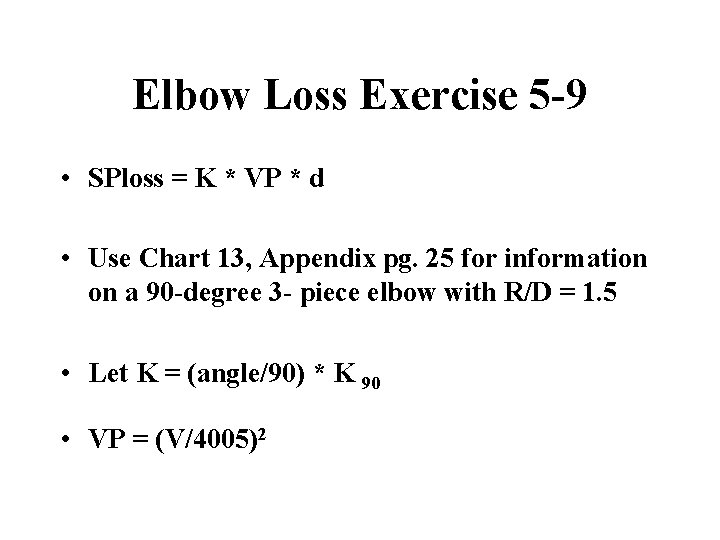
Elbow Loss Exercise 5 -9 What is the actual loss in inches of water of air flowing through a 60 -degree, 3 -piece elbow at V = 3440 fpm? R/D = 1. 5, STP, d=1. BURTON 5 -10
Elbow Loss Exercise 5 -9 • SPloss = K * VP * d • Use Chart 13, Appendix pg. 25 for information on a 90 -degree 3 - piece elbow with R/D = 1. 5 • Let K = (angle/90) * K 90 • VP = (V/4005)2
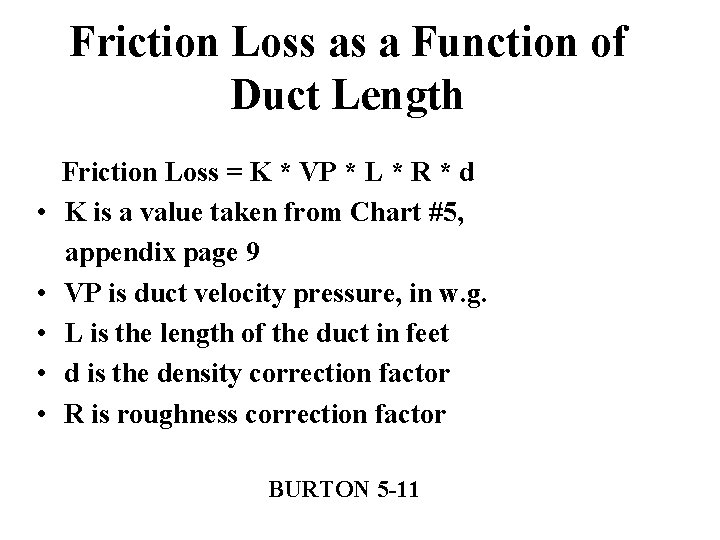
Friction Loss as a Function of Duct Length • • • Friction Loss = K * VP * L * R * d K is a value taken from Chart #5, appendix page 9 VP is duct velocity pressure, in w. g. L is the length of the duct in feet d is the density correction factor R is roughness correction factor BURTON 5 -11
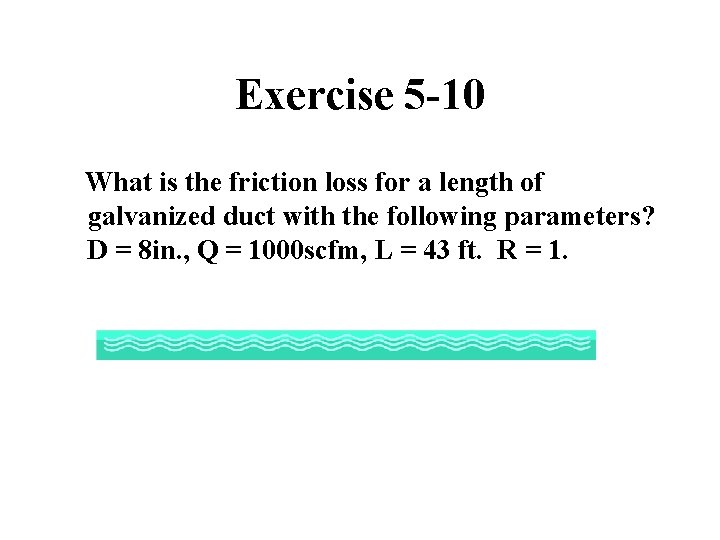
Exercise 5 -10 What is the friction loss for a length of galvanized duct with the following parameters? D = 8 in. , Q = 1000 scfm, L = 43 ft. R = 1.
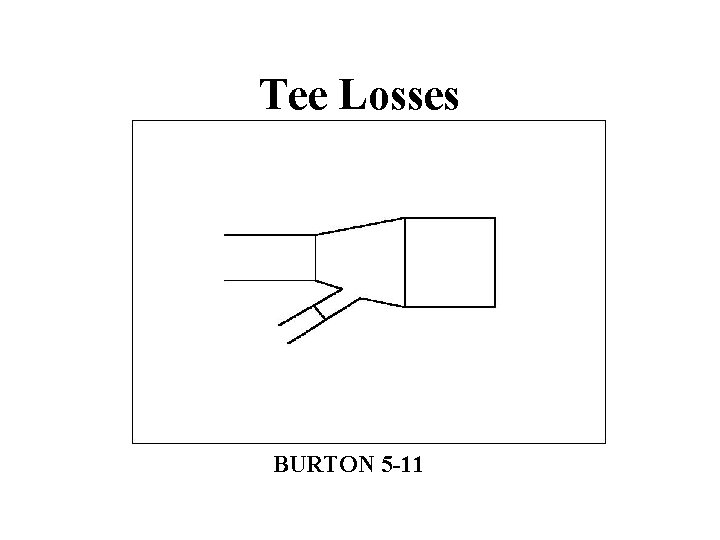
Tee Losses BURTON 5 -11
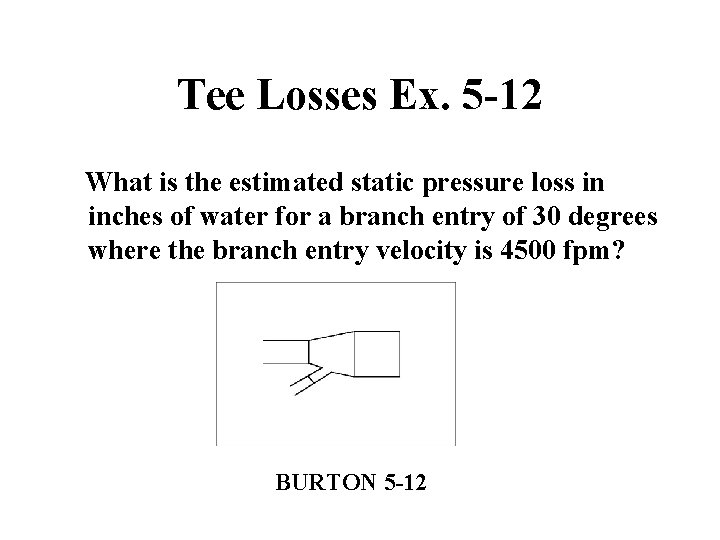
Tee Losses Ex. 5 -12 What is the estimated static pressure loss in inches of water for a branch entry of 30 degrees where the branch entry velocity is 4500 fpm? BURTON 5 -12
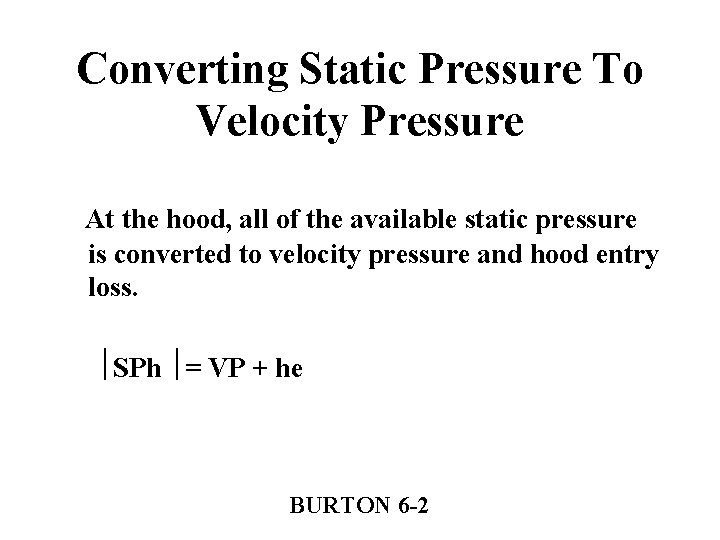
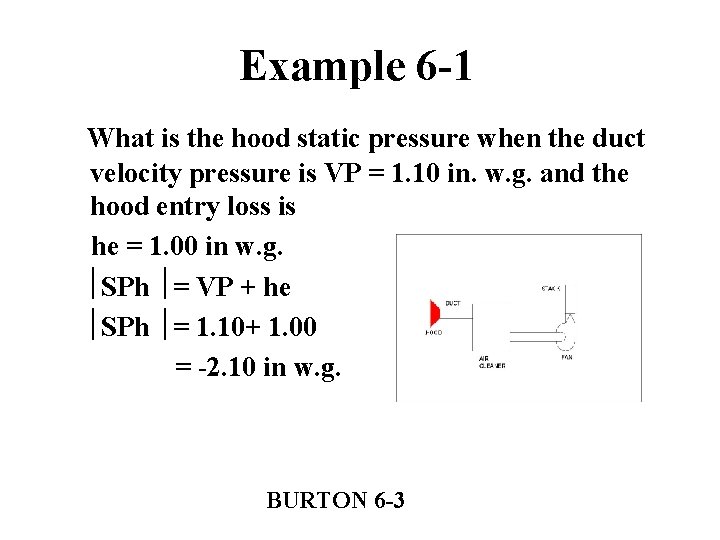
Converting Static Pressure To Velocity Pressure At the hood, all of the available static pressure is converted to velocity pressure and hood entry loss. SPh = VP + he BURTON 6 -2
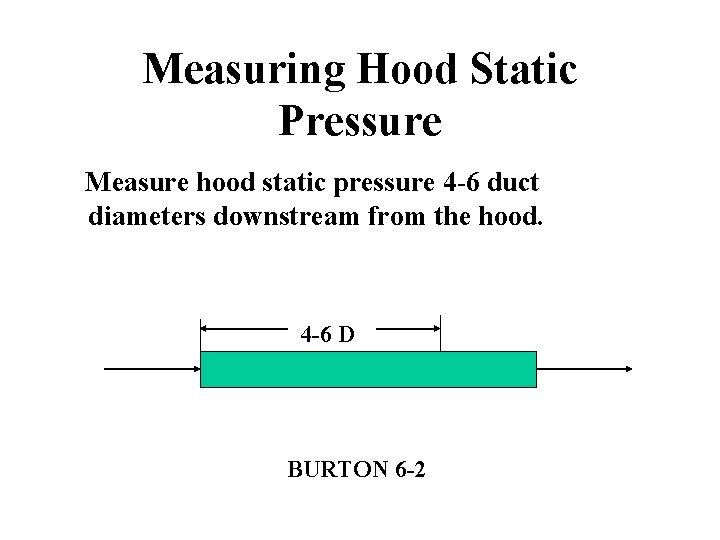
Measuring Hood Static Pressure Measure hood static pressure 4 -6 duct diameters downstream from the hood. 4 -6 D BURTON 6 -2
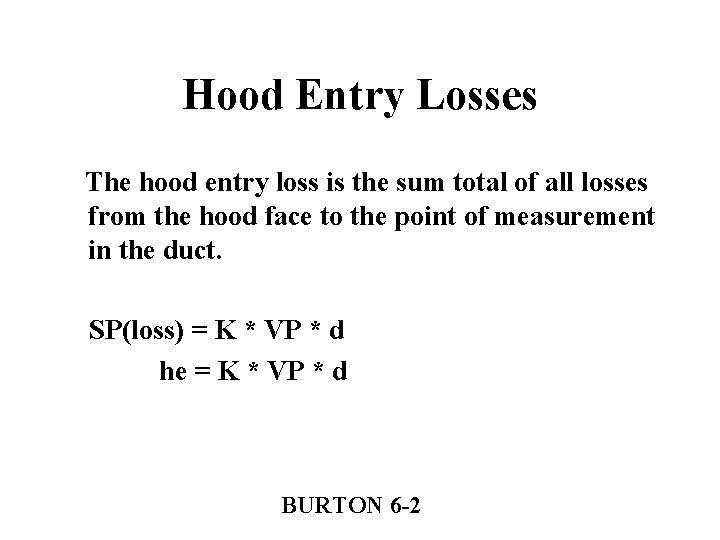
Hood Entry Losses The hood entry loss is the sum total of all losses from the hood face to the point of measurement in the duct. SP(loss) = K * VP * d he = K * VP * d BURTON 6 -2
Example 6 -1 What is the hood static pressure when the duct velocity pressure is VP = 1. 10 in. w. g. and the hood entry loss is he = 1. 00 in w. g. SPh = VP + he SPh = 1. 10+ 1. 00 = -2. 10 in w. g. BURTON 6 -3
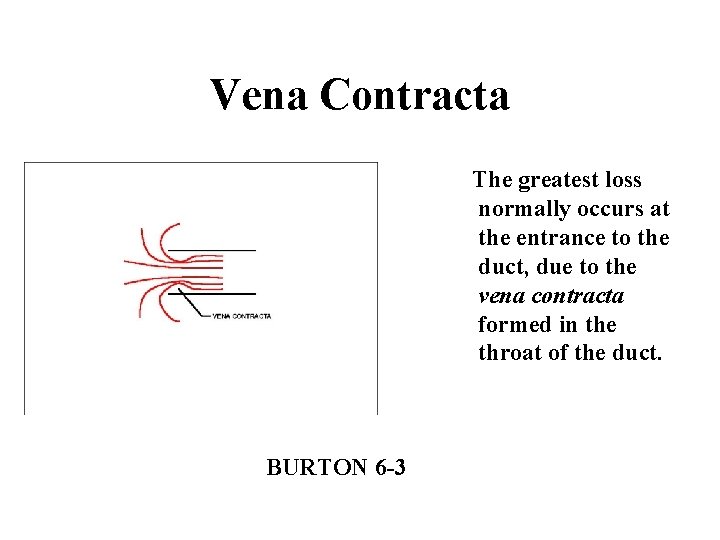
Vena Contracta The greatest loss normally occurs at the entrance to the duct, due to the vena contracta formed in the throat of the duct. BURTON 6 -3
Hood Efficiency A hood’s efficiency can be described by the ratio of actual to ideal flow. This ratio is called the Coefficient of Entry, Ce. Ce = Q(actual)/Q(ideal) BURTON 6 -4
Hood Static Pressure and Entry Losses Example 6 -5 The average velocity in a duct serving a hood is V = 2000 fpm. The loss factor for the hood has been obtained from the manufacturer as Khood = 2. 2. What are the he and SPh? (Assume STP, d = 1) BURTON 6 -5
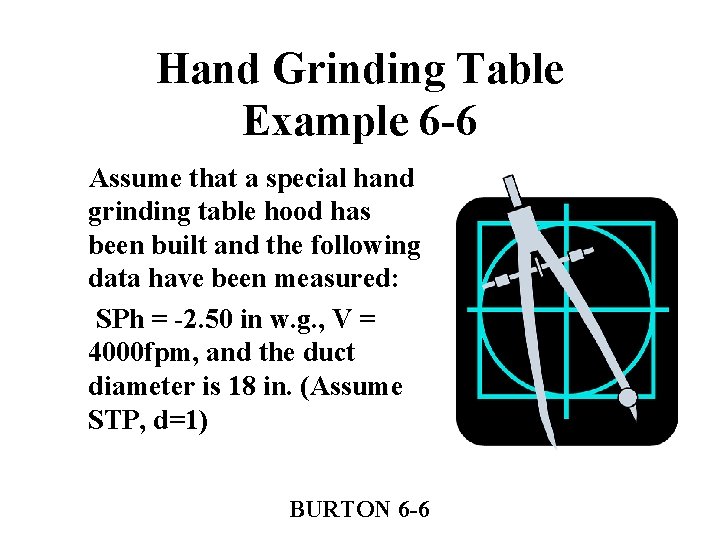
Hand Grinding Table Example 6 -6 Assume that a special hand grinding table hood has been built and the following data have been measured: SPh = -2. 50 in w. g. , V = 4000 fpm, and the duct diameter is 18 in. (Assume STP, d=1) BURTON 6 -6
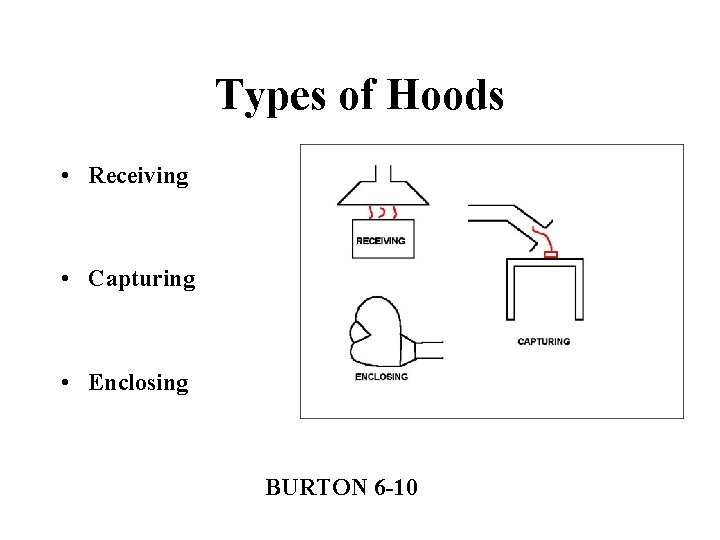
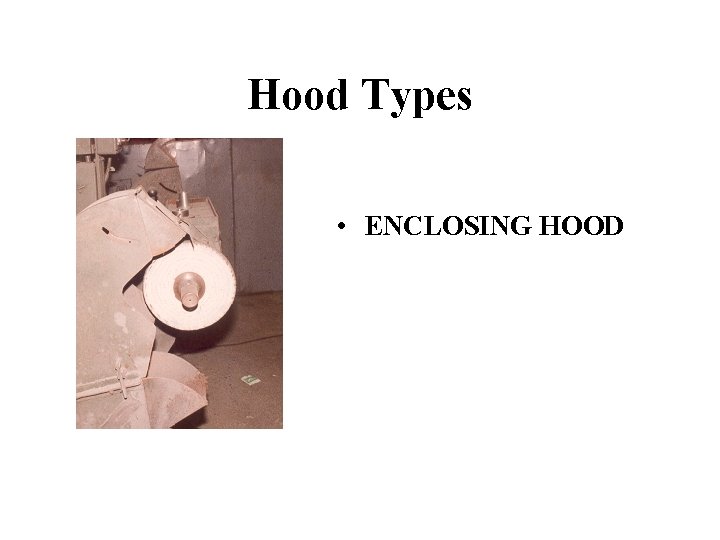
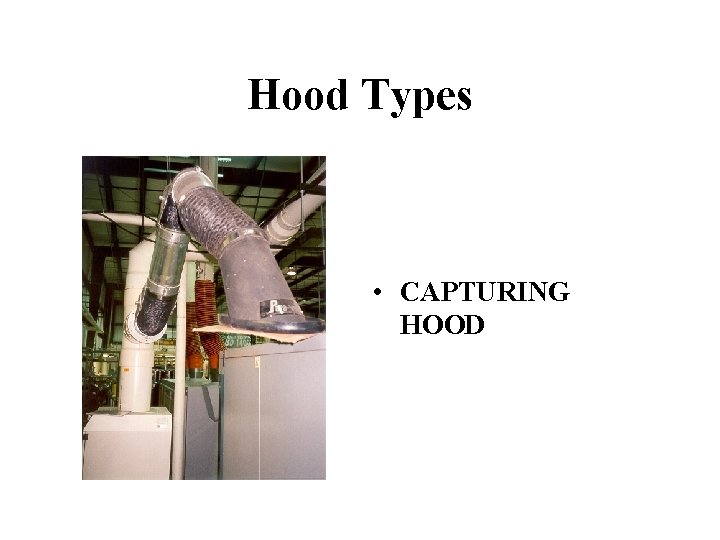
Types of Hoods • Receiving • Capturing • Enclosing BURTON 6 -10
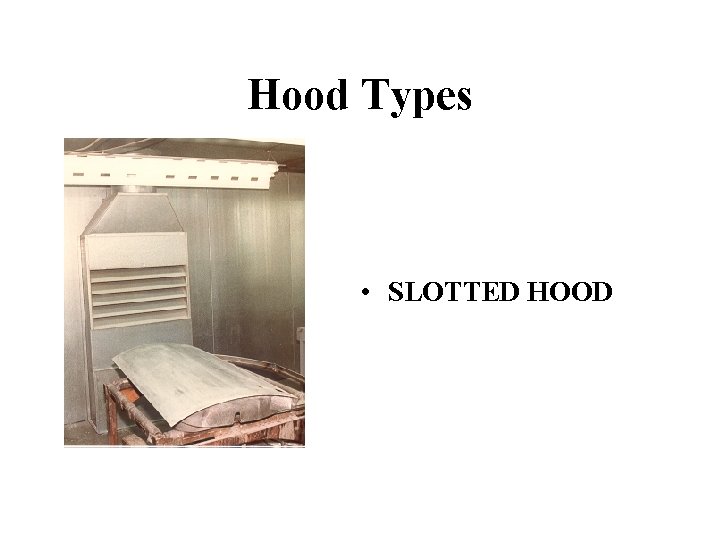
Hood Types • SLOTTED HOOD
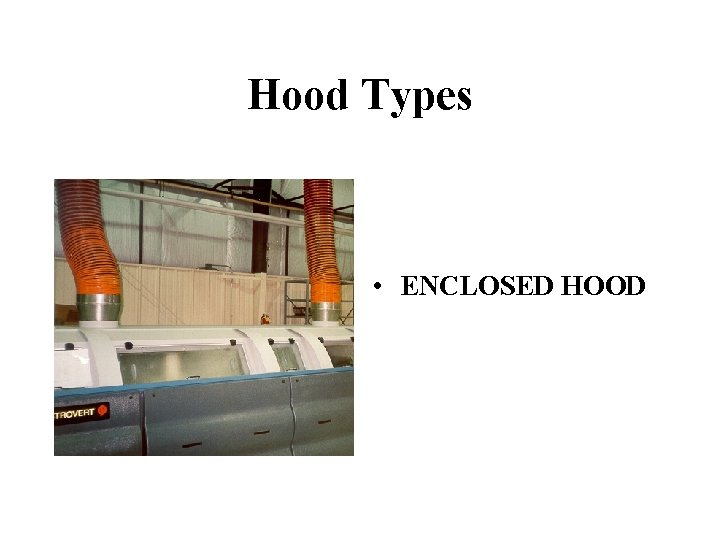
Hood Types • ENCLOSED HOOD
Hood Types • ENCLOSING HOOD
Hood Types • CAPTURING HOOD
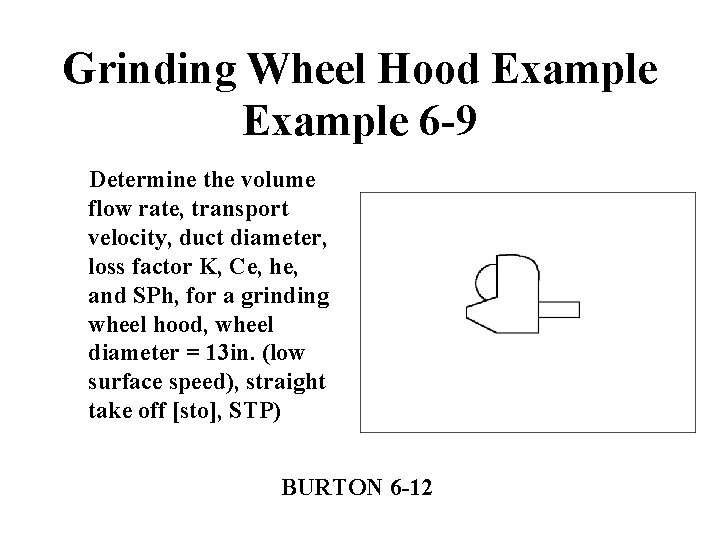
Grinding Wheel Hood Example 6 -9 Determine the volume flow rate, transport velocity, duct diameter, loss factor K, Ce, he, and SPh, for a grinding wheel hood, wheel diameter = 13 in. (low surface speed), straight take off [sto], STP) BURTON 6 -12
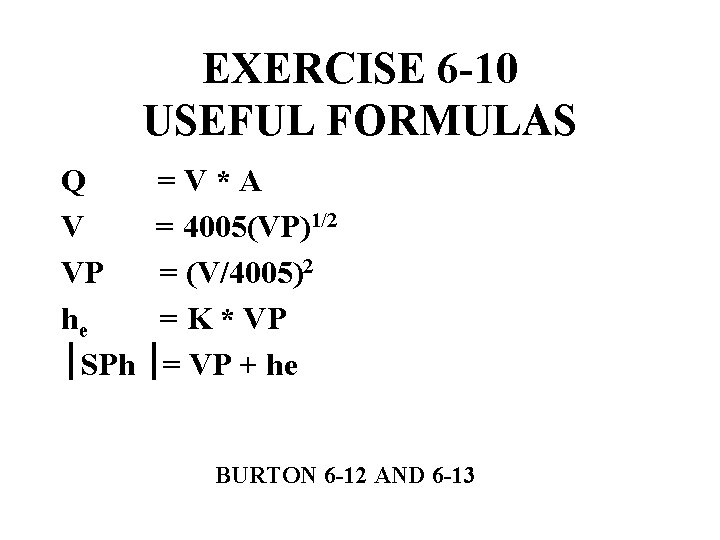
EXERCISE 6 -10 USEFUL FORMULAS Q =V*A V = 4005(VP)1/2 VP = (V/4005)2 he = K * VP SPh = VP + he BURTON 6 -12 AND 6 -13
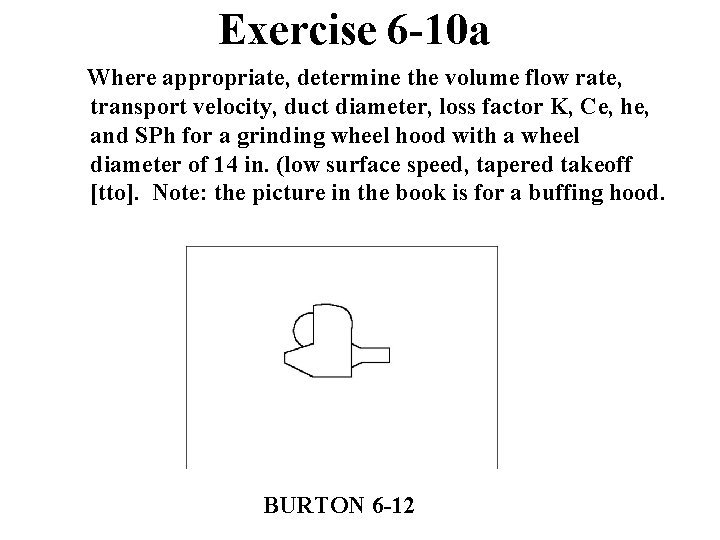
Exercise 6 -10 a Where appropriate, determine the volume flow rate, transport velocity, duct diameter, loss factor K, Ce, he, and SPh for a grinding wheel hood with a wheel diameter of 14 in. (low surface speed, tapered takeoff [tto]. Note: the picture in the book is for a buffing hood. BURTON 6 -12
Exercise 6 -10 a Strategy 1. Use Chart 11 C, appendix pg. 18 to find Q, Vtrans. , K, and Ce. 2. Use Chart 5 A in appendix pg. 9 to find the diameter of the pipe needed and it’s area. 3. Calculate Vactual = Q/A 4. VP = (Vactual/4005)2 5. he = K * VP 6. SPh = VP + he
Exercise 6 -10 b Where appropriate, determine the volume flow rate, transport velocity, duct diameter, loss factor K, Ce, he, and SPh for a hand grinding table 10 feet long by 2 feet wide. BURTON 6 -13
Exercise 6 -10 b Strategy 1. Use Chart 11 C, appendix pg. 18 to find Q, Vtrans. , K, and Ce. 2. Use Chart 5 A in appendix pg. 9 to find the diameter of the pipe needed and it’s area. 3. Calculate Vactual = Q/A 4. VP = (Vactual/4005)2 5. he = K * VP 6. SPh = VP + he
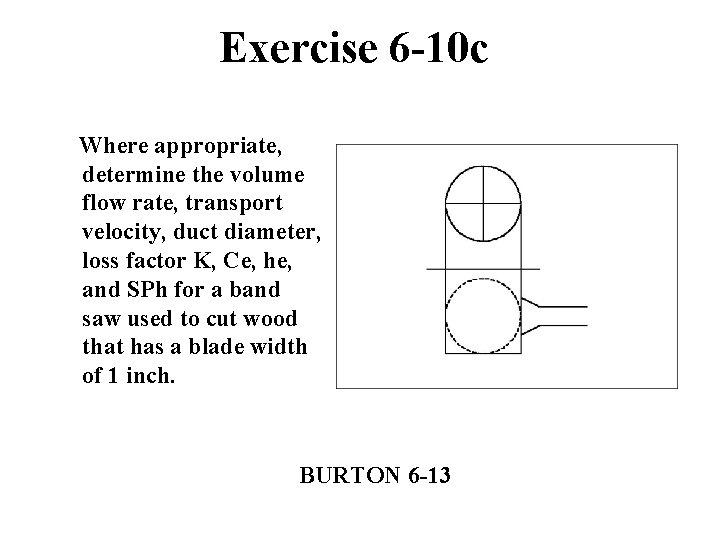
Exercise 6 -10 c Where appropriate, determine the volume flow rate, transport velocity, duct diameter, loss factor K, Ce, he, and SPh for a band saw used to cut wood that has a blade width of 1 inch. BURTON 6 -13
Exercise 6 -10 c Strategy 1. Use Chart 11 E, appendix pg. 20 to find Q, Vtrans. , K, and Ce. 2. Use Chart 5 A in appendix pg. 9 to find the diameter of the pipe needed and it’s area. 3. Calculate Vactual = Q/A 4. VP = (Vactual/4005)2 5. he = K * VP 6. SPh = VP + he
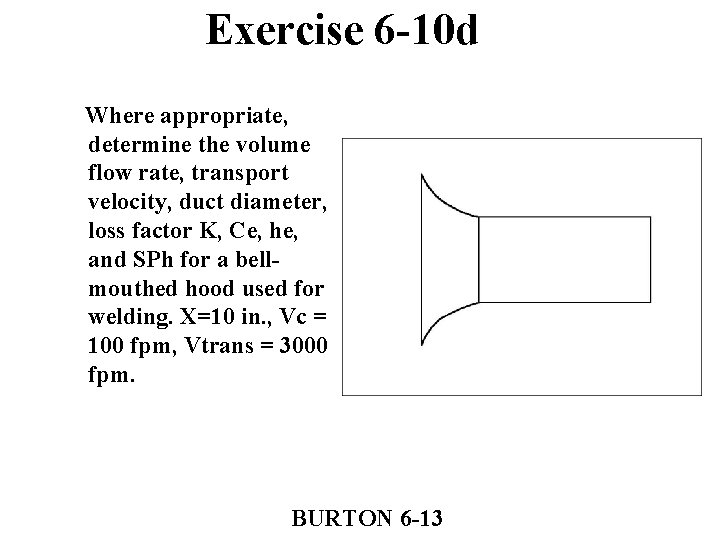
Exercise 6 -10 d Where appropriate, determine the volume flow rate, transport velocity, duct diameter, loss factor K, Ce, he, and SPh for a bellmouthed hood used for welding. X=10 in. , Vc = 100 fpm, Vtrans = 3000 fpm. BURTON 6 -13
Exercise 6 -10 d Strategy 1. Use Chart 11 A, appendix pg. 16 to find Q, K, and Ce. 2. Use Chart 5 A in appendix pg. 9 to find the diameter of the pipe needed and it’s area. 3. Calculate Vactual = Q/A 4. VP = (Vactual/4005)2 5. he = K * VP 6. SPh = VP + he
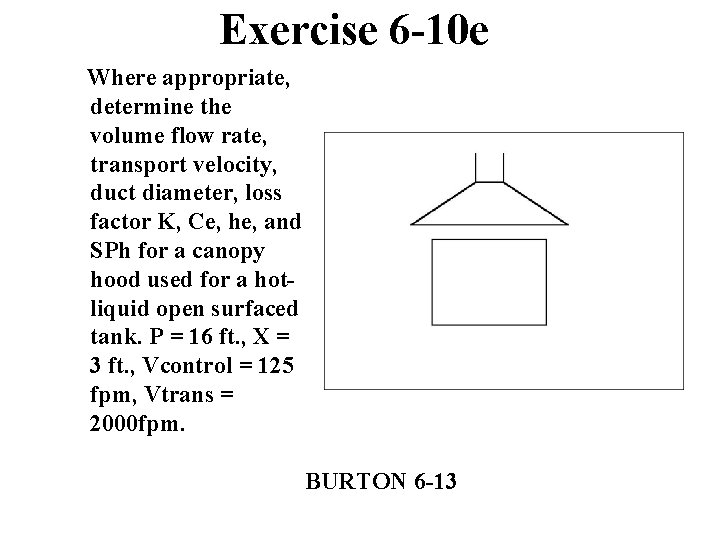
Exercise 6 -10 e Where appropriate, determine the volume flow rate, transport velocity, duct diameter, loss factor K, Ce, he, and SPh for a canopy hood used for a hotliquid open surfaced tank. P = 16 ft. , X = 3 ft. , Vcontrol = 125 fpm, Vtrans = 2000 fpm. BURTON 6 -13
Exercise 6 -10 e Strategy 1. Use Chart 11 B, appendix pg. 17 to find Q, K, and Ce. 2. Use Chart 5 A in appendix pg. 9 to find the diameter of the pipe needed and it’s area. 3. Calculate Vactual = Q/A 4. VP = (Vactual/4005)2 5. he = K * VP 6. SPh = VP + he
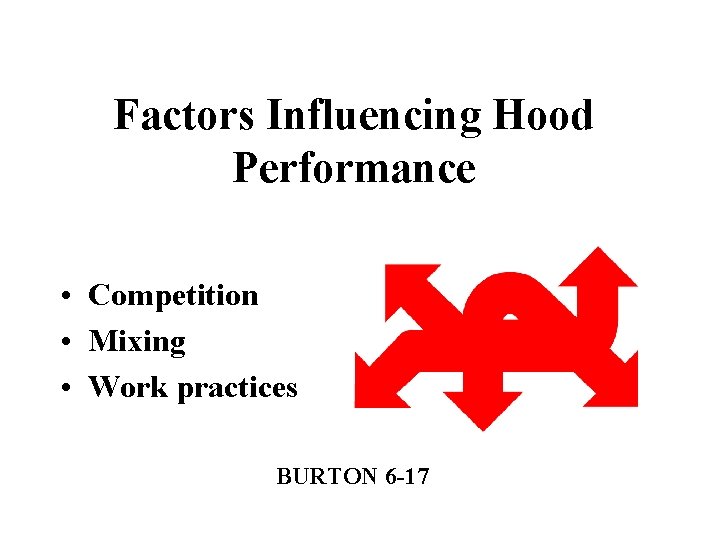
Factors Influencing Hood Performance • Competition • Mixing • Work practices BURTON 6 -17
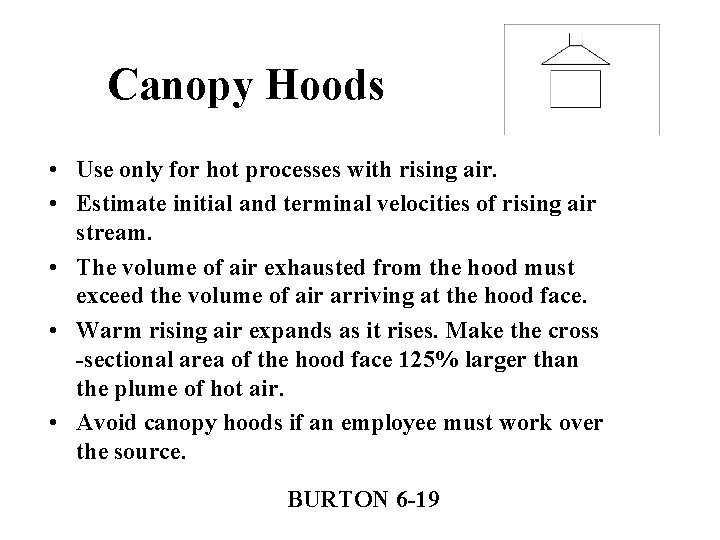
Canopy Hoods • Use only for hot processes with rising air. • Estimate initial and terminal velocities of rising air stream. • The volume of air exhausted from the hood must exceed the volume of air arriving at the hood face. • Warm rising air expands as it rises. Make the cross -sectional area of the hood face 125% larger than the plume of hot air. • Avoid canopy hoods if an employee must work over the source. BURTON 6 -19
Chapter 7 Selection and Design of Ductwork BURTON 7 -1
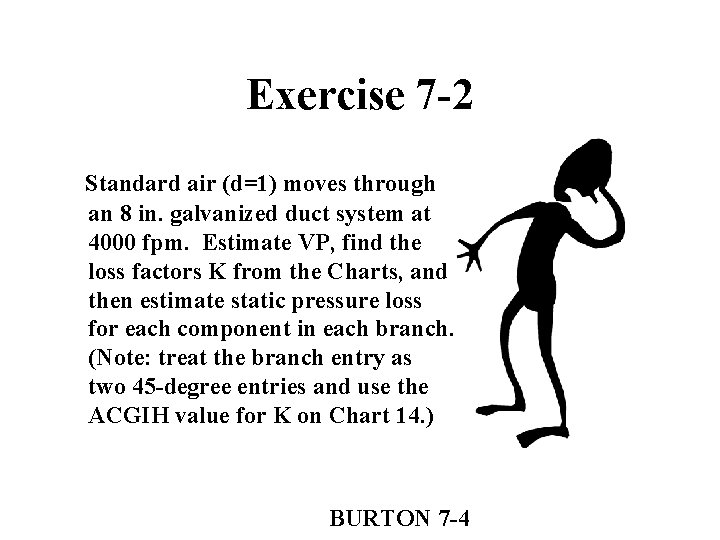
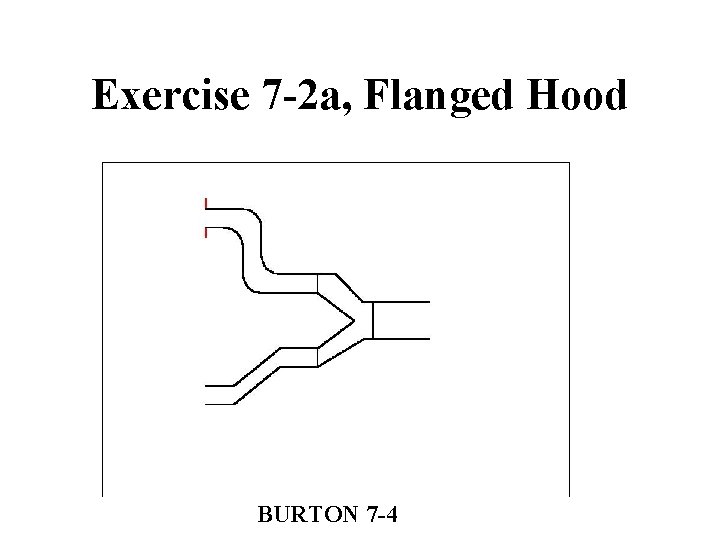
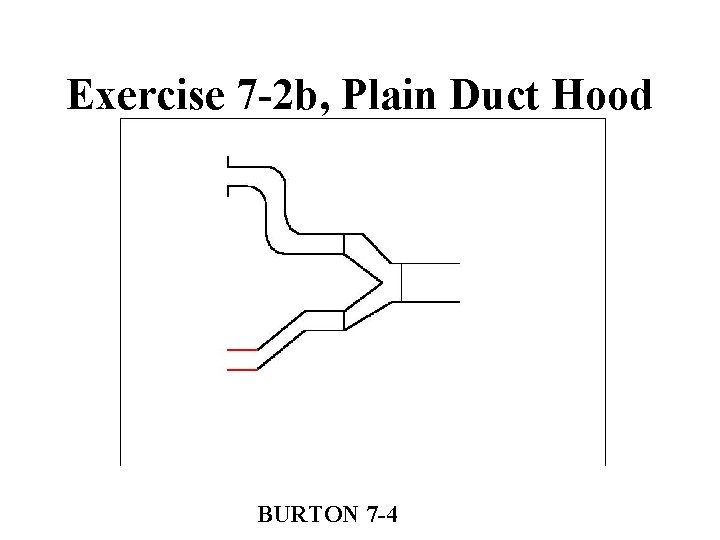
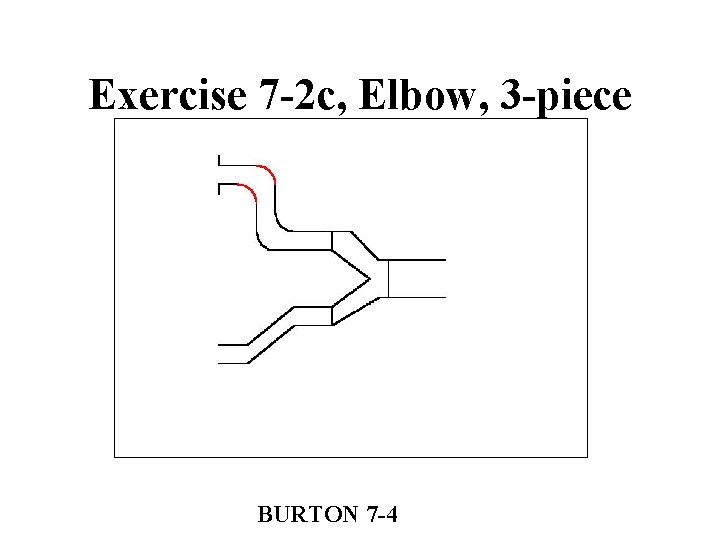
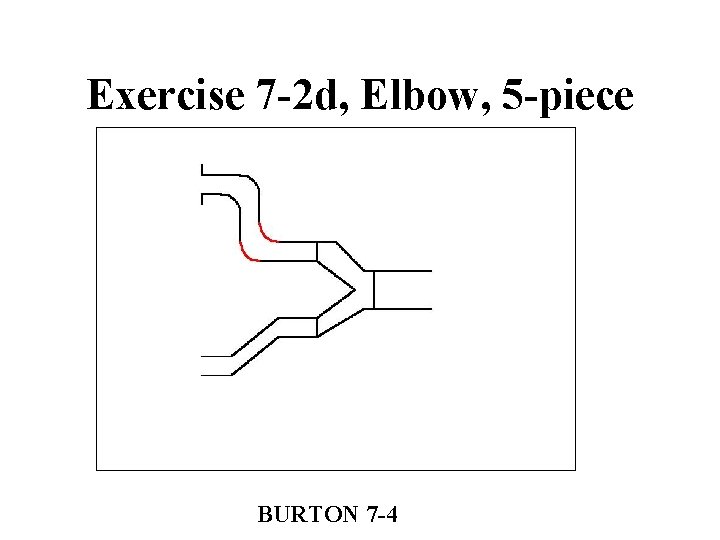
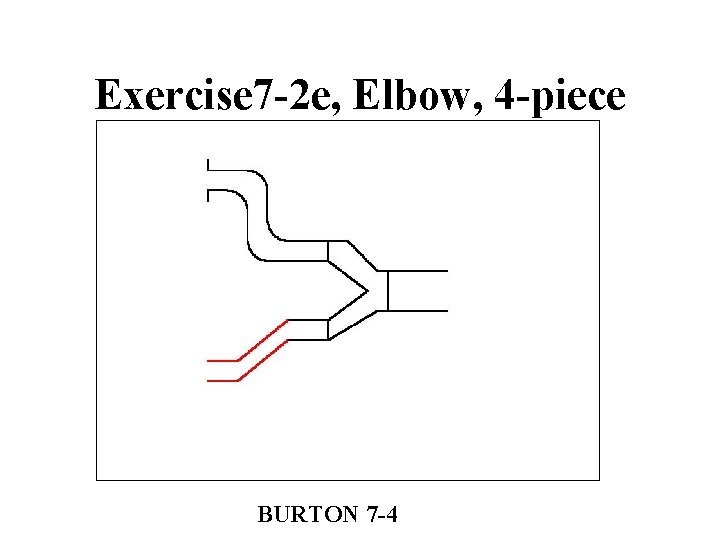
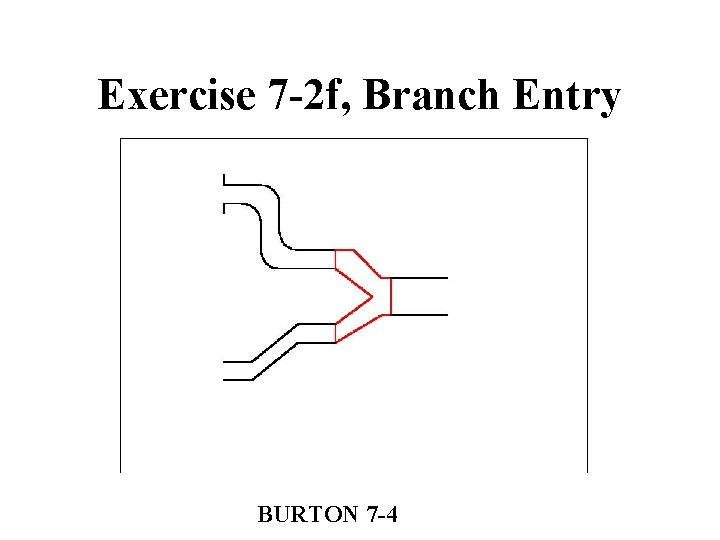
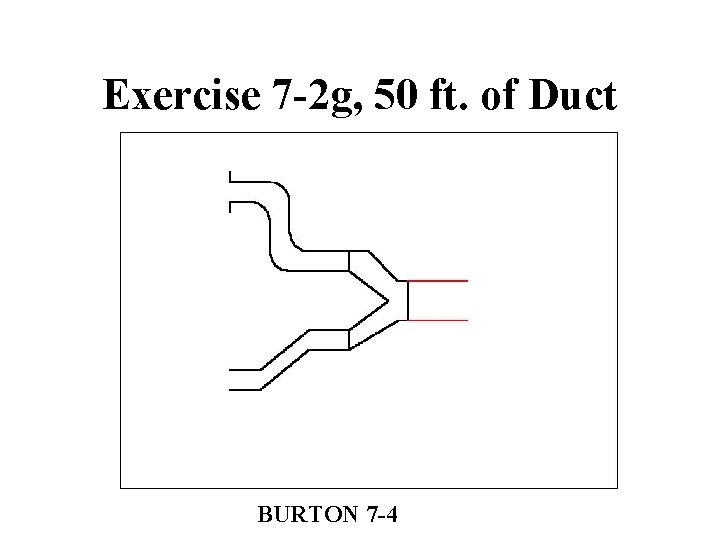
Exercise 7 -2 Standard air (d=1) moves through an 8 in. galvanized duct system at 4000 fpm. Estimate VP, find the loss factors K from the Charts, and then estimate static pressure loss for each component in each branch. (Note: treat the branch entry as two 45 -degree entries and use the ACGIH value for K on Chart 14. ) BURTON 7 -4
Exercise 7 -2 a, Flanged Hood BURTON 7 -4
Exercise 7 -2 b, Plain Duct Hood BURTON 7 -4
Exercise 7 -2 c, Elbow, 3 -piece BURTON 7 -4
Exercise 7 -2 d, Elbow, 5 -piece BURTON 7 -4
Exercise 7 -2 e, Elbow, 4 -piece BURTON 7 -4
Exercise 7 -2 f, Branch Entry BURTON 7 -4
Exercise 7 -2 g, 50 ft. of Duct BURTON 7 -4
Roughness Example 7 -1 Standard air is flowing in 40 feet of a 24 in. concrete pipe at the 4000 fpm. What is the correction factor, R? The loss factor K? BURTON 7 -5
Duct Shapes Use round duct whenever possible, it resists collapsing, provides better aerosol transport conditions, and may be less expensive. BURTON 7 -6
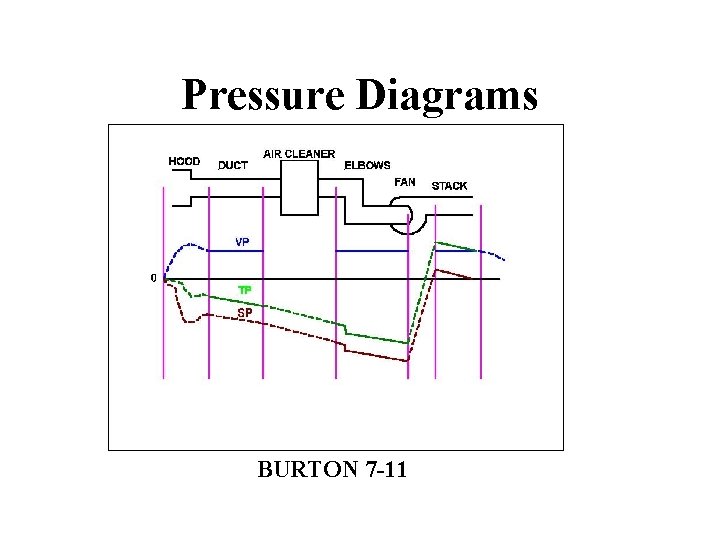
Pressure Diagrams BURTON 7 -11
Chapter 8 Fan Selection and Operation AXIAL FANS CENTRIFUGAL FANS • propeller fans • radial fans • forward inclined • backward inclined BURTON 8 -2
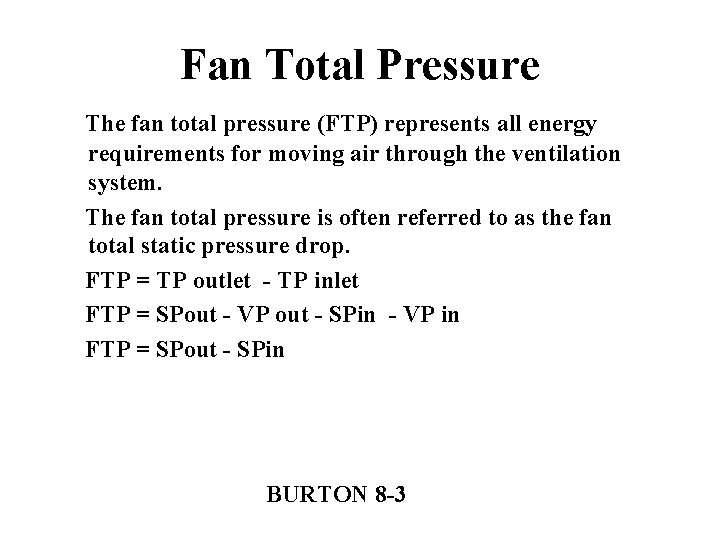
Fan Total Pressure The fan total pressure (FTP) represents all energy requirements for moving air through the ventilation system. The fan total pressure is often referred to as the fan total static pressure drop. FTP = TP outlet - TP inlet FTP = SPout - VP out - SPin - VP in FTP = SPout - SPin BURTON 8 -3
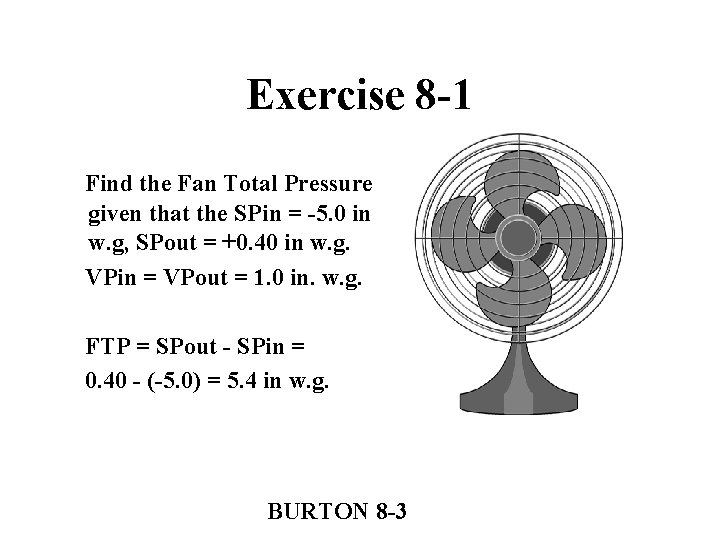
Exercise 8 -1 Find the Fan Total Pressure given that the SPin = -5. 0 in w. g, SPout = +0. 40 in w. g. VPin = VPout = 1. 0 in. w. g. FTP = SPout - SPin = 0. 40 - (-5. 0) = 5. 4 in w. g. BURTON 8 -3
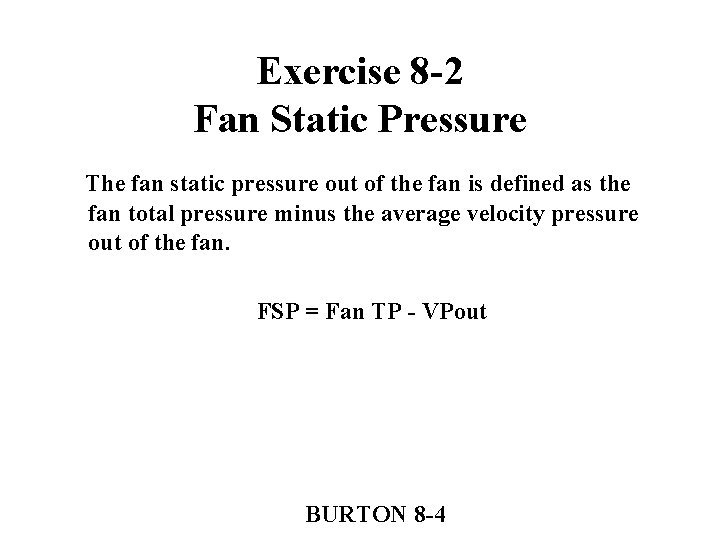
Exercise 8 -2 Fan Static Pressure The fan static pressure out of the fan is defined as the fan total pressure minus the average velocity pressure out of the fan. FSP = Fan TP - VPout BURTON 8 -4
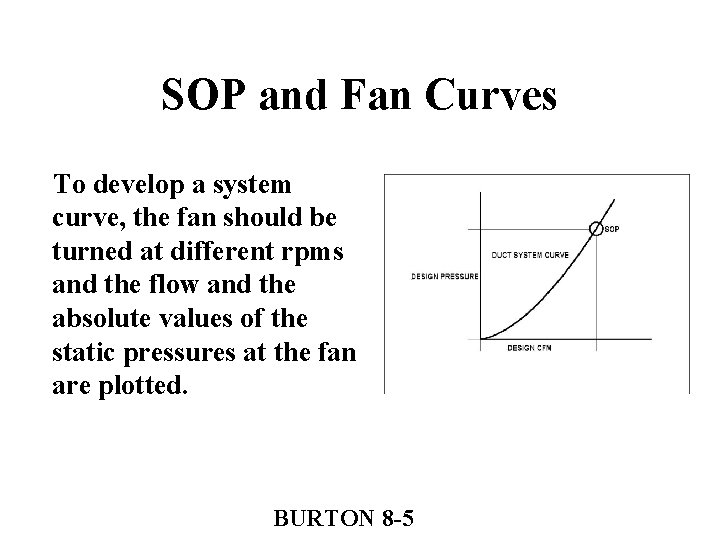
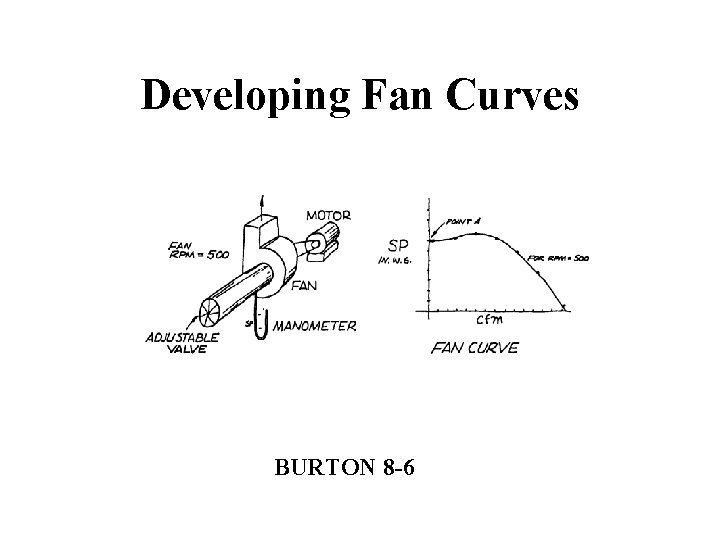
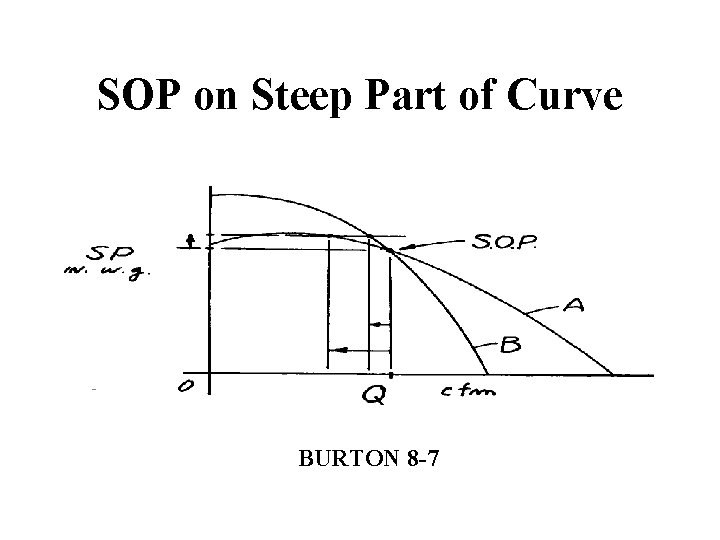
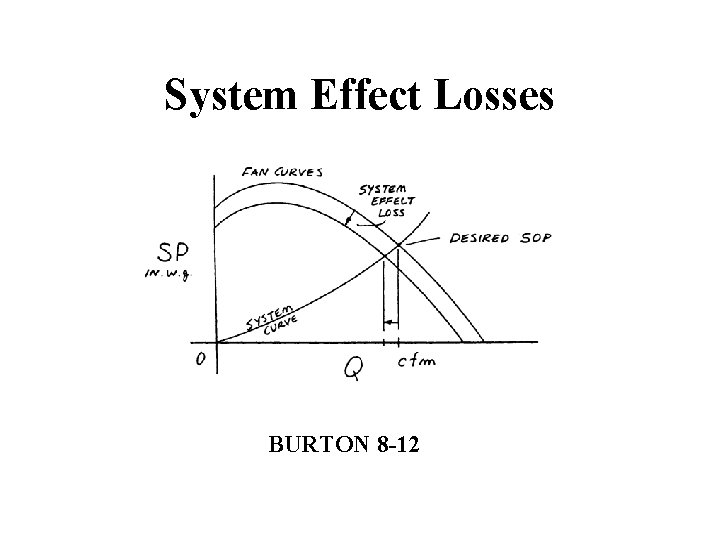
SOP and Fan Curves To develop a system curve, the fan should be turned at different rpms and the flow and the absolute values of the static pressures at the fan are plotted. BURTON 8 -5
Developing Fan Curves BURTON 8 -6
SOP on Steep Part of Curve BURTON 8 -7
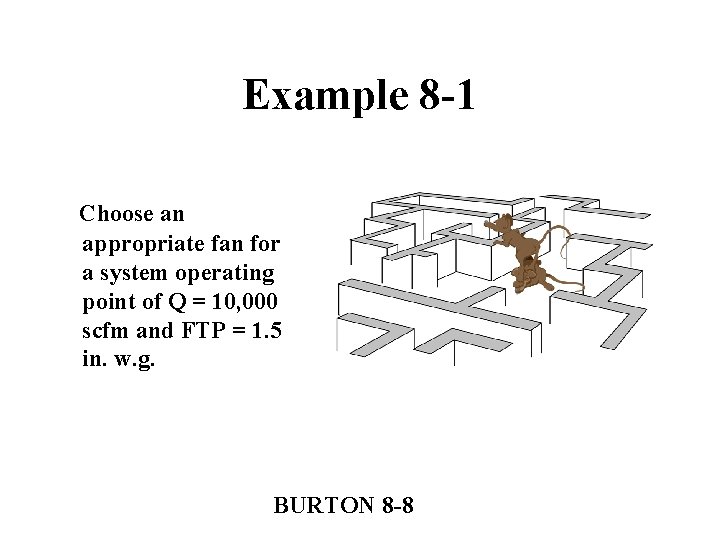
Example 8 -1 Choose an appropriate fan for a system operating point of Q = 10, 000 scfm and FTP = 1. 5 in. w. g. BURTON 8 -8
Exercise 8 -3 Find a fan and appropriate rpm for a fan exhausting 15, 000 cfm at a fan TP = 2. 0 in. w. g. BURTON 8 -8
Exercise 8 -4 Find a suitable fan and the appropriate rpm for a ventilation system exhausting 480 cfm at a fan TP = 13. 8 in. w. g. BURTON 8 -8
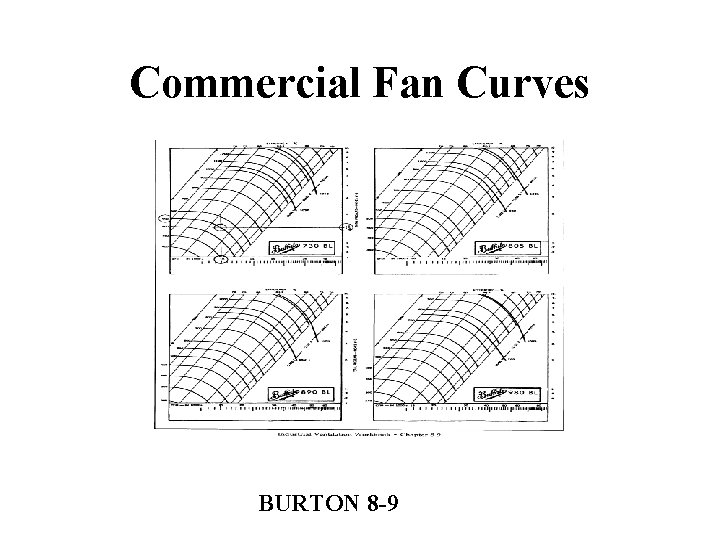
Commercial Fan Curves BURTON 8 -9
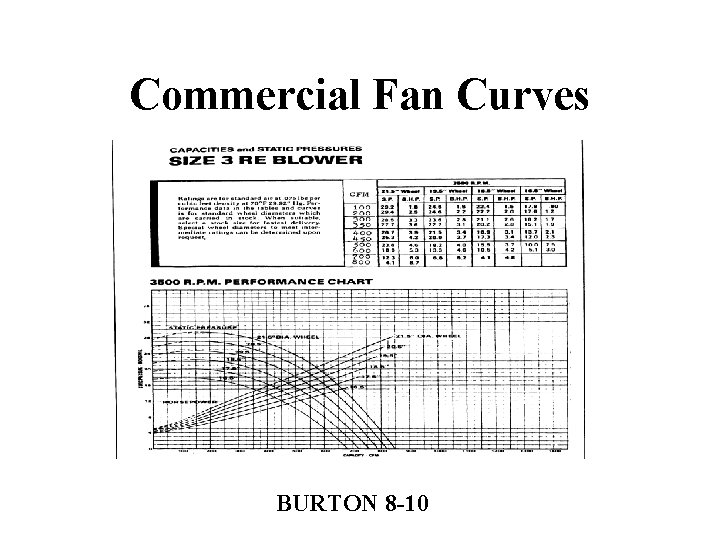
Commercial Fan Curves BURTON 8 -10
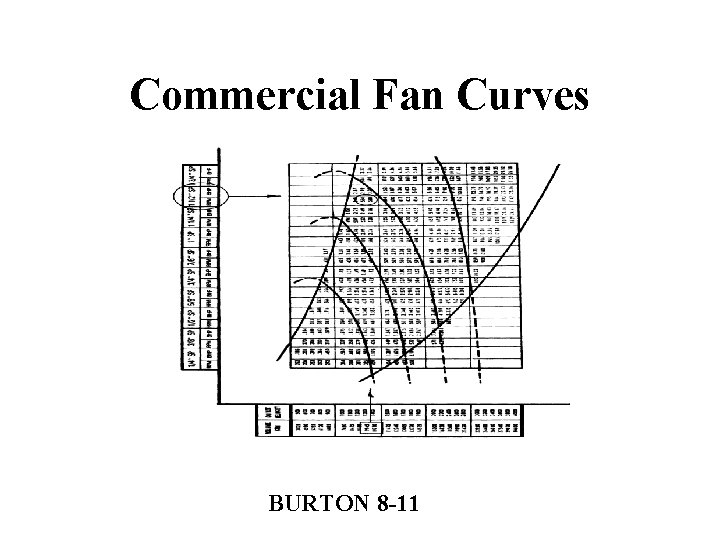
Commercial Fan Curves BURTON 8 -11
System Effect Losses BURTON 8 -12
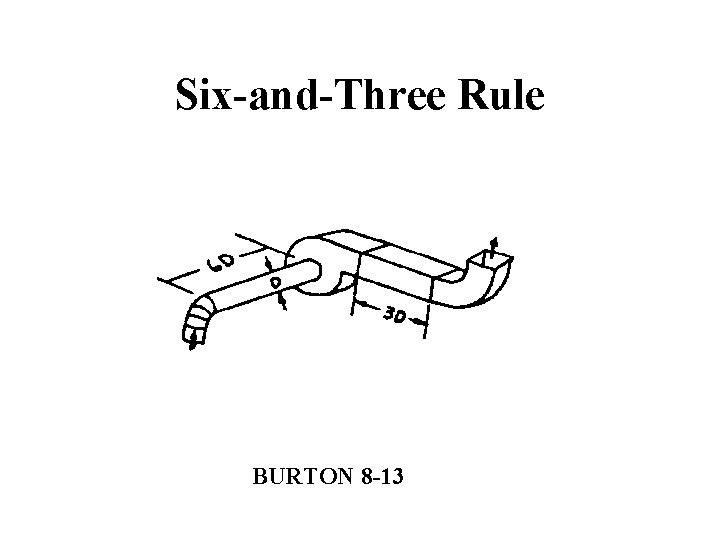
Six-and-Three Rule BURTON 8 -13
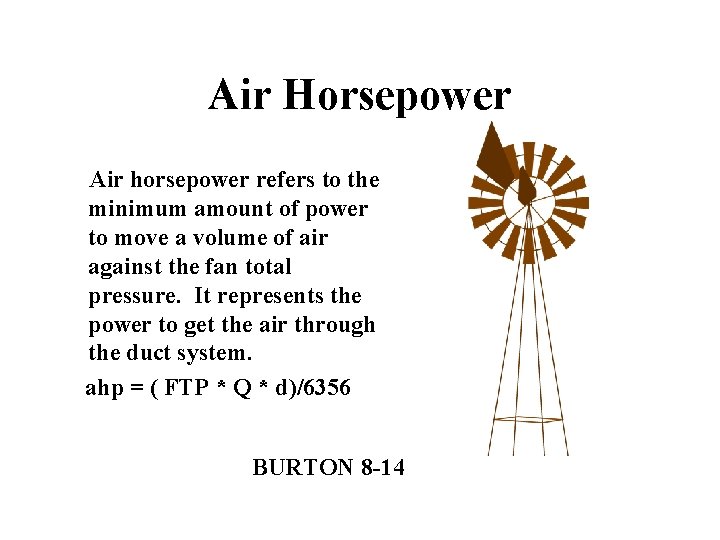
Air Horsepower Air horsepower refers to the minimum amount of power to move a volume of air against the fan total pressure. It represents the power to get the air through the duct system. ahp = ( FTP * Q * d)/6356 BURTON 8 -14
Brake Horsepower Brake horsepower refers to the actual power required to operate the fan so that it fulfills the job of moving the specified cfm against the FTP. It takes into account fan inefficiencies, i. e. losses in the fan. bhp = ahp/ME BURTON 8 -15
Shaft Horsepower Shaft horsepower is bhp plus any power required for drive losses, bearing losses, and pulley losses between the fan and the shaft of the motor. shp = bhp * Kdl BURTON 8 -15
Rated Horsepower • Rated horsepower is the nameplate horsepower on the motor. BURTON 8 -15
Example 8 -4 What is the required power for the system and what rated power motor would you use? FTP = 5. 0 in. w. g. , Q = 12000 scfm ME = 0. 60, Kdl = 1. 10, d = 1, f = 6356 BURTON 8 -16
Exercise 8 -7 Estimate the ahp, bhp, shp, and the rated power motor you would choose for the following system. Fan TP = 10. 0 in. w. g. , Q = 5000 scfm Kdl = 1. 15, STP(d=1), f = 6356, ME = 0. 65 BURTON 8 -17
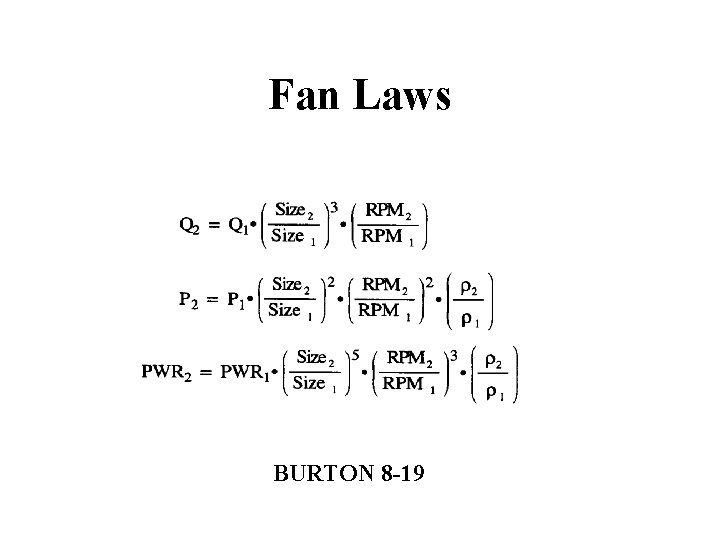
Fan Laws BURTON 8 -19
Local Exhaust Ventilation Design BURTON 9 -1
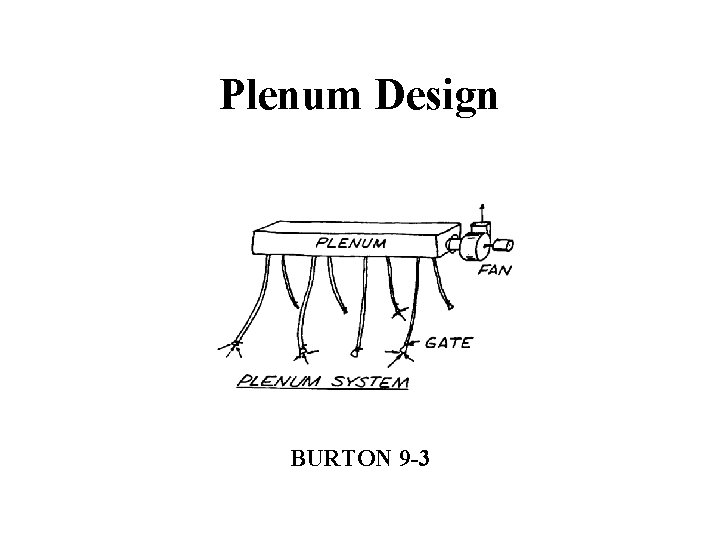
Plenum Design BURTON 9 -3
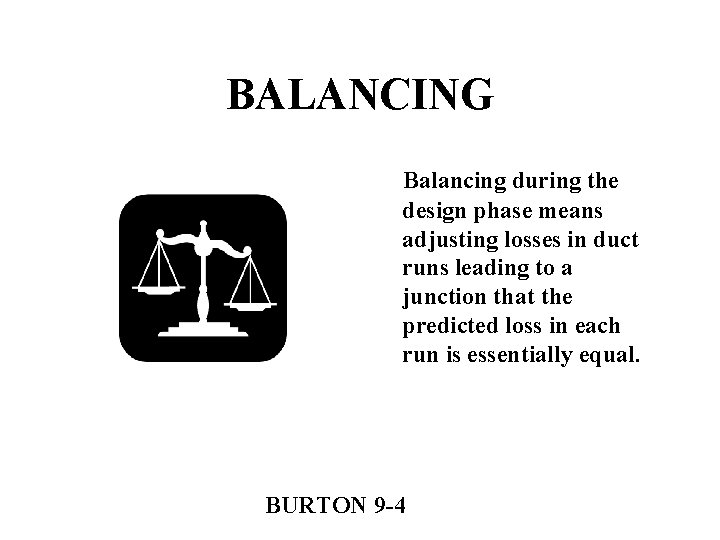
BALANCING Balancing during the design phase means adjusting losses in duct runs leading to a junction that the predicted loss in each run is essentially equal. BURTON 9 -4
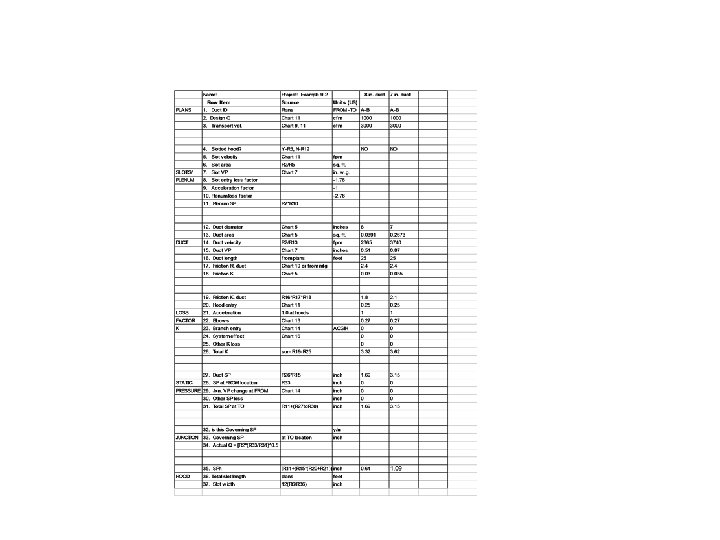
Example 9 -2 Design an local exhaust system based on the criteria listed in the example. BURTON 9 -5
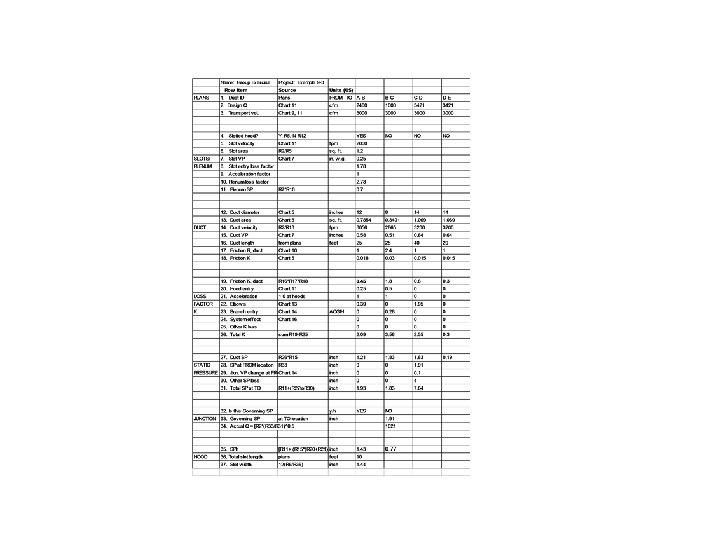
Example 9 -3 Design a local exhaust system based upon the criteria listed on this page. BURTON 9 -11