
The Atmosphere and the Oceans Eric Angat Teacher
- Slides: 14
The Atmosphere and the Oceans Eric Angat Teacher
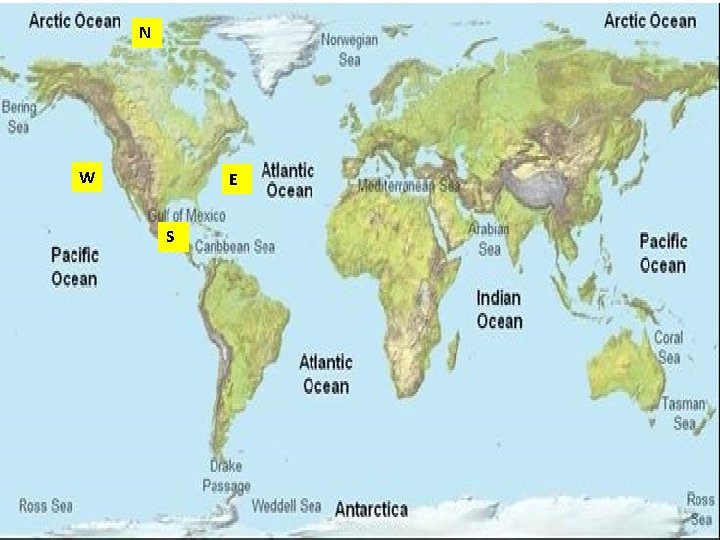
N W E S
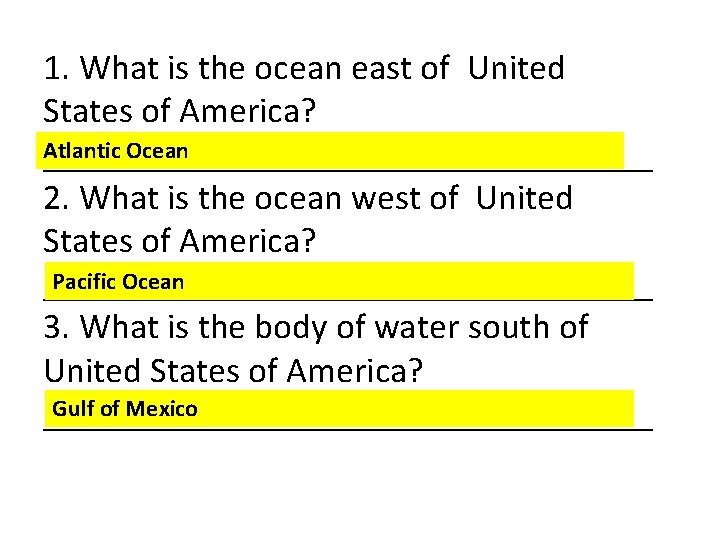
1. What is the ocean east of United States of America? Atlantic Ocean _________________ 2. What is the ocean west of United States of America? Pacific Ocean _________________ 3. What is the body of water south of United States of America? Gulf of Mexico _________________
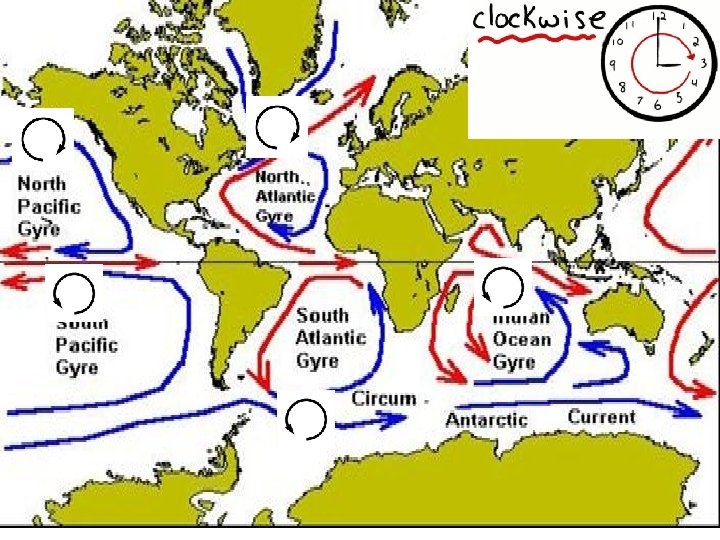
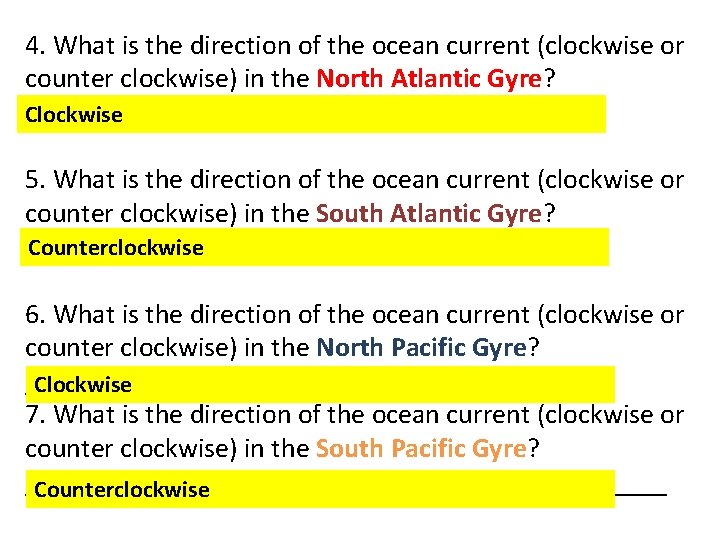
4. What is the direction of the ocean current (clockwise or counter clockwise) in the North Atlantic Gyre? _____________________ Clockwise 5. What is the direction of the ocean current (clockwise or counter clockwise) in the South Atlantic Gyre? Counterclockwise _____________________ 6. What is the direction of the ocean current (clockwise or counter clockwise) in the North Pacific Gyre? _____________________ Clockwise 7. What is the direction of the ocean current (clockwise or counter clockwise) in the South Pacific Gyre? _______________________ Counterclockwise
8. What causes wind? 9. How does wind move? 10. What causes ocean waves? 11. What causes upwelling?
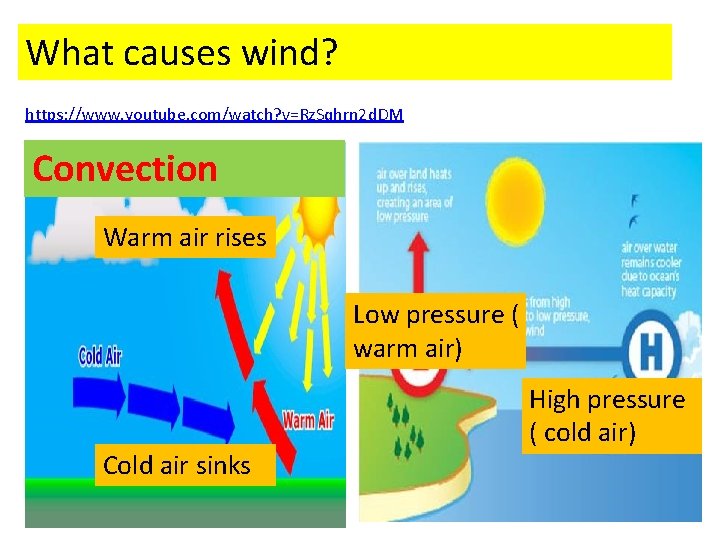
What causes wind? https: //www. youtube. com/watch? v=Rz. Sqhrn 2 d. DM Convection Warm air rises Low pressure ( warm air) Cold air sinks High pressure ( cold air)
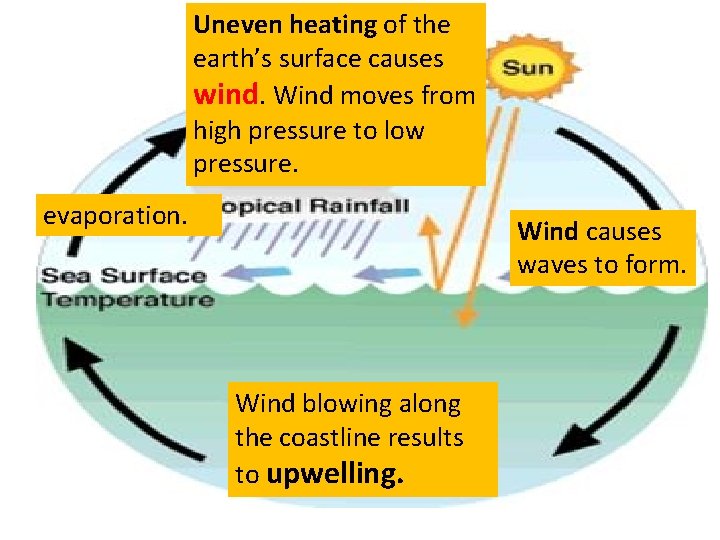
Uneven heating of the earth’s surface causes wind. Wind moves from high pressure to low pressure. evaporation. Wind causes waves to form. Wind blowing along the coastline results to upwelling.
8. What causes wind? Uneven heating of the earth’s surface causes wind 9. How does wind move? Wind moves from high pressure to low pressure. 10. What causes ocean waves? Wind causes waves to form. 11. What causes upwelling? Wind blowing along the coastline results to upwelling.
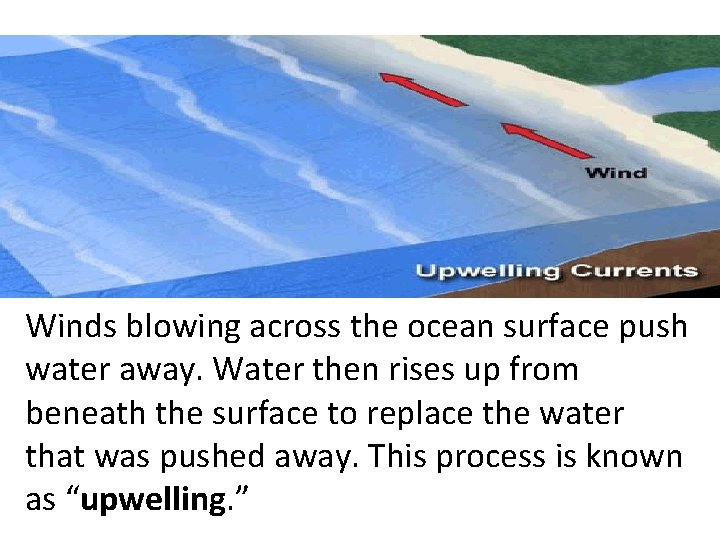
Winds blowing across the ocean surface push water away. Water then rises up from beneath the surface to replace the water that was pushed away. This process is known as “upwelling. ”
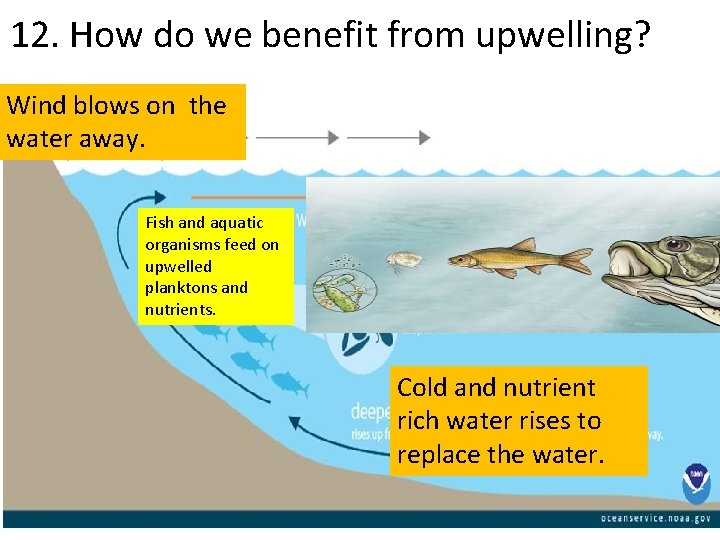
12. How do we benefit from upwelling? Wind blows on the water away. Fish and aquatic organisms feed on upwelled planktons and nutrients. Cold and nutrient rich water rises to replace the water.
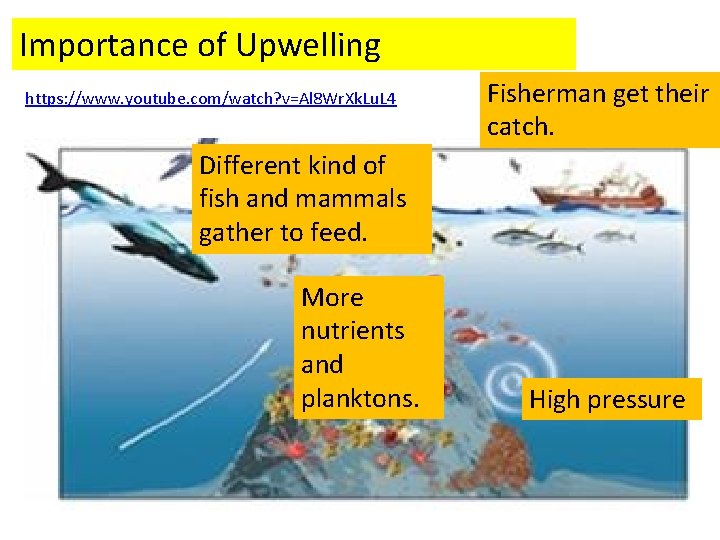
Importance of Upwelling https: //www. youtube. com/watch? v=Al 8 Wr. Xk. Lu. L 4 Fisherman get their catch. Different kind of fish and mammals gather to feed. More nutrients and planktons. High pressure
Water that rises to the surface as a result of upwelling is typically colder and is rich in nutrients. These nutrients “fertilize” surface waters, meaning that these surface waters often have high biological productivity. Therefore, good fishing grounds typically are found where upwelling is common.
The atmosphere affects the oceans and is in turn influenced by them. The action of winds blowing over the ocean surface creates waves and the great current systems of the oceans. When winds are strong enough to produce spray and whitecaps, tiny droplets of ocean water are thrown up into the atmosphere where some evaporate, leaving microscopic grains of salt buoyed by the turbulence of the air. These tiny particles may become nuclei for the condensation of water vapor to form fogs and clouds.