Which is easiest to hold in your hand
- Slides: 20
Which is easiest to hold in your hand? Why? • A Small Rock • 100 ml of Water • The Helium from a Balloon Modified by: Alicia Grine
State (or phase) of Matter • The physical form in which matter exists • Four states – – Solid Liquid Gas Plasma Most common on Earth
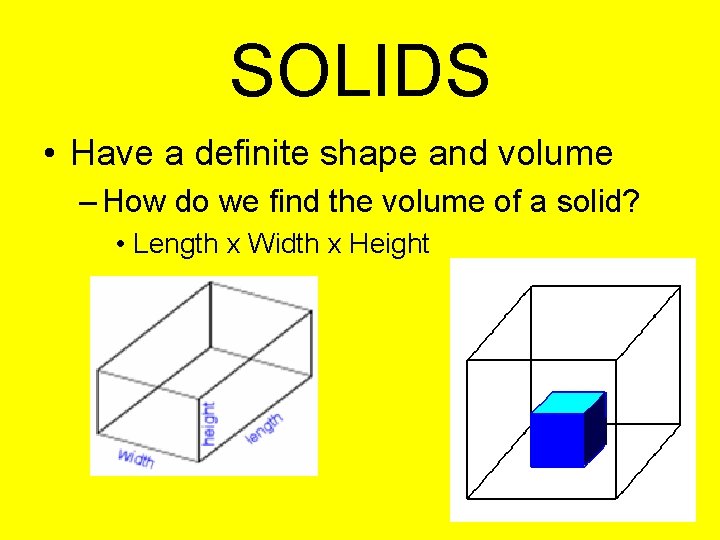
SOLIDS • Have a definite shape and volume – How do we find the volume of a solid? • Length x Width x Height
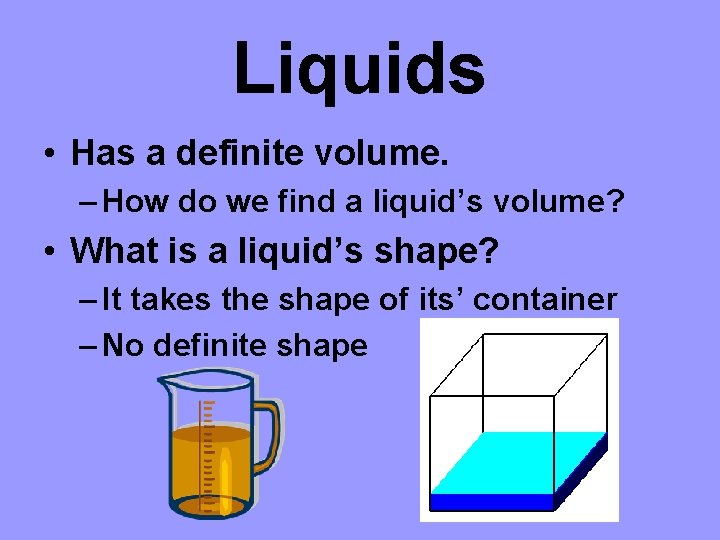
Liquids • Has a definite volume. – How do we find a liquid’s volume? • What is a liquid’s shape? – It takes the shape of its’ container – No definite shape
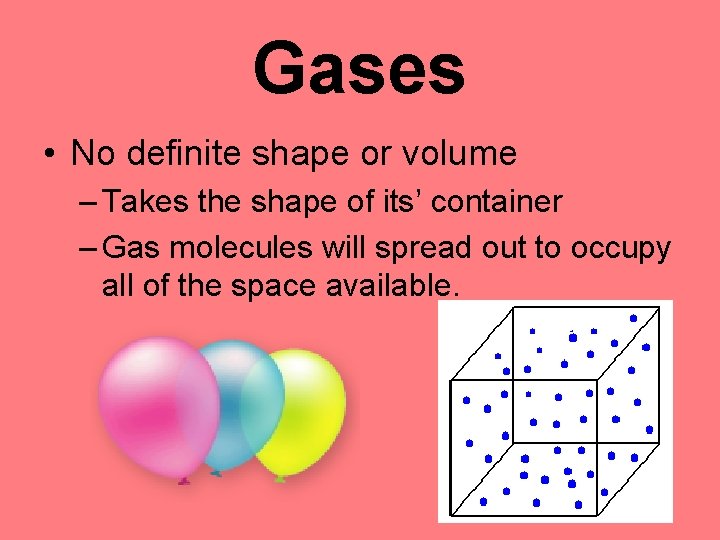
Gases • No definite shape or volume – Takes the shape of its’ container – Gas molecules will spread out to occupy all of the space available.
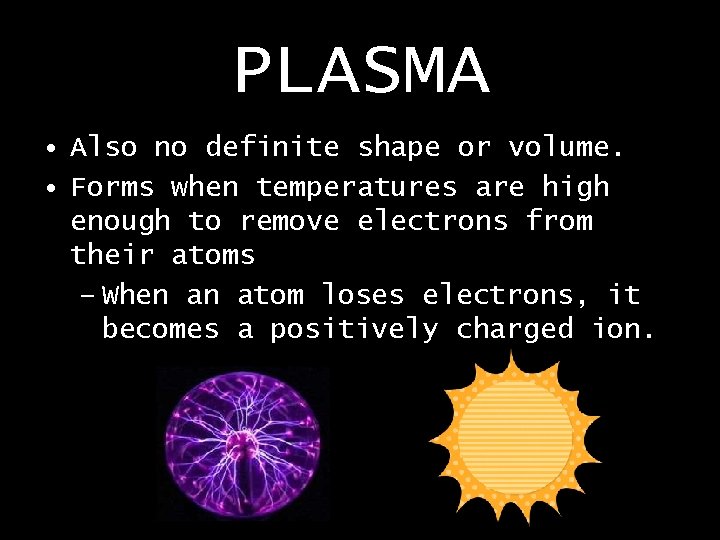
PLASMA • Also no definite shape or volume. • Forms when temperatures are high enough to remove electrons from their atoms – When an atom loses electrons, it becomes a positively charged ion.
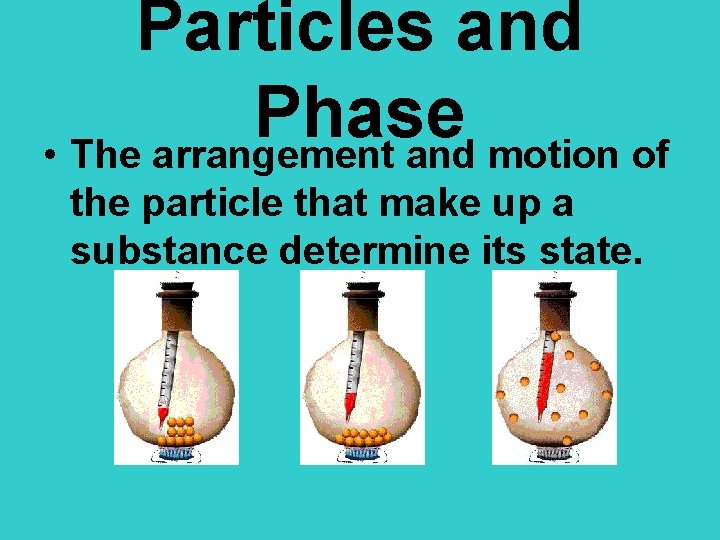
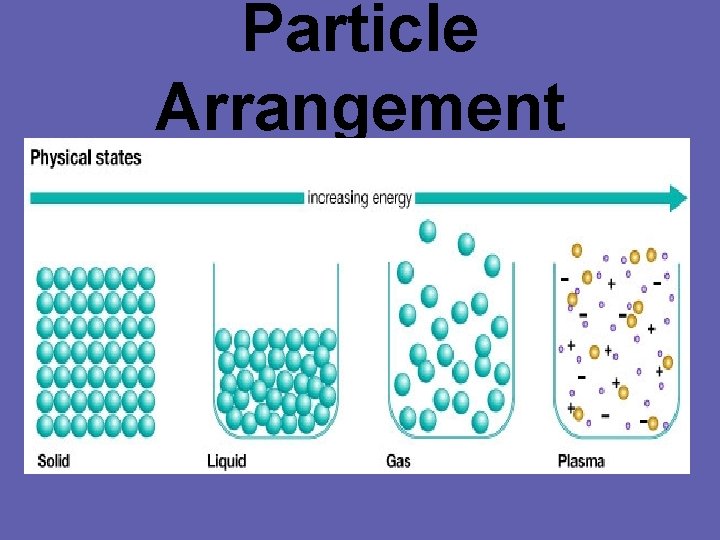
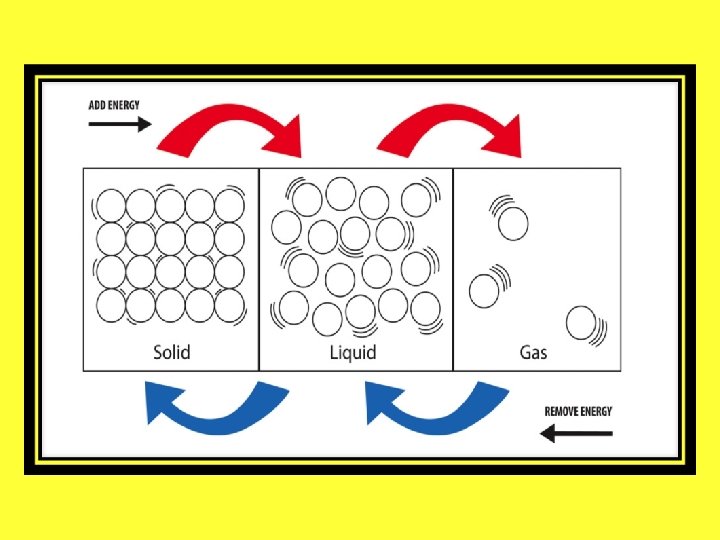
Particles and Phase • The arrangement and motion of the particle that make up a substance determine its state.
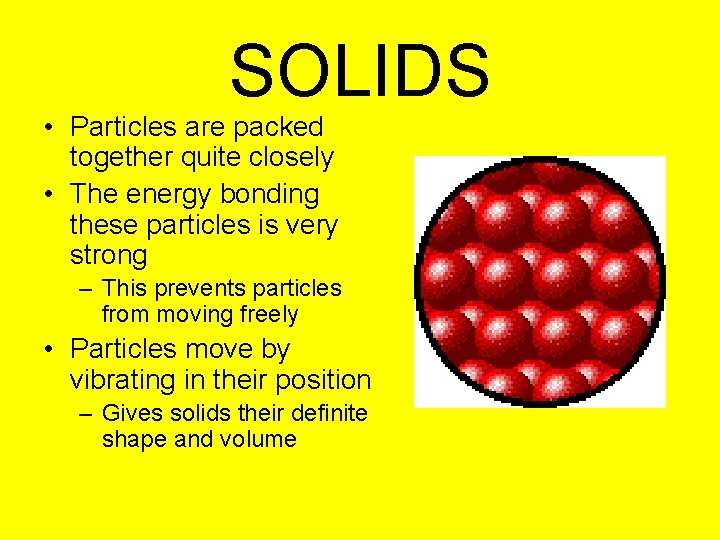
SOLIDS • Particles are packed together quite closely • The energy bonding these particles is very strong – This prevents particles from moving freely • Particles move by vibrating in their position – Gives solids their definite shape and volume
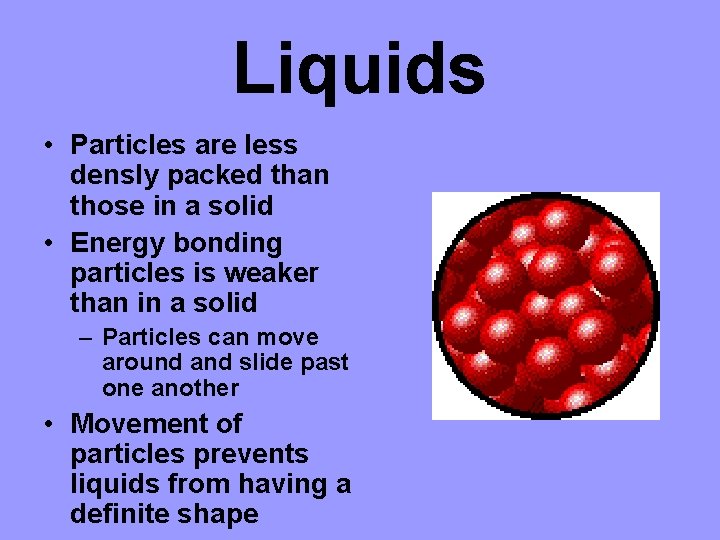
Liquids • Particles are less densly packed than those in a solid • Energy bonding particles is weaker than in a solid – Particles can move around and slide past one another • Movement of particles prevents liquids from having a definite shape
Gases • Particles move freely – Allows gases to expend and contract to fit its container • Thus gases lack shape and volume • Energy binding the particles is weak
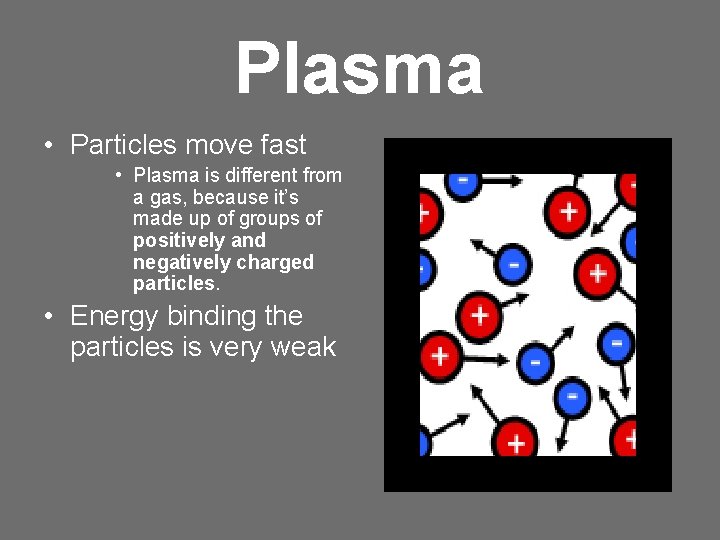
Plasma • Particles move fast • Plasma is different from a gas, because it’s made up of groups of positively and negatively charged particles. • Energy binding the particles is very weak
Particle Arrangement
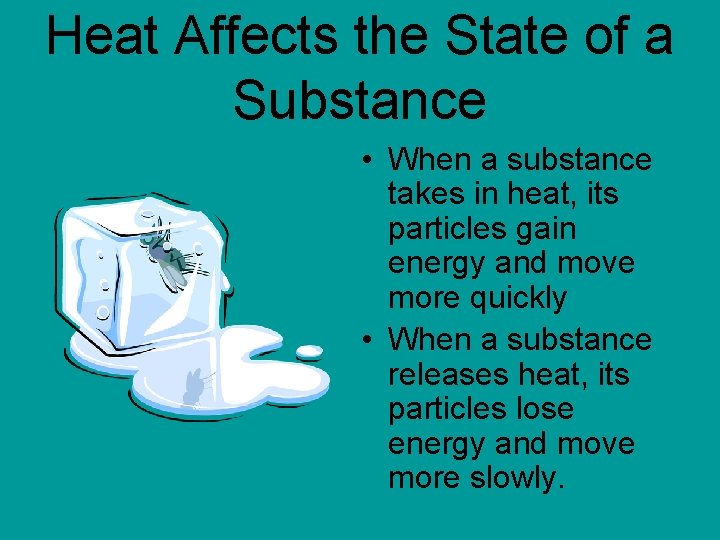
Heat Affects the State of a Substance • When a substance takes in heat, its particles gain energy and move more quickly • When a substance releases heat, its particles lose energy and move more slowly.
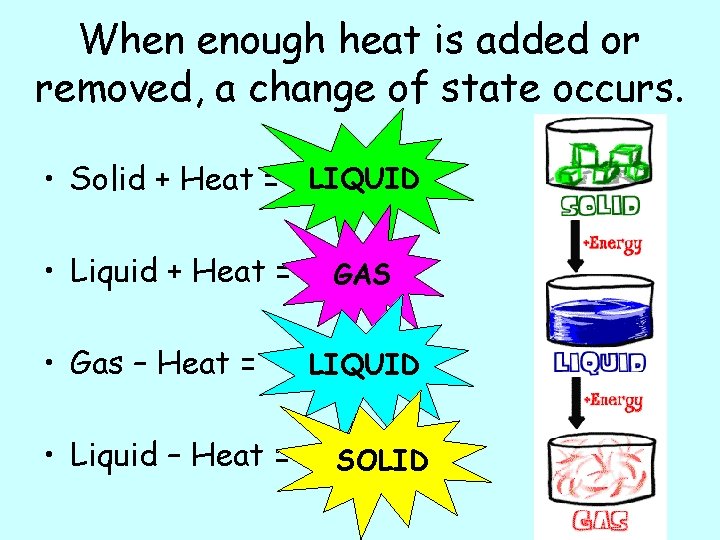
When enough heat is added or removed, a change of state occurs. • Solid + Heat = LIQUID • Liquid + Heat = • Gas – Heat = • Liquid – Heat = GAS LIQUID SOLID
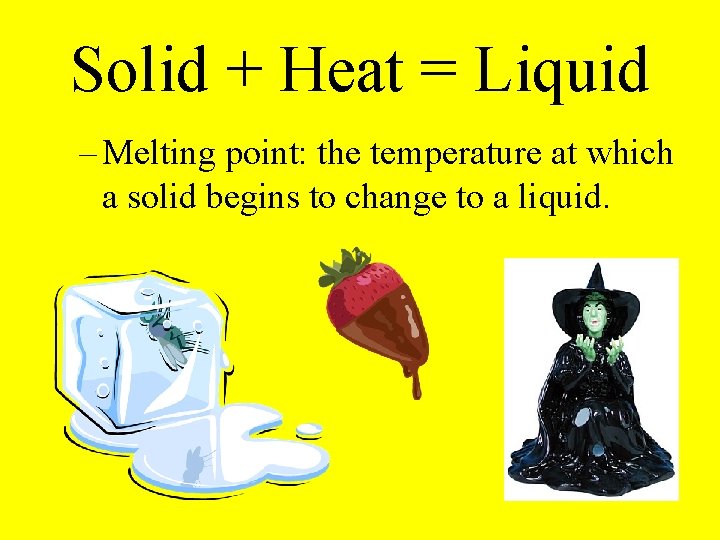
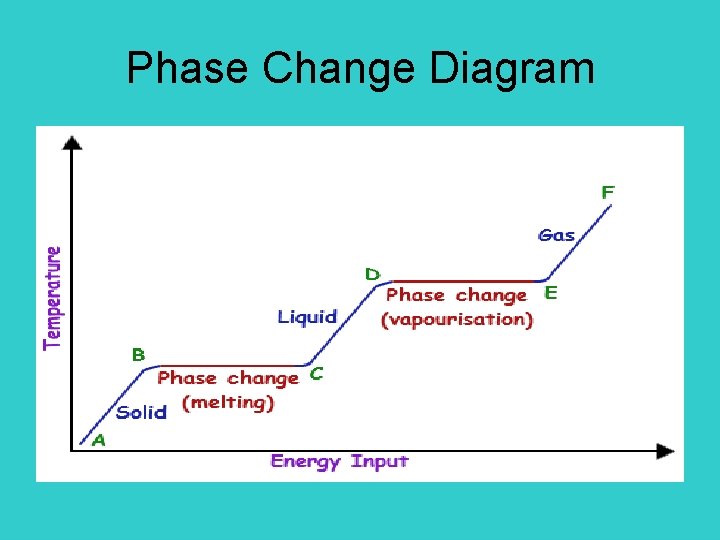
Solid + Heat = Liquid – Melting point: the temperature at which a solid begins to change to a liquid.
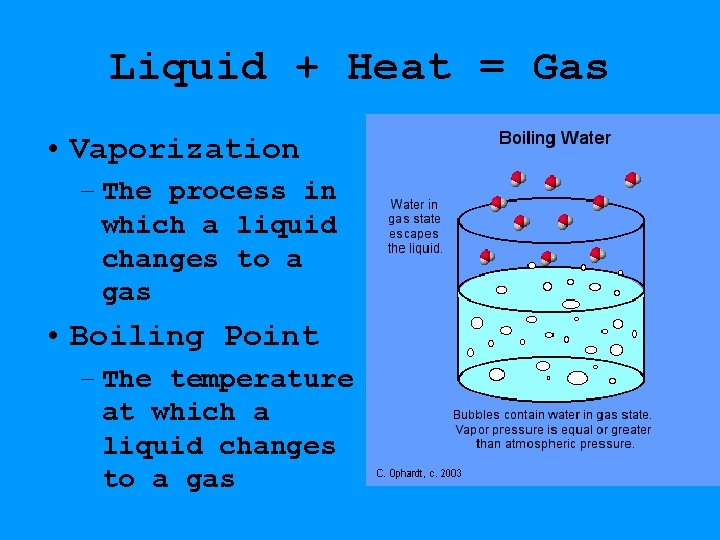
Liquid + Heat = Gas • Vaporization – The process in which a liquid changes to a gas • Boiling Point – The temperature at which a liquid changes to a gas
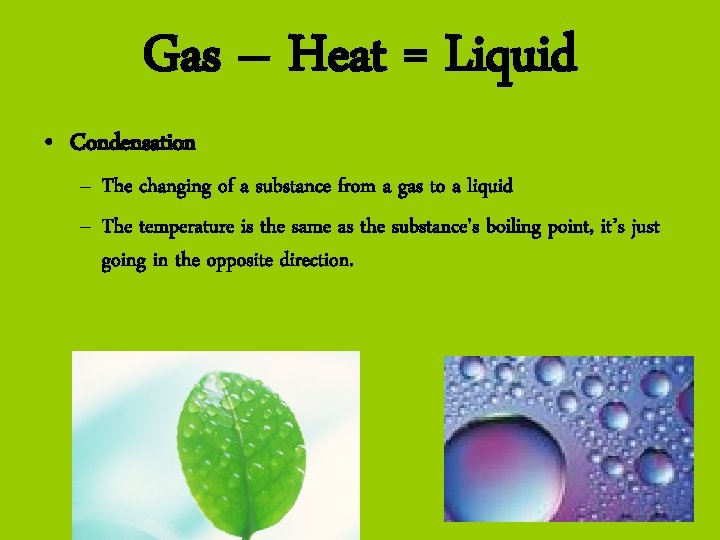
Gas – Heat = Liquid • Condensation – The changing of a substance from a gas to a liquid – The temperature is the same as the substance's boiling point, it’s just going in the opposite direction.
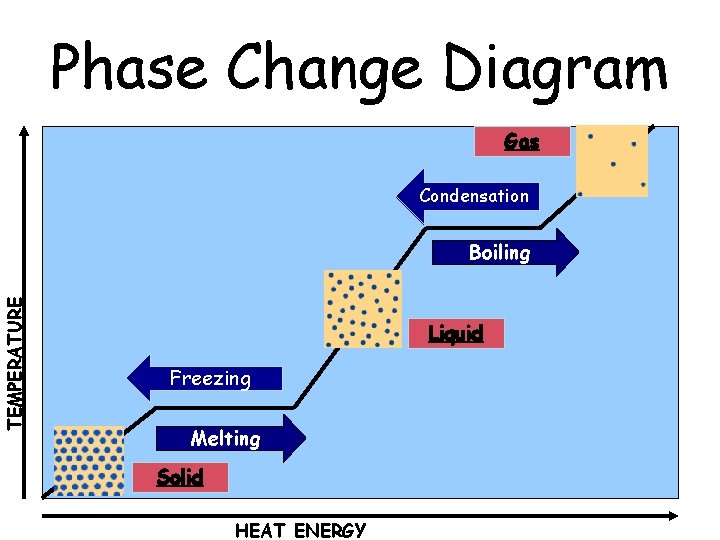
Phase Change Diagram Gas Condensation TEMPERATURE Boiling S Freezing Melting Solid HEAT ENERGY Liquid
Phase Change Diagram