Essential Question How does unequal heating and the


- Slides: 39
Essential Question: How does unequal heating and the Earth’s rotation affect wind patterns? Standards: S 6 E 4 a. Demonstrate that land water absorb and lose heat at different rates and explain the resulting effects on weather patterns. S 6 E 4 b. Relate unequal heating of land water surfaces to form large global wind systems… S 6 E 2 c. Relate the tilt of the earth to the distribution of sunlight throughout the year and its effect on climate.
Activating Strategy: Watch one of the videos below then discuss with a partner what causes wind. https: //www. youtube. com/watch? v=6 E 9 q 0 BFX_-I https: //www. youtube. com/watch? v=QO 9_l. P 6 rbrk
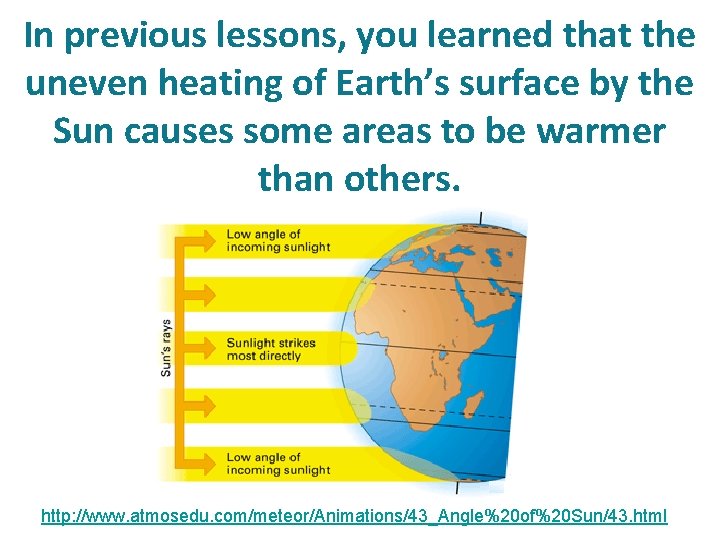
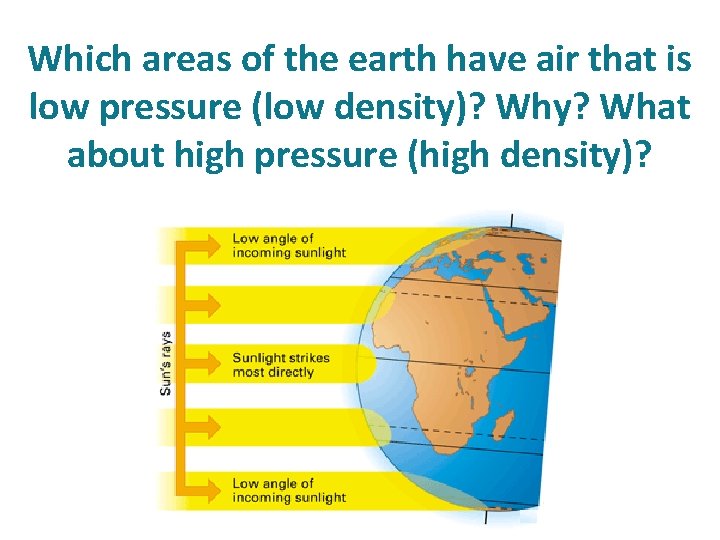
In previous lessons, you learned that the uneven heating of Earth’s surface by the Sun causes some areas to be warmer than others. http: //www. atmosedu. com/meteor/Animations/43_Angle%20 of%20 Sun/43. html
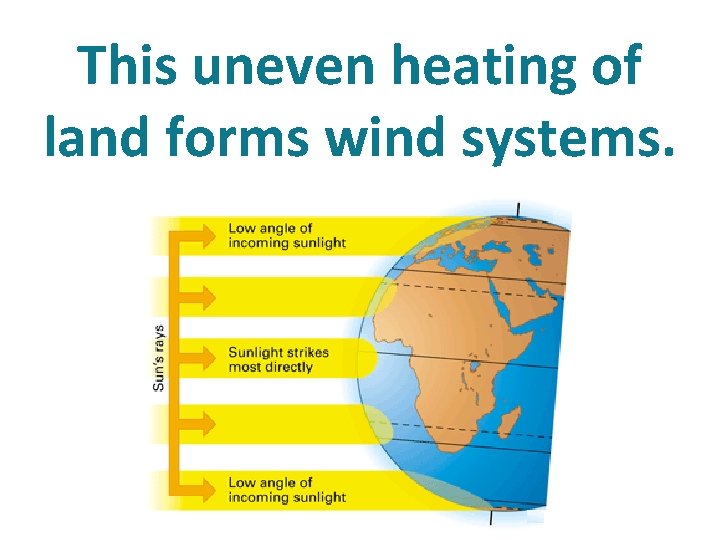
This uneven heating of land forms wind systems.
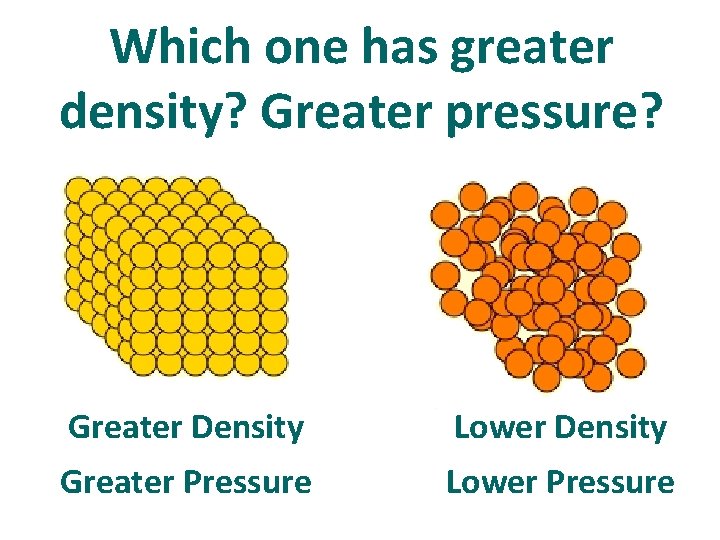
Wind is caused by differences in air pressure. Areas of high pressure move to areas of low pressure. Air pressure is related to density. Let’s review density.
Which one has greater density? Greater pressure? Greater Density Lower Density Greater Pressure Lower Pressure
We will consider Density and Pressure to be the same. What about temperature? What did you learn about temperature and density?
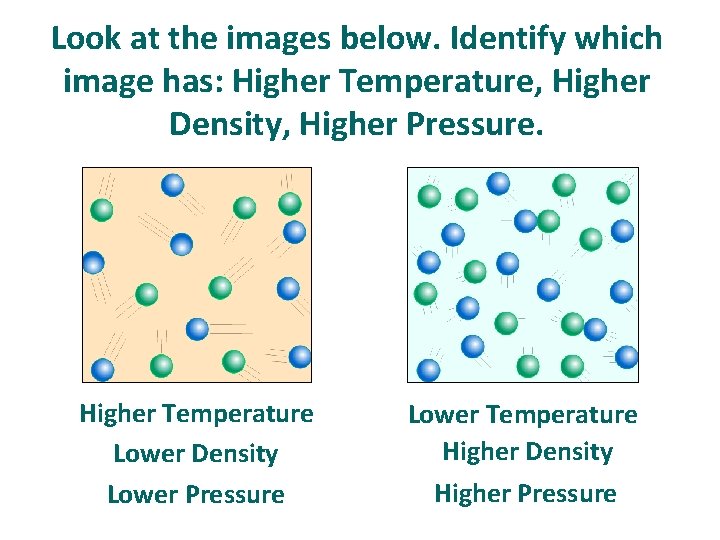
Look at the images below. Identify which image has: Higher Temperature, Higher Density, Higher Pressure. Higher Temperature Lower Density Lower Pressure Lower Temperature Higher Density Higher Pressure
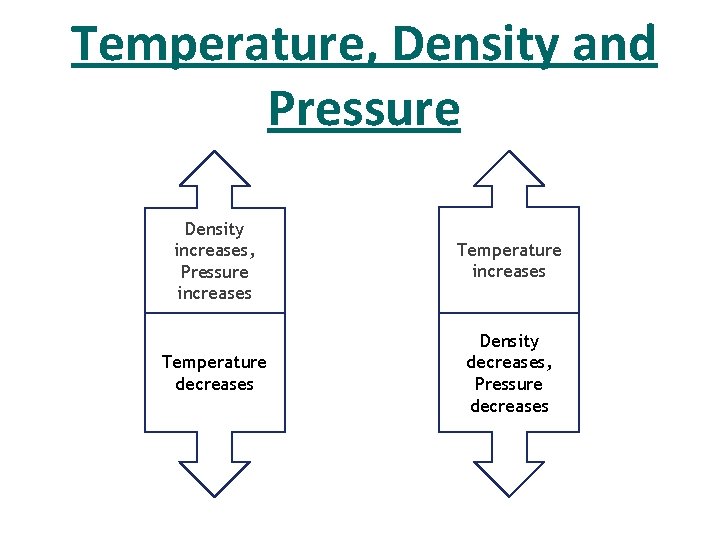
Temperature, Density and Pressure Density increases, Pressure increases Temperature decreases Density decreases, Pressure decreases
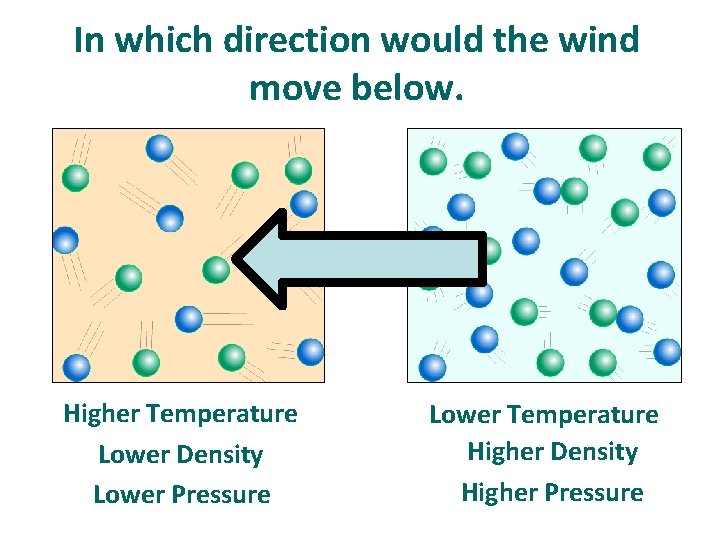
Let’s apply these concepts back to wind. Wind is caused by differences in air pressure. Areas of high pressure move to areas of low pressure.
In which direction would the wind move below. Higher Temperature Lower Density Lower Pressure Lower Temperature Higher Density Higher Pressure
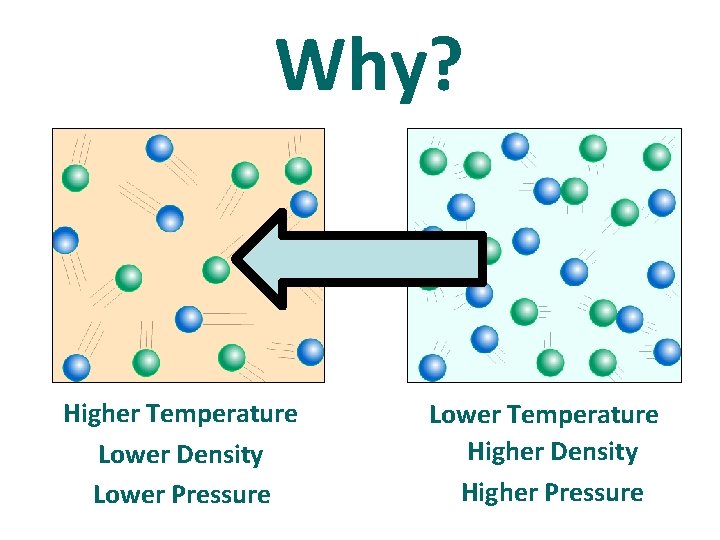
Why? Higher Temperature Lower Density Lower Pressure Lower Temperature Higher Density Higher Pressure
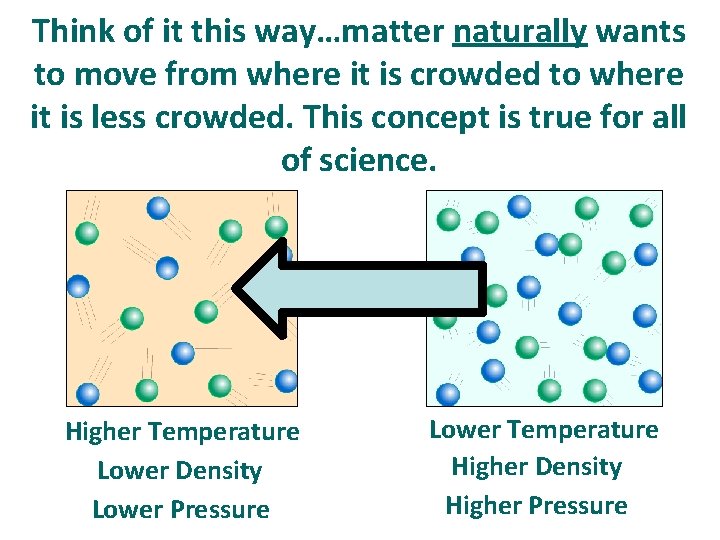
Think of it this way…matter naturally wants to move from where it is crowded to where it is less crowded. This concept is true for all of science. Higher Temperature Lower Density Lower Pressure Lower Temperature Higher Density Higher Pressure
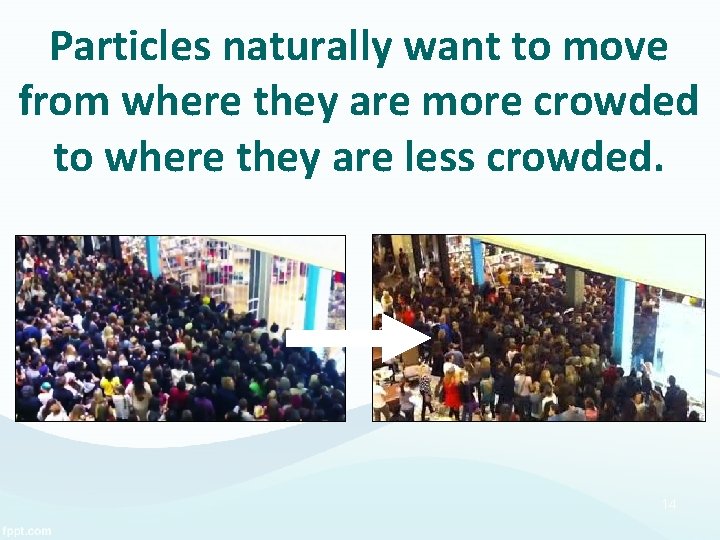
Particles naturally want to move from where they are more crowded to where they are less crowded. 14
Which areas of the earth have air that is low pressure (low density)? Why? What about high pressure (high density)?
Distributed Summarizing: Turn to a seat partner and describe how wind moves. Together discuss the following question: What makes wind travel at faster speeds?
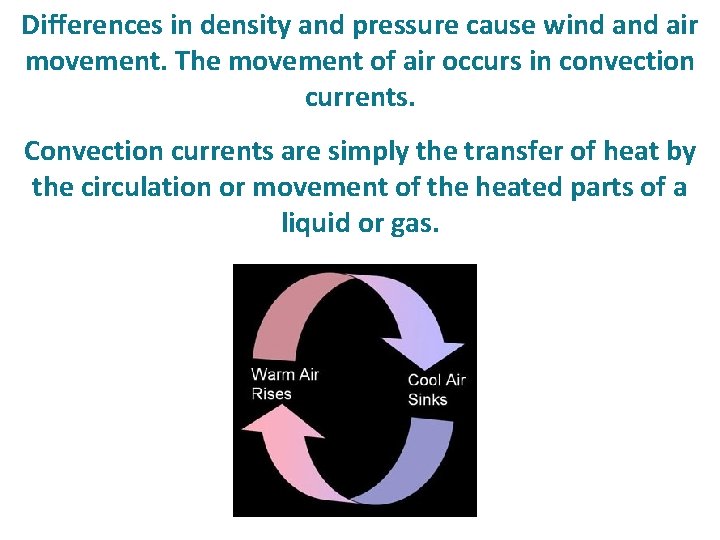
Differences in density and pressure cause wind air movement. The movement of air occurs in convection currents. Convection currents are simply the transfer of heat by the circulation or movement of the heated parts of a liquid or gas.
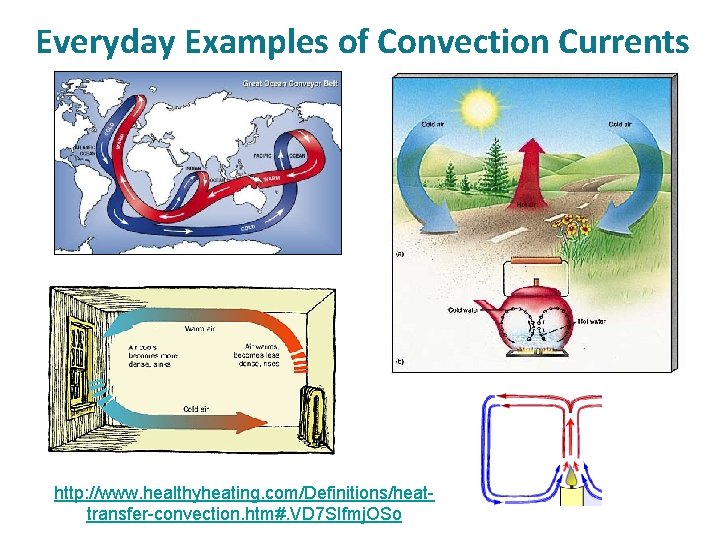
Everyday Examples of Convection Currents http: //www. healthyheating. com/Definitions/heattransfer-convection. htm#. VD 7 SIfmj. OSo
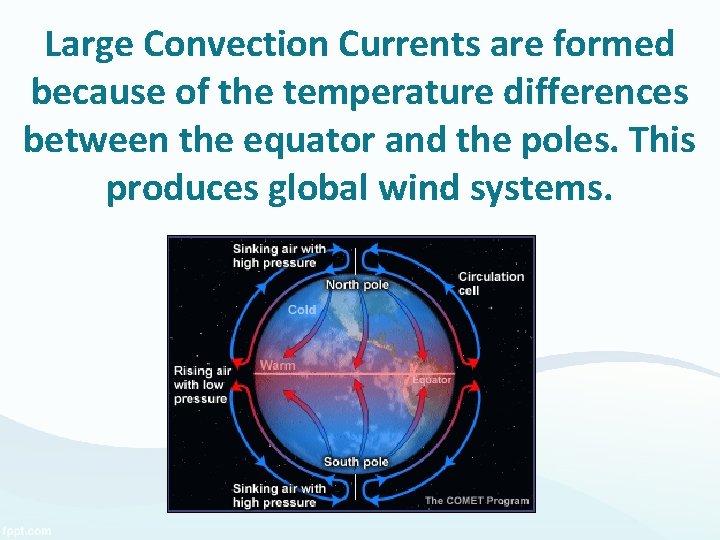
Large Convection Currents are formed because of the temperature differences between the equator and the poles. This produces global wind systems.
The sinking of cold, dense air and the rising of warm, less dense air do not explain everything about wind. What other factor have we discussed previously that affects the direction of winds on the earth’s surface?
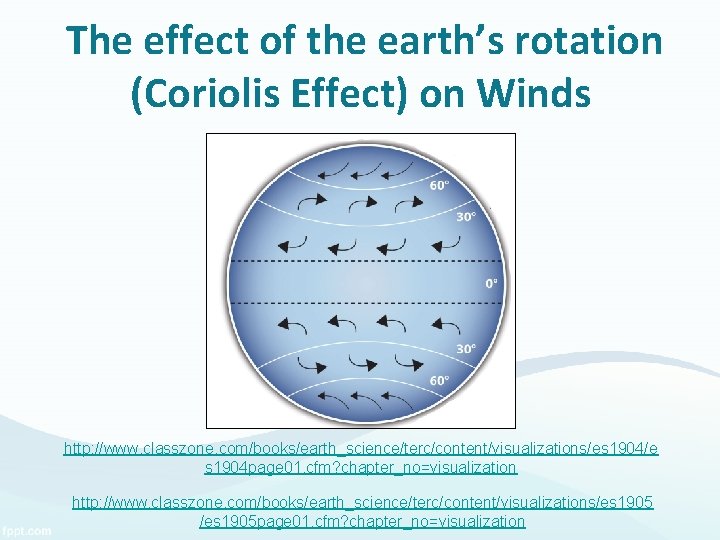
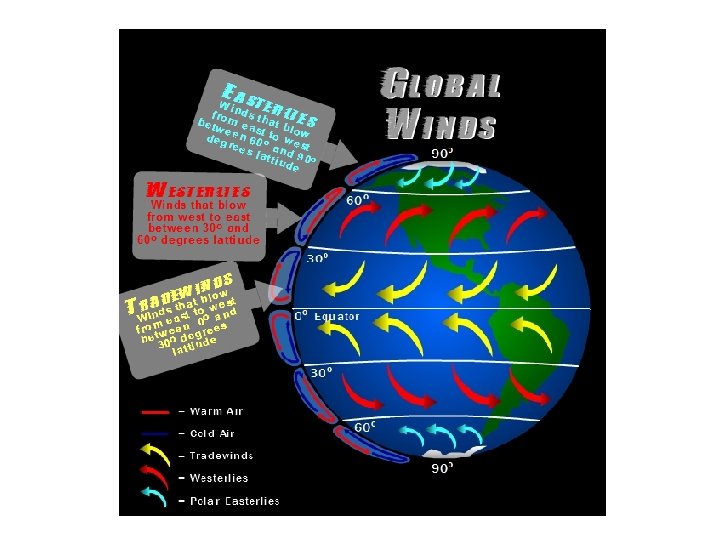
Surface winds and surface currents are affected by the rotation of the Earth (the Coriolis Effect) Because Earth rotates toward the east, winds appear to curve to the right in the northern hemisphere and to the left in the southern hemisphere
The effect of the earth’s rotation (Coriolis Effect) on Winds http: //www. classzone. com/books/earth_science/terc/content/visualizations/es 1904/e s 1904 page 01. cfm? chapter_no=visualization http: //www. classzone. com/books/earth_science/terc/content/visualizations/es 1905 page 01. cfm? chapter_no=visualization
The flow of air caused by unequal heating of the Earth’s surface and the rotation of the Earth (Coriolis Effect) creates distinct wind patterns on Earth’s surface. These wind systems not only influence the weather, they also determine when and where ships and planes travel most efficiently.
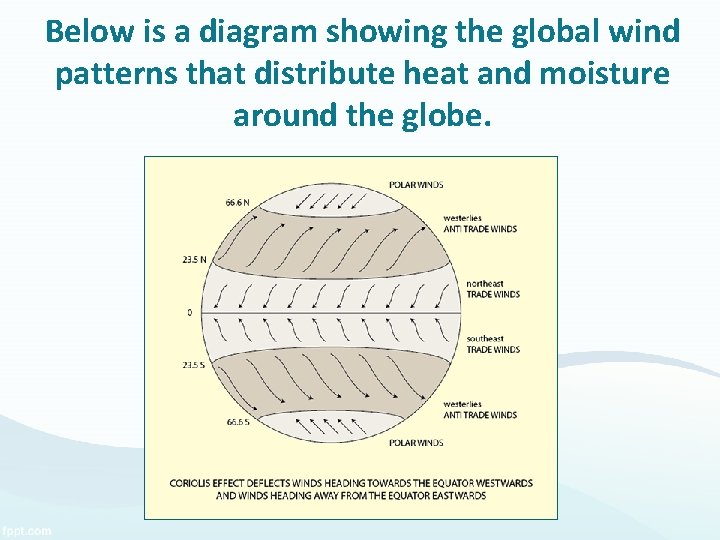
Below is a diagram showing the global wind patterns that distribute heat and moisture around the globe.
Distributed Summarizing: Turn to a seat partner and describe the factors that influence global wind patterns.
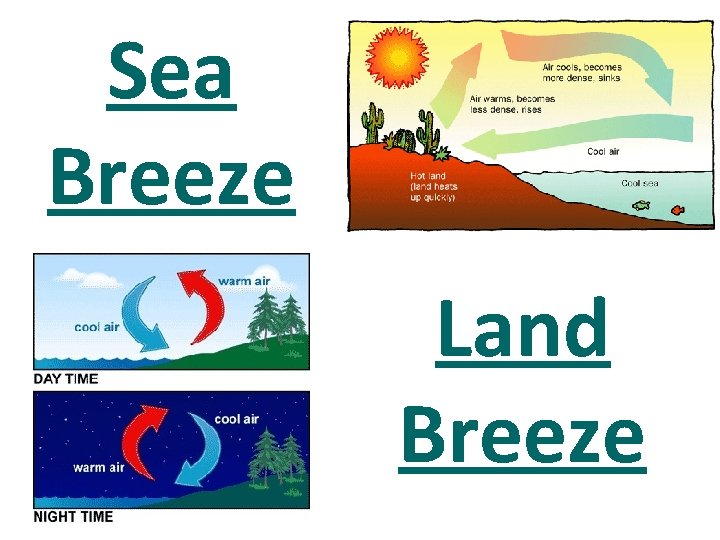
Global wind systems determine the major weather patterns for the entire planet. Smaller wind systems affect local weather. Two such wind systems are sea breezes and land breezes.
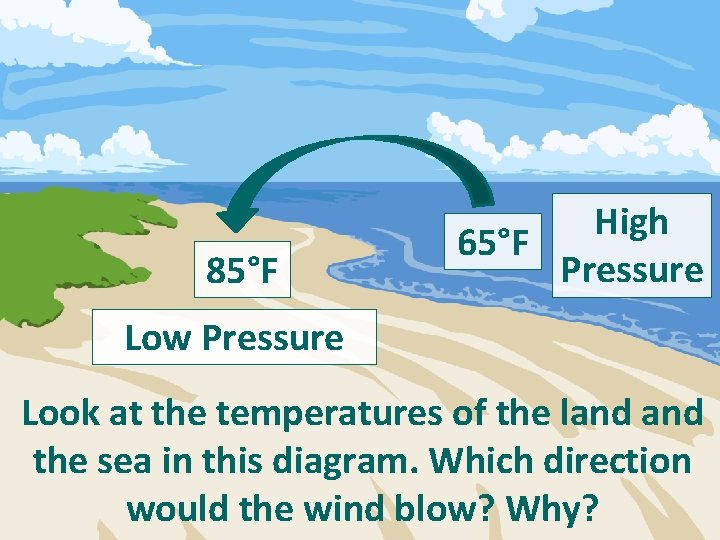
85°F High 65°F Pressure Low Pressure Look at the temperatures of the land the sea in this diagram. Which direction would the wind blow? Why?
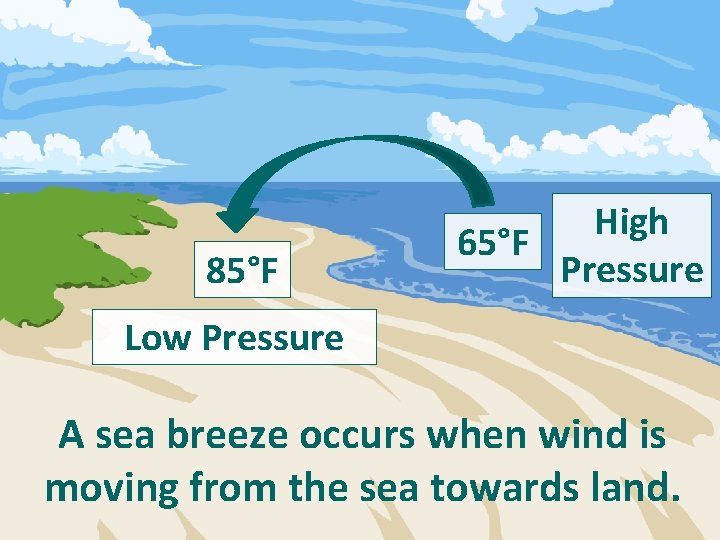
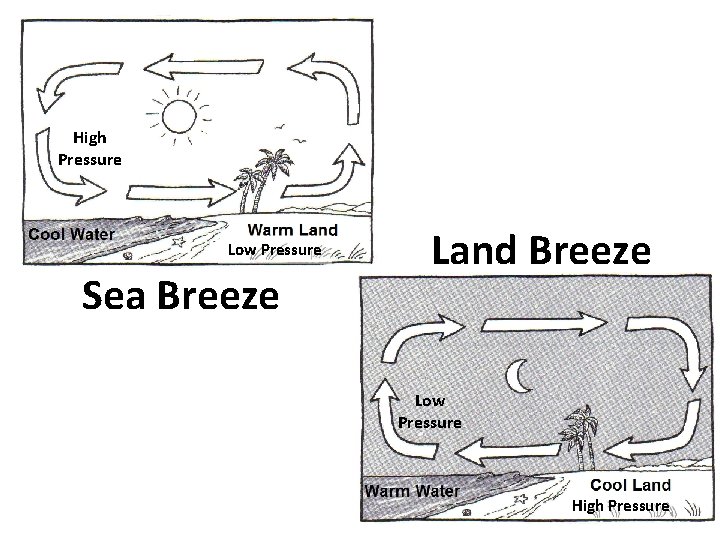
85°F High 65°F Pressure Low Pressure A sea breeze occurs when wind is moving from the sea towards land.
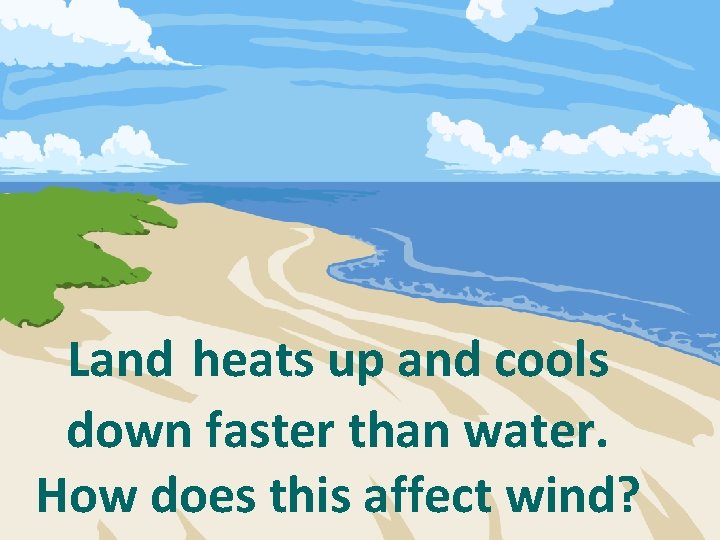
Land heats up and cools down faster than water. How does this affect wind?
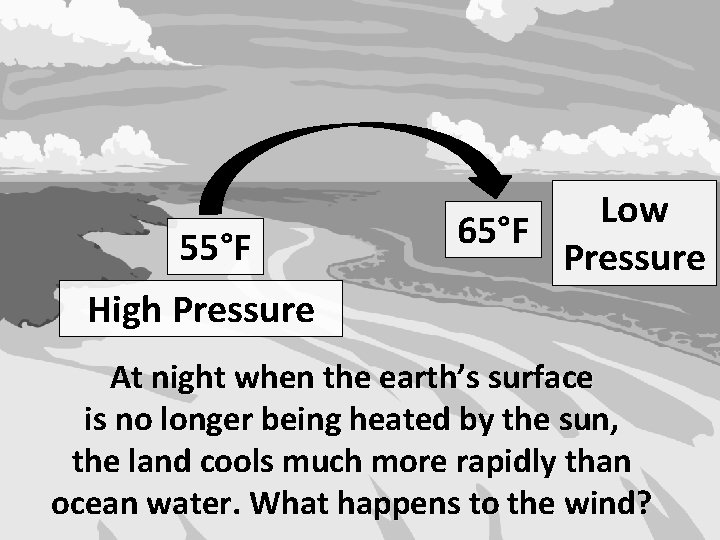
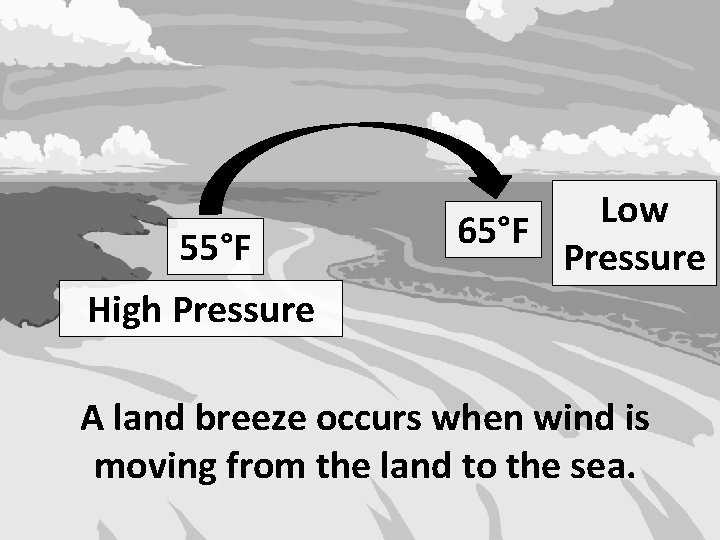
55°F Low 65°F Pressure High Pressure At night when the earth’s surface is no longer being heated by the sun, the land cools much more rapidly than ocean water. What happens to the wind?
55°F Low 65°F Pressure High Pressure A land breeze occurs when wind is moving from the land to the sea.
How do sea breezes and land breezes affect local weather? http: //www. nc-climate. ncsu. edu/k 12/. breezes
Sea Breeze and Land Breeze https: //www. youtube. com/watch? v=ZQV 72 Yzmjyc http: //www. classzone. com/books/earth_ science/terc/content/visualizations/es 19 03/es 1903 page 01. cfm? chapter_no=vis ualization
Sea Breeze Land Breeze
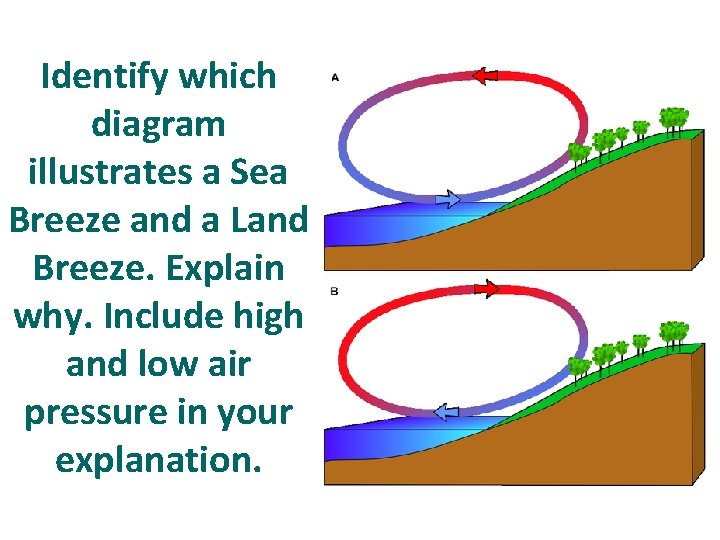
Identify which diagram illustrates a Sea Breeze and a Land Breeze. Explain why. Include high and low air pressure in your explanation.
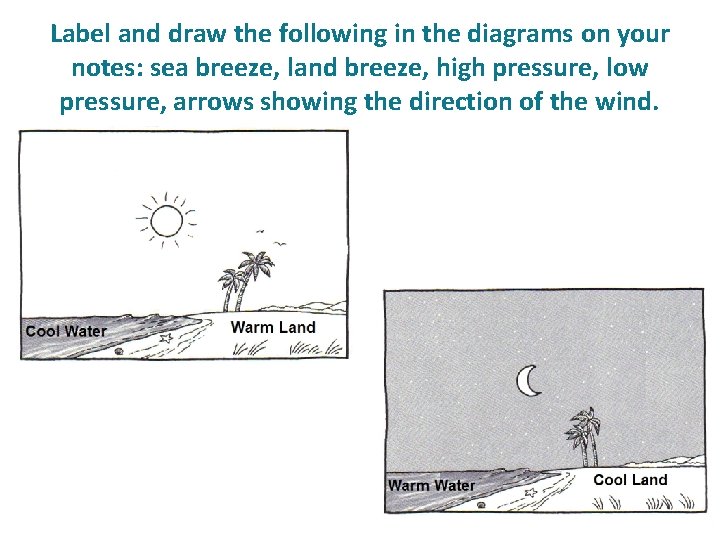
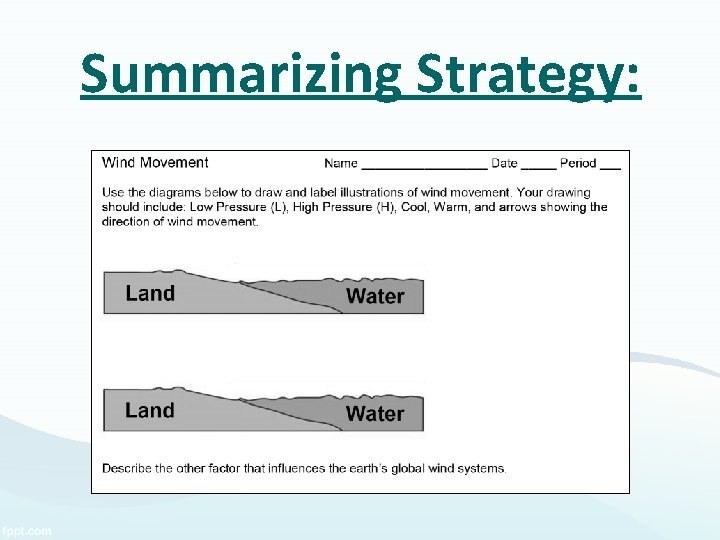
Label and draw the following in the diagrams on your notes: sea breeze, land breeze, high pressure, low pressure, arrows showing the direction of the wind.
High Pressure Low Pressure Sea Breeze Land Breeze Low Pressure High Pressure
Summarizing Strategy: