Heating Cooling Curve Calculations EQ Why is an

- Slides: 17
Heating / Cooling Curve Calculations EQ: Why is an ideal heating curve not a straight line graph?
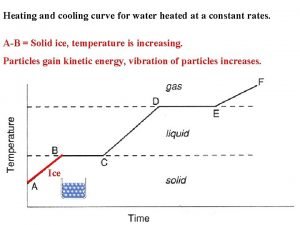
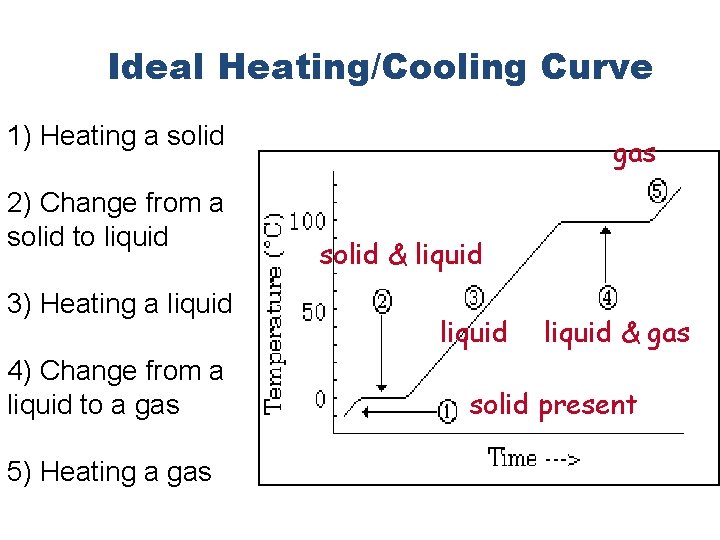
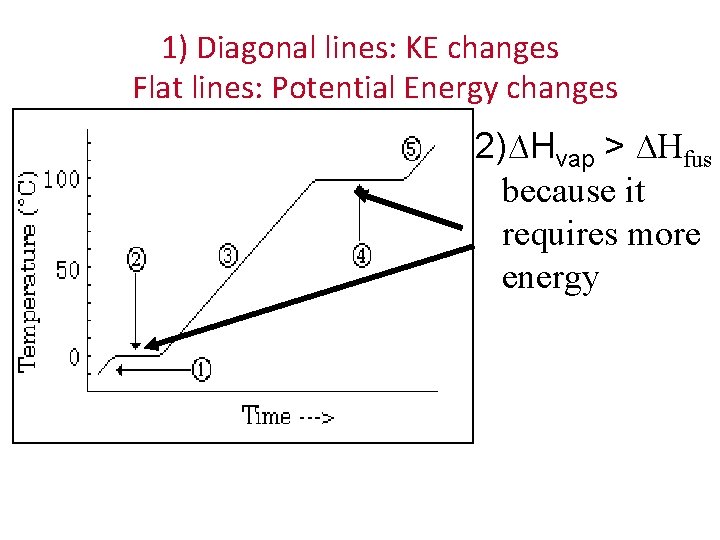
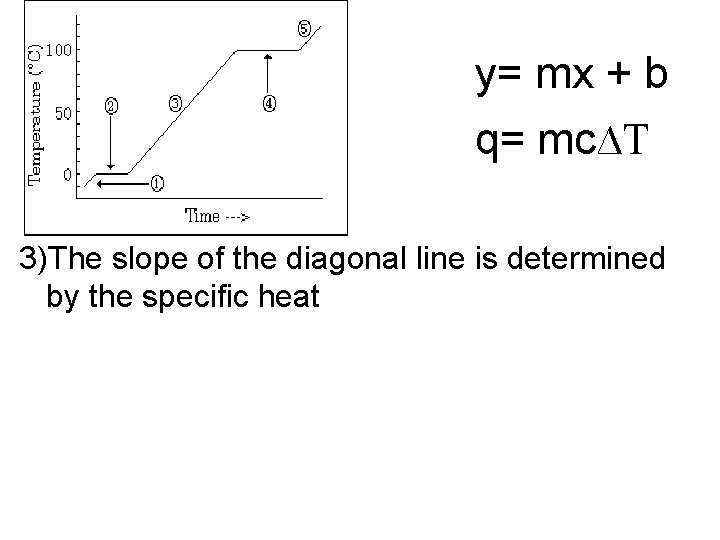
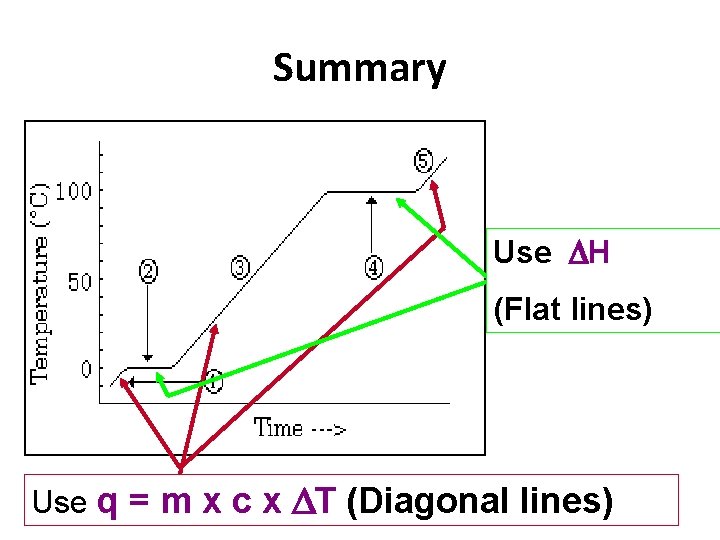
Ideal Heating/Cooling Curve 1) Heating a solid 2) Change from a solid to liquid 3) Heating a liquid 4) Change from a liquid to a gas 5) Heating a gas solid & liquid & gas solid present
On the back of you notes write:
1) Diagonal lines: KE changes Flat lines: Potential Energy changes 2)∆Hvap > ∆Hfus because it requires more energy
y= mx + b q= mc∆T 3)The slope of the diagonal line is determined by the specific heat
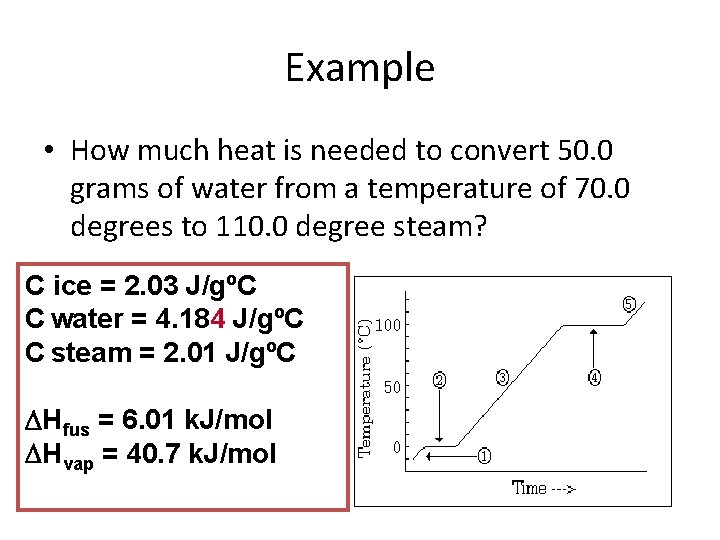
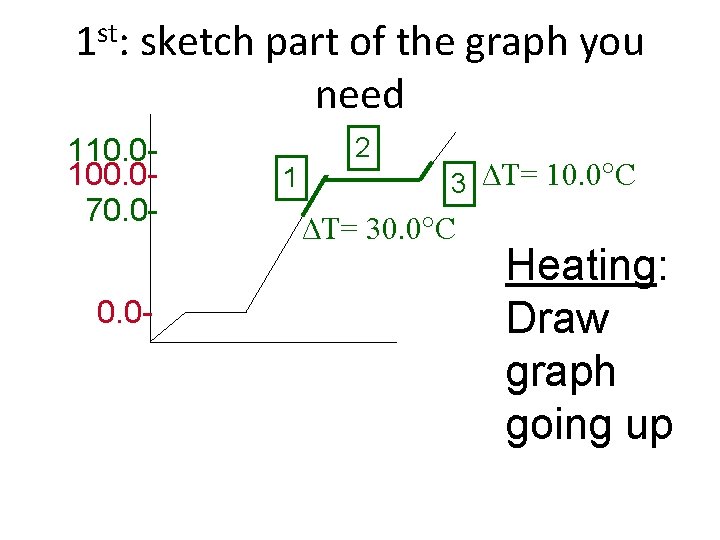
Example • How much heat is needed to convert 50. 0 grams of water from a temperature of 70. 0 degrees to 110. 0 degree steam? C ice = 2. 03 J/gºC C water = 4. 184 J/gºC C steam = 2. 01 J/gºC Hfus = 6. 01 k. J/mol Hvap = 40. 7 k. J/mol
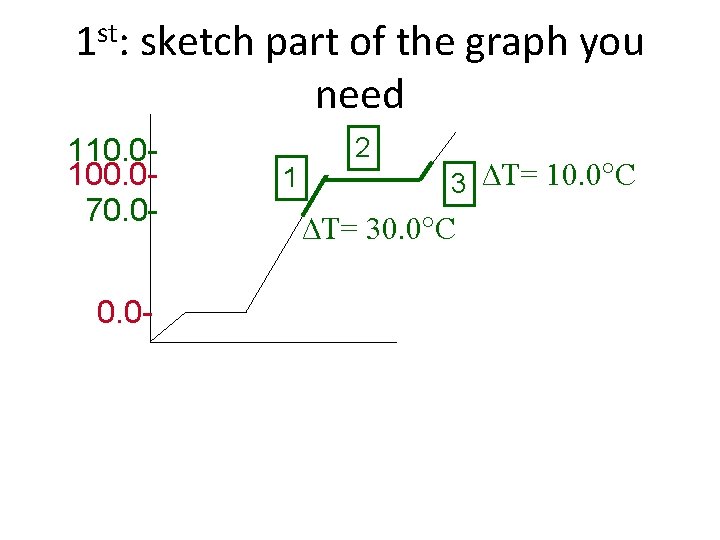
1 st: sketch part of the graph you need 110. 0100. 070. 0 - 1 2 3 ∆T= 10. 0 C ∆T= 30. 0 C Heating: Draw graph going up
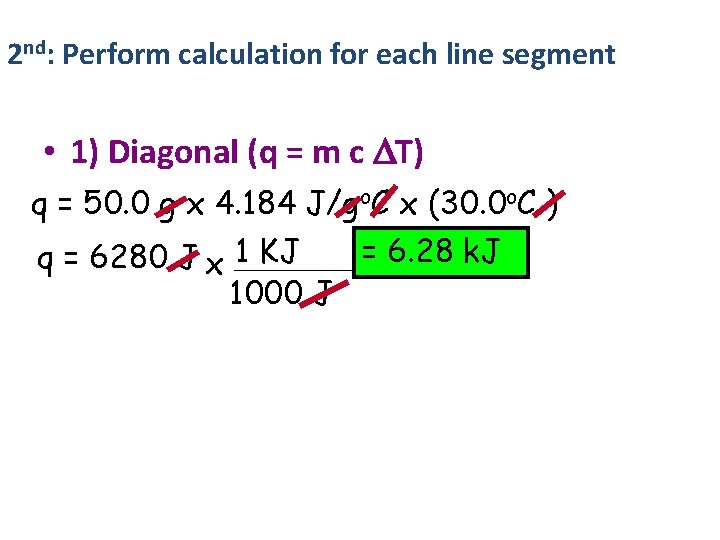
2 nd: Perform calculation for each line segment • 1) Diagonal (q = m c T) q = 50. 0 g x 4. 184 J/go. C x (30. 0 o. C ) = 6. 28 k. J q = 6280 J x 1 KJ 1000 J
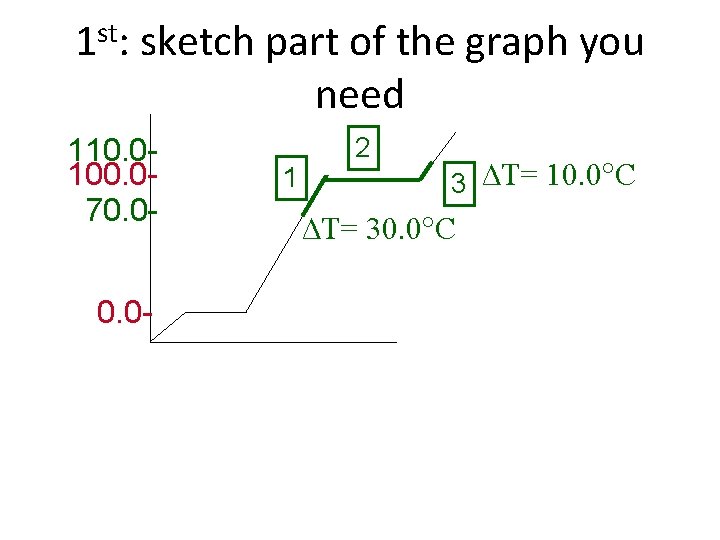
1 st: sketch part of the graph you need 110. 0100. 070. 0 - 1 2 3 ∆T= 10. 0 C ∆T= 30. 0 C
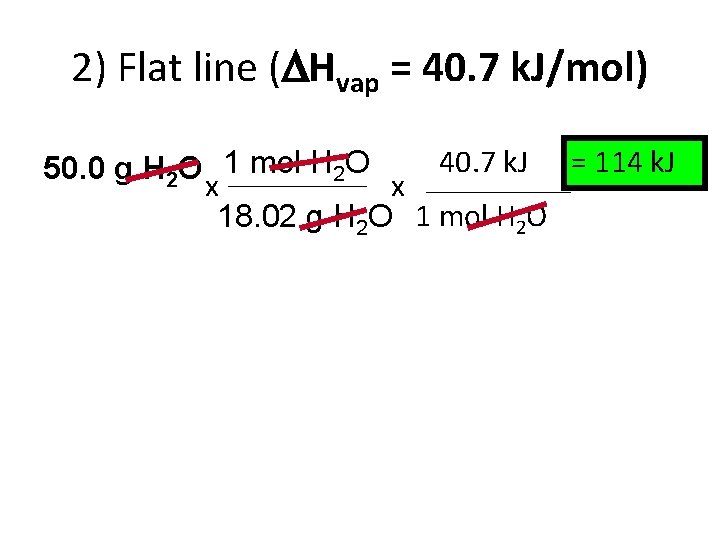
2) Flat line ( Hvap = 40. 7 k. J/mol) 40. 7 k. J = 114 k. J 50. 0 g H 2 O 1 mol H 2 O x x 18. 02 g H 2 O 1 mol H 2 O
1 st: sketch part of the graph you need 110. 0100. 070. 0 - 1 2 3 ∆T= 10. 0 C ∆T= 30. 0 C
3) Diagonal (q= mc∆T) q = (50. 0 g)(2. 01 J/go. C)(10. 0 o. C) q = 1010 J x 1 KJ 1000 J = 1. 01 k. J
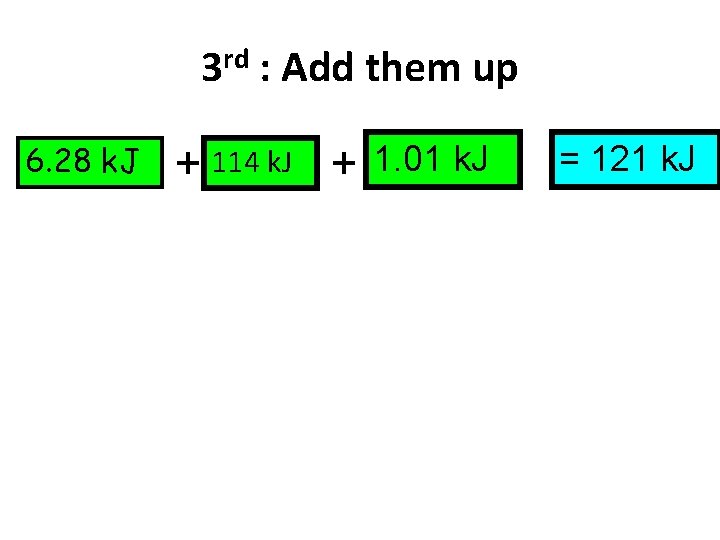
3 rd : Add them up 6. 28 k. J + 114 k. J + 1. 01 k. J = 121 k. J
Summary Use H (Flat lines) Use q = m x c x T (Diagonal lines)
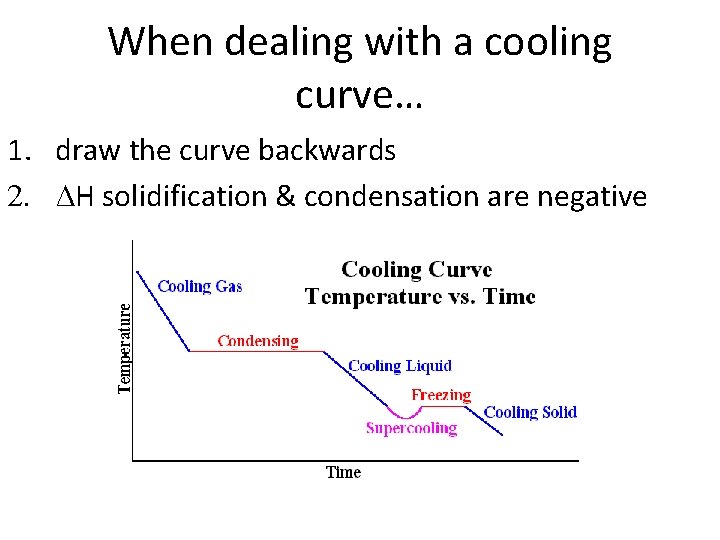
When dealing with a cooling curve… 1. draw the curve backwards 2. ∆H solidification & condensation are negative
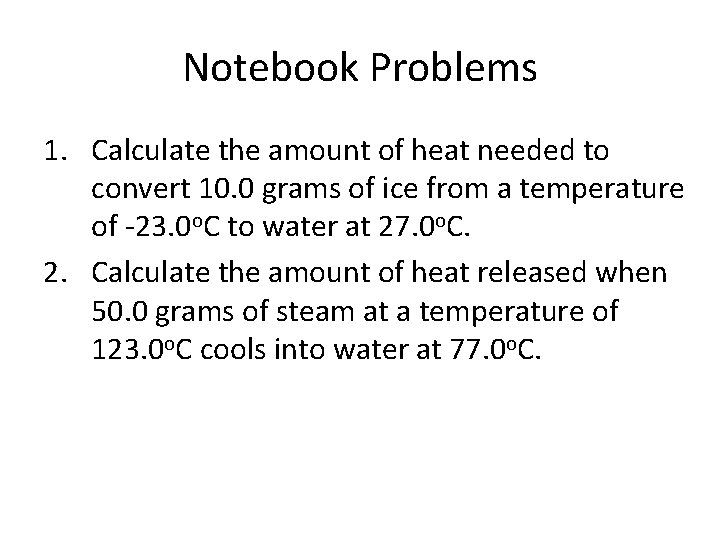
Notebook Problems 1. Calculate the amount of heat needed to convert 10. 0 grams of ice from a temperature of -23. 0 o. C to water at 27. 0 o. C. 2. Calculate the amount of heat released when 50. 0 grams of steam at a temperature of 123. 0 o. C cools into water at 77. 0 o. C.
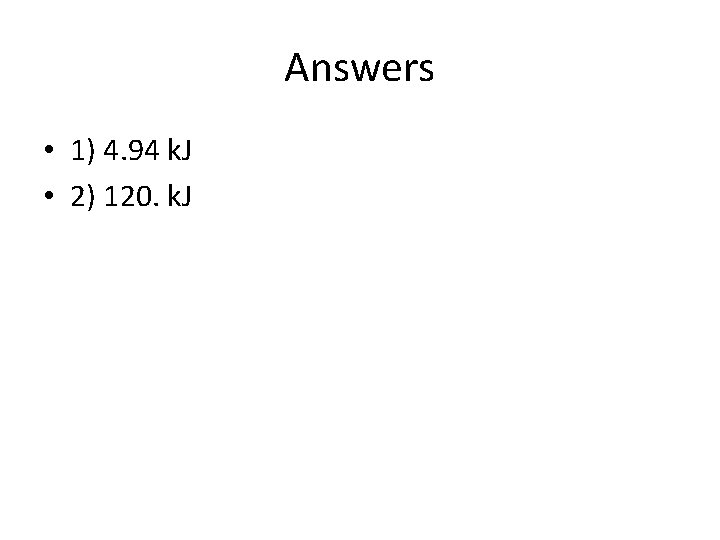
Answers • 1) 4. 94 k. J • 2) 120. k. J