I think using animals for food is an
- Slides: 55
"I think using animals for food is an ethical thing to do, but we've got to do it right. We've got to give those animals a decent life and we've got to give them a painless death. We owe the animal respect. " —Temple Grandin Ruminant Restraint Chapter 2 Dr. Dipa Brahmbhatt VMD, MPH, MS
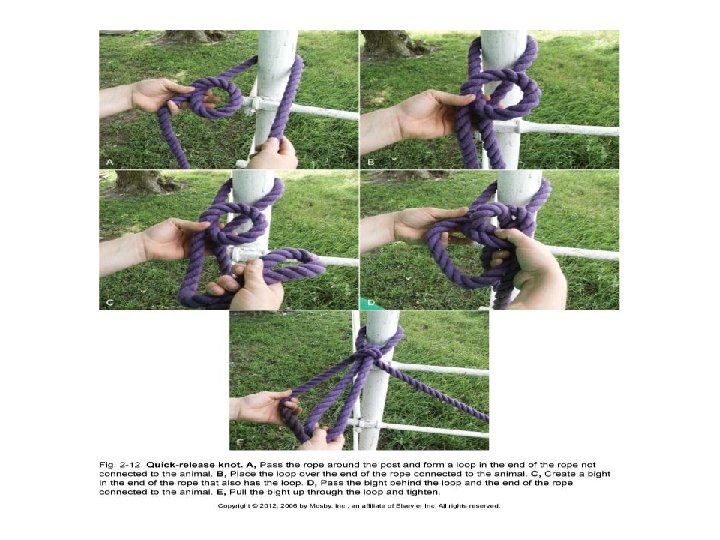
Objectives • Understand potential risks that exist with the practice of large animal veterinary medicine. • KNOW quick release knot. • Understand the basic natural instincts of each large animal species. • Understand the importance of protecting themselves, veterinary personnel, and clients while handling patients. • Be familiar with common methods of large animal restraint and be able to apply them safely, efficiently, and effectively.
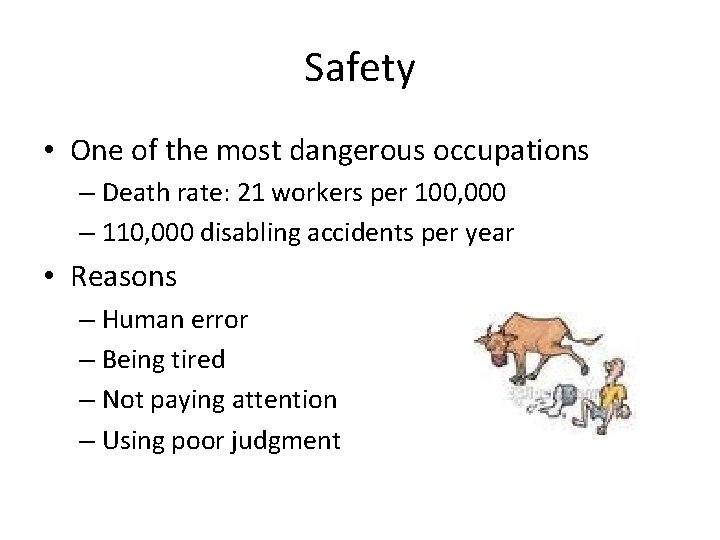
Safety • One of the most dangerous occupations – Death rate: 21 workers per 100, 000 – 110, 000 disabling accidents per year • Reasons – Human error – Being tired – Not paying attention – Using poor judgment
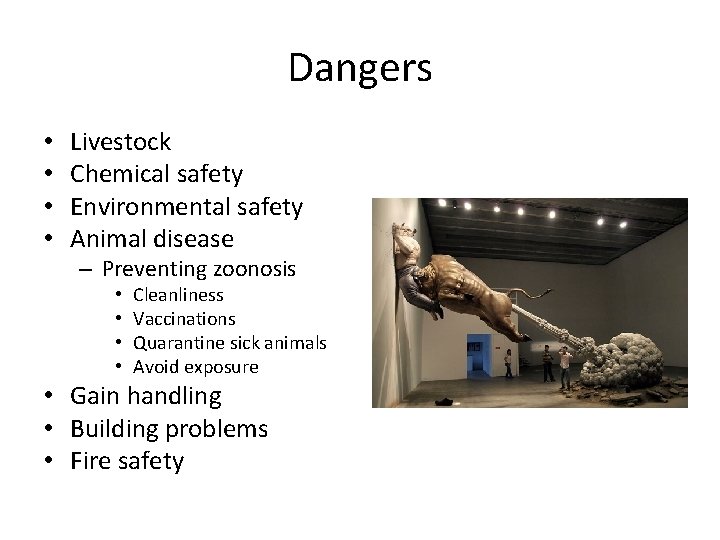
Dangers • • Livestock Chemical safety Environmental safety Animal disease – Preventing zoonosis • • Cleanliness Vaccinations Quarantine sick animals Avoid exposure • Gain handling • Building problems • Fire safety
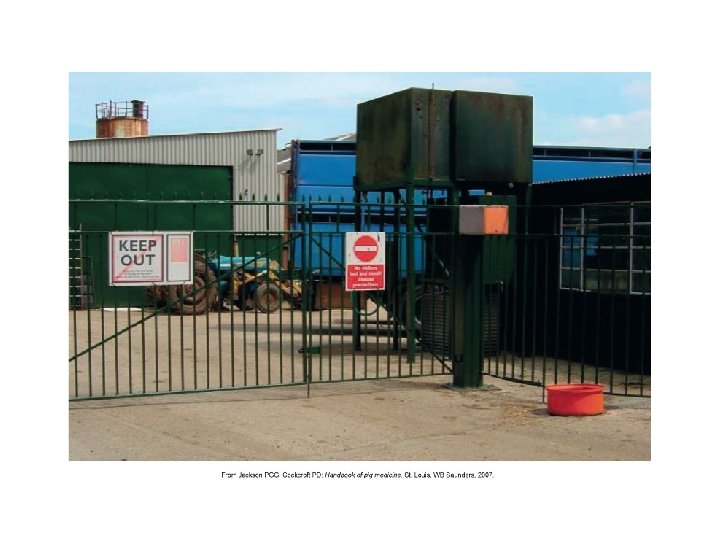
Biosecurity – Wash hands and boots – Clean cloths – Control insects, rodents, and birds – Control mold – Limit contact with other animals – Limit vehicle traffic – Wear rubber gloves when dealing with sick animals – Wear shoe coverings to prevent transmission – Wear protective eye covering – Wear a mask when concerned with aerosols
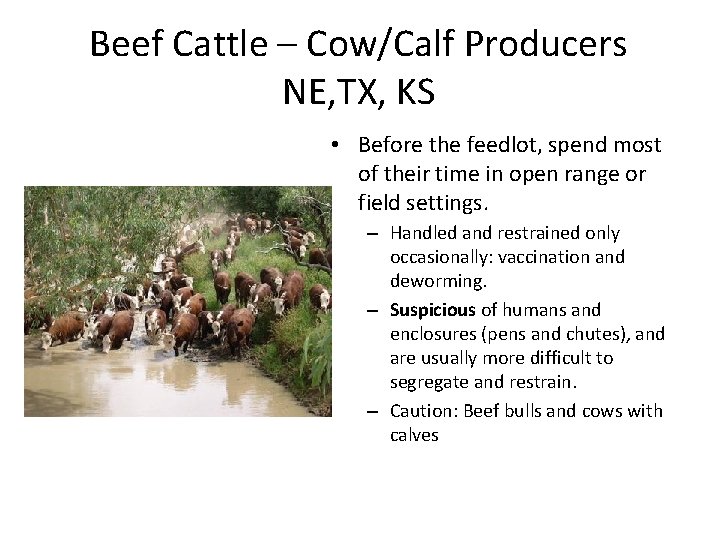
Beef Cattle – Cow/Calf Producers NE, TX, KS • Before the feedlot, spend most of their time in open range or field settings. – Handled and restrained only occasionally: vaccination and deworming. – Suspicious of humans and enclosures (pens and chutes), and are usually more difficult to segregate and restrain. – Caution: Beef bulls and cows with calves
Dairy cattle • Temperament – nervous cow – the docile cow – the balker (obstinate) – the chronic kicker • Dairy bulls should never by trusted • Cows with calves • Facility – dark barns are apt to be nervous. – Better in a well lighted, well ventilated one – sedative or anesthetic
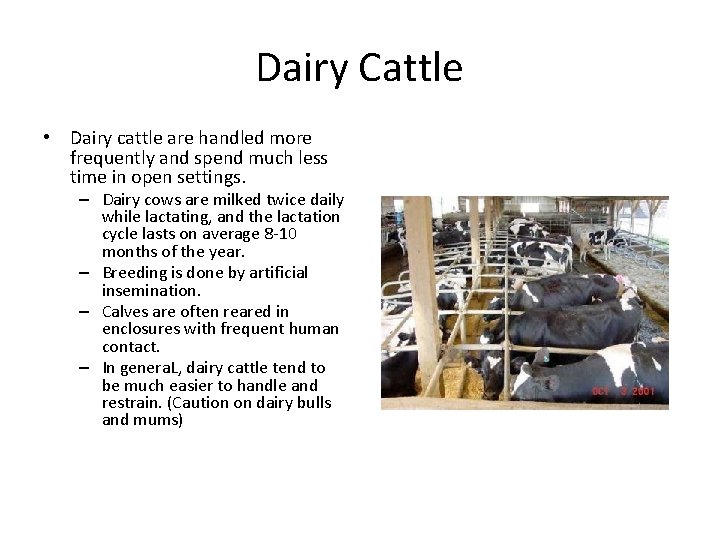
Dairy Cattle • Dairy cattle are handled more frequently and spend much less time in open settings. – Dairy cows are milked twice daily while lactating, and the lactation cycle lasts on average 8 -10 months of the year. – Breeding is done by artificial insemination. – Calves are often reared in enclosures with frequent human contact. – In genera. L, dairy cattle tend to be much easier to handle and restrain. (Caution on dairy bulls and mums)
Cattle Restraint • “Stress” – Loss of production results in lower profits. – Increased feed requirements result in increased cost. – Decreased immunity results in increased illness. – Death results in lower profits.
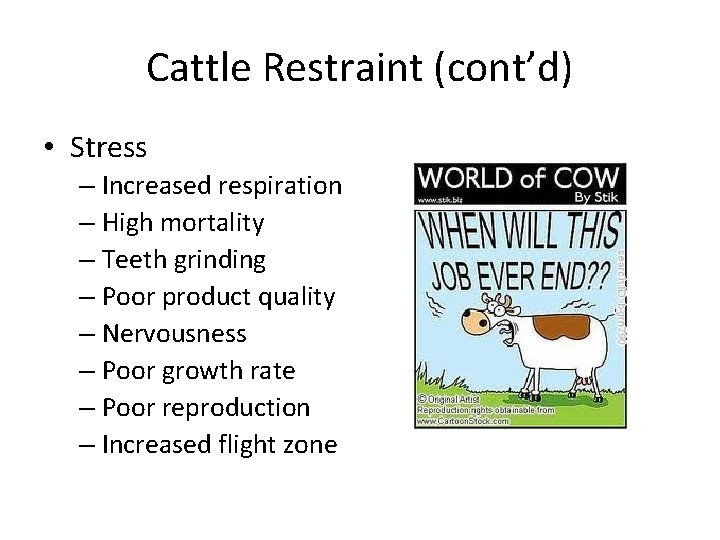
Cattle Restraint (cont’d) • Stress – Increased respiration – High mortality – Teeth grinding – Poor product quality – Nervousness – Poor growth rate – Poor reproduction – Increased flight zone
Most veterinarian procedures required two stages of animal handling: 1. The individual most be separate from the herd (herding instinct) 2. The individual must then be restrained appropriately for the procedure
Restraint • Chemical and physical restraint • Prepare • Be familiar with your equipment • Protect the animal • Protect yourself • Protect your coworkers Liability: The veterinarian is responsible
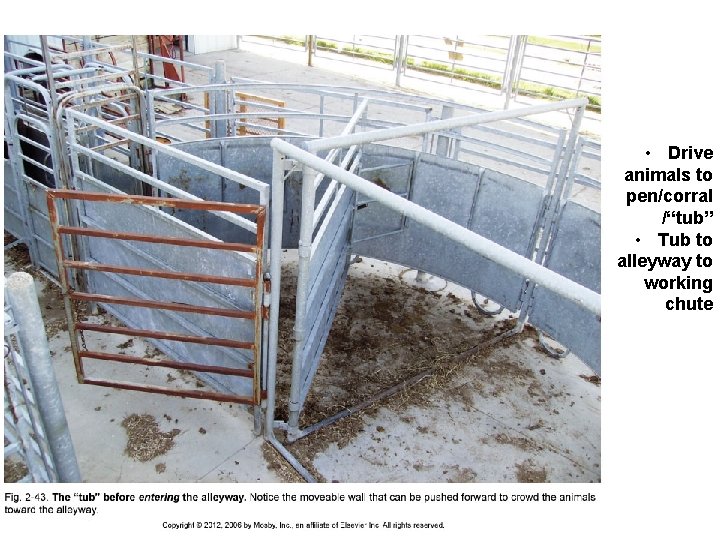
• Drive animals to pen/corral /“tub” • Tub to alleyway to working chute
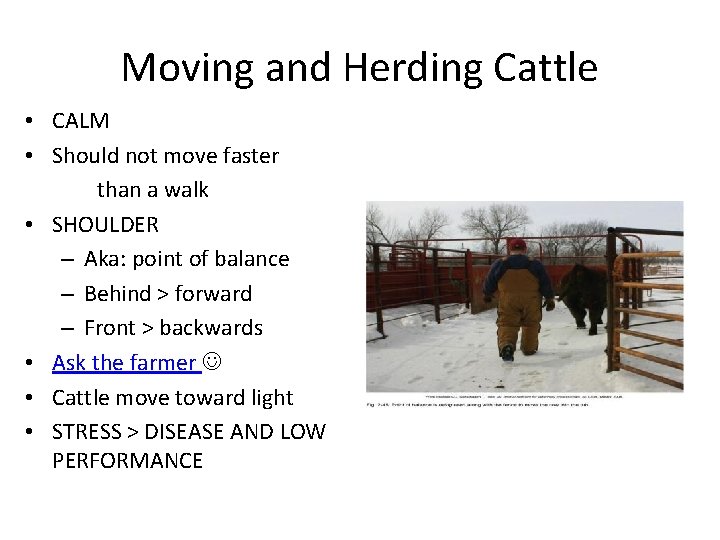
Moving and Herding Cattle • CALM • Should not move faster than a walk • SHOULDER – Aka: point of balance – Behind > forward – Front > backwards • Ask the farmer • Cattle move toward light • STRESS > DISEASE AND LOW PERFORMANCE
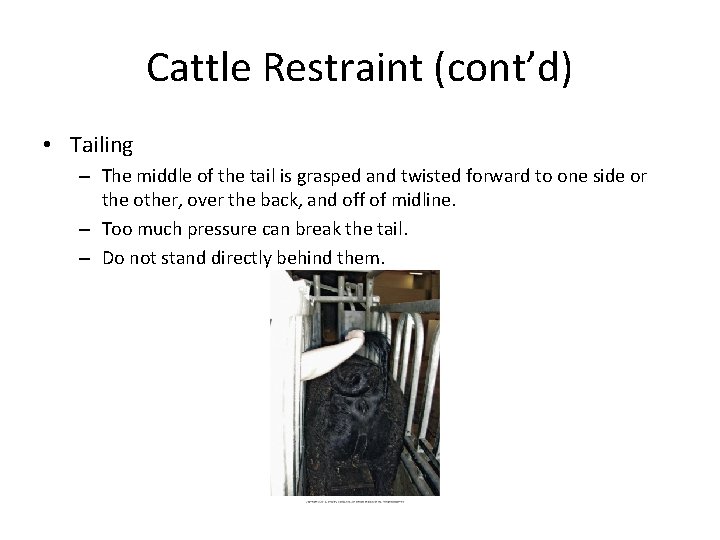
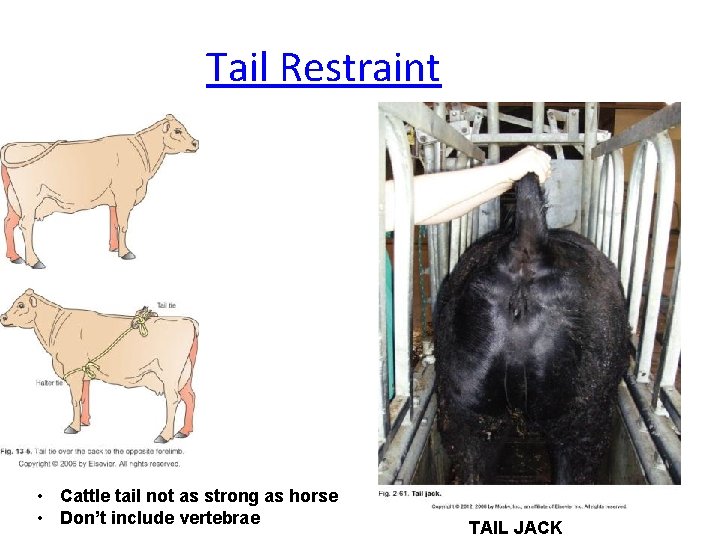
Cattle Restraint (cont’d) • Tailing – The middle of the tail is grasped and twisted forward to one side or the other, over the back, and off of midline. – Too much pressure can break the tail. – Do not stand directly behind them.
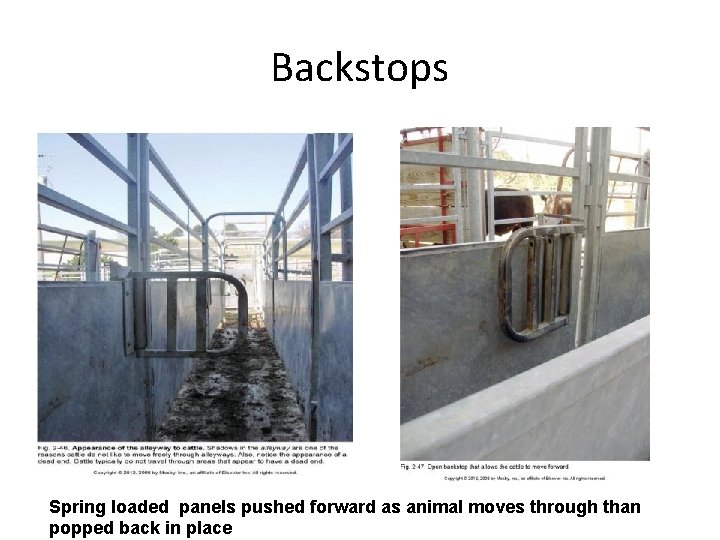
Backstops Spring loaded panels pushed forward as animal moves through than popped back in place
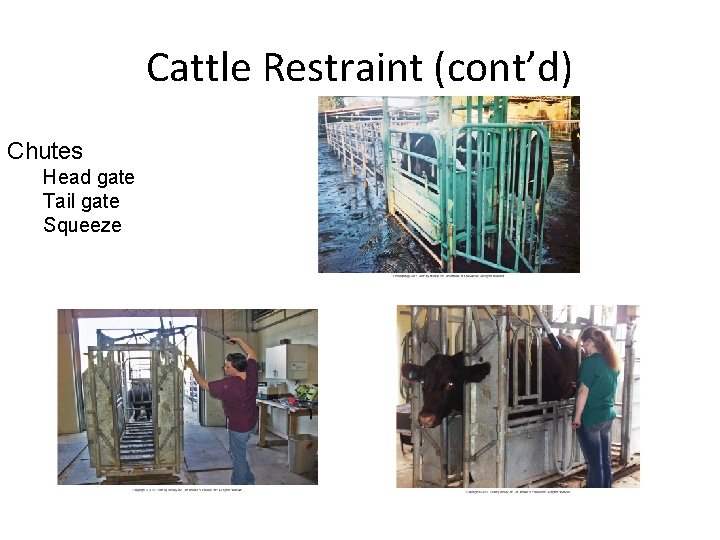
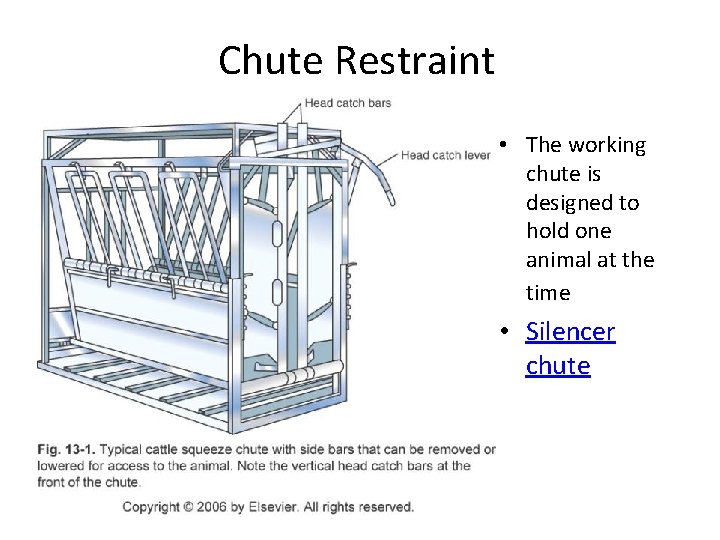
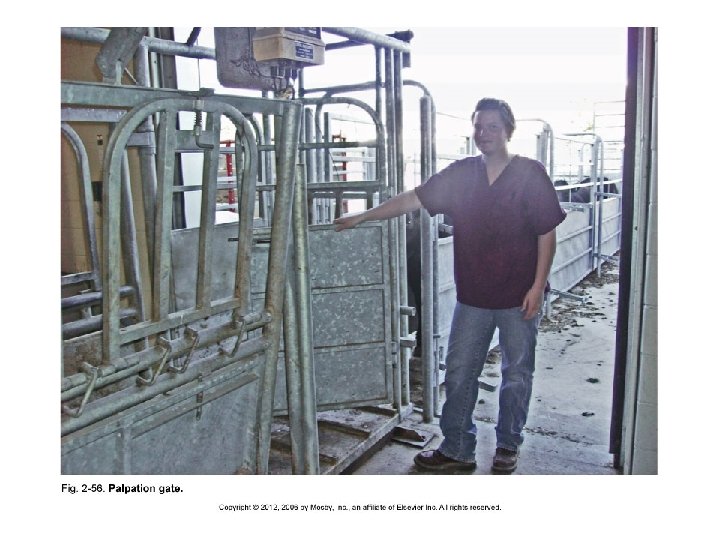
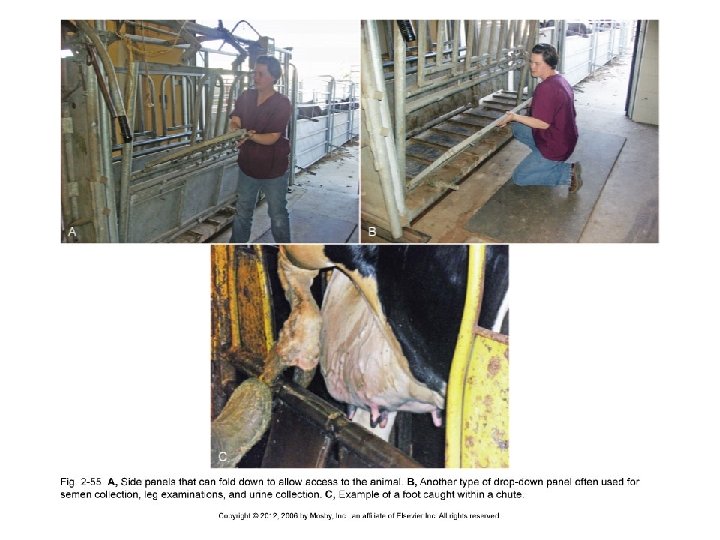
Cattle Restraint (cont’d) Chutes Head gate Tail gate Squeeze
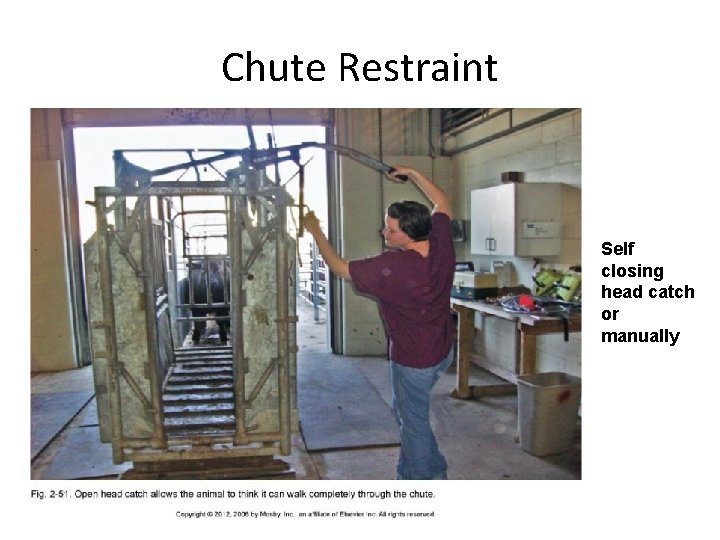
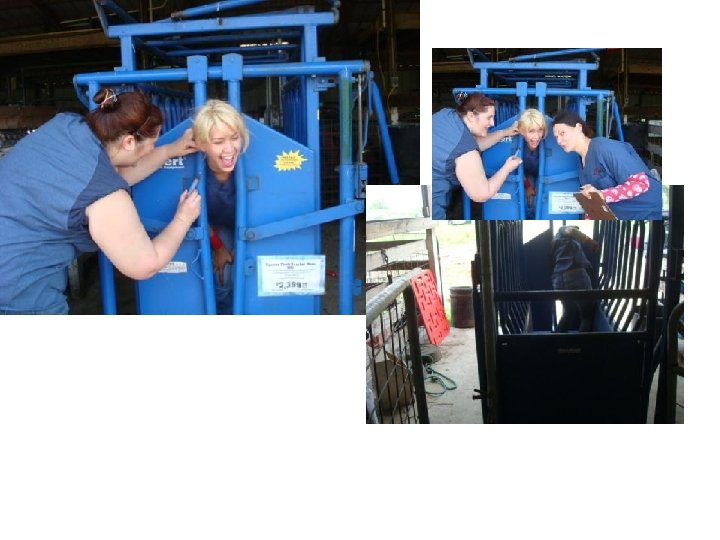
Chute Restraint • The working chute is designed to hold one animal at the time • Silencer chute
Chute Restraint Self closing head catch or manually
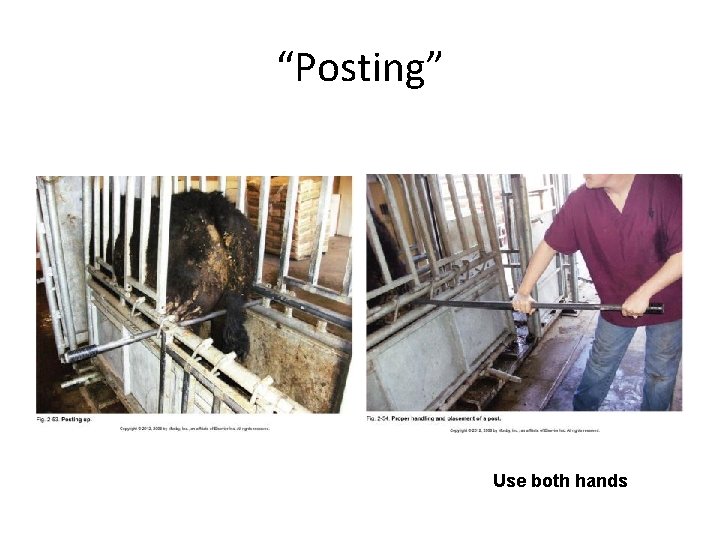
“Posting” Use both hands
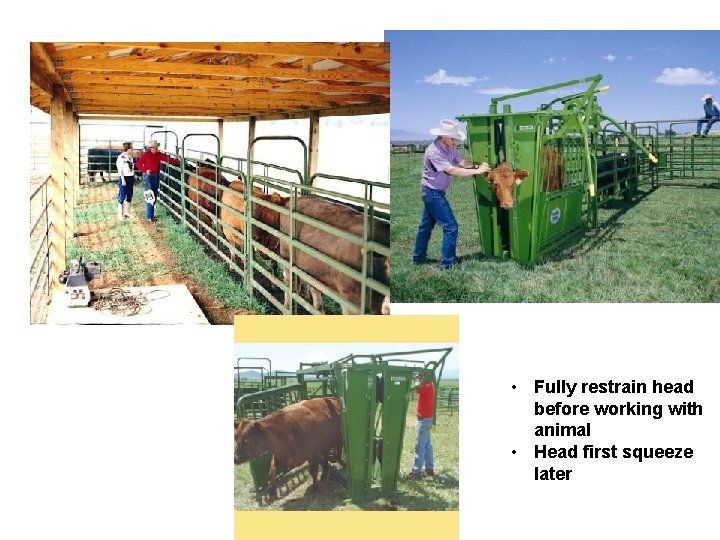
• Fully restrain head before working with animal • Head first squeeze later
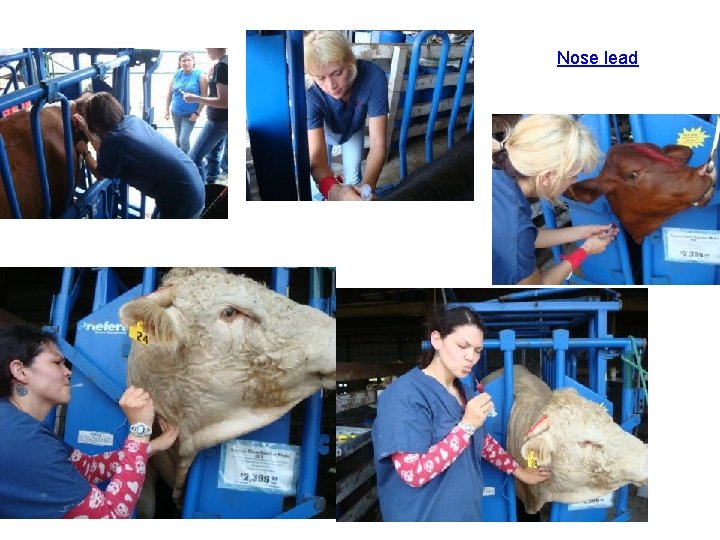
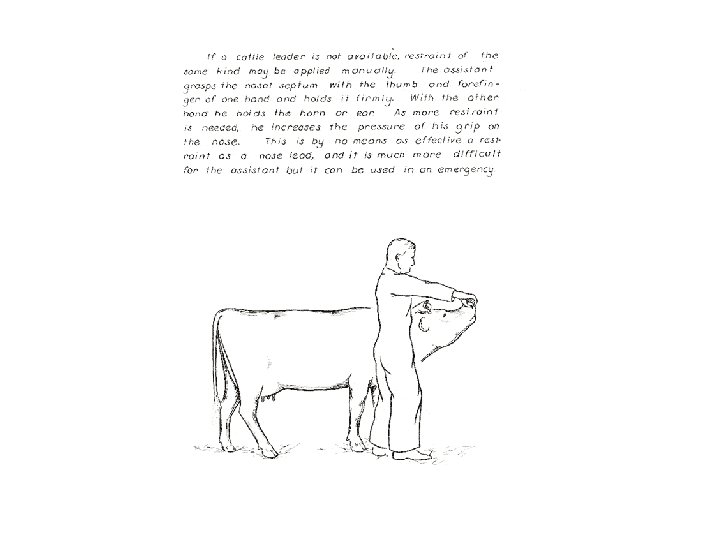
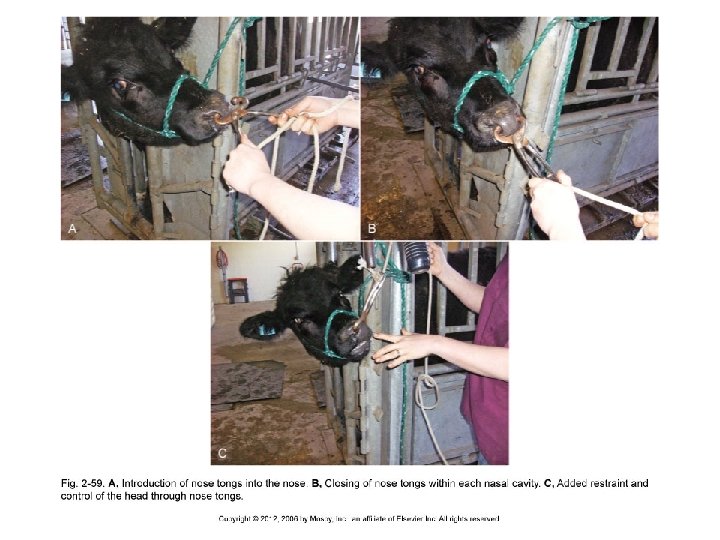
Nose lead
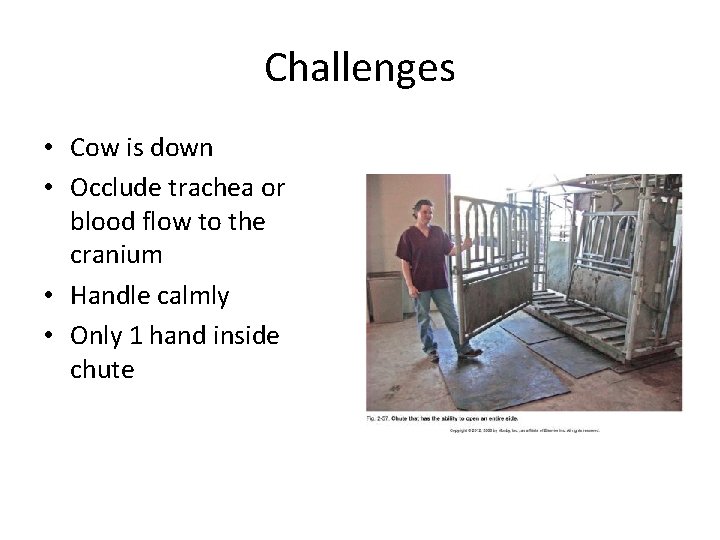
Challenges • Cow is down • Occlude trachea or blood flow to the cranium • Handle calmly • Only 1 hand inside chute
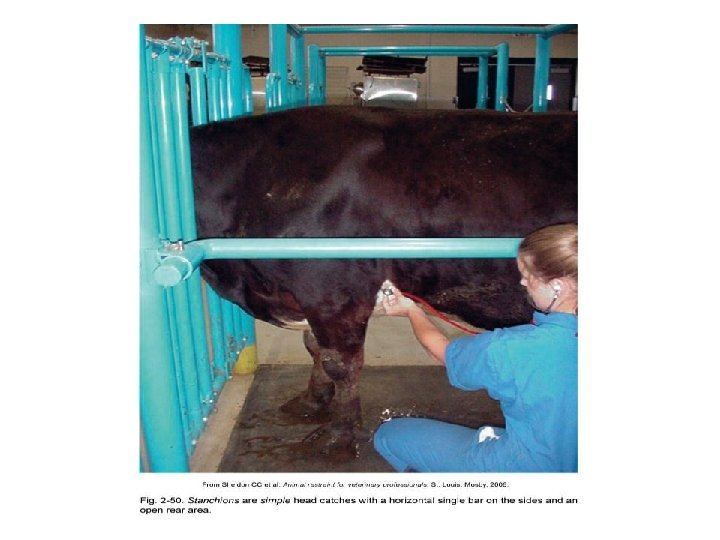
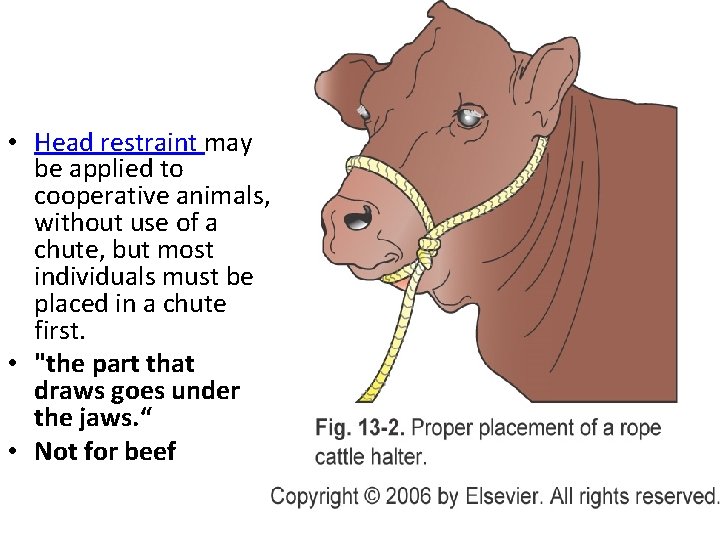
• Head restraint may be applied to cooperative animals, without use of a chute, but most individuals must be placed in a chute first. • "the part that draws goes under the jaws. “ • Not for beef
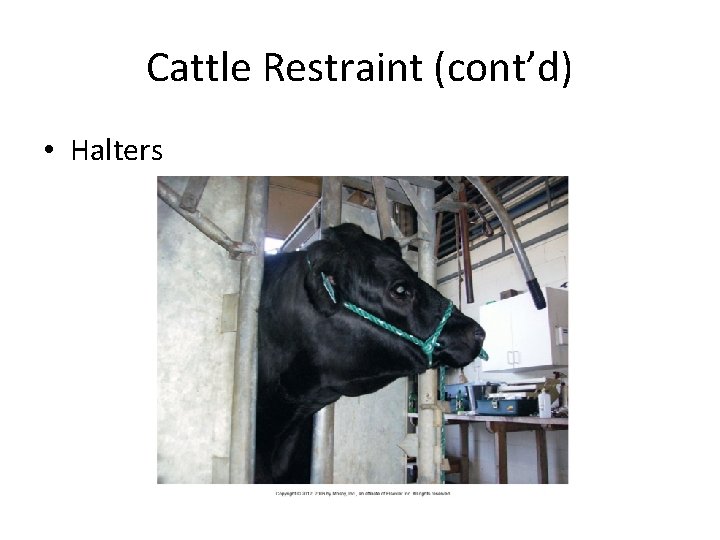
Cattle Restraint (cont’d) • Halters
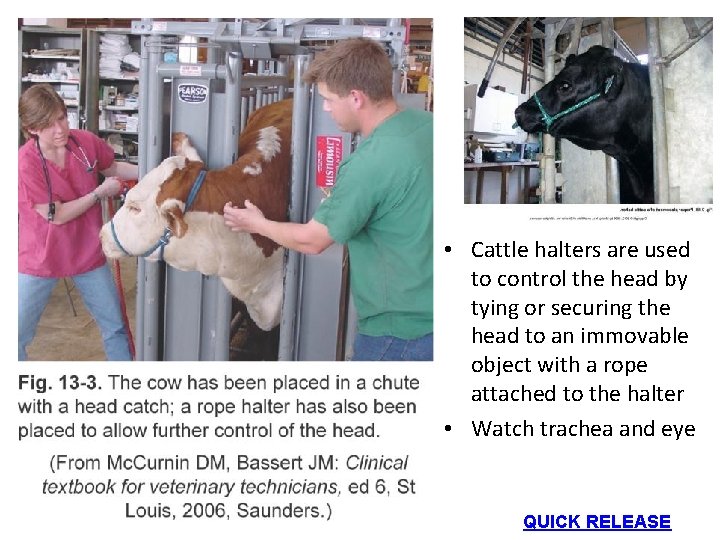
• Cattle halters are used to control the head by tying or securing the head to an immovable object with a rope attached to the halter • Watch trachea and eye QUICK RELEASE
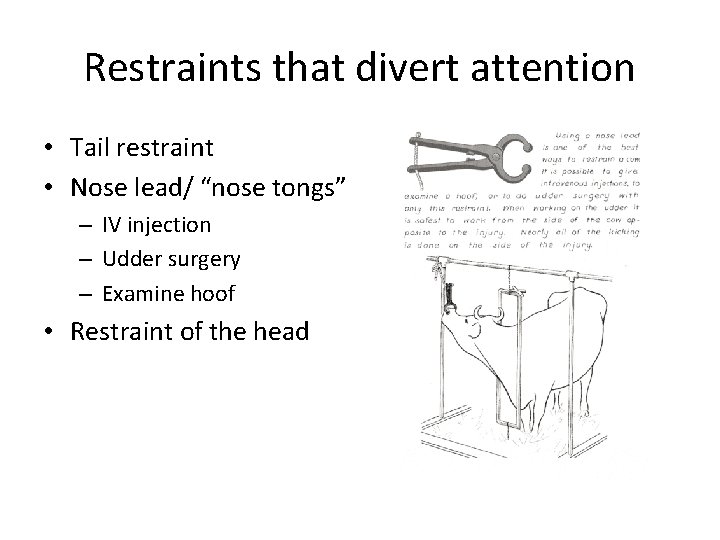
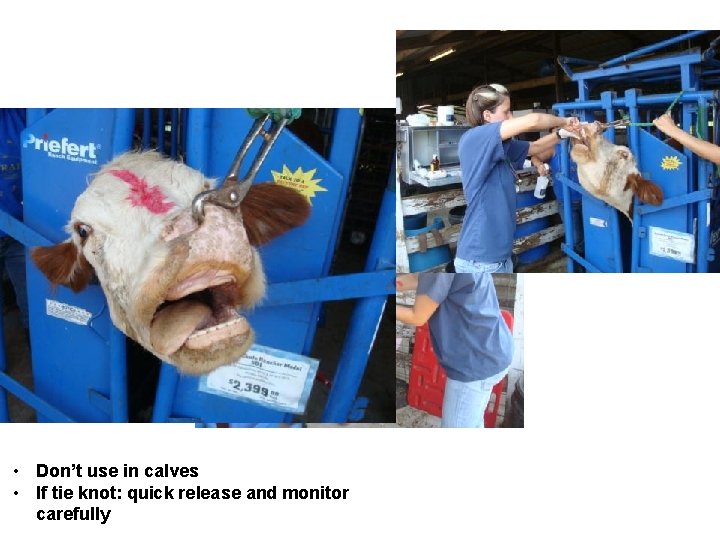
Restraints that divert attention • Tail restraint • Nose lead/ “nose tongs” – IV injection – Udder surgery – Examine hoof • Restraint of the head
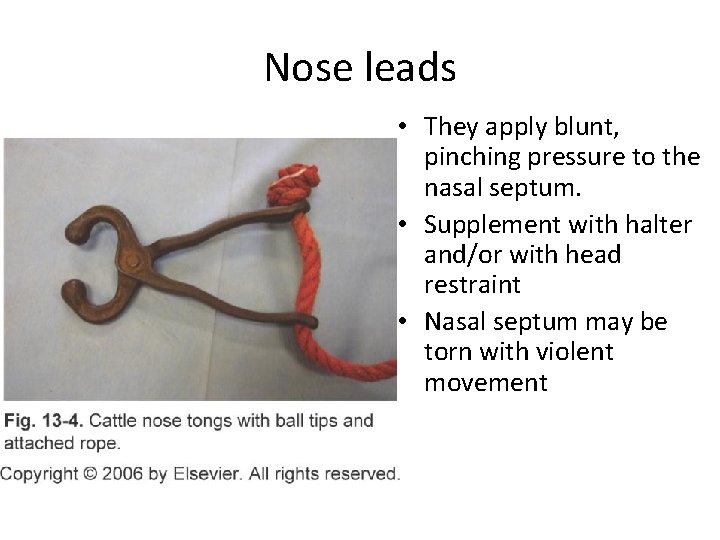
Nose leads • They apply blunt, pinching pressure to the nasal septum. • Supplement with halter and/or with head restraint • Nasal septum may be torn with violent movement
• Don’t use in calves • If tie knot: quick release and monitor carefully
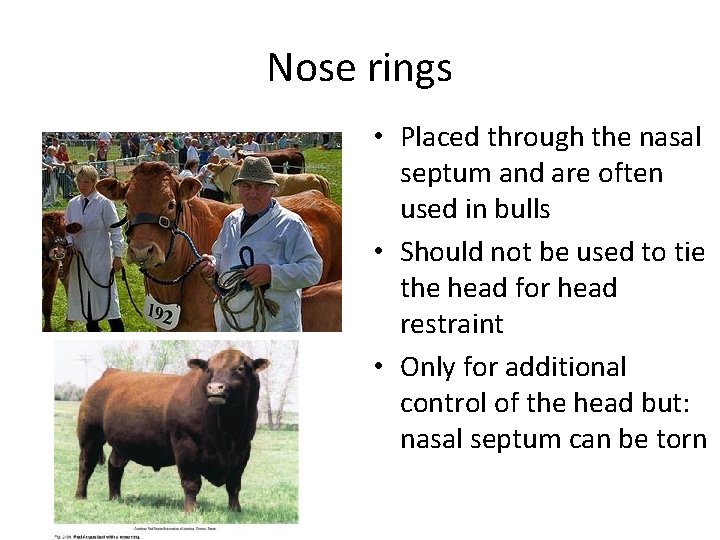
Nose rings • Placed through the nasal septum and are often used in bulls • Should not be used to tie the head for head restraint • Only for additional control of the head but: nasal septum can be torn
Tail Restraint • Cattle tail not as strong as horse • Don’t include vertebrae TAIL JACK
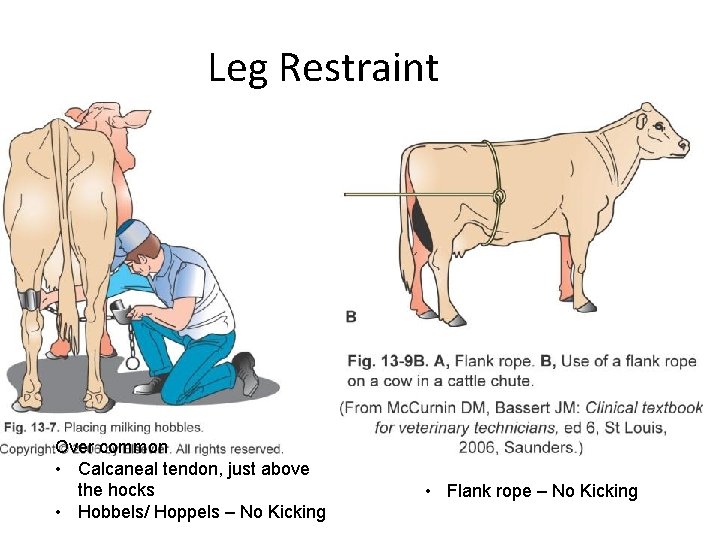
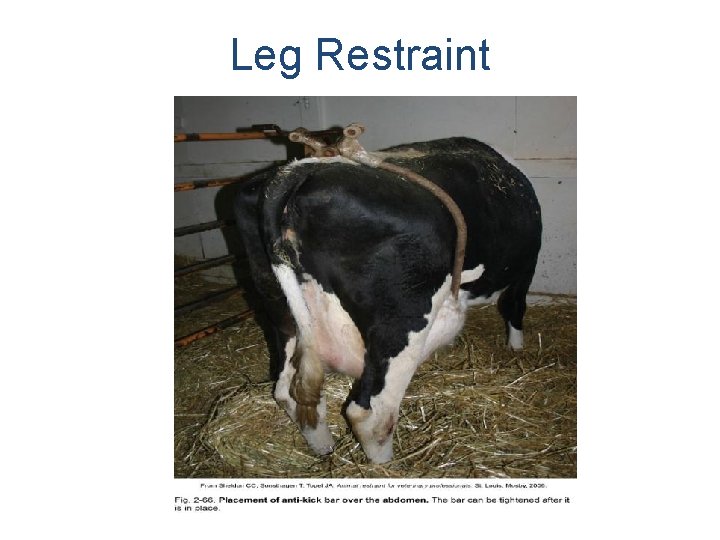
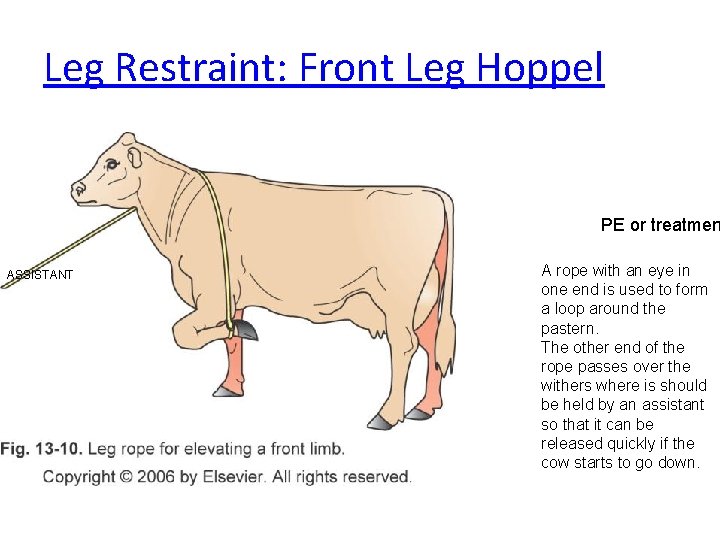
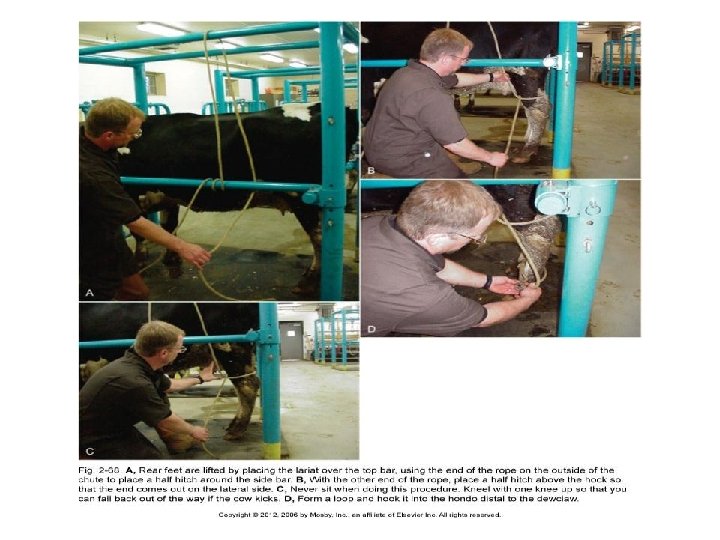
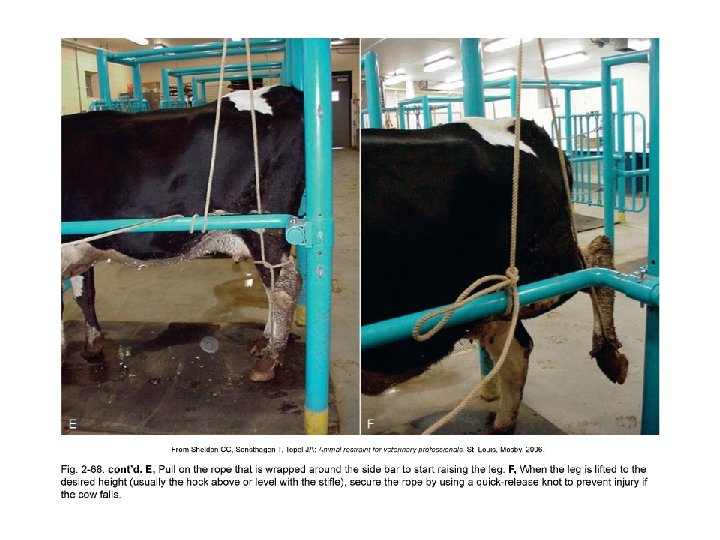
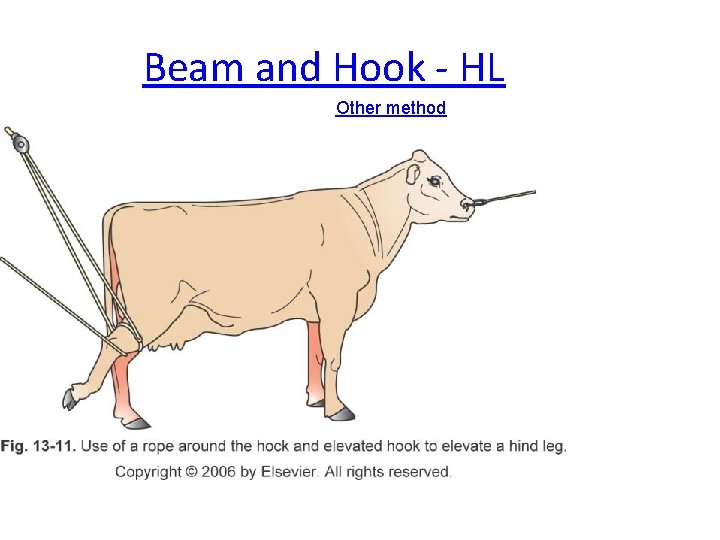
Leg Restraint Over common • Calcaneal tendon, just above the hocks • Hobbels/ Hoppels – No Kicking • Flank rope – No Kicking
Leg Restraint
Leg Restraint: Front Leg Hoppel PE or treatmen ASSISTANT A rope with an eye in one end is used to form a loop around the pastern. The other end of the rope passes over the withers where is should be held by an assistant so that it can be released quickly if the cow starts to go down.
Beam and Hook - HL Other method
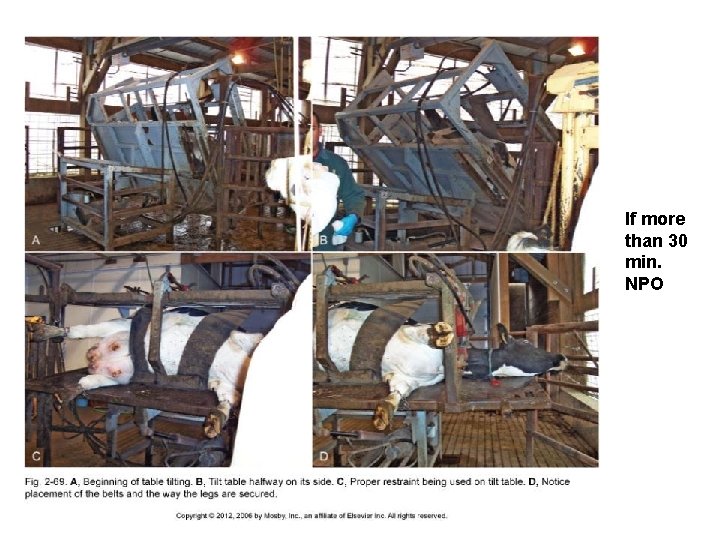
If more than 30 min. NPO
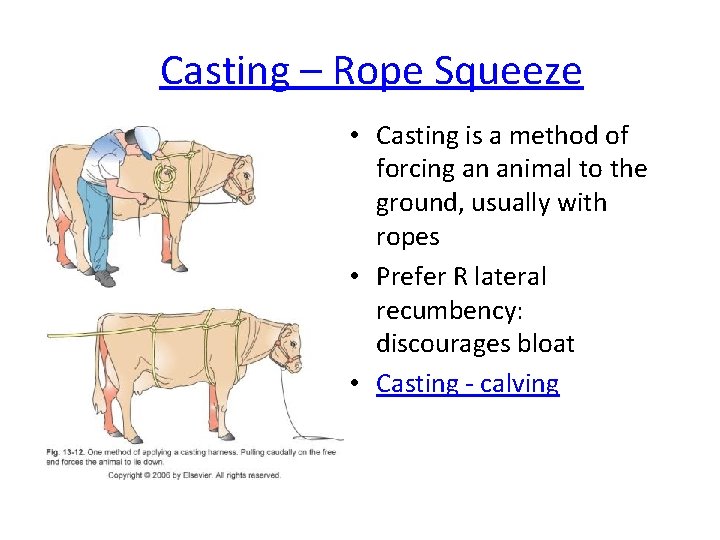
Casting – Rope Squeeze • Casting is a method of forcing an animal to the ground, usually with ropes • Prefer R lateral recumbency: discourages bloat • Casting - calving
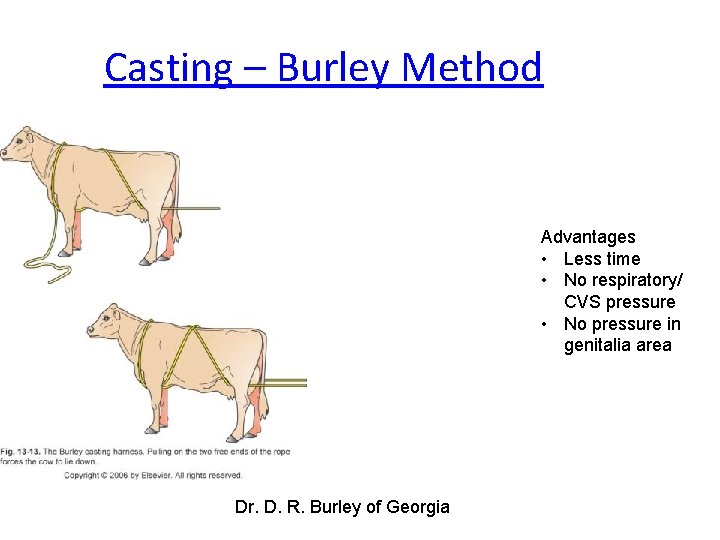
Casting – Burley Method Advantages • Less time • No respiratory/ CVS pressure • No pressure in genitalia area Dr. D. R. Burley of Georgia
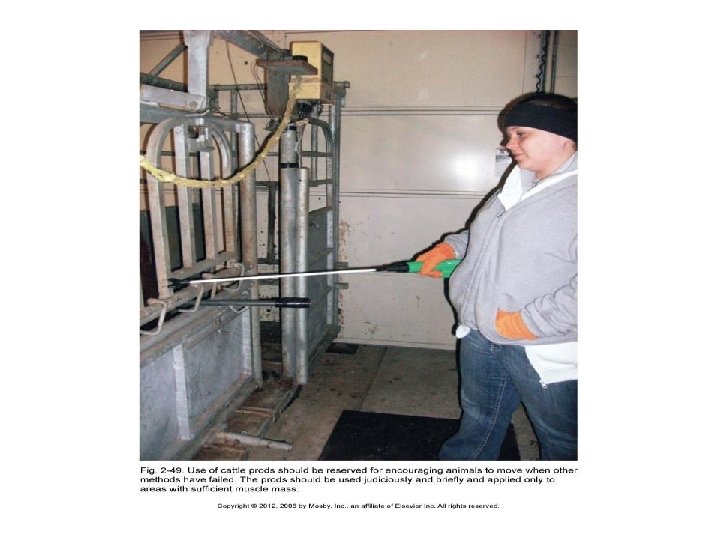
Recumbent animal • Stand next to spine • Back/ Rib/ Thigh – Tap, slap or poke (blunt item) – Knee – Electric cattle prod only if necessary
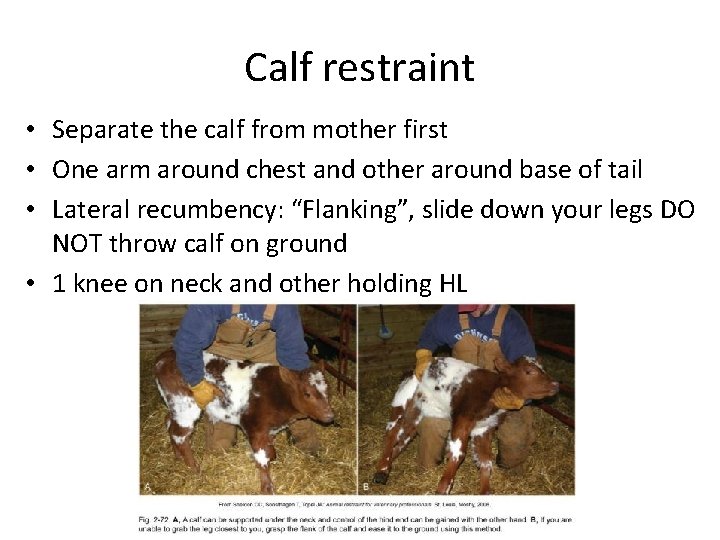
Calf restraint • Separate the calf from mother first • One arm around chest and other around base of tail • Lateral recumbency: “Flanking”, slide down your legs DO NOT throw calf on ground • 1 knee on neck and other holding HL
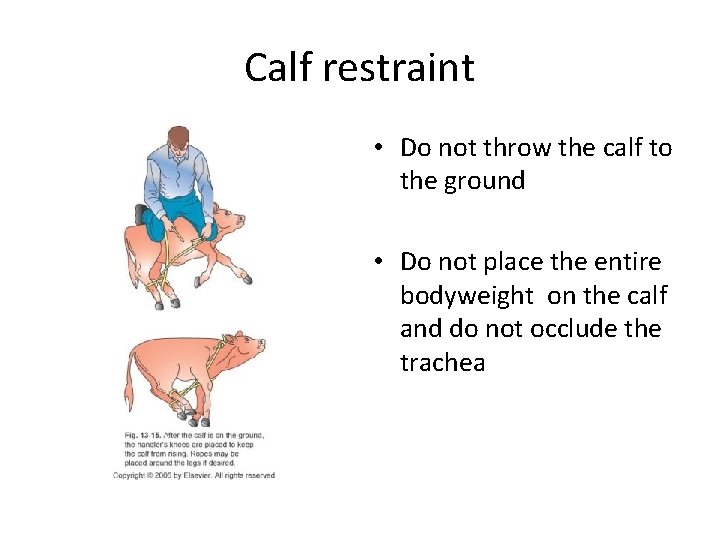
Calf restraint • Do not throw the calf to the ground • Do not place the entire bodyweight on the calf and do not occlude the trachea
Video http: //vetvideos. com/restraintcattle. htm http: //video. google. com/videoplay? docid=1725026942547112254 http: //video. google. com/videoplay? docid=8512037042 653473796 http: //video. google. com/videoplay? docid=6761217048822203559 http: //video. google. com/videoplay? docid=3356654913389880021
References • http: //research. vet. upenn. edu/Dairy/Restraint/Restr aintsthat. Divert. Attention/Nose. Lead/tabid/3904/Defa ult. aspx • K Holtgrew-Bohling , Large Animal Clinical Procedures for Veterinary Technicians, 2 nd Edition, Mosby, 2012, ISBN: 97803223077323 • Mc. Curnin, Dennis and Bassert, Joanna, Clinical Textbook for Veterinary Technicians, 6 th Edition, W. B. Saunders, 2005, ISBN 0721606121.
Editions • Dr. Mendoza • Dr. Brahmbhatt