Drug Safety in Pregnancy Challenges and Solutions Sonia

- Slides: 98
Drug Safety in Pregnancy: Challenges and Solutions Sonia Hernández-Díaz, MD, Dr. PH 13 th Annual Harry Guess Memorial Lecture
Disclosure • The following personal or financial relationships existed during the past 12 months: • SHD consulted for Roche and UCB • SHD participated as investigator in projects funded by Takeda • SHD was the epidemiologist for the North American Antiepileptic Drugs pregnancy registry and advisor for the Antipsychotics Pregnancy Registry, which are funded my multiple companies • The Pharmacoepidemiology Program at the Harvard T. H. Chan School of Public Health is partially supported by training grants from Pfizer, UCB, Bayer and Asisa 2/27/2021 Hernandez‐Diaz 2
Outline • Introduction to Drug Safety in Pregnancy • Tools Overview • Challenges & Solutions • Example • Future 2/27/2021 Hernandez‐Diaz 3
Outline • Introduction to Drug Safety in Pregnancy 2/27/2021 Hernandez‐Diaz 4
Background • Once upon a time there was a drug… 2/27/2021 Hernandez‐Diaz 5
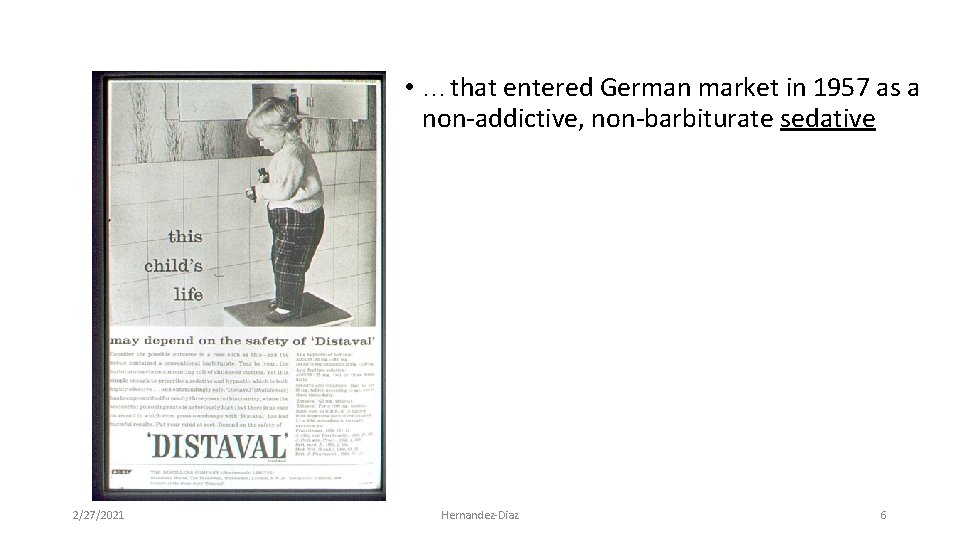
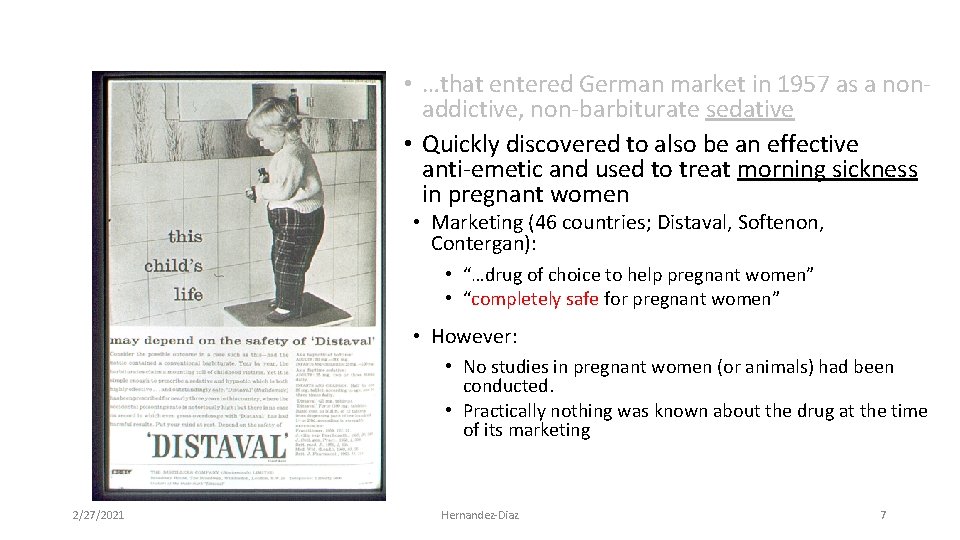
• …that entered German market in 1957 as a non‐addictive, non‐barbiturate sedative • Quickly discovered to also be an effective anti‐emetic and used to treat morning sickness in pregnant women • Marketing (46 countries; Distaval, Softenon, Contergan): • “…drug of choice to help pregnant women” • “completely safe for pregnant women” • However: • No studies in pregnant women (or animals) had been conducted. • “Practically nothing was known about the drug at the time of its marketing" 2/27/2021 Hernandez‐Diaz 6
• …that entered German market in 1957 as a non‐ addictive, non‐barbiturate sedative • Quickly discovered to also be an effective anti‐emetic and used to treat morning sickness in pregnant women • Marketing (46 countries; Distaval, Softenon, Contergan): • “…drug of choice to help pregnant women” • “completely safe for pregnant women” • However: • No studies in pregnant women (or animals) had been conducted. • Practically nothing was known about the drug at the time of its marketing 2/27/2021 Hernandez‐Diaz 7
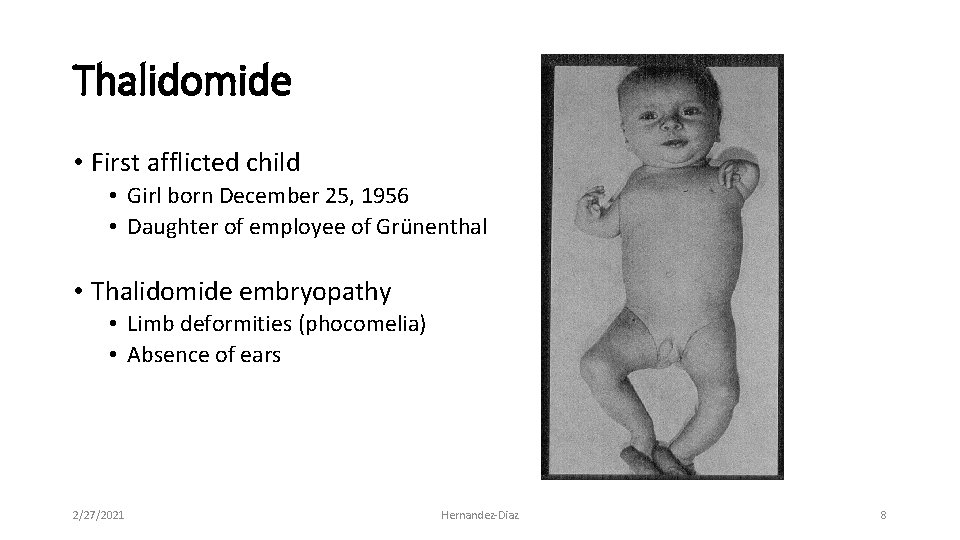
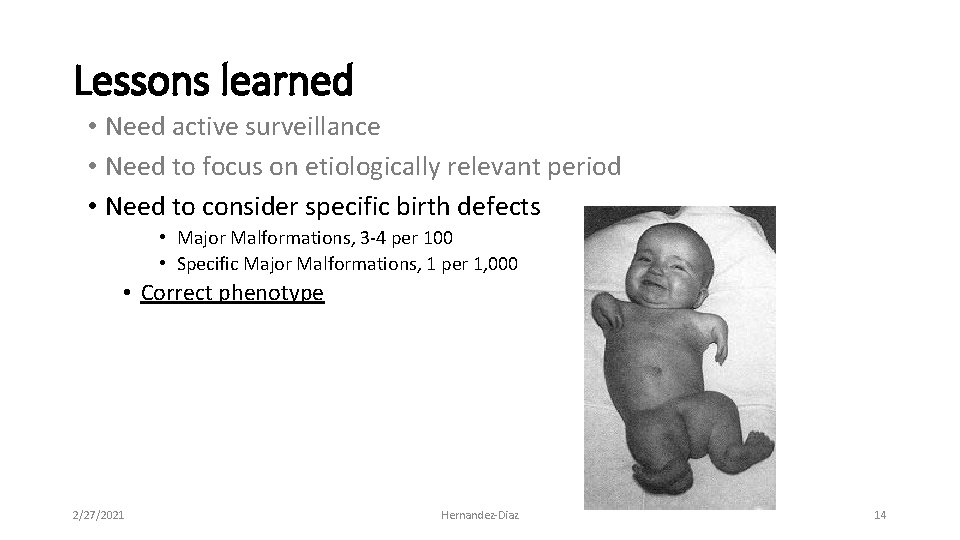
Thalidomide • First afflicted child • Girl born December 25, 1956 • Daughter of employee of Grünenthal • Thalidomide embryopathy • Limb deformities (phocomelia) • Absence of ears 2/27/2021 Hernandez‐Diaz 8
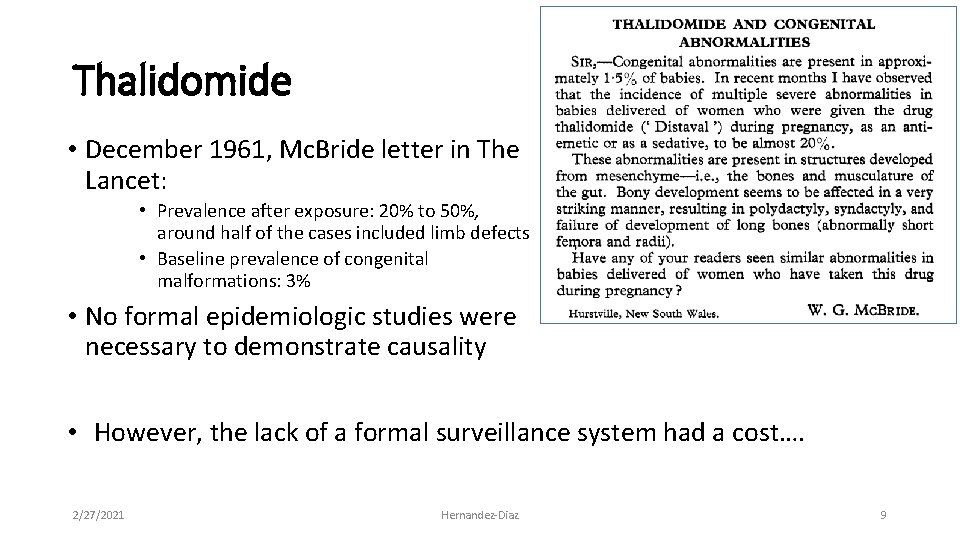
Thalidomide • December 1961, Mc. Bride letter in The Lancet: • Prevalence after exposure: 20% to 50%, around half of the cases included limb defects • Baseline prevalence of congenital malformations: 3% • No formal epidemiologic studies were necessary to demonstrate causality • However, the lack of a formal surveillance system had a cost…. 2/27/2021 Hernandez‐Diaz 9
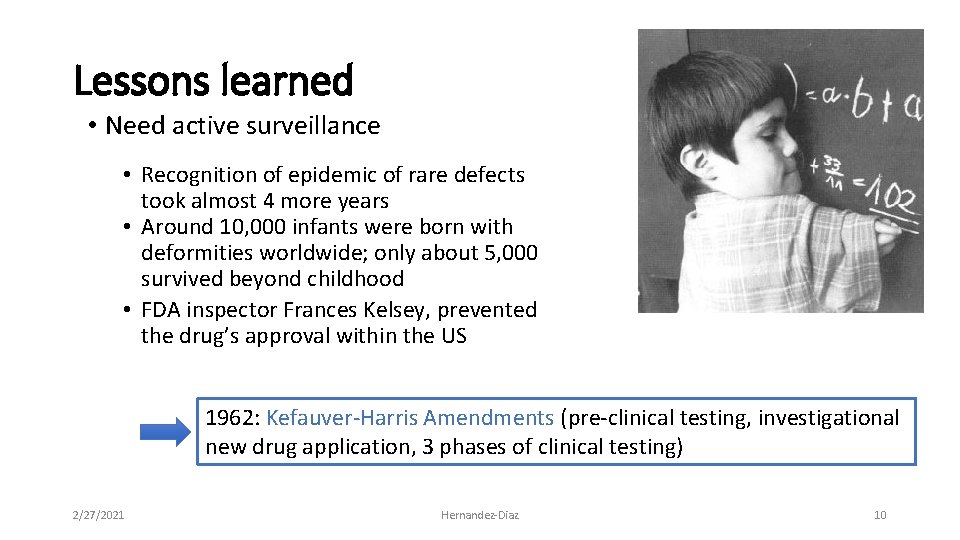
Lessons learned • Need active surveillance • Recognition of epidemic of rare defects took almost 4 more years • Around 10, 000 infants were born with deformities worldwide; only about 5, 000 survived beyond childhood • FDA inspector Frances Kelsey, prevented the drug’s approval within the US 1962: Kefauver‐Harris Amendments (pre‐clinical testing, investigational new drug application, 3 phases of clinical testing) 2/27/2021 Hernandez‐Diaz 10
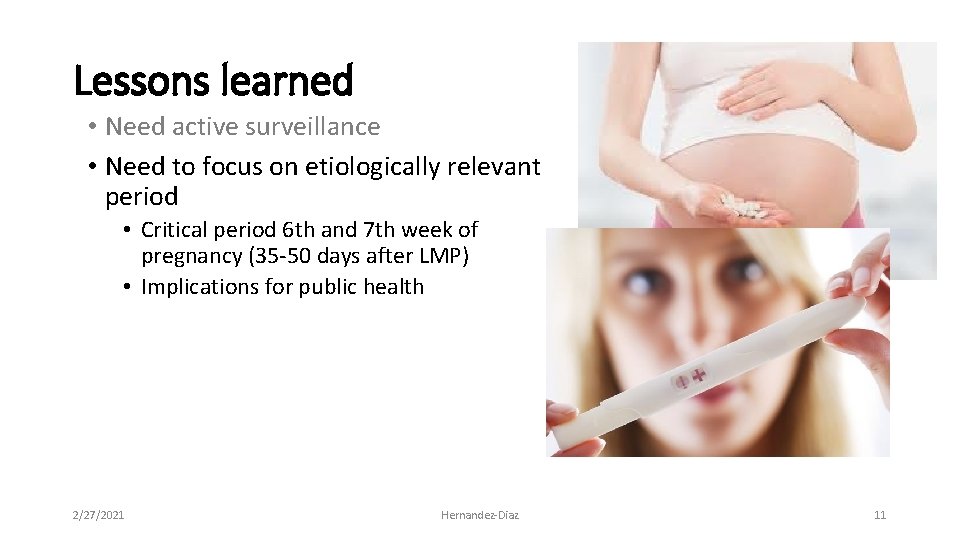
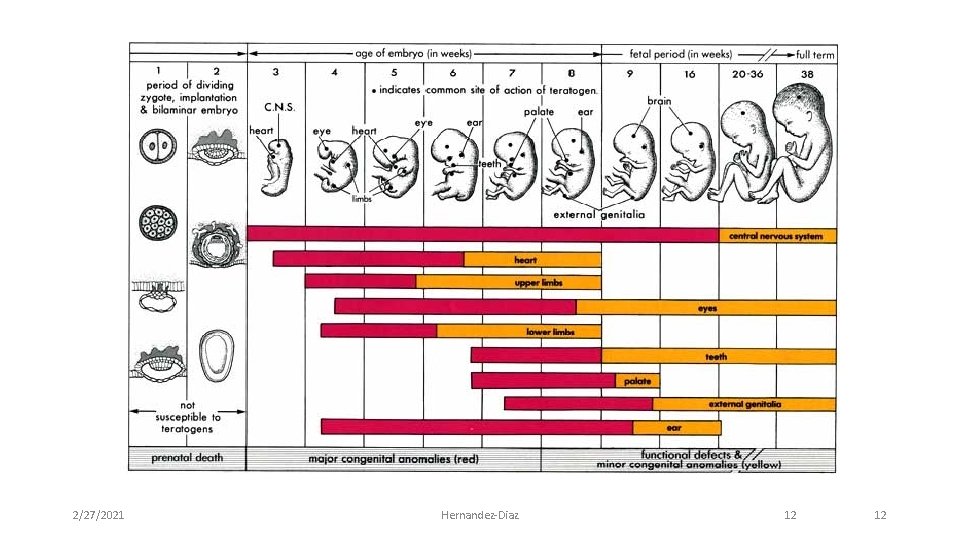
Lessons learned • Need active surveillance • Need to focus on etiologically relevant period • Critical period 6 th and 7 th week of pregnancy (35‐ 50 days after LMP) • Implications for public health 2/27/2021 Hernandez‐Diaz 11
2/27/2021 Hernandez‐Diaz 12 12
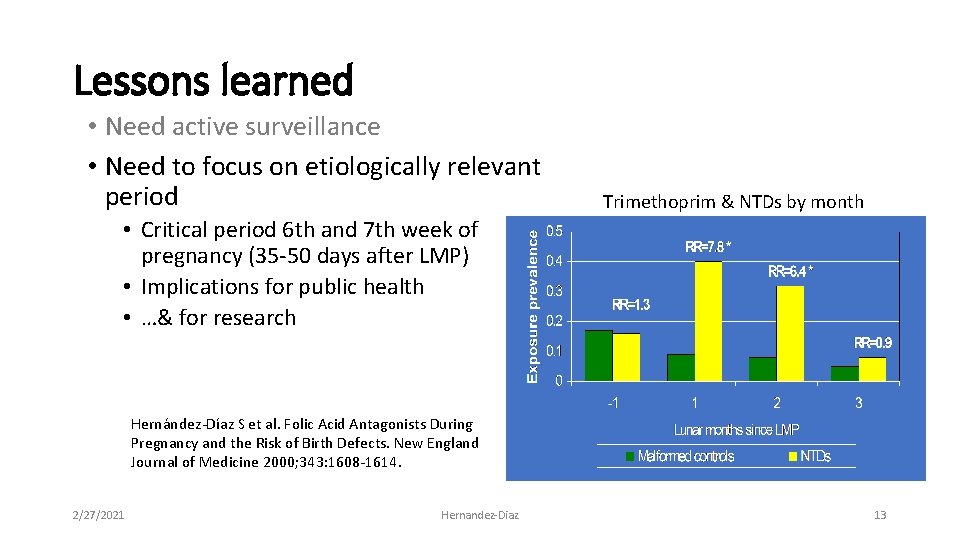
Lessons learned • Need active surveillance • Need to focus on etiologically relevant period Trimethoprim & NTDs by month • Critical period 6 th and 7 th week of pregnancy (35‐ 50 days after LMP) • Implications for public health • …& for research Hernández‐Díaz S et al. Folic Acid Antagonists During Pregnancy and the Risk of Birth Defects. New England Journal of Medicine 2000; 343: 1608‐ 1614. 2/27/2021 Hernandez‐Diaz 13
Lessons learned • Need active surveillance • Need to focus on etiologically relevant period • Need to consider specific birth defects • Major Malformations, 3‐ 4 per 100 • Specific Major Malformations, 1 per 1, 000 • Correct phenotype 2/27/2021 Hernandez‐Diaz 14
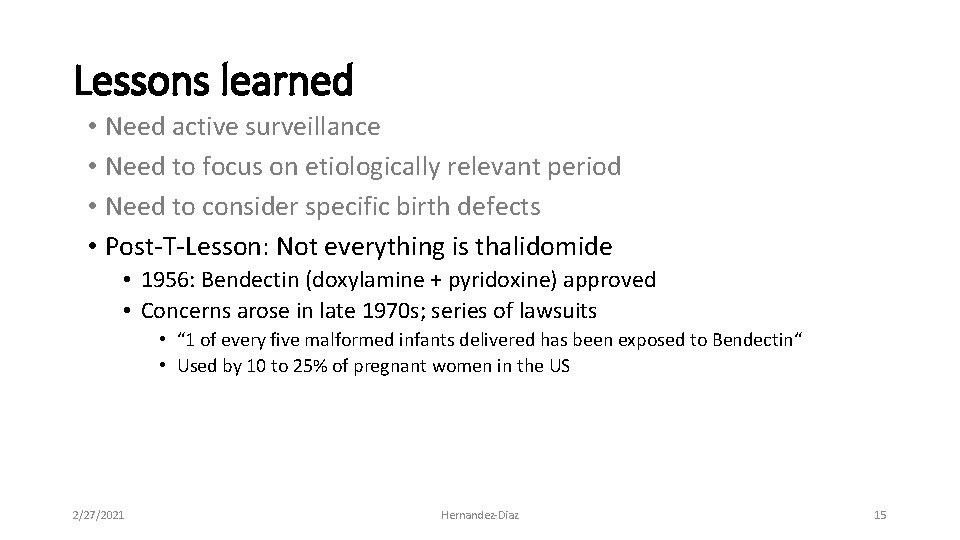
Lessons learned • Need active surveillance • Need to focus on etiologically relevant period • Need to consider specific birth defects • Post‐T‐Lesson: Not everything is thalidomide • 1956: Bendectin (doxylamine + pyridoxine) approved • Concerns arose in late 1970 s; series of lawsuits • “ 1 of every five malformed infants delivered has been exposed to Bendectin“ • Used by 10 to 25% of pregnant women in the US 2/27/2021 Hernandez‐Diaz 15
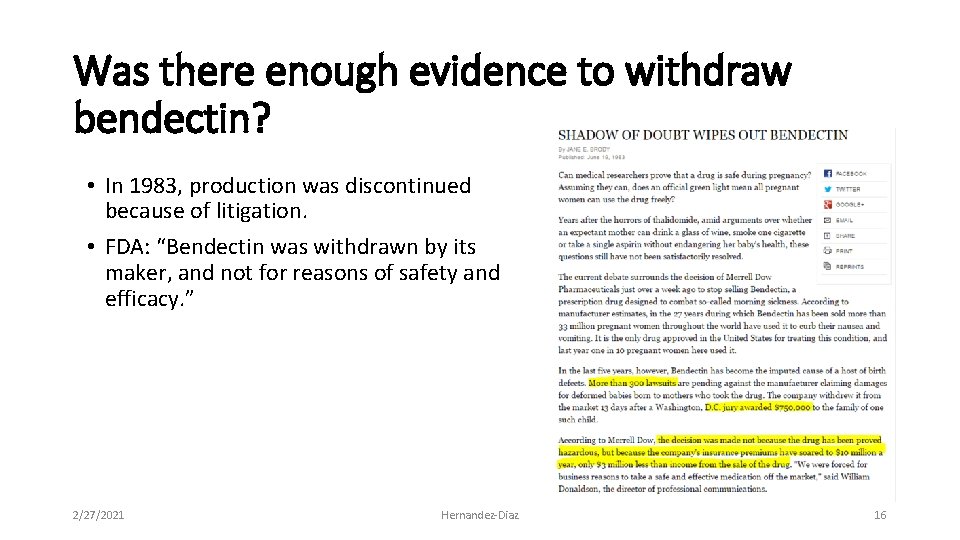
Was there enough evidence to withdraw bendectin? • In 1983, production was discontinued because of litigation. • FDA: “Bendectin was withdrawn by its maker, and not for reasons of safety and efficacy. ” 2/27/2021 Hernandez‐Diaz 16
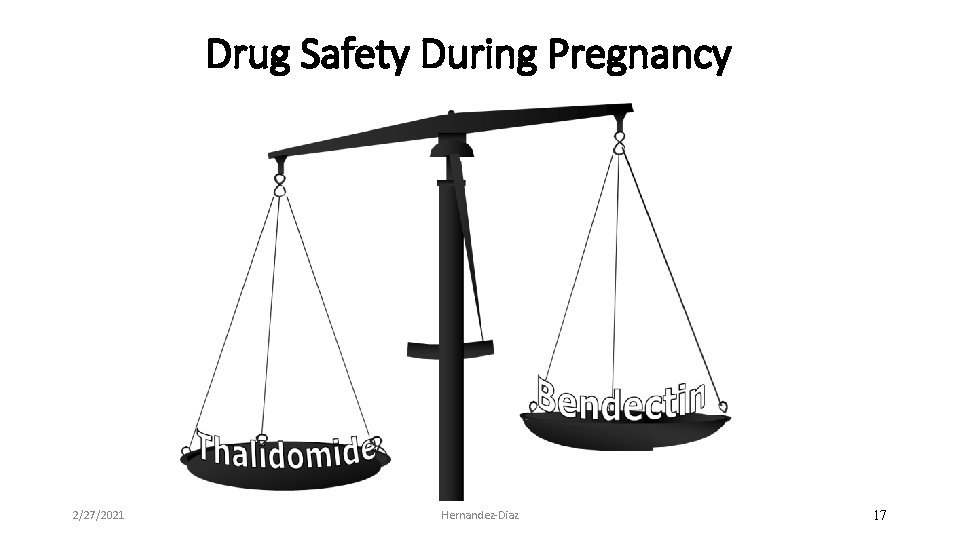
Drug Safety During Pregnancy 2/27/2021 Hernandez‐Diaz 17
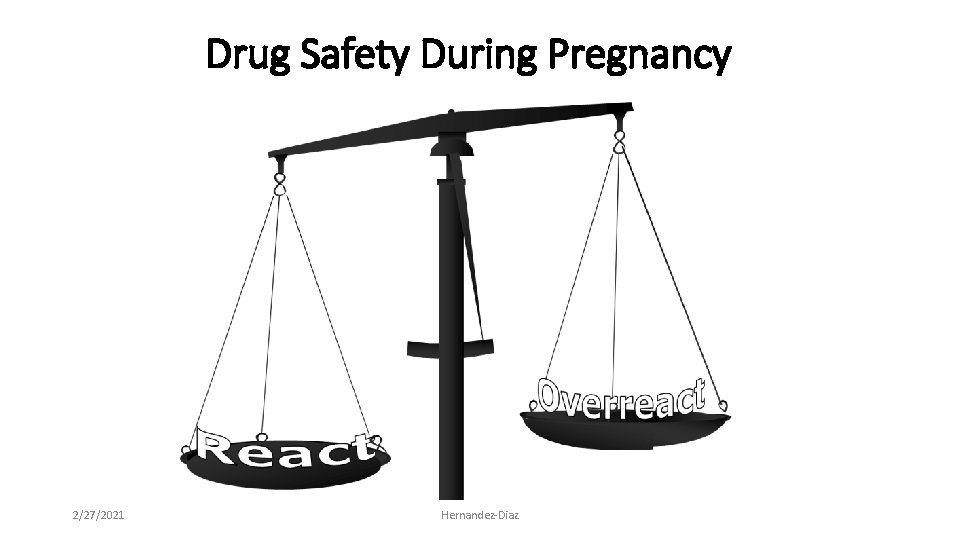
Drug Safety During Pregnancy 2/27/2021 Hernandez‐Diaz
Outline • Introduction to Drug Safety in Pregnancy • Tools Overview 2/27/2021 Hernandez‐Diaz 19
Is this still a problem today? Do pregnant women use drugs? • Most women take medications during their pregnancy 2/27/2021 Hernandez‐Diaz 20
What do we need to know for a given drug? • Clinician and patient: 1. Is this drug another thalidomide or isotretinoin? 2. Are there other, less frequent teratogenic risks? • Regulatory agencies and public: 3. What is the teratogenic impact on the public health? Mitchell AA. Systematic Identification of Drugs That Cause Birth Defects‐‐ A New Opportunity. New England Journal of Medicine 2003; 349: 2556‐ 2559. 2/27/2021 Hernandez‐Diaz 21
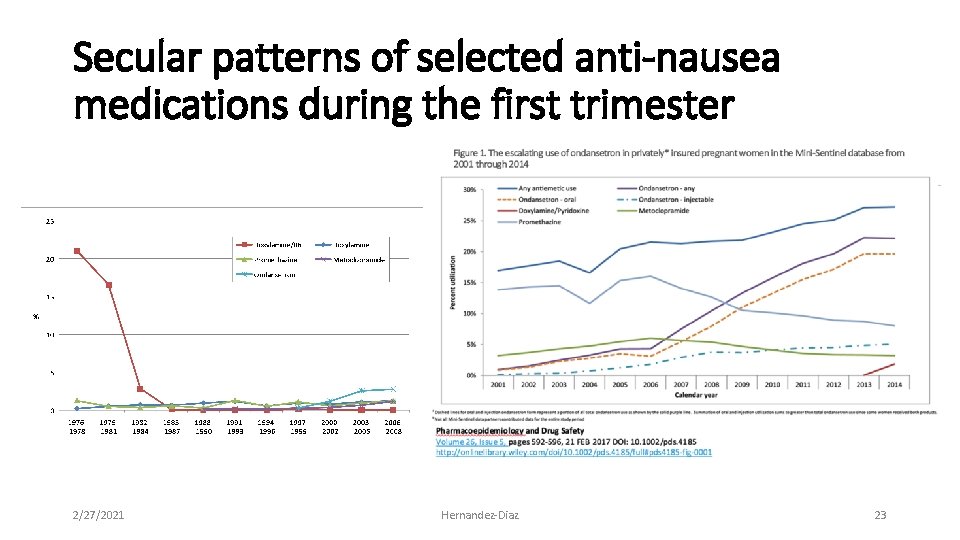
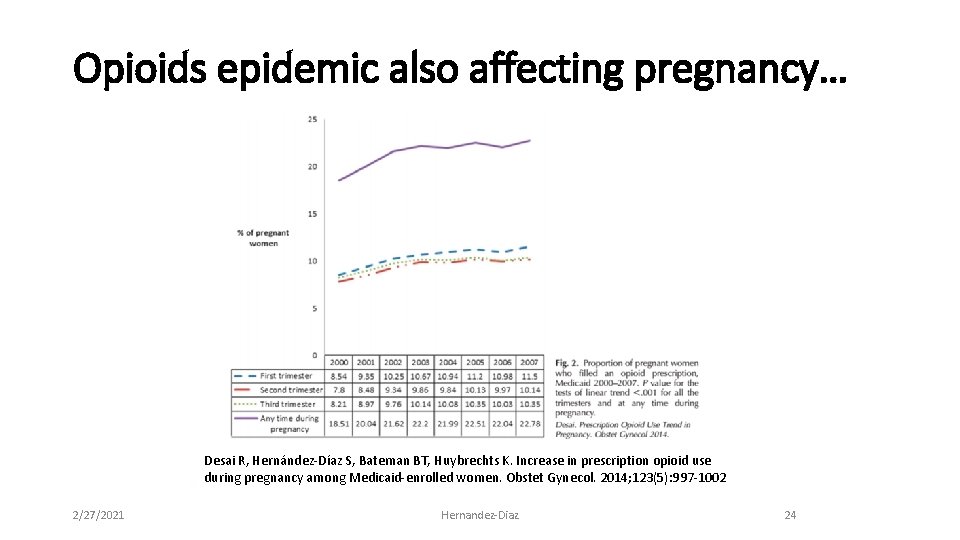
Most commonly used drugs • Apart from vitamins and minerals, the most used drugs during pregnancy are: • Analgesics • Cough/cold medications • Allergy /asthma • Antibiotics/anti‐infectives • Most commonly used drugs are non‐prescription • Most commonly used drugs change over time (exposure to opioids, psychotropics and vaccines has increased) 2/27/2021 Hernandez‐Diaz 22
Secular patterns of selected anti-nausea medications during the first trimester 2/27/2021 Hernandez‐Diaz 23
Opioids epidemic also affecting pregnancy… Desai R, Hernández‐Díaz S, Bateman BT, Huybrechts K. Increase in prescription opioid use during pregnancy among Medicaid‐enrolled women. Obstet Gynecol. 2014; 123(5): 997‐ 1002 2/27/2021 Hernandez‐Diaz 24
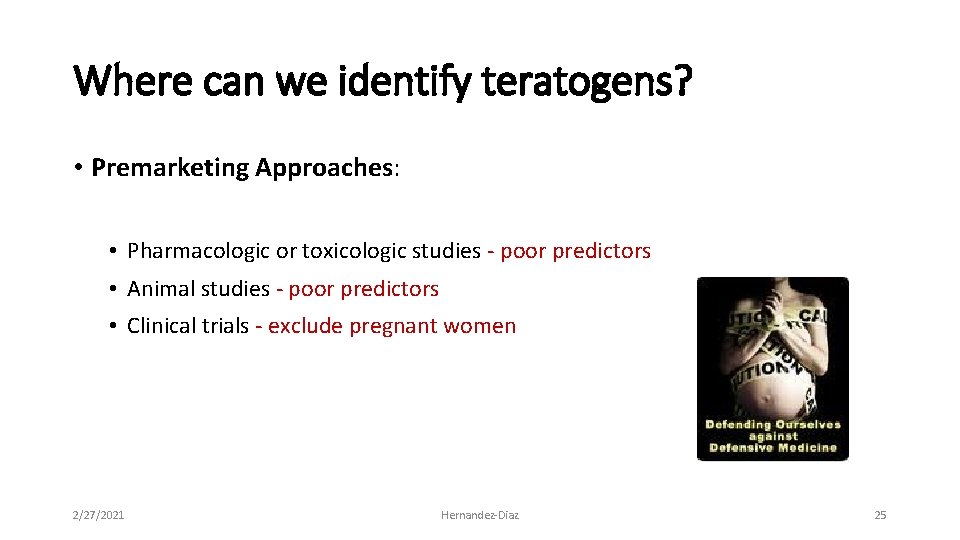
Where can we identify teratogens? • Premarketing Approaches: • Pharmacologic or toxicologic studies ‐ poor predictors • Animal studies ‐ poor predictors • Clinical trials ‐ exclude pregnant women 2/27/2021 Hernandez‐Diaz 25
Where can we identify teratogens? • Post-marketing Approaches: • Case reports ‐ clues; false alarms • Ecological studies ‐ clues; false alarms • Experimental studies ‐ too small • Non‐experimental (epidemiologic) studies • Cohort • Case‐Control 2/27/2021 Hernandez‐Diaz 26
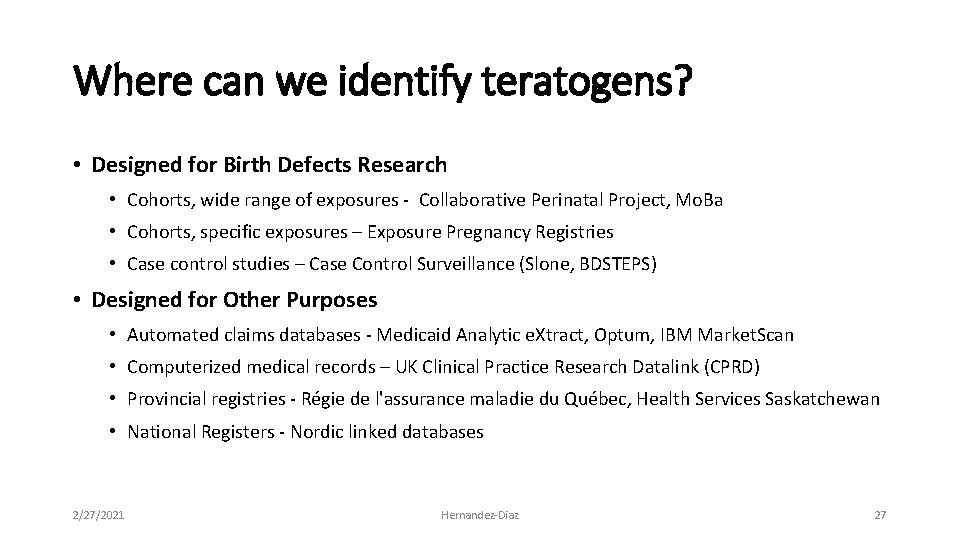
Where can we identify teratogens? • Designed for Birth Defects Research • Cohorts, wide range of exposures ‐ Collaborative Perinatal Project, Mo. Ba • Cohorts, specific exposures – Exposure Pregnancy Registries • Case control studies – Case Control Surveillance (Slone, BDSTEPS) • Designed for Other Purposes • Automated claims databases ‐ Medicaid Analytic e. Xtract, Optum, IBM Market. Scan • Computerized medical records – UK Clinical Practice Research Datalink (CPRD) • Provincial registries ‐ Régie de l'assurance maladie du Québec, Health Services Saskatchewan • National Registers ‐ Nordic linked databases 2/27/2021 Hernandez‐Diaz 27
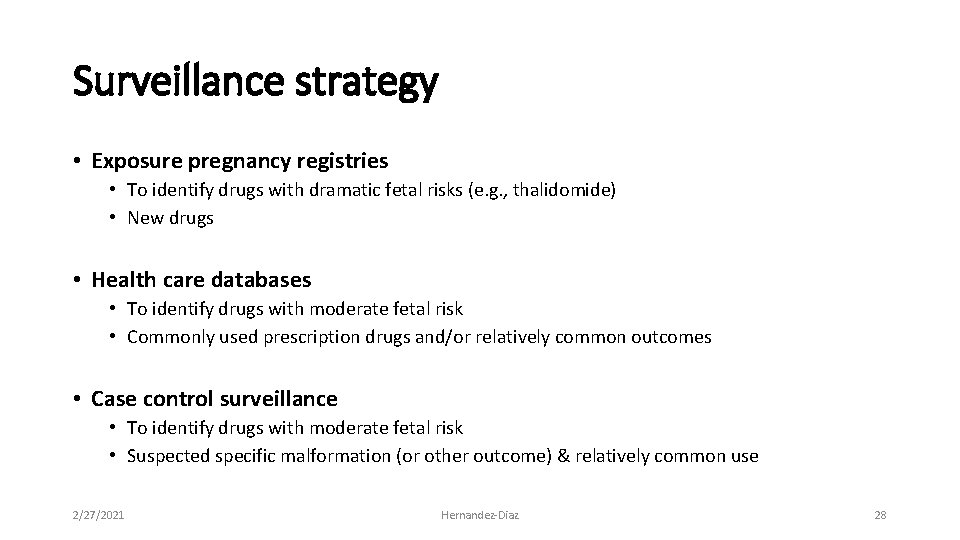
Surveillance strategy • Exposure pregnancy registries • To identify drugs with dramatic fetal risks (e. g. , thalidomide) • New drugs • Health care databases • To identify drugs with moderate fetal risk • Commonly used prescription drugs and/or relatively common outcomes • Case control surveillance • To identify drugs with moderate fetal risk • Suspected specific malformation (or other outcome) & relatively common use 2/27/2021 Hernandez‐Diaz 28
Outline • Introduction to Drug Safety in Pregnancy • Tools Overview • Challenges & Solutions 2/27/2021 Hernandez‐Diaz 29
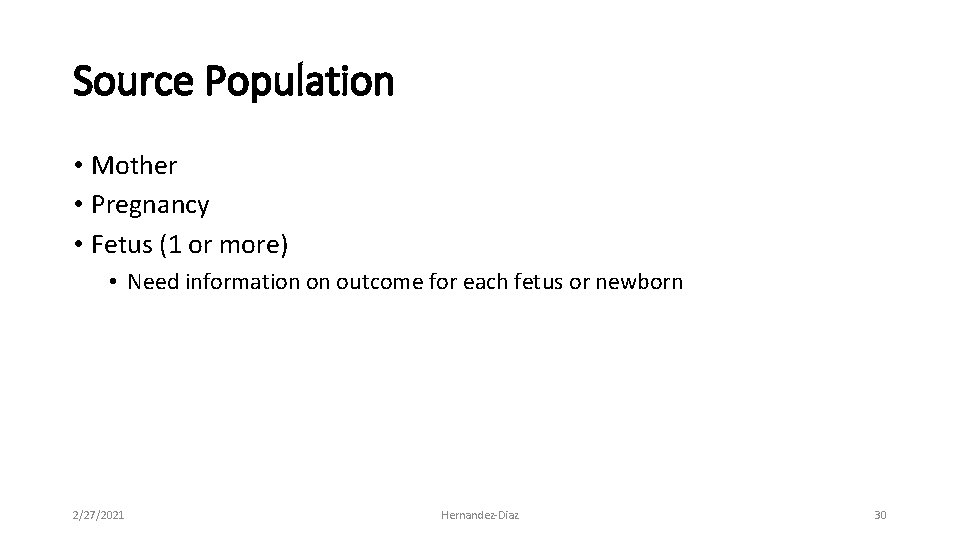
Source Population • Mother • Pregnancy • Fetus (1 or more) • Need information on outcome for each fetus or newborn 2/27/2021 Hernandez‐Diaz 30
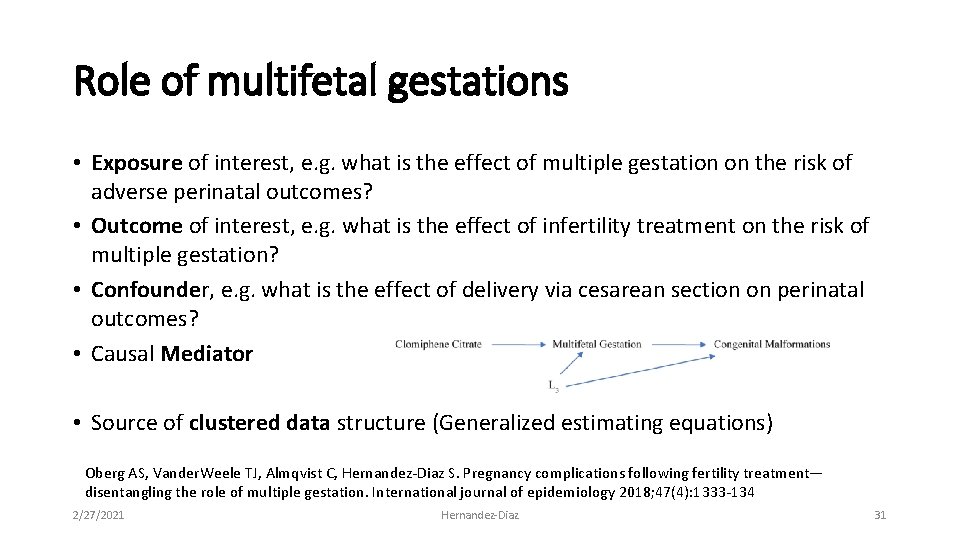
Role of multifetal gestations • Exposure of interest, e. g. what is the effect of multiple gestation on the risk of adverse perinatal outcomes? • Outcome of interest, e. g. what is the effect of infertility treatment on the risk of multiple gestation? • Confounder, e. g. what is the effect of delivery via cesarean section on perinatal outcomes? • Causal Mediator • Source of clustered data structure (Generalized estimating equations) Oberg AS, Vander. Weele TJ, Almqvist C, Hernandez‐Diaz S. Pregnancy complications following fertility treatment— disentangling the role of multiple gestation. International journal of epidemiology 2018; 47(4): 1333‐ 134 2/27/2021 Hernandez‐Diaz 31
Information Bias - Exposure • Misclassification • False positives (adherence / compliance, stop after conception) • More than a quarter of new prescriptions are unfilled, especially when the drugs are for symptomless conditions • False negatives (OTC, sharing, missing data, recall) • Differential misclassification • Recall bias (retrospective interviews) • Etiologically relevant period need timing of pregnancy too 2/27/2021 Hernandez‐Diaz 32
Information Bias - Solutions • Exposure: Filling ≥ 1 prescription during the first trimester • Reference: No prescription for index drug in months or filling ≥ 1 prescription for reference drug with same indication • Prospective records of drugs • Comparable sources of information • Other defects as controls • Improve algorithms to identify last menstrual period (LMP) 2/27/2021 Hernandez‐Diaz 33
Information Bias - Outcome • Misclassification (e. g. ICD 9 codes, maternal report) • Suspected diagnoses may be coded to justify the performance of diagnostic tests (rule‐out diagnoses) • Differential misclassification • Diagnostic bias (ultrasounds and minor defects) • Comparable “major malformation” definition (CAUTION with external reference) • Period of diagnosis (prenatal, birth, life) • Inclusion / exclusion criteria 2/27/2021 Hernandez‐Diaz 34
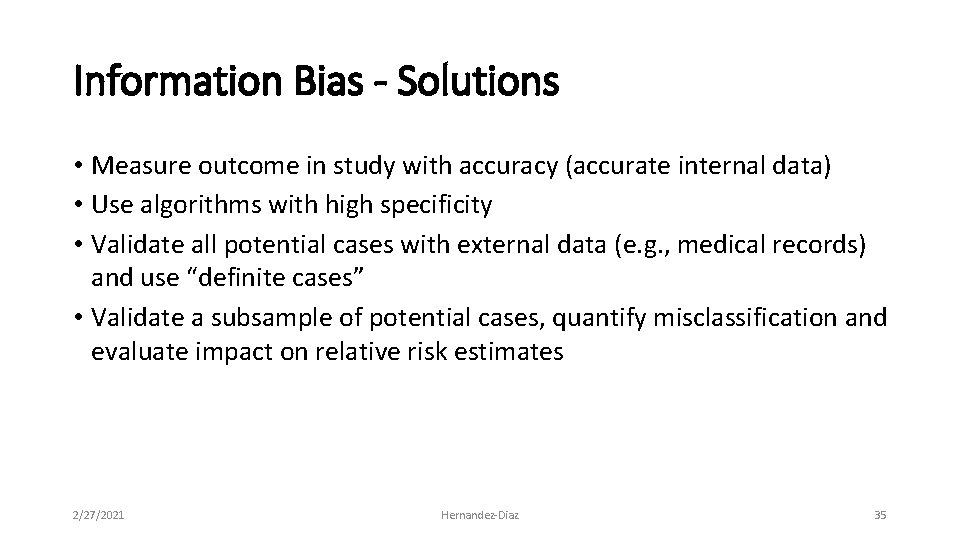
Information Bias - Solutions • Measure outcome in study with accuracy (accurate internal data) • Use algorithms with high specificity • Validate all potential cases with external data (e. g. , medical records) and use “definite cases” • Validate a subsample of potential cases, quantify misclassification and evaluate impact on relative risk estimates 2/27/2021 Hernandez‐Diaz 35
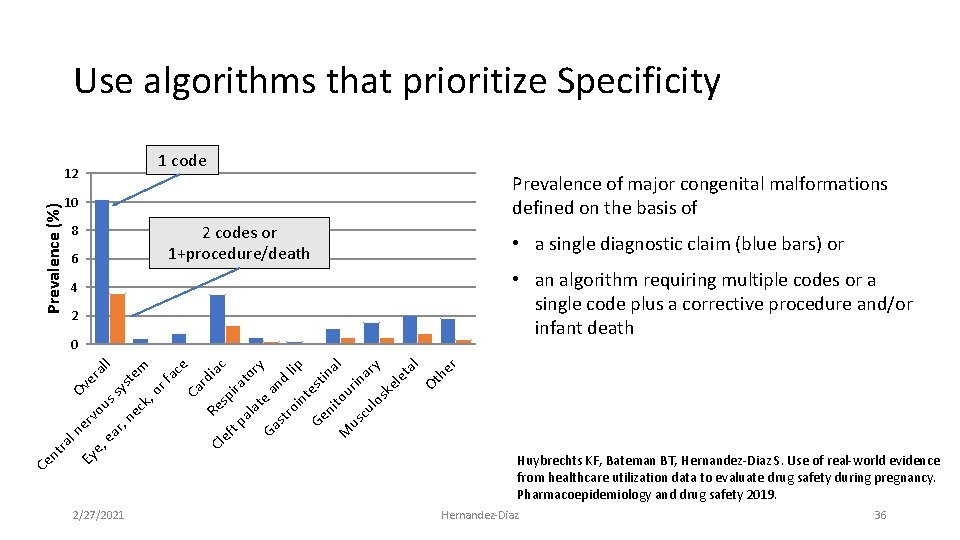
Use algorithms that prioritize Specificity 1 code Prevalence (%) 12 Prevalence of major congenital malformations defined on the basis of 10 2 codes or 1+procedure/death 8 6 • a single diagnostic claim (blue bars) or • an algorithm requiring multiple codes or a single code plus a corrective procedure and/or infant death 4 2 e, e Ey Ce n tra l n er vo Ov er al us sy l ar , n s ec tem k, or fa ce Ca r Re dia Cl c s ef t p pira to al at ry Ga e a n st ro d li p in te Ge s ni tina l M tou r us cu inar lo y sk el et al Ot he r 0 2/27/2021 Huybrechts KF, Bateman BT, Hernandez‐Diaz S. Use of real‐world evidence from healthcare utilization data to evaluate drug safety during pregnancy. Pharmacoepidemiology and drug safety 2019. Hernandez‐Diaz 36
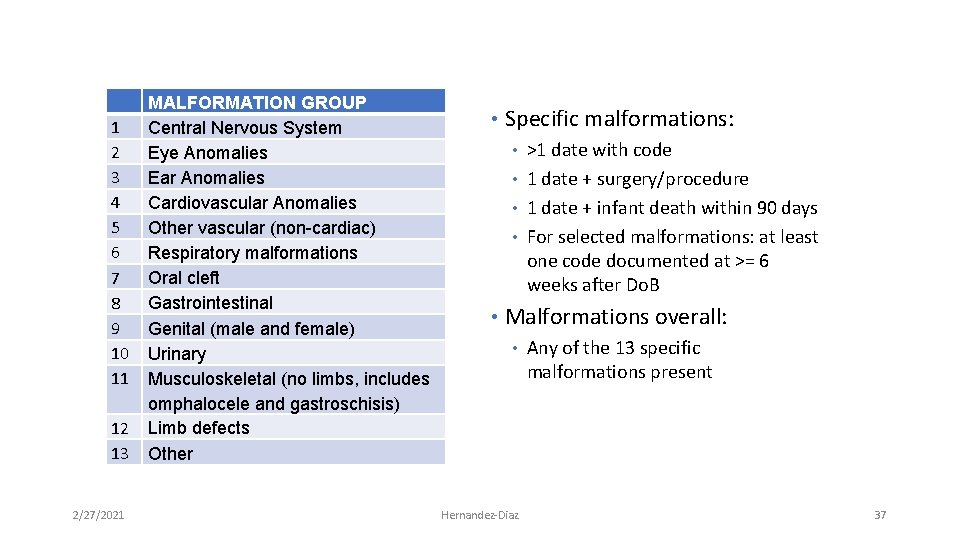
1 2 3 4 5 6 7 8 9 10 11 12 13 2/27/2021 MALFORMATION GROUP Central Nervous System Eye Anomalies Ear Anomalies Cardiovascular Anomalies Other vascular (non-cardiac) Respiratory malformations Oral cleft Gastrointestinal Genital (male and female) Urinary Musculoskeletal (no limbs, includes omphalocele and gastroschisis) Limb defects Other • Specific malformations: • >1 date with code • 1 date + surgery/procedure • 1 date + infant death within 90 days • For selected malformations: at least one code documented at >= 6 weeks after Do. B • Malformations overall: • Any of the 13 specific malformations present Hernandez‐Diaz 37
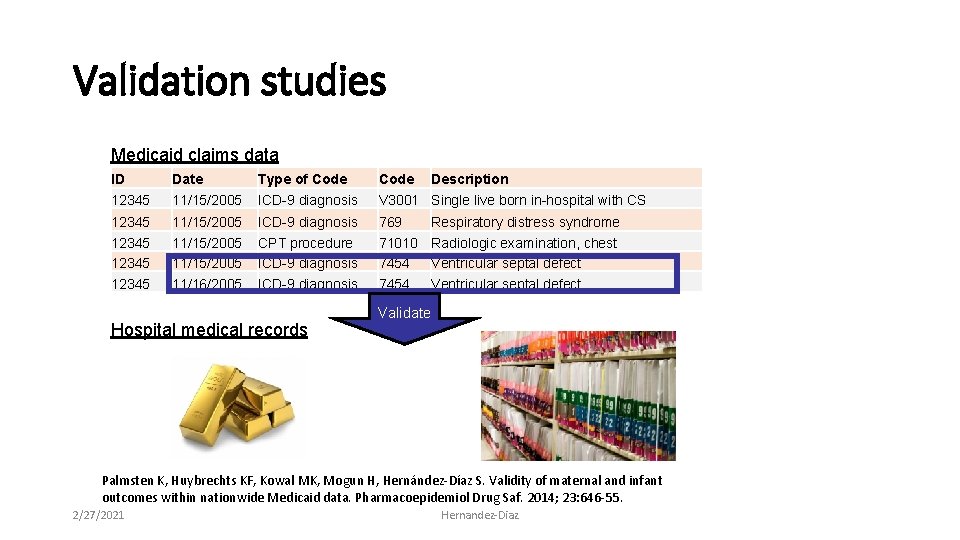
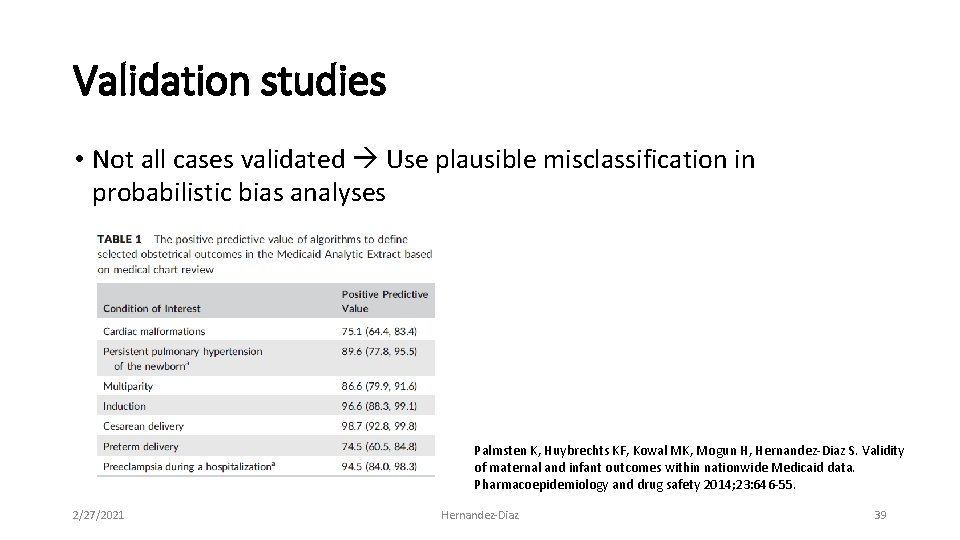
Validation studies 38 Medicaid claims data ID 12345 Date 11/15/2005 Type of Code ICD-9 diagnosis Code Description V 3001 Single live born in-hospital with CS 12345 11/15/2005 11/16/2005 ICD-9 diagnosis CPT procedure ICD-9 diagnosis 769 71010 7454 Hospital medical records Respiratory distress syndrome Radiologic examination, chest Ventricular septal defect Validate Palmsten K, Huybrechts KF, Kowal MK, Mogun H, Hernández‐Díaz S. Validity of maternal and infant outcomes within nationwide Medicaid data. Pharmacoepidemiol Drug Saf. 2014; 23: 646‐ 55. 2/27/2021 Hernandez‐Diaz
Validation studies • Not all cases validated Use plausible misclassification in probabilistic bias analyses Palmsten K, Huybrechts KF, Kowal MK, Mogun H, Hernandez‐Diaz S. Validity of maternal and infant outcomes within nationwide Medicaid data. Pharmacoepidemiology and drug safety 2014; 23: 646‐ 55. 2/27/2021 Hernandez‐Diaz 39
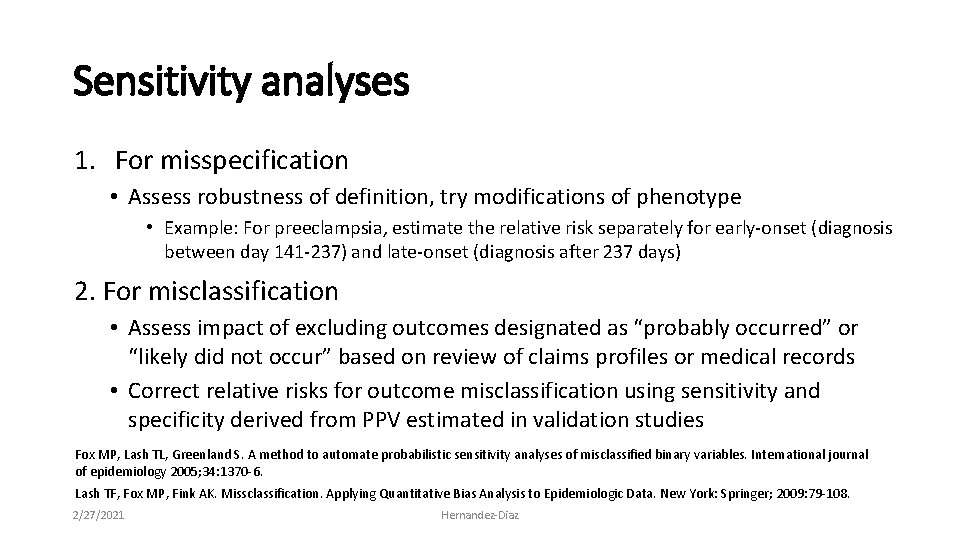
Sensitivity analyses 40 1. For misspecification • Assess robustness of definition, try modifications of phenotype • Example: For preeclampsia, estimate the relative risk separately for early‐onset (diagnosis between day 141‐ 237) and late‐onset (diagnosis after 237 days) 2. For misclassification • Assess impact of excluding outcomes designated as “probably occurred” or “likely did not occur” based on review of claims profiles or medical records • Correct relative risks for outcome misclassification using sensitivity and specificity derived from PPV estimated in validation studies Fox MP, Lash TL, Greenland S. A method to automate probabilistic sensitivity analyses of misclassified binary variables. International journal of epidemiology 2005; 34: 1370‐ 6. Lash TF, Fox MP, Fink AK. Missclassification. Applying Quantitative Bias Analysis to Epidemiologic Data. New York: Springer; 2009: 79‐ 108. 2/27/2021 Hernandez‐Diaz
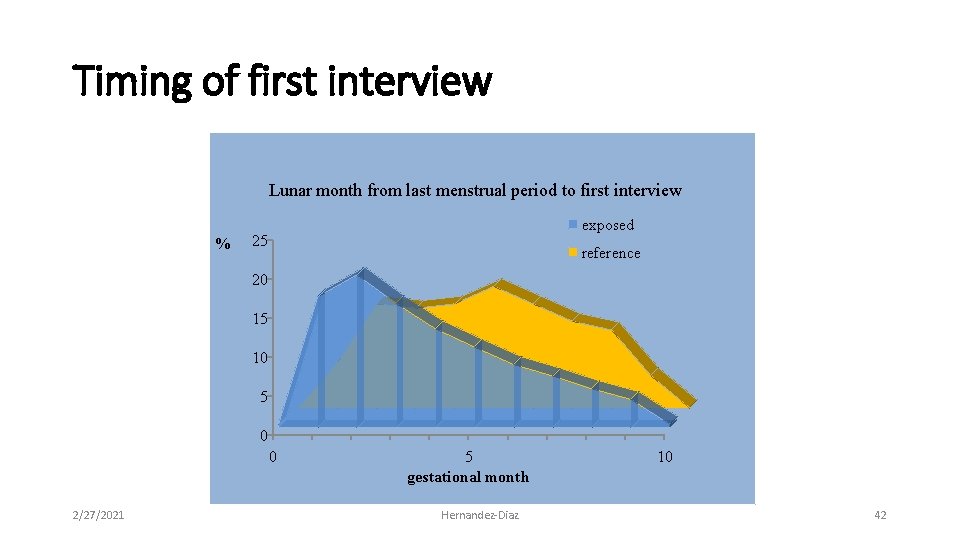
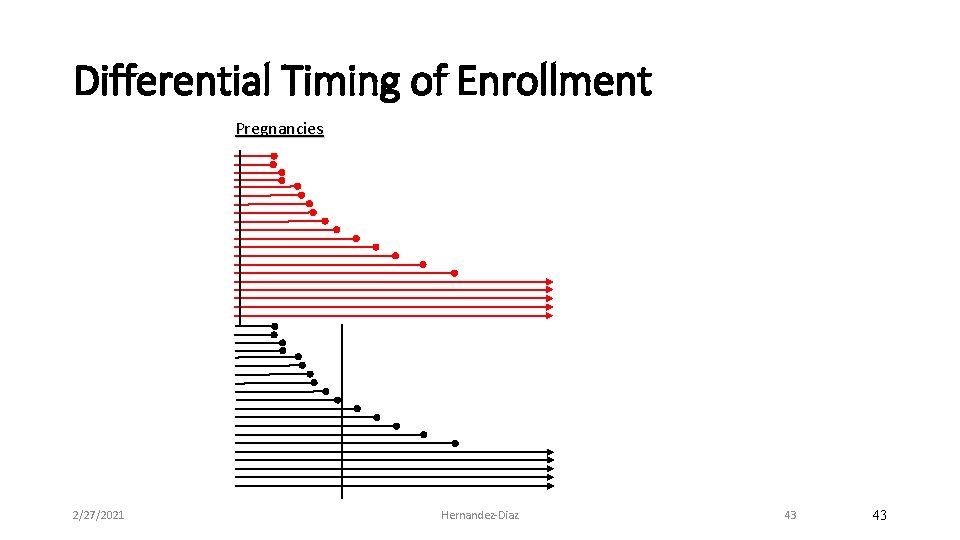
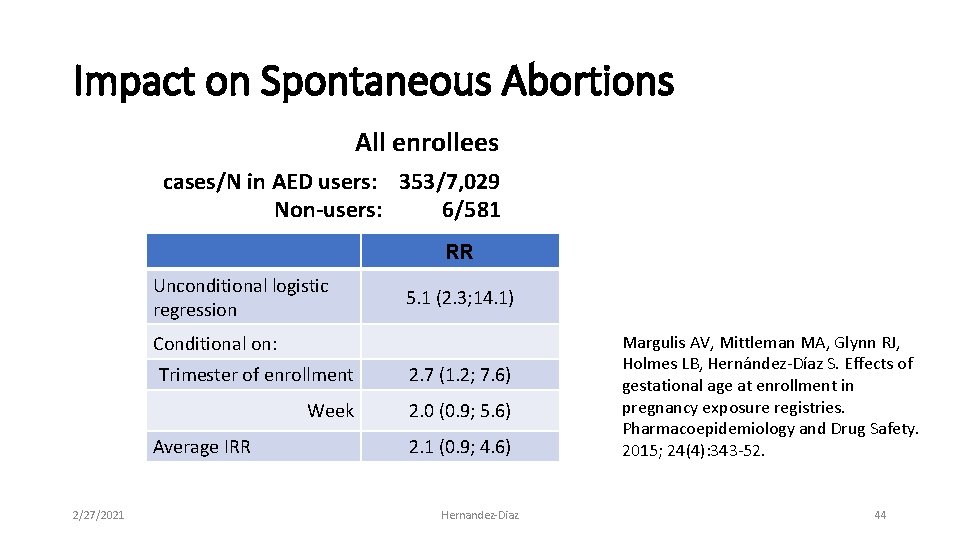
Selection Bias • Start of follow up (left-censoring) • What would you expect to find if exposed subjects are enrolled during first trimester and unexposed are enrolled later in pregnancy? 2/27/2021 Hernandez‐Diaz 41
Timing of first interview Lunar month from last menstrual period to first interview % exposed 25 reference 20 15 10 5 0 0 2/27/2021 5 gestational month Hernandez‐Diaz 10 42
Differential Timing of Enrollment Pregnancies 2/27/2021 Hernandez‐Diaz 43 43
Impact on Spontaneous Abortions All enrollees cases/N in AED users: 353/7, 029 Non-users: 6/581 RR Unconditional logistic regression 5. 1 (2. 3; 14. 1) Conditional on: Trimester of enrollment 2. 7 (1. 2; 7. 6) Week 2. 0 (0. 9; 5. 6) Average IRR 2/27/2021 2. 1 (0. 9; 4. 6) Hernandez‐Diaz Margulis AV, Mittleman MA, Glynn RJ, Holmes LB, Hernández‐Díaz S. Effects of gestational age at enrollment in pregnancy exposure registries. Pharmacoepidemiology and Drug Safety. 2015; 24(4): 343‐ 52. 44
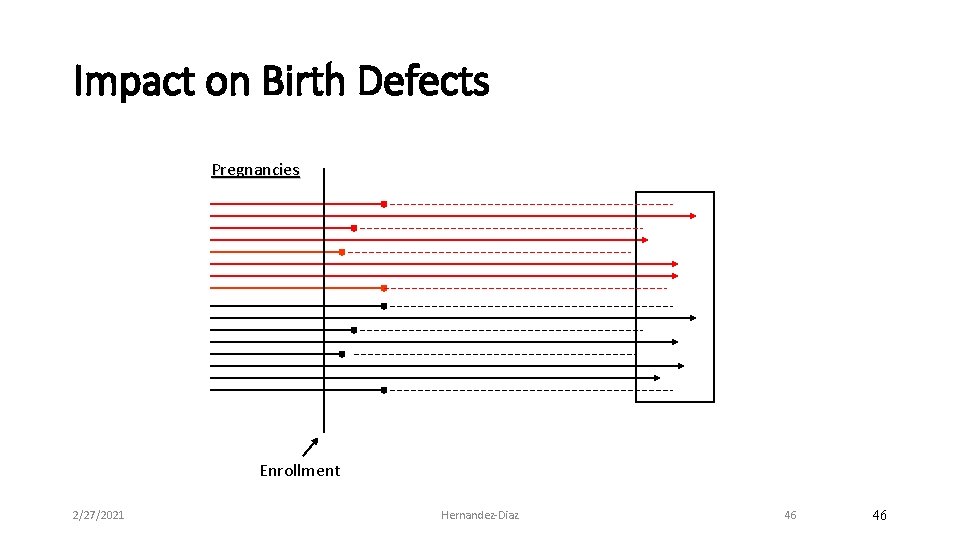
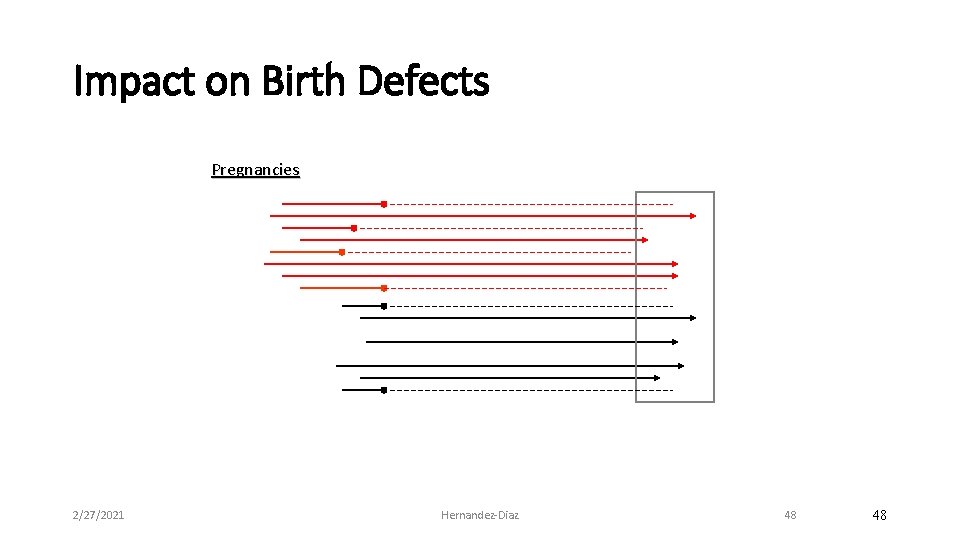
Selection Bias • Start of follow up (left-censoring) • What would you expect to find if subjects are enrolled late in pregnancy, after prenatal screening tests? • If diagnoses are included: potential overestimation if preferential enrollment or underestimation if lower participation of cases. • If diagnoses are excluded: underestimation 2/27/2021 Hernandez‐Diaz 45
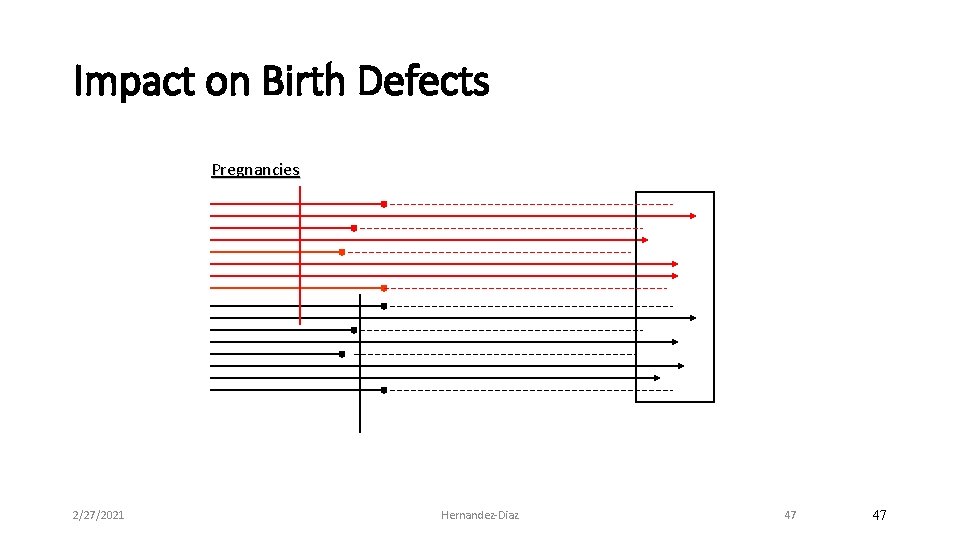
Impact on Birth Defects Pregnancies Enrollment 2/27/2021 Hernandez‐Diaz 46 46
Impact on Birth Defects Pregnancies 2/27/2021 Hernandez‐Diaz 47 47
Impact on Birth Defects Pregnancies 2/27/2021 Hernandez‐Diaz 48 48
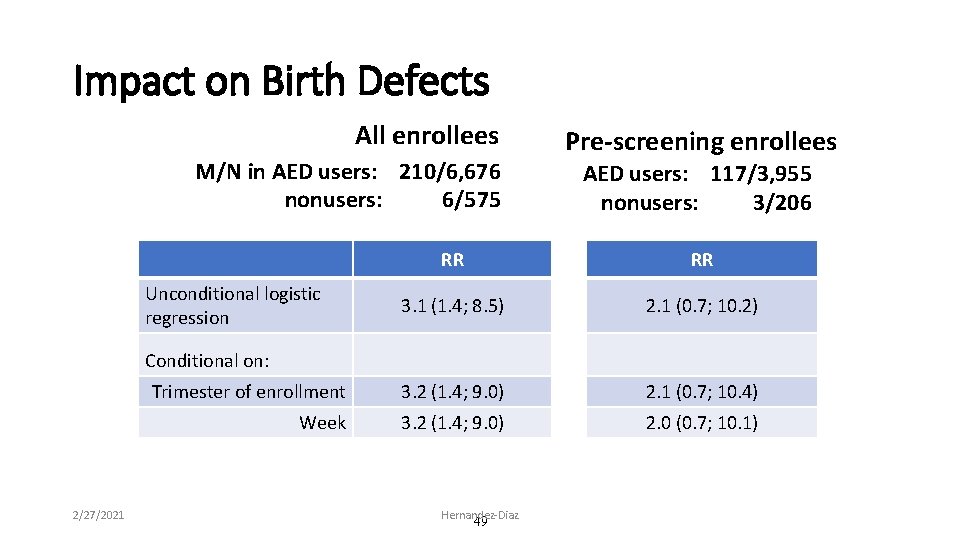
Impact on Birth Defects All enrollees M/N in AED users: 210/6, 676 nonusers: 6/575 Pre-screening enrollees AED users: 117/3, 955 nonusers: 3/206 RR RR 3. 1 (1. 4; 8. 5) 2. 1 (0. 7; 10. 2) Trimester of enrollment 3. 2 (1. 4; 9. 0) 2. 1 (0. 7; 10. 4) Week 3. 2 (1. 4; 9. 0) 2. 0 (0. 7; 10. 1) Unconditional logistic regression Conditional on: 2/27/2021 Hernandez‐Diaz 49
Selection Bias - Solutions • Minimize left truncation (enroll early or detect early pregnancies) • When the incidence rate of events changes over pregnancy (e. g. , SAB), ensure that the distribution of time at risk for the outcome is comparable between exposure groups • When an event may influence enrollment decisions (e. g. , prenatal screening), primary analyses must include only subjects who enrolled before this event 2/27/2021 Hernandez‐Diaz 50
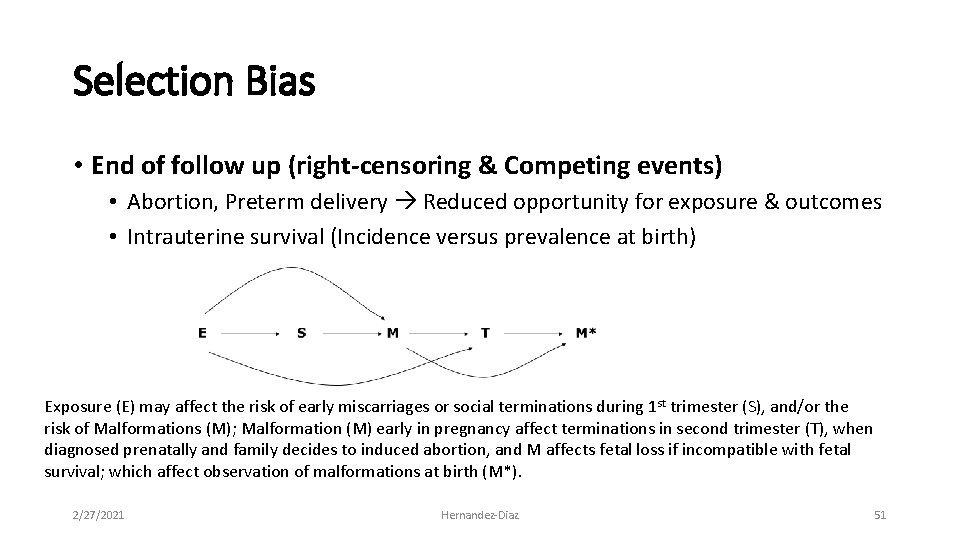
Selection Bias • End of follow up (right-censoring & Competing events) • Abortion, Preterm delivery Reduced opportunity for exposure & outcomes • Intrauterine survival (Incidence versus prevalence at birth) Exposure (E) may affect the risk of early miscarriages or social terminations during 1 st trimester (S), and/or the risk of Malformations (M); Malformation (M) early in pregnancy affect terminations in second trimester (T), when diagnosed prenatally and family decides to induced abortion, and M affects fetal loss if incompatible with fetal survival; which affect observation of malformations at birth (M*). 2/27/2021 Hernandez‐Diaz 51
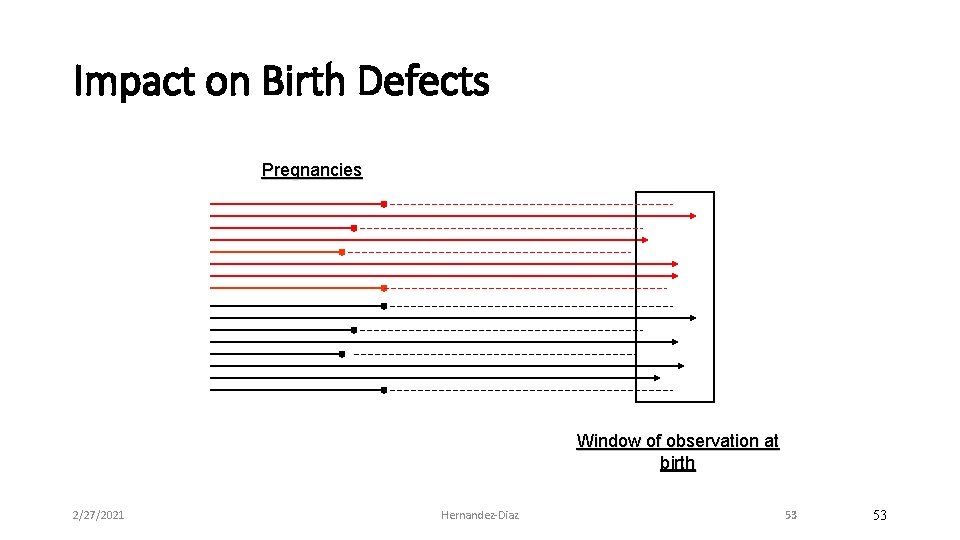
Selection Bias • What would you expect to find in an analysis of teratogenicity if • exposure to drug XX causes early pregnancy losses? • a large proportion of malformations (e. g. , NTDs) are terminated ? • only livebirth have information on malformations? 2/27/2021 Hernandez‐Diaz 52
Impact on Birth Defects Pregnancies Window of observation at birth 2/27/2021 Hernandez‐Diaz 53 53
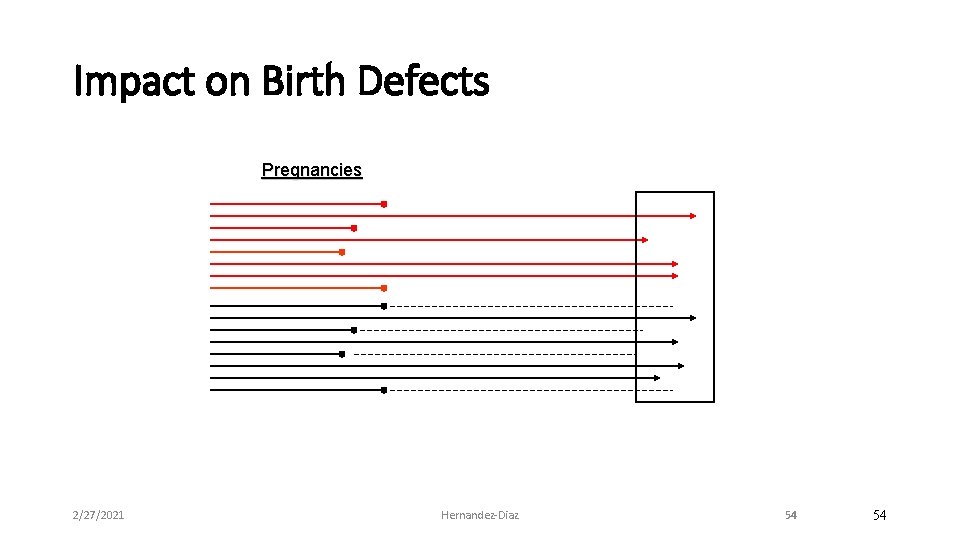
Impact on Birth Defects Pregnancies 2/27/2021 Hernandez‐Diaz 54 54
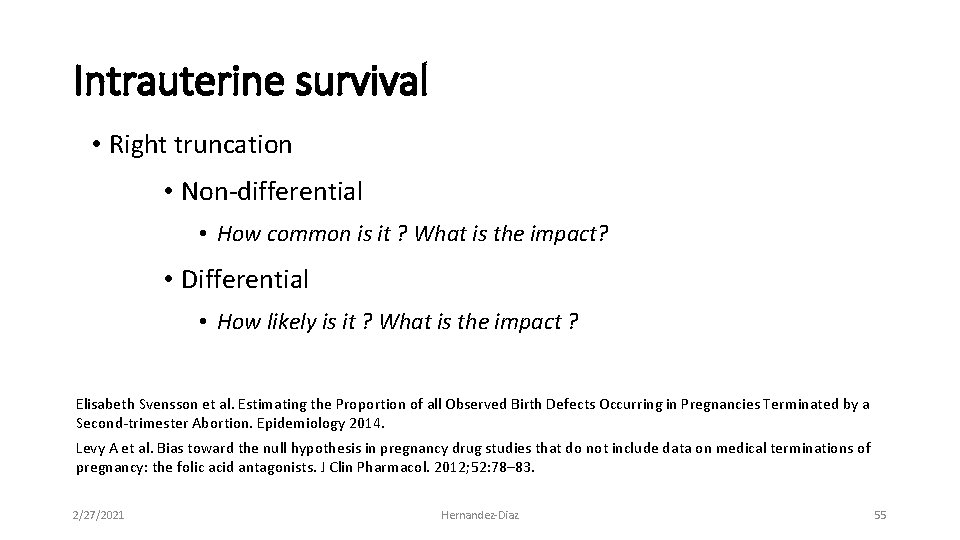
Intrauterine survival • Right truncation • Non‐differential • How common is it ? What is the impact? • Differential • How likely is it ? What is the impact ? Elisabeth Svensson et al. Estimating the Proportion of all Observed Birth Defects Occurring in Pregnancies Terminated by a Second‐trimester Abortion. Epidemiology 2014. Levy A et al. Bias toward the null hypothesis in pregnancy drug studies that do not include data on medical terminations of pregnancy: the folic acid antagonists. J Clin Pharmacol. 2012; 52: 78– 83. 2/27/2021 Hernandez‐Diaz 55
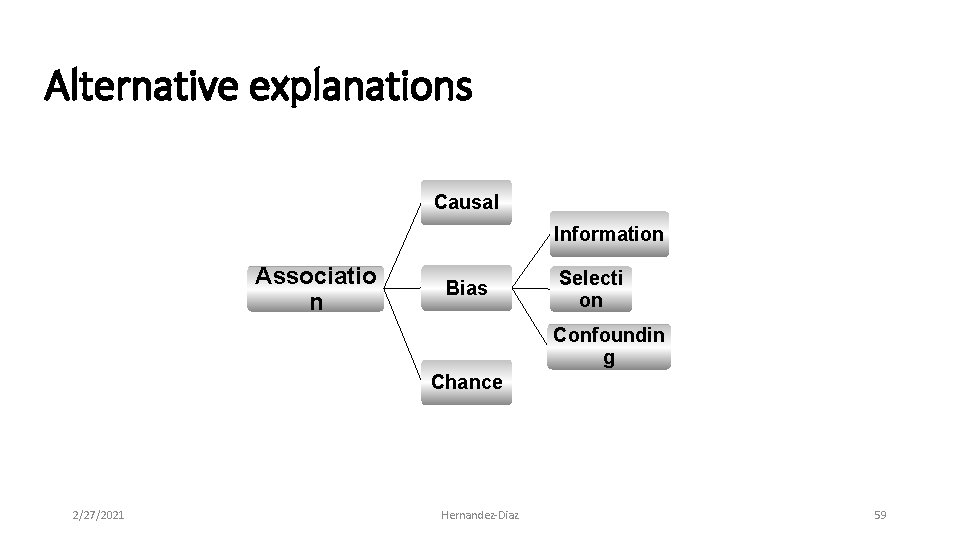
Confounding • Smoking, illegal drugs, BMI, etc. • Indication (e. g. , depression, asthma) 2/27/2021 Hernandez‐Diaz 56
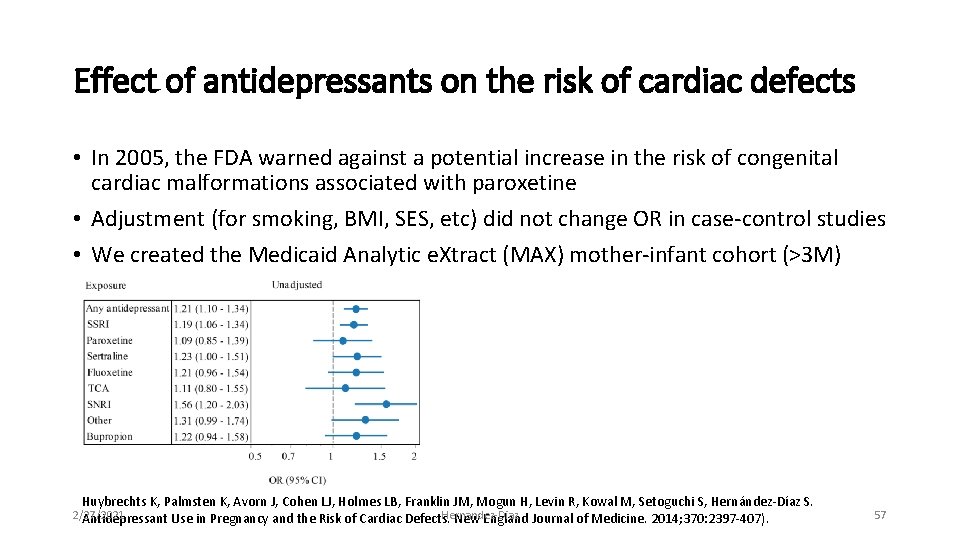
Effect of antidepressants on the risk of cardiac defects • In 2005, the FDA warned against a potential increase in the risk of congenital cardiac malformations associated with paroxetine • Adjustment (for smoking, BMI, SES, etc) did not change OR in case‐control studies • We created the Medicaid Analytic e. Xtract (MAX) mother‐infant cohort (>3 M) Huybrechts K, Palmsten K, Avorn J, Cohen LJ, Holmes LB, Franklin JM, Mogun H, Levin R, Kowal M, Setoguchi S, Hernández‐Díaz S. 2/27/2021 Hernandez‐Diaz Antidepressant Use in Pregnancy and the Risk of Cardiac Defects. New England Journal of Medicine. 2014; 370: 2397‐ 407). 57
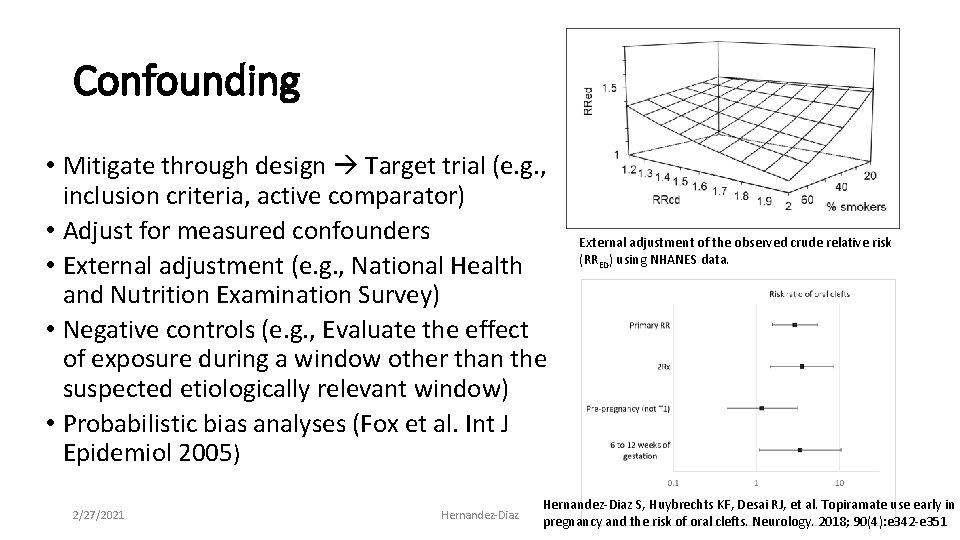
Confounding 58 • Mitigate through design Target trial (e. g. , inclusion criteria, active comparator) • Adjust for measured confounders • External adjustment (e. g. , National Health and Nutrition Examination Survey) • Negative controls (e. g. , Evaluate the effect of exposure during a window other than the suspected etiologically relevant window) • Probabilistic bias analyses (Fox et al. Int J Epidemiol 2005) 2/27/2021 Hernandez‐Diaz External adjustment of the observed crude relative risk (RRED) using NHANES data. Hernandez‐Diaz S, Huybrechts KF, Desai RJ, et al. Topiramate use early in pregnancy and the risk of oral clefts. Neurology. 2018; 90(4): e 342‐e 351
Alternative explanations Causal Information Associatio n Bias Selecti on Confoundin g Chance 2/27/2021 Hernandez‐Diaz 59
Pregnancy Registries • First line of evidence to identify teratogens because they are able to enroll women soon after drug approval. • However, they often fail to produce robust safety data, particularly for newly introduced drugs for relatively rare conditions. • Targeted enrollment usually ranges between 100 and 500 pregnancies • only 14% of registries achieve target enrolment • Is this sample size sufficient to detect meaningful risks? Sahin L. Pregnancy exposure registries and other post‐approval studies: current status and observations. Data on file. Center for Drug Evaluation and Research, Office of New Drugs, FDA; 2014. Available at: http: //www. fda. gov/downloads/Drugs/News. Events/UCM 399660. pdf. 2/27/2021 Hernandez‐Diaz 60
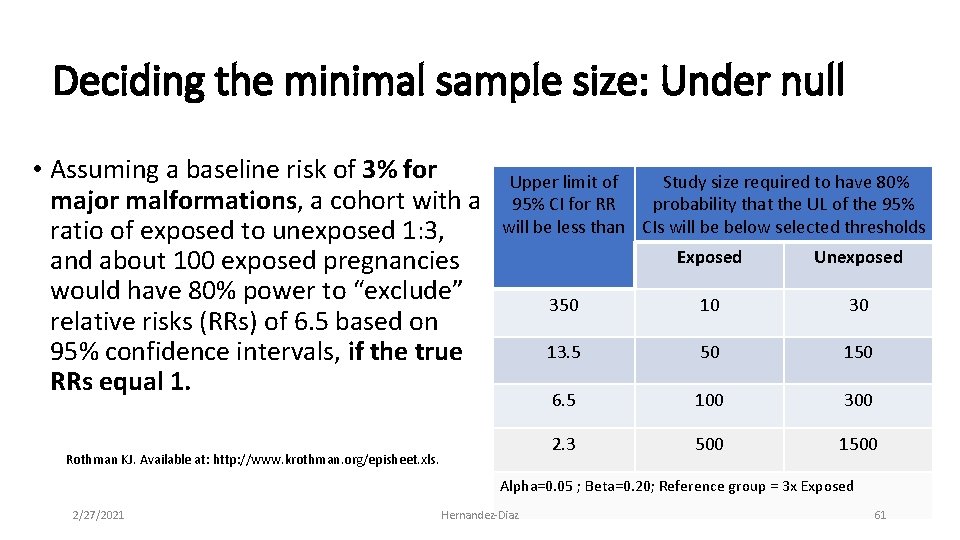
Deciding the minimal sample size: Under null • Assuming a baseline risk of 3% for major malformations, a cohort with a ratio of exposed to unexposed 1: 3, and about 100 exposed pregnancies would have 80% power to “exclude” relative risks (RRs) of 6. 5 based on 95% confidence intervals, if the true RRs equal 1. Upper limit of Study size required to have 80% 95% CI for RR probability that the UL of the 95% will be less than CIs will be below selected thresholds Rothman KJ. Available at: http: //www. krothman. org/episheet. xls. Exposed Unexposed 350 10 30 13. 5 50 150 6. 5 100 300 2. 3 500 1500 Alpha=0. 05 ; Beta=0. 20; Reference group = 3 x Exposed 2/27/2021 Hernandez‐Diaz 61
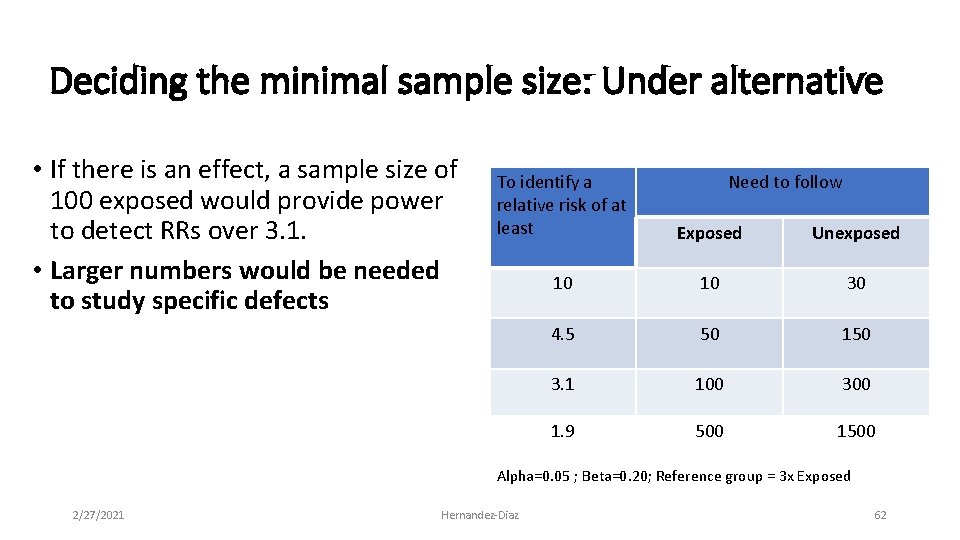
Deciding the minimal sample size: Under alternative • If there is an effect, a sample size of 100 exposed would provide power to detect RRs over 3. 1. • Larger numbers would be needed to study specific defects To identify a relative risk of at least Need to follow Exposed Unexposed 10 10 30 4. 5 50 150 3. 1 100 300 1. 9 500 1500 Alpha=0. 05 ; Beta=0. 20; Reference group = 3 x Exposed 2/27/2021 Hernandez‐Diaz 62
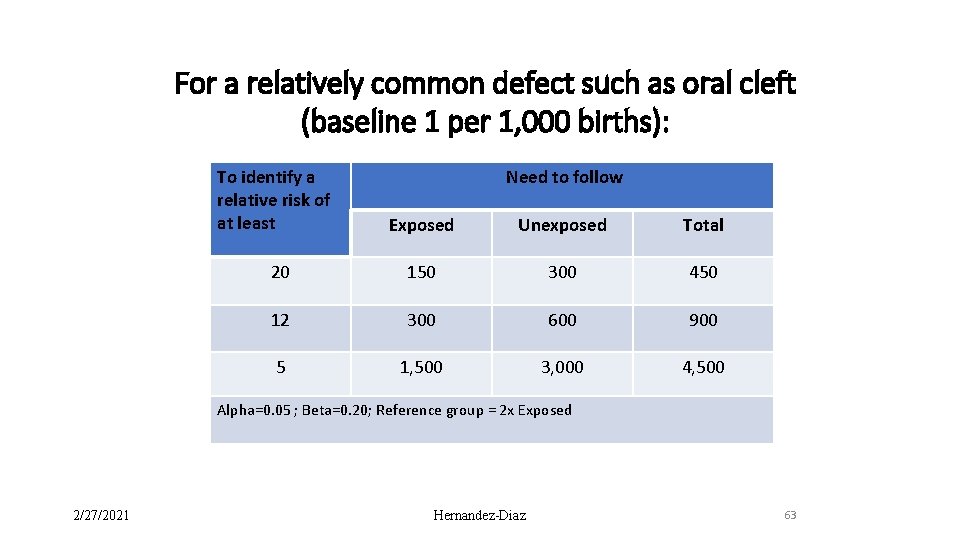
For a relatively common defect such as oral cleft (baseline 1 per 1, 000 births): To identify a relative risk of at least Need to follow Exposed Unexposed Total 20 150 300 450 12 300 600 900 5 1, 500 3, 000 4, 500 Alpha=0. 05 ; Beta=0. 20; Reference group = 2 x Exposed 2/27/2021 Hernandez-Diaz 63
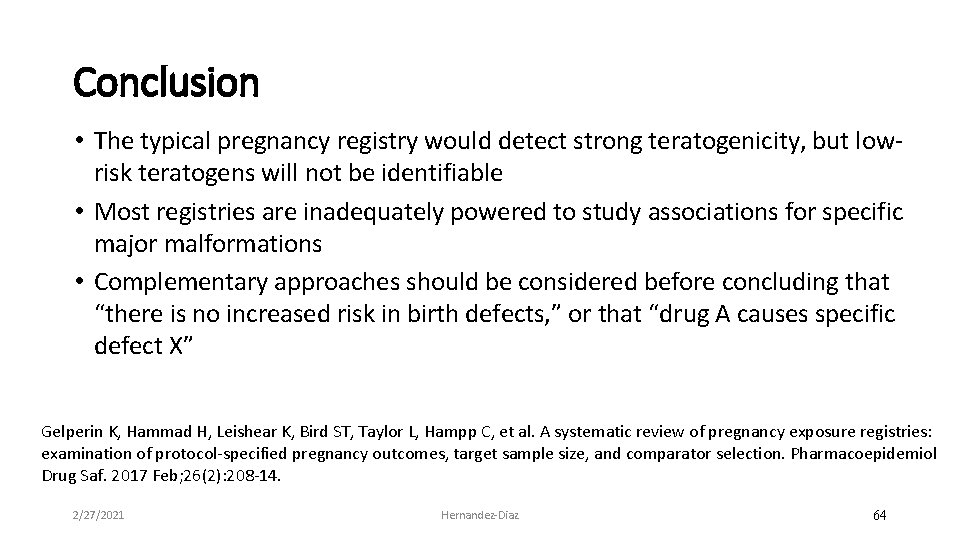
Conclusion • The typical pregnancy registry would detect strong teratogenicity, but low‐ risk teratogens will not be identifiable • Most registries are inadequately powered to study associations for specific major malformations • Complementary approaches should be considered before concluding that “there is no increased risk in birth defects, ” or that “drug A causes specific defect X” Gelperin K, Hammad H, Leishear K, Bird ST, Taylor L, Hampp C, et al. A systematic review of pregnancy exposure registries: examination of protocol‐specified pregnancy outcomes, target sample size, and comparator selection. Pharmacoepidemiol Drug Saf. 2017 Feb; 26(2): 208‐ 14. 2/27/2021 Hernandez‐Diaz 64
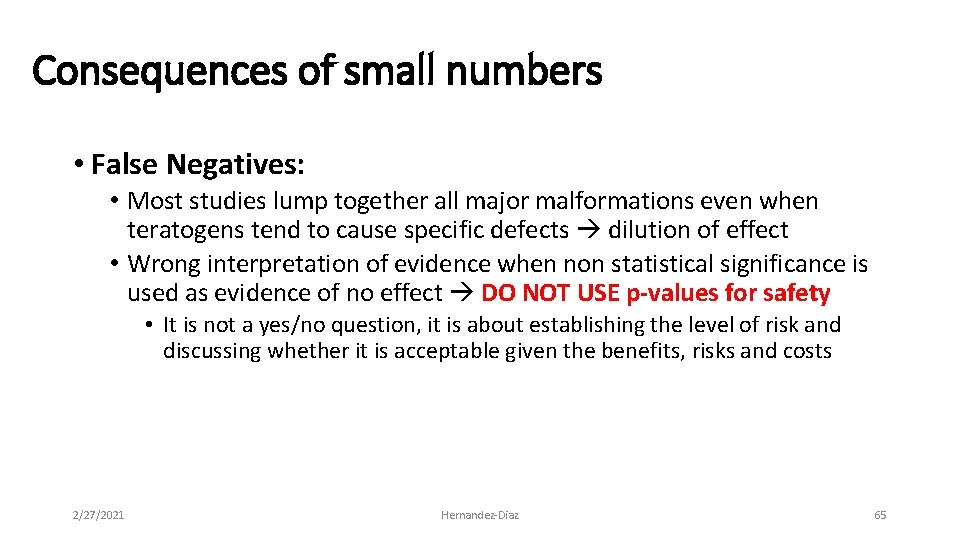
Consequences of small numbers • False Negatives: • Most studies lump together all major malformations even when teratogens tend to cause specific defects dilution of effect • Wrong interpretation of evidence when non statistical significance is used as evidence of no effect DO NOT USE p-values for safety • It is not a yes/no question, it is about establishing the level of risk and discussing whether it is acceptable given the benefits, risks and costs 2/27/2021 Hernandez‐Diaz 65
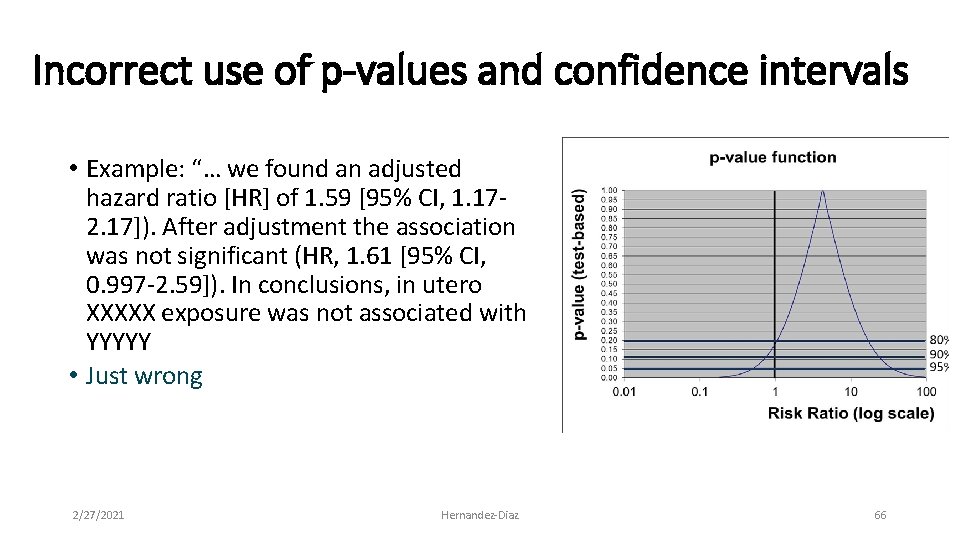
Incorrect use of p-values and confidence intervals • Example: “… we found an adjusted hazard ratio [HR] of 1. 59 [95% CI, 1. 17‐ 2. 17]). After adjustment the association was not significant (HR, 1. 61 [95% CI, 0. 997‐ 2. 59]). In conclusions, in utero XXXXX exposure was not associated with YYYYY • Just wrong 2/27/2021 Hernandez‐Diaz 66
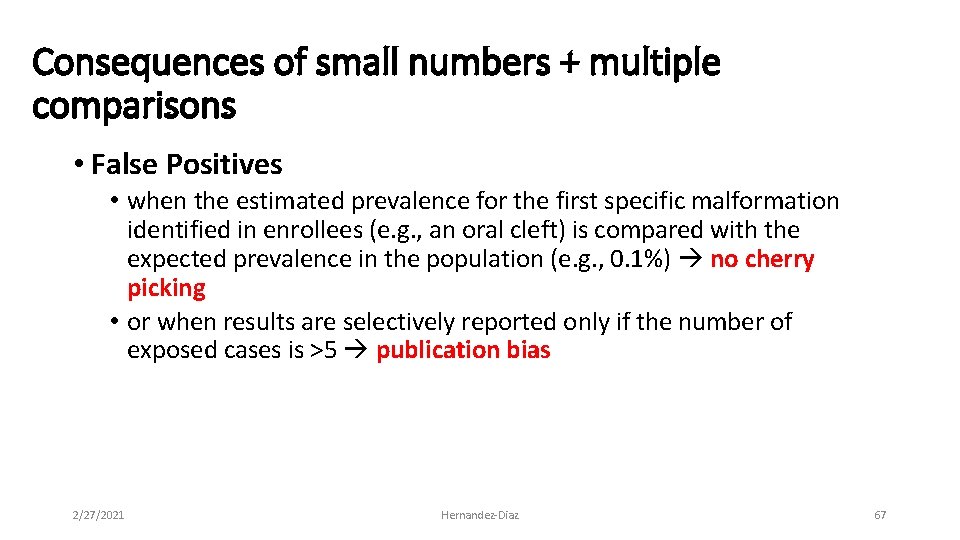
Consequences of small numbers + multiple comparisons • False Positives • when the estimated prevalence for the first specific malformation identified in enrollees (e. g. , an oral cleft) is compared with the expected prevalence in the population (e. g. , 0. 1%) no cherry picking • or when results are selectively reported only if the number of exposed cases is >5 publication bias 2/27/2021 Hernandez‐Diaz 67
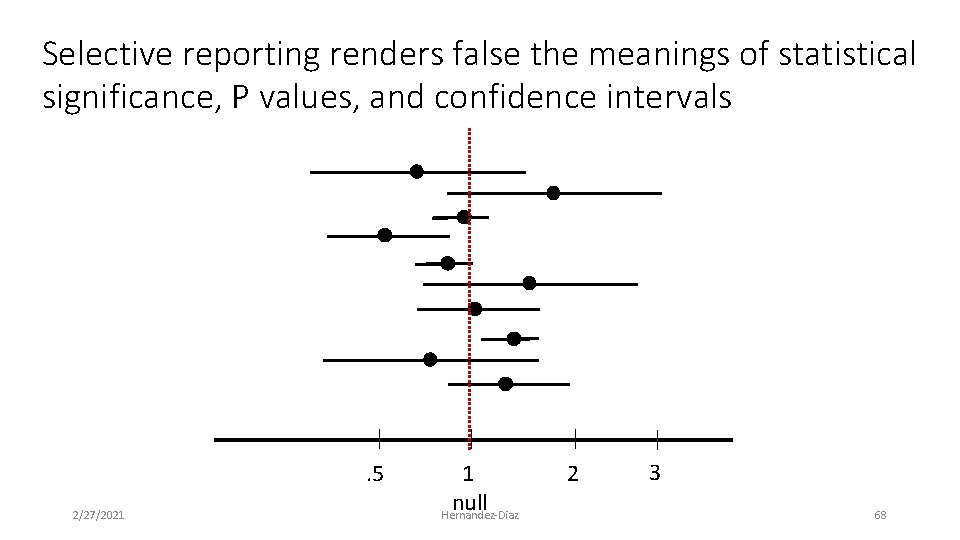
Selective reporting renders false the meanings of statistical significance, P values, and confidence intervals . 5 2/27/2021 1 null Hernandez‐Diaz 2 3 68
Solution • • • Careful Interpretation Replication Strategies to increase the power • Healthcare Databases • International collaborations
Outline • Introduction to Drug Safety in Pregnancy • Tools Overview • Challenges & Solutions • Example 2/27/2021 Hernandez‐Diaz 70
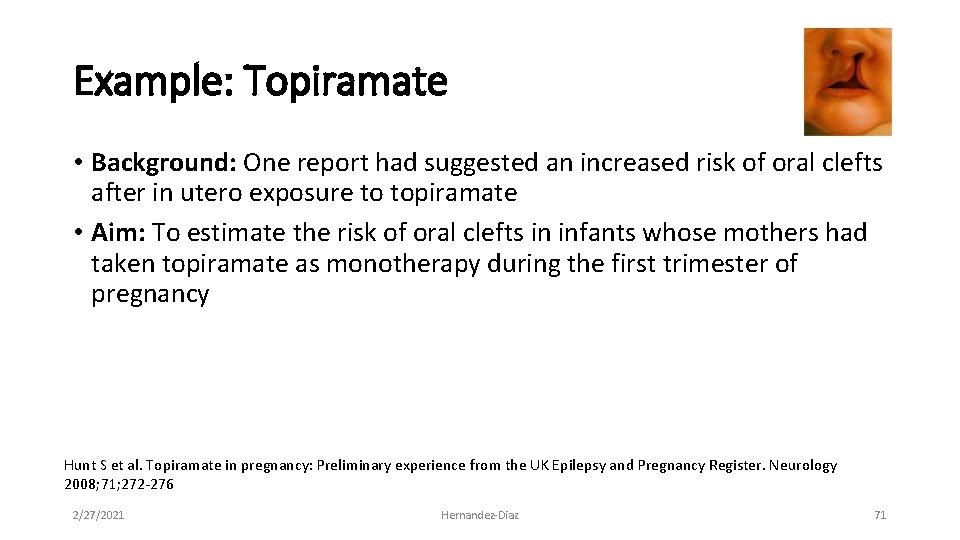
Example: Topiramate • Background: One report had suggested an increased risk of oral clefts after in utero exposure to topiramate • Aim: To estimate the risk of oral clefts in infants whose mothers had taken topiramate as monotherapy during the first trimester of pregnancy Hunt S et al. Topiramate in pregnancy: Preliminary experience from the UK Epilepsy and Pregnancy Register. Neurology 2008; 71; 272‐ 276 2/27/2021 Hernandez‐Diaz 71
2/27/2021 http: //www. fda. gov/Science. Research/Special. Topics/Womens. Health. Research/ucm 134848. htm Hernandez‐Diaz 72
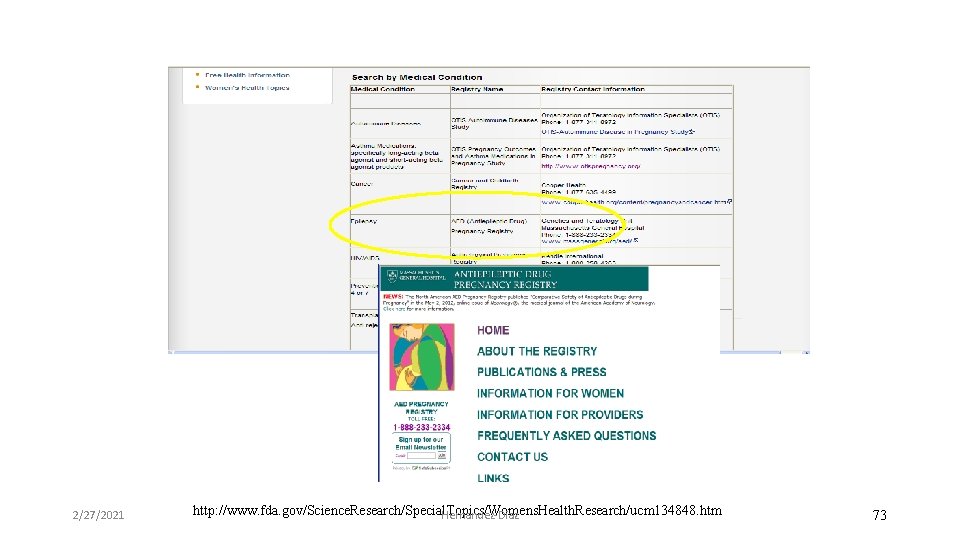
2/27/2021 http: //www. fda. gov/Science. Research/Special. Topics/Womens. Health. Research/ucm 134848. htm Hernandez‐Diaz 73
North American AED Pregnancy Registry • Established in 1997 at Mass. General Hospital, Boston • Enrolls pregnant women taking AEDs, and a reference group of friends and family members not taking AED • Women call • Consent is obtained verbally for interview. Written consent obtained for maternal and infant’s medical records 2/27/2021 Hernandez‐Diaz 74
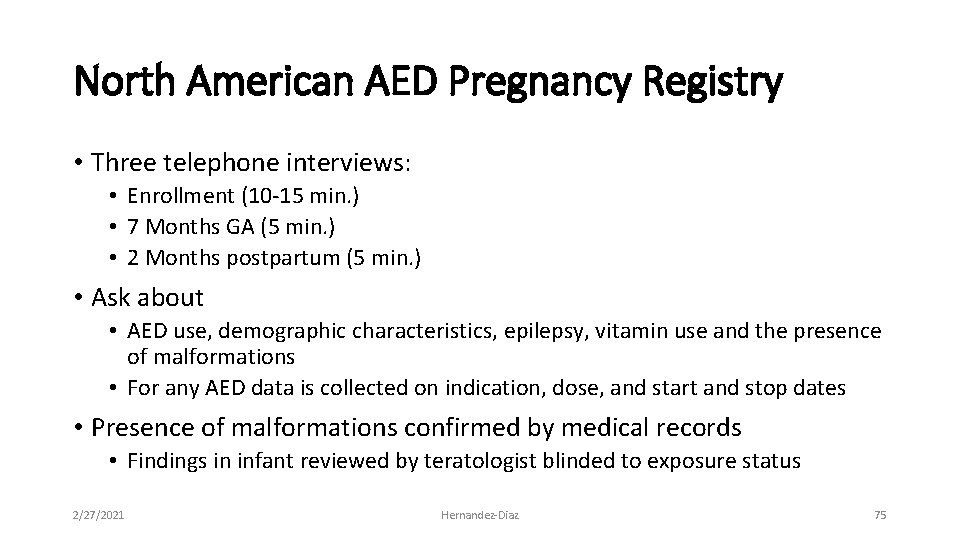
North American AED Pregnancy Registry • Three telephone interviews: • Enrollment (10‐ 15 min. ) • 7 Months GA (5 min. ) • 2 Months postpartum (5 min. ) • Ask about • AED use, demographic characteristics, epilepsy, vitamin use and the presence of malformations • For any AED data is collected on indication, dose, and start and stop dates • Presence of malformations confirmed by medical records • Findings in infant reviewed by teratologist blinded to exposure status 2/27/2021 Hernandez‐Diaz 75
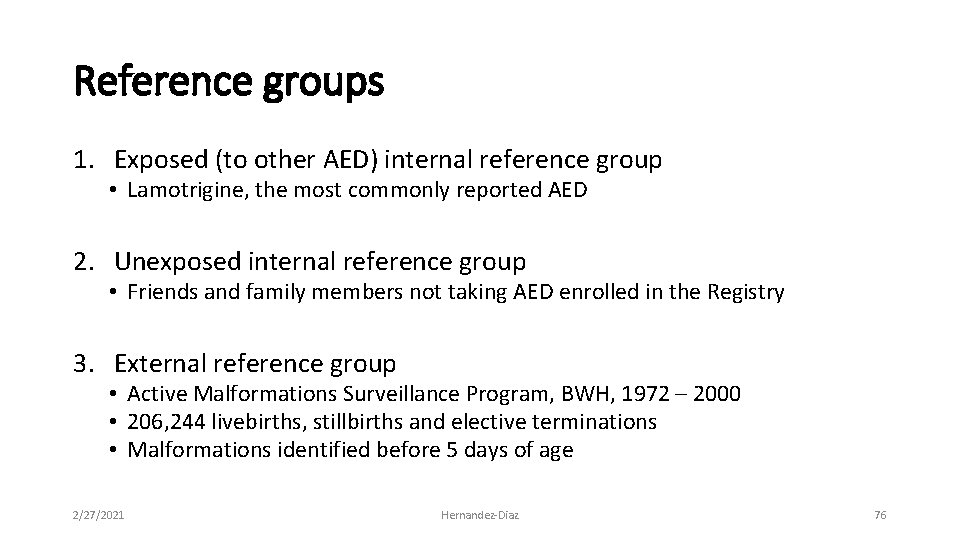
Reference groups 1. Exposed (to other AED) internal reference group • Lamotrigine, the most commonly reported AED 2. Unexposed internal reference group • Friends and family members not taking AED enrolled in the Registry 3. External reference group • Active Malformations Surveillance Program, BWH, 1972 – 2000 • 206, 244 livebirths, stillbirths and elective terminations • Malformations identified before 5 days of age 2/27/2021 Hernandez‐Diaz 76
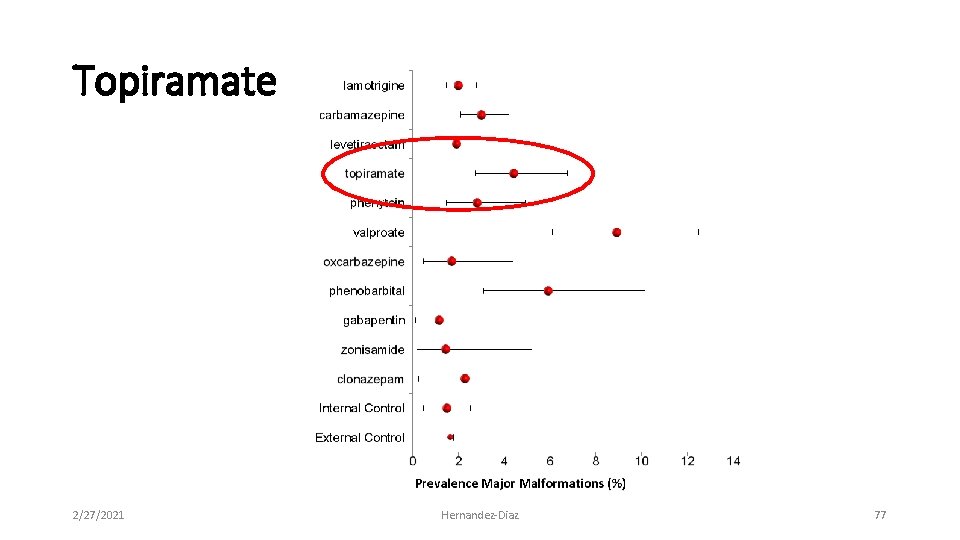
Topiramate 2/27/2021 Hernandez‐Diaz 77
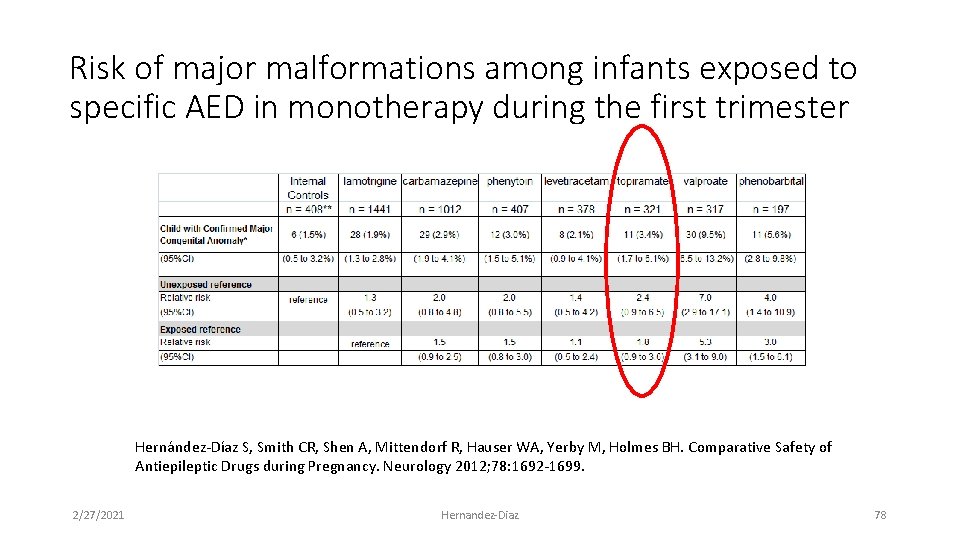
Risk of major malformations among infants exposed to specific AED in monotherapy during the first trimester Hernández‐Díaz S, Smith CR, Shen A, Mittendorf R, Hauser WA, Yerby M, Holmes BH. Comparative Safety of Antiepileptic Drugs during Pregnancy. Neurology 2012; 78: 1692‐ 1699. 2/27/2021 Hernandez‐Diaz 78
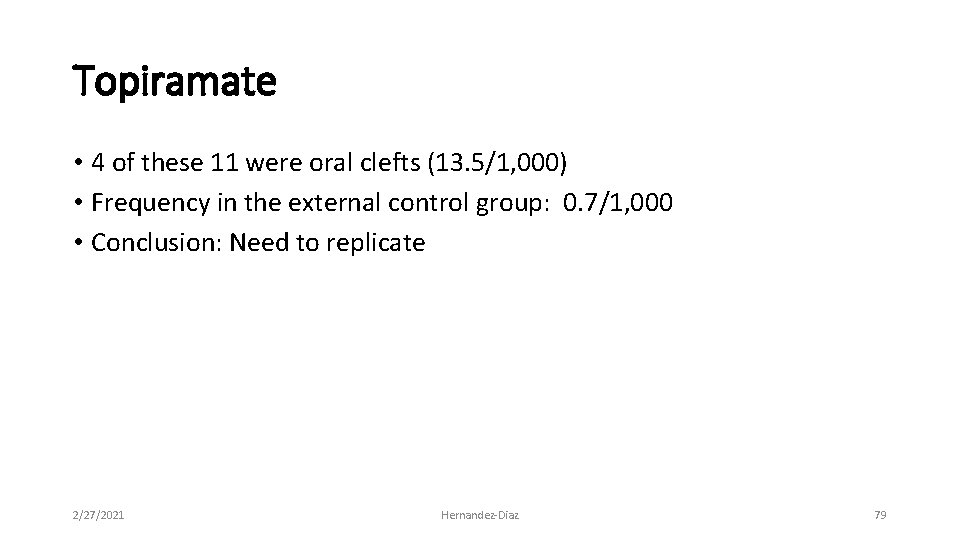
Topiramate • 4 of these 11 were oral clefts (13. 5/1, 000) • Frequency in the external control group: 0. 7/1, 000 • Conclusion: Need to replicate 2/27/2021 Hernandez‐Diaz 79
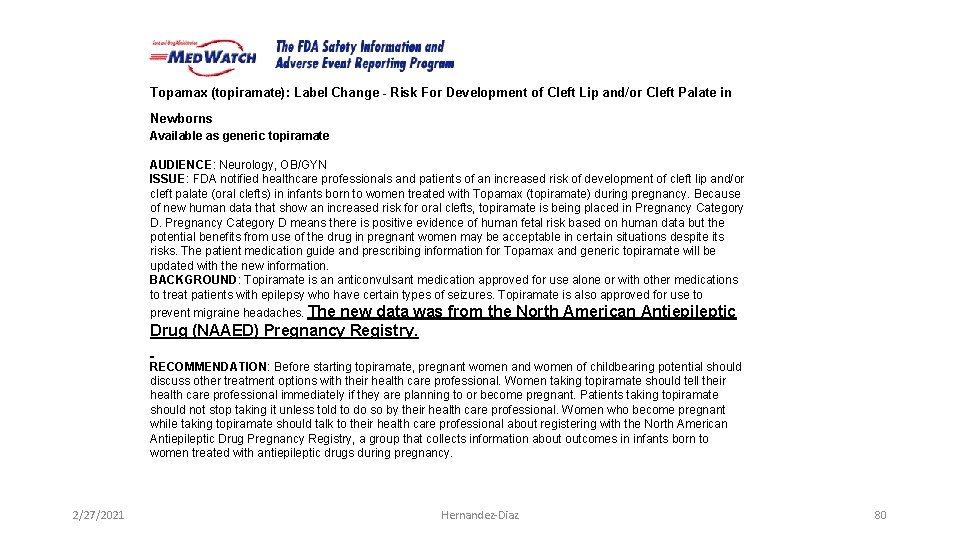
Topamax (topiramate): Label Change - Risk For Development of Cleft Lip and/or Cleft Palate in Newborns Available as generic topiramate AUDIENCE: Neurology, OB/GYN ISSUE: FDA notified healthcare professionals and patients of an increased risk of development of cleft lip and/or cleft palate (oral clefts) in infants born to women treated with Topamax (topiramate) during pregnancy. Because of new human data that show an increased risk for oral clefts, topiramate is being placed in Pregnancy Category D means there is positive evidence of human fetal risk based on human data but the potential benefits from use of the drug in pregnant women may be acceptable in certain situations despite its risks. The patient medication guide and prescribing information for Topamax and generic topiramate will be updated with the new information. BACKGROUND: Topiramate is an anticonvulsant medication approved for use alone or with other medications to treat patients with epilepsy who have certain types of seizures. Topiramate is also approved for use to prevent migraine headaches. The new data was from the North American Antiepileptic Drug (NAAED) Pregnancy Registry. RECOMMENDATION: Before starting topiramate, pregnant women and women of childbearing potential should discuss other treatment options with their health care professional. Women taking topiramate should tell their health care professional immediately if they are planning to or become pregnant. Patients taking topiramate should not stop taking it unless told to do so by their health care professional. Women who become pregnant while taking topiramate should talk to their health care professional about registering with the North American Antiepileptic Drug Pregnancy Registry, a group that collects information about outcomes in infants born to women treated with antiepileptic drugs during pregnancy. 2/27/2021 Hernandez‐Diaz 80
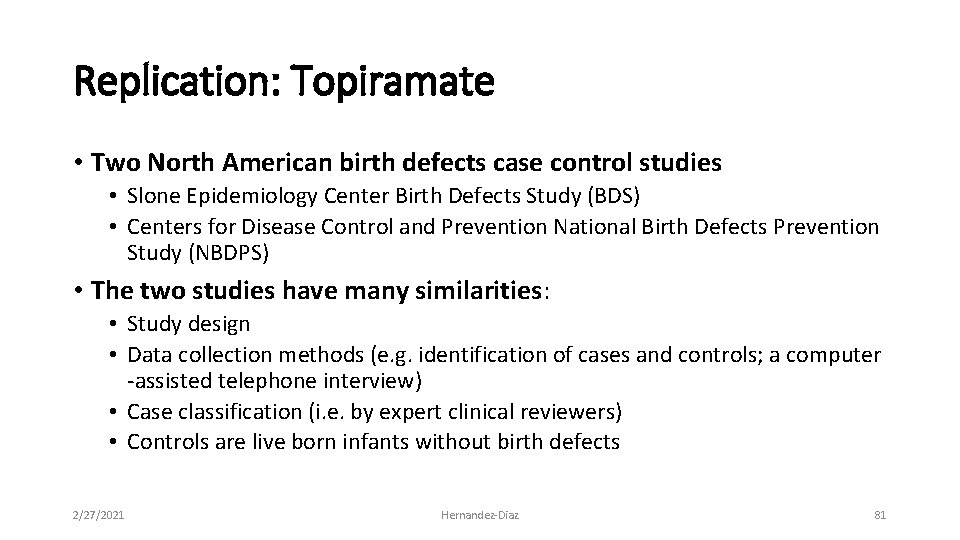
Replication: Topiramate • Two North American birth defects case control studies • Slone Epidemiology Center Birth Defects Study (BDS) • Centers for Disease Control and Prevention National Birth Defects Prevention Study (NBDPS) • The two studies have many similarities: • Study design • Data collection methods (e. g. identification of cases and controls; a computer ‐assisted telephone interview) • Case classification (i. e. by expert clinical reviewers) • Controls are live born infants without birth defects 2/27/2021 Hernandez‐Diaz 81
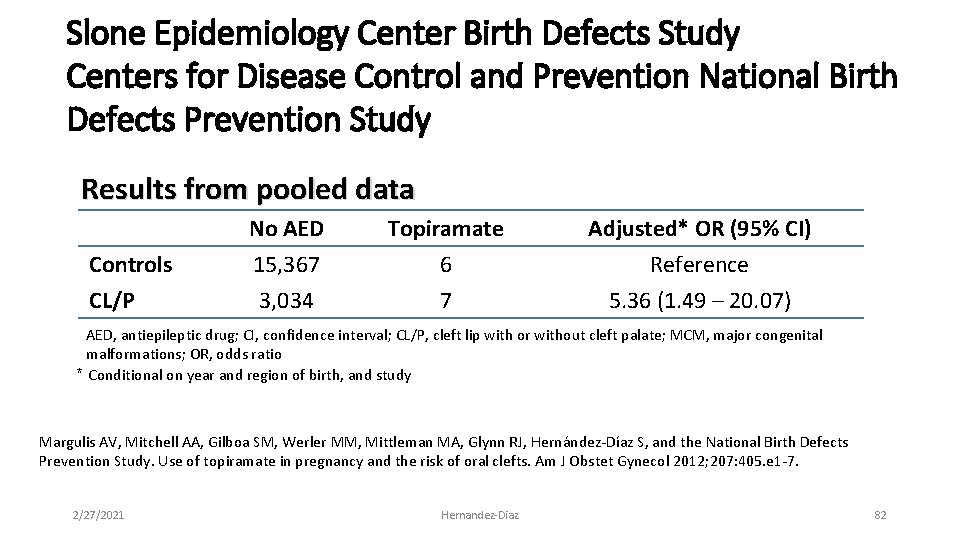
Slone Epidemiology Center Birth Defects Study Centers for Disease Control and Prevention National Birth Defects Prevention Study Results from pooled data Controls CL/P No AED 15, 367 3, 034 Topiramate 6 7 Adjusted* OR (95% CI) Reference 5. 36 (1. 49 – 20. 07) AED, antiepileptic drug; CI, confidence interval; CL/P, cleft lip with or without cleft palate; MCM, major congenital malformations; OR, odds ratio * Conditional on year and region of birth, and study Margulis AV, Mitchell AA, Gilboa SM, Werler MM, Mittleman MA, Glynn RJ, Hernández‐Díaz S, and the National Birth Defects Prevention Study. Use of topiramate in pregnancy and the risk of oral clefts. Am J Obstet Gynecol 2012; 207: 405. e 1‐ 7. 2/27/2021 Hernandez‐Diaz 82
Medicaid Analytic e. Xtract (MAX) • Joint state and federal health insurance program for low‐income families • Covers ~50% of births in the U. S • Medicaid enrollment & health care utilization data • Demographics, insurance enrollment information • Diagnostic and therapeutic procedures (ICD‐ 9/10; CPT) • Diagnoses (ICD‐ 9/10) • Dispensed outpatient prescription medications (drug, dose, days supply) • Cohort • Woman‐infant linkage • 1. 3 M pregnancies ending in live birth in which women were enrolled in Medicaid from 3 months before the LMP through 1 month post delivery, and infants were enrolled for ≥ 3 months • Continuously updated as new information released by CMS: 2000‐ 2014, ~1. 9 M linked pregnancies Palmsten K, Huybrechts KF, Mogun H, Kowal MK, Williams PL, Michels KB, Setoguchi S, Hernández‐Díaz S. Harnessing the 2/27/2021 Hernandez‐Diaz 83 Medicaid Analytic e. Xtract (MAX) to Evaluate Medications in Pregnancy: Design Considerations. PLo. S One 2013; 8(6): e 67405
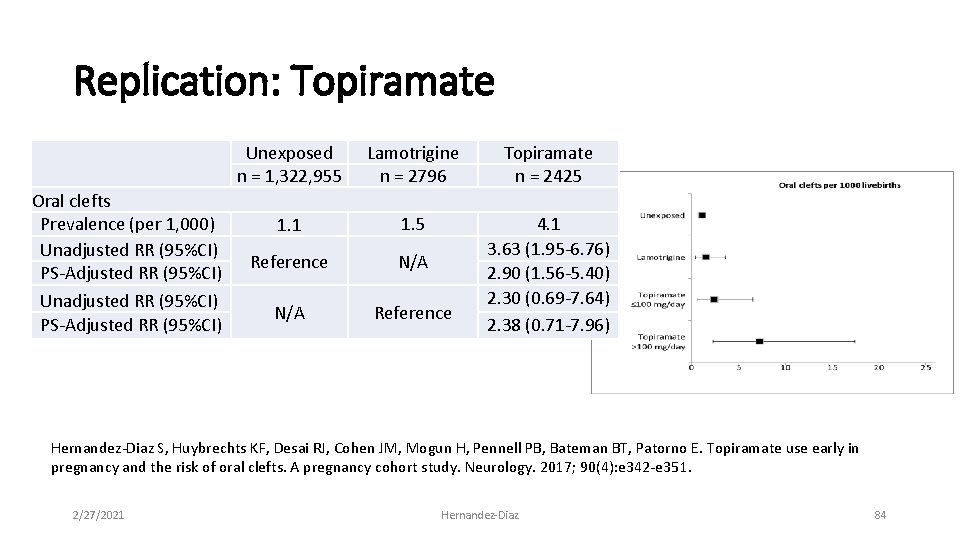
Replication: Topiramate Oral clefts Prevalence (per 1, 000) Unadjusted RR (95%CI) PS‐Adjusted RR (95%CI) Unexposed n = 1, 322, 955 Lamotrigine n = 2796 Topiramate n = 2425 1. 1 1. 5 Reference N/A Reference 4. 1 3. 63 (1. 95‐ 6. 76) 2. 90 (1. 56‐ 5. 40) 2. 30 (0. 69‐ 7. 64) 2. 38 (0. 71‐ 7. 96) Hernandez‐Diaz S, Huybrechts KF, Desai RJ, Cohen JM, Mogun H, Pennell PB, Bateman BT, Patorno E. Topiramate use early in pregnancy and the risk of oral clefts. A pregnancy cohort study. Neurology. 2017; 90(4): e 342‐e 351. 2/27/2021 Hernandez‐Diaz 84
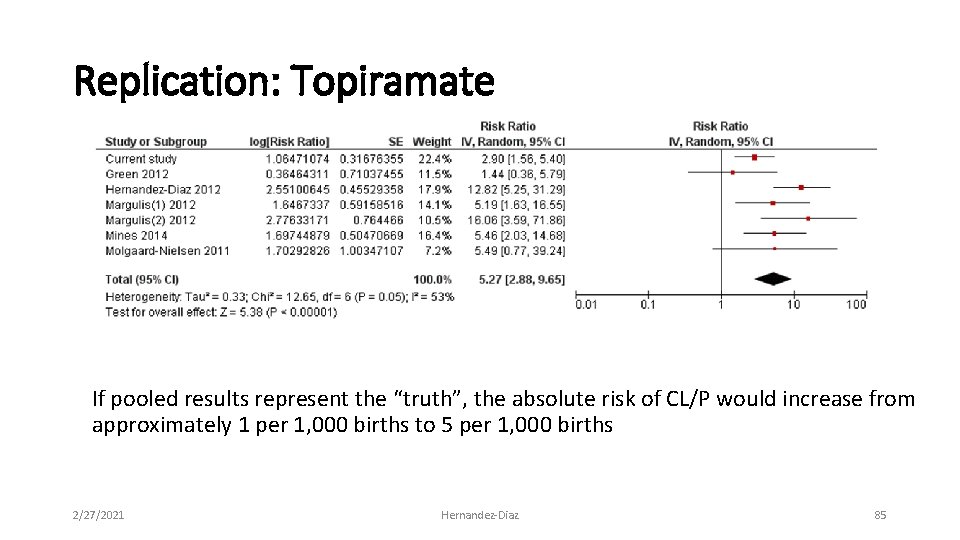
Replication: Topiramate If pooled results represent the “truth”, the absolute risk of CL/P would increase from approximately 1 per 1, 000 births to 5 per 1, 000 births 2/27/2021 Hernandez‐Diaz 85
Outline • Introduction to Drug Safety in Pregnancy • Tools Overview • Challenges & Solutions • Example • Future 2/27/2021 Hernandez‐Diaz 86
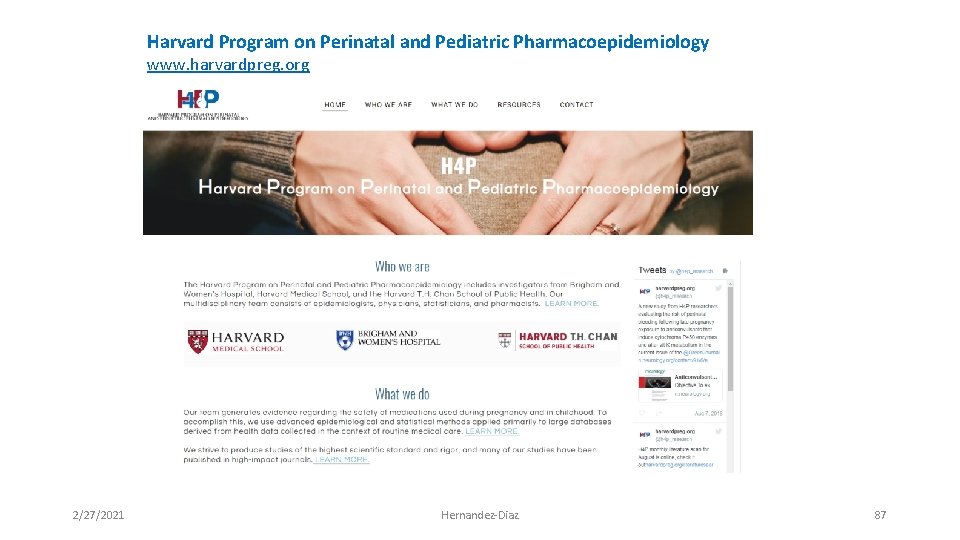
Harvard Program on Perinatal and Pediatric Pharmacoepidemiology www. harvardpreg. org 2/27/2021 Hernandez‐Diaz 87
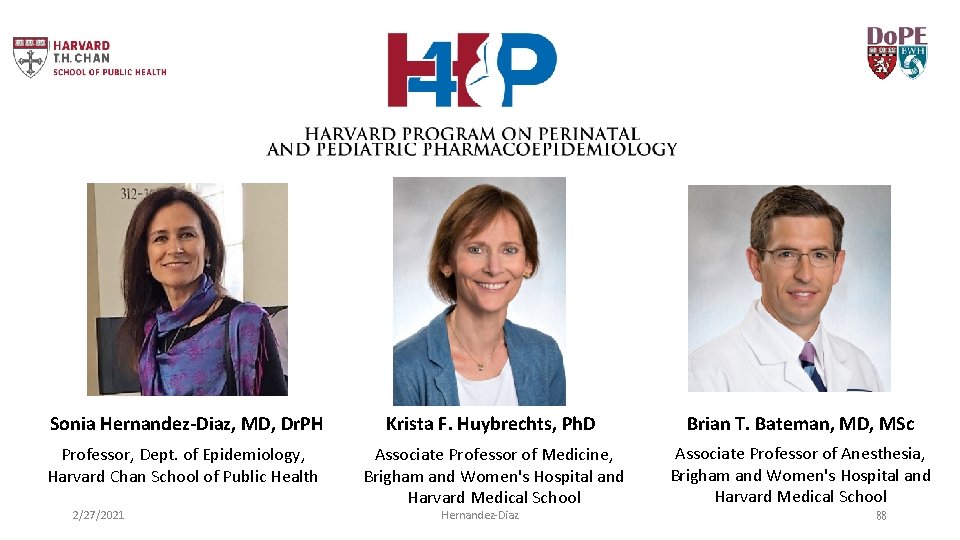
Sonia Hernandez-Diaz, MD, Dr. PH Krista F. Huybrechts, Ph. D Brian T. Bateman, MD, MSc Professor, Dept. of Epidemiology, Harvard Chan School of Public Health Associate Professor of Medicine, Brigham and Women's Hospital and Harvard Medical School Associate Professor of Anesthesia, Brigham and Women's Hospital and Harvard Medical School 2/27/2021 Hernandez‐Diaz 88
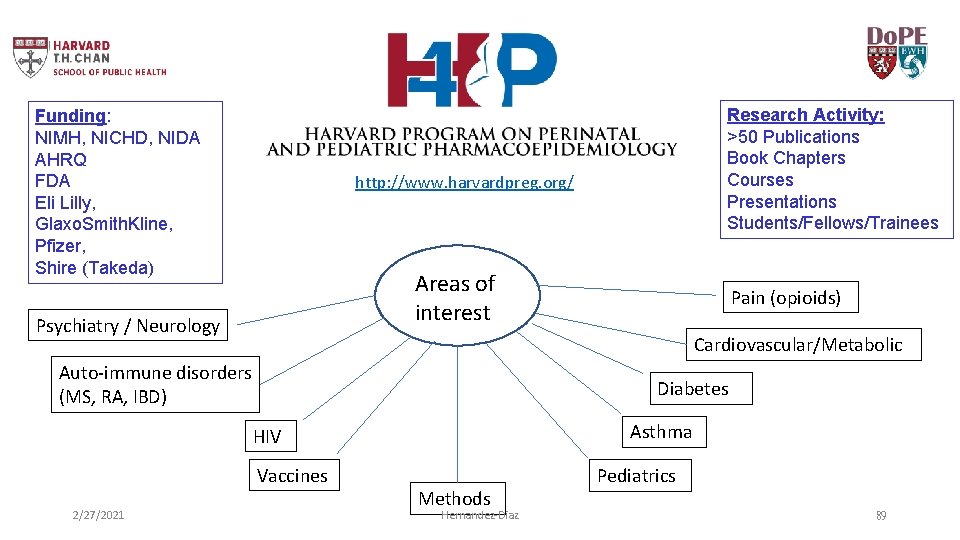
Funding: NIMH, NICHD, NIDA AHRQ FDA Eli Lilly, Glaxo. Smith. Kline, Pfizer, Shire (Takeda) http: //www. harvardpreg. org/ Areas of interest Psychiatry / Neurology Pain (opioids) Cardiovascular/Metabolic Auto‐immune disorders (MS, RA, IBD) Diabetes Asthma HIV Vaccines 2/27/2021 Research Activity: >50 Publications Book Chapters Courses Presentations Students/Fellows/Trainees Methods Hernandez‐Diaz Pediatrics 89
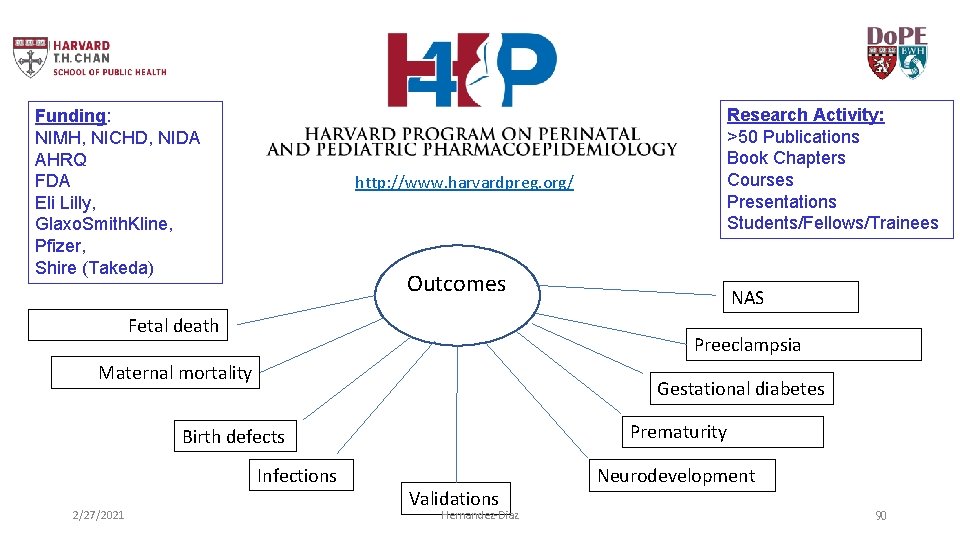
Funding: NIMH, NICHD, NIDA AHRQ FDA Eli Lilly, Glaxo. Smith. Kline, Pfizer, Shire (Takeda) http: //www. harvardpreg. org/ Outcomes Fetal death NAS Preeclampsia Maternal mortality Gestational diabetes Prematurity Birth defects Infections 2/27/2021 Research Activity: >50 Publications Book Chapters Courses Presentations Students/Fellows/Trainees Validations Hernandez‐Diaz Neurodevelopment 90
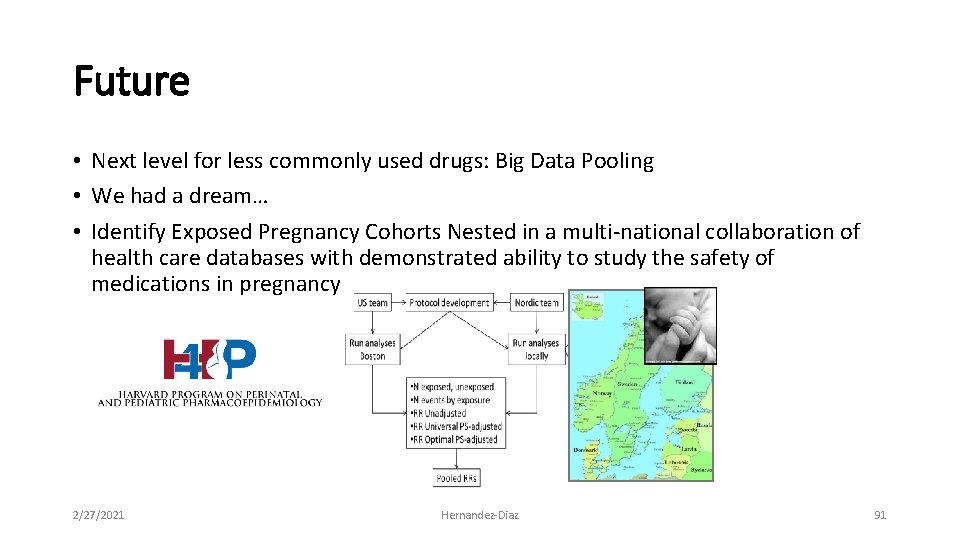
Future • Next level for less commonly used drugs: Big Data Pooling • We had a dream… • Identify Exposed Pregnancy Cohorts Nested in a multi‐national collaboration of health care databases with demonstrated ability to study the safety of medications in pregnancy 2/27/2021 Hernandez‐Diaz 91
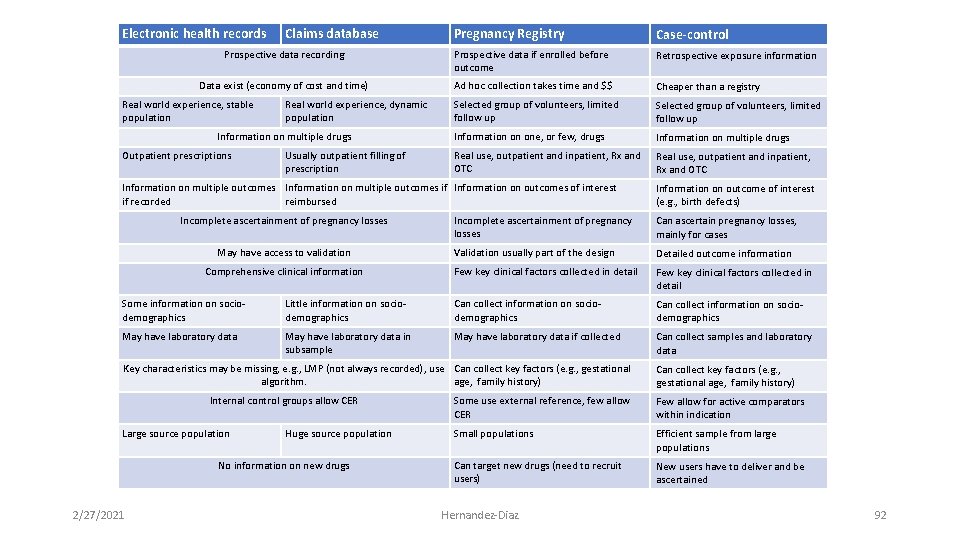
Electronic health records Pregnancy Registry Case-control Prospective data recording Prospective data if enrolled before outcome Retrospective exposure information Data exist (economy of cost and time) Ad hoc collection takes time and $$ Cheaper than a registry Selected group of volunteers, limited follow up Information on one, or few, drugs Information on multiple drugs Real use, outpatient and inpatient, Rx and OTC Real use, outpatient and inpatient, Rx and OTC Real world experience, stable population Claims database Real world experience, dynamic population Information on multiple drugs Outpatient prescriptions Usually outpatient filling of prescription Information on multiple outcomes if Information on outcomes of interest if recorded reimbursed Incomplete ascertainment of pregnancy losses May have access to validation Comprehensive clinical information Information on outcome of interest (e. g. , birth defects) Incomplete ascertainment of pregnancy losses Can ascertain pregnancy losses, mainly for cases Validation usually part of the design Detailed outcome information Few key clinical factors collected in detail Some information on socio‐ demographics Little information on socio‐ demographics Can collect information on socio‐ demographics May have laboratory data in subsample May have laboratory data if collected Can collect samples and laboratory data Key characteristics may be missing, e. g. , LMP (not always recorded), use Can collect key factors (e. g. , gestational algorithm. age, family history) Internal control groups allow CER Large source population Huge source population No information on new drugs 2/27/2021 Can collect key factors (e. g. , gestational age, family history) Some use external reference, few allow CER Few allow for active comparators within indication Small populations Efficient sample from large populations Can target new drugs (need to recruit users) New users have to deliver and be ascertained Hernandez‐Diaz 92
Registries Advantages • Prospective drug exposure information. No recall bias. • Concentrating on selected drugs can increase efficiency, particularly to study uncommon drugs in relation to common events. • Longitudinal. Can estimate risk and risk differences. • Assess real use through maternal interview. • Can study multiple exposures and multiple outcomes 2/27/2021 Hernandez‐Diaz 93
Registries Limitations • • Non‐representative (self‐referral bias, volunteers). Often lack control group (non-comparable external comparison groups). Inefficient (cost and time). Limited power. Short follow up (cannot assess late development). Left truncation. Enrollment late in pregnancy Right truncation. Losses to follow‐up (selective under‐ascertainment) 2/27/2021 Hernandez‐Diaz 94
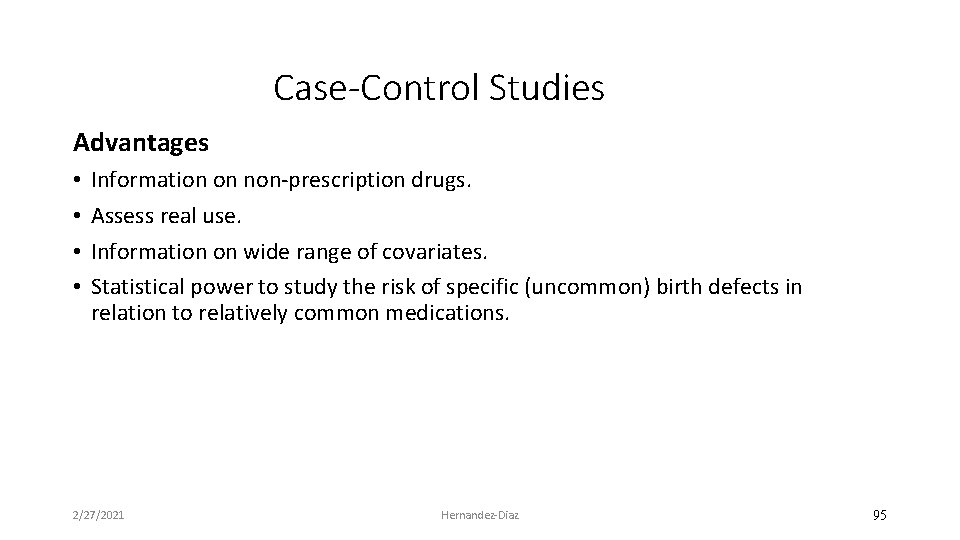
Case-Control Studies Advantages • • Information on non‐prescription drugs. Assess real use. Information on wide range of covariates. Statistical power to study the risk of specific (uncommon) birth defects in relation to relatively common medications. 2/27/2021 Hernandez‐Diaz 95
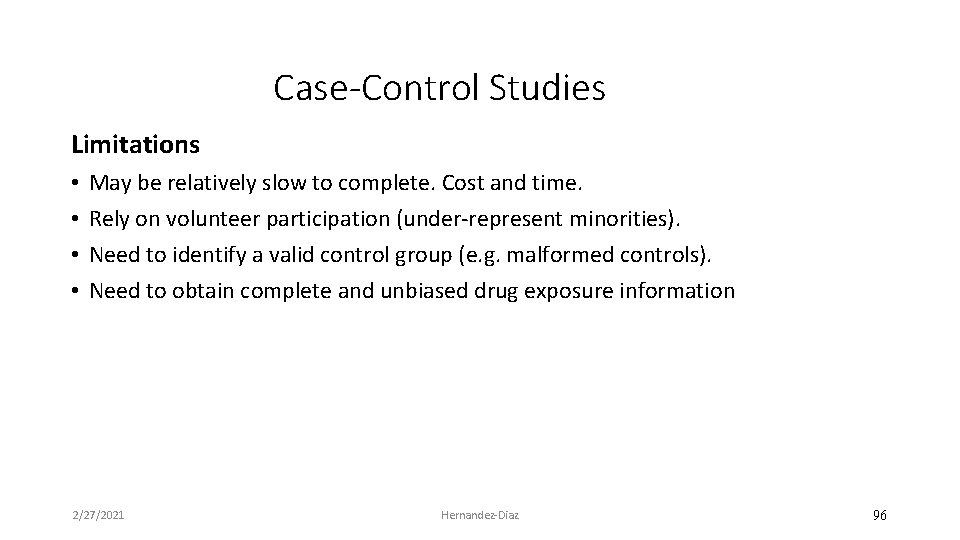
Case-Control Studies Limitations • • May be relatively slow to complete. Cost and time. Rely on volunteer participation (under‐represent minorities). Need to identify a valid control group (e. g. malformed controls). Need to obtain complete and unbiased drug exposure information 2/27/2021 Hernandez‐Diaz 96
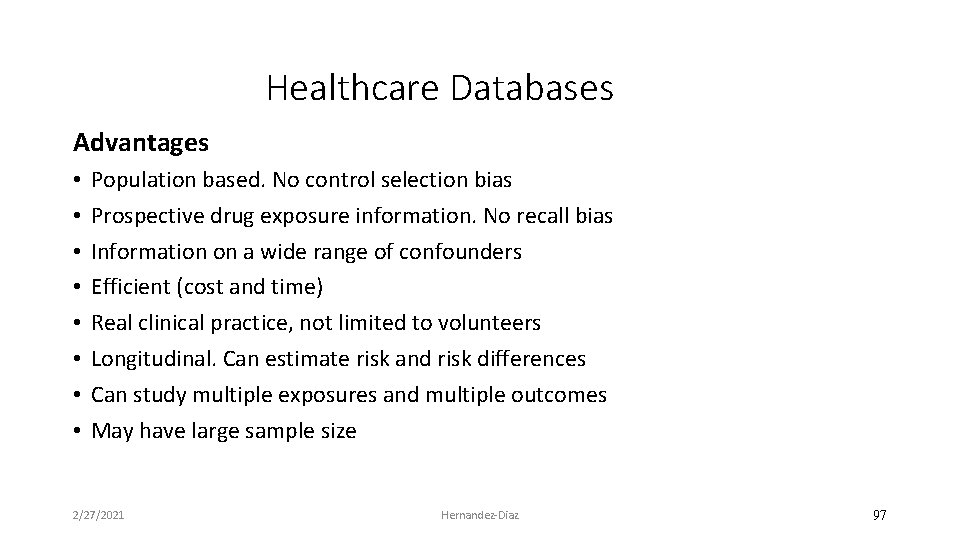
Healthcare Databases Advantages • • Population based. No control selection bias Prospective drug exposure information. No recall bias Information on a wide range of confounders Efficient (cost and time) Real clinical practice, not limited to volunteers Longitudinal. Can estimate risk and risk differences Can study multiple exposures and multiple outcomes May have large sample size 2/27/2021 Hernandez‐Diaz 97
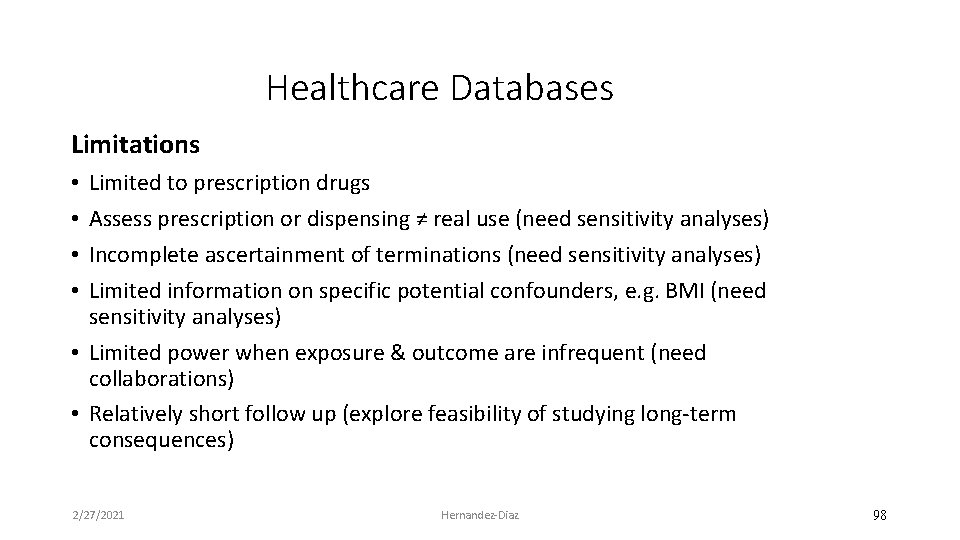
Healthcare Databases Limitations Limited to prescription drugs Assess prescription or dispensing ≠ real use (need sensitivity analyses) Incomplete ascertainment of terminations (need sensitivity analyses) Limited information on specific potential confounders, e. g. BMI (need sensitivity analyses) • Limited power when exposure & outcome are infrequent (need collaborations) • Relatively short follow up (explore feasibility of studying long‐term consequences) • • 2/27/2021 Hernandez‐Diaz 98