
Planning A Radio Show Sonia Randhawa Basic facts
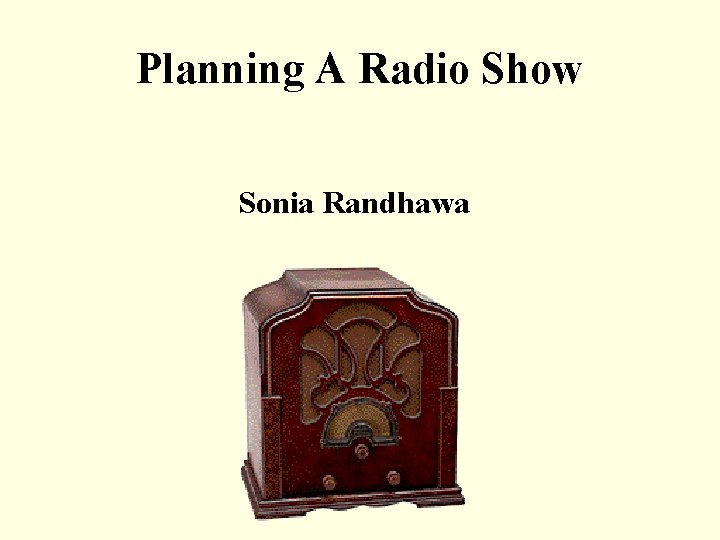
Planning A Radio Show Sonia Randhawa
Basic facts • Know your time limit • Remember that you need to keep the programme aurally interesting – intersperse music and dialogue. • Think about how people listen to radio (what time of day your programme will be broadcast) • Who is your audience?
So, what does the audience want? What do the listeners want? How do you know? – Surveys – Interviews – Focus groups
So, what do the community want? What do the community want? How do you know? – Surveys – Interviews – Focus groups THIS IS ALL PART OF PLANNING YOUR PROGRAMME

Okay, then what? Types of programme: • News • Drama • Feature • Talk show • Music • And on & on….
A Magazine Show What are the resources you need? • People • Studio • Editing suite • TIME
A Magazine Show How is the show structured? What are the important components?
A Magazine Show How is the show structured? What are the important components? • Music • Feedback • Same time, same place…
A Magazine Show Why will your show fail? • Boring… • Difficult to understand • Nasty music • Nasty announcer • Uninteresting topic • Something else is better…
Things to remember… • • Radio is personal Radio is SOUND Radio is warm, emotional Radio entertains Can cross seas, mountains Radio’s instant Radio reaches people who can’t read Radio is ‘hands-free’
Conclusion Planning a show, you need to be aware of your CONSTITUENCY, who the show is for… You need a format for the show You need the resources…
Field Interviews Sonia Randhawa
Contents • Where are you going to have an interview? • Planning an interview • Conducting a field interview
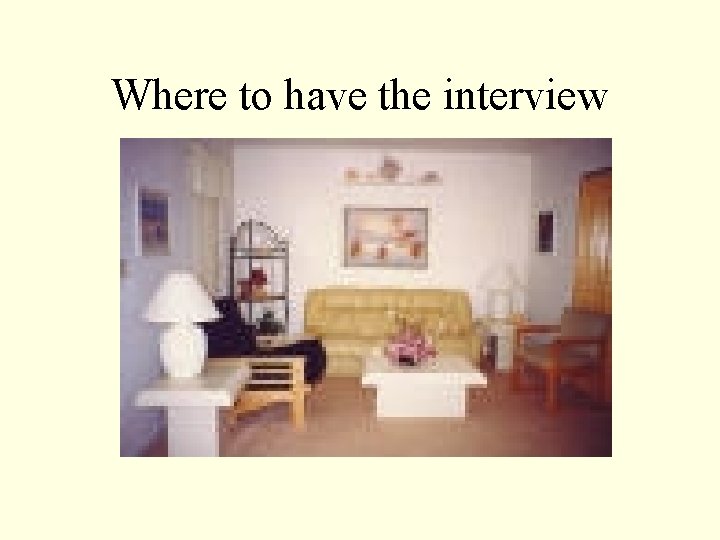
Where to have the interview
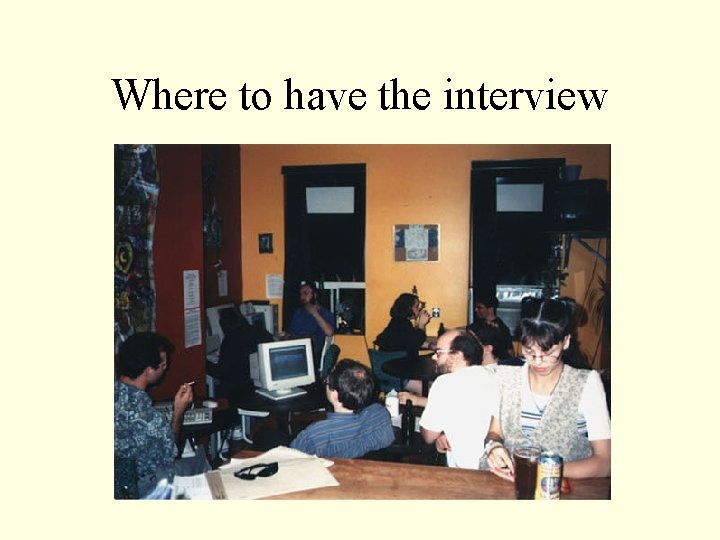
Where to have the interview
Where to have the interview • Look around you for distractions & for problems • Record some ‘atmos’ • Check the atmos with your HEADPHONES on…
Interviewing in the field • What do you need?
Interviewing in the field • What do you need? – Recorder – Wires (do they work? ) – Microphone (is it appropriate? ) – Spare batteries – Spare tape/ MDs – Headphones
Interviewing in the field • Keep control! - Don’t give away the mic - Mic handling
Power & You • Think about the power relations between you and the interviewee • How does this change if you’re addressing a Cabinet Minister? • Or a victim of domestic violence? • How can YOU make a difference?
Care of your equipment Hold your mics properly Don’t put any strain on flimsy sockets • Have SOMETHING that can hold them steady (if possible) • Ideally, don’t pull the jacks in and out constantly. BUT if they are not being held steady, DO NOT travel with your cables connected. • Clean your tape heads regularly. And read your manuals, so that if something goes wrong, you might be able to fix it.
News-Writing for Radio Sonia Randhawa
Introduction 1. Recap: Writing for print 2. Radio – Basics of what radio is 3. How to do a re-write 4. Writing in a script
Recap: Writing for print 1. Answering the Five Ws and One H: Who, what, where, when, why and how 2. The inverted pyramid Your lead is the most important sentence in your story. You have to forget BOTH of these when writing for radio.
Recap: Writing for print Other bits & pieces: • Age • Numbers • Titles
Radio: What is it? What is radio? Basically radio is sound. We listen to radio – there are NO visual clues, there are NO reruns.
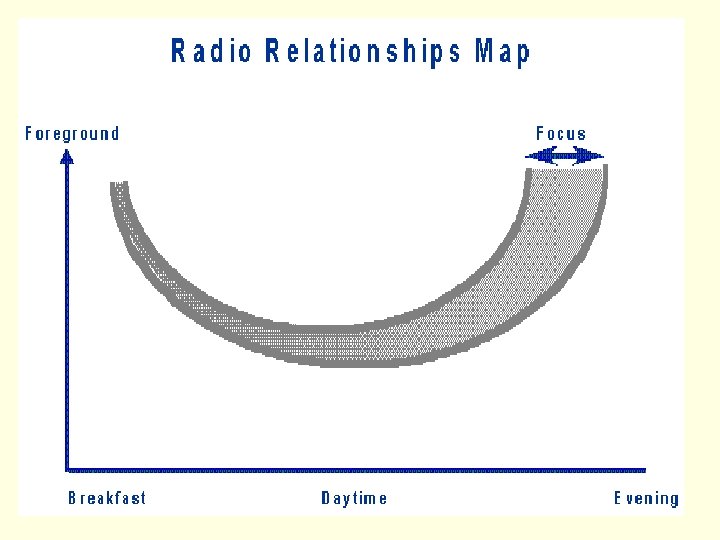
Radio: What is it? How do people listen to radio? What do people want from radio? This varies, but there are two basic needs – functional and emotional needs.
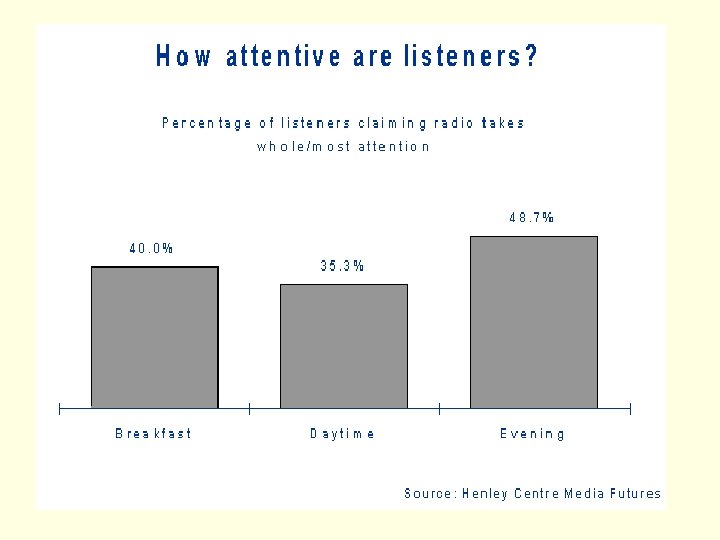
Radio: What is it? Are people really listening?
Radio: What is it? Principles for radio news: • Don’t lecture – you’re talking to an equal • Be clear – you don’t get to repeat, the listener can’t re-read what you’ve said • DON’T be sloppy or lax
Radio: What is it? Rules for radio news: • You can’t afford to lose your listener’s attention • Your listener isn’t listening • You have to be up-to-date • You may not give all the 5 W’s and the H • You need a different style.
Doing a re-write Step One: Understand the story If the information you’re given is not sufficient, find more information!
Doing a re-write Problems with re-writes: 1. The source didn’t write for radio. 2. Information may be biased/ unreliable. 3. Inappropriate style. To overcome these, you need to not just cut paras, and hope for the best!
Doing a re-write Step One: Understand the story Step Two: Tear it apart! Step Three: Keep your sentences Subject-Verb -Object. Step Four: KISS Step Five: Figures Step Six: Read it out loud
Doing a re-write Step Six: Read it out loud This is THE most important part. Can you read it and does it sound natural? Is this how you would talk to a friend? Is each word a word you would normally use?
Doing a re-write Things NOT to do: • Useless bridging words e. g. Meanwhile <grr> • Which & that • The time is NOW • Ages When was the last time you heard someone say, “The teacher, 43, was murdered. ” Unlikely. “The 43 -year-old teacher was murdered” sounds far more natural.
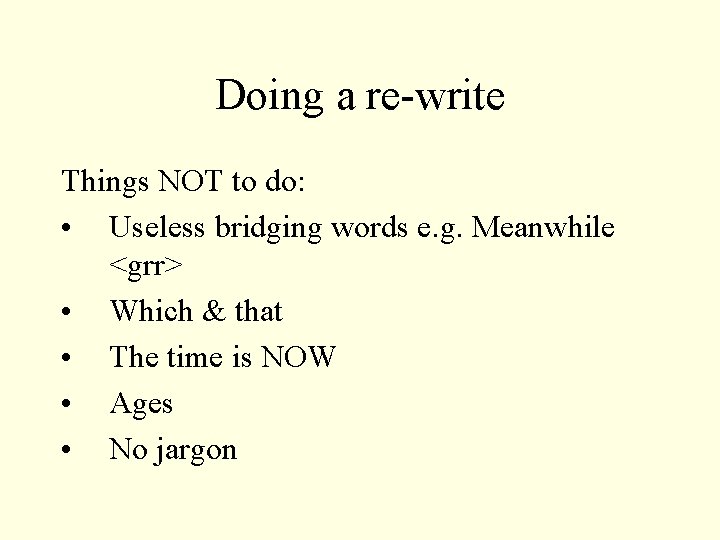
Doing a re-write Things NOT to do: • Useless bridging words e. g. Meanwhile <grr> • Which & that • The time is NOW • Ages • No jargon
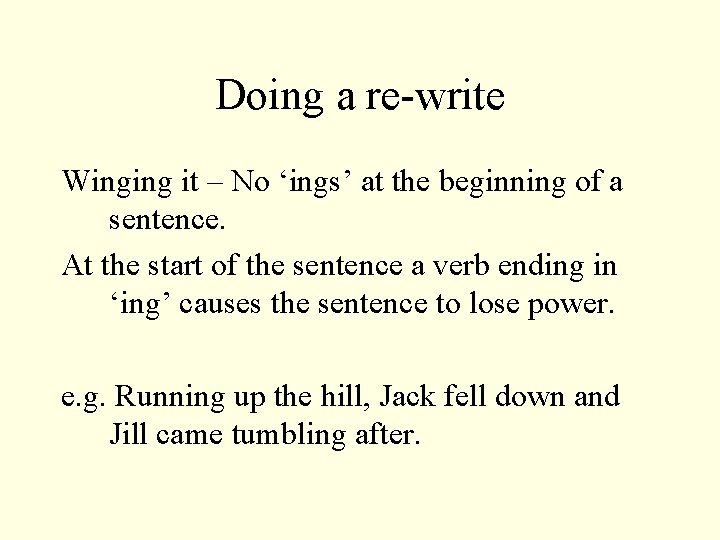
Doing a re-write Winging it – No ‘ings’ at the beginning of a sentence. At the start of the sentence a verb ending in ‘ing’ causes the sentence to lose power. e. g. Running up the hill, Jack fell down and Jill came tumbling after.
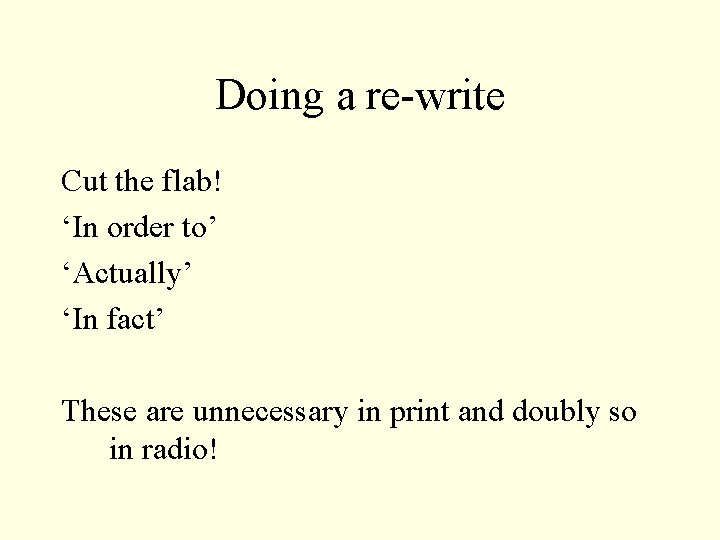
Doing a re-write Cut the flab! ‘In order to’ ‘Actually’ ‘In fact’ These are unnecessary in print and doubly so in radio!
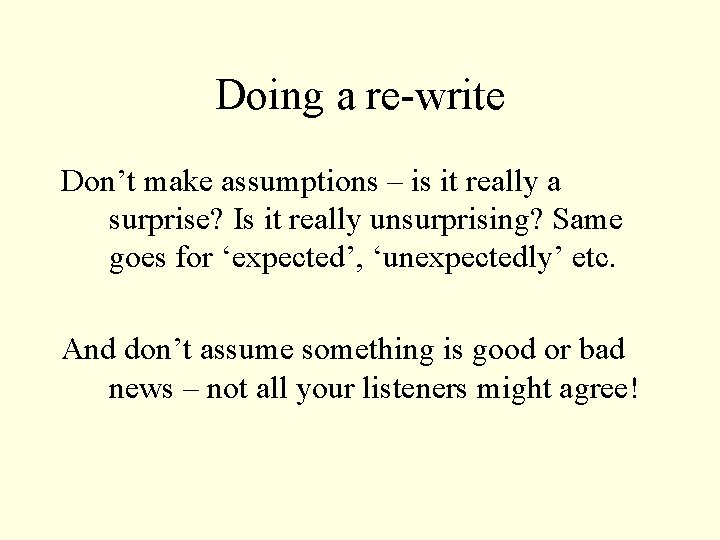
Doing a re-write Don’t make assumptions – is it really a surprise? Is it really unsurprising? Same goes for ‘expected’, ‘unexpectedly’ etc. And don’t assume something is good or bad news – not all your listeners might agree!
Doing a re-write Signs of something wrong: The words ‘continuing’, ‘once more’, ‘again’. Why is this story news if it has happened before? e. g The sun continues to rise.
Doing a re-write The weakness of be-ing. If there is an ‘is’ or an ‘are’ in your first sentence, you can probably make it stronger.
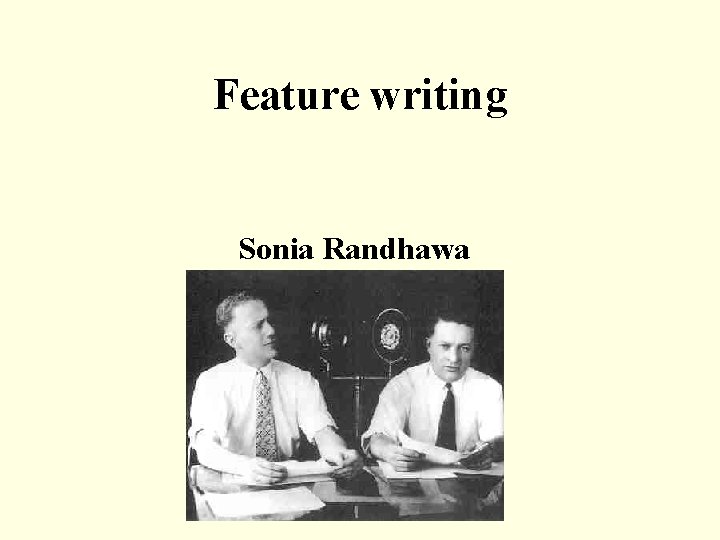
Feature writing Sonia Randhawa
Introduction • Sound conveys meaning. • Sound stimulates our visual imagination: it creates visual images in our minds. • Radio Theater is telling a story by the careful mixing of sounds - both verbal and non-verbal. As one child said, "I like radio because the pictures are better. "
Introduction (cont. ) • Radio is a "hot" medium - that is, the listener's imagination and experience are involved in giving the story depth, substance and meaning. • Sound effects describe the circumstances of a dramatic audio situation. They can be used for such things as setting and place, conveying action, solving certain narrative problems, and evoking characterizations.
Planning the script • What do you want to create? • Whose point of view (POV) are you using – the main character? An omniscient narrator?
Planning the Script • What do you want to create? – DIALOGUE is the most important tool – ACTUALITIES/ Music are the next most important – SFX are the LEAST important tool • Whose point of view (POV) are you using – the main character? An omniscient narrator?
Planning the Script • What do you want to create? – DIALOGUE is the most important tool Note that dialogue can tell the audience the details that are given by pictures on television. e. g. “I’m late for a lunch date” tells you the time of day (no need for lighting!)
Planning the SFX are the LEAST important tool, BUT: – They can RUIN an otherwise excellent script – They can make an otherwise dull script passable – They can make a good script GREAT
Walla • These are crowd noises • How do you create them? • What problems might you have?
Where to find SFX Find digital SFX at: www. flashkit. com www. soundfx. com www. wavcentral. com www. ljudo. com
Audacity Sonia Randhawa

Contents
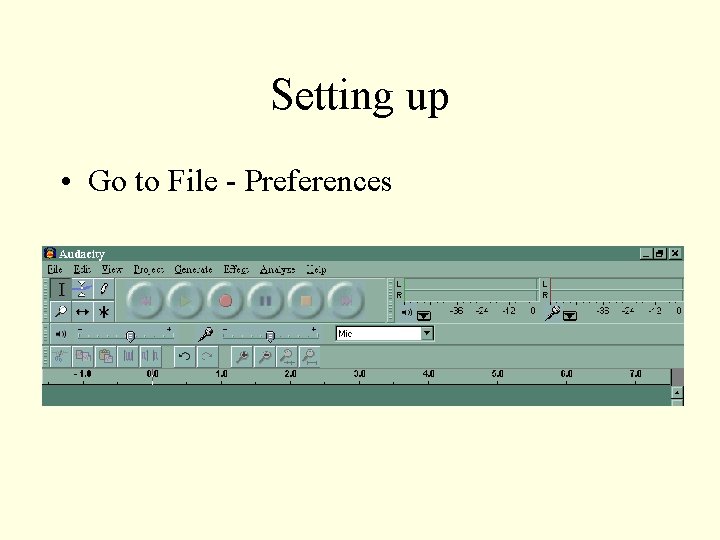
Setting up • Go to File - Preferences
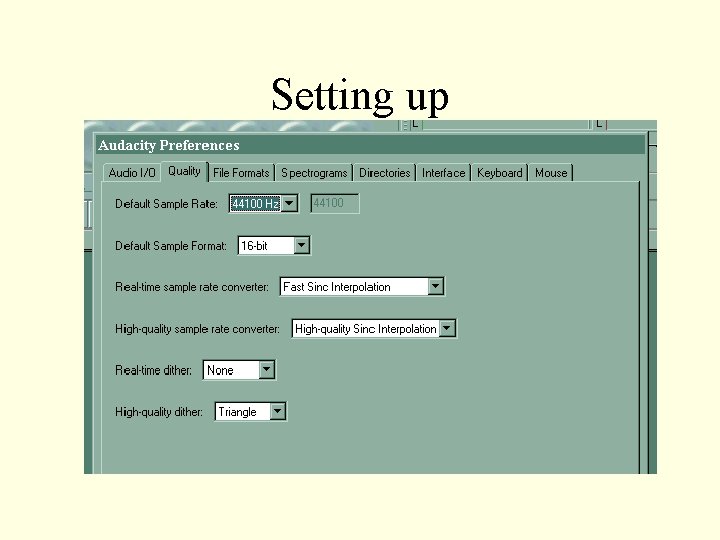
Setting up
Setting up • Choose the appropriate bit depth (16) and sample rate (44100 Hz). NOTE: Sometimes Audacity doesn’t work well with 16 bit depth, so you may need to use 32 instead. Do it!
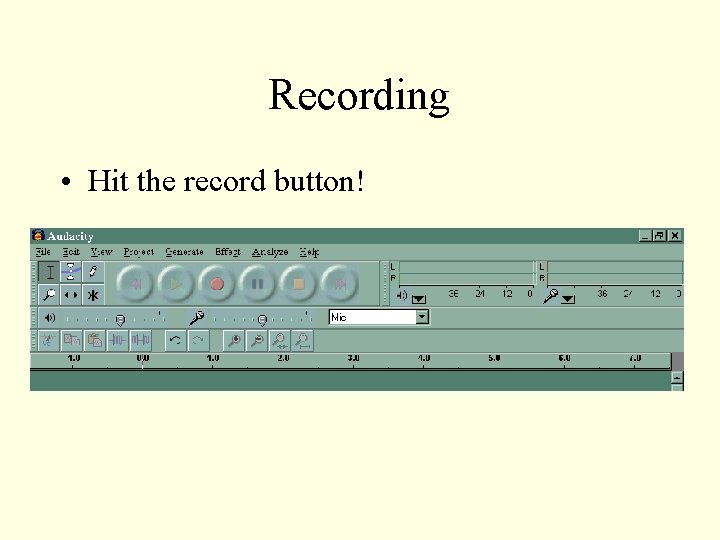
Recording • Hit the record button!
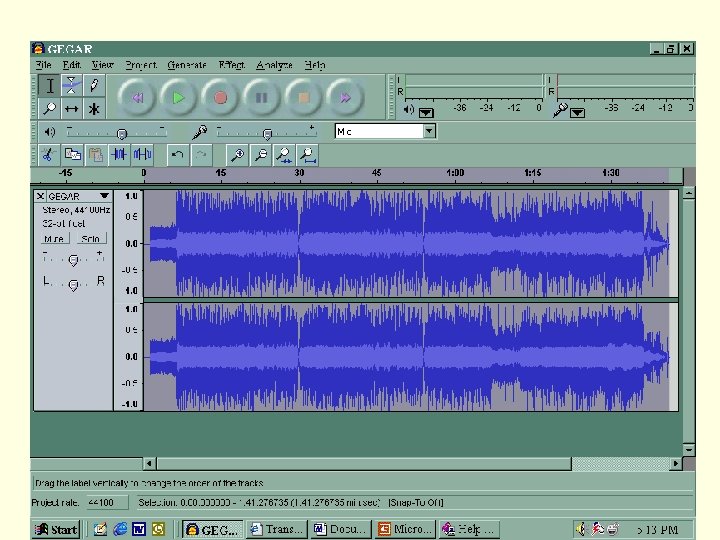
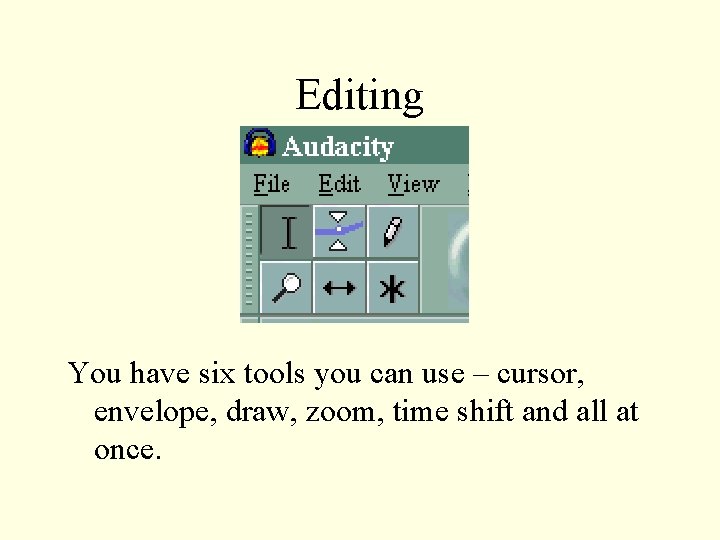
Editing You have six tools you can use – cursor, envelope, draw, zoom, time shift and all at once.
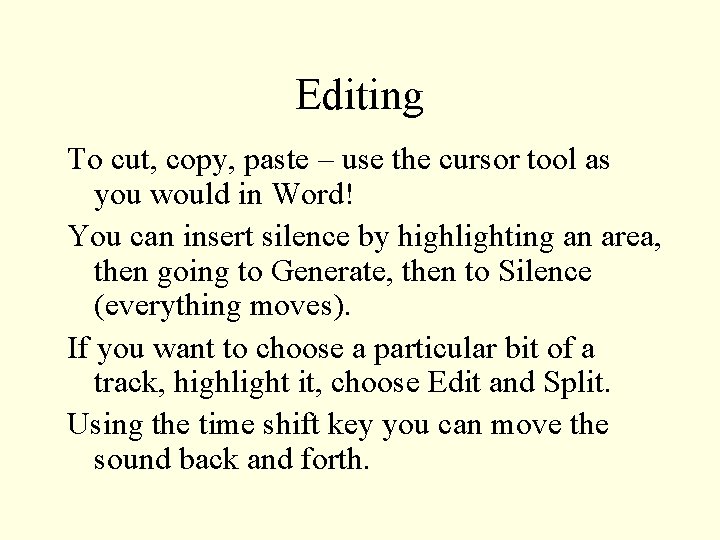
Editing To cut, copy, paste – use the cursor tool as you would in Word! You can insert silence by highlighting an area, then going to Generate, then to Silence (everything moves). If you want to choose a particular bit of a track, highlight it, choose Edit and Split. Using the time shift key you can move the sound back and forth.
Exit
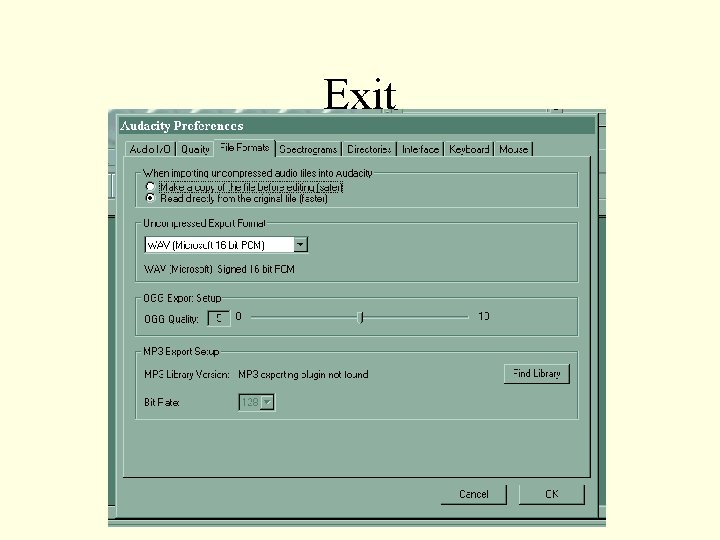
Exit • Make sure you’re on the right settings (ie 16 bit, 44100 Hz) • Go to File, choose Export in the format you want (might not be able to export as MP 3). DONE!
Your Equipment Sonia Randhawa
Contents • • • Digital and analog Analog recorders Digital recorders Which mic? What’s an XLR? Taking care of your equipment
Digital vs Analog There are basically two main types of recorders: - Digital - Analog
Analog - Problems • Fidelity • Generations • Deterioration over time
Digital recording basically transforms the sound waves into a series of numbers. How and why bother?
Digital recording basically transforms the sound waves into a series of numbers. How and why bother? - High fidelity - No loss over generations
Analog recorders What are you looking for? • A socket where you can plug your mic in • A monitor, where you can see how loud the sound is when it goes into the recorder • Something portable • Something easy to use • Headphone socket
Analog recorders Advantages of analog • Reliable • Easy to get tapes • Low maintenance • Easy to use, and fairly idiot-proof.
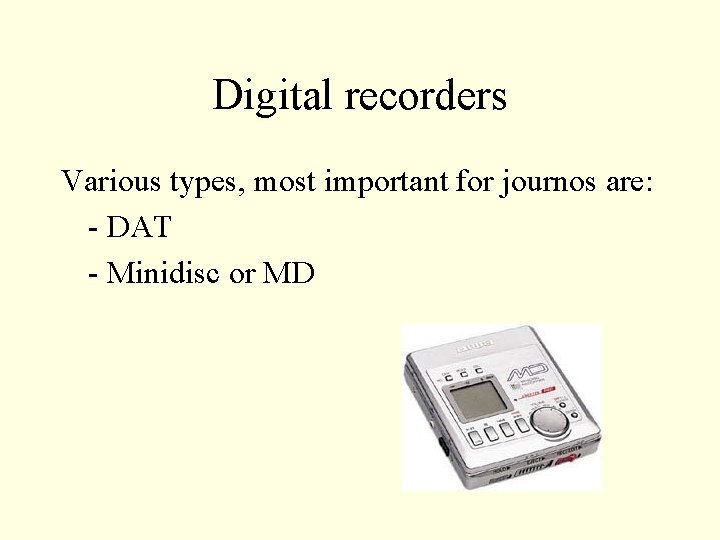
Digital recorders Various types, most important for journos are: - DAT - Minidisc or MD
Digital recorders What you need: - Sampling rate of 44. 1 k. Hz (that’s 44100 Hz) - a mic socket - ideally, some way to control loudness - 16 bit depth
Digital recorders - MDs • Cheap • Easy-ish to use • Digital – ie high fidelity, no loss of generations, high quality • Can NOW download sound direct via USB port (HD MD players) But….
Digital recorders - MDs • Watch out for your TOC (Table of Contents) – Stop recording frequently – Make sure your battery lives Get rid of the STUPID lavalier mic!!! Some data compression (but not enough to matter)
Microphones (Mics) Choices you have to make • Condenser or dynamic • Pick-up pattern • Large or small What you choose will depend on where you’re working.
Microphones Dynamic vs Condenser Dynamic mics… • Need no external power. • Durable. • Handle high volumes well.
Microphones Dynamic vs Condenser mics… • Require phantom power • Fragile • Louder output
Microphones Directional vs Omnidirectional Simple… Directional go in a direction Omnidirectional pick up everything What does this mean for you as a reporter?
Microphones Directional There are different types of directional mics • Most common are cardioid (heart-shaped) • Figure-of-8 (bi-directional) • And others….
Mixer The mixer allows you to take different sound channels and, um, mix them. • Mic inputs • Line inputs • Outputs • Alt ¾ Bus
Care of your equipment Hold your mics properly Don’t put any strain on flimsy sockets • Have SOMETHING that can hold them steady (if possible) • Ideally, don’t pull the jacks in and out constantly. BUT if they are not being held steady, DO NOT travel with your cables connected. • Clean your tape heads regularly. And read your manuals, so that if something goes wrong, you might be able to fix it.
Lecture Three Interviewing for Broadcast Sonia Randhawa
Planning the Interview • • • What do you want from the interview Can the interviewee give you that? What are you going to ask? How are you going to start? How are you going to end?
Planning the Interview • An intro: “Kuala Lumpur was cloaked in haze today. Radiq Radio reporter Sonia Randhawa is talking to Dr Chan to find out how this affects our health. ” Or “I’m Sonia Randhawa, interviewing Dr Chan of University Malaysia on how the haze is affecting our health. ”
Planning the Interview • An outro: “That was Dr Chan explaining how the haze is affecting our health. Back to Nara at the studio. ”
Choosing the interviewee • Before you start, talk to the interviewee What are you looking for?
Choosing the interviewee • Before you start, talk to the interviewee What are you looking for? • What do they sound like?
Choosing the interviewee • Before you start, talk to the interviewee What are you looking for? • What do they sound like? • Are they interesting?
Choosing the interviewee • Before you start, talk to the interviewee What are you looking for? • What do they sound like? • Are they interesting? • Do they know their material?
Doing the Interview • Keep calm • Ask SHORT questions – your interviewee can’t wriggle out of them! • Make sure you can be understood – no jargon • Stick to your pre-scripted questions (NOT a hard and fast rule)
Doing the Interview • Don’t just rely on the recorded interview – Take notes with PEN AND PAPER! • Remember the TOC edit/ write • Remember to take blank ‘atmos’ again if there is a massive change in the sound around you.
After the Interview • Have you got what you wanted? – Content – Quality – Quantity Is this all you need? What follow-up is there?
After the Interview • How could you have improved with the interview? – A better interviewee? – More preparation? – Clearer questions? – Better questions? – Clarity of voice? – Venue?
After the interview • Transcribe your interview – write it out!
After the interview • Edit the interview – if you’re using an MD you can mark off the sound-bites you want to use.
Interviewing in the studio • Equipment isn’t as a big a deal! • Water! • Sound checks
Interviewing in the studio • Making your guest feel comfortable: - Introduce to the studio - Explain how to behave - Tell them how to speak
Power & You • Think about the power relations between you and the interviewee • How does this change if you’re addressing a Cabinet Minister? • Or a victim of domestic violence? • How can YOU make a difference?
- Slides: 99