Chapter 11 Properties of the Hair Scalp Learning




- Slides: 50
Chapter 11 Properties of the Hair & Scalp
Learning Objectives • Identify and distinguish the different structures of the hair root. • Point out and differentiate the differences among the three main layers of the hair shaft. • Identify and explain the three types of side bonds in the cortex. • Name and compare the differences among the three cycles of hair growth. (continues)
Learning Objectives (continued) • Give examples of the common types of hair loss and explain what can cause hair loss. • Identify and explain at least three options for hair loss treatment. • Learn to identify the most common hair and scalp disorders seen in the salon and school, and then name which ones a physician should treat. • Compare and describe the different factors that should be considered during a hair and scalp analysis.
Introduction • Hairstylists play an important role in many people’s lives. • All hair services must be based on a thorough understanding of the growth, structure, and composition of hair.
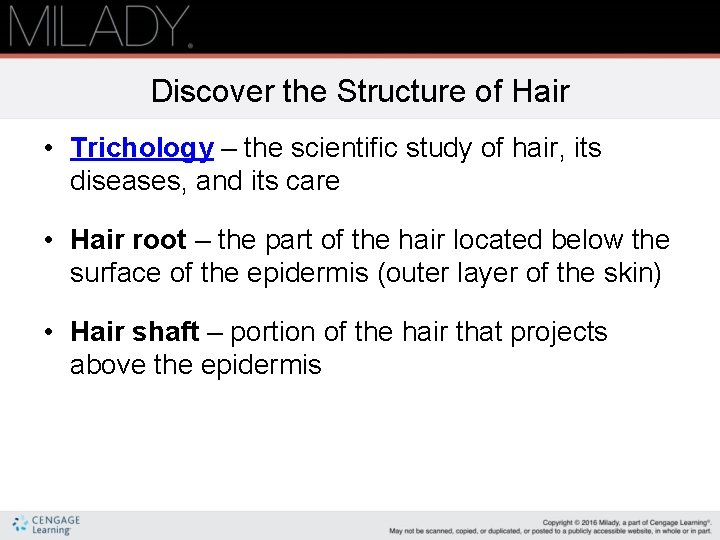
Discover the Structure of Hair • Trichology – the scientific study of hair, its diseases, and its care • Hair root – the part of the hair located below the surface of the epidermis (outer layer of the skin) • Hair shaft – portion of the hair that projects above the epidermis
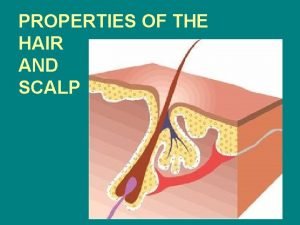
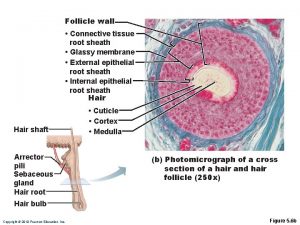
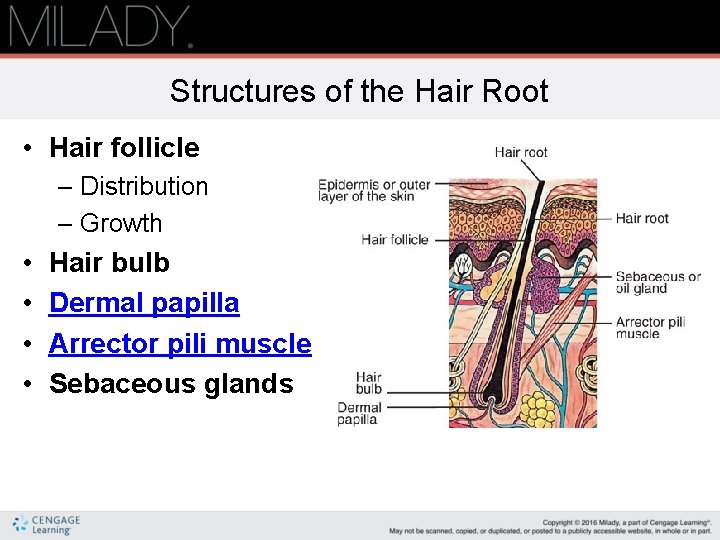
Structures of the Hair Root • Hair follicle – Distribution – Growth • • Hair bulb Dermal papilla Arrector pili muscle Sebaceous glands
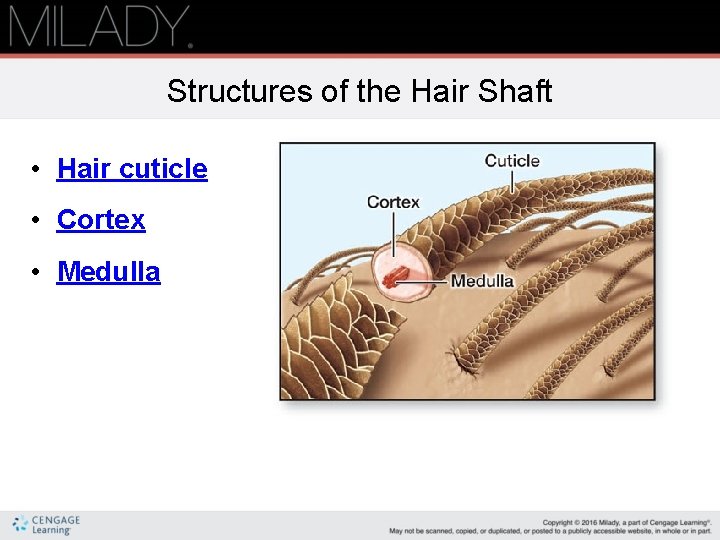
Structures of the Hair Shaft • Hair cuticle • Cortex • Medulla
Learn About the Chemical Composition of Hair • Hair is approximately 90 percent protein. • The protein is made up of long chains of amino acids, which, in turn, are made up of elements. • The major elements that make up human hair are carbon, oxygen, hydrogen, nitrogen, and sulfur and are often referred to as the COHNS elements. • These five elements are also found in skin and nails.
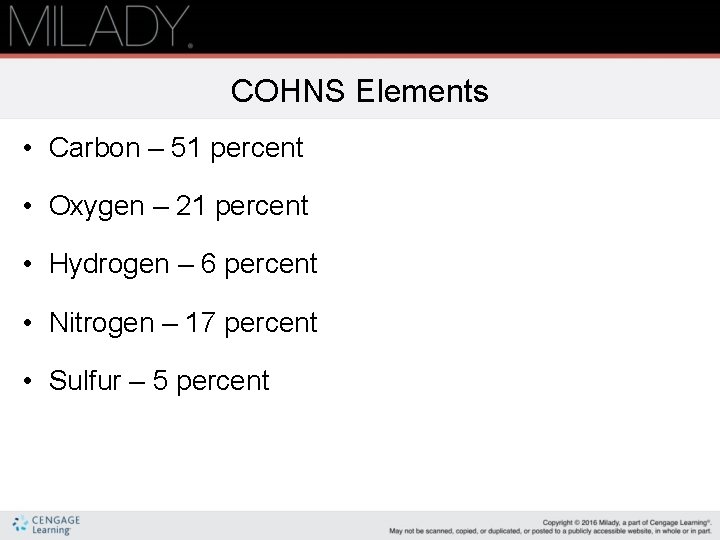
COHNS Elements • Carbon – 51 percent • Oxygen – 21 percent • Hydrogen – 6 percent • Nitrogen – 17 percent • Sulfur – 5 percent
Keratinization • Keratinization – maturing process of living cells that originate within the hair follicle. • As these newly formed cells mature, they fill up with a fibrous protein called keratin.
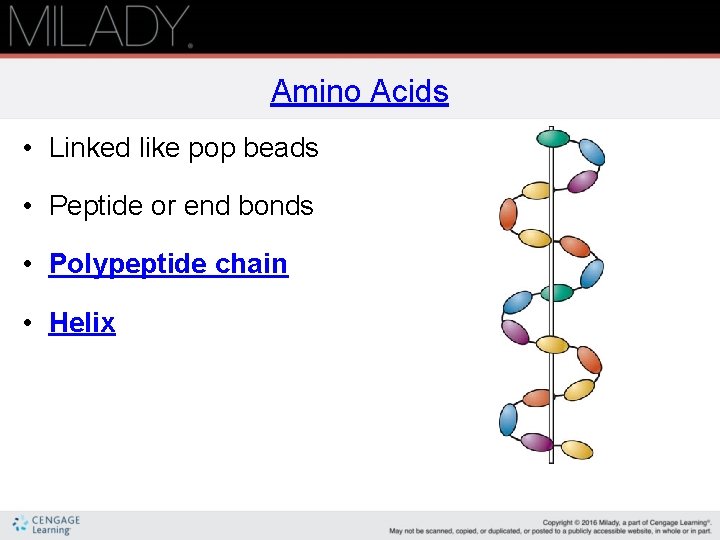
Amino Acids • Linked like pop beads • Peptide or end bonds • Polypeptide chain • Helix
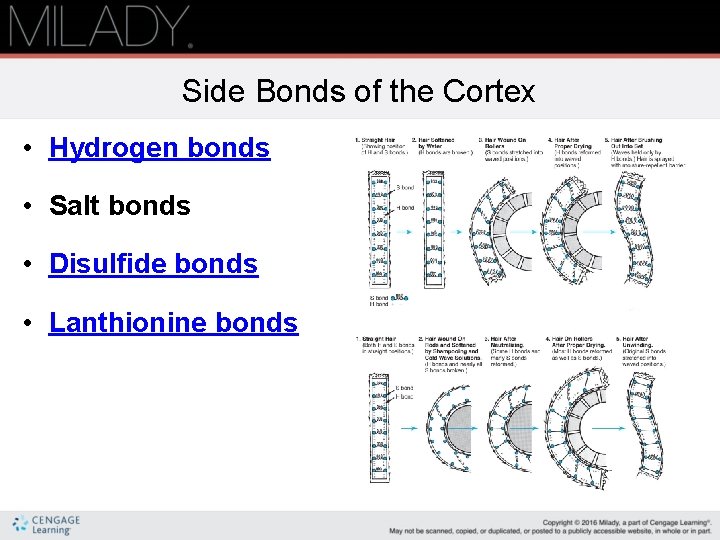
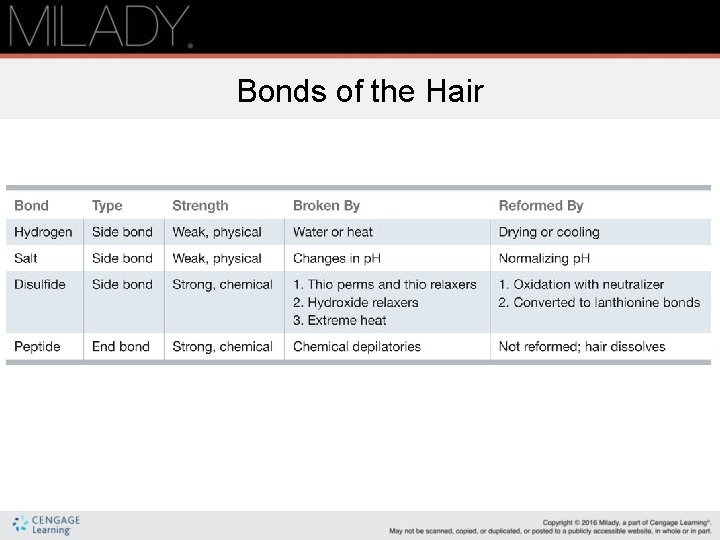
Side Bonds of the Cortex • Hydrogen bonds • Salt bonds • Disulfide bonds • Lanthionine bonds
Bonds of the Hair
Hair Pigment • Melanin – tiny grains of pigment – Eumelanin – provides dark brown/black color – Pheomelanin – provides yellow to red/ginger color • Natural hair color – result of ratio of eumelanin to pheomelanin • Gray hair – absence of melanin
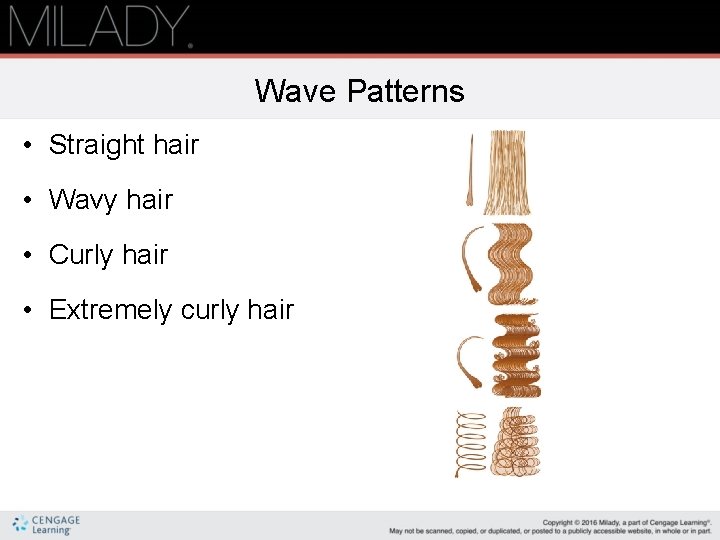
Wave Patterns • Straight hair • Wavy hair • Curly hair • Extremely curly hair
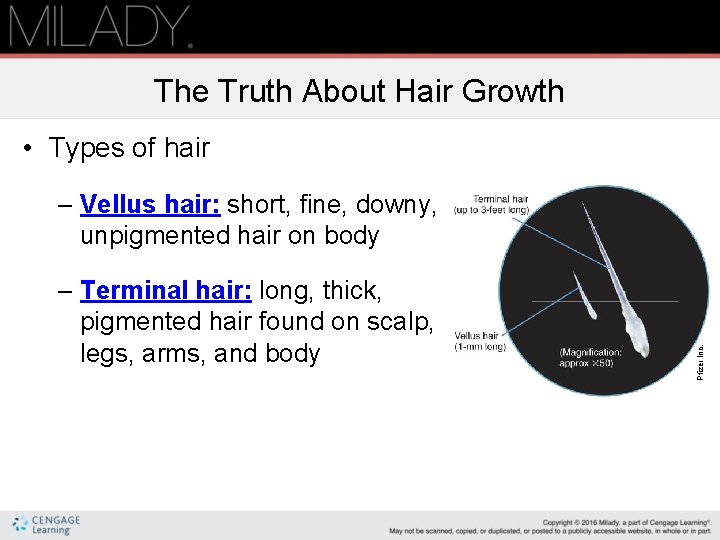
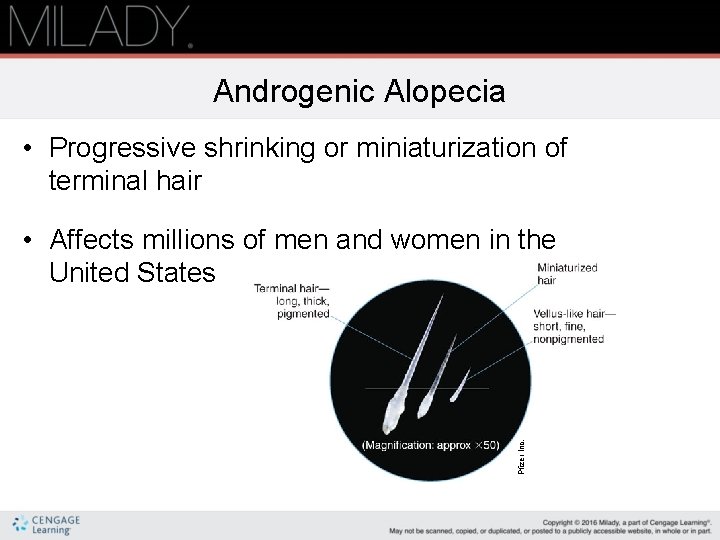
The Truth About Hair Growth • Types of hair – Terminal hair: long, thick, pigmented hair found on scalp, legs, arms, and body Pfizer Inc. – Vellus hair: short, fine, downy, unpigmented hair on body
Growth Cycles of Hair • Anagen – growing phase • Catagen – transition phase • Telogen – resting phase
Myths and Facts About Hair Growth • Myths – Shaving, clipping, cutting makes hair grow faster. – Scalp massage increases growth. – Gray hair is coarser and more resistant. – Natural curl determined by race. – Round cross section is straight; oval cross section is wavy; flat cross section is curly.
Understand Hair Loss Causes and Treatment • The growth cycle provides for the continuous growth, fall, and replacement of individual hair strands. • Natural shedding: 35 to 40 hairs per day
Emotional Impact of Hair Loss Perception of bald and balding men: • Less attractive • Less assertive • Less successful • Less personally likeable • Older by five years (continues)
Emotional Impact of Hair Loss (continued) • Men – Negative social and emotional effects – Preoccupation with baldness – Effort made to conceal • Women – Devastation – Anxiety – Feelings of helplessness and unattractiveness
Types of Abnormal Hair Loss • Abnormal hair loss is called alopecia. • The three most common types of abnormal hair loss: – Androgenic alopecia – Alopecia areata – Postpartum alopecia
Androgenic Alopecia • Progressive shrinking or miniaturization of terminal hair Pfizer Inc. • Affects millions of men and women in the United States
• • • Sudden loss in round or irregular patches Affects 5 million people in the United States Immune system attacks hair follicles Begins with small bald patches Occurs in males and females of all ages and races Courtesy of Robert A. Silverman, M. D. , Clinical Associate Professor, Department of Pediatrics, Georgetown University. Alopecia Areata
Postpartum Alopecia • Temporary hair loss at conclusion of pregnancy • Growth cycle returns to normal within one year after delivery of baby
Hair Loss Treatments • Minoxidil – topical treatment • Finasteride – oral treatment
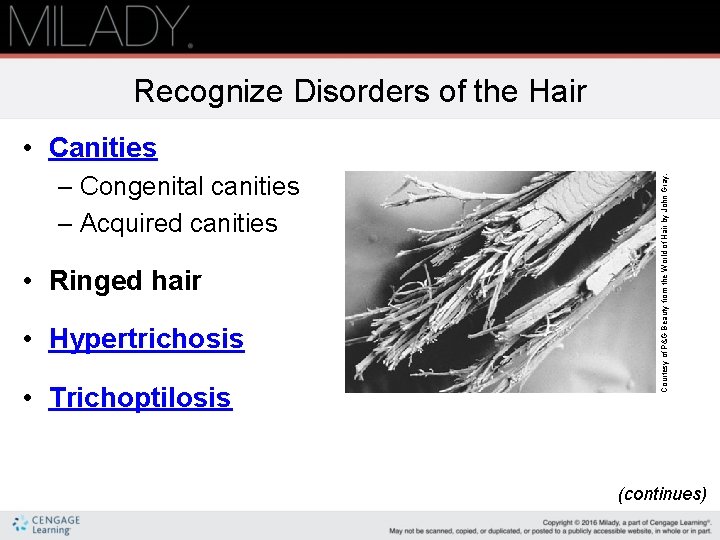
Recognize Disorders of the Hair – Congenital canities – Acquired canities • Ringed hair • Hypertrichosis • Trichoptilosis Courtesy of P&G Beauty from the World of Hair by John Gray. • Canities (continues)
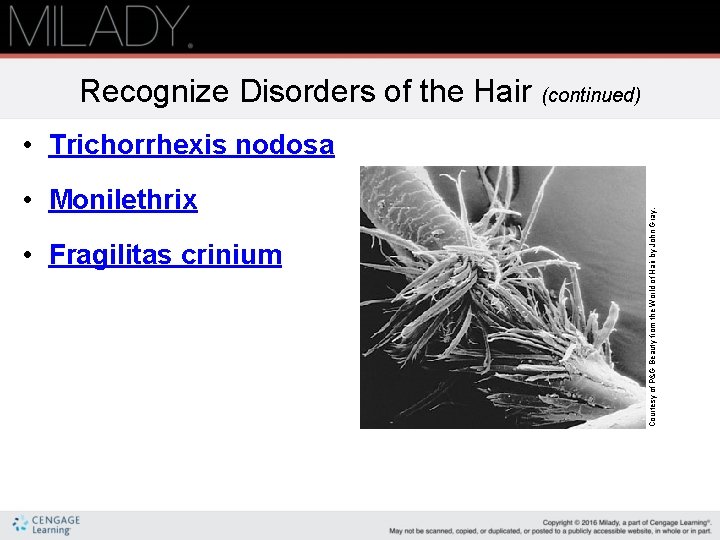
Recognize Disorders of the Hair (continued) • Monilethrix • Fragilitas crinium Courtesy of P&G Beauty from the World of Hair by John Gray. • Trichorrhexis nodosa
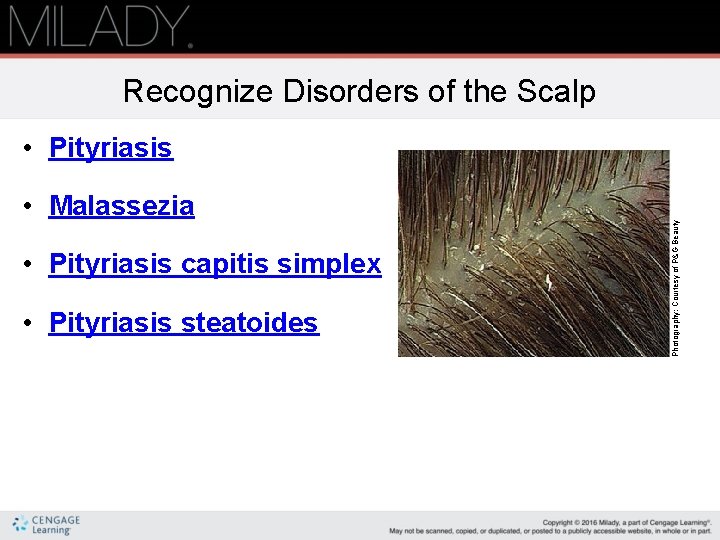
Recognize Disorders of the Scalp • Malassezia • Pityriasis capitis simplex • Pityriasis steatoides Photography: Courtesy of P&G Beauty • Pityriasis
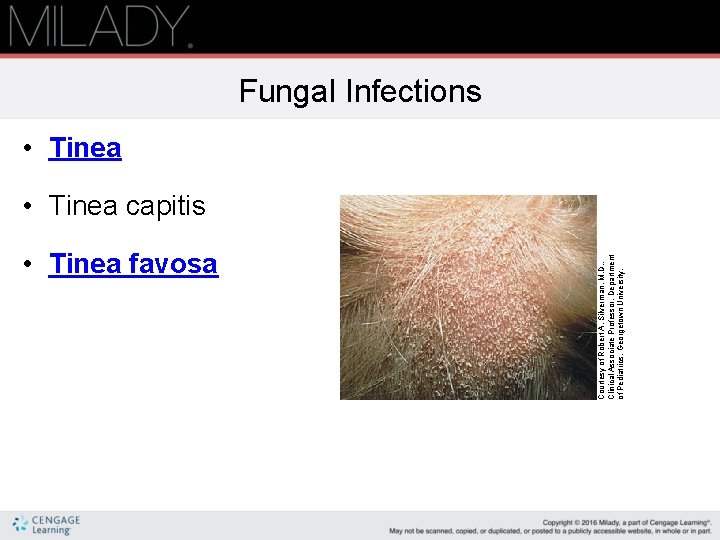
• Tinea favosa Courtesy of Robert A. Silverman, M. D. , Clinical Associate Professor, Department of Pediatrics, Georgetown University. Fungal Infections • Tinea capitis
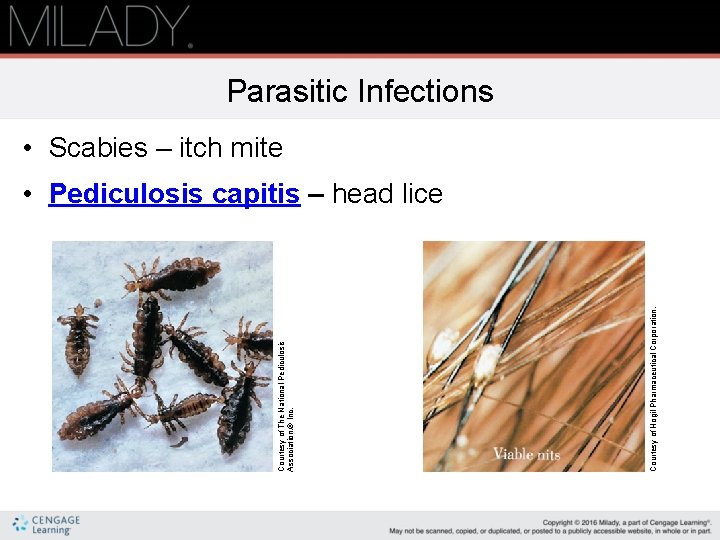
Courtesy of Hogil Pharmaceutical Corporation. Courtesy of The National Pediculosis Association, ® Inc. Parasitic Infections • Scabies – itch mite • Pediculosis capitis – head lice
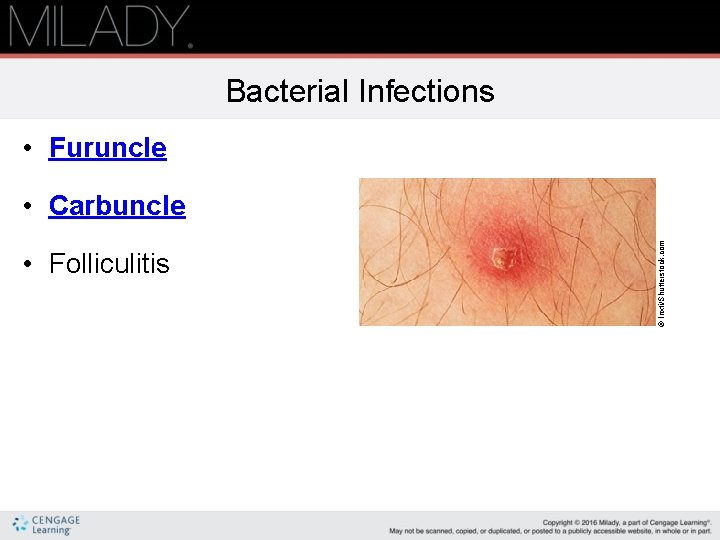
Bacterial Infections • Furuncle • Folliculitis © Inxti/Shutterstock. com • Carbuncle
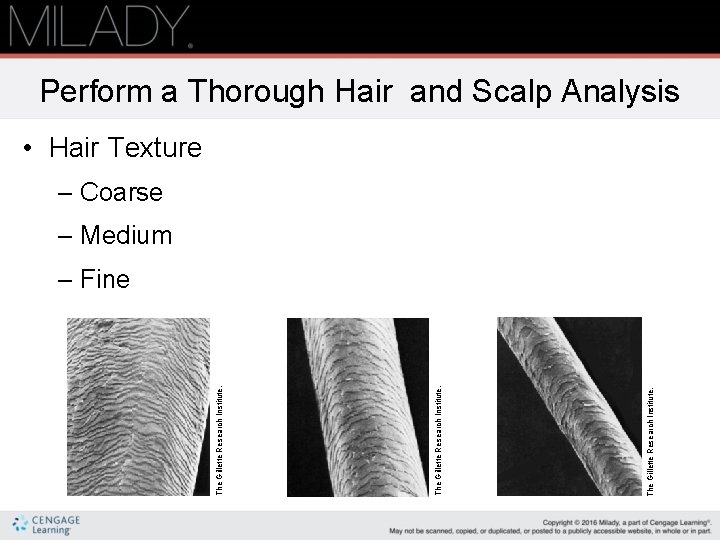
The Gillette Research Institute. Perform a Thorough Hair and Scalp Analysis • Hair Texture – Coarse – Medium – Fine
Hair Density • Low: thin • Medium: medium • High: thick dense • Average: 2, 200 hairs per square inch
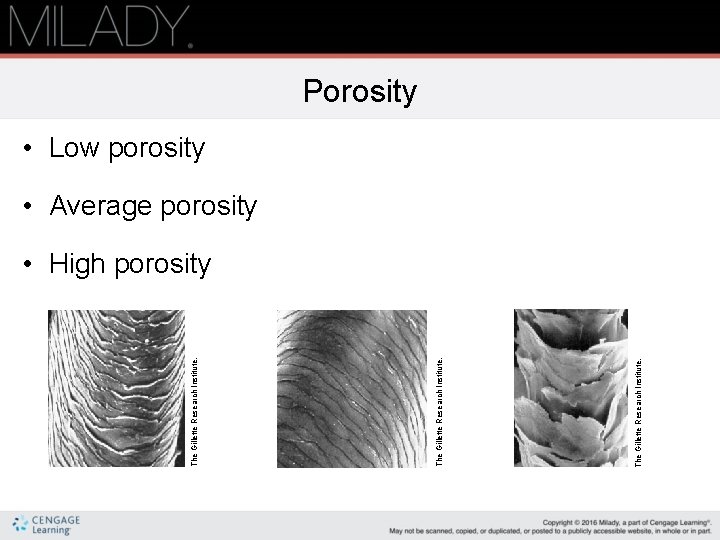
The Gillette Research Institute. Porosity • Low porosity • Average porosity • High porosity
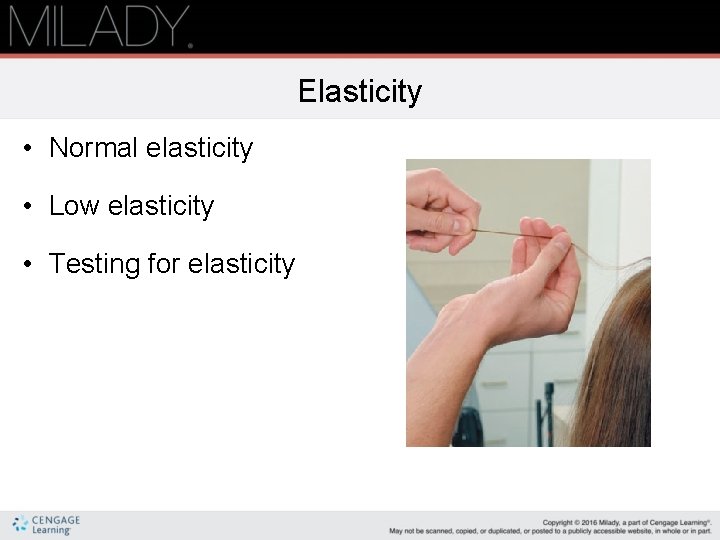
Elasticity • Normal elasticity • Low elasticity • Testing for elasticity
Hair Growth Patterns • Hair stream – hair flowing in same direction • Whorl – hair forms in a circular pattern • Cowlick – tuft of hair that stands straight up
Dry Hair and Scalp • Hair appears dull, dry, lifeless. • Avoid frequent shampooing, strong soaps, detergents, or products with a high alcohol content.
Oily Hair and Scalp • Use normalizing shampoos. • Eat a well balanced diet. • Exercise. • Shampoo regularly and frequently. • Practice good personal hygiene.
Summary and Review • Trichology enables the professional cosmetologist to better understand both the physical and microscopic properties of the hair. • You must be able to recognize those conditions of the hair and scalp needing treatment. • Practicing proper disinfection procedures that are approved by your oversight regulatory agency will prevent the spread of disease.
Chapter Review Questions 1. Name and describe the five main structures of the hair root. 2. Name and describe three layers of the hair. 3. Describe the process of keratinization. 4. What are polypeptide chains? (continues)
Chapter Review Questions (continued) 5. List and describe three types of side bonds. Indicate whether they are strong or weak and why. 6. Name and describe the two types of melanin responsible for natural hair color. (continues)
Chapter Review Questions (continued) 7. Name and describe the two types of hair and their locations on the body. 8. What are three phases of the hair growth cycle and what occurs during each? 9. What is the reason for normal daily hair loss? 10. What are the most common types of abnormal hair loss? (continues)
Chapter Review Questions (continued) 11. What are the only two approved hair loss treatments? 12. Name the two main types of dandruff and state whether either can be treated in the salon. 13. Which scalp and hair disorders cannot be treated in the salon? 14. What four factors should be considered in hair analysis?