Antidepressants The optimal use of antidepressant required a
- Slides: 33
Antidepressants The optimal use of antidepressant required a clear understanding of their mechanism of action, pharmacokinetics, potential drug interaction and the deferential diagnosis of psychiatric illnesses. Dr Malek Zihlif
Depression A World Health Organization (WHO) Prediction • Depression is currently the FOURTH most significant cause of suffering and disability worldwide • and, sadly, It will be the SECOND most debilitating human condition by the year 2020.
Myths – 54% believe depression is a weakness not an illness. – 62% believe depression is not a health problem. – >50% believe depression is “normal” and will not seek treatment.
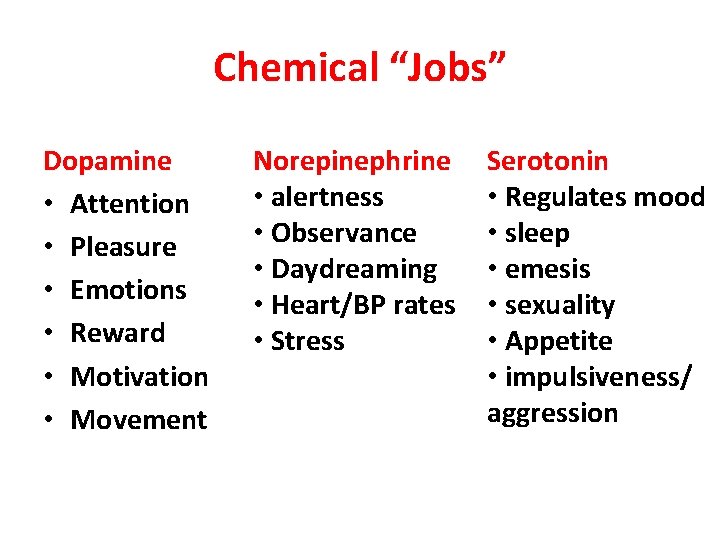
Chemical “Jobs” Dopamine • Attention • Pleasure • Emotions • Reward • Motivation • Movement Norepinephrine • alertness • Observance • Daydreaming • Heart/BP rates • Stress Serotonin • Regulates mood • sleep • emesis • sexuality • Appetite • impulsiveness/ aggression
Depression • Symptoms – Cognitive • Thoughts of hopelessness, poor confidence, negative thoughts. – Emotional Feeling sad, unable to feel pleasure, irritability – Psychomotor/Physical • Decreased libido, energy • Sleep changes (70% less, 30% more) • Appetite changes (70 % less, 30 % more)
Depression: Treatment • Antidepressant Medications • Psychotherapy – Usually individual psychotherapy – Cognitive behavioral therapy has most evidence for efficacy of treatment. • Sometimes exercise or body awareness has been found to helpful
Tricycle antidepressant (Amitriptyline) • TCAs inhibit serotonin, norepinephrine, transporters, slowing reuptake. and dopamine • with a resultant increase in activity. • Muscarinic acetylcholine receptors, alpha-adrenoceptors, and certain histamine (H 1) receptors are blocked. Side effects: (1) drug-induced Sedation (2) Orthostatic hypotension (2) Cardiac effects (3) Anticholinergeric effects dry mouth, constipation, blurred vision, urinary retention
SSRIs (Serotonin-specific reuptake inhibitors) inhibits the reuptake of serotonin without seriously effecting the reuptake of dopamine & norepinephrine. Ø Most common side effects include GI upset, sexual dysfunction (30%+!), anxiety, restlessness, nervousness, insomnia, fatigue or sedation, dizziness Ø Can develop a discontinuation syndrome with agitation, nausea, disequilibrium and dysphoria
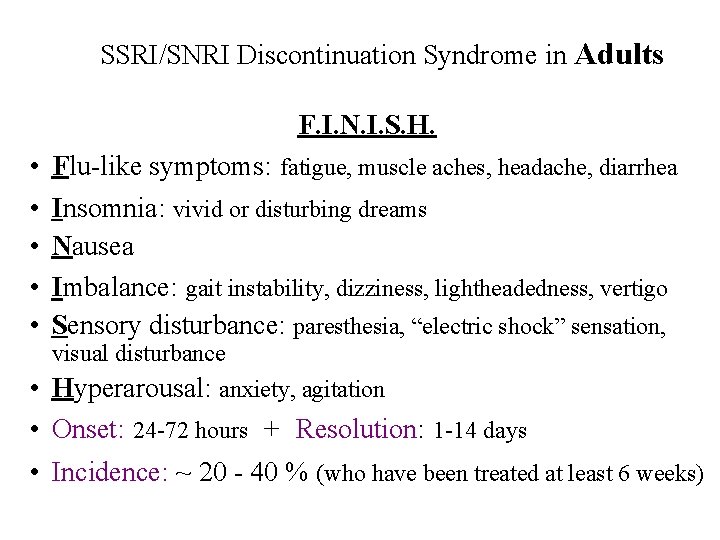
SSRI/SNRI Discontinuation Syndrome in Adults F. I. N. I. S. H. • • • Flu-like symptoms: fatigue, muscle aches, headache, diarrhea Insomnia: vivid or disturbing dreams Nausea Imbalance: gait instability, dizziness, lightheadedness, vertigo Sensory disturbance: paresthesia, “electric shock” sensation, visual disturbance • Hyperarousal: anxiety, agitation • Onset: 24 -72 hours + Resolution: 1 -14 days • Incidence: ~ 20 - 40 % (who have been treated at least 6 weeks)
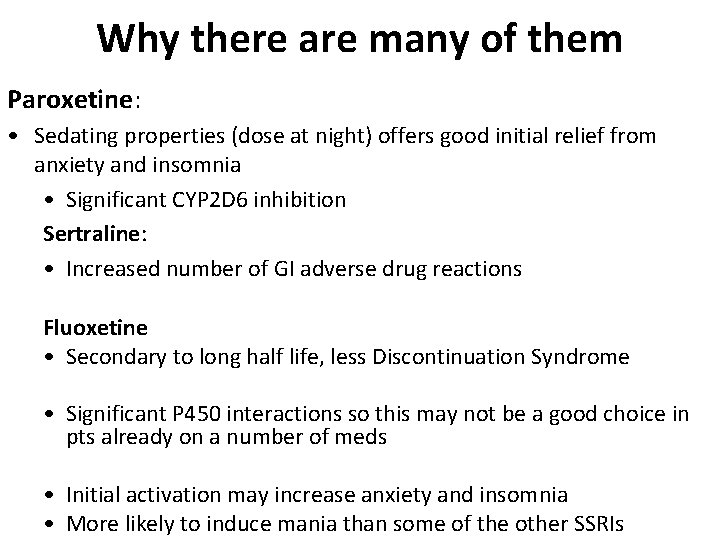
Why there are many of them Paroxetine: • Sedating properties (dose at night) offers good initial relief from anxiety and insomnia • Significant CYP 2 D 6 inhibition Sertraline: • Increased number of GI adverse drug reactions Fluoxetine • Secondary to long half life, less Discontinuation Syndrome • Significant P 450 interactions so this may not be a good choice in pts already on a number of meds • Initial activation may increase anxiety and insomnia • More likely to induce mania than some of the other SSRIs
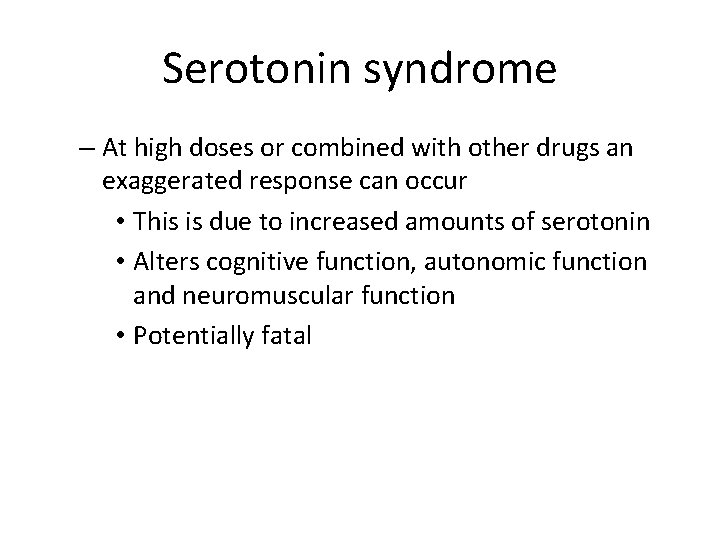
Serotonin syndrome – At high doses or combined with other drugs an exaggerated response can occur • This is due to increased amounts of serotonin • Alters cognitive function, autonomic function and neuromuscular function • Potentially fatal
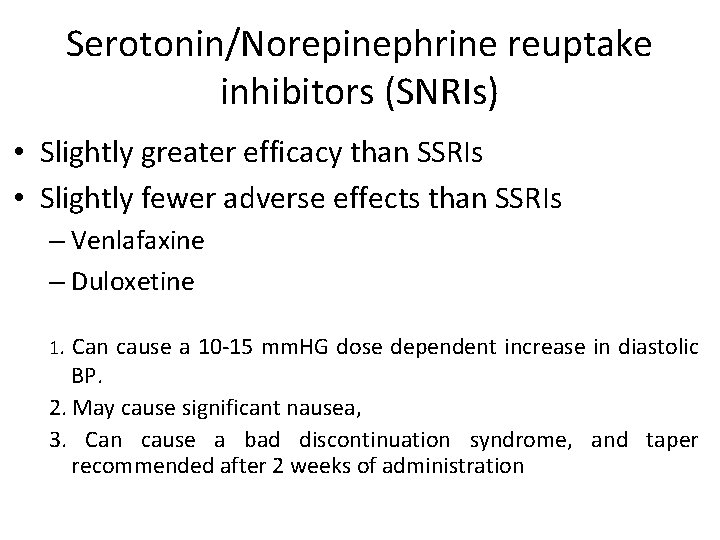
Serotonin/Norepinephrine reuptake inhibitors (SNRIs) • Slightly greater efficacy than SSRIs • Slightly fewer adverse effects than SSRIs – Venlafaxine – Duloxetine 1. Can cause a 10 -15 mm. HG dose dependent increase in diastolic BP. 2. May cause significant nausea, 3. Can cause a bad discontinuation syndrome, and taper recommended after 2 weeks of administration
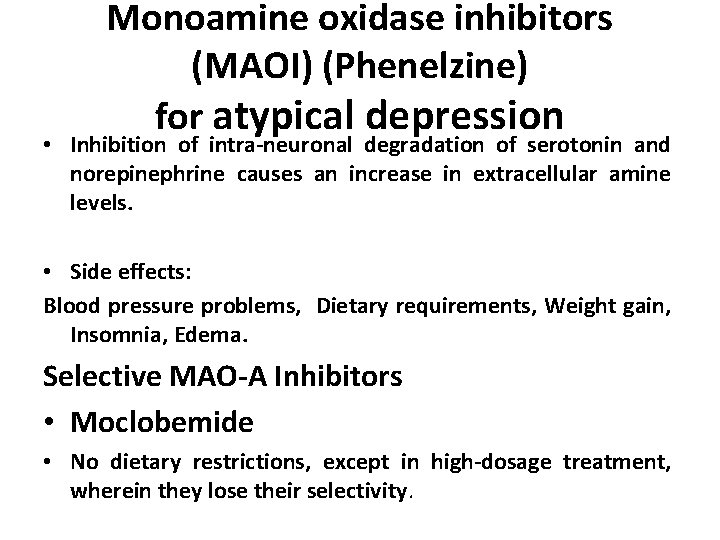
Monoamine oxidase inhibitors (MAOI) (Phenelzine) for atypical depression • Inhibition of intra-neuronal degradation of serotonin and norepinephrine causes an increase in extracellular amine levels. • Side effects: Blood pressure problems, Dietary requirements, Weight gain, Insomnia, Edema. Selective MAO-A Inhibitors • Moclobemide • No dietary restrictions, except in high-dosage treatment, wherein they lose their selectivity.
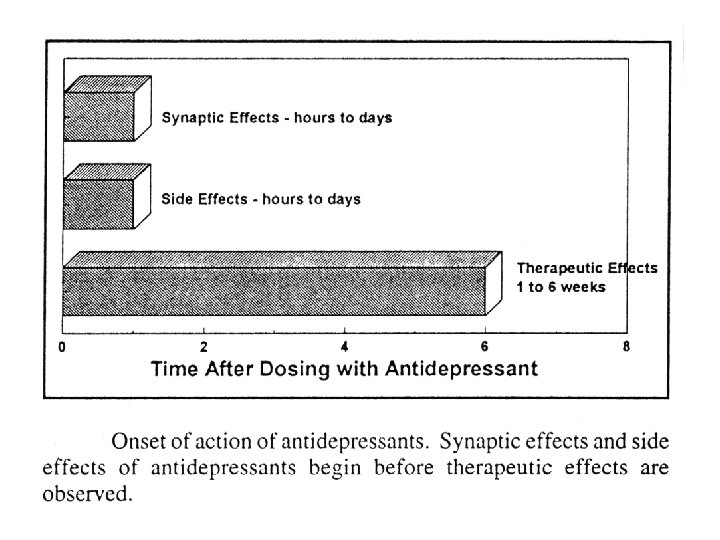
Important • Following the initiation of the antideppresant drug treatment there is generally a therapeutic lag lasting for 3 -4 weeks. • 8 weeks trial, then you allow to switch to another antidepressant. • Partial response then add one another drug from different class.
Important • if the initial treatment was successful then 612 maintenance periods. • If the patient has experience two episodes of major depression, then it is advisable to give an anti depressant life long. • All antidepressants now carry a “black box” warning that they may lead to suicidal thoughts/behavior
Schizophrenia • Pathogenesis is unknown. • Onset of schizophrenia is in the late teens early ‘ 20 s. • Genetic predisposition -- Familial incidence. • Multiple genes are involved. • Afflicts 1% of the population worldwide. • Athought disorder
Schizophrenia Positive Symptoms. Hallucinations, delusions, paranoia, ideas of reference. Negative Symptoms. Apathy, social withdrawal, anhedonia, emotional blunting, cognitive deficits, lack of motivation to interact with the environment. These symptoms are progressive and non-responsive to medication.
Schizophrenia • Drugs currently used in the prevention of psychosis. ** These drugs are not a cure ** • Schizophrenics must be treated with medications indefinitely, as the disease in lifelong and it is preferable to prevent the psychotic episodes than to treat them. SCHIZOPHRENIA IS FOR LIFE There is no remission
Dopamine Theory of Schizophrenia Many lines of evidence point to the aberrant increased activity of the dopaminergic system as being critical in the symptomatology of schizophrenia. There is a greater occupancy of D 2 receptors by dopamine => greater dopaminergic stimulation
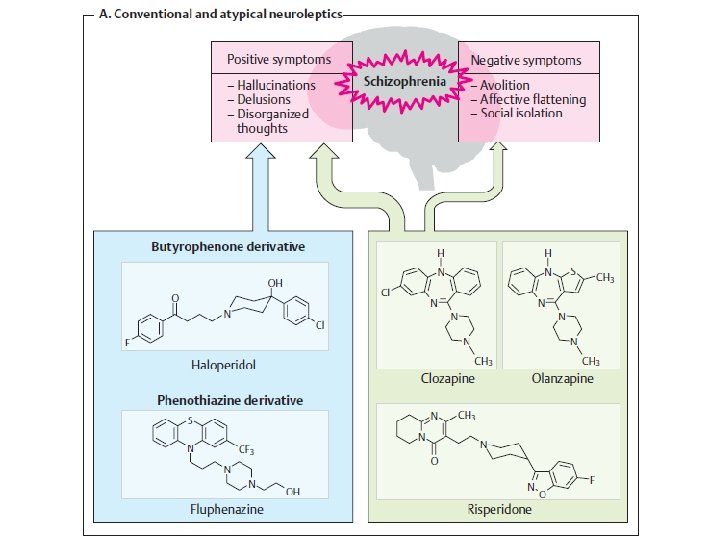
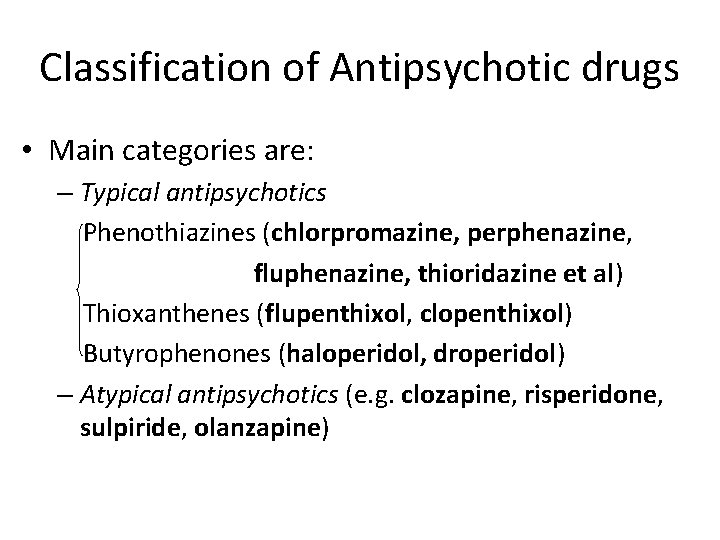
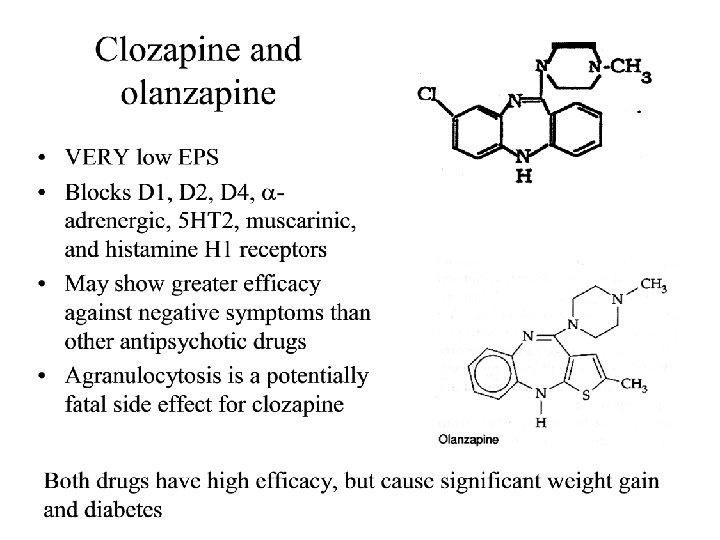
Classification of Antipsychotic drugs • Main categories are: – Typical antipsychotics Phenothiazines (chlorpromazine, perphenazine, fluphenazine, thioridazine et al) Thioxanthenes (flupenthixol, clopenthixol) Butyrophenones (haloperidol, droperidol) – Atypical antipsychotics (e. g. clozapine, risperidone, sulpiride, olanzapine)
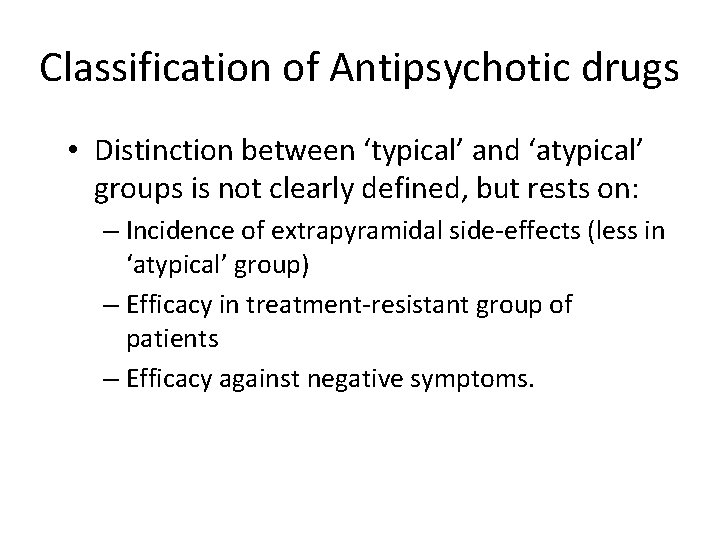
Classification of Antipsychotic drugs • Distinction between ‘typical’ and ‘atypical’ groups is not clearly defined, but rests on: – Incidence of extrapyramidal side-effects (less in ‘atypical’ group) – Efficacy in treatment-resistant group of patients – Efficacy against negative symptoms.
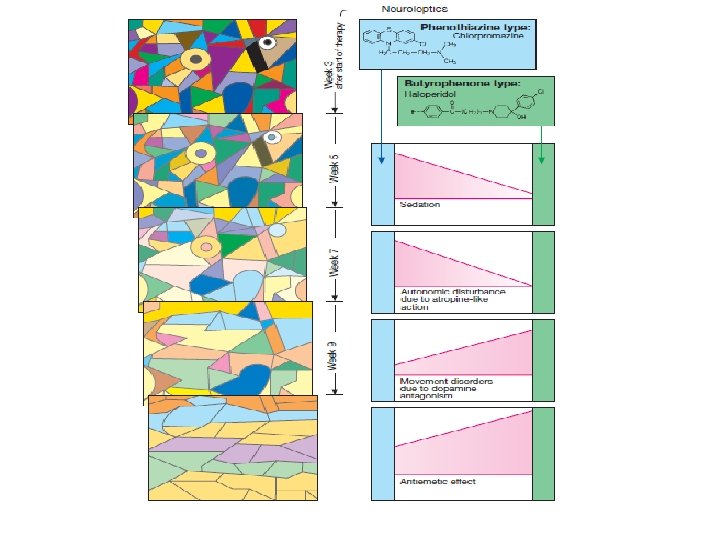
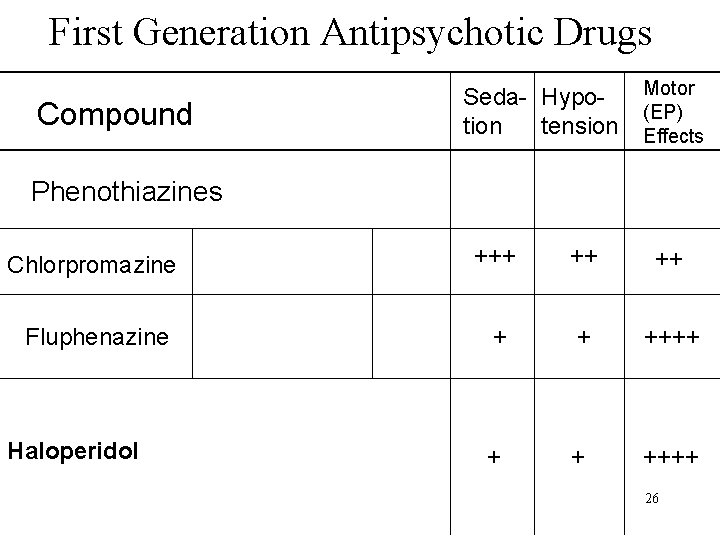
First Generation Antipsychotic Drugs Compound Seda- Hypotion tension Motor (EP) Effects Phenothiazines Chlorpromazine +++ ++ ++ Fluphenazine + + ++++ Haloperidol 26
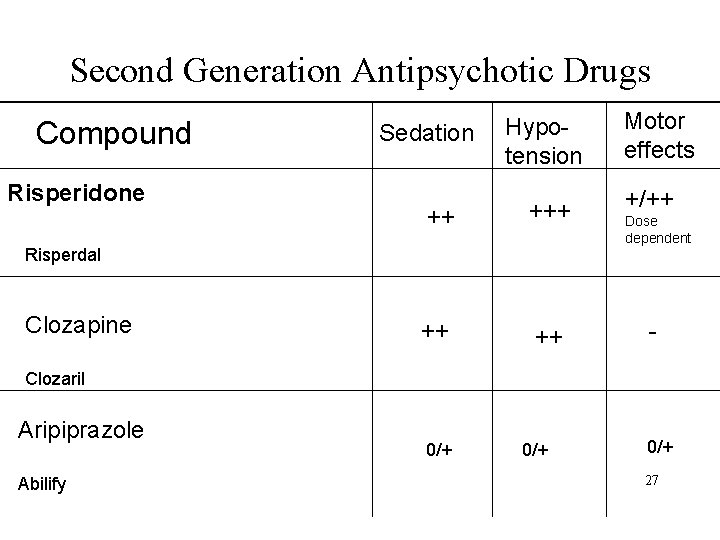
Second Generation Antipsychotic Drugs Compound Risperidone Sedation Hypotension ++ +/++ ++ ++ - Risperdal Clozapine Motor effects Dose dependent Clozaril Aripiprazole Abilify 0/+ 0/+ 27
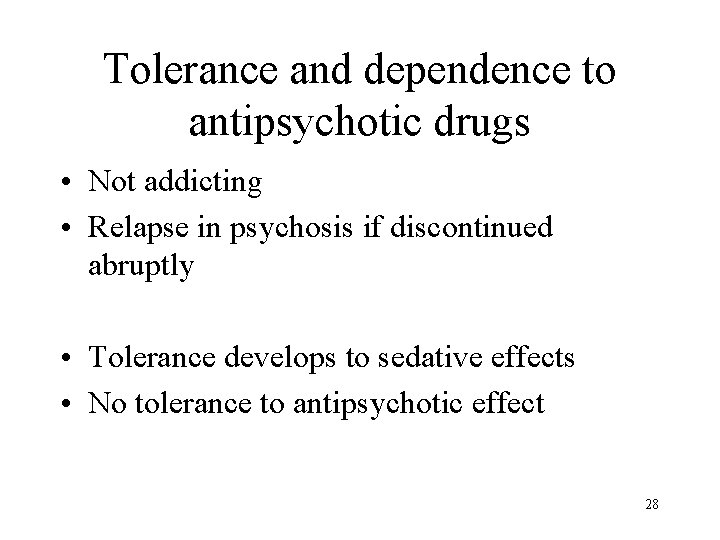
Tolerance and dependence to antipsychotic drugs • Not addicting • Relapse in psychosis if discontinued abruptly • Tolerance develops to sedative effects • No tolerance to antipsychotic effect 28
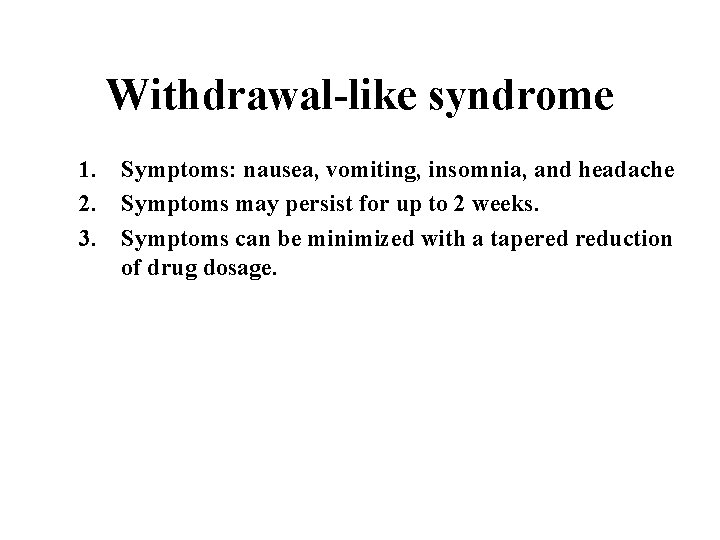
Withdrawal-like syndrome 1. Symptoms: nausea, vomiting, insomnia, and headache 2. Symptoms may persist for up to 2 weeks. 3. Symptoms can be minimized with a tapered reduction of drug dosage.
30
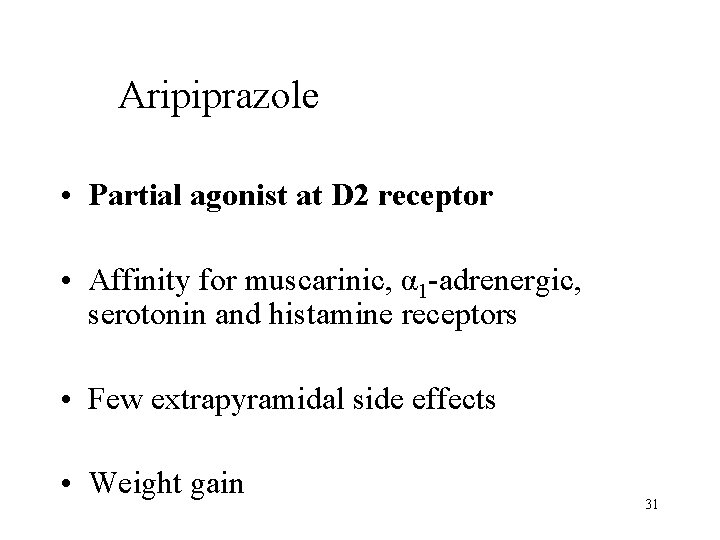
Aripiprazole • Partial agonist at D 2 receptor • Affinity for muscarinic, α 1 -adrenergic, serotonin and histamine receptors • Few extrapyramidal side effects • Weight gain 31
Tardive dyskinesia comprises mainly involuntary movements of face and tongue, but also of trunk and limbs, appearing after months or years of antipsychotic treatment due to accumulation of the drug.
Risperidone Endocrine effect v v One of the most prescribed drugs in Jordan. In women, these disturbances include: Ø galactorrhea Ø loss of libido Ø delayed ovulation and menstruation or amenorrhea. v In men, these disturbances include: Ø gynecomastia Ø impotence.