
Treatment and Therapies Elspeth Cordell Last lesson This



- Slides: 32
Treatment and Therapies Elspeth Cordell
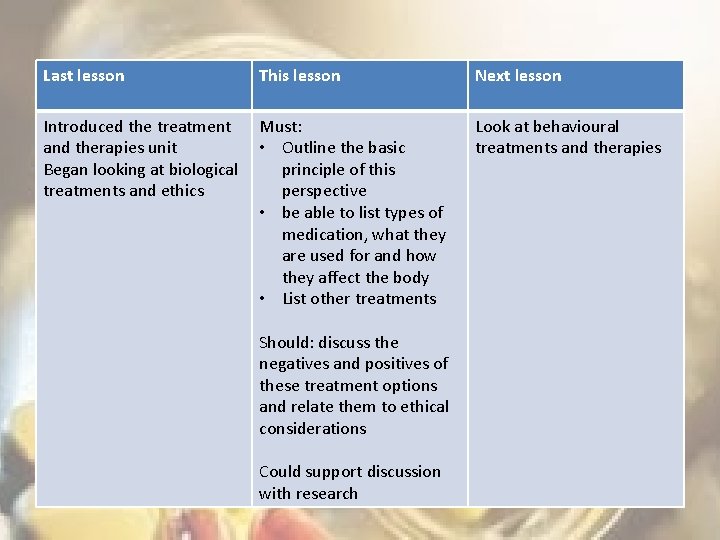
Last lesson This lesson Next lesson Introduced the treatment and therapies unit Began looking at biological treatments and ethics Must: • Outline the basic principle of this perspective • be able to list types of medication, what they are used for and how they affect the body • List other treatments Look at behavioural treatments and therapies Should: discuss the negatives and positives of these treatment options and relate them to ethical considerations Could support discussion with research
Handout/ worksheet 1 • Table
Biological Psychology- towards assignment criteria 1. 1 • Basic Principle: • To correct cognitive, emotional and behavioural problems seen in mental illnesses, by causing changes to the biological functioning. Done by • Drugs • Surgery • Electro-convulsive therapy
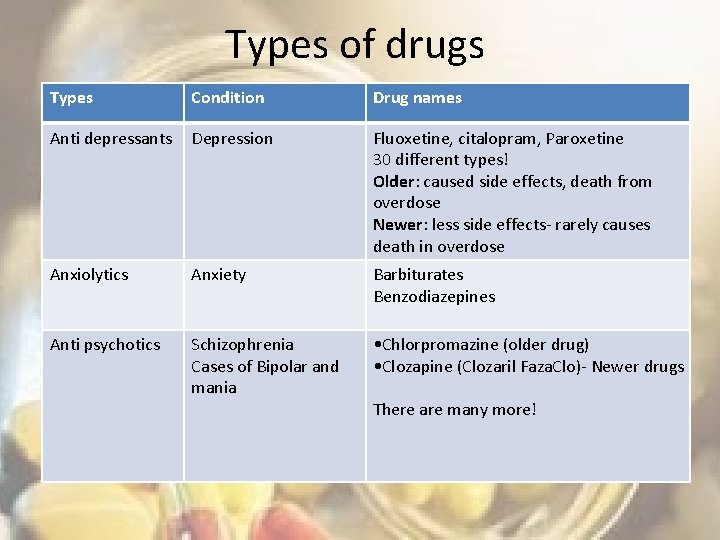
Types of drugs Types Condition Drug names Anti depressants Depression Fluoxetine, citalopram, Paroxetine 30 different types! Older: caused side effects, death from overdose Newer: less side effects- rarely causes death in overdose Anxiolytics Anxiety Barbiturates Benzodiazepines Anti psychotics Schizophrenia Cases of Bipolar and mania • Chlorpromazine (older drug) • Clozapine (Clozaril Faza. Clo)- Newer drugs There are many more!
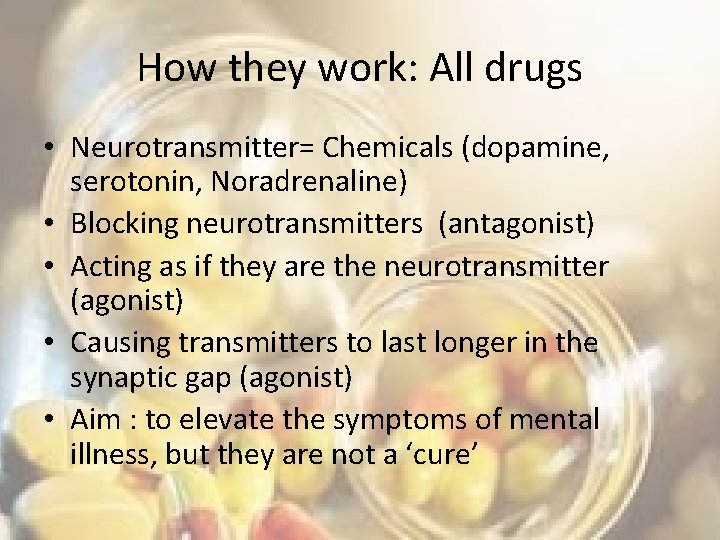
How they work: All drugs • Neurotransmitter= Chemicals (dopamine, serotonin, Noradrenaline) • Blocking neurotransmitters (antagonist) • Acting as if they are the neurotransmitter (agonist) • Causing transmitters to last longer in the synaptic gap (agonist) • Aim : to elevate the symptoms of mental illness, but they are not a ‘cure’
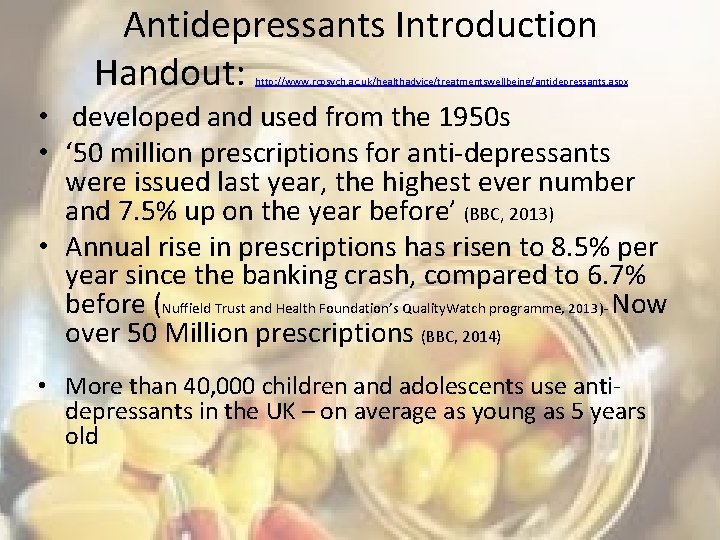
Antidepressants Introduction Handout: http: //www. rcpsych. ac. uk/healthadvice/treatmentswellbeing/antidepressants. aspx • developed and used from the 1950 s • ‘ 50 million prescriptions for anti-depressants were issued last year, the highest ever number and 7. 5% up on the year before’ (BBC, 2013) • Annual rise in prescriptions has risen to 8. 5% per year since the banking crash, compared to 6. 7% before (Nuffield Trust and Health Foundation’s Quality. Watch programme, 2013)- Now over 50 Million prescriptions (BBC, 2014) • More than 40, 000 children and adolescents use antidepressants in the UK – on average as young as 5 years old
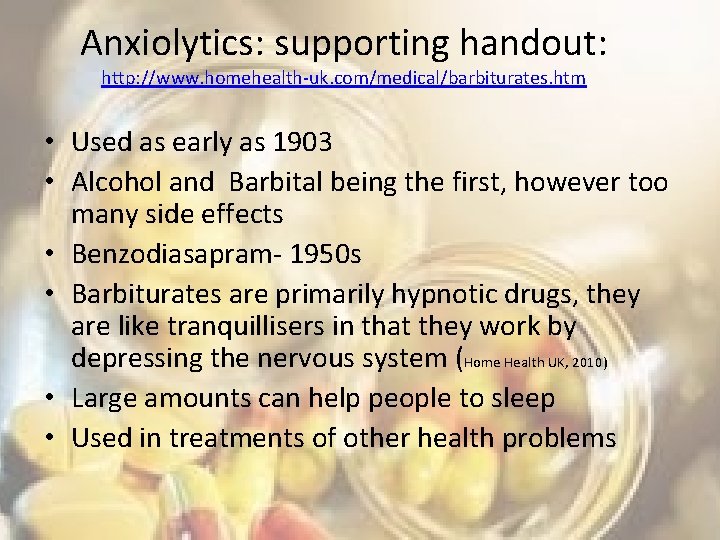
Anxiolytics: supporting handout: http: //www. homehealth-uk. com/medical/barbiturates. htm • Used as early as 1903 • Alcohol and Barbital being the first, however too many side effects • Benzodiasapram- 1950 s • Barbiturates are primarily hypnotic drugs, they are like tranquillisers in that they work by depressing the nervous system (Home Health UK, 2010) • Large amounts can help people to sleep • Used in treatments of other health problems
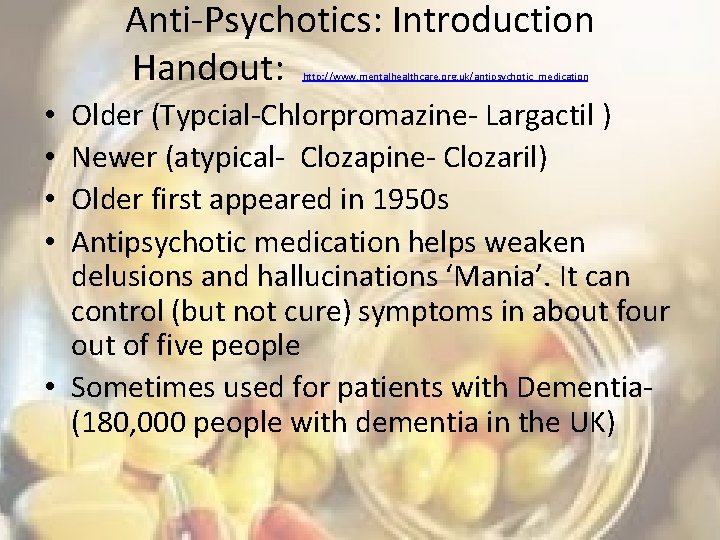
Anti-Psychotics: Introduction Handout: http: //www. mentalhealthcare. org. uk/antipsychotic_medication Older (Typcial-Chlorpromazine- Largactil ) Newer (atypical- Clozapine- Clozaril) Older first appeared in 1950 s Antipsychotic medication helps weaken delusions and hallucinations ‘Mania’. It can control (but not cure) symptoms in about four out of five people • Sometimes used for patients with Dementia(180, 000 people with dementia in the UK) • •
Evaluation of drug treatments: link to assessment • Effectiveness: Do they do what they are supposed to do? • Appropriateness: are they an appropriate treatment?
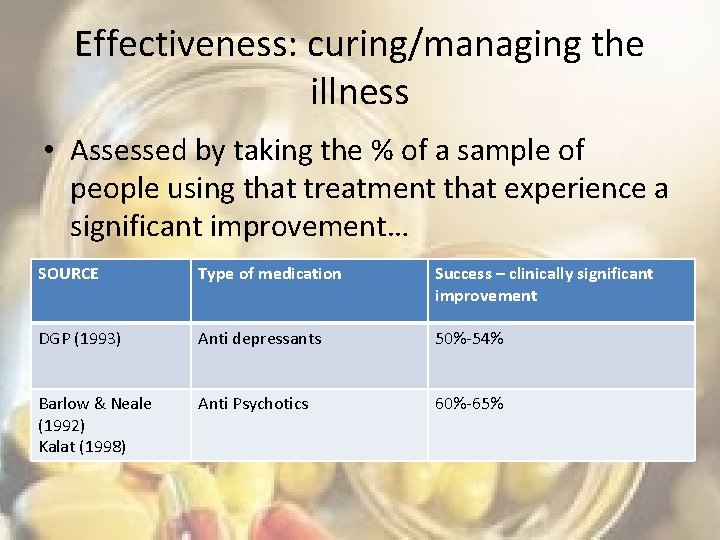
Effectiveness: curing/managing the illness • Assessed by taking the % of a sample of people using that treatment that experience a significant improvement… SOURCE Type of medication Success – clinically significant improvement DGP (1993) Anti depressants 50%-54% Barlow & Neale (1992) Kalat (1998) Anti Psychotics 60%-65%
Effectiveness continued • Drug treatment- most cases the superior option • 50 -65% patients benefit • Symptoms are elevated with consistent use • taking antipsychotic medication more than halves the risk of relapse in schizophrenic patients (Royal College of Psychiatrists, 2012 http: //www. bbc. co. uk/news/health-17940070)
Appropriateness – Bring short term improvements in most psychological symptoms – Patients often welcome drug therapy , as it is quicker, easier to administer (time), and less threatening than talking to someone – Drugs work well with other forms of therapy
However… Do drugs work or are we victims of media tricks?
https: //www. youtube. com/watch? v=Xs. BZw 6 q 7 u. BU • Some patients may still have some symptoms • Between 35 -50% of patients don’t improve • Symptoms may return/ worsen if drug is stopped– dependency? • Addressing the real cause? • Side effects mild to extreme/ death The longer antipsychotic drugs are taken, the more chronic the side effects become. The nature of mental illness means patients are often prescribed medication for the rest of their lives… • Regular doctor check-ups for anti psychotics • Side effects may affect the person’s wish to continue, as they can be worse then the mental illness
Drug Symptoms anti psychotics (E. G chlorpromazine )though newer forms have less side effects and are better long term Dribbling (weakened tongue and jaws) severe weight gain, increasing the risk of diabetes, blood clots and cardiovascular diseases. The risk is especially high for patients who stay on medication for many decades. Prozac- Seroxat Now banned: Suicide Anti depressants in general Young people: suicide. NHS now not recommending them Generally: • feeling sick • dry mouth • slight blurring of vision • constipation • dizziness • drowsiness • problems sleeping (insomnia) • sexual dysfunction, such as erectile dysfunction in men or difficulty achieving orgasm Barbituates (table on page 5) aggressive behaviour, impaired memory, judgement and coordination, insomnia, overdose, dependency, and death
HOWEVER… Are the side effects worth it?
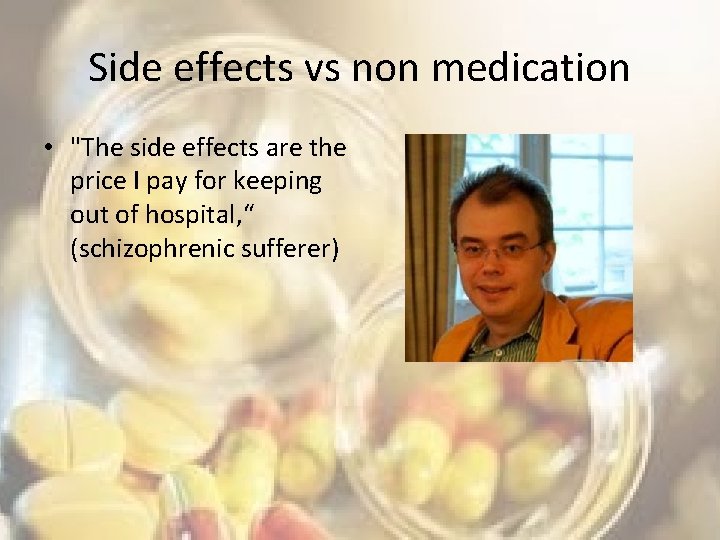
Side effects vs non medication • "The side effects are the price I pay for keeping out of hospital, “ (schizophrenic sufferer)
Criteria 1. 2: Ethical considerations • Is it significant that • Haddock and Slade most clinical trials of (1996) conducted by the • Psychiatrists (more then company wanting to sell half asked) would them? refuse to take • Is it right to force a antipsychotics if they patient with were prescribed them? schizophrenia to take drugs where the side effects are sometimes worse?
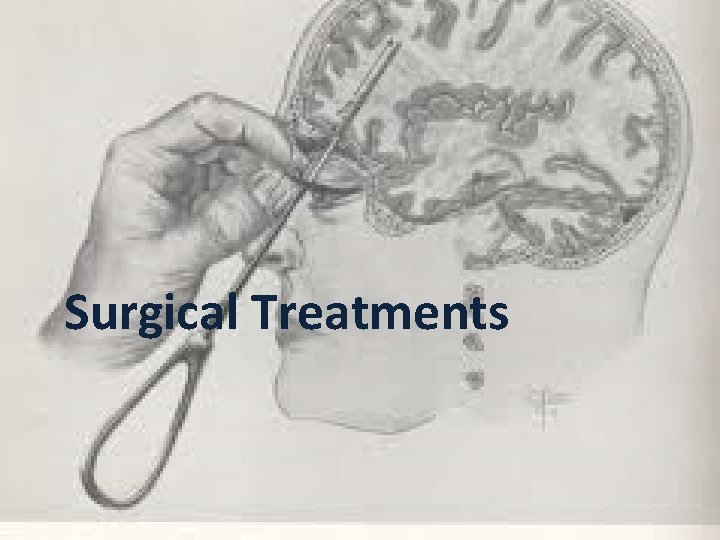
Surgical Treatments
Introduction • Different parts of the brain control different psychological processes • For example= Frontal lobe • Limbic system? • Abnormalities in the brain cause psychological symptoms: Parkinson‘s • Disconnection or destruction of those brain tissues can alleviate /cure the problem • Psychosurgery has scarcely been used as a treatment for schizophrenia since the early 1970’s when it was replaced by drug treatment (Mc. Leod, 2008)
Supporting evidence • http: //news. bbc. co. uk/1/hi/health/2345971. s tm - Brain tumour caused paedohilia • http: //www. cancer. net/navigating-cancercare/side-effects/mental-confusion-ordelirium- certian brain cancers causing delirium •
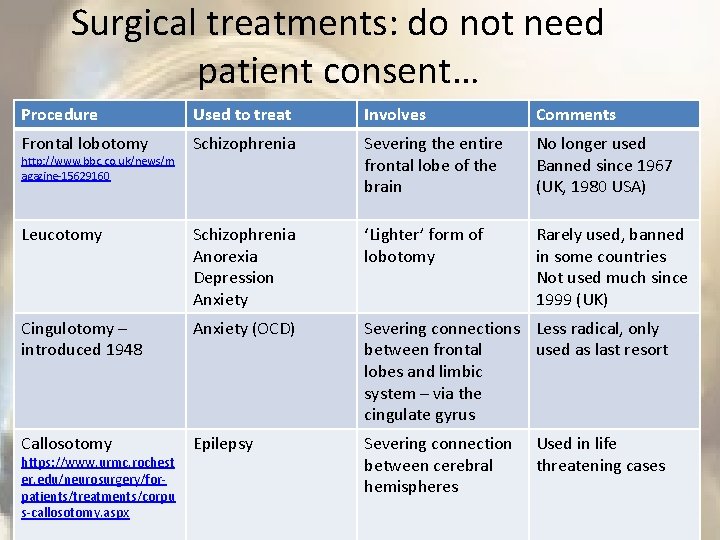
Surgical treatments: do not need patient consent… Procedure Used to treat Involves Comments Frontal lobotomy Schizophrenia Severing the entire frontal lobe of the brain No longer used Banned since 1967 (UK, 1980 USA) Leucotomy Schizophrenia Anorexia Depression Anxiety ‘Lighter’ form of lobotomy Rarely used, banned in some countries Not used much since 1999 (UK) Cingulotomy – introduced 1948 Anxiety (OCD) Severing connections Less radical, only between frontal used as last resort lobes and limbic system – via the cingulate gyrus Callosotomy Epilepsy Severing connection between cerebral hemispheres http: //www. bbc. co. uk/news/m agazine-15629160 https: //www. urmc. rochest er. edu/neurosurgery/forpatients/treatments/corpu s-callosotomy. aspx Used in life threatening cases
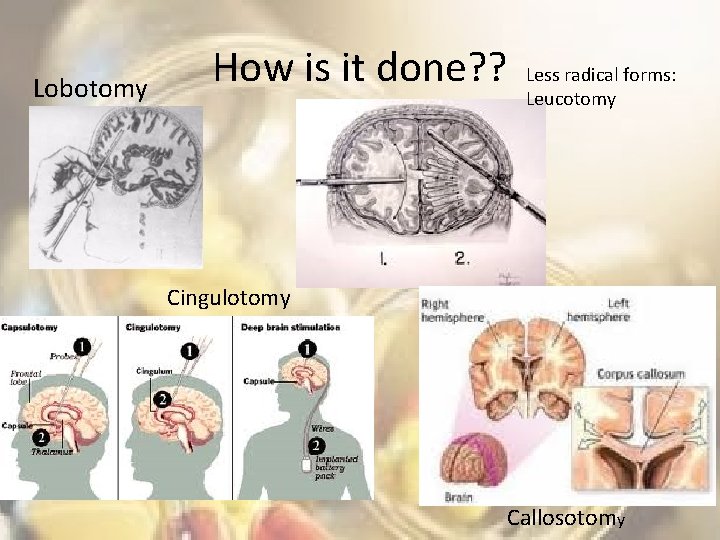
Lobotomy How is it done? ? Less radical forms: Leucotomy Cingulotomy Callosotomy
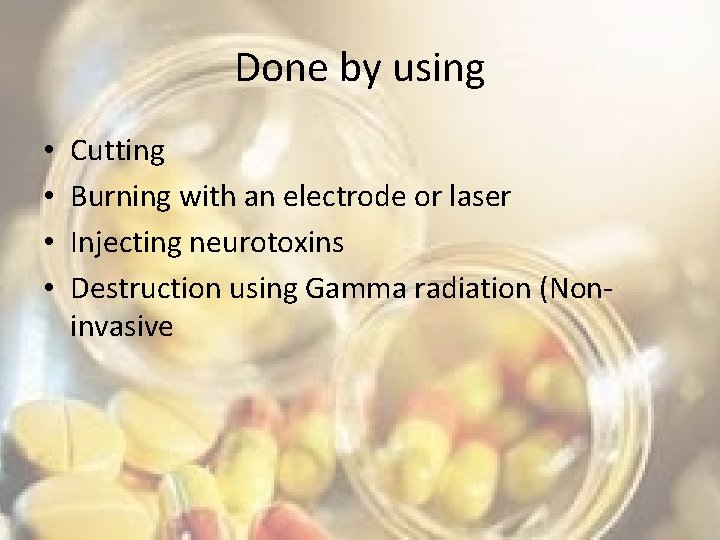
Done by using • • Cutting Burning with an electrode or laser Injecting neurotoxins Destruction using Gamma radiation (Noninvasive
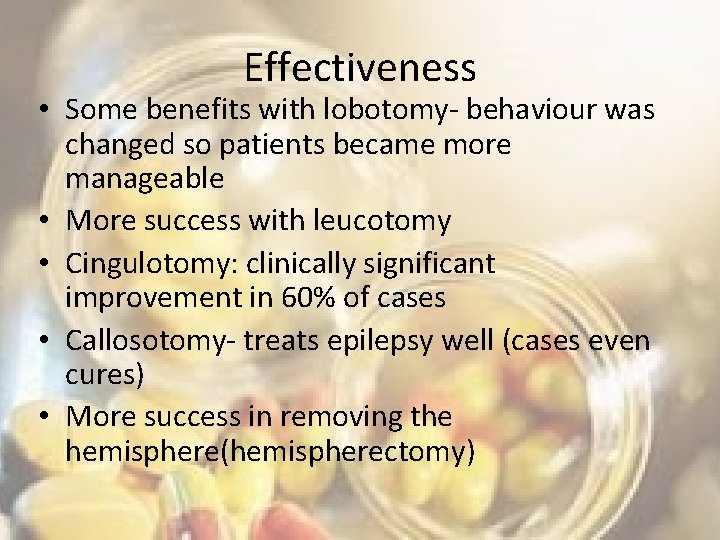
Effectiveness • Some benefits with lobotomy- behaviour was changed so patients became more manageable • More success with leucotomy • Cingulotomy: clinically significant improvement in 60% of cases • Callosotomy- treats epilepsy well (cases even cures) • More success in removing the hemisphere(hemispherectomy)
Appropriateness • Surgery is used only as a last resort • It can be the best treatment especially in cases of tumours causing mental illness conditions (see supporting evidence slide)
However…
What is wrong with this treatment? • Very risky- can cause death • Lobotomies were banned due to a patient haemorrhaging • The effects are irreversible • There may be no benefit to the patient- a lot is calculated guess work that the behaviour is resulting from a biological factor
Ethical implications • Is it right that patients do not need to give consent • When Consent may not be needed - s 63 Mental Health Act 1983 • ‘A patient who has been sectioned under the Mental Health Act may be treated without the requirement for consent. This is only applicable for treatment for the mental illness’ (Mental Health Act 1983) • Surgery has been known to be abused • What happens if it is not what the Doctor thought? Remember surgery cannot be reversed!
• • ECT: Electric shock treatment Supporting information: http: //www. mind. org. uk/information-support/drugs -and-treatments/electroconvulsive-therapyect/#. VUE 7 jrd. Mv. IU http: //www. psychiatrictimes. com/electroconvulsive -therapy/ect-ethical-treatment