World War I Standard SS 6 H 3
- Slides: 90
World War I Standard SS 6 H 3: Explain conflict and change in Europe. a. Describe the aftermath of WWI: the rise of communism, the Treaty of Versailles, the rise of Nazism, and worldwide depression.
Brainpop Introduction □ https: //www. brainpop. com/socialstud ies/ushistory/worldwari/preview. weml
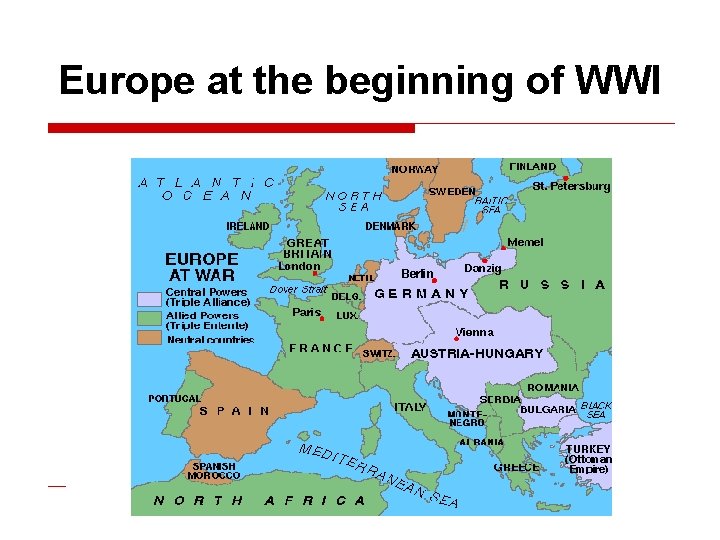
Europe at the beginning of WWI
Causes of WWI M. A. I. N *hint* (There are 4 main causes of WWI)
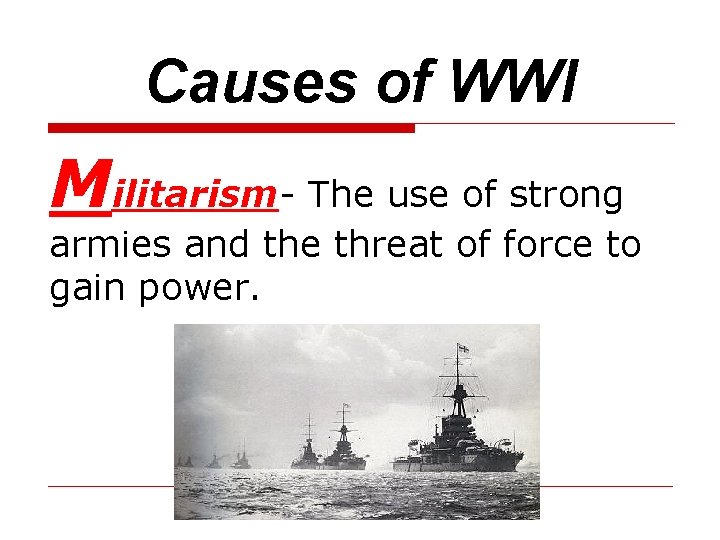
Causes of WWI Militarism- The use of strong armies and the threat of force to gain power.
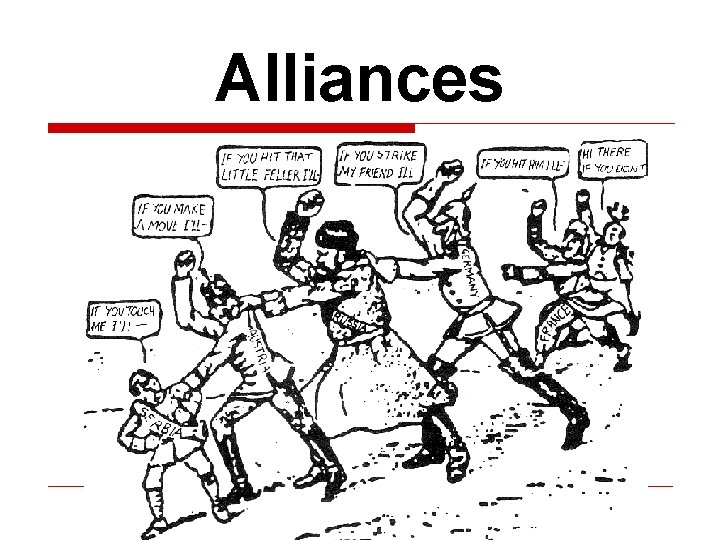
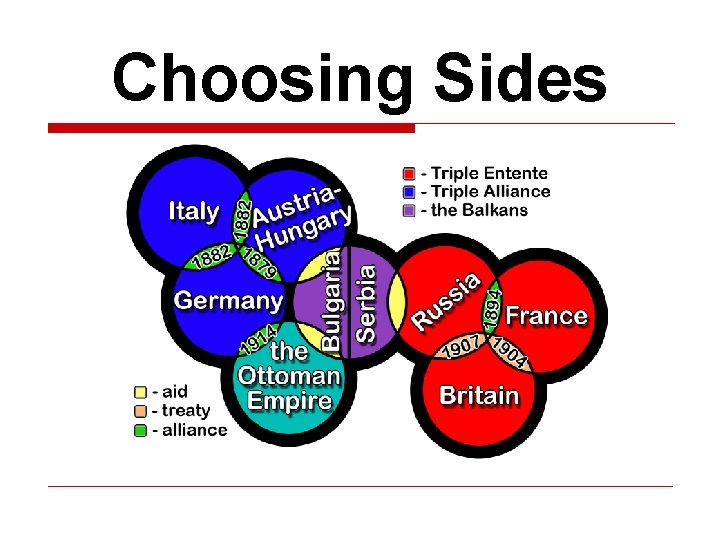
Causes of WWI Alliances- An agreement between countries. ■ What are some ways you may make an alliance at school? ■ What could be another word for alliance?
Alliances
Choosing Sides
Causes of WWI Imperialism- Stronger nations extend their power of weaker territories. ■ How might strong nations extend their power? *Hint* Military? Economic?
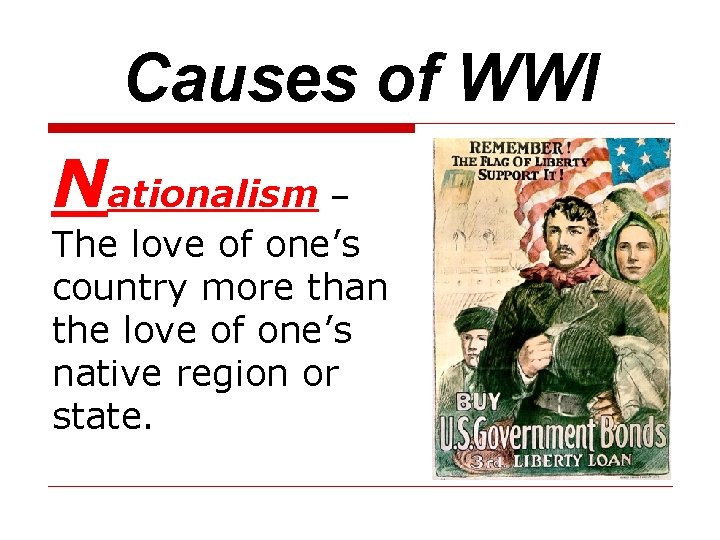
Causes of WWI Nationalism – The love of one’s country more than the love of one’s native region or state.
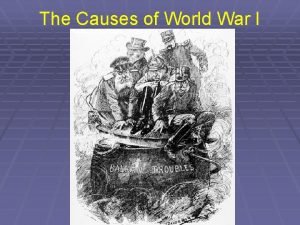
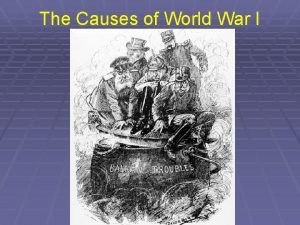
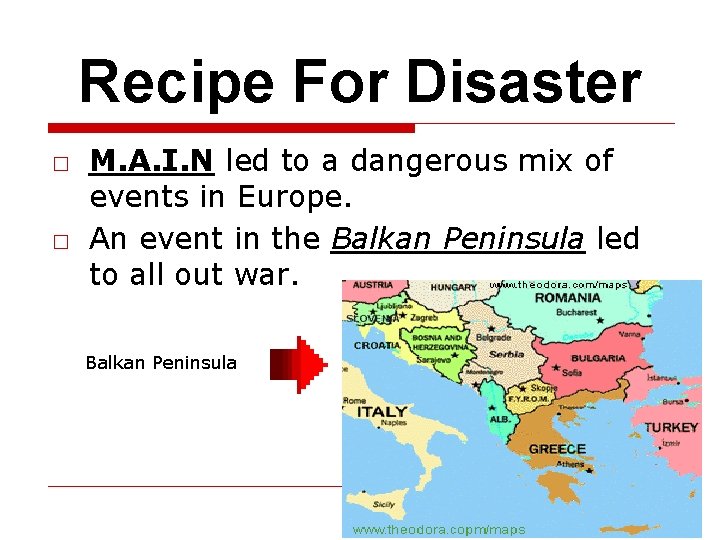
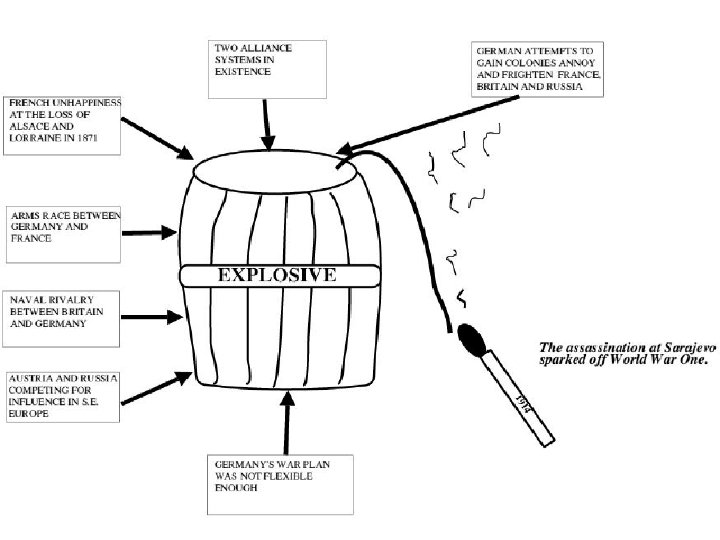
Recipe For Disaster □ M. A. I. N led to a dangerous mix of events in Europe. □ An event in the Balkan Peninsula led to all out war. Balkan Peninsula
Powder Keg of Europe □ The Balkan Peninsula is known as the Powder Keg of Europe. ■ Why do you think that would be?
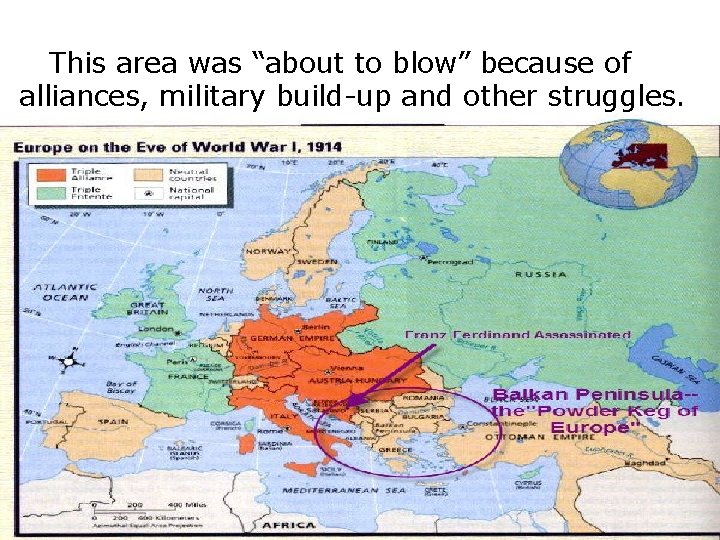
This area was “about to blow” because of alliances, military build-up and other struggles.
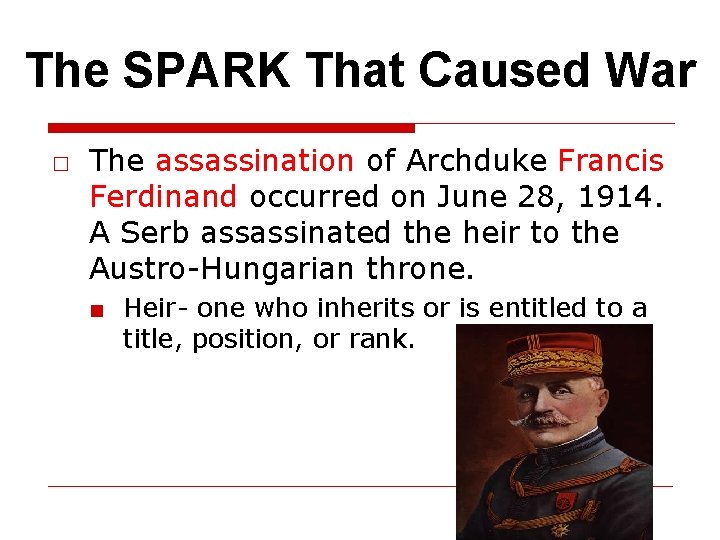
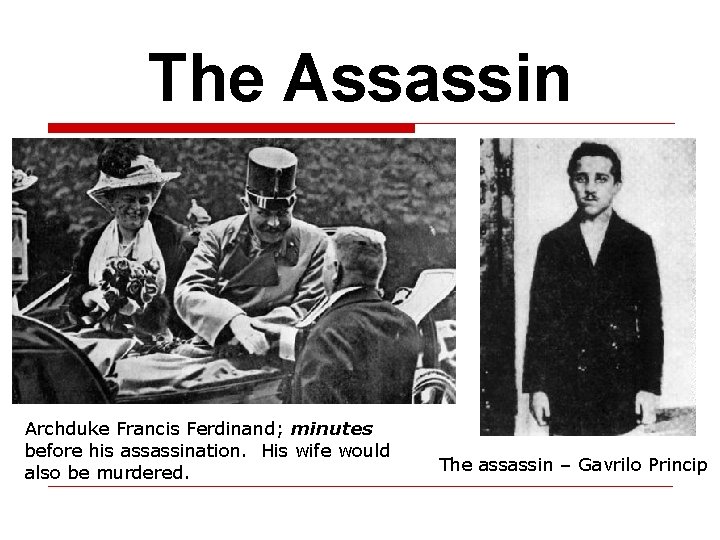
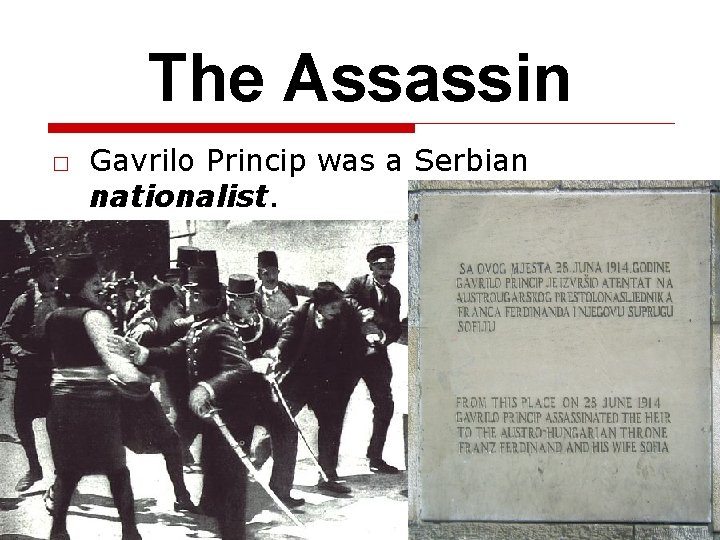
The SPARK That Caused War □ The assassination of Archduke Francis Ferdinand occurred on June 28, 1914. A Serb assassinated the heir to the Austro-Hungarian throne. ■ Heir- one who inherits or is entitled to a title, position, or rank.
The Assassin Archduke Francis Ferdinand; minutes before his assassination. His wife would also be murdered. The assassin – Gavrilo Princip
The Assassin □ Gavrilo Princip was a Serbian nationalist.
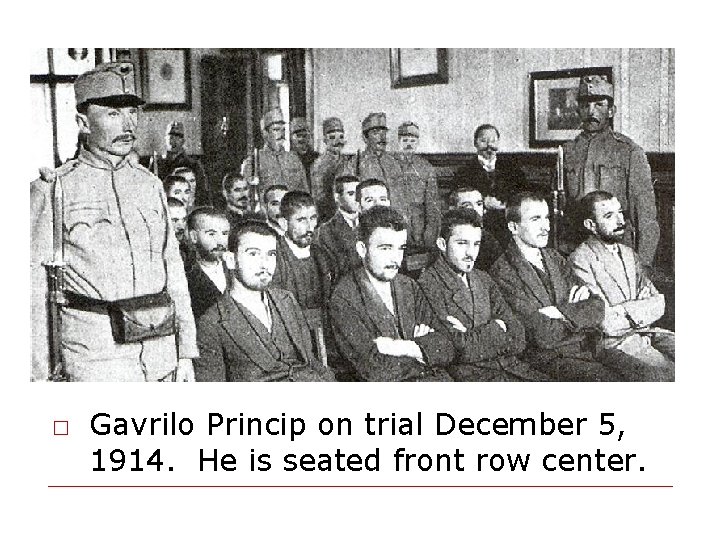
□ Gavrilo Princip on trial December 5, 1914. He is seated front row center.
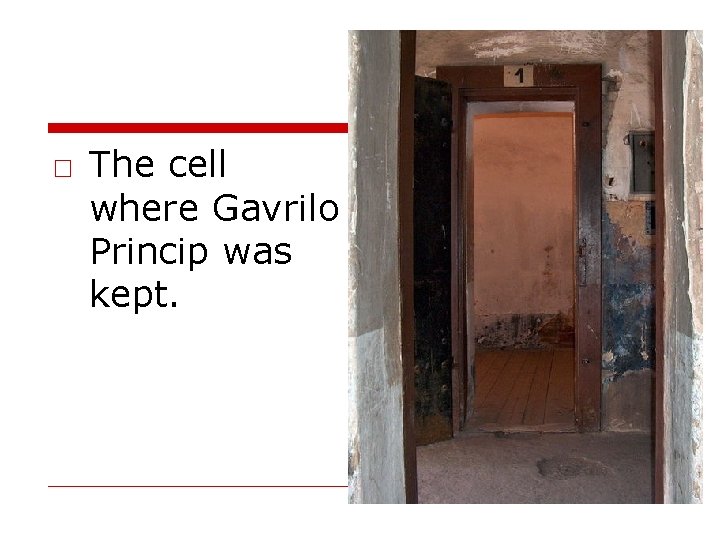
□ The cell where Gavrilo Princip was kept.
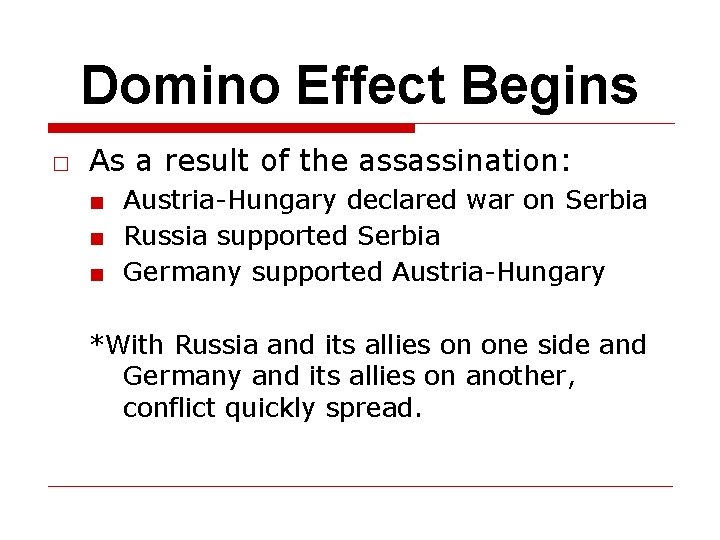
Domino Effect Begins □ As a result of the assassination: ■ Austria-Hungary declared war on Serbia ■ Russia supported Serbia ■ Germany supported Austria-Hungary *With Russia and its allies on one side and Germany and its allies on another, conflict quickly spread.
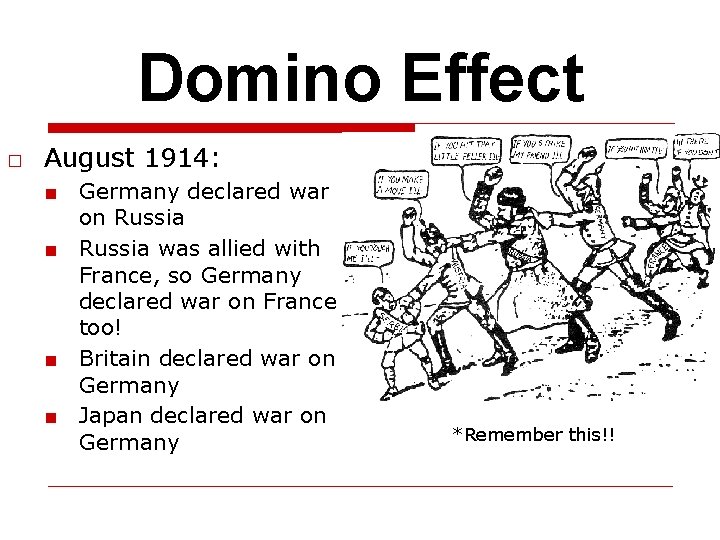
Domino Effect □ August 1914: ■ Germany declared war on Russia ■ Russia was allied with France, so Germany declared war on France too! ■ Britain declared war on Germany ■ Japan declared war on Germany *Remember this!!
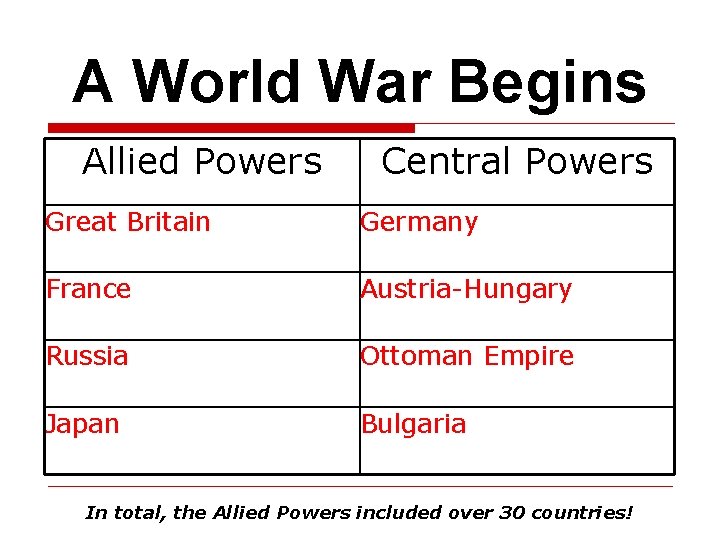
A World War Begins Allied Powers Central Powers Great Britain Germany France Austria-Hungary Russia Ottoman Empire Japan Bulgaria In total, the Allied Powers included over 30 countries!
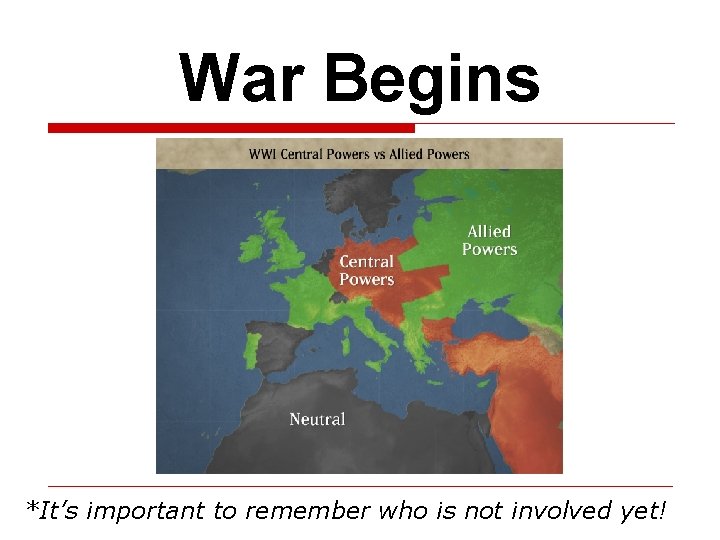
War Begins *It’s important to remember who is not involved yet!
World War Spreads http: //www. the-map-ashistory. com/demos/tome 06/WW 1 Map-Beginning-of-the-Great-War 1914. php http: //watchmojo. com/video/id/8381/
U. S. Remains Neutral □ Why would the U. S. remain neutral? ■ War was 3, 000 miles away ■ Did not threaten lives or property ■ Military was not very strong (no reason to be). ■ Americans were sympathetic towards Great Britain because of ancestral ties.
Why Did the U. S. Eventually Join? □ Changing Government in Russia (End of the Czar) □ Germany trying to persuade Mexico to join the Central Powers □ German U-Boats attacked US & British Ships
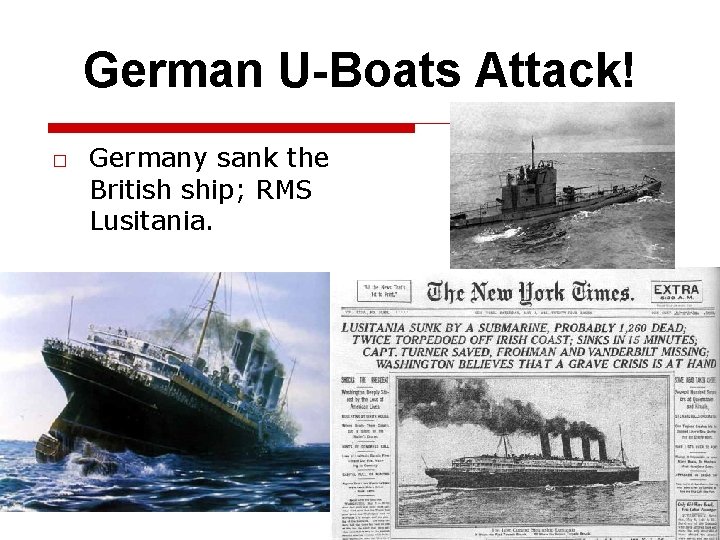
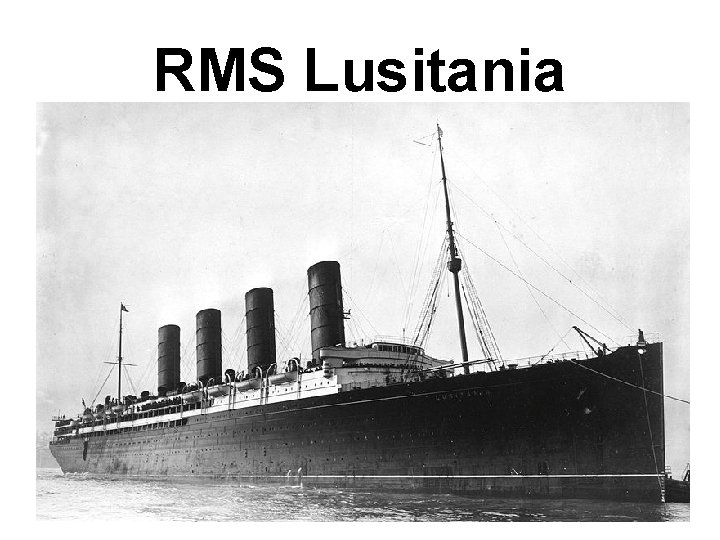
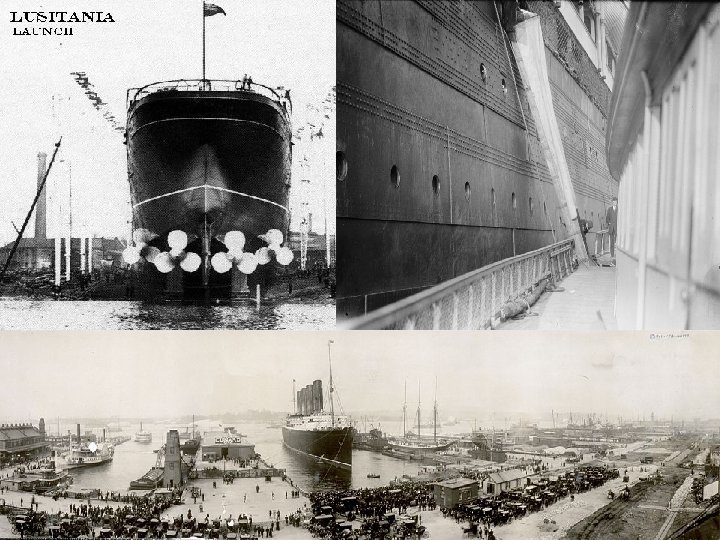
German U-Boats Attack! □ Germany sank the British ship; RMS Lusitania.
RMS Lusitania
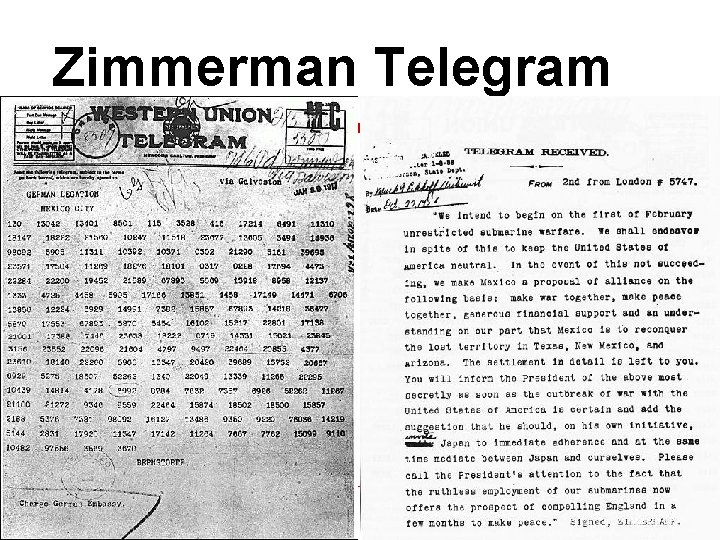
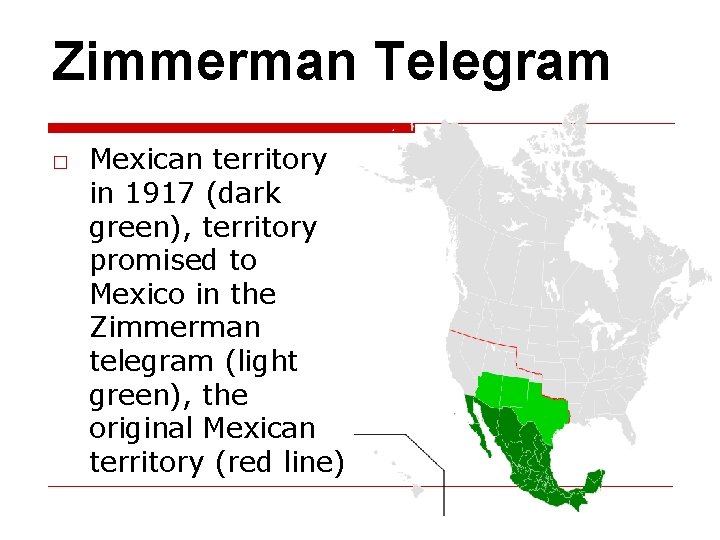
Hey Mexico!! □ Zimmerman Telegram - Germany’s attempt to persuade Mexico to join the fight. ■ Why do you think Germany would want Mexico to join the Central Powers?
Zimmerman Telegram
Zimmerman Telegram □ Mexican territory in 1917 (dark green), territory promised to Mexico in the Zimmerman telegram (light green), the original Mexican territory (red line)
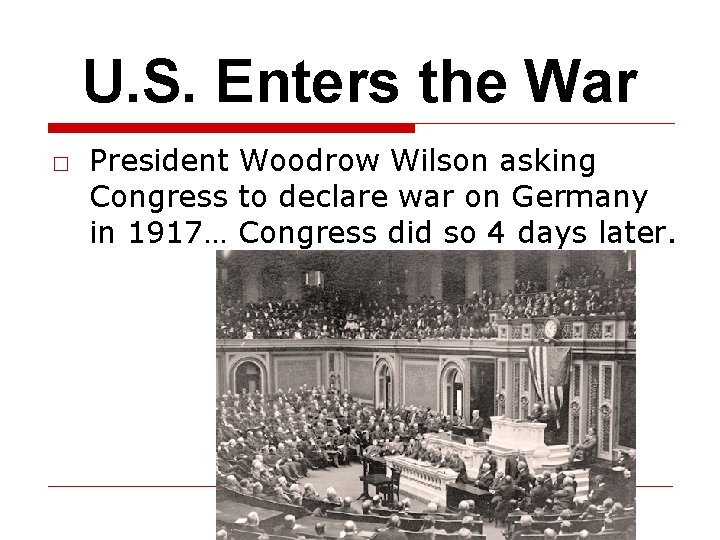
U. S. Enters the War □ President Woodrow Wilson asking Congress to declare war on Germany in 1917… Congress did so 4 days later.
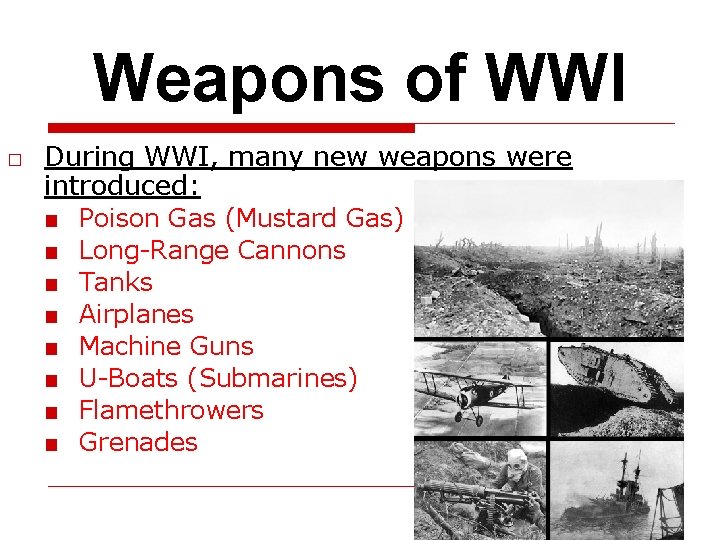
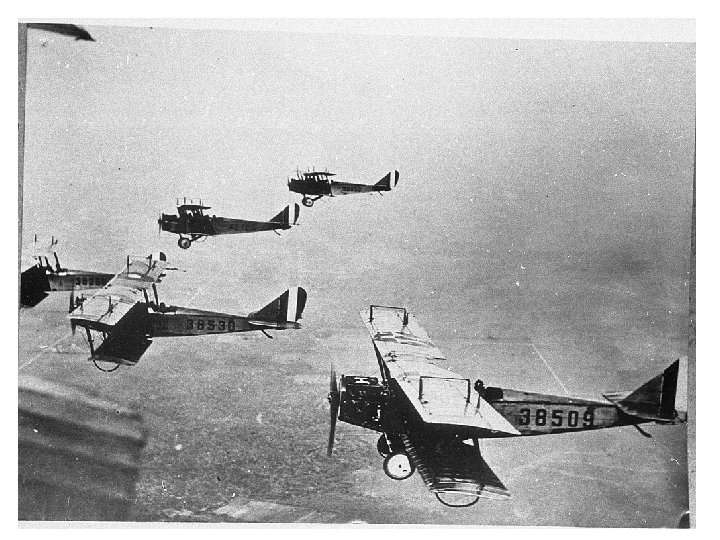
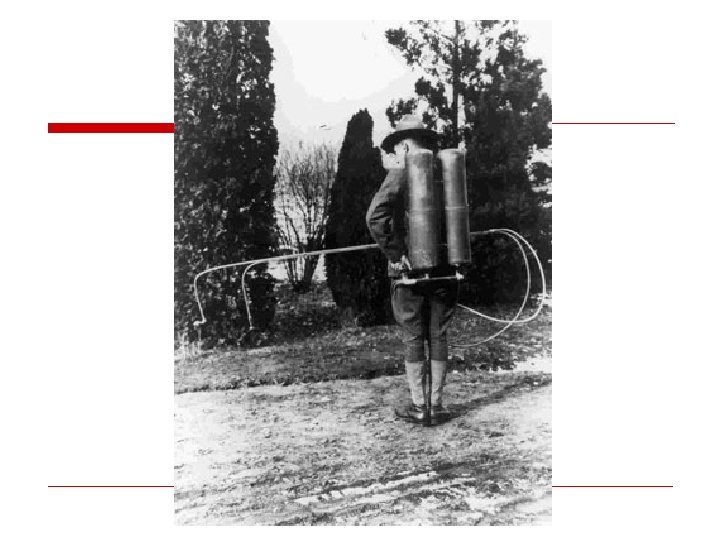
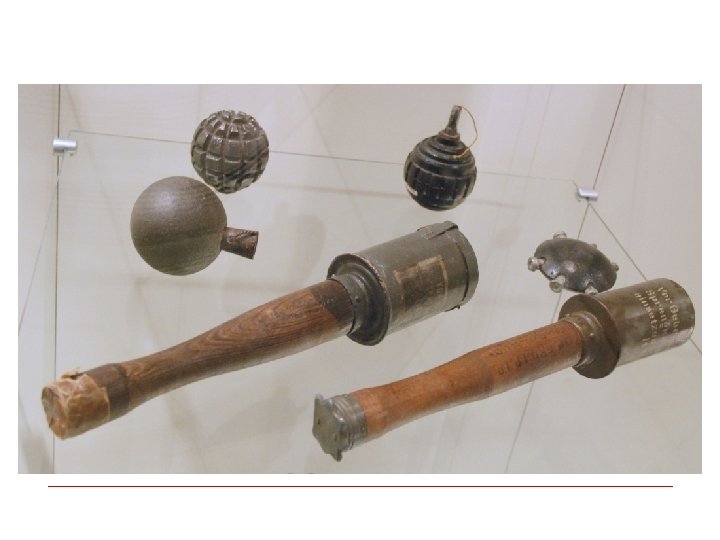
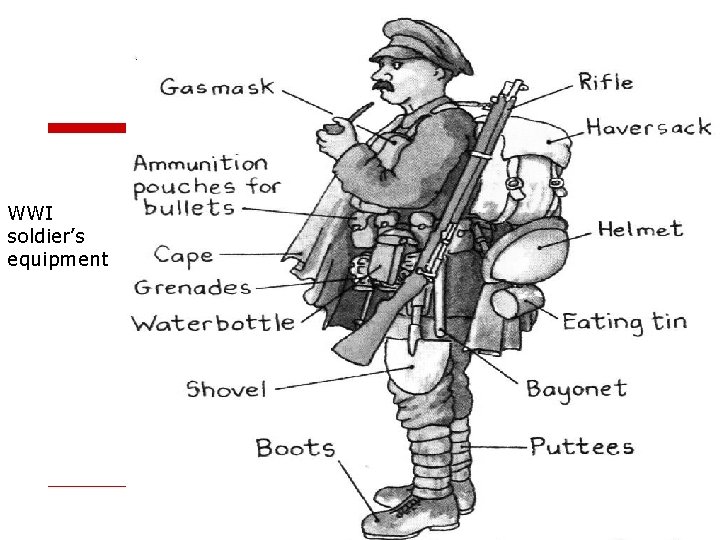
Weapons of WWI □ During WWI, many new weapons were introduced: ■ ■ ■ ■ Poison Gas (Mustard Gas) Long-Range Cannons Tanks Airplanes Machine Guns U-Boats (Submarines) Flamethrowers Grenades
Flyboy’s Movie Scene □ http: //www. youtube. com/watch? v=c 6 V-z. G 5 n. Po. A
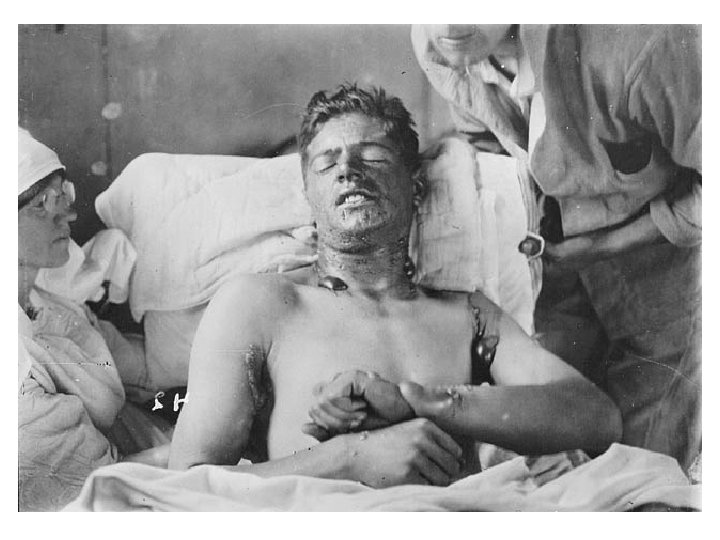
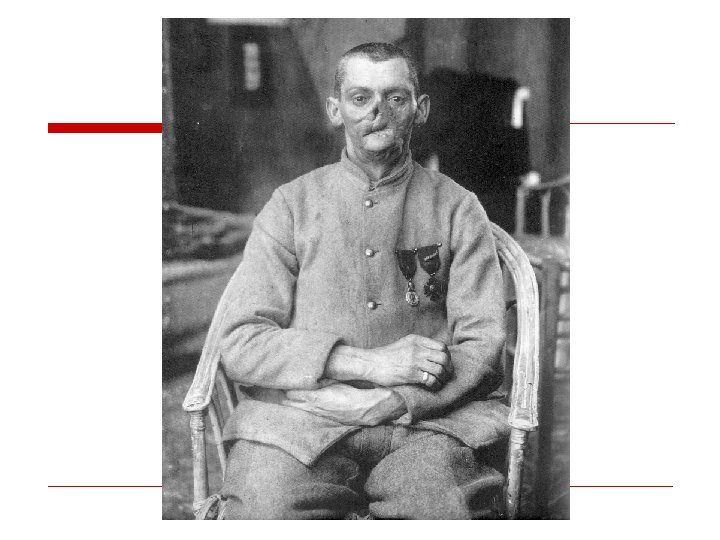
Effects of Mustard Gas Warning! Do not look at the next slide if you do not want to see the effects of mustard gas! You have been warned……
Inside the Mark I Tank □ BBC - History - World Wars: Weapons of War: Mark 1 Tank
WWI soldier’s equipment
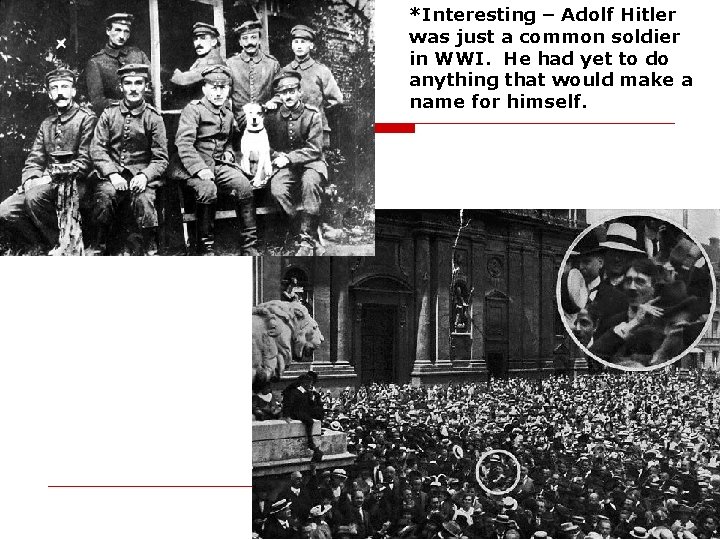
*Interesting – Adolf Hitler was just a common soldier in WWI. He had yet to do anything that would make a name for himself.
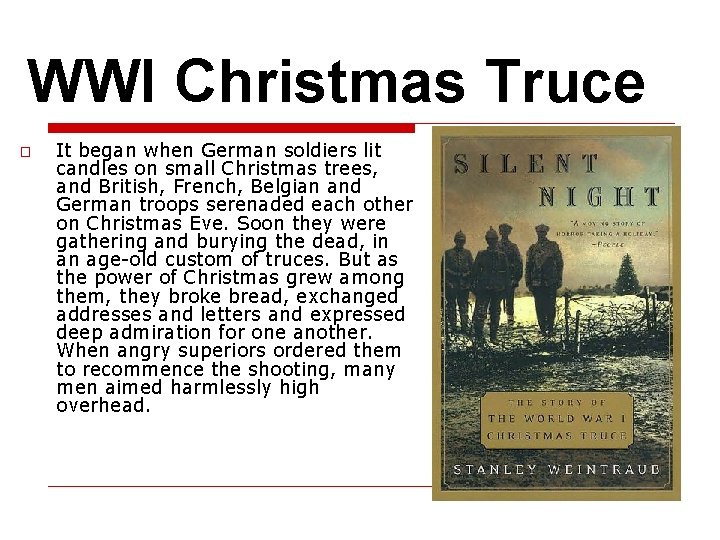
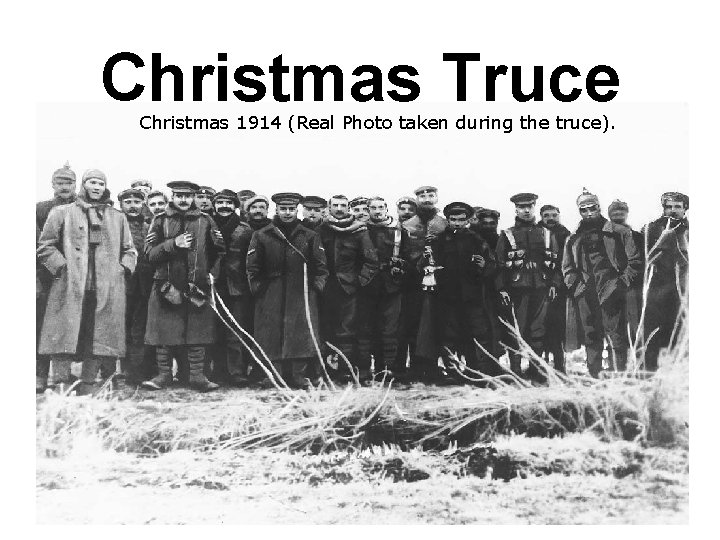
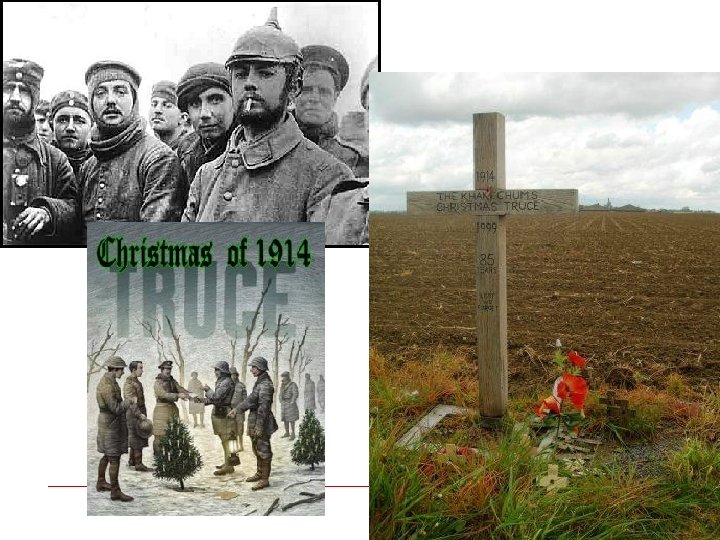
WWI Christmas Truce □ It began when German soldiers lit candles on small Christmas trees, and British, French, Belgian and German troops serenaded each other on Christmas Eve. Soon they were gathering and burying the dead, in an age-old custom of truces. But as the power of Christmas grew among them, they broke bread, exchanged addresses and letters and expressed deep admiration for one another. When angry superiors ordered them to recommence the shooting, many men aimed harmlessly high overhead.
Christmas Truce Christmas 1914 (Real Photo taken during the truce).
□ http: //www. history. com/topics/worldwar-i/christmas-truce-of-1914
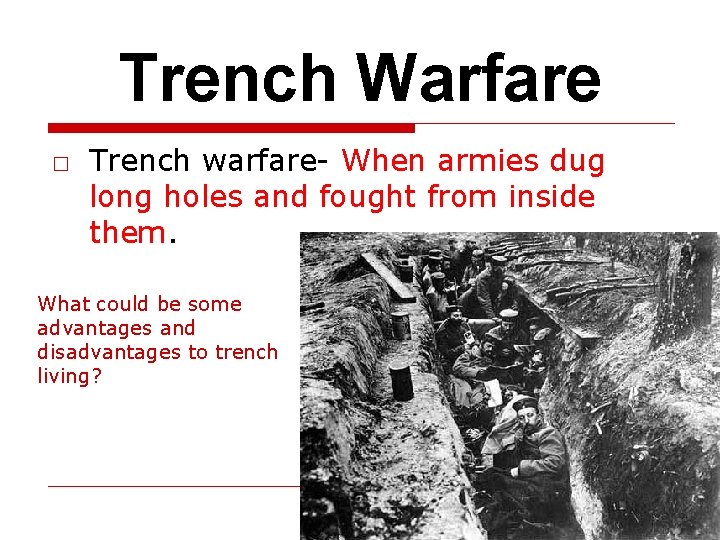
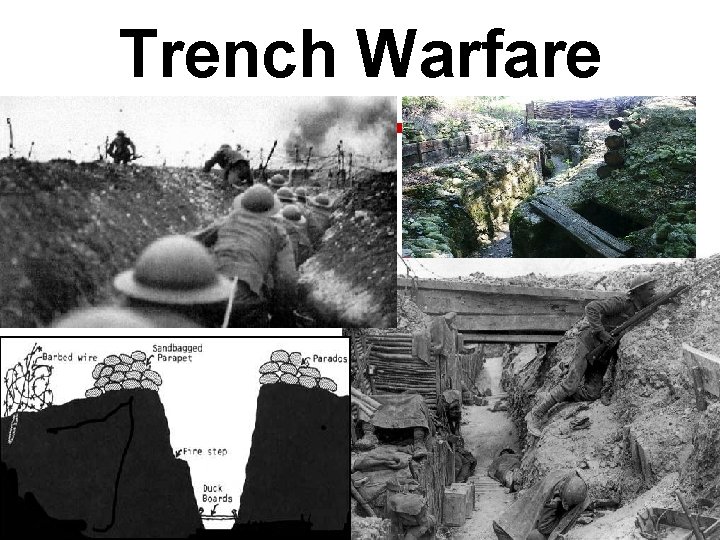
Trench Warfare □ Trench warfare- When armies dug long holes and fought from inside them. What could be some advantages and disadvantages to trench living?
Trench Warfare
WWI Trench Virtual Tour □ BBC - History - World Wars: World War One Trench Virtual Tour
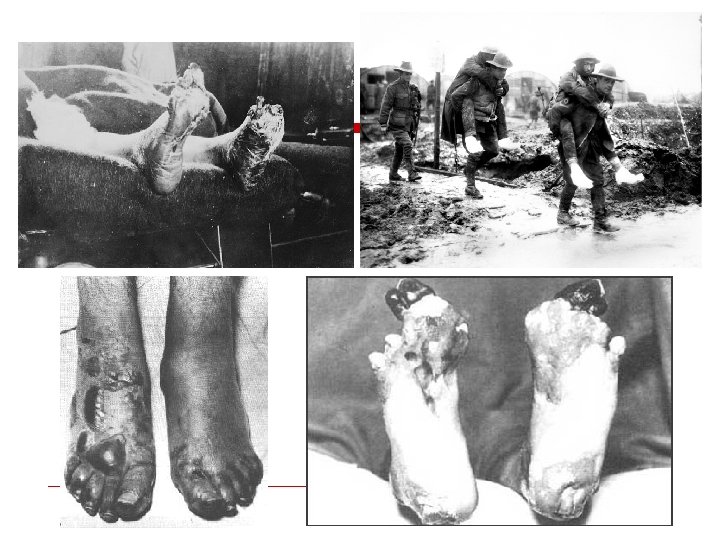
Trench Foot □ Trench foot - Was an infection caused by feet exposed to wet and cold conditions. Warning! Do not look at the next slide if you do not want to see photographs of serious trench foot infections! You have been warned……
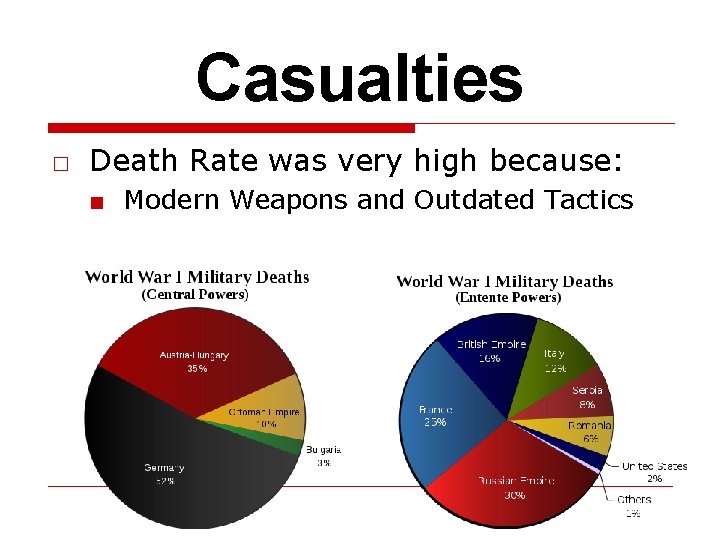
Casualties □ Death Rate was very high because: ■ Modern Weapons and Outdated Tactics
Germany Surrenders! □ Both sides signed an armistice on November 11, 1918. ■ ■ Armistice- An agreement to stop fighting. More than 8. 5 million soldiers killed More than 21 million soldiers wounded Millions of civilians killed
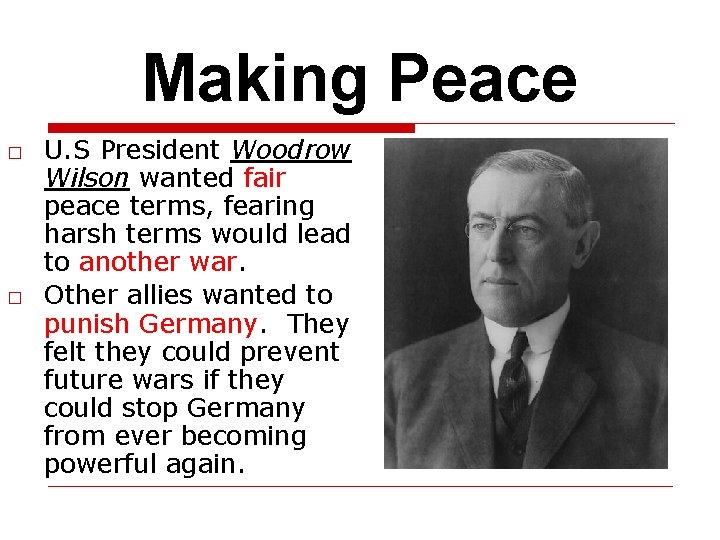
Making Peace □ U. S President Woodrow Wilson wanted fair peace terms, fearing harsh terms would lead to another war. □ Other allies wanted to punish Germany. They felt they could prevent future wars if they could stop Germany from ever becoming powerful again.
Treaty of Versailles □ Four conditions of the treaty: ■ Germany had to admit to starting the war. ■ Germany had to pay money to Allies. ($31. 4 billion) ■ Germany lost territory (1 million sq. miles) ■ Germany could never rebuild its military. *The U. S. never agreed to the Treaty of Versailles. U. S. eventually signed a separate peace treaty with Germany. * If you were Germany, how would you react to these demands? ?
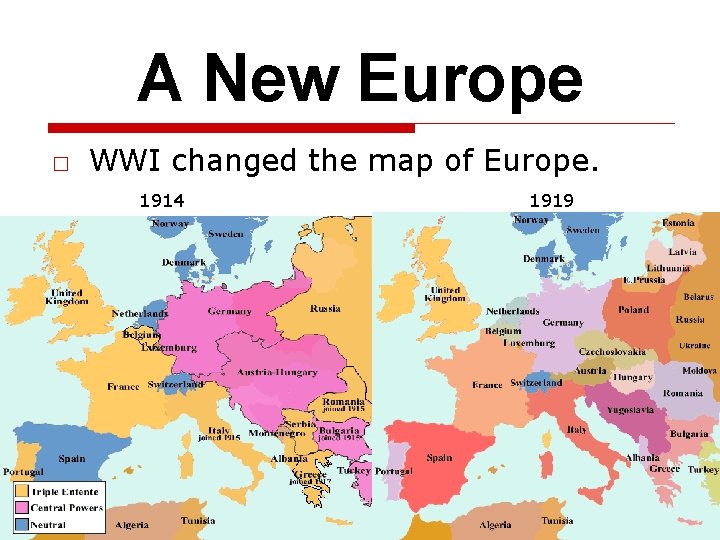
A New Europe □ WWI changed the map of Europe. 1914 1919
The future? ? ? Did you learn about anything that could lead to future conflict?
The Russian Revolution and Rise of Communism
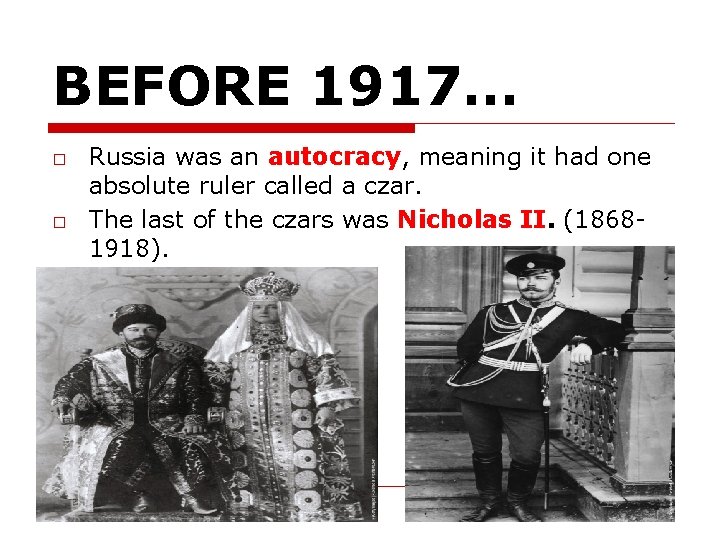
BEFORE 1917… □ Russia was an autocracy, meaning it had one absolute ruler called a czar. □ The last of the czars was Nicholas II. (18681918).
© Brain Wrinkles
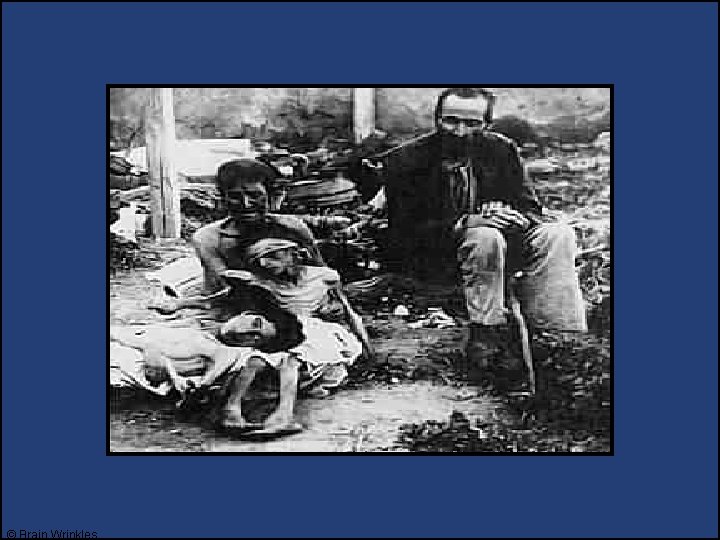
RUSSIA IN EARLY 1917… □ Russia had been fighting in WWI since the summer of 1914. Five million were killed, wounded, or missing. □ Citizens were beyond poor and did not enough food to eat. □ Soldiers did not have enough clothes, shoes, or weapons. □ Germany seemed to be winning the war.
© Brain Wrinkles
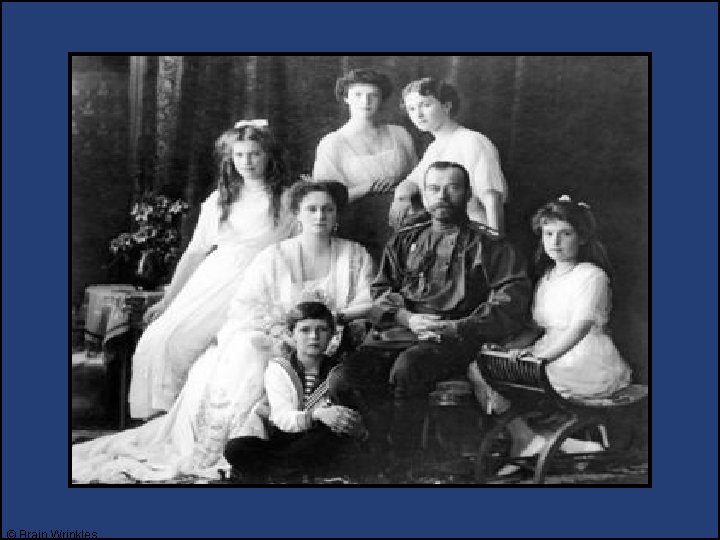
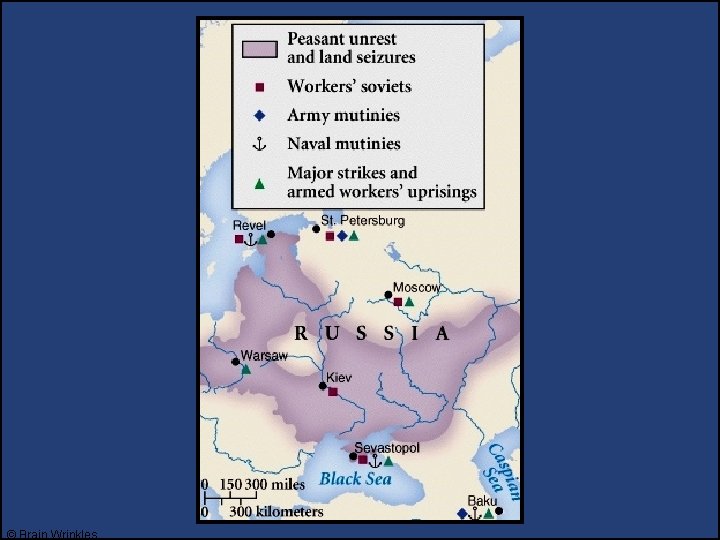
IN EARLY 1917… □ Czar Nicholas II seemed to be ignoring his people’s unhappiness. □ Thousands of workers began rioting in the streets, and even the czar’s own army began to turn against him! □ Nicholas and his family were captured during a revolt, and a government was set up to try to run the country. It was unsuccessful because there were too many problems.
© Brain Wrinkles
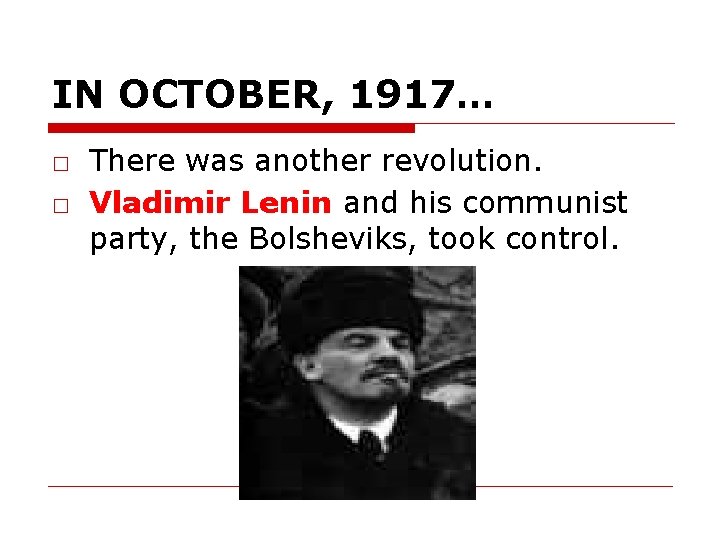
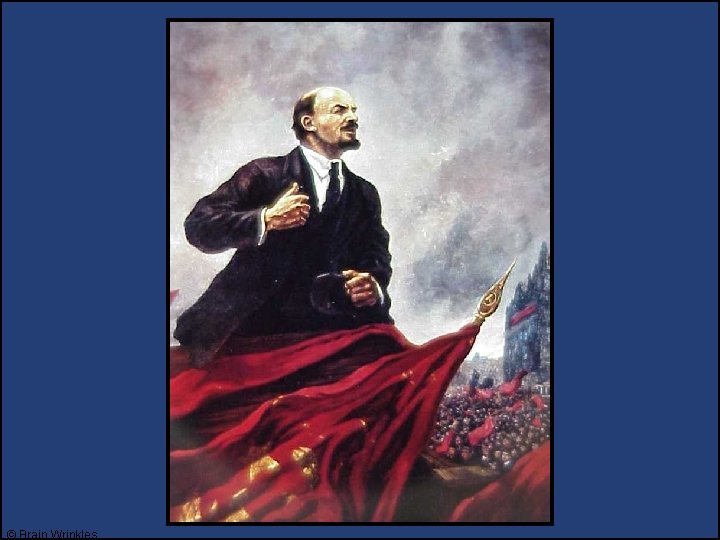
IN OCTOBER, 1917… □ There was another revolution. □ Vladimir Lenin and his communist party, the Bolsheviks, took control.
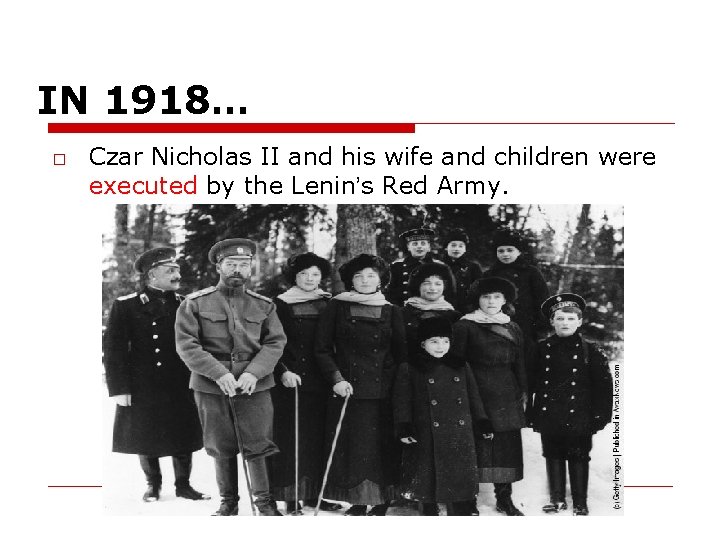
IN 1918… □ Czar Nicholas II and his wife and children were executed by the Lenin’s Red Army.
Introducing the Soviet Union…… Lenin declared himself dictator of Russia and reorganized the country. He renamed it the Soviet Union in 1922. □ The new Soviet Union signed a peace treaty with Germany and gave Germany a large amount of good land with many natural resources. □ Peace didn’t last long…
© Brain Wrinkles
Communism The tough times of WWI helped produce the rise of Communism- a new type of political system based on a society with no social classes (rich, middle, poor), where people could work together and share everything. This sounded good, but in reality, communism resulted in command economies and dictatorships.
Can you answer these? 1) What type of government did Czar Nicholas II have in Russia? a. b. c. d. Autocracy Democracy Oligarchy Republic
2) What was the cause of the Russian Revolution? a. The czar was executed. b. There were food shortages in Russia. c. The Germans showed signs of surrender. d. Soldiers did not know how to use their weapons.
3) Which leader did not protect the royal family, changed Russia’s name to the Soviet Union, made a treaty with Germany to end the war, and gave up large amounts of Russian land to Germany? a. Vladimir Lenin b. Czar Nicholas II c. Emperor Wilhelm II d. Woodrow Wilson
THINK: What are some ways the Russian Revolution affected us in the United States?
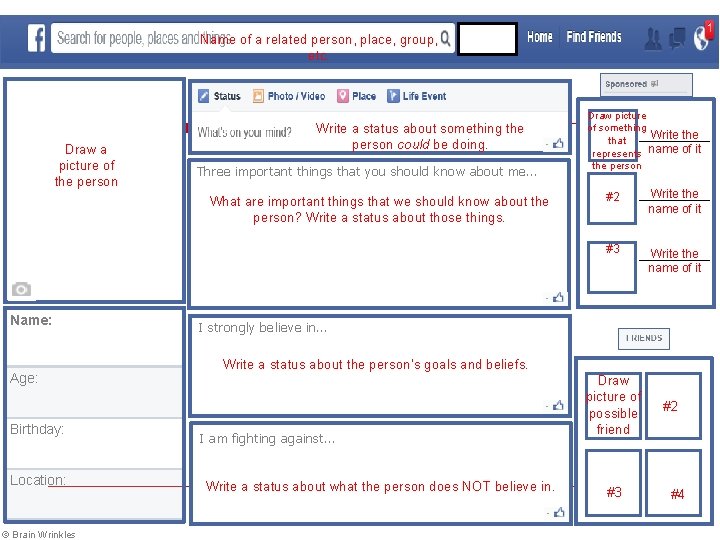
Name of a related person, place, group, etc. Draw a picture of the person Write a status about something the person could be doing. Three important things that you should know about me… What are important things that we should know about the person? Write a status about those things. Name: Age: Birthday: Location: © Brain Wrinkles Draw picture of something Write that represents name of it the person #2 Write the name of it #3 Write the name of it I strongly believe in… Write a status about the person’s goals and beliefs. I am fighting against… Write a status about what the person does NOT believe in. Draw picture of possible friend #3 #2 #4
Name: Clean It Up DO you think that the Russian Revolution could have been avoided? In the cleaning solution bottle below, write what you think Tsar Nicholas should’ve done to fix Russia’s problems. © Brain Wrinkles
Worldwide Depression In 1929, the U. S. Stock Market crashed. At this time the value of stocks owned by individuals began to lose value. Many people tried to sell at one time and the prices continued to fall. Europe and other parts of the world were also affected. Results of the Great Depression: a. factories and stores went out of business b. banks closed c. people went bankrupt (out of money) d. people were out of work e. farmers lost land f. wages fell
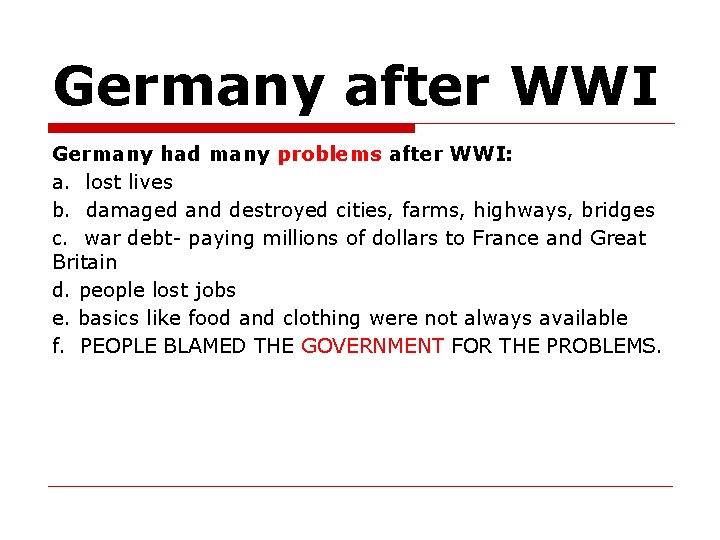
Germany after WWI Germany had many problems after WWI: a. lost lives b. damaged and destroyed cities, farms, highways, bridges c. war debt- paying millions of dollars to France and Great Britain d. people lost jobs e. basics like food and clothing were not always available f. PEOPLE BLAMED THE GOVERNMENT FOR THE PROBLEMS.
U. S. Depression Impact • At this time, Germany’s economy was being supported by loans from U. S. banks. • When the market crashed, the banks needed Germany to repay their debts immediately, which they obviously could not do. • As a result, German businesses failed and many people lost their jobs.
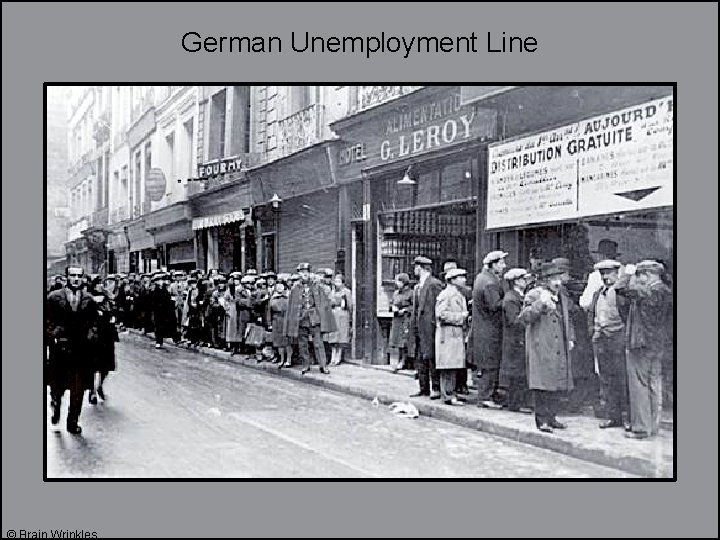
German Unemployment Line © Brain Wrinkles
© Brain Wrinkles
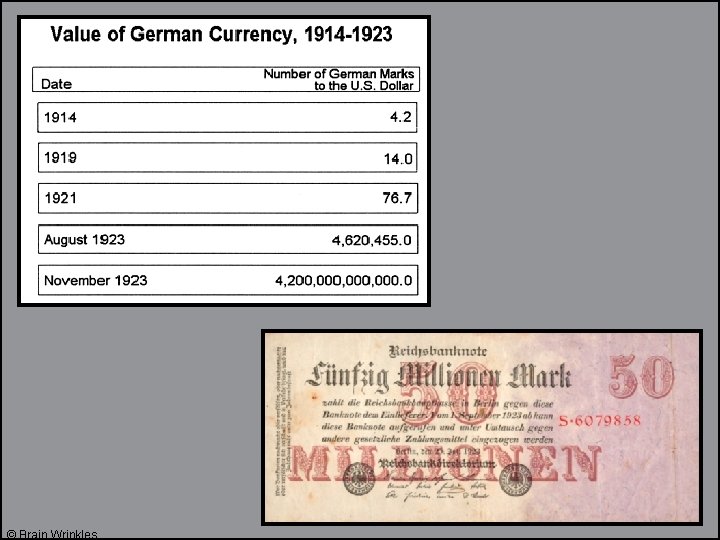
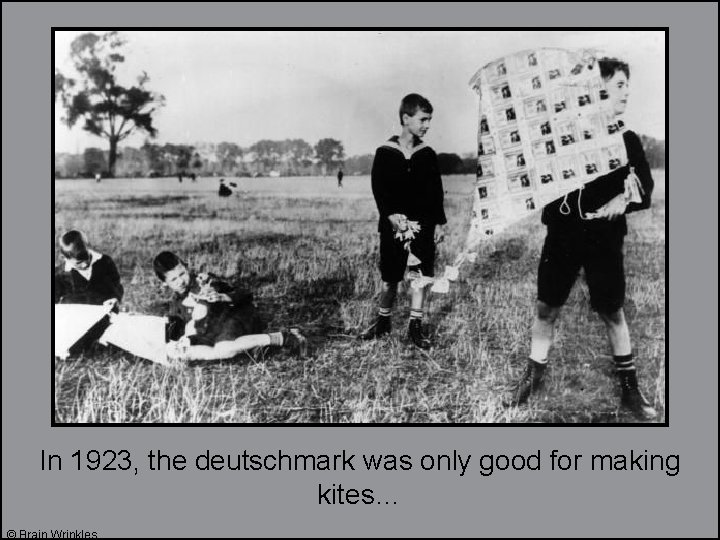
In 1923, the deutschmark was only good for making kites… © Brain Wrinkles
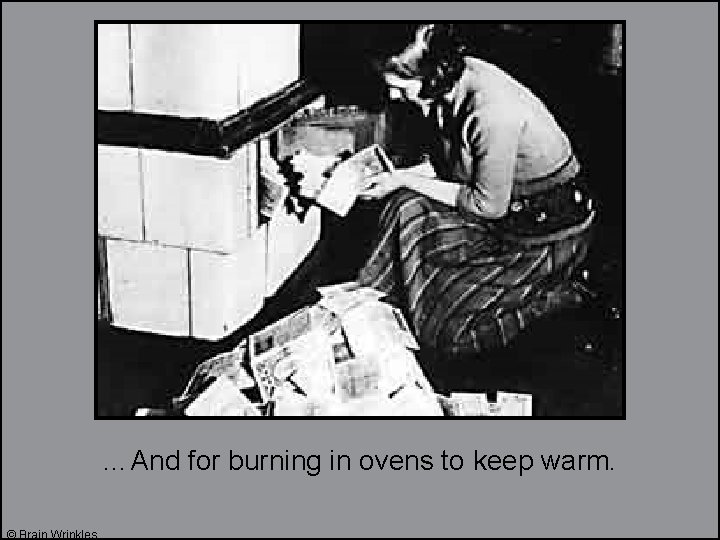
…And for burning in ovens to keep warm. © Brain Wrinkles
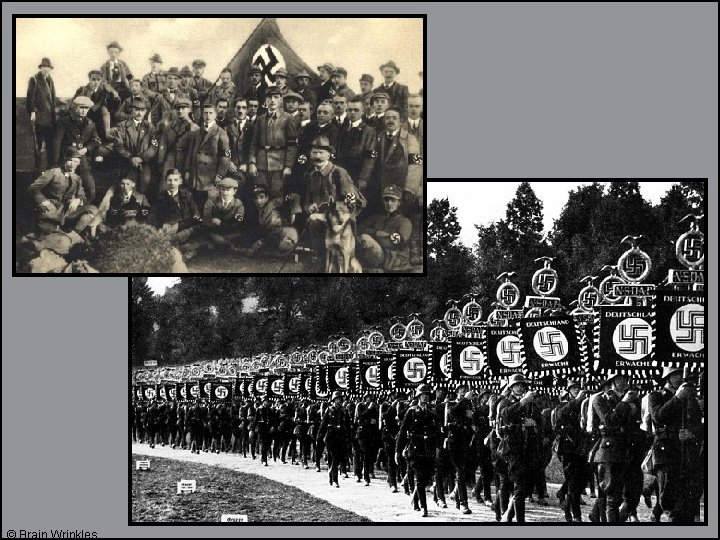
Nazi Party • As the economic situation worsened, more and more people blamed the government. • Adolf Hitler was also very angry with the situation and decided to enter politics. • He gave several powerful speeches that many Germans agreed with. • Soon, Hitler was elected leader of the National Socialist German Worker’s (Nazi) Party. • In 1923, Hitler attempted to overthrow the Weimar Republic and take control of Germany.
© Brain Wrinkles
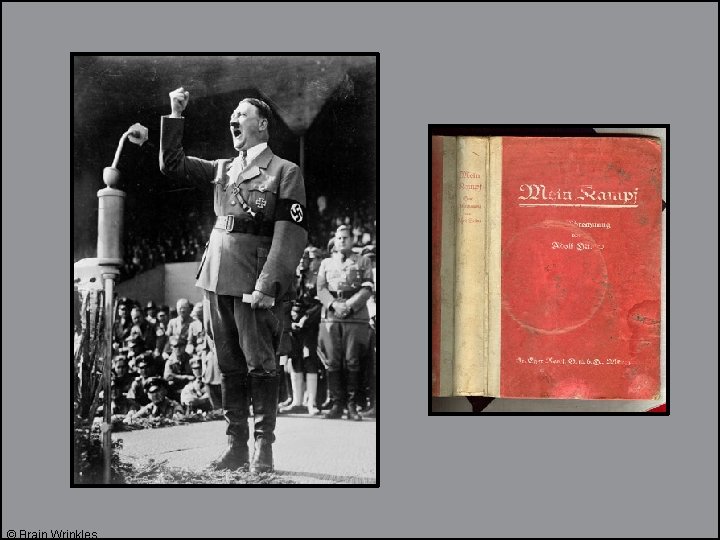
Mein Kampf • Hitler’s attempt failed and he was sentenced to nine months in prison. • While incarcerated, Hitler wrote a book called Mein Kampf, which outlined his plan to save Germany. • Hitler’s ideas included expanding Germany’s lands, eliminating “impure” races, and creating a German dictatorship. • Once released, Hitler continued giving his passionate speeches and gained more and more support for the Nazi party.
© Brain Wrinkles
Rise of Nazism □ Adolf Hitler and the Nazi Party had new ideas and ways to fix the problems. □ 1933 - Hitler became chancellor of Germany and started changing the laws to give himself more power. □ Hitler disregarded the Treaty of Versailles and rebuilt the military.