
World War I Mr Bermudez GENERAL INFORMATION ABOUT
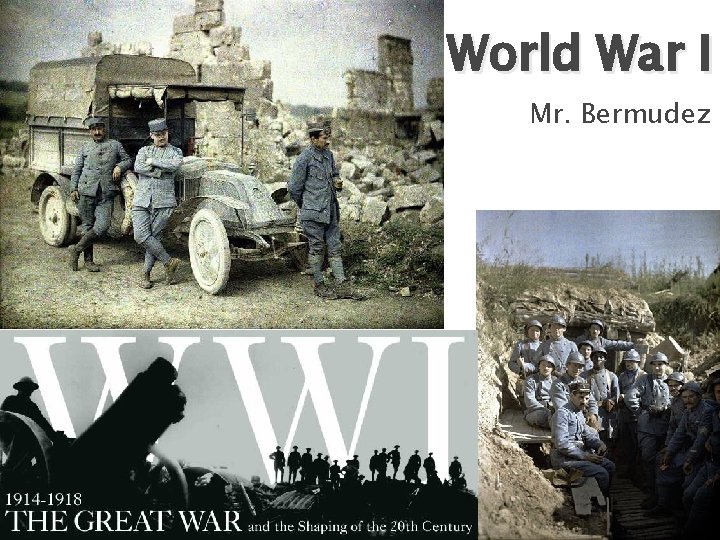
World War I Mr. Bermudez
GENERAL INFORMATION ABOUT WWI � Started � Ended on July 28, 1914 November 11, 1918 � Almost 8 million died because of the war ◦ Russia having the most : 1. 7 million � 22, 000 wounded

Causes of WWI � Militarism � MANIA! � Alliances � Nationalism � Imperialism � Assassination Duke of Arch

Militarism � Militarism: the development of armed forces and their use as a tool of diplomacy ◦ Completion ◦ You have a Machine Gun, Now I want a Machine Gun ◦ Military Spending � Germany 1890 becomes strongest nation in Europe-
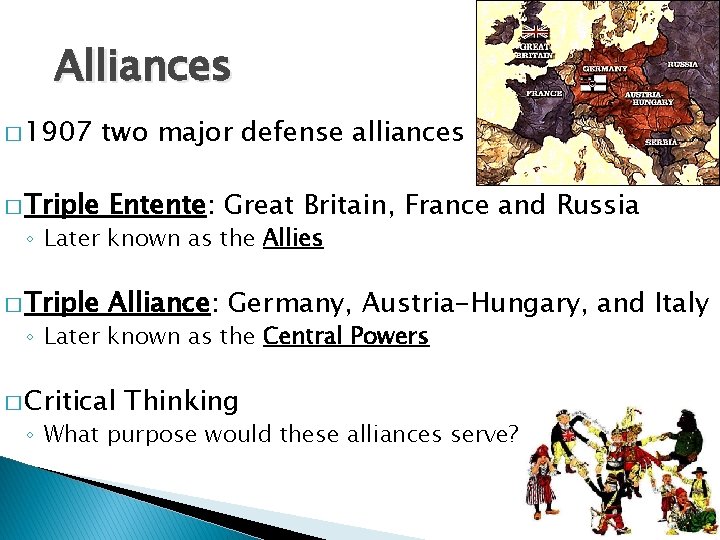
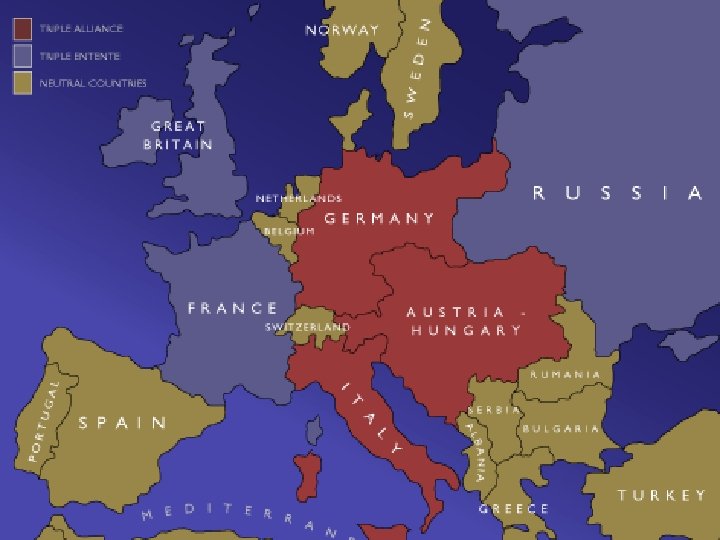
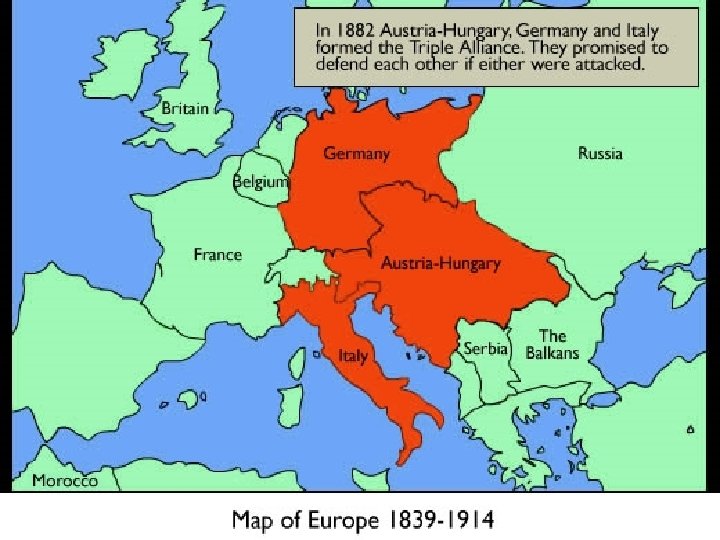
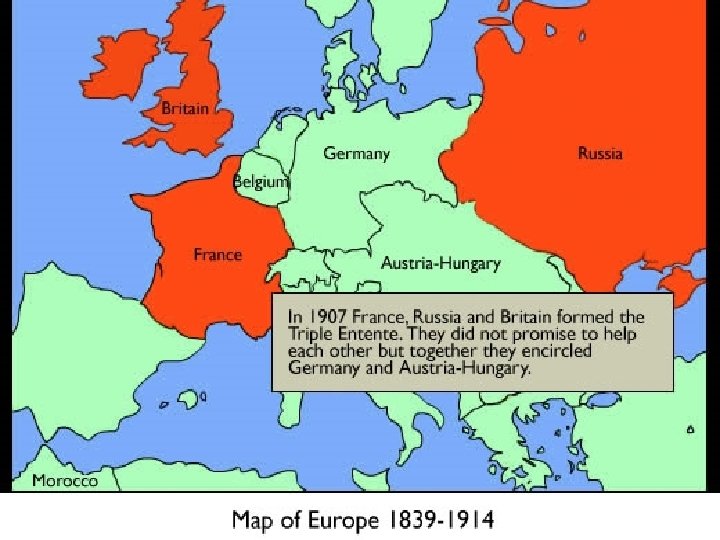
Alliances � 1907 two major defense alliances � Triple Entente: Great Britain, France and Russia � Triple Alliance: Germany, Austria-Hungary, and Italy ◦ Later known as the Allies ◦ Later known as the Central Powers � Critical Thinking ◦ What purpose would these alliances serve?
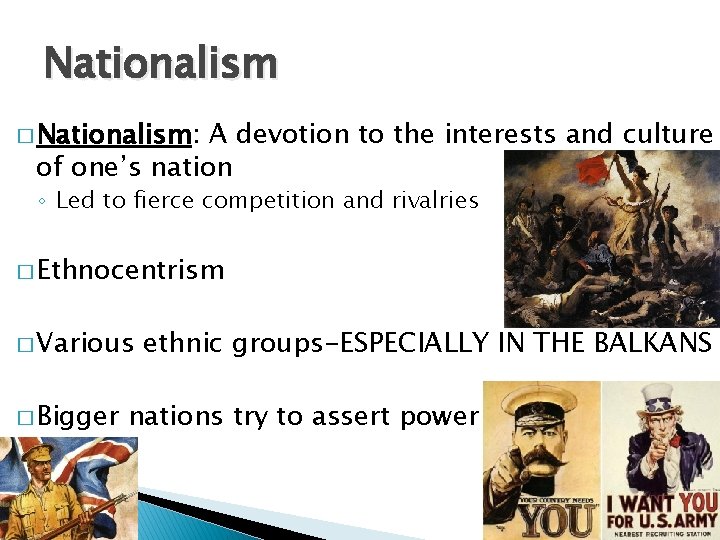
Nationalism � Nationalism: A devotion to the interests and culture of one’s nation ◦ Led to fierce competition and rivalries � Ethnocentrism � Various � Bigger ethnic groups-ESPECIALLY IN THE BALKANS nations try to assert power
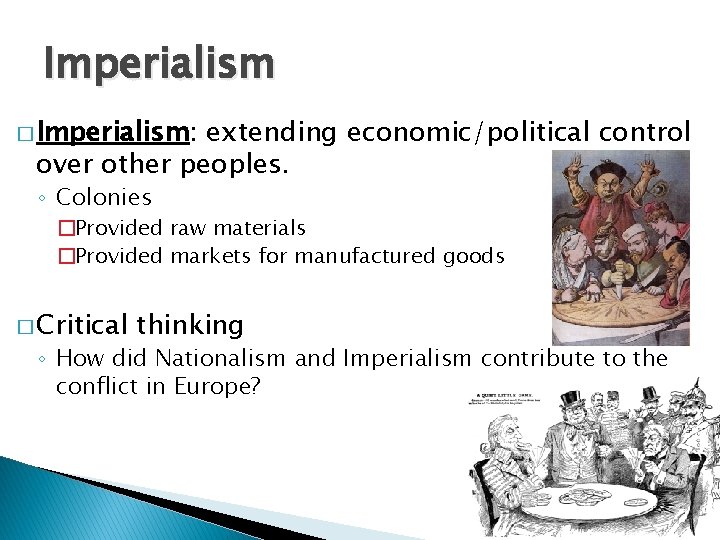
Imperialism � Imperialism: extending economic/political control over other peoples. ◦ Colonies �Provided raw materials �Provided markets for manufactured goods � Critical thinking ◦ How did Nationalism and Imperialism contribute to the conflict in Europe?
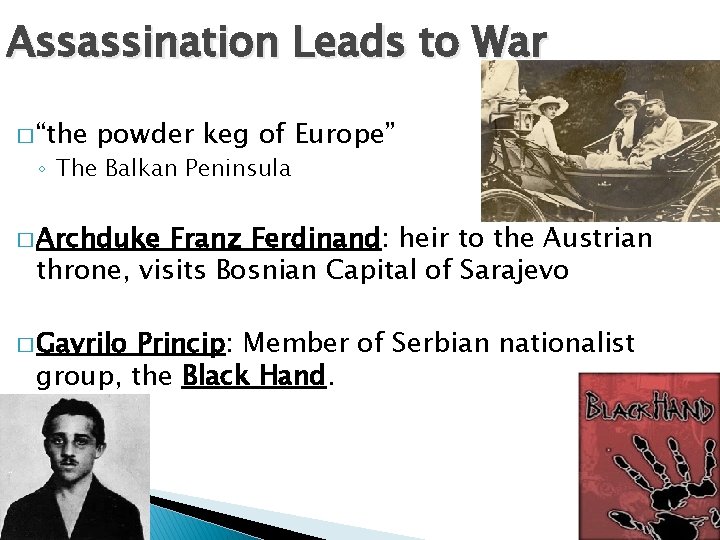
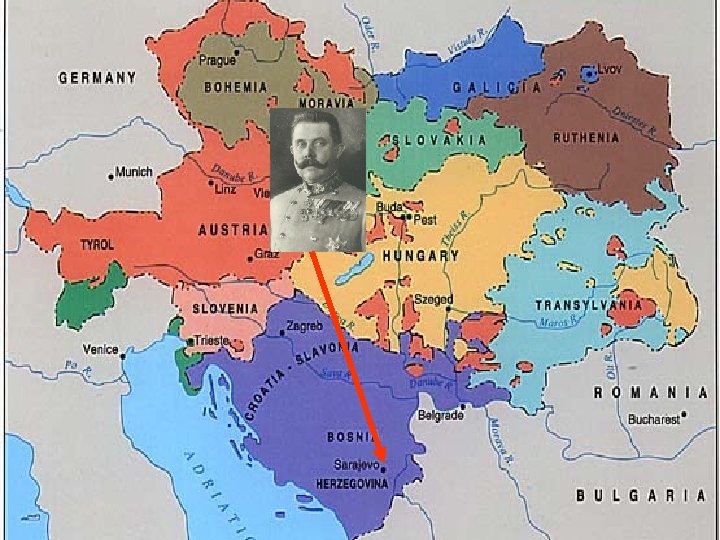
Assassination Leads to War � “the powder keg of Europe” ◦ The Balkan Peninsula � Archduke Franz Ferdinand: heir to the Austrian throne, visits Bosnian Capital of Sarajevo � Gavrilo Princip: Member of Serbian nationalist group, the Black Hand.
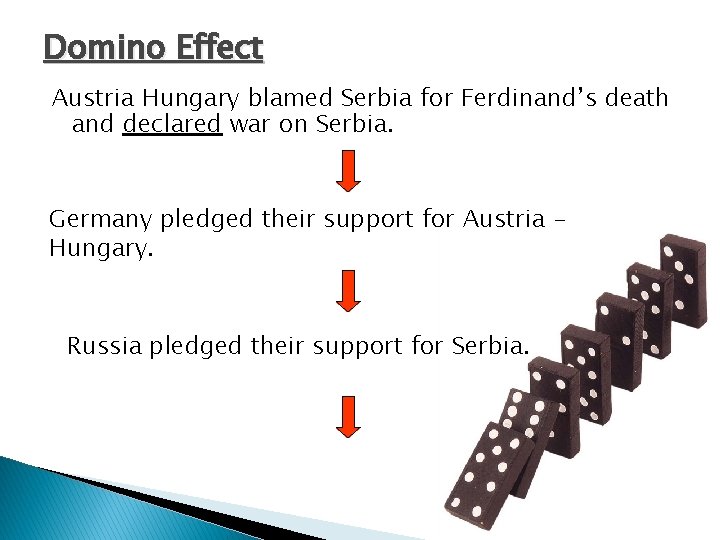
Domino Effect Austria Hungary blamed Serbia for Ferdinand’s death and declared war on Serbia. Germany pledged their support for Austria Hungary. Russia pledged their support for Serbia.
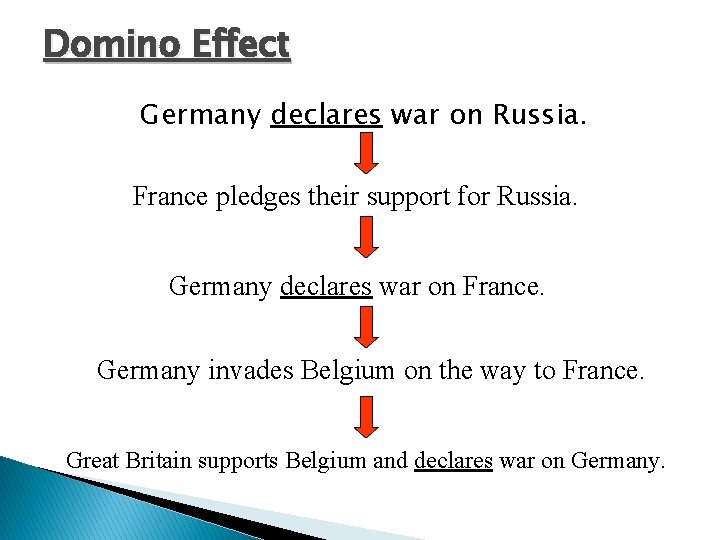
Domino Effect Germany declares war on Russia. France pledges their support for Russia. Germany declares war on France. Germany invades Belgium on the way to France. Great Britain supports Belgium and declares war on Germany.
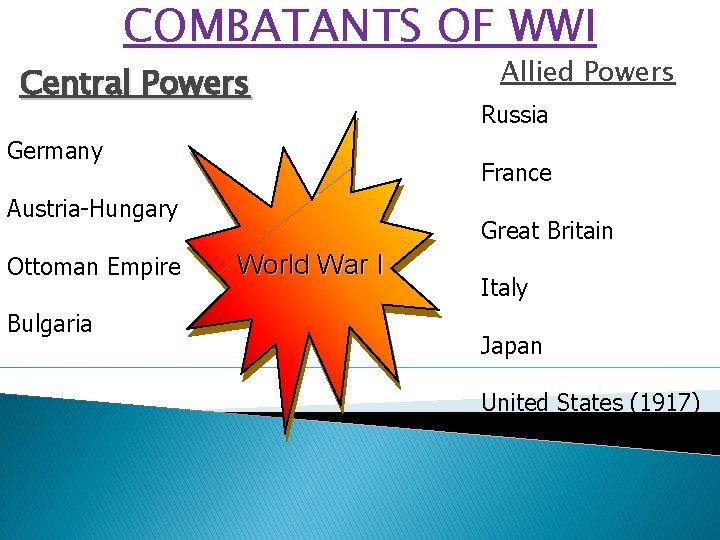
COMBATANTS OF WWI Central Powers Germany Bulgaria Russia France Austria-Hungary Ottoman Empire Allied Powers Great Britain World War I Italy Japan United States (1917)
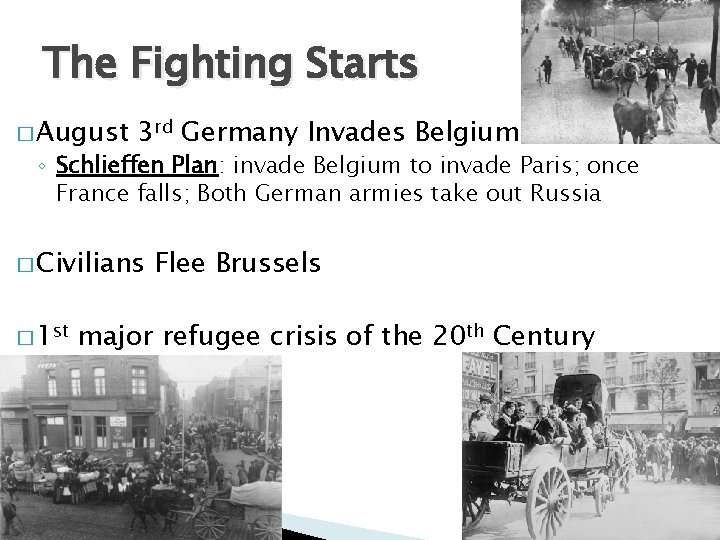
The Fighting Starts � August 3 rd Germany Invades Belgium ◦ Schlieffen Plan: invade Belgium to invade Paris; once France falls; Both German armies take out Russia � Civilians � 1 st Flee Brussels major refugee crisis of the 20 th Century
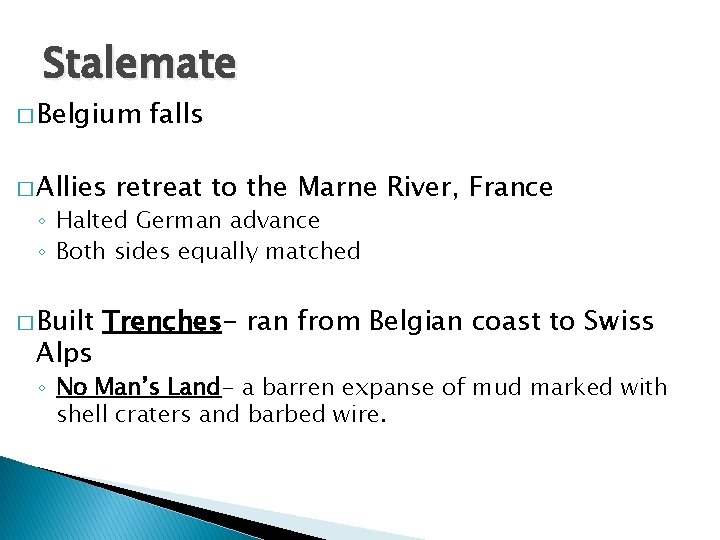
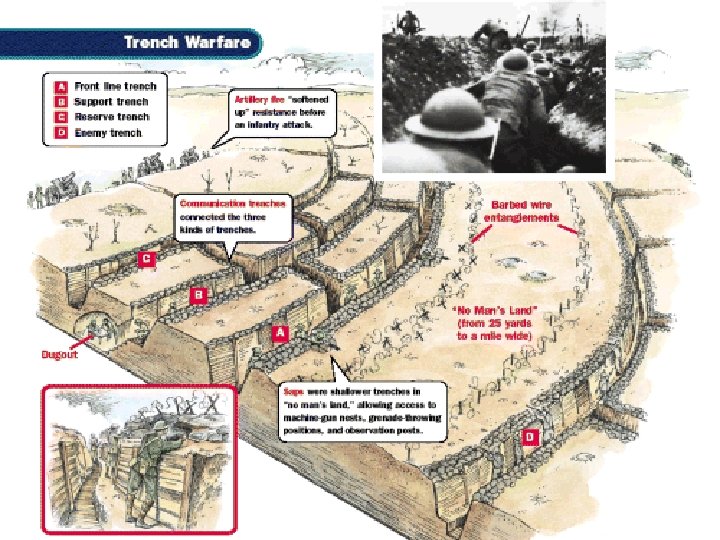
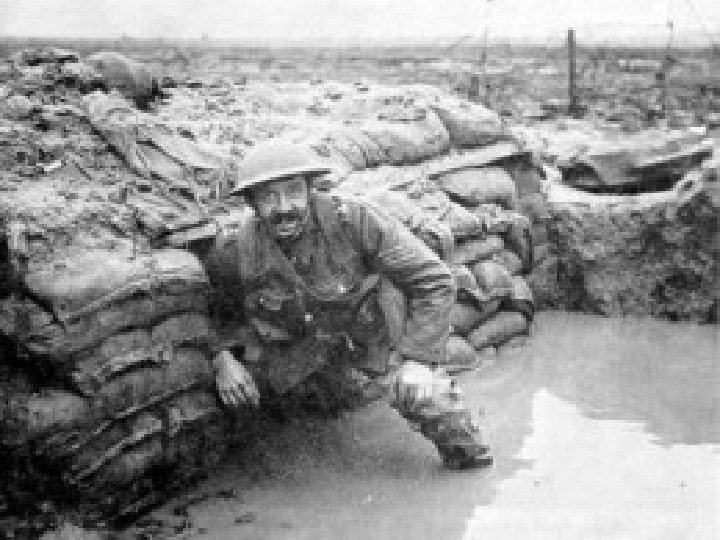
Stalemate � Belgium � Allies falls retreat to the Marne River, France ◦ Halted German advance ◦ Both sides equally matched � Built Alps Trenches- ran from Belgian coast to Swiss ◦ No Man’s Land- a barren expanse of mud marked with shell craters and barbed wire.
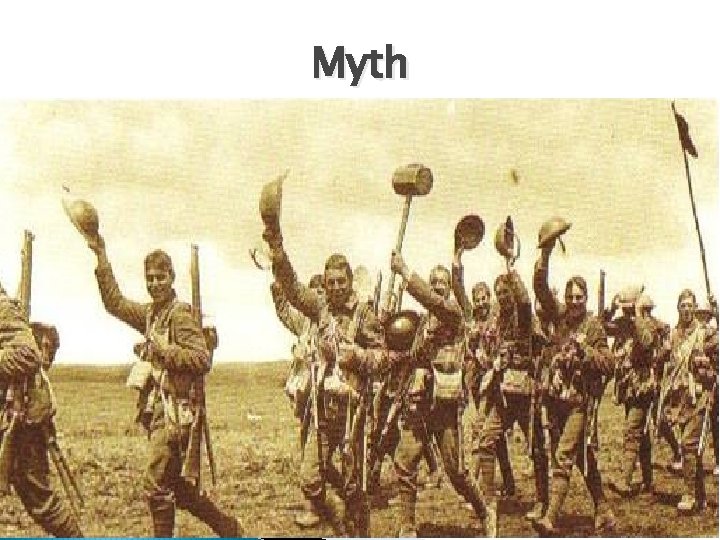
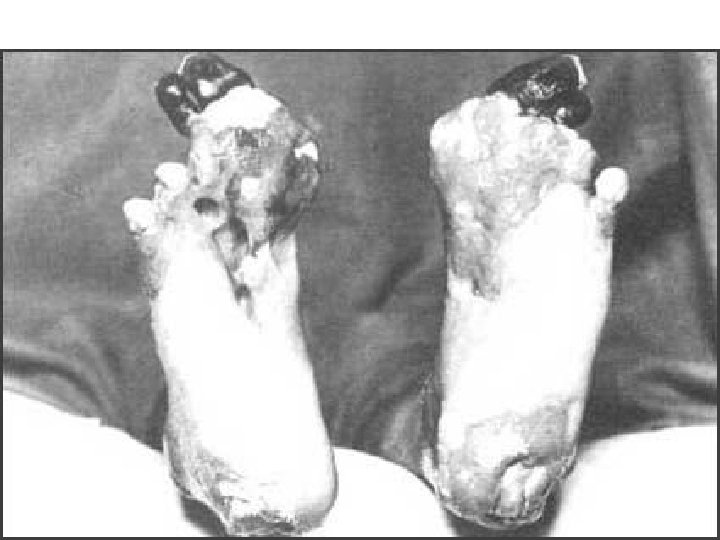
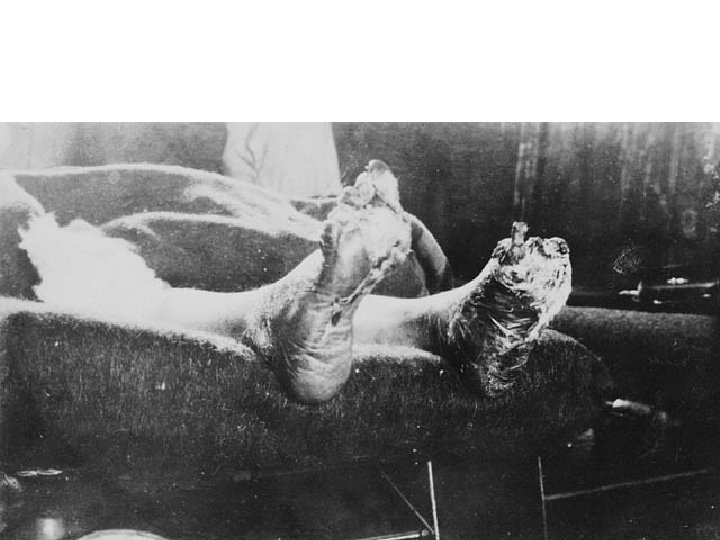
Myth
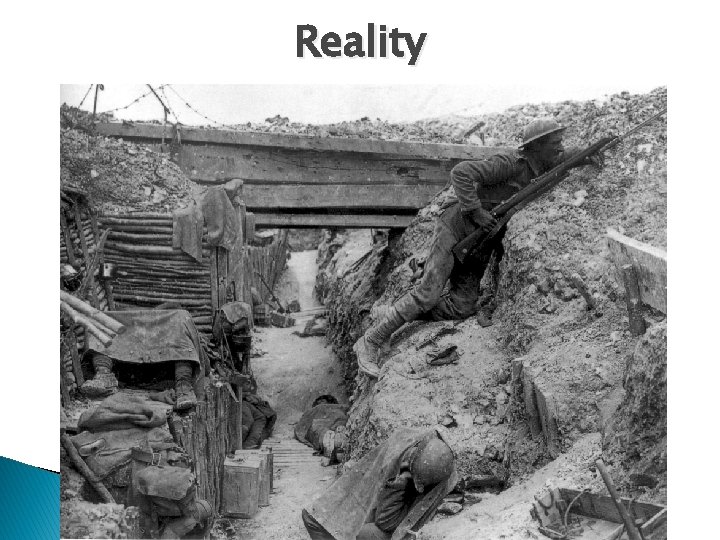
Reality
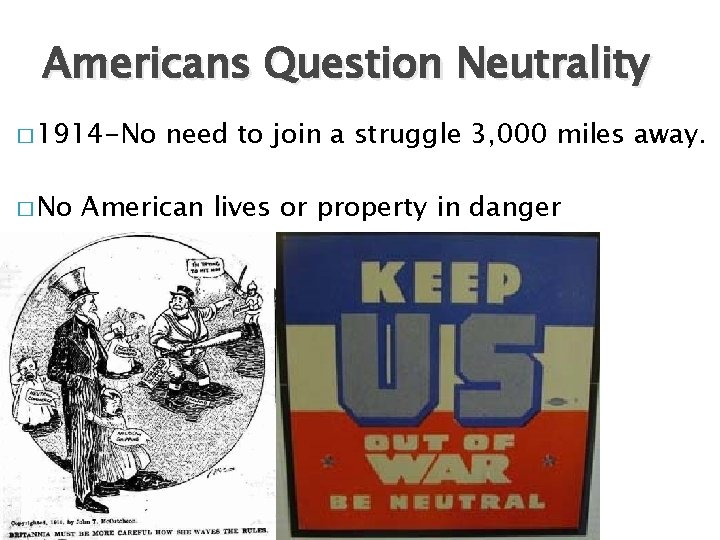
Americans Question Neutrality � 1914 -No � No need to join a struggle 3, 000 miles away. American lives or property in danger
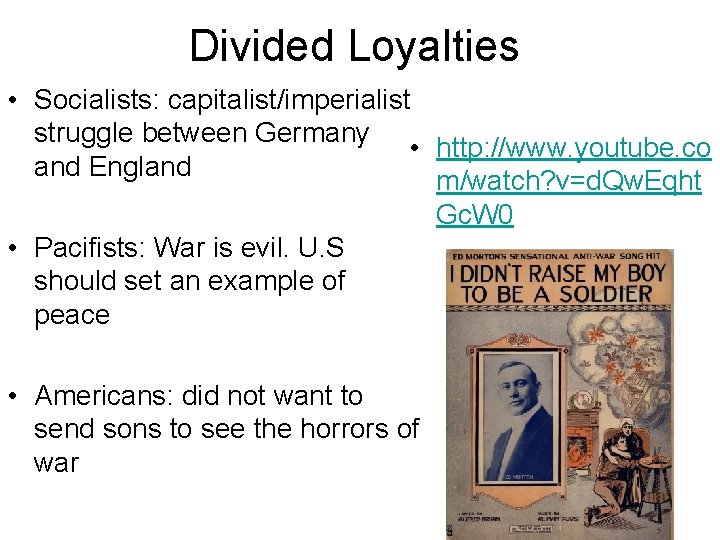
Divided Loyalties • Socialists: capitalist/imperialist struggle between Germany • http: //www. youtube. co and England m/watch? v=d. Qw. Eqht Gc. W 0 • Pacifists: War is evil. U. S should set an example of peace • Americans: did not want to send sons to see the horrors of war
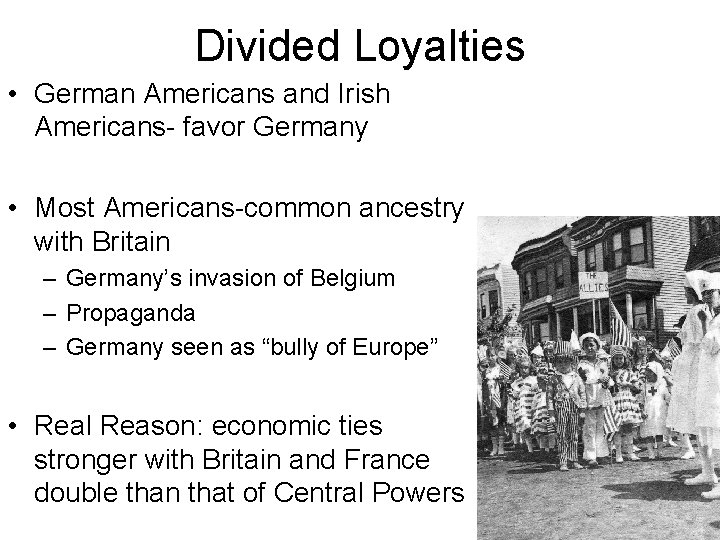
Divided Loyalties • German Americans and Irish Americans- favor Germany • Most Americans-common ancestry with Britain – Germany’s invasion of Belgium – Propaganda – Germany seen as “bully of Europe” • Real Reason: economic ties stronger with Britain and France double than that of Central Powers
Skill Builder Activity: Economic Background –Trade Allances � Open � Read to page 583 the Economic Background: Trade Alliances � Answer the Skill Builder questions.
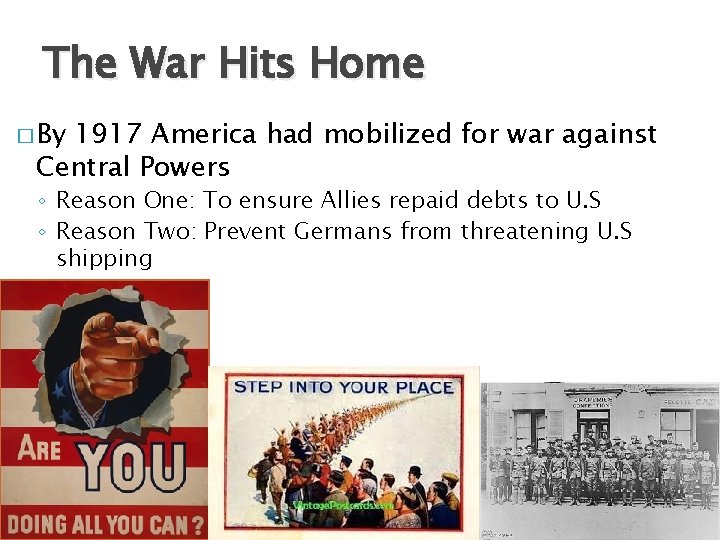
The War Hits Home � By 1917 America had mobilized for war against Central Powers ◦ Reason One: To ensure Allies repaid debts to U. S ◦ Reason Two: Prevent Germans from threatening U. S shipping
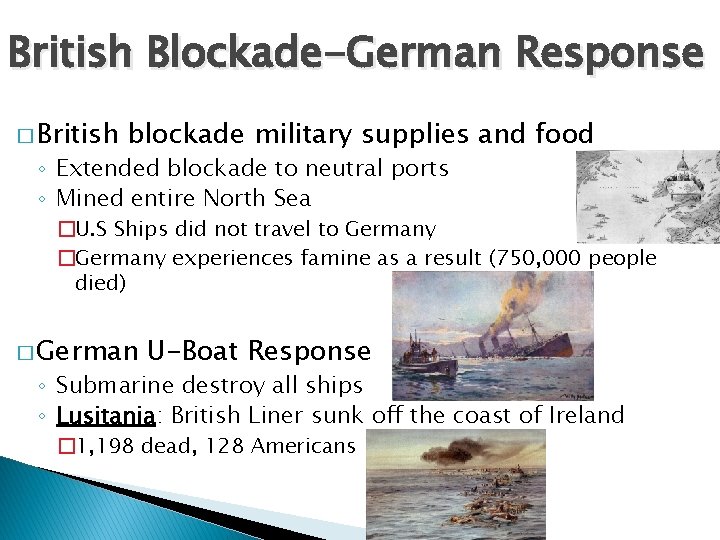
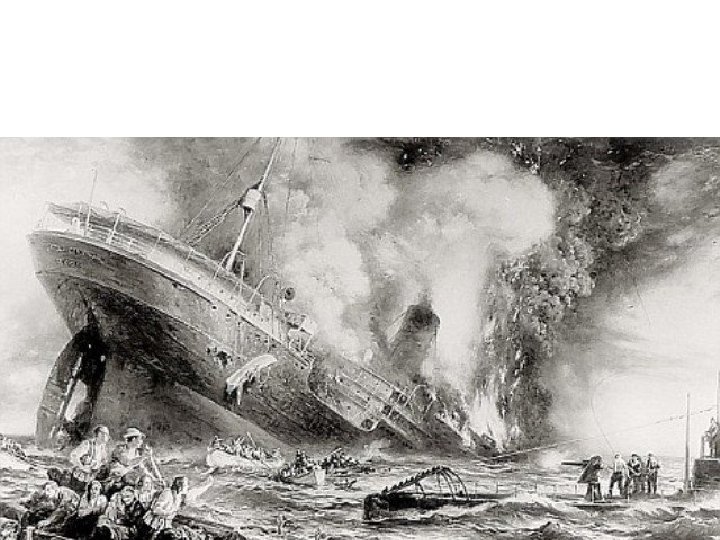
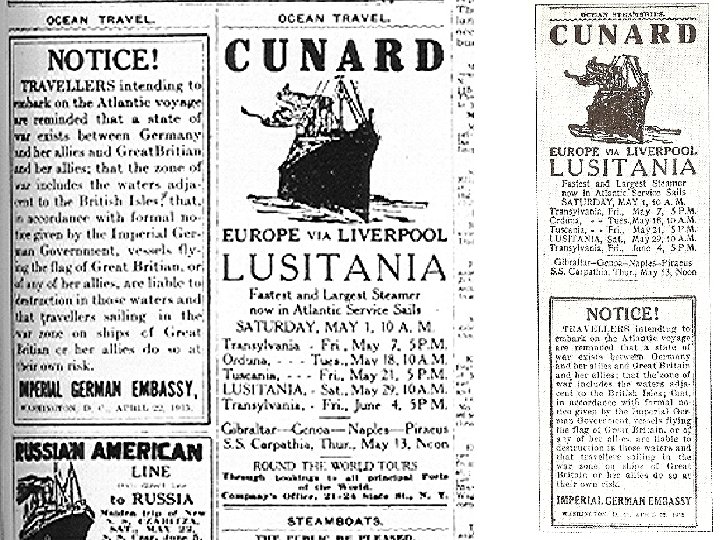
British Blockade-German Response � British blockade military supplies and food ◦ Extended blockade to neutral ports ◦ Mined entire North Sea �U. S Ships did not travel to Germany �Germany experiences famine as a result (750, 000 people died) � German U-Boat Response ◦ Submarine destroy all ships ◦ Lusitania: British Liner sunk off the coast of Ireland � 1, 198 dead, 128 Americans
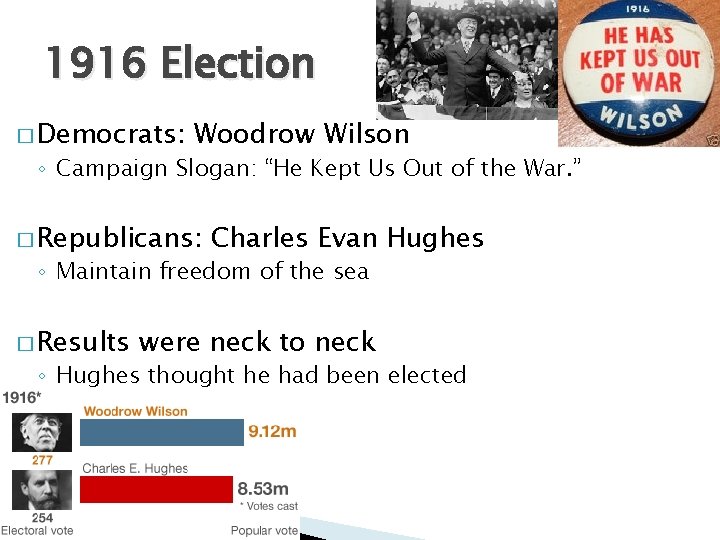
1916 Election � Democrats: Woodrow Wilson ◦ Campaign Slogan: “He Kept Us Out of the War. ” � Republicans: Charles Evan Hughes ◦ Maintain freedom of the sea � Results were neck to neck ◦ Hughes thought he had been elected
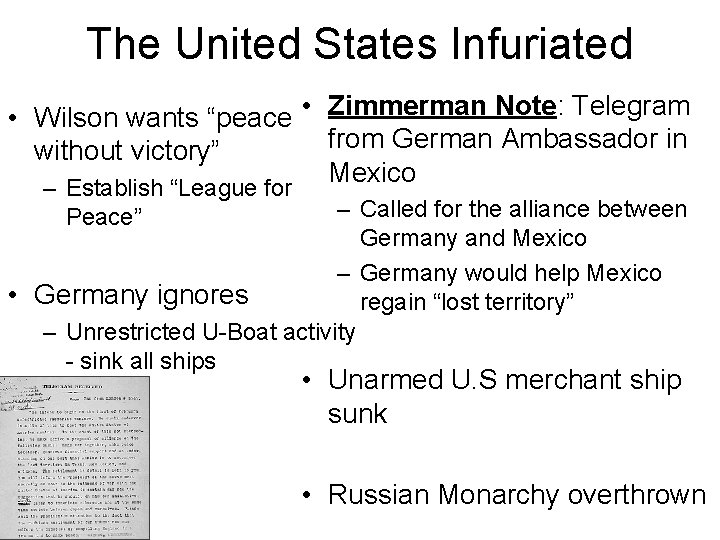
The United States Infuriated • Wilson wants “peace • Zimmerman Note: Telegram from German Ambassador in without victory” Mexico – Establish “League for – Called for the alliance between Germany and Mexico – Germany would help Mexico • Germany ignores regain “lost territory” – Unrestricted U-Boat activity - sink all ships Peace” • Unarmed U. S merchant ship sunk • Russian Monarchy overthrown
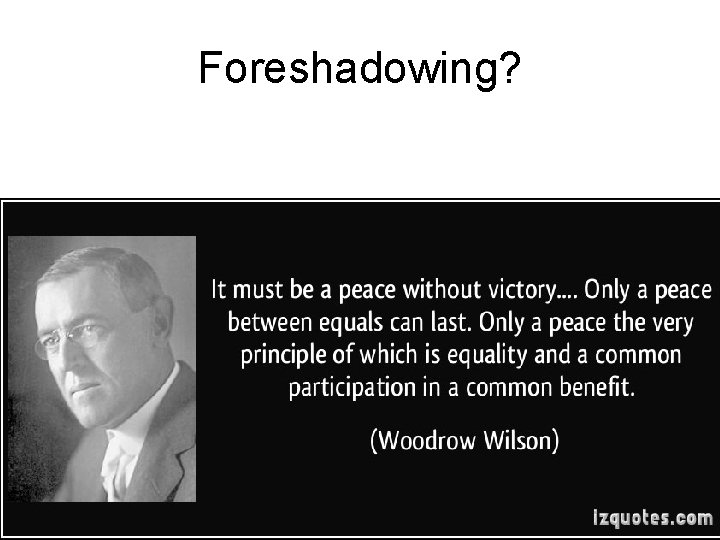
Foreshadowing?
America Acts • “Property can be paid for; lives of peaceful and innocent people cannot be. The present German submarine warfare against commerce is a warfare against mankind… We are glad to fight for the ultimate peace of the world and for the liberation of peoples. The world must be made safe for democracy. We have no selfish ends to serve. We desire no conquest, no dominion. We seek indemnities. It is a fearful thing to lead the great peaceful people into war. But the right is more precious than peace. ”
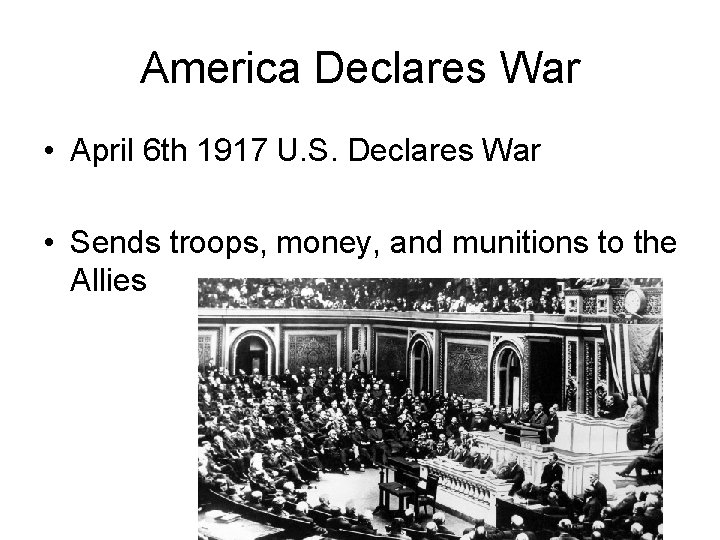
America Declares War • April 6 th 1917 U. S. Declares War • Sends troops, money, and munitions to the Allies
American Power Tips the Balance Chapter 19 -2
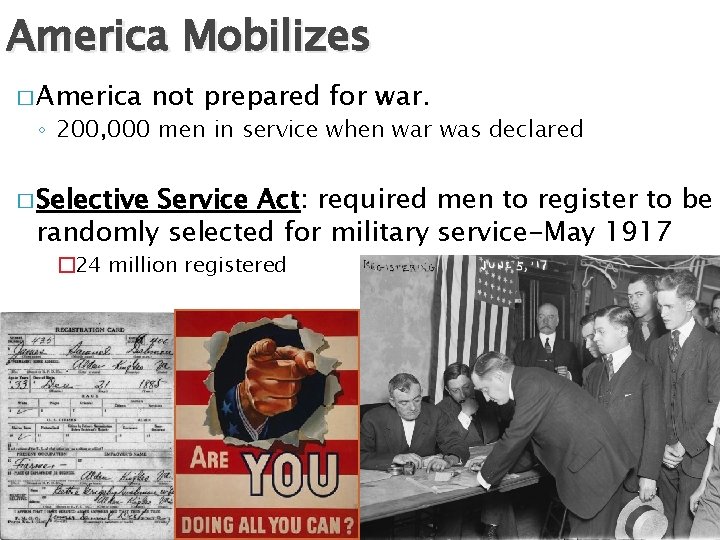
America Mobilizes � America not prepared for war. ◦ 200, 000 men in service when war was declared � Selective Service Act: required men to register to be randomly selected for military service-May 1917 � 24 million registered
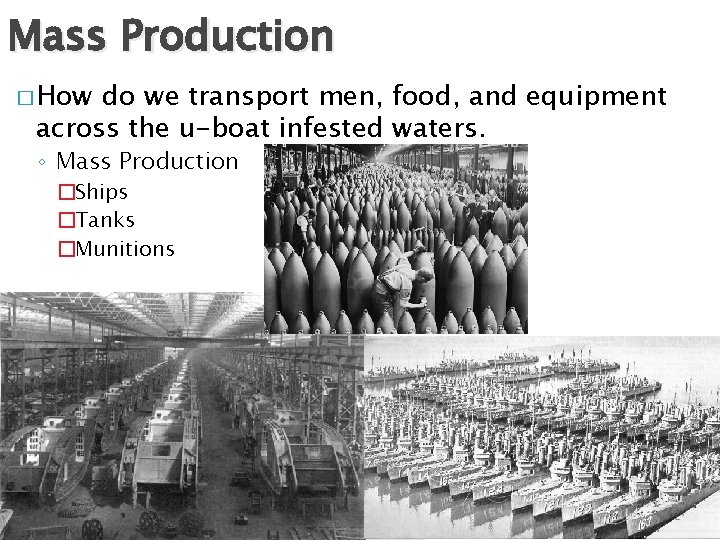
Mass Production � How do we transport men, food, and equipment across the u-boat infested waters. ◦ Mass Production �Ships �Tanks �Munitions
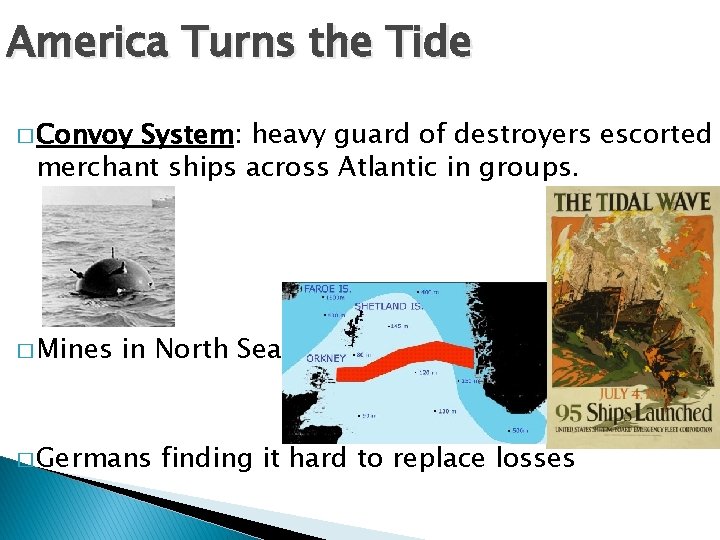
America Turns the Tide � Convoy System: heavy guard of destroyers escorted merchant ships across Atlantic in groups. � Mines in North Sea � Germans finding it hard to replace losses
American Troops Go on the Offensive � March 1917 Russia pulls out of war ◦ Germany focuses military in west � 50 Miles away from Paris � Americans stop German advance ◦ Push them back
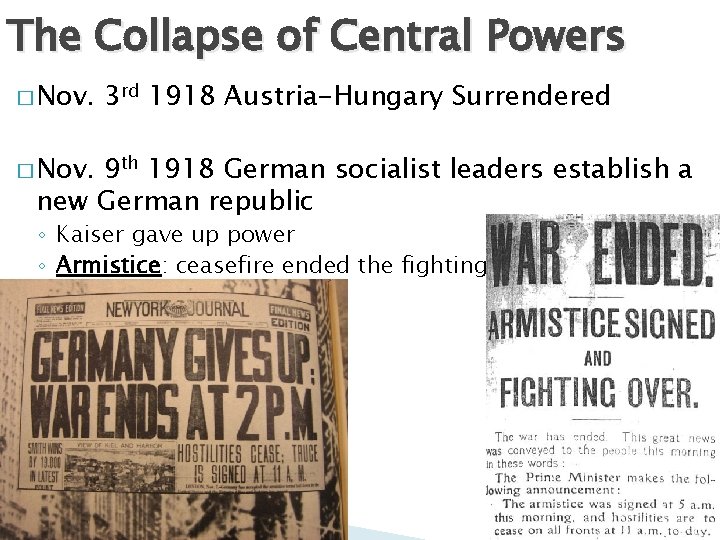
The Collapse of Central Powers � Nov. 3 rd 1918 Austria-Hungary Surrendered � Nov. 9 th 1918 German socialist leaders establish a new German republic ◦ Kaiser gave up power ◦ Armistice: ceasefire ended the fighting
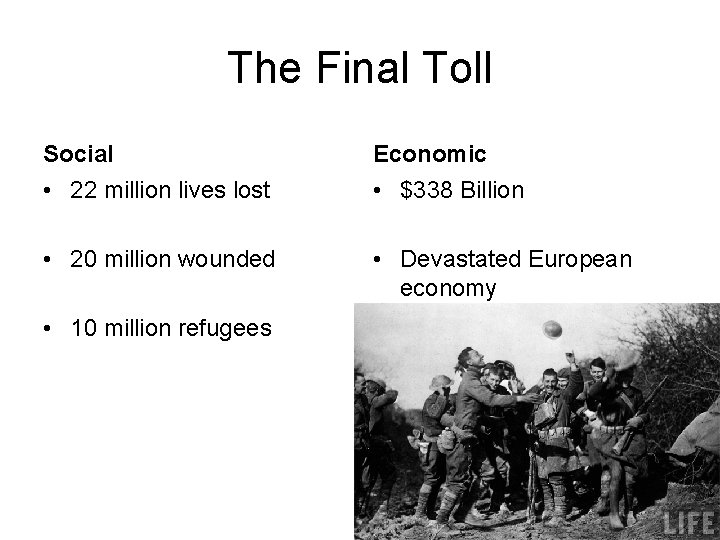
The Final Toll Social Economic • 22 million lives lost • $338 Billion • 20 million wounded • Devastated European economy • 10 million refugees
The War at Home Chapter 19 -3
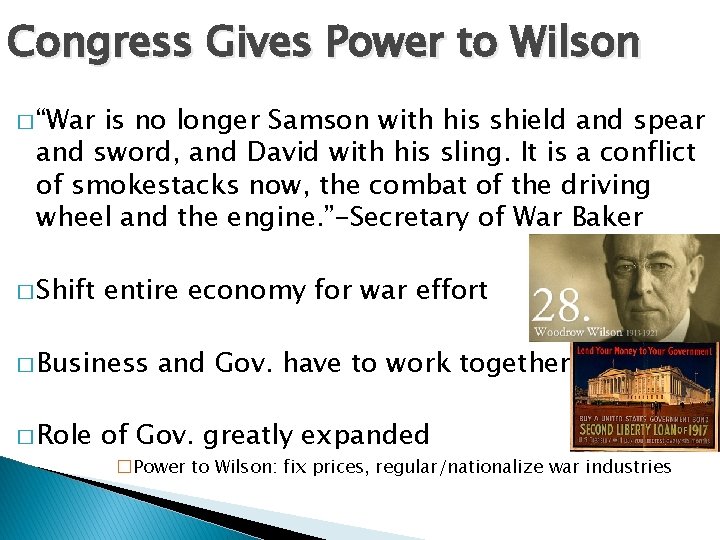
Congress Gives Power to Wilson � “War is no longer Samson with his shield and spear and sword, and David with his sling. It is a conflict of smokestacks now, the combat of the driving wheel and the engine. ”-Secretary of War Baker � Shift entire economy for war effort � Business � Role and Gov. have to work together of Gov. greatly expanded �Power to Wilson: fix prices, regular/nationalize war industries
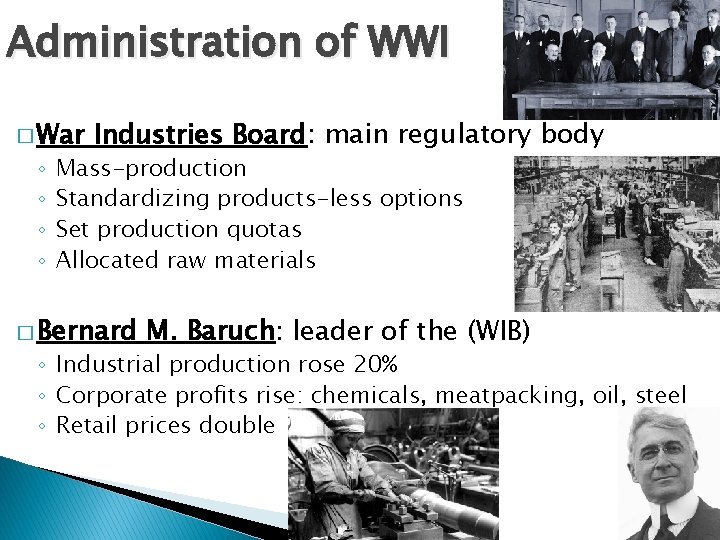
Administration of WWI � War ◦ ◦ Industries Board: main regulatory body Mass-production Standardizing products-less options Set production quotas Allocated raw materials � Bernard M. Baruch: leader of the (WIB) ◦ Industrial production rose 20% ◦ Corporate profits rise: chemicals, meatpacking, oil, steel ◦ Retail prices double
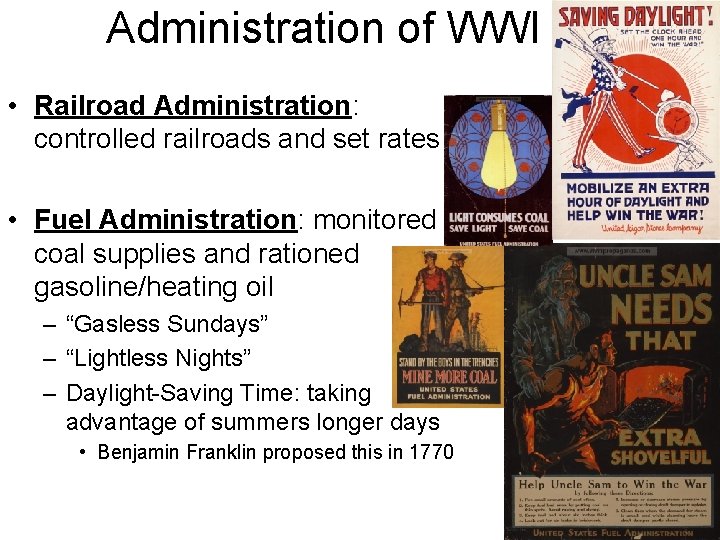
Administration of WWI • Railroad Administration: controlled railroads and set rates • Fuel Administration: monitored coal supplies and rationed gasoline/heating oil – “Gasless Sundays” – “Lightless Nights” – Daylight-Saving Time: taking advantage of summers longer days • Benjamin Franklin proposed this in 1770
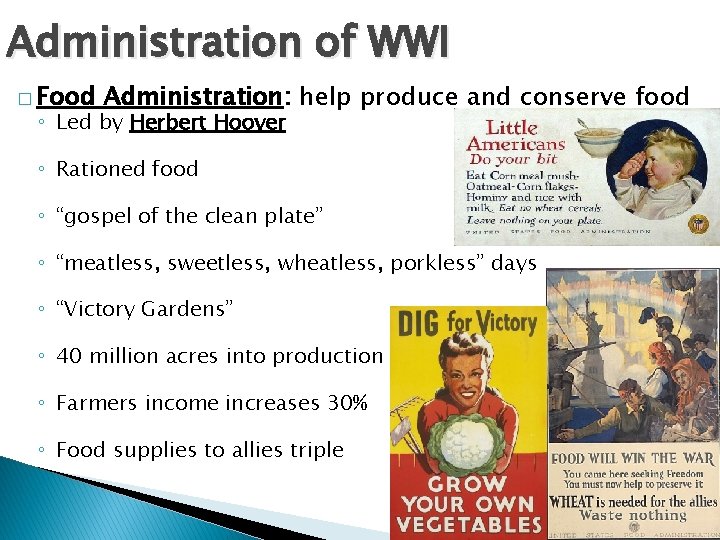
Administration of WWI � Food Administration: help produce and conserve food ◦ Led by Herbert Hoover ◦ Rationed food ◦ “gospel of the clean plate” ◦ “meatless, sweetless, wheatless, porkless” days ◦ “Victory Gardens” ◦ 40 million acres into production ◦ Farmers income increases 30% ◦ Food supplies to allies triple
Role of Government in War � What should the federal government do during � What does the Constitution sanction? � What does it prohibit? war? � What is the relationship between governmental action and volunteerism?
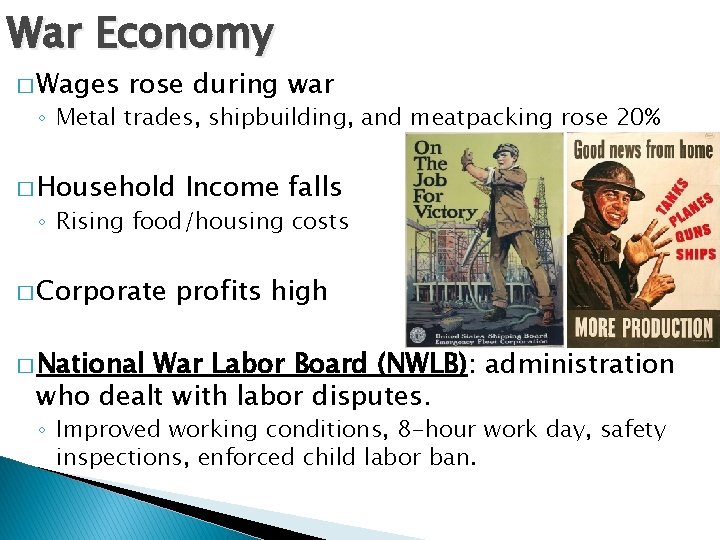
War Economy � Wages rose during war ◦ Metal trades, shipbuilding, and meatpacking rose 20% � Household Income falls ◦ Rising food/housing costs � Corporate profits high � National War Labor Board (NWLB): administration who dealt with labor disputes. ◦ Improved working conditions, 8 -hour work day, safety inspections, enforced child labor ban.
Skill Builder Activity: The War Economy � Open up to page 595 � Answer questions 1 and 2 ◦ 1. How did the rise in average annual income compare with the rise in prices from 1914 -1920? ◦ 2. How might the combined change in wages and prices affect a working family?
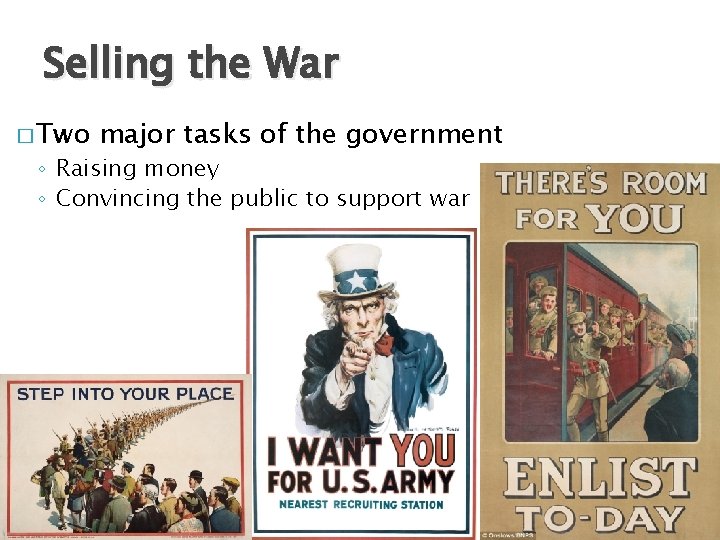
Selling the War � Two major tasks of the government ◦ Raising money ◦ Convincing the public to support war
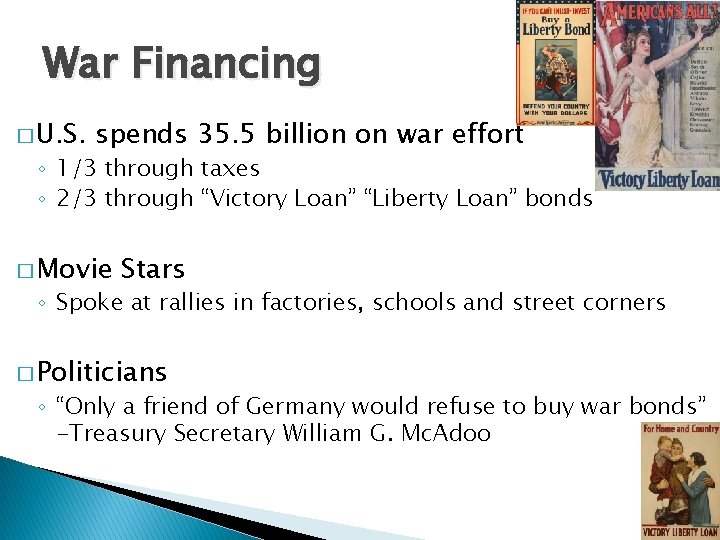
War Financing � U. S. spends 35. 5 billion on war effort ◦ 1/3 through taxes ◦ 2/3 through “Victory Loan” “Liberty Loan” bonds � Movie Stars ◦ Spoke at rallies in factories, schools and street corners � Politicians ◦ “Only a friend of Germany would refuse to buy war bonds” -Treasury Secretary William G. Mc. Adoo
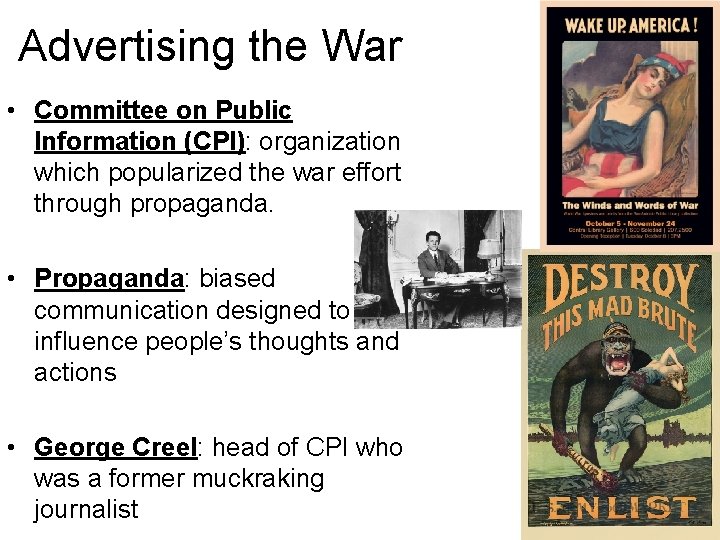
Advertising the War • Committee on Public Information (CPI): organization which popularized the war effort through propaganda. • Propaganda: biased communication designed to influence people’s thoughts and actions • George Creel: head of CPI who was a former muckraking journalist
Advertising the War (cont. ) � Artists and Advertising Agencies ◦ Create posters, paintings, cartoons, and sculptures promoting war � Ordered printing of “How the War Came to America” ◦ 25 million copies � Promoted patriotism, inflamed hatred, violation of civil liberties
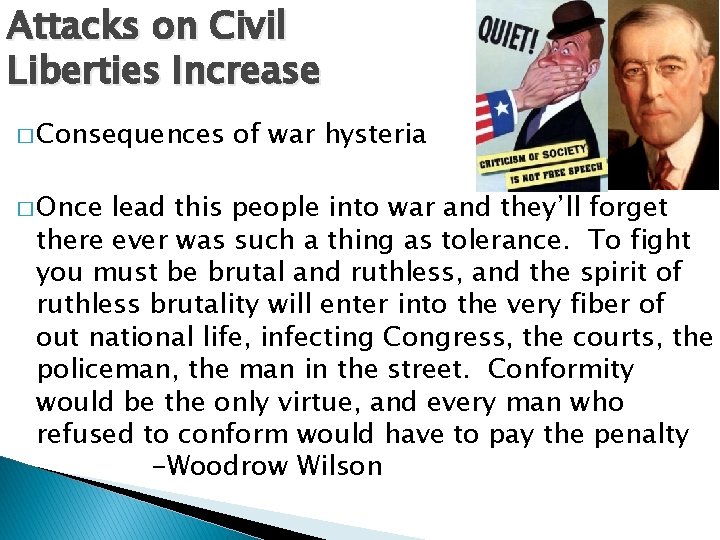
Attacks on Civil Liberties Increase � Consequences � Once of war hysteria lead this people into war and they’ll forget there ever was such a thing as tolerance. To fight you must be brutal and ruthless, and the spirit of ruthless brutality will enter into the very fiber of out national life, infecting Congress, the courts, the policeman, the man in the street. Conformity would be the only virtue, and every man who refused to conform would have to pay the penalty -Woodrow Wilson
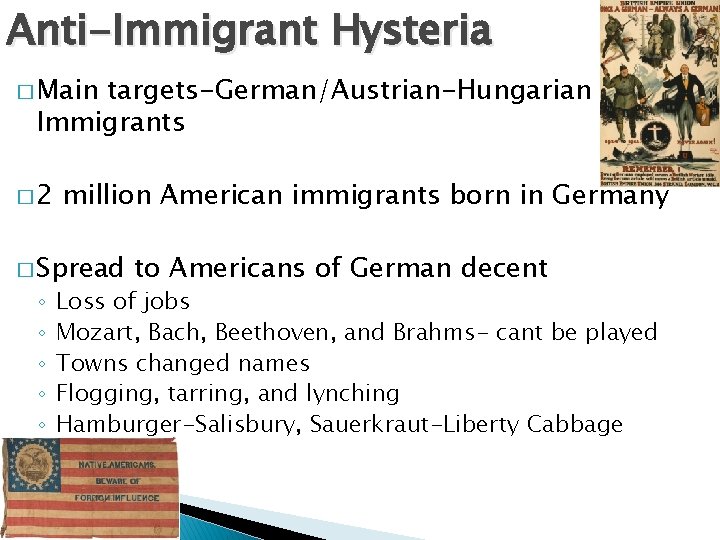
Anti-Immigrant Hysteria � Main targets-German/Austrian-Hungarian Immigrants � 2 million American immigrants born in Germany � Spread ◦ ◦ ◦ to Americans of German decent Loss of jobs Mozart, Bach, Beethoven, and Brahms- cant be played Towns changed names Flogging, tarring, and lynching Hamburger-Salisbury, Sauerkraut-Liberty Cabbage
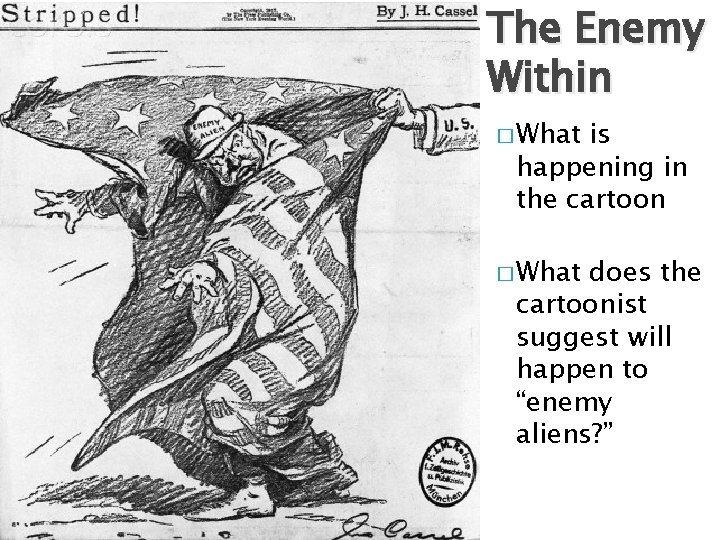
The Enemy Within � What is happening in the cartoon � What does the cartoonist suggest will happen to “enemy aliens? ”
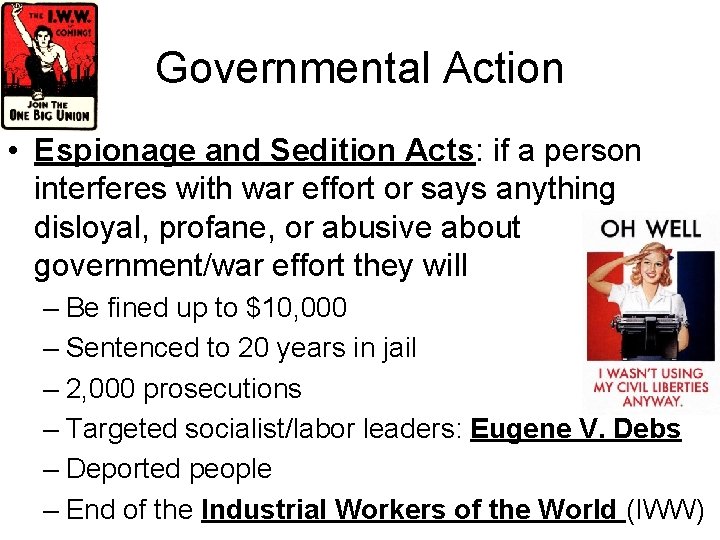
Governmental Action • Espionage and Sedition Acts: if a person interferes with war effort or says anything disloyal, profane, or abusive about government/war effort they will – Be fined up to $10, 000 – Sentenced to 20 years in jail – 2, 000 prosecutions – Targeted socialist/labor leaders: Eugene V. Debs – Deported people – End of the Industrial Workers of the World (IWW)
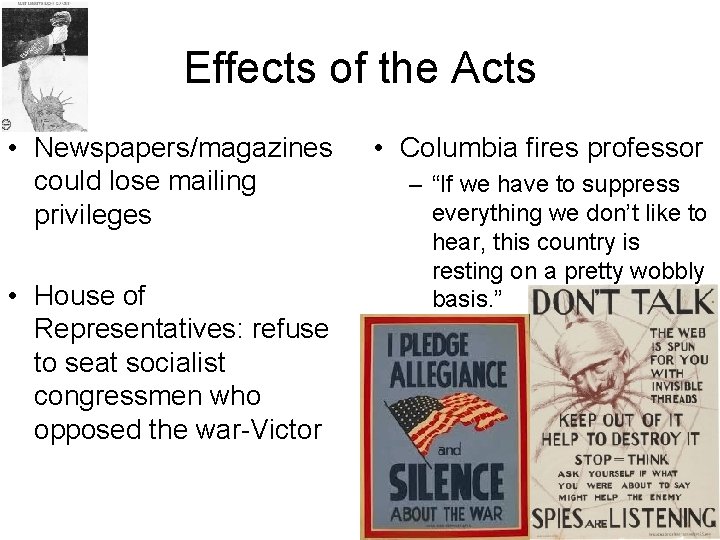
Effects of the Acts • Newspapers/magazines could lose mailing privileges • House of Representatives: refuse to seat socialist congressmen who opposed the war-Victor • Columbia fires professor – “If we have to suppress everything we don’t like to hear, this country is resting on a pretty wobbly basis. ”
Reading Like a Historian: Sedition • What does patriotism mean to you? • Do you think it’s important for people to be patriotic? Why or why not? • Is it patriotic or anti-American to criticize the United States government?
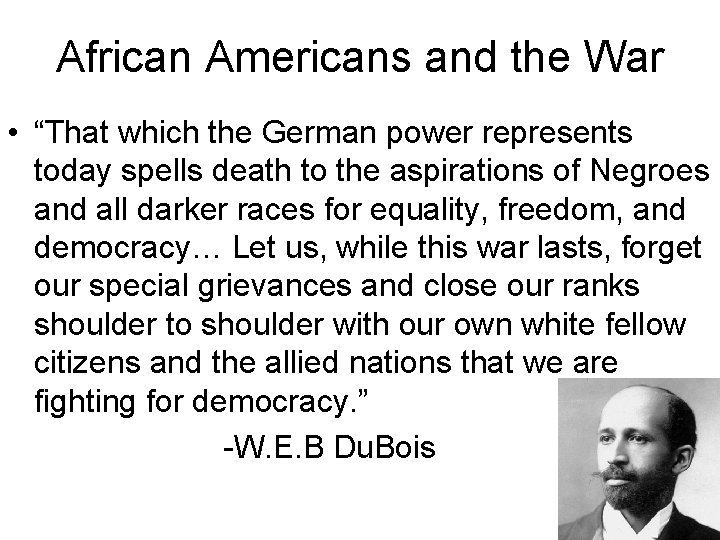
African Americans and the War • “That which the German power represents today spells death to the aspirations of Negroes and all darker races for equality, freedom, and democracy… Let us, while this war lasts, forget our special grievances and close our ranks shoulder to shoulder with our own white fellow citizens and the allied nations that we are fighting for democracy. ” -W. E. B Du. Bois
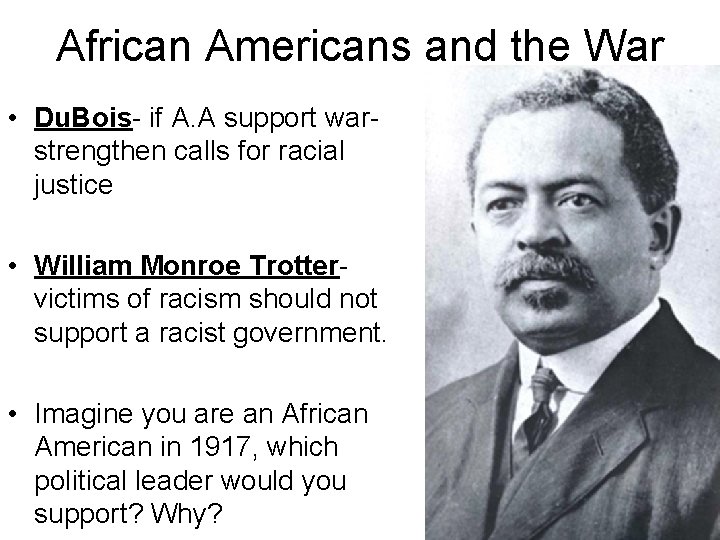
African Americans and the War • Du. Bois- if A. A support warstrengthen calls for racial justice • William Monroe Trottervictims of racism should not support a racist government. • Imagine you are an African American in 1917, which political leader would you support? Why?
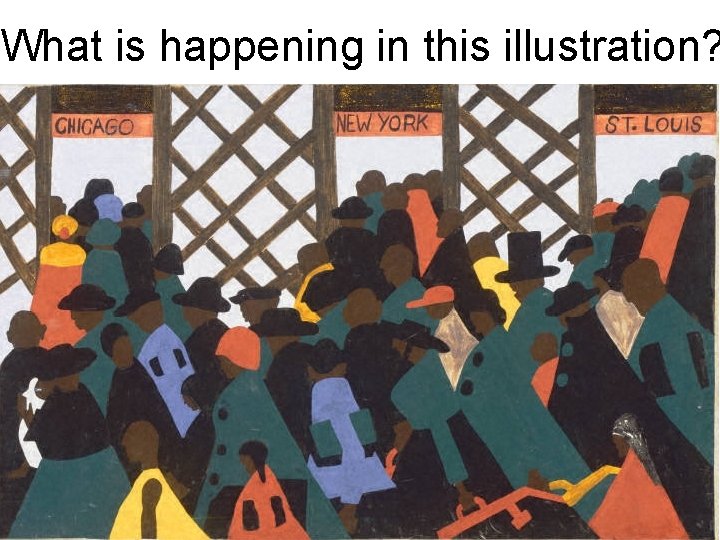
What is happening in this illustration?
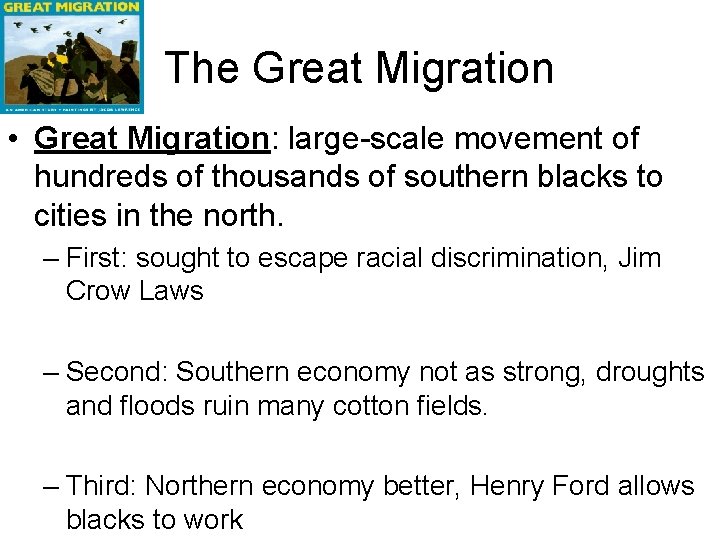
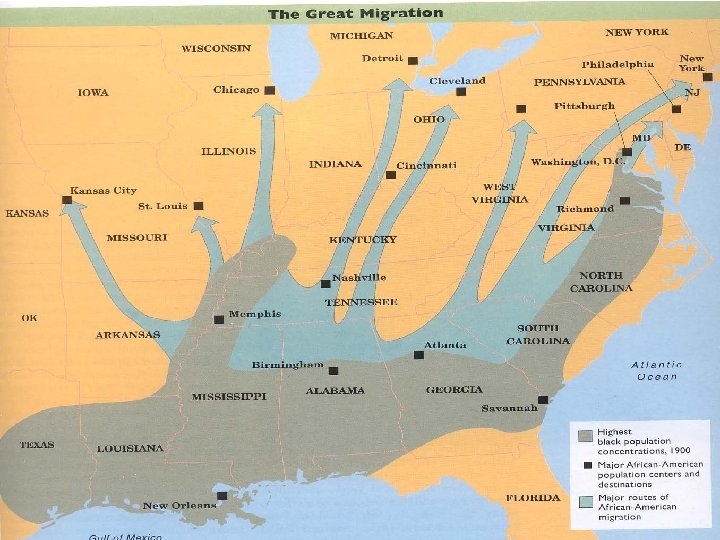
The Great Migration • Great Migration: large-scale movement of hundreds of thousands of southern blacks to cities in the north. – First: sought to escape racial discrimination, Jim Crow Laws – Second: Southern economy not as strong, droughts and floods ruin many cotton fields. – Third: Northern economy better, Henry Ford allows blacks to work
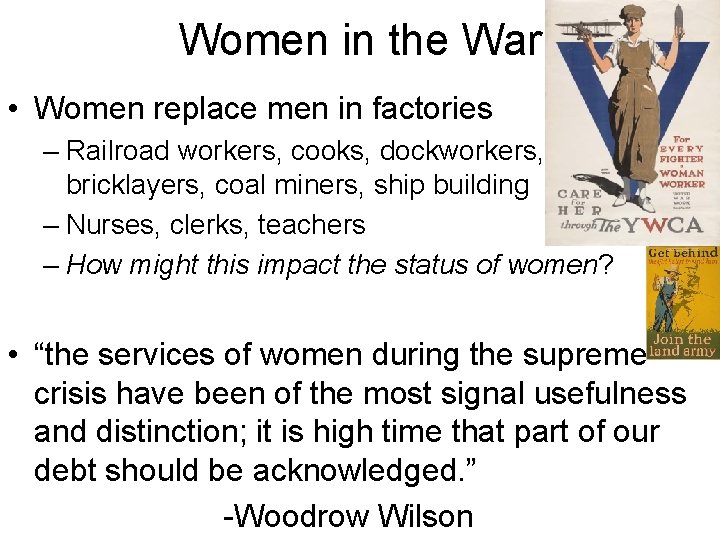
Women in the War • Women replace men in factories – Railroad workers, cooks, dockworkers, bricklayers, coal miners, ship building – Nurses, clerks, teachers – How might this impact the status of women? • “the services of women during the supreme crisis have been of the most signal usefulness and distinction; it is high time that part of our debt should be acknowledged. ” -Woodrow Wilson
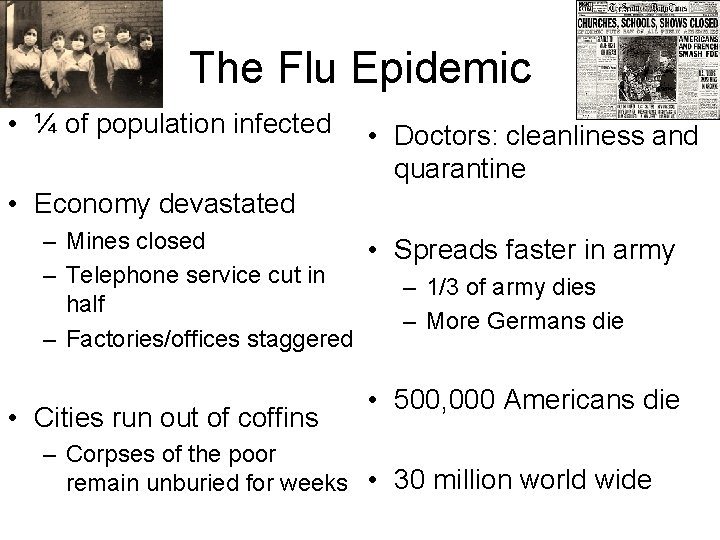
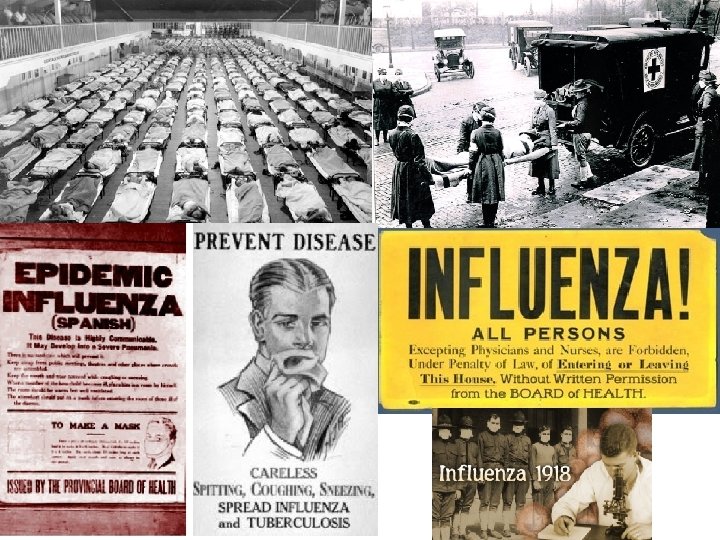
The Flu Epidemic • ¼ of population infected • Doctors: cleanliness and quarantine • Economy devastated – Mines closed • Spreads faster in army – Telephone service cut in – 1/3 of army dies half – More Germans die – Factories/offices staggered • Cities run out of coffins • 500, 000 Americans die – Corpses of the poor remain unburied for weeks • 30 million world wide
Spanish Flu Documentary • https: //www. youtube. com/watch? v=J 83 DZ Qc. DFy 8
Wilson Fights for Peace 19 -4
Peace Plan of Action � War has ended in Europe. Draft a resolution to deal with everlasting peace. You Must. � Address � What each of the issues that caused the war issues caused the U. S. to enter the war? � Who should have war reparations? Why? � How can we prevent this from happening in the future? � How can we maintain peace for the future while keeping the Allied nations satisfied?
Wilson’s Fourteen Points � President Wilson’s proposal for ever lasting peace in Europe. � Read the Fourteen Point Document � Answer discussion questions. � Which point is the most important and why? � Finally predict the outcome of this proposal
The Allies Reject Wilson’s Plan • Big Four – Woodrow Wilson (USA) – Georges Clemenseau (France) – David Lloyd George (UK) – Vittorio Orlando (Italy) • Wilson wants peace • UK and France want Germany to pay • Italy wants land from Austria-Hungary • Meet to discuss terms at • Most 14 points rejected the French palace of Versailles – Except League of Nations
Debating the Treaty of Versailles • Read the document on the treaty • Fill out the graphic organizer • Begin discussing your groups position.
Point and Counterpoint • Based upon your assignment, read the point OR counterpoint. • Answer all questions • As a group expand your position on the Debate over the League of Nations. • Be able to support your position
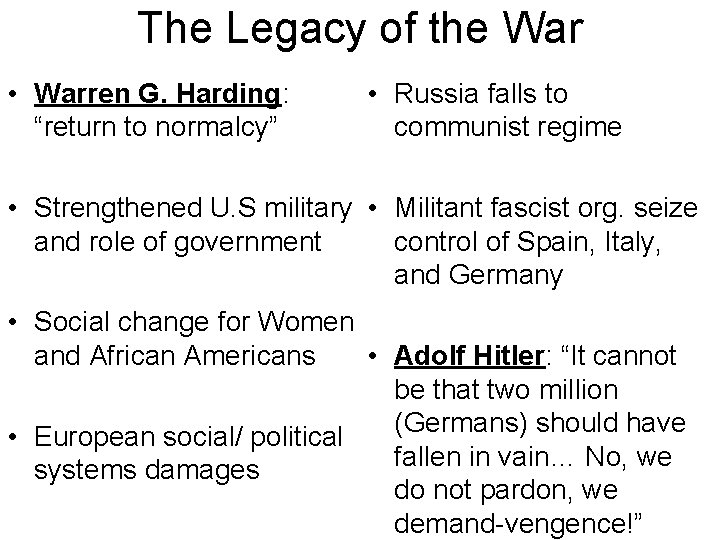
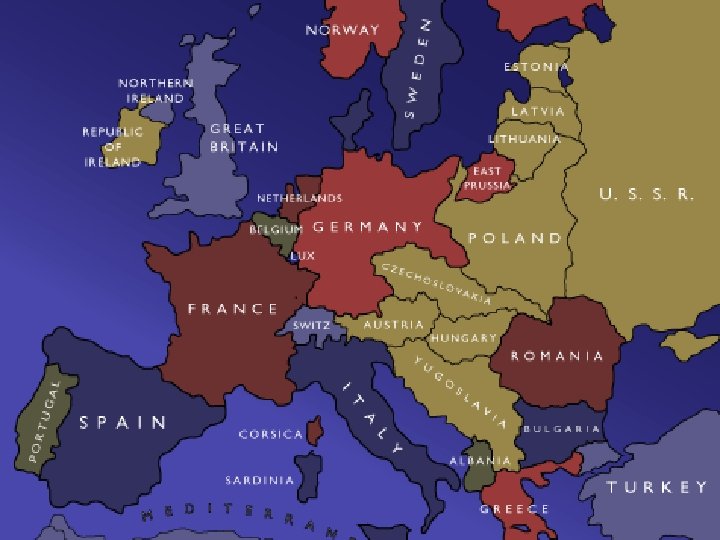
The Legacy of the War • Warren G. Harding: “return to normalcy” • Russia falls to communist regime • Strengthened U. S military • Militant fascist org. seize and role of government control of Spain, Italy, and Germany • Social change for Women and African Americans • Adolf Hitler: “It cannot be that two million (Germans) should have • European social/ political fallen in vain… No, we systems damages do not pardon, we demand-vengence!”
- Slides: 79