
Warm Up What were the causes of WWI


- Slides: 37
Warm Up • What were the causes of WWI? • What are the cons of alliances? • Why did the US get pulled into WWI? • How did Wilson convince Americans that the war was a good cause?
World War I: Battles & Technology EQ: How was WWI fought? 8. H. 3. 2 Explain how changes brought about by technology and other innovations affected individuals and groups in North Carolina and the United States.
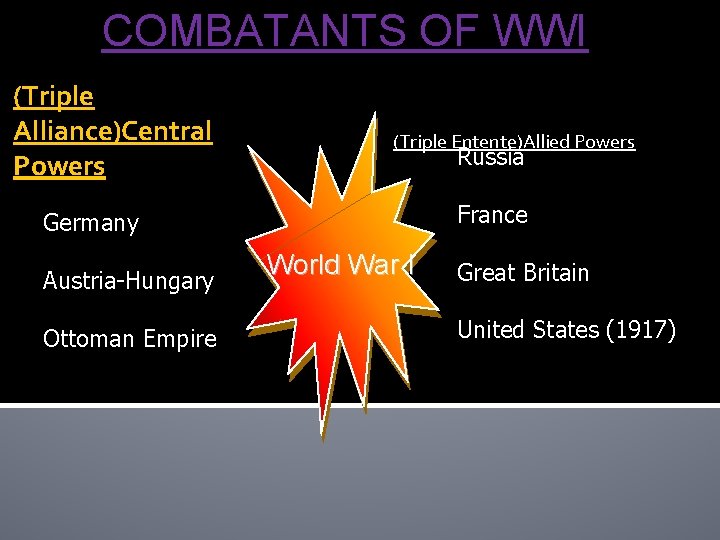
COMBATANTS OF WWI (Triple Alliance)Central Powers (Triple Entente)Allied Powers Russia France Germany Austria-Hungary Ottoman Empire World War I Great Britain United States (1917)
Why was WWI a Stalemate? • What’s a stalemate? – Neither side can make a move to win Both sides of the war threw arms and troops in to win but………… • Millions die without gaining ground. WHY? •
Precursor to Battle of Verdun After two years of warfare, Germans realize they can’t break through the Allied lines in France. • German General Falkenhayn proposes a war of attrition against the French Army. • A war of attrition is about killing more people than you lose. • Attack a position the French can’t afford to lose • – Kill as many French troops as possible
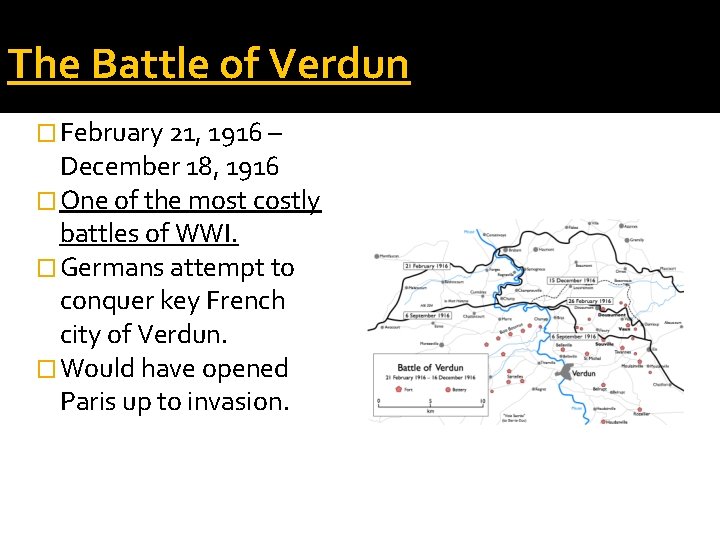
The Battle of Verdun � February 21, 1916 – December 18, 1916 � One of the most costly battles of WWI. � Germans attempt to conquer key French city of Verdun. � Would have opened Paris up to invasion.
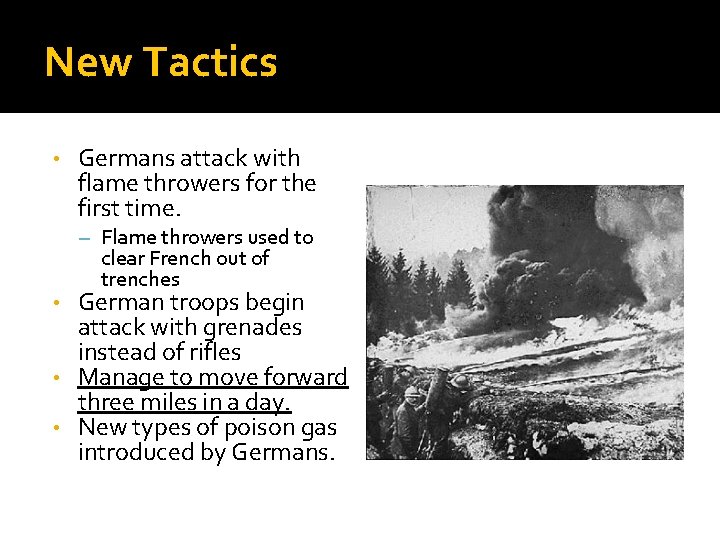
New Tactics • Germans attack with flame throwers for the first time. – Flame throwers used to clear French out of trenches German troops begin attack with grenades instead of rifles • Manage to move forward three miles in a day. • New types of poison gas introduced by Germans. •
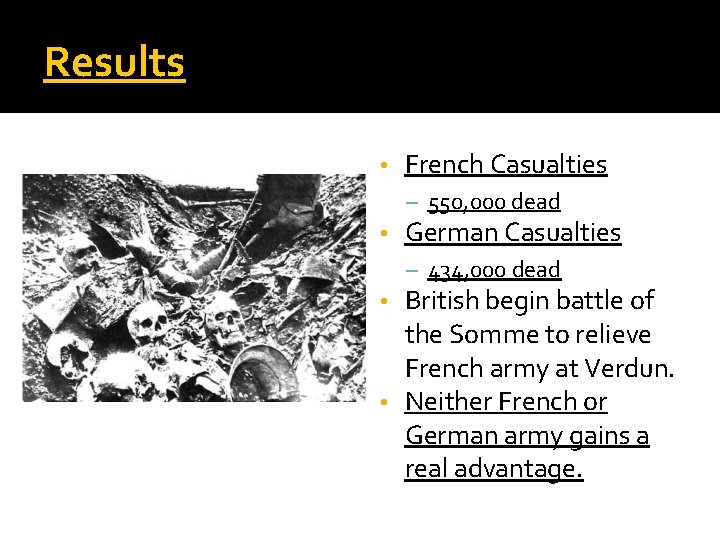
Results • French Casualties – 550, 000 dead • German Casualties – 434, 000 dead British begin battle of the Somme to relieve French army at Verdun. • Neither French or German army gains a real advantage. •
Significance • French hold Verdun thanks to forts – Convinced that a system of fixed heavy forts is the best defense • WWI becomes a war of attrition. Armies fight lengthy battles, with very high casualties.
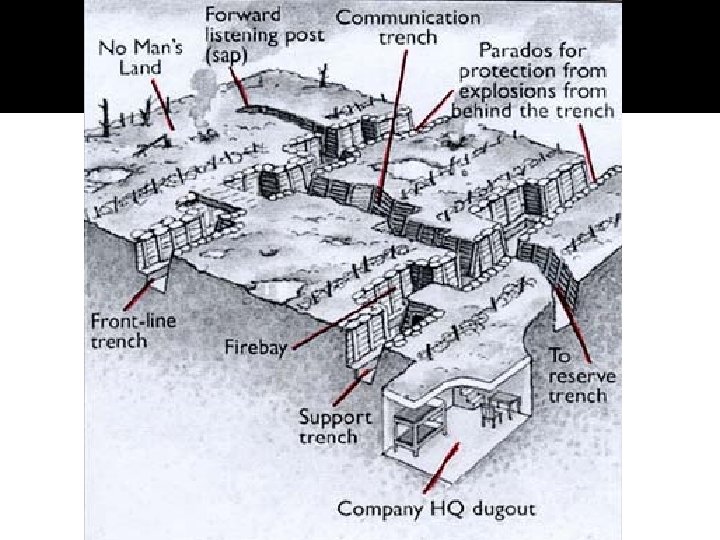
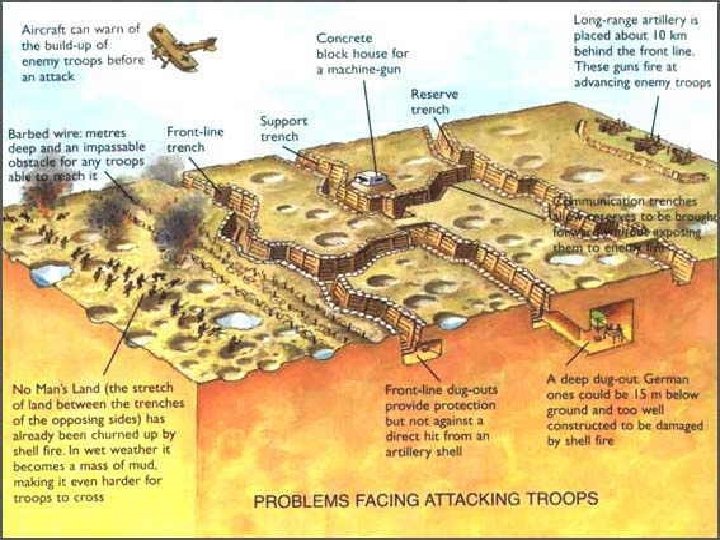
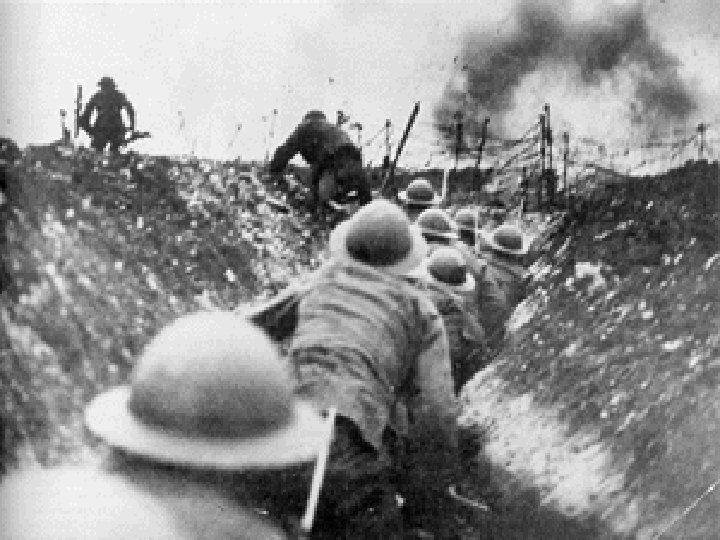
Trench Warfare – type of fighting during World War I in which both sides dug trenches protected by mines and barbed wire • Trenches were dug from English Channel to Switzerland • 6, 250 miles • 6 to 8 feet deep • Immobilized both sides for 4 years
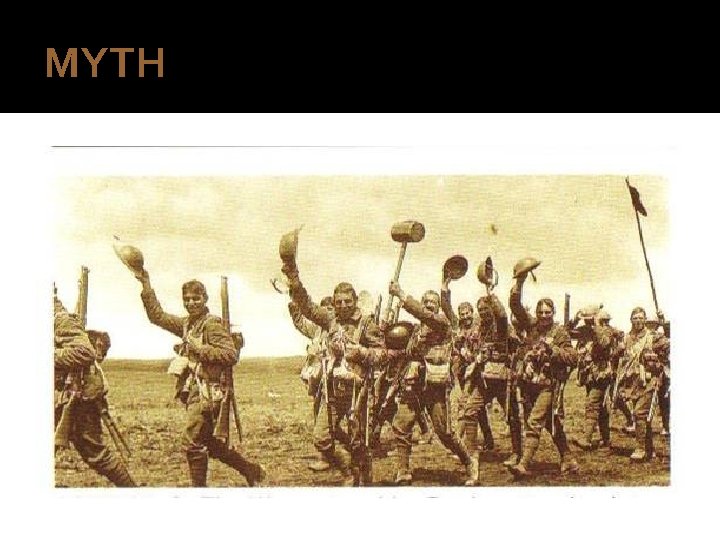
MYTH
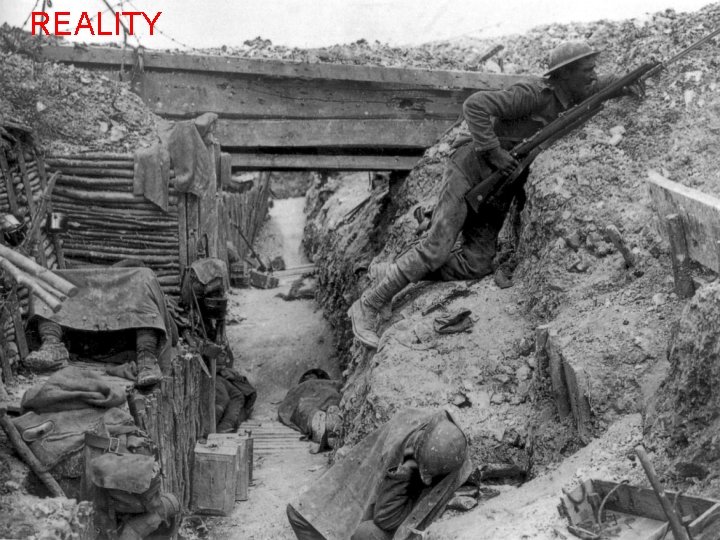
REALITY
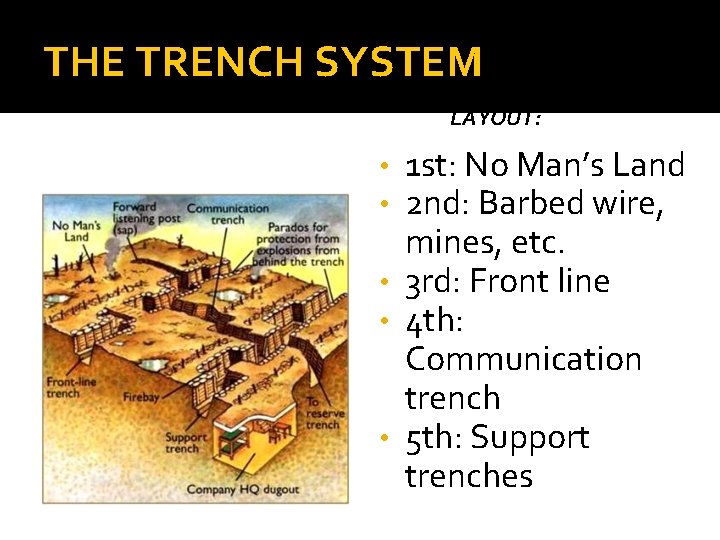
THE TRENCH SYSTEM LAYOUT: 1 st: No Man’s Land 2 nd: Barbed wire, mines, etc. • 3 rd: Front line • 4 th: Communication trench • 5 th: Support trenches • •
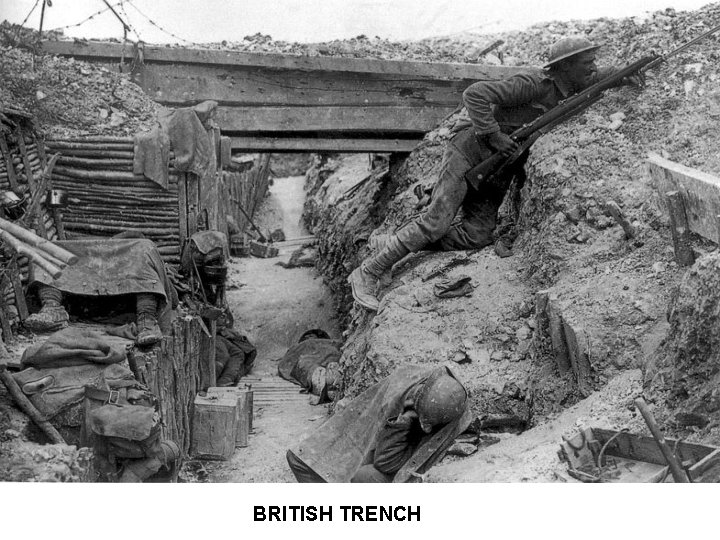
BRITISH TRENCH
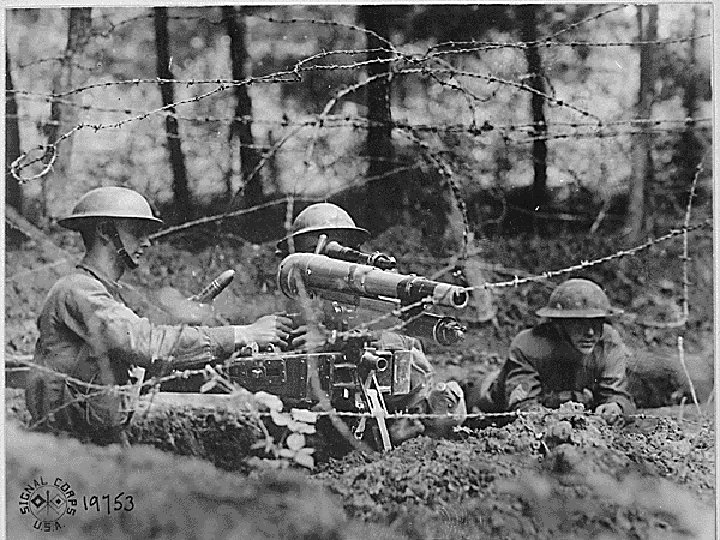
LIFE IN THE TRENCHES • Elaborate systems of defense – barbed wire – Concrete machine gun nests – Mortar batteries – Troops lived in holes underground • Boredom – Soldiers read to pass the time – Sarah Bernhardt came out to the front to read poetry to the soldiers
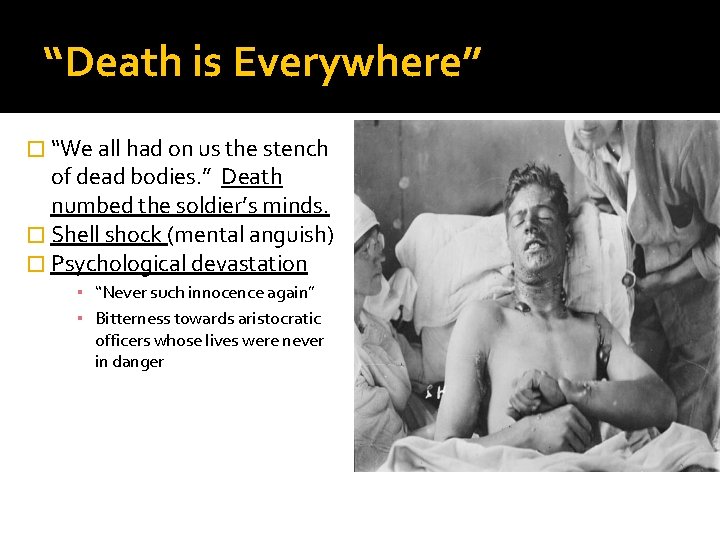
“Death is Everywhere” � “We all had on us the stench of dead bodies. ” Death numbed the soldier’s minds. � Shell shock (mental anguish) � Psychological devastation ▪ “Never such innocence again” ▪ Bitterness towards aristocratic officers whose lives were never in danger
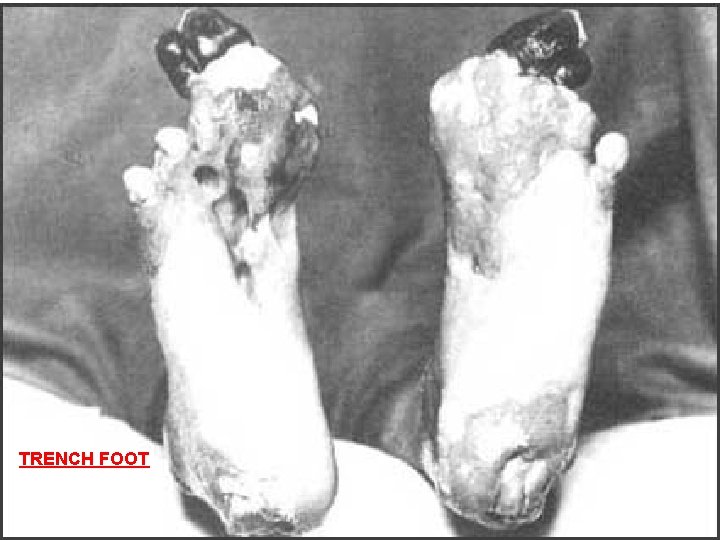
TRENCH FOOT
WWI WEAPONRY The countries fighting grew more and more desperate to break the stalemate. The war of attrition led to more terrifying ways to kill humans
What new weapons were used in WWI? � Machine gun � Poison gas (Mustard gas) ▪ Carried by the wind ▪ Burned out soldier’s lungs ▪ Deadly in the trenches where it would sit at the bottom � Submarine � Airplane � Tank � Hand grenades � Flame Throwers � Why these weapons? Why now? INDUSTRIAL REVOLUTION!!!
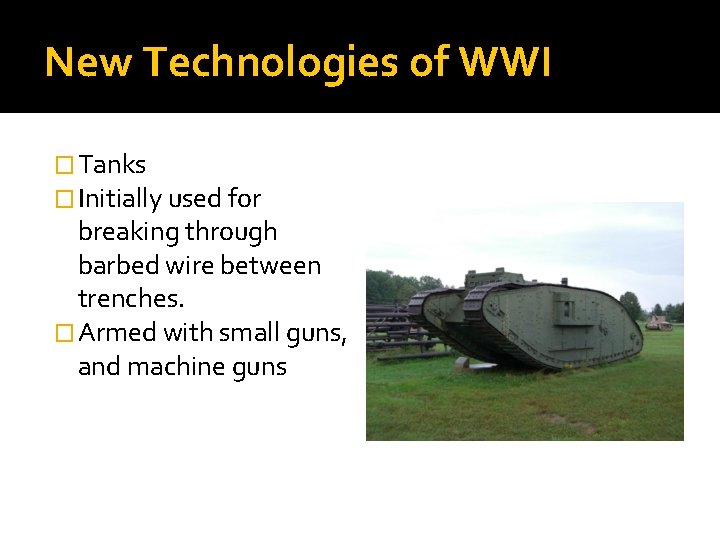
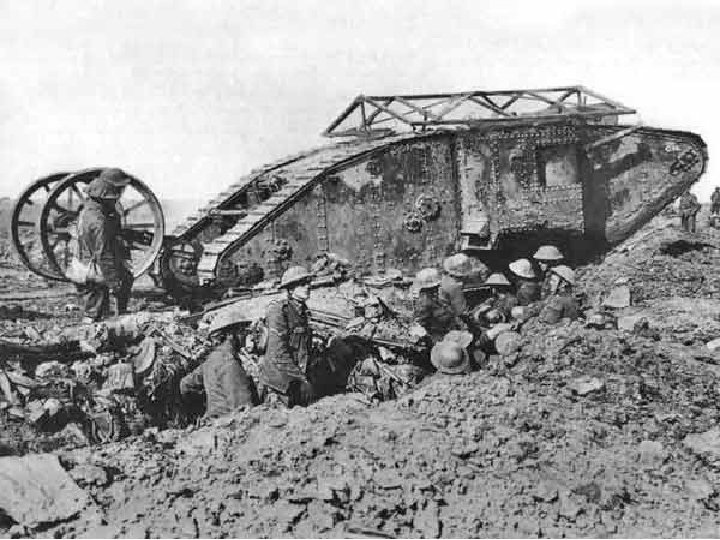
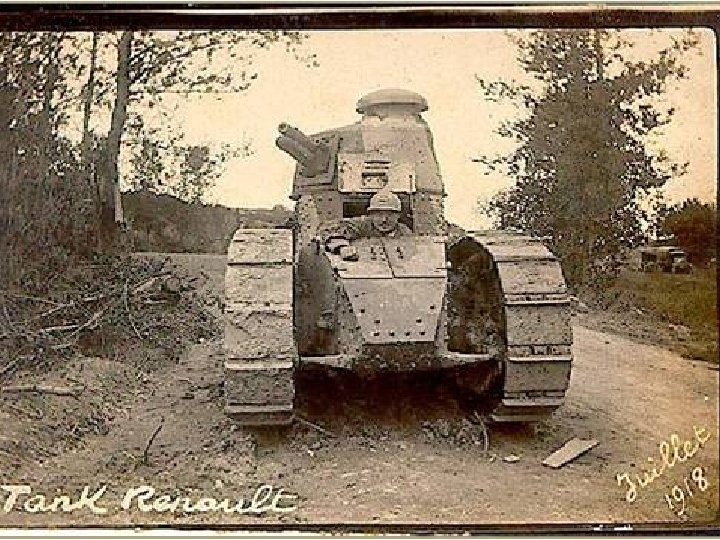
New Technologies of WWI � Tanks � Initially used for breaking through barbed wire between trenches. � Armed with small guns, and machine guns
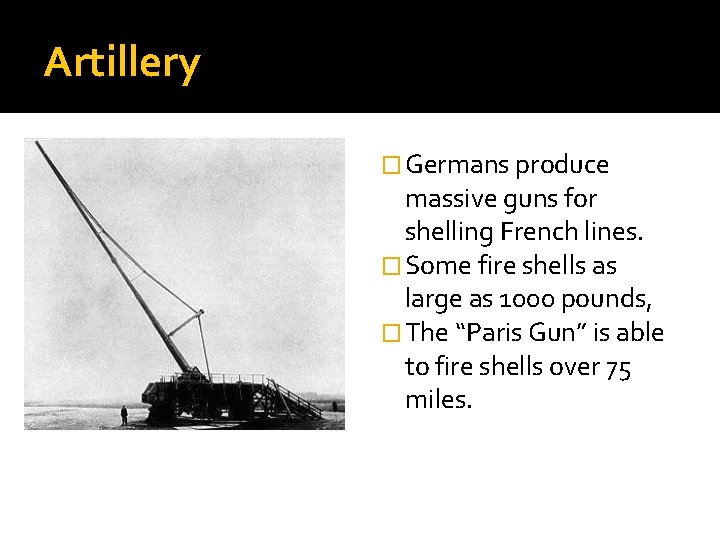
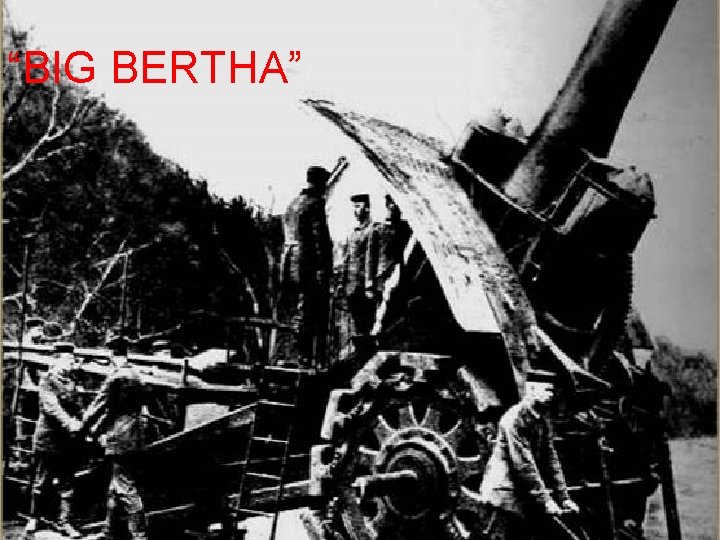
Artillery � Germans produce massive guns for shelling French lines. � Some fire shells as large as 1000 pounds, � The “Paris Gun” is able to fire shells over 75 miles.
“BIG BERTHA”
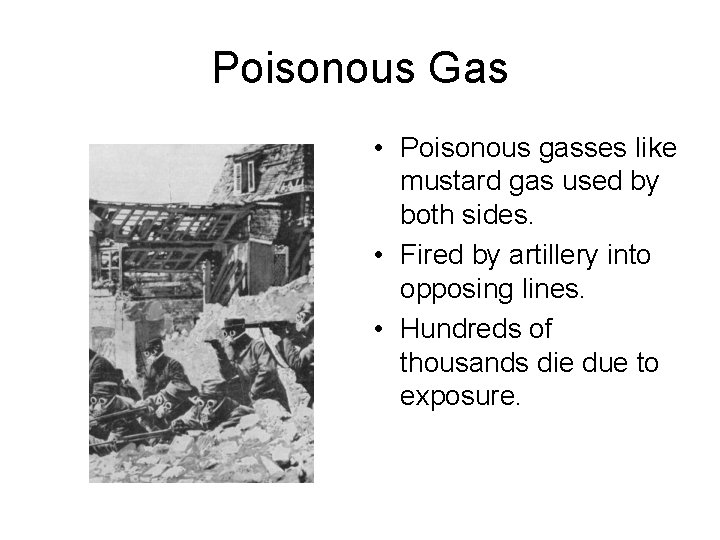
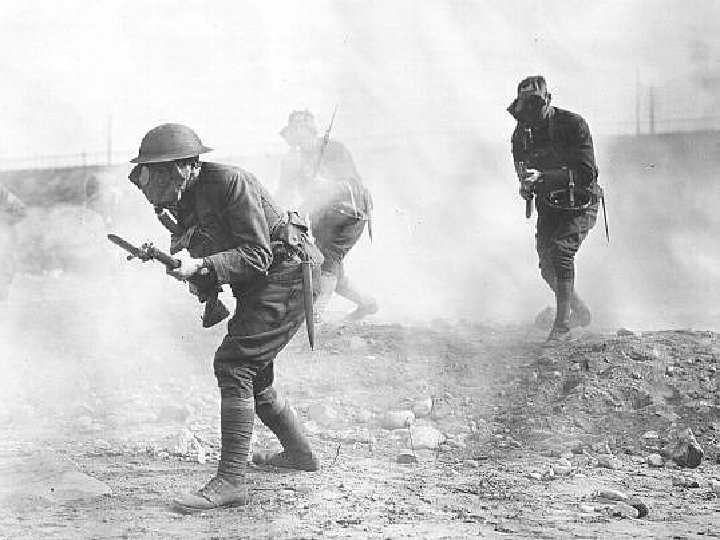
Poisonous Gas • Poisonous gasses like mustard gas used by both sides. • Fired by artillery into opposing lines. • Hundreds of thousands die due to exposure.
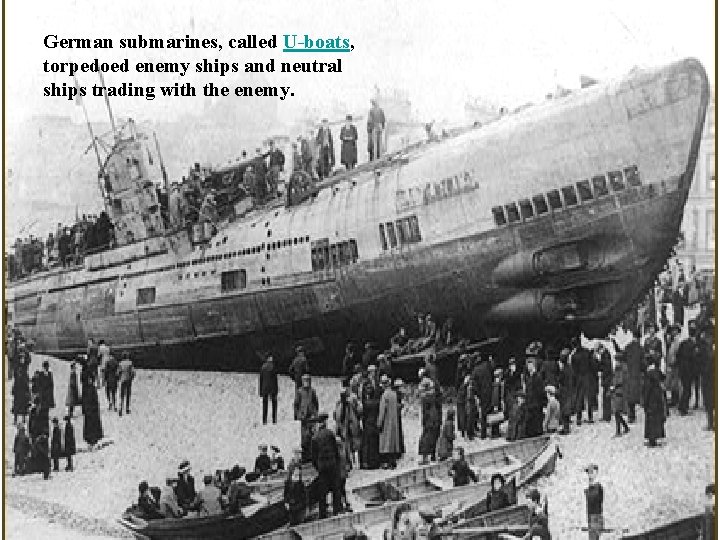
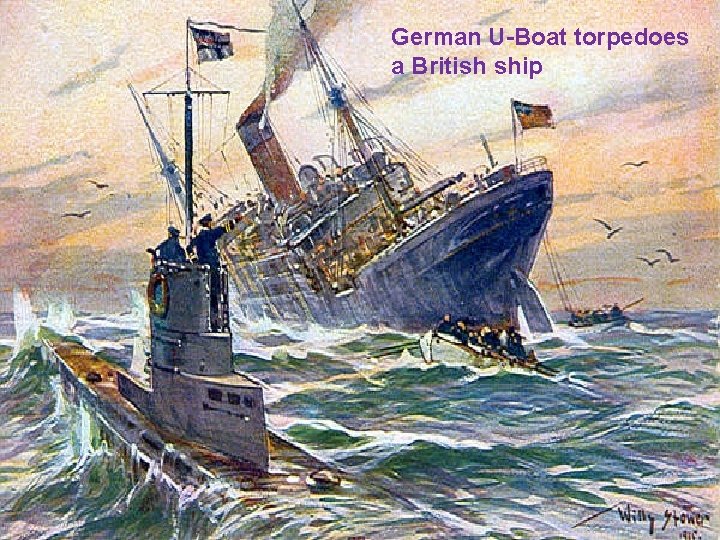
German submarines, called U-boats, torpedoed enemy ships and neutral ships trading with the enemy.
German U-Boat torpedoes a British ship
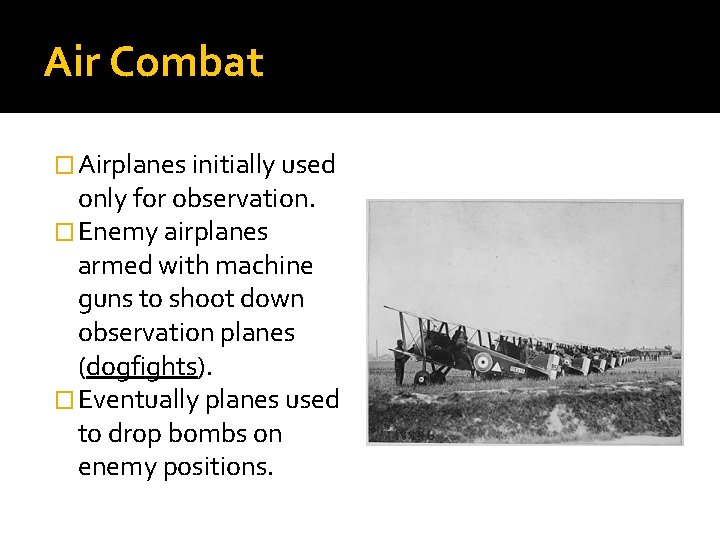
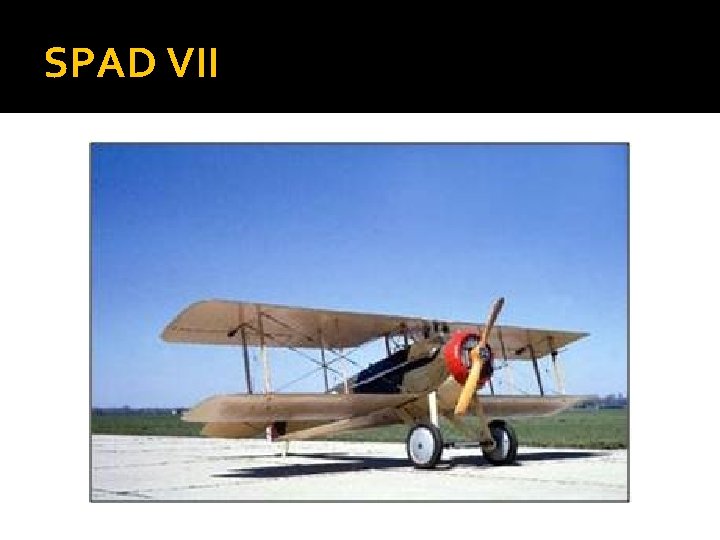
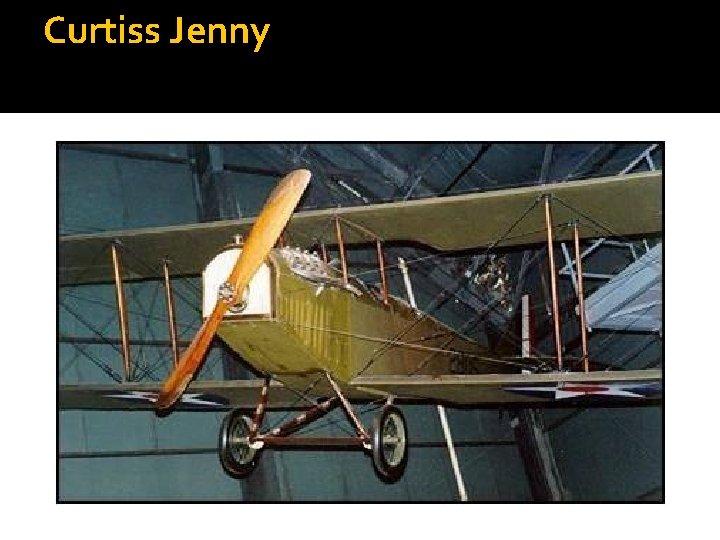
Air Combat � Airplanes initially used only for observation. � Enemy airplanes armed with machine guns to shoot down observation planes (dogfights). � Eventually planes used to drop bombs on enemy positions.
SPAD VII
Curtiss Jenny
Short video
Wrap-up �Why was a “war of attrition” used during WWI? �How did changes in military technology change the way wars are fought? �What effect might this war have on soldiers who survive the war?