
CHAPTER 28 Europe 1919 1939 Lesson 1 Instability
CHAPTER 28 Europe 1919 -1939
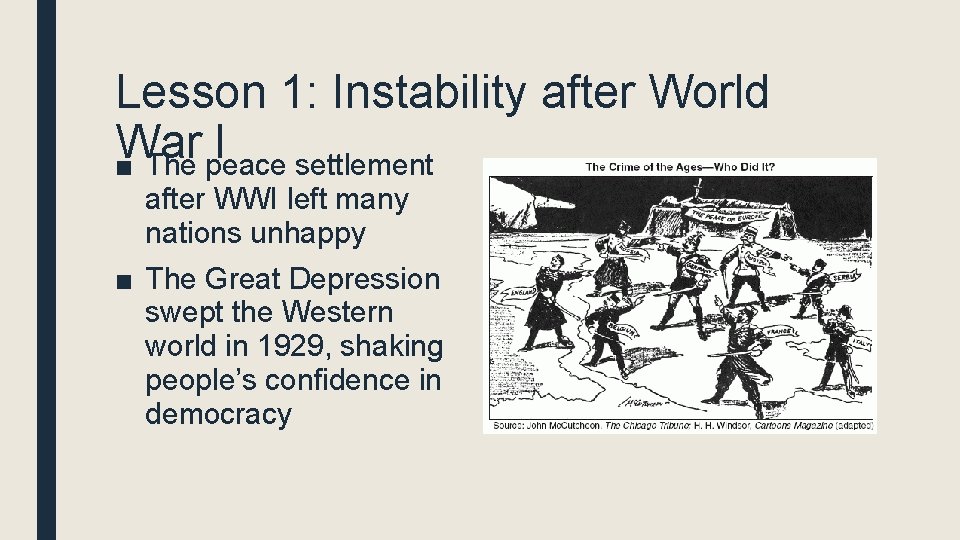
Lesson 1: Instability after World War I ■ The peace settlement after WWI left many nations unhappy ■ The Great Depression swept the Western world in 1929, shaking people’s confidence in democracy

Uneasy Peace, Uncertain Security ■ From the beginning, many nations were unhappy with peace settlements after WWI ■ The U. S. never joined the League of Nations, weakening its effectiveness ■ The French made strict demands of Germany following the Treaty of Versailles and occupied the Ruhr Valley, Germany’s industrial center
The Weimar Republic ■ Germany’s new government was set up in 1919 ■ Called the Weimar Republic, it was named after the city where the national assembly met ■ Problems with this included: Germany had no democratic tradition, too many political parties, and Germans blamed the Weimar government for the Treaty of Versailles

Inflation in Germany ■ When the French occupied the Ruhr Valley, German workers went on strike ■ To finance the war, Germany had simply printed more money, which caused inflation problems after the war ■ They continued to print more money after the war to pay their reparations
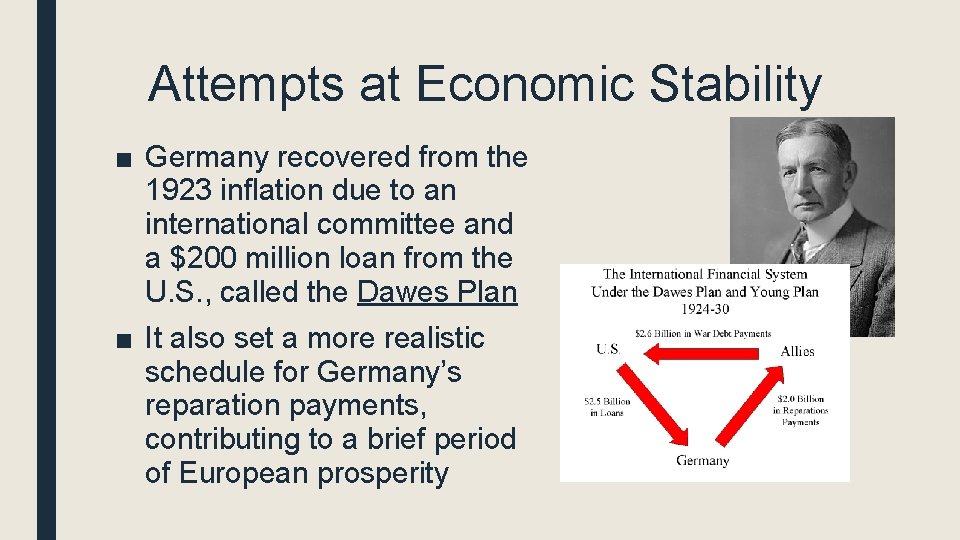
Attempts at Economic Stability ■ Germany recovered from the 1923 inflation due to an international committee and a $200 million loan from the U. S. , called the Dawes Plan ■ It also set a more realistic schedule for Germany’s reparation payments, contributing to a brief period of European prosperity
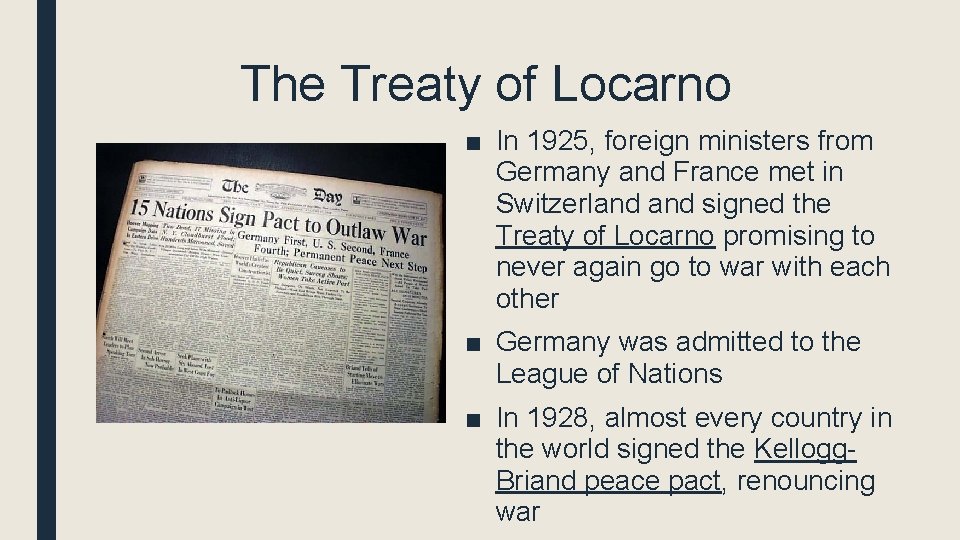
The Treaty of Locarno ■ In 1925, foreign ministers from Germany and France met in Switzerland signed the Treaty of Locarno promising to never again go to war with each other ■ Germany was admitted to the League of Nations ■ In 1928, almost every country in the world signed the Kellogg. Briand peace pact, renouncing war
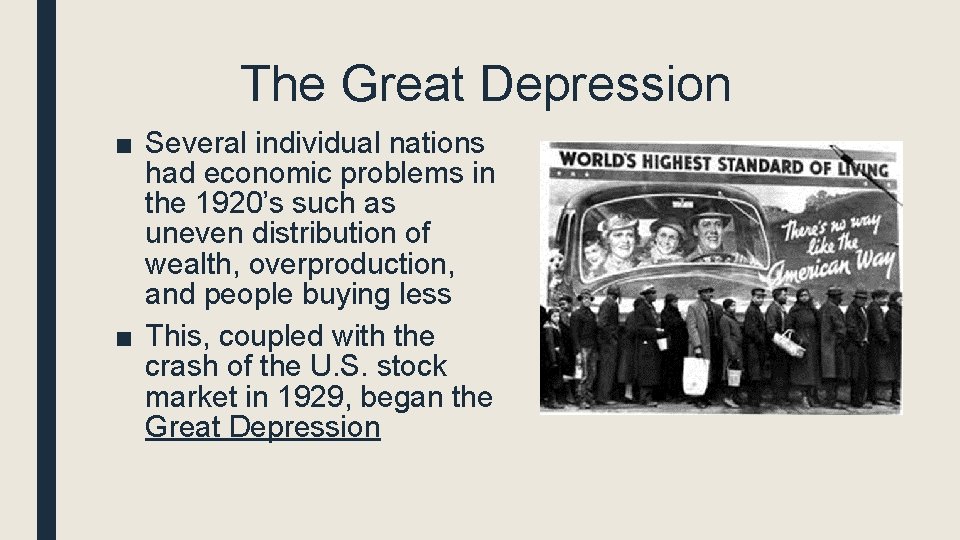
The Great Depression ■ Several individual nations had economic problems in the 1920’s such as uneven distribution of wealth, overproduction, and people buying less ■ This, coupled with the crash of the U. S. stock market in 1929, began the Great Depression
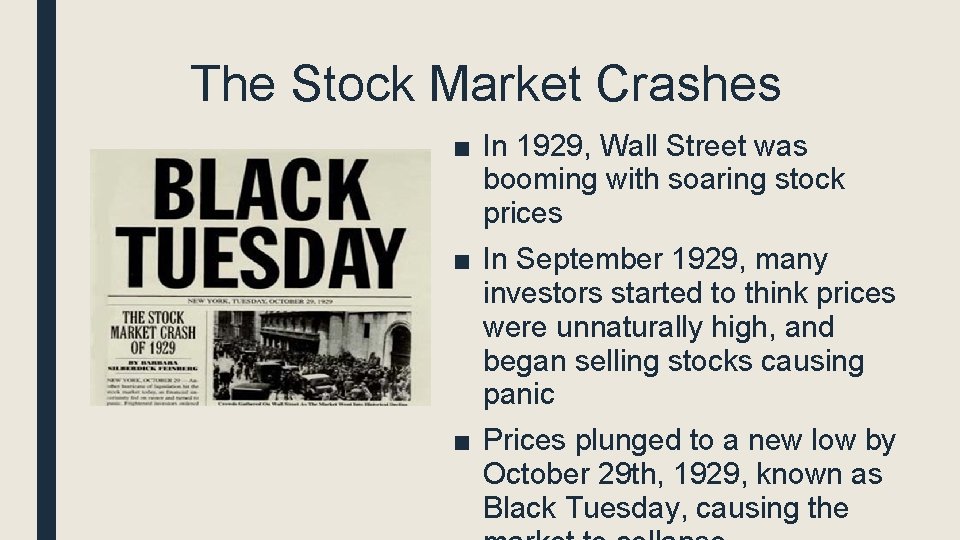
The Stock Market Crashes ■ In 1929, Wall Street was booming with soaring stock prices ■ In September 1929, many investors started to think prices were unnaturally high, and began selling stocks causing panic ■ Prices plunged to a new low by October 29 th, 1929, known as Black Tuesday, causing the
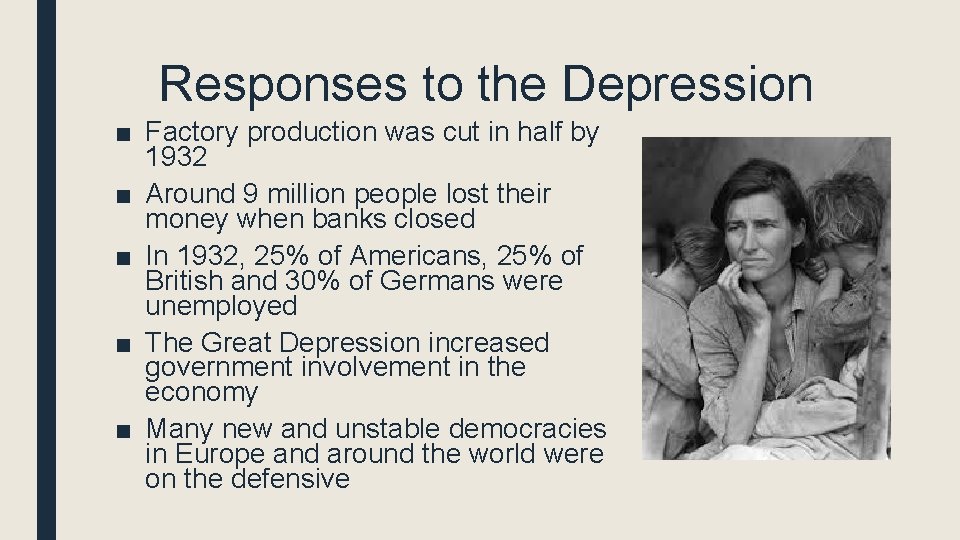
Responses to the Depression ■ Factory production was cut in half by 1932 ■ Around 9 million people lost their money when banks closed ■ In 1932, 25% of Americans, 25% of British and 30% of Germans were unemployed ■ The Great Depression increased government involvement in the economy ■ Many new and unstable democracies in Europe and around the world were on the defensive
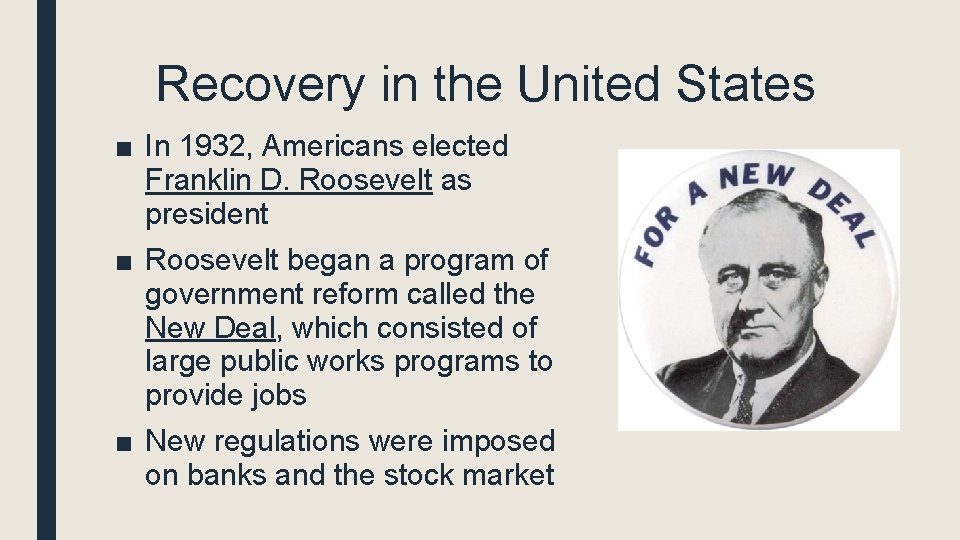
Recovery in the United States ■ In 1932, Americans elected Franklin D. Roosevelt as president ■ Roosevelt began a program of government reform called the New Deal, which consisted of large public works programs to provide jobs ■ New regulations were imposed on banks and the stock market
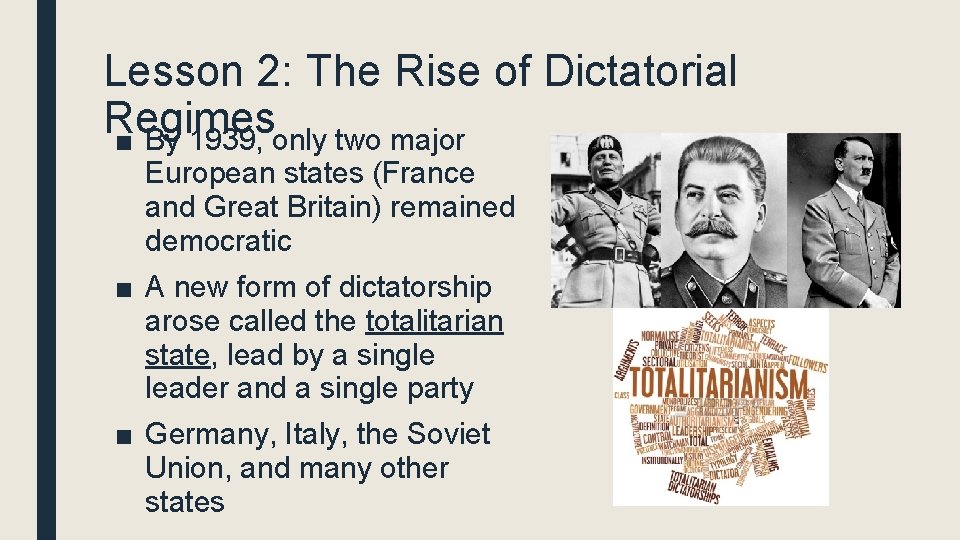
Lesson 2: The Rise of Dictatorial Regimes ■ By 1939, only two major European states (France and Great Britain) remained democratic ■ A new form of dictatorship arose called the totalitarian state, lead by a single leader and a single party ■ Germany, Italy, the Soviet Union, and many other states
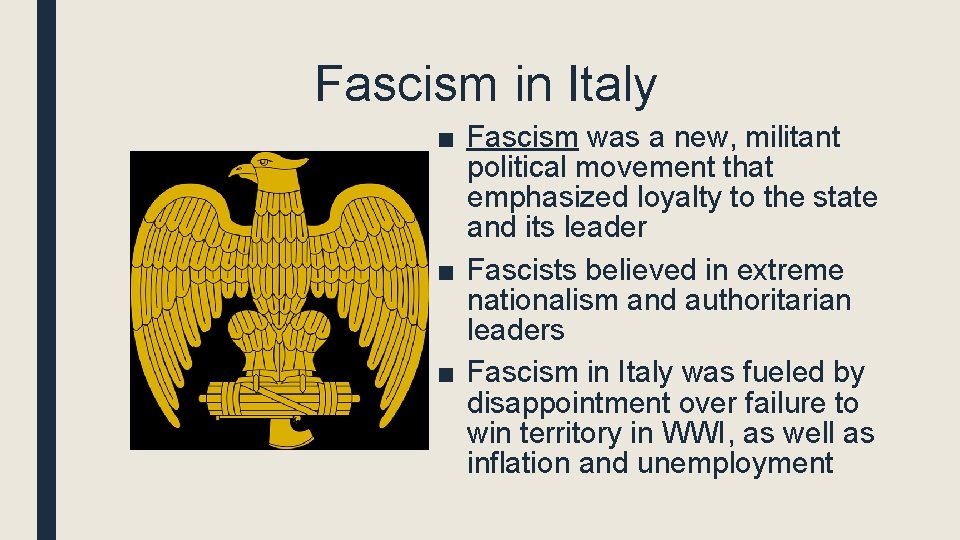
Fascism in Italy ■ Fascism was a new, militant political movement that emphasized loyalty to the state and its leader ■ Fascists believed in extreme nationalism and authoritarian leaders ■ Fascism in Italy was fueled by disappointment over failure to win territory in WWI, as well as inflation and unemployment
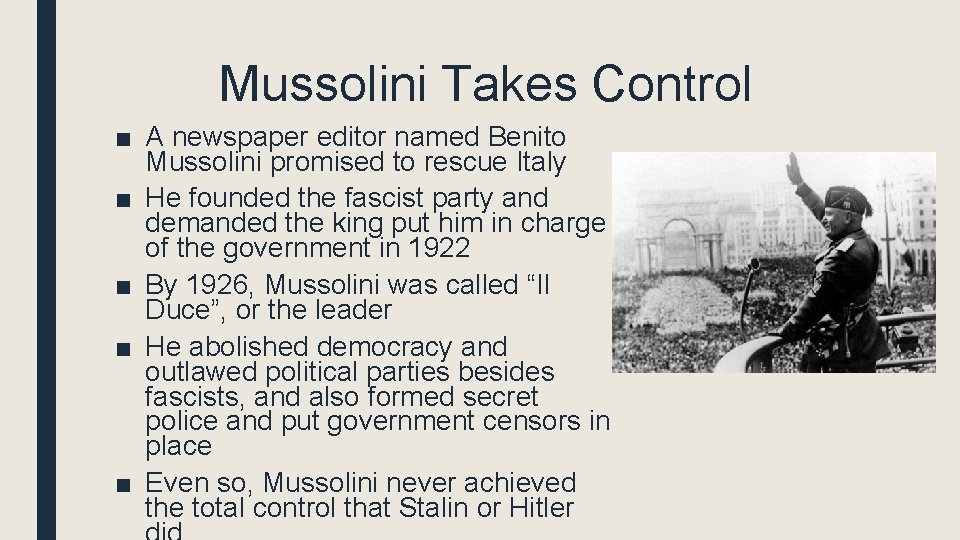
Mussolini Takes Control ■ A newspaper editor named Benito Mussolini promised to rescue Italy ■ He founded the fascist party and demanded the king put him in charge of the government in 1922 ■ By 1926, Mussolini was called “Il Duce”, or the leader ■ He abolished democracy and outlawed political parties besides fascists, and also formed secret police and put government censors in place ■ Even so, Mussolini never achieved the total control that Stalin or Hitler
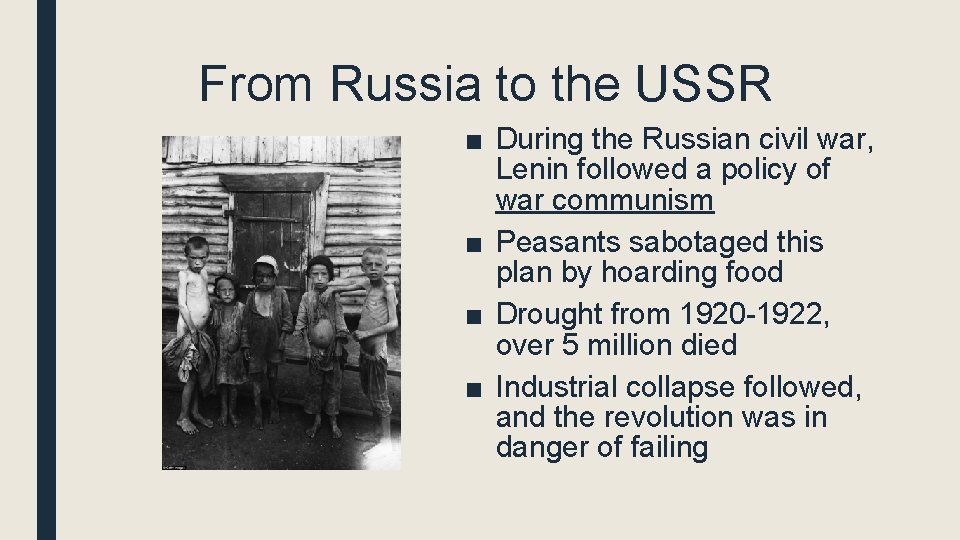
From Russia to the USSR ■ During the Russian civil war, Lenin followed a policy of war communism ■ Peasants sabotaged this plan by hoarding food ■ Drought from 1920 -1922, over 5 million died ■ Industrial collapse followed, and the revolution was in danger of failing
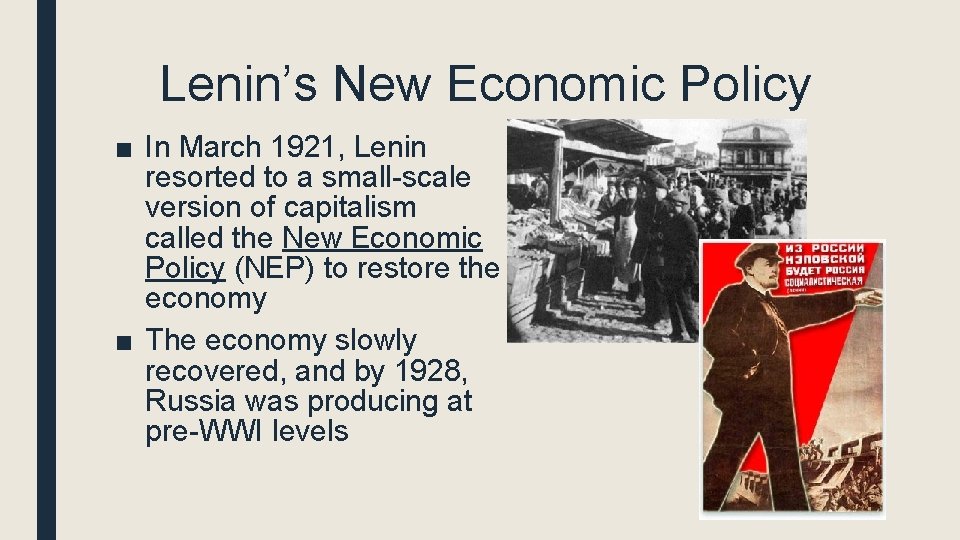
Lenin’s New Economic Policy ■ In March 1921, Lenin resorted to a small-scale version of capitalism called the New Economic Policy (NEP) to restore the economy ■ The economy slowly recovered, and by 1928, Russia was producing at pre-WWI levels
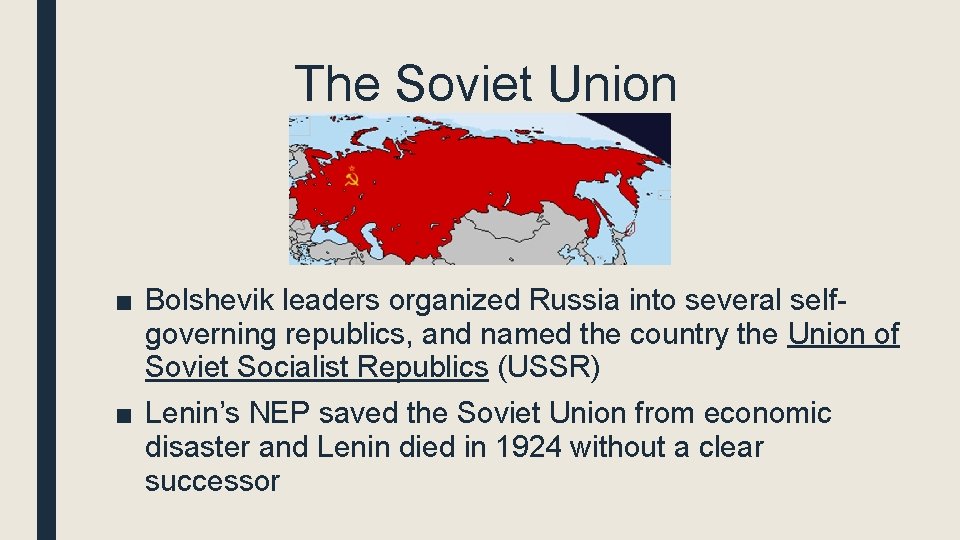
The Soviet Union ■ Bolshevik leaders organized Russia into several selfgoverning republics, and named the country the Union of Soviet Socialist Republics (USSR) ■ Lenin’s NEP saved the Soviet Union from economic disaster and Lenin died in 1924 without a clear successor
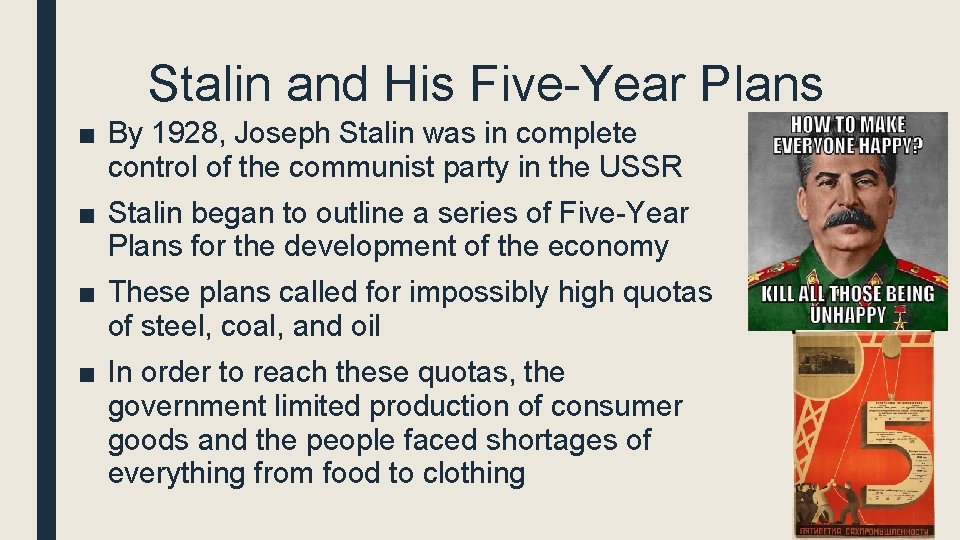
Stalin and His Five-Year Plans ■ By 1928, Joseph Stalin was in complete control of the communist party in the USSR ■ Stalin began to outline a series of Five-Year Plans for the development of the economy ■ These plans called for impossibly high quotas of steel, coal, and oil ■ In order to reach these quotas, the government limited production of consumer goods and the people faced shortages of everything from food to clothing
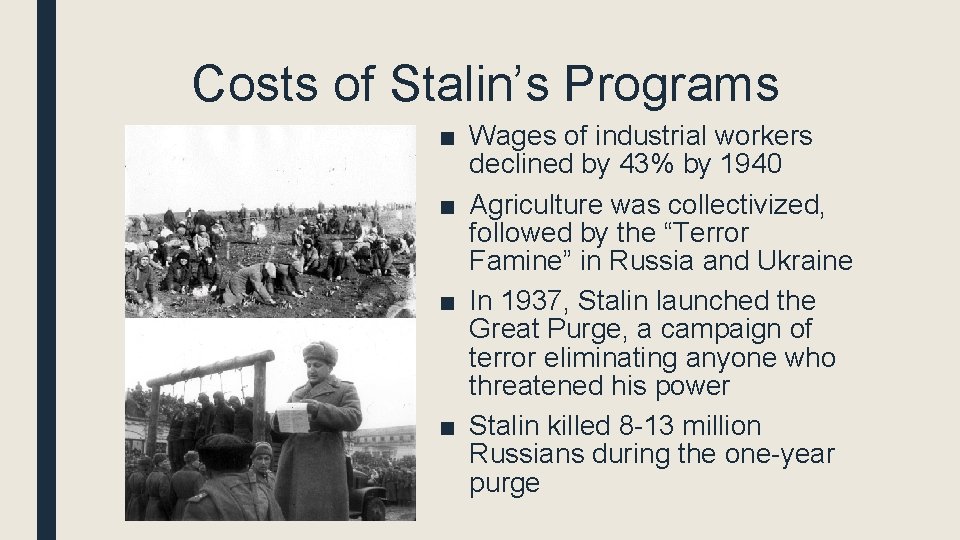
Costs of Stalin’s Programs ■ Wages of industrial workers declined by 43% by 1940 ■ Agriculture was collectivized, followed by the “Terror Famine” in Russia and Ukraine ■ In 1937, Stalin launched the Great Purge, a campaign of terror eliminating anyone who threatened his power ■ Stalin killed 8 -13 million Russians during the one-year purge
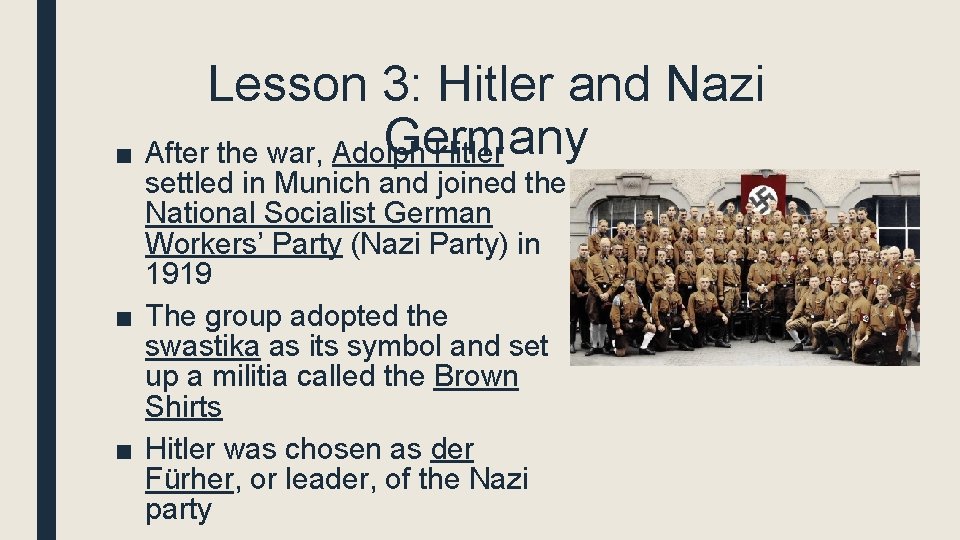
Lesson 3: Hitler and Nazi Germany ■ After the war, Adolph Hitler settled in Munich and joined the National Socialist German Workers’ Party (Nazi Party) in 1919 ■ The group adopted the swastika as its symbol and set up a militia called the Brown Shirts ■ Hitler was chosen as der Fürher, or leader, of the Nazi party
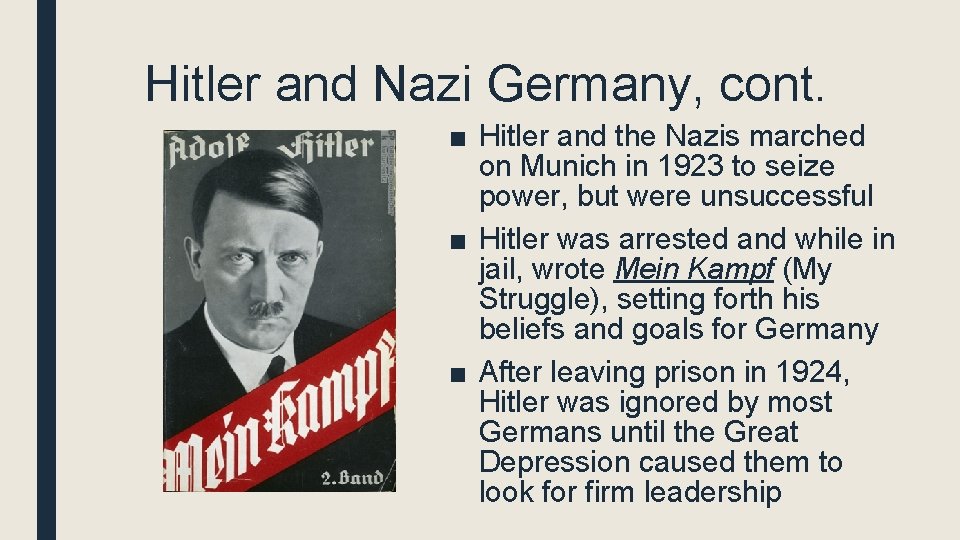
Hitler and Nazi Germany, cont. ■ Hitler and the Nazis marched on Munich in 1923 to seize power, but were unsuccessful ■ Hitler was arrested and while in jail, wrote Mein Kampf (My Struggle), setting forth his beliefs and goals for Germany ■ After leaving prison in 1924, Hitler was ignored by most Germans until the Great Depression caused them to look for firm leadership
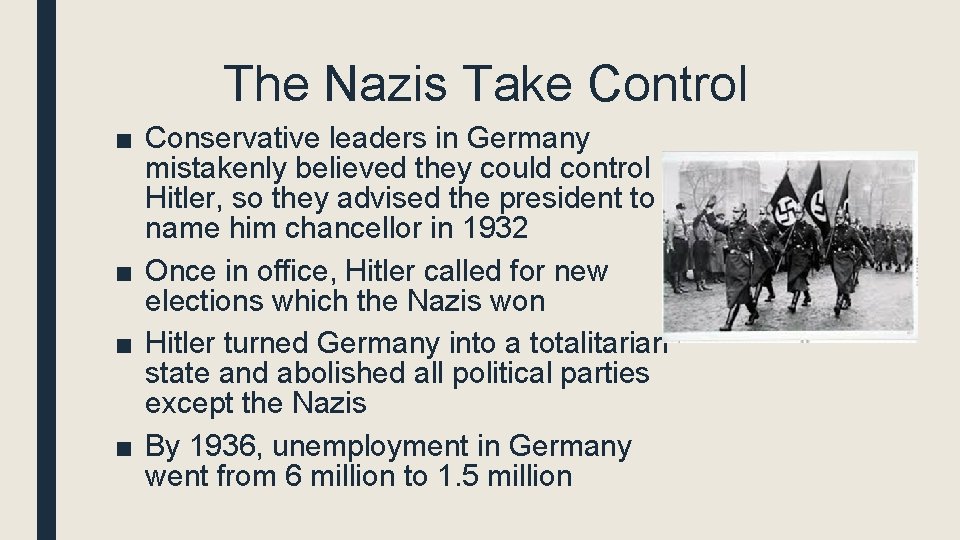
The Nazis Take Control ■ Conservative leaders in Germany mistakenly believed they could control Hitler, so they advised the president to name him chancellor in 1932 ■ Once in office, Hitler called for new elections which the Nazis won ■ Hitler turned Germany into a totalitarian state and abolished all political parties except the Nazis ■ By 1936, unemployment in Germany went from 6 million to 1. 5 million
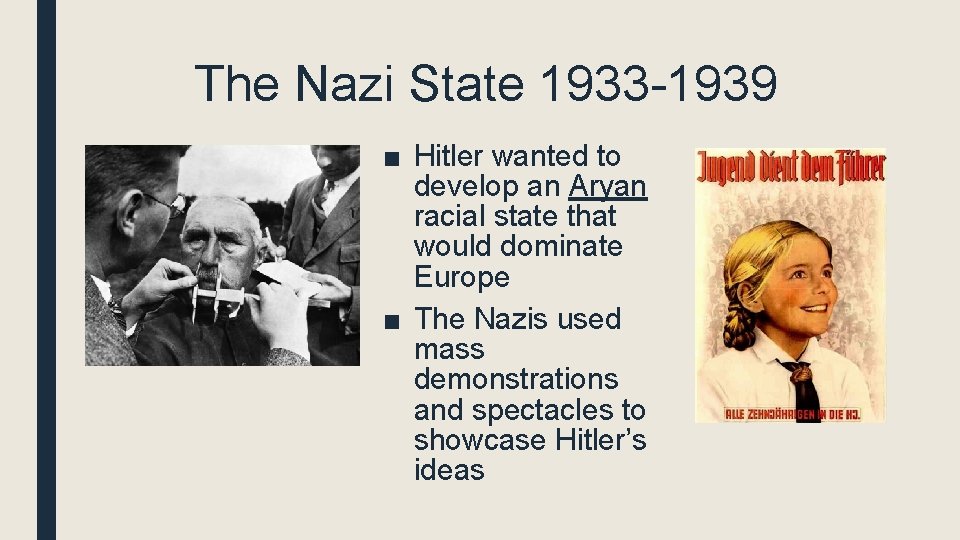
The Nazi State 1933 -1939 ■ Hitler wanted to develop an Aryan racial state that would dominate Europe ■ The Nazis used mass demonstrations and spectacles to showcase Hitler’s ideas
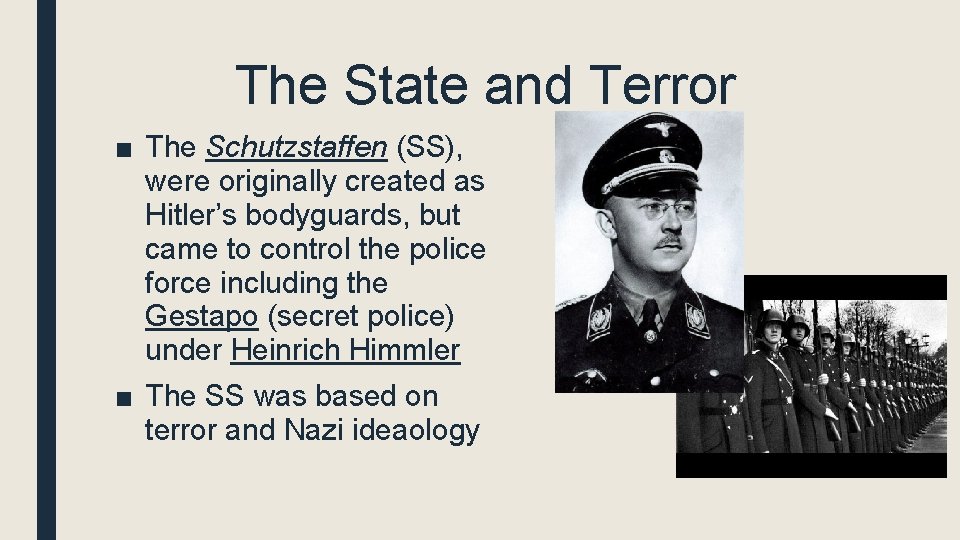
The State and Terror ■ The Schutzstaffen (SS), were originally created as Hitler’s bodyguards, but came to control the police force including the Gestapo (secret police) under Heinrich Himmler ■ The SS was based on terror and Nazi ideaology
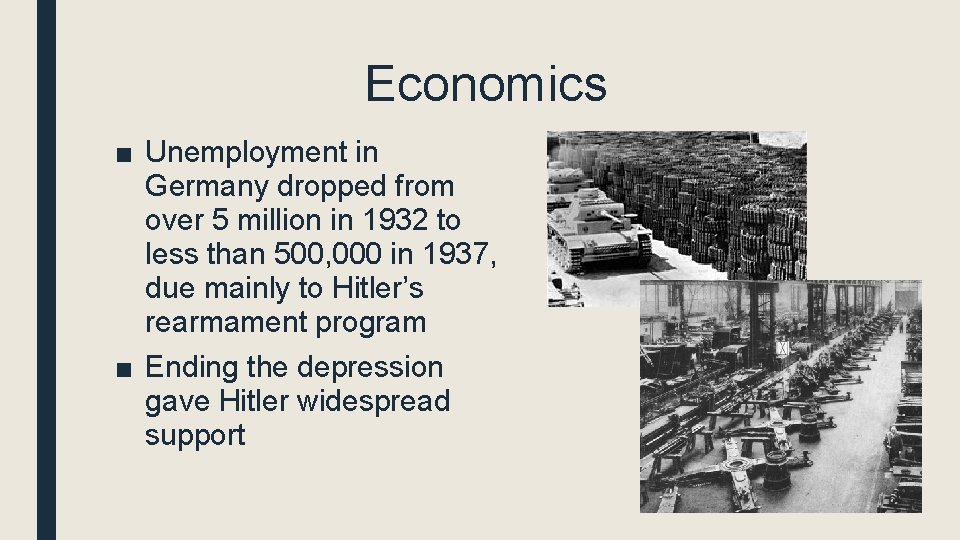
Economics ■ Unemployment in Germany dropped from over 5 million in 1932 to less than 500, 000 in 1937, due mainly to Hitler’s rearmament program ■ Ending the depression gave Hitler widespread support
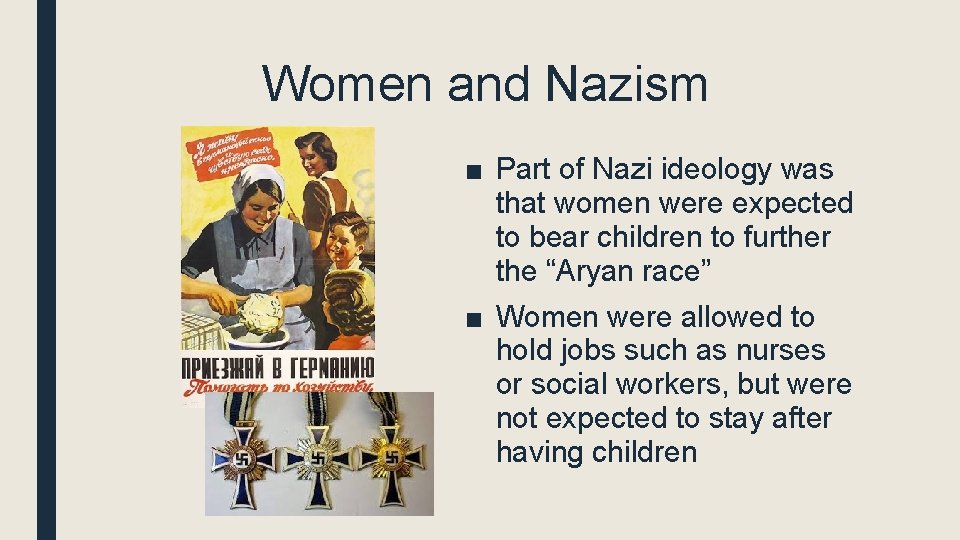
Women and Nazism ■ Part of Nazi ideology was that women were expected to bear children to further the “Aryan race” ■ Women were allowed to hold jobs such as nurses or social workers, but were not expected to stay after having children
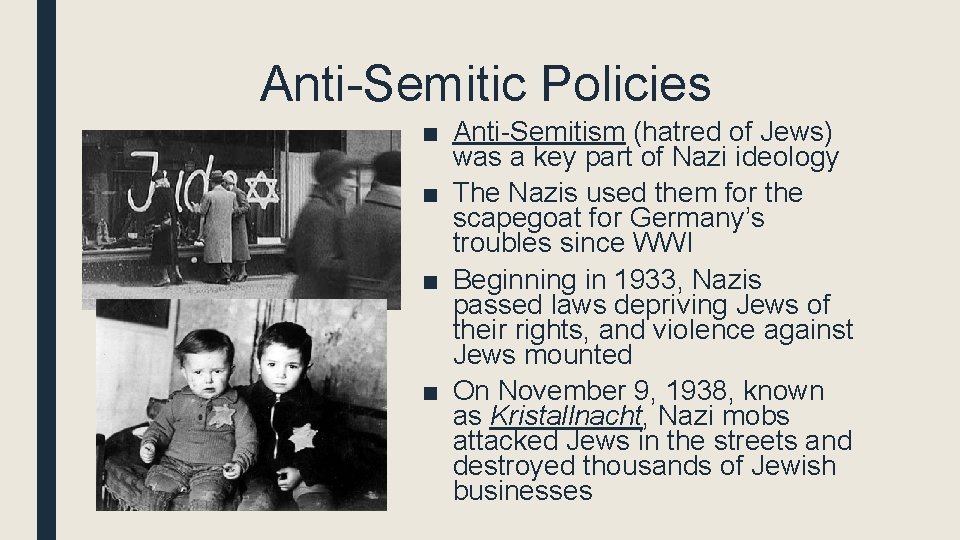
Anti-Semitic Policies ■ Anti-Semitism (hatred of Jews) was a key part of Nazi ideology ■ The Nazis used them for the scapegoat for Germany’s troubles since WWI ■ Beginning in 1933, Nazis passed laws depriving Jews of their rights, and violence against Jews mounted ■ On November 9, 1938, known as Kristallnacht, Nazi mobs attacked Jews in the streets and destroyed thousands of Jewish businesses
- Slides: 27