
Government Types 1920s to World War 2 Post
- Slides: 15
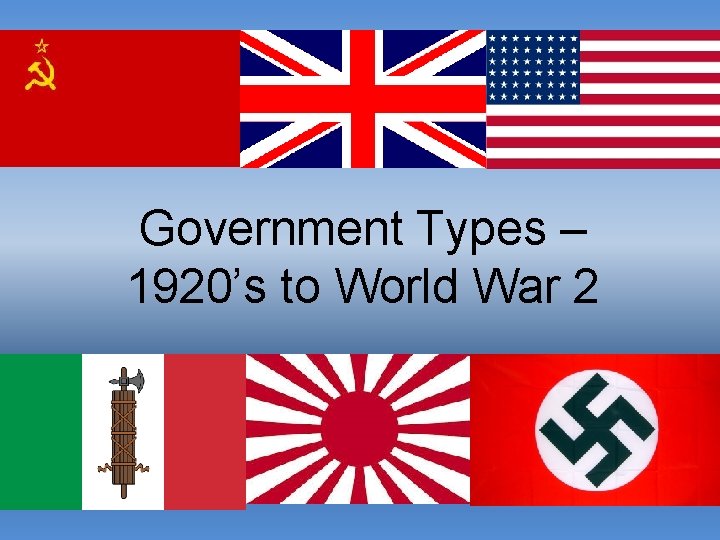
Government Types – 1920’s to World War 2
Post World War One • The world was in turmoil after World War One. • Economies across Europe were shattered, and the governments were unable to immediately fix the problems. • The people were desperate for change! • Due to the SEVERE economic problems, new types of governments came to power: – COMMUNISM and FASCISM
Communism • political and economic system in which the major productive resources in a society—such as mines, factories, and farms—are owned by the public or the state, and wealth is divided among citizens equally or according to individual need. • GOVERNMENT controls ALL aspects of your life.
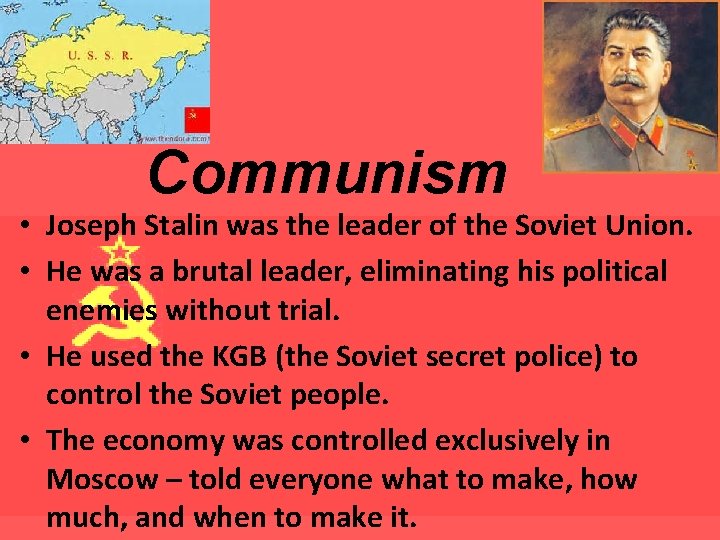
Communism • Joseph Stalin was the leader of the Soviet Union. • He was a brutal leader, eliminating his political enemies without trial. • He used the KGB (the Soviet secret police) to control the Soviet people. • The economy was controlled exclusively in Moscow – told everyone what to make, how much, and when to make it.
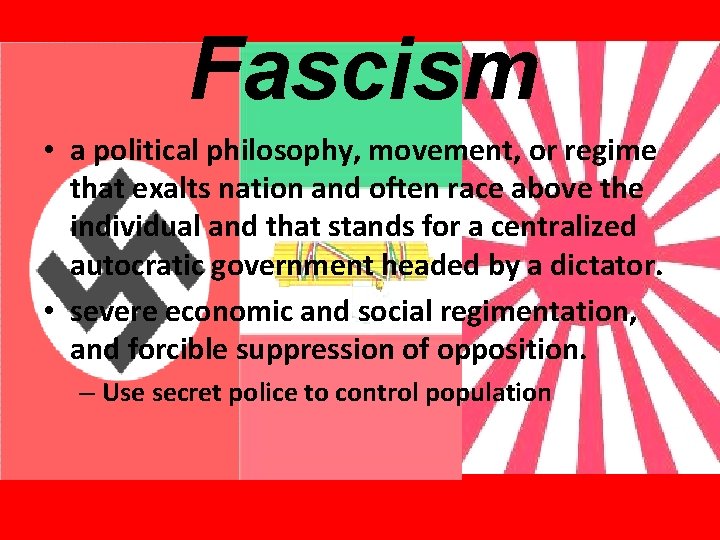
Fascism • a political philosophy, movement, or regime that exalts nation and often race above the individual and that stands for a centralized autocratic government headed by a dictator. • severe economic and social regimentation, and forcible suppression of opposition. – Use secret police to control population
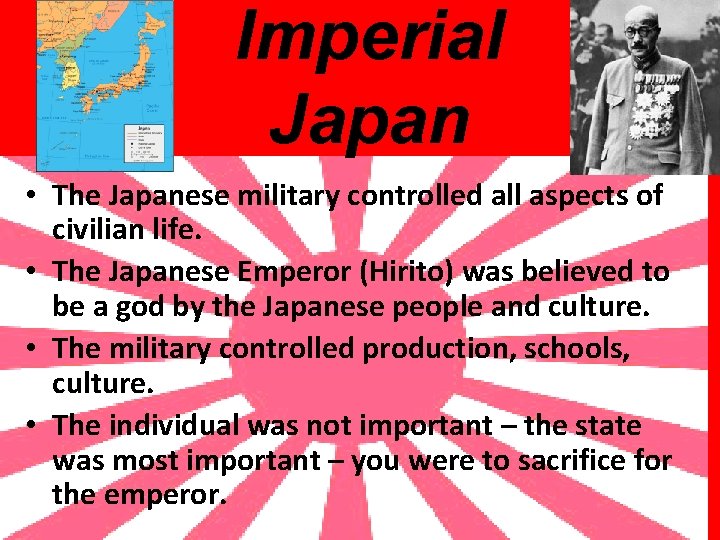
Imperial Japan • The Japanese military controlled all aspects of civilian life. • The Japanese Emperor (Hirito) was believed to be a god by the Japanese people and culture. • The military controlled production, schools, culture. • The individual was not important – the state was most important – you were to sacrifice for the emperor.
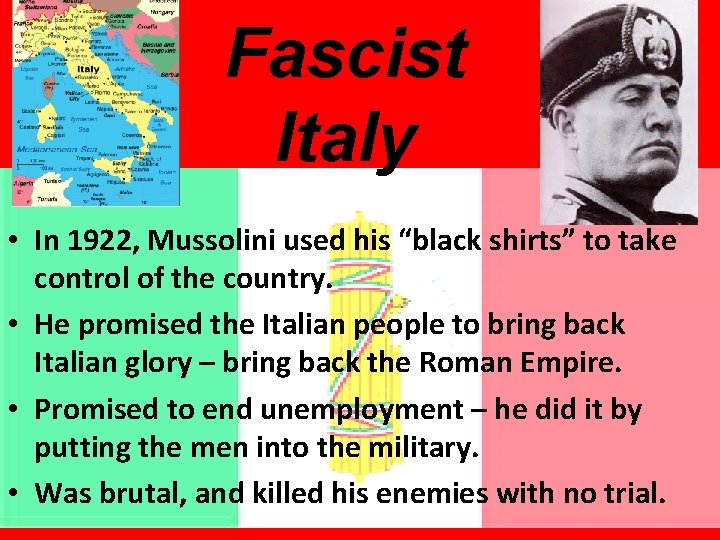
Fascist Italy • In 1922, Mussolini used his “black shirts” to take control of the country. • He promised the Italian people to bring back Italian glory – bring back the Roman Empire. • Promised to end unemployment – he did it by putting the men into the military. • Was brutal, and killed his enemies with no trial.
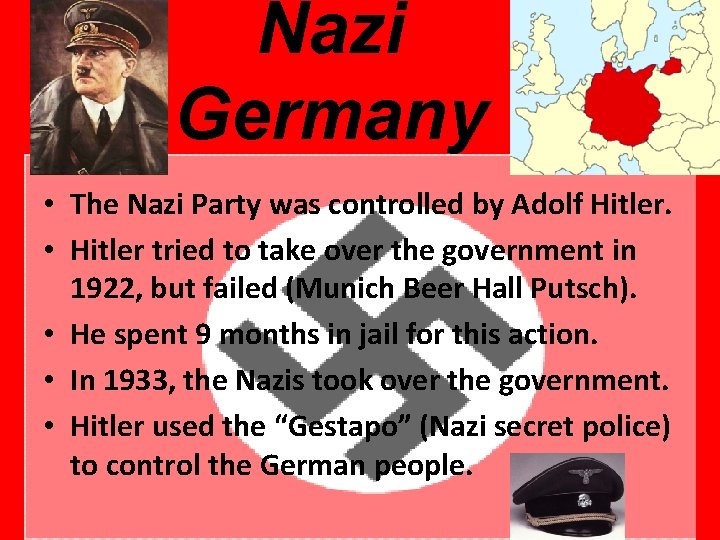
Nazi Germany • The Nazi Party was controlled by Adolf Hitler. • Hitler tried to take over the government in 1922, but failed (Munich Beer Hall Putsch). • He spent 9 months in jail for this action. • In 1933, the Nazis took over the government. • Hitler used the “Gestapo” (Nazi secret police) to control the German people.
Capitalism • A way of organizing an economy so that the things that are used to make and transport products (such as land, oil, factories, ships, etc. ) are owned by individual people and companies rather than by the government. • INDIVIDUALS own the property and businesses.
United Kingdom (England) • Parliamentary Monarchy – They have 2 houses of legislature (House of Commons & Lords) • Monarchy (King/Queen) is a figurehead • Parliament Elects the Prime Minister, who then selects his cabinet. – He runs the nation, not the monarch. • Modified Free Market system
United States of America • Three branches of Government – Legislative (elected; House of Representatives and Senate) – Executive (Elected; President) – Judicial (Supreme Court) • Executive Branch controls the police and the military, but the Legislative controls the FINANCES for them. • System designed to control each branch by the other two branches.
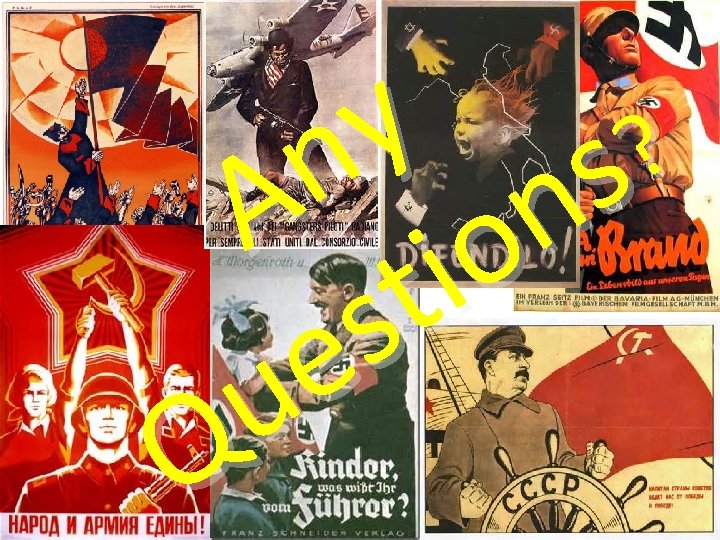
Communism & Fascism Similarities • Both use secret police to control the population. • Both are TOTALITARIAN governments. – The government controls almost (or all) aspects of population’s lives. • Both heavily use PROPAGANDA to control the will and emotions of their people. • Both repress the rights of the citizens.
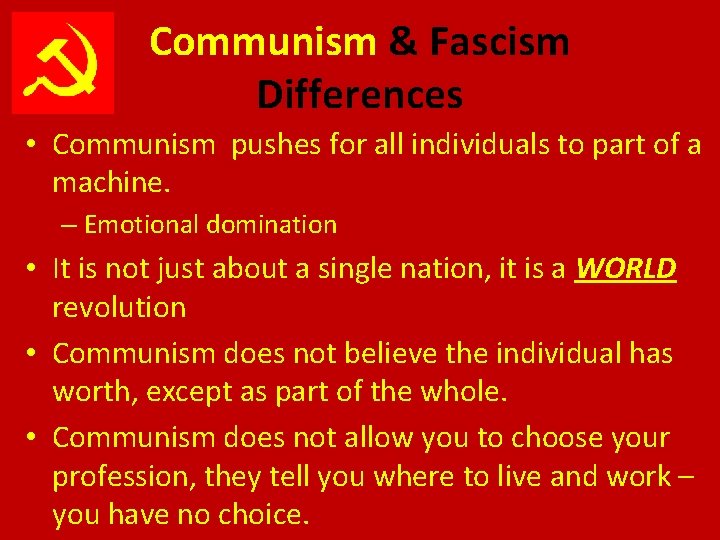
Communism & Fascism Differences • Communism pushes for all individuals to part of a machine. – Emotional domination • It is not just about a single nation, it is a WORLD revolution • Communism does not believe the individual has worth, except as part of the whole. • Communism does not allow you to choose your profession, they tell you where to live and work – you have no choice.
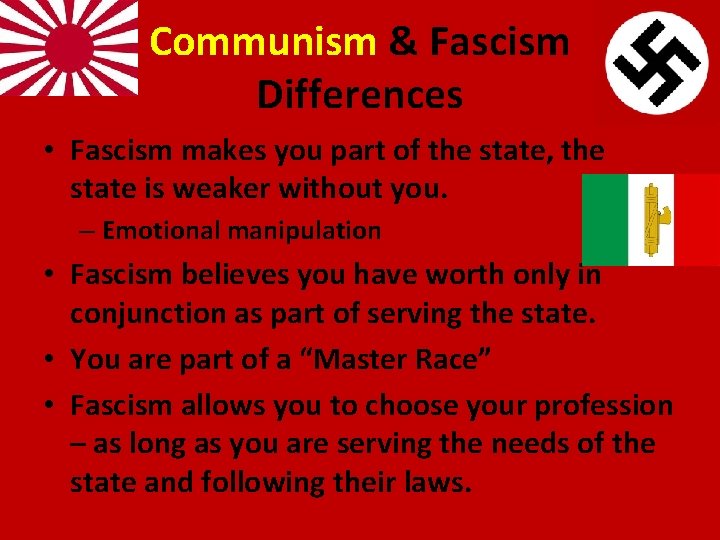
Communism & Fascism Differences • Fascism makes you part of the state, the state is weaker without you. – Emotional manipulation • Fascism believes you have worth only in conjunction as part of serving the state. • You are part of a “Master Race” • Fascism allows you to choose your profession – as long as you are serving the needs of the state and following their laws.
y ? n s A ion t s e u Q