
How did the Second World War change the
- Slides: 26
How did the Second World War change the lives of women on the Home Front? Key Stage 3: History Learning Aims and Outcomes • Students will develop skills in interpreting sources to identify changes to women’s lives • Students will be make inferences about the changes that women experienced • Students will use their source analysis to create a review of the Monument to the Women in the Second World War. Relates to: World War Two, Women’s History This PPT relates to the Teaching Activity: How did the Second World War change the lives of women on the Home Front?
The Second World War What predictions can you make about how the lives of women changed during the Second World War?
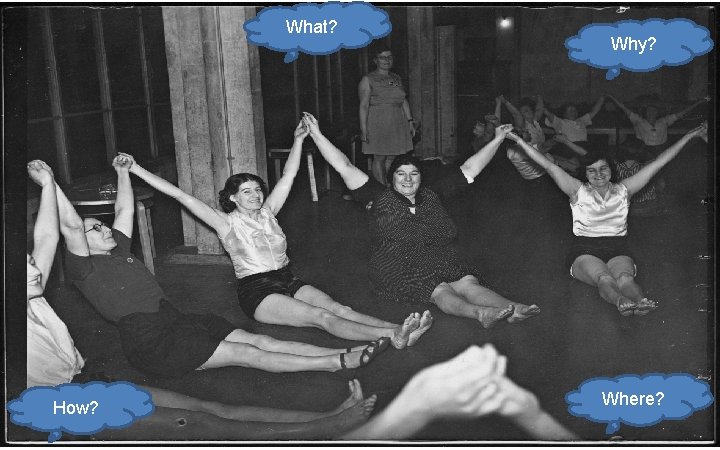
What? How? Why? Where?
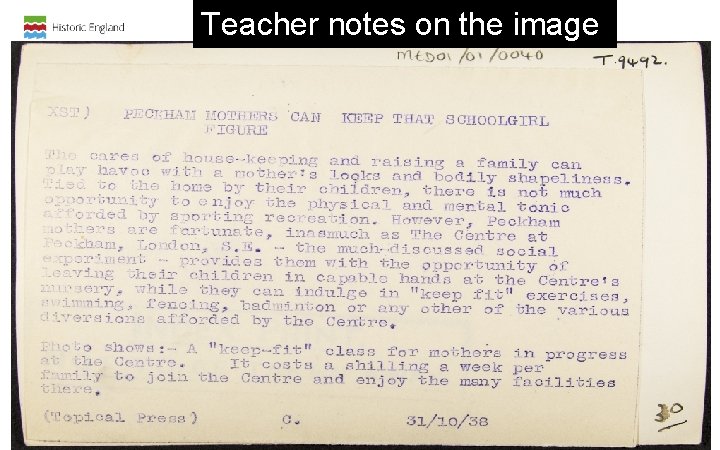
Teacher notes on the image
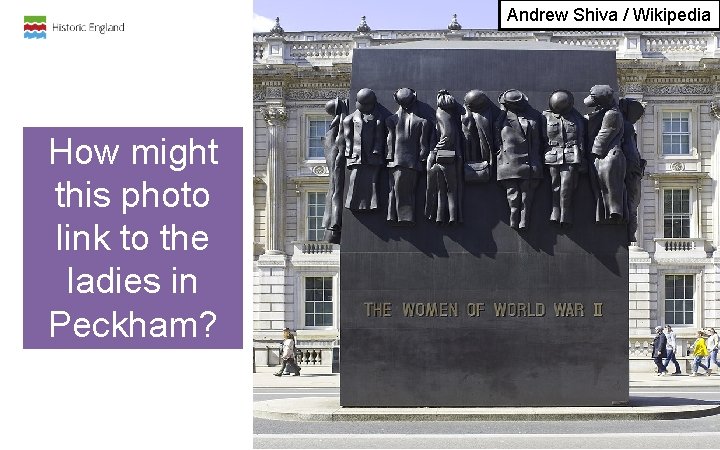
Andrew Shiva / Wikipedia How might this photo link to the ladies in Peckham?
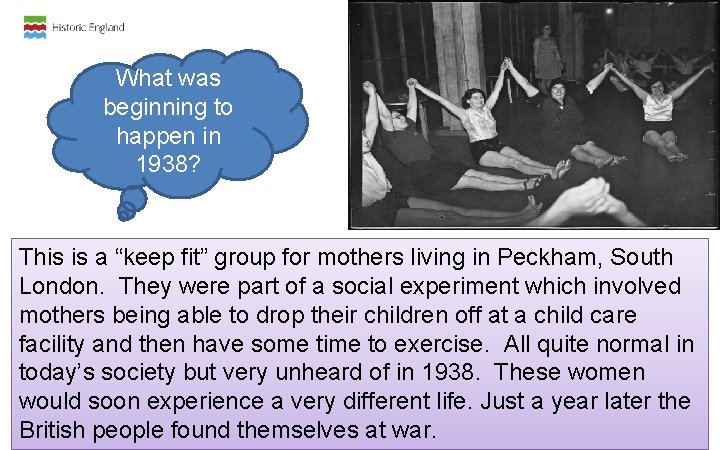
What was beginning to happen in 1938? This is a “keep fit” group for mothers living in Peckham, South London. They were part of a social experiment which involved mothers being able to drop their children off at a child care facility and then have some time to exercise. All quite normal in today’s society but very unheard of in 1938. These women would soon experience a very different life. Just a year later the British people found themselves at war.
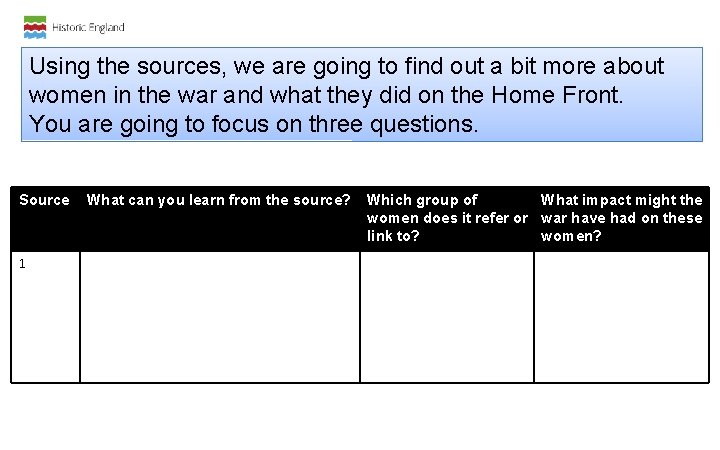
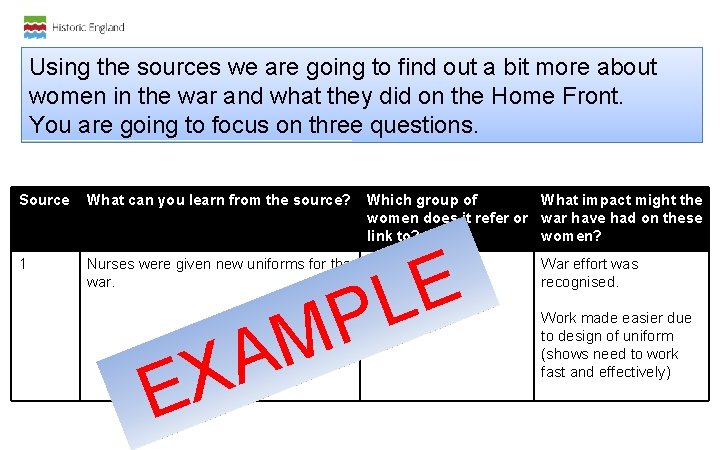
Using the sources, we are going to find out a bit more about women in the war and what they did on the Home Front. You are going to focus on three questions. Source 1 What can you learn from the source? Which group of What impact might the women does it refer or war have had on these link to? women?
M A X E E L P
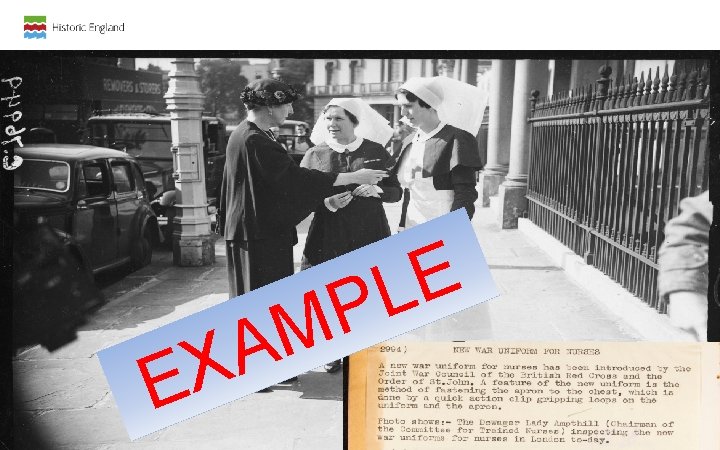
Using the sources we are going to find out a bit more about women in the war and what they did on the Home Front. You are going to focus on three questions. Source What can you learn from the source? 1 Nurses were given new uniforms for the Nurses war. E L P M A X E Which group of What impact might the women does it refer or war have had on these link to? women? War effort was recognised. Work made easier due to design of uniform (shows need to work fast and effectively)
Source 1 2 3 4 5 6 7 8 What can you learn from the source? Which group of women does it refer or link to? What impact might the war have had on these women?
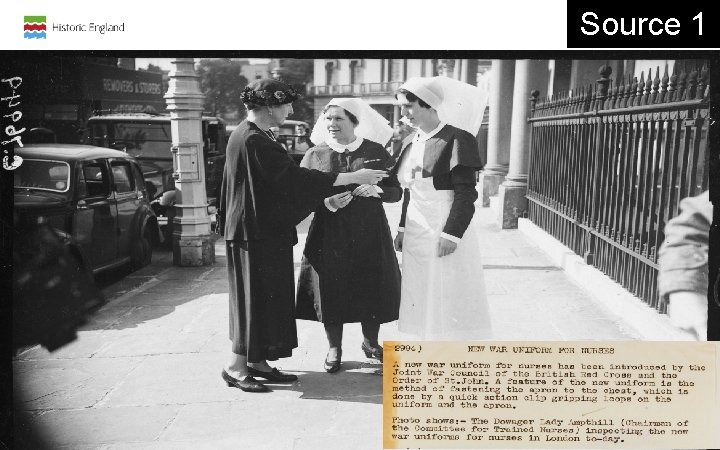
Source 1
Source 1 Additional image information: New war uniform for nurses, Greater London At the start of World War Two a new war uniform for nurses was introduced by the Joint War Council of the British Red Cross and the Order of St. John. A feature of the new uniform was the method of fastening the apron to the chest, using a quick action clip gripping loops on the uniform and apron. Here The Dowager Lady Ampthill (Chairman of the Committee for Trained Nurses) is inspecting the new war uniforms for nurses in London.
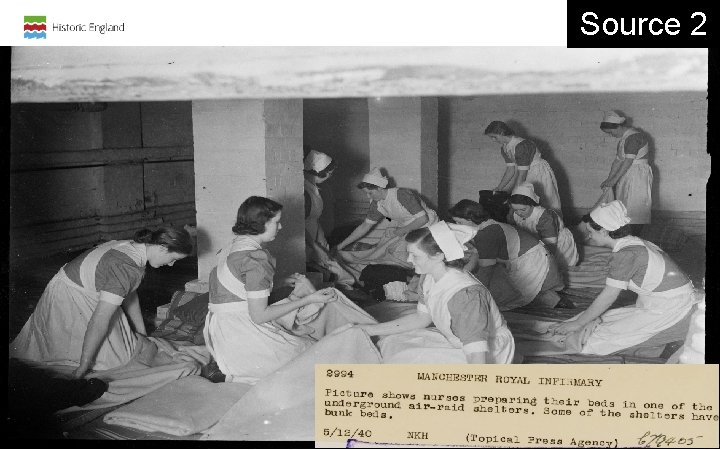
Source 2
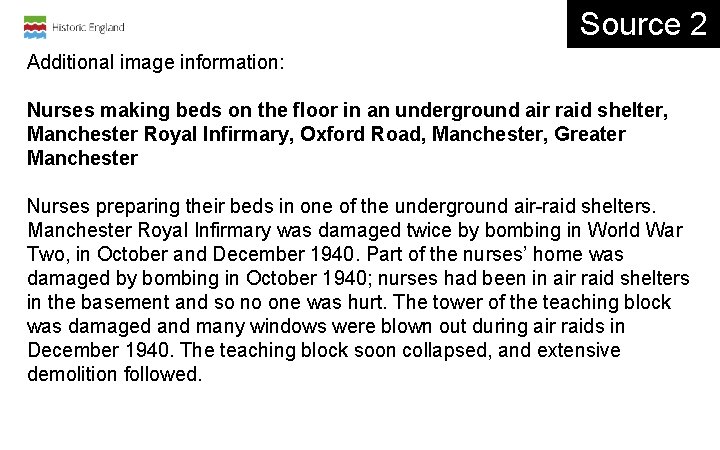
Source 2 Additional image information: Nurses making beds on the floor in an underground air raid shelter, Manchester Royal Infirmary, Oxford Road, Manchester, Greater Manchester Nurses preparing their beds in one of the underground air-raid shelters. Manchester Royal Infirmary was damaged twice by bombing in World War Two, in October and December 1940. Part of the nurses’ home was damaged by bombing in October 1940; nurses had been in air raid shelters in the basement and so no one was hurt. The tower of the teaching block was damaged and many windows were blown out during air raids in December 1940. The teaching block soon collapsed, and extensive demolition followed.
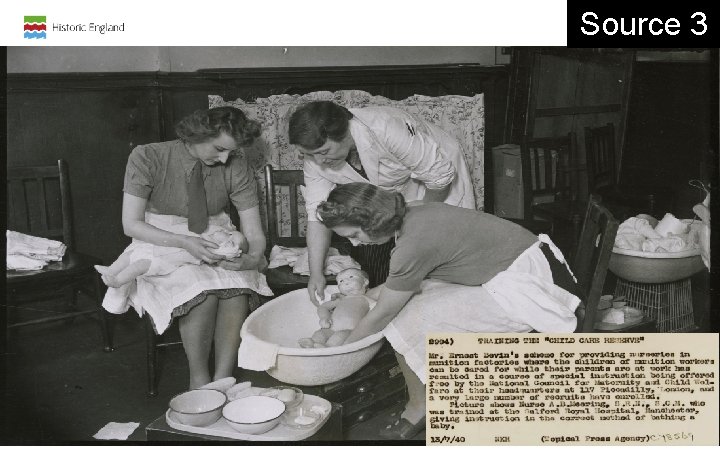
Source 3
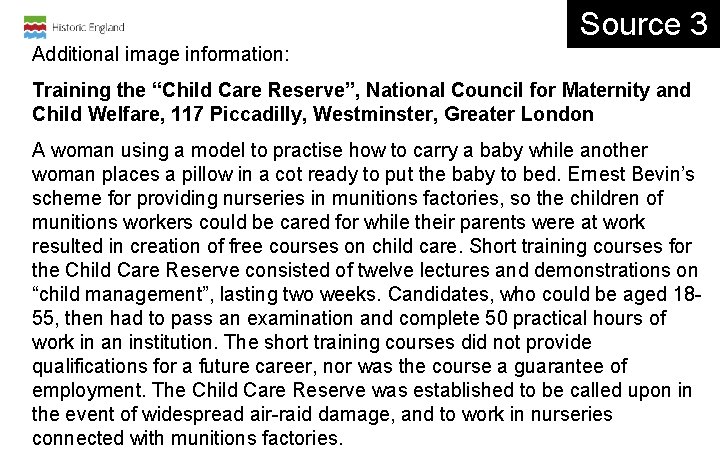
Source 3 Additional image information: Training the “Child Care Reserve”, National Council for Maternity and Child Welfare, 117 Piccadilly, Westminster, Greater London A woman using a model to practise how to carry a baby while another woman places a pillow in a cot ready to put the baby to bed. Ernest Bevin’s scheme for providing nurseries in munitions factories, so the children of munitions workers could be cared for while their parents were at work resulted in creation of free courses on child care. Short training courses for the Child Care Reserve consisted of twelve lectures and demonstrations on “child management”, lasting two weeks. Candidates, who could be aged 1855, then had to pass an examination and complete 50 practical hours of work in an institution. The short training courses did not provide qualifications for a future career, nor was the course a guarantee of employment. The Child Care Reserve was established to be called upon in the event of widespread air-raid damage, and to work in nurseries connected with munitions factories.
Source 4
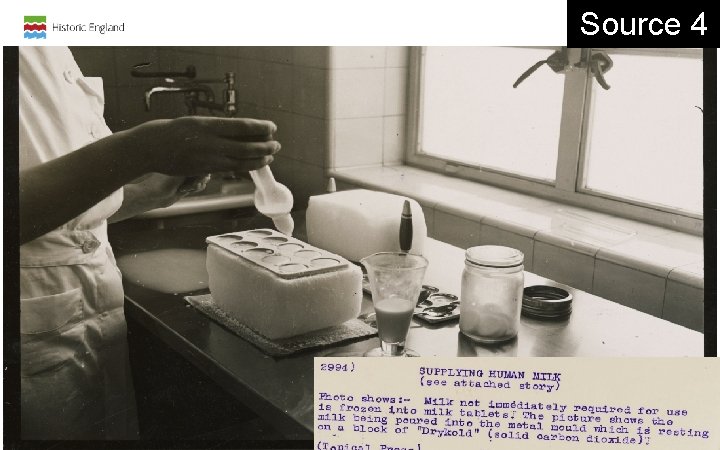
Source 4 Additional image information: Freezing breast milk, Queen Charlotte's Maternity Hospital, Goldhawk Road, Hammersmith, Greater London Milk that was not immediately required for use was frozen into milk tablets. The picture shows the milk being poured into the metal mould which is resting on a block of “Drykold” (solid carbon dioxide) to freeze it for later use. The Human Milk Bureau was established in 1939 and is now the oldest continuously operating milk bank in the world. The need for human milk was recognised after the birth of quadruplets in St Neot’s in 1935, with breast milk being delivered to their home daily, and following urgent calls for milk. The milk was obtained only from nursing mothers recommended by medical officers, and was thoroughly tested. The milk bank provided breast milk to preterm and sick babies, and milk could be dispatched almost immediately to any part of the country. The milk bank now operates from Queen Charlotte’s and Chelsea Hospital and serves neonatal units in London and the Greater London area.
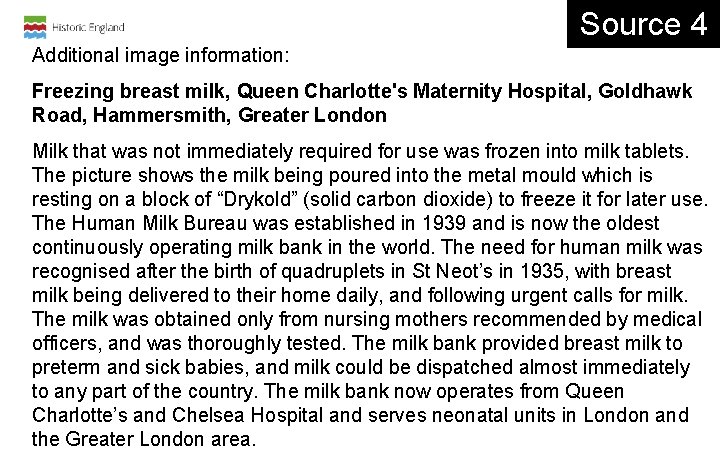
Source 5 700 Land Army girls from all parts of the country voicing their grievances at a meeting held in Caxton Hall, London demanding equal pay for equal work.
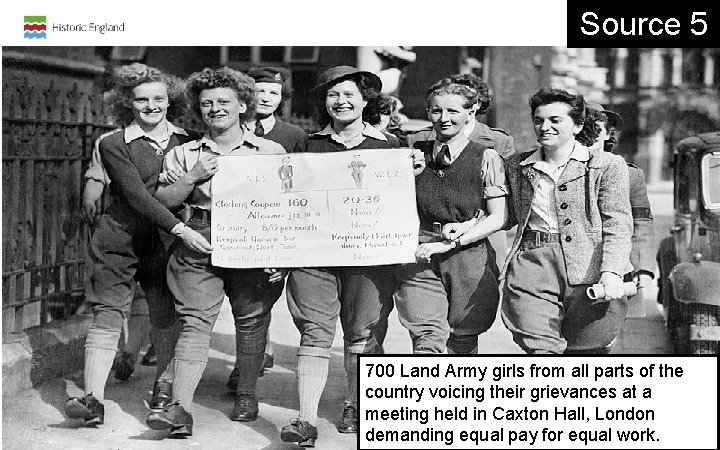
Source 6 The Civilian Evacuation Scheme in Britain during the Second World War Evacuees return home to London. Photo shows villagers saying goodbye to the children they adopted for the war.
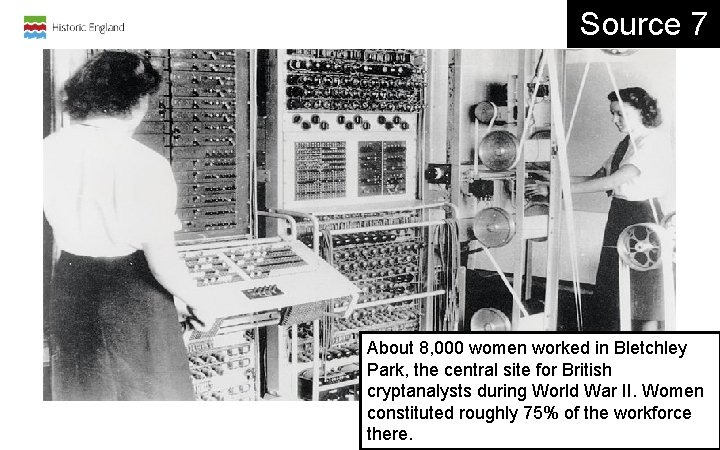
Source 7 About 8, 000 women worked in Bletchley Park, the central site for British cryptanalysts during World War II. Women constituted roughly 75% of the workforce there.
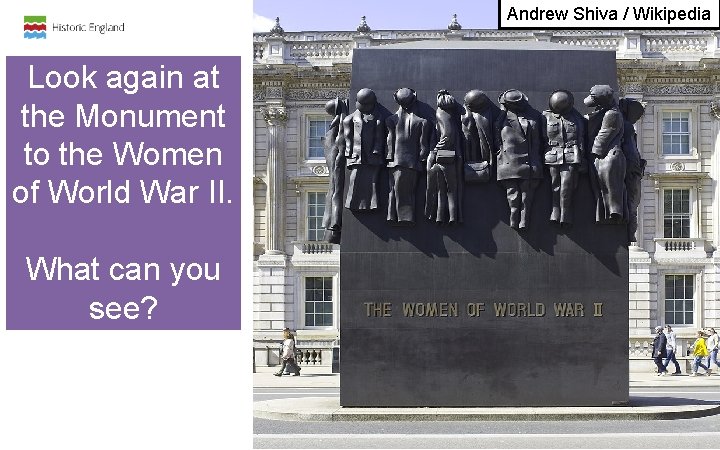
Andrew Shiva / Wikipedia Look again at the Monument to the Women of World War II. What can you see?
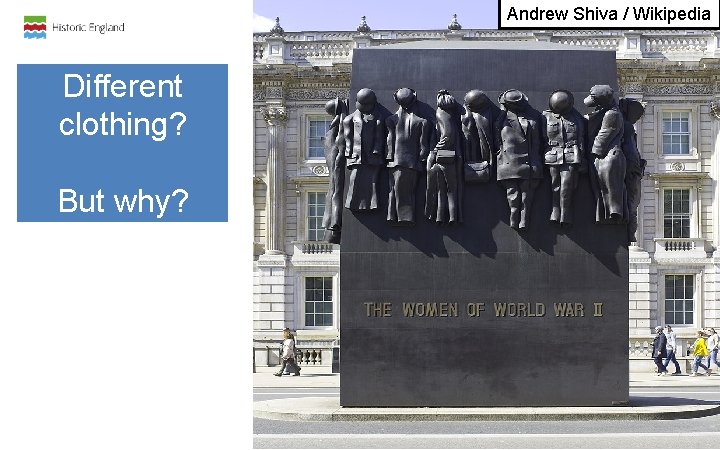
Andrew Shiva / Wikipedia Different clothing? But why?
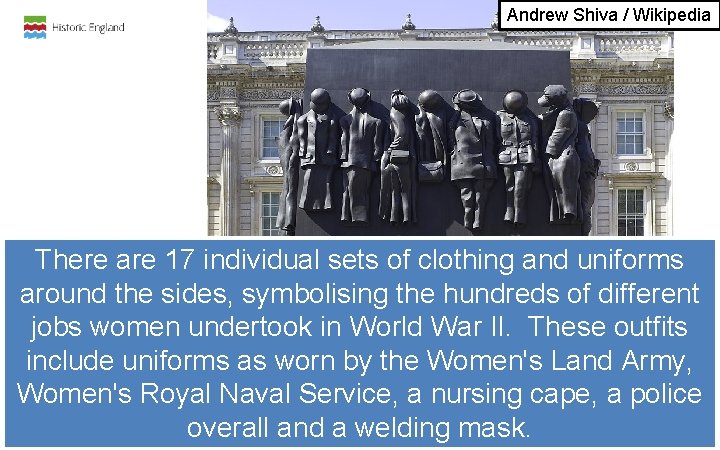
Andrew Shiva / Wikipedia There are 17 individual sets of clothing and uniforms around the sides, symbolising the hundreds of different jobs women undertook in World War II. These outfits include uniforms as worn by the Women's Land Army, Women's Royal Naval Service, a nursing cape, a police overall and a welding mask.
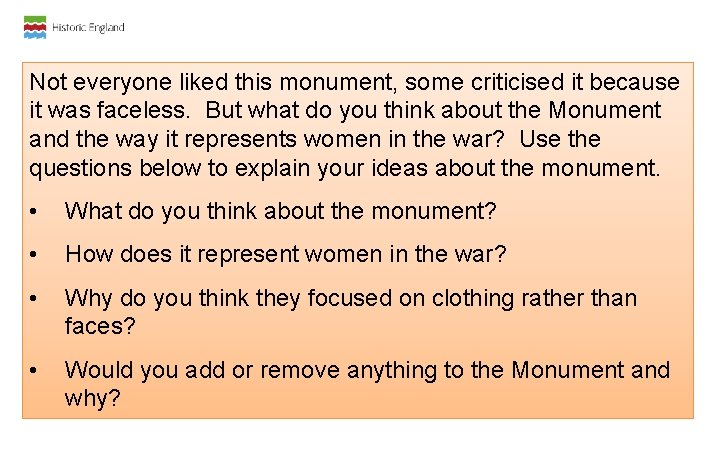
Not everyone liked this monument, some criticised it because it was faceless. But what do you think about the Monument and the way it represents women in the war? Use the questions below to explain your ideas about the monument. • What do you think about the monument? • How does it represent women in the war? • Why do you think they focused on clothing rather than faces? • Would you add or remove anything to the Monument and why?
In one word, how would you describe women’s lives in the Second World War? Banned words: changing, hard-working, different.