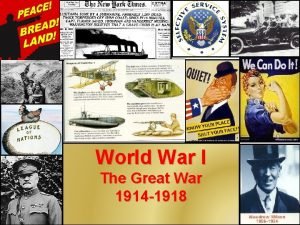
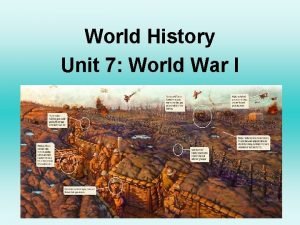
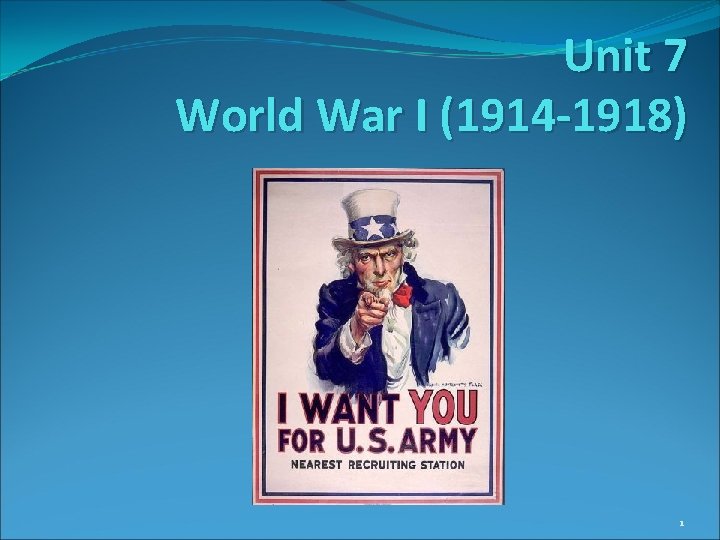
Unit 7 World War I 1914 1918 1

- Slides: 139
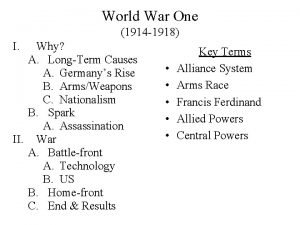
Unit 7 World War I (1914 -1918) 1
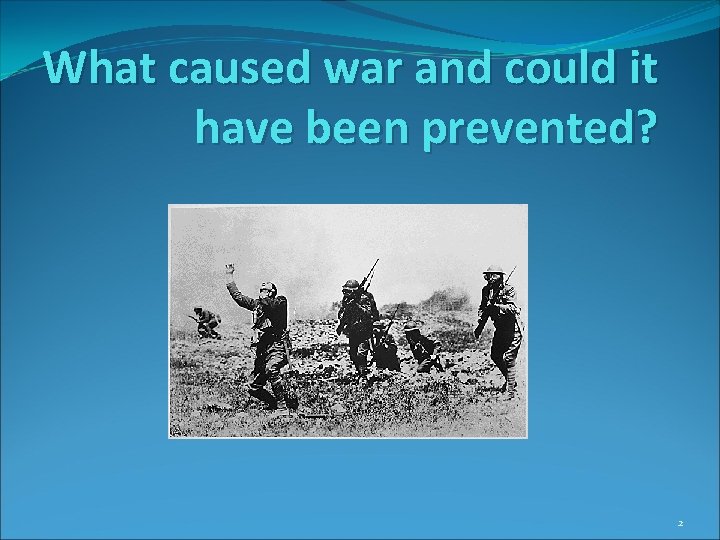
What caused war and could it have been prevented? 2
Think about it!!! Suppose you enter the school cafeteria and see two Juan and Ayush fighting. Juan is recovering from a recent sports injury. Ayush, a friend you no longer trust, is much bigger and knows Karate. In fact, you think Ayush has become a bully. How might you react in this situation? Option 1: Don’t get involved. Walk away. Option 2: Get a couple of friends to work with you to help the students resolve their conflict. Option 3: Jump in and defend your classmate against your friend. Option 4: Attack your friend to show that you don’t tolerate that type of behavior. 3
4
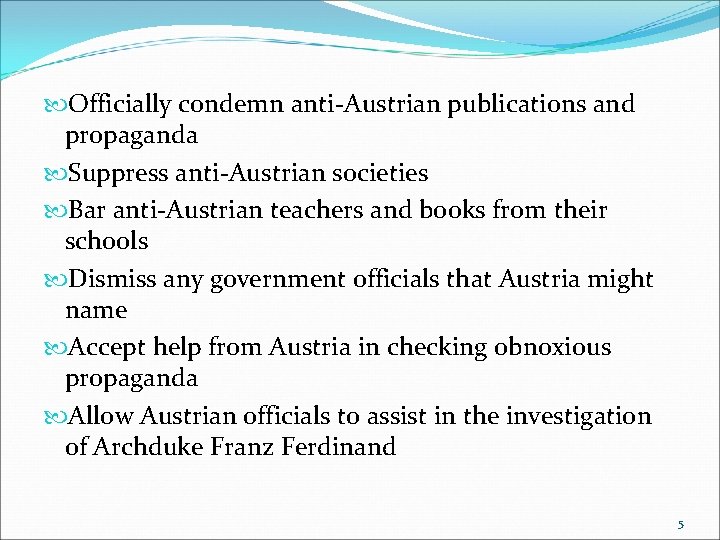
Officially condemn anti-Austrian publications and propaganda Suppress anti-Austrian societies Bar anti-Austrian teachers and books from their schools Dismiss any government officials that Austria might name Accept help from Austria in checking obnoxious propaganda Allow Austrian officials to assist in the investigation of Archduke Franz Ferdinand 5
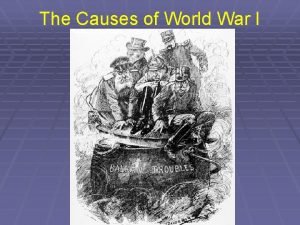
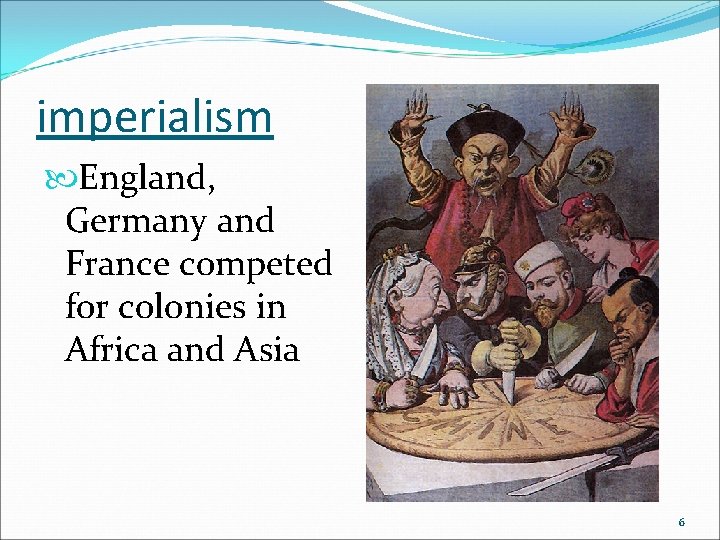
imperialism England, Germany and France competed for colonies in Africa and Asia 6
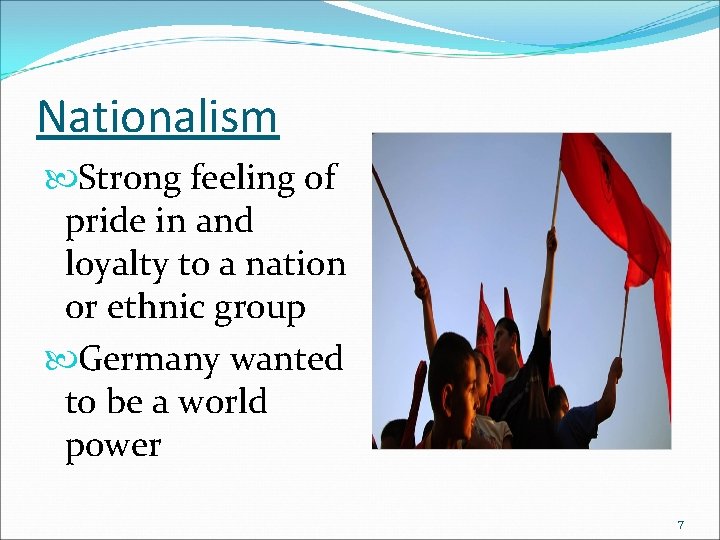
Nationalism Strong feeling of pride in and loyalty to a nation or ethnic group Germany wanted to be a world power 7
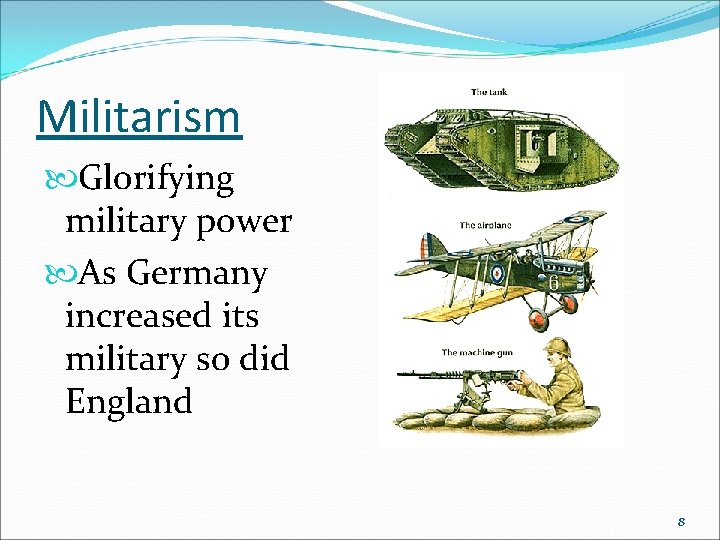
Militarism Glorifying military power As Germany increased its military so did England 8
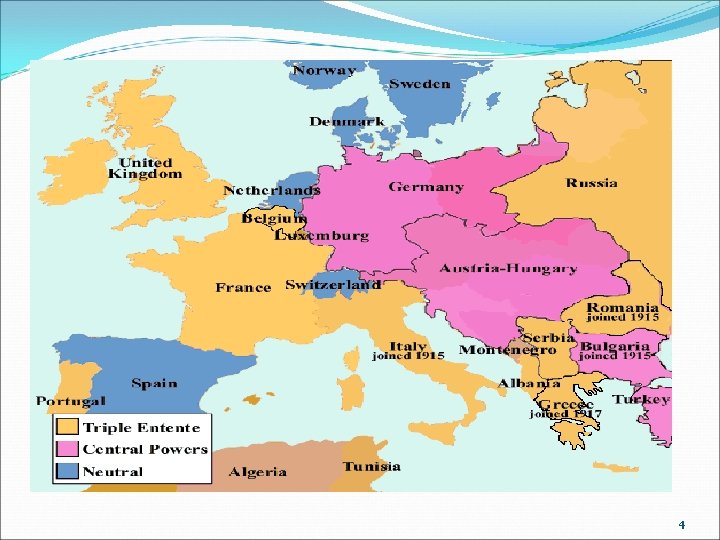
Alliances Central Powers – Germany and Austria-Hungary. q q. Allied Powers – Britain, France, Russia, Serbia 9
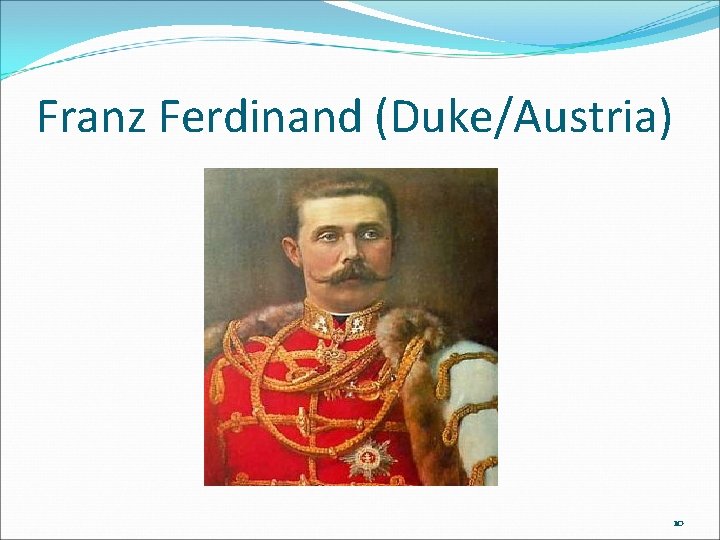
Franz Ferdinand (Duke/Austria) 10
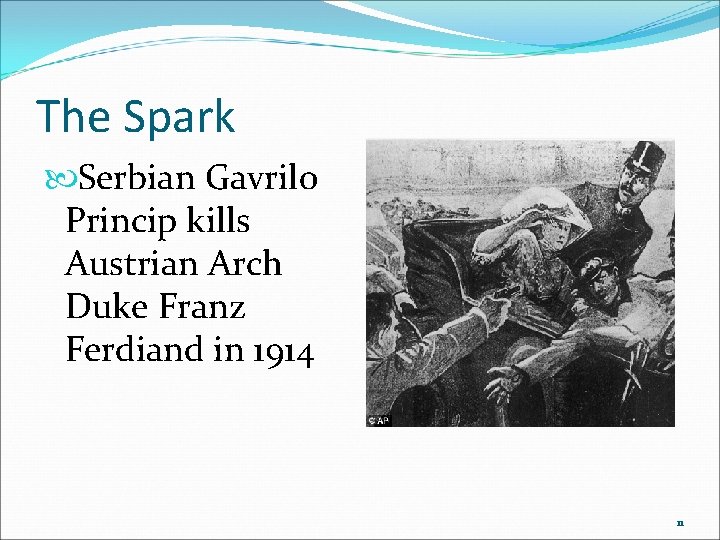
The Spark Serbian Gavrilo Princip kills Austrian Arch Duke Franz Ferdiand in 1914 11
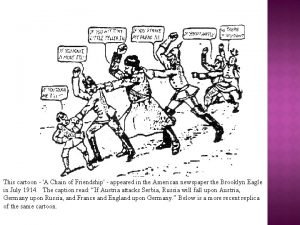
Austria presents Serbia with a list of demands Serbia refuses to agree to all the demands, and Austria declares war Russia sides with Serbia Germany delcares war on Russia and moves troops to Russian border France declares war on Germany 12
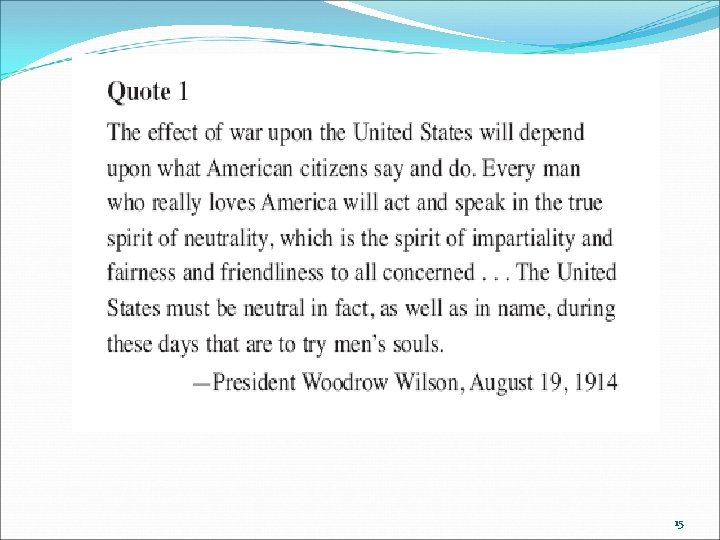
Was it better for the U. S to stay neutral or declare war in 1917? 13
Growing tensions in Europe Why did European power dislike and distrust each other? 14
15
16
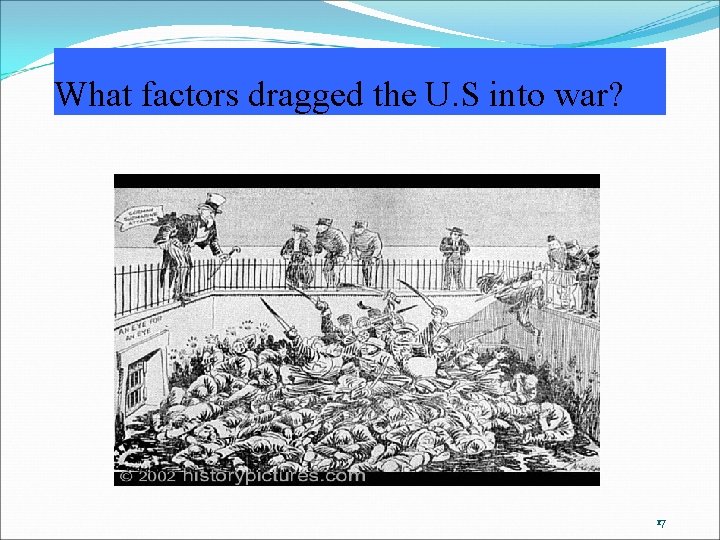
What factors dragged the U. S into war? 17
18
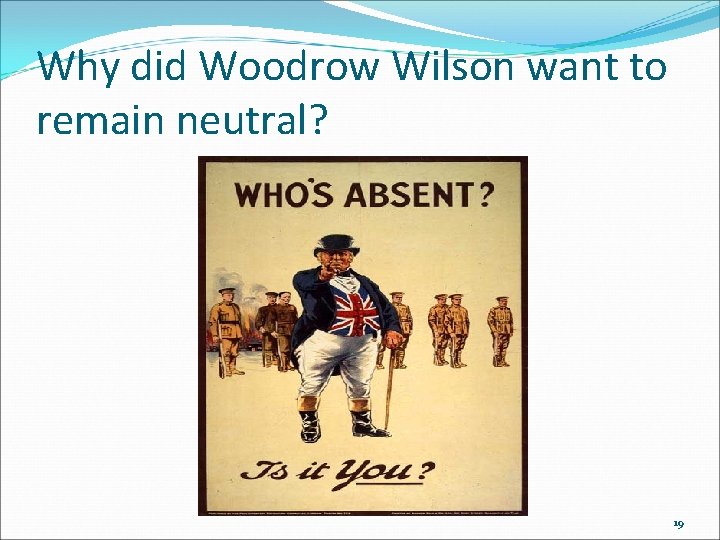
Why did Woodrow Wilson want to remain neutral? 19
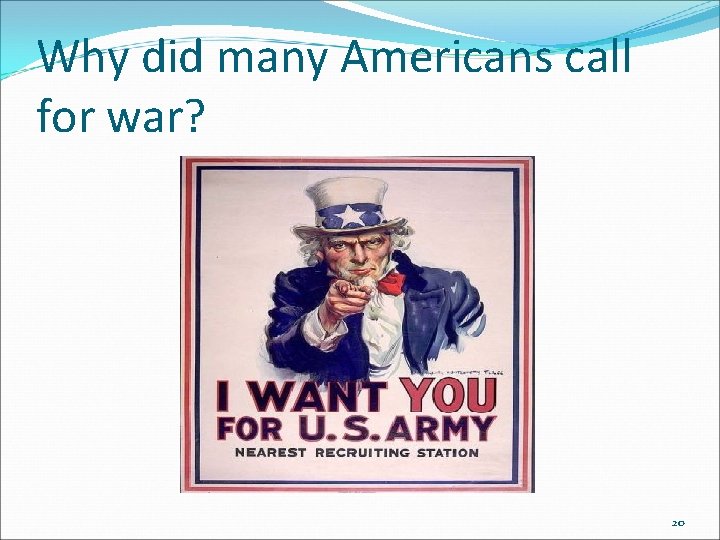
Why did many Americans call for war? 20
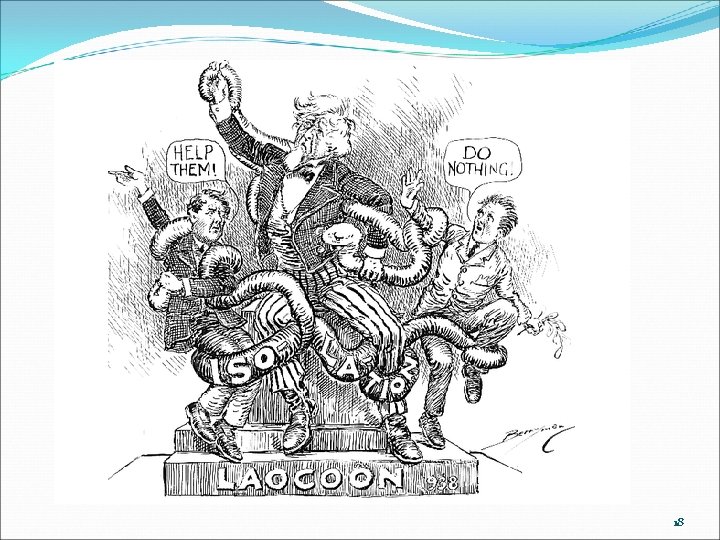
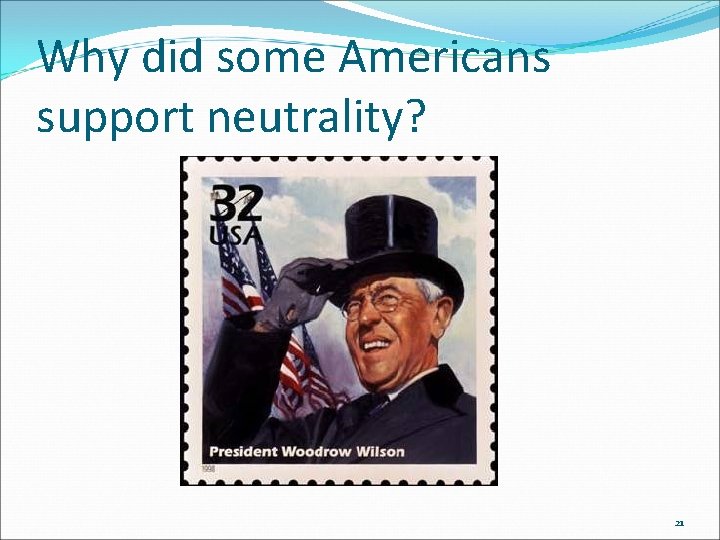
Why did some Americans support neutrality? 21
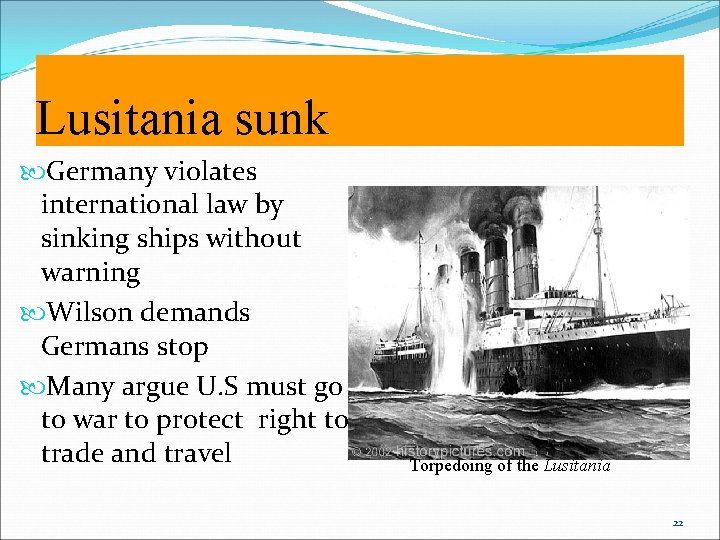
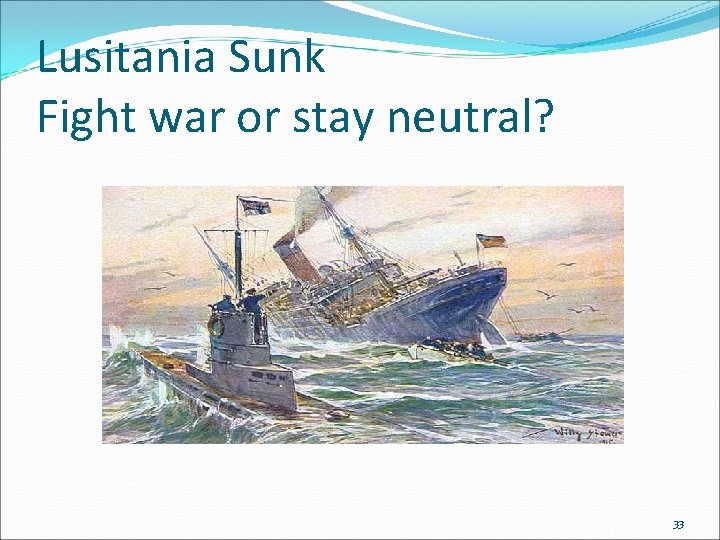
Lusitania sunk Germany violates international law by sinking ships without warning Wilson demands Germans stop Many argue U. S must go to war to protect right to trade and travel Torpedoing of the Lusitania 22
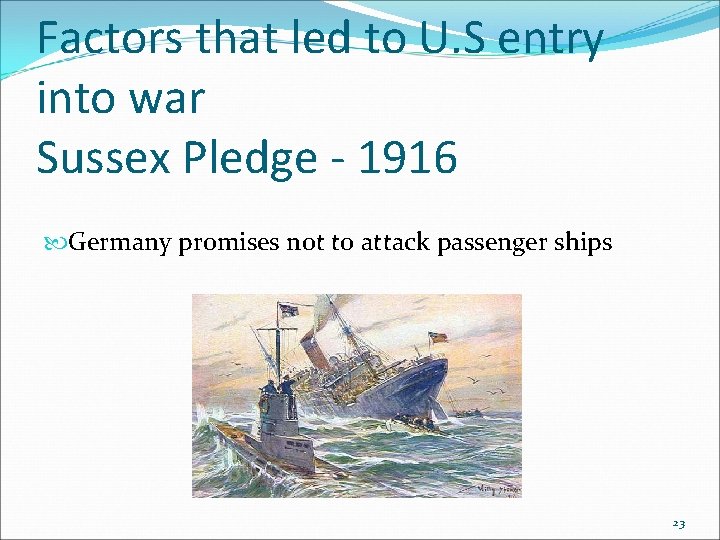
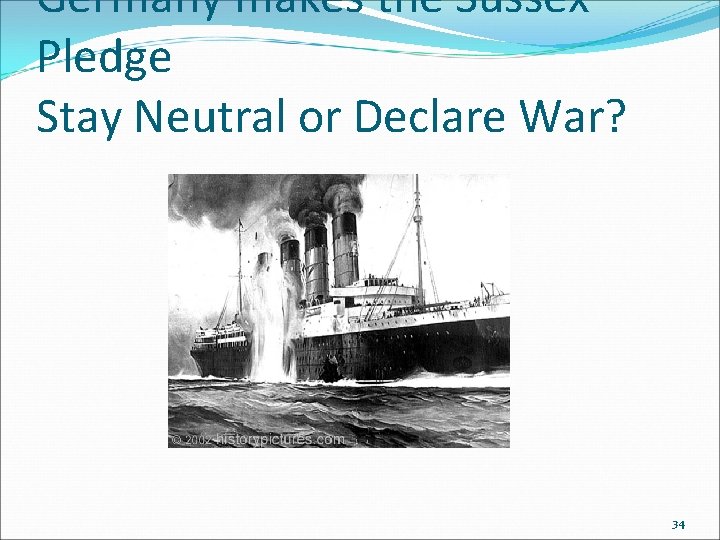
Factors that led to U. S entry into war Sussex Pledge - 1916 Germany promises not to attack passenger ships 23
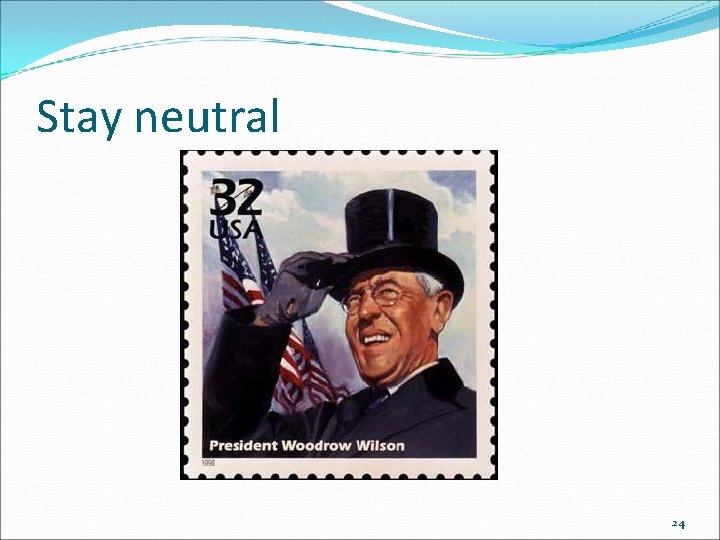
Stay neutral 24
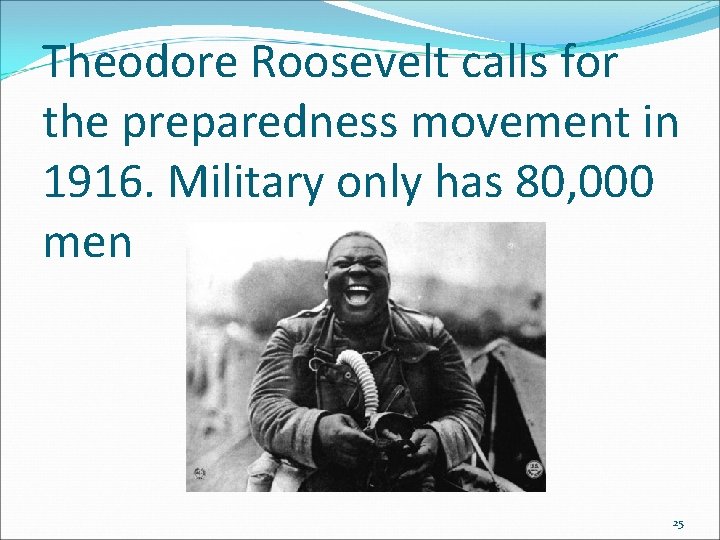
Theodore Roosevelt calls for the preparedness movement in 1916. Military only has 80, 000 men 25
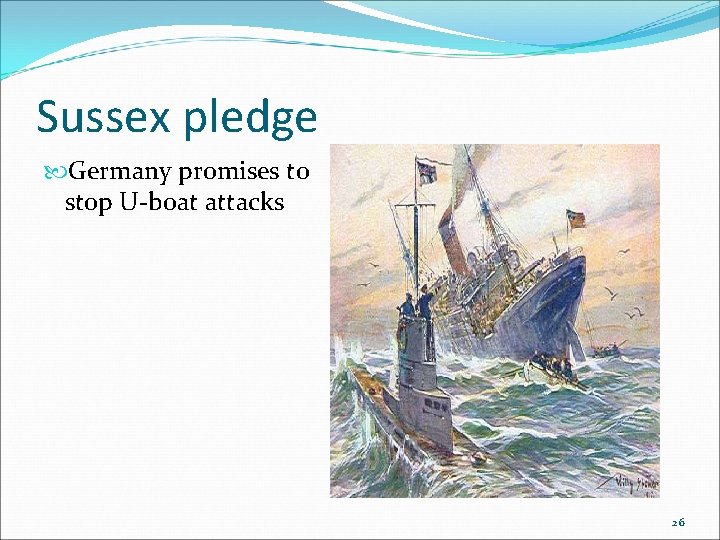
Sussex pledge Germany promises to stop U-boat attacks 26
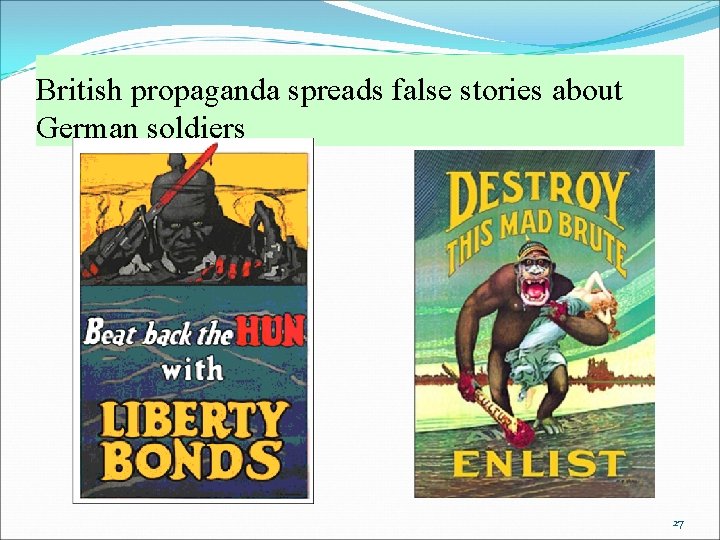
British propaganda spreads false stories about German soldiers 27
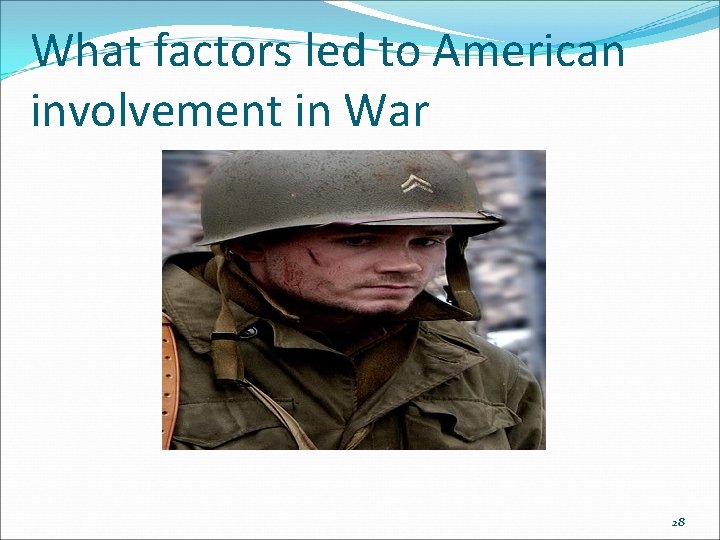
What factors led to American involvement in War 28
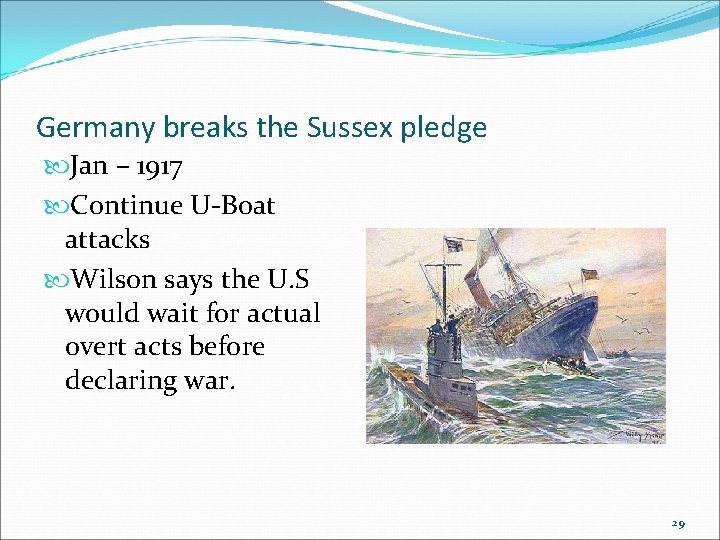
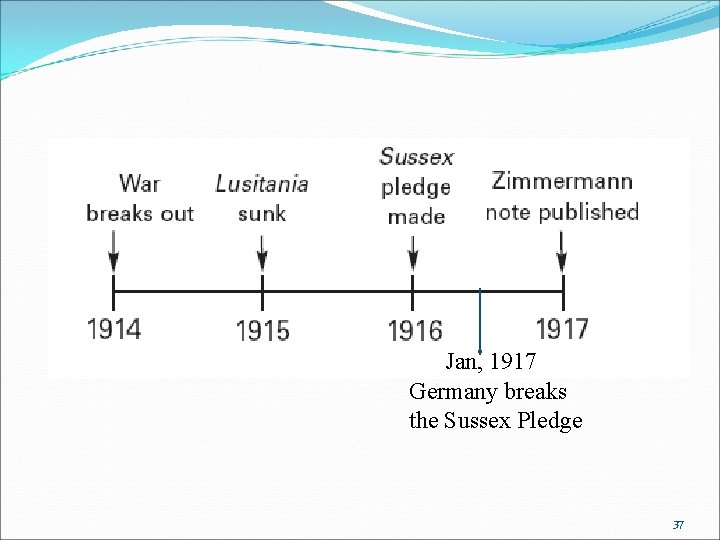
Germany breaks the Sussex pledge Jan – 1917 Continue U-Boat attacks Wilson says the U. S would wait for actual overt acts before declaring war. 29
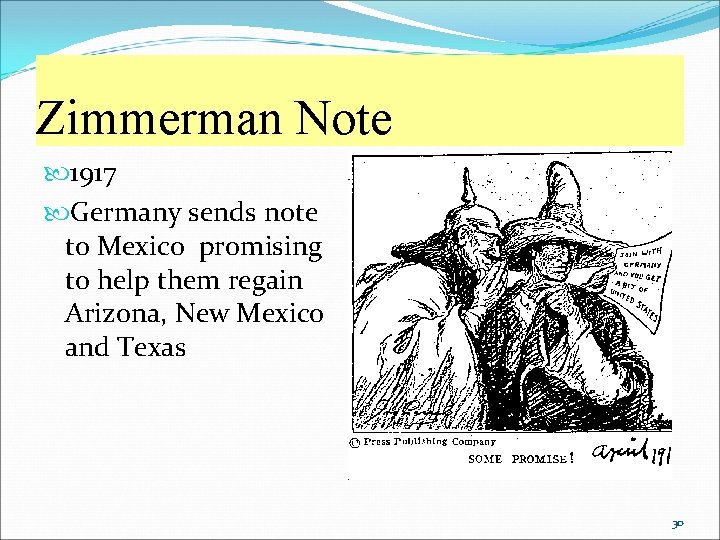
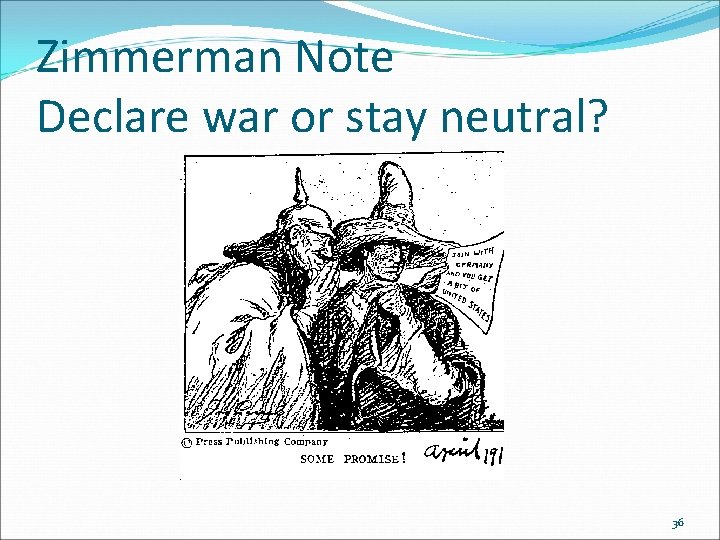
Zimmerman Note 1917 Germany sends note to Mexico promising to help them regain Arizona, New Mexico and Texas 30
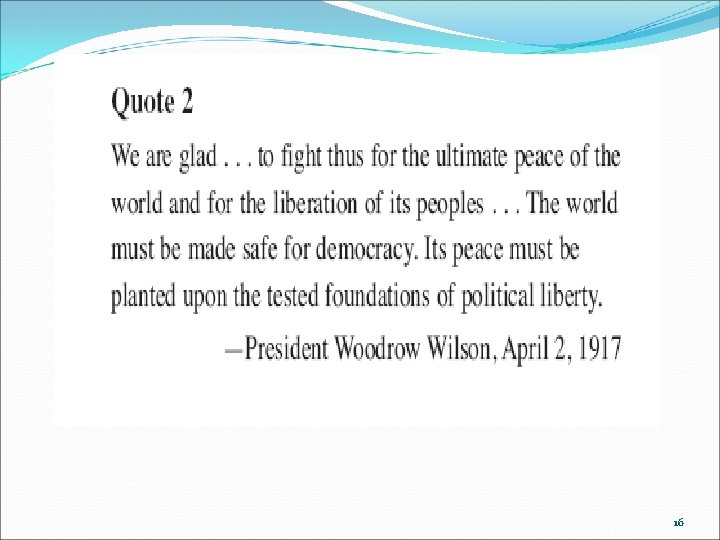
Congress Declares War April, 1917 Wilson felt it was necessary to defend our right to trade freely Protect Democracy in Europe 31
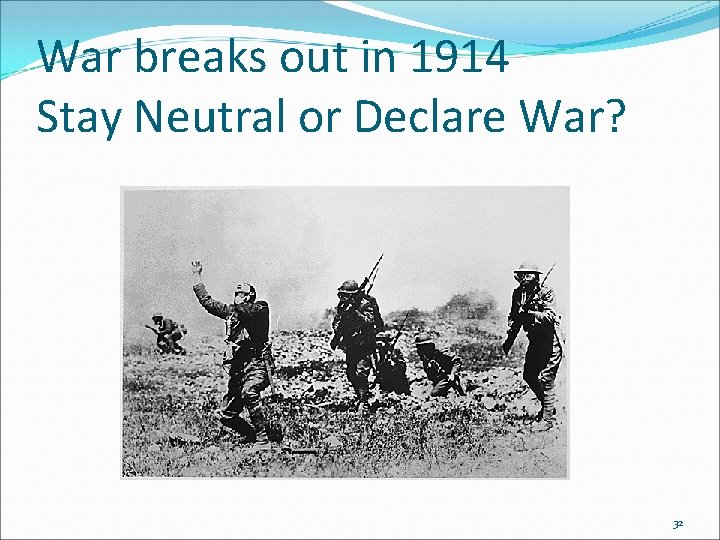
War breaks out in 1914 Stay Neutral or Declare War? 32
Lusitania Sunk Fight war or stay neutral? 33
Germany makes the Sussex Pledge Stay Neutral or Declare War? 34
Germany reinstitutes U-Boat attacks 35
Zimmerman Note Declare war or stay neutral? 36
Jan, 1917 Germany breaks the Sussex Pledge 37
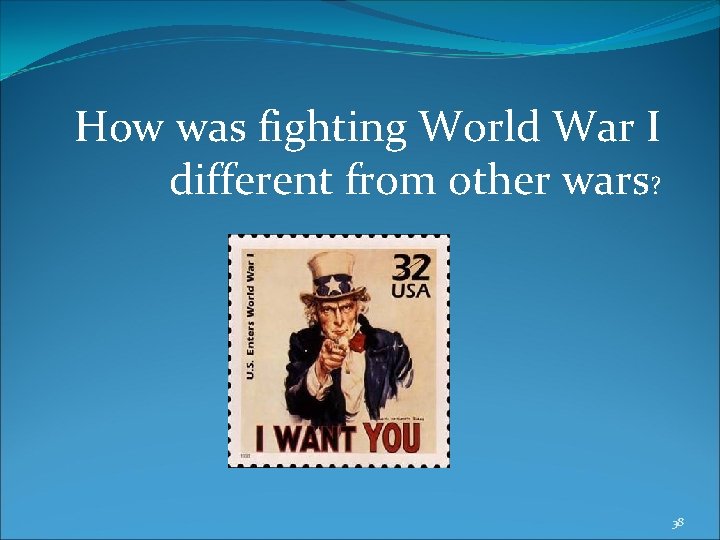
How was fighting World War I different from other wars? 38
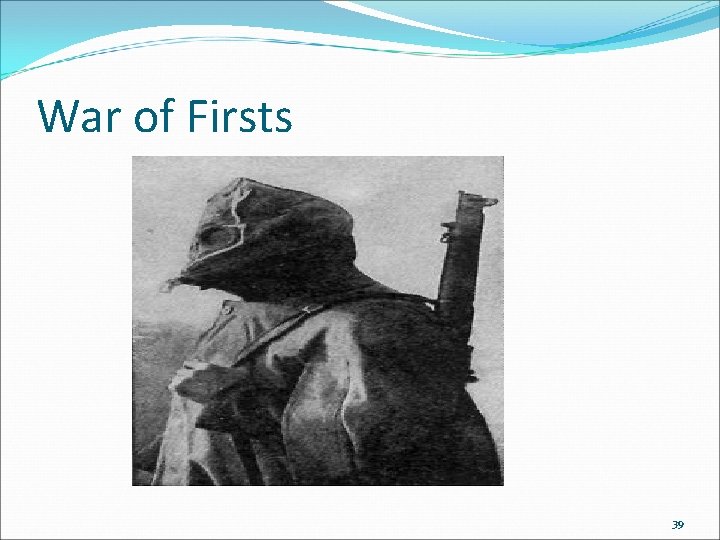
War of Firsts 39
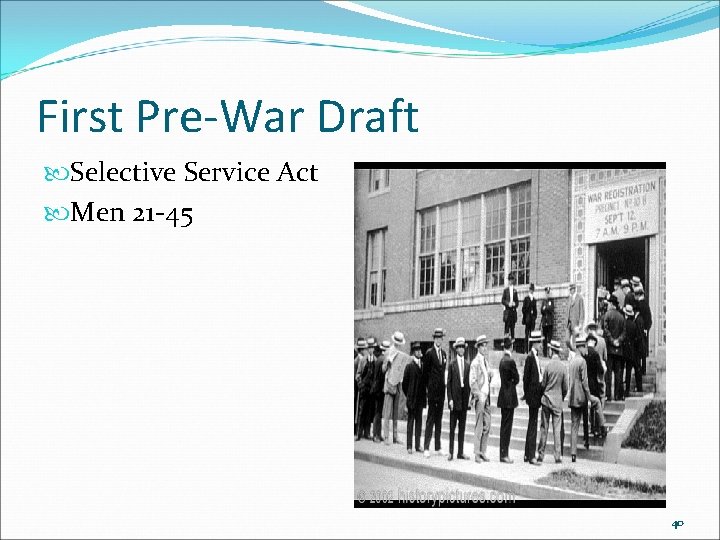
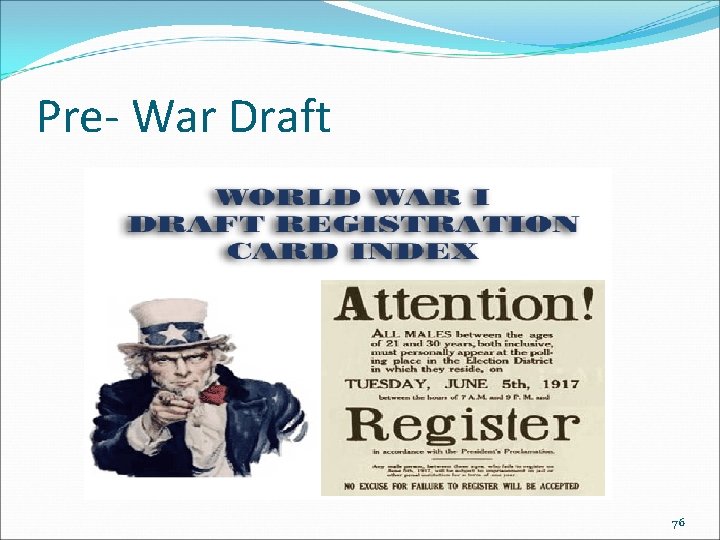
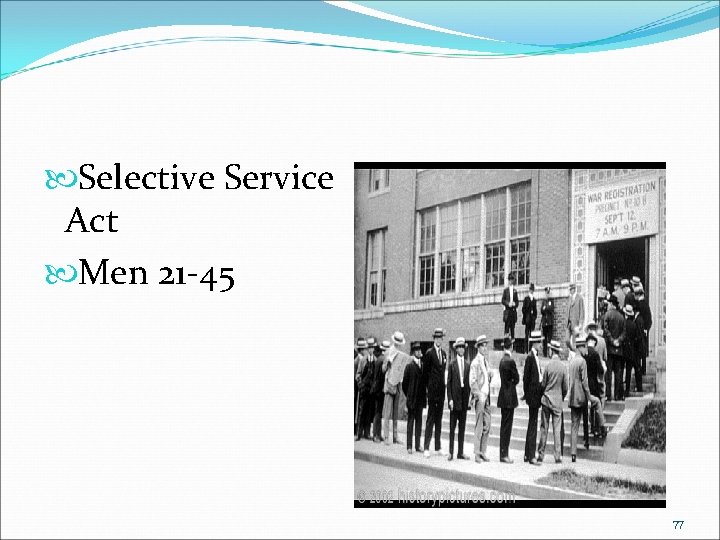
First Pre-War Draft Selective Service Act Men 21 -45 40
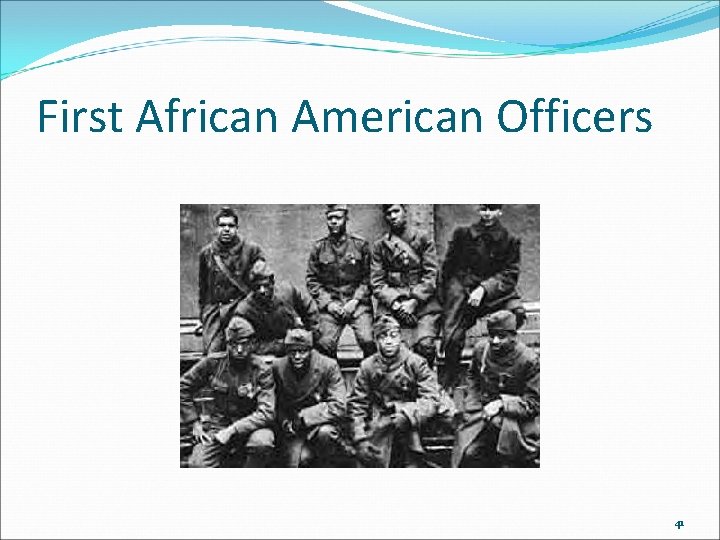
First African American Officers 41
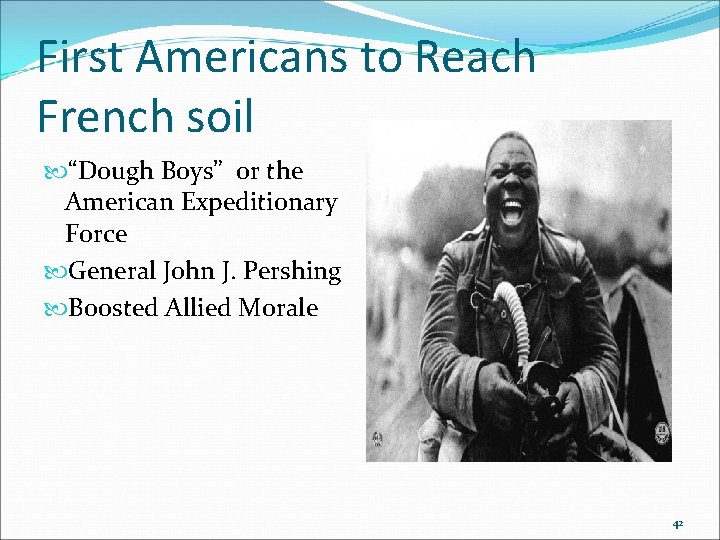
First Americans to Reach French soil “Dough Boys” or the American Expeditionary Force General John J. Pershing Boosted Allied Morale 42
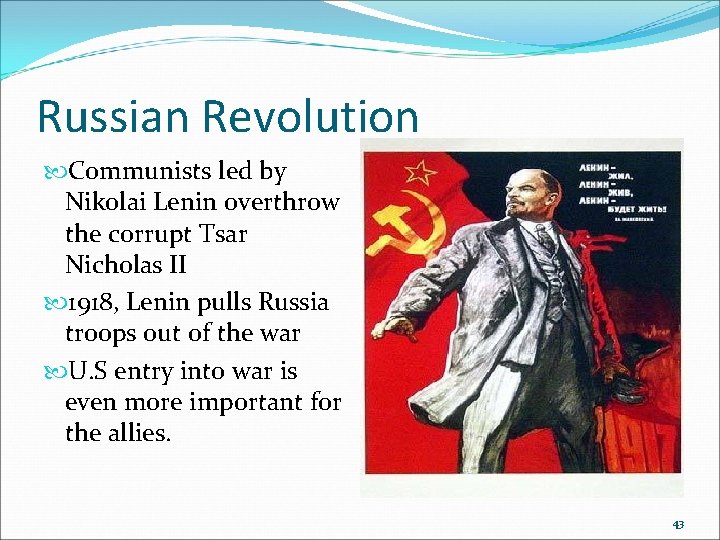
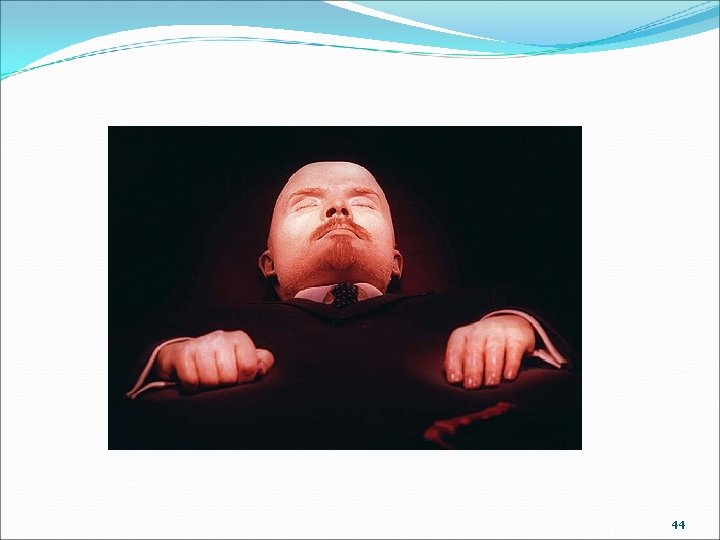
Russian Revolution Communists led by Nikolai Lenin overthrow the corrupt Tsar Nicholas II 1918, Lenin pulls Russia troops out of the war U. S entry into war is even more important for the allies. 43
44
New Fighting Methods 45
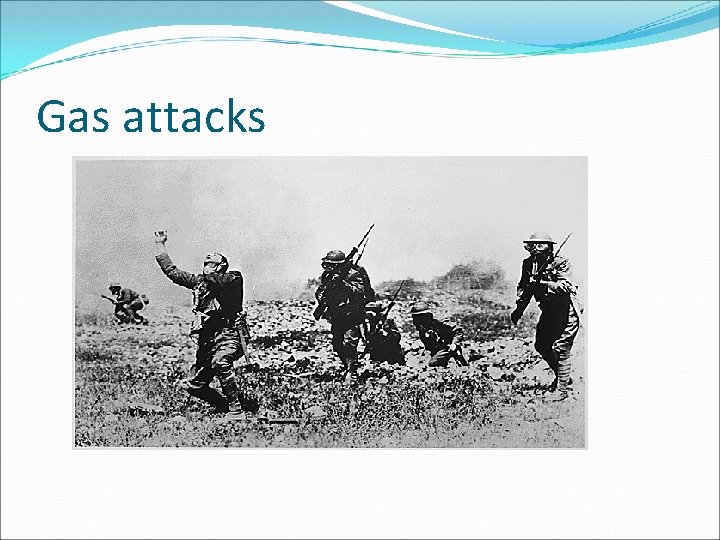
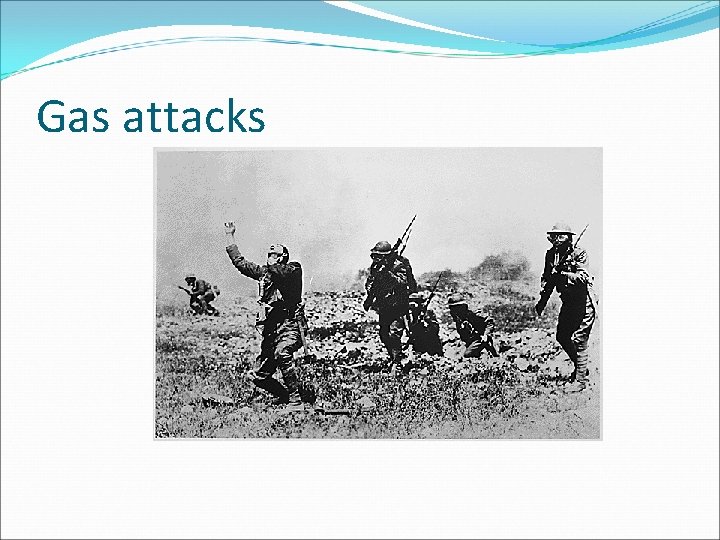
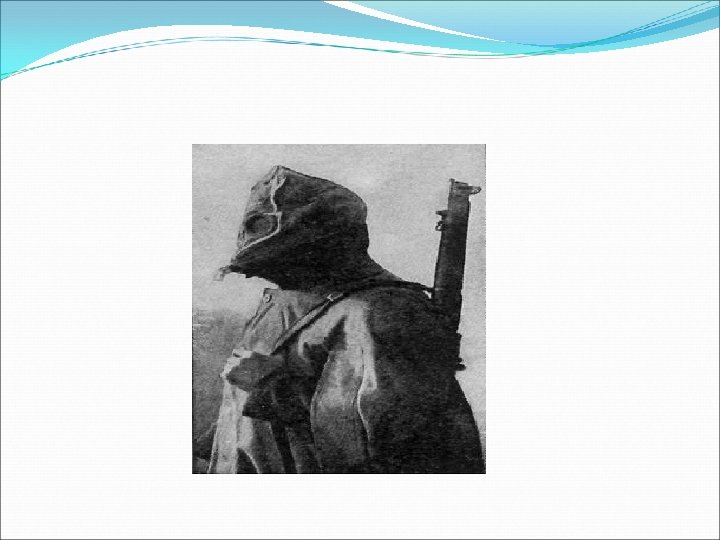
Gas attacks
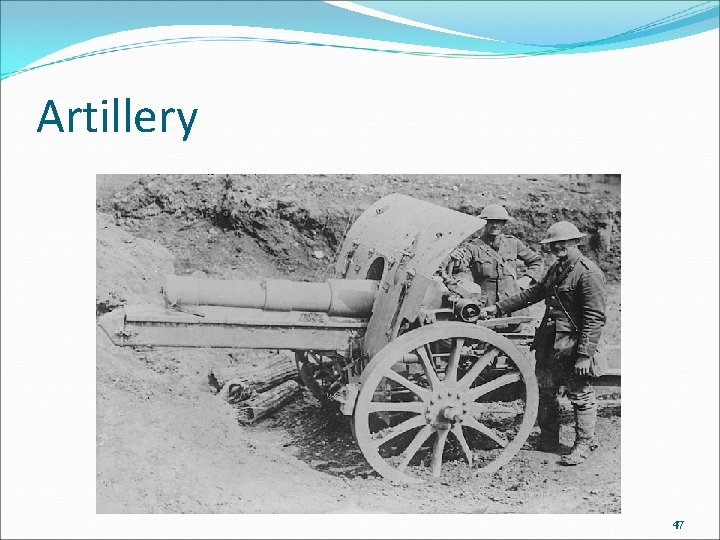
Artillery 47
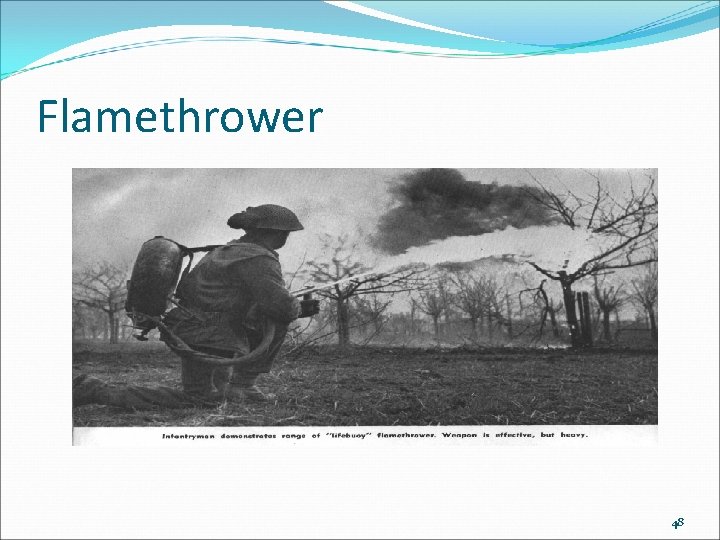
Flamethrower 48
Machine Gun 49
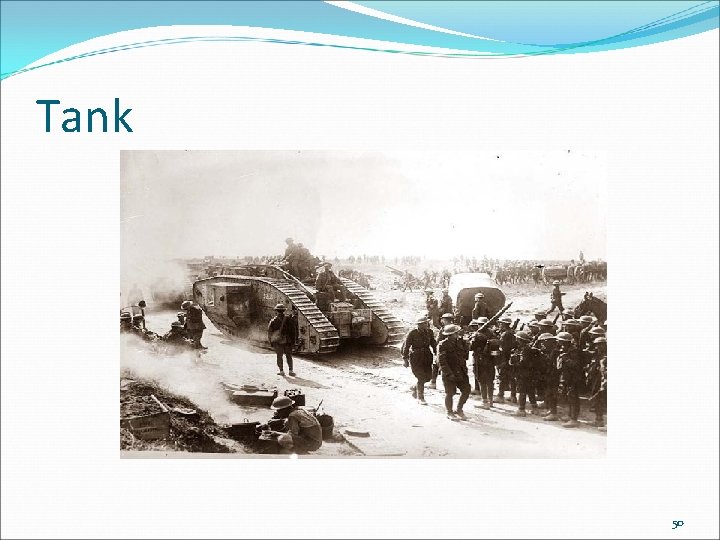
Tank 50
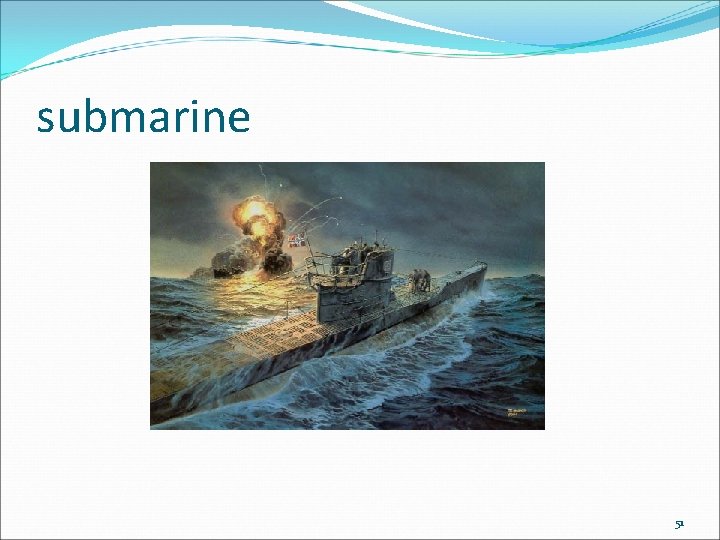
submarine 51
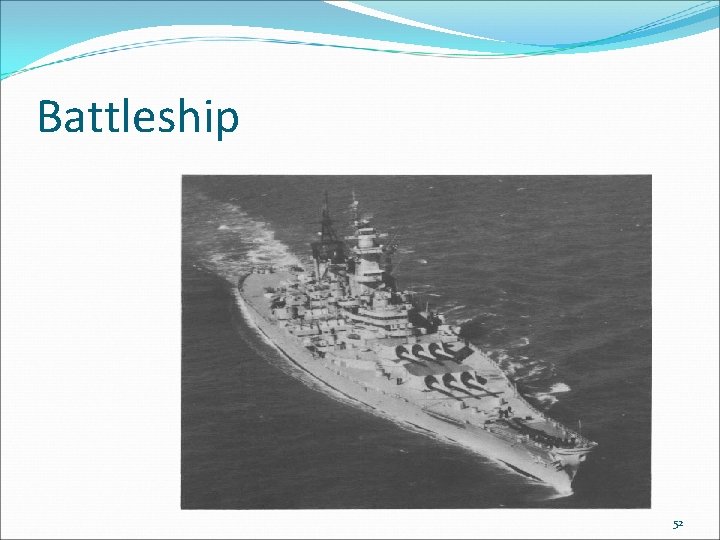
Battleship 52
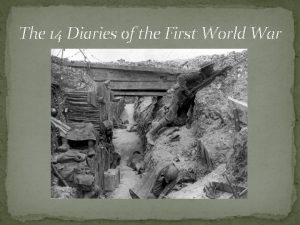
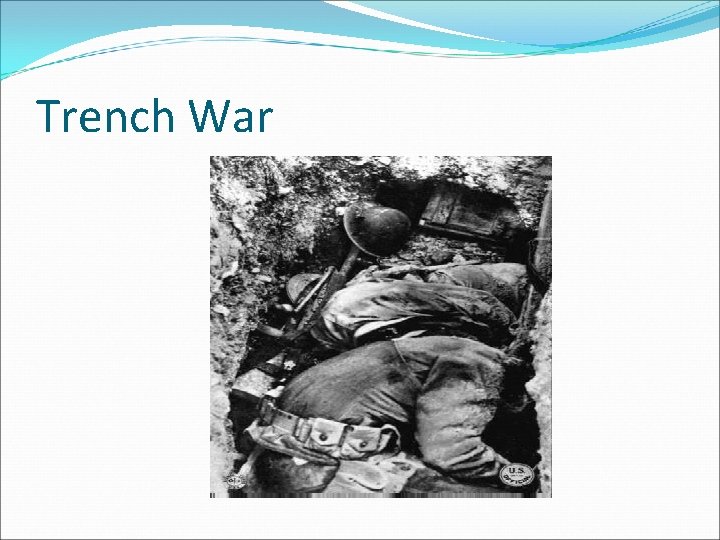
Trench War
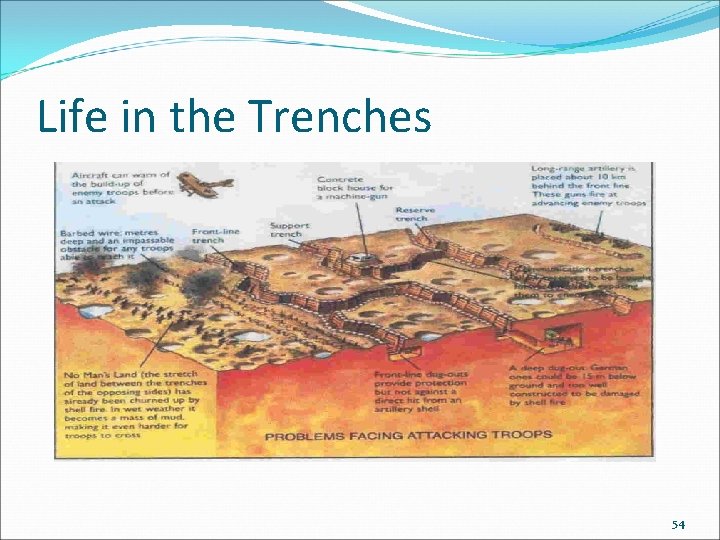
Life in the Trenches 54
Gas attacks
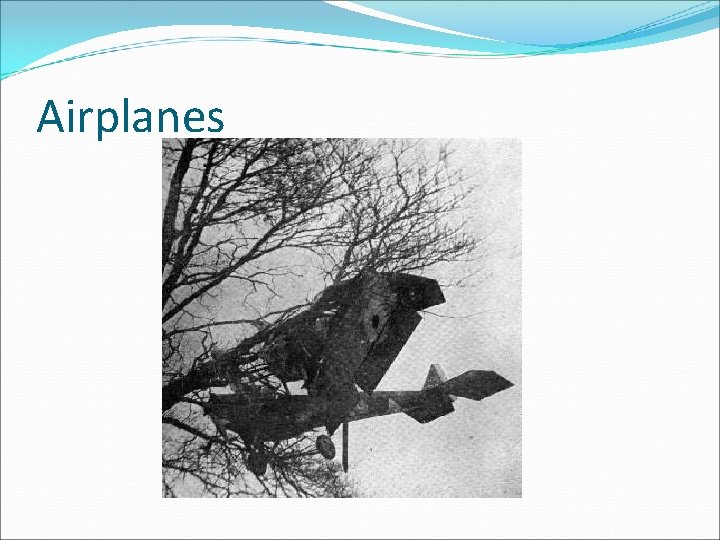
Airplanes
58
59
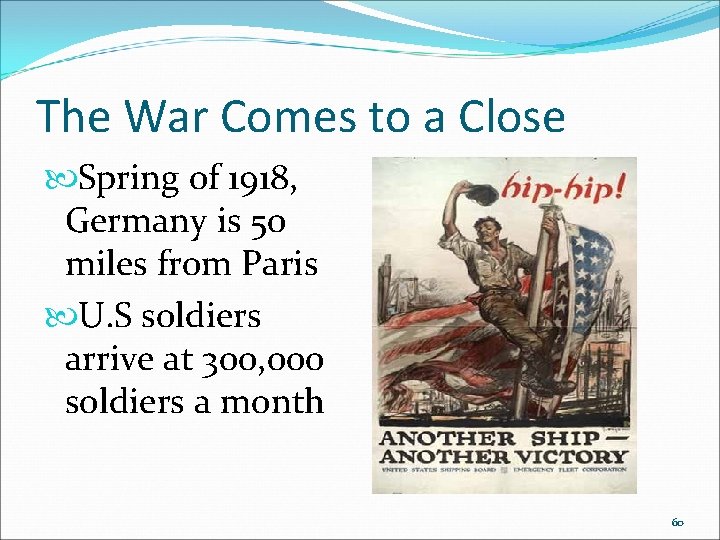
The War Comes to a Close Spring of 1918, Germany is 50 miles from Paris U. S soldiers arrive at 300, 000 soldiers a month 60
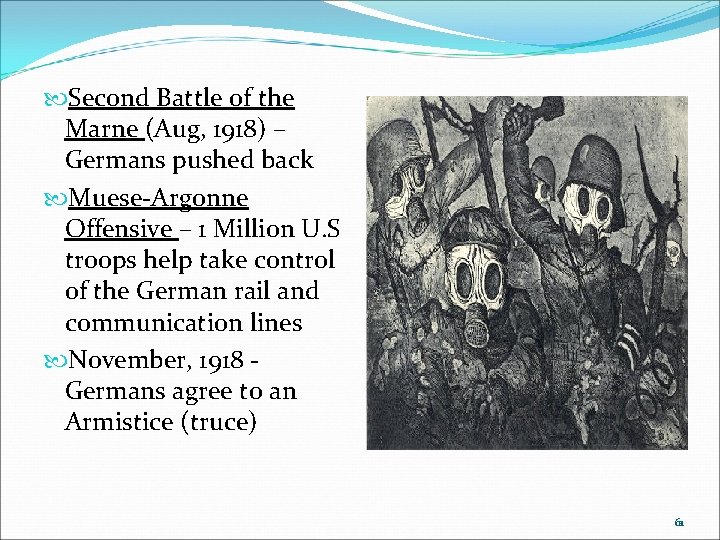
Second Battle of the Marne (Aug, 1918) – Germans pushed back Muese-Argonne Offensive – 1 Million U. S troops help take control of the German rail and communication lines November, 1918 Germans agree to an Armistice (truce) 61
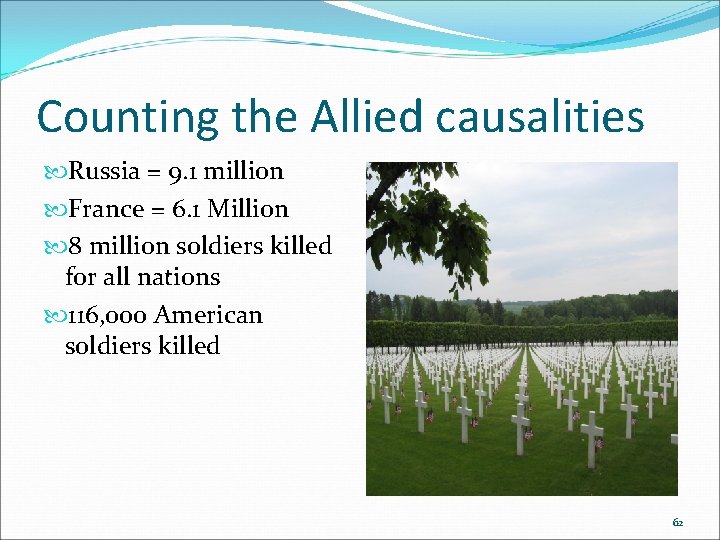
Counting the Allied causalities Russia = 9. 1 million France = 6. 1 Million 8 million soldiers killed for all nations 116, 000 American soldiers killed 62
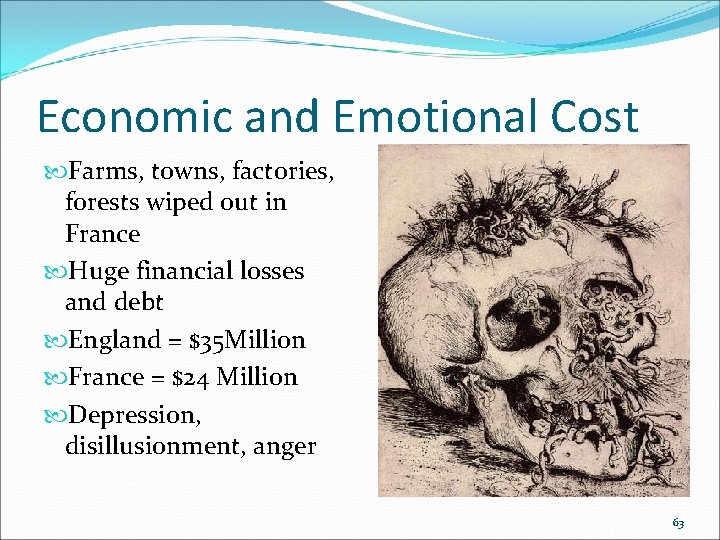
Economic and Emotional Cost Farms, towns, factories, forests wiped out in France Huge financial losses and debt England = $35 Million France = $24 Million Depression, disillusionment, anger 63
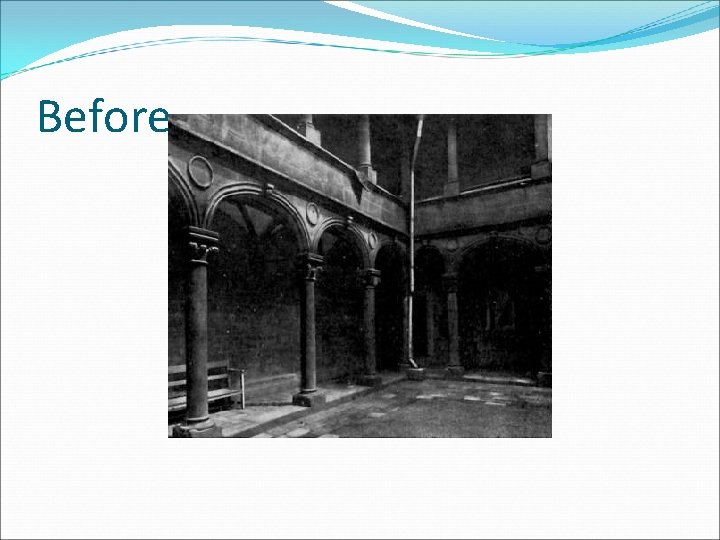
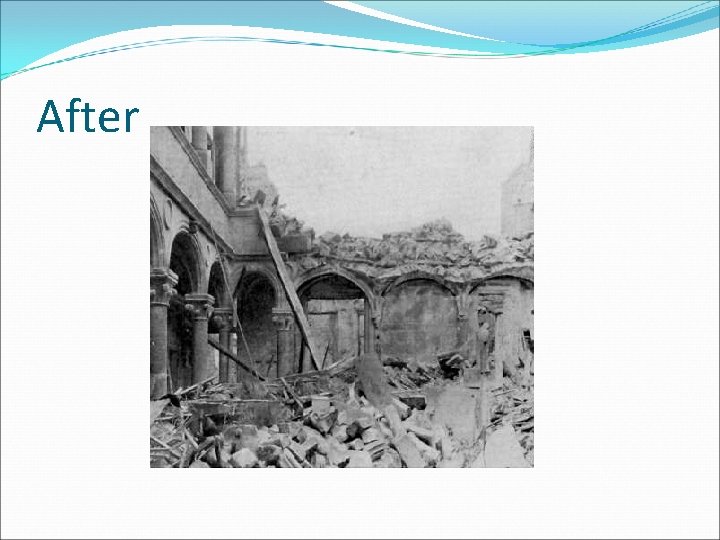
Before
After
“Besides burning houses the Germans frequently smashed furniture and pictures; they also broke in doors and windows. Frequently, too, they defiled houses by relieving the wants of nature upon the floor. They also appear to have perpetrated the same vileness upon piled up heaps of provisions so as to destroy what they could not themselves consume. They also on numerous occasions threw corpses into wells, or left in them the bodies of persons murdered by drowning. ” 66
“One day when the Germans were not actually bombarding the town I left my house to go to my mother's house in High Street. My husband was with me. I saw eight German soldiers, and they were drunk. They were singing and making a lot of noise and dancing about. As the German soldiers came along the street I saw a small child, whether boy or girl I could not see, come out of a house. The child was about two years of age. “ 67
“The child came into the middle of the street so as to be in the way of the soldiers. The soldiers were walking in twos. The first line of two passed the child; one of the second line, the man on the left, stepped aside and drove his bayonet with both hands into the child's stomach lifting the child into the air on his bayonet and carrying it away on his bayonet, he and his comrades still singing. The child screamed when the soldier struck it with his bayonet, but not afterwards. " 68
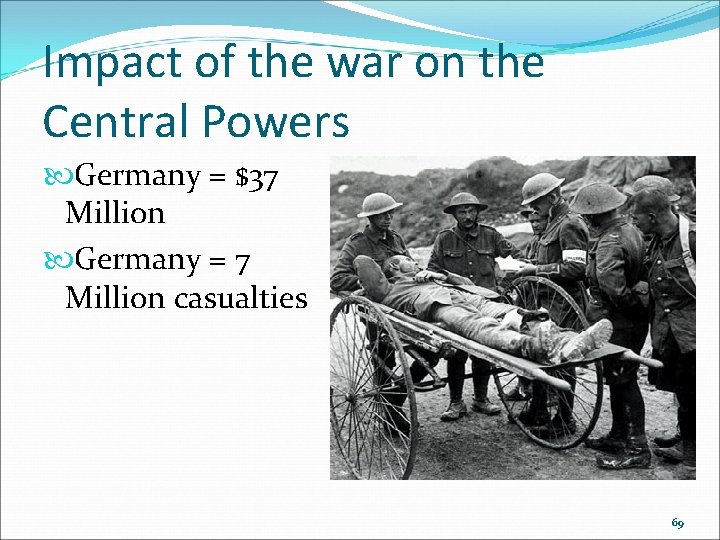
Impact of the war on the Central Powers Germany = $37 Million Germany = 7 Million casualties 69
To ensure that war does not break out again, which of the following should be a priority now that the war has ended. Explain your reasoning. . Punish the Central Powers Address the issues that caused the war Prompt: To make sure war does not break out again the Allies should……. . 70
As a member of Congress list 5 things the gov’t needs to do to win the war! 71
What did the gov’t do to win the war? 72
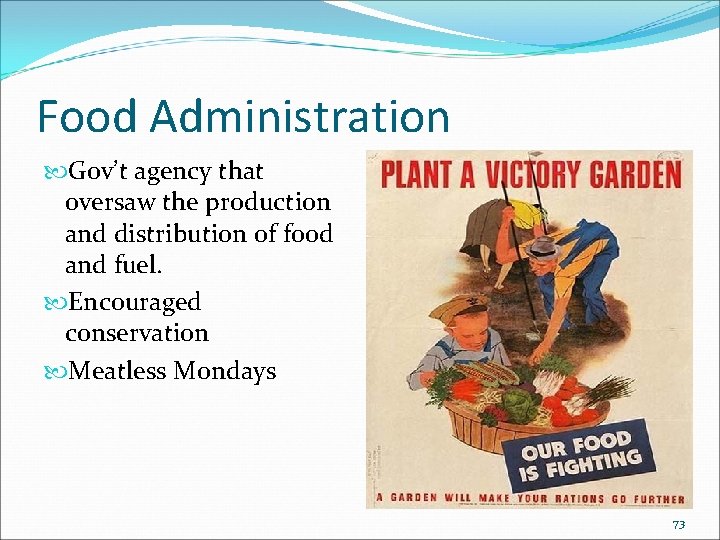
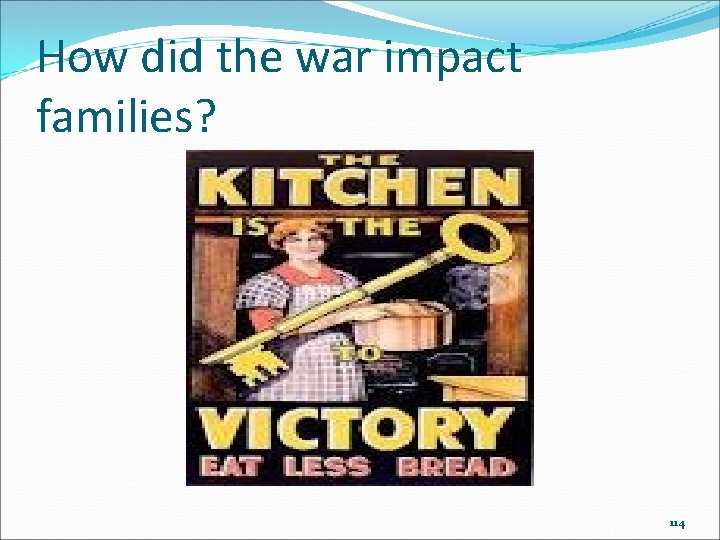
Food Administration Gov’t agency that oversaw the production and distribution of food and fuel. Encouraged conservation Meatless Mondays 73
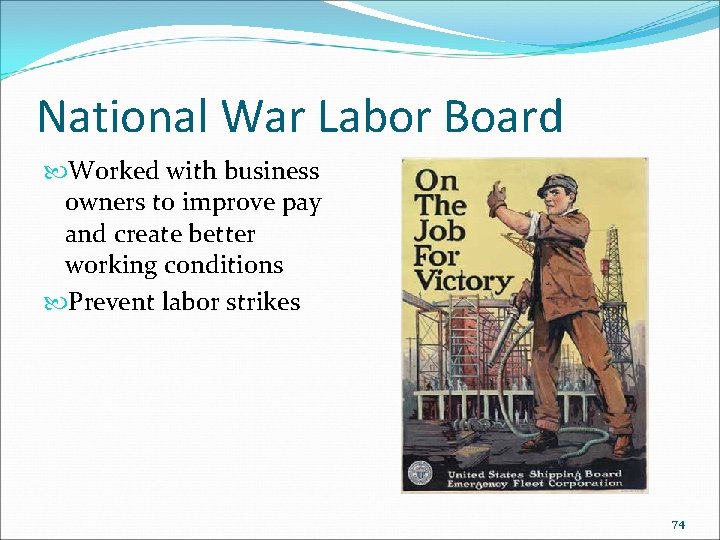
National War Labor Board Worked with business owners to improve pay and create better working conditions Prevent labor strikes 74
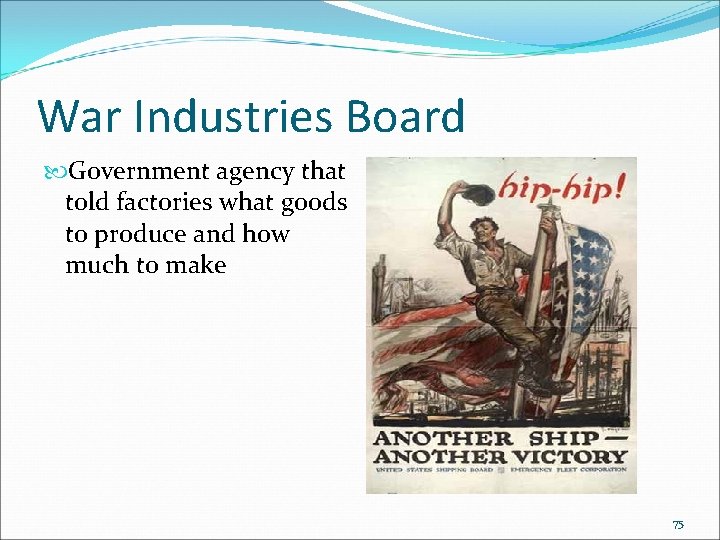
War Industries Board Government agency that told factories what goods to produce and how much to make 75
Pre- War Draft 76
Selective Service Act Men 21 -45 77
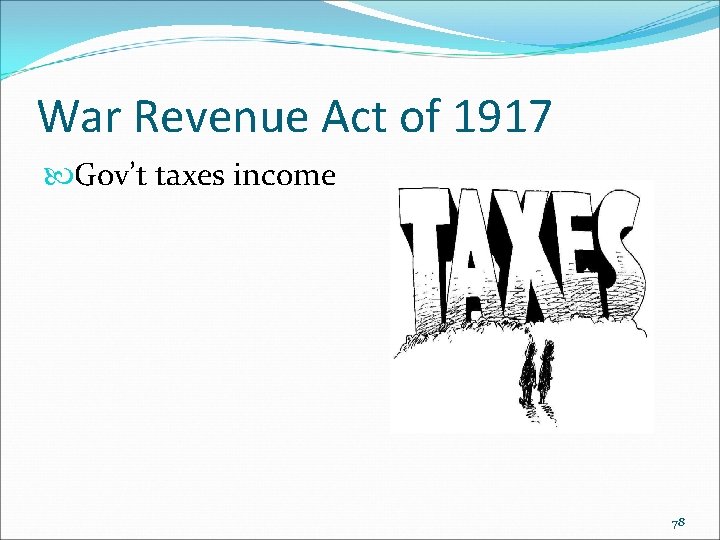
War Revenue Act of 1917 Gov’t taxes income 78
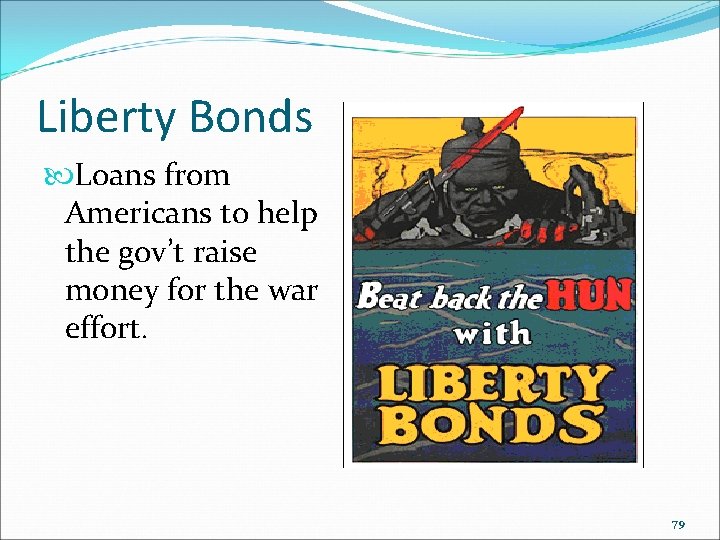
Liberty Bonds Loans from Americans to help the gov’t raise money for the war effort. 79
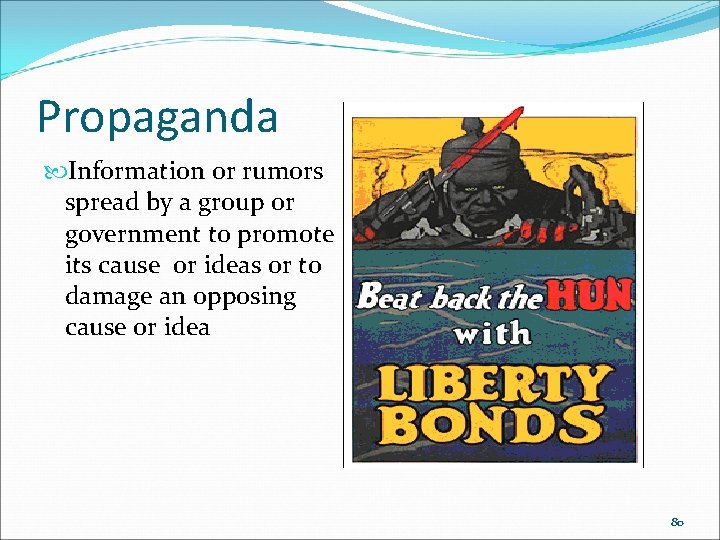
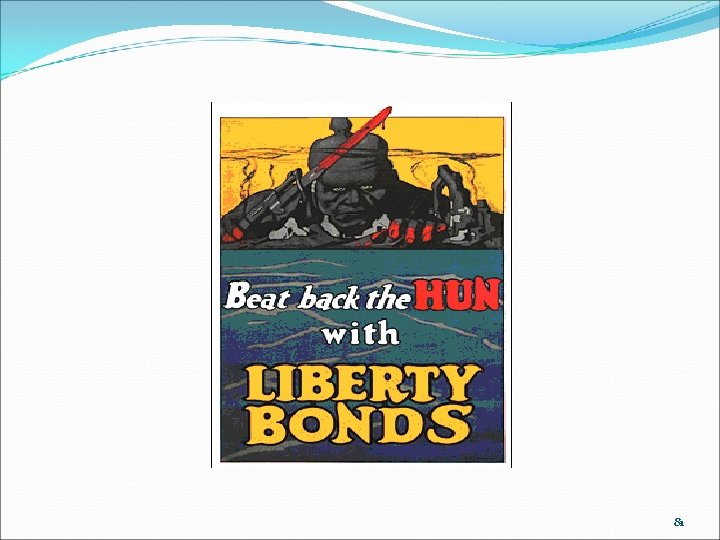
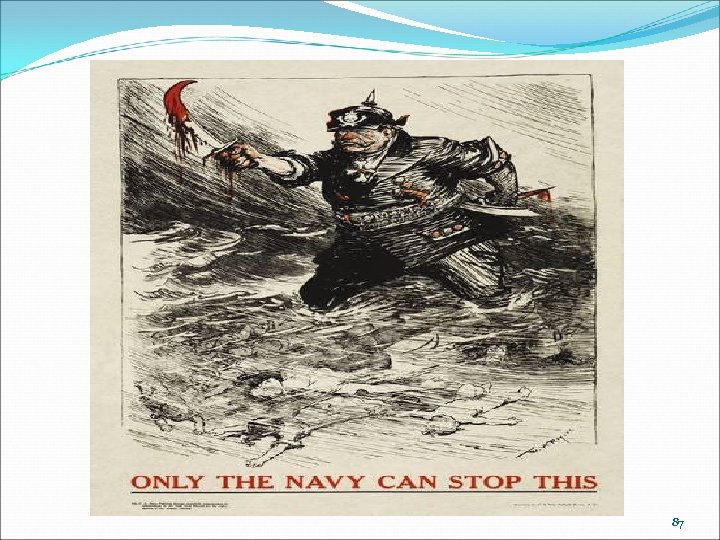
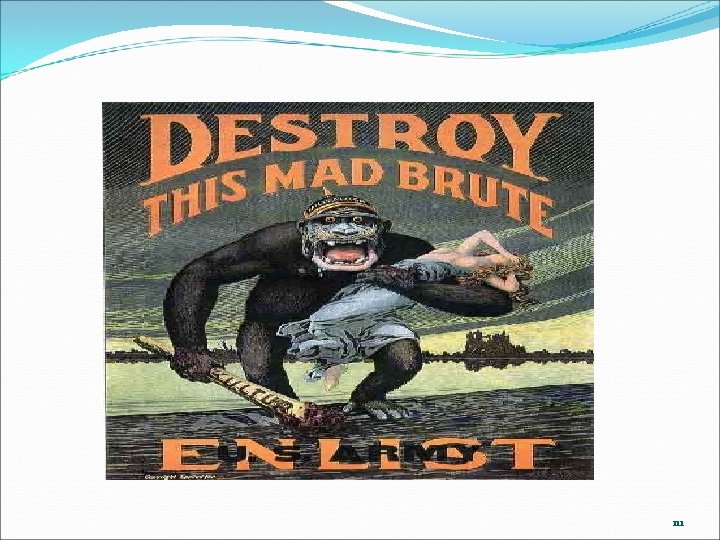
Propaganda Information or rumors spread by a group or government to promote its cause or ideas or to damage an opposing cause or idea 80
81
Objectives To recruit soldiers, either through a draft or voluntary enlistment To finance the war effort through the sale of war bonds—loans from citizens to the government—or new taxes To eliminate dissent and unifying the country behind the war effort To conserve resources—such as food, oil, and steel— necessary to wage war To increase participation in organizations to support the war effort 82
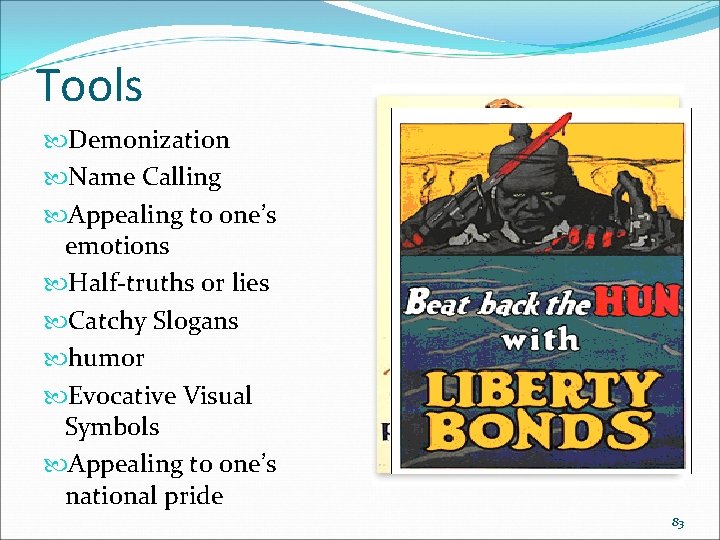
Tools Demonization Name Calling Appealing to one’s emotions Half-truths or lies Catchy Slogans humor Evocative Visual Symbols Appealing to one’s national pride 83
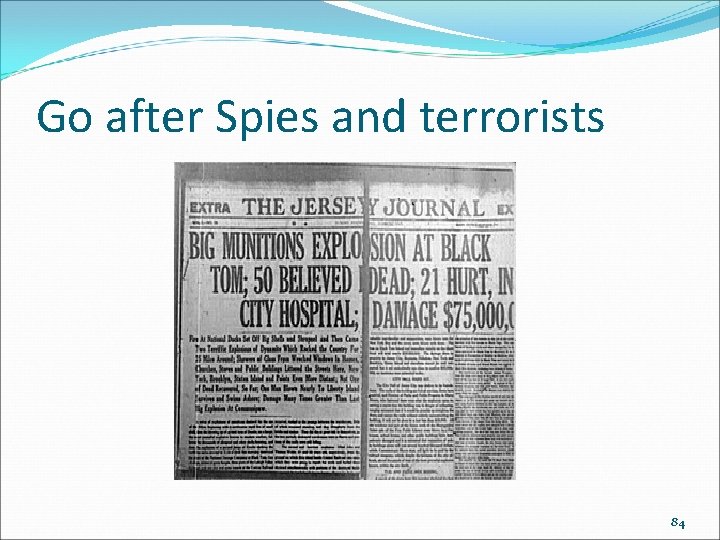
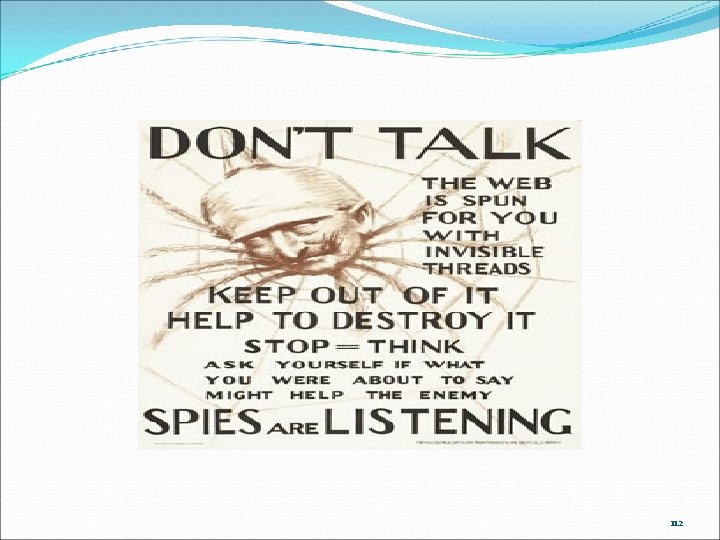
Go after Spies and terrorists 84
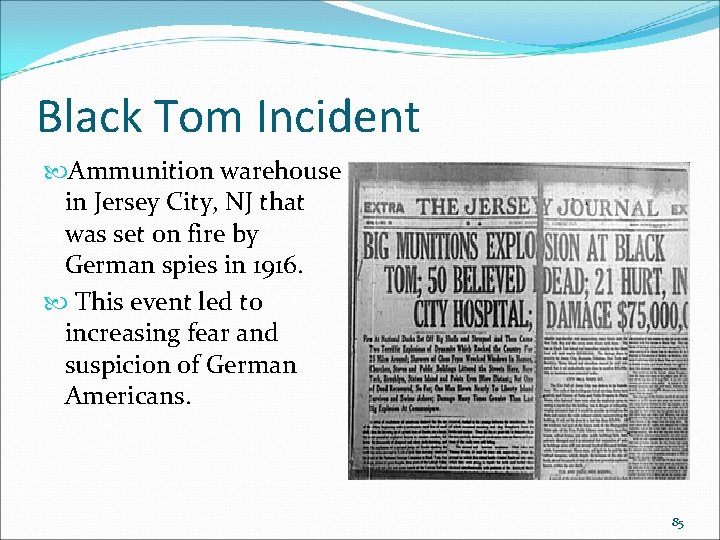
Black Tom Incident Ammunition warehouse in Jersey City, NJ that was set on fire by German spies in 1916. This event led to increasing fear and suspicion of German Americans. 85
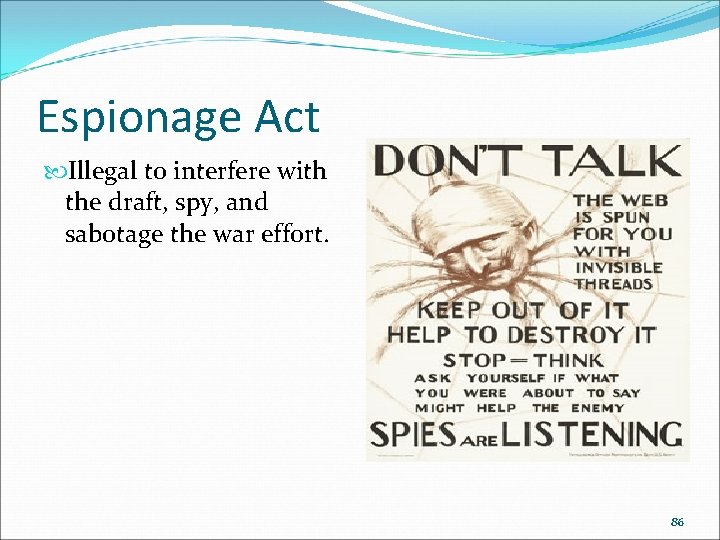
Espionage Act Illegal to interfere with the draft, spy, and sabotage the war effort. 86
87
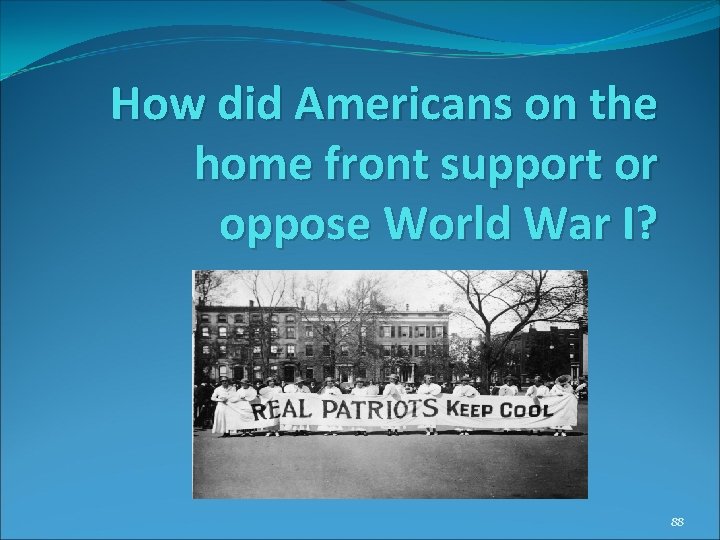
How did Americans on the home front support or oppose World War I? 88
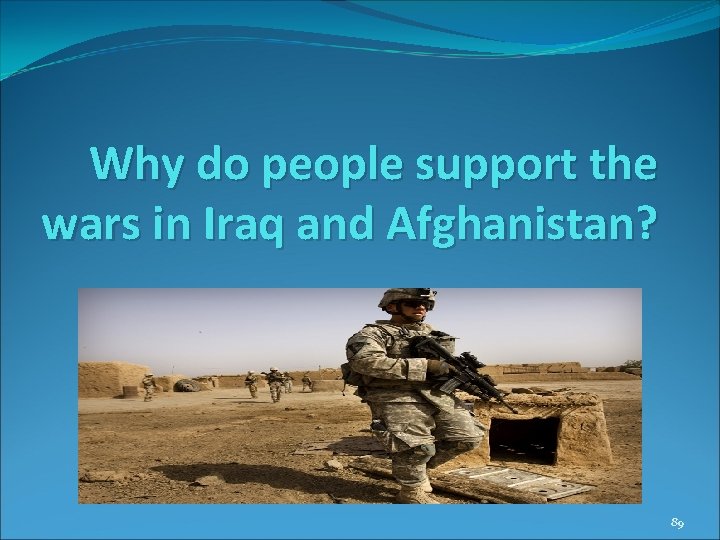
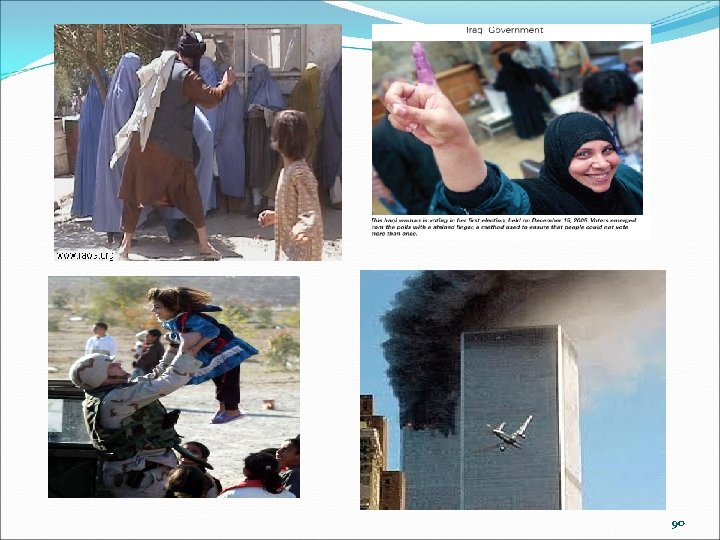
Why do people support the wars in Iraq and Afghanistan? 89
90
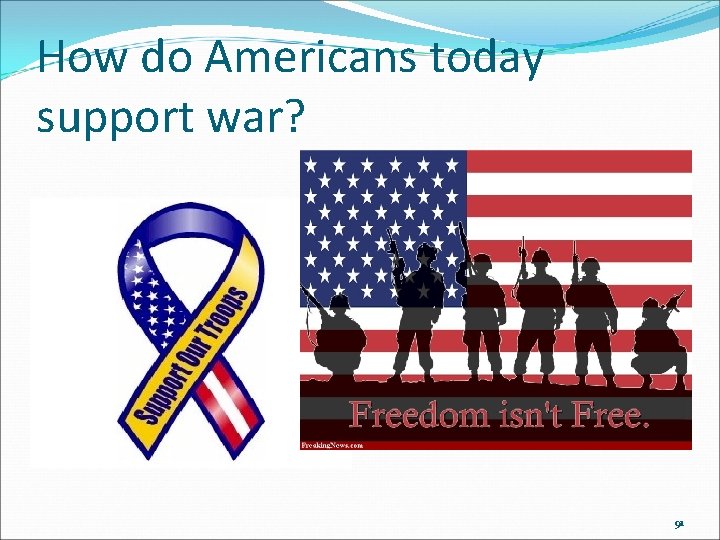
How do Americans today support war? 91
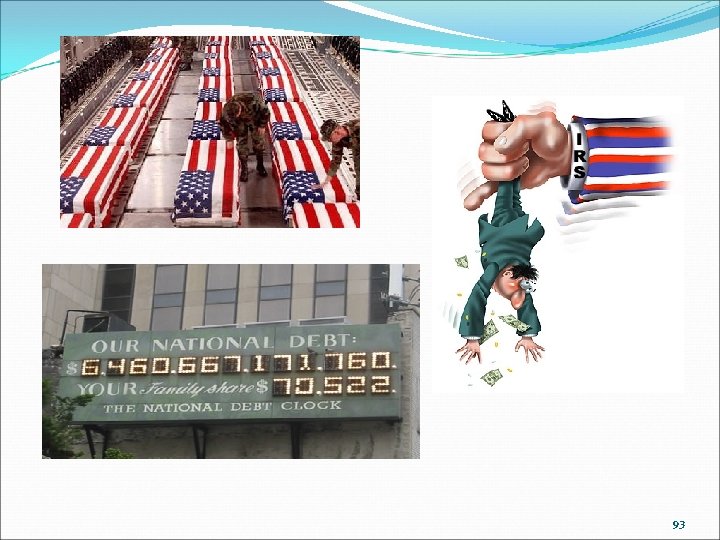
Why might some Americans oppose the war? 92
93
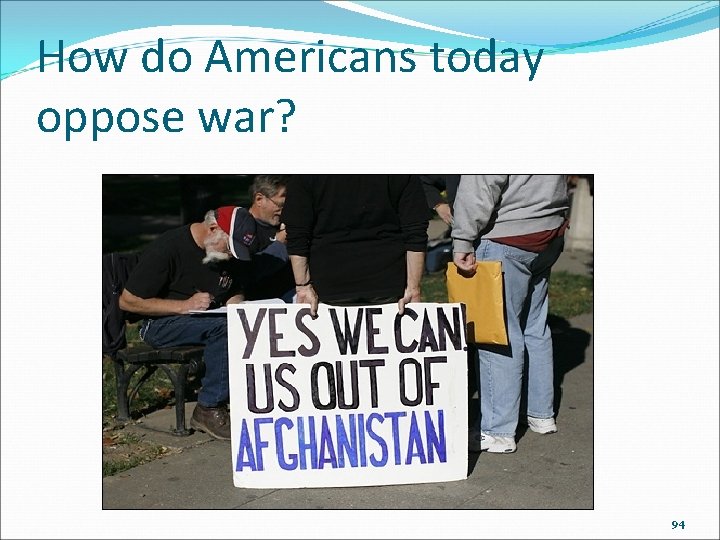
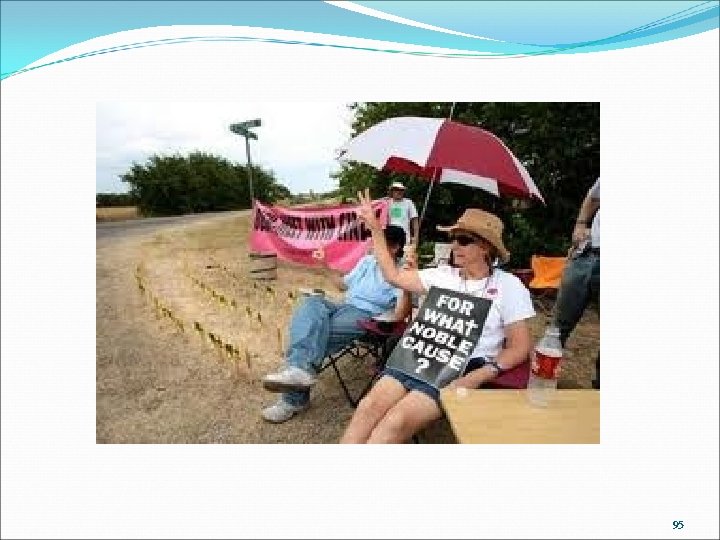
How do Americans today oppose war? 94
95
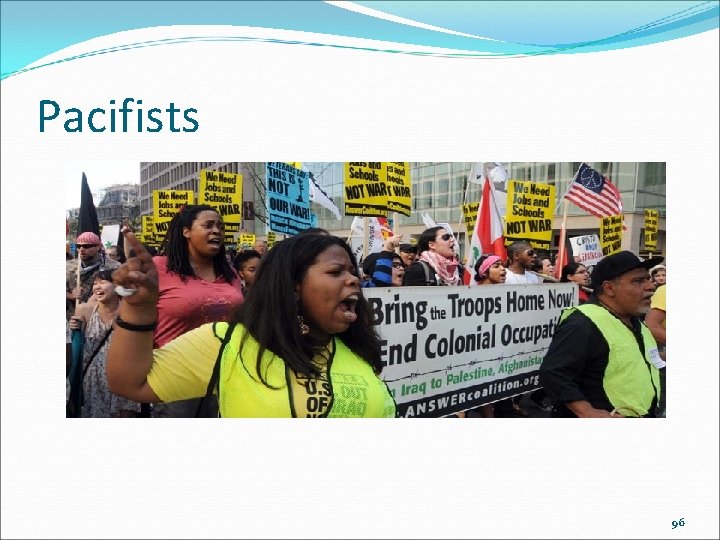
Pacifists 96
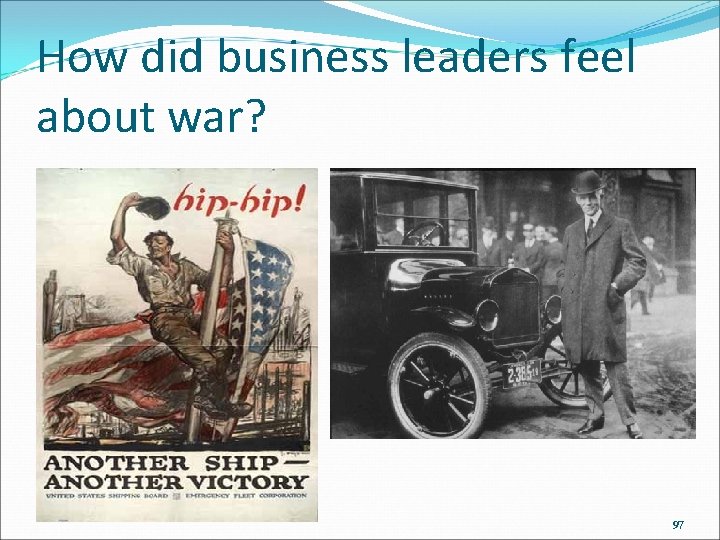
How did business leaders feel about war? 97
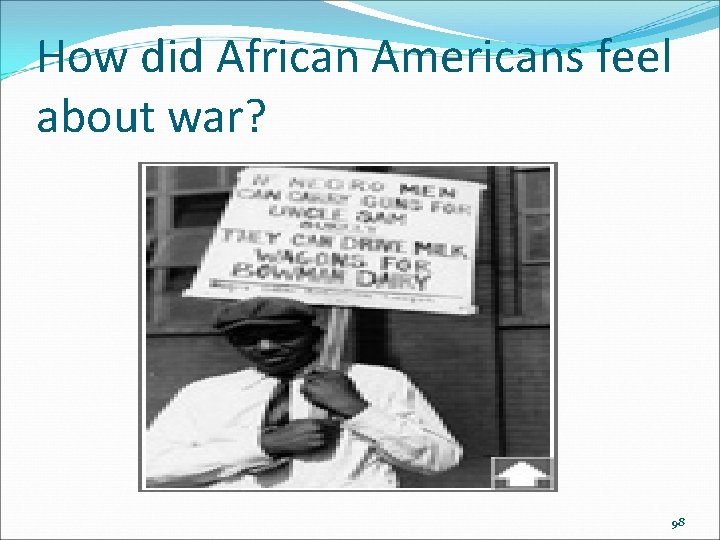
How did African Americans feel about war? 98
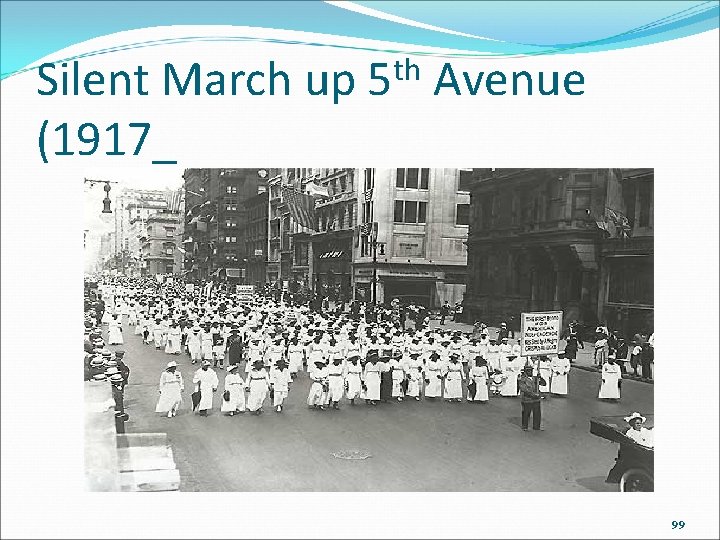
Silent March up (1917_ th 5 Avenue 99
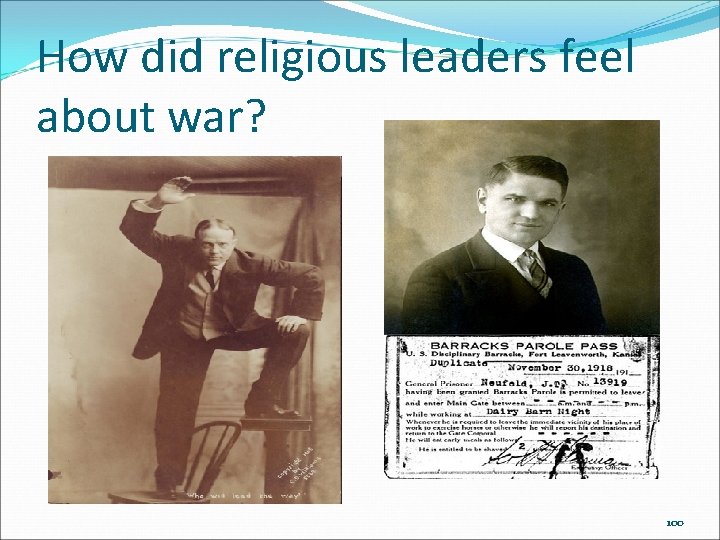
How did religious leaders feel about war? 100
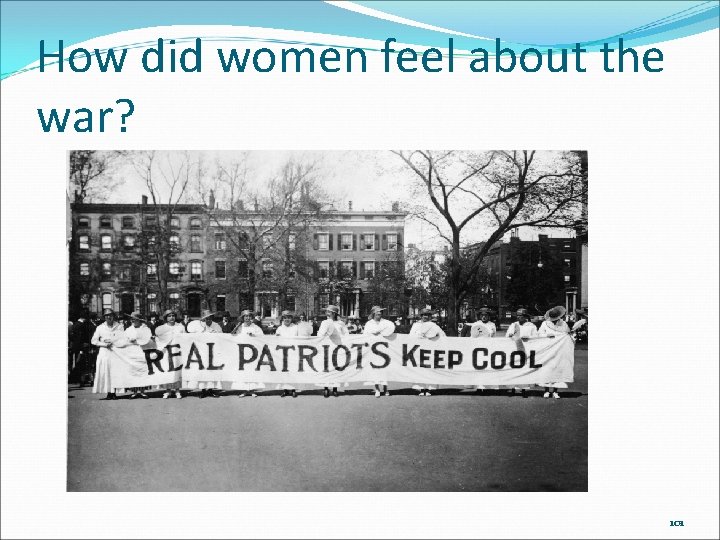
How did women feel about the war? 101
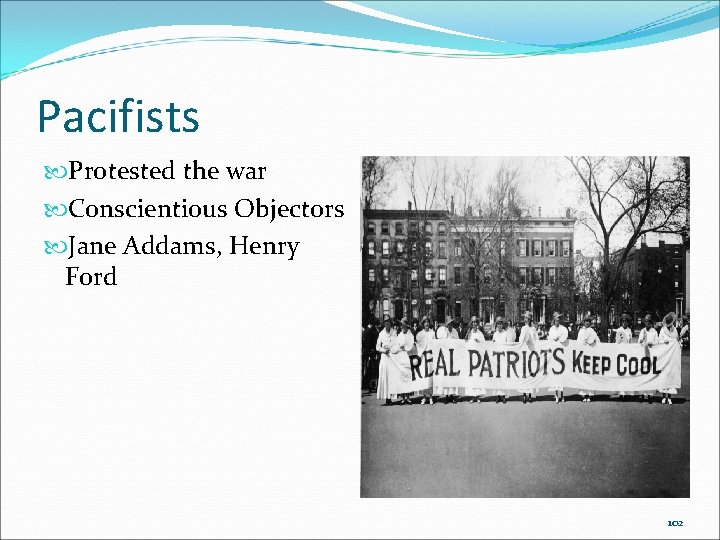
Pacifists Protested the war Conscientious Objectors Jane Addams, Henry Ford 102
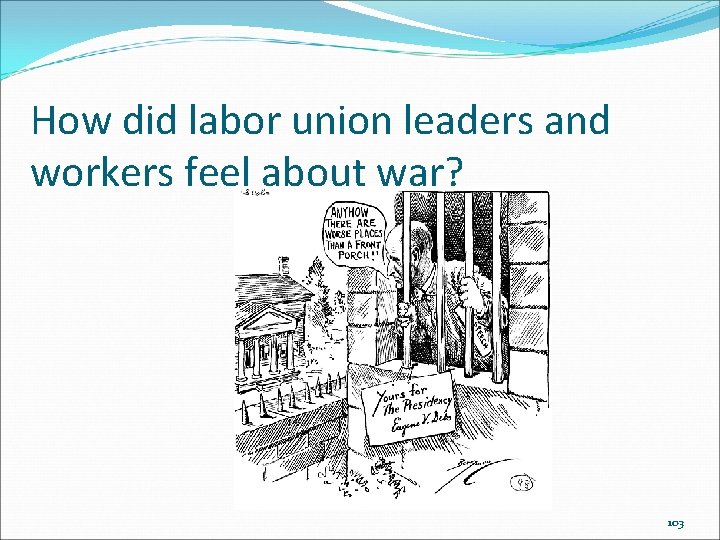
How did labor union leaders and workers feel about war? 103
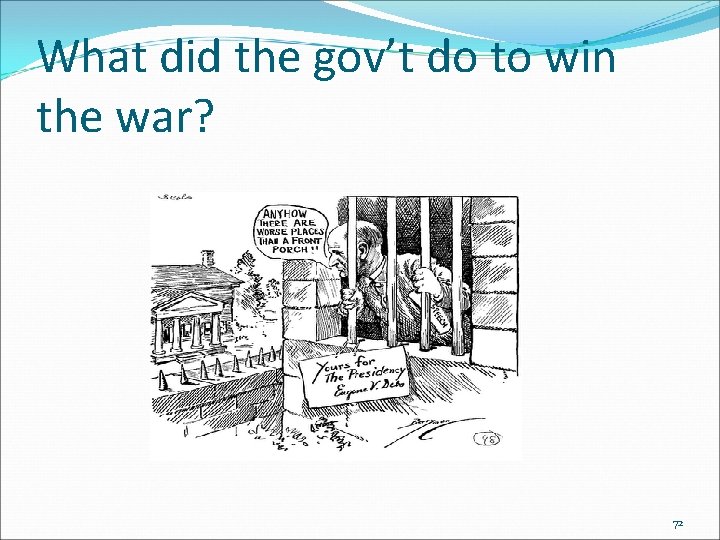
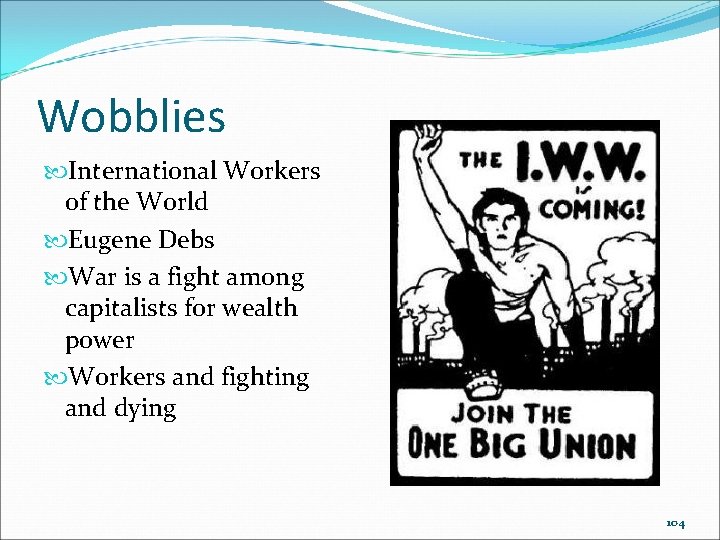
Wobblies International Workers of the World Eugene Debs War is a fight among capitalists for wealth power Workers and fighting and dying 104
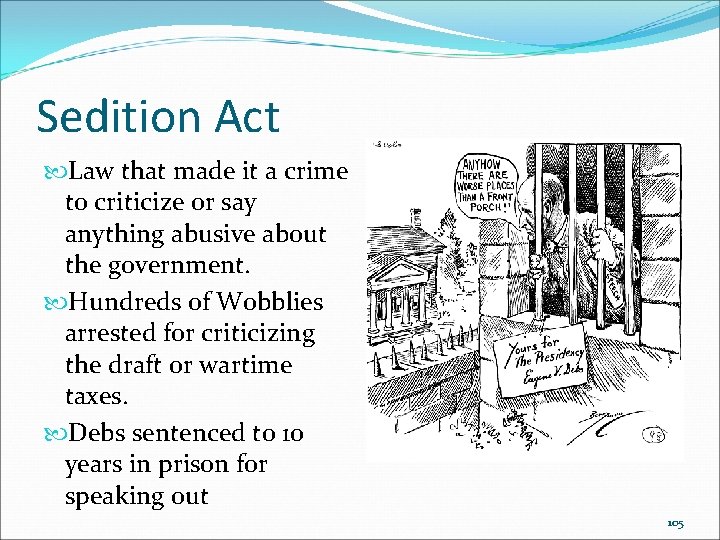
Sedition Act Law that made it a crime to criticize or say anything abusive about the government. Hundreds of Wobblies arrested for criticizing the draft or wartime taxes. Debs sentenced to 10 years in prison for speaking out 105
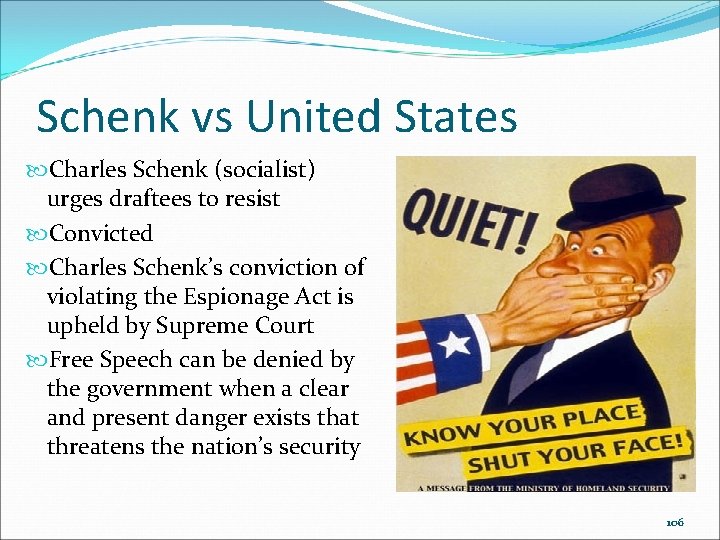
Schenk vs United States Charles Schenk (socialist) urges draftees to resist Convicted Charles Schenk’s conviction of violating the Espionage Act is upheld by Supreme Court Free Speech can be denied by the government when a clear and present danger exists that threatens the nation’s security 106
What was the impact of the War on Americans at home? 107
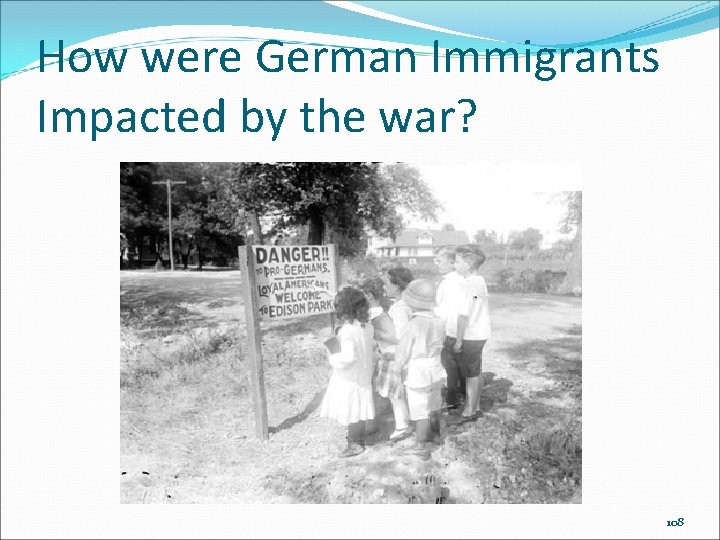
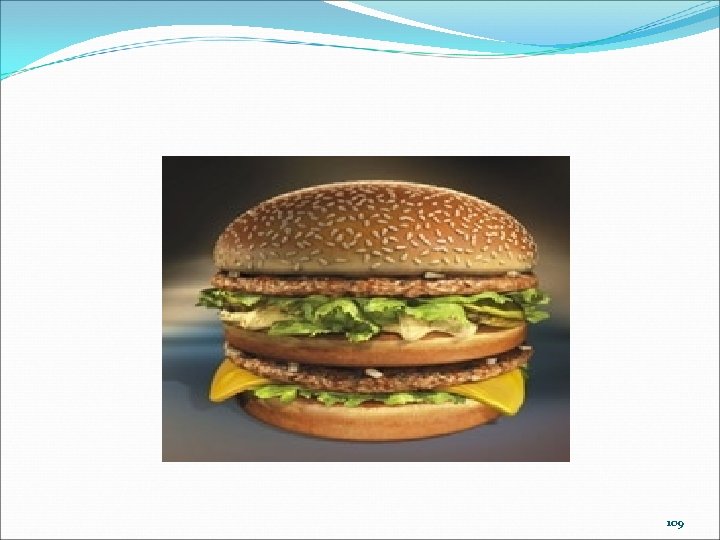
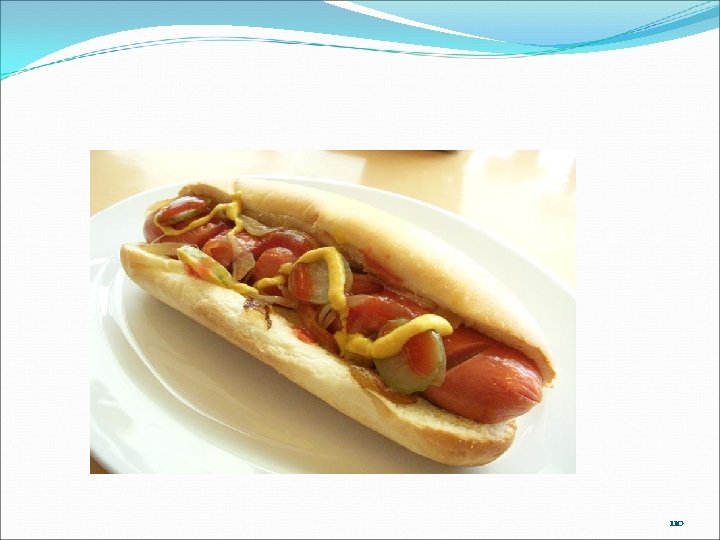
How were German Immigrants Impacted by the war? 108
109
110
111
112
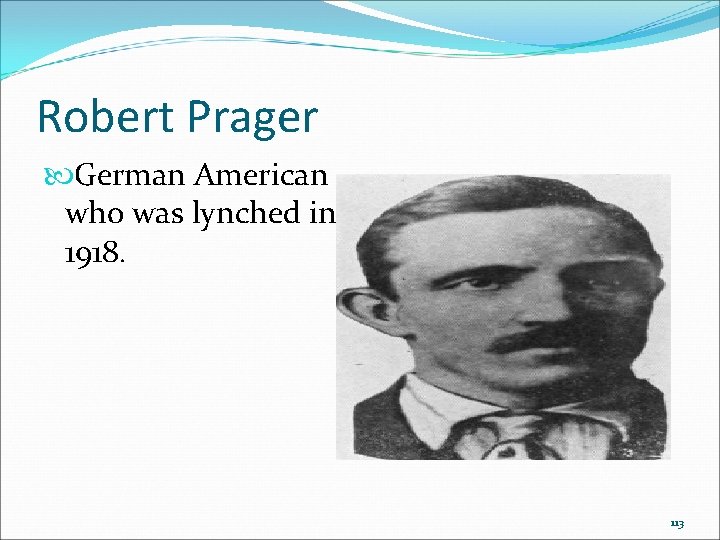
Robert Prager German American who was lynched in 1918. 113
How did the war impact families? 114
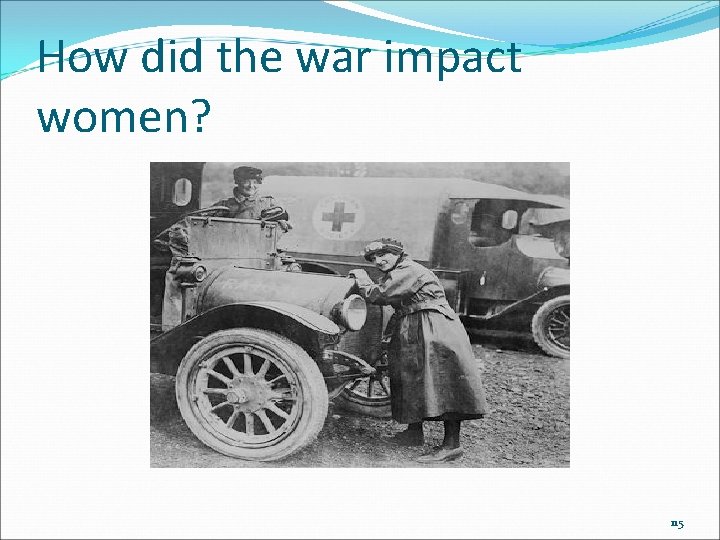
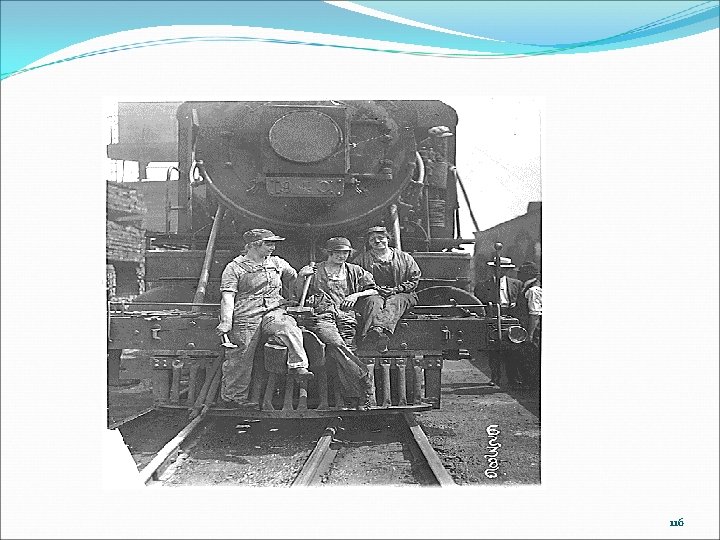
How did the war impact women? 115
116
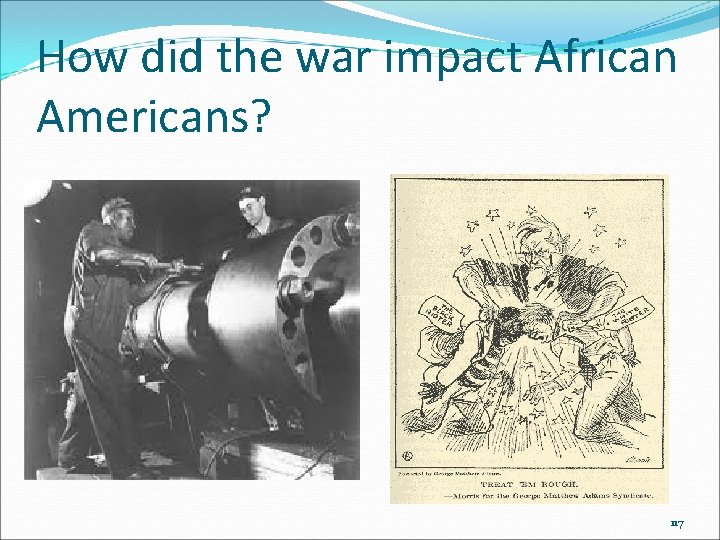
How did the war impact African Americans? 117
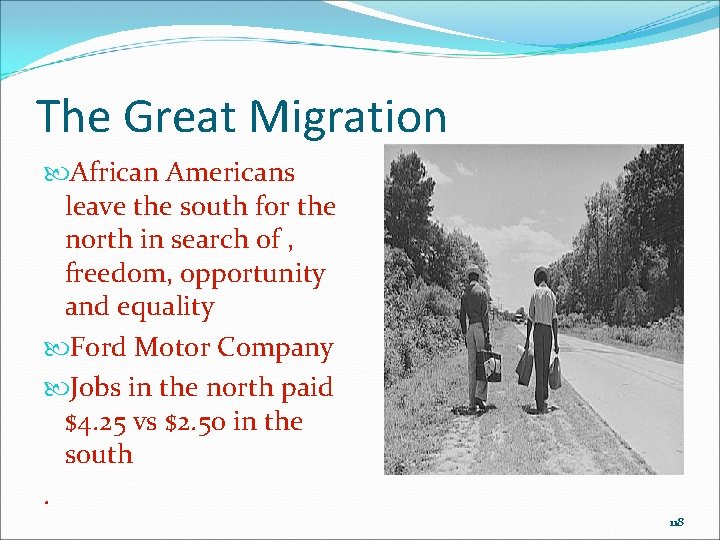
The Great Migration African Americans leave the south for the north in search of , freedom, opportunity and equality Ford Motor Company Jobs in the north paid $4. 25 vs $2. 50 in the south. 118
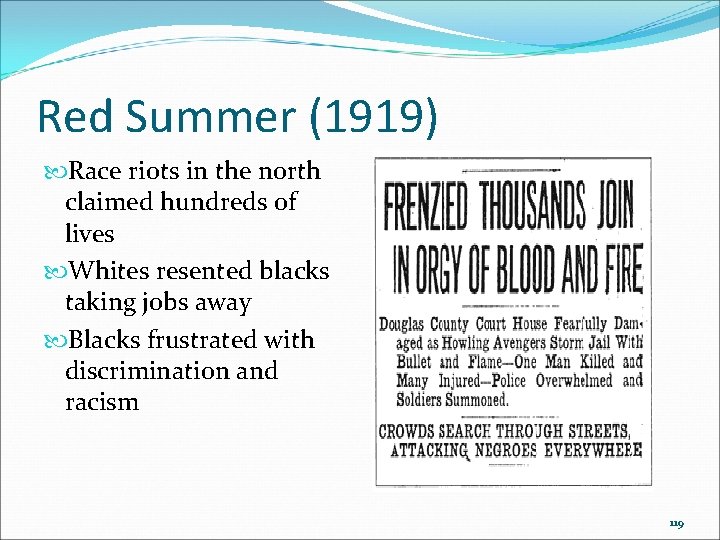
Red Summer (1919) Race riots in the north claimed hundreds of lives Whites resented blacks taking jobs away Blacks frustrated with discrimination and racism 119
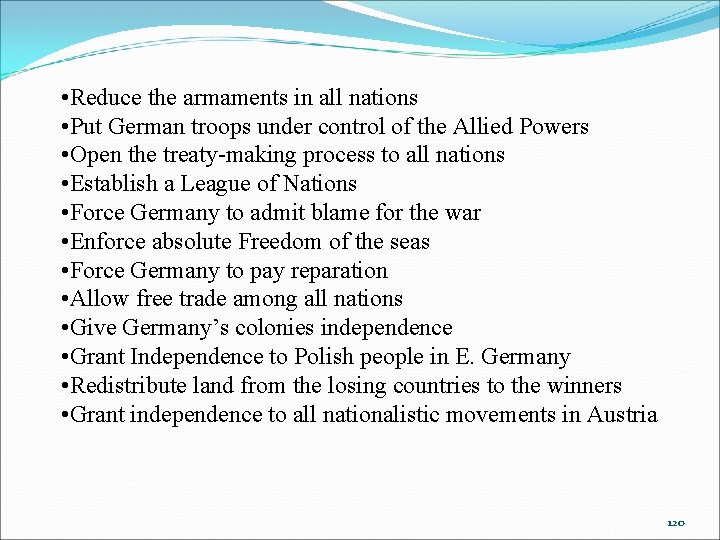
• Reduce the armaments in all nations • Put German troops under control of the Allied Powers • Open the treaty-making process to all nations • Establish a League of Nations • Force Germany to admit blame for the war • Enforce absolute Freedom of the seas • Force Germany to pay reparation • Allow free trade among all nations • Give Germany’s colonies independence • Grant Independence to Polish people in E. Germany • Redistribute land from the losing countries to the winners • Grant independence to all nationalistic movements in Austria 120
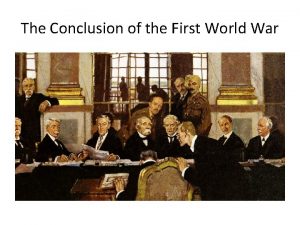
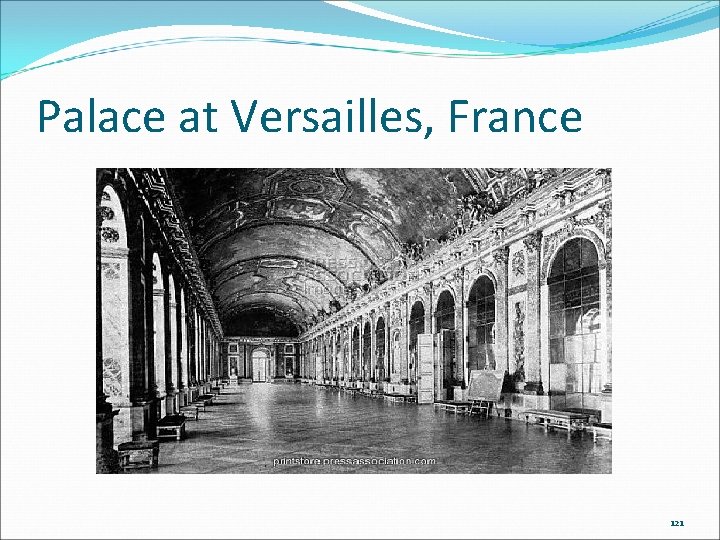
Palace at Versailles, France 121
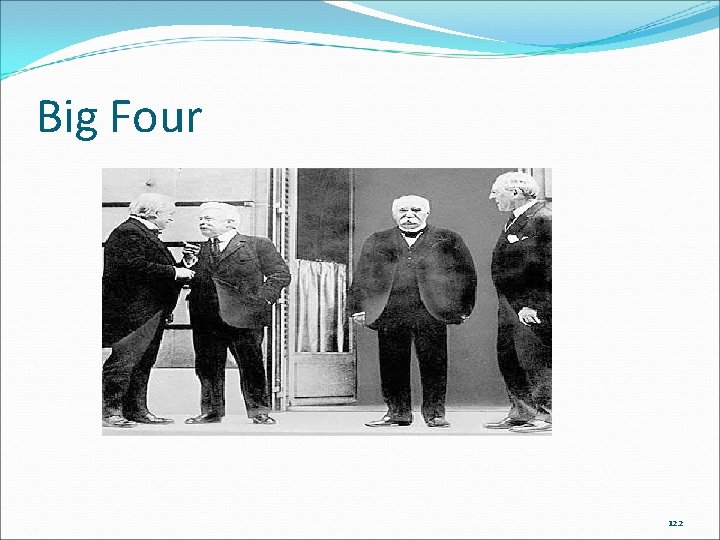
Big Four 122
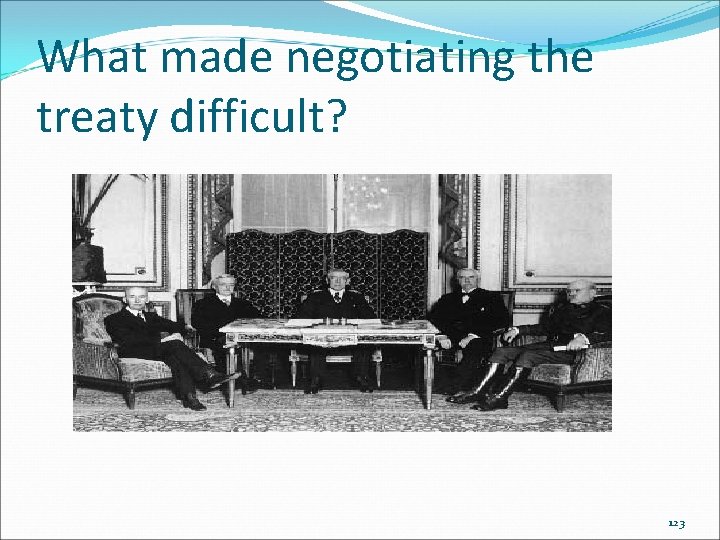
What made negotiating the treaty difficult? 123
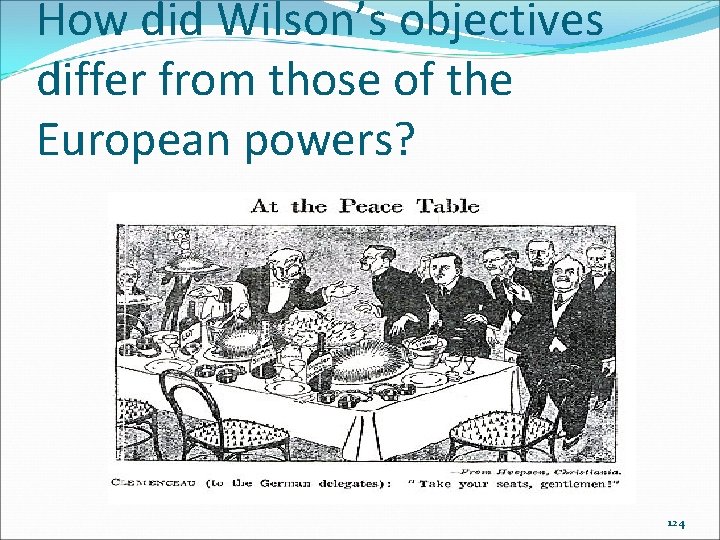
How did Wilson’s objectives differ from those of the European powers? 124
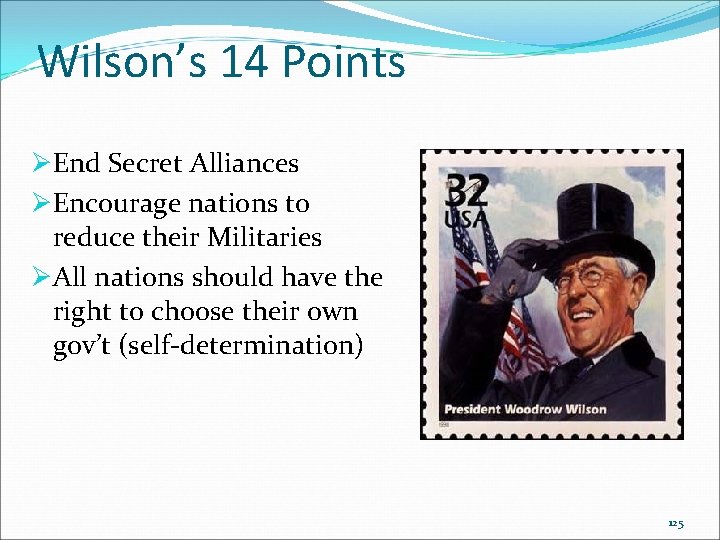
Wilson’s 14 Points ØEnd Secret Alliances ØEncourage nations to reduce their Militaries ØAll nations should have the right to choose their own gov’t (self-determination) 125
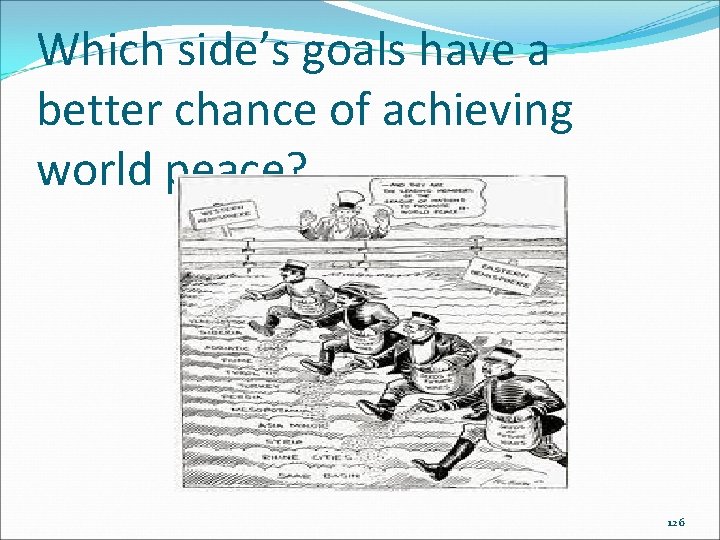
Which side’s goals have a better chance of achieving world peace? 126
League of Nations Collective security – commitment by many nations to join together to deal with a nation that threatens peace 127
Treaty of Versailles, 1919 Germany blamed for war forced to pay $33 billion in reparations Created a league of nations German colonies broken into independent nations Germany not allowed to militarize 128
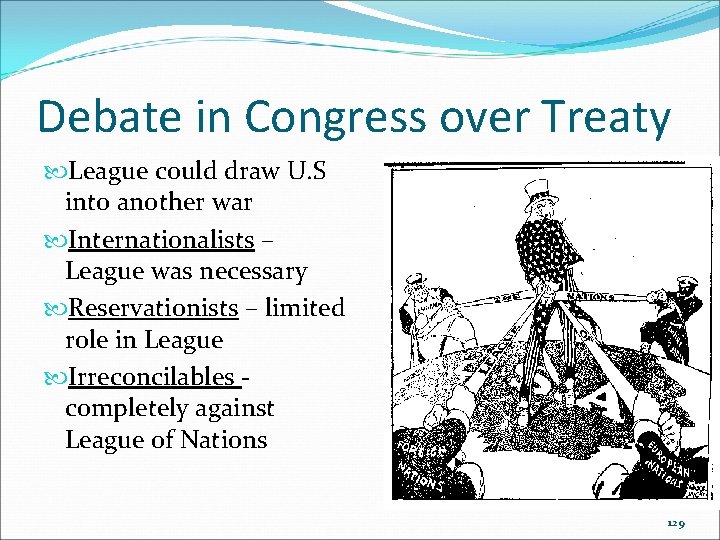
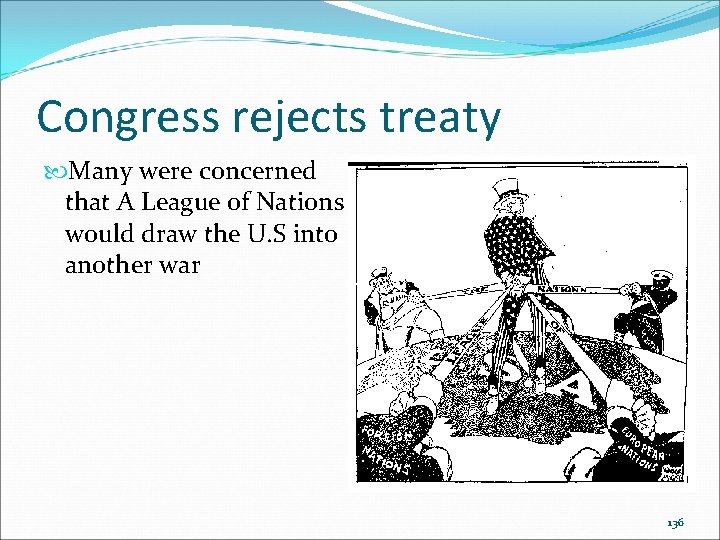
Debate in Congress over Treaty League could draw U. S into another war Internationalists – League was necessary Reservationists – limited role in League Irreconcilables completely against League of Nations 129
Prompt 5: Irreconcilable Why can’t you internationalists understand that our national sovereignty (independence) is more important than foolish dreams of collective security? 130
Prompt 1: Irreconcilable: Honorable Senator, the Treaty of Versailles is clearly full of flaws. How can you support it? 131
Prompt 2: Internationalist My esteemed colleague, you say the treaty is “full of flaws, ” but I wonder, can you even describe two of them? 132
Prompt 3: Irreconcilable Senator, it looks to me like that League of Nations could drag the United States into a lot of trouble. Why do you admire it so much? 133
Prompt 4: Internationalist My fellow Senator, you talk about the League causing trouble. Just what kind of trouble are you talking about? 134
Prompt 6: Internationalists Are you kidding? Do you irreconcilables ever consider that collective security might have prevented this tragic war from ever occurring in the first place? 135
Congress rejects treaty Many were concerned that A League of Nations would draw the U. S into another war 136
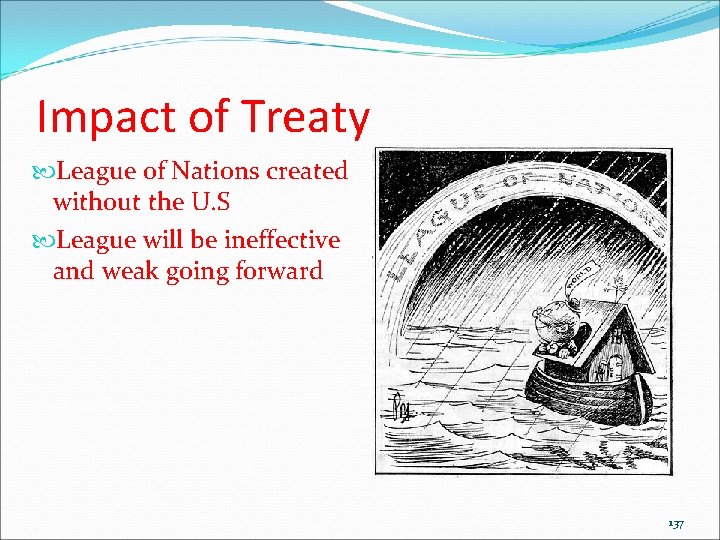
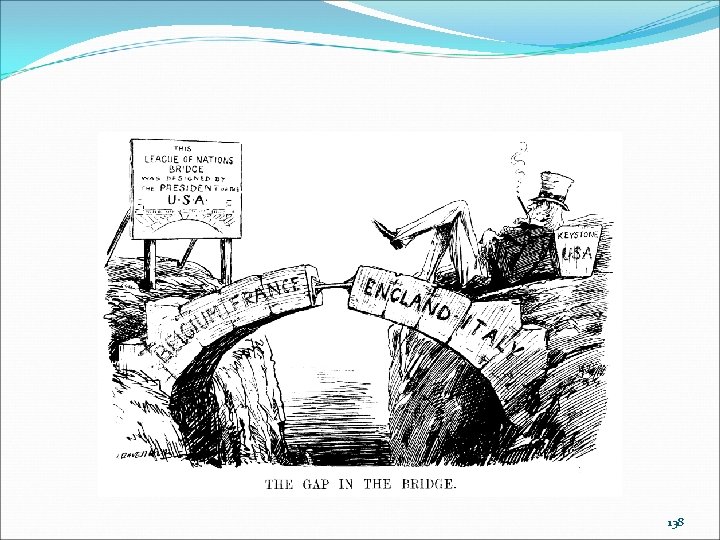
Impact of Treaty League of Nations created without the U. S League will be ineffective and weak going forward 137
138
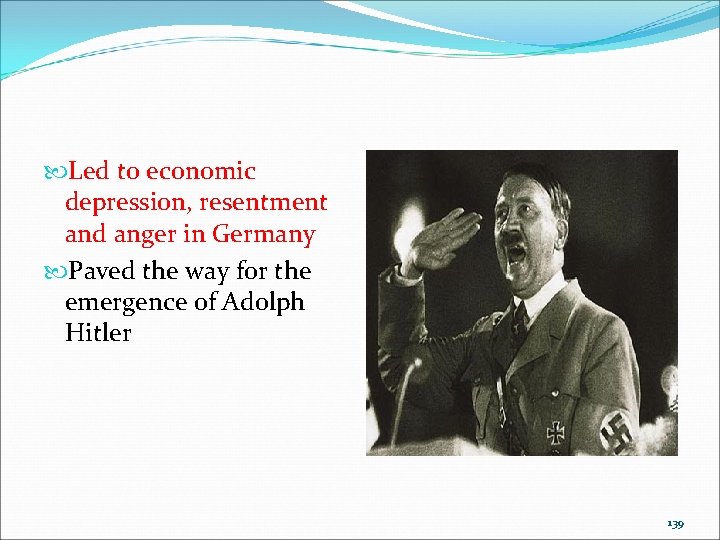
Led to economic depression, resentment and anger in Germany Paved the way for the emergence of Adolph Hitler 139