The Industrial Revolution What was the industrial revolution

























- Slides: 82
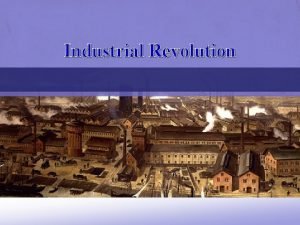
The Industrial Revolution
What was the industrial revolution?
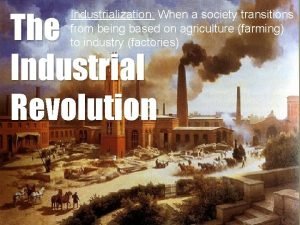
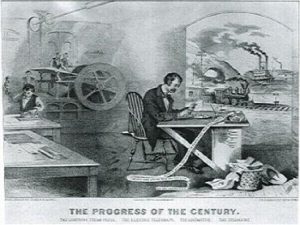
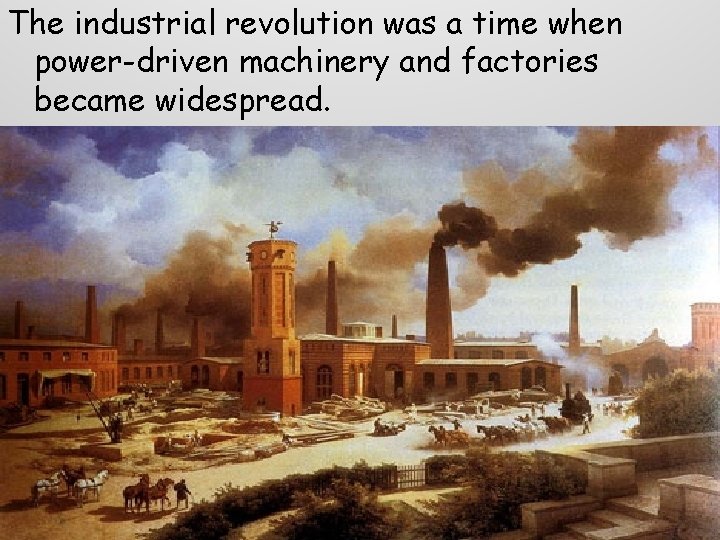
The industrial revolution was a time when power-driven machinery and factories became widespread.
Where did the industrial revolution begin?
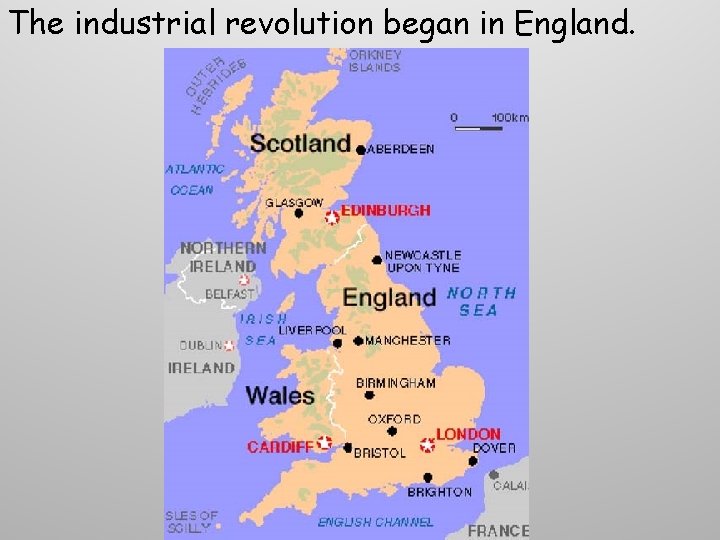
The industrial revolution began in England.
Why did the industrial revolution begin in England?
England had all of the factors of production: Land, Labor, and Capital And they had political stability
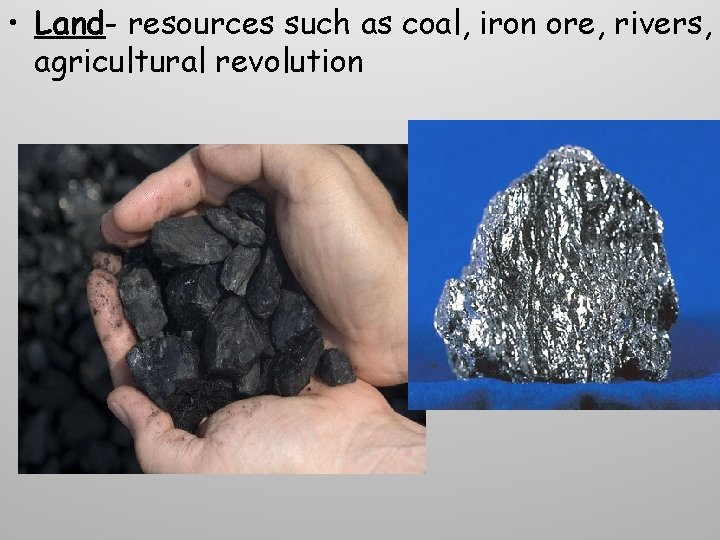
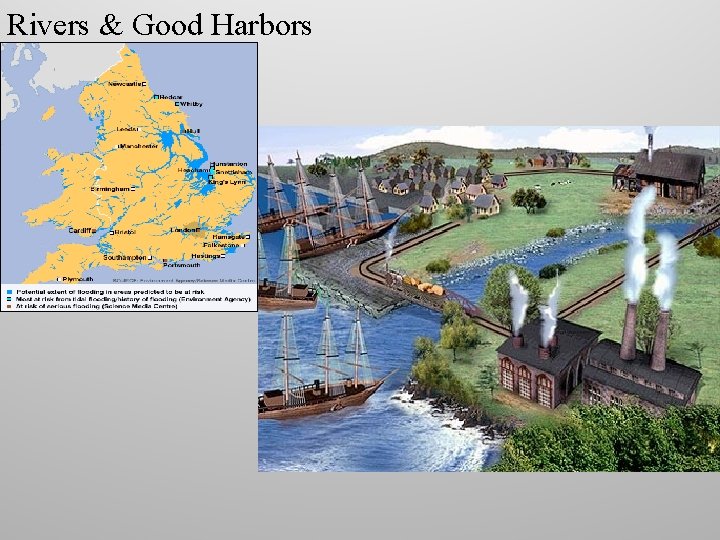
• Land- resources such as coal, iron ore, rivers, agricultural revolution
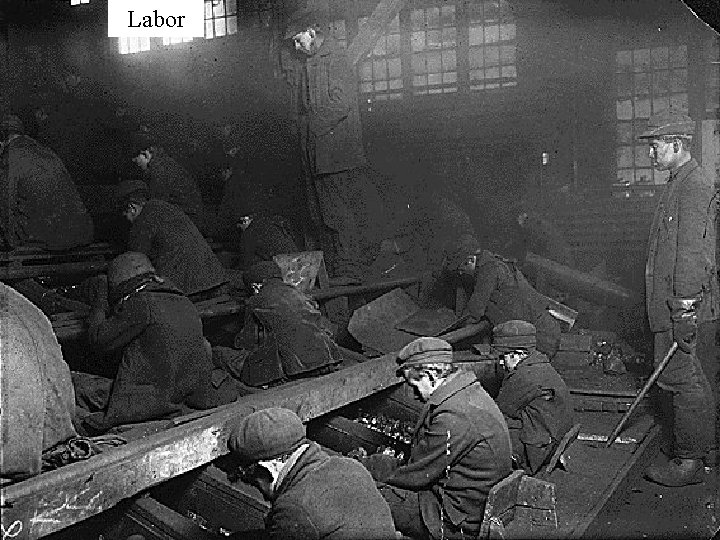
Labor
Rivers & Good Harbors
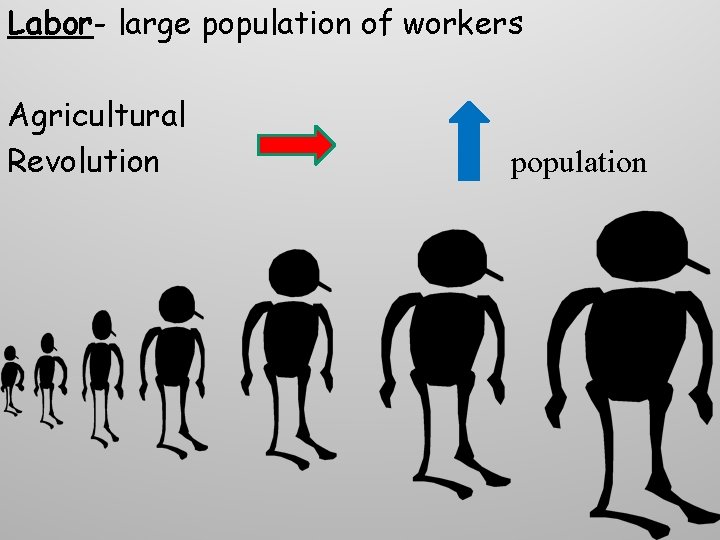
Labor- large population of workers Agricultural Revolution population
Capital- money for investment in businesses and to support growth of factories (expanding economy)
How did agriculture change in England prior to the industrial revolution?
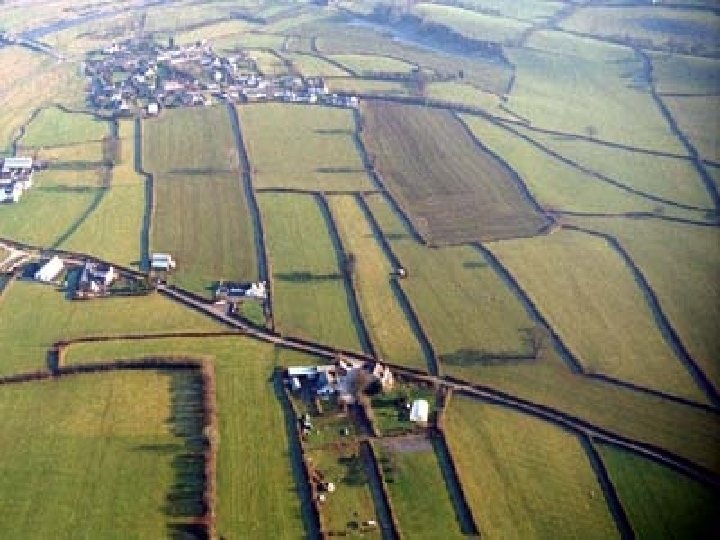
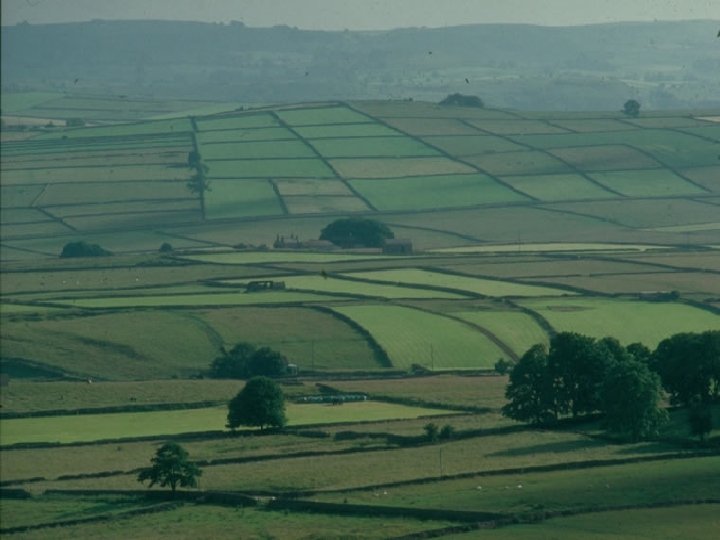
Wealthy landowners began buying up small farms. This was the enclosure movement. Wealthy landowners experimented with new farming techniques and machinery which resulted in more food being produced by fewer farmers. (Agricultural Revolution) This also meant that unemployed farmers and farm workers needed new jobs.
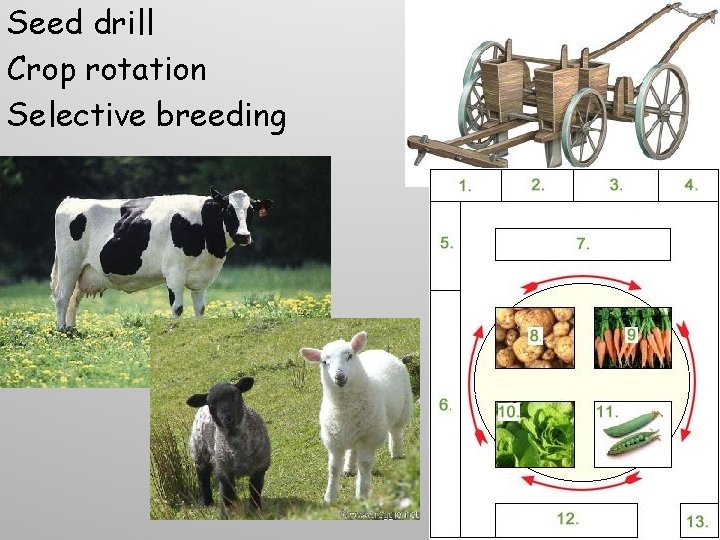
What were some inventions that improved agriculture?
Seed drill Crop rotation Selective breeding
How were textiles produced before the industrial revolution?
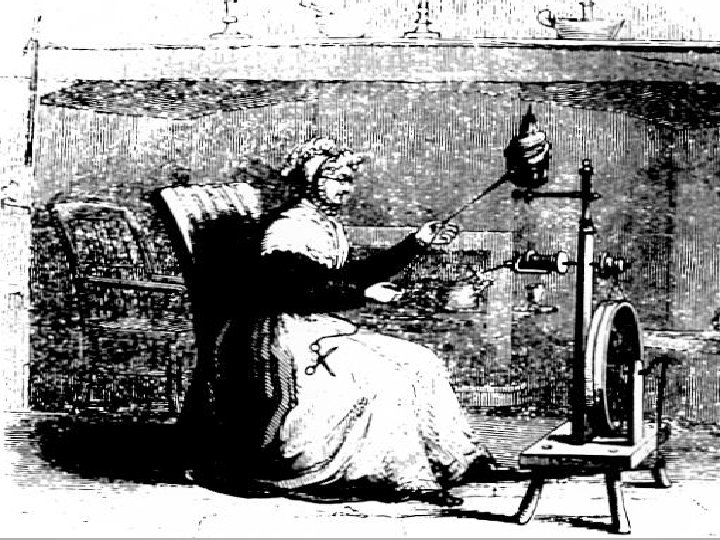
Textiles were produced in peoples homes which was called the cottage system or the putting out system.
What inventions changed the textile industry?
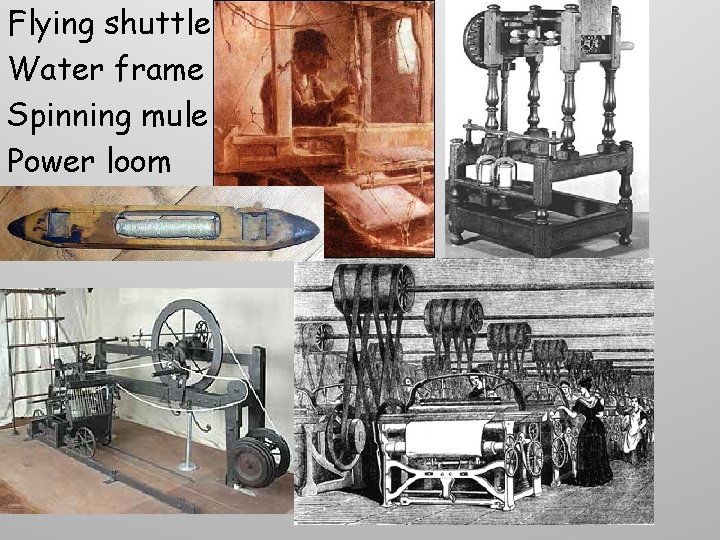
Flying shuttle Water frame Spinning mule Power loom
Flying Shuttle • John Kay's invention allowed the shuttle, containing the thread, to be shot backwards and forwards across a much wider bed. The flying shuttle also allowed the thread to be woven at a faster rate, thus enabling the process of weaving to become faster.
Spinning Mule • In 1779, Samuel Crompton invented the spinning mule that combined the moving carriage of the spinning jenny with the rollers of the water frame.
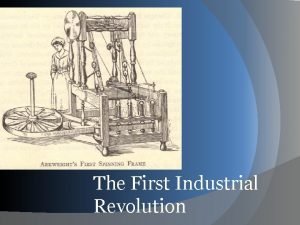
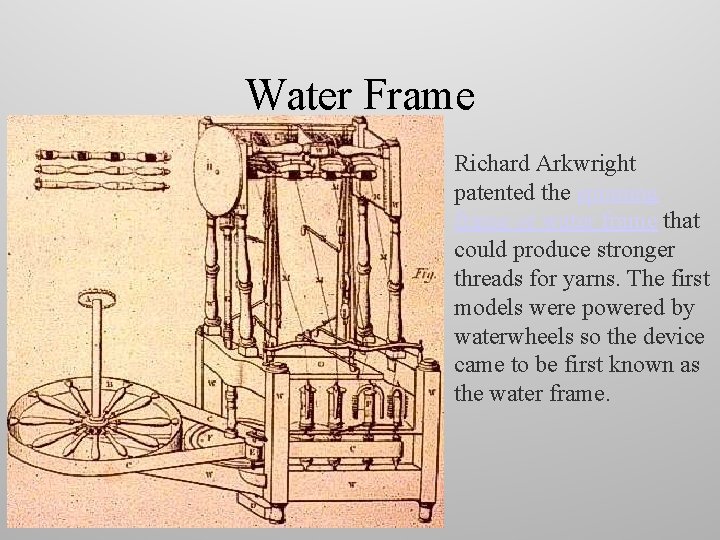
Water Frame • Richard Arkwright patented the spinning frame or water frame that could produce stronger threads for yarns. The first models were powered by waterwheels so the device came to be first known as the water frame.
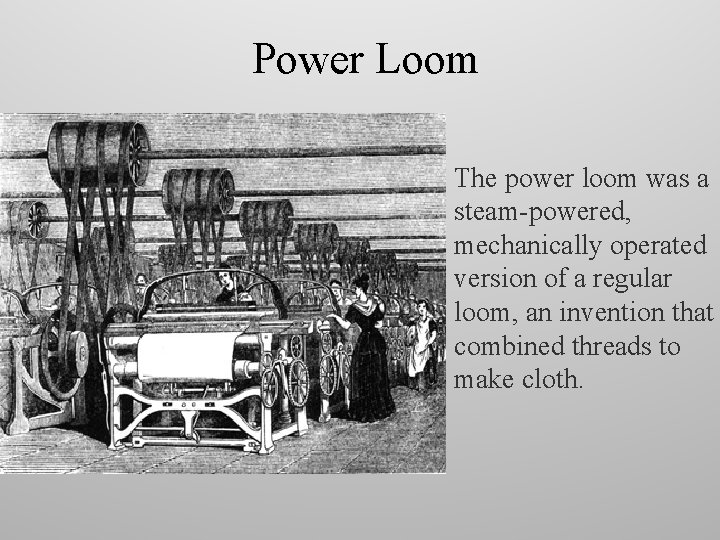
Power Loom • The power loom was a steam-powered, mechanically operated version of a regular loom, an invention that combined threads to make cloth.
What were some advances in transportation during the industrial era?
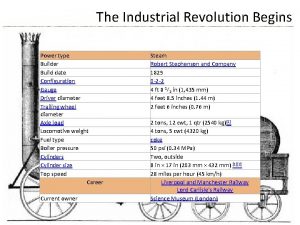
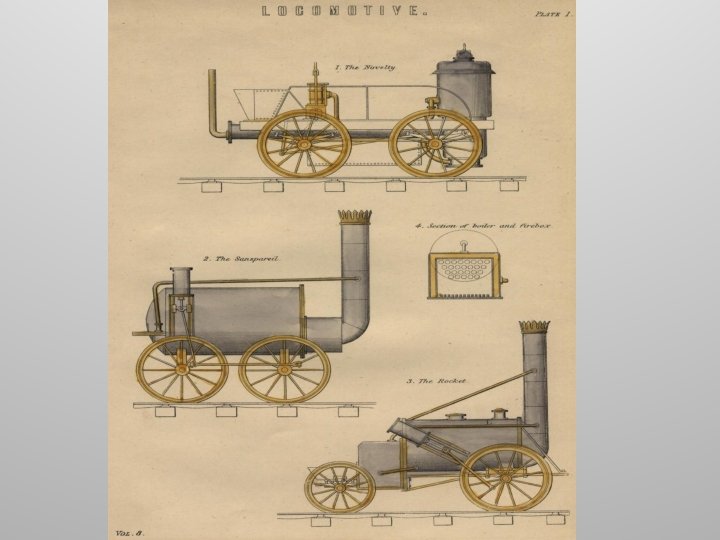
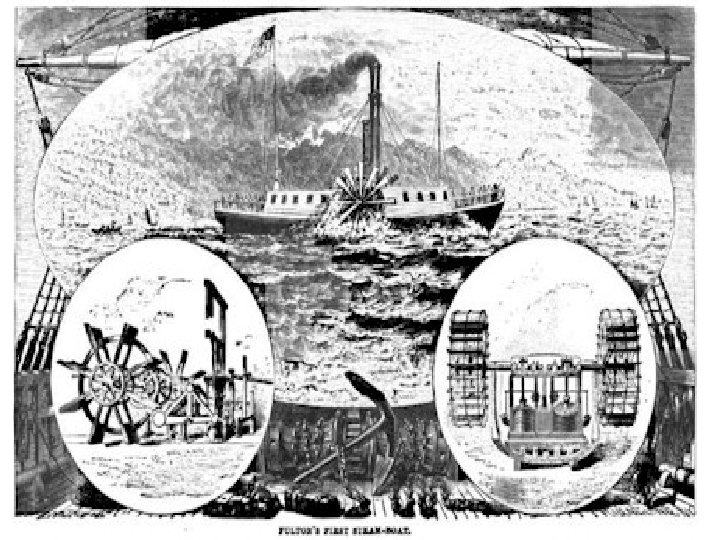
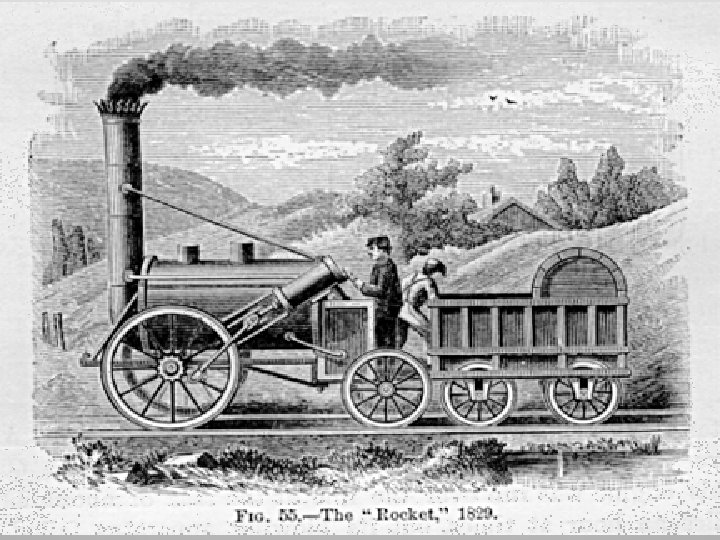
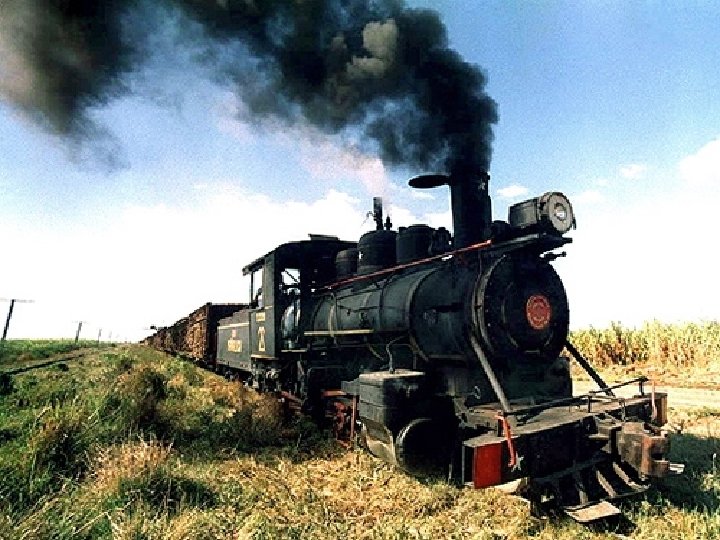
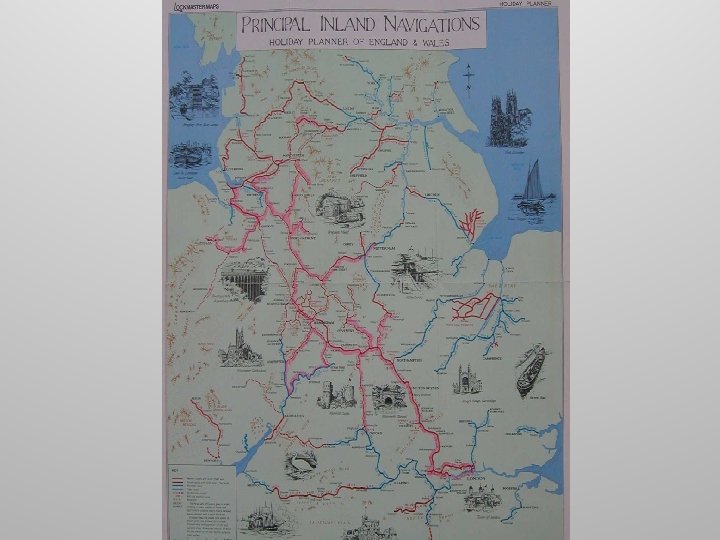
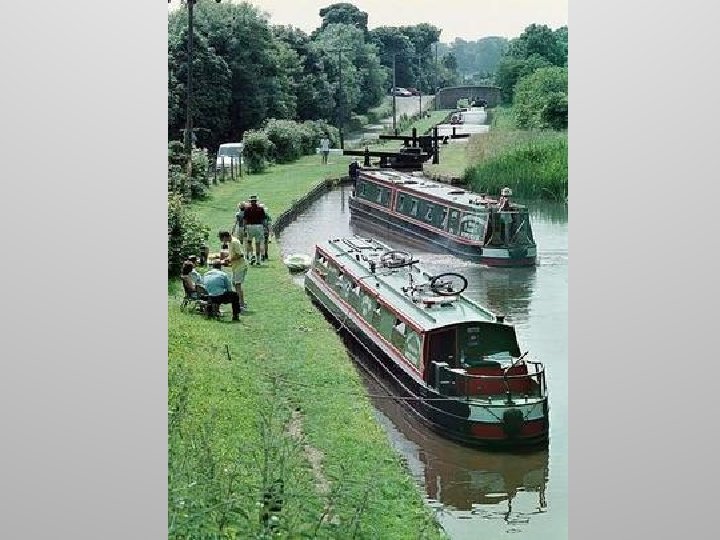
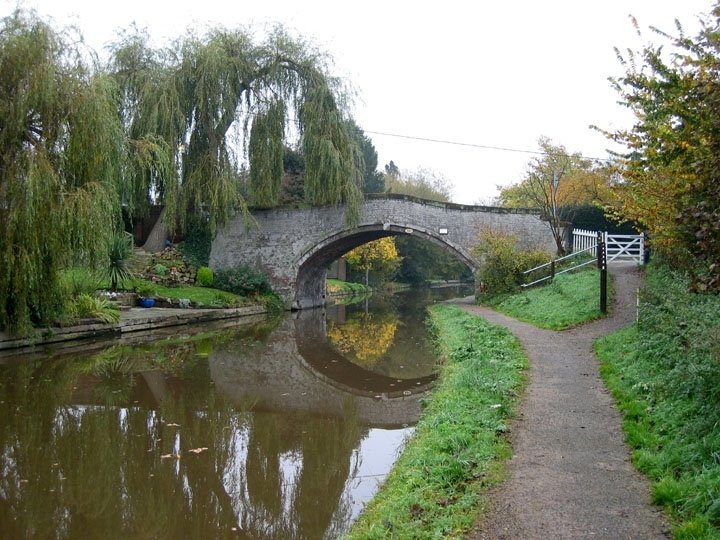
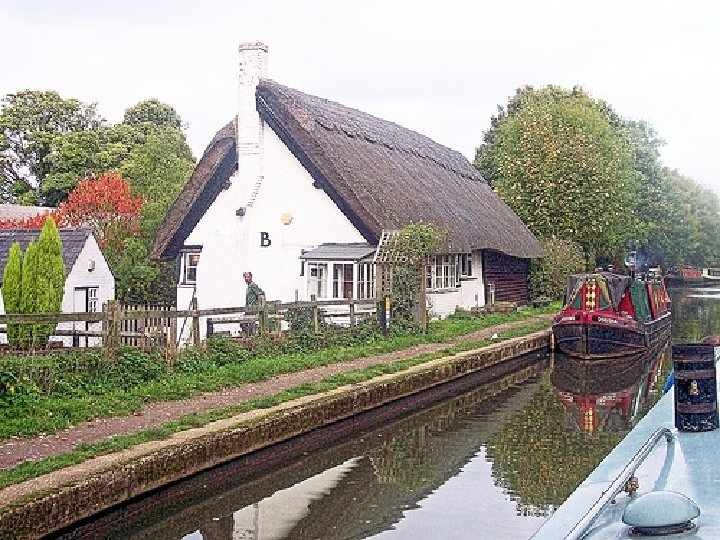
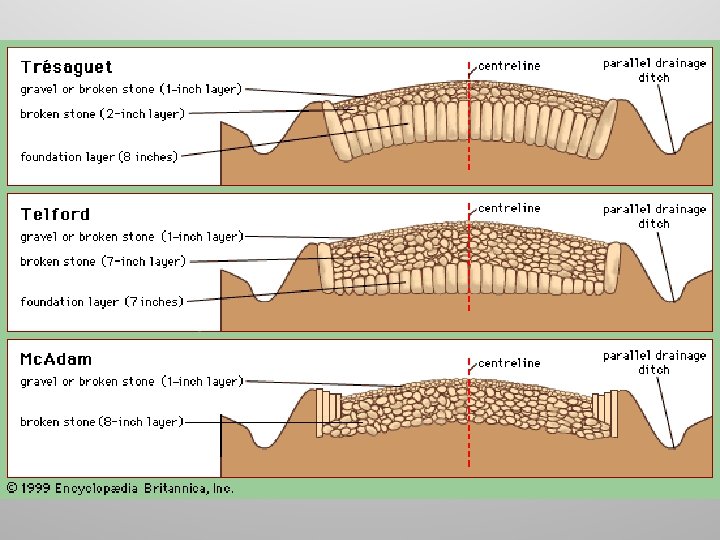
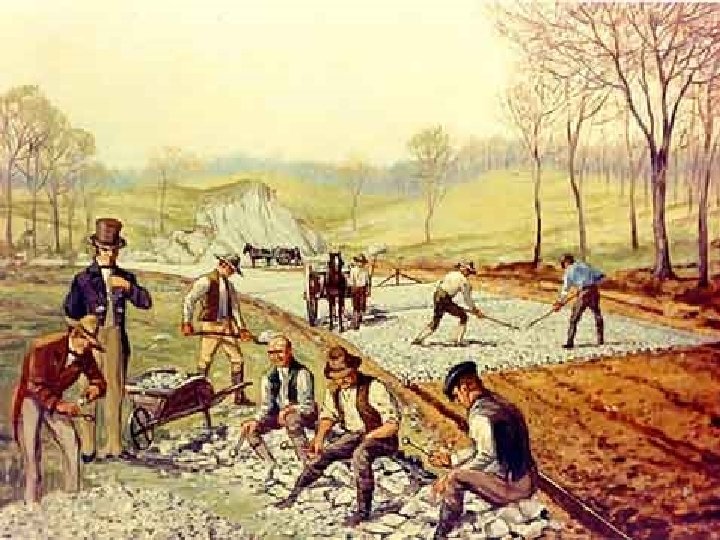
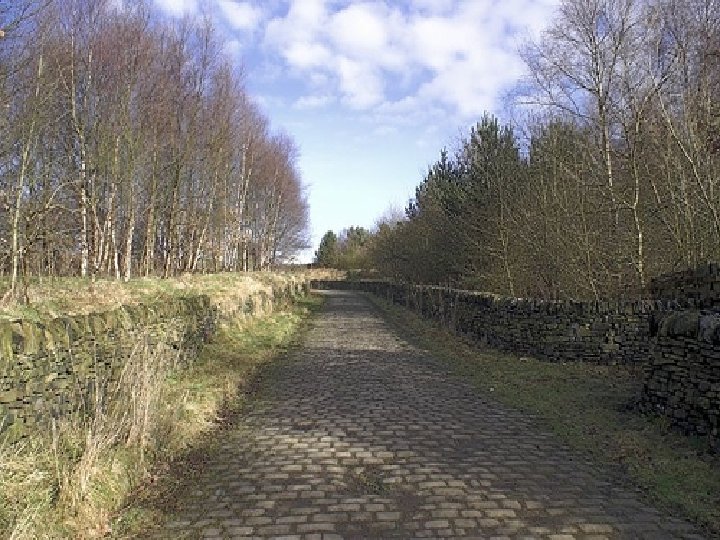
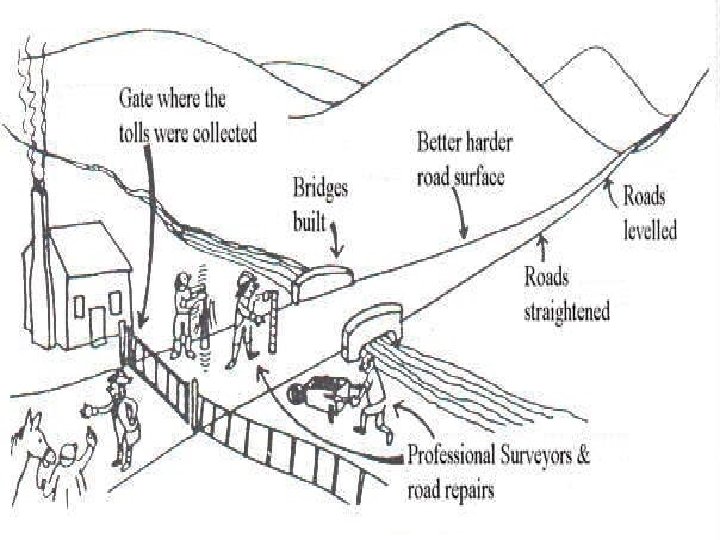
Steam Engine Canals Mc. Adam roads Turnpikes Railroads
How did railroads change life in Britain?
Led to more economic growth, because it provided cheap transportation for goods Created jobs – Railroad workers and coal miners Increased England’s agricultural and fishing industry because railroads allowed the markets for these goods to increase Made travel easier – increase in commuters and more vacation options
How did work change for the average family during the industrial revolution?
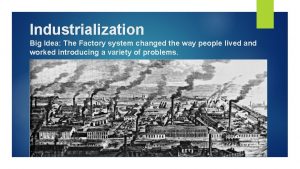
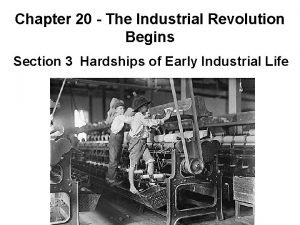
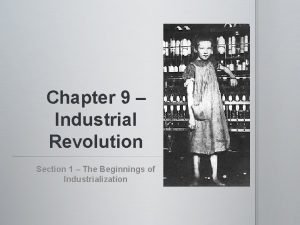
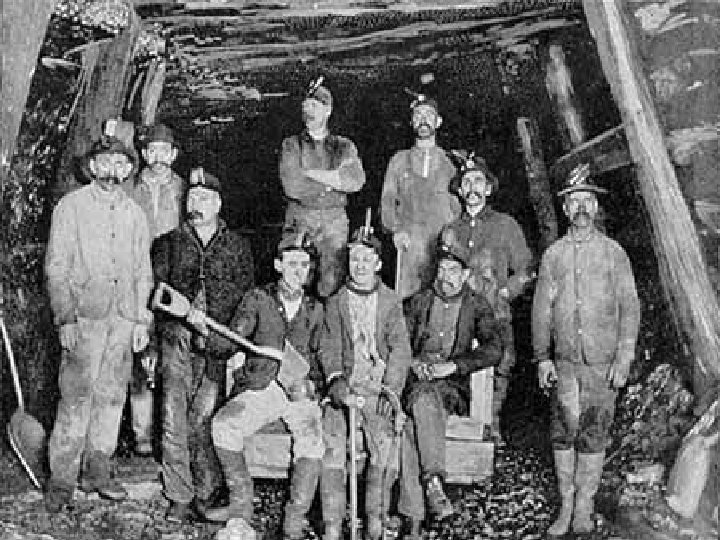
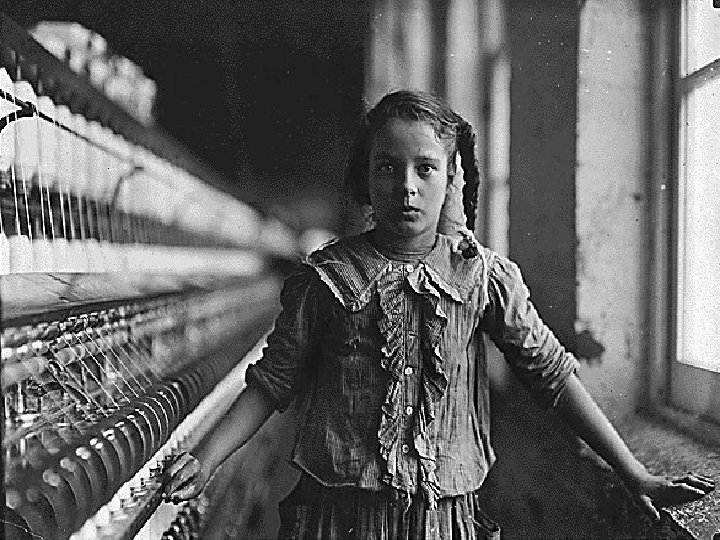
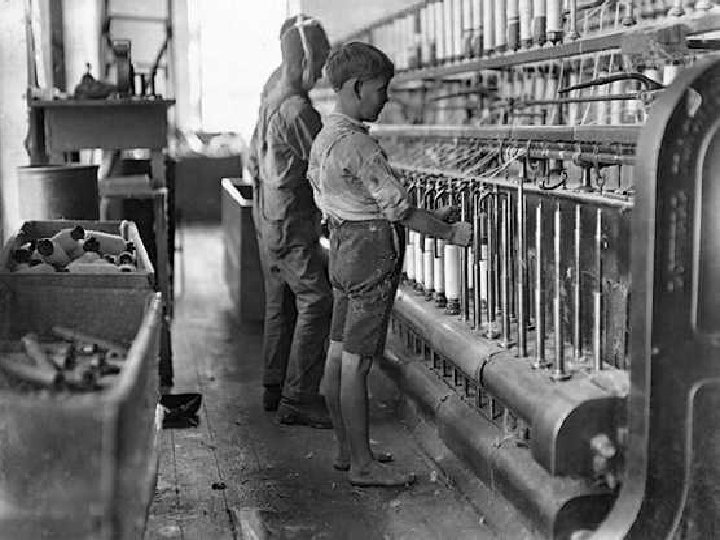
• Harsh working conditions in factories (poor lighting, poor ventilation, dangerous machinery) • 14 hour days, 6 days a week • Monotonous work • No job security • Men competed with women and children for jobs • Low wages
What were living conditions like in the cities during the early industrial era?
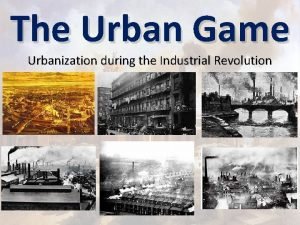
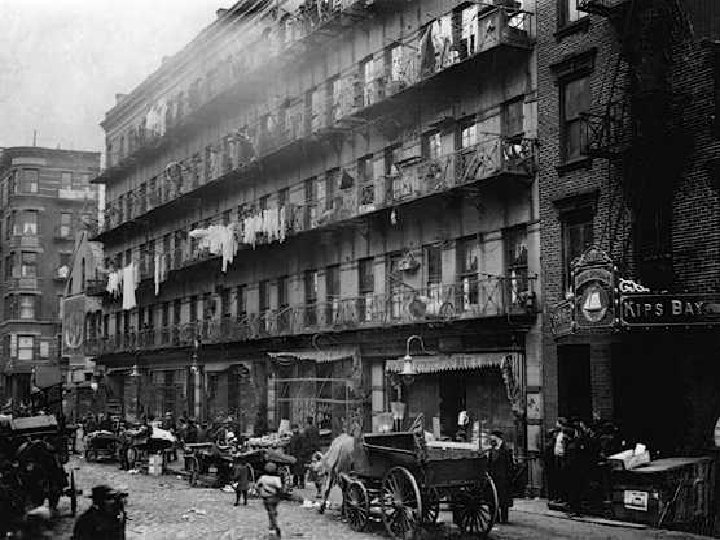
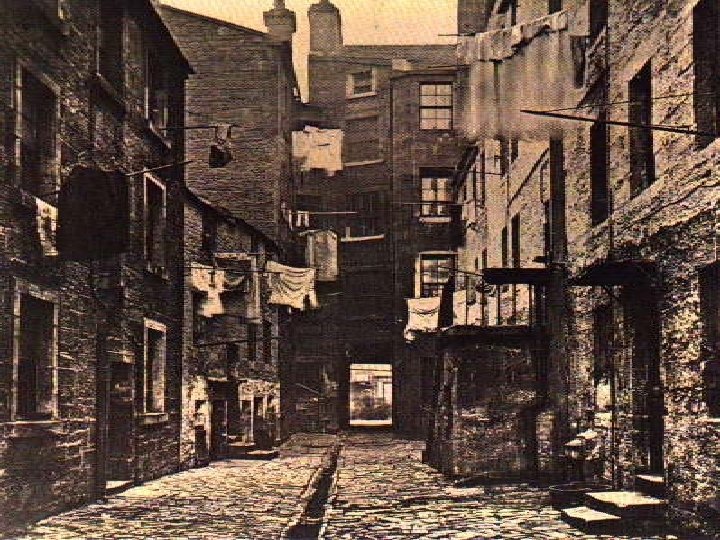
• • • Poor living conditions Low life expectancy Overcrowding Poor sanitation Frequent cholera epidemics (1849 – 400 Londoners a day died) • Polluted drinking water from the Thames River • Low life expectancy (1842 -38 years in rural areas, 17 years in cities, 7 years in coal mines)
How did the industrial revolution affect slavery?
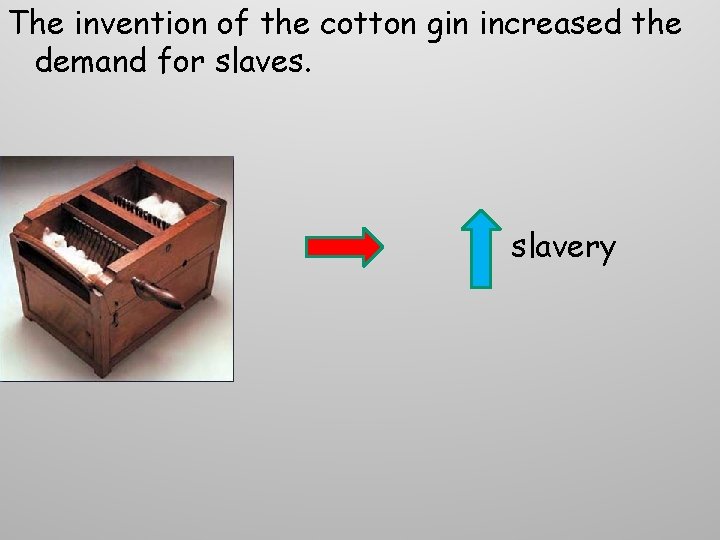
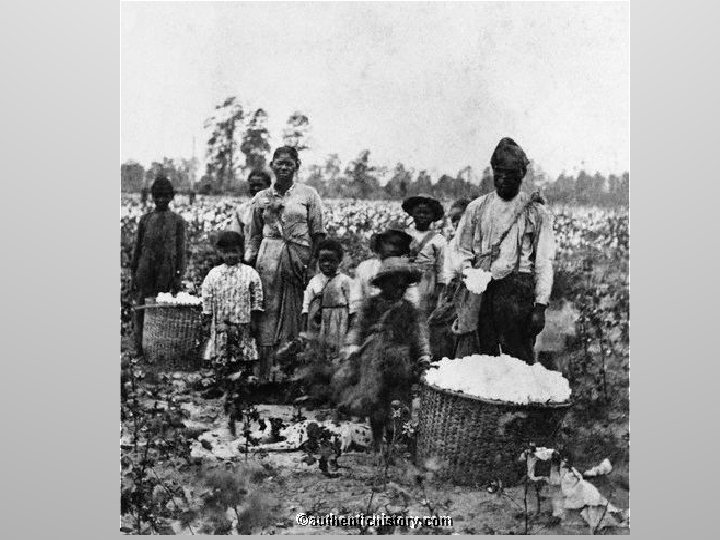
The invention of the cotton gin increased the demand for slaves. slavery
How did the Industrial Revolution produce changes in culture and society?
Changes in Upper Class - Some factory owners, merchants, and investment bankers grew wealthier than landowners and aristocrats New Class – Middle class (skilled workers, professionals, business people, wealthy farmers) Middle Class evolved further Upper Middle Class-government employees, (doctors, lawyers, managers) Lower Middle Class-had a comfortable standard of living (factory overseers, skilled workers) Poor Workers- saw little improvement in living and working conditions from 1800 -1850
What were some of the social reforms that took place during the industrial era?
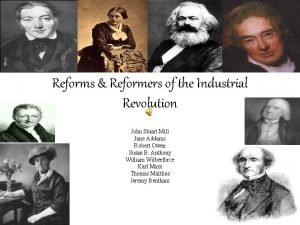
Campaigns to end child labor efforts to increase and improve education efforts to give workers more rights through labor unions and collective bargaining increase demand for women’s rights prison reform abolition of slavery
What were some technological advances that occurred during the industrial revolution and who invented them?
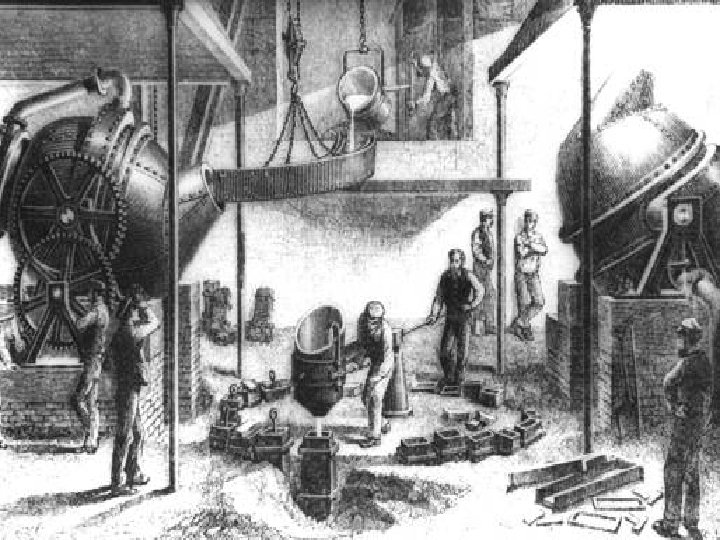
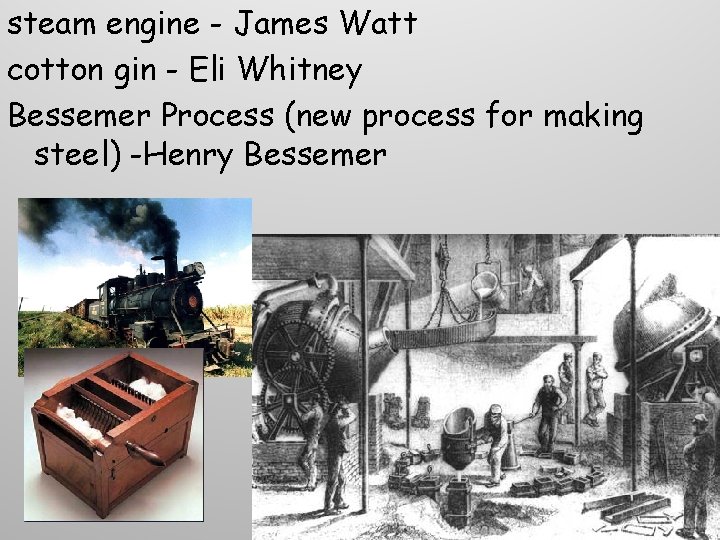
steam engine - James Watt cotton gin - Eli Whitney Bessemer Process (new process for making steel) -Henry Bessemer
What were some advances in medicine that occurred during the industrial revolution?
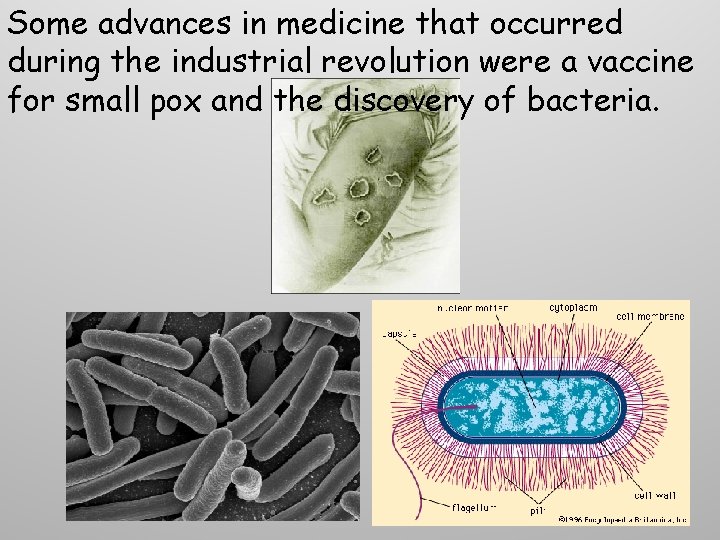
Some advances in medicine that occurred during the industrial revolution were a vaccine for small pox and the discovery of bacteria.
What economic theories supported the industrial revolution?
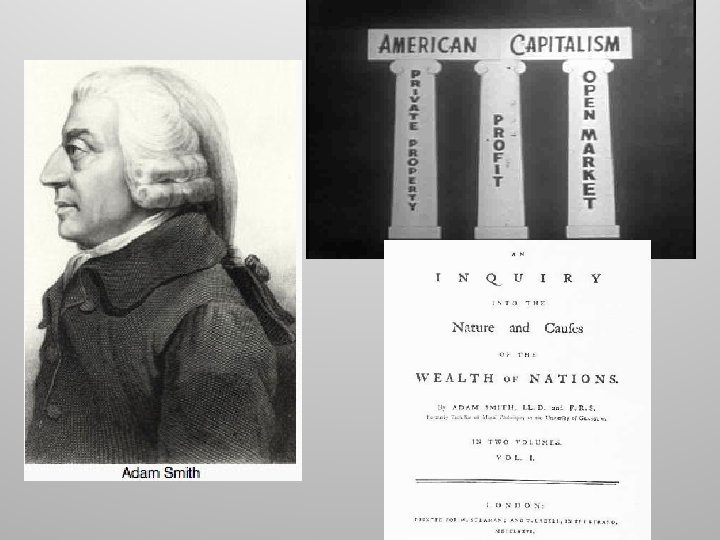
Capitalism and market competition fueled the Industrial Revolution. • • • Capitalism Laissez faire Free market Free trade Adam Smith “Wealth of Nations”
What were some theories opposed to capitalism?
Socialism Marxism Communism
Socialism- economic system in which the factors of production are owned by the gov’t and operate for the welfare of all
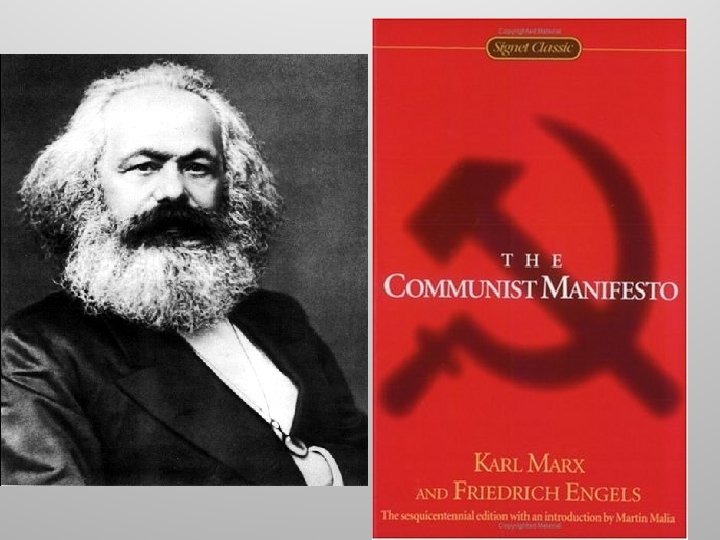
Marxism- political and economic theories based on the ideas of Karl Marx and Friedrich Engels radical type of socialism; inspired revolutions in Russia, China, Vietnam, and Cuba
Communism-complete socialism, all land, mines, factories, railroads, and businesses would be owned by the people, and all goods and services would be shared equally Marx believed communism would be the final stage in human society
Karl Marx and Friedrich Engels wrote “The Communist Manifesto” Warring Classes: bourgeoisie and proletariat Haves and have-nots
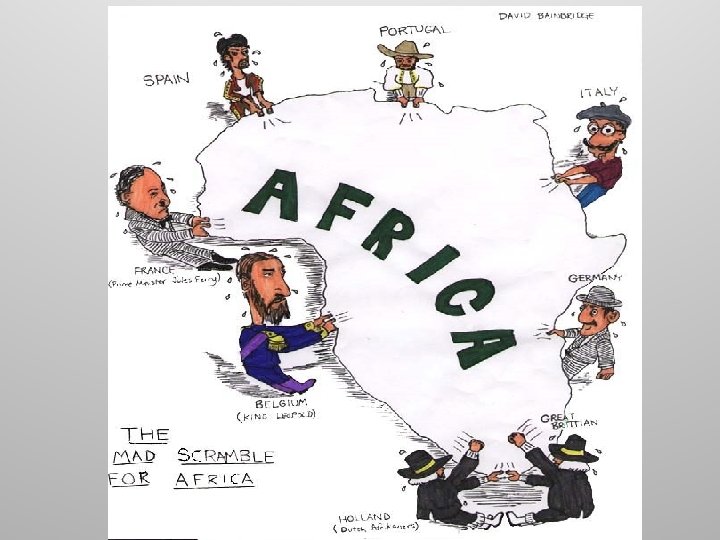
How did the industrial revolution lead to an increase in imperialism? Imperialism is the policy of extending one country’s rule over another.
In order for industrialization to continue, industrialized nations needed resources to supply to their factories. And they needed more markets to sell the goods produced in these factories.
What were some of the effects of imperialism?
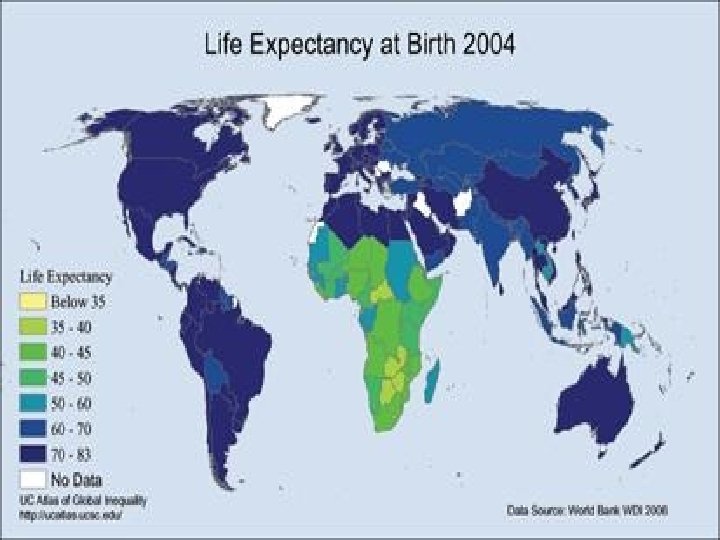
Imperialism gave more power and wealth to already wealthy and industrialized nations and increased poverty in less developed nations. Imperialism widened the gap between developed and undeveloped countries. (global inequality)
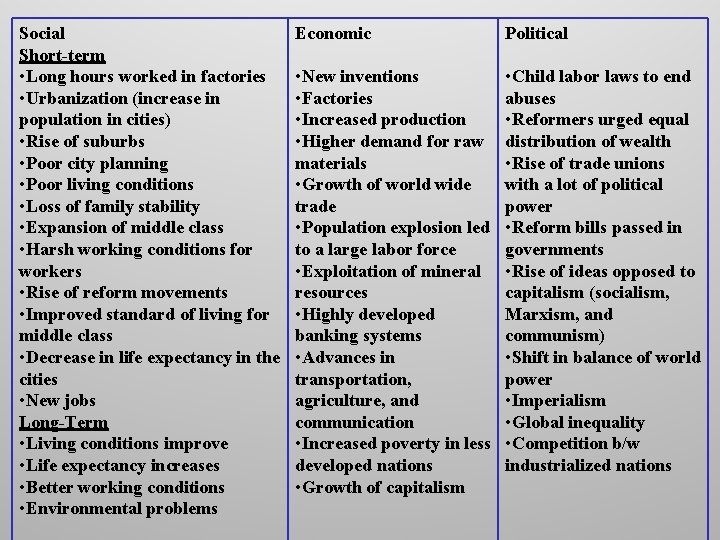
What were the social, economic, and political effects of the industrial revolution? See page 274 in textbook
Social Short-term • Long hours worked in factories • Urbanization (increase in population in cities) • Rise of suburbs • Poor city planning • Poor living conditions • Loss of family stability • Expansion of middle class • Harsh working conditions for workers • Rise of reform movements • Improved standard of living for middle class • Decrease in life expectancy in the cities • New jobs Long-Term • Living conditions improve • Life expectancy increases • Better working conditions • Environmental problems Economic Political • New inventions • Factories • Increased production • Higher demand for raw materials • Growth of world wide trade • Population explosion led to a large labor force • Exploitation of mineral resources • Highly developed banking systems • Advances in transportation, agriculture, and communication • Increased poverty in less developed nations • Growth of capitalism • Child labor laws to end abuses • Reformers urged equal distribution of wealth • Rise of trade unions with a lot of political power • Reform bills passed in governments • Rise of ideas opposed to capitalism (socialism, Marxism, and communism) • Shift in balance of world power • Imperialism • Global inequality • Competition b/w industrialized nations