TRANSPORTATION The growth of the Industrial Revolution depended



- Slides: 12
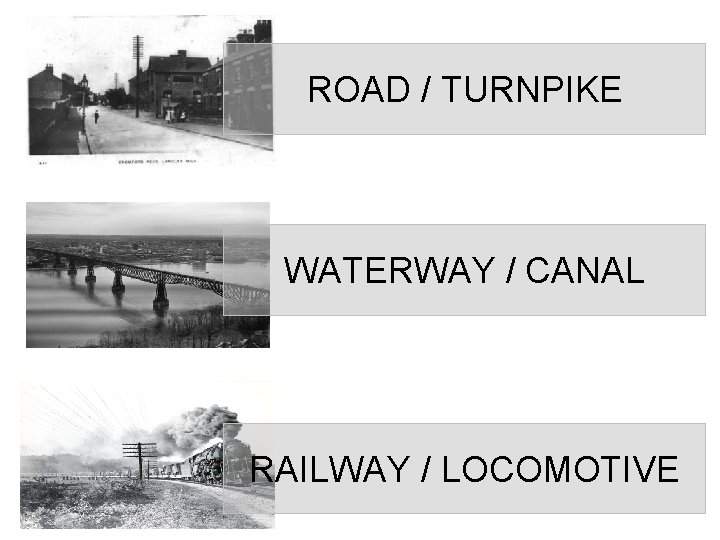
TRANSPORTATION The growth of the Industrial Revolution depended on the ability to transport raw materials and finished goods over long distances. There were three main types of transportation that increased during the Industrial Revolution: waterways, roads, and railroads.
ROAD / TURNPIKE WATERWAY / CANAL RAILWAY / LOCOMOTIVE
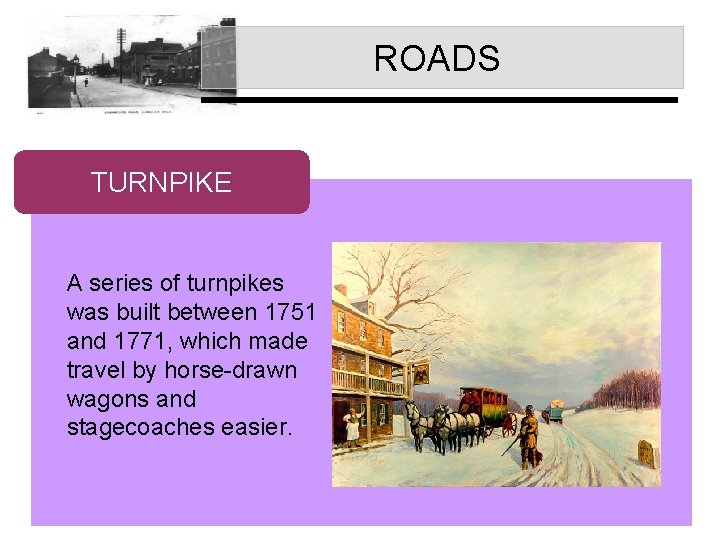
ROADS TURNPIKE A series of turnpikes was built between 1751 and 1771, which made travel by horse-drawn wagons and stagecoaches easier.
ROAD / TURNPIKE WATERWAY / CANAL RAILROAD / LOCOMOTIVE
WATERWAYS Grand Trunk Canal In 1777, the Grand Trunk Canal connected the River Mersey with the Trent and Severn rivers and thus linked the English ports of Bristol, Hull, and Liverpool. British engineers also built many bridges and lighthouses and deepened harbors.
WATERWAYS STEAMBOAT In 1807, the American inventor Robert Fulton built the first commercially successful steamboat.
ROAD / TURNPIKE WATERWAY / CANAL RAILROAD / LOCOMOTIVE
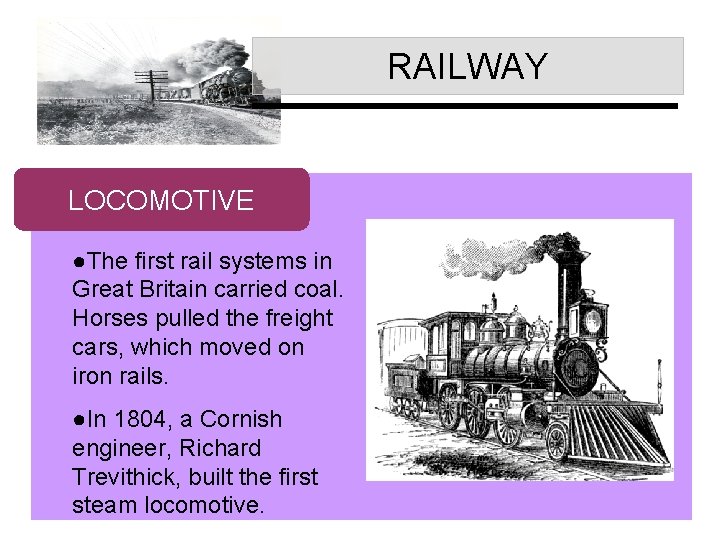
RAILWAY LOCOMOTIVE ●The first rail systems in Great Britain carried coal. Horses pulled the freight cars, which moved on iron rails. ●In 1804, a Cornish engineer, Richard Trevithick, built the first steam locomotive.